

ITT’s Mercury Wideband Network Radio (WNR) is providing the backbone for the first two digitized divisions of the US Army and the British Army Bowman digitization program. The system operates at the 225 – 450 MHz UHF frequency band introducing a High Capacity Data radio (HCDR) which can be deployed both on the move (at speeds of up to 50 km/h) and from fixed positions, supporting intelligence, targeting, air defense and command posts as well as backbone data operations. Utilizing self-organizing networking techniques, the WNR is independent from fixed base stations and can therefore be deployed with mobile units. In a typical brigade application, the aggregate throughput of the WNR can deliver over 2 mbps, supporting multiple users at a data rate of 288 kbps per user. This capacity has already demonstrated effectively for bandwidth demanding video teleconferencing from moving vehicles. A message delivery rate of about one second per message (at an average 4 hops), operating at a maximum power of 20 watts, the WNR covers a range of 35-40 km in open terrain.




Threat Simulation Turns into Battlefield Deception
Visiting the UMEX & SimTEX 2026 exhibition taking place at the ADNEC Centre in Abu Dhabi this week, a new system caught our attention. Slovenian company Carboteh has introduced an unconventional approach to protecting...

Skunk Works and XTEND Simplify Multi-Drone Command
Lockheed Martin Skunk Works® and XTEND have achieved a major milestone in JADC2 by integrating the XOS operating system with the MDCX™ autonomy platform. This technical breakthrough enables a single operator to simultaneously command multiple drone classes, eliminating the friction of mission handoffs. From "marsupial" drone deployments to operating in GPS-denied environments, explore how this collaboration is abbreviating the data-to-decision timeline and redefining autonomous mission execution.

Israel Pursues Loitering Weapons for Main Battle Tanks
The Israeli Ministry of Defense (IMOD) is evaluating initial proposals from some local companies to decide what types of loitering weapon systems will be deployed on Israel's Defense Forces (IDF) Merkava 4 main battle...

DefenseTech Weekly Brief | April 14-21, 2025
This week’s DefenseTech Brief captures a defense landscape in flux—driven by urgent needs for missile defense, advanced autonomy, and sovereign production capabilities. Across domains and continents, governments and industries are accelerating the integration of...
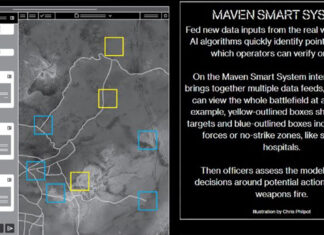
NATO AI Modernization: Palantir’s Maven Smart System Acquisition
This article is part of our weekly DefenseTech Brief.
NATO has taken a significant step in modernizing its warfighting capabilities by rapidly acquiring an AI-enabled platform from Palantir Technologies. On March 25, 2025, the NATO...