

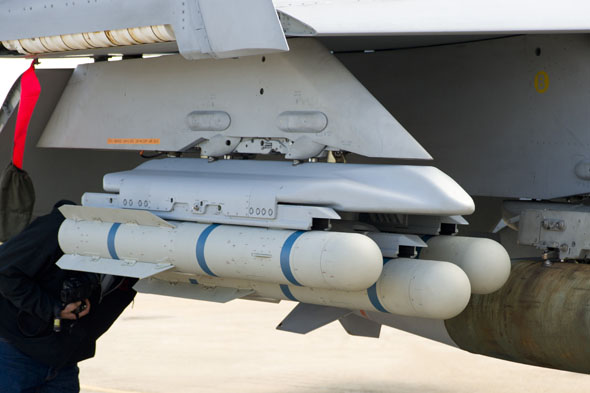
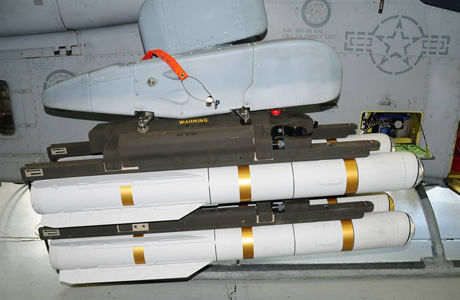
Back in 2011 the US Army and Navy opted to terminate Joint Air-to-Ground Missile system, avoiding the expensive funding commitment required for moving to the weapon into production. A small budget was set aside to keep the program alive. Today, Lockheed Martin announced it received a $64 million contract from the U.S. Army to extend the JAGM technology development.
The new award will fund continued development, design, test and demonstration of the JAGM guidance section over a period of 27 months. The JAGM guidance section includes the seeker, dome and housing. The JAGM 4 generation Tri-Mode Seeker combines three individual seekers operating simultaneously on a common gimbal. The three seekers include semi-active laser (employed with the Hellfire) and adds the precision I2R aimpoint capability derived from the Javelin, utilizing a higher definition cooled thermal imager, and all-weather fire-and-forget millimeter wave seeker used with the Longbow.
The missile has demonstrated the capability to hit moving targets at high precision from long distances, in adverse weather, battlefield obscurants and enemy countermeasures.