

Israel has reached a significant milestone in its efforts to modernize its air defense. After years of development and a series of successful tests, the Iron Beam 450 high-power laser system has completed its final trials, signaling the start of a new era in cost-effective, precision air defense.
Jointly developed by Rafael Advanced Defense Systems, the Israeli Air Force, and the Israel Ministry of Defense’s (IMOD) Directorate of Defense Research & Development (DDR&D), the Iron Beam project has now transitioned from R&D to production. Backed by over $500 million in government funding, Rafael is preparing to deliver the first operational Iron Beam systems to the Israel Defense Forces (IDF) before the end of 2025.

Precision Interception with Game-Changing Cost Efficiency
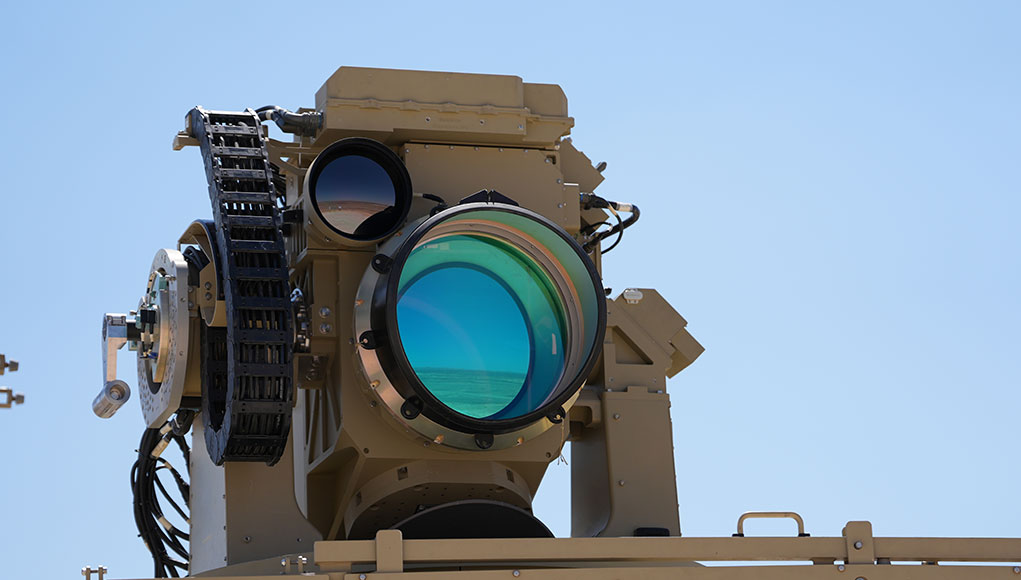
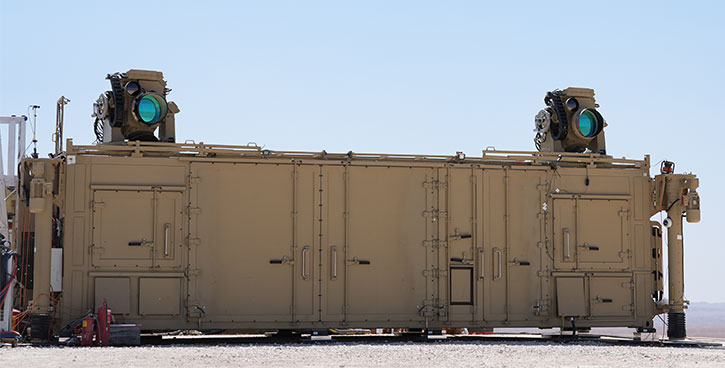
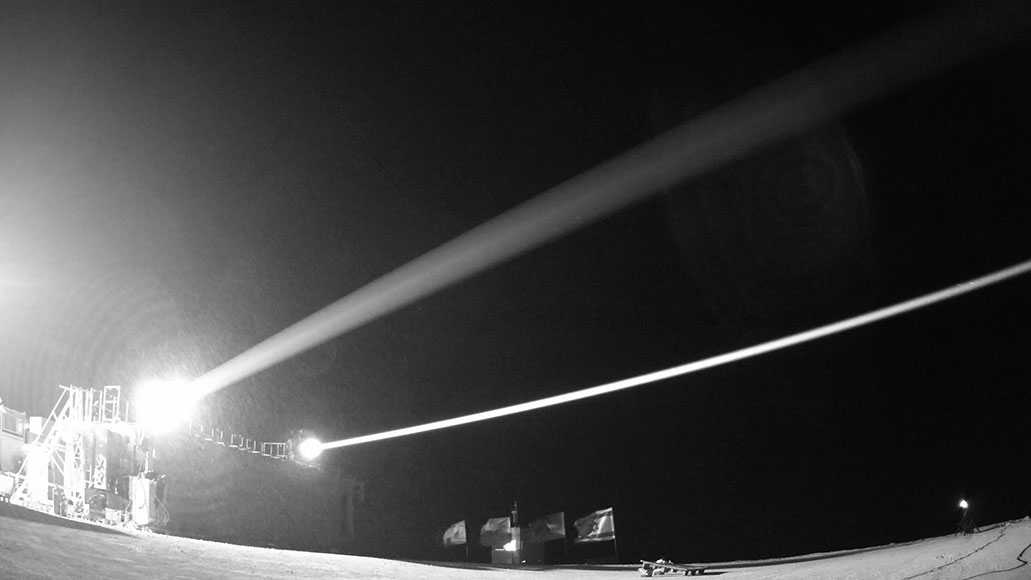
The Iron Beam 450 is a ground-based, high-energy laser system designed to intercept a wide spectrum of aerial threats, including rockets, mortars, and unmanned aerial systems (UAS). In recent operational readiness tests at Rafael’s Shdema test range, the system demonstrated its full combat configuration, engaging targets with high precision in a variety of scenarios—including One-Way Attack (OWA) drone threats that have become increasingly common in modern combat zones.
Notably, the tests featured a dual-effector setup mounted on an ISO container platform. Only a single aim point was visible during engagements, indicating a high level of accuracy and beam stability even in multi-effector configurations, which is an important attribute for complex salvo scenarios.
Integrating Lasers into Israel’s Multi-Layered Defense Architecture
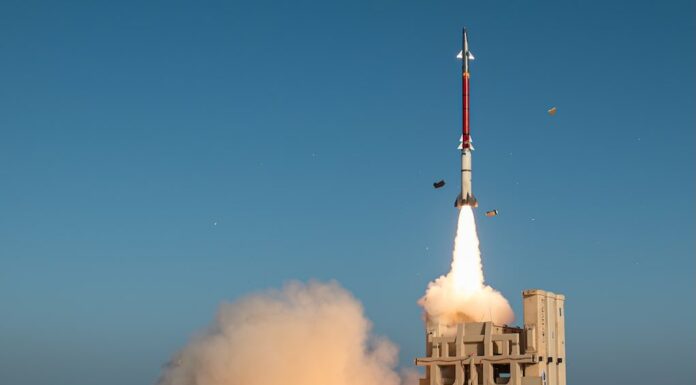
Designed to operate autonomously or in conjunction with the Iron Dome’s command and control systems, Iron Beam introduces a strategic shift by enabling low-cost intercepts without depleting expensive missile stockpiles. According to Brig. Gen. (Res.) Dr. Daniel Gold, head of DDR&D, “Combining laser and missile interceptors will significantly strengthen our defense envelope against rockets, missiles, UAVs, and emerging threats.”
The Iron Beam system is expected to reduce Israel’s cost per intercept for short-range threats significantly. While Iron Dome interceptors cost tens of thousands of dollars per shot, a single Iron Beam engagement may cost only a few dollars in electricity. This economic edge is especially vital during prolonged conflicts or saturation attacks, where traditional interceptor stocks could quickly run low.
From Prototype to Production
This leap to operational readiness follows the system’s combat debut in 2024, during which earlier prototypes of Rafael’s tactical laser systems successfully neutralized dozens of airborne threats in ongoing conflicts. The Iron Beam 450 now builds on those battlefield lessons with increased power, range, and system integration. In October 2024, IMOD announced investments of $500 million in the production of the Iron Beam system. This amount was part of a $5.2 billion US military aid to bolster Israel’s air defense (the majority of the investment covers the replenishment of Arrow 3, David’s Sling Stunner, and Iron Dome’s Tamir interceptors). The majority of the funding is expected to be allocated to Rafael. At the same time, Elbit Systems announced that it had received approximately $200 million for the serial production of high-power lasers for the program.
“Rafael’s Iron Beam system will fundamentally change the defense landscape,” stated Rafael CEO Yoav Tourgeman. “It enables precise, rapid, and cost-effective interception unmatched by any existing system.”
Rafael is also investing in next-generation directed energy weapons, including higher-energy lasers with extended reach and faster engagement timelines. Among these future systems is the ‘Laser Dome’, based on Rafael’s adaptive optics, promising unprecedented strategic capabilities for Israel’s air and missile defense.
A Broader Vision for Directed Energy
With Iron Beam as its flagship, Israel is laying the groundwork for a broader deployment of directed energy across multiple operational domains. Tactical systems, such as Lite Beam and Iron Beam M, are already being designed to protect mobile forces and border installations. Long-term concepts also include airborne and mobile laser platforms to overcome visibility constraints, such as weather and smoke.
Brig. Gen. Yehuda Elmakayes of the DDR&D R&D Unit noted, “We’ve reached a point where high-power lasers are essential to Israel’s air defense array. Iron Beam is just the first step toward integrating directed energy weapons across all IDF defense systems.”
Implications for Global Defense Trends
The successful development and testing of Iron Beam reflect a broader global trend toward high-energy laser weapons as a core component of future warfare. With increasing drone saturation, the rise of precision-guided munitions, and the escalating cost of traditional interceptors, laser-based systems offer a strategic, scalable solution.
As Israel moves toward full deployment in 2025, the world will be watching closely to see how this pioneering system performs in real-world combat and influences defense postures beyond the Middle East.