

At the MSPO defense exhibition, the WB Group introduced a comprehensive warfighting concept centered on the integration of manned, unmanned, and autonomous assets for intelligence gathering, situational awareness, precision targeting, and strike missions—both at close range and deep behind enemy lines.
The concept leverages WB Group’s existing portfolio, including the Gladius long-range loitering weapon, the Warmate family of short- and medium-range attack drones, and the FlyEye reconnaissance UAV. At its core is the new Future Task Force (FTF), an integrated manned-unmanned formation that combines unmanned ground vehicles, loitering weapons, and mine-scattering capabilities into a cohesive operational framework.

Addressing Force Restructuring
The FTF concept aligns with the Polish Army’s plan to reduce the size of armored and mechanized battalions from 58 armored fighting vehicles (AFVs) to 44. By introducing a manned-unmanned combat team in place of one company, the FTF could preserve the battalion’s overall firepower and combat effectiveness. The hybrid structure is designed to autonomously dominate sectors of the front line or flank up to 50 km deep, while significantly reducing manpower, vehicle, and logistical requirements.
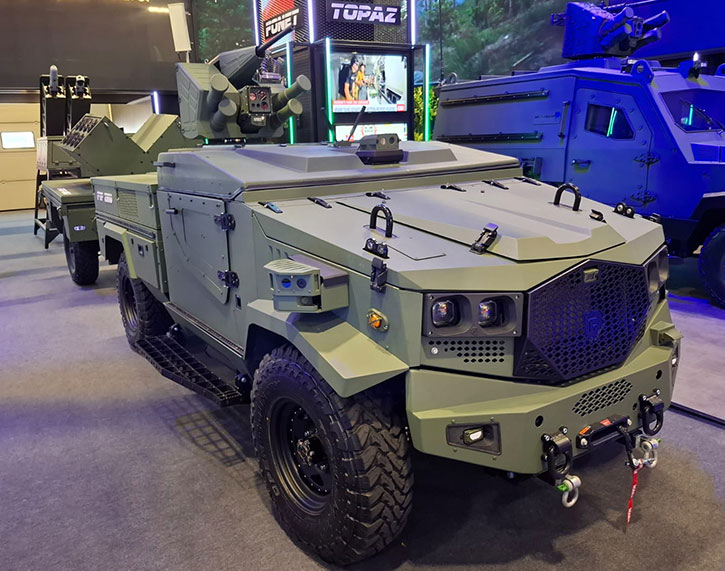
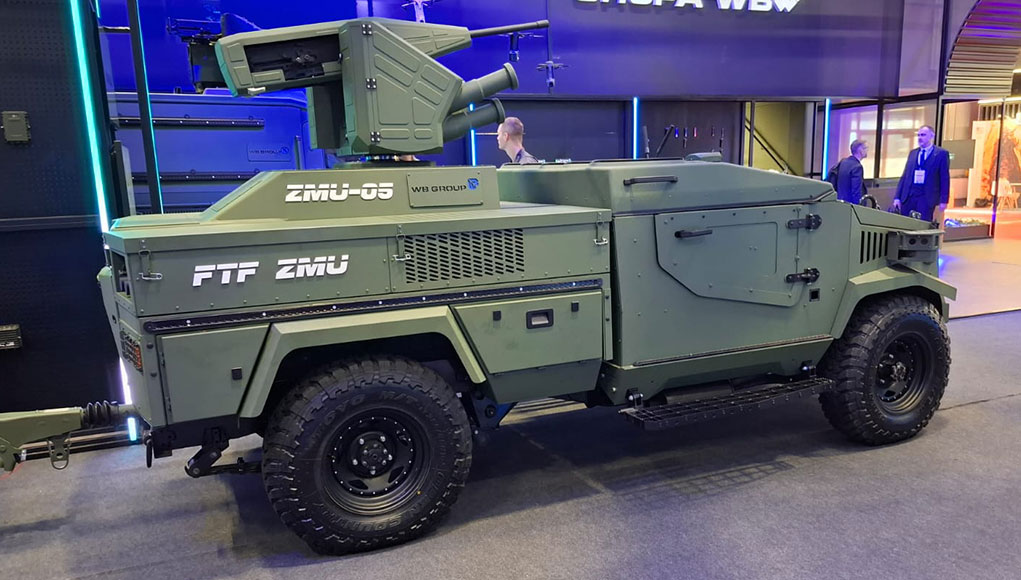
Hybrid-Electric Combat Vehicle
The FTF relies on a new, optionally manned, hybrid-electric combat vehicle equipped with the ZMU-05 remote weapon station, which mounts advanced optronic sensors, a machine gun, and smoke grenade launchers. Mission modules can be carried on the vehicle itself or towed on a trailer, enabling flexible payload options including UAV launchers, loitering munition packs, or a mine-scattering system.
Its hybrid-electric drive provides silent operation and energy storage for sustained mobility and troop support. Operational control is maintained at distances of up to 50 km from the command post.
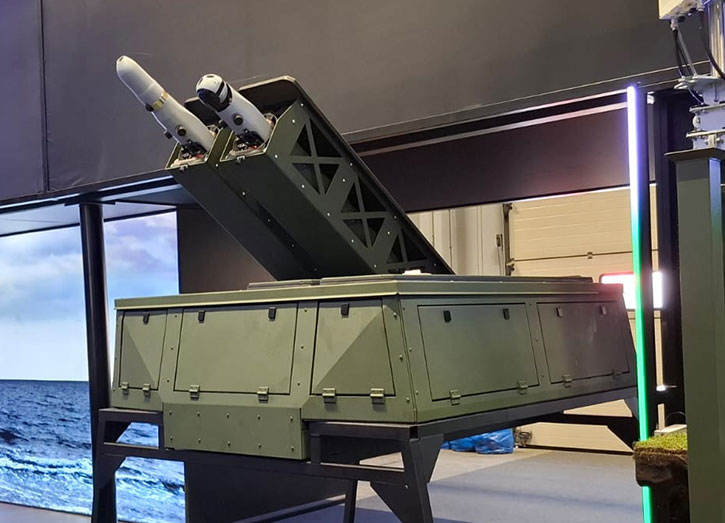
Warmate TL Family
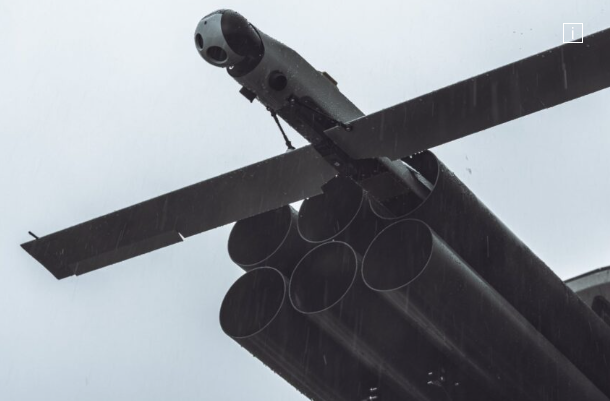
A central element of the FTF is the Warmate TL (tube-launched) series.
Warmate TL-C: A loitering weapon fitted with modular warheads weighing up to 2 kg, including blast-fragmentation with an EFP insert, shaped-charge HEAT, and thermobaric options. It can loiter for 45 minutes and strike at speeds of 150–180 km/h.
Warmate TL-R: A reconnaissance variant using the same airframe, fitted with EO sensors in place of a warhead. It is recoverable via parachute and airbag, allowing payload reuse.
Launch tubes can be reloaded manually and made ready for use within 45 seconds, enabling rapid multi-drone operations for reconnaissance, attack, or communications relay.
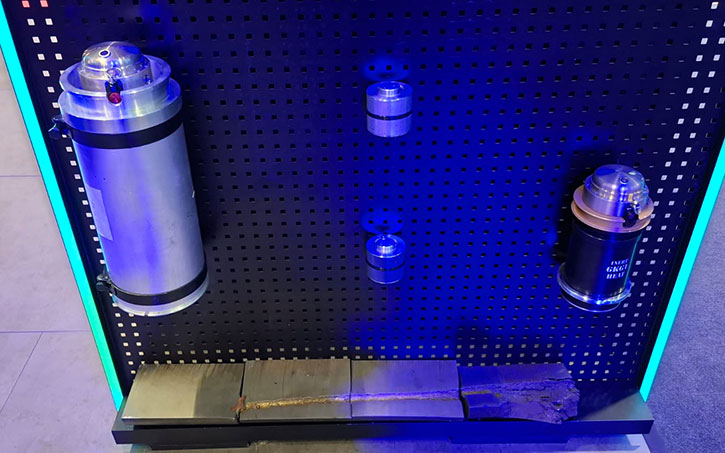
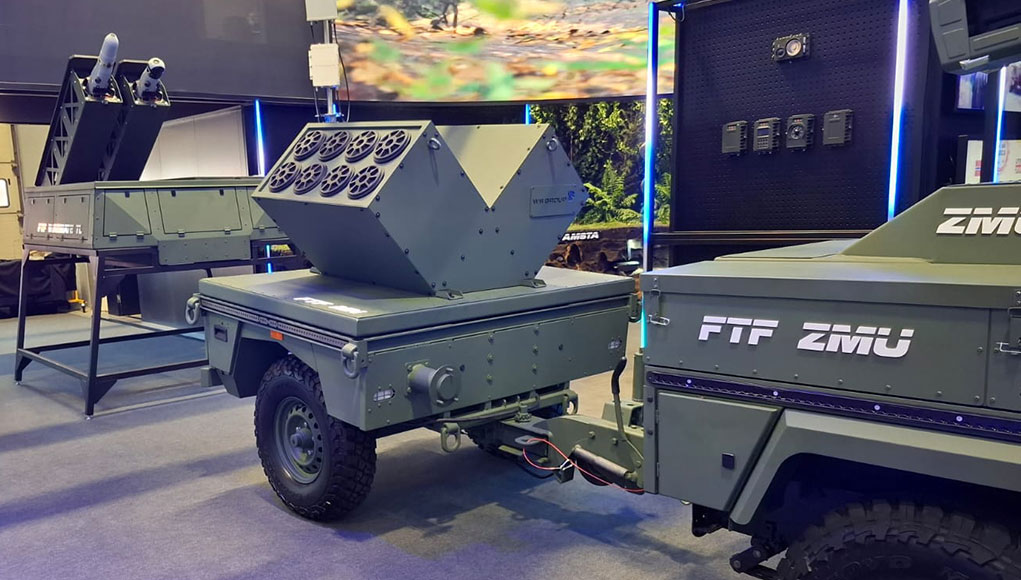
Minelaying and Future Modules
The trailer-mounted module currently employs MN-123 anti-tank mines, with future growth potential for missile launchers or other mission payloads.
All components are operated by a small team from a tactical vehicle, utilizing WB Group’s Topaz integrated combat management system. Integration with the EyeQ AI-enabled target acquisition suite allows real-time image processing and sensor fusion across drones, weapon stations, and observation platforms.
By fusing hybrid combat vehicles, loitering munitions, mine-scattering systems, and AI-enabled battle management, WB Group’s Future Task Force introduces a scalable solution for Poland’s evolving force structure. It aims to deliver autonomous combat power across extended battlespaces while reducing dependence on manpower and heavy mechanized assets.