
In the rapidly evolving landscape of modern warfare, the “human-in-the-loop” often faces a paradox: as technology becomes more capable, the cognitive load on the operator increases.
Today, Lockheed Martin Skunk Works and XTEND announced a major breakthrough to address this challenge, streamlining Joint All-Domain Command and Control (JADC2) through a powerful new integration.

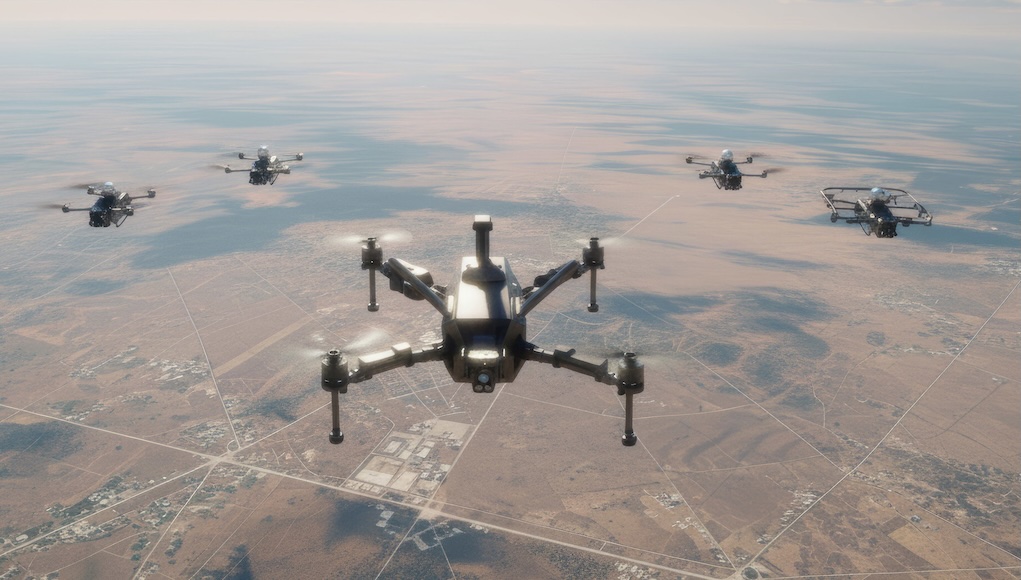
By combining Skunk Works’ MDCX™ autonomy platform with XTEND’s XOS operating system, the two companies have demonstrated that a single operator can now control multiple classes of drones simultaneously—dramatically reducing manpower requirements and accelerating the “data-to-decision” timeline.
Single Operator Managing a “Marsupial Drone” Mission
The partnership recently culminated in a successful demonstration of a Multi-Class MDCX (MC-MDCX) workstation. During the test, the team executed a “marsupial” mission:
- A large UAS (Unmanned Aerial System) acted as the carrier.
- It delivered a smaller Class 1 drone directly into a mission zone.
- In traditional scenarios, this would require a “hand-off” between two separate operators—one for the carrier and one for the smaller, more agile drone.
With the integrated MC-MDCX and XOS system, a single operator managed the entire sequence. From high-level transit to close-in, first-person view (FPV) maneuvers, the integration removes the friction of mission hand-offs and keeps situational awareness unified.
This collaboration isn’t just about flying two drones at once; it’s about making complex autonomy accessible. Here are the key takeaways from the integration:
- Reducing the Cognitive Load: XTEND’s XOS uses AI to fuse human intelligence with machine autonomy. This allows even novice operators to perform expert-level maneuvers, such as “mark-and-fly” commands or operating in immersive environments, with minimal training.
- Operating in Contested Environments: Modern battlefields are defined by electronic warfare. XTEND’s solutions are designed to maintain operational effectiveness even when GPS signals are denied or radio frequencies are jammed.
- Optimizing Manpower: By eliminating the need for tiered operators for different vehicle classes, military units can do more with less, allowing for a smaller, more agile footprint on the ground.
- True JADC2 Integration: This integration fits perfectly into the Skunk Works vision of “Manned-Unmanned Teaming” (MUM-T). It ensures that data flows seamlessly across domains, keeping pilots and ground forces “ahead of ready.”