The Indian Cabinet Committee on Security (CCS), the highest executive body that takes a call on defense matters, has cleared the acquisition of two Airborne Warning and Control System (AWACS) platforms, from Israel Aerospace Industries (IAI) at a cost of US$1.1 billion (Rs 7,500 crore).
The acquisition of the AEW mission systems installed on two IL-76 (A-50) aircraft will be processed as a follow-on phase under the tripartite contract with Israel and Russia, under which India bought three such aircraft for the same amount, from Israel and Russia in 2009 and 2010. The Indian Business Standard reported.
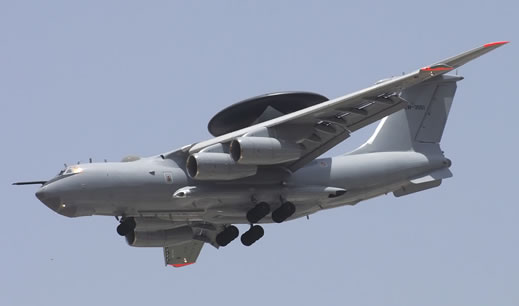
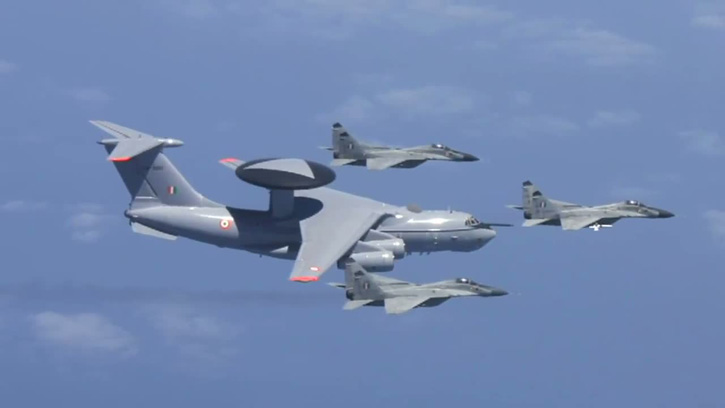
The IL-76 Phalcon AWACS platform plays significant role in Indian Air Force’s Network-Centric Operations. It can detect aircraft, drones and cruise missiles from a range of 400 km.The AWACS platform plays significant role in Indian Air Force’s Network-Centric Operations. In addition to the three arrays comprising the ELM-2075 L-band early warning radar located in the static dome, these aircraft have electronic intelligence (ELINT) and communications intelligence (COMINT)-gathering capabilities that help intercept signals from enemy areas, in monitoring troop build-up and to detect aerial threats. It can detect aircraft, drones and cruise missiles from a range of 400 km.
The CCS has also cleared a proposal for the induction of the fourth regiment of Brahmos missile and two more of Pinaka rocket-launchers for the Army.
The first of three PHALCON AEW aircraft delivered to India under the Russian-Israeli-Indian deal.
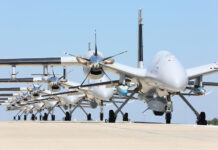
As traditional defense primes face mounting competition from agile “neoprimes” such as Anduril, Palantir and Helsing, the balance of innovation is shifting toward software-defined warfare and scalable, dual-use technologies, while global industry consolidation—marked by Boeing’s integration of Spirit AeroSystems and other strategic mergers—signals an intensified race to secure control over the defense technology value chain. Our Defense-Tech weekly report highlights these trends.
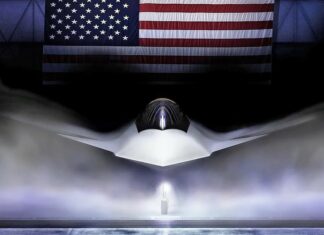
At the 2025 Air, Space & Cyber Conference, U.S. Air Force and Space Force leaders unveiled major updates on next-generation fighters, bombers, unmanned systems, and space initiatives, highlighting both rapid innovation and critical readiness challenges as the services race to outpace global competitors. A short version is available here, with a more detailed version for subscribers.
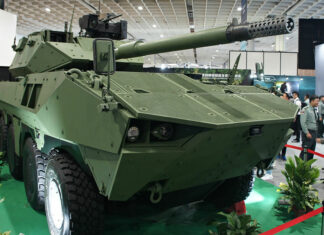
The Taipei Aerospace & Defense Technology Exhibition (TADTE) 2025 crystallized around four dominant strategic themes that collectively illustrate Taiwan's comprehensive approach to defense modernization amid escalating regional tensions. Based on a detailed report by Pleronix (available upon request). Includes a Podcast discussion on TADTE 2025's highlighting Taiwan's four strategic themes beyond the post's coverage.
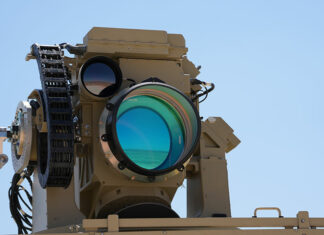
Israel’s Iron Beam 450 high-power laser system has completed final testing, marking a major leap in air defense. Developed by Rafael, it offers precise, cost-effective interception of rockets, UAVs, and mortars, and is set for IDF deployment by 2025.
President Trump’s June 6, 2025 executive order “Unleashing American Drone Dominance” sets an aggressive timeline for FAA BVLOS rulemaking, launches an eVTOL Integration Pilot Program, and prioritizes domestic manufacturing and export of U.S. drone technologies—aiming to modernize logistics, public safety, and defense while securing global leadership in advanced air mobility.