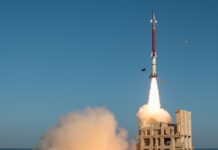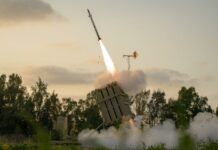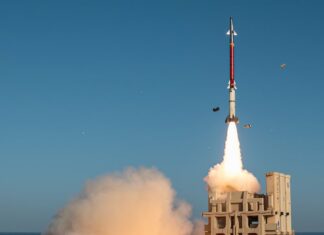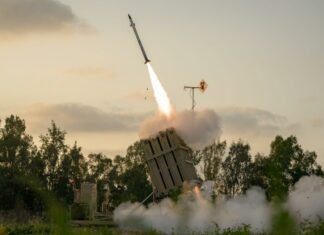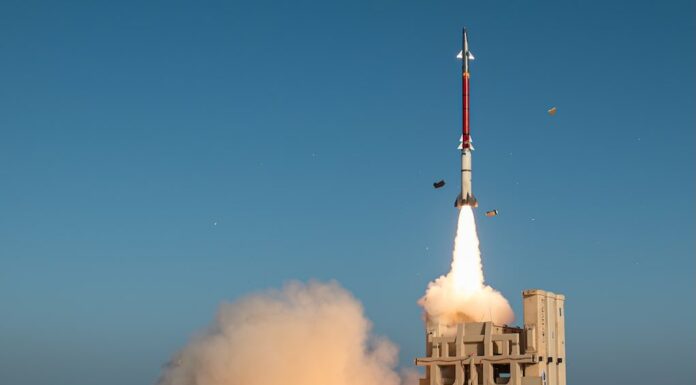

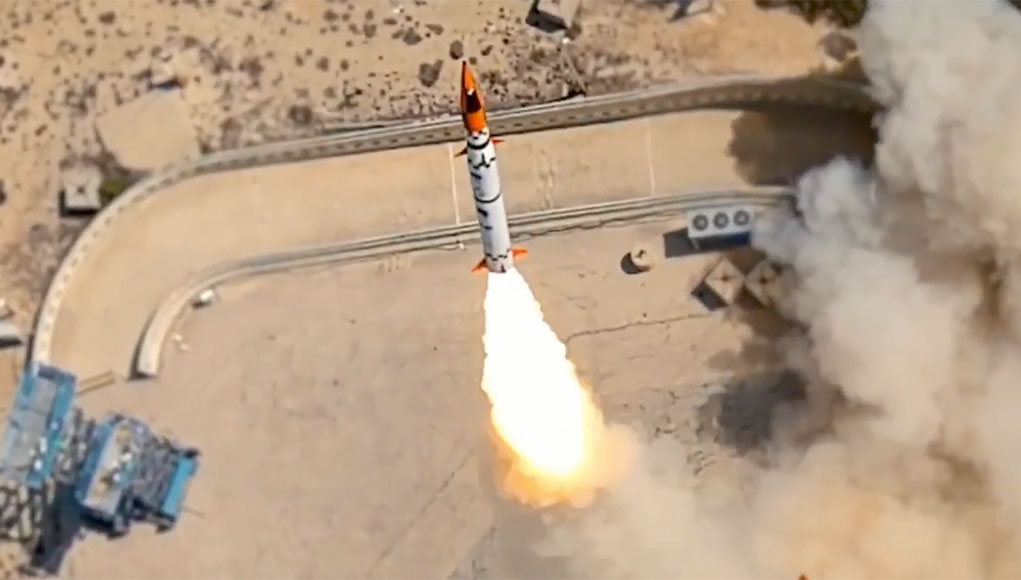
IAI, Israel Aerospace Industries, has begun live trials of the Arrow 4 interceptor, marking a critical milestone in the development of what may become the first Western missile defense system operationally fielded against hypersonic threats. The system emerges from a joint Israeli-U.S. development program that, according to foreign sources, is designed to counter maneuverable re-entry vehicles, hypersonic glide vehicles, and multiple independently targetable re-entry vehicles – threats that have moved from theoretical concern to operational reality.
“Arrow 4 is nearing operational readiness and will soon enter the Israeli air defense architecture,” IAI CEO Boaz Levy stated in mid-2025, framing the interceptor as both a replacement for aging Arrow 2 missiles and a crucial technological leap to address evolving threats. By December 2025, Levy described IAI as “deep into development and approaching the start of serial production,” with early deployment potentially beginning in 2026.
The accelerated timeline reflects lessons learned during Israel’s recent conflicts, when Arrow 2 and Arrow 3 interceptors faced Iranian and Houthi attacks, including some ballistic missiles suspected to employ early-stage maneuverable re-entry vehicles and hypersonic systems. While those engagements validated the Arrow family’s core technologies, they also revealed capability gaps that Arrow 4 is expected to address.
AI-Driven Fire Control
The interceptor’s guidance architecture represents a generational leap beyond Arrow 2 and 3, incorporating artificial intelligence and machine learning. The upgraded Arrow Weapon System employs AI-enhanced algorithms, which are critical when engagement windows are measured in seconds, and traditional classification methods struggle with novel trajectories and signatures.
Arrow 4’s seeker technology, while not publicly detailed, is described as substantially more capable than previous generations. It must maintain a lock against targets maneuvering at extreme speeds.
IAI sources emphasize “advanced agility” and “improved endgame accuracy,” suggesting refined trajectory shaping in the final seconds before intercept. The warhead is characterized as “tailored” or “optimized” for advanced threats.
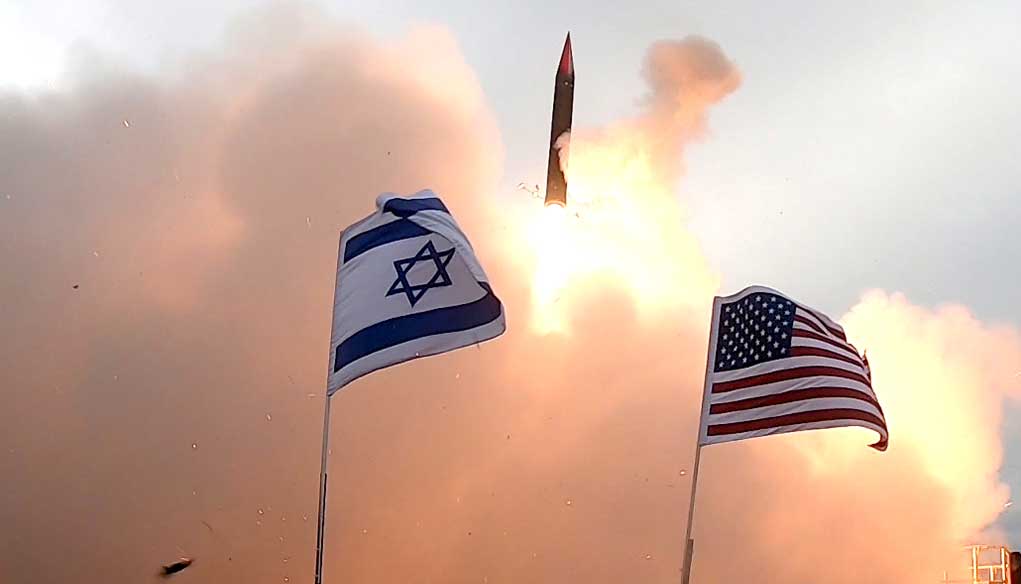
The Hypersonic Imperative
Concept work for Arrow 4 began around 2017, with the formal joint Israeli-U.S. development decision announced in 2021. The program’s perceived goal is to get ahead of Russian, Chinese, and Iranian hypersonic technologies before they proliferate in the Middle East.
That timeline proved prescient. During 2024-2025 Iranian attacks on Israel, the Arrow system faced what Israeli officials described as suspected early-stage maneuverable re-entry vehicle technologies. The Houthis launched what appear to have been hypersonic ballistic missiles during 2025 engagements, achieved with “mixed results” according to Israeli assessments.
More significantly, Iran continues advancing long-range missile programs while Russia and China field operational hypersonic systems that could eventually transfer to Middle Eastern actors. Arrow 4’s threat set encompasses at least two primary categories:
Maneuverable Re-Entry Vehicles (MaRVs): Ballistic missiles with terminal maneuver capability designed to defeat fixed-geometry intercept solutions—a technology Iran appears to be developing.
MRVs/MIRVs: Ballistic missiles releasing multiple warheads. Israel encountered multiple re-entry vehicles during Iranian attacks, revealing the challenge of magazine depth when facing salvo attacks with complex threat packages.
Arrow 4’s improved discrimination capability and shoot-look-shoot engagement doctrine directly address these challenges, providing multiple opportunities to engage individual threats while efficiently managing interceptor inventory.
Combat-Proven Foundation
Arrow 4 builds on operational experience that few missile defense systems can claim. Arrow 2 and 3 interceptors engaged long-range ballistic missiles from Iran and Yemen during recent conflicts with what Levy characterized as “phenomenal accuracy,” validating the Arrow family’s core technologies under combat conditions.
Those engagements also revealed hard truths. Many Arrow 2 interceptors, first delivered in 1998, have “done their job” and require replacement. The post-October 7th security environment transformed Arrow 4 from a future concept to a near-term requirement. Israeli and U.S. planners now view the system as central to maintaining technological superiority over Iranian missile programs through the 2030s, before hypersonic proliferation fully matures in the region.
Architecture Integration and Allied Interoperability
Arrow 4 will occupy the apex of Israel’s multi-layered air defense architecture, sharing the upper tier with Arrow 3 while sitting above David’s Sling, Iron Dome, C-Dome, Barak MX, and the emerging Iron Beam high-power laser system. SkySonic, a two-stage interceptor optimized by Rafael to counter hypersonic threats, is promoted by the company but has not officially endorsed by IMOD.
The Arrow 4 interceptor plugs directly into existing Arrow Weapon System infrastructure: Green Pine and Great Pine radars, Citron Tree battle management, and national air defense command and control networks. This integration leverages decades of Arrow 2 and 3 operational experience and combat lessons gathered since 2024, while enabling rapid fielding once development completes.
Layered engagement doctrine becomes significantly more flexible with Arrow 4’s dual-regime capability. Arrow 3 can continue engaging threats during exo-atmospheric midcourse flight, where it demonstrated excellent capabilities, while Arrow 4 can take overlapping shots during high-altitude segments and lower tiers to provide terminal defense against leakers, creating multiple engagement opportunities against individual threats.
As part of the Arrow Weapon System, Arrow 4 is designed for integration into international missile defense networks. The Israel Missile Defense Organization and the U.S. Missile Defense Agency jointly develop the system to ensure compatibility with allied architectures and data-sharing protocols. Officials explicitly describe Arrow 4 as “tailored to integrate into international missile defense networks,” including existing U.S.-Israel cooperation and NATO-adjacent frameworks.
Export Trajectory
While Arrow 4 remains an Israeli-U.S. project without announced export customers, the commercial path seems clear. Germany’s roughly $6.5 billion Arrow 3 procurement, the largest single Israeli defense export, demonstrates allied willingness to acquire Israeli strategic missile defense assets at an unprecedented scale. Germany has already received its first Arrow 3 battery.
Arrow 3’s combat performance against Iranian and Yemeni ballistic missiles directly enabled that sale. Industry observers suggest Arrow 4 will follow a similar trajectory once operational deployment begins. As one of the first Western systems explicitly designed as a hypersonic interceptor, Arrow 4 addresses a capability gap that NATO and allied nations increasingly recognize as critical.
The industrial model will likely mirror Arrow 3, in which Lockheed Martin assumed Boeing’s production and integration role following a 2024 memorandum of understanding with IAI. U.S. workshare requirements, Missile Defense Agency funding, and potential partner co-production agreements will shape the final architecture, but IAI remains the prime contractor.
Development Timeline and Operational Deployment
Public statements from IAI and Israeli officials paint a picture of rapid maturation:
- Mid-2025: Levy describes Arrow 4 as “nearing operational readiness,” with operational trials officially scheduled “to begin within two years” but potentially accelerated based on threat developments.
- Late 2025: IAI reports being “deep into development and approaching the start of serial production.”
- Early 2026: Media coverage reports that Arrow 4 will enter “live trials within months,” with initial full-scale flight tests scheduled for mid-2026. An unofficial video of a recent test flight was aired in January of 2026 (shown above).
- Production ramp: “Serial production expected to follow quickly, potentially from early 2026,” reflecting aggressive timelines aligned with Arrow 2 inventory drawdown and combat lessons from Arrow 3 employment.
The compressed schedule reflects both technical maturity and operational urgency. Unlike peacetime development programs, Arrow 4 emerges from an active combat environment where the threat it’s designed to counter is already appearing on the battlefield.
Summary
Arrow 4 represents an advanced capability in missile defense. Traditional ballistic missile defense architectures, designed around predictable parabolic trajectories and fixed engagement geometries, are becoming obsolete as hypersonic and highly maneuverable systems proliferate globally. Israel’s approach acknowledges this reality. Rather than incremental improvements to existing systems, Arrow 4 fundamentally rethinks upper-tier intercept, creating a system capable of engaging targets across multiple flight regimes with the agility and discrimination required to counter hypersonic threats.
The joint Israeli-U.S. development model also signals recognition that missile defense R&D costs and technical risks require shared investment among allies. By incorporating U.S. Missile Defense Agency funding and expertise from the program’s inception, Arrow 4 maintains allied interoperability while distributing development burden.
The next months will prove critical. With live flight tests already underway, validating its advanced capabilities, for Israel, facing adversaries with growing missile inventories and advancing technology, the stakes could not be higher.