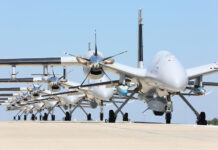

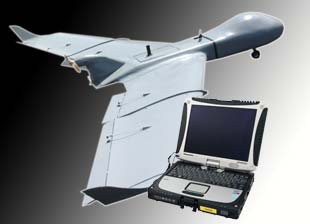
This mini UAV was developed by Cyberflight as a lightweight remotely piloted or autonomous platform, launched from a 40 meter runway, at a weight of 25 kg on missions up to 100km. The UAV is operated by an autonomous control system supporting up to six hours mission patrolling predefined GPS waypoints. The CyberEye has an on-board digital recorder which enables “silent” operations (without electronic emission). CyberEye can patrol or loiter over a designated target at low speed (20-25 mph) at altitude of up to 10,000 feet. Another UAV developed by the company is Cyber-1. Utilizing an advanced bi-plane design, Cyber-1 is smaller and more efficient than CyberEye. The aircraft weighs 8.27kg (including 12 pound payload), and can operate from a 15 m’ strip, to a range of 50km. Cyber-1 also uses an autonomous GPS based mission control system, and digital recording for silent missions. Maximum speed is 100 km/h and operational height is 1,000 feet above ground.
From Ukraine to Taiwan: The Global Race to Dominate the New Defense Tech Frontier
As traditional defense primes face mounting competition from agile “neoprimes” such as Anduril, Palantir and Helsing, the balance of innovation is shifting toward software-defined warfare and scalable, dual-use technologies, while global industry consolidation—marked by Boeing’s integration of Spirit AeroSystems and other strategic mergers—signals an intensified race to secure control over the defense technology value chain. Our Defense-Tech weekly report highlights these trends.
Europe’s “Drone Wall”
Tamir Eshel - 0
In early October 2025, a coordinated wave of unmanned aerial system (UAS) incursions—widely attributed to Russia—targeted critical infrastructure across at least ten European nations. The unprecedented campaign exposed the fragility of Europe’s air defenses...
Weekly Defense Update & Global Security Assessment
Tamir Eshel - 0
Executive Summary
The past week (September 18-25, 2025) represents an inflection point where strategic defense concepts have transitioned from doctrine to tangible reality. An analysis of global events reveals four primary, interconnected trends shaping an...
U.S. Air and Space Forces Push Next-Gen Programs at the AS&C 2025 Conference and...
Tamir Eshel - 0
At the 2025 Air, Space & Cyber Conference, U.S. Air Force and Space Force leaders unveiled major updates on next-generation fighters, bombers, unmanned systems, and space initiatives, highlighting both rapid innovation and critical readiness challenges as the services race to outpace global competitors. A short version is available here, with a more detailed version for subscribers.
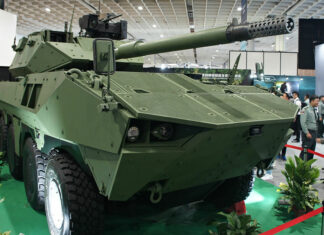
TADTE 2025: Reflecting Taiwan’s Strategic Themes
Tamir Eshel - 0
The Taipei Aerospace & Defense Technology Exhibition (TADTE) 2025 crystallized around four dominant strategic themes that collectively illustrate Taiwan's comprehensive approach to defense modernization amid escalating regional tensions. Based on a detailed report by Pleronix (available upon request). Includes a Podcast discussion on TADTE 2025's highlighting Taiwan's four strategic themes beyond the post's coverage.
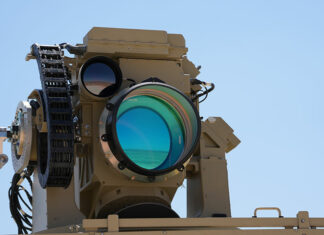
Iron Beam 450 Completes Testing, Soon to Join With Operational Air Defense Units
Tamir Eshel - 0
Israel’s Iron Beam 450 high-power laser system has completed final testing, marking a major leap in air defense. Developed by Rafael, it offers precise, cost-effective interception of rockets, UAVs, and mortars, and is set for IDF deployment by 2025.
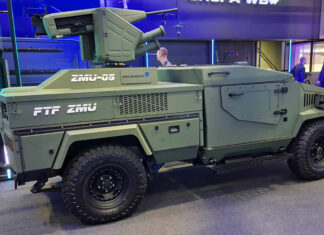
WB Group Unveils Future Task Force Concept at MSPO
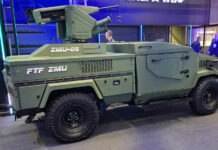
WB Group unveiled its Future Task Force (FTF) at MSPO, a new warfighting concept integrating manned, unmanned, and autonomous systems. Combining hybrid-electric vehicles, loitering munitions, and AI-enabled command tools, the FTF is designed to sustain firepower and autonomy while reducing battalion size and logistical footprint.