
The 33rd International Defence Industry Exhibition (MSPO), taking place from September 2 to 5, 2025, in Kielce, Poland, represents one of Europe’s most significant military transformations, as Poland leverages unprecedented defense spending to forge a new model of strategic autonomy.
With a defense budget projected to reach $48.7 billion in 2025—accounting for a significant 4.7% of GDP and the highest share among NATO allies—Poland has shifted from being solely a defense importer to a key market influencer. This financial strength is prompting a major change in how international defense contractors work with Warsaw, evolving from basic sales to full industrial partnerships.
Three Pillars of Polish Strategy
- “Polonization” Doctrine: Poland is systematically demanding technology transfer and local production as non-negotiable elements of major contracts. Every significant procurement must contribute to building sovereign industrial capability, from ammunition factories to the assembly of complex platforms.
- The Unmanned Revolution: Drawing lessons from Ukraine, Poland has created a dedicated Inspectorate of Unmanned Systems to quickly develop a “drone army.” This institutional innovation demonstrates a commitment to multi-domain unmanned operations across air, land, and sea.
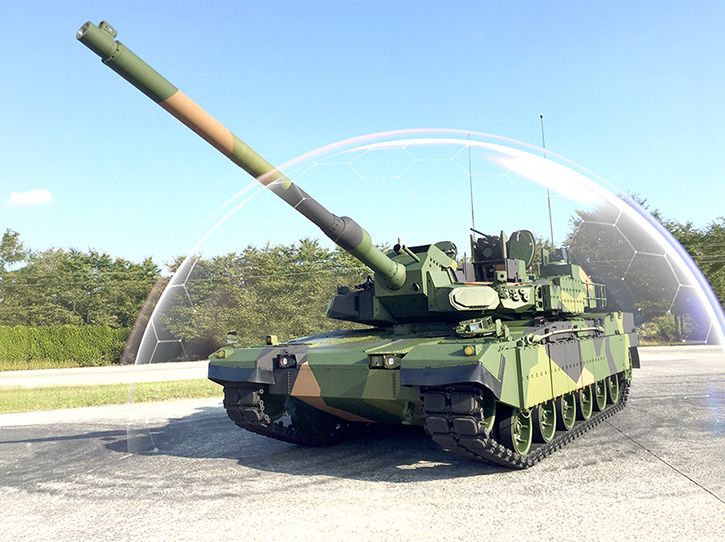
- Comprehensive Force Modernization: Massive programs are underway for the K2 Black Panther tanks, HIMARS and Homar-K rocket systems, Apache helicopters, and the strategic “Orka” submarine program, creating a modernization pipeline worth tens of billions.

Polish Industry Steps Forward
MSPO 2025 marks a critical inflection point for Poland’s domestic defense industry, showcasing the transition from research and development to serial production and the integration of complex systems. These programs are pursued by local industries and by joint ventures with international partners.
Polska Grupa Zbrojeniowa (PGZ) will showcase several new programs transitioning from development to full-scale production, including the first serial Borsuk amphibious IFV and Baobab-K mine-laying vehicle. A model of the future heavy CBWP infantry fighting vehicle, based on the K2PL chassis, reveals long-term armored force planning. Through its subsidiary Cenzin, PGZ will premiere new Heckler & Koch weapons, including the HK421 light machine gun and the HK G210 sniper rifle, alongside Polish-made unmanned systems from Spectre Defence Solutions, featuring VTOL UAVs and fixed-wing loitering munitions.
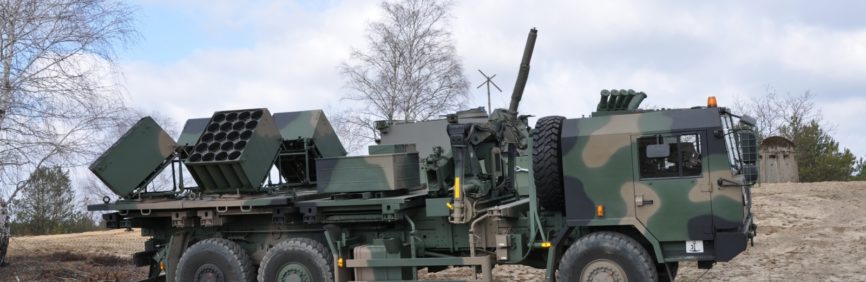
WB Group presents its “multi-domain unmanned revolution” through the “Future Task Force” concept, a networked ecosystem of manned and unmanned systems controlled by a unified command architecture. New systems include enhanced Warmate loitering munitions and the X-FRONTER reconnaissance drone.
One of the most anticipated developments expected this week is the formal establishment of a WB Group-Hanwha joint venture for domestic missile production—creating Poland’s first sovereign guided munitions capability. Additional contract signings and industrial agreements are expected, building on the $515 million in announced deals for 2024.
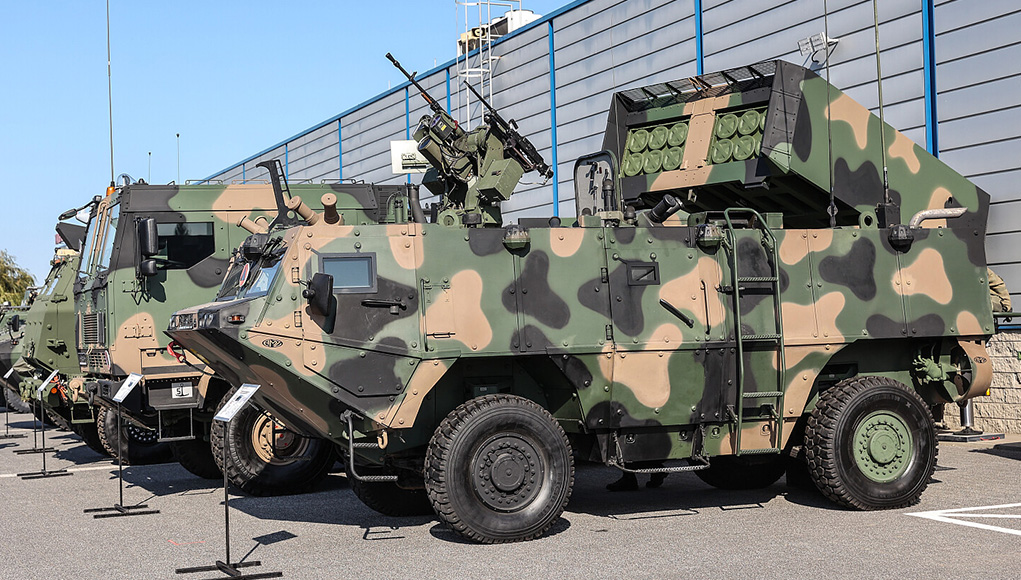
Rosomak S.A.: The Legwan 4×4 Light Reconnaissance Vehicle program exemplifies a successful “Polonization” strategy. Based on South Korea’s proven KLTV platform from KIA Corporation, the program involves significant local production, assembly, and system integration by Rosomak in Poland. MSPO 2025 is expected to witness the signing of new annexes formalizing the industrial plan for nearly 400 vehicles, solidifying long-term partnerships and anchoring supply chains in Poland.
MSPO 2025 illustrates a fundamental shift in global defense market engagement with Poland. The absence of a single designated “Lead Nation”, departing from previous years’ focus on countries like South Korea (2023) or the USA (2019), signals Poland’s multi-vector partnership strategy designed to maintain maximum negotiating leverage.
Strategic Significance
MSPO 2025 demonstrates that Poland has successfully leveraged financial power to achieve genuine strategic autonomy while maintaining NATO integration. The technologies, partnerships, and contracts emerging from Kielce will reshape European defense supply chains and establish new benchmarks for international industrial cooperation.
With over 800 companies from 35+ countries converging on 40,000 square meters of exhibition space, MSPO 2025 confirms Poland’s emergence as both a military and industrial powerhouse—one whose transformation will influence European security architecture for decades to come.