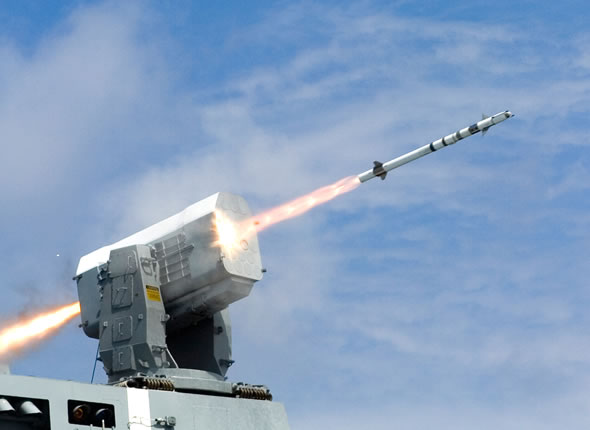
RAM has been continually improved to stay ahead of the ever-evolving threat of anti-ship missiles, helicopters, aircraft and surface craft. RAM Block 1 incorporated a new image-scanning seeker with the added capability of autonomous IR all-the-way guidance, thus countering advanced anti-ship missiles that do not employ on-board radar seekers. Enhanced digital signal processing further provides increased resistance to countermeasures and superior performance in severe IR background conditions. An advanced optical target detection device is incorporated to detect very low sea-skimming threats. The Block 1A configuration incorporated additional signal processing capabilities to defeat helicopters, aircraft and surface craft. Block 1A is in rate production for the Consortium countries and the other countries procuring RAM. Photo: Raytheon
Raytheon Company and its German industry partner, RAMSYS, completed missile upgrades and integration testing as part of the Rolling Airframe Missile Block 2 program. The partnership completed five control test vehicle flights and met all upgrade requirements for Block 2. The missile is expected to begin guided flight tests later in 2011, followed by the program entry low rate production in late 2012.
RAM has been continually improved to stay ahead of the ever-evolving threat of anti-ship missiles, helicopters, aircraft and surface craft. RAM Block 1 incorporated a new image-scanning seeker with the added capability of autonomous IR all-the-way guidance, thus countering advanced anti-ship missiles that do not employ on-board radar seekers. Enhanced digital signal processing further provides increased resistance to countermeasures and superior performance in severe IR background conditions. An advanced optical target detection device is incorporated to detect very low sea-skimming threats. The Block 1A configuration incorporated additional signal processing capabilities to defeat helicopters, aircraft and surface craft. Block 1A is in rate production for the Consortium countries and the other countries procuring RAM. Photo: Raytheon
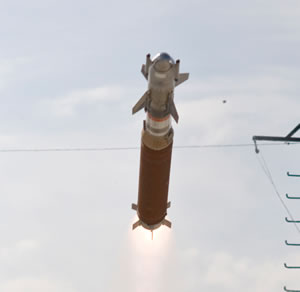
RAM Block 2 features enhanced kinematics, an evolved radio frequency receiver, a new rocket motor and an upgraded autopilot system. These improvements enable the missile to outpace evolving threats.
RAM is a supersonic, lightweight, quick reaction, fire-and-forget missile providing defense against anti-ship cruise missiles, helicopter and airborne threats, and hostile surface craft.
Block 2, the next step in the spiral development of the Rolling Airframe Missile, is a kinematic and RF receiver upgrade. A larger, more powerful rocket motor and advanced control section make the missile three times more maneuverable with twice the effective intercept range. This provides the Block 2 missile with the capability to defeat high-maneuver threats as well as the ability to intercept crossing threats. An enhanced RF receiver allows detection of anti-ship missiles that employ low probability of intercept radars. Photo: Raytheon
Lockheed Martin Skunk Works® and XTEND have achieved a major milestone in JADC2 by integrating the XOS operating system with the MDCX™ autonomy platform. This technical breakthrough enables a single operator to simultaneously command multiple drone classes, eliminating the friction of mission handoffs. From "marsupial" drone deployments to operating in GPS-denied environments, explore how this collaboration is abbreviating the data-to-decision timeline and redefining autonomous mission execution.
As traditional defense primes face mounting competition from agile “neoprimes” such as Anduril, Palantir and Helsing, the balance of innovation is shifting toward software-defined warfare and scalable, dual-use technologies, while global industry consolidation—marked by Boeing’s integration of Spirit AeroSystems and other strategic mergers—signals an intensified race to secure control over the defense technology value chain. Our Defense-Tech weekly report highlights these trends.
In early October 2025, a coordinated wave of unmanned aerial system (UAS) incursions—widely attributed to Russia—targeted critical infrastructure across at least ten European nations. The unprecedented campaign exposed the fragility of Europe’s air defenses...
Executive Summary
The past week (September 18-25, 2025) represents an inflection point where strategic defense concepts have transitioned from doctrine to tangible reality. An analysis of global events reveals four primary, interconnected trends shaping an...
At the 2025 Air, Space & Cyber Conference, U.S. Air Force and Space Force leaders unveiled major updates on next-generation fighters, bombers, unmanned systems, and space initiatives, highlighting both rapid innovation and critical readiness challenges as the services race to outpace global competitors. A short version is available here, with a more detailed version for subscribers.
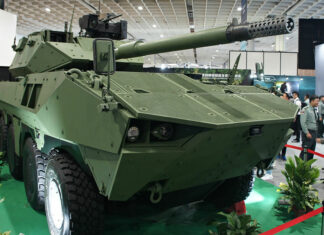
The Taipei Aerospace & Defense Technology Exhibition (TADTE) 2025 crystallized around four dominant strategic themes that collectively illustrate Taiwan's comprehensive approach to defense modernization amid escalating regional tensions. Based on a detailed report by Pleronix (available upon request). Includes a Podcast discussion on TADTE 2025's highlighting Taiwan's four strategic themes beyond the post's coverage.
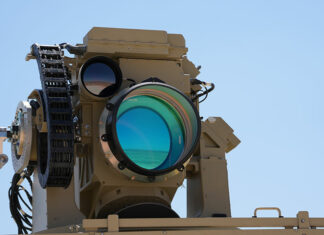
Israel’s Iron Beam 450 high-power laser system has completed final testing, marking a major leap in air defense. Developed by Rafael, it offers precise, cost-effective interception of rockets, UAVs, and mortars, and is set for IDF deployment by 2025.