Tuesday, December 23, 2025
More
    Home Blog Page 440

    FENNEK – Krauss-Maffei Wegmann / SP Aerospace

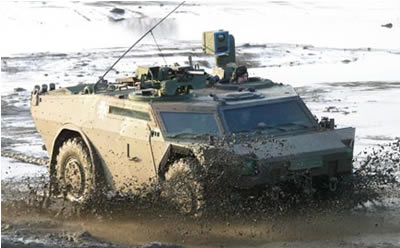
    FENNEK is an air-portable armored scout vehicle, developed and produced by a consortium including the German company Krauss-Maffai Wegman and the Dutch SP aerospace & vehicle systems. Both countries are procuring 612 vehicles. Deliveries started during the summer of 2003.
    Fennek has a three-man crew, consisting of commander, observer and driver. Its armor protection defeats all handheld weapons as well as AT and AP mines. With a total weight of approximately 11 tons, the vehicle is capable of carrying a payload of 3 tons. The vehicle is equipped with an integral sensor payload and a remotely controlled weapon station, mounting a 7.62 cal. machine gun or a 40 mm grenade launcher.

    StunStrike Weapon

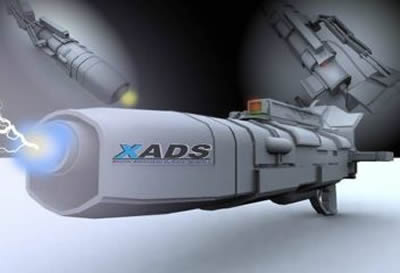
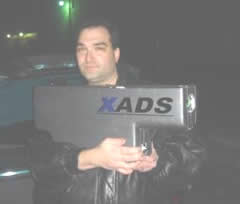
    Stunstrike is currently in development, and is expected to be ready for fielding by early 2006. StunStrike is based on an artificial lightning technology. Three products are currently under various phases of development – a Briefcase-sized unit, Close Quarters (CQ) Rifle and Short Range Perimeter system. The Briefcase unit is already operational. It is operating at a range of about 2 feet (0.7 meter) used for corridor/doorway security. The unit can be mounted on the ceiling or above a door, activated by remote control or movement detection. The CQ Rifle’s functional core was already demonstrated . It is designed to be effective at ranges of 10 – 12 feet (up to 4 meters). The SR unit is a perimeter security system with a range of up to 25 feet (8 meters), designed to defend things like embassies, etc.

    The Stunstrike system is  programmable, therefore, when fielded, the system could be tuned to ensure maximum safety or rapid response, as required.

    Battle Damage Assessment Capabilities

    Start < Page 5 of 9 >

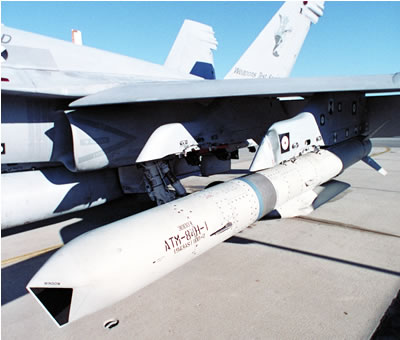
    Since precision strikes are effective and accurate, the number of weapons necessary to create the desired effect is sometime limited to a single weapon – to create the minimum – rather than maximum required lethality and minimize collateral damage. Accurate and timely Battle Damage Assessment (BDA) report is therefore required, to determine not only whether the weapon hit the target, but also if the desired effect was achieved. Such an effect can be the elimination of target, but also the absence of collateral damage or fratricide. BDA is becoming an integral component of the modern strike packages, just as the intelligence, targeting, delivery platform and the weapon. An evolving concept for integral BDA is placement of an imaging sensor on the weapon itself. For example, SLAM-ERSPICE, and JASSM already have a datalinks which provides views of the target until the time of impact. However, this view does not offer an assessment of the target condition after the strike. A more advanced concept offers a jettisoned sensor and datalink package released from the bomb just before it strikes the target. Modern standoff precision weapons also provide significant loitering capability, to enable extended presence over the battle area, as well as co-operative control between weapons, providing mutual targeting and BDA. Multi-Kill Capable weapons systems will be able to operate autonomously, with or without “man-in-the-loop” for final verification of targets, based on real-time situational awareness. Such weapons are expected to maintain long persistence over the Battlefield, for several days, and provide inherent Intelligence, Surveillance and Reconnaissance (ISR) capabilities, which will be augmented by supporting assets.

    Additional parts of this article:

    SaberShot Photonic Disruptor (Laser Dazzler)

    The company received a first order for the SaberShot photonic disruptor (laser Dazzler), a high resolution green laser used to flash-blind and disorient an aggressor at long range. SaberShot is fully tested and will be used as an interim non-lethal measure by US troops. Dazzlers are available in various forms, from a pen-sized devices effective at a range of 200 meters, flashlight devices effective at 500 meters and rifle size units, with a range of two kilometers.

    DEFEXPO 2004 – UAVs

    Israeli companies demonstrated a high profile in DEFEXPO, evident to the warming relations between India and Israel and the growing volume of defense exports between the two countries. One of the hottest issues was UAVs – India has already bought Searcher and Heron systems from IAI. The company displayed here a wide range of payloads that can be fitted with these UAVs, including a SAR, maritime patrol radar and ESM payloads. More Israeli companies are trying to interest India in UAV designs – in this year’s event, both Elbit Systems and RAFAEL demonstrated their UAV capabilities, with the introduction of the miniature Skylark systems. (Both RAFAEL and Elbit chose the same name for their mini UAV programs). Another miniature UAV – I-SEE was unveiled here, for the first time by IAI. Elbit has also brought a full scale model of the Hermes 180 close range UAV, designed for brigade and division level. EMIT brought to India its field proven systems, including the Blue Horizon and Sparrow. Another new system from Elbit was the tactical satellite communications terminal, demonstrated here I live operation for the first time. The system resulted from cooperation between Elbit and Gilat Satellite Communications Company. It can link to any satellite and integrate tactical networks with voice or data communications, over long ranges via satellite relays. Elbit has also developed and tested a special podded satellite link, mounted on top of the fuselage of medium and large UAVs such as the Hermes 1500 and Hermes 450. This installation does not limit the range or performance of the UAV but extends it range to the maximum range, well beyond the communications range of existing terrestrial datalinks. RAFAEL also presented the Stalker system, proposed for border security and tactical surveillance roles.

    Precision Munitions for 120mm Mortars – US Developments

    Start < Page 7 of 7 >

    Advanced mortar bombs are under advanced development stage for the US Army. XM984 Extended Range Mortar Cartridge (ERMC) is currently under development for by Talley Defense Systems for the US Army 120 mm M120/M121 mortar system. A conventional M934 bomb fired from this system will reach a maximum range of 7,200 metres. The XM984 is expected to almost double the range, to reach 12,000 m’. The range extension being produced by a nose-mounted rocket motor that cuts in at a pre-determined point during the bomb’s trajectory. The rocket will fire 12 seconds after the launch, and burn for a period of four seconds. After a predestinated delay, 54 M80 grenades will be released from the bomb, effecting a target are 233 percent larger than an HE bomb.

    A different munition is the M395 Precision Guided Mortar Munition (PGMM) under development at Lockheed Martin and Diehl of Germany as well as ATK, which recently won a US Army development contract for the weapon. Lockheed Martin’s PGMM  is based on Diehl’s Bussard artillery projectile, will provide the tactical commander with ‘surgical’ strike capability, to destroy high value / high risk targets. Using such munitions could increase the future effective range from 0.5 up to 15km. PGMM will not use rocket assistance for range enhancement, but utilize aerodynamic surfaces for the mid-course gliding. On the terminal phase, a semi-active laser homing seeker acquires the target and guide the munition to impact. Initial productions of the PGMM will be equipped with semi-active laser seekers, and be capable of a range of 7.5 km. Follow-on systems will have optional thermal imager, and extended range capability, as well as more choices for fuzes and warheads. The IR seeker will detect and classify targets, process the information automatically into navigation (GPS), guidance and control subsystems to ensure first-hit-on-target. A self-destruct mechanism eliminates the collateral damage from duds, for advancing troops. The initial phase of the program was completed in 2001 with successful live fire demonstration. Advanced development was started in 2002.

    Additional Parts of this article :

    Saber 203 Laser Dazzler

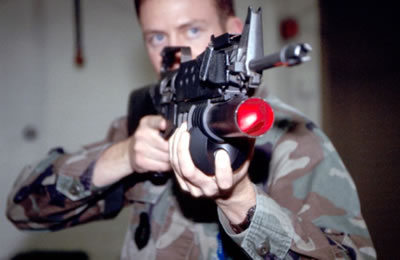
    Saber 203 laser illuminator temporarily impairs an adversary’s ability to fire a weapon. The laser has an effective range of 300 meters. The operational system uses a semiconductor laser which loads into a modified M-203 40mm grenade launcher. The laser is loaded into the launcher like an actual grenade and is operated by a switch installed below the launcher. In emergency, the capsule can be ejected and replaced with a grenade. The eye-safe laser briefly illuminates an opponent with harmless, low power laser light. On night operations it can be used to degrade human night vision capability and electronic night vision devices. Realizing he has been targeted, the aggressor hides or flees rather than risk death by aiming his weapon and attracting defensive fire.

    Advanced 120mm Mortar Munition

    Start < Page 6 of 7 >

    Some impressive technological gains have enhanced accuracy, lethality and combat safety for the modern mortar systems.

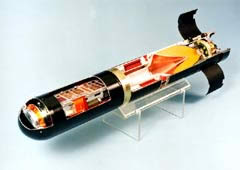
    Projectile guidance technology has already been used since 1994 in 120 mm mortars, with the IR homing Bofors/Saab Strix (picture below left) and the Eastern Block 120 mm Gran (picture at right) mortar rounds. Strix produced by SAAB/Bofors, can engage targets at a range of 7 km, operates in an autonomous heat-seeking mode which can intelligibly recognize targets and discriminate targets among decoys and burning targets. Strix has been in service with the Swedish Army since 1994 and also has been ordered by the Swiss Army. It is optimized as an anti-armor weapon, defeating targets with top-attack.
    Cargo munitions are introducing an innovative new advantage for mortars. One of the munitions promoted for use by the  AMOS mobile mortar system is a 120 mm cargo munition jointly developed by the Swiss company RUAG and Israel Military Industries (IMI). The M971 mortar bomb carries 32 x M87 dual purpose (anti-personnel/anti-material/armor) submunitions. Each bomblet has can penetrate up to 105mm of steel and releases 1200 preformatted fragments. According to IMI a single cargo round covers a lethality area of 100×100 meters. The bomblets are equipped with dual-action self destruct fuses to minimize hazardous duds. Another cargo bomb is produced By Instalaza of Spain. Mat-120 is equipped with 21 submunitions, each with an electronic impact fuze that also has self-destruct function.

    A “semi-smart” mortar munition is under development at Soltam Defense for 120mm tubes. Designated M150/M151 HE-TAG  “Mor“, the new design implements laser homing technique for improving the accuracy of the mortar fire against “time-urgent” area targets, rather than hitting point targets at pinpoint accuracy. The idea is to fire a single mortar round on target to neutralize it, thus saving the costly ammunition spent in traditional ranging process. A homing device is fitted to the tip of the bomb, which scans the ground during its terminal trajectory phase searching for the designated target area. Once the laser spot has been acquired, moving tail fins are deployed to correct the bomb’s trajectory to impact on the spot. The M150 has a range of 7,2km, the M151 fired from a longer barrel reaches 9,5km.

    Additional Parts of this article :

    Mortars in Israeli Army Use

    Start < Page 5 of 7 >

    Roots of Israel’s Self Propelled mortars

    The IDF standard M3A1 Mk-C type mounted a 81mm mortar on a rigid baseplate, which, during the first Arab-Israeli wars became the main tactical support weapon in tank and armoured infantry companies and battalions. Combat proven by  insufficient firepower, it was followed by the Mk-D heavy mortar carrier, mounting the Soltam 120mm mortar. Initial firing tests on an AMX-13 chassis failed due to the excessive recoil (120 ton local pressure!) but an ad-hoc quite simple solution produced the answer. Instead of trying to absorb the recoil forces elastically, the Israeli technicians mounted the mortar base to the halftrack mass permanently, thus achieving an overall absorbtion of the recoil blast by the carrier spring mechanism itself. The Mk-D 120mm mobile mortar became a key element in IDF combat support for many years, until more technically advanced systems were locally developed by Soltam.

    Additional Parts of this article :

    Modern Mobile Mortars Trends

    Start < Page 4 of 7 >

    Mobile mortars and their applicationin the modern battle

    The enthusiasm in Russian mortars was not matched by the west. Post war Western nations seemed to place limited interest in developing mobile mortar system, placing their priorities on heavier self propelled rocket artillery designs, with nuclear capability. Smaller armies, faced with restricted arms procurement resources such asIsrael’s Army, that had to cope with lack of organic artillery, equippedhalftracks, tank chassis or light armoured vehicles mounting forward firing 81, 120 and 160mm mortars.

    AMS II 120mm mortar installed on 8×8 LAV chasis, used by the Royal Saudi Arabian Army.

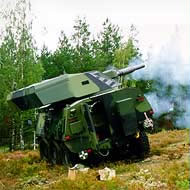
    AMOS self propelled mortar system, produced by Patria (Finland) and Hagglunds (Sweden)

    A new trend appeared, however, after Vietnam, as well as the development of low-intensity warfare engagements that followed the Vietnam War, when the lack of organic tactical fire support once again became a major problem to front line troops. One of the main drawbacks, was that man-packed infantry mortars carried insufficient ammunition to provide effective fire support at the tactical combat level and the tactical commander depended mainly on higher unit artillery barrages, which often misfired, due to erratic communications, endangering friendly fire incidents. With ground forces becoming ever more mobile, and AFVs rendering better survivability on a fire saturated battlefield, in-house organic fire support became a vital combat element even at relatively junior tactical levels. This situation became even more critical in Military Operations in Urban Terrain (MOUT) operations, which will become major contingencies in future combat situations. Under such conditions, lack of organic commander’s “hip-pocket” fire support would become devastating for the in-fighting troops.

    With dramatic developments in enhanced firepower lethality, under-armor self propelled artillery became a life saving imperative, and battlefield survival of the veteran infantry mortar equally depended on an urgent technological solution. It was in the mid-seventies and early eighties of the last decade, that some of the more interesting developments in mobile mortar design matured into highly effective weapon systems.

    Additional Parts of this article :

    Laser Induced Plasma Channel

    Laser Induced Plasma Channel (LIPC) technology has already been used for a Portal Denial System. The system is designed to be installed as a corridor or passageway denial system that can be employed at either indoor or outdoor locations and can be configured for each individual installation’s security requirement. The system creates a laser guided electric barrier that can be initiated either automatically from an existing customer-supplied computer system that identifies the authorization of the person (similar to conventional keyless entry systems) or via operator command. The system is designed to stop intruders in a passageway or at a vehicle check point, with a lethal or non-lethal electrical discharge.

    Portable Vehicle Arresting Barrier (PVAB) / Primex

    The portable vehicle arresting barrier is capable of stopping a light truck (up to 3.5 tons) at speeds up to 45 mph. It can be installed by two people in less than an hour. Total weight of the system is 646 pounds. When emplaced on a road, the system provides quick and mobile deterrence to unauthorized and/or potentially suspicious vehicles at checkpoints or entryways to high value assets or facilities.

    Modern Mobile Mortars

    Start < Page 1 of 7 >

    Mobile mortars application in the modern battle
    Often regarded as “poor man’s artillery”, the mortar is returning in a big way to front troops, having been injected by new technology to render enhanced precision firepower.


    For generations, mortars have lacked capability to attack “hard” targets, such as armour and fortified bunkers, their main task being the tactical commander’s “hip pocket” weapon for battlefield suppression, illumination and obscuration missions.

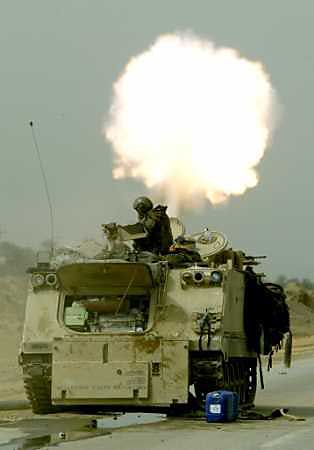
    These days new mortar systems, using latest state-of-the art technologies, are more versatile, multi-mission and highly lethal firepower, giving the tactical commander highly flexible in-house combat support, to which he so far had no access. While light and medium man-portable mortars are still in vogue, the key element in tactical firepower have become 120mm mortars, which, combined with mobility, protection and advanced “smart” mortar munitions render devastatingly effective and accurate firepower, never attained at such tactical combat level. This article will deal mainly with the new mobile mortar platforms, some of which have already seen action during the latest Operations in Afghanistan and Iraq.

    Additional Parts of this article :

    Transformation of Air Strike Operations

    Start < Page 3 of 9 >

    The transformation of air operations is not focusing only on the aerial dimension, the effects they create, as part of the broader campaign view. For example, as ground forces the shift from heavy to light, rapidly deployable forces such as the Stryker Brigades means that deployed units will require air support more frequently than before and must be ready to respond to such calls in every terrain, including urban environment, which require specialized weaponry and tactics, due to close proximity to friendly and non combatants. To respond to such missions air forces must use smaller, high precision weapons.
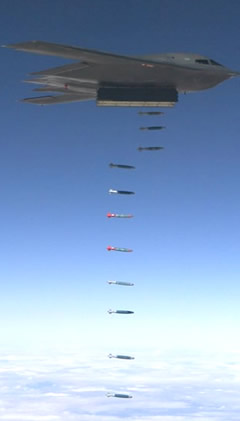
    The prevailing military thinking has shifted dramatically since the end of the 20th century, when planners focused on the use of Overwhelming Force to ensure victory, (as vindicated in Operation Desert Storm, 1991) to the employment of Overmatching Power, as clearly proven in Operation Iraqi Freedom, 2003. With the efficient use of precision weapons networked employing sensors, intelligence sources and decision making levels throughout the theater, the emphasis has shifted from attrition-based campaign determined by numbers of platforms, to the aggregated effects caused by the weapon used. In this respect, four capabilities are emerging as keys features – Knowledge, Speed, Precision, and Lethality. These elements are currently guiding the transformation of the US forces, and are gradually adapted by many other military forces worldwide.

    Information: Intelligence about hostile forces, specifically real-time and near-real time (such as persistent assets such as airborne SAR ground radar surveillance and UAVs and availability of continuous satellite coverage), terrain etc, Blue force situational picture, accurate weather forecasts, technical and logistical information all contribute to an essential resource for planning and efficient utilization of available forces.

    Speed: Speed of deployment to the theater, op tempo, speed of processing information and responding to time critical targets. The need for speed has regained the interest in heavy bombers which had lost their popularity since the end of the cold war. They were employed successfully in during Operation Desert Storm, and most impressively, during OEF and OIF, where mass coordinated attacks and pin-point strikes were employed by few B-52H and B-1B bomb loaded “trucks”.
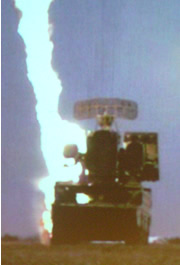
    Precision: not just the precision of weapon systems, but also the accuracy of information and targeting. Closing rapid cycles between sensors-and-shooters is a critical factor in the effective employment of precision weapons. This capability frequently requires the employment of special-forces teams on the ground, as well as ground/air liaison and coordination teams. During Desert Storm, about 30 Special Forces teams deployed on missions separate from the conventional force. In OIF, about a thousand men were closely wedded to conventional forces. By being able to carry out “precision decisions” these teams were located where the action unfolded, equipped with target acquisition and designation equipment, using opportunities for the employment of precision weapons.

    Lethality:  is directly affected by the timeliness, precision and efficiency of modern weapons. It took an average of four aircraft to kill one target in Desert Storm, whereas in OIF just one aircraft could kill about four targets.

    With the introduction of improved knowledge, speed, precision and lethality, the infrastructure and procedures of net centricity operations are also transforming – a critical aspect is planning – which has to be done faster, is also more complex, as human and machine factors must coordinate and are shared across many players, including conventional and special forces. The planning process should also be network centric – not limited to a single aircraft, weapon or unit but must also involve joint forces, and become more responsive to changing scenarios.

    Additional parts of this article:

    Skunk Works and XTEND Simplify Multi-Drone Command

    0
    Lockheed Martin Skunk Works® and XTEND have achieved a major milestone in JADC2 by integrating the XOS operating system with the MDCX™ autonomy platform. This technical breakthrough enables a single operator to simultaneously command multiple drone classes, eliminating the friction of mission handoffs. From "marsupial" drone deployments to operating in GPS-denied environments, explore how this collaboration is abbreviating the data-to-decision timeline and redefining autonomous mission execution.

    From Ukraine to Taiwan: The Global Race to Dominate the New Defense Tech Frontier

    0
    As traditional defense primes face mounting competition from agile “neoprimes” such as Anduril, Palantir and Helsing, the balance of innovation is shifting toward software-defined warfare and scalable, dual-use technologies, while global industry consolidation—marked by Boeing’s integration of Spirit AeroSystems and other strategic mergers—signals an intensified race to secure control over the defense technology value chain. Our Defense-Tech weekly report highlights these trends.

    Europe’s “Drone Wall”

    0
    In early October 2025, a coordinated wave of unmanned aerial system (UAS) incursions—widely attributed to Russia—targeted critical infrastructure across at least ten European nations. The unprecedented campaign exposed the fragility of Europe’s air defenses...

    Weekly Defense Update & Global Security Assessment

    0
    Executive Summary The past week (September 18-25, 2025) represents an inflection point where strategic defense concepts have transitioned from doctrine to tangible reality. An analysis of global events reveals four primary, interconnected trends shaping an...

    U.S. Air and Space Forces Push Next-Gen Programs at the AS&C 2025 Conference and...

    0
    At the 2025 Air, Space & Cyber Conference, U.S. Air Force and Space Force leaders unveiled major updates on next-generation fighters, bombers, unmanned systems, and space initiatives, highlighting both rapid innovation and critical readiness challenges as the services race to outpace global competitors. A short version is available here, with a more detailed version for subscribers.

    TADTE 2025: Reflecting Taiwan’s Strategic Themes

    0
    The Taipei Aerospace & Defense Technology Exhibition (TADTE) 2025 crystallized around four dominant strategic themes that collectively illustrate Taiwan's comprehensive approach to defense modernization amid escalating regional tensions. Based on a detailed report by Pleronix (available upon request). Includes a Podcast discussion on TADTE 2025's highlighting Taiwan's four strategic themes beyond the post's coverage.

    Iron Beam 450 Completes Testing, Soon to Join With Operational Air Defense Units

    0
    Israel’s Iron Beam 450 high-power laser system has completed final testing, marking a major leap in air defense. Developed by Rafael, it offers precise, cost-effective interception of rockets, UAVs, and mortars, and is set for IDF deployment by 2025.