
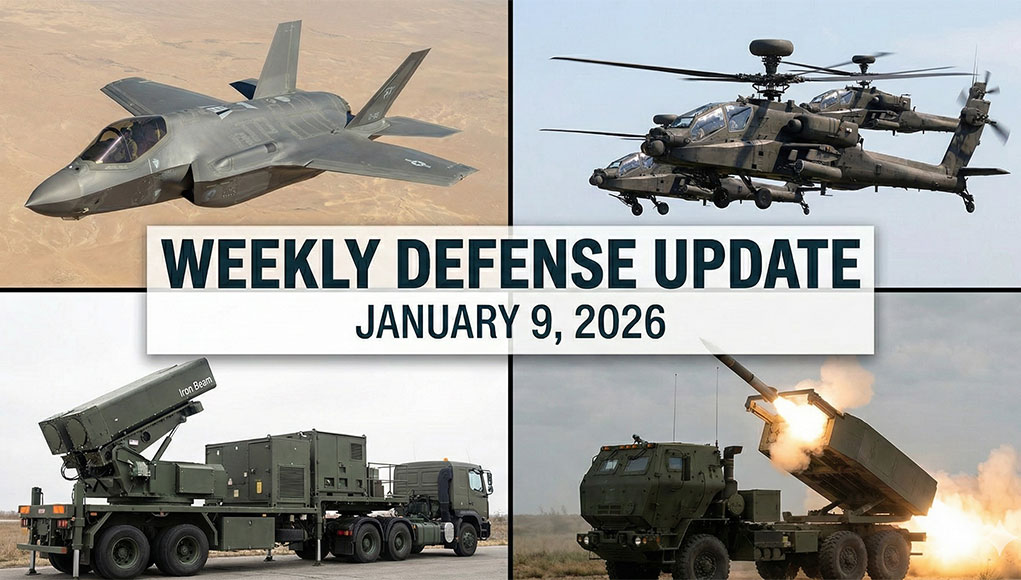
 The opening week of 2026 has been defined by a singular, paradigmatic shift in modern warfare: the “catastrophic failure” of Venezuela’s integrated air defense network during a U.S. special operation. This event serves as a brutal real-world validation of the trends currently dominating defense news, specifically the supremacy of advanced electronic warfare (EW) over legacy kinetic defenses and the critical need for next-generation situational awareness. The operation, which resulted in the capture of President Maduro, succeeded not through brute force, but by rendering Venezuela’s Russian S-300VM and Chinese “anti-stealth” radars effectively blind. This failure of Eastern-bloc hardware to detect or engage U.S. forces has sent shockwaves through the global market, underscoring why nations like Spain and Germany are rushing to modernize their air defense architectures with Western alternatives, such as the Patriot system.
The conflict in Venezuela starkly illustrates that in 2026, a nation’s security is defined not by the missiles it displays, but by the electronic shield that protects, or fails to protect, its sensors.

The global defense sector is undergoing accelerated transformation, driven by a confluence of heightened geopolitical instability and rapid technological advancement. Nations are urgently modernizing their military capabilities, a trend underscored by massive procurement approvals and a clear pivot towards next-generation systems. Lessons learned from recent conflicts have placed a premium on achieving technological and numerical superiority, leading to significant investments in affordable, mass-produced weapons and unmanned systems, advanced air defense systems, directed energy weapons, and hypersonic missiles. This dynamic environment is reshaping national defense strategies, industrial priorities, and international alliances.
Analysis of the current market reveals several dominant, interlocking trends that are defining the future of defense procurement and operations:
- Technological Superiority: There is a pronounced global focus on acquiring a decisive technological edge. This is most evident in the race to develop and deploy unmanned systems across all domains, the pursuit of cost-effective counter-drone capabilities, the operationalization of directed energy weapons, and the development of strategic hypersonic missiles.
- Indigenous Production & Modernization: A strategic imperative for sovereign defense industrial capacity is driving major national efforts. Nations like India and Turkey are at the forefront, channeling significant state investment into developing domestic design, manufacturing, and sustainment capabilities to reduce dependence on foreign suppliers and spur economic growth.
- Increased Defense Spending: In response to direct and perceived regional security threats, governments are allocating historic levels of investment to their defense budgets. This surge is translating into unprecedented multi-billion-dollar, multi-year procurement programs for advanced fighter aircraft, naval vessels, armored vehicles, artillery, and missile systems.
- Strategic International Cooperation: The complexity and cost of modern defense systems are fostering a greater reliance on multi-national partnerships. These collaborations, often in the form of joint ventures and technology-sharing agreements, aim to enhance collective security, ensure interoperability among allies, and distribute the financial burden of research and development.
These trends are underpinned by substantial, long-term budgetary commitments that signal a clear and sustained direction for the global defense market.
Analysis of National Defense Budgets and Long-Term Allocations
Analyzing national defense budgets provides a clear and strategic indicator of future procurement priorities and market opportunities. These long-term financial commitments reveal the investment plans and the specific capability areas that nations deem critical for their security in the coming decade.
- Europe
- Poland: Warsaw is undertaking one of the most ambitious military modernizations in Europe, with projected defense spending set to reach $301.6 billion between 2026 and 2030. This massive allocation is driven by regional security threats and is funding the acquisition of premier capabilities, including advanced missile defense systems, F-35A fighter aircraft, HIMARS and Chunmoo rocket launchers, K2 Black Panther tanks, and Apache attack helicopters.
- Germany: Berlin’s strategic planning, outlined in the classified ‘Operationsplan Deutschland,’ is heavily influenced by its perception of itself as NATO’s central logistics hub in Europe. The plan is to drive investments to harden the nation against hybrid attacks on energy systems and defense infrastructure anticipated in the opening stages of a conflict.
- European Commission: Through the European Defence Fund, the EC has allocated €150 million to foster sovereign European capabilities. This funding is specifically earmarked to support the development of a next-generation main battle tank and a new multiple-launch rocket system, signaling a push to reduce reliance on non-European defense solutions.
- Asia-Pacific
- India: New Delhi has made indigenization and modernization the cornerstones of its defense policy. In 2025 alone, the Defence Acquisition Council approved military procurement proposals valued at over $46 billion (₹3.84 trillion). In the current fiscal year, capital contracts worth ₹1.82 trillion have already been signed, demonstrating a rapid conversion of budgetary approvals into industrial activity.
- Japan: Facing regional tensions, Tokyo approved a record-setting defense budget for fiscal year 2026, totaling 9 trillion yen (approx. $58 billion), a 9.4% increase. Key allocations include over $6.2 billion to enhance ‘standoff’ missile capabilities and $640 million for the development and acquisition of unmanned systems under the new SHIELD program.
- Taiwan: Taipei has established a special eight-year defense budget of NT1.25 trillion (US $39.8 billion) to accelerate its asymmetric defense strategy. A primary focus is the domestic production of unmanned attack surface vessels. A significant portion is also dedicated to the ‘Taiwan Dome’ project, an initiative to create a layered air defense network using the U.S. Army’s Integrated Battle Command System (IBCS) for enhanced command and control.
- United States
- FAA Modernization: While not a direct defense expenditure, the modernization of national airspace infrastructure has significant security implications. The ‘One Big Beautiful Bill Act’ allocates $3 billion for the Federal Aviation Administration (FAA) to replace up to 612 aging air traffic control radar systems by June 2028, a critical upgrade for both civil and military air operations.
This substantial capital injection is not being spent uniformly; it is being strategically channeled into specific technological domains, reflecting a global consensus on the future of warfare shaped by recent conflicts.
Dominant Technological Priorities Shaping Modern Warfare
Technological advancement is the primary engine of change in the contemporary defense sector. Nations are strategically investing in disruptive capabilities to gain a decisive battlefield advantage, with procurement decisions heavily influenced by the performance of systems in modern conflicts, from the proliferation of autonomous systems to the operational deployment of directed-energy weapons.
The Proliferation of Unmanned and Autonomous Systems
The market is characterized by an intense and widespread focus on unmanned and autonomous systems across the air, land, and sea domains. The trend is moving beyond simple remotely piloted vehicles toward platforms integrated with artificial intelligence, capable of autonomous operations in groups, swarms, and manned-unmanned teaming.
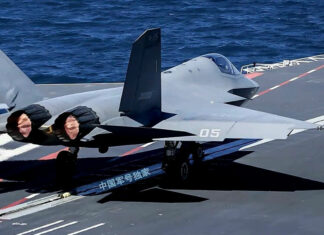
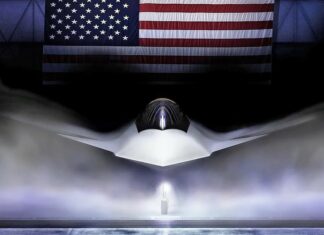
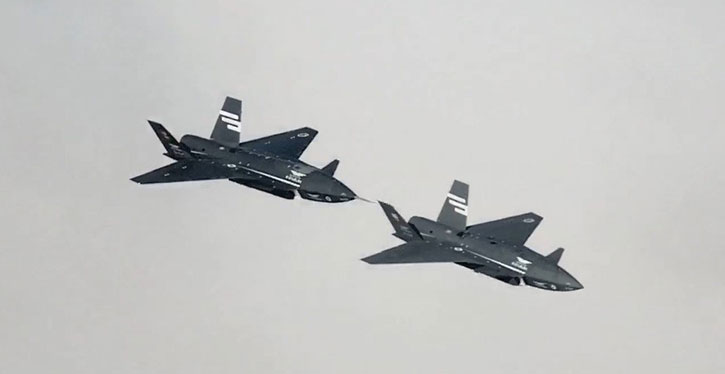
- Aerial Systems: The air domain is seeing the most dramatic advances. Recent milestones include Turkey’s Bayraktar KIZILELMA unmanned fighter achieving the world’s first autonomous close-formation flight, China conducting the maiden flight of its CH-7 stealth reconnaissance drone, India launching a major initiative to develop an indigenous High Altitude Long Endurance (HALE) RPAS, and the U.S. Marine Corps selecting a team of Northrop Grumman and Kratos Defense to provide a ‘loyal wingman’ based on the QX-58 Valkyrie platform and issuing a request for information (RFI) for low-cost, mass-producible FPV drones.
- Naval Systems: Navies are increasingly adopting uncrewed platforms for dangerous and protracted missions. The UK Royal Navy awarded Thales a significant contract to deliver portable autonomous command centers for mine-hunting operations. Central to this capability will be the Thales M-Cube mission management system and AI-powered Mi-Map software, which will coordinate uncrewed assets and accelerate the transition away from manned vessels.
- Ground Systems: Armies are developing unmanned ground vehicles (UGVs) to support a range of frontline missions. A notable development is the Indian Army’s ‘Sapper Scout’, an indigenously designed multi-utility UGV for reconnaissance, mine detection, and logistics.
The Emergence of Directed Energy and Advanced Air Defense
Lessons from recent conflicts have highlighted the vulnerability of forces to aerial threats like rockets, drones, and cruise missiles, while also exposing the prohibitive cost of traditional interceptors. This has spurred a strategic shift toward more advanced and cost-effective air defense solutions, particularly directed energy weapons and sophisticated missile systems.
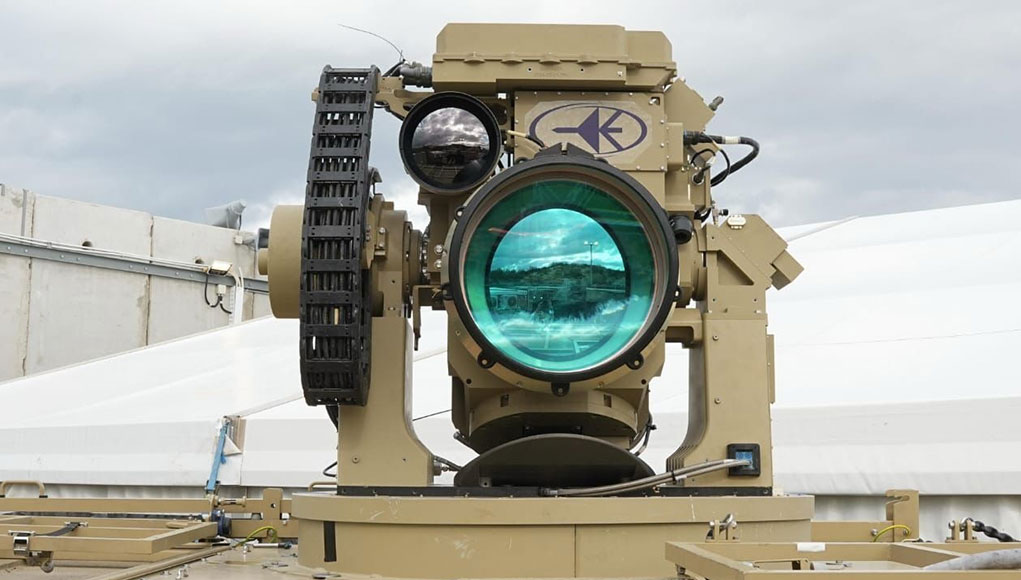
- Laser Systems: Directed energy is transitioning from a developmental concept to an operational reality. Israel has formally deployed the world’s first operational ‘Iron Beam’, a 100-kilowatt laser system designed to intercept rockets, mortars, and UAVs at a fraction of the cost of missile interceptors. Similarly, the U.S. Army is acquiring the mobile LOCUST laser weapon system, integrating it onto tactical vehicles to provide maneuverable defense against drones.
- Hypersonic and Ballistic Missiles: The development of high-speed, maneuverable missiles remains a top priority for major powers. China has reportedly fielded the DF-27, an intercontinental-range hypersonic glide vehicle. In a demonstration of its growing indigenous missile capability, India successfully conducted a salvo test of its Pralay quasi-ballistic missile, paving the way for its induction.
The Strategic Importance of Space-Based Assets
Space has become an indispensable domain for modern military operations, crucial for intelligence, surveillance, reconnaissance (ISR), navigation, and missile defense. Consequently, investment in resilient and capable space-based assets is growing rapidly.
A landmark development in this area is Rocket Lab’s prime contract award from the U.S. Space Development Agency (SDA), valued at $816 million. Under this agreement, the company will build and operate 18 satellites for the Tracking Layer of a new missile defense constellation, marking its emergence as a key defense prime contractor. This strategic investment is paralleled by geopolitical maneuvers, as evidenced by the deepening space collaboration between Russia and Iran, which saw a recent Russian rocket launch of Iranian surveillance satellites into orbit.
These emerging technologies are being rapidly fielded through a series of high-value contracts awarded to leading defense and technology firms.
Analysis of Major Global Procurement Contracts
This section provides a granular analysis of the most significant contract awards, offering a clear view into specific national investment priorities and corporate successes. A closer look at these deals reveals a sophisticated market defined by both high-value direct exports and increasingly complex agreements involving local production and industrial partnerships, a pattern that underscores the growing ‘glocalization’ of the defense sector.
Air Domain
| Awarding Nation/Entity | Recipient Company | Platform/System | Contract Value | Strategic Significance |
| Israel | Boeing | 25x F-15IA Fighter Aircraft | $8.6 Billion | Modernizes Israel’s fighter fleet with an advanced, Israel-specific variant of the F-15EX. |
| France | Saab | 2x GlobalEye AEW&C Aircraft | €1.14 Billion | Replaces France’s aging E-3F AWACS fleet with a next-generation airborne early warning platform. |
| Spain | Turkish Aerospace Industries (TAI) | 30x HÜRJET Advanced Trainers | €2.6 Billion | First export sale for the Turkish HÜRJET. Airbus Defence & Space is acting as the prime integrator, managing the deal and adapting the aircraft to meet Spanish requirements. |
| Poland | Hanwha Aerospace | Chunmoo Multiple Rocket Launchers | $4 Billion | Significantly enhances Poland’s long-range precision fires and solidifies a deep industrial partnership through a joint venture with WB Electronics for local production. |
| US Air Force | Boeing | B-52 Re-engining Program (Initial Testing) | $2 Billion | Funds initial integration and flight-testing of new Rolls-Royce engines for two aircraft, a critical step in a program to keep the fleet operational into the 2050s. |
Land Domain
| Awarding Nation/Entity | Recipient Company | Platform/System | Contract Value | Strategic Significance |
| Germany | KNDS / Rheinmetall JV | 84x RCH 155 Wheeled Howitzers | €1.2 Billion | Bolsters the German Army’s mobile artillery firepower with a highly automated, modern system. |
| Germany | Projekt System & Management | 200x Additional Puma IFVs | €4.2 Billion | Expands the fleet of one of the world’s most advanced infantry fighting vehicles, enhancing mechanized forces. |
| Spain | Indra / EM&E JV | 86x Wheeled Howitzers | €2.686 Billion | Part of a major modernization of Spain’s field artillery, focused on enhancing mobility and responsiveness. |
| Spain | UTE ATP Cadenas | 128x Tracked Howitzers | €4.554 Billion | A massive investment to overhaul Spain’s self-propelled artillery capabilities for both the Army and Marine Corps. |
Maritime and C4ISR/EW Domains
| Awarding Nation/Entity | Recipient Company | Platform/System | Contract Value | Strategic Significance |
| Spain | Raytheon | Patriot Air Defense Systems | $1.7 Billion | Provides Spain with a proven, advanced capability to defend against ballistic missiles, cruise missiles, and aircraft. |
| US FAA | RTX / Indra | Nationwide Radar Replacement | $438 Million+ | Modernizes the U.S. National Airspace System’s surveillance backbone, replacing decades-old systems. |
| India | WASS (Fincantieri) | Heavyweight Torpedoes | Part of $519M deal | Arms India’s Kalvari (Scorpène)-class submarines with 48 advanced heavyweight torpedoes under a contract worth approx. INR 18.96 billion. |
| Spain | Indra | Anti-Aircraft Artillery Centers Modernization | €2.04 Billion | Upgrades Spain’s air battle command and control capabilities to counter new and emerging aerial threats. |
These large-scale procurements are increasingly facilitated by sophisticated international partnerships designed to share technology and strengthen alliances.
The Growth of Strategic International Partnerships and Cooperation
The increasing complexity and cost of defense technology, coupled with the desire for greater allied interoperability, are driving a marked increase in international collaborations. Nations and corporations are forming strategic partnerships to share development costs, gain access to new technologies, secure supply chains, and reinforce geopolitical alliances. These agreements range from joint production ventures to deep technology transfer initiatives.
- European Integration: European nations are actively pursuing joint programs to bolster collective defense and industrial capacity. Key examples include the UK-Germany agreement to enhance NATO’s eastern flank with the RCH 155 mobile artillery system; the strategic partnership between Italy’s Leonardo and Germany’s KNDS to jointly develop a new mobile artillery platform; and the Rheinmetall-MBDA joint venture to develop and produce high-performance naval laser weapon systems for the German Navy.
- Indo-Pacific Technology Transfer: As part of its “Make in India” initiative, New Delhi is leveraging partnerships to build its domestic industrial base. Rolls-Royce has put forth a landmark proposal to co-develop a next-generation aero engine in India, offering full technology transfer and joint intellectual property ownership. In the land domain, India’s Belrise Industries has partnered with Israel’s Plasan to co-produce components for autonomous electric UGV systems, transferring critical vehicle technology.
- Trans-Regional Alliances: Defense partnerships are spanning broader geographic regions to counter shared threats. Greece, Israel, and Cyprus have signed a joint military action plan to intensify air and naval exercises and cooperate on weapons acquisitions. In a prime example of industry collaboration, South Korea’s Hanwha has formed a joint venture with Poland’s WB Electronics to facilitate the local production of Chunmoo guided rockets, solidifying a deep industrial and military relationship.
These partnerships reflect a sophisticated market where success depends not only on superior technology but also on the ability to forge effective corporate and national alliances.
Conclusion: Strategic Implications for the Defense Sector
The global defense market is undergoing a fundamental realignment. Geopolitical instability has unlocked historic levels of funding, accelerating modernization programs that prioritize technological superiority across every operational domain. This transformation is characterized by a dual emphasis on developing sovereign, indigenous industrial capabilities while simultaneously deepening international partnerships to ensure interoperability and share the burdens of development. The confluence of these trends presents a complex but opportunity-rich environment for industry stakeholders.
Based on this analysis, three critical strategic implications emerge for the defense sector:
- The Unmanned Systems Imperative: Capabilities in unmanned systems, autonomy, and counter-UAS technology have transitioned from a niche specialty to a core requirement for nearly every major military. From low-cost FPV drones to autonomous combat aircraft and unmanned naval vessels, this domain represents the most dynamic and pervasive area of growth. A robust and diverse portfolio in unmanned technology is no longer optional for firms seeking to remain competitive.
- The Validation of Electronic Warfare: The reported U.S. special operation in Venezuela, where advanced Russian and Chinese air defense systems were allegedly neutralized by American electronic warfare, stands as a watershed moment. This event will severely damage the credibility and marketability of those non-Western systems and will likely trigger a global reassessment of air defense vulnerabilities. This creates a significant market opportunity for Western firms with proven, combat-tested electronic warfare, C4ISR, and integrated air and missile defense solutions.
- The “Glocalization” of Defense: The market is increasingly defined by the tension between globalization (alliances, exports) and localization (indigenous production mandates). The most successful defense firms will be those that can navigate this dynamic. Future success will depend not just on selling platforms, but on offering comprehensive partnership packages that include technology transfer, local production agreements, and joint ventures. The models established by Hanwha in Poland and Rolls-Royce’s proposed strategy in India exemplify this “glocal” approach, which is rapidly becoming the new standard for major international defense contracts.
Want to discuss this digest further?
Access our sources to ask questions
(Experimental AI-driven Feature)