
Raytheon also develops new airframe elements for cruise missiles, which will be able to change in flight, adapting to the mission requirements, and other changes in the battle. These Morphing Aircraft Structures, developed under a DARPA program, are scheduled for testing in early 2005. Morphing capability applied to a missile would enable efficient flight at multiple speeds and altitudes without sacrificing performance as is currently the case when operating off the optimized cruise point. Exceptionally quick response to a threat and mission flexibility could mean fewer missiles are needed to destroy a target. Morphing wings is the first in a series of steps to permit a cruise missile to travel at high speeds to a target area, loiter and then move to another target area, with speed changes from 0.3 Mach to 3.0 Mach. The technology ultimately could be applied to other platforms and future air vehicles, manned and unmanned. To facilitate such morphing structures, the integrated system design probes advanced materials, actuators, sensors and electronics to create devices and adaptive structures that enable significant in-flight vehicle shape change. These shape changes are more significant than those currently found in flight vehicles, and, in turn, will enable new military capabilities such as those envisioned by Raytheon.
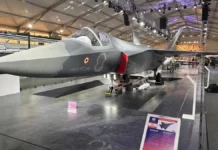

Threat Simulation Turns into Battlefield Deception
Visiting the UMEX & SimTEX 2026 exhibition taking place at the ADNEC Centre in Abu Dhabi this week, a new system caught our attention. Slovenian company Carboteh has introduced an unconventional approach to protecting...

From Ukraine to Taiwan: The Global Race to Dominate the New Defense Tech Frontier
As traditional defense primes face mounting competition from agile “neoprimes” such as Anduril, Palantir and Helsing, the balance of innovation is shifting toward software-defined warfare and scalable, dual-use technologies, while global industry consolidation—marked by Boeing’s integration of Spirit AeroSystems and other strategic mergers—signals an intensified race to secure control over the defense technology value chain. Our Defense-Tech weekly report highlights these trends.
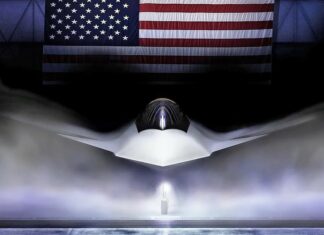
U.S. Air and Space Forces Push Next-Gen Programs at the AS&C 2025 Conference and...
At the 2025 Air, Space & Cyber Conference, U.S. Air Force and Space Force leaders unveiled major updates on next-generation fighters, bombers, unmanned systems, and space initiatives, highlighting both rapid innovation and critical readiness challenges as the services race to outpace global competitors. A short version is available here, with a more detailed version for subscribers.
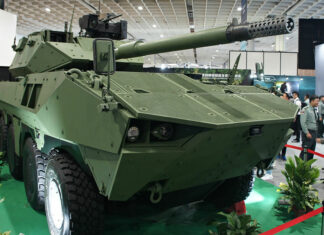
TADTE 2025: Reflecting Taiwan’s Strategic Themes
The Taipei Aerospace & Defense Technology Exhibition (TADTE) 2025 crystallized around four dominant strategic themes that collectively illustrate Taiwan's comprehensive approach to defense modernization amid escalating regional tensions. Based on a detailed report by Pleronix (available upon request). Includes a Podcast discussion on TADTE 2025's highlighting Taiwan's four strategic themes beyond the post's coverage.
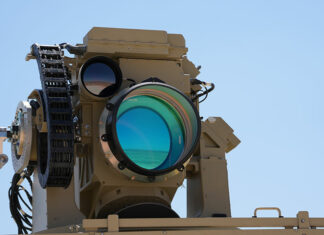
Iron Beam 450 Completes Testing, Soon to Join With Operational Air Defense Units
Israel’s Iron Beam 450 high-power laser system has completed final testing, marking a major leap in air defense. Developed by Rafael, it offers precise, cost-effective interception of rockets, UAVs, and mortars, and is set for IDF deployment by 2025.