Tuesday, December 30, 2025
More
    Home Blog Page 218

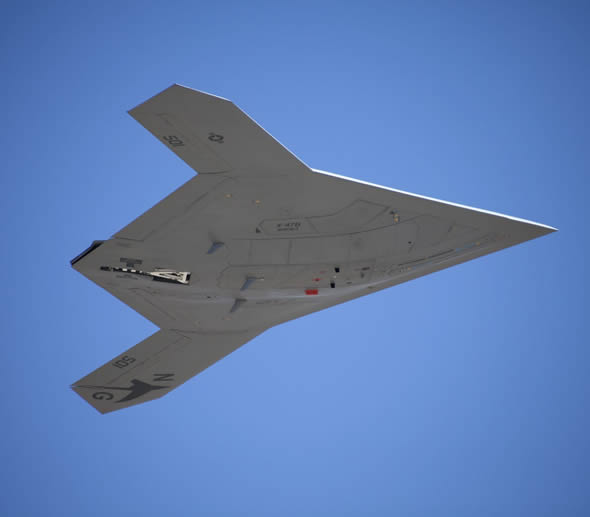
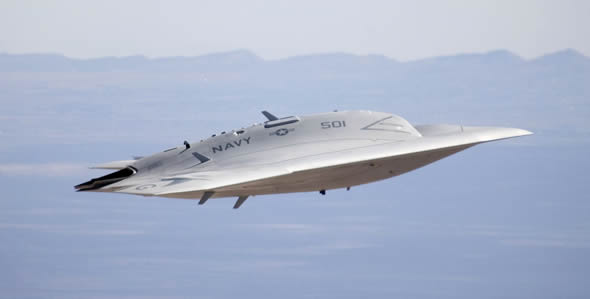
    Unmanned X-47B Begins Envelope Expansion Tests over Edwards

    The X-47B demonstrator's first flight in cruise configuration provided an important measure of its maturity and readiness to begin the next phase of flight testing. Photo: Northrop Grumman

    The X-47B Unmanned Combat Air System Demonstration aircraft reached a major milestone Sept. 30 when it retracted its landing gear and flew in its cruise configuration for the first time. The flight, conducted at Edwards Air Force Base, also helped validate precision navigation hardware and software that will allow the X-47B to land with precision on the moving deck of an aircraft carrier. “Last week’s flight gave us our first clean look at the aerodynamic cruise performance of the X-47B air system and it is proving out all of our predictions,” said Janis Pamiljans, vice president and Navy UCAS program manager for Northrop Grumman’s Aerospace Systems sector.

    The X-47B demonstrator's first flight in cruise configuration provided an important measure of its maturity and readiness to begin the next phase of flight testing. Photo: Northrop Grumman

    “Reaching this critical test point demonstrates the growing maturity of the air system, and its readiness to move to the next phase of flight testing” said Pamiljans, The recent flight was part of an on-going “envelope expansion” program for the first of two X-47B aircraft produced by Northrop Grumman for the Navy’s Unmanned Combat Air System Carrier Demonstration (UCAS-D) program. Envelope expansion flights are used to demonstrate aircraft performance under a variety of altitude, speed and fuel load conditions.

    The U.S. Navy/Northrop Grumman Corporation UCAS-D program plans to begin transitioning aircraft to Naval Air Station, Patuxent River, Md. in late 2011 to begin shore-based carrier suitability testing in 2012. The focal point of the program is to demonstrate in 2013 the first aircraft carrier launches and recoveries by a tailless, low-observable-relevant unmanned system.

    The X-47B Unmanned Combat Air System flew with its landing gear up for the first time on Sept. 7 during a test flight at Edwards AFB, Calif. Photo: Northrop Grumman

    Navistar Introduces the Saratoga Light Tactical Vehicle

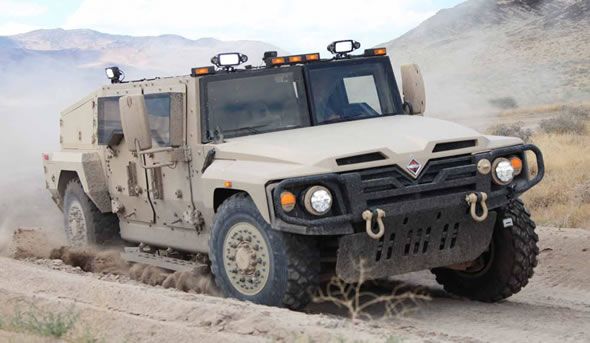
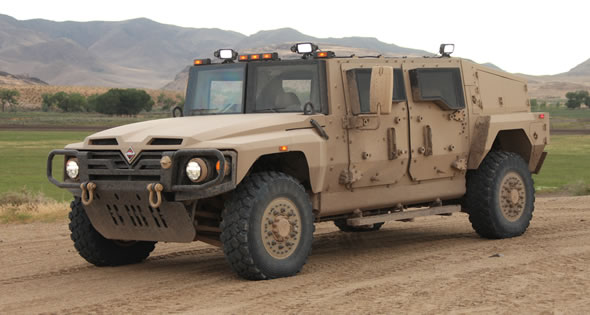
    Saratoga can 'kneel', reducing seven inches in height down to 76", to fit into Navy cargo vessels. Photo: Navistar Defense

    Navistar Defense introduced today the Saratoga light tactical vehicle at the Association of the United States Army (AUSA) Annual Meeting and Symposium today. The vehicle is targeted to gap between the projected upgraded High Mobility Multi-purpose Wheeled Vehicle (HMMWV) Modernized Expanded Capacity Vehicle (MECV) and future Joint Light Tactical Vehicle (JLTV) programs. The 10 ton vehicle has a payload of 3.2 tons including the four-passengers, plus an optional gunner accommodated in the armor and blast protected cab.

    Navistar's new Saratoga, light tactical armored vehicle. Photo: Navistar Defense

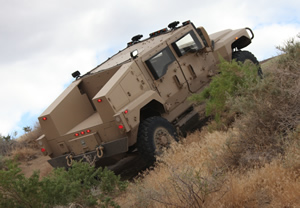
    Saratoga at a maximum combat weight of about 10 tons, Saratoga has the power and mobility for off-road operations. The open cargo compartment at the rear is visible in this photo. Photo: Navistar defense

    The vehicle has been in development for over a year, and has already gone through extensive testing over more than 25,000 miles and is ready for production. A high degree of commonality with fielded vehicles that incorporate Navistar’s automotive systems. The new Saratoga uses the MaxxForce D6.0L V8 engine, automatic engaging limited slip differentials, Allison 2100 SP 6-SP Automatic Transmission and air independent suspension for added control.

    Navistar has designed and tested its own proprietary geometry survivability solution for the vehicle. Navistar offers the vehicle with ballistic protection against small arms threat, mine and IEDs blasts, and other emerging threats. The armor suite employs metallic or ceramic armor with the protection suite designed to meet load limits without sacrificing maneuverability, horse power and torque, or payload capacity. Maintaining the floor height as high as possible was critical for effective blast protection. Therefore, the vehicle’s height was set at 83”. In order to meet the height requirement set by the Navy’s Marine prepositioned ships storage limit, the vehicle uses compressed suspension to ‘Kneel’ down, reducing seven inches to fit into the 76” height of the Navy transport ships. The gross vehicle weight is 9.979 ton (22,000 lbs), with a maximum payload of 3.265 tons (7,200 lbs.) Its length is 5.72 m’ (222”) with the wheel base making 4.01 m’ (158”).

    Saratoga can 'kneel', reducing seven inches in height down to 76", to fit into Navy cargo vessels. Photo: Navistar Defense

    ATK, IMI Highlight Air Burst System at AUSA 2011

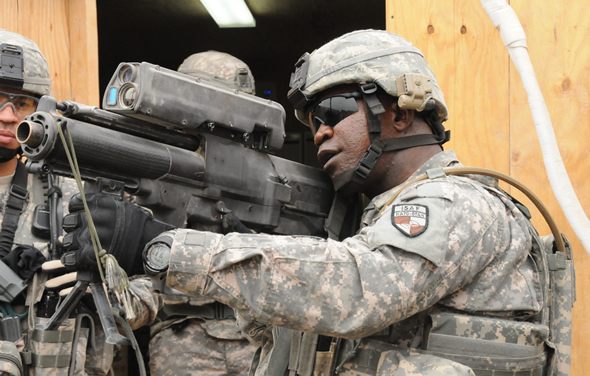
    Photo: US DOD

    Few months ago the U.S. Army has sent five examples of the new XM25 ‘Individual Semiautomatic Air Burst System’ developed by ATK, for evaluation by soldiers in Afghanistan, and the feedback received is encouraging. “We are getting great feedback from the Soldiers in the field on this weapon. The Soldiers are really excited to keep the weapon system and have requested to keep it longer than we had initially decided to leave those prototypes in theater” said Col. Scott Armstrong, the program manager for Soldier weapons at Program Executive Office Soldier said.

    The U.S. Army is evaluating five XM25 'Individual Semiautomatic Air Burst System'. According to the Program Manager said, "Rifle-to-rifle contacts where the XM25 is employed are very short." Photo: US DOD

    Armstrong noted the recent name change helps users focus on the weapon’s true benefits. “The reason we have renamed it is because that is really the materiel solution we have brought to the Army to be able to bridge the gap that was identified as counter-defilade targets.” The weapon is currently in the Engineering and Manufacturing Development (EMD) phase. Congress has approved an additional $24.7 million in funding for 36 new prototype XM25s. “We are hoping to have those in our hands for testing by the end of 2012 and downrange six months later to conduct additional field testing with a battalion size unit,” Armstrong said.

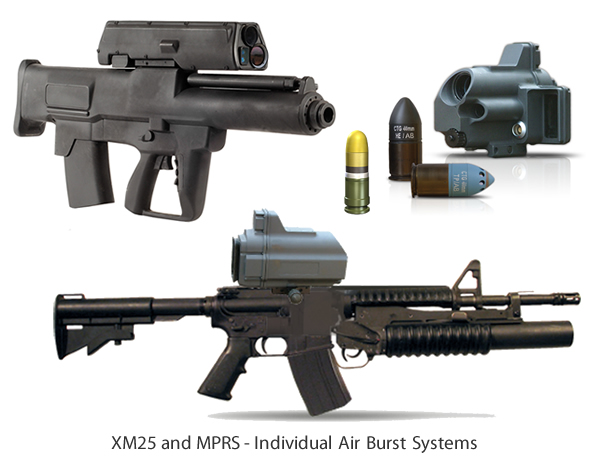
    While the XM25 offers a full solution integrated weapon, a different concept introduced by Israel Military Industries (IMI) is making headway with the Israeli military testing an add-on modification to standard rifles mounting 40mm grenade launchers, offering airburst-style weapon similar to the XM25. The MPRS is in testing with the Israeli Defense Force and could be ready for fielding in early 2012, Peretz said. The company has also demonstrated for the U.S. Army and Marine Corps; IMI has partnered with General Dynamics Armament and Technical Products (GD-ATP) to market the system in the U.S.

    IMI’s Multi Purpose Rifle System (MPRS) is designed to dramatically improve the accuracy and range of 40mm rifle grenades. The system features an integrated optics, laser rangefinder and processor, all integrated into a single unit that mounts on any rifle with Picatinny rails. Using a touchpad that mounts to a grenade launcher, a soldier can program a special 40mm grenade to accurately explode over a target at ranges beyond 250 meters. “At over 100 or 150 meters, it is very difficult to hit with a 40mm grenade launcher, but with this, you can hit very accurately — from 200 meters you can go right through a window.”

    While the XM25 weighs 6.35 kg (14 pounds) with a loaded four-round magazine. The MPRS’s optic/computer, ambidextrous touch pad and connection cable adds only about one pound to a rifle equipped with a 40mm grenade launcher and four grenades – around 6.70 (15 pounds total). While the XM25 offers the benefit of an automatic loading and rapid burst, the Israeli can be fielded more quickly and benefit from existing logistics suport, training and tactics, techniques and procedures (TTP). Both systems are currently on display at the 2011 Association of the United States Army (AUSA) Annual Meeting and Exposition in Washington.

    ATK, IMI Highlight Air Burst System at AUSA 2011. The U.S. system, developed by ATK is currently undergoing operational evaluation in Afghanistan. The Israeli system is being tested by the Israeli Army. The XM25 weighs 6.35 kg with a loaded four-round magazine while an M-16 with MPRS totals 6.70 with the same load of ammo. The XM25 offers the benefit of an automatic loading and rapid burst, the Israeli can be fielded more quickly and benefit from existing logistics suport, training and tactics, techniques and procedures (TTP). Photos: US Army, IMI

    New Miniature Lasers Improve Air/Ground Coordination, Response

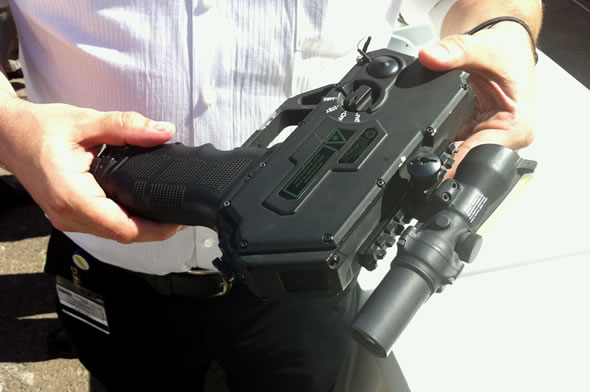
    Rattler is a hand-held, miniature laser marker/target designator capable of designating targets or mark it for other platform for attack, at a range of several kilometers. Photo: Tamir Eshel, Defense-Update

    Elbit Systems is demonstrating several new systems providing ground forces with better, safer air support. A new device already deployed in combat units is a lightweight, hand-held target designator and illuminator called Rattler. This handgun like piece employs miniaturized Diode-Pumped Laser (DPL) and simple but efficient aiming device enabling troops to mark

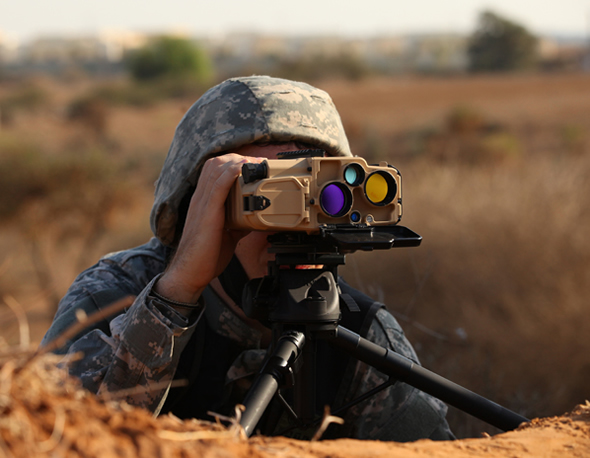
    Serpent M is a new, portable target designation system that enables the JTAC or leader at a tactical unit to mark and designate targets on dismounted operations. Photo: Elbit Systems
    Rattler is a hand-held, miniature hand-gun like laser marker/target designator capable of designating targets or mark it for other platform for attack, at a range of several kilometers. Photo: Tamir Eshel, Defense-Update

    targets several kilometers away, enabling pilots to quickly identify the target and pursue with the attack. The Rattler can also be used to designate such targets for precision, laser guided attack.

    The officer responsible for coordinating those air attacks (Joint Tactical Air Controller – JTAC) commonly use a large and heavy laser target designation system to mark the target for precision attack. The JTAC provides a critical element in ensuring the attack hits only the designated target and maintain friendly units or non combatant bystanders unharmed. Elbit Systems is now introducing a new, portable target designation system, enabling the JTAC to dismount and deploy to forward position with minimal weight load, using the Serpent-M, (formerly known JTAC-LTD). This ultra-light, battery-powered laser target designator and marker is small enough to be carried by foot-mobile war fighters, enabling soldiers to designate targets for laser-guided bombs, missiles and other munitions. The Serpent-M incorporates the Rattler designator along with a thermal imager and daylight optics.

    To further reduce the risk of fratricide, warfighters are beginning to employ advanced thermal beacons to mark their position to friendly thermal imaging systems. Elbit is introducing two such systems, the MK V designed for dismounted applications and the MK II strobe system designed for dismounted or mobile applications. The spectral characteristics of the beacons covers NIR, MWIR and LWIR. In practical terms the MK V beacon can be used as an invisible flashlight, visible only through thermal imagers widely used in Afghanistan, as they offer good performance in dark starless nights and effective detection of human or vehicular targets at extended range. Typical applications of the beacon passage of lines; near-far signaling; and guidance of vehicles and aircraft. The MK-V is a reliable hand optical IFF providing positive force identification.

    Elta EL/M-2054 Lightweight SAR/GMTI Radar

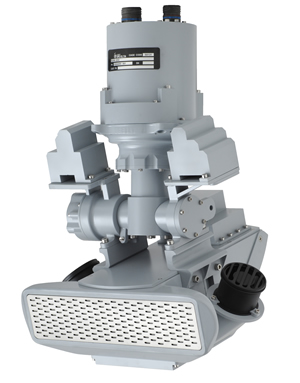
    EL/M-2054 Lightweight SAR/GMTI radar from IAI/Elta was designed for small, tactical unmanned aerial systems. Photo: IAI/Elta
    EL/M-2054 Lightweight SAR/GMTI radar from IAI/Elta was designed for small, tactical unmanned aerial systems. Photo: IAI/Elta

    IAI Elta is introducing a new version of their lightweight Synthetic Aperture radar (SAR) Ground Moving Target Indicator (GMTI) sensor designated EL/M-2054. The new radar is based on another Elta SAR radar, the EL/M-2055DX modular SAR/GMTI radar, The new version is designed specifically for small form and size, low weight and power consumption, making it suitable for small, tactical unmanned aerial systems (STUAS) and Tactical Vertical Take-Off and Landing (VTOL) platforms, light reconnaissance aircraft and aerostats. The new radar employs an open architecture for rapid integration and configuration to meet the requirement of different platforms and applications.

    The range of the new radar exceeds 10km (depending in the operating mode) operating in day, night and under adverse weather conditions. Coverage in SAR Strip is 360 km2/hour, while persistent surveillance in the GMTI covering about 25 square kilometers. A typical installation in a small tactical UAV weighs about 12 kg and consumes 250 watts.

    Sofar Elta has offered two versions of the EL/M-2055 SAR/GMTI sensor. One designed for Medium Altitude Long Endurance platforms (MALE), weighing 66 kg and consuming 1.1 kilowatt and the other, for tactical UAS, weighing 36 kg, consuming 700 watts of electrical power.

    The EL/M-2054 offers advanced capabilities derived from more compact and efficient electronics and signal processing capabilities. Its airborne segment is provided with on-board data processing system and cross-cueing of radar data to or from EO/IR and other sensors. The two operating modes of the radar (Strip/Spot) provide sufficient resolution and definition to detect and classify stationary targets, while covering a large area. The GMTI mode supports the detection
    of ground targets over a wide range of velocities using enhanced, dual-band capability.

    The data exploitation segment associated with the new system is providing advanced mission analysis tools enabling advanced imagery and GMTI exploitation supporting the tactical level. These include automatic geo referencing of images, computer aided target detection, tracking and classification, automatic change detection, imagery data manipulation, annotation and mensuration.

    DARPA Harnessing Crowd Wisdom to Develop New Perch and Stare UAVs

    DAPRPA is seeking the wisdom of the crowds to innovate with new concepts for micro drones that will be able to perch and stare on the battlefield. Photo: DARPA

    Different services of the U.S. military are working on different solutions providing persistent intelligence surveillance and reconnaissance (ISR) supporting the warfighter with miniature autonomous vehicles designed for ‘Perch and Stare’ mission profile. One of the most mature programs, the Shrike recently unveiled by Aerovironment was developed under Defense Advanced Research Programs Agency (DARPA) funding to develop a Stealthy Persistent Perch and Stare (SP2S) capability. But Jim McCormick, a program manager at the Defense Advanced Research Projects Agency (DARPA) believes that commercial off-the shelf (COTS) technology harnessed by the innovation of the ‘crowd’ could yield new capabilities that could benefit the warfighter even beyond these military funded programs. “we feel there is more potential there, and the current capability is still not ready for procurement. We hope that the crowd source will be able to overcome these barriers.” McCormick said, adding that 93 teams have already joined, some of them are foreign “Our focus is on innovation, regardless to where it comes from”.

    DAPRPA is seeking the wisdom of the crowds to innovate with new concepts for micro drones that will be able to perch and stare on the battlefield. Photo: DARPA

    Vertical take off and landing, transition from flight mode to observation mode, while maneuvering around obstacles are basic requirements. DARPA expects teams to demonstrate higher level of autonomy and automation, particularly in transition modes, obstacle avoidance and ‘follow-me’ flight mode, supporting operations on the move. The payload to be used should be able to identify persons or activities of interest up to 100 feet away with real-time video transmission monitored at a distance of two miles. Communications should be able to support non line of site, Total observation time may require up to three hours of pictures and/or video to document the facts. The vehicle should maintain low acoustic and visual signature to minimize probability of detection. The entire air vehicle must fit within a rucksack and a single person traveling by foot must be able to carry and operate the vehicle without assistance.

    For this program DARPA has collaborated with the U.S. Navy Space and Naval Warfare Systems center Atlantic PM DARPA to launch ‘UAVForge’, a global crowd sourcing competition to design, build, and fly advanced small unmanned air vehicle (UAV) systems. The winning team will get $100,000 prize to build 15 examples of the winning design to be evaluated by the military by spring 2012 at Camp Lejeune N.C. Teams can qualify for the competition until October 25, 2011. Voting for the winning teams will commence from Oct 27 till Nov 2, 2011.

    DARPA has already employed a similar design contest designing and building a Crowd-Driven Combat Support Vehicle Prototype in 98 Days.


    Spyware may have Compromised Killer Drones Missions

    A computer ‘Keylogger’ spyware (virus) has infected the cockpits of America’s Predator and Reaper drones, logging every keystroke pilots were doing while remotely flying their missions over Afghanistan and other warzones, Wired danger Room reports.

    The virus was first detected nearly two weeks ago by the Creech Air Force base security; however, the virus resisted multiple efforts to remove it from Creech’s computers, network security specialists say. The virus has not prevented pilots at Creech Air Force Base in Nevada from flying their missions overseas. While the ground control systems (GCS) are maintained separated from other networks to prevent such attacks, security experts suspect the virus has penetrated the system through removable hard drives used to load map updates and transport mission videos from one computer to another.

    The virus is believed to have spread through these removable drives. Drone units at other Air Force bases worldwide have now been ordered to stop their use. A senior Air Force source with knowledge of the drone program and familiar with the virus that was caught in recent weeks told FoxNews.com that Wired’s story was “blown out of proportion” and “vastly overwritten.” However, as the Iranians combating the Stuxnet at Natanz enrichment plant could tell, you should never underestimate your opponent when he is inside your system (read how Stuxnet Variants could open a Pandora box in jeopardizing infrastructure and industrial systems).

    Defense Reports: The Turkish Defense Industry 2011-2016

    Market Opportunities and Entry Strategies, Analyses and Forecasts to 2016

    In recent years Turkey is standing out as one of the growth defense markets in Asia. The country’s defense expenditure is expected to continue growing, largely be driven by a strained relationship with neighboring countries and Ankara’s aspirations in becoming a leading power in the region, along with the need to meet the threat of persistent terror threats and instability within the region. Peacekeeping initiatives will also continue to put pressure on the government to increase defense expenditure.

    This report provides a top level overview of the Turkish defense market, and domestic defense industry. The reports identifies emerging trends and opportunities in the Turkish defense industry in the last 12 months, along with details of the top companies active across the Turkish defense industry. The report also provides a breakdown of the Turkish defense industry by spend pattern valued from 2005 through 2010 and forecasted from 2011 through 2016, a breakdown of the markets by segments valued for the same periods.

    Companies covered in this report: Howaldtswerke-Deutsche Werft (HDW), Lockheed Martin, BAE Systems, Otokar, Roketsan, Makina ve Kimya Endüstrisi Kurumu (MKEK), Aselsan, Turkish Aerospace Industries (TAI), Havelsan, Tusas Engine Industries, Inc (TEI), FNSS Defense Systems Co, Istanbul Shipyard

    Report publication date: October 7, 2011
    To order the report please contact [email protected] and ask for DF0057MR

    Get the Report Get More Details

    Defense Reports: The Australian Defense Industry 2011-2016

    Market Opportunities and Entry Strategies, Analyses and Forecasts to 2016

    Australian defense is considered one of the world’s growth markets, even in the recent tough years. In 2009, the Australian government launched a new military modernization plan to upgrade its forces in order to counteract the threat posed by rising global terrorism, changing political dynamics in the Asia-Pacific region and the rising number of peacekeeping operations undertaken by Australian forces. With the exception of an anomaly in 2010, defense expenditure as a percentage of Australia’s gross domestic product (GDP) is expected rise consistently through 2016. The total spending on military in the period 2011-2016 is expected to reach $138.7 billion.

    In the years after, this rate is expected to be reduced again, to cover increased sustainment costs.

    Over the forecast period, the key market opportunities in the defense industry are expected to emerge in categories such as defense information technology, unmanned aerial vehicles (UAVs), helicopters, upgraded vehicles, armory, submarine rescue vehicles, sonar systems, troop protection equipment, patrolling ships, monitoring and security equipment.

    Australia imports the majority of its arms, including its aircraft and missile systems, largely from the US, Germany, Israel, Spain and France. However, while the country has been successful in its manufacture and export of military ships, the government is now actively engaged in improving the capability of its domestic defense industry through the Skilling Australian Defense Industry (SADI) program. The government is also focused on encouraging foreign OEMs to outsource manufacturing to gain the neccessary technology to modernize its military. Therefore, Australia’s imports of advanced defense systems from foreign companies are expected to increase during the forecast period (2011-2016).

    Rather than imposing offsets on military procurement, Australia instead protects the development of its domestic industry through its Australian Industry Capability (AIC) plan, by asking the Defense Materiel Organization (DMO) to assign and monitor a series of activities for investing foreign OEMs to complete. Furthermore, contract preference is given to the bidder that can provide maximum opportunity for the domestic defense industry as specified in the AIC plan.

    The preferred entry route for most foreign OEMs keen to enter the Australian defense market has been to establish a subsidiary in the country or acquire a domestic firm. However, increasingly more foreign OEMs are entering the market by sub-contracting business to the domestic industry or engaging the domestic industry in the global supply chain by way of direct foreign investment. In recognition, the Ministry of Defense has launched a scheme for rewarding defense suppliers that maintain a successful relationship with the Australian Defense Organization.

    This 156 page report provides a top level overview of the Australian defense industry, offering insights into market opportunities and entry strategies adopted by foreign OEMs to gain a market share in the Australian defense market. In particular, it offers in-depth analysis of defense market size from 2005 through 2010 and forecasts till 2016 and provides an insight into the Australian defense market and industry with current, historic and forecast market values.

    Companies covered in this report: Raytheon Australia, Boeing Defense Australia, Saab Systems Australia, General Dynamics Land Systems Australia, Lockheed Martin Australia, Navantia, Tenix Defense, Australian Aerospace, Serco Sodexho Defense Services, Thales Australia, Australian Submarine Corporation

    Report publication date: October 7, 2011
    To order the report please contact [email protected] and ask for DF0053MR – SP.pdf

    Get the Report Get More Info

    Defense Reports: The French Defense Industry 2011-2016

    Market Opportunities and Entry Strategies, Analyses and Forecasts to 2016

    This 194 page report provides a top level overview of the French defense industry, offering insights into market opportunities and entry strategies adopted by foreign OEMs to gain a market share in the French defense market. In particular, it offers in-depth analysis of defense industry market size from 2005 through 2010 and forecasts till 2016 and provides an insight into the French defense market with current, historic and forecast market values.

    Despite expected budget cuts during 2010–2013 to reduce the government’s fiscal deficit, over the next five years the French defense budget is expected to grow, with military modernization plans outlined in the French white paper on defense and national security, and perceived terrorist threats precieved as the drivers for such growth, along with France’s status as the United Nations Security Council’s second-largest contributor to UN peacekeeping missions. Such factors are expected to continue to fuel defense expenditure during the forecast period.

    Companies covered in this report are: Dassault Aviation, Thales, Constructions Mécaniques de Normandie (CMN), EuroTorp, Cassidian, Safran Group, Snecma, Nexter Systems, MBDA, Eurocopter, DCNS, Renault Truck Defense.

    Report publication date: October 7, 2011
    To order the report please contact [email protected] and ask for DF0059MR.pdf

    Get the Report Get More Info

    A|D|S chief: “the U.K. is heading in the wrong direction on Defense”

    Ian Godden, Chairman of the ADS Group promoting UK defense and aerospace industries, expressed his concern about further job losses that would follow the cuts recently announced due to both historical and recent cutbacks in defense spending. Godden warned that further layoffs of 20,000 – 30,000 skilled employees are at risk across the defense industry, jeopardizing the ability of the British industry to recoup and sustain its rank of the world’s second largest defense producer and exporter of £9.5 billion in 2010.

    “It is becoming increasingly clear that the historic and current cuts to defense spending, which have been halved over 20 years from 10 per cent to 5 per cent, are beginning to take affect.” said Godden, “These cuts and their results are a matter of national interest and must be addressed before further impact is felt on our Armed Forces on the front line or the industrial base suffers further.” Despite the cuts made in past years, U.K. industries managed to expand in the global market, with the U.K maintaining its leading position as the largest defense manufacturer in Europe and second only to the U.S. in defense exports, with a 22 per cent market share. However, the recent cuts mandated by the Strategic Defense & Security Review (SDSR) are driving the larger industries to slow down and reduce costs, resulting in massive layoff. they also reduce subcontracting work outside the company, resulting in severe, if not lethal blows to many small and medium companies that provided the supply chain and expert skills for specific capabilities. Some of these specialists are lost for good. The loss of these skills, gained through years of hard work and investment, means that the U.K. will not be able to recover certain fields of activity  once the economy improves. “Rebalancing the economy towards high technology and advanced manufacturing with strong exports and support for SMES is a Government priority” Godden warned, “We are heading in the wrong direction on Defense – an industry which is 10 per cent of the UK’s manufacturing and engineering base, and is a world leading export-led industry with 3,000 SMEs – more than France, Germany, Italy, Spain and Norway together.”

    Ian Godden, Chairman A|D|S. Photo: A|D|S

    “The 10 per cent cut in Government spending on Defense is already affecting an industry that supports 300,000 jobs – these cuts are estimated to lead to further losses of between 20 and 30,000 highly skilled UK jobs. These jobs are not focused in just one area, but are spread across the whole of the UK, frequently in areas where deprivation is already above the national average.” said Godden.

    “It is possible that these jobs will be picked up in other growth sectors, such as aerospace that is sector which has demonstrated growth during the recession. In terms of exports aerospace is the most successful of UK’s manufacturing sectors, and presents the opportunity to create wealth and long term opportunities for an engineering workforce. This should not detract from the need to reinvest in defense that contributes considerably to the economy and equips our Armed Forces.”

    ADS Group Limited (A|D|S) is the trade organisation advancing UK AeroSpace, Defense and Security industries, with Farnborough International Limited as a wholly-owned subsidiary. A|D|S also encompasses the British Aviation Group (BAG). It has been formed through the merger of the Association of Police and Public Security Suppliers (APPSS), the Defence Manufacturers Association (DMA) and the Society of British Aerospace Companies (SBAC).

    Defense Reports: The Canadian Defense Industry 2011-2016

    Market Opportunities and Entry Strategies, Analyses and Forecasts to 2016

    This 167 page report provides a top level overview of the Canadian defense industry, offering insights into market opportunities and entry strategies adopted by foreign OEMs to gain a market share in the Canadian defense industry. In particular, it offers in-depth analysis of defense industry market size from 2005 through 2010 and forecasts till 2016 and provides an insight into the Canadian defense industry with current, historic and forecast market values.

    The report predicts an increase in the forecast period (2011–2016), The reduced growth rate of the defense budget during the forecast period is due to budget cuts announced by the government to reduce its fiscal deficit. As a result, the defense budget is expected to decrease by 2016.  Canadian defense expenditure is mainly driven by the modernization of its armed forces outlined in the Canada First Defence Strategy (CFDS), the country’s participation in various peacekeeping missions around the world, and the need to ensure the sovereignty of the Arctic region, which has become vulnerable to foreign intrusions due to climate change and speculation surrounding oil reserves in the area.

    Companies covered in this report: CAE, Pacific Safety Products Inc., AV Corp., Héroux-Devtek Inc., Magellan Aerospace Corporation, Bell Helicopter Textron Canada Ltd, Cascade Aerospace, General Dynamics Canada, General Dynamics Land Systems, Canada, L-3 MAS, Rheinmetall Canada Inc., Raytheon Canada Ltd.

    Report publication date: October 7, 2011
    To order the report please contact [email protected] and ask for DF0058MR-SP.pdf

    Get the Report Get More Info


    Defense Reports: The Swedish Defense Industry 2011-2016

    Market Opportunities and Entry Strategies, Analyses and Forecasts to 2016

    This 156 page report provides a top level overview of the Swedish defense industry, offering insights into market opportunities and entry strategies adopted by foreign OEMs to gain a market share in the Swedish defense industry.

    In particular, it offers in-depth analysis of defense industry market size from 2005 through 2010 and forecasts till 2016 and provides an insight into the Swedish defense industry with current, historic and forecast market values.

    The report predicts an increase in the forecast period (2011–2016), to be largely influenced by the country’s strained relationship with Russia, the acquisition of new defense systems and the country’s participation in international peacekeeping missions. In terms of military expenditure as a percentage of GDP the report expect a slight decrease during the forecast period, as the country’s annual GDP growth rate is larger than the predicted growth rate of the Swedish defense budget.

    The part of Swedish defense budget allocated for capital expenditure, was decreased in 2010, due to a reduction in the acquisition of defense equipment. Sweden plans to reduce the number of military personnel and troops over the forecast period which will in turn reduce the country’s revenue expenditure and, as a result; however, capital expenditure is expected to increase in the forecast period.

    Due to its strained external relationship with Russia, internal security threats and the deployment of troops in overseas peacekeeping missions, Sweden is expected to focus on the procurement of land defense systems, advanced defense communication systems and sophisticated air defense systems. Moreover, the country’s homeland security expenditure is expected to increase during the forecast period, primarily due to a rise in organized crime and the threat from global terrorist organizations such as al-Qaeda.

    Companies covered in this report: SAAB, BAE Systems AB, Kockums AB, Nammo AS, CybAero, Dynasafe AB, Patria Helicopter AB, Volvo Aero, Scanjack AB, Åkers Krutbruk Protection AB, Logica, Niscayah.

    Report publication date: October 7, 2011
    To order the report please contact [email protected] and ask for  DF0060MR.pdf

    Get the Report
    Get More Info

    Giant Airship is Afloat: Blue Devil 2

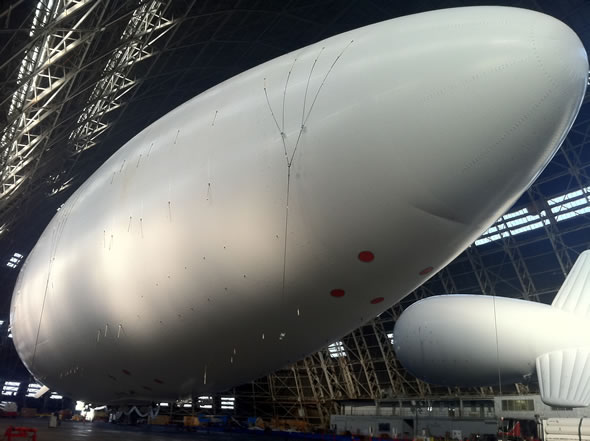
    The Blue Devil 2 airship is a 370 foot long, 1.500 million cubic feet large airship soon to deploy to support ground operations in Afghanistan. Photo via: Wired Danger Room

    The 370-foot-long (123 m’), 1.4 million-cubic-foot (37,000 m3) blimp called ‘Blue devil 2’ is taking shape at a hangar in Elizabeth City, North Carolina. As the giant airship is being filled with helium, thus lighter than air, it becomes afloat inside the hangar. Once mission equipment is installed, the airship will begin its voyage to Afghanistan, where it will provide an unmanned platform for persistent surveillance and communications support assisting the ground forces. MAV-6 is the prime contractor for the $211 million ‘Blue devil 2’ program. (Wired Danger Room)

    The Blue Devil 2 airship is a 370 foot long, 1.500 million cubic feet large airship soon to deploy to support ground operations in Afghanistan. Photo via: Wired Danger Room

    Blue Devil 2 is designed to support continuous missions of up to 216 hours (nine days) operating at an altitude of 20,000 ft, from where the airship, equipped with multiple ISR payloads, will covering an area of 36 square miles at a time, compared with about 16 square miles currently covered by ‘wide area airborne surveillance’ (WAAS) assets. Nine days is the maximum endurance achieved in optimal operating conditions. The actual mission endurance will be determined by environmental conditions in Afghanistan, including payload weight, winds, temperature, barometric pressure etc., The blimp is equipped with two ducted propellers and a rear maneuvering engine, all powered by a main diesel generator driving 120 KVA for propulsion and on board systems. The side motors are producing thrust for forward propulsion at a maximum airspeed of 90 knots, or offset wind effect; the rear motor is used to steering airship to maintain the required heading.

    The blimp will be equipped with gondola shaped mission modules to be tailored for specific mission. The gondola has multiple attachments for 10- 40 sensors, including electro optical sensots (including wide area airborne surveillance multi-sensor, multi-spectral payloads), high definition motion video cameras, Synthetic Aperture Radar (SAR), Ground Moving Target Indication (GMTI) radar, communications systems, datalinks and high power supercomputer platform providing image processing, storage, retrieval and dissemination. On board processing will enable the Blue Devil 2 to retain the highest resolution and most detailed imagery without increasing total bandwidth consumption. In addition to storing data on board, the systems will be able to dump the entire imagery to the intelligence control hub, via wideband datalink. Other users will be able to obtain live imagery or past images for forensic analysis) on demand straight from the blimp, within 15 seconds, served via existing Rover or tactical networking. Different gondolas can be integrated into the Blue devil 2 platform in less than four hours.

    The giant blimp will be able to remain on a mission for five days, with a gondola weighing 2,500 lb. (1.134 ton). Increasing the payload weight to 7,500 lb. (3.4 ton) will reduce mission endurance to three days.

    An on-board supercomputer will gather, process and store the images collected and disseminate them to users on demand.

    In paralel to the Air Forces’ Blue Devil 2 program, the U.S. Army is also planing to deploy an airship to Afghanistan, employing the British Hybrid Air vehicle design for the Northrop Grumman Long-Endurance Multi-intelligence Vehicle (LEMV) system. With a budget of $517 million LEMV is expected to cost twice as the MAV-6, but also offer a more versatile platform offering mission endurance of 21 days, complete runway independence and significantly larger area of authority covering up to 2,000 miles radius ofaction.

    An ISR constellation based on the M1400-I Optionally Manned Airship also used for the Blue Devil 2 project. Image: MAV6

    Skunk Works and XTEND Simplify Multi-Drone Command

    0
    Lockheed Martin Skunk Works® and XTEND have achieved a major milestone in JADC2 by integrating the XOS operating system with the MDCX™ autonomy platform. This technical breakthrough enables a single operator to simultaneously command multiple drone classes, eliminating the friction of mission handoffs. From "marsupial" drone deployments to operating in GPS-denied environments, explore how this collaboration is abbreviating the data-to-decision timeline and redefining autonomous mission execution.

    From Ukraine to Taiwan: The Global Race to Dominate the New Defense Tech Frontier

    0
    As traditional defense primes face mounting competition from agile “neoprimes” such as Anduril, Palantir and Helsing, the balance of innovation is shifting toward software-defined warfare and scalable, dual-use technologies, while global industry consolidation—marked by Boeing’s integration of Spirit AeroSystems and other strategic mergers—signals an intensified race to secure control over the defense technology value chain. Our Defense-Tech weekly report highlights these trends.

    Europe’s “Drone Wall”

    0
    In early October 2025, a coordinated wave of unmanned aerial system (UAS) incursions—widely attributed to Russia—targeted critical infrastructure across at least ten European nations. The unprecedented campaign exposed the fragility of Europe’s air defenses...

    Weekly Defense Update & Global Security Assessment

    0
    Executive Summary The past week (September 18-25, 2025) represents an inflection point where strategic defense concepts have transitioned from doctrine to tangible reality. An analysis of global events reveals four primary, interconnected trends shaping an...

    U.S. Air and Space Forces Push Next-Gen Programs at the AS&C 2025 Conference and...

    0
    At the 2025 Air, Space & Cyber Conference, U.S. Air Force and Space Force leaders unveiled major updates on next-generation fighters, bombers, unmanned systems, and space initiatives, highlighting both rapid innovation and critical readiness challenges as the services race to outpace global competitors. A short version is available here, with a more detailed version for subscribers.

    TADTE 2025: Reflecting Taiwan’s Strategic Themes

    0
    The Taipei Aerospace & Defense Technology Exhibition (TADTE) 2025 crystallized around four dominant strategic themes that collectively illustrate Taiwan's comprehensive approach to defense modernization amid escalating regional tensions. Based on a detailed report by Pleronix (available upon request). Includes a Podcast discussion on TADTE 2025's highlighting Taiwan's four strategic themes beyond the post's coverage.

    Iron Beam 450 Completes Testing, Soon to Join With Operational Air Defense Units

    0
    Israel’s Iron Beam 450 high-power laser system has completed final testing, marking a major leap in air defense. Developed by Rafael, it offers precise, cost-effective interception of rockets, UAVs, and mortars, and is set for IDF deployment by 2025.