Monday, December 29, 2025
More
    Home Blog Page 173

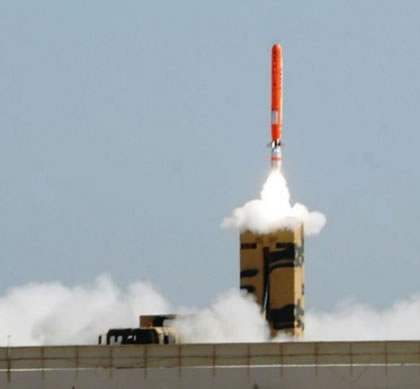
    Pakistan Test Fires Nuclear Armed Cruise Missile

    Babur HATF-VII cruise missile launched from a multi-tube missile launcher vehicle (MLV). Photo: ISPR
    Babur HATF-VII cruise missile launched from a multi-tube missile launcher vehicle (MLV). Photo: ISPR

    Babur HATF-VII cruise missile launched from a multi-tube missile launcher vehicle (MLV). Photo: ISPR
    Babur HATF-VII cruise missile launched from a multi-tube missile launcher vehicle (MLV). Photo: ISPR
    Pakistan announced it had test-fired a nuclear-capable cruise missile on Monday, September 17, 2012. The Hatf-VII Babur cruise missile developed in Pakistan was attributed by the military as having “stealth features”. Babur is a low-flying, terrain-hugging missile, which can strike targets both at land and sea with pinpoint accuracy. It has a range of 700km.
    Pakistan’s last missile test, also of a Hatf-VII, came in June as part of six ballistic and cruise missile launches that came after a similar series of missile test launches by india.
    The missile was launched from a “Multi Tube Missile Launch Vehicle (MLV)”, which facilitates supporting systems to improve the Babur targeting and deployment capabilities.

    The missile is equipped with modern cruise missile technology of Terrain Contour Matching (TERCOM) and Digital Scene Matching and Area Co-relation (DSMAC), it can carry both nuclear and conventional warheads.

    The test also evaluated the Pakistani National Command Authority’s fully automated Strategic Command and Control Support System (SCCSS), supervising the operations and deployment of the nation’s strategic weapons assets. The system also has the added capability of real time monitoring of the missile in flight.

    A New Stealth Fighter Unveiled in China

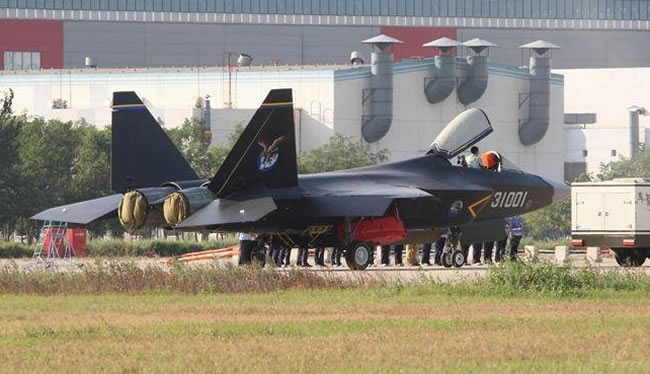
    F60 / J21/31
    A new Chinese stealth design unveiled at the Shengdu Aircraft Corp. site
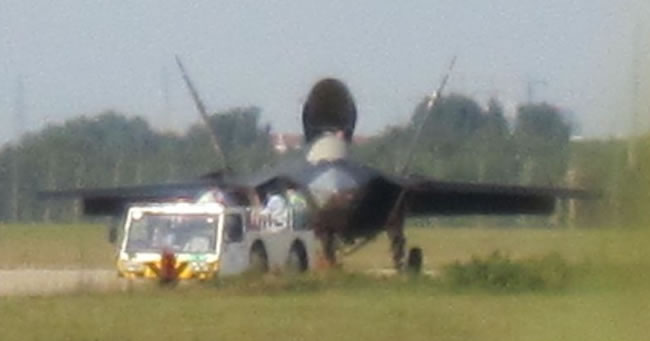
    A front view of the new Chinese stealth fighter. Note the trapezoidal canted tails. and flat wing-body blending (different from the J-20 and similar to the US F-22)

    China has unofficially unveiled another stealth fighter. This aircraft, externally resembling the Lockheed Martin F-22A Raptor, could be the F-60, an export version of a AVIC Shenyang Aircraft Corporation developed ‘fourth generation’ fighter. By painting the marking ‘31001’, Shenyang may be hinting about the design’s goal aspiring to be an alternative for the Chengdu J-20, toward a future selection by People’s Liberation Army Air Force (PLAAF). Alternatively, the J-31/F60 could be positioned for a future option for the People’s republic Army Navy (PLAN), for its future aircraft carrier force. In the near future, PLAN is to use the Russian Su-33 and its domestically designed Su-33 copycat dubbed J-15, also built by Shenyang.

    The new stealth fighter was spotted yesterday at the Shenyang aircraft factory, bearing the marking ‘31001’. The first and second prototypes of the J-20 carried the markings ‘2001’ and ‘2002’.

    [wzslider info=”true”]

    China Presses On with Strategic Missile Testing

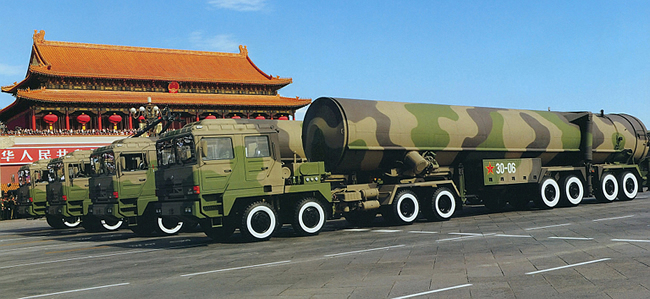
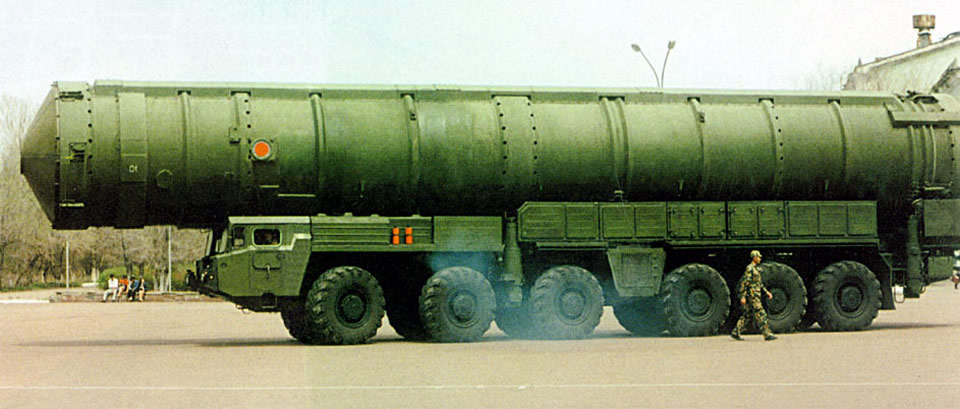
    DF31A on parade
    Operational with the Chinese People's Liberation Army (PLA) strategic forces, the DF31A Inter-Continental Ballistic Missile (ICBM) is seen here on the annual parade in Beijing.
    DF31A on parade
    Operational with the Chinese People’s Liberation Army (PLA) strategic forces, the DF31A Inter-Continental Ballistic Missile (ICBM) is seen here on the annual parade in Beijing.

    According to a US intelligence report leaked to the Washington Free Beacon, China has carried out a fourth flight test of the Dong Feng-31A (DF-31A) intercontinental ballistic missile (ICBM) last week, firing off a new road-mobile ICBM. The test took place at Wuzhai Space and Missile Test Center in the Shanxi province, about 267 miles southwest of Beijing. The missile flew westward to impact at a missile test range in western China. US intelligence monitored the test.

    The test represents the fourth missile test conducted by China this summer. Thursday’s DF-31A test came 10 days after the flight test at Wuzhai of a silo-based CSS-4 Mod 2 long-range missile, and several weeks after flight tests of a new road-mobile DF-41 ICBM, on July 24, and a submarine-launched JL-2 missile on Aug. 16. According to US sources the extensive pace of tests indicates the growing maturity China’s arsenal of long range mobile ballistic missile, strengthening the country’s strategic offensive missile force.

    China’s secretive military made no mention of any of the tests, except an official confirmation of the development DF-41 ICBM. While the DF-31A, as other Chinese ballistic missiles is a single-warhead weapon, the US intelligence believe the DF-41 will carry three to ten independently targetable warheads, each carrying a nuclear warhead, thus becoming the first Chinese missile to carry Multiple Independently targetable Reentry Vehicles (MIRV).

    China is currently in the middle of a major strategic nuclear forces buildup that includes four new ICBMs – the DF-41, JL-2, DF-31A, and another road-mobile missile called the DF-31 that is assessed to have shorter range, compared to the DF-31A. This process includes fielding solid-fuelled missiles launched from mobile launchers, and dispersed through a 3,000 miles tunnel network, storing and protecting the missiles, launchers and spare reloads.

    The DF-31A has been deployed since the mid-2000s and has an estimated range of 7,000 miles, enough to give China the capability to cover the entire Pacific Ocean, or hitting Washington or European capitals in a nuclear strike. The DF-31A warhead is likely to be maneuverable, thus capable of avoiding some ballistic-defenses.

    DF-41 ICBM
    Although China has been developing the DF-41 Inter-Continental Ballistic Missile for years, the missile was not unveiled officially and firing tests were kept in secrecy. The missile is believed to be carrying up to ten independently targetable reentry vehicles

    Two weeks prior to the DF-31A test China tested the much larger DF-41 Intercontinental. On August 30 China’s Defense Ministry confirmed that the People’s Liberation Army (PLA) had conducted missile tests within national territory and clarified that they were not targeted at any one country. Spokesperson Geng Yansheng described the test as a ‘normal weapons tests within China’s territory’. “These tests have no specific targets and were not targeted at any specific countries,” Geng said, reiterating that the weaponry buildup is to answer the need to safeguard national security. China has consistently claimed it will not be the first to use nuclear weapons and that its nuclear forces are designed for a counterstrike against a nuclear attack on its territory.

    The spokesman did not comment about the type of missile tested, but domestic and foreign media reports said that the PLA’s Second Artillery Force had successfully test-launched several missiles, including DF-41 intercontinental ballistic missile. This missile has a range of 14,000 kilometers; it is loaded with up to ten Multiple Independently targeted Reentry Vehicles (MIRV), each carrying a nuclear warhead. In addition to shorter-range ICBMs known as the DF-31 and DF-31A, which are believed to target India and Russia, the new ICBM is said by U.S. officials to be designed to hit U.S. targets with multiple nuclear warheads.

    According to the Conservative Washington Free Beacon, the test of the DF-41 road-mobile ICBM occurred July 24 and has raising new concerns within the U.S. military and intelligence agencies over China’s long-range missile threat, according to officials familiar with reports of the test.

    This strategic weapon provides China with a ‘first strike’ capability against the U.S. The test is also likely to renew debate within U.S. intelligence circles about whether China is seeking only a limited nuclear force, or is secretly building up its nuclear forces to challenge U.S. strategic power.

    [wzslider info=”true”]

    Boeing Cuts F-15SE Design Feature in Korean Fighter Bid

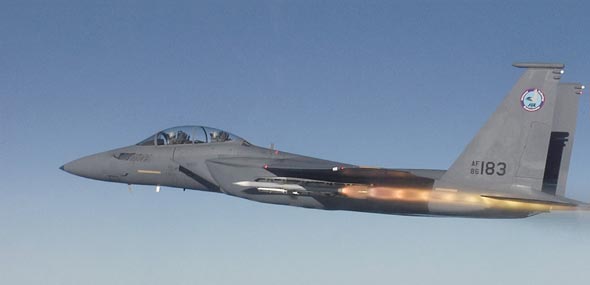
    A flight demonstrator of the Boeing F-15SE Launches a Sidewinder AIM-9X from the conformal internal weapon bay. Photo: Boeing
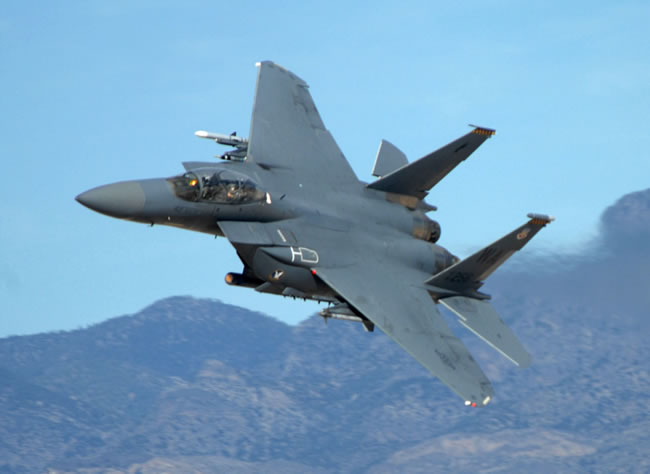
    F-15E with conformal fuel tanks and conventional vertical tail. The F-15SE will be similar to the current configuration, but will feature a conformal weapons bay, instead of the conformal carriage. Other features include improved new cockpit displays, avionics and defensive aids.

    As competition to secure a $7.3 billion deal with South Korea for the Asian nation’s next-generation fighter enters its final stages, key “stealth” feature were dropped off Boeing’s F-15 Silent Eagle (F-15SE). Boeing’s F-15SE is in a tough round of evaluations as it competes with Lockheed Martin’s F-35A Lightning II Joint Strike Fighter (JSF) and EADS’ Eurofighter Typhoon to nail down a multi-billion contract with South Korea for as many as 60 fifth-generation fighters.

    Back in 2009 Boeing praised the Silent Eagle’s stealth capabilities. Along with conformal weapon’s bay, canted tail fins were key stealth-enhancing features that would go far in reducing the fighter’s radar cross-section (RCS) return while also delivering slightly greater range, and much improved flight characteristics.

    The canted tails would also, Boeing claimed, reduce the aircraft’s overall weight. Some industry specialists claim that the tail fins, canted outward 15 degrees, are essential in a stealth fighter design.

    And now, Boeing said the canted tail-fin configuration would be offered only as an option and not a standard feature on the F-15SE. According to reports published by the Korean media, wind tunnel tests revealed the canted tail fins delivered only marginal improvement in the aircraft’s performance. (The most significant contribution of the canted tail in reducing radar reflection cannot be tested in wind tunnel)

    In response to inquiries from Defense-Update, Boeing responded “Silent Eagle builds on a continuous evolution of capability in the combat-proven F-15 family of aircraft.” The company is “confident that our compliant Silent Eagle offering is best suited to address F-X requirements. Canted Vertical Tails, one of the many capability elements of the Silent Eagle, were offered as an option in our proposal to Korea…” Boeing commented.

    Boeing went on to say that “our Silent Eagle offering is best suited to address F-X requirements and provides our ROK customer a highly capable, yet low-risk and affordable Silent Eagle F-X solution on a schedule that will meet the ROK requirements.” As clarification, Boeing insists that development of the canted tail surfaces was not being abandoned or suspended and the company intended to continue development efforts.
    This article is part of Defense Update Premium Content. Your subscription helps us improve, develop more content and pay for more top quality editorial!


    As with all things in life, cost and timely availability are also primary concerns, what makes reducing the developmental risk the F-15SE an advantage, rather than drawback for the Silent Eagle. With The F-35A is still in the developmental stages, the F-22 Raptor cannot be had, the Typhoon is no longer cutting-edge – the Silent Eagle may be the best deal on the table.

    The F-15SE flight demonstrator launches an AMRAAM AIM-120 from the conformal internal weapon bay. Photo: Boeing

    First Deployment of Italian NH90 In Afghanistan

    The first batch of NH90 helicopters have been deployed and are now operational in Afghanistan with the Italian forces there. Italy plans to operate six NH90 in Afghanistan for six months. They will perform tactical transport missions along with CH47 and A129 helicopters. This is the first time the NH90 is deployed on a theatre of operations.

    Textron Defense Systems to produce ‘Clean Munitions’ for SOCOM

    Textron Defense Systems introduced the CLAW in the mid 2000s, as an alternative to cluster munitions, enabling the coverage of area targets without the risk of unexploded ordnance. Photo: Tamir Eshel, Defense-Update

    Textron Defense Systems will develop and certify its Guided Clean Area Weapon (G-CLAW) to integrate with the Common Launch Tube, under a Cooperative Research and Development Agreement (CRADA) with the US Special Operations Command (SOCOM). According to the company’s senior vice president and general manager Ellen Lord, the integration of the unitary system into the USSOCOM common launch tube could bring G-CLAW capabilities and performance to multiple new aircraft platforms for the gamut of irregular warfare missions.

    Under this integration plan the company will complete the weapon’s certification and conduct follow-on tests to include weapon delivery from MC-130W Dragon Spear.

    The final demonstration will include an ‘end-to-end’ live fire demonstration of the weapon. The G-CLAW is designed for flexible integration into tactical munitions dispensers, as well as from unmanned aircraft platforms.

    “Our G-CLAW allows users to shape the attack over a broad area, and to achieve precision effects using GPS targeting and a powerful warhead,” Lord said, adding the weapons incorporate multiple, redundant safety features, including self-destruct and self-neutralization mechanisms, to eradicate the threat of UXO.

    Chilean Air Force Tests an Upgraded EW System for the F-16

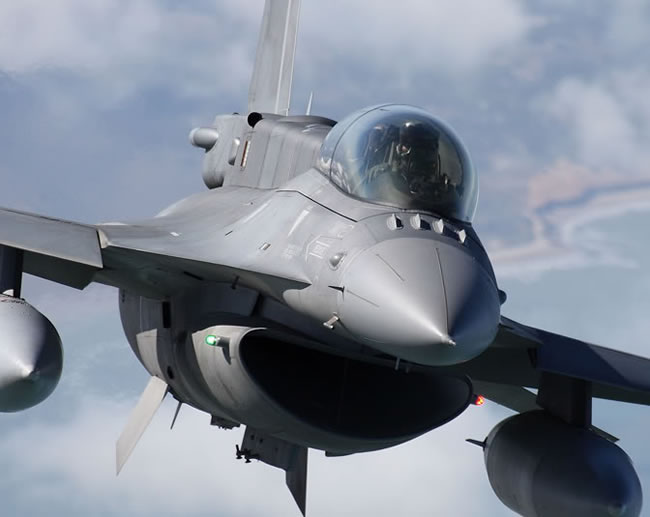
    An F-16D from Chilean Air Force Group 3 (FACh). Photo: Cruzex V, Natal

    ITT Exelis completed a successful demonstration of the new block upgrade of its Advanced Defensive Electronic Warfare System (AIDEWS), under a cooperative effort between the Chilean Air Force, U.S. Air Force, and Exelis. This flight effort culminates a year of planning and coordination by FACh and U.S. personnel, as well as extensive laboratory and flight-testing in the U.S. At the conclusion of flight operations, FACh officials expressed confidence in AIDEWS as a “critical operational asset.” The updated Block 5.2 configuration supports the upcoming delivery of combat capable electronic warfare mission data to five countries with AIDEWS equipped F-16s. Among the air forces using the AIDEWS with their F-16s are Turkish, Pakistani, Omani and Chilean air forces.

    The currently operational version of the AIDEWS is the V4 shown in this photo. This layout includes the RWR units without antennae, which are already installed on the aircraft. A more compact configuration comprise antennae integrated RWRs. Photo: ITT Exelis.

    The tests that demonstrated the latest enhancements in the system’s air-to-air electronic warfare capability involved a series of missions flown by multi-ship F-16 formations. Pilots of Fuerza Area de Chile (FACh) Squadron No 3 at Los Condores Air Base, Chile, flew six missions on F-16 Block 50 aircraft from July 4 to 18, 2012. Those missions effectively demonstrated the performance of AIDEWS Block 5.2 against multiple airborne fire control radars with overlapping operating frequencies.

    AIDEWS is built upon the proven AN/ALQ-211 family of electronic warfare systems now in use to support a broad range of U.S. and allied defense customers on many aircraft. These include versions of the CV-22, MH-47, MH-60, F-16, Boeing 737s, NH-90, and several other platforms. The system is currently in full production with more than 160 systems under contract for six nations as part of the F-16 Foreign Military Sales program.

    An F-16D from Chilean Air Force Group 3 (FACh). Photo: Cruzex V, Natal

    Navy, Marines Begin RQ-21 Developmental Flight Testing

    RQ21A STUAS
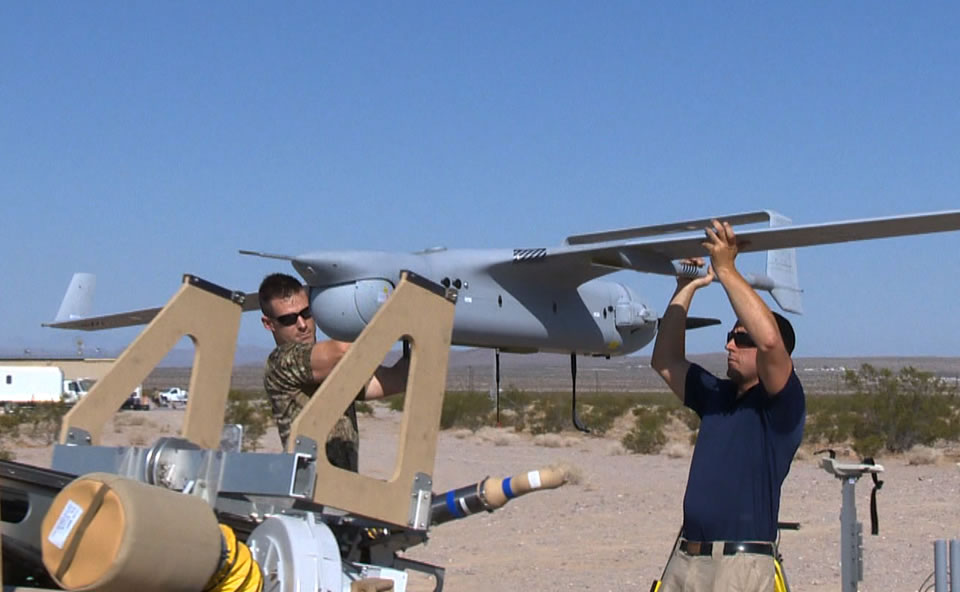
    Navy and Insitu personnel lift the RQ-21A Small Tacticall Unmanned Aircraft System (STUAS) onto launcher in prepartion for flight at Naval Air Station China Lake, Calif. Sept. 10. (U.S. Navy Photo)
    RQ-21A Integrator
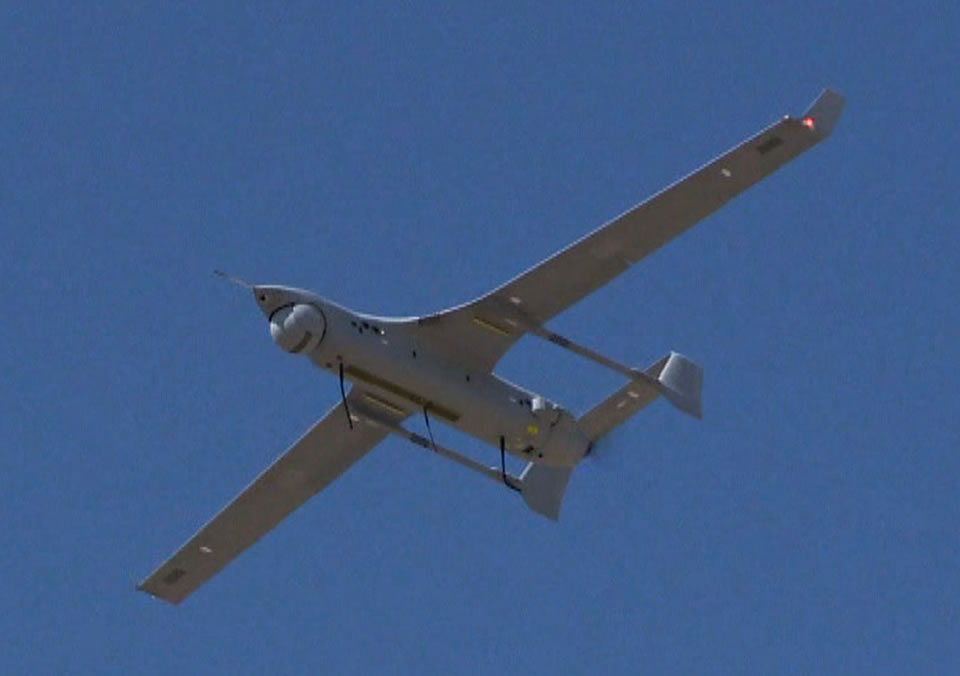
    The RQ-21 Small Tactical Unmanned Air System flies over NAS China Lake, Calif. during its initial developmental test flight Sept.10. (U.S. Navy Photo)

    A little more than two years into its engineering, manufacturing and development phase, the RQ-21A Small Tactical Unmanned Air System (STUAS) entered developmental test at China Lake, Calif. beginning with a 66-minute flight Monday.

    During the initial developmental flight test at the weapons station on Sept. 10, 2012 operators flew the RQ-21A using a unique pneumatic launcher and a recovery system known as Skyhook. This system, developed by the UAV manufacturer Insitu, Inc., eliminates the need for runways and enables a safe recovery and expeditionary capability for tactical missions on land or sea.

    According to Col. Jim Rector, STUAS program manager (PMA-263) at Patuxent River, Md. the developmental test will be fast-paced, “We are on track for initial operational capability in 2013.” he added.

    Sailors and Marines from from Air Test and Evaluation Squadron (VX) 30 at China Lake are not the first to experience the expeditionary “no runway” solution. Marines at Twentynine Palms are already training with an RQ-21A Early Operational Capability (EOC) system. These systems were delivered ‘off-the-shelf’, without special changes requested by the Corps.

    While both RQ-21A variants are similar to operate, the RQ-21A STUAS is more robust. RQ-21A EOC uses long-wave infrared (LWIR) camera, which will be replaced with mid-wave infrared (MWIR) camera for production. The upgraded variant also adds enhanced features for operational security and an automatic identification system for maritime missions.

    The Continental US (CONUS)-based deployment allows the Navy and Marines to train units and operators, collect additional performance data and identify opportunities to expand the flight envelope preparing the system for initial operational capability. “Marines are getting experience on how to operate and use the system while our team is collecting valuable data,” Rector said. “Lessons learned from this deployment will be directly applied to the program of record. EOC helps us mitigate and evaluate risks early on.”

    RQ-21A provides expanded payload capacity and rapid payload integration so that the warfighter can use the most advanced, and relevant, payload for their unique land and maritime missions and counter-warfare actions. The platform provides persistent maritime and land-based tactical Reconnaissance, Surveillance, and Target Acquisition (RSTA) data collection and dissemination capabilities to the warfighter.

    [wzslider info=”true”]

    Want to enjoy more image galleries on Defense-Update? Subscribe for the premium level

    While Osprey Protests Embroil Okinawa, Other Japanese Islanders Welcome the Marines and the MV-22B

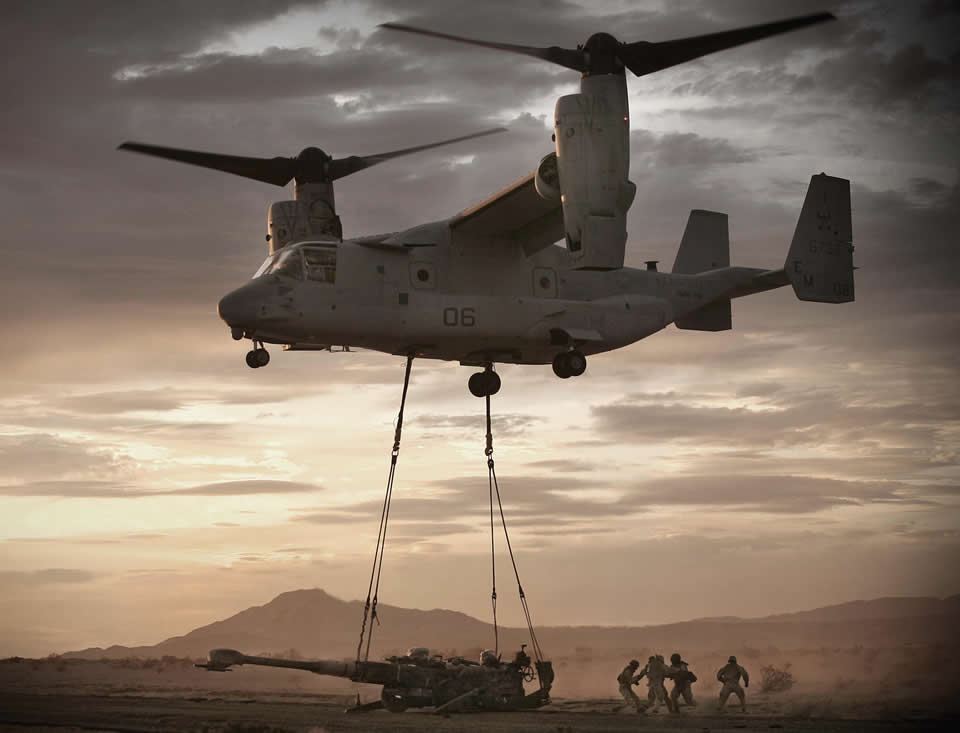
    MV-22B lifts an M198 towed howitzer with a sling load. Photo: USMC

    What looked like a sea of red engulfed Ginowan City, Okinawa in the area surrounding Marine Corps Air Station (MCAS) Futenma on 9 September as a claimed 101,000 demonstrators rallied in protest of plans to deploy a squadron of Marine Corps MV-22B Ospreys to the Marine air station to replace the aging fleet of CH-46 Sea Knight helicopters currently assigned to the base.

    Protesters called for Japanese Prime Minister Yoshihiko Noda and the United States to abandon their efforts to begin operational flights of the Osprey in Okinawa in support of Marine Corps ground combat forces. The Marine Corps is in the process of replacing the Vietnam War-era CH-46 Sea Knights worldwide with the tiltrotor MV-22Bs as part of an overall effort to modernize and maximize the Marine Corps’ combat effectiveness with a focus on improving ship-to-shore capabilities in amphibious warfare operations.

    Sunday’s demonstration was one of the largest anti-American protests to be organized in recent memory as organizers loudly exhorted attendees to reject the Noda government’s claims that the Osprey is a mechanically-safe aircraft and critical to the future defense of Japan. Okinawan news sources put the figure of demonstrators in the range of tens of thousands, but protest organizers claim a total of 101,000 participated.

    Meticulous accident investigations conducted by the United States cleared the MV-22B and CV-22 aircraft of mechanical failure in two highly-publicized accidents; one in April in Morocco, and one in Florida in June. Japanese investigators reviewed the accident reports and concurred with the findings that determined both mishaps were the result of pilot error and not mechanical failure or design flaws.

    The United States has agreed to delay operational flights of the Ospreys until the Japanese government makes public its independent review of the mishap reports conducted by a team of Japanese investigators. So far, Japanese officials have not released their report and the first contingent of Ospreys remains grounded at MCAS Iwakuni in Yamaguchi Prefecture on the main island of Honshu where they were offloaded last month to undergo final assembly and safety checks before being flown to Okinawa.

    The emergency landing of an MV-22B in a residential area in North Carolina on 7 September near MCAS New River added ammunition to the rhetoric of the protest speakers in Okinawa. Preliminary information indicates that the MV-22B in North Carolina made a controlled landing as a result of an oil leak. Protestors in Okinawa claimed this incident was further proof that the Ospreys are structurally unsafe and present a real danger to Japanese residents in Okinawa and elsewhere.

    On the same day, rallies were also organized on two smaller islands in the Okinawa Archipelago and an estimated 10,000 people surrounded the Japanese legislature (Diet) in Tokyo carrying protest placards and chanting anti-Osprey slogans.

    Japan and the United States have been embroiled in a decades-long round of unsuccessful negotiations intended to find a suitable location to relocate the air station facilities at Futenma. Unrelenting Okinawan demands calling for a reduction in the size of the US military presence in the islands have effectively halted almost all progress in these negotiations and no one expects a resolution to be forthcoming any time soon.

    While these mass demonstrations are a concern, not all Japanese residents are opposed to the deployment of the Ospreys. On the Japanese island of Ishigaki, located some 140 miles east of Taiwan and 265 miles south of Okinawa, the residents are thrilled to have the Ospreys in the neighborhood. The Ishigaki Island government is responsible for exercising jurisdiction over the fiercely-disputed Senkaku Islands, a collection of hardscrabble rocks claimed by Japan, China, and Taiwan.

    Ishigaki residents share a unanimous belief that the Ospreys are critical to safeguarding their homes and the Senkaku Islands. Ishigaki resident Eizo Tomoyose is quoted as saying he had no doubts “that the deployment of the Ospreys to Okinawa will enhance the defense and deterrence power in the event of an emergency situation in the Senkakus.”

    An Ishigaki citizens group, of which Tomoyose is a member, sent petitions to Okinawan Governor Hirokazu Nakaima and the mayor of Ginowan City pleading with them to drop their opposition to the deployment of the Ospreys. The group sent a similar petition to the mayor and city council in Iwakuni as well.

    Ishigaki Island residents feel that the people in Okinawa, and their government representatives, lack an awareness of the potential dangers the people of Ishigaki face with China’s insistence on claiming territorial rights to the Senkaku Islands. The islanders also feel that their countrymen in most other parts of Japan are not concerned with and care little about the safety of the Ishigaki Islands.

    Another Ishigaki resident, Magonori Ohama, said that Okinawans “have little interest or concern about the situation surrounding the Senkakus today.” He went on to say that deployment of the Ospreys “gives a great sense of security to us, especially those who live in the border town.”

    Of course, the Ishigaki resident’s pro-Osprey viewpoint is in the minority. A public poll compiled by the Kyodo News Service in early September found that almost 70 percent of the Japanese surveyed harbored a negative opinion of the Ospreys and yet, nearly the same number of respondents expressed the view that US forces stationed in Japan are a critical element in protecting Japan’s national security and political stability and are necessary.

    Since the formal end of the allied occupation of Japan and the return of Okinawa to the central government in 1972, American military and political leaders have been sensitive to Japanese concerns and complaints. The Osprey issue is just another example of how the United States continues to assuage local concerns while still maintaining an effective and properly-equipped military force of deterrence in defense of the Japanese islands and in support of the long-term maintenance of stability in the Asia-Pacific region.

    Unfortunately, reality is sometimes a difficult concept for some Japanese to accept. The reality is that the MV-22B is the only vertical-launch; medium-lift transport aircraft the Marine Corps has available to replace the aging CH-46 helicopters. The Sea Knight helicopters have served well, but the airframe is well past its retirement age.

    Without the Osprey, the Marines cannot perform their mission. If the Marines are unable to perform their mission from Okinawa or other locations in Japan, it is impractical for them to remain in Japan. The Osprey is the future of medium-lift Marine Corps aviation and that fact cannot be changed. There is no alternative airframe available and the United States is unable, from a practical standpoint, to satisfy the demands of the Okinawan protestors.


    Pakistan: P3C Long Range Maritime Patrol Aircraft Inducted

    The Pakistan Navy inducted another P3C Long Range Maritime Patrol Aircraft in its aviation fleet, received from USA under Security Assistance Program. Pakistan is expanding its maritime patrol fleet to ensure security in North Arabian Sea, where counter-piracy activities have been growing in recent years. Chief of the Naval Staff, Admiral M. Asif Sandila, reiterated Pakistan’s resolve to remain part of multi-national force present in North Arabian Sea and off Somali coast. He added that despite resource constraints, PN ships, aircraft and personnel are regularly tasked as part of ongoing efforts by global community.

    New Delhi: MMRCA Contract to Finalize ‘Within a Month’

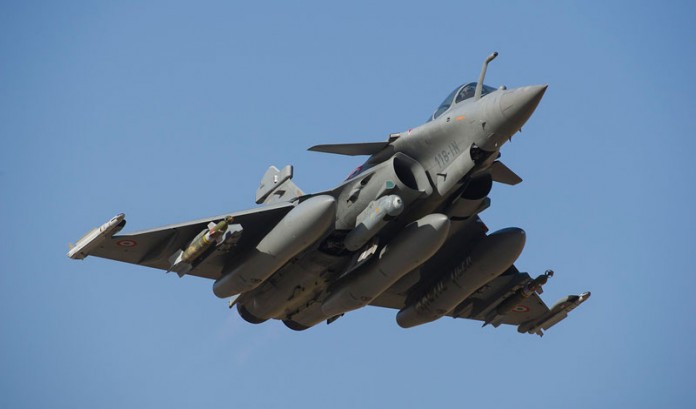
    RAFAEL and Mirage 2000 fighter jets operating with the French Air Force and Navy are currently employed with laser designation pods and DAMOCLES targeting pods, both produced by Thales. The company is now contracted to develop the next generation targeting pod for these aircraft. Photo: French Air Force

    Following months of negotiations, the Indian Ministry of Defense is set to sign a US$11 billion contract with French aviation company Dassault within a month, for the procurement of 126 Rafale Medium Multi-Role Combat Aircraft (MMRCA). The delivery of the first 36 French aircraft will commence in 2017 with follow-on aircraft planned for assembly in India. During the months of negotiations rumors said the deal could collapse due to disagreement on costs and terms, leading to the selection of EADS’s Eurofighter, the second lowest bidder, by default.

    Harpoon Missiles for the Philippine Vessels

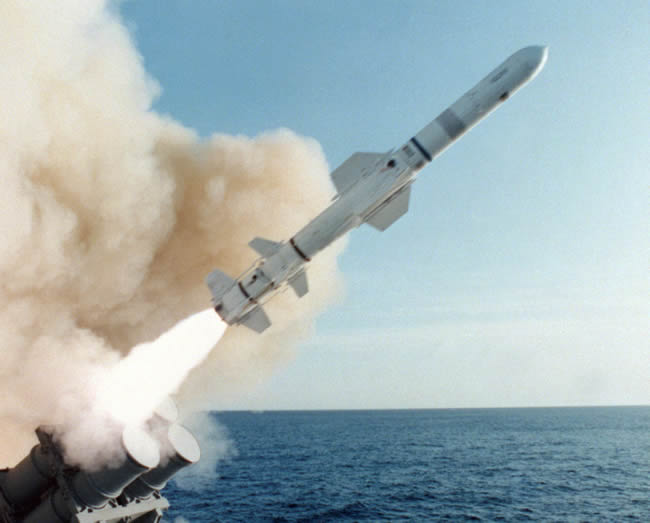
    Harpoon firing
    Harpoon missile fired from a ship. Photo: Boeing

    The Philippine Navy plans to upgrade its two Hamilton-class cutters with Harpoon anti-ship missile and systems radar systems, converting the former coast guard cutters into combat vessels.

    The Philippines is already operating the BRP Gregorio Del Pilar and is expecting the second Hamilton class cutter BRP Ramon Alcaraz by the end of 2012. The vessels were originally equipped with an AN/SPS-40 air-search radar Mark 92 Fire Control System, and armed with one Oto Melara Mark-75 76mm gun, two Mark K-38 25mm machinegun systems, two Mark 36 SRBOC systems, one Phalanx CIWS missile defense gun, along with multiple mounted M2HB .50 caliber machineguns, and M240 7.62mm machineguns. But under the PN service, the weapons and sensor systems were removed with the exception of the Oto Melara Mark-75 76mm main gun. According to defense officials in the Philippines, the vessels will be equipped with the Harpoon anti-ship missile system, the work is likely to be done in the United States under a government-to-government sale. This upgrade will satisfy the Philippine’s minimum deterrent capability.

    The cutters will be also equipped with new radars providing surface target detection, detecting and tracking targets for the missiles. the vessels will also be refitted with torpedo decoying systems.

    The official said the Harpoon is the ideal missile system for Del Pilar and Alcaraz, noting that a sister-ship of the vessels, the USCGC Mellon (WHEC-717), has been fitted with the Harpoon missile launchers and test fired the weapons in January, 1990. Both Del Pilar and Alcaraz were acquired from the United States Coast Guard (USCG).

    Harpoon firing
    Harpoon missile fired from a ship. Photo: Boeing

    Japanese Project F-35A Joint Strike Fighter Will Cost 50 Percent More Than Previously Estimated

    F35 for Japan
    Concept vision of the F-35J for Japan

    Japan’s Kyodo News Service recently reported that Japan’s Ministry of Defense (MoD) projects that the cost for the Lockheed Martin F-35A Joint Strike Fighters (JSF) will be 50 percent greater than in the current year. The fifth-generation stealth fighters Japan has agreed to buy during Fiscal Year 2013 (FY13) may total as much as $196.9 million per aircraft instead of the current year cost of $128.6 million per plane.

    Japan signed a formal letter of offer and acceptance (LOA) on 29 June to acquire four conventional take-off and landing (CTOL) variants of the F-35, spare parts, and two simulators for a total of $756.53 million. These four aircraft are scheduled for delivery in Fiscal Year 2016 (FY16). The cost of each of the initial four F-35As was estimated to be $128.61 million.
    The MoD increased its FY13 budget request, submitted on 7 September, by $393.7 million to cover the cost of the first two aircraft. Since budget negotiations are in the early stages, media attention addressing the F-35A price increase has been minimal.

    A stagnate economy and growing trade deficit have been a severe political strain on Prime Minister Yoshihiko Noda and the governing Democratic Party of Japan (DPJ). The government’s FY13 budget request is the largest in Japanese history and is likely to ignite intense criticism from political opponents especially with legislative elections expected to be held in November.

    Additional F-35 price increases are not entirely unexpected considering the United States’ decision in January to reduce its 2013 order by 13 units and delayed orders on a total of 179 aircraft between FY13 and FY17.

    The Japanese Air Self-Defense Force (JASDF) desperately wants to acquire a total of 42 F-35s to replace its outdated fleet of McDonnell Douglas F-4J Kai Phantoms.

    In Japan recently, most media reports and public attention have been focused on territorial disputes with China, Taiwan, and South Korea and mass demonstrations in Okinawa protesting the deployment of Marine Corps MV-22 Ospreys.

    The Japanese government is holding onto a glimmer of hope with Lockheed Martin and US Department of Defense (DoD) estimates that the F-35 costs will eventually come down to $78.7 million per aircraft. Those estimates are based on fulfillment of currently projected orders and does not take into account any additional development costs that may arise.

    The territorial disputes with her Pacific neighbors, coupled with the Obama administration’s public pronouncements that the United States will not intervene in the disagreements, place increased pressure on Noda’s government to prepare the Japanese Self-Defense Force (JSDF) to stand alone in defense of territory Japan claims as its own. Japan’s existing fleet of combat aircraft is currently no match for China’s air combat force and the recent tensions arising from territorial disputes have intensified the Japanese government’s feelings of unease with respect to the nation’s ability to defend its sovereign territory.

    Although Japan has a credible naval force and an air defense capability that was adequate to meet most challenges in years gone by, the rapid expansion of the military capabilities of Japan’s regional neighbors have highlighted her modern-day military weaknesses. Now more than ever, Japan’s political leaders are beginning to recognize that alone Japan cannot meet the challenges of the future unless her military is upgraded, modernized, and better trained.

    Although the cost increases for the F-35 may generate a short-lived political outcry, it is unlikely Japan will cancel its order in favor of a competing aircraft. China’s military advances in recent years are likely to convince the Japanese to stick with the F-35. Of course, anything is possible and the November elections might sweep the Liberal Democratic Party (LDP) back into power and past decisions might be overturned.

    Australia Extends UAV ISR Service Contract with MDA

    Canadian based MacDonald, Dettwiler and Associates Ltd. (MDA) announced today that it has signed contract amendments Worth CA$100 million with the Commonwealth of Australia, for the extension of Heron I Unmanned Aerial Vehicle surveillance service for the Australian Defence Force in Kandahar Airfield for an additional two years. In the next three months the company will conduct an assessment of activity that will provide critical information in support of Australia’s efforts in Afghanistan.

    MDA has been supporting the Australian Forces by providing critically important real-time intelligence, surveillance and reconnaissance information directly to ground commanders, since January 2010. The current contract was awarded in 2011 and will expire by December 2012. The Australian contract was the second undertaken by MDA with Israel Aerospace Industries (IAI) Heron I UAVs leased from IAI. The first contract employing the Heron 1 supported the Canadian forces in Afghanistan from 2008 to 2011.

    Skunk Works and XTEND Simplify Multi-Drone Command

    0
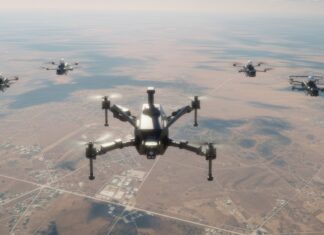
    Lockheed Martin Skunk Works® and XTEND have achieved a major milestone in JADC2 by integrating the XOS operating system with the MDCX™ autonomy platform. This technical breakthrough enables a single operator to simultaneously command multiple drone classes, eliminating the friction of mission handoffs. From "marsupial" drone deployments to operating in GPS-denied environments, explore how this collaboration is abbreviating the data-to-decision timeline and redefining autonomous mission execution.

    From Ukraine to Taiwan: The Global Race to Dominate the New Defense Tech Frontier

    0
    As traditional defense primes face mounting competition from agile “neoprimes” such as Anduril, Palantir and Helsing, the balance of innovation is shifting toward software-defined warfare and scalable, dual-use technologies, while global industry consolidation—marked by Boeing’s integration of Spirit AeroSystems and other strategic mergers—signals an intensified race to secure control over the defense technology value chain. Our Defense-Tech weekly report highlights these trends.

    Europe’s “Drone Wall”

    0
    In early October 2025, a coordinated wave of unmanned aerial system (UAS) incursions—widely attributed to Russia—targeted critical infrastructure across at least ten European nations. The unprecedented campaign exposed the fragility of Europe’s air defenses...

    Weekly Defense Update & Global Security Assessment

    0
    Executive Summary The past week (September 18-25, 2025) represents an inflection point where strategic defense concepts have transitioned from doctrine to tangible reality. An analysis of global events reveals four primary, interconnected trends shaping an...

    U.S. Air and Space Forces Push Next-Gen Programs at the AS&C 2025 Conference and...

    0
    At the 2025 Air, Space & Cyber Conference, U.S. Air Force and Space Force leaders unveiled major updates on next-generation fighters, bombers, unmanned systems, and space initiatives, highlighting both rapid innovation and critical readiness challenges as the services race to outpace global competitors. A short version is available here, with a more detailed version for subscribers.

    TADTE 2025: Reflecting Taiwan’s Strategic Themes

    0
    The Taipei Aerospace & Defense Technology Exhibition (TADTE) 2025 crystallized around four dominant strategic themes that collectively illustrate Taiwan's comprehensive approach to defense modernization amid escalating regional tensions. Based on a detailed report by Pleronix (available upon request). Includes a Podcast discussion on TADTE 2025's highlighting Taiwan's four strategic themes beyond the post's coverage.

    Iron Beam 450 Completes Testing, Soon to Join With Operational Air Defense Units

    0
    Israel’s Iron Beam 450 high-power laser system has completed final testing, marking a major leap in air defense. Developed by Rafael, it offers precise, cost-effective interception of rockets, UAVs, and mortars, and is set for IDF deployment by 2025.