
Monday, December 29, 2025
More
    Home Blog Page 172

    Iran Flexing Muscles Part 1: Combat UAVs

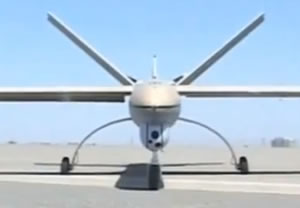
    Shahed 129 Forward view
    Shahed 129 Forward view showing the multi-sensor EO system positioned forward to the nose landing gear. It also shows the shoulder-wing configuration of the Iranian design, different from the Israeli design.
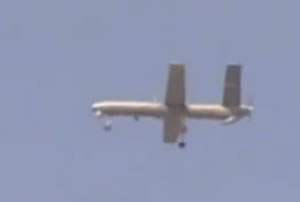
    Shahed 129
    The Shahed 129 if flight, seems very similar to the Israeli Hermes 450.

    In recent weeks Iran has introduced new guided weapon systems claimed to be based on indigenous developments. Among these weapons are the Shahed 129 attack Unmanned Aerial Vehicle (UAV), precision guided version of the Zelzal medium range rocket, and Taer medium-range air-defense missile, positioned to be a precursor for the country’s new category of air defense weapon systems.

    Major General Mohammad Ali Jafari, Commander of the Islamic Revolution Guards Corps introduced the Shahed 129 UAV in September 2012. Shahed 129 described as a ‘clone of the Israeli Hermes 450’ was developed by the corps’ military production facilities can carry can the Sadid guided missile it can carry.

    Is the Iranian Shahed a reversed engineered hermes 450? If so, what are the implications for Israel’s UAV fleet? Sign up for Defense-Update Premium Account to know more…

    In 2010 Iran unveiled an optionally piloted helicopter designated Shahed 285 at the 4rd International Iran Kish Air Show. This helicopter was based on the larger Shahed 278 naval attack helicopter, which can carry up to eight Sadid-1 guided missiles. These missiles are similar in diameter and container size to the Israeli Spike LR missile.
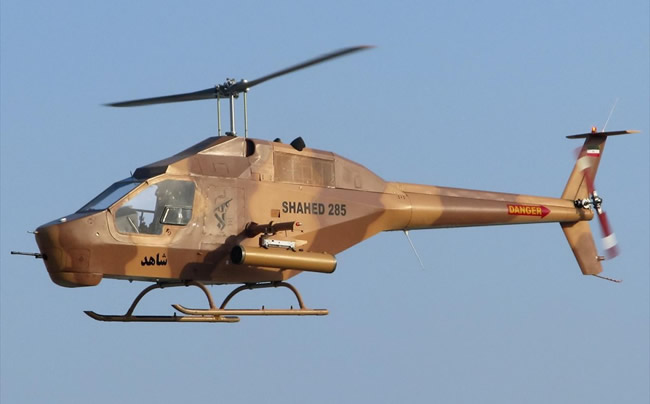
    Shahed 285 displayed at the Kish Island Airshow in 2010. Raza Rahman
    Shahed 285 displayed at the Kish Island Airshow in 2010. Note the launch tube for weapons, carried one on each side. Photo: Raza Rahman

    The maximum takeoff weight of the Shahed 285 as reported by the Iranians, is 1.45 ton, based on an empty (dry) weight of 820 kg, leaving 630 kg for fuel, payload and potentially, a single crew member. The heli-drone has a maximum speed of 225 km/h and mission endurance of five hours, sustaining mission range of 875 km. The hover ceiling out of ground effect is 2,040 meters and service ceiling is 4,160 meters.
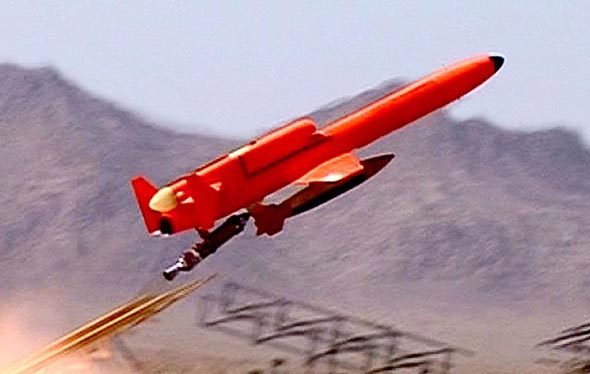
    In 2010 Iran unveiled the Karrar, claimed to be capable of striking targets at a range of 1000 km
    In 2010 Iran unveiled the Karrar, claimed to be capable of striking targets at a range of 1000 km

    In 2010 Iran unveiled another unmanned aircraft capable of carrying weapons – the Karrar. Few months later, in February 2011, Iran inaugurated the production line of two other locally designed UAVs with bombing and reconnaissance capabilities. These two drones were named Raad (Thunder) and ‘Nazir’ (Harbinger). Both were designed to conduct long-range reconnaissance, patrolling, assault and bombing missions with high precision.

    Iran Flexing Muscles: (Subscriber version)


    Indonesia Receive Armored Vehicles from Germany, Transports from Spain

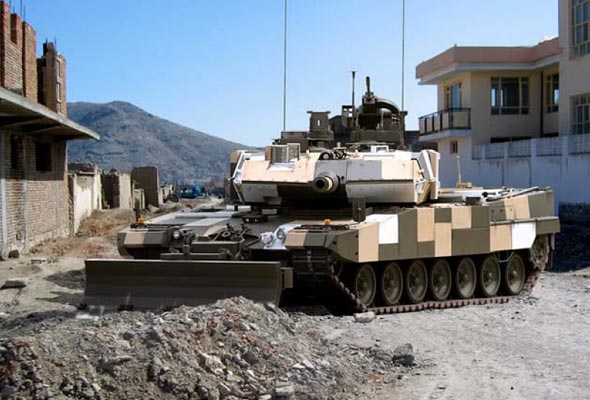
    Indonesia is expecting to receive 103 Leopard II tanks from german army surplus.

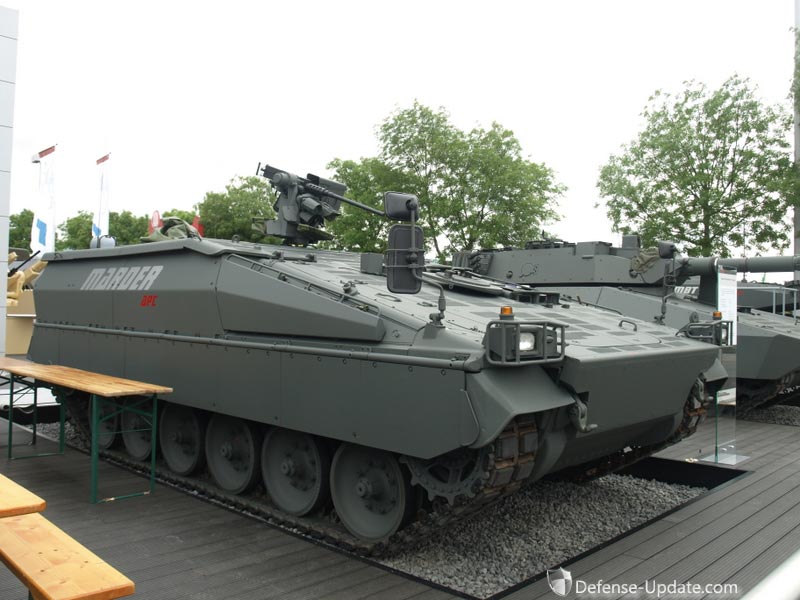
    Jakarta, Indonesia: Germany is expected to deliver 44 Leopard II Main Battle Tanks and refurbished Marder armored infantry fighting vehicles to Indonesia by November 2012, as part of the Indonesian National Army (TNI) effort to establish the ‘Minimum Essential Force’ (MEF). The new armored formation will comprise 103 tanks, 50 AIFVs and 10 tank support vehicles procured in Germany from German Army surplus. This force will be sufficient to establish a mechanized brigade size force, comprised of two armored and one mechanized battalions, plus enough vehicles to maintain at least two company size training formations.

    Jakarta has strengthened its army in recent months with the establishment of two battalions of ASTOR multiple launch rocket systems procured in Brazil, two self-propelled artillery battalions equipped with 155mm CAESAR self propelled howitzers and an air defense battalion equipped with Mistral missiles.

    Following the delivery of the first CN-295 from Spain, the Indonesian Air Force is expecting the delivery of two additional aircraft from plane manufacturer PT Dirgantara Indonesia (PTDI). The CN-295 will replace the Fokker-27 currently used for aerial transport and parachutist support. The Air Force plans to operate the CN295 for military purposes, logistics transportation and humanitarian missions across the archipelago.

    The two CN295 planes are part of the nine aircraft ordered by the Defense Ministry. Airbus Military in Spain produced the two aircraft being delivered under joint production agreement with PTDI. According to an agreement signed earlier in 2012 Airbus has invested in the upgrading of infrastructure at PTDI, to prepare the facility to take a growing share in the aircraft manufacturing, for domestic and international customers.

    WIN-T Increment 2 Cleared for Deployment

    Soldiers from 2nd Brigade, 1st Armored Division, stand before a Warfighter Information Network-Tactical Increment 2 Point of Presence platform, May 17, 2012, during the WIN-T Increment 2 Initial Operational Test and Evaluation at White Sands Missile Range, N.M. Photo: Amy Walker, U.S. Army
    Soldiers from 2nd Brigade, 1st Armored Division, stand before a Warfighter Information Network-Tactical Increment 2 Point of Presence platform, May 17, 2012, during the WIN-T Increment 2 Initial Operational Test and Evaluation at White Sands Missile Range, N.M. Photo: Amy Walker, U.S. Army
    Soldiers from 2nd Brigade, 1st Armored Division, stand before a Warfighter Information Network-Tactical Increment 2 Point of Presence platform, May 17, 2012, during the WIN-T Increment 2 Initial Operational Test and Evaluation at White Sands Missile Range, N.M. Photo: Amy Walker, U.S. Army
    Soldiers from 2nd Brigade, 1st Armored Division, stand before a Warfighter Information Network-Tactical Increment 2 Point of Presence platform, May 17, 2012, during the WIN-T Increment 2 Initial Operational Test and Evaluation at White Sands Missile Range, N.M. Photo: Amy Walker, U.S. Army

    The U.S. Department of Defense has authorized the Army to continue fielding Warfighter Information Network-Tactical (WIN-T) Increment 2 as part of the services’ Capability Set 13 deployment. The Army awarded General Dynamics C4 Systems a $346 million delivery order to procure the WIN-T Inc 2 network for additional Brigade Combat Teams and Division Headquarters units. Initial fielding of the WIN-T Inc 2 network as a key component of Capability Set 13 has already began this month, at at Ft. Drum, N.Y., and Ft. Polk, La., with the training of two brigades of the 10th Mountain Division using previously procured equipment.

    WIN-T Inc 2 completed its Initial Operational Test and Evaluation (IOT&E) during the Army’s Network Integration Evaluation 12.2 this summer. The IOT&E was the largest tactical-network test of its kind, involving more than 4,000 soldiers dispersed over a 2,000-square-mile area. The soldier feedback following the evaluation enables General Dynamics to work with the Army to continue optimizing the system’s overall performance and effectiveness.

    WIN-T is the Army’s mobile battlefield network that provides mission critical voice, video and data to soldiers. WIN-T Increment 1 is now fully fielded to 210 active duty, reserve and National Guard units. WIN-T Increment 2 moves with commanders and provides situational awareness and the ability to command from anywhere on the battlefield.

    In July 2012, the Army began fielding the WIN-T Increment 1 ‘Colorless Core’ and ‘Net Centric Waveform’ (NCW) upgrades. The colorless core security enclave secures data and increases interoperability with the upcoming WIN-T Increment 2, while providing additional operational flexibility to the network. The NCW upgrade is a beyond-line-of-sight capability to improve satellite communications and enhance interoperability with WIN-T Increment 2. The upgrade is projected to be complete in Fiscal Year (FY) 2016.

    WIN-T Increment 2 supports operations while on-the-move, pushes network connectivity to the company level, introduces networking radios and enhances Network Operations (NetOps) for network planning and monitoring.

    The new Colorless Core upgrade for Warfighter Information Network-Tactical, or WIN-T, Increment 1 not only increases interoperability with WIN-T Increment 2, but it also improves the security and efficiency of the network. Pictured here, a Solider works on WIN-T Increment 1 equipment during the Network Integration Evaluation 11.1 at White Sands Missile Range, N.M., in June 2011. Photo: Claire Heininger, U.S. Army
    The new Colorless Core upgrade for Warfighter Information Network-Tactical, or WIN-T, Increment 1 not only increases interoperability with WIN-T Increment 2, but it also improves the security and efficiency of the network. Pictured here, a Solider works on WIN-T Increment 1 equipment during the Network Integration Evaluation 11.1 at White Sands Missile Range, N.M., in June 2011. Photo: Claire Heininger, U.S. Army

    Development and testing continues on WIN-T Increment 3, which will add an air tier to the WIN-T architecture to offload communications from satellite transponders, while increasing network speed and reliability. WIN-T Increment 3 will also provide the Joint Command, Control, Communications, Computers, Intelligence, Surveillance and Reconnaissance (JC4ISR) radio, which makes great strides in improving throughput capacity and extending communications ranges. Improvements in NetOps will also be realized with WIN-T Increment 3.

    “WIN-T Increment 2 has shown the value of high-speed communications for commanders who need robust, reliable communications and situational awareness,” said Chris Marzilli, president of General Dynamics C4 Systems. “Commanders can now make faster, more informed decisions using real-time information while moving with their soldiers, rather than being tethered to command posts.”

    The next phase of the program will be WIN-T Increment 3. In addition to full networking on the move this phase will also provide an aerial tier deployed on unmanned aerial vehicles (UAV) to enhance communications reliability. Additionally, the Increment 3 gear will include two channel JC4ISR radio and antennas embedded into the platforms.

    Increment 3 NetOps delivers full Network Management, Information Dissemination Management, and Information Assurance Planning, Monitoring, Administration, and Response (PAMR); Spectrum Planning and Management for all battlefield emitters.

    Vikramaditya delivery delayed at least until July 2013

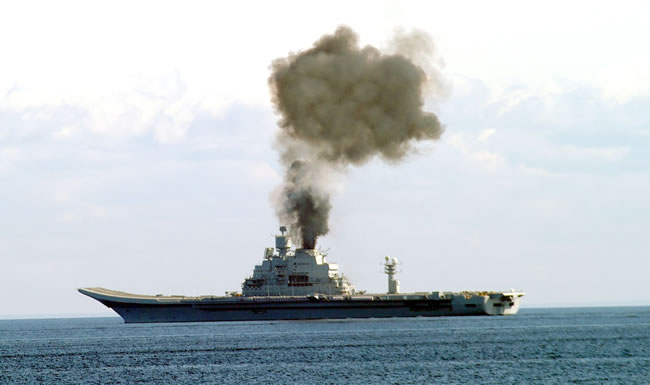
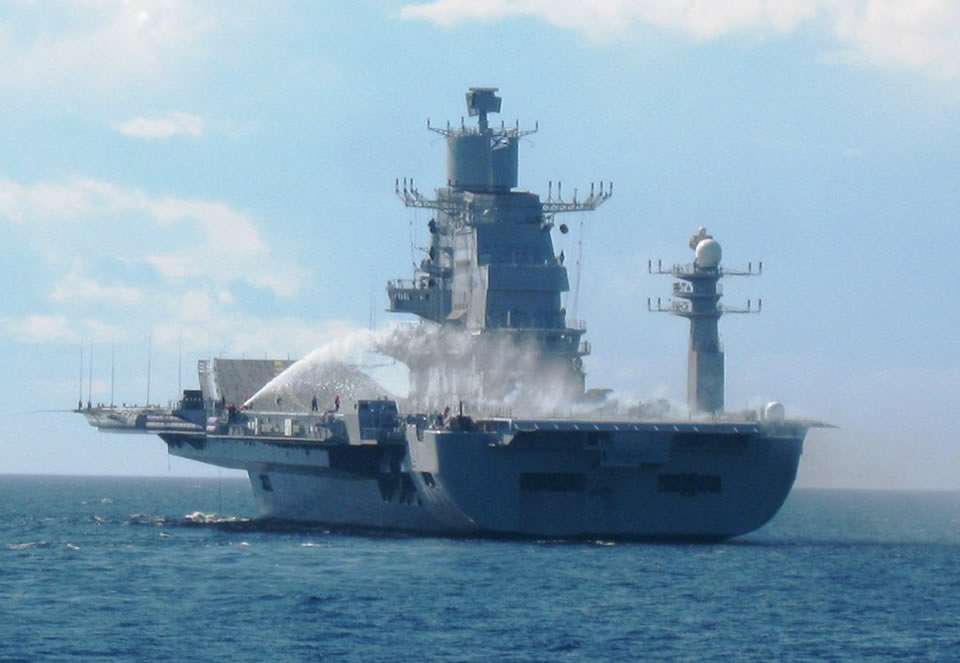
    Smoke pillowed from the Vikramaditya as she sailed the Barnets Sea on its first sea trial. Despite the crew's efforts to reach top speed, the vessel didn't make it, due to faulty boiler insulation.
    Smoke pillowed from the Vikramaditya as she sailed the Barnets Sea on its first sea trial. Despite the crew's efforts to reach top speed, the vessel didn't make it, due to faulty boiler insulation.
    Vikramaditya sailing to the White Sea on its sea trials
    Vikramaditya sailing to the White Sea on its sea trials

    Major issues reported during the recent sea trials at the Barnets Sea are delaying the completion and handover of the refurbished Russian built Admiral Gorshkov, aircraft carrier to the Indian Navy at least until July 2013. The handover of INS Vikramaditya was scheduled for December 4, 2012 but due to the mandatory repairs that follow the sea trials, the vessel will be delivered not earlier than fall 2013. Overall, the Indian Navy confirmed the vessel performed well in the tests, and approved the necessary corrections, that would prolong the carrier’s refurbishment through at least four months. However, Indian officials said delaying the delivery of the vessel until autumn is unacceptable. India has called for the Russians to step up the workforce at the Sevmash shipyard for the refit-repair of Vikramaditya. “A leeway of three to four months is provided in the contract after the December delivery date… Beyond that, penalty clauses and liquidity damages could kick in,” said an Indian government source. The two sides agreed the refit-repair job would be completed within 67 months.

    Rear view of the Indian new aircraft carrier Vikramaditya. Note the instrumented landing systems covered by white radomes. More details are included in the premium version of this article
    Rear view of the Indian new aircraft carrier Vikramaditya. Note the instrumented landing systems covered by white radomes. More details are included in the premium version of this article

    Among the issues uncovered were faulty boilers, which failed to perform properly. Part of the issue was the boiler insulation. According to the Russian sources, the Chinese-made insulation bricks did not meet the necessary standard, causing the boilers to dissipate heat, therefore failing to reach the maximum speed of 29 knots. Chinese officials deny China has exported such products to Russia. The Russian designers suggested to use asbestos for insulation but the Indians opted not to use this material, known to be a health hazards. The replacement of the tiles is expected to take four months, but will not necessitate dismemberment of the structure. It will be performed while the ship is afloat, moored at the shipyard. Vikramaditya is slated to be loaded on the dry dock again for two month for further inspections and will be ready for renewed sea trials by July 2013.

    Originally built by the Ukraine Nikolayev shipyard, ‘Admiral Gorshkov’, one of four Project 1143.4 ‘Kiev’ class flat-deck aircraft built in the 1980s. Admiral Gorshkov was commissioned in 1987 and was operated with the Russian Navy for nine years. Three of the four vessels of this class were scrapped in 1993 – two were sold to China for use as a military theme park and museum. China has also acquired another refurbished aircraft carrier from Russia – the Varyag, recently renamed Liaoning. Varyag was one of two ‘Admiral Kuznetzov’ class carriers built by the Ukraine Nikolayev shipyard. The second, Admiral Kuznetsov, is the only aircraft carrier currently operated by the Russian Navy.

    India and Russia have reached an agreement on the refurbishment and transfer of the carrier in 2005, as part of a 947 million contract. However, following a series of delays and complications uncovered through the refurbishment process that cost has more than doubled, to $2.3 billion.

    This article is part of three-part series including:

    Liaoning Commissioned into Chinese Navy Service

    China's first Aircraft Carrier Liaoning ready for the commissioning celebration Sept 25, 2012
    China's first Aircraft Carrier Liaoning ready for the commissioning celebration Sept 25, 2012
    Liaoning (ex- Varyag) prior to its commissioning to People's Liberation Army Navy (PLAN) service on Sept 25, 2012.
    Liaoning (ex- Varyag) prior to its commissioning to People’s Liberation Army Navy (PLAN) service on Sept 25, 2012.

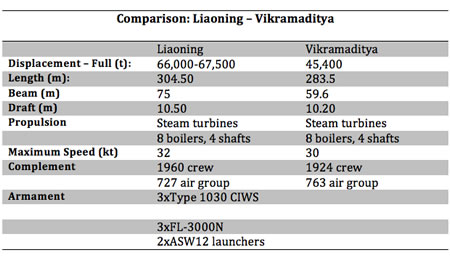
    China’s first aircraft carrier “Liaoning” was commissioned to China’s People’s Liberation Army Navy (PLAN) on September 25, 2012 – fourteen years after the hull ‘Varyag’ was recovered from the naval scrapyard in the Ukraine, towed half way across the globe to be finished and refurbished at the port of Dalian, as China’s first aircraft carrier.

    The vessel completed a series of ten sea trials that lasted 12 months in August 2012. Launching and recovery of fighter aircraft has yet to begin – the sea trials sofar have focused on the vessel’s performance. Liaoning is designed to operate the J-15 carrier based strike fighters, a Chinese version of the Russian Su-33 operated by the Russian Naval Aviation.

    The vessel has 10 floors below the main deck, with the island superstructure towering 9 layers above deck. The vessel is designed to support catapult, Ski Jump and vertical take-supporting fixed-wing aircraft and helicopters. Landing is supported on the diagonal deck, fitted with four arresting cables.

    [wzslider info=”true” lightbox=”true”]

    Liaoning is providing the China a useful ‘training platform’ to develop its carrier strategy. In the future, Beijing plans to deploy several carrier groups, as part of its growing blue-sea naval force. One of the homeports mentioned for such carrier strike force was Qingdao. “The formation of such a group is made up of the carrier itself, escort vessels, submarines and aircraft” Chinese Defense Ministry spokesman Yang Yujun confirmed. He said the main systems of the aircraft carrier and the aircraft it will carry were developed by China. “We have independent intellectual property rights and are pushing forward with relevant procedures as scheduled” Yujun said. He dismissed reports about a second aircraft carrier prepared for launching later this year in Shanghai. “Such reports are inaccurate” Yujun said.

    This article is part of three-part series including:

    Oshkosh Unveils Special Operations Vehicle

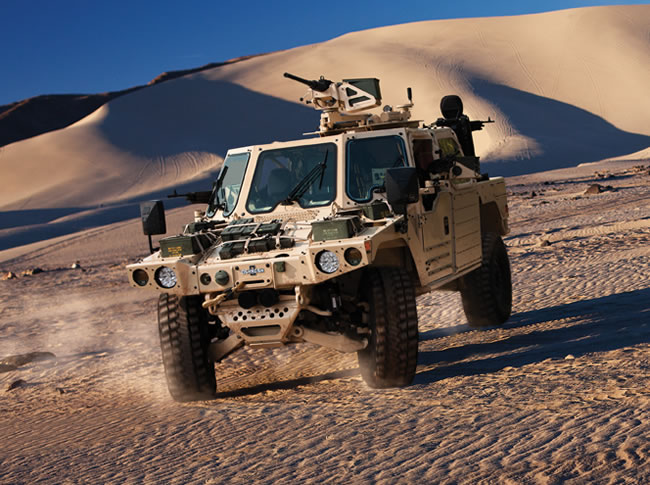
    Oshkosh Corporation (NYSE:OSK), is unveiling its new Special Purpose All-Terrain Vehicle (S-ATV) designed for unconventional and reconnaissance missions at Modern Day Marine 2012, Sept. 25-27 in Quantico, Va. Oshkosh specifically designed the S-ATV based on emerging worldwide requirements for forces performing unconventional and reconnaissance missions. The S-ATV utilizes Oshkosh’s battle-proven off-road technologies and expertise to nimbly travel across rugged, remote and urban terrains at high speeds. The vehicle is available in multiple weight and protection configurations.

    HDT Presents the Storm SRTV for Special Ops

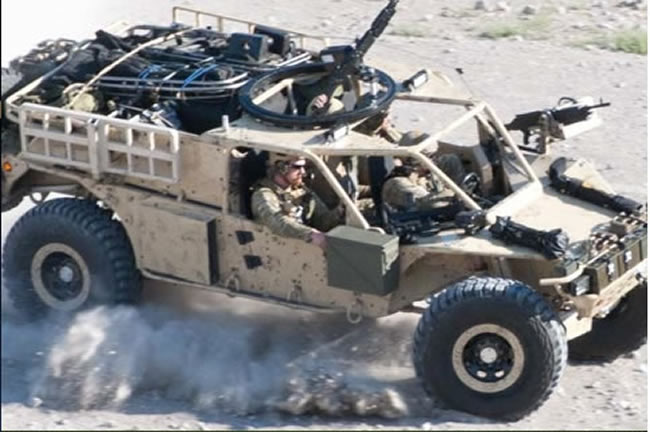
    HDT Storm SRTV
    Storm is designed to perform in extreme maneuverability in rugged environments and traverse terrain considered impassable to conventional vehicles, including vertical rock terrain. Photo: HDT

    HDT is showing at the Modern Day Marine its new Storm Search and Rescue Tactical Vehicle (SRTV), developed in conjunction with Special Operations Forces. The vehicle is addressing a specific requirement by the Air Force National Guard (ANG) Combat Search and Rescue (CSAR) units and Special Operations Command (AFSOC) that have requested proposals for an air deployable vehicle for their ‘Guardian Angel’ teams. SRTV can carry a tactical special team of six, plus three passengers on litters.

    The vehicle is based on an original design by BC Customs (BCC) of Utah, specializing in special mission off-road vehicles. This specific design shares a common platform with other models developed by BC, ustilizing common subsystems and components. In fact, at the Modern Day Marine Expo HDT displayed another vehicle, designed for internal transportation inside a V-22 Osprey. The SRTV is measured to be carried internally by the C-130, C-17, CH-47 and CH-53 but is too wide for the V-22. The V-22 compatible version can carry a team of three with two patients on litters in the roll protected cage.

    The vehicle can be delivered through various methods including Low Velocity Aerial Delivery (LAPS) of via guided parachutes (JPADS) methods. The vehicle is designed to operate in difficult environmental conditions, and performs at 10,000′ (3,048 m) above mean sea level with higher horsepower levels than most vehicles of this class deliver at sea level.

    Guardian Angel is an Air Force non-aircraft weapon system program designed to execute Air Force Combat Search and Rescue (CSAR) and Personnel Recovery (PR) across the full spectrum of military operations. The new vehicle being considered will enable the team to infiltrate, exfiltrate and recover downed aircrew and personnel expanding the radius of operation of air-assets, enabling teams to covertly deploy from the safe landing zone on land and advance to their objective using these high performance vehicles.

    To meet these goals, the SRTV is powered by a 430 Hp engine, positioned at the mid-body for maximum stability, SRTV can exceed double its curb weight in payload while performing the full spectrum of missions. Long travel suspension and optimized approach and departure angles ensure high obstacle negotiation. The vehicle can travel at a speed over 100 mph and climb vertical grades over 70 degrees, move on side slopes angles of over 60 degrees and climb vertical steps over three feet. Storm is designed to perform in extreme maneuverability in rugged environments and traverse terrain considered impassable to conventional vehicles, including vertical rock terrain.

    Rapid evasive maneuverability in confined spaces is provided by highly efficient and maneuverability steering; it can turn on a 20′ (6.1 m) diameter curb to curb; maneuverability is enhanced with cutting brakes allowing U-turns on steep hills within the length and width of the vehicle, also allowing high speed J-turns.

    The vehicle provides rollover safety for all occupants without limiting mission operational performance. Storm can carry up to three liters in side the rollover protection frame, without modifications, while still maintaining 360° of weapon field of fire.

    HDT Storm SRTV
    Storm is designed to perform in extreme maneuverability in rugged environments and traverse terrain considered impassable to conventional vehicles, including vertical rock terrain. Photo: HDT

    US Navy Commissions 3rd Littoral Combat Ship

    LCS 3 Ft. Worth at Galvestone TX
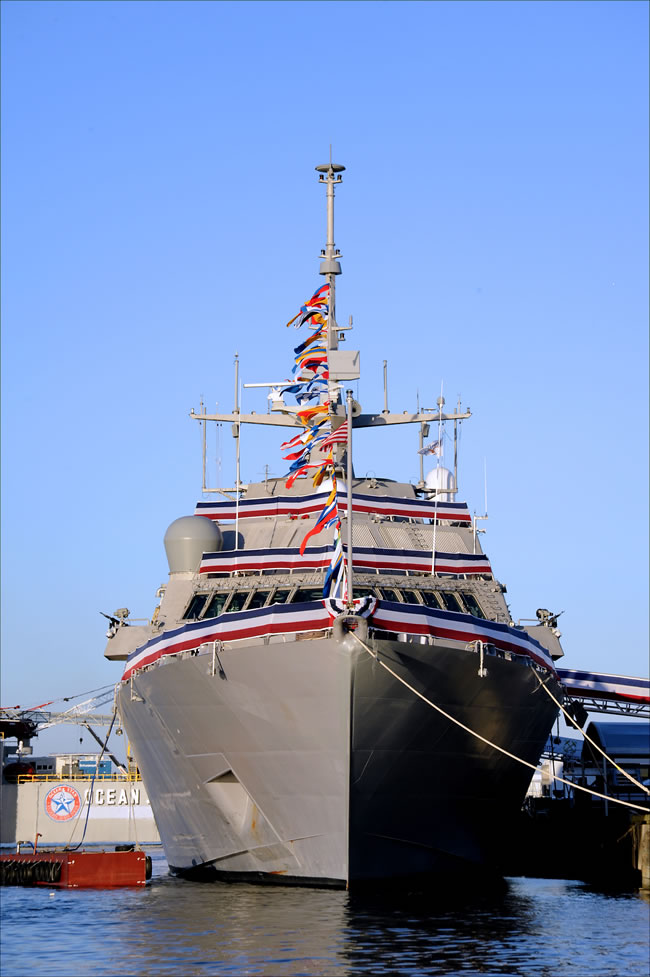
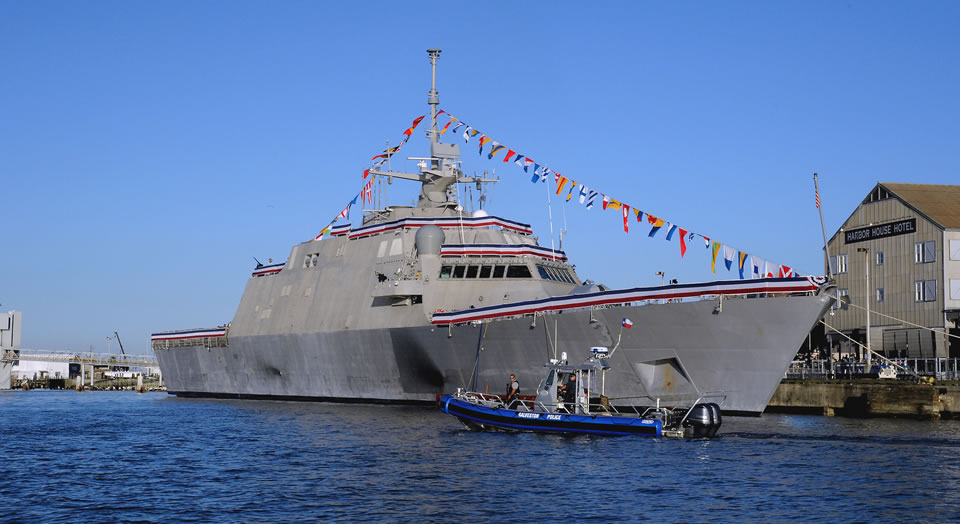
    The nation’s third Littoral Combat Ship, Fort Worth, sits docked at Galveston’s Pier 21 as it waited for its commissioning by the US Navy on Sept. 22 - Photo: Lockheed Martin
    LCS 3 Ft. Worth at Galvestone TX
    The nation’s third Littoral Combat Ship, Fort Worth, sits docked at Galveston’s Pier 21 as it waited for its commissioning by the US Navy on Sept. 22 – Photo: Lockheed Martin

    GALVESTON, Texas, Sept. 22, 2012 – The U.S. Navy commissioned today the nation’s third Littoral Combat Ship – USS Fort Worth (LCS 3) – in Galveston, Texas. Fort Worth, the second of the Freedom-variant in the LCS class, successfully passed Acceptance Trials in May and was delivered to the U.S. Navy in June, two months ahead of schedule.

    LCS 3 Ft. Worth at Galvestone TX
    LCS 3 Ft. Worth at Galvestone TX
    The vessel’s homeport will be in San Diego, Calif., where it will be integrated into the fleet and the industry-Navy team will conduct additional program testing and crew training.

    Milwaukee (LCS 5) and Detroit (LCS 7) are under construction at the Marinette Marine Corporation MMC’s shipyard. Little Rock (LCS 9) andSioux City (LCS 11) were awarded in March 2012 and are in the early stages of procuring long-lead materials.

    The ‘Freedom’ class Littoral combat Ship (LCS) will support the Navy in defeating growing littoral, or close-to-shore, threats and provide access and dominance in coastal waters, helping keep critical commercial shipping lanes open worldwide.

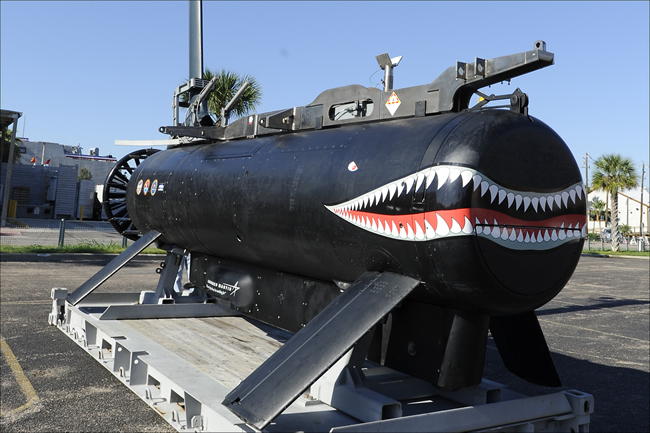
    Remote Mine-Hunting Vehicle
    The modular design of the LCS allows the ship to swap out different mission modules, such as the Remote Mine-Hunting Vehicle seen above, depending on the mission, such as mine, anti-submarine and surface warfare. Photo: Lockheed Martin

    PARS-3LR Completes System Validation for the German Army Tiger Helicopters

    PARS 3LR anti-tank missile launched from a German Army Tiger attack helicopter during a recent test conducted at the test range in Vidsel, Sweden. Photo: MBDA
    The PARS 3 LR fire-and-forget system allows the helicopter to quit its position immediately after firing a missile, thereby limiting to the absolute minimum its exposure to the threat of retaliation. Photo: Eurocopter
    The PARS 3 LR fire-and-forget system allows the helicopter to quit its position immediately after firing a missile, thereby limiting to the absolute minimum its exposure to the threat of retaliation. Photo: Eurocopter

    After formal clearance by the BAAINBw (Bundesamt für Ausrüstung, Informationstechnik und Nutzung der Bundeswehr Federal Office of Bundeswehr Equipment, Information Technology and In-Service Support), PARS 3 LR is now ready to go into full-scale series production for the German Army’s Tiger helicopter. The program has recently completed the validation phase, with a series of firing trials performed by a Bundeswehr Tiger helicopter, engaging moving tanks in simulated urban terrain from a range of 3,000 meters. The test firing was carried out at the Meppen test range (located in Lower Saxony, NW Germany) on 20 September 2012. The tests confirm that PARS 3 LR completely fulfils the specified system performance requirements under operational conditions.

    On 30th June 2006, the procurement contract for the PARS 3 LR precision fire-and-forget missiles was signed in Koblenz by the Federal Office of Defence Technology and Procurement (BWB), MBDA Deutschland and Diehl BGT Defence. The contract covers industrialization and delivery of 680 missiles for the German Army by the year 2014.

    The contract for industrialisation and series production of the PARS 3 LR missiles will be managed by PARSYS, a joint venture between MBDA Deutschland GmbH (50%) and Diehl BGT Defence (50%). Development of the overall PARS 3 LR system was formally completed in mid-2004. However, MBDA Deutschland has been manufacturing key components (electronics, launchers) of the PARS 3 LR system which have then been integrated by Eurocopter into the platform since the series production contract for the 80 Tiger helicopters was signed in 1998.

    Subscribe to Defense-Update for more insight into the PARS-3LR Weapon System

    While the German Army Aviation Corps is currently the only customer for the PARS 3LR, MBDA is hopeful that its new missile will be selected to equip the helicopters of the Indian Army, where it was short-listed against the Israeli Spike ER missile. MBDA has already demonstrated the PARS 3 LR in two firing campaigns, comprising six firings all of which struck their targets at the optimal hit point.

    On the first test held in May 2011 MBDA conducted a successful series of test firing of the PARS 3LR guided anti-missile, carrying a live warhead. The missile was launched from a German Army Tiger helicopter. Three missiles were fired, scoring three hits. MBDA Deutschland conducted the campaign on the test range in Vidsel, Sweden. The three PARS 3 LR firings were part of a MBDA Deutschland export campaign. The guided missile system is on the short list for a procurement project of the Indian Army. MBDA’s PARS 3LR and RAFAEL Spike ER have already been shortlisted for the final phase of weapon selection for the Indian Army attack helicopters.

    Two of the missiles were fired from hovering position, at an altitude of about 10 meters above treetops. The helicopter first fired at a stationary target around 7,000 m away. The second missile was fired just a few moments later at a target travelling at approximately 40 km/h., about 700 meters away. To make this shot, the Tiger turned 180° and assumed a firing position at an altitude of about 300 ft. Both PARS 3 LR missiles hit the targets precisely at their centers. The third missile was fired the next day while the Tiger was flying forward at high speed. The Tiger fired on a stationary target around 7,000 m away while the helicopter was flying at a speed of 180 km/. This guided missile also hit its target at the optimum point of impact.


    Spitfire, F-35A in a Rare Photo Op

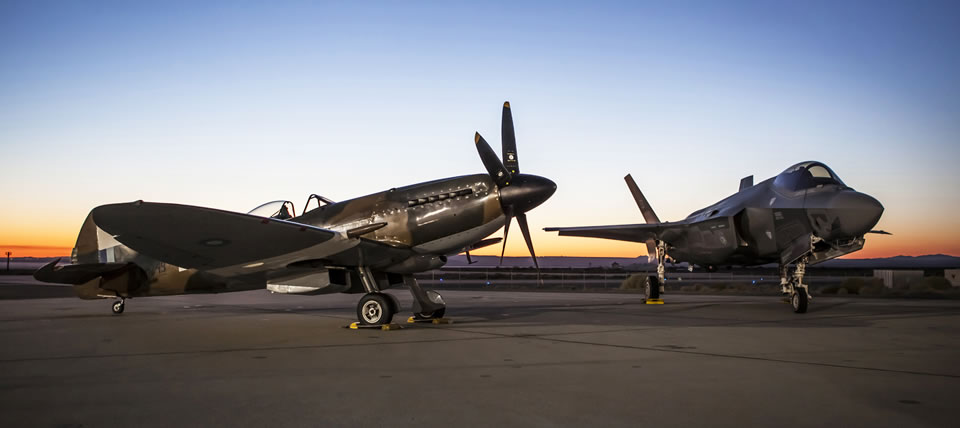
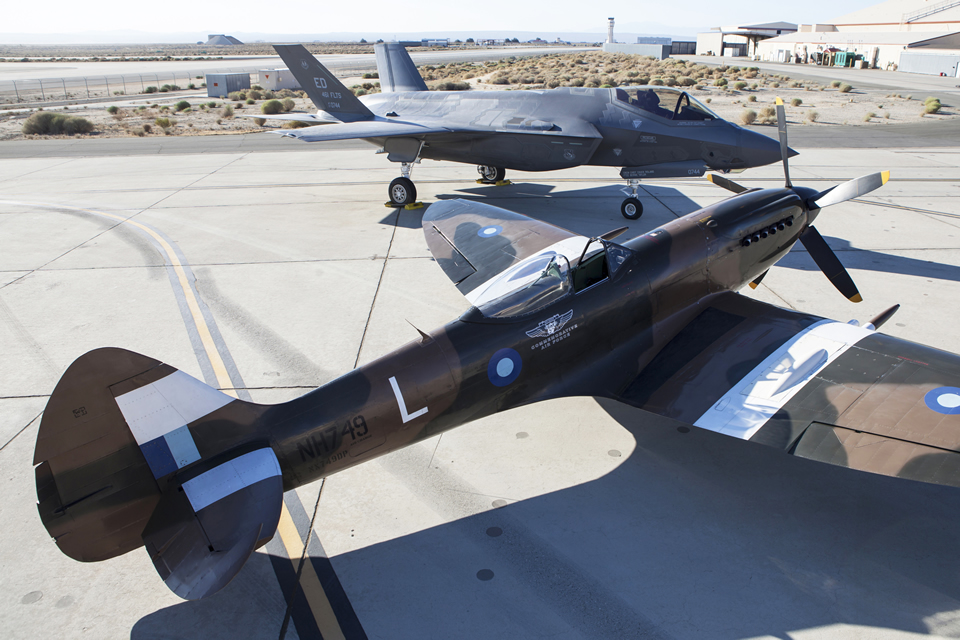
    A Spitfire parks along with an F-35 Lightning II on the Edwards flightline. Sept. 14, 2012. Lockheed Martin photo by Matthew Short

    Spitfire and Lightning II at Edwards AFBAlong with the extensive testing of the growing F-35 fleet at Edwards AFB and elsewhere, the United Kingdom Lightning II Test and Evaluation Squadron at Edwards AFB found time to celebrate their own “Battle of Britain Night”. This event brought the F-35 Lightning II together with the World War II era Spitfire from the Commemorative Air Force display team which joined the celebration. The attached gallery shows some pictures taken on September 14, 2012 on this unique celebration.

    The Supermarine Mark XiV Spitfire, (N749DP). The aircraft was restored by the Commemorative Air Force Southern California Wing, Camarillo, Calif.


    [wzslider info=”true”]

    Enhanced T56 Engine Could save Billions in C-130H Operating Costs

    C130H engine test
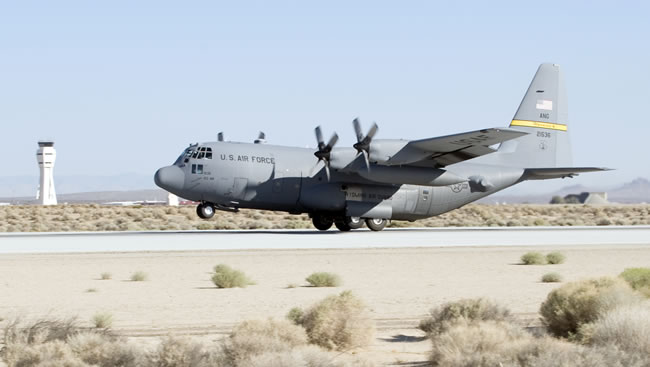
    A C-130H takes off from Edwards Sept. 14 with an enhanced Rolls-Royce engine. (U.S. Air Force photo by Edward Cannon)

    The US Air Force began testing a C-130H Hercules  tactical transport aircraft powered by an enhanced T-56 engine. According to the manufacturer, Rolls-Royce, the Series 3.5 Engine Enhancement is designed to deliver fuel savings and reliability improvements, resulting in improved life cycle costs. The first C-130H test aircraft began flying recently at the US Edwards Air Force Base, CA. The Series 3.5 Engine Enhancement program is expected to enable the USAF to continue to operate its C-130H fleet until 2040, and a USAF analysis estimated its long-term savings from the Series 3.5 enhancements could reach $2 Billion.

    The T56-A13 Series 3.5 improvements reduce fuel consumption by 7.9 percent, improve hot day performance by increasing maximum engine torque limit to 48 degrees celsius and improve turbine life by reducing inlet temperature by 82 degrees celsius.

    The Series 3.5 Engine Enhancement has already demonstrated greater than 8 percent fuel burn improvement in ground tests, using proven technologies from other Rolls-Royce commercial and military engines, including new blade and vane materials and advanced turbine airfoil aerodynamic designs. The Series 3.5 will also improve performance in ‘hot and high’ conditions.

    Tom Bell, Rolls-Royce, President, Customer Business – Defense, said, “We look forward to carrying out flight tests to confirm what we have already demonstrated in the test cell – significant savings in fuel costs, improved reliability and performance. Rolls-Royce has invested to help the US Air Force and other operators around the world meet their goal of reducing fuel costs, while also extending the life of the C-130 fleet and potentially saving billions of dollars.”

    The improvements

    The engine improvements can be accomplished as part of a conventional engine overhaul, and do not require any aircraft or engine control system modifications. Each C-130 aircraft has four Rolls-Royce T56 engines, with approximately 220 C-130H models eligible for upgrades.

    The Series 3.5 program will help the Air Force to achieve its goal of reducing consumption of aviation fuel by 10 percent by 2015.

    C130H engine test
    A C-130H takes off from Edwards Sept. 14 with an enhanced Rolls-Royce engine. (U.S. Air Force photo by Edward Cannon)

    US Navy Seek to Arm Firescouts with Guided Rockets

    Firescout with APKWS
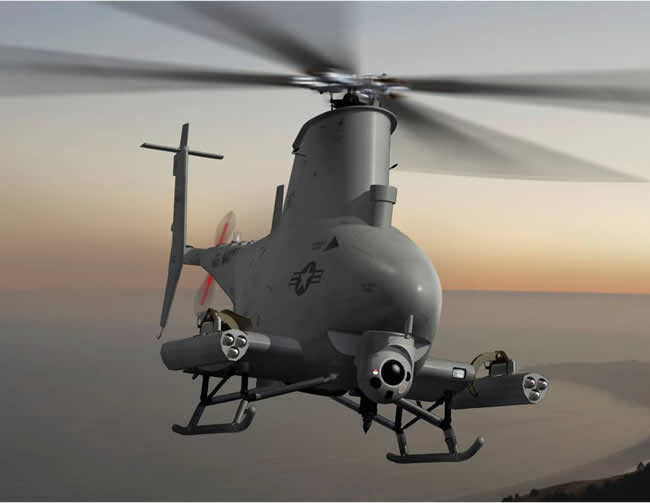
    BAE Systems is integrating the APKWS laser guided rocket onto the Firescout MQ-8B unmanned helicopter, under an urgent request by the US Navy. Photo: BAE Systems

    The US Navy plans to integrate the newly fielded Advanced Precision Kill Weapon System (APKWS) rocket onto the MQ-8B Firescout unmanned helicopter. The US Navy recently awarded a contract for such integration to the weapon developer BAE Systems. The weapon is currently fielded with US Marine Corps AH-1W and UH-1Y manned helicopters and has been used in combat in Afghanistan. The Firescout will become the first unmanned platform to use the laser guided rocket, expanding the operational flexibility and self sufficiency of combat units.

    The system is being integrated onto the Fire Scout in response to an urgent operational need and is being prepared for rapid deployment. BAE Systems will support this rapid APKWS integration by performing system analyses and modeling based on its high fidelity, integrated flight simulator.

    “This expansion onto unmanned aircraft is the next exciting step after demonstrating performance on both rotary and fixed-wing manned aircraft,” said Roy Rumbaugh, APKWS program manager at BAE Systems.

    Firescout with APKWS
    BAE Systems is integrating the APKWS laser guided rocket onto the Firescout MQ-8B unmanned helicopter, under an urgent operational requirement by the US Navy. Photo: BAE Systems

    ISR Group to Offer Unmanned Helicopter Services to Support Military Customers

    Shadowhawk VTUAS
    Shadowhawk can operate on missions up to three hours. According to the manufacturer, the operating costs of the Shadowhawk are approximately 11 percent of manned helicopters, considering the lower fuel consumption (1.1 gal./hour) , maintenance and manpower costs. The VTUAS is also safer to operate than a full-size helicopter, Vanguard said, since the Shadowhawk will auto-rotate to the ground in a controlled landing even when a complete failure of the main engine. Although full size helicopters may be able to perform this function with a highly skilled pilot, it often results in significant damage to the aircraft as well as injury to the pilot. Photo: Vanguard
    Shadowhawk VTUAS
    Shadowhawk can operate on missions up to three hours. According to the manufacturer, the operating costs of the Shadowhawk are approximately 11 percent of manned helicopters, considering the lower fuel consumption (1.1 gal./hour) , maintenance and manpower costs. The VTUAS is also safer to operate than a full-size helicopter, Vanguard said, since the Shadowhawk will auto-rotate to the ground in a controlled landing even when a complete failure of the main engine. Although full size helicopters may be able to perform this function with a highly skilled pilot, it often results in significant damage to the aircraft as well as injury to the pilot. Photo: Vanguard

    Vanguard Defense Industries, Inc., developer of unmanned vertical takeoff and landing systems (VTUAS) has teamed with US based ISR Group, Inc. to provide Intelligence, Surveillance and Reconnaissance (ISR) services for  U.S. and NATO Forces, as well as other government agencies, operating Vanguard’s Shadowhawk VTUAS. Under the exclusive agreement signed by the two companies, ISR Group will perform flight operations, operator training, and maintenance services in support of Vanguard Defense’s Shadowhawk unmanned aircraft system platform. “Together, ISR Group and Vanguard Defense Industries will provide intelligence-gathering capabilities to military and government agencies without them having to carry the burden of heavy financial investments in rapidly evolving technology,” said Alfred Lumpkin, ISR Group founder and CEO. The agreement will allow for further advances of unmanned VTOL technology within the private sector for commercial applications.

    The Shadowhawk Unmanned Aircraft System (UAS) is routinely deployed in the U.S. and internationally to provide real-time, actionable information where manned resources are limited or could be compromised. This UAS can be configured with multiple payloads, providing live-streaming information at either low altitudes for detailed inspections or at higher altitudes with increased endurance and wider areas of surveillance. The system is also used to rapidly and safely gather high-resolution imagery and other data to support national security interests, inspect vital natural resources and infrastructure, and to assess disaster damage without risking additional personnel.

    “It’s this value-added concept that will keep our country on the forefront of security advancements.” Michael Buscher CEO of Vanguard Defense Industries added, “The pairing of the two companies now provide clients with a true turn-key solution to UAS operations which is unrivaled in the industry.”

    The ISR Group has been offering operational services for U.S. government agencies and the commercial sector, providing unmanned aerial vehicles and ground robotics services for intelligence, surveillance, underwater inspection and recovery.

    US Navy to Boost Pacific Airborne Maritime Capabilities with New Drones and ASW Aircraft

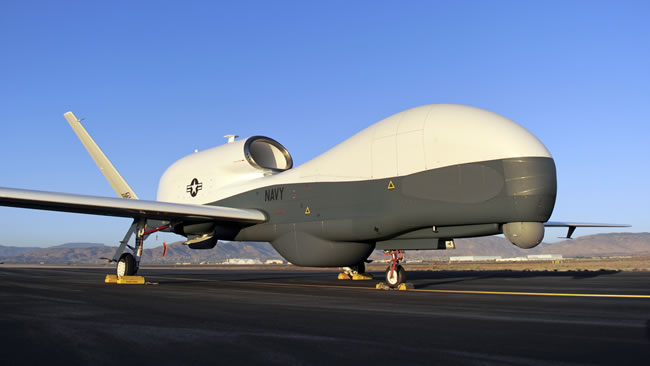
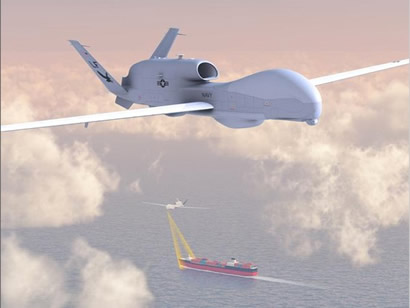
    Guam to become forward base for MQ-4C (BAMS) drones in the Pacific. (Photo: US Navy)

    MQ-4C BAMS will soon become the first unmanned system in US service committed to the maritime patrol mission.
    The United States Navy is planning to deploy Northrop Grumman MQ-4C Triton Broad-Area Maritime Surveillance (BAMS) drones to Andersen Air Force Base in Guam with preparations for deployment projected to begin during Fiscal Year 2014 (FY14).

    The MQ-4C Triton, only recently introduced, is a large, unmanned drone designed to provide enhanced maritime surveillance in coordination with the Navy’s P-3C Orion and P-8A Poseidon maritime surveillance/anti-submarine aircraft.

    Guam’s Andersen Air Force Base (AFB) currently operates three Northrop Grumman RQ-4 Global Hawk unmanned aerial vehicles (UAV) in a limited surveillance role. The RQ-4 was designed primarily to perform land surveillance duties, not long-duration ocean surveillance sweeps.

    In an interview with ABC News, intelligence analyst Matthew Aid said that the RQ-4 “was designed for pinpoint imagery or eavesdropping on land targets, by over flight, or by flying obliquely up to 450 kilometers off an enemy’s coastline” while the MQ-4C “was designed for broad area maritime surveillance – following ships from high altitude.”

    Joe Gradisher, Public Affairs Officer for the Assistant Chief of Naval Operations Next Generation Enterprise Network (NGEN), recently told Stars & Stripes newspaper that the Navy’s Tritons would join the Global Hawks at Guam.

    Mr. Gradisher told Stars & Stripes that current plans “for BAMS include the use of Guam, but other bases may be considered in the future, subject to combatant commander desires and future diplomatic arrangements.” The Japan Times newspaper and ABC News also reported the decision to base the Tritons at Guam.

    As part of the United States’ “pivot” to the Asia-Pacific region, the US Navy is working towards reinforcing its maritime surveillance capability in the Pacific Ocean arena. Existing plans call for the new Boeing P-8A Poseidon Maritime Patrol/Anti-Submarine Warfare aircraft to be deployed as a replacement for the Navy’s venerable Lockheed Martin P-3C Orion maritime patrol aircraft.
    The P-8A Poseidon is designed to operate with the Navy’s new MQ-4C Triton in an anti-submarine warfare (ASW) role that includes the interdiction of maritime shipping and performance of electronic intelligence (ELINT) functions. The P-3 has been in service with the navies of many nations since 1962 and is nearing retirement. The P-8s are expected to begin replacing some of the aging P-3s assigned to stateside squadrons next year.

    Existing plans call for the acquisition of 68 Tritons and 117 Poseidons to replace the P-3C Orions still operational. By pairing the MQ-4C Triton BAMS drone with the P-8A Poseidon in the Pacific, the US Navy will be able to maintain a continuous long-range surveillance over a wide expanse of the Asia-Pacific region to an extent the P-3C Orions cannot match. As tensions between Japan, China, and other Asian-Pacific nations have continued to escalate and are beginning to pose a threat to regional peace, an enhanced surveillance force is a capability US Pacific commanders are anxious to get into operation.

    There is also a very real possibility that Japan will be deploying its drones to Andersen AFB in the near future as well. Japan’s Kyodo News Service reported that the United States and Japan were discussing a proposal to jointly-base US and Japanese UAVs in Guam. The Japan Times newspaper also released a story, citing an anonymous source, stating that the Japanese Self-Defense Force (JSDF) was in negotiations with US representatives to arrange a joint-use arrangement that would allow the JSDF to operate drones from Guam.

    The joint-use proposal, as reported by the Japan Times, would provide for the JSDF to share USAF/USN hangars, flight support, and maintenance facilities.

    A previous Japanese proposal to buy Global Hawks was dropped because of cost considerations, but JSDF officials insist it is their desire to buy surveillance drones sometime between Fiscal Year 2014 and Fiscal Year 2020. The Japanese Maritime Self-Defense Force (JMSDF) currently operates 80 P-3C Orion maritime patrol aircraft, five EP-3C ELINT Orions, and four OP-3C reconnaissance models from various air stations throughout the Japanese Archipelago. These aircraft were built under license by Kawasaki Heavy Industries.

    United States Navy officials and JMSDF officers are well aware that Japan’s fleet of Orions is not capable of providing the long-duration continuous surveillance of Pacific sea lanes needed to keep an eye on China’s rapidly-growing, technologically-advanced naval presence. A joint-basing arrangement would be advantageous to both nations with respect to cost-savings, workload reductions, information sharing, and joint-force readiness.

    US military officials at Guam declined comment on the MQ-4C basing reports. Navy Lieutenant William Knight said that he could neither confirm nor deny the reports, but indicated that pertinent information could be forthcoming at a later date.

    Guam to become forward base for MQ-4C (BAMS) drones in the Pacific. (Photo: US Navy)

    Skunk Works and XTEND Simplify Multi-Drone Command

    0
    Lockheed Martin Skunk Works® and XTEND have achieved a major milestone in JADC2 by integrating the XOS operating system with the MDCX™ autonomy platform. This technical breakthrough enables a single operator to simultaneously command multiple drone classes, eliminating the friction of mission handoffs. From "marsupial" drone deployments to operating in GPS-denied environments, explore how this collaboration is abbreviating the data-to-decision timeline and redefining autonomous mission execution.

    From Ukraine to Taiwan: The Global Race to Dominate the New Defense Tech Frontier

    0
    As traditional defense primes face mounting competition from agile “neoprimes” such as Anduril, Palantir and Helsing, the balance of innovation is shifting toward software-defined warfare and scalable, dual-use technologies, while global industry consolidation—marked by Boeing’s integration of Spirit AeroSystems and other strategic mergers—signals an intensified race to secure control over the defense technology value chain. Our Defense-Tech weekly report highlights these trends.

    Europe’s “Drone Wall”

    0
    In early October 2025, a coordinated wave of unmanned aerial system (UAS) incursions—widely attributed to Russia—targeted critical infrastructure across at least ten European nations. The unprecedented campaign exposed the fragility of Europe’s air defenses...

    Weekly Defense Update & Global Security Assessment

    0
    Executive Summary The past week (September 18-25, 2025) represents an inflection point where strategic defense concepts have transitioned from doctrine to tangible reality. An analysis of global events reveals four primary, interconnected trends shaping an...

    U.S. Air and Space Forces Push Next-Gen Programs at the AS&C 2025 Conference and...

    0
    At the 2025 Air, Space & Cyber Conference, U.S. Air Force and Space Force leaders unveiled major updates on next-generation fighters, bombers, unmanned systems, and space initiatives, highlighting both rapid innovation and critical readiness challenges as the services race to outpace global competitors. A short version is available here, with a more detailed version for subscribers.

    TADTE 2025: Reflecting Taiwan’s Strategic Themes

    0
    The Taipei Aerospace & Defense Technology Exhibition (TADTE) 2025 crystallized around four dominant strategic themes that collectively illustrate Taiwan's comprehensive approach to defense modernization amid escalating regional tensions. Based on a detailed report by Pleronix (available upon request). Includes a Podcast discussion on TADTE 2025's highlighting Taiwan's four strategic themes beyond the post's coverage.

    Iron Beam 450 Completes Testing, Soon to Join With Operational Air Defense Units

    0
    Israel’s Iron Beam 450 high-power laser system has completed final testing, marking a major leap in air defense. Developed by Rafael, it offers precise, cost-effective interception of rockets, UAVs, and mortars, and is set for IDF deployment by 2025.