Wednesday, December 24, 2025
More
    Home Blog Page 102

    Indian Army opts to buy Israeli Spike multi-purpose missiles

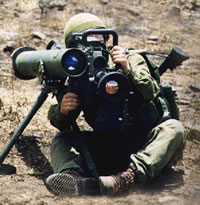
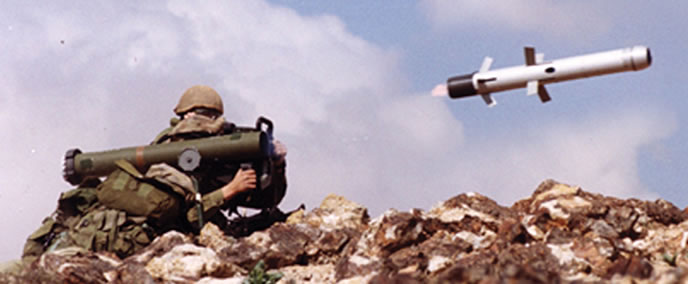
    The Indian army announced today its decision to buy 321 missile launchers and 8,356 Spike anti-tank guided missile from Israel’s Rafael Advanced Defense Systems, as part of a procurement deal that could reach half billion US$.

    Rafael was the sole bidder for the Army program, facing a US offer to sell the Javelin missile produced by a joint venture of Lockheed Martin and Raytheon, under a Foreign Military Sales (FMS)  scheme. This sale was offered under  Government-to Government (G2G) by the US, bypasding the Army bidding process .

    spike_launched
    The Indian army announced today its decision to buy 321 missile launchers and 8,356 Spike anti-tank guided missile from Rafael. Photo: Rafael

    The main issue of concern for the Indians was technology transfer and local manufacturing rights. Although both were promissed by the US, India did not receive access to the technology and the level of cooperation on the missile’s manufacturing and development remained vague.

    Israel, on the other hand, has already sold the missiles to more than 20 customers worldwide, and had implemented successful local manufacturing and support peograms in several key markets, including Germany, Poland and Singapore.

    The selection of the Israeli proposal was made back in 2010 but the actual decision to proceed with the contract was delayed due to the US pressure, which could continue now, untill a formal contract is signed.

    The recent decision was taken following a meeting of the Defence Acquisition Council, chaired by Defence Minister Arun Jaitley, that lasted for over two hours with Defence Secretary, the Chiefs of all three services, DRDO Chief and other senior officials attending it.

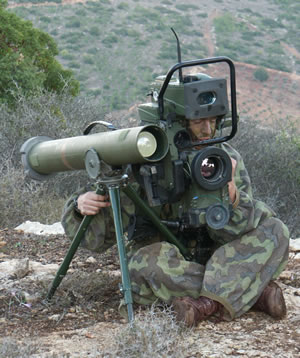
    The Spike C4I system (Tycoon) enables Spike firing teams to share information, allocated targets, update mission plans and improve communications among Spike units and other combat elements, using data and image communications. Photo: Rafael
    The Spike C4I system (Tycoon) enables Spike firing teams to share information, allocated targets, update mission plans and improve communications among Spike units and other combat elements, using data and image communications. Photo: Rafael

    The new missiles are needed to replace the Milan 2 missiles locally produced in India under French license. India has also produced the Russian AT-4 missiles, both considered second generation weapons. The Israeli Spike is  a fourth generation missile, as it provides users both ‘fire and forget’, enabled with the Javelin, and ‘fire and update’ options, particularly useful in engagements in complex, urban terrain.

    The initial order will be supplied from Israel and supported in India, while follow-on batches will be locally produced, following transfer of technology (ToT) to defence PSU Bharat Dynamics Limited for large-scale manufacture.

    India is expected to field much more than the 381 launchers it will initially buy, to replace the Milans throughout the Indian Army’s 382 infantry battalions and 44 mechanized infantry regiments, sources put the missile numbers to be procured through the life span of the program at about 40,000 . The number of launchers is also expected to increase at least five-fold, as well as procurement of support equipment, training and proficiency simulators and command and control systems supporting the weapon.

    China’s newest stealth fighter could fly at Zuhai Airshow next month

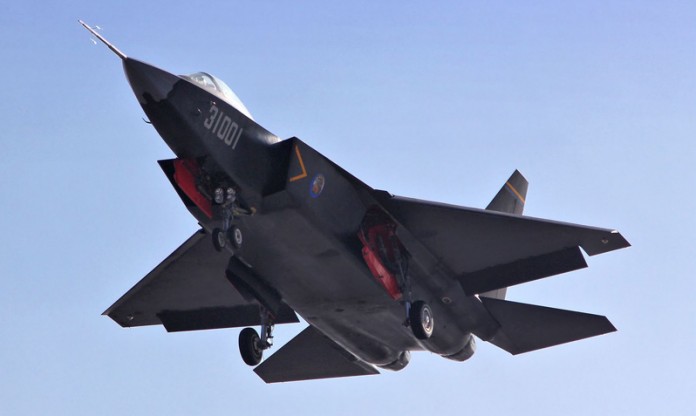
    J-31 is expected to show for the first time at the 2014 Zuhai air show in China.
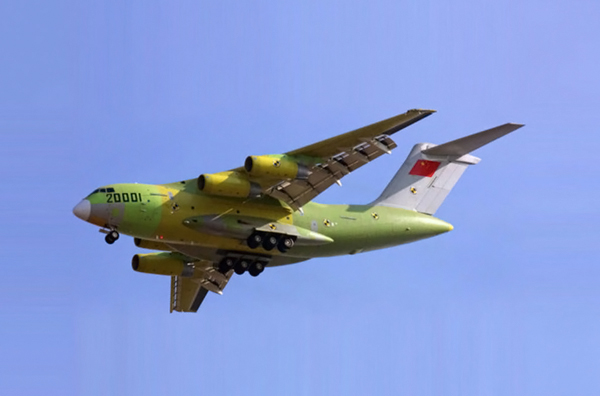
    The Xian Y-20 is expected to be displayed at this year's Zuhai airshow, along with China's new stealth fighter - the J-31, bot are currently in flight testing.
    The Xian Y-20 is expected to be displayed at this year’s Zuhai airshow, along with China’s new stealth fighter – the J-31, bot are currently in flight testing.

    China is expected to unveil its newest stealth fighter next month at the 10th China International Aviation & Aerospace Exhibition to be held next month in Zuhai. The J-31 stealth fighter will be shown to the public in demonstration flight, Chinese officials informed. China is intending the J-31 for export markets, initially as a land based fighter, the stealth plane could also evolve later into a carrier based ‘naval configuration’, thus positioned directly as a competitor for the F-35.

    J-31 is expected to show for the first time at the 2014 Zuhai air show in China.
    J-31 is expected to show for the first time at the 2014 Zuhai air show in China.
    Still in an early prototype stage, the Shenyang J-31 stealth fighter is expected to enter production in five years. As a smaller and lighter aircraft, compared to the Chengdu J-20, the J-31 has the potential to become the next carrier-borne combat aircraft type to serve on board the future Chinese aircraft carriers.

    The J-31 made its maiden flight in 2012 and is continuing its flight testing and envelope expansion tests. Due to its high potential as an export aircraft, China is likely to make the effort to display the prototype at China’s premier biennial aviation event.

    While J-31 is designed as a stealth aircraft, its systems and design is more comparable to current 4-4.5 generation fighters, thus it is expected to be significantly cheaper than the US Joint Strike Fighter. The prototype is currently powered by two Russian made RD-93 afterburning turbofan but production versions are expected to use the Chinese developed WS-13A, delivering 20 percent more power.

    The new-generation heavy military transport aircraft Xian Y-20 Kunpeng, independently developed by China, will also debut at Zuhai. With the maximal takeoff weight of 220 tons and the loading capacity of over 66 tons, the Y-20 is the largest aircraft developed by China. The Y-20 had its maiden flight less in 2012 and is expected to be fielded with the Chinese Army Air Force in 2016.

    The airshow is expected to provide a first peek into other new jet fighters that have recently become operational with the Chinese People’s Liberation Army Air Force (PLAAF) and Navy (PLAN).

    The J-10B has already been inducted to PLAAF service, as an upgraded version of the J-10. The most distinctive feature is it's different 'smile'.
    The J-10B has already been inducted to PLAAF service, as an upgraded version of the J-10. The most distinctive feature is it’s different ‘smile’.
    The Chengdu J-10B is an upgraded variant of the J-10 which has already entered operational service with the PLAAF and spotted by aircraft enthusiasts but has never been officially displayed in public. The aircraft integrates advanced avionics including AESA radar, helmet mounted sight, infra-red search track (IRST) and modern cockpit architecture.

    The Shenyang J-15, nicknamed “Fei Sha” (Flying Shark) in Chinese, is derived from the Russian Su-33, but represents’ a Chinese improved 4th-generation fighter integrating technologies already implemented by China in the J-11B. It is currently positioned as China’s current carrier-based fighter. To fit on carrier deck and hangars the J-15 has foldable wings and strengthened landing gear and arrester hooks and redesigned high-lift devices.

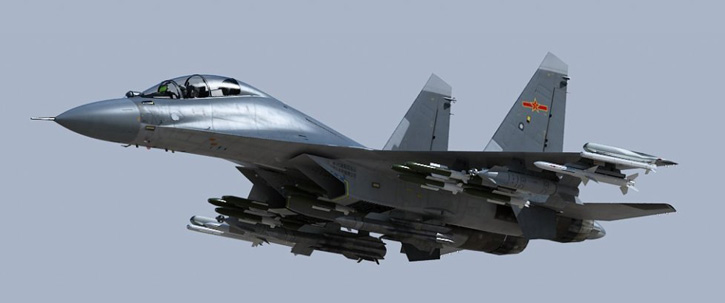
    The land based Shenyang J-16 is a new model of the multi-mission J-11, which was based on the Russian Su-30 design. The main improvements introduced in the J-16 are the AESA radar technology and advanced beyond visual range (BVR) air/air missiles that can independently and simultaneously engage multiple targets. The first batch of J-16s was delivered to the PLAAF in May this year.

    The J-16 represents a development of the J-11, introducing modern avionics and weaponry.
    The J-16 represents a development of the J-11, introducing modern avionics and weaponry.

    Russia to build 12 nuclear-powered Leader destroyers

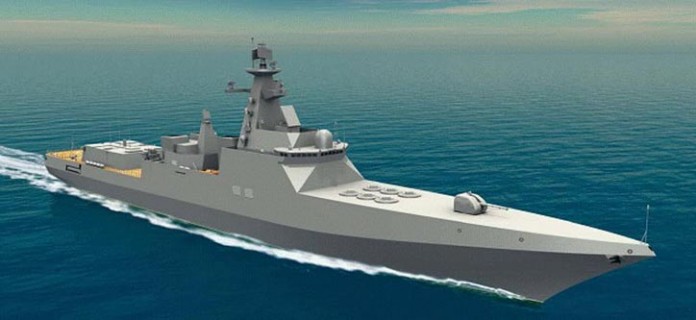
    The Severnoye (Northern) Design Bureau has been given the engineering design preparation assignment; it plans to launch the work in 2015

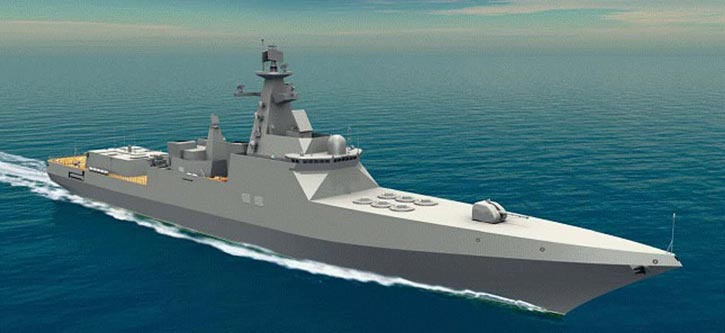
    The Navy of Russia intends to order 12 advanced Leader destroyers. A half of them will be designed for the Northern Fleet, and another half – for the Pacific Fleet, officials with the Defense Ministry of Russia said. The lead ship of the new class will join the Russian Navy not earlier than in 2023-2025.

    The Leader will be presented in two versions – with a nuclear powerplant and gas turbine power generating units.

    For the time being, the Leader is not included on the state armaments program before 2020. Its construction will be carried out under the shipbuilding program that runs through 2050. The works on the project are to start next year.

    The Severnoye (Northern) Design Bureau has been given the engineering design preparation assignment; it plans to launch the work in 2015
    The Severnoye Design Bureau has been given the engineering design preparation assignment; it plans to launch the work in 2015

    Turkey, US to modify the SOM cruise missile for use with F-35

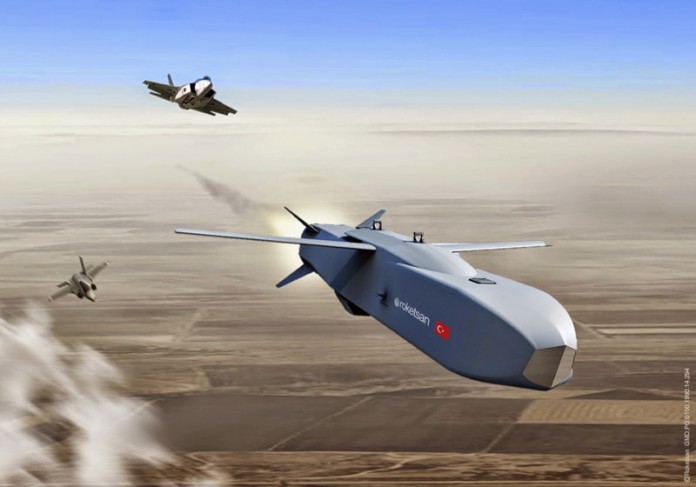
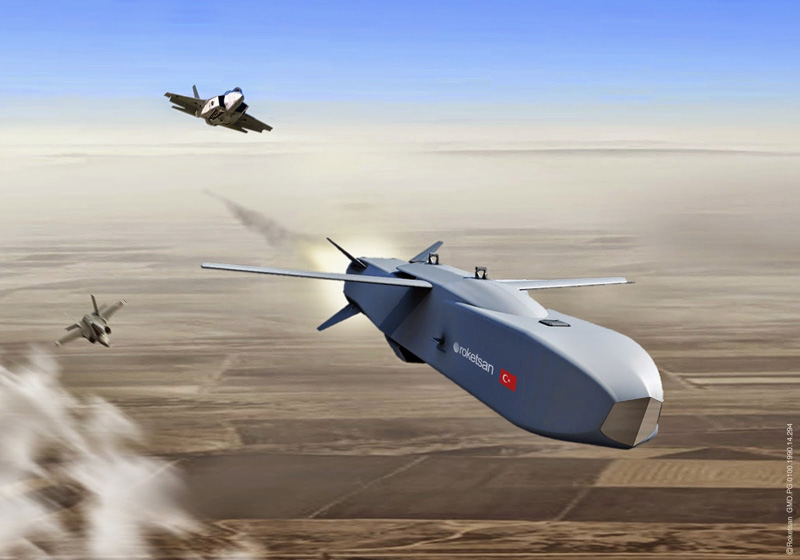
    The SOM-J will de designed to fit into the internal weapons bay of the F-35 JSF.

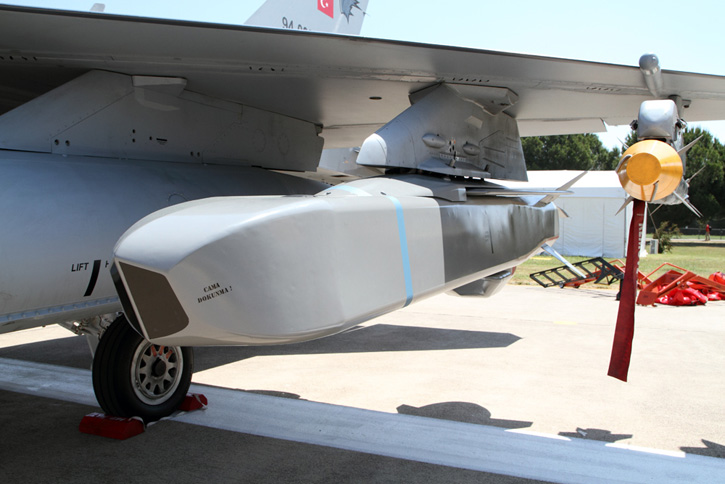
    The Turkish Air Force uses the SOM cruise missiles with its -4E and F-16 fighters.
    The Turkish Air Force uses the SOM cruise missiles with its -4E and F-16 fighters.

    Roketsan and Lockheed Martin signed a teaming agreement for the integration of a variant of Turkey’s new SOM cruise missile for the F-35 Lightning II. The companies agreed to jointly develop, produce, market and support SOM-J for internal carriage on the F-35 aircraft or external carriage on other aircraft. This ‘J’ version of the cruise missile will be designed to be more compact than the original design, equipper with folding control surfaces and a rocket booster.

    The SOM system is an autonomous, long-range, low-observable, all-weather, precision air-to-surface cruise missile. The SOM-J variant is tailored for internal carriage on the F-35 aircraft.

    This formal agreement builds on a previous announcement by Lockheed Martin last year, that the SOM cruise missile will be certified and adapted as part of the F-35 weaponry. Both SOM and Norwegian Joint Strike Missile (JSM) are expected to be available for the F-35 along with Small Diameter Bomb II (GBU-53) and Joint Stand-Off Weapon – JSOW (AGM-154C1) and Israeli Spice 1000 for internal carriage, as part of Block 4 in 2021.

    Lockheed Martin Missiles and Fire Control Executive Vice President Rick Edwards and Roketsan Chairman of the Board Eyüp Kaptan signed the agreement. The integration of SOM as part of the weapon mix of the F-35 was one of the demands posed by the Turkish government pursuing procurement of the F-35. In May 2014 Turkey placed an order for the first two F-35A Lightning II Joint Strike Fighter (JSF) aircraft, but has yet to fully approve the planned acquisition of 100 aircraft. The first two Block-3F configuration will be delivered in 2018, as part of the Low Rate Initial Production-10 (LRIP-10).

    The SOM is being developed by the Scientific and Technological Research Council of Turkey, (TUBITAK-SAGE). The first guided flight was performed in August 2011, and followed by initial deliveries of the missile the next year. The initial version of the missile was designed to strike land targets at ranges of 180 – 250 km. Enhanced versions are also in development, offering extended range capability of 500, 1500 and up to 2,500 km. The subsonic (Mach 0.94) missile weigh 600 kg and carries a penetration or high explosive fragmentation warhead at a weight of 230 kg (507 lb). The missile has demonstrated strike precision of less than 10 meters (down to five meters) at ranges of 300 km (160 nm). It is designed to attack surface targets on land and at sea.
    SOM is the first indigenous standoff attack weapon developed in Turkey. Prior to the introduction of this missile the TuAF was using the Israeli AGM-142 ‘Popeye’ standoff attack missiles on its F-4E Phantom strike fighters, which were also upgraded by Israel.

    The SOM-J will de designed to fit into the internal weapons bay of the F-35 JSF.
    The SOM-J will de designed to fit into the internal weapons bay of the F-35 JSF.

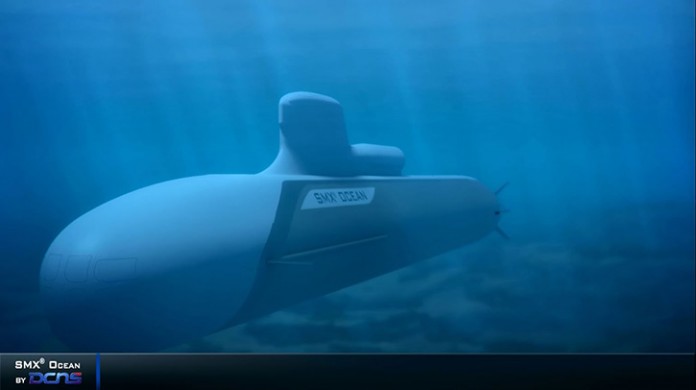
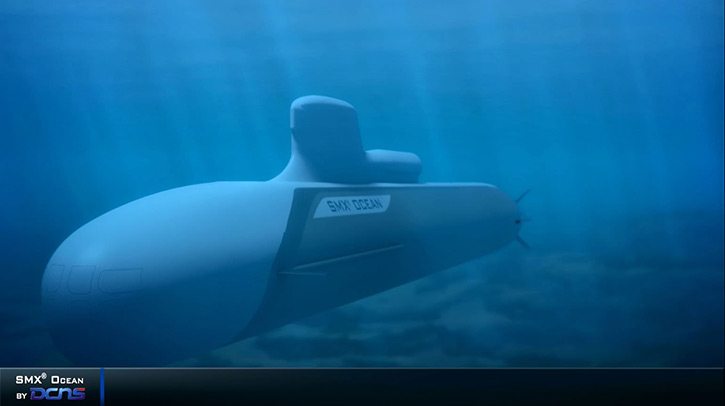
    DCNS outlines an AIP design based on the nuclear powered Barracuda

    maxresdefault

    DCNS is introducing the SMX Ocean – a new submarine concept based on the hull of the nuclear powered ‘Barracuda’ – the next generation SSN of the French Navy. The SMX Ocean will be fitted with a conventional propulsion system (SSK) with AIP technology.

    Developing this concept DCNS engineers focused on endurance and high sustained speed. The 4,700 tons SSK was designed for an endurance of 14,000 nautical miles (3 months autonomy) and a continuous transit speed of 14 knots for 1 week using the Air Independent Propulsion (AIP) system fitted with two fuel cells. The original nuclear propulsion system of the Barracuda design was also replaced with six diesel engines and three sets of Li Ion batteries.

    Two thruster pods are deployable at the bottom of the hull to allow the submarine will enable the submarine to manoeuvre even while the main screw is not in action. The X rudder design is the same as on the Barracuda, also allowing increased manoeuvrability.

    The SMX OCEAN SSK is fitted with one large modular Vertical Launch System tube that may vertically launch up to six MdCN cruise missiles. The submarine may also deploy F21 heavy torpedoes, SM39 Block 2 anti-ship missiles and a submarine launched version of the Mica missile for submarine self protection against aerial attack (A3SM Underwater Vehicle Version).

    Indonesia plans to purchase Russian submarines

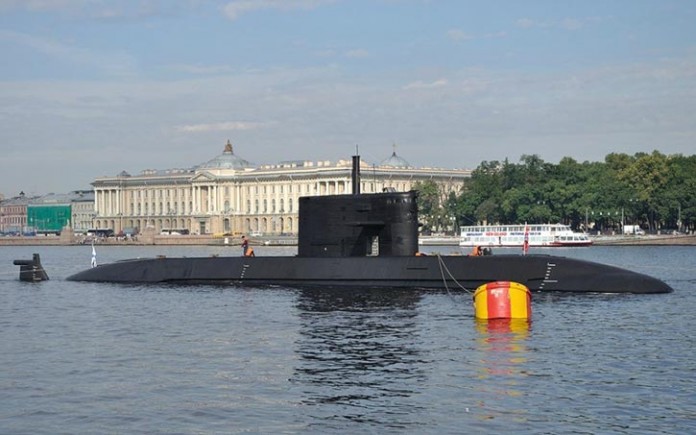
    Russian Project 677 Lada Class Diesel Electric Submarines (SSK)

    Russia and Indonesia are considering

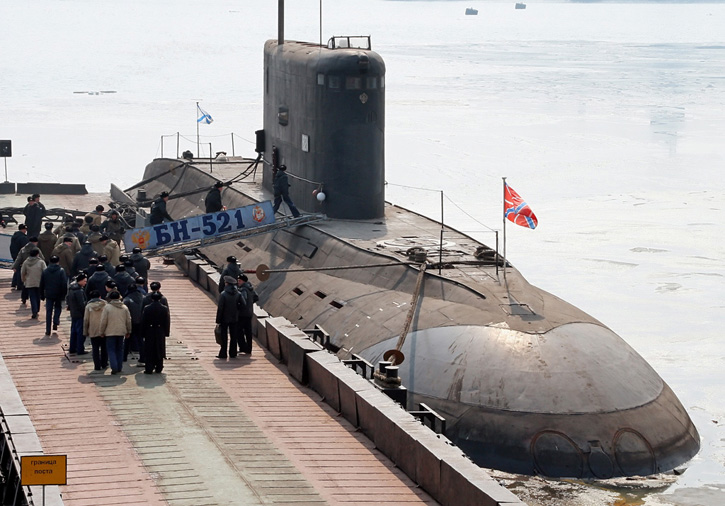
    Varshavyanka, a Russian Navy Kilo class diesel-electric powered submarine. Photo: Novosti
    Varshavyanka is one of 17 Kilo class (Project 636) diesel-electric powered submarine operating with the Russian Navy, five more are on order. Over 30 submarines of this class are operating with several Asian navies including China, Iran, India and Vietnam. Photo: Novosti

    Russia and Indonesia are discussing the possibility to provide Russian submarines for the Indonesian Navy, Russian Industry and Trade Minister Denis Manturov said last week, after his meeting with new Indonesian President Joko Widodo.

    “Indonesia already has experience in purchasing our equipment — helicopters, planes, armored vehicles and other items,” he said. “We are considering the possibility of supplying the Project 636 diesel-electric submarines (to Indonesia),” he noted.

    The two countries hope to boost inter-state trade from $3 billion to $5 billion in the next two years, Manturov said. There are plans for energy cooperation and for construction of Russian oil refineries in Indonesia. “Our Indonesian counterparts have raised this issue for the first time,” the minister said. “We are ready to discuss and develop this area.”

    Keeping the Tigers Flying

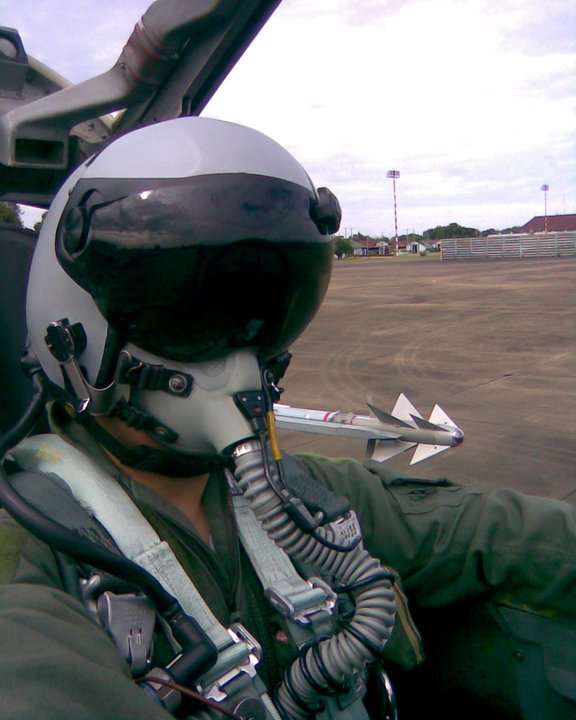
    A pilot of the Royal Thai Air Force preparing for a mission in an upgraded F-5T, wearing a DASH helmet. Note the Python IV missile on the wingtip.
    A pilot of the Royal Thai Air Force preparing for a mission in an upgraded F-5T, wearing a DASH helmet. Note the Python IV missile on the wingtip.
    A pilot of the Royal Thai Air Force preparing for a mission in an upgraded F-5T, wearing a DASH helmet. Note the Python IV missile on the wingtip.

    Israel’s Elbit Systems announced yesterday that it was awarded contracts from an Asian country in a total amount of approximately $85 million; the majority of the amount will be for an avionic upgrade of F-5 aircraft, to be performed over a three year period. The balance is for the supply of electro-optic and communications systems.

    While the name of the customer air force was not mentioned, Asian media sources have indicated the program is a follow-on phase of the F-5E Tigris – the modernized version of the Northrop F-5E operated with 211 squadron of the Royal Thai Air Force. Elbit Systems has already performed a modernization of part of the Thai F-5E fleet, and the current contract is likely to follow-on introducing complimentary capabilities that were not included in the original program that was limited by funding cuts.

    “We are proud to have been selected to perform this aircraft upgrade program, building on our vast know-how and experience in F-5 avionics modernization projects.” Bezhalel (Butzi) Machlis, President and CEO of Elbit Systems commented, ”Asia-Pacific is a very important market for Elbit Systems, and we are pleased to be awarded further programs in the region, which programs benefit from the synergies across the various parts of our organization. We have witnessed a growing demand for upgrades of this nature, and we trust that further customers will follow, benefiting from a mature aircraft upgraded with market leading technologies”.

    Elbit Systems has performed various F-5 upgrades in the past. The most comprehensive plan is the ongoing F-5EM/FM in Brazil, where 46 aircraft have been upgraded with SELEX Grifo F radars, INS/GPS-based navigation, Python IV and Derby air-to-air missiles, advanced electronic warfare systems, targeting pods etc. The program also extended the aircraft life span for 15 years. Among the avionics upgrades were mission computers, advanced glass cockpits featuring 3-color displays, DASH IV Helmet mounted display sight, weapon delivery and navigation systems, etc.

    Under the F-5T Tigris program launched in 2003 Elbit Systems performed upgrades to 12 single seat and two twin-seat F-5E/F fighters. The Thai configuration is similar to the Brazilian, differing in the type of radar used – as the F-5T uses the Israeli Elta ELM2032. The aircraft were also equipped with Rafael’s Python IV missiles and are likely carrying Litening targeting pods on ground attack missions.

    RTAF planned to upgrade 31 aircraft operated by 701 and 211 squadrons, but lack of funds reduced the amount to 15. With the introduction of JAS-39 Gripen with 701 squadron, the F-5T now operational only with 211 squadron are to remain in service at RTAF Airbase in Ubon, least until the early 2020.

    Thailand is one of the last remaining air forces in Asia operating the F-5 jet fighter. Once considered the mainstay of the South Vietnamese, South Korean, Singapore and Taiwan air forces, these fighters are now being retired, replaced with versions of locally produced fighter/trainers such as AIDC (a locally built F-5 variant) in Taiwan and F/A-50 in South Korea. Indonesia, Philippines and Vietnam are also maintaining some F-5Es in storage but the operational capability of these aircraft is unknown. In Singapore, the F-5s were replaced mostly with F-16s and F-15SG, leaving few of the aircraft to be used for operational training.

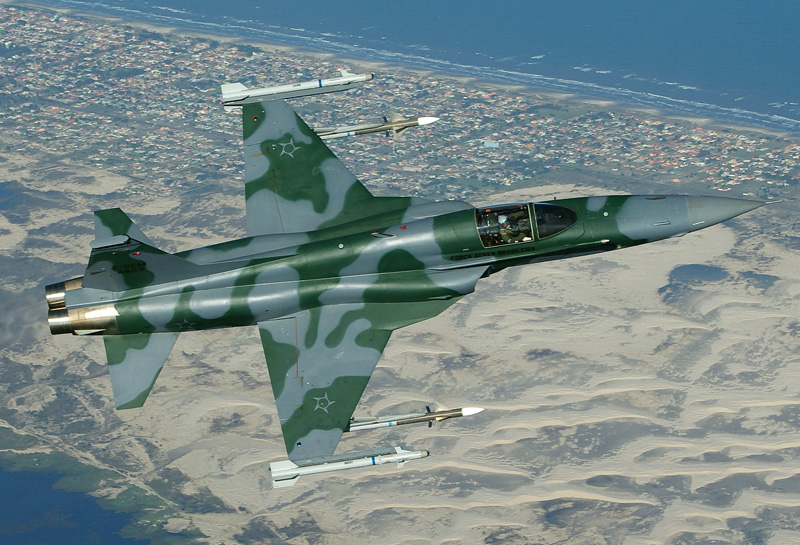
    The Brazilian Air Force has upgraded 46 Tiger II fighters into the F-5EM configuration, armed with Python IV and Derby missiles.
    The Brazilian Air Force has upgraded 46 Tiger II fighters into the F-5EM configuration, armed with Sidewinder and Derby missiles.
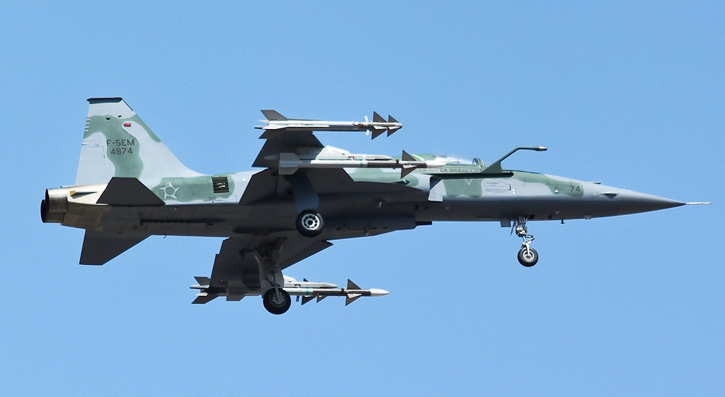
    This configuration shows the F-5EM armed with Python IV and Derby missiles.
    This configuration shows the F-5EM armed with Python IV and Derby missiles.

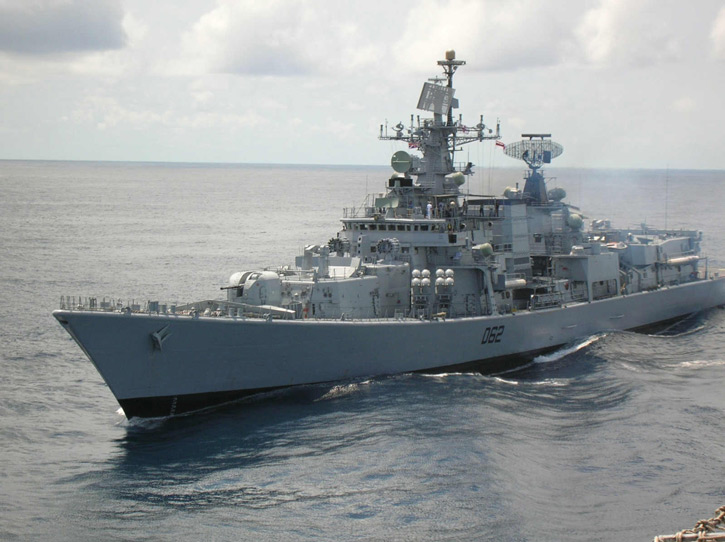
    Russia offers India three additional Talwar class frigates

    INS Mumbai (D62)
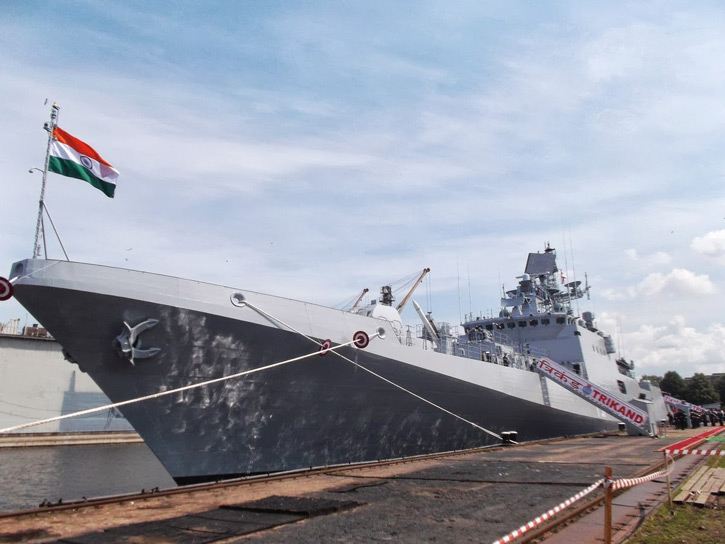
    INS Trikand (F51)
    INS Trikand (F51)

    Russia is offering to build for Indian Navy three additional Project 11356 frigates – the type designated ‘Talwar class’ by the Indian Navy. Russia supplied India with two sets of three Project 11356 frigates, with the last one being the INS Trikand. The Talwar Class is a modification of Krivak III class . Negotiations on the third set of three frigates have been taking place with the Indian side since this spring, following a formal Indian request, Vladimir Spiridopulo, the program manager at the Russian Northern Design Bureau said. In addition to the new constructions, upgrades of the three frigates delivered under the first order is also being negotiated.

    Part of this upgrade will include the integration of BrahMos missiles. The Indian Navy’s existing Project 11356 frigates are not BrahMos-equipped because they were designed before the BrahMos naval variant could be developed.

    The first three ships were built in the Baltic Shipyards of St. Petersburg, and the second set in Kaliningrad’s Yantar Shipyards. The location of the shipyard to build the third batch has yet to be announced.

    INS Mumbai (D62)
    INS Mumbai (D62)

    Spiridopulo also said that the Northern Design Bureau is helping to install a combat information and control (CIC) system, of its own design, on the new Indian Project 17 destroyers (Kolkata-class). The Russian CIC is now being installed on the third ship of this project.

    Source

    Lockheed Martin to supply $1 billion worth of SCOUT SV turrets

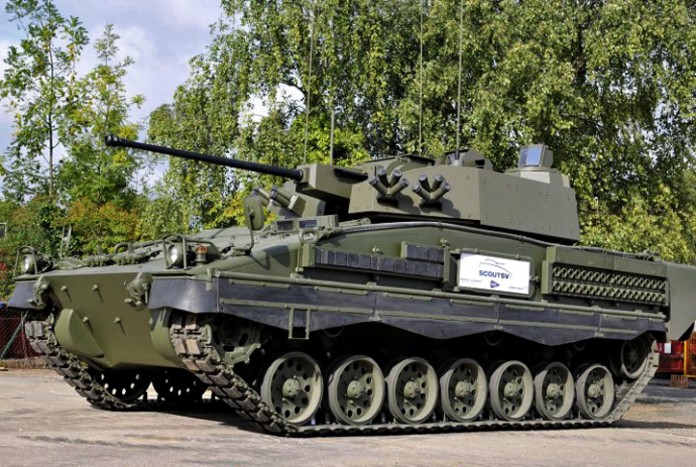
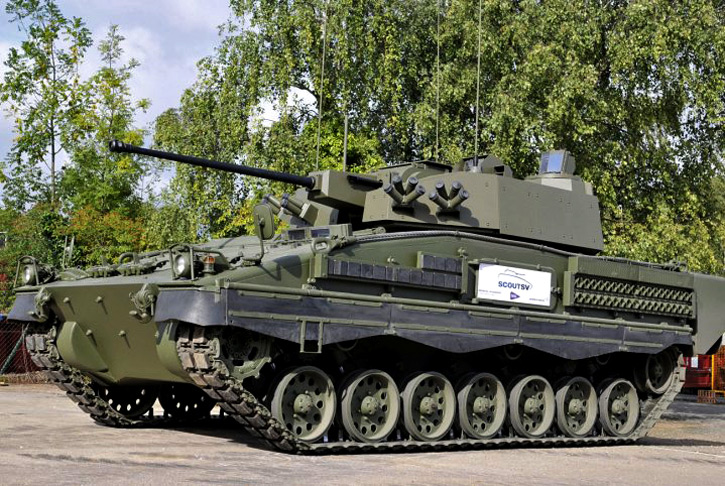
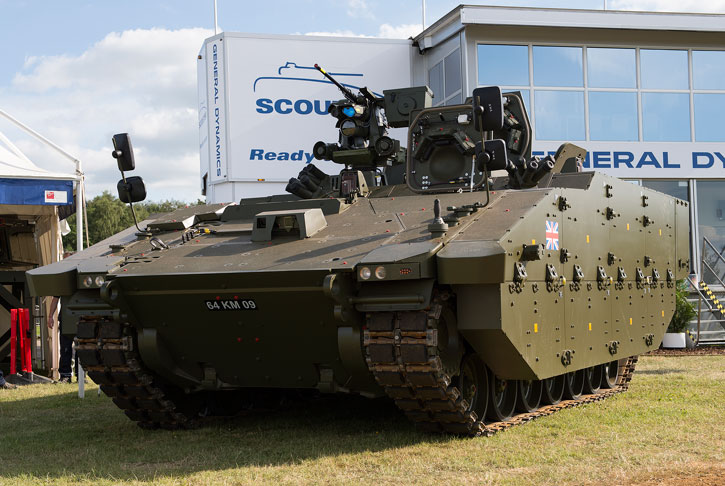
    scout_sv-mockup-gduk
    Lockheed martin UK will deliver 245 turrets for the SCOUT Specialist Vehicle (SV) under a $1 billion contract awarded October 2014. Photo: General Dynamics Land Systems, Eurpoe

    Lockheed Martin UK has been awarded a $1 Billion contract by General Dynamics UK to deliver 245 turrets for the SCOUT Specialist Vehicle (SV). The first prototype turrets will be delivered to General Dynamics UK for assembly onto the SCOUT SV hull in 2015, ahead of the first vehicles being handed over to the Army in 2017.

    The contract to design, manufacture, integrate and test all 245 turrets will sustain 880 jobs at Lockheed Martin’s Ampthill site in Bedfordshire. A number of Small and Medium Sized Enterprises (SMEs) across the U.K.that are involved in the supply chain to deliver the turret will also benefit from the production contract.

    It follows the announcement in September that the U.K. Ministry of Defence is to buy SCOUT SV’s to provide essential armoured vehicle capability for the British Army.

    Lockheed Martin’s technology-leading turret solution will deliver significant improvements in combat capability, survivability and operational effectiveness for the infantry.

    According to Stephen Ball, chief executive, Lockheed Martin UK, this contract reflects the significant investment the company made in developing the workforce in its Ampthill site. “The award not only sustains a significant number of highly skilled manufacturing jobs at our Ampthill site but will also greatly benefit our U.K. supply chain partners with whom we will work to deliver this modern, leading edge capability.” Ball added. Alan Lines, managing director at Lockheed Martin’s Ampthill site is hopeful the new activity could leverage as “a platform for other potential contracts for armoured vehicles programmes in the U.K. and export markets.” Lines said.

    scout_sv-gduk
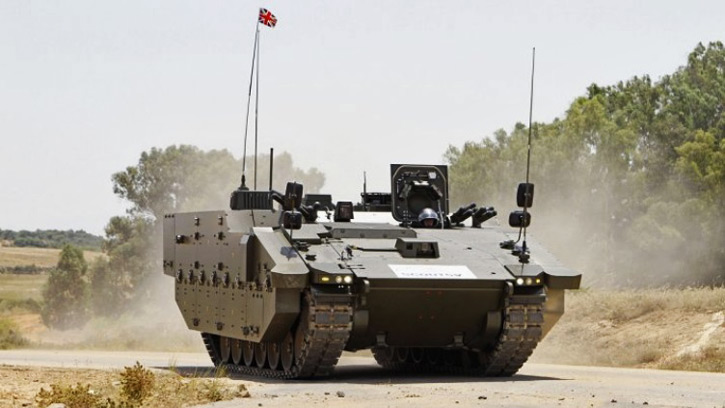
    Scout SV was displayed at this year’s DVD show with Protector remote weapon station. Photo: MOD, Crown Copyright

    SCOUT SV represents the first variant in the future of armouredfighting vehicles for the British Army, providing best-in-class protection and survivability, reliability and mobility and all-weather intelligence, surveillance, target acquisition and reconnaissance capabilities. Its range of six variants will allow the British Army to conduct sustained, expeditionary, full-spectrum and network-enabled operations with a reduced logistics footprint. SCOUT SV can operate in combined-arms and multinational situations across a wide range of future operating environments.

    scout_sv_dvd2014_725
    Scout SV was displayed at this year’s DVD show with Protector remote weapon station. Photo: MOD, Crown Copyright

    Embraer rolls out KC-390 military airlift

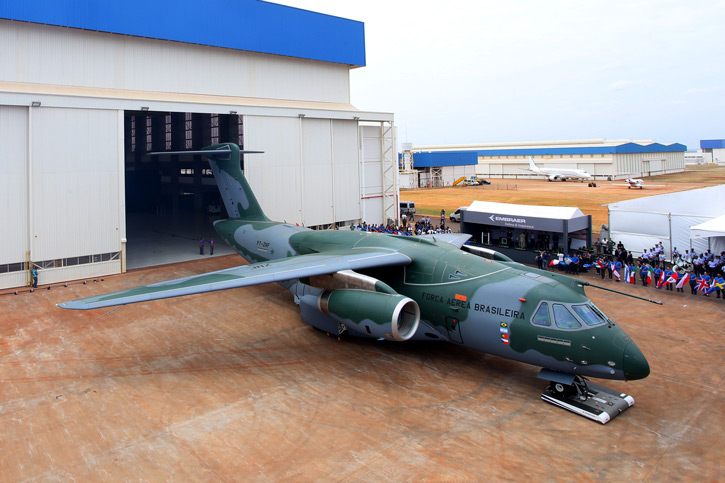
    Today, 21 October, Embraer rolled out the first prototype of the KC-390 military transport from the production hangar at the industrial plant of Gavião Peixoto, Brazil.

    The event was attended by the Brazilian Minister of Defense, Celso Amorim, the Commander of the Brazilian Air Force, Lieutenant-Brigadier General Juniti Saito, and delegations and representatives from more than 30 countries. This milestone rollout will allow the Company to perform important ground tests prior to the aircraft’s first flight, planned to take place by the end of 2014.

    KC-390-rollout
    The official rollout of Embraer Defense and Security KC-390 tactical transport aircraft. Photo: Embraer

    “This significant milestone of the KC-390 Program demonstrates Embraer´s ability to manage such a complex and high-technology project and to perform it on track,” said Jackson Schneider, President and CEO, Embraer Defense & Security. “It paves the way for the beginning of the ground tests to prepare for the first flight.”

    “The KC-390 will be the backbone of the FAB’s air transportation network. It will be able to operate in both the Amazon and Antarctica. The jet engines give the aircraft enormous agility in fulfilling all of its missions, faster and better,” stated Aeronautics Commander, Lieutenant-Brigadier General Juniti Saito.

    Following the rollout, the aircraft will continue with initial systems evaluations leading to the first engine run, and then to the ground vibration tests and the other planned ground tests. This aircraft is the first of two prototypes that will be used in the development, ground, flight and certification test campaigns.

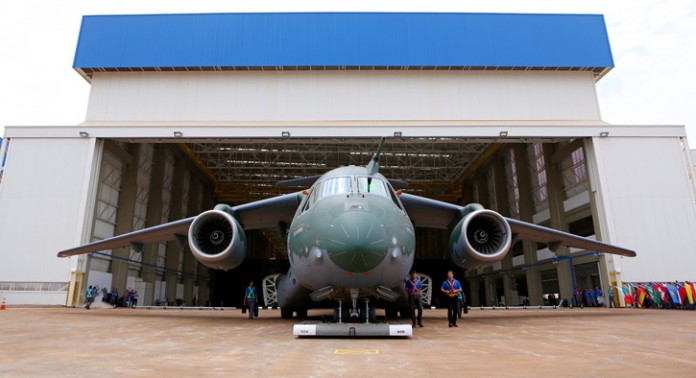
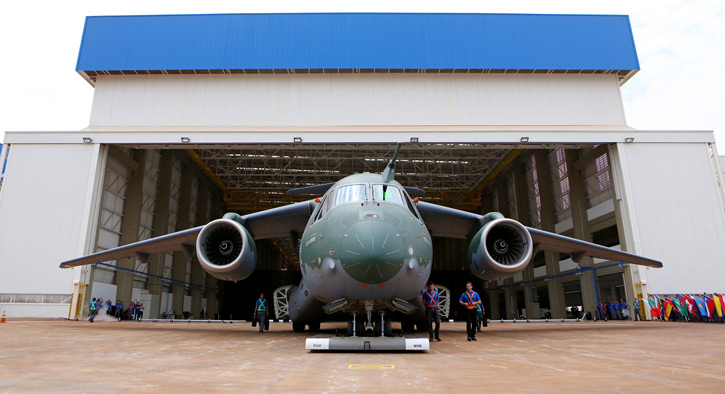
    KC-390-hangar
    KC 390 rollout. The Brazilian Air Force has contracted Embraer to deliver 28 KC-390 aircraft.Additional 32 aircraft are also on order or options for export. Photo: Embraer

    The KC-390 is a joint project of the Brazilian Air Force with Embraer to develop and produce a tactical military transport and aerial refueling airplane that is a significant advance in terms of technology and innovation for the Brazilian aeronautics industry. The aircraft is designed to establish new standards in its category, with a lower operating cost and the flexibility to perform a variety of missions: cargo and troop transport, troop and cargo air delivery, aerial refueling, search and rescue, and combating forest fires, among others.

    On May 20th, 2014, Embraer and the Brazilian Air Force signed the series production contract for the delivery of 28 KC-390 aircraft and associated initial logistic support. Besides the order by the Brazilian Air Force, there are currently intentions to purchase for additional 32 aircraft from other countries.

    In 2013 Embraer teamed with the Boeing Company to lead the KC-390 sales, sustainment and training opportunities in the U.S., UK and select Middle East markets. Embraer will manufacture the aircraft and collaborate with Boeing on sales, sustainment and training.

    Among the leading industry partners are IAE providing the V2500-E5 turbofan engines, Rockwell Collins, providing the Pro Line Fusion Avionics System, augmented with software developed by BAE Systems, and Gabbiano Tactical radar, provided by SELEX Galileo. Elbit System’s Brazilian subsidiary AEL Sistemas is supplying the Head-Up Displays (HUD), mission computer and DIRCM based self protection systems. Messier-Bugatti-Dowty providing landing gear and brakes. Other subcontractors include Thales and Northrop Grumman, providing parts of the aircraft navigation systems, Sagem, Hamilton Sunstrand, L-3, Eaton, Honeywell Aerospace, Astronics, OGMA, Chobham,

    Continued strikes in Syria draw coalition air power from Iraq

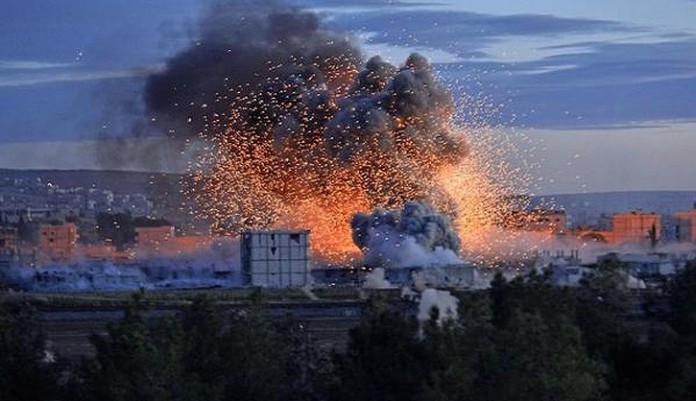
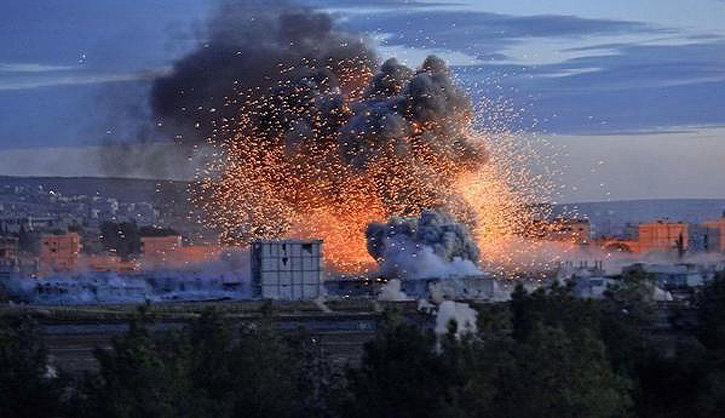
    Coalition air strikes in the Syrian town of Ein al Arab (Kobane) were clearly visible across the Turkish border.
    Coalition air strikes in the Syrian town of Ein al Arab (Kobane) were clearly visible across the Turkish border.
    Coalition air strikes in the Syrian town of Ein al Arab (Kobane) were clearly visible across the Turkish border.

    Islamic State continued to shell Kobani and engage with Syrian Kurdish forces on the ground after bolstering its ranks with troops from bases in Raqqa and Jarablus, local officials and a monitoring group said. The U.S. military said it launched four airstrikes against Islamic State (IS) near Kobani on Monday and Tuesday, destroying a large unit of fighters and a building controlled by the militant group.

    While battles Between Islamic State Jihadists and Iraqi security forces and Kurds are raging throughout Iraq, another battle in Syria is capturing the world attention and gradually attracting a growing share of the US lead coalition assets – both aerial supplies and air strikes as part of operation Inherent Resolve. Compared to few tens of strikes conducted in Iraq at the same period, the Pentagon confirmed no less than 125 strikes around the town of Ein al Arab (Kobani) on the Syrian-Turkish border, where ISIS is battling Kurd PYD militias defending the town. These strikes have helped slow the Islamic State advances into the city, killing hundreds of jihadist fighters.

    While Kurdish forces are providing some targeting support, the coalition air power is limited in its ability to acquire target data with adequate details for precision attack. At the beginning of the strikes, with limited intelligence of IS positions, only 90 of the campaign’s first 949 missions resulted in attacks. To improve intelligence collection and targeting the British MOD said it is sending unarmed Reaper drones and Rivet Joint electronic support aircraft to support missions over Syria. Weather was blamed to be part of the causes for insufficient targeting “With better weather, “intelligence, surveillance and reconnaissance platforms are able to fly a little bit more now” PentagonPress Secretary R.Adm John Kirby said.

    Until recently, Turkey, that has been battling the Kurdish PKK movement for decades was reluctant to assist the Coalition air strikes the. However, in  a reversal of policy, Turkey said Monday it allow 200 Iraqi Kurds to use Turkish territory to support the besieged Syrian Kurdish city of Kobani. The announcement comes after U.S. forces air-dropped military supplies into the city currently under assault by Islamic State militants. With Kobani under fire on three sides by Islamic State forces, the Turkish frontier is the only possible ground entry for resupplying the border city.

    close proximity to enemy forces caused some deliveries to reach IS troops instead of the besieged Kurds.
    close proximity to enemy forces caused some deliveries to reach IS troops instead of the besieged Kurds. Coalition air strikes were directed at those bundles, to prevent them to fall to IS hands, but apparently, these strikes were unsuccessful.

    In Kobani, Syrian Kurds, known as theDemocratic Union Party (PYD), are calling for heavy weapons, in particular anti-tank missiles, to counter Islamic State tanks. According to unofficial reports, the US has been using targeting data provided by the Kurds, to conduct those strikes. The Kurds have also requested medical supplies, weapons and ammunition which have been delivered by three C-130 Hercules transport planes on Sunday night. However, close proximity to enemy forces caused some of the 28 pallets dropped over the town to reach IS troops instead of the besieged Kurds.

    While divisions remain between the rival Kurdish political factions across the region, the onslaught of the Islamic State has brought them closer together. Ankara has been hesitant in allowing Peshmerga into Kobani to help the PYD.  That’s because Turkey accuses the PYD of being linked to the PKK, a rebels group that both Ankara and the United States describes are terrorists. The PKK has fought for greater Kurdish rights in Turkey for three decades. Iraqi Kurds are considered  by the Turks to be more conservative, and have partnered in the past with Turkish forces in fighting the PKK as well.

    Limited by weather conditions, coalition fighter planes launched seven airstrikes on Monday, while U.S. forces, in coordination with Iraqi ground troops, conducted six airstrikes against the militant group in Iraq near Fallujah and Bayji with help from France and the United Kingdom, the statement said.

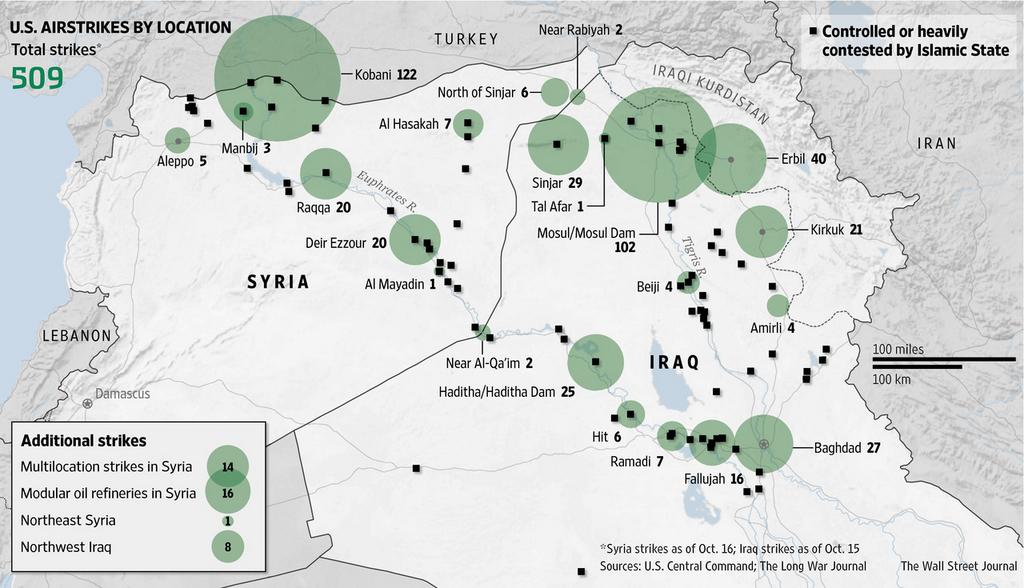
    Statistical summary of coalition air strikes in Iraq and Syria - August-October 15, 2014. Source: Wall Street Journal
    Statistical summary of coalition air strikes in Iraq and Syria – August-October 15, 2014. Source: Wall Street Journal

    “Our main focus right now is enabling the efforts of the Iraqis.” General Lloyd J. Austin III, Commander, Central Command said on a press briefing, “We are enabling the efforts of the Iraqis in their fight against ISIL; in addition to halting ISIL’s advance, the Iraqis must secure their border, regenerate and restructure their forces to ensure that they are able to provide for the sovereignty of their country going forward.”

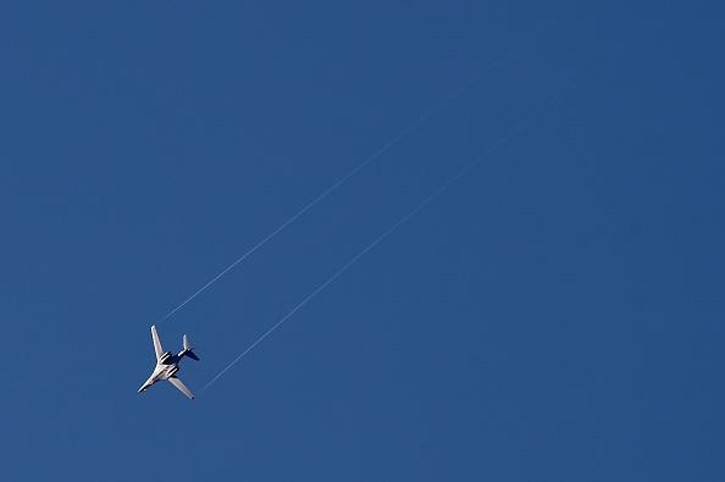
    A US Air Force B-1B seen over Kobane.
    A US Air Force B-1B seen over Kobane.
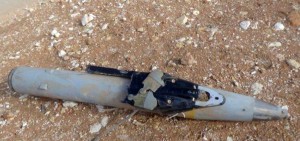
    This unexploded bomb, probably a Small Diameter Bomb (GBU-39) dropped by a US strike aircraft was found near Kobane at the beginning of October 2014.
    This unexploded bomb, probably a Small Diameter Bomb (GBU-39) dropped by a US strike aircraft was found near Kobane at the beginning of October 2014.

    Austin said the airstrikes are targeting very specific capabilities, with the intent to degrade ISIL’s command and control, their ability to project combat power, and sustaining their forces. According to Austin, these precision strikes have targeted targeting ISIL’s communications, equipment and hardware, their command centers, and vehicle parks, where plunder tanks and Humvees taken from the Iraqi army were parked. Oil refineries which are now under ISIL’s control were also targeted.

    “ISIL derives significant revenue from oil production, and so by striking these types of facilities, we reduce their ability to generate the funds and the fuel required to sustain their operations. And we are having the desired effects.” Austin explained.

    “We’re seeing evidence of this not only in our battle damage assessments, but more important, we’re noting changes in the enemy’s behavior and tactics that reflect his diminished capability and restricted freedom of movement. For example, we’re no longer seeing them move around the country in large convoys. Now they’re mostly traveling in civilian vehicles in smaller numbers. This is hindering their ability to mass and to shift combat power.” Austin stated, adding that ISIL commanders have already altered their methods of communication, which is inhibiting their ability to coordinate and synchronize their efforts.

    “we’re noting changes in the enemy’s behavior and tactics that reflect his diminished capability and restricted freedom of movement”

    Those strikes are measured to achieve their goals while minimise collateral damage, especially with concern to strikes conducted in areas populated by Sunnis who may be regarded as ISIL support base.  “We’ve been very careful in how we’ve gone about conducting strikes because we want to avoid unnecessary collateral damage. Had we killed a lot of innocent civilians, and specifically in Sunni areas, I think that it’s fair to say that we would be in a much different place at this point. But because we’ve done this the right way, we’ve secured the support of our Sunni Arab partners in the region. And together, we are making progress.”

    “I do want to emphasize that the airstrikes that we’re conducting are just one element of the campaign to counter and ultimately destroy ISIL.

    “Mosul will be an important fight and a difficult fight” Austin promised

    “Iraq is our main effort” Austin stressed, “The things that we’re doing right now in Syria are being done primarily to shape the conditions in Iraq. And once the Iraqis are able to get a better handle on the situation inside of their country and regain control of their border, that will help to localize the problems a bit more. This will serve to restrict ISIL’s freedom of movement and specifically, his ability to send reinforcements from Syria into Iraq.


    Since the coalition strikes began in August 2014 ISIL forces have increased awareness to the threat and adapted their movement and conduct to avoid attacks, making targets harder to find and more difficult to hit. They are becoming more adept with the use of electronic devices, don’t fly flags and ceases moving in long convoys as they did in the past. They also tend to conceal headquarters to prevent their location or identification by Coalition intelligence gathering. ISIS is also turning to exploit the local population populations for concealment, driving coalition forces to shorten targeting cycles.

    The foreign nations represented at the meeting included Australia, Bahrain, Belgium, Canada, Denmark, Egypt, France, Germany, Iraq, Italy, Jordan, Kuwait, Lebanon, the Netherlands, New Zealand, Qatar, Saudi Arabia, Spain, Turkey, United Arab Emirates, and the United Kingdom.

    SInce the air strikes began in August 2014 the U.S. military has spent $424 million in its military campaign against the Islamic State group in Syria and Iraq, the Pentagon said. The daily cost of operations is about $7.6 million.

    Early completion of refit of Italian aircraft carrier

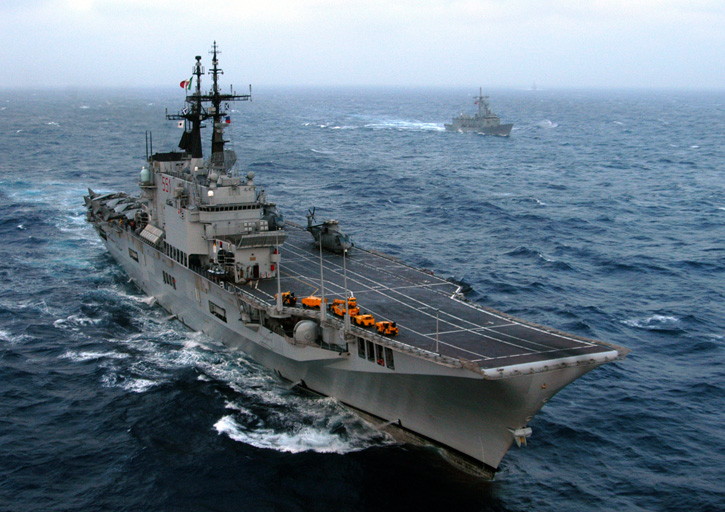
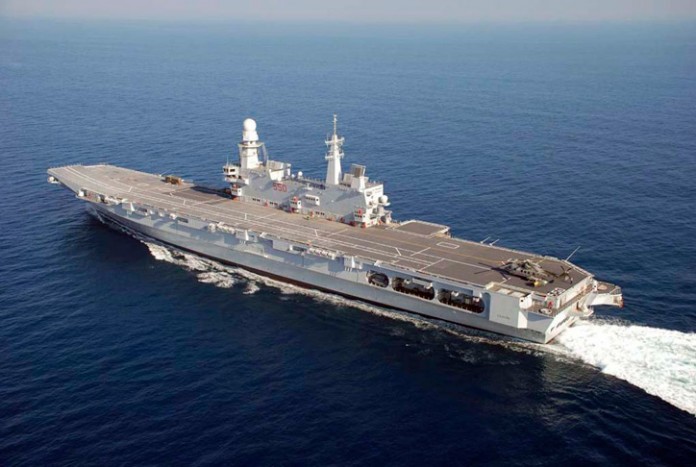
    ITS Giuseppe Garibaldi (C 551) Photo: US Navy, by Rob Gaston
    ITS Giuseppe Garibaldi (C 551) Photo: US Navy, by Rob Gaston

    The Italian Navy said on Friday, October 17, that work on the carrier is now slated to be complete at the Taranto Arsenal, a Navy shipyard and base, on Nov. 10, instead of March of next year, when the ship completes post-refit sea trials.

    The work on the ship involved nearly all the ship’s systems, including the propulsion system, which was replaced; the electric generation system; the flight deck; all the flight operations support systems; aircraft lifts and aircraft handling equipment; and combat system’s sensors and weapons.

    Work on the ship began in October of last year and carried a cost of about $14 million.

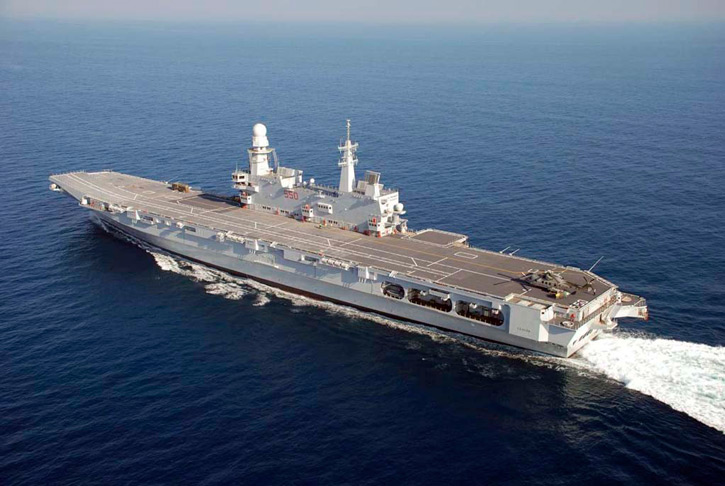
    In 2009 Giuseppe Garibaldi has been joined as the flagship of the Italian navy by the new and larger carrier Cavour. The air group on board the Garibaldi consists of a maximum sixteen AV-8B Harrier IIs and two search and rescue helicopter, or eighteen helicopters or a mix of helicopters and fighters. In service since 1985, the Garibaldi was nearing its 30 years life span and could not be supported without these refits.

    However, her service at sea is likely be short lived – without the preparation for future F-35 operations, (implemented with Cavour), the Garibaldi was considered to be sent on early retirement as part of cost cutting measured planned by the Italian Ministry of Defense.

    ITS_Giuseppe_Garibaldi_(C_551)
    Italian Navy flagship Giuseppe Garibaldi (C_551)

    AUSA 2014 – Robotics Photo Report

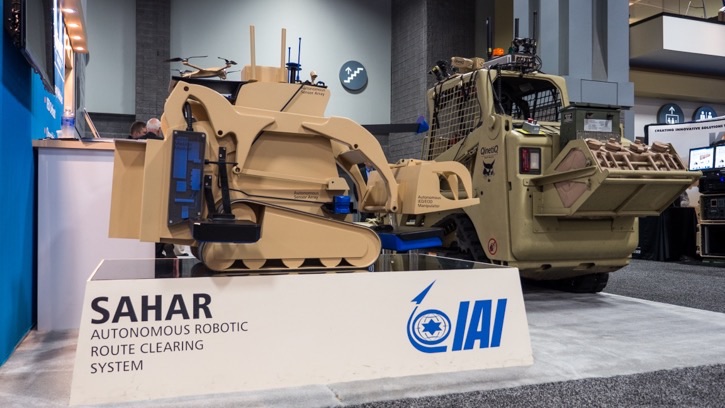
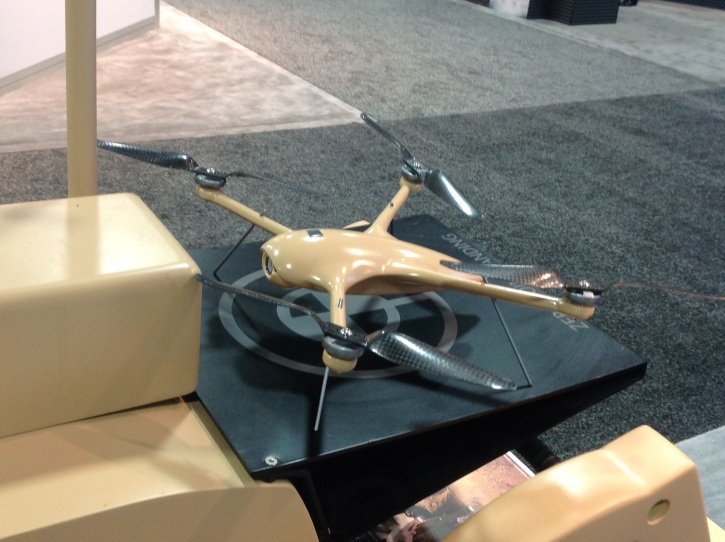
    QinetiQ NA and IAI are cooperating in the development of an advanced combat engineering robot, based on remotely controlled Bobcat developed by QinetiQ. The Israeli variant is different from the U.S. Minotaur in its higher autonomy and more comprehensive sensor range. The vehicle on display, called SAHAR uses dedicated IED detecting sensors, and provides a 'mothership' for two additional robotic systems - a Dragon Runner and Hoverlite 4, yet to be announced multirotor drone developed by IAI.
    QinetiQ NA and IAI are cooperating in the development of an advanced combat engineering robot, based on remotely controlled Bobcat developed by QinetiQ. The Israeli variant is different from the U.S. Minotaur in its higher autonomy and more comprehensive sensor range. The vehicle on display, called SAHAR uses dedicated IED detecting sensors, and provides a ‘mothership’ for two additional robotic systems – a Dragon Runner and Hoverlite 4, yet to be announced multirotor drone developed by IAI. Photo: Noam Eshel, Defense-Update
    A model of IAI's Hoverair 4 multi-rotor unmanned aircraft deployed on a small landing pad on the unmanned combat engineering robot. The UAV will be used to provide remote operators a close-in view of the vehicle and operation scene scene, to better operate the payloads on board. The vehicle will also have a Talon robot for ground to remotely control activities that require fine activities on the ground.
    A 1:4 scal model of IAI’s Hoverair 4 multi-rotor unmanned aircraft deployed on a small landing pad on the unmanned combat engineering robot. The UAV will be used to provide remote operators a close-in view of the vehicle and operation scene scene, to better operate the payloads on board. The vehicle will also have a Talon robot for ground to remotely control activities that require fine activities on the ground.
    image
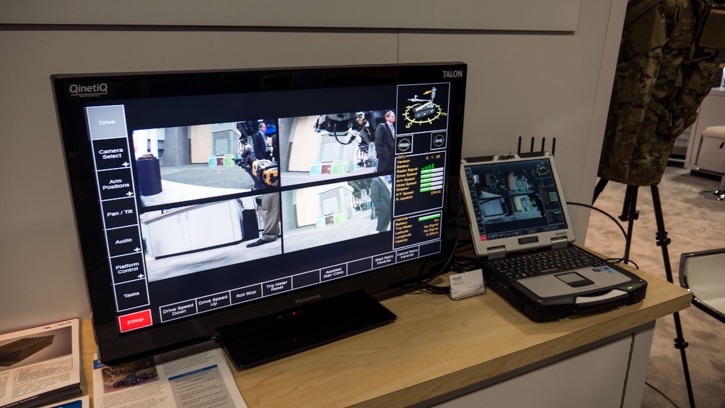
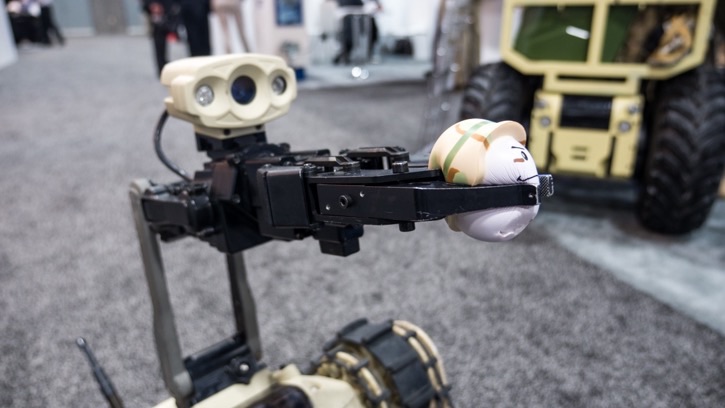
    QinetiQ North America unveiled at AUSA 2014 the new Talon V robot, an IOP compliant redesign of the Talon, offering customers the freedom to add, change, adapt or upgrade sensors, payloads and some support systems with very short integration, leading to much lower life cycle costs. The Talon V on display received a stronger manipulator arm with heavier lift capability, higher degree of freedom and and improved grip force, an autonomy unit, camera, HD video, a 2 way hailed and more. The robot is now radio agnostic, capable to integrate compatible 3rd party radios. The control console received graphical user interface enhancement offering more automation functions and user defined programmable presets. Photo: Noam Eshel, Defense Update.
    image
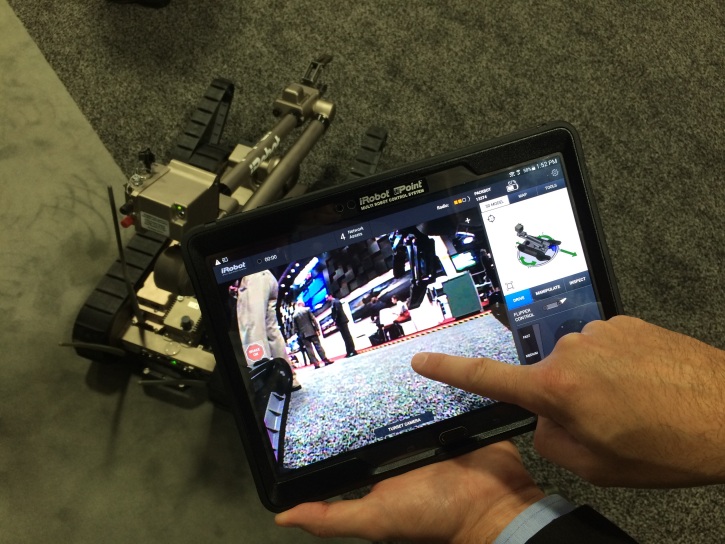
    IRobot introduced at AUSA 2014 the MPoint, an application developed by the company, to enable users controlling any iRobot robot without having to learn to operate the specific controller of that device. At the exhibition visitors could operate the Firstlook, or PacBot through an Android based controller, tapping into the available asset through a radio network that can simultaneously run up to four robots. The app provides user friendly, intuitive controls simplifying the use of robots to non trained users.
    image
    Talon V also supports a new operator display provides redesigned, more intuitive operation using standard display devices. Photo: Noam Eshel, Defense-Update


    image
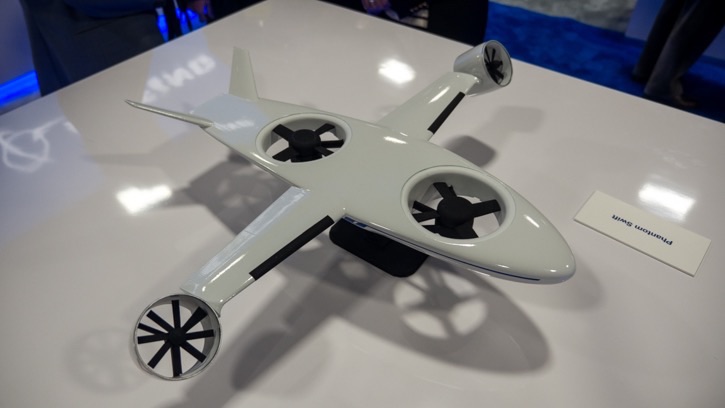
    Boeing displayed a scale model of its Phantom Swift design, using four ducted fan propulsion systems. The design was proposed by Boeing for the DARPA X VTOL plane challenge.
    image
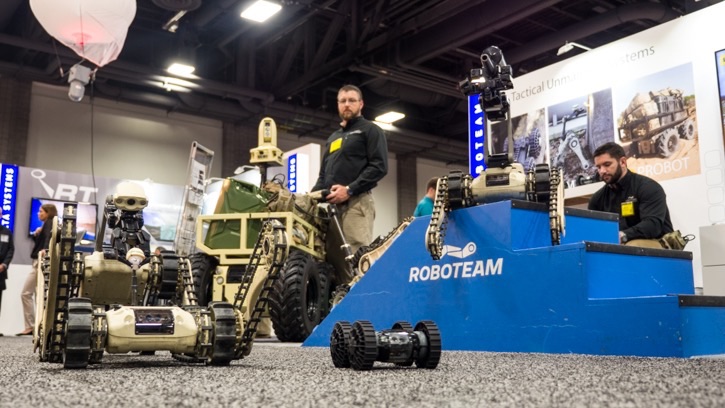
    An impressive view of the Roboteam robot stable at the Israeli pavilion at AUSA 2014. Photo: Noam Eshel, Defense-Update
    image
    MTGR demonstrates its firm grip at AUSA 2014. Photo: Noam Eshel, Defense-Update


    Cyber Intelligence Report – October 15, 2014

    cyber_report

    ISRAEL

    IDF building new cloud-base infrastructure

    The Israeli Defense Force will begin developing a cloud-based infrastructure slated to take effect in 2015. Colonel Asher Dvash, head of the body overseeing the C4i Core Facilities in the South, introduced the concept. The benefits of the cloud are not only economical, but it will allow the IDF to minimize the large number of data centers it holds. This, in turn, will free up a substantial number of personnel maintaining the centers and instead utilize them for developing operations. The project will also improve IDF continuity and inner development capabilities and enable every branch to manage their own applications and renewals. The army will begin with VMware Technology; however, the IDF may turn to another supplier in the future based on performance.


    USA

    Apple updates iOS after major hack on iCloud

    100s of celebrities’ iCloud services were recently hacked, specifically their photo streams, which were illegally uploaded onto various social media websites. In the wake of this, Apple has added an extra step when accessing iCloud on a computer device – effectively saying that using the two factor authentication will make it more difficult to access or hack another person’s iCloud. Though Apple previously stated the celebrity hack was not a complication with the iCloud, it nonetheless provided this security upgrade to its iOS. The hack of Apple devices represented one of the first times Apple and the Cloud have been majorly breached via iCloud forensic software. This only brings into question the security of other cloud devices such as Dropbox, Google Drive, etc.

    NetScout to acquire communications business of Danaher Corp and expand cyber intelligence expertise

    A US provider of integrated computer networks, NetScout, plans on acquiring the communications company Danaher in a $2.6 billion deal in order to expand NetScout’s cyber intelligence expertise. As stated by the NetScout CEO, Anil Singhal: “This business combination will expand NetScout’s global reach and help broaden our presence with customers in both the service provider and enterprise markets. In addition, it will jump-start our planned entry into the cyber intelligence market, particularly within the advanced persistent threat area.” The NetScout Company originally specialized in network products including packet Sniffer and nGenius packet flow recorder. This new cyber intelligence perspective will provide the company with a global vision of cybersecurity. Such as all multinational high tech corporations, NetScout developed its technology over time and is today one of the leaders in the market. Today, cyber intelligence is a key point of the cyber security field and must to be considered as relevant as every other security system or service proposed in the different variations of cyber security.


    RUSSIA

    Russia will not give government full power over Internet

    Russia will not transfer the Internet to full state control. Russian President Vladimir Putin announced this decision at a meeting of the Security Council, Reuters reports. Nevertheless, he demanded a solution to protect Russian networks from hacker activity, which President Putin claims has increased due to the aggravation of international relations. “We do not intend to restrict access to the network and put it under total control. Freedom of the media, the right of citizens to receive and impart information is the basic principle of any democratic government, and we will do just that,” President Putin expressed. Previously, Deputy of the LDPR party Hudyakov, addressed the Head of the Federal Service for Supervision of Communications, Information, and Technology and requested to eliminate and “blacklist” Wikipedia pages with articles addressing the “incorporation of the Crimea and Sevastopol,” which can be interpreted as “annexation.”


    MIDDLE-EAST

    Jordan to open cybercrime center in Amman

    The Jordanian Ministry of Information and Communications Technology has begun developments for a cybercrime center located in Amman, dedicated solely to fighting cybercrime and cyber security threats targeting Jordan’s financial sectors and its national security. The new center would reinforce the existing cybercrime law and help introduce new laws. According to Lt. Col. Sahm al-Jamal, Director of the Cybercrime Unit of the Public Security Directorate’s Criminal Investigations Department, the center’s existence is necessary due to “the authorities’ need to prevent this type of crime… Our department dealt with around 1,300 cybercrimes during 2013.”

    Qatar is third most targeted country in cyber threats and attacks

    According to FireEye’s report, Qatar is the third most targeted country in cyber-attacks in the Middle East; Saudi Arabia and Turkey are 1 and 2, respectively. Qatar faced close to 2,000 cyber-attacks in the first half of 2014, dealing with 1,824 advancedcyber-attacks that bypassed traditional security layers. Saudi Arabia faced the highest number (8,564) of cyber-attacks in the first half of the current year. Turkey and Kuwait were the other countries targeted by cyber-attacks. The attacks were mostly related to political or financial motives.

    Anonymous hacker group launches cyber war against Islamic State militants

    The Anonymous hacktivist group launched a cyber-war against the Islamic State (IS). A member of the group stated: “We plan to attack several countries that were knowingly supporting ISIS financially, including Turkey and Saudi Arabia. We warned that if they continued to support ISIS we would be forced to destroy their virtual infrastructure. In addition, yes we have those who can do this. What we decided to do is instead of attacking them directly we decided to attack their ideologies with truth and logic. We took this initiative in order to establish two things: one – we needed the public to understand how urgent the situation is in Iraq… the second reason was that we needed to make sure the public knew that ISIS did not represent the Islamic religion.”


    CHINA and APAC

    Chinese Army calling to strengthen domestic cyber security software media

    The Chinese Army is planning to strengthen its national cyber security and speed up their software media. According to the official People’s Liberation Army Daily, “Information security must be considered an underlying project in military battle preparedness.” Besides being the Chief of the Chinese Army, the Chinese President Xi Jinping helms a government agency in charge of Internet security and to concentrate in making China  an international cyber power. This structure shift comes as recent tense relations between China and the West have accelerated, contributing to the Chinese wishing to strengthen their cybersecurity software. Currently, both Microsoft and Qualcomm are being investigated by Chinese authorities to look for potentialcyber espionage activities. According to the Chinese government, Chinese corporations and financial institutions have been replacing their foreign computers’ software with local software. The US have recently accused several Chinese soldiers forcyber espionage activities against the US, causing diplomatic tensions between the two superpowers.


    AFRICA

    Cyber criminals target Africa’s food and beverage sector

    A recently released report from Cisco found that global geopolitical events like West Africa’s Ebola outbreak have significantly expanded the risk landscape in the African region. Cyber criminals are increasingly taking advantage of such events to trick people into clicking on links to compromised websites. Mobile and web malware attacks are on the rise. The African region’s food and beverage industry has been one of the hardest hit; the report indicates that the industry where most of the attacks emerge has been the food and beverage industry. It has remained unclear as to why this industry has been such a strong target, but Cisco’s assumption is that it may be tied to this sector’s interest in general news and how it affects the food and beverage space.

    Zambia hosted first Cyber security drill

    Zambia hosted the first cyber drill for Africa. The cyber drill provided a platform for incident handlers from various African countries to come together, collaborate, communicate, and enhance their incident handling skills.  Government officials said they hope the initiative grows to greater heights as nations join together in the fight against cybercrime.

    Ethiopia to Host Second Annual Cyber Security Africa’s Banking & ICT Summit 2014
    Cyber Security Africa has announced the second annual Ethiopia Banking & ICT Summit 2014 edition. The Summit will take place on November 21st, 2014, at the Sheraton Hotel, Addis Ababa, Ethiopia.


    EUROPE

    London Metropolitan Police launched anti-fraud cybercrime unit

    The London Metropolitan Police launched a new cyber unit. The FALCON (Fraud and Linked Crime Online) is charged with countering financial fraud and cybercrime. This new cyber unit can count on more than 500 police officers working to counter malware, DDoS, phishing attacks, and other cybercrimes that result in financial losses. This new unit is also aiming to educate organizations about the threat of cybercrime in order to improve security and prevention. The British Minister for Modern Slavery and Organized Crime declared the following: “National Security Strategy has ranked cybercrime as a major threat. The Government is putting in £860m over five years to cope with it. We are also increasing knowledge throughout local police forces with specialist training.” Besides the new FALCON unit, the London Metropolitan Police Service owns a Police Central e-Crime Unit (PCeU), which aims to improve the police response to online crime and developing cyber capabilities for police service across England, Wales, and Northern Ireland. Like the PCeU, the FALCON unit will cooperate with the National Cyber Crime Unit of the UK National Crime Agency to countercyber threats and fight cybercrimes.

    Estonian to launch first e-residency card

    The Estonian government recently decided to offer an e-residency status to people around the world. This new digital identity will give access to services like online banking, education, or healthcare. According to Siim Sikkut, who is the ICT policy adviser at the Government Office of Estonia, once one has this digital Estonian card, he/she can easily do all online operations such as banking, government, private company, and medical visits. He added that the “e-residency gives secure access to online services and the ability to digitally sign in a legally binding manner, just like Estonians do.” According to the Estonian government, this service is first aiming to help those who deal with Estonia, either through business, studying, or as a tourist. The government is also expecting that this new project will attract new customers and investors. The new identity card would be in use at the end of the year. Moreover, the e-residency card will only be available at first from a Police and Border Guard office in Estonia, but the government is planning to extend the e-residency applications at Estonian embassies all over the world by the end of 2015. Estonia is probably one of the most advanced countries in terms of digital operations and high tech. This new project seems to be an innovative idea; however, many questions can be asked about how secure this new e-residency card will be and what will happen in the case of hacking and/or identity theft.

    inss150About the Cyber Intelligence Report:

    This document was prepared by The Institute for National Security Studies (INSS) – Israel and The Cyber Security Forum Initiative (CSFI) – USA to create better cyber situational awareness (Cyber SA) of the nature and scope of threats and hazards to national security worldwide in the domains of cyberspace and open source intelligence. It is provided to Federal, State, Local, Tribal, Territorial and private sector officials to aid in the identification and development of appropriate actions, priorities, and follow-on measures. This product may contain U.S. person information that has been deemed necessary for the intended recipient to understand, assess, or act on the information provided. It should be handled in accordance with the recipient’s intelligence oversight and/or information handling procedures. Some content may be copyrighted. These materials, including copyrighted materials, are intended for “fair use” as permitted under Title 17, Section 107 of the United States Code (“The Copyright Law”). Use of copyrighted material for unauthorized purposes requires permission from the copyright owner. Any feedback regarding this report or requests for changes to the distribution list should be directed to the Open Source Enterprise via unclassified e-mail at: [email protected]. CSFI and the INSS would like to thank the Cyber Intelligence Analysts who worked on collecting and summarizing this report.


    Skunk Works and XTEND Simplify Multi-Drone Command

    0
    Lockheed Martin Skunk Works® and XTEND have achieved a major milestone in JADC2 by integrating the XOS operating system with the MDCX™ autonomy platform. This technical breakthrough enables a single operator to simultaneously command multiple drone classes, eliminating the friction of mission handoffs. From "marsupial" drone deployments to operating in GPS-denied environments, explore how this collaboration is abbreviating the data-to-decision timeline and redefining autonomous mission execution.
    From Ukraine to Taiwan: The Global Race to Dominate the New Defense Tech Frontier

    0
    As traditional defense primes face mounting competition from agile “neoprimes” such as Anduril, Palantir and Helsing, the balance of innovation is shifting toward software-defined warfare and scalable, dual-use technologies, while global industry consolidation—marked by Boeing’s integration of Spirit AeroSystems and other strategic mergers—signals an intensified race to secure control over the defense technology value chain. Our Defense-Tech weekly report highlights these trends.

    Europe’s “Drone Wall”

    0
    In early October 2025, a coordinated wave of unmanned aerial system (UAS) incursions—widely attributed to Russia—targeted critical infrastructure across at least ten European nations. The unprecedented campaign exposed the fragility of Europe’s air defenses...

    Weekly Defense Update & Global Security Assessment

    0
    Executive Summary The past week (September 18-25, 2025) represents an inflection point where strategic defense concepts have transitioned from doctrine to tangible reality. An analysis of global events reveals four primary, interconnected trends shaping an...

    U.S. Air and Space Forces Push Next-Gen Programs at the AS&C 2025 Conference and...

    0
    At the 2025 Air, Space & Cyber Conference, U.S. Air Force and Space Force leaders unveiled major updates on next-generation fighters, bombers, unmanned systems, and space initiatives, highlighting both rapid innovation and critical readiness challenges as the services race to outpace global competitors. A short version is available here, with a more detailed version for subscribers.

    TADTE 2025: Reflecting Taiwan’s Strategic Themes

    0
    The Taipei Aerospace & Defense Technology Exhibition (TADTE) 2025 crystallized around four dominant strategic themes that collectively illustrate Taiwan's comprehensive approach to defense modernization amid escalating regional tensions. Based on a detailed report by Pleronix (available upon request). Includes a Podcast discussion on TADTE 2025's highlighting Taiwan's four strategic themes beyond the post's coverage.

    Iron Beam 450 Completes Testing, Soon to Join With Operational Air Defense Units

    0
    Israel’s Iron Beam 450 high-power laser system has completed final testing, marking a major leap in air defense. Developed by Rafael, it offers precise, cost-effective interception of rockets, UAVs, and mortars, and is set for IDF deployment by 2025.