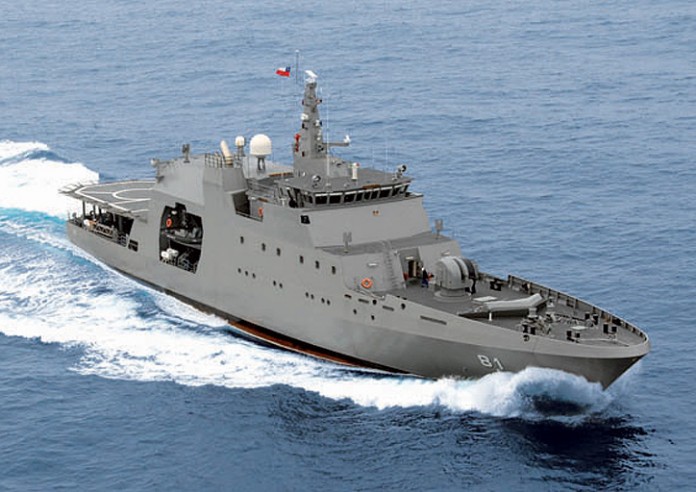
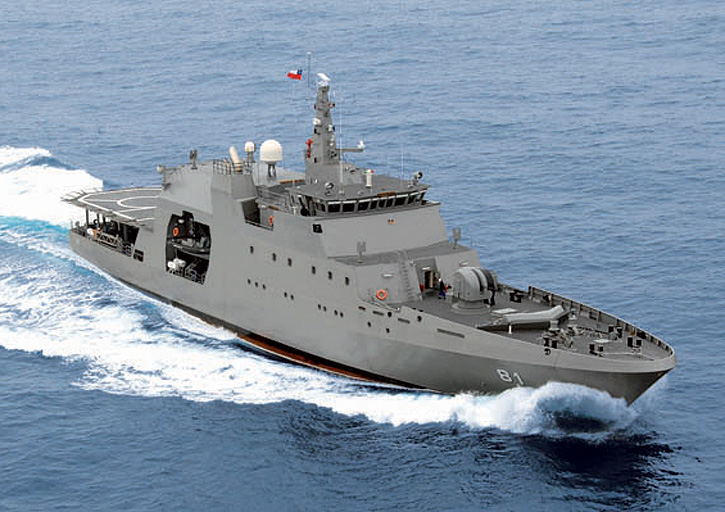
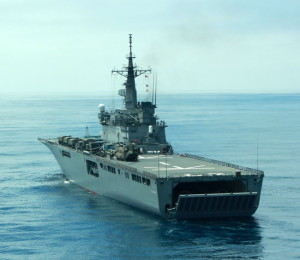
ARC 20 de Julio on Seatrials is the first of five 80 m' OPVs Fassmer is building for the Chilean Navy. It was commissioned in 2011. Photo: Fassmer
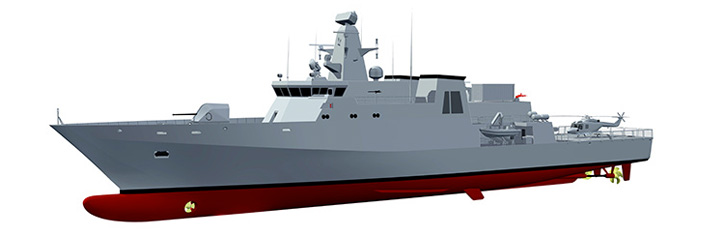
The OPV designed by TKMS was based on the MEKO 80 OPV, a shorter version of the MEKO 100 class corvette. Photo: TKMS
The Israel Ministry of Defense has called off an international tender for the supply of four Offshore patrol Vessels for the Israel Navy. The OPVs were intended to bolster the security of Israel’s offshore oil and gas drilling rigs that are operating in the eastern Mediterranean, within the Israel’s Economic Exclusion Zone. By stalling the tender, IMOD officials hope a new German offer to co-finance the project could be reached. Otherwise, the tender will be republished by late 2015.
IMOD has been shopping for these boats for several years, addressing the Navy’s demand for new assets needed to respond to the increased responsibility. IMOD has been trying to acquire these boats with extra-budgetary funding, such as requesting German funding of the hulls (in a similar format they supported the construction of the Dolphin submarines for the Israel Navy). The Israelis also considered the procurement of the much more costly Littoral Combat Ships (LCS) if it could be covered by the U.S. foreign military support. They even planned bundling the frigates with procurement programs discussed with South Korea. However, none of those creative ideas materialized.
After years of deliberation IMOD published an international tender for the four vessels. The tender raised considerable interest among seven shipbuilders invited to participate. Likely competitors include Dutch, French, German, Italian, Israeli, Korean and Spanish shipbuilders.
ARC 20 de Julio on Seatrials is the first of five 80 m’ OPVs Fassmer is building for the Chilean Navy. It was commissioned in 2011. Photo: Fassmer
At this stage, the Germans decided to reconsider their refusal to support the project and are now offering to share some of the construction cost if the contract will be handed to a German shipyard.
The construction of the four hulls is expected to cost about US$550 million, in addition, a similar amount will be required to equip the boats with a full combat system, including radars, sensors, surface and air attack capability, command, control and communications systems. A comprehensive set of defensive means including area defense systems such as the IAI Barak 8 or other weaponry, such as the ‘C-DOME’, a variant of the combat proven ‘Iron Dome’ introduced recently by RAFAEL.
Cargo rocket destined to the International Space Station destroyed on liftoff. Photo: via NASA TV
Cargo rocket destined to the International Space Station destroyed on liftoff. Photo: via NASA TVThe Antares rocket carrying an unmanned Cygnus suffered a ‘catastrophic anomaly’ seconds after liftoff from NASA’s Wallops flight facility in Virginia at 06:22 PM EDT. The rocket crashed down to the launching pad causing damage to some of the facilities in the southern part of the island. The facility that was damaged today is the only one supporting the Antares vehicles. No injuries were reported.
The rocket was built by private company Orbital Sciences. Cygnus was packed with 5,000 pounds (2.268 tons) of food and supplies, scientific experiments destined to the International Space Station. It was the fourth cargo mission under a $1.9 billion contract for 12 supply missions to run through 2017 that Orbital Sciences has won from NASA.
Today’s flight was the first using a more powerful Russian made rocket, but it is too early to determine whether the uprated rocket has been the cause of the failure.
According to William Gerstenmaier, associate administrator, human exploration and operations at NASA, the loss of cargo will not cause shortage of supplies at the ISS as the station still packs enough supplies to sustain the crew and mission through early 2015. A Russian Progress spacecraft is scheduled to be launched from Baikonur tomorrow, loaded with another load of supply. Orbital is scheduled to fly again in December, but that mission could be delayed, given the results of the investigation of today’s failure.
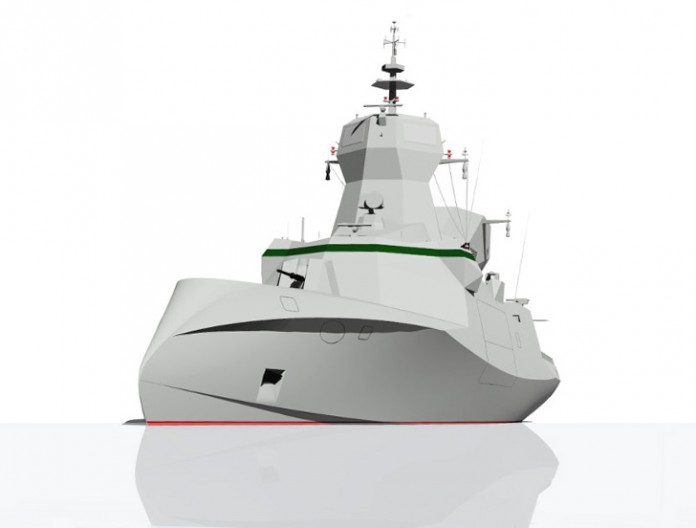
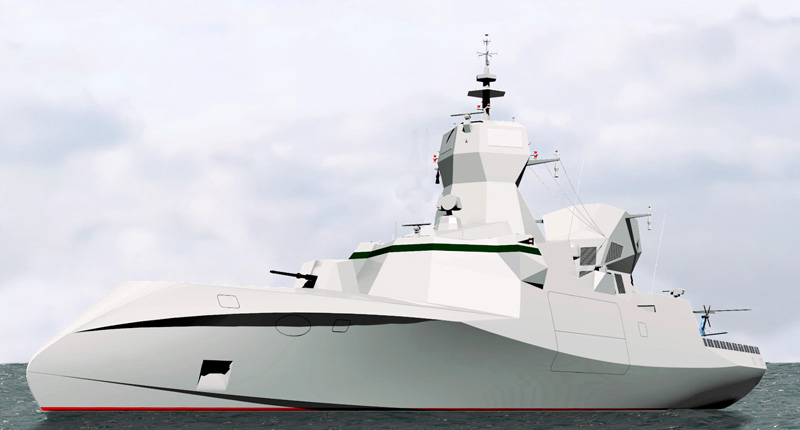
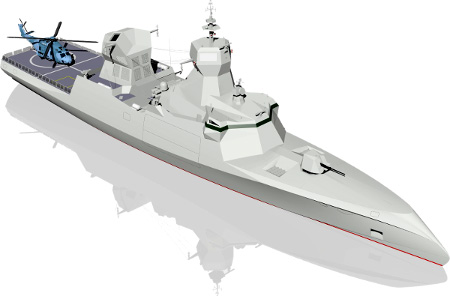
At Eurosatory 2014 CMS unveiled the latest concept design of its new C Sword 90 stealth corvette, a direct descendant of the Combattante family of compact missile boats that was first introduced in the 1960s. Part of its efficiency results from the inversed stem, contributing for enhanced propulsive efficiency and sea keeping. The round bilge shaped hull also contributes to better endurance in strong wind and rough sea conditions. Image: CMS
The distinctive shape of the C Sword 90 depicts an innovative hull formation and superstructure design with sloped surfaces, developed in collaboration with naval architect Thierry Verhaaren, who also designed the Baynunah missile boats CMS has built for the UAE. The vessel is designed for operation at the high sea, littorals and coastal area. The hull is made of steel and superstructure is made of steel and aluminium.
The C Sword 90 carries a powerful combat systems package comprising surface, anti-submarine and anti-air weaponry, guns, countermeasures and a wide range of ISR sensors.
The vessel provides a compact, yet versatile multirole craft packing high firepower and an extensive sensor package for Intelligence, Surveillance & Reconnaissance (ISR) missions and ESM/Comint electronic surveillance and electronic warfare capabilities. The primary sensor is an unspecified ‘new generation’ phased array radar, comprised of four flat panels mounted on the upper superstructure. In addition the vessel EO package is also configured to support some of the weapon systems with fire control functions. An integrated bridge control and communication systems help automate many procedures and reduce crew workload.
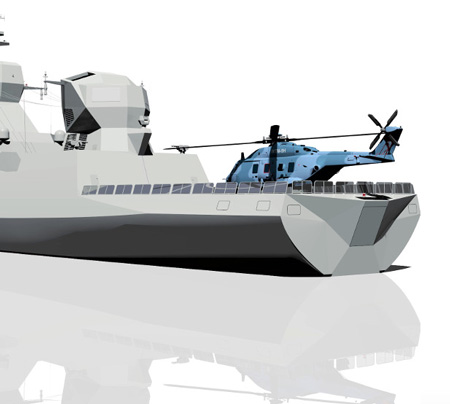
The boat has a large flight deck supporting a 10 ton helicopter day and night, or an unmanned helicopter (VTUAV). It also has the facilities to operate two RHIBs, which can also be unmanned surface vessels (USV) and underwater unmanned vessels (UUV).
In addition to maritime missions including surface and anti-submarine warfare the vessel is well equipped to conduct maritime security missions, and support land operations from the sea To carry out those missions the C Sword 90 can be configured to support commando and ground operations operating a helicopter and two 11 meter Rigid Hull Inflatable Boats (RHIBs). These configurations can also supported by loading two containers, storing mission specific payloads, cargo and supplies. The boat has a large aft deck configured to operate one medium size (10 ton) helicopter or unmanned aerial system (UAS) in day and night. The boat has also the facilities to operate two RHIBs, which can also be unmanned surface vessels (USV) and underwater unmanned vessels (UUV). The C Sword 90 is operated by a crew of 65 personnel. The ship also has berths for 20 additional personnel.
The design has been optimized to sustain high maximum speed (28 knots) and extended autonomy, covering 7,000 nautical miles with an average speed of 12 knots. (It would do 5,000 nm cruising at 14 knots). Part of its efficiency results from the inversed stem, contributing for enhanced propulsive efficiency and sea keeping. The round bilge shaped hull also contributes to better endurance in strong wind and rough sea conditions.
The corvette’s firepower consists of one 76mm or 57mm gun mounted at the fore section and two remotely controlled weapon stations on port and starboard side, mounting 20mm or 30mm guns. The vessel is equipped with eight launchers of MM40 Exocet anti-ship missiles plus a vertical launcher packing 16 anti-air/anti-missile missiles. Additional air defense is provided by two additional launchers mounting two short-range anti-aircraft missile. Decoy systems are also used for self-defense offering both an anti-missile protection with radar or infrared guidance and along with electro-acoustic anti-torpedoes protection.
The vessel is designed to accommodate the infrastructure and equipment necessary for anti-submarine warfare (ASW) operations, including a hull mounted sonar, a towed sonar and two torpedo-launching tubes each mounting three tubes.
The biggest naval vessel ever built by the Cherbourg Shipyard, C Sword 90 is one of three new designs CMN unveiled at Euronaval – the others were the Ocean Eagle trimaran, configured as patrol boat or mine hunter and a new variant of the classic Combattante missile boat – the 46meter long FS46.
The Normandy based shipyard that has been building trawlers and mine sweepers since 1948 introduced the Combattante class patrol boat in 1963, a design that was later adapted by the Israelis with their Saar II gunboats and Saar III missile boats, an innovative concept pioneered by the Israeli Navy with its Gabriel anti-ship missile. By 1967 CMS completed six Combatant II boats for the Israelis, but the delivery of those boats was blocked by the arms embargo the French government imposed on Israel following the 1967 Six Day War. The boats were later smuggled to Israel from Cherbourg and sailed to Israel on a clandestine trip. Since the construction of those first hulls CMN delivered more than 90 Combattante class boats to navies around the world.
CMS continues to develop new mine hunters and missile boats, introducing the CIRCE mine hunter in 1970 and Combattante II built for the German Navy in 1973, Combattante III built for Greece in 1977 and IIIM delivered to Tunisia in 1983. In 1994 the company introduced the DV15 High-speed Interceptor and in 1997 delivered the first of eight P37 patrol boats for the Kuwaiti Navy. In 2009 CMN delivered the first of six Baynunah stealthy fast attack crafts (FAC) built for the UAE.
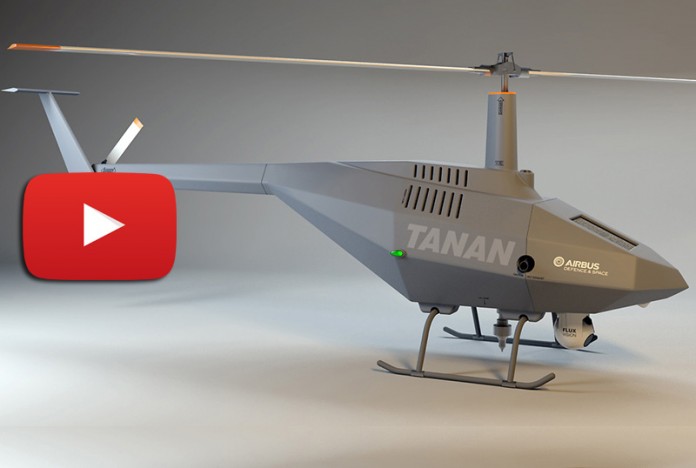
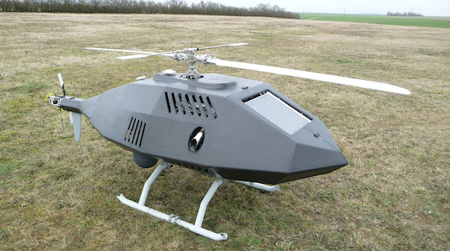
The technology demonstrator developed by Airbus Defense & Space under the TANAN program flew for the first time in 2010.
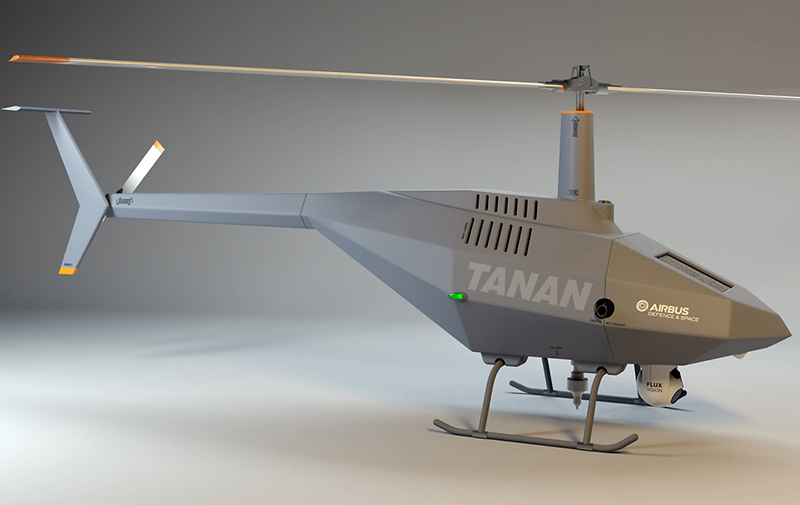
Airbus Defence and Space (and DCNS signed a cooperation agreement today to develop a ship-based variant of Airbus DS TANAN unmanned helicopter Unmanned Aerial System. TANAN has been developed to address the naval sector’s specific requirements for an aircraft that would offer efficient integration onto all types of armed vessels. The companies believe this partnership will help to speed up the market release of the TANAN vertical take-off and landing (VTOL) tactical helicopter UAS, that has been in development for several years with Airbus’ former EADS conglomerate. The demonstrator’s first flight took place in 2010 and development is currently continuing according to schedule.
The cooperation between Airbus and DCNS will enable the integration of TANAN UAS into the ship’s combat system, including definitions of its mission systems and situational assessment, based on data received from the various sensors on board the UAS. Other aspects of the cooperation will include the physical integration of TANAN onto the ship, including the positioning and compatibility of the antenna system, the landing deck, the harpoon and grid landing assist, the docking and securing of the UAS in the hangar, as well as the related support.
As the vessel’s ‘eye in the sky’, TANAN will deliver full HD imagery and other sensory data straight to the combat information system
Under the work share agreed by the two companies Airbus Defence and Space will produce the entire certified unmanned aerial system, the vehicle with its payloads, the datalink and the UAS control station. DCNS will carry out the integration of the UAS on the ship and into its combat system, from the definition of the required functions and the interfaces with the combat system, to the production of corresponding UAS modules that will enable operations to be controlled via the ship’s command, to the on-board installation and implementation procedures.
DCNS has already integrated UAS on board some of the vessels it produced, under studies that began more than ten years ago, when it first aspired to integrate tactical UAS onto its entire range of vessels, from off-shore patrol vessels to frigates. Conceptual designs are also underway to integrate UAS into future submarines.
TANAN is a helicopter UAS with a maximum take-off weight of 350 kilogrammes, carrying payloads at a total weight of 50 kg. By integrating UAS onto combat ships, the latter’s detection range and ability to accurately identify threats can be increased, while simultaneously ensuring operational availability. Photo: Airbus Defense & Space
Providing an ‘eye in the sky’ for surface vessels, the helicopter provides full HD imagery delivered by multi-sensor EO/IR payload and a selection of complimentary sensors including maritime radar, AIS (Automatic Identification System), an IFF (Identification Friend or Foe) system, an electronic surveillance system and a direction finder. By integrating UAS onto combat ships, the latter’s detection range and ability to accurately identify threats can be increased, while simultaneously ensuring operational availability.
“DCNS will be the only company to offer both its current and prospective customers an integrated solution for operating a UAS that can be armed from on board a combat ship. In partnership with Airbus, DCNS offers reliable, functional and perfectly integrated solutions for naval combat platforms and systems,” said Pierre Legros, President of Surface Naval Systems at DCNS.
Designed specifically for maritime operations TANAN has a maximum take-off weight of 350 kg and a payload carrying capacity of 50 kg TANAN is powered by a diesel engine supporting missions with ranges of up to 100 nm (180 km), at temperatures of between -20°C and +50°C and in challenging weather conditions.
By integrating UAS onto combat ships, the latter’s detection range and ability to accurately identify threats can be increased, while simultaneously ensuring operational availability. The system is stored in a hangar on board and is operated by a single operator.
The tip of the KN-08 missile carries a tri-conical reentry vehicle, containing the warhead. This section weighing 700-1000 kg is likely to carry a miniaturized nuclear device,
The KN-08 Limited Range Intercontinental Ballistic Missile (LR-ICBM) developed by North Korea. Photo: Getty ImagesGeneral Curtis Scaparrotti, Commander, U.S. Forces in South Korea.
“The North Korean long-range mobile Inter-continental Ballistic Missile (ICBM) with one or more nuclear warheads called the KN-08, is a primary threat driving the need for U.S. homeland missile defense capability and to U.S. national security strategy that will continue to put forward all options to defeat this threat.” Riki Ellison, Chairman & Founder of the Missile Defense Advocacy Alliance commented today about The Commanding General of U.S. Forces in South Korea, General Curtis Scaparrotti’s briefing to the press last Friday, where Scaparrotti addressed the growing threat posed by North Korea’s new missile and the need for missile defense derived by such threats. According to Ellison, the U.S. should look at all options – including pre-emptive active and passive to the left of a KN-08 launch, to include offensive forces, cyber-attack and special operations. “The fundamental foundation for defending against the KN-08 remains our nation’s long-range ballistic missile defense system. This system needs to continually demonstrate its capabilities for both deterrence of North Korea and confidence in the system.” Ellison added.
“I don’t think as a commander we can afford the luxury of believing perhaps they haven’t gotten there”
“In North Korea, Kim Jong Un remains in control of an isolated, authoritative regime that’s willing to use violence and threats of violence to advance its interests, gain recognition as a nuclear power, and secure the regime’s survival. In violation of the United Nations Security Council resolutions, North Korea carried out its third nuclear test last year and significantly increased their frequency of no-notice ballistic missile launches this year. “We are concerned that [north Korean provocations] could start a cycle of action and counteraction, leading to an unintended, uncontrolled escalation. This underscores the need for the alliance to work together, to be vigilant and to be ready to act.” General Scaparrotti said in his opening.
Addressing specific questions about the North Korean capability to integrate an inter-continental missile, nuclear warhead and rough mobile launcher into a weapon system that could put the Continental US at risk, General Scaparrotti confirmed that PyongYang hasn’t done that yet but warned the US should be prepared to meet this threat. “They claim they have an intercontinental ballistic missile that’s capable [to do that]. “I believe have the capability to have miniaturized a device at this point” Scaparrotti but added “I don’t believe that they have [done it so far]”. He said they also have a launcher that will carry [the missile], therefore “they have the technology to potentially actually deliver what they say they have.” Scaparrotti admitted such a device has not been tested yet, but cautioned: “I don’t think as a commander we can afford the luxury of believing perhaps they haven’t gotten there.” Gen. Scaparrotti added.
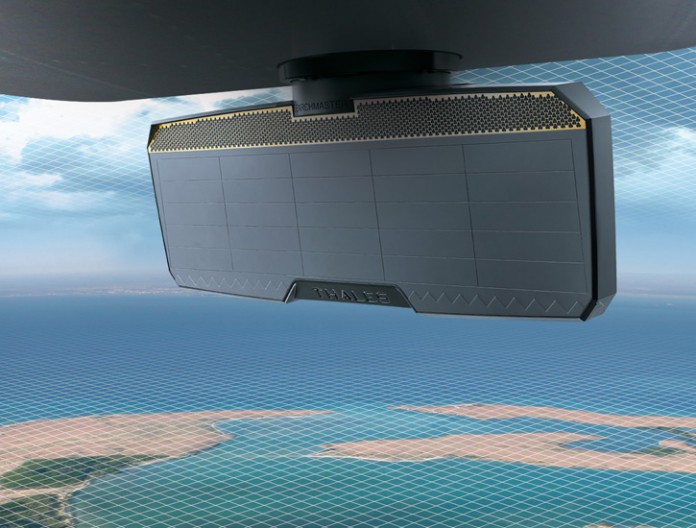
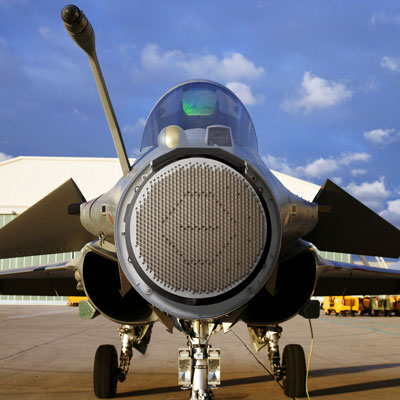
Thales Searchmaster radar shares some technologies with other AESA technologies developed by the company, particularly with the RBE2 radar developed for the Rafale combat aircraft programme.
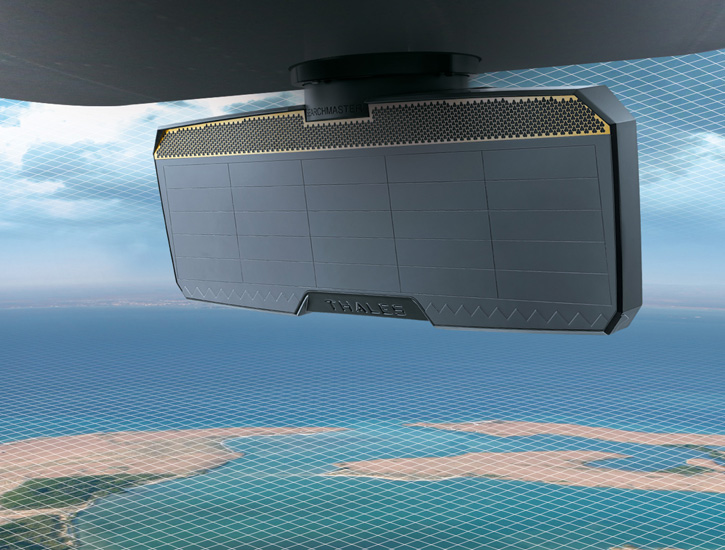
The Searchmaster radar has been selected for France's ATL2 maritime patrol aircraft, extending the platform capabilities beyond maritime search and anti-submarine warfare. Photo: Thales
Thales Searchmaster radar shares some technologies with other AESA technologies developed by the company, particularly with the RBE2 radar developed for the Rafale combat aircraft programme. The Searchmaster radar has been selected for France’s ATL2 maritime patrol aircraft, extending the platform capabilities beyond maritime search and anti-submarine warfare. Photo: Thales
Thales is introducing at Euronaval the Searchmaster maritime surveillance radar utilizing AESA technology, which provides multirole surveillance capability covering five mission types: anti-surface warfare, anti-submarine warfare, maritime surveillance, ground surveillance and tactical air support.
The AESA scanning technology used on this radar is derived from the RBE2 AESA radar developed for the Omnirole Rafale combat aircraft. The combination of a rotating antenna adds 360° coverage with extended range. According to Thales, the use of electronic scanning in the vertical plane enables simultaneous short-range and long- range surveillance, and continuous detection in harsh environmental conditions.
Rafale No. 137 was the first to be equipped with Thales’ new RBE2 AESA radar and the new optronic suit. Photo: Dassault AviationThis high-performance radar meets the requirements of airborne surface, ground and air surveillance missions. The system is compact and lightweight, compared to existing systems, (weighing approximately 75kg) and is suitable for operation on board MALE (medium altitude, long endurance) UAVs, medium-tonnage or heavy-lift mission helicopters and mission aircraft (turboprop or jet-engined), providing all these platforms with multimission capabilities.
Thales expects the new systems to reduce maintenance and support costs and improves operational availability. Searchmaster has been selected by the French defence procurement agency (DGA) for the French Navy’s upgraded Atlantique 2 (ATL2) maritime patrol aircraft.
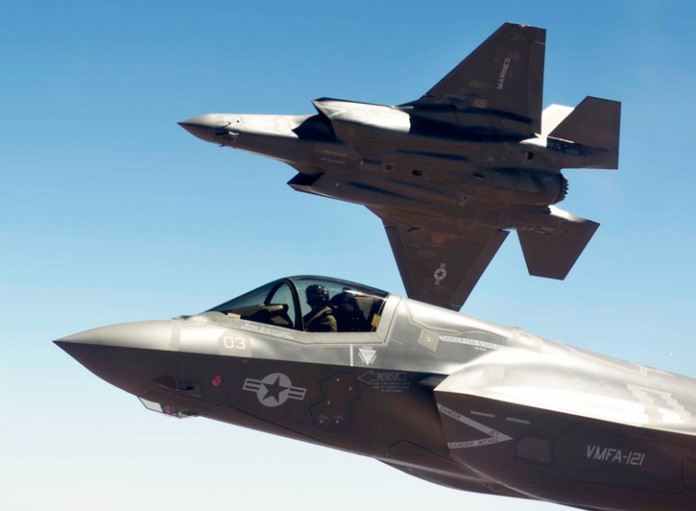
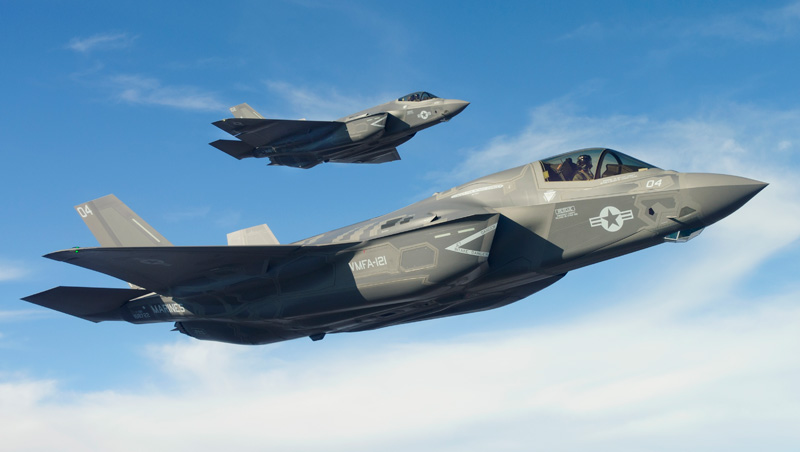
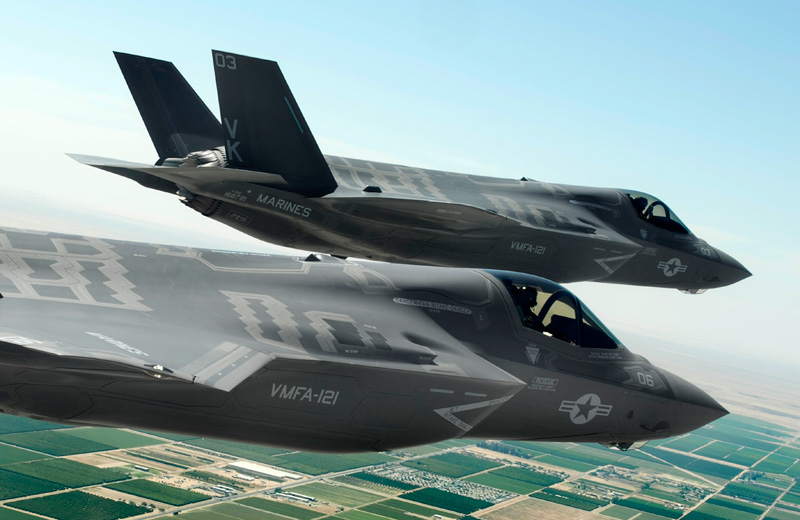
Two F-35B Joint Strike Fighters flying in a close formation over Marine Corps Air Station Yuma, Az. Photo: Liz Kaszynski, Lockheed Martin.
The U.S. Department of Defense and Lockheed Martin have reached an agreement in principle for the production of 43 F-35 Lightning II joint strike fighter (JSF) aircraft. Officials anticipate the Low-Rate Initial Production lot 8 (LRIP 8) contract to be finalized in the coming weeks. The contract covers fiscal year 2014, with deliveries beginning in 2016.
Lt. Gen. Christopher C. Bogdan is the Program Executive Officer for the F-35 Lightning II Joint Program Office in Arlington, Va.
The LRIP 8 contract procures 29 U.S. aircraft including 19 F-35As, six F-35Bs and four F-35Cs. It also provides for the production of the first two F-35As for Israel, the first four F-35As for Japan along with two F-35As for Norway and two F-35As for Italy. The United Kingdom will receive four F-35Bs. The contract also funds manufacturing-support equipment as well as ancillary mission equipment.
Cost details will be released once the contract is finalized; however, in general, the average unit price for all three variants of the airframe in LRIP 8 is approximately 3.6 percent lower than the previous contract. Additional cost savings from the F-35 cost reduction initiative will begin to be implemented in the next batch of procurement – LRIP 9.
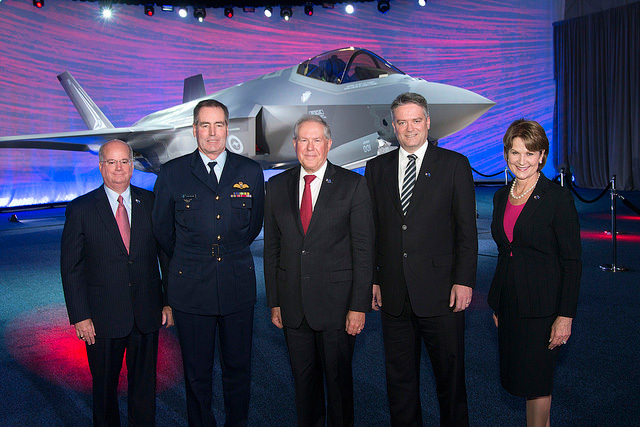
The first Australian F-35 was delivered to the Australian government on July 24, 2014 – (Left to Right) Orlando Carvalho, Executive Vice President Aeronautics, Lockheed Martin Corporation; Royal Air Marshal Geoff Brown, Chief of RAAF; The Honorable Frank Kendall, U.S. Under Secretary of Defense for Acquisition, Technology & Logistics; Senator, The Honourable Mathias Cormann Minister for Finance and Marillyn Hewson, President and Chief Executive Officer, Lockheed Martin Corporation. Photo: Lockheed Martin
“Today’s agreement is representative of the program’s ongoing maturation,” said F-35 Program Executive Officer, Lt. Gen. Chris Bogdan. “Once production of LRIP 8 aircraft is completed, more than 200 F-35s will be in operation by eight nations. We are glad the Government and Lockheed Martin are completing a fair and reasonable contract for the 8th lot of aircraft.”
“Affordability is a key performance parameter in today’s challenging acquisition environment.” said Lockheed Martin F-35 Program General Manager Lorraine Martin. “Working together with our suppliers, we are making steady progress in reducing F-35 costs. While there will always be room for improvement, the results of the LRIP 8 negotiations and initiatives like the Blueprint for Affordability are indicative of our shared commitment to ensuring affordability.”
Launched earlier this year, Blueprint for Affordability aims to reduce the price of an F-35 5th generation fighter to the equivalent of today’s 4th generation fighters by the end of the decade. The initiative leverages upfront investments from key industry partners Lockheed Martin, BAE Systems and Northrop Grumman to drive down production costs. Cost savings from this initiative will begin in LRIP 9.
While the specific cost for LRIP-8 productions was not announced, the contract modification for the procurement of F135 powerplants for those jets has already been awarded as the Pentagon announced United Technologies Corp., Pratt & Whitney Military Engines, has being awarded $793 million for F135 propulsion systems under LRIP-8. The modification provides for the procurement of 38 F135-PW-100 for the U.S. Air Force, Navy and international partners and ten F135-PW-600 Short Take-off and Vertical Landing propulsion systems for the U.S. Marine Corps, and the UK.
The LRIP 8 aircraft order will join 166 F-35s contracted under LRIPs 1-7. As of October 24, 2014, 115 F-35s, including test aircraft, were delivered from Lockheed Martin’s production facility in Fort Worth, Texas. The U.S., eight Partner nations, and Foreign Military Sales participants have announced plans to procure more than 3,100 F-35 aircraft over the life of the program.
Israel and Japan are both expecting to receive their first F-35 aircraft in 2016. The first Israeli squadron of 19 aircraft will be based at IAF base in Nevatim, east of Beersheba. Israel is planning to buy another squadron of 25 aircraft toward the end of the decade bringing the number of F-35s it will operate to 44. Over the next decade the Israel Air Force is planning to operate 75 F-35s. Japan has ordered 42 F-35As which will replace 78 ageing F-4EJ/RF-4J Phantom II fighters being phased out of service.
The Four British aircraft will form the RAF first Lightning II operational unit in the UK. The UK has already taken delivery of three F-35B jets to date, which are based at Eglin Air Force Base in Florida, US, and an order was placed for a fourth UK aircraft in September 2013 which will be delivered early in 2016. These are for test and evaluation. The UK’s first operational Squadron will transition to RAF Marham in Norfolk in 2018, which will become their Main Operating Base.
“As the first batch order for aircraft to form part of our first operational squadron, this marks a very significant milestone in this programme.” RAF Air Commodore Mark Hopkins commented. Hopkins is the Senior Responsible Owner (SRO) for Lightning II procurement at the UK MOD. The aircraft provide an important step on the path to rebuilding the UK’s carrier strike capability. They feature short take off and vertical landing (STOVL) and the latest stealth and intelligence surveillance, target acquisition and reconnaissance (ISTAR) technology.
Two F-35B flying in close formation above Yuma. Photo: Liz Kaszynski, Lockheed Martin
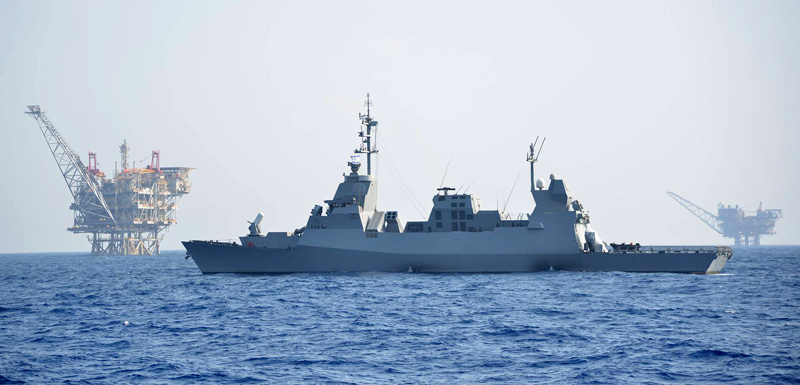
The INS Lahav (Saar V class) corvette was upgraded with the MF-STAR ADIR phased array radar, providing the vessel a critical sensor for the defense of Israel’s offshore gas drilling rigs located in the EEZ, at the range of Gaza rockets and Hezbollah Yakhont anti-ship missiles. The Navy has successfully deployed the corvettes fitted with the new radar to defend offshore sites. The navy also intercepted targets representative of the current threats, using enhanced BARAK I missiles. Future weapons, such as Barak 8, C-DOME and David’s Sling will provide even more hermetic defense from such threats. Photo: Israel Navy
The two countries have teamed to co-develop and market the area defense system which is considered more compact and affordable than comparable naval air defense systems of European and US origin.
Poland considered the acquisition of seven 1,900 ton Gawron class corvettes based on the Meko A-100. This project was cancelled in 2012 over financial constraints but in 2013 it was decided to restart part of the program and complete at least one Gawron hull by 2016. The current plan calls for the maintenance and capability expansion of the current naval force, tasked primarily with coastal defense. Among the platforms considered for this fleet are three 1,900 ton corvettes, which potentially could be candidates for the Indo-Israeli integrated naval air-defense system.
If Poland agrees to the proposal it would become the fourth customer of the system – as the Barak 8 system has already booked multi-billion dollars worth firm orders. Among the launch customers were the Indian and Israel navies, the Indian Air Force and Azeri ministry of defense, which included 75 of the missiles as part of an arms deal worth $1.6 billion signed with Israel in 2011.
Compared to other advanced air defense missile systems, Barak 8 / MRSAM would fit well in new and existing ships, as it comes in a 9” diameter canisters – compared to the 21” standard matching the VL-41 launcher.
The offer comes as the Barak-8 system is moving into the final qualification testing toward the end of 2014, to equip the leading naval vessels of the Israeli and Indian navies.
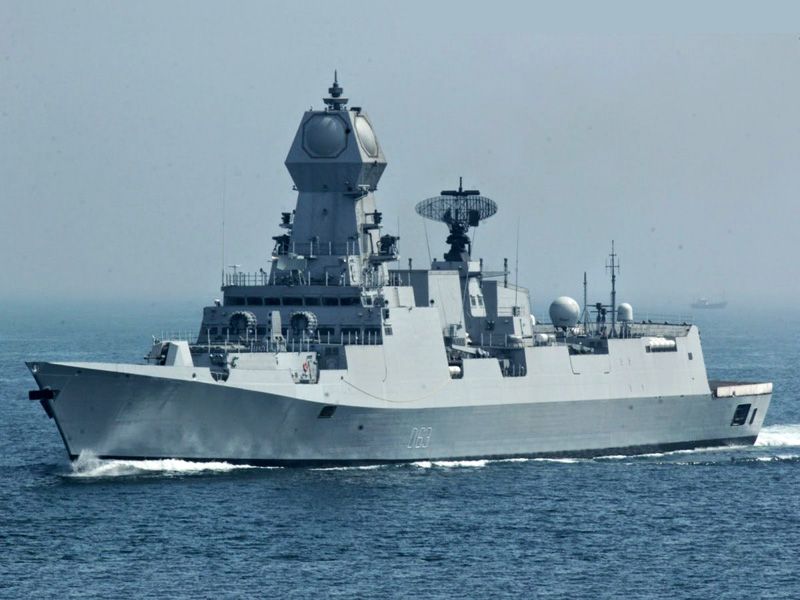
In Israel, Barak 8 will be deployed on three Eilat class corvettes, the first vessel – INS Lahav has already been equipped with the systems’ MF-STAR (ADIR) multi-functional phased array radar and Barak 8 weapon control system. In India, the lead ship of the Project-15A destroyer INS Kolkata, has been equipped with a wedged dome-shaped MF-STAR on its main mast, along with three 8 stack Barak 8 launchers below deck, each mounting eight missiles. The second and third vessels of this class, INS Kochi and INS Chennai, will also receive the new system.
While parts of the Barak 8 system are already installed on the lead ship of the Project 15A class, INS Kolkata, the 48 canisters installed on the destroyer will remain empty until fully tested missiles are delivered, hopefully by the end of 2015.
The systems will also become standard on the enhanced Kolkata class – Project 15B 7,200 ton vessels. Construction of the lead ship of this class, INS Bengaluru, will begin in 2016. By 2018 LRSAM systems will also be installed on India’s first indigenous aircraft carrier – INS Vikrant
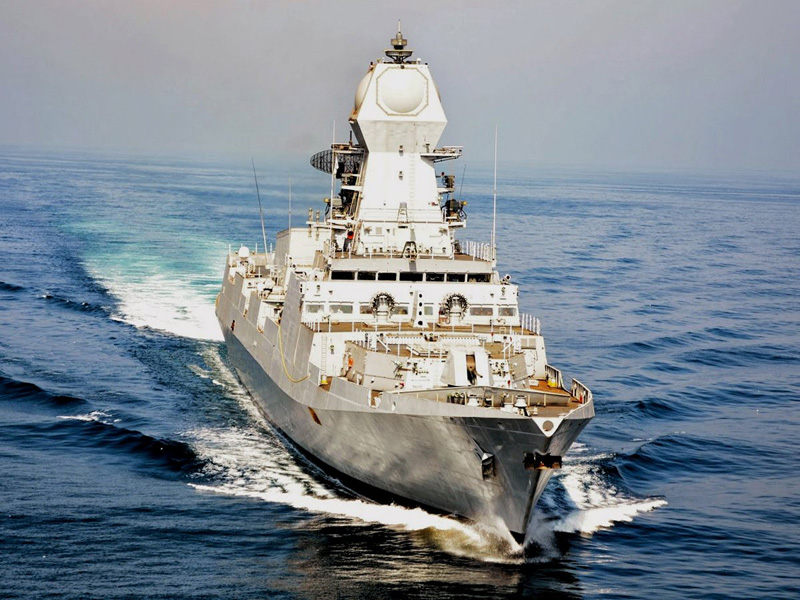
The Indian Kalkota – lear ship of the new P-15A class is fielded with the new MF-STAR radar and preparation for MRSAM Barak 8 missiles. Photo: Indian Navyta,
These will be the primary requirement for a new class of offshore patrol vessel the Israel Ministry of Defense (IMOD) is requesting from naval shipbuilders. IMOD has recently published an international request for proposal (RFP) for the supply of four such vessels; they are likely to be equipped with air defense systems such as Barak 8, to provide a ‘protective umbrella’ against coastal defense missiles such as the Russian P-800 Yakhont that is likely to be fielded by Hezbollah in Lebanon, or Iranian C-704 thought to be supplied to Hamas in Gaza.
The weapon is optimised to defeat all types of aerial targets, from guided weapons, sea skimming and cruise missiles, including the high supersonic missiles such as the P-800 Yakhont to manned and unmanned aircraft.
Another view of the INS Kolkata clearly showing the MF-STAR dome. Photo: Indian Navy
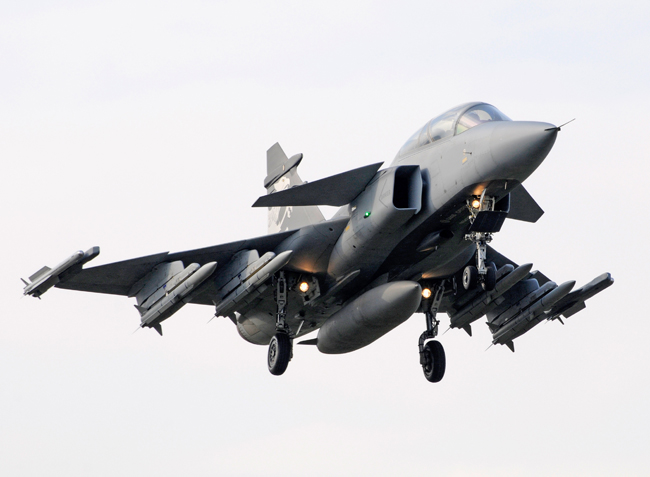
This Gripen NG demonstrator landing at Switzerland for the 2012 demonstration came in an air-dominance configuration, comprising four dummy missiles of the Meteor AAM and two IRIS-T heat-seeking AAMs at the wingtips. Photo: SAAB
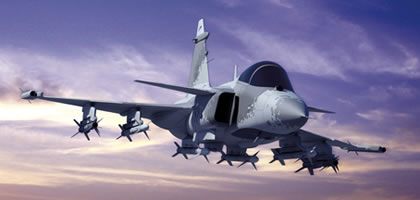
Saab has submitted its first offer for the F-X2 program in February 2009. Photo: Saab
The Saab group has signed today a contract with the Brazilian Federal Government covering the development and production of 36 Gripen NG fighter aircraft for the Brazilian Air Force. The total order value is approximately $5.4 billion (SEK 39.3 billion). The programme comprises 28 single-seat and eight two-seat Gripen NG to be developed with with the local industry and built in Brazil. The Brazilian order reiterates the Swedish company position after it lost a deal with Switzerland.
The contract signed between the Swedish company and Brazilian air force’ Aeronautics Command (COMAER) also covers Industrial cooperation activities delivering substantial technology transfer to the Brazilian industry. Embraer will have a leading role as the strategic partner in the F-X2 programme.
The contract follows the formal selection of the Swedish fighter as the future fighter aircraft (F-X2) for the Brazilian Air Force in December 2013. In the past 10 months the two sides have negotiated the terms and agreement of the program. The contract signing marks the successful conclusion these negotiations. Gripen NG deliveries to the Brazilian Air Force will commence over five years, from 2019 to 2024.Brazil joins Sweden in becoming the launch customer for the next-generation Gripen E/NG, which shares many common design features of today’s Gripen versions. The next-generation Gripen will provide more thrust, extended range and endurance, expanded weapons capacity, and integrate new sensors including, an advanced AESA radar made by Selex, as well as advanced electronic warfare systems and multi-function communications.
According to Saab, the Gripen NG for Brazil and Gripen E for Sweden share all the attributes of the next-generation Gripen design, but are also tailored to each country’s specific national requirements. The commitments by Sweden and Brazil secure Gripen’s industrial and operational future into the 2050 timeframe.
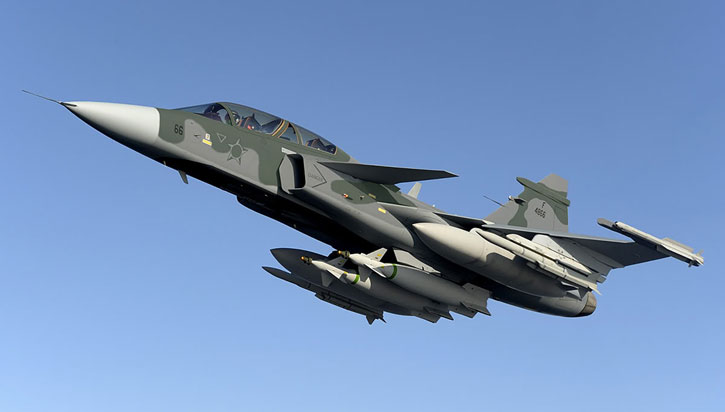
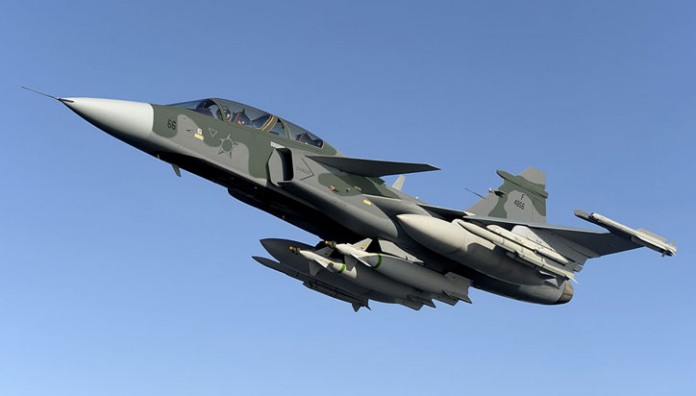
The twin-seater Gripen seen here in Brazilian air force markings will be developed in cooperation with the local industries in Brazil and built by Embraer in Brazil.
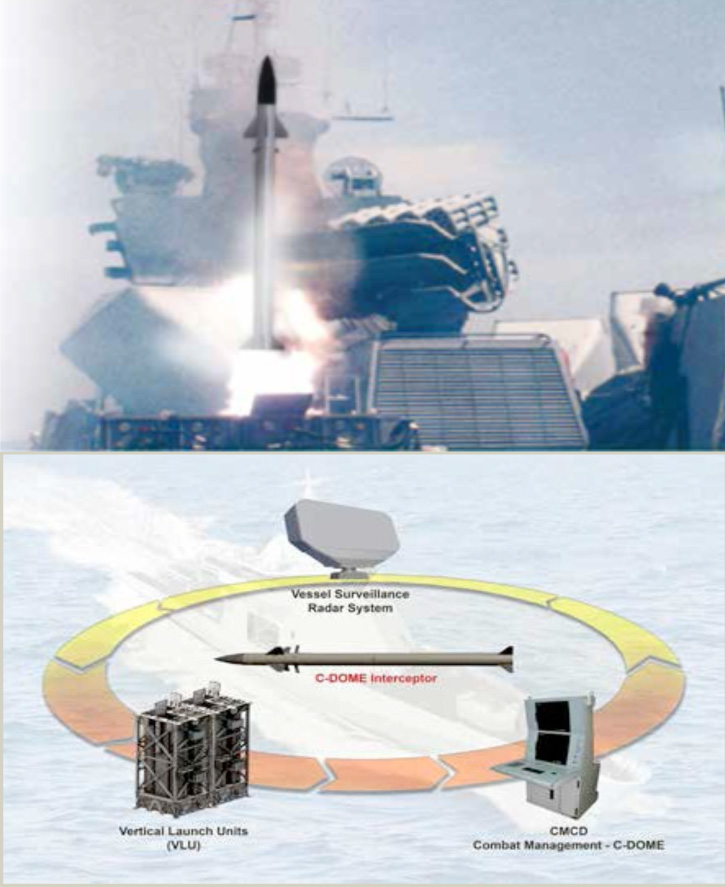
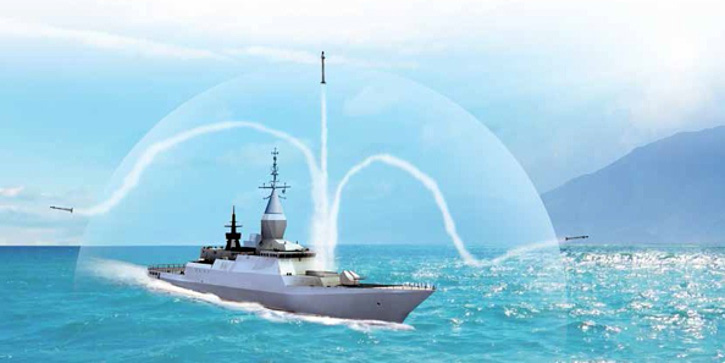
Rafael's new C-DOME close-in weapon system provides a defensive shield for naval surface vessels, against multiple simultaneous ripple attacks. Photo: RAFAEL
C-DOME suite comprises a 10-missile stack, packed in a vertical launch unit installed below deck. The system utilizes combat-proven Tamir interceptor missiles, and command and control, integrated with the ship’s surveillance and air defense radar. Photos: RAFAEL
RAFAEL is extending the Iron Dome Counter-Rocket, Artillery and Mortar defense system to the maritime domain, to protect surface vessels from a wide range of threats, including ballistic trajectory and direct attack weapons. The navalized system dubbed ‘C-Dome’ is a Point Defense System designed to handle saturation attacks in both blue and littoral waters, by engaging multiple targets simultaneously. Similar to C-RAM scenario, saturation attacks at sea would require very short reaction time thus requiring the employment of automatic and semi-automatic engagements.
To address those threats C-Dome include a multi-round launcher assembly loaded with ten vertically-launched canisterised ‘Tamir’ interceptors packed in a modular Vertical Launcher Unit installed below deck. Tamir interceptors have proved themselves in over a thousand successful intercepts in recent combat engagements with rockets of different types.
The systems’ small footprint enables integration on small ships, including OPVs, small Corvettes or offshore rigs. The system utilizes the ship’s own surveillance radar and does not require a dedicated fire control radar. The systems’ command and control are integrated with the ship’s combat management system, facilitating seamless system operation.
C-Dome uses the combat-proven Iron Dome interceptor – Tamir – that has already achieved more than 1000 successful interceptions. Unlike the Iron Dome configuration, C-Dome Tamir interceptors are launched vertically, supporting unrestricted 360° azimuth coverage. The missile has an advanced warhead that ensures high kill probability against a wide range of targets. Recent combat engagements have challenged the interceptor, which demonstrated extremely agility and high rate-of-turn to facilitate intercepting in extremely demanding scenarios. and ripple attacks. The missile uses a smart proximity fuze that maximizes lethality of its powerful warhead to ensure target destruction.
Rafael’s new C-DOME close-in weapon system provides a defensive shield for naval surface vessels, against multiple simultaneous ripple attacks. Photo: RAFAEL
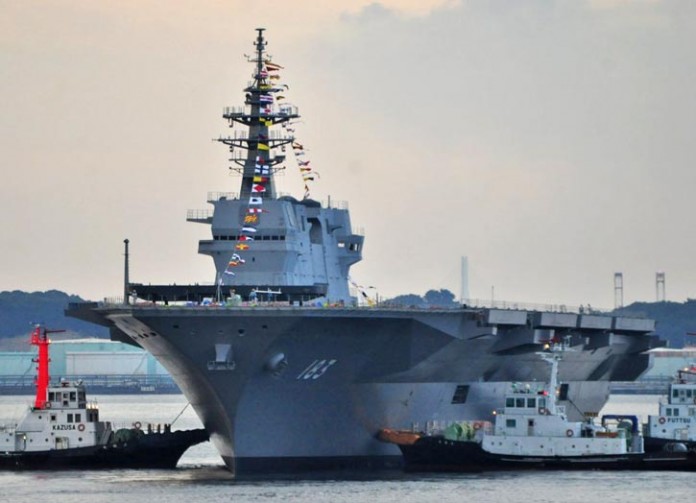
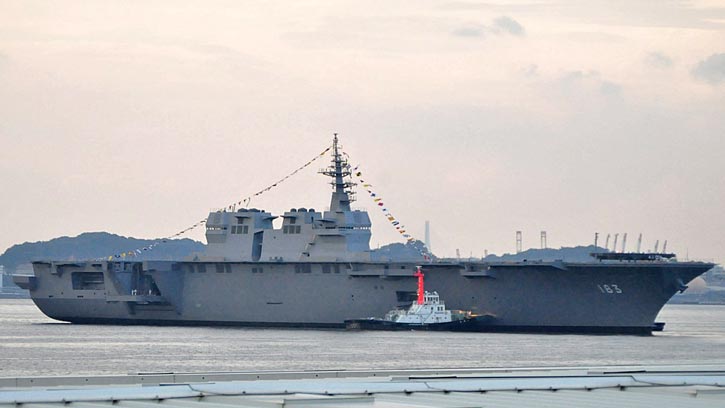
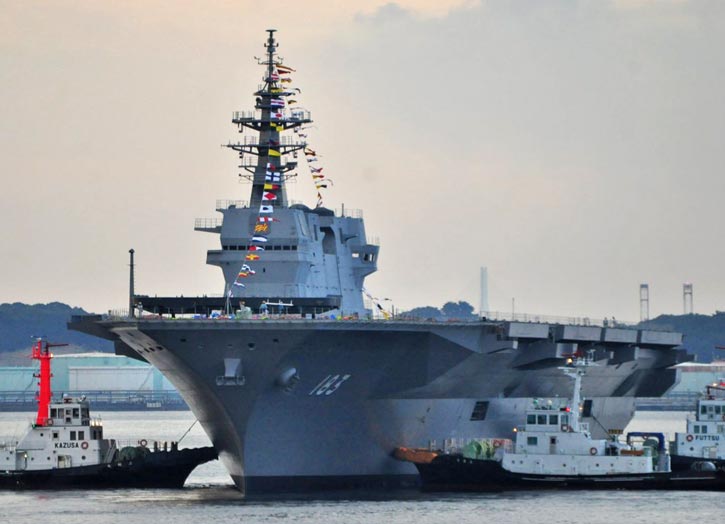
JDS 183 Izumo is the first of two 19500 ton Helicopter carrier destroyer vessels class to be commissioned with the Japanese Navy in 2015.
The new Izumo-class helicopter carrier is undergoing extensive sea trials since late September, in preparation of the acceptance of the new carrier by Japan’s Self Defense Forces Navy.
JDS Izumo helicopter carrier is the first of two 30,000 ton (full load) Izumo-class ‘helicopter carrier destroyer’ (DDH) class vessels to be commissioned next year. Unveiled last month at the Yokohama port, south of Tokyo, JS-183 Izumo, is the biggest warship in Japan’s fleet since World War II, has been described by the Chinese media as an “aircraft-carrier in disguise”. Although the is configured with a large flight deck and hangars, designed to accommodate up to 28 helicopters, Izumo does not have catapults or arresting cables nor a ‘ski jump’ curved deck, assisting short take off of conventional aircraft. The Japanese Navy is highlighting the vessels’ ability to quickly respond to emergency or natural disasters.
The construction of the first ship of the class began in 2011 at an IHI Marine United shipyard in Yokohama, at a cost of $1.5 billion (113.9 billion yen). Commissioning of the first of class is currently scheduled for 2015 with the second ship of the class, yet unnamed, to follow in 2017.
Once commissioned, these Izumo-class vessels will more than double the current anti-submarine, anti-ship, and amphibious assault capabilities of the Chinese Navy, over the current force consisting of two helicopter carriers, operating the Shirane-class helicopter carrying destroyers, accommodating 9-10 helicopters. Those vessels are planned for decommissioning soon.
The Japanese navy also operates two 20,000 ton Hyūga-class helicopter destroyers – Hyūga and Ise, commissioned in 2009 and 2011. Each is configured to carry up to 18 helicopters. These vessels typically operate three SH-60K and one MCH-101 mine sweeping helicopters. Hyūga class carriers are also equipped with Mk 41 VLS common launcher, armed with ESSM anti-air and ASROC anti-submarine weapons. Izumo class has more sensors and electronic warfare assets, designed for anti-submarine warfare and border-area surveillance missions, its self-defense capabilities are limited to close-in weapon systems (CIWS) such as the PHALANX and SEARAM.
Japanese Navy Ship JS Hyuga. Photo: USMC
In addition to the larger capacity, the flight of JDS Izumo deck has 5 helicopter landing spots enabling simultaneous landings or take-offs. On deployments JS Izumo will carry a typical complement of 14 helicopters, seven ASW helicopters and two SAR helicopters. In addition, the ship will be able to transport 400 marines, 50 trucks and supplies.
Some analysts have speculated the Izumo could be adapted to carry F-35B (STOVL) and V-22 Osprey tilt-rotor aircraft, but sofar official Japanese authorities have not addressed these speculations. A similar platform designed to operate those aircraft is twice as large as the Izumo – American LHA-6 – USS America – has recently been commissioned with the US Navy.
JDS 183 Izumo seen at the Yokohama port in Japan, August 2014.
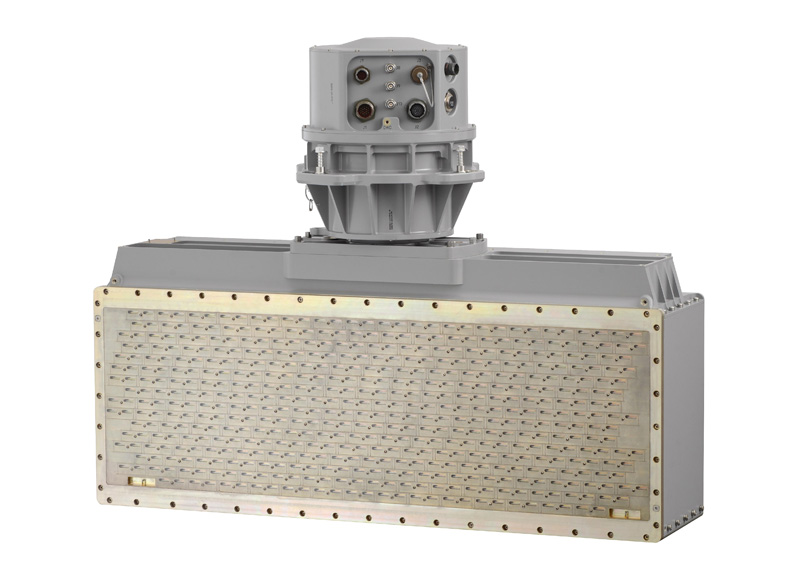
The ELM-2022ES employs a mechanically rotating electronically scanned array to provide an optimal multi-mode coverage over 360 degrees. Photo: Elta Systems
The ELM-2022ES employs a mechanically rotating electronically scanned array to provide an optimal multi-mode coverage over 360 degrees. Photo: Elta Systems
Israel Aerospace Industries (IAI) has expanded its Maritime Surveillance Radar family. introducing two new models – the ELM-2022ML lightweight and compact radar, for helicopters and tactical unmanned systems, and the ELM-2022ES – employing mechanically rotating electronic scanned antenna array. Both are on display this week at the Euronaval 2014 International Naval Defense and Maritime Exhibition, in Paris.
The ELM-2022ES radar system, developed by ELTA Systems Ltd. provides optimal maritime and ground surveillance and imaging capabilities, in addition to simultaneous air surveillance. The system implements the proven operating modes and processing algorithms of the ELM-2022 family, while using the unique capabilities of Active Electronically Scanned Array (AESA) technology. The radar system combines mechanical scan in the horizontal plane with fine beam shifting, and full electronic scan in the vertical plane, providing improved detection, particularly at high sea states.
The ELM-2022ES can be installed on various mission aircraft, and be operated for a variety of military and maritime law-enforcement missions, such as Maritime Surveillance and Anti-Submarine Warfare, Exclusive Economic Zone surveillance, ISR, HomeLand Security (HLS), and search and rescue missions. It is the subject of growing interest by leading customers worldwide.
ELM-2022ML uses a unique front-end design in which most of the radar components are installed directly on the mechanical antenna array. Weighing only 50kg, this radar is suitable for the growing market of small to medium UAVs as well as light reconnaisance aircraft, helicopters and aerostats. All modes and capabilities of the existing radar are retained. This radar is especially suitable for maritime law enforcement and HLS missions.
IAI’s ELM-2022 family is a well established worldwide with over 250 systems delivered in over twenty-five countries worldwide. The radar is currently operating on P-3, Bombardier Dash-8, Airbus Military C-295 and C-235, Dornier 228 Maritime Patrol Aircraft, maritime helicopters and on IAI’s Heron 1 Maritime UAV.
A twin-seater Gripen seen here in Brazilian air force markings
A twin-seater Gripen seen here in Brazilian air force markings
Argentina is probing to join with Brazil in the procurement of Saab Gripen fighters. These aircraft will be locally manufactured in Brazil. A decision to proceed with negotiations was announced in Brazil last week by visiting Argentine Defense Minister Agustín Rossi. The modernization of the Argentinian air force is long overdue, with most of 23 A-4AR Skyhawk reaching the end of their usable life. 10 fighter jets currently in service – Dassault Mirage III, V and IAI Nesher are also considered obsolete.
Brazil’s Ministry of Defense said the talks over the possible purchase of 24 Brazil-produced Gripens would include not only the conditions of purchase but also Argentina’s participation in the production of the Saab-designed aircraft. “Our willingness to cooperate with Argentina, our neighbor and ally, is total,” said Brazilian Defense Minister Celso Amorim.
Brazil is expected to sign an agreement with Sweden later this year for the procurement of as many as three dozen Saab-made Gripen multi-role fighter aircraft, with provisions for technology transfer and local manufacturing.
India has cleared today a bulk of defense projects worth $13 billion in a bid to boost the country’s national defense preparedness, the Indian Defense Acquisition Council (DAC) said.
Scorpène class submarine. Photo: DCNS
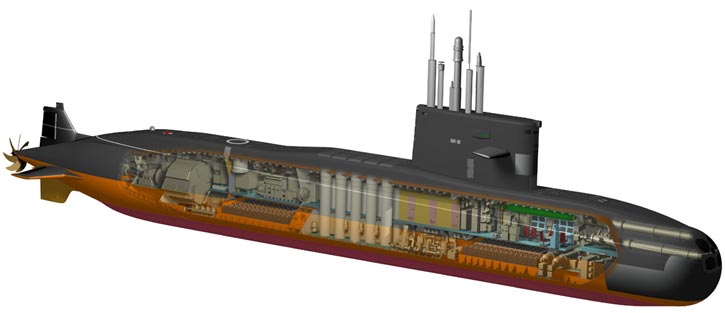
The biggest ticket item is the construction of six new submarine, to be undertaken by domestic shipbuilders based on foreign designs. The program is expected to span over a decade and cost about $8 billion.
Following the decision India’s defense ministry is expected to issue a Request for Proposal (RFP) for a study to seek potential contractors that would have the capacity and manpower to build all six submarines or part of the six.
The submarines will be Air Independent Propulsion (AIP) capable that will enable them to stay underwater for longer than a conventional submarine besides having enhanced stealth features.
Amur-class submarine concept
The DAC also cleared the procurement of Israeli Spike MR missiles and launchers under a $525 million plan to field more than 8000 missiles replacing the current Milan in the Army service.
Another important acquisition will be the procurement of 12 upgraded Dornier DO-228 surveillance aircraft with for the coast guard, for about $300 million. Those aircraft will carry improved sensors for maritime surveillance.
Additionally, the Army will receive 362 infantry fighting vehicle from the Ordnance Factory Board (OFB) as well as new lorries , both produced by domestic manufacturers from the private sector.
The DAC meeting in New Delhi was chaired by Defense Minister Arun Jaitley. Defense Secretary RK Mathur, the chiefs of three All India Services and Defense Research and Development Organization (DRDO) Director General Avinash Chander, also attended.
Modernization of India’s military assets is long overdue. Indian experts have repeatedly complained about the country’s deteriorating military prowess, saying Indian defense infrastructure is age-old and has become obsolete.
Beefing up the country’s border security and defense, through expediting the long delayed defense modernization plans were among the priorities of the new government headed by Prime Minister Narendra Modi.
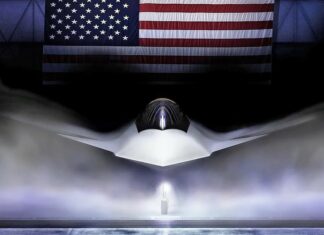
Lockheed Martin Skunk Works® and XTEND have achieved a major milestone in JADC2 by integrating the XOS operating system with the MDCX™ autonomy platform. This technical breakthrough enables a single operator to simultaneously command multiple drone classes, eliminating the friction of mission handoffs. From "marsupial" drone deployments to operating in GPS-denied environments, explore how this collaboration is abbreviating the data-to-decision timeline and redefining autonomous mission execution.
As traditional defense primes face mounting competition from agile “neoprimes” such as Anduril, Palantir and Helsing, the balance of innovation is shifting toward software-defined warfare and scalable, dual-use technologies, while global industry consolidation—marked by Boeing’s integration of Spirit AeroSystems and other strategic mergers—signals an intensified race to secure control over the defense technology value chain. Our Defense-Tech weekly report highlights these trends.
In early October 2025, a coordinated wave of unmanned aerial system (UAS) incursions—widely attributed to Russia—targeted critical infrastructure across at least ten European nations. The unprecedented campaign exposed the fragility of Europe’s air defenses...
Executive Summary
The past week (September 18-25, 2025) represents an inflection point where strategic defense concepts have transitioned from doctrine to tangible reality. An analysis of global events reveals four primary, interconnected trends shaping an...
At the 2025 Air, Space & Cyber Conference, U.S. Air Force and Space Force leaders unveiled major updates on next-generation fighters, bombers, unmanned systems, and space initiatives, highlighting both rapid innovation and critical readiness challenges as the services race to outpace global competitors. A short version is available here, with a more detailed version for subscribers.
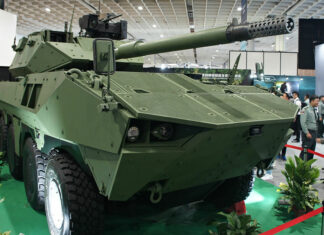
The Taipei Aerospace & Defense Technology Exhibition (TADTE) 2025 crystallized around four dominant strategic themes that collectively illustrate Taiwan's comprehensive approach to defense modernization amid escalating regional tensions. Based on a detailed report by Pleronix (available upon request). Includes a Podcast discussion on TADTE 2025's highlighting Taiwan's four strategic themes beyond the post's coverage.
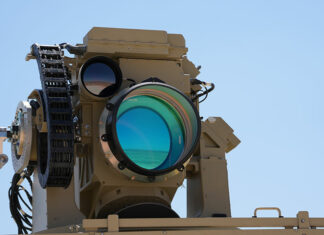
Israel’s Iron Beam 450 high-power laser system has completed final testing, marking a major leap in air defense. Developed by Rafael, it offers precise, cost-effective interception of rockets, UAVs, and mortars, and is set for IDF deployment by 2025.