Friday, December 26, 2025
More
    Home Blog Page 128

    Milipol 2013: Plasan Forms a New Security Division

    Plasan, the leading Israeli designer and manufacturer of armored systems for tactical manned ground vehicles, announced today that it has formed a new division, Plasan Security Solutions (PSS), which offers integrated mobile solutions for homeland security missions. These solutions are aimed at offering territorial dominance over the last-mile, extending fixed deployed solutions.

    “We recognize the homeland security demand for integrated solutions as a growing market due to advanced threats” stated Dani Ziv, Plasan’s CEO. “We provide our customers with the safety and protection they must have in facing threats and add PSS integration capabilities to form a solution that answers the different needs such organizations have. We are dedicated to safeguarding lives, protecting valuable equipment and contributing to successful operations with solutions that are substantially advanced beyond current standards.”

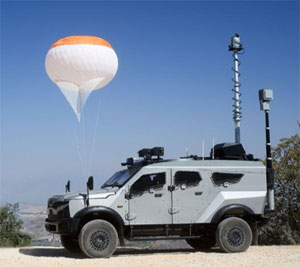
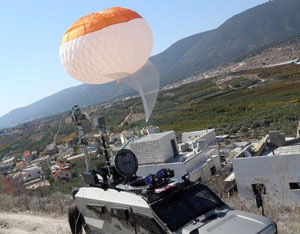
    Plasan Security Solutions include vehicles customized with mobility, protection, communications and ISR solutions to meet specific mission applications. Photo: Plasan.
    Plasan Security Solutions include vehicles customized with mobility, protection, communications and ISR solutions to meet specific mission applications. Photo: Plasan.

    Ziv added that the new division builds on Plasan’s technological leadership, operational know-how and vast track record; “PSS delivers the definitive manned-vehicle responses to homeland security threats”. Such solutions address challenges such as illegal border crossing, terrorism and organized crime, public disorder, safety incidents and natural disasters, by enabling fast deployment of forces and surveillance systems. The vehicles feature high maneuverability, superior armor protection, and fully integrated technologies to match specific customer requirements and operational needs.

    Plasan Security Solution’s fully integrated, highly advanced sensors and systems include long-range surveillance and intelligence systems, tactical radars, command and control, advanced communication and more. These systems are integrated to form a holistic solution which is easily deployed on different platforms suitable to the mission and territory. The systems may be added to existing fleets.

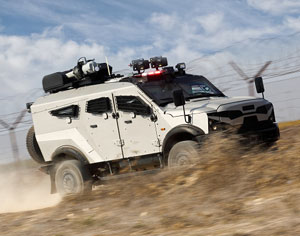
    Plasan offers security agencies an advanced level of vehicle protection for VIP and field agents, mobile command posts and support elements, all covertly embedded and integrated into customer furnished vehicles. Photo: Plasan
    Plasan offers security agencies an advanced level of vehicle protection for VIP and field agents, mobile command posts and support elements, all covertly embedded and integrated into customer furnished vehicles. Photo: Plasan

    Plasan Introduces Security Solutions Unit, Showcasing New Vehicles at Milipol 2013

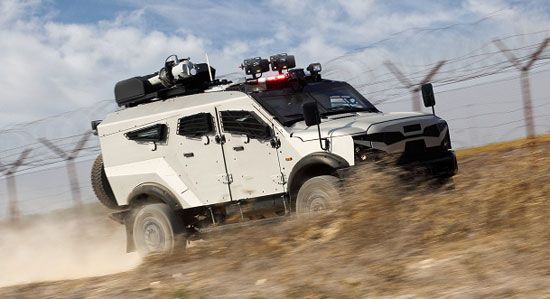
    Plasan Security Solutions has integrated and customized security vehicles for a wide range of paramilitary and homeland security applications. Photo: Plasan
    Plasan Security Solutions has integrated and customized security vehicles for a wide range of paramilitary and homeland security applications. Photo: Plasan

    Plasan Security Solutions, a member of the Plasan Group, a global expert and world leader in the development of customized solutions protecting land, air, naval platforms and personnel. Plasan’s solutions are in use by armed forces around the globe in the most demanding environments and battlefield scenarios, including in Iraq and Afghanistan. As a preferred supplier to ministries of defense around the world, Plasan Security Solutions is expanding the group’s portfolio across paramilitary and HLS applications.

    Visit Plasan Security Solutions at: www.plasansec.com

    To cope with terrorist threats or other rapidly evolving situations, law enforcement and homeland security agencies are transforming into more responsive and versatile forces. Rapid deployment and operation on the move are becoming an imperative for teams, relying on customized vehicles to carry out complex missions. Specifically, users are seeking novel, mobile Intelligence Surveillance and Reconnaissance (ISR) solutions for security, border protection.

    To meet those requirements, Plasan Security Solutions (PSS) was established, delivering turnkey customized vehicle-centric solutions. The group leverages Plasan’ legacy in force protection and automotive upgrades, meeting the evolving needs of customers in special missions and homeland security.

    Plasan designs and manufactures a variety of armored and non-armored tactical manned vehicles, featuring exceptional 4×4 maneuverability and fully integrated technologies. Such systems include day and night surveillance, command and control, video analytics, advanced communication systems, intelligence collection (including communications interception) tactical radars, surveillance aerostats, etc. Ballistic, blast protection, and IED jammers are also part of the options available for such vehicles. All solutions are mission-specific and offer high personnel survivability.

    Presenting: Plasan Security Solutions.

    As part of its HLS portfolio Plasan is offering its expertise in tailoring special purpose vehicles for different applications, including:

    Border Protection

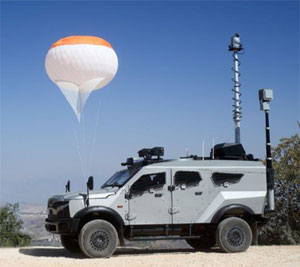
    Plasan Security Solutions include vehicles  customized with mobility, protection, communications and ISR solutions to meet specific mission applications. Photo: Plasan.
    Plasan Security Solutions include vehicles customized with mobility, protection, communications and ISR solutions to meet specific mission applications. Photo: Plasan.

    Vehicles can be protected or unprotected, depending on the operational environment. Typically, protection from ballistic, blast and IED threats would secure vehicle operation in hot border regions. Off-road mobility supports mobile observation and rapid response along terrestrial and maritime borders. Such vehicles enable security forces and border guards to beef up certain sectors or shift operational weight along the border as required. Vehicles are typically equipped with mast-mounted sensor pack (Radar, Electro-Optics, etc., and supported by command, control and communication systems. Other vehicle variants are tailored for security missions protecting critical infrastructure.

    Special Forces Operations
    Special operations of police and paramilitary forces require solutions featuring high speed and maneuverability, ballistic and IED protection. Rapid and flexible integration of sensors, command and control kits often comprise day/night and thermal cameras, cellular interception systems, command, control and communications gear etc. For specific long-range, search and rescue missions, such vehicles would also employ satellite communications.

    Intelligence Missions

    Plasan's intelligence gathering vehicles are configured with mast mounted and aerostat-borne sensors for effective reconnaissance and intelligence collection. Photo: Plasan
    Plasan’s intelligence gathering vehicles are configured with mast mounted and aerostat-borne sensors for effective reconnaissance and intelligence collection. Photo: Plasan

    Specially equipped vehicles, which could also be designed for covert operations, are fitted with specific mission equipment to support intelligence collection, tracking and support. System integration is critical for efficient operation, minimizing cross-domain interference and optimizing operation, with command, control and secure communications facilitating operation with a minimal crew.

    Disaster Management
    Equipping special vehicles for disaster response, Plasan provides vehicle modification, adaptation, modeling and production of customized vehicles designed to support first responders, secure the area and assess the situation, rapidly deliver life saving equipment, emergency supply and services, supporting rapid deployment, peacekeeping operations and disaster relief operations.

    Convoy & VIP Protection
    Expanding Plasan’s legacy of force protection, the solutions offered for security agencies introduce advanced level of vehicle protection for VIP and field agents, mobile command posts and support elements, all covertly embedded and integrated into customer furnished vehicles.

    Plasan’s unique vehicle customization capabilities are particularly valuable in meeting those needs. Plasan harnesses the proven capabilities the company excels in – automotive modification and optimization, human engineering and efficient power management, to deliver the optimal answer for mission requirements. These capabilities are at the company’s core competence, proven in numerous vehicle modeling, modifications and manufacturing programs in the past.

    Equally important for the ISR integration are the mission management, command and control systems, supporting the operators with efficient, flexible and mission functional operating systems, providing operator with clear and intuitive situational picture, showing all points of interest, targets and friendly forces.

    Supporting the Edgefighter

    Traditionally supporting operational levels of military and security forces, Plasan has established an effective, responsive and reliable support for its systems, providing the field user reliable, trustable and supportable vehicular-based systems.

    Over three decades Plasan has been developing and manufacturing turnkey solutions for defense and HLS. Protection solutions from Plasan have been saving lives in countless engagements in the Middle East, Central Asia and in peacekeeping operations around the world.

    plasan_security_narrow

    Plasan’s earned reputation in providing lifesaving protection for troops, vehicles, helicopters, aircraft and boats is now at your service, providing government agencies, law enforcement and tactical units with best of class vehicular-based systems for HLS missions.

    Milipol 2013: Cassidian Introduces a new, Lightweight Ground Surveillance Radar

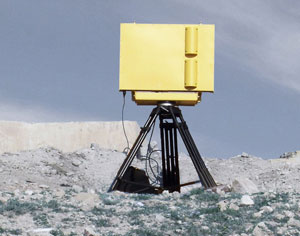
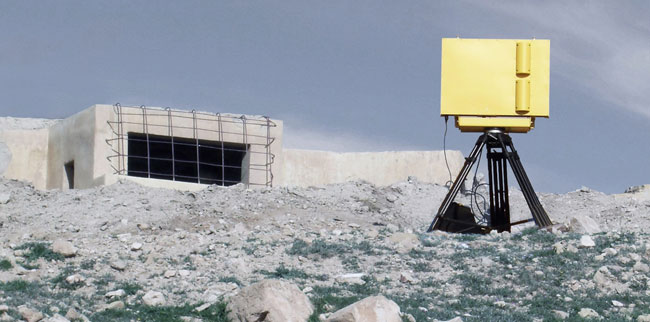
    Cassidian is launching a new member of its Spexer family of ground surveillance radar at the Milipol security expo in Paris this week. According to the company, Spexer 500, a new electronically scanning radar, is designed to offer surveillance and protection of sensitive industrial or military installations such as oil fields, power plants, airports or military camps. Due to its low weight and low power consumption, the Spexer 500 can be deployed in mobile applications on a tripod or vehicles to monitor specific and critical spots.

    With an instrumented range of 0.1 to 9 km and an extremely high update rate of less than 1.5 seconds for a sector of 120°, it is able to reliably detect suspicious movements on the ground and in the air at a very early stage. This is in particular true for very small and slowly moving targets due to the high Doppler resolution of the radar. “Our new radar uses the latest digital beam-forming (DBF) technology, which enables the early detection even of single pedestrians in all weather conditions,” explained Elmar Compans, Head of Cassidian’s Sensors & Electronic Warfare unit. “Spexer 500 gives police or security forces additional reaction time in order to deal with illegal intruders.”

    In combination with a low false alarm rate and flexible surveillance modes enabling a sector blanking or the definition of priority sectors, this ensures a superior surveillance performance and a high level of situational awareness.

    The radar is part of Cassidian’s “Spexer” security radar family which consists of several sensors, each optimized for specific applications in the fields of border, infrastructure, perimeter and coastal surveillance. A specific version for border surveillance, Spexer 2000, is under production. A military version has been developed for the German Army.

    Cassidian's Spexer 500, a new electronically scanning radar, is designed to offer surveillance and protection of sensitive industrial or military installations. It can be deployed in mobile applications on a tripod or vehicles to monitor specific and critical spots. Photo: Cassidian
    Cassidian’s Spexer 500, a new electronically scanning radar, is designed to offer surveillance and protection of sensitive industrial or military installations. It can be deployed in mobile applications on a tripod or vehicles to monitor specific and critical spots. Photo: Cassidian

    Russia Delivers the INS Vikramaditya to the Indian Navy

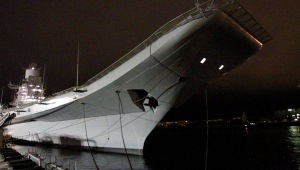
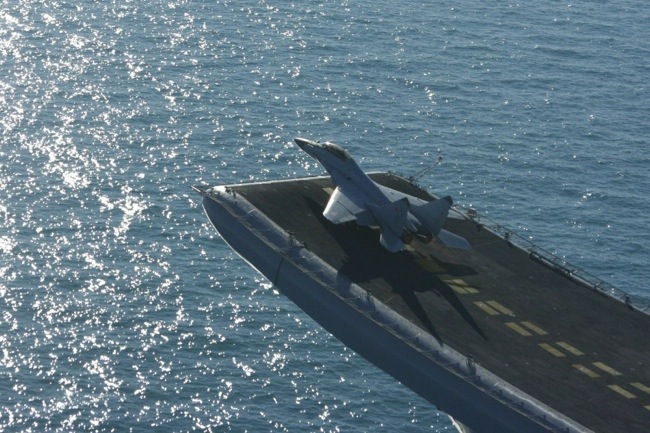
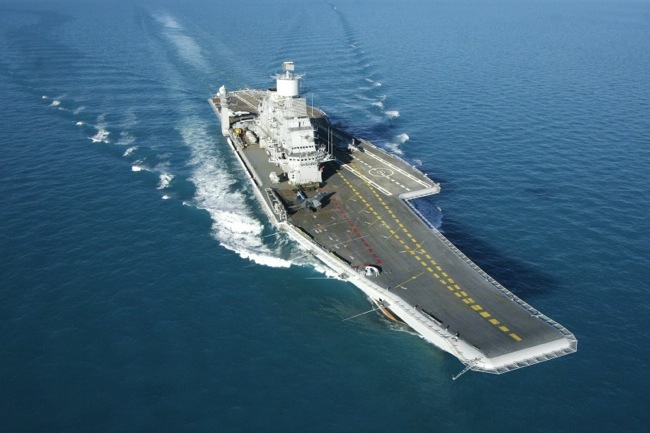
    The Indian Navy finally received its aircraft carrier INS Vikramaditya – formerly known in Russian as Admiral Gorshkov. The 45,400 ton carrier was handed over to the Indian Navy at the Sevmash shipyard in the northern town of Severodvinsk on Saturday, November 16, 2013. Russia handed over to India its aircraft carrier renamed INS Vikramaditya on Saturday after a much-delayed refit and cost escalations that led to disagreements between Moscow and New Delhi. Originally scheduled to be delivered in 2008, the deadline was repeatedly postponed over five years. The latest delay followed the sea trials earlier this year, which unveiled boiler isolation problems that took months to repair. Much of the refurbishment was due to bring the vessel back to serviceable condition. Other aspects included removing the original Granite anti-ship missiles, clearing space for wider, longer deck fitted with the unique Ski Jump at the front section, enabling the vessel to deploy MiG-29K fighters from the relatively short runway, without relying on steam catapults.

    The official ceremony was attended Saturday by Russian Deputy Prime Minister Dmitry Rogozin and Indian Defense Minister AK Antony, who arrived in Russia on Friday for a four-day visit.

    20131117-215619.jpg
    The warship is expected to leave for India by November 30 and reach its destination two months later, on February 2014. Arriving in India the Vikramaditya will be undergoing additional refitting that include the installation of Barak I air and missile defense systems, providing the carrier self defense against aircraft and anti-ship missile attacks. The Vikramaditya will be operating as part of a carrier task force, escorted by other warships designed as air-defense and anti-submarine warfare vessels.

    Originally built as a Project 1143.4 ‘modified Kiev class’ aircraft carrier, Admiral Gorshkov was commissioned by the Soviet Navy in 1987. Nine years later it was decommissioned in 1996 after cuts to the Russian Navy fleet. The refurbishments of the vessel lurched from one crisis to another since the $947 million deal was signed with Russia in 2004 for its purchase and refit. The delays pushed up the cost of its refurbishing to $2.3 billion, sparking acrimony between Russia and India over the contract.

    The Indian Navy has already taken delivery of some of the carrier’s MiG-29K naval fighter aircraft. The first squadron is based at the Indian Naval Air Station in Goa; the second unit will be based at INS Dega. INS Vikramaditya will be able to operate a composite air wing comprising both fighter planes and helicopters. The ship will be able to accommodate up to 16 MiG-29K fighters and 21 helicopters, including Ka-31 Helix (AEW) helicopters and HAL Dhruv utility/scout helicopters.

    20131117-215443.jpg

    LCS 3 ‘Fort Worth’ Validates Surface Weapon Package, UAS Operations on Sea Trials

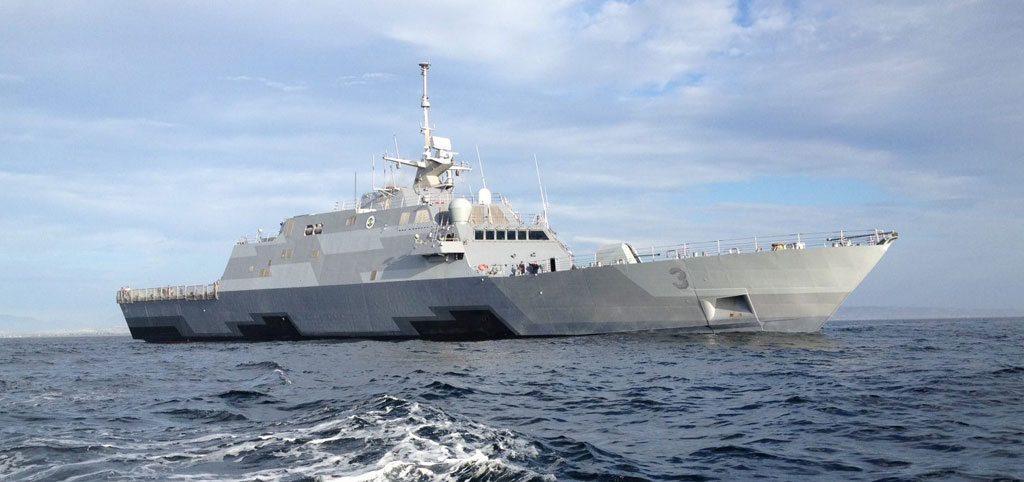
    LCS 3 Fort Worth seen here on her sea trials in 2012. Photo: Lockheed Martin
    fort_worth_lcs31024
    LCS 3 USS Fort Worth was painted a new camouflage scheme before going on its latest tests. The paint design includes dark shaded paints nearer the waterline of the ship to contrast against the sea surface, and gets progressively lighter further up the ship and above the water’s surface to contrast against the area of sky just above horizon. The camouflage paint also uses contrasting angles and slopes to make the ship more difficult to detect visually. Additionally, this paint scheme is designed to be simpler in construct than the paint scheme used on Freedom, easier to apply, and visually appealing. Earlier in 2013 USS Freedom was painted using a pattern based on a World War II-era design, prior to her current deployment to Singapore. Photo: Fort Worth Facebook

    The Littoral Combat Ship (LCS) Surface Warfare Mission Package successfully completed the second phase of its developmental testing, on board the USS Fort Worth (LCS3), the Naval Sea Systems Command announced. The test events demonstrated the ship’s ability to detect, track and simulate engagement of air and surface threats.

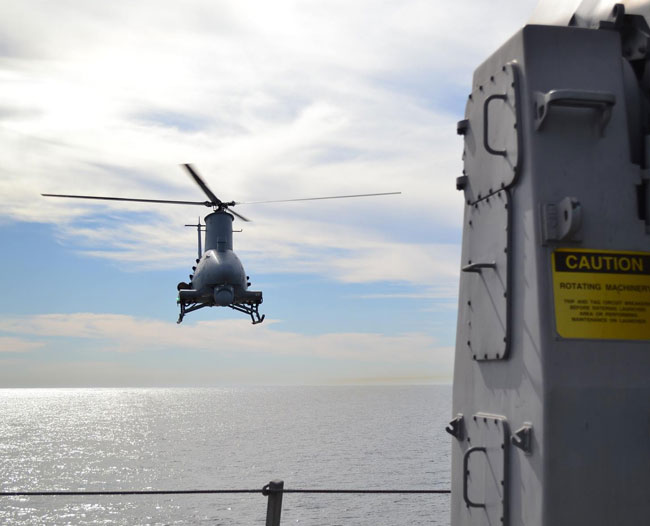
    Following the tests conducted on the last week of October the vessel deployed again to the Point Mugu Test Range, testing dynamic interface with the MQ-8B FireScout the Navy’s Vertical Takeoff Unmanned Aerial Vehicle (VTUAV). Although Fire Scouts have been used in the fleet onboard frigates, LCS is the first platform designed from the keel up to integrate and operate these unmanned helicopters.

    The LCS’ surface warfare mission package is designed to defeat small boat threats and also provides the capability for the ships to conduct maritime interdiction operations. The package consists of two 30mm guns, two 11-meter rigid hull inflatable boats, an MH-60R helicopter, a 19-person surface warfare detachment, and a 23-person aviation detachment. The LCS’s permanent 57mm gun, and its speed and maneuverability, coupled with the 30mm guns of the SUW MP, provide the LCS a significant advantage over small boat threats.

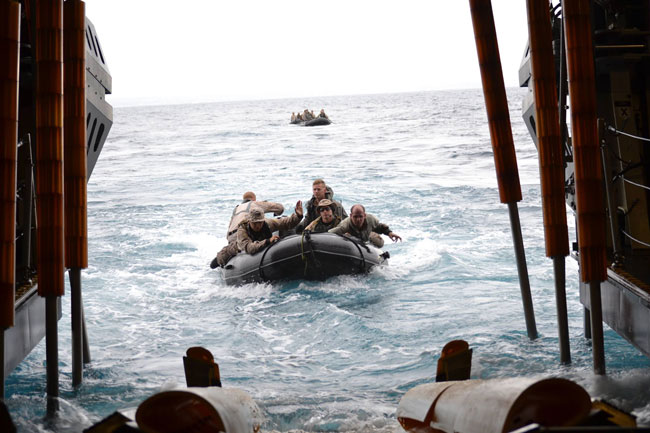
    USS Fort Worth (LCS 3) conducted a joint “proof of concept” operation Oct. 2 with the 1st Marine Special Operations (MARSOC) Battalion from Marine Corps Base, Camp Pendleton, Calif. Photo: Fort Worth Facebook
    USS Fort Worth (LCS 3) conducted a joint “proof of concept” operation Oct. 2 with the 1st Marine Special Operations (MARSOC) Battalion from Marine Corps Base, Camp Pendleton, Calif. Photo: Fort Worth Facebook

    The final exercise was a live-fire event, where the ship demonstrated the ability to defend itself against several attacking speed boats. These boats were identified as a threat by the ship’s helicopter, which passed the information to the ship. Fort Worth then successfully engaged all targets with both the 30mm and the 57mm gun weapons systems, which reduced the attacking boats to smoking hulks. The Initial Operational Test and Evaluation for the surface warfare mission package will be conducted in early 2014, and will be the final step in achieving initial operational capability.

    The tests’ objective was to prove the vessel’s performance capabilities for surface warfare missions, validate recent upgrades and correct problems found in previous testing. Preliminary analyses of the results indicate that overall test objectives were achieved, and the ship and mission package operated as expected. “The achievement of this at-sea test milestone demonstrates that the surface warfare package meets its requirements,” said Capt. John Ailes, program manager for mission module integration for the Program Executive Office for Littoral Combat Ships. “It also shows the significant progress that the mission modules program has made toward providing an affordable surface warfare capability.”

    The combined capability of LCS and LCS mission systems is designed to dominate the littoral battle space and provide U. S. forces with assured access to coastal areas. The LCS mission packages are managed by PEO LCS, under the Naval Sea Systems Command, providing a single program executive responsible for acquiring and sustaining mission capabilities of the littoral combat ship class, from procurement through fleet employment and sustainment.

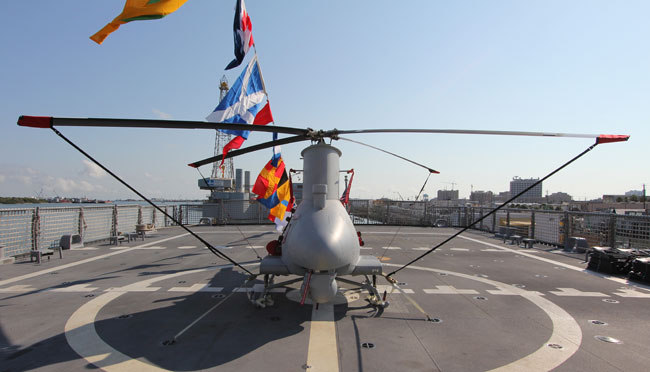
    Northrop Grumman MQ-8B Sea Scout UAV BuNo.168445 - Vertical Takeoff Unmanned Aerial Vehicle (VTUAV), On deck, USS Fort Worth (LCS-3). Photo: Christopher Ebdon
    Northrop Grumman MQ-8B Sea Scout UAV BuNo.168445 – Vertical Takeoff Unmanned Aerial Vehicle (VTUAV), On deck, USS Fort Worth (LCS-3). Photo: Christopher Ebdon

    The MQ-8B FireScout is equipped with advanced electro-optical payloads that can extend the range of the ship’s sensors and greatly increase maritime awareness by relaying information back to the ship via data link. Fort Worth is scheduled to deploy next year with “The Mad Hatters” of HSM-35, Det. 1, the Navy’s first “composite” Air Detachment which will include both a manned SH-60R helicopter as well as unmanned Fire Scouts.

    “Everything from the consoles in MCC (Mission Control Center), the displays, and antennas to the flight deck and UCARS were made for us to interface with Fire Scout” said Lt. Mike Chesnut, the combat systems officer for LCS Crew 104, “The Juggernauts”, who are currently the “on-hull” crew for Fort Worth. UCARS is the UAV Common Automated Recovery System, a present day “tractor beam” that locks on to the Fire Scout from miles away and brings it safely on deck without human intervention.

    Meanwhile, USS Ft Worth’s sister ship, USS Freedom (LCS 1) has departed Singapore’s Changi Naval Base yesterday, Nov. 16, for the final time as part of her maiden overseas deployment to Southeast Asia. Freedom has used Singapore as a logistics and maintenance hub since arriving there April 18. Though Freedom is departing Singapore, she is expected to remain in the region over the coming weeks before beginning the transit back across the Pacific Ocean to her homeport in San Diego. Prior to getting underway, Freedom accomplished repairs to the feedback cable in the port steerable water jet which delayed her participation in exercise Cooperation Afloat Readiness and Training (CARAT) Brunei. All waterjets are now functioning normally, and Freedom still expects to conduct a brief port visit in Brunei as part of the exercise.

    USS Fort Worth (LCS 3) conducted dynamic interface operations on the Point Mugu Test Range Nov. 5-13 with the Navy's Vertical Takeoff Unmanned Aerial Vehicle (VTUAV) known as the MQ-8 Fire Scout. Photo: Fort Worth Facebook
    USS Fort Worth (LCS 3) conducted dynamic interface operations on the Point Mugu Test Range Nov. 5-13 with the Navy’s Vertical Takeoff Unmanned Aerial Vehicle (VTUAV) known as the MQ-8 Fire Scout. Photo: Fort Worth Facebook

    “As we’ve said before, lead ships are difficult. One of the main reasons for this deployment was to push the ship and crews hard, and to identify areas that required improvement,” said Rear Adm. Cindy Thebaud, commander of the U.S. Navy’s Logistics Group Western Pacific.. “We did just that, and as expected, had some challenges. That said, Freedom’s crews rose to the challenges again and again, and I cannot say enough about their perseverance, dedication and skill both operating and sustaining the ship while rotationally deployed for the first time.”

    As many senior Navy officials noted recently, the maritime crossroads and vital waterways that connect Southeast Asia to the global economy are exactly where the Navy needs to be present, now and well into the future. Rotational deployments of littoral combat ships will help the Navy sustain presence, expand access to vital waterways and interact with littoral regions in unprecedented ways.

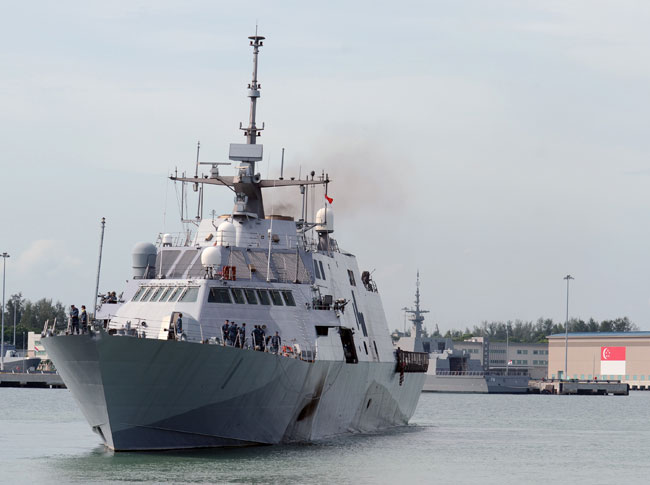
    LCS 1 - USS Freedom has left the Singapore Changi port where she was stationed since May 2013 on her first extended deployment to the Pacific. Photo: US Navy
    LCS 1 – USS Freedom has left the Singapore Changi port where she was stationed since May 2013 on her first extended deployment to the Pacific. Photo: US Navy

    NSA Commander Alexander: “Critics are Mischaracterizing US Intelligence Agencies Collection Activity”

    Media reports detailing secret National Security Agency collection of data from companies such as Google and Yahoo from overseas data centers mischaracterize what NSA does, the agency’s director said in a speech to the Baltimore Council on Foreign Affairs. The reporting was based on documents stolen from NSA and periodically leaked to the media beginning this summer by former NSA information technology contractor Edward Snowden. “There are some recent articles — recent meaning this morning — about our collection operations that mischaracterize exactly what we do and how we do it,” Army Gen. Keith B. Alexander said.

    NSA is a global organization, noted the general, who also commands U.S. Cyber Command.

    “In order to understand what the terrorists are doing, in order to handle those foreign intelligence issues that we get, we have to have collection,” he said. “But it is not targeted against a company. … These are [data] flows that you would expect our agency to go after and to work with our partners.”

    Alexander said that when NSA works with foreign partners, the agency follows U.S. law and the laws of the partner’s country.

    “We have to follow both, and where it says to protet a U.S. person’s data, we do that, and [the foreign partner has] to do that too, wherever we partner.”

    “That’s a huge step forward, … and it’s all to collect the data that we need — not targeting specific companies, although some data we do collect from some of those companies, because terrorists are using that and you expect us to get that,” he said.

    Alexander said he spoke with a group of chief executive officers last week who told him that “they keep getting spun in the papers with what’s going on, and it’s hurting their business.”

    The NSA director also said the companies’ reputations are being hurt unjustly with the public, because they’re being compelled by court orders through what NSA calls the FAA 702 program to produce emails and other records of suspected foreign agents.

    The FISA Amendment Act 702, or FAA 702 — FISA refers to the Foreign Intelligence Surveillance Act — authorizes electronic surveillance to collect foreign intelligence information. The act also created the Foreign Intelligence Surveillance Court, which oversees FBI requests for surveillance warrants against suspected foreign intelligence agents inside the United States.

    For more information, click here to see the Armed with Science interview with General Alexander.

    Because such court orders are infrequent, the companies want to be able to make these numbers public “so the American people and the rest of the world know this is a small number analogous to what other countries would do in law-enforcement type programs,” Alexander said.

    “These aren’t relationships where industry is coming up and dumping data on our doorstep,” the general added. “It is compelled by a court order, [and] … we need to get that out. We’re working with the companies and the Department of Justice so the American people will know exactly what is shared in volume.”

    Another NSA collection effort leaked by Snowden is the business record FISA program, or Section 215 of the Patriot Act, which consists of the bulk collection of U.S. and other phone records into a database overseen by NSA.

    “In there we put all our phone numbers — the to-from, the date, time and the duration of the call — and that’s it. No names, no content, no emails. We don’t need that.”

    “We’re looking from the foreign side. Are one of those numbers talking to one of those things that we see in Iraq or Afghanistan or somewhere out there?” he added. “All we need to do is tell the FBI that the number in the States … is talking to something that is a true threat to this country. The FBI uses their authorities to take it from there.”

    An example of how the two programs work took place in 2009, Alexander said, when the NSA got insights from some of its collection in Pakistan under FAA 702.

    “We lawfully intercepted an email [in which] there were discussions about recipes, weddings and a bomb … so we shared that with the FBI. In that email was a [telephone] number, and the FBI came back and said the number is Najibullah Zazi and is associated with this al-Qaida person,” he said.

    “Given that number, and only that number, we were able to look into the business record FISA and see a number in New York and a number in Raleigh, N.C., and another number, … and we were able to tell the FBI that number in New York was extremely important,” the general added. “They had insights to parts of that already, but we could tell them that there were terrorist groups associated with these numbers.”

    Bosnian immigrant Adis Medunjanin was connected to the number in New York, Alexander said, and he and Najibullah Zazi were planning a mass attack on the New York City subway that would have been the biggest attack since 9/11.

    “The great FBI, in a matter of six days, stopped the whole thing, because they had the intelligence and we had the tools and the insights to stop it.”

    In October alone, the general said, 2,336 people were killed and 1,510 were injured in Pakistan, Afghanistan, Syria, Iraq and Nigeria in terrorist acts.

    “Over the past decade, we’ve had no mass casualties here, and that’s not by accident. That’s not luck, that’s great work, great partnership, and the tools that we need to prevent terrorist acts,” he added.

    Cheryl Pellerin, American Forces Press Service.

    MBDA Completes First MPCV Air-Defense Vehicles

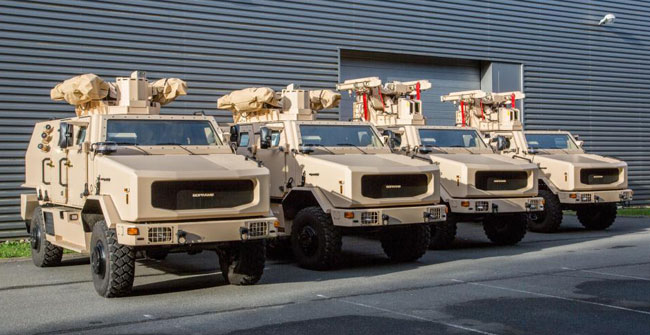
    MBDA has completed the integration and factory acceptance of the first MPCV vehicles in surface-to-air configuration. Photo: MBDA
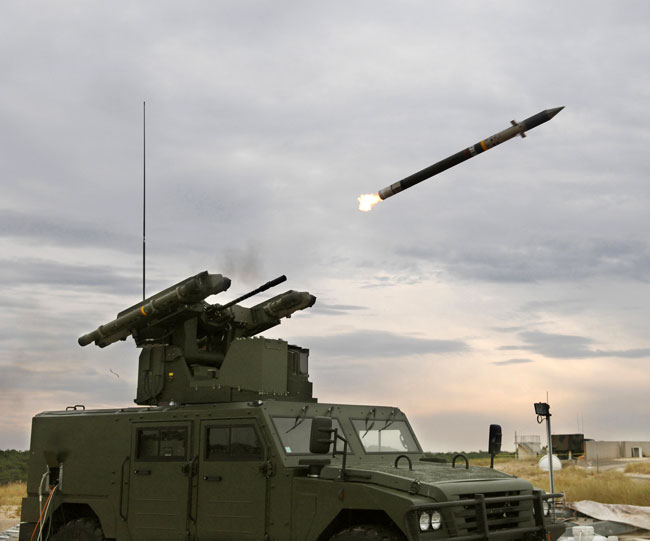
    Mistral fired from a prototype MPCV platform based on Renault Sherpa. Photo: MBDA
    Mistral fired from a prototype MPCV platform based on Renault Sherpa. Photo: MBDA

    MBDA has completed the integration and factory acceptance test of the first Multi-Purpose Combat Vehicle (MPCV) vehicles designed to operate the Mistral surface to air missile. Built for export, these vehicles represent the first production batch. In the next few days, they will be shipped for delivery to the customer country before the end of the year, as announced at the contract signing in February 2011. The customer is believed to be the Saudi-Arabian National Guard (SANG), which ordered 68 MPCV air defense vehicles from French company Lohr in 2011.
    The MPCV, developed by MBDA in cooperation with Rheinmetall Defence Electronics (RDE) of Germany, has been designed to meet emerging requirements for a highly mobile weapon system which can be adapted for different missions, either air defence or land combat, depending on the type of missiles it operates. The first development, which is now being delivered, is aimed at air defence and comprises a motorized and stabilized turret that includes electro-optical sensors, a small caliber gun and four, ready-to-fire Mistral missiles with four more missiles stored in the vehicle for re-loading. Additional versions dedicated to land combat are planned for development. The MPCV (Multi-Purpose Combat Vehicle) is based on the German-produced Mercedes Unimog 5000 chassis, a high-mobility 4×4 armored vehicle offered by SOFRAME (of the French Lohr group). The deal also includes 264 Aravis armored vehicles, produced by Nexter and 15 ambulances, all to be provided by Lohr.

    This automatic system in its air defence configuration was validated by several Mistral missile firings, including the engagement in only a few seconds, of two targets approaching simultaneously from two different directions. The success of this test demonstrated MPCV’s ability to counter a saturating attack. With this first version in full production, MBDA is now ready to move ahead with a land combat version of the MPCV. This will deploy the totally new MMP surface attack missile which is currently being developed by MBDA.

    According to Antoine Bouvier, CEO of MBDA the development of the MPCV took four years and was fully funded by the company. “It then took less than three years after the signing of the first contract to integrate the systems on a vehicle chosen by the end customer, deliver at the agreed date and implement a technology transfer under which the customer will be able, in complete autonomy, to keep its equipment in operational condition.” Parallel to the delivery of factory-finished systems MBDA is completing the installation of a final assembly line in the customer country where the remaining vehicles will undergo final integration, using MBDA provided MPCV kits.

    Mistral is a short-range (6 km class) surface-to-air missile capable of intercepting a wide variety of aerial targets including those with even a low infrared signature. It is characterised by an outstanding success rate (96% from more than 4,500 live firings), a high effectiveness against manoeuvring targets, and has demonstrated its capabilities against fixed-wing aircraft, nap-of- the-earth helicopters, unmanned aerial vehicles, cruise missiles as well as moving land vehicles and Fast Inshore Attack Craft at sea. Mistral, in its land, naval and airborne applications, has been selected by 40 armed forces of 28 countries. More than 17,000 missiles have been produced. Saudi-Arabia is believed to have acquired 600 missiles prior to the MPCV acquisition.

    MBDA has completed the integration and factory acceptance of the first MPCV vehicles in surface-to-air configuration. Photo: MBDA
    MBDA has completed the integration and factory acceptance of the first MPCV vehicles in surface-to-air configuration. Photo: MBDA

    Germany to Fly Sagitta – an Unmanned Flying Wing by 2015

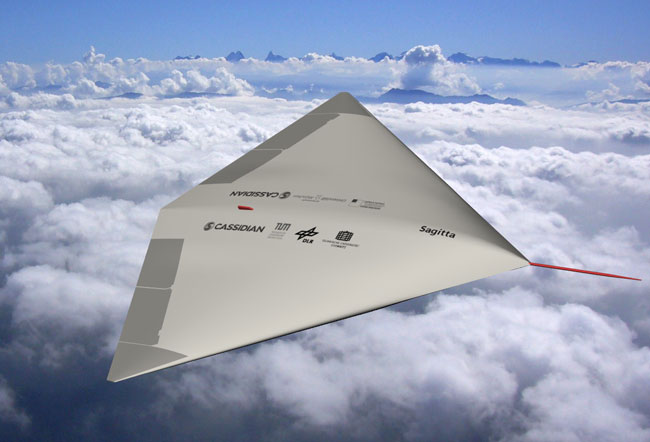
    Sagitta artist concept (Photo: Cassidian)

    Following development and testing of core elements, “Sagitta”, Cassidian’s future Unmanned Aerial Systems’ (UAS) research program is entering a two year integration and testing phase, culminating in a first test flight in 2015. The integration of the aircraft is taking place at Cassidian’s Military Air Systems Center Manching, close to Munich. The reference configuration for the research work is a tailless flying wing with a wingspan of 12 metres. The demonstrator will initially be built on a scale of 1:4. The first wind tunnel tests have already been successfully completed.

    After 2 years of intense design work, the first parts of the extremely light-weight carbon fibre structure are now in production, and a dedicated system integration rig has been setup to start assembly of the individual avionic components and to perform the required hardware-in-the-loop simulations. The integration will span one year, and complete by the end of 2014.

    “Sagitta is a perfect example of a successful cooperation between industry, research institutes and universities in the field of high technology and future-oriented research,” says Aimo Buelte, Head of Research & Technology at Cassidian. “Our goal with Sagitta is to raise our knowledge of Unmanned Aerial Systems to the next level, because UAS are the future of aviation.”

    In the project “Sagitta” Cassidian is conducting basic research into future Unmanned Aerial Systems Technologies together with universities and research institutes. The Open Innovation Programme Sagitta consists of a total of seven research areas of UAS development: preliminary aircraft design, aerodynamics, flight control systems, communications and data processing, vision-based flight control and air-to-air refuelling, materials and structure, autonomous flight and mission control, simulation and systems integration. The development includes the construction of a flight demonstrator, the purpose of which is to verify the validity and feasibility of the theoretical research results.

    "Sagitta", Cassidian's unmanned aerial systems research programme will be a tailless flying wing, with a wingspan of 12 metres. Currently at an integration phase, Sagitta is scheduled to fly in 2015. Photo: Cassidian
    “Sagitta”, Cassidian’s unmanned aerial systems research programme will be a tailless flying wing, with a wingspan of 12 metres. Currently at an integration phase, Sagitta is scheduled to fly in 2015. Photo: Cassidian

    New Missile Enhances Russian TOR-M2 Air Defense Capabilities

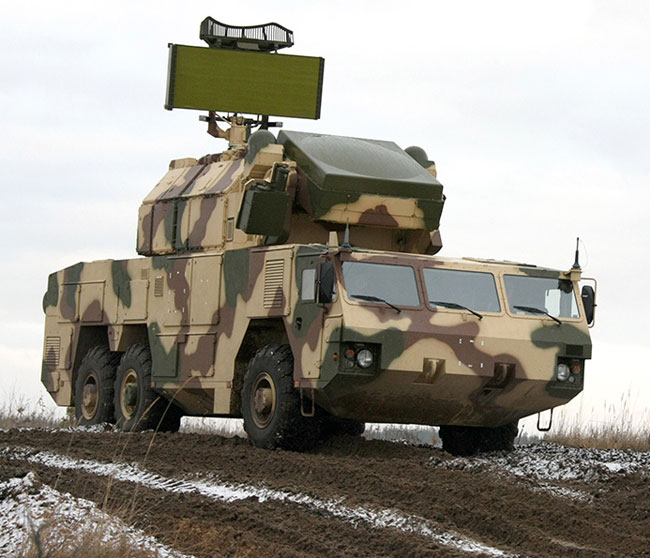
    The 9M331 missile is currently used on TOR M2K units. The new 9M338 will double the ammunition capacity while offering higher precision and maneouverability.
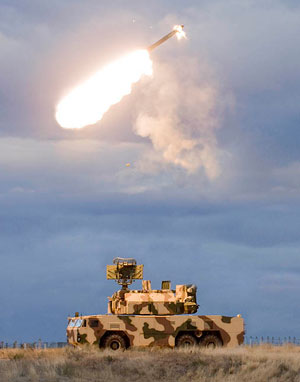
    TOR M2E firing a 9M331 interceptor. The missile is capable of defeating aerodynamically maneuvering targets at ranges of seven to 10 km.
    TOR M2E firing a 9M331 interceptor. The missile is capable of defeating aerodynamically maneuvering targets at ranges of seven to 10 km.

    Russia’s Almaz-Antey defense corporation has developed an advanced version of the Tor-M2 air defense system (NATO reporting name SA-15 Gauntlet), utilizing a new interceptor missile that has improved performance, doubled the ammunition capacity and enabled firing on the move capability. According to Sergei Druzin, head of research and development at Almaz-Antey, the enhanced version represents a “unique air defense system in its class with an astounding precision and range.”

    The Tor system is a low- to medium-altitude, short-range surface-to-air missile system designed for intercepting aircraft, cruise missiles, precision-guided munitions, unmanned aerial vehicles and ballistic targets.

    Tor-M1K and Tor-M2U variants, armed with 9M331 missiles, are currently in service with the Russian army. The new system, equipped with new 9M338 missiles, was successfully tested at the end of October 2013. “We carried out five launches targeting highly maneuverable drones. Three of the targets were hit head-on, while the other two were destroyed by shrapnel from exploding warheads. It is an excellent result, astounding precision,” Druzin said.

    In addition, the smaller size of the 9M338 compared with its predecessor has allowed the carrying capacity of the launcher to be doubled, from eight to 16 missiles. The official said the improved Tor-M2 systems and 9M338 missiles have been approved by a state commission for mass production. “We can now start producing these missiles in quantities that would meet the demand of the Russian army,” Druzin said. The Tor M2E missile system has also been exported to Azerbaijan, Belarus, Ukraine, China, Venezuela and Iran. Earlier versions (M1) were also exported to Greece, Cyprus and Egypt.

    According to Druzin, the next step in the improvement of the system would be for launching missiles at acquired targets while on the move. “The [mobile] launcher currently stops for two or three seconds to launch a missile, but it could be done on a move, without stopping,” Druzin said.

    The export version known as TOR M2E is also armed with the 9M331 interceptor, is designed as a short range air defense system, capable of intercepting air breathing and maneuvering targets at ranges of 1-12 km and altitudes from ground level (10 meters) to 10 km. Cruise missiles and drones could be killed at ranges of 1.5 km to 7 km maximum with precision guided weapons intercepted at a minimum distance of 50 meters and maximum range of six kilometers. Maximum target speed is 700 m/sec (2,520 km/h). A Tor M2E can engage four targets simultaneously, having up to eight missiles airborne. (four actively guided).

    The export variants are also expected to be offered with the new interceptor.

    The improved TOR M2 is claimed to offer 'firing on the move', enabling the unit to launch its missiles instantly upon stopping. Existing TOR M2K systems require about three minute set-up time.
    The improved TOR M2 is claimed to offer ‘firing on the move’, enabling the unit to launch its missiles instantly upon stopping. Existing TOR M2K systems require about three minute set-up time.
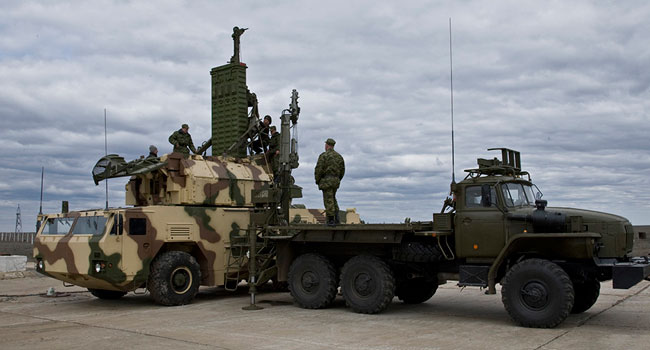
    9M331 missiles are loaded in two stacks of four missiles each.
    9M331 missiles are loaded in two stacks of four missiles each.

    LRASM Anti-ship Missile Conducts Second Flight Test

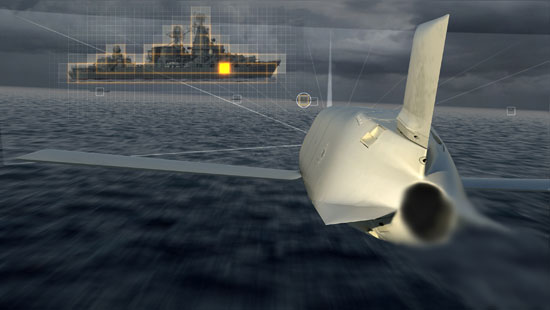
    An artist impression depicting an LRASM missile on terminal attack, its seeker is verifying the target's silhouette and most vulnerable aimpoint for the final strike. Photo: Lockheed Marti
    An artist impression depicting an LRASM missile on terminal attack, its seeker is verifying the target’s silhouette and most vulnerable aimpoint for the final strike. Photo: Lockheed Marti

    Lockheed Martin’s Long Range Anti-Ship Missile (LRASM) recently achieved another successful flight test, with the missile scoring a direct hit on a moving maritime target. The test was conducted in support of the Defense Advanced Research Projects Agency (DARPA) and Office of Naval Research (ONR) program.

    LRASM is an autonomous, precision-guided anti-ship standoff missile leveraging the successful Joint Air-to-Surface Standoff Missile Extended Range (JASSM-ER) heritage, and is designed to meet the needs of U.S. Navy and Air Force warfighters in a robust anti-access/area-denial threat environment. After a competition in 2009, Lockheed Martin’s LRASM was selected to demonstrate air- and surface-launched capability to defeat emerging sea-based threats at significant standoff ranges.

    Armed with a proven 1,000-pound penetrator and blast-fragmentation warhead, LRASM employs a multi-mode sensor, weapon data link and an enhanced digital anti-jam global positioning system to detect and destroy specific targets within a group of ships.

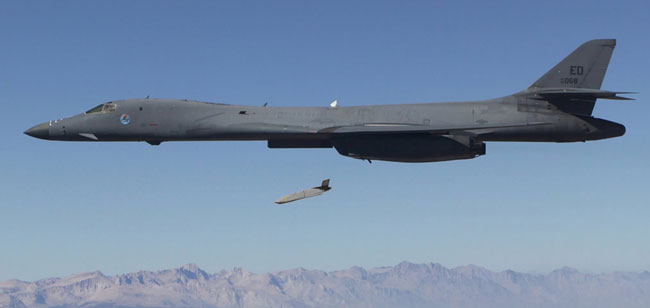
    Flying over the Sea Range at Point Mugu, Calif., a U.S. Air Force B-1B bomber from the 337th Test andEvaluation Squadron at Dyess Air Force Base, Texas, released the LRASM, which navigated through all planned waypoints receiving in-flight targeting updates from the Weapon Data Link. After transitioning to autonomous guidance, LRASM identified the target using inputs from the onboard sensors. The missile then descended for final approach, verified and impacted the target.

    “This test, combined with the success of the first flight test in August, further demonstrates the capabilities and maturity of LRASM,” said Mike Fleming, LRASM air launch program manager at Lockheed Martin Missiles and Fire Control. “The new sensors and legacy JASSM-ER components all performed well during the flight and the missile impacted the target as planned.”

    The tactically-representative LRASM is built on the same award-winning production line in Pike County, Ala., as JASSM-ER, demonstrating manufacturing and technology readiness levels sufficient to enter the engineering, manufacturing and development phase to satisfy an urgent operational need.

    JASSM-ER, which recently completed its operational test program, provides a significant number of parts and assembly-process synergies with LRASM, which results in cost savings for the U.S. Navy and Air Force(air- and surface-launched) Offensive Anti-Surface Warfare programs.

    In September 2013 Lockheed martin also launched a LRASM representative Boosted Test Vehicle (BTV) from a MK 41 Vertical Launch System (VLS) canister at White Sands Missile Range, N.M. This company-funded test evaluated the Vertical Launch Anti-Submarine Rocket (VL/ASROC) Mk-114 rocket motor, igniting, penetrating and exiting through the canister cover and performing a guided flight profile similar to a tactical configuration.

    This flight test was part of an ongoing Lockheed Martin-funded Offensive Anti-Surface Weapon effort, independent of the Defense Advanced Research Project Agency (DARPA) LRASM program. This test is focused on shipboard integration of LRASM’s surface launched variant.

    Update: In July 2014 DARPA awarded Lockheed Martin a framework contract worth up to $200 million for the years 2014-2016, $33 million will be spent in 2014 on research, development, test and evaluation. The remaining funds will be allocated for continued work on the accelerated acquisition of the new missile.

    LRASM missile launched from a B-1B on its first test flight in September 2013. Photo: DARPA
    LRASM missile launched from a B-1B on its first test flight in September 2013. Photo: DARPA


    Indonesia Orders 156 Refurbished Armored Fighting Vehicles from Germany for €216 million

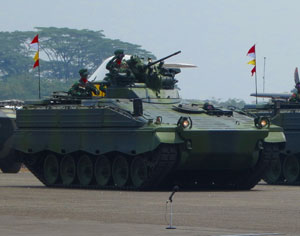
    The German Marder 1A3 has been delivered from Germany to Indonesia. Photo: Rheinmetall Group
    The German Marder 1A3 has been delivered from Germany to Indonesia. Photo: Rheinmetall Group
    Two of the 42 German Marder 1A3 Jakarta has acquired Germany. Photo: Rheinmetall Group

    The Indonesian Ministry of Defence has contracted with the German Rheinmetall Group to supply it with tracked armoured vehicles, logistical support and ammunition worth roughly €216 million. The contract, which was signed in December 2012, now comes into full force following the successful completion of all legal formalities.

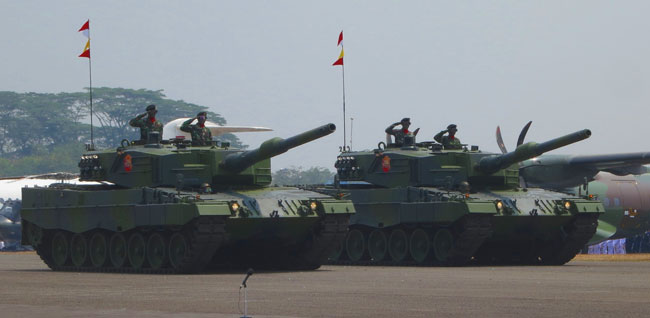
    The order includes 103 overhauled and modernized Leopard 2 main battle tanks, 42 upgraded Marder 1A3 infantry fighting vehicles and 11 combat support vehicles, comprising armored recovery and engineering vehicles. The contract also covers training and logistic support and ammunition supporting the initial practice and service introduction phase. Furthermore, the order includes an initial supply of practice and service ammunition. Delivery to the Indonesian Army will take place progressively during the 2014-2016 timeframe.

    With a production run of over 3,600 tanks, the Leopard 2 Indonesia becomes the 18th Nation using the tank.

    Two of the Leopard II Mk4 tanks Jakarta has acquired in Germany for . Photo: Rheinmetall Group
    Two of the 103 Leopard II Mk4 tanks Jakarta has acquired in Germany for €216 million . Photo: Rheinmetall GroupG


    Navy Asked to Donate Ex. USS Nassau to Support Humanitarian Relief Worldwide

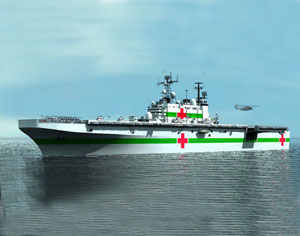
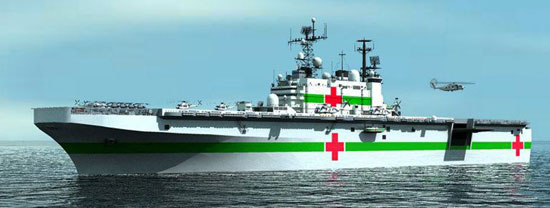
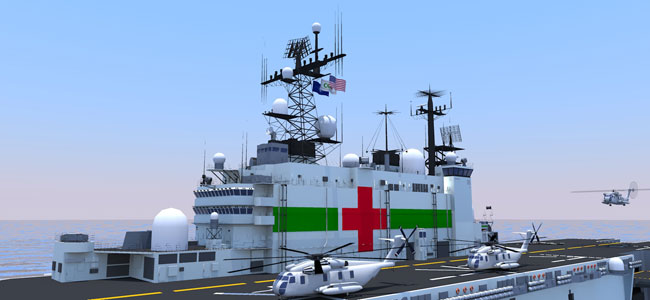
    COH to reconfigure the former USS Nassau, as a multi-purpose humanitarian / disaster-relief vessel (HADRV)
    COH to reconfigure the former USS Nassau, as a multi-purpose humanitarian / disaster-relief vessel (HADRV)

    Modernizing its surface fleet for future naval operations, the US Navy is decommissioning aging ships that have ended decades of useful service life. One such vessels is USS Nassau. The vessel, decommissioned March 31st, 2011, has excellent existing design features, including aircraft hangars, a vast well deck, organic hospital capability (which the COH plans to expand) and acres of interior space in the ship’s hold which can be quickly converted for humanitarian supplies, heavy equipment and storage.

    Currently in the Atlantic Reserve Fleet “graveyard” in Beaumont, Texas, the Nassau is likely to be sold for scrap metal or sunk in a naval ordnance training exercise unless otherwise provided for. The next step in the process to creating this response capability is obtaining the final support of the U.S. government. Timothy Keegan and The Coalition of Hope (COH) have proposed a bold plan to utilize a retrofitted, former U.S. naval vessel to provide state-of the-art hospital facilities staffed by multinational medical personnel within the context of an international, public-private partnership. The Coalition of Hope projects that once operational the ship will positively impact upwards of 18,000,000 lives around the world during the renewed 20+ year life-expectancy of the ship.

    Keegan’s plan is to have the U.S. Navy and other friendly-foreign nation’s partner with the COH to reconfigure the former USS Nassau, as a multi-purpose humanitarian / disaster-relief vessel (HADRV).

    “In recent years, there have been dramatic changes in the challenges and demands of the overseas environment for humanitarian relief, development, and security, stabilization, and transition and reconstruction (SSTR) personnel,” observe Denver University Professor Van Arsdale and U.S. diplomat and Marine Corps Veteran Derrin Smith. The COH concept provides a unique, innovative, and timely capability to help a whole host of NGO, IGO, academic institutions, and government agencies who might not otherwise have access to participate in humanitarian relief operations.

    COH is currently in talks with the U.S. Navy to acquire the vessel. Donating the USS Nassau will be a cost-effective way for the U.S. government to contribute to humanitarian assistance and disaster-relief efforts while showcasing its capabilities and strengthening international relationships. The retrofitting of the USS Nassau will also create American jobs in the struggling shipyard industry during a period of high unemployment.

    In conjunction with a broad coalition of nations, non-profit and non-governmental organizations, and other key global partnerships, COH plans to retrofit the vessel to support state-of-the-art hospital facilities and medical staff, as well as transport first-responders and supplies on a large-scale. The retrofitted USS Nassau’s unique command and control, heavy airlift and amphibious landing craft capabilities will make it faster and more efficient than any humanitarian assistance and disaster-relief vessel in the world.

    The Coalition of Hope Foundation (COH) is a non-profit public charity based in California, with offices in Miami, Florida. Established in 2005 as a humanitarian assistance and disaster-relief organization the Foundation provides support on an international basis, including domestic relief efforts in support of hurricane Sandy victims, large-scale efforts in the Gulf Coast after Hurricane Katrina and in Haiti after the devastating earthquake of 2010.

    COH plans to retrofit the vessel to support state-of-the-art hospital facilities and medical staff, as well as transport first-responders and supplies on a large-scale. The retrofitted USS Nassau’s unique command and control, heavy airlift and amphibious landing craft capabilities will make it faster and more efficient than any humanitarian assistance and disaster-relief vessel in the world.
    COH plans to retrofit the vessel to support state-of-the-art hospital facilities and medical staff, as well as transport first-responders and supplies on a large-scale. The retrofitted USS Nassau’s unique command and control, heavy airlift and amphibious landing craft capabilities will make it faster and more efficient than any humanitarian assistance and disaster-relief vessel in the world.

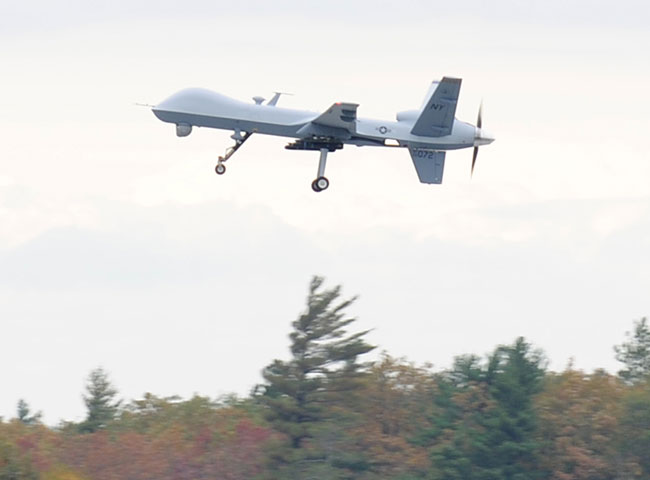
    Unarmed Reaper Crashes Into Lake Ontario

    Officials at the 174th Attack Wing suspended all Reaper drone flights in Central New York yesterday after one of the MQ-9 unmanned aircraft crashed into Lake Ontario about 12 miles from the eastern shore, during a routine training flight. The 174th, the only attack wing in the total Air Force, began flying the MQ-9 remotely piloted vehicle in 2009. The last two F-16s flown by the wing left Syracuse in 2010. The Reaper that crashed Tuesday was unarmed and had been in the air about three hours when it went down in the lake. It was one of two drones that took off from Fort Drum, outside Watertown, during a training exercise. The other drone returned safely.

    The drone crashed into the lake about 20 miles northeast of the Port of Oswego, and about 12 miles from the eastern shore. No decision has been made yet on when Reaper training flights will resume. the Syracuse.com reported.

    The 174th Attack Wing flies the Reapers unarmed, across a wide swath of Upstate New York, from west of Rochester eastward to near Blue Mountain Lake, and from Syracuse north to the Massena area. The drones fly at 18,000 feet in airspace that is off limits to commercial aircraft. When the drones carry missiles, they are restricted to military air space in Northern New York.

    The unit also flies MQ-9s in the skies above Afghanistan from an operations center at Hancock Field Air National Guard Base. The next step in the 174th’s transition to full-up MQ-9 operations is to fly the aircraft directly from Hancock Field. That should occur next summer, said Col. Greg Semmel, the 174th Attack Wing commander. The Federal Aviation Administration is reviewing a request to fly Reapers out of Hancock Field north of Syracuse, but thus far has not granted it.

    The 174th Attack Wing has been operating the MQ-9 at Fort Drum since 2009 and has been using hangar space belonging to the 10th Mountain Division‘s 10th Combat Aviation Brigade. This space did not allow enough hangar space to shelter all aircraft needed for flying operations and conduct routine maintenance on the aircraft.

    The Wing has recently established a new base for its MQ-9 “Reaper” operations at Fort Drum’s Wheeler Sack Army Airfield. where the wing now operates a Launch and Recovery Element hangar. This hangar provides space to house and maintain two of the four MQ-9 aircraft the wing bases at Wheeler Sack. The new hangar took nine months to build and uses green technology to keep heating costs down in northern New York’s harsh winters.

    The 174th trains MQ-9 maintainers at its Field Training Detachment at Hancock Field Air National Guard Base in Syracuse and uses Wheeler Sack Army Airfield to train MQ-9 pilots and sensor operators at its Formal Training Unit. The MQ-9 crews practice takeoff and landings from the airfield and drop live and inert munitions at the air-ground range the wing operates at Fort Drum.

    The new hangar is the first step in a series of Air National Guard building projects planned for Wheeler Sack Army Airfield. The 174th Attack Wing plans to build a second hangar in the coming year to support launch and recovery operations which will allow MQ-9 operations to move completely out of the Army facilities.

    An MQ-9 Reaper armed with Hellfire missiles coming to land at the Syracus airfield in up state New York. Photo: ANG
    An MQ-9 Reaper armed with Hellfire missiles coming to land at the Syracus airfield in up state New York. Photo: ANG


    South African Rippel to Qualify Diehl’s 40mm Ammo for its Grenade Launchers

    XRGL40 40mm extended range multi-shot grenade launcher. The XRGL40 can be used with both standard types of 40x46mm low-velocity (LV) and medium velocity (MV) 40x51mm ammunition.
    A single-shot 40mm grenade weapon, UBL40 is primarily designed for assault rifles upgraded with the Rippel Effect Upgrade kits, and for use with the Rippel Effect CRAR-32 reflex sight. Besides being able to fire all standard Low Velocity (LV) ammunition on the market, the Rippel Effect UBL40 was certified to also fire the latest less-lethal / riot control ammunition.
    A single-shot 40mm grenade weapon, UBL40 is primarily designed for assault rifles upgraded with the Rippel Effect Upgrade kits, and for use with the Rippel Effect CRAR-32 reflex sight. Besides being able to fire all standard Low Velocity (LV) ammunition on the market, the Rippel Effect UBL40 was certified to also fire the latest less-lethal / riot control ammunition. The current cooperation will Diehl will expand the ammunition range to include MV ammunition.

    Diehl Defence signed an agreement with the South African company Rippel Effect Systems (PTY) Ltd. covering joint marketing of grenade launcher systems. The agreement initially focuses on qualification of Diehl’s new 40 mm – Medium Velocity ammunition for the grenade launchers XRGL40 and UBL40 of the weapon specialist from Pretoria.

    XRGL40 40mm extended range multi-shot grenade launcher. The XRGL40 can be used with both standard types of 40x46mm low-velocity (LV) and medium velocity (MV) 40x51mm ammunition.
    XRGL40 40mm extended range multi-shot grenade launcher. The XRGL40 can be used with both standard types of 40x46mm low-velocity (LV) and medium velocity (MV) 40x51mm ammunition.

    The agreement paves the way for the two companies offering complete weapon systems, consisting of the grenade launcher and ammunition, in certain core markets.

    Skunk Works and XTEND Simplify Multi-Drone Command

    0
    Lockheed Martin Skunk Works® and XTEND have achieved a major milestone in JADC2 by integrating the XOS operating system with the MDCX™ autonomy platform. This technical breakthrough enables a single operator to simultaneously command multiple drone classes, eliminating the friction of mission handoffs. From "marsupial" drone deployments to operating in GPS-denied environments, explore how this collaboration is abbreviating the data-to-decision timeline and redefining autonomous mission execution.

    From Ukraine to Taiwan: The Global Race to Dominate the New Defense Tech Frontier

    0
    As traditional defense primes face mounting competition from agile “neoprimes” such as Anduril, Palantir and Helsing, the balance of innovation is shifting toward software-defined warfare and scalable, dual-use technologies, while global industry consolidation—marked by Boeing’s integration of Spirit AeroSystems and other strategic mergers—signals an intensified race to secure control over the defense technology value chain. Our Defense-Tech weekly report highlights these trends.

    Europe’s “Drone Wall”

    0
    In early October 2025, a coordinated wave of unmanned aerial system (UAS) incursions—widely attributed to Russia—targeted critical infrastructure across at least ten European nations. The unprecedented campaign exposed the fragility of Europe’s air defenses...

    Weekly Defense Update & Global Security Assessment

    0
    Executive Summary The past week (September 18-25, 2025) represents an inflection point where strategic defense concepts have transitioned from doctrine to tangible reality. An analysis of global events reveals four primary, interconnected trends shaping an...

    U.S. Air and Space Forces Push Next-Gen Programs at the AS&C 2025 Conference and...

    0
    At the 2025 Air, Space & Cyber Conference, U.S. Air Force and Space Force leaders unveiled major updates on next-generation fighters, bombers, unmanned systems, and space initiatives, highlighting both rapid innovation and critical readiness challenges as the services race to outpace global competitors. A short version is available here, with a more detailed version for subscribers.

    TADTE 2025: Reflecting Taiwan’s Strategic Themes

    0
    The Taipei Aerospace & Defense Technology Exhibition (TADTE) 2025 crystallized around four dominant strategic themes that collectively illustrate Taiwan's comprehensive approach to defense modernization amid escalating regional tensions. Based on a detailed report by Pleronix (available upon request). Includes a Podcast discussion on TADTE 2025's highlighting Taiwan's four strategic themes beyond the post's coverage.

    Iron Beam 450 Completes Testing, Soon to Join With Operational Air Defense Units

    0
    Israel’s Iron Beam 450 high-power laser system has completed final testing, marking a major leap in air defense. Developed by Rafael, it offers precise, cost-effective interception of rockets, UAVs, and mortars, and is set for IDF deployment by 2025.