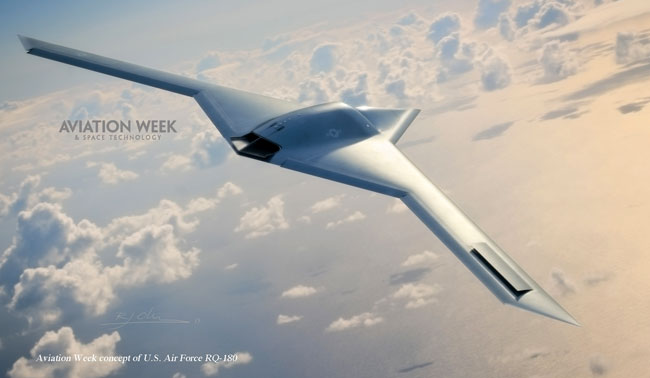
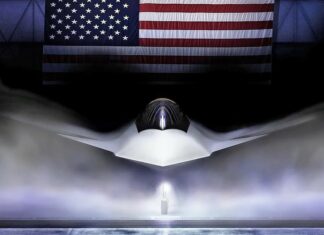
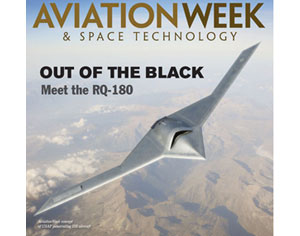
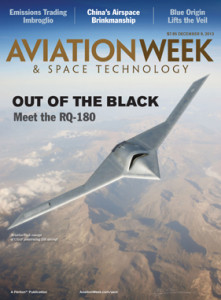
A large, classified unmanned aircraft developed by Northrop Grumman is now flying—and it demonstrates a major advance in combining stealth and aerodynamic efficiency, Aviation Week reported today. Defense and intelligence officials say the secret unmanned aerial system (UAS), designed for intelligence, surveillance and reconnaissance (ISR) missions, is scheduled to enter production for the U.S. Air Force and could be operational by 2015.
If the previous patterns for secret ISR aircraft operations are followed, the new UAV will be jointly controlled by the Air Force and the CIA, with the program managed by the Air Force’s Rapid Capabilities Office and flight operations sustained by the Air Force. This arrangement has been used for the RQ-170, which is operated by the Air Force’s 30th Reconnaissance Sqdn.
According to the Aviation Week report, the RQ-180 carries radio-frequency sensors such as active, electronically scanned array (AESA) radar and passive electronic surveillance measures. It could also be capable of electronic attack missions.
This aircraft’s design is key for the shift of Air Force ISR assets away from “permissive” environments—such as Iraq and Afghanistan, where non-stealthy Northrop grumman Global Hawk and General Atomics’ Reaper operate — and toward operations in “contested” or “denied” airspace. The new UAS underpins the Air Force’s determination to retire a version of the RQ-4B Global Hawk after 2014, despite congressional resistance. The RQ-180 eclipses the smaller, less stealthy and shorter-range RQ-170 Sentinel. Read the exclusive report on Aviation Week website.
A concept view of the Northrop Grumman RQ-180 stealth drone. Neither the Air Force nor Northrop Grumman would speak about the classified airplane. Photo: Aviation Week & Space Technology
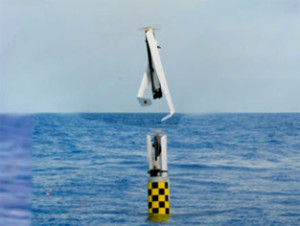
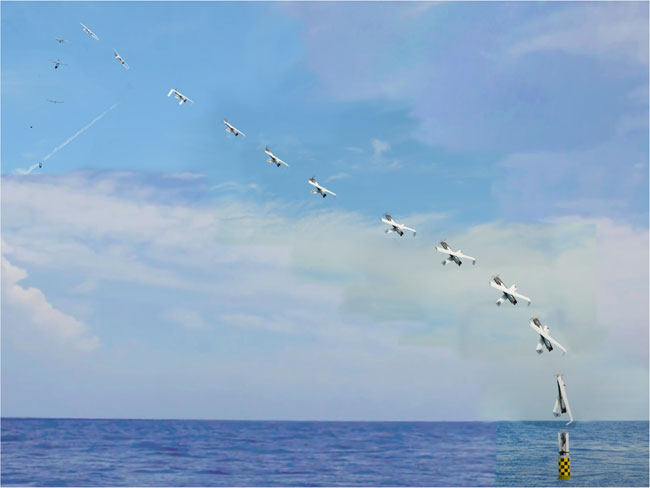
The fuel-cell powered XFC drone is launched vertically into the air, after being fired from the torpedo launch tube of the submerged USS 971 Providence. Photo: NRL
The US Navy has recently demonstrated the launch of an all-electric, fuel cell-powered, unmanned aerial system (UAS) from a submerged submarine. For the test, an electrically powered mini drone was launched from the submarine’s torpedo tube using a ‘Sea Robin’ launch vehicle system. The Sea Robin is designed to fit within an empty Tomahawk Launching Canister (TLC), which is already familiar to submarine sailors.
Once deployed from the TLC, the Sea Robin launch vehicle with integrated XFC rose to the ocean surface where it appeared as a spar buoy. Upon command of Providence Commanding Officer, the XFC then vertically launched from Sea Robin and flew a successful several hour mission demonstrating live video capabilities streamed back to Providence, surface support vessels and Norfolk before landing at the Naval Sea Systems Command Atlantic Undersea Test and Evaluation Center (AUTEC), Andros, Bahamas.
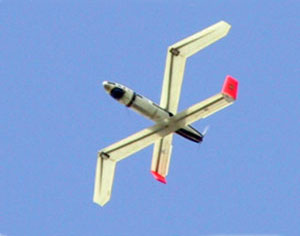
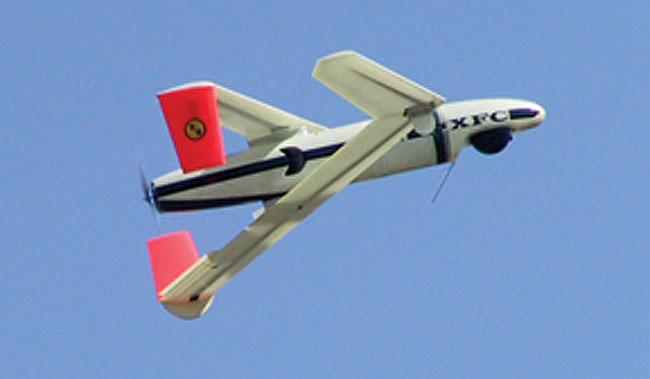
The XFC drone is designed with X-wing configuration, enabling effecting deployment from launch tubes. The drone is powered by a Protonex fuel cell.
“Developing disruptive technologies and quickly getting them into the hands of our sailors is what our SwampWorks program is all about,” said Craig A. Hughes, Acting Director of Innovation at ONR. “This demonstration really underpins ONR’s dedication and ability to address emerging fleet priorities.” The successful submerged launch of a remotely deployed UAS offers a pathway to providing mission critical intelligence, surveillance and reconnaissance (ISR) capabilities to the U.S. Navy’s submarine force.
The NRL developed XFC UAS – eXperimental Fuel Cell Unmanned Aerial System – is a fully autonomous, all electric fuel cell powered folding wing UAS with an endurance of greater than six hours. The non-hybridized power plant supports the propulsion system and payload for a flight endurance that enables relatively low cost, low altitude, ISR missions. The XFC UAS uses an electrically assisted take off system which lifts the plane vertically out of its container and therefore, enables a very small footprint launch such as from a pickup truck or small surface vessel.
From concept to fleet demonstration, this idea took less than six years to produce results at significant cost savings when compared to traditional programs often taking decades to produce results. The U.S. Naval Research Laboratory (NRL) with funding from SwampWorks at the Office of Naval Research (ONR) and the Department of Defense Rapid Reaction Technology Office (DoD/RRTO). “This six-year effort represents the best in collaboration of a Navy laboratory and industry to produce a technology that meets the needs of the special operations community,” said Dr. Warren Schultz, program developer and manager, NRL. “The creativity and resourcefulness brought to this project by a unique team of scientists and engineers represents an unprecedented paradigm shift in UAV propulsion and launch systems.”
The experiment involved various groups within the Navy, including the XFC team managed by NRL Chemistry and Tactical Electronic Warfare Divisions team includes the design-builder of the Sea Robin, Oceaneering International Inc., Hanover, Md.; the fuel cell developer Protonex Technology Corp., Southborough, Mass.; and NUWC-NPT’s Autonomous and Defensive Systems Department for Temporary Alteration (TEMPALT) and test demonstration support. The test was supported by the Los Angeles class submarine USS Providence (SSN 719) and the Naval Undersea Warfare Center-Newport Division (NUWC-NPT).
A launch sequence demonstrating the initial flight path and transition of the drone, from vertical to horizontal flight. Photo: NRL
Type 216 ‘Concept Submarine’ is likely to be the basis for Singapore’s new Type 218SG class submarine. Photo: TKMS
Singapore is likely to expand the missions and operational capabilities of its submarine force in the next decade, fielding large ocean going submarines with mission endurance of weeks, even months in the next decade. Sofar the island state operated much smaller subs, designed for operations in shallow waters and littorals closer to home. The Defense ministry of Singapore announced this week it has ordered two new ‘Type 218SG’ submarines from the German-based ThyssenKrupp Marine Systems (TKMS).
The 218SG is a customized design from ThyssenKrupp Marine Systems. TKMS did not provide much detail about the specification of the ‘Type 218’ submarine, hitherto an unknown designation, although the company mentioned the submarines would be fitted out with ‘air independent propulsion’ (AIP) from the baseline (unlike the Archers, that had to be cut apart to ‘plug in’ the AIP). The new submarine will be customized to address specific requirements of the Singapore Navy. Among those systems will be a comprehensive combat system provided by Atlas Elektronik GmbH, to be co-developed and adapted to the customer requirements by Singapore based ST Electronics.
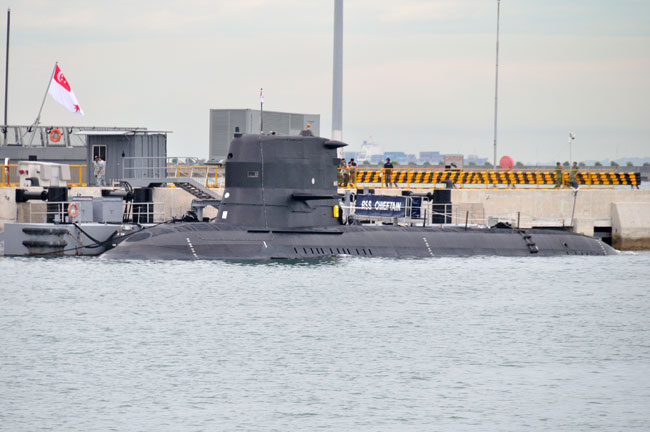
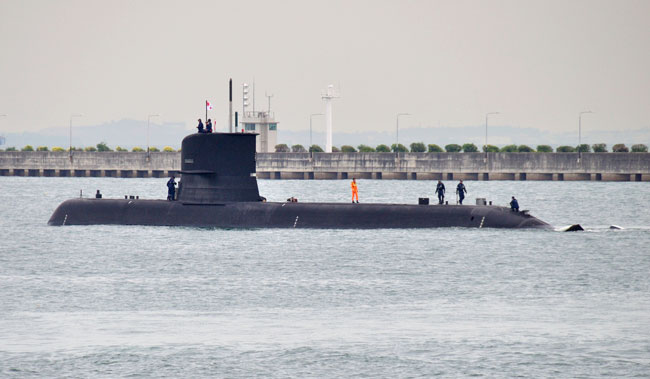
RSS Chiftain is one of four Swedish built submarines currently operated by the Singapore navy. Photo: BQ-T via Flickr.
German industry experts commenting about the deal said the project would cost about one billion Euros and is expected to take six years to complete. The first submarine will be delivered to the Singapore Navy in 2020.
Singapore is already operating two Archer Class submarines modified by the Swedish Kockums shipyard to meet the requirements of the Singapore Navy. Kockums, now a subsidiary of TKMS, built both Archer and Challenger, both designed for littoral, shallow sea operations.
The two Archer class submarines were bought from Swedish navy surplus in 2009. They were thoroughly modernized, fitted with Stirling Air Independent Propulsion engine and entered service with the Singapore navy this year. The diesel-electric powered Challenger Class vessels were built in 1967-8, and entered service with the Singapore Navy in 2001. With the introduction of new models they will be progressively retired from service. Singapore planned to buy four Archer Class submarines; it is yet unclear whether Singapore will exercise this option parallel to the acquisition of the new Type-218SGs.
What is Type 218SG?
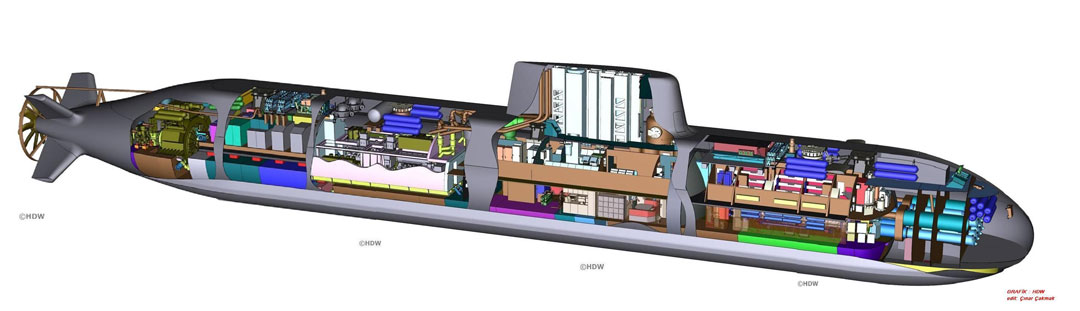
At the recent IMDEX naval expo in Singapore TKMS submarine branch Howaldtswerke-Deutsche Werft (HDW) displayed models of its newly released Type 216 ‘concept submarine’. It is likely that the Singaporean Type 218SG will be a derivative based on this new class. In the past HDW extended the capacity of former models – for example, the Type 209 grew over the years from the basic 1000 tons submerged displacement to 1500, 1700, 1900 and even 2,300 tons (submerged displacement of the Type 800 Dolphin class).
Building upon a baseline platform of 4,000 ton displacement, HDW’s Type 216 is designed to be scaled up or down, thus better matching the requirements of navies seeking large, ocean going AIP-augmented diesel-electric powered submarines – as reflected in current Australian, Canadian and Indian acquisition programs.
RSS Archer is the lead submarine of the Archer Class commissioned with the the Singapore Navy this year. Photo BQ-T via Flickr
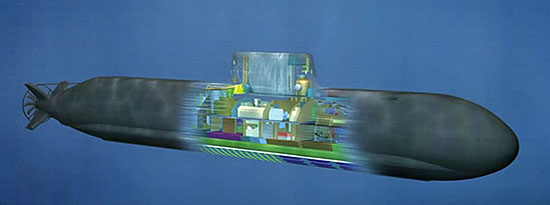
HDW’s Type 216 ‘Concept Submarine’
A cutaway showing the internal architecture of the Type 216 submarine. Drawing: HDW
To learn more about the concept submarine developed by TKMS that could provide the baseline for Singapore’s future submarine, please SUBSCRIBE.
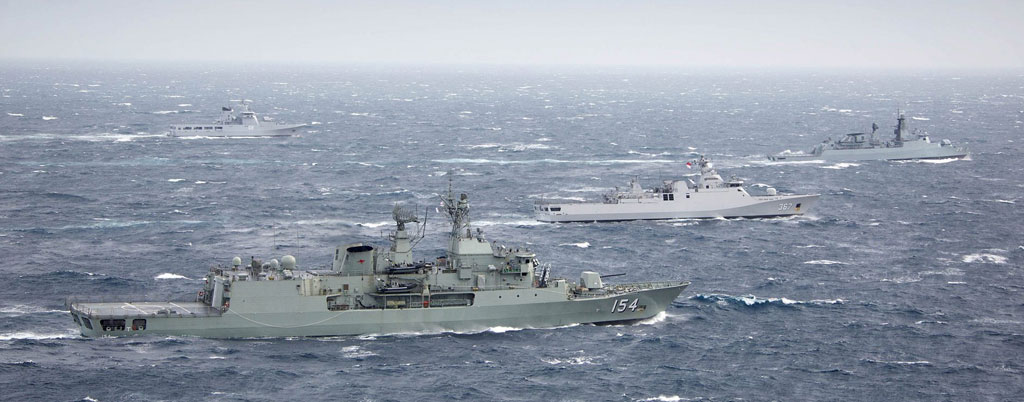
Anzac Class FFH154 HMAS Parramatta in formation with (L-R) Darussalam Class 08 RBS Darulaman, Sigma Class 367 KRI Sultan Iskandar Muda and Lekiu Class FFG29 KD Jebat, in the Eastern Australian Exercise Area for Exercise Triton Centenary. The International Fleet Review, which is a nine-day celebration from 03 October – 11 October 2013 to commemorate the arrival of Navy’s first fleet into Sydney. ABIS Sarah Williams Navy Imagery Unit – Albatross .
The Chief of the Royal Australian Navy, Vice Admiral Ray Griggs, has announced that the Navy will progressively change the color of its surface fleet to meet modern war-fighting and regional environmental conditions. The new ‘Haze Grey’ paint scheme uses reflecting pigments reducing the ship’s infrared signature. It also reduces external shipboard temperatures by up to 20 degrees Celsius, compared to the current ‘Storm Grey’ color.
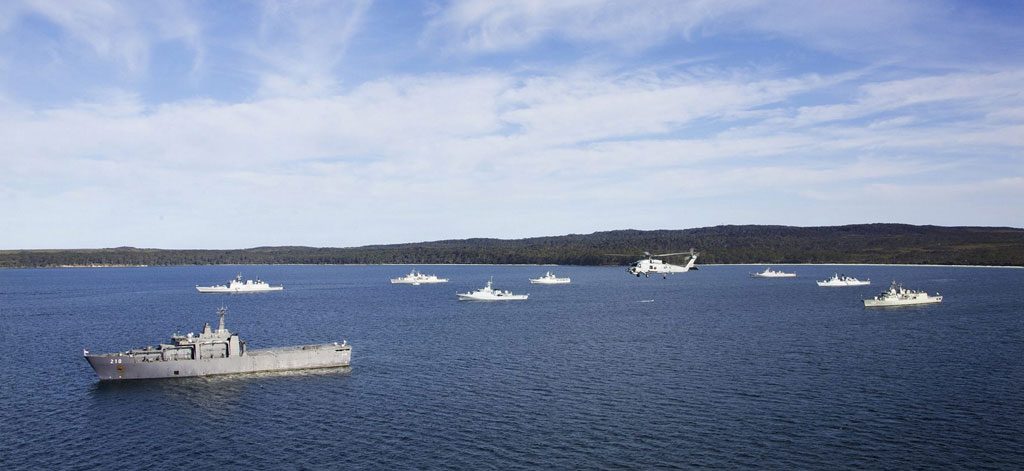
While not normally apparent to the bystander, subtle differences in the grey color schemes used by various navies are adapted to meet regional environmental conditions, such as the percentage of cloud cover or sunlight. The recent International Fleet Review with 17 international ships visibly demonstrated that color schemes do vary significantly between nations.
The Royal Australian Navy has traditionally used the Storm Grey color based upon a traditional northern hemisphere ‘Light Grey’ which was developed to deter detection under overcast skies. That paint scheme was adopted in the 1950’s. With predominant sunlit conditions faced in Australian waters and significant improvements in paint technologies, the Chief of Navy decided to introduce a more appropriate paint scheme.
The revised scheme and new paint technologies were reviewed through extensive consultation with the Defence Science and Technology Organisation (DSTO) Maritime Group. The basis for the new scheme is around the regionally compatible Haze Grey colour, utilising new technologies in polysiloxane paints with Near Infrared Reflecting Pigments (NIRR).
Research has shown that the polysiloxane paints provide improved durability and fire resistance over older polyurethane systems. The use of reflecting pigments in the Haze Grey formulation reduces external shipboard temperatures by up to 20 degrees Celsius compared to the traditional Storm Grey. This contributes to decreased demand on shipboard environmental systems.
The scheme will be implemented by a phased introduction in scheduled maintenance periods and will yield operational improvements as well as reduce costs and improve technical performance.
From left to right: Singapore Navy Endurance Class 210 RSS Endeavour, Indian Navy P-17A Class F49 INS Sahyadri, New Zealand Navy Anzac Class F111 HMNZS Te Mana, Royal Thai Navy River Class 551 HTMS Krabi, Royal Brunai Navy Darussalam Class 08 RBS Darulaman, Australian 816 Squadron’s Seahawk helicopter, Indonesian Navy Sigma Class 367 corvette KRI Sultan, Malaysian Navy Lekiu Class FFG29 KD Jebat and Royal Australian Navy Anzac Class FFH154 HMAS Parramatta, at anchor in Jervis Bay participating in a boarding exercise onboard HMNZS Te Mana, September 2013.
Chinese analysts are suggesting improvements in the People’s Liberation Army’s air surveillance and control systems have helped Beijing gain the confidence to back the ADIZ declaration. China is the last major power in the region to set up such an identification zone, as effectively policing the area requires advanced coastal and airborne radar systems and the capability to track, identify and monitor numerous flying objects simultaneously.
For years, the PLA struggled to obtain such technologies and develop its own airborne early-warning systems, since Western countries put an embargo on the sale of such equipment to Beijing, following the Tiananmen Square crackdown in 1989.
“The declaration is not only a testament to China’s awareness of the need to protect its rights in the air and at sea, it also shows the PLA’s capabilities of mastering the technology,” Xu Guangyu , a retired PLA general told the South China Morning Post.
The centerpieces of China’s new air surveillance system are the airborne early-warning and control systems developed by the PLA. China is one of only four countries – Israel, Russia and the United States being the others – to have mastered such systems.
“The PLA’s air defense systems have undergone some major upgrades over the years, achieving improvements in early-warning equipment, air reconnaissance and surveillance that enable the military to deal with all sorts of foreign flying objects entering into the Chinese air defense identification zone,” he added.
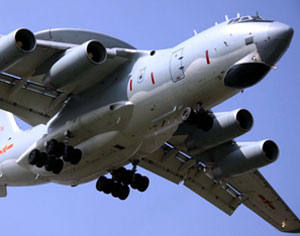
The military unveiled its KJ-200 and KJ-2000 early-warning aircraft in 2009. Beijing has refused to disclose the exact number of the airplanes in service. Earlier this month, photos of the PLA’s next generation early-warning aircraft known as KJ-500 appeared on mainland military websites. It is reportedly smaller and more agile than previous aircraft.
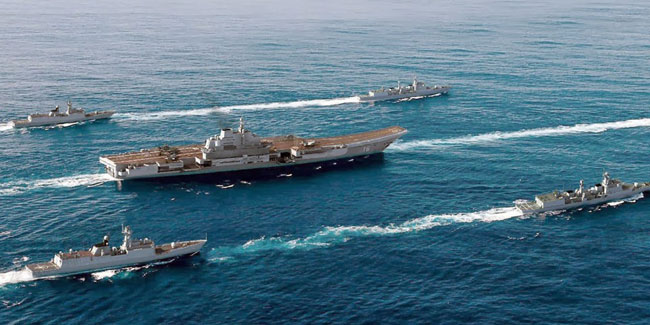
Liaoning (CV-16) escorted by four vessels sets sail to the South China Sea for another training mission.
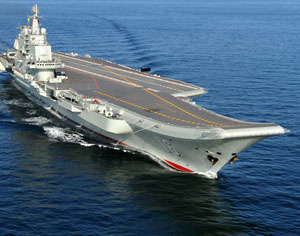
China’s sole aircraft carrier CV-16 Liaoning has departed the northern homeport of Qingdao for its first deployment in the South China Sea, where China faces another dispute with Vietnam, Taiwan and the Philippines over claims on other island groups. The official Xinhua News Agency said the cruise aims to test the Liaoning’s crew and equipment over long distances and a variety of sea conditions.
Since entering service last year, the carrier has conducted several rounds of sea trials in the relatively tranquil waters off China’s northeast coast. The Liaoning has launched and recovered the J-15 ‘Flying Shark’ jet fighters but not yet been given its full complement of aircraft.
It is the first time the carrier has embarked on a cross-sea training voyage since it was commissioned into the People’s Liberation Army navy last year, Liaoning Captain Zhang Zheng said. It is also the first time the Liaoning is deploying as part of a naval battle group – on its mission the carrier is escorted by two Type 051C missile destroyers, the Shenyang and Shijiazhuang, and two Type 054A missile frigates, the Yantai and Weifang. The vessels are also expected to be joined one of the existing oilers, supporting the carrier at sea. The Chinese Navy has yet to acquire faster and more capable replenishment ship suitable to provide the supplies to support the carrier task force.
“The Liaoning has been on training voyages in the Yellow Sea and East China Sea, which have shallow waters but numerous civilian ships passing by.” Major General Yin Zhuo, director of the Chinese Navy Information Expert Committee said a voyage of at least several weeks and up to as long as two months in heavy seas is crucial for a comprehensive test of the carrier’s equipment. The Liaoning also needs such a voyage to train its crew and to decide on an appropriate personnel deployment, he added. “We also need to see the carrier’s fighters take off and land in various types of wind and waves for testing and training.” Yin confirmed. Earlier this month, three J-15 Shark fighters took off almost at the same time from three areas on the carrier’s deck, one year after the first fighter took off successfully from the Liaoning.
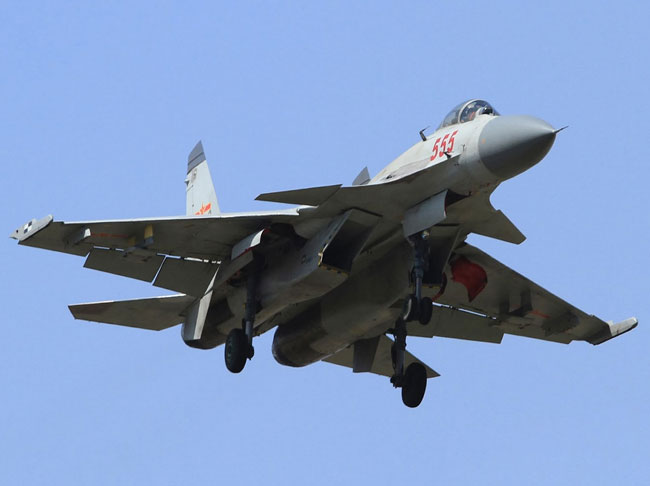
With the progress of the carrier, the People’s Liberation Army Navy (PLAN) is taking delivery of the first serial production Shenyang J-15 Flying Sharks, the first aircraft that have been delivered were recently spotted painted sea-grey color, unlike the previous models that were painted yellow, and used for the carrier qualification tests and pilot training.
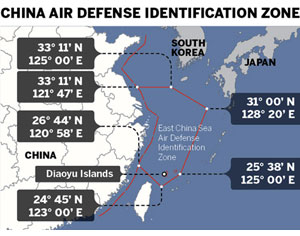
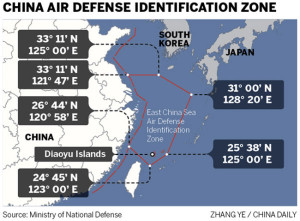
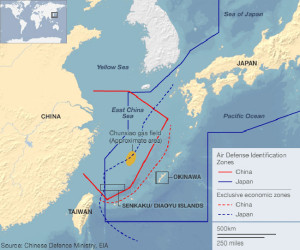
The boundaries of the new air defense identification declared by China November 23, 2013.
What began two weeks ago as a unilateral declaration of an ‘Air Defense Identification Zone’ (ADIZ) east of the Chinese mainland coast, developed into a regional conflict involving military forces and civilian airlines, struggling to claim national hegemony over disputed territories in the East and South China Seas.
On Saturday, November 23 the People’s Republic of China (PRC) Ministry of National Defense (MND) announced the creation of the East China Sea Air Defense Identification Zone. The announcement outlined the Aircraft Identification Rules for the ADIZ, which include a warning that “defensive emergency measures” would be adopted to respond to aircraft that refuse to follow the instructions. The zone overlaps the existing ADIZ of Japan, South Korea, and Taiwan. China’s ADIZ covers the disputed Senkaku / Diaoyu Islets claimed by China, Japan, and Taiwan.
To enforce its claim China launched two aerial patrols over the area on Sunday 24th, involving Tu-154 and Y-8 aircraft, prompting the Japan Self-Defense Air Force to send F-15 fighter jets to intercept them.
The Chinese announcement alarmed the neighboring countries and the US, which maintains significant air and naval presence in the area, particularly from its nearby air and naval base in Okinawa, Japan. Taiwan and South Korea have also expressed outrage over China’s decision.
South Korea is planning to follow Beijing and establish its own ADIZ in the East China Sea, Yonhap News Agency reported. government officials said Seoul will notify neighboring countries of the details this week before making a formal announcement.
“What China announced is far more provocative and dangerous because it interjects a Chinese military function in an area that the United States has pledged to defend from attack under Article V of the US-Japan Security Treaty,” explained Mike Green, senior vice president for Asia and Japan Chair at CSIS. “This is a slap at the United States now, and not just Japan.” Green added saying this is part of a larger Chinese strategy beyond territorial disputes over Senkaku. “This should be viewed as part of a Chinese effort to assert greater denial capacity and eventual pre-eminence over the First Island Chain,” Green said.
Three days later the US Air Force decided to challenge the Chinese claim, sending two unarmed B-52H bombers from their base in Guam into the South China Sea. The U.S. planes spent less than an hour in the China-claimed zone, on a mission claimed as part of an annual training exercise. China’s defense ministry spokesman Geng Yansheng confirmed the US aircraft flew south and north along the eastern border of the East China Sea Air Defense Identification Zone from 11:00 a.m. to 1:22 p.m. Tuesday, about 200 km to the east of the Diaoyu Islands. Geng said the Chinese army monitored the entire process, carried out identification in a timely manner, and ascertained the type of aircraft. US sources said the bombers did not establish any contact with the Chinese authorities on that flight.
“We need to stress that China will identify every aircraft flying in the air defense identification zone according to the country’s announcement of aircraft identification rules for the air defense identification zone,” Geng said. “China is capable of exercising effective control over this airspace,” he added.
Japan followed with more determined challenge, directing its national airlines to ignore the Chinese authorities as their planes passed through the area. Tokyo also pledged the US civil carriers to follow suit; the US Government decided not to risk civil aviation traffic, directed carriers to comply with the Chinese demand. The state department said the US government “generally expects that US carriers operating internationally will operate consistent with Notams [Notices to Airmen] issued by foreign countries”, adding that this directive “does not indicate U.S. government acceptance of China’s requirements for operating in the newly declared ADIZ.”
A week later the South Korea’s Navy conducted air and sea drills near Ieodo Rock. The task force included an Aegis destroyer and two P-3C maritime patrol aircraft. The P-3s crossed into Japan’s ADIZ with the prior approval of Tokyo while the destroyer anchored near Leodo. This fact suggests that South Korea and Japan are boosting their cooperation in the wake of China unilaterally declaring the East China Sea ADIZ two weekends ago.
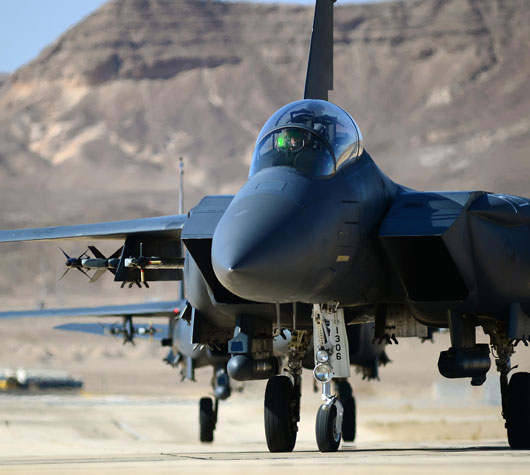
US Air Force F-15E from 492 TFS at Lakenheath, UK operating from IAF Ouvda as part of the Blue Flag exercise in Israel
The Israel Air & Space Force (IAF) is conducting a first of its kind multinational exercise at the southern training base of Ouvda this week, where some 60 aircraft from four nations are taking part in realistic air combat training, practicing how air forces from different nations can cooperate in a coalition, fighting for a common goal under one command.
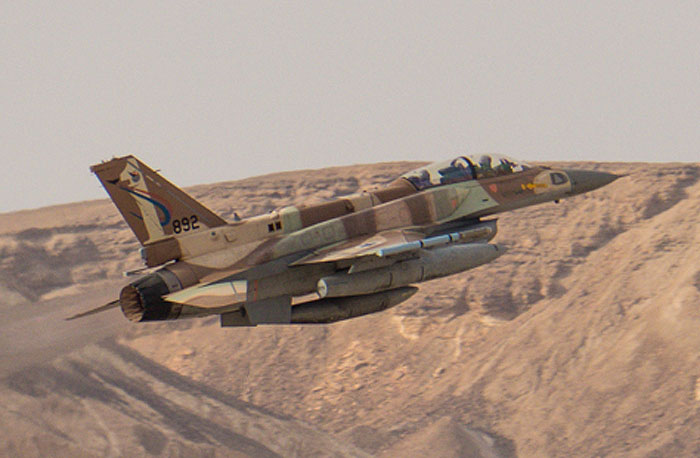
Israel Air Force F-16I Soufa taking off from Ouvda on exercise Blue Flag 2013. Photo: Noam Eshel
The IAF has deployed five squadrons to the base, to practice operations in a coalition environment. For the foreign pilots this exercise provides an opportunity to conduct an intensive training in unfamiliar conditions, operate cooperatively as part of multinational coalition contingency, pursuing common goals, responding to evolving operational challenges.
The first Blue Flag is hosting air forces from four nations – the US, Italian, Hellenic and Israel Air Forces. “We look forward to host more air forces in the next ‘Blue Flag’ that, as a biannual event, is scheduled for 2015’. The IAF official said.
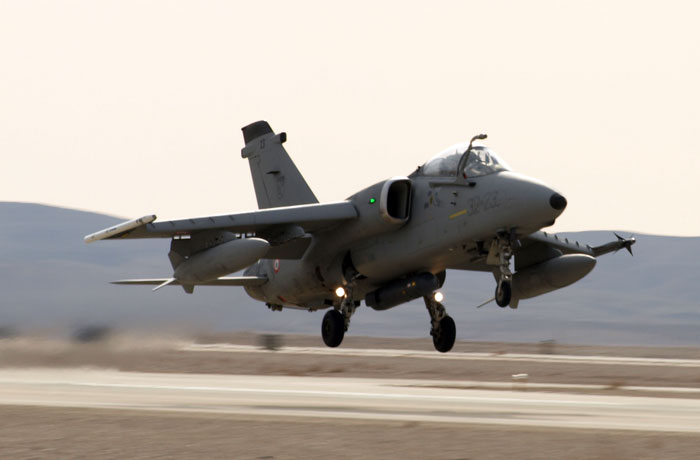
The exercise spanning over two weeks began with a weeklong orientation for the visiting units, as eight US F-15Es from the 492ns Tactical Fighter Squadron from Lakenheath, UK, four Hellenic Air Force F-16Es from the Hellenic Air Force 340 Squadron (“Asteri”) and Italian Tornado and AMX strike fighters. A detachment from the Polish Air Force was also scheduled to participate, but the visit was cancelled few weeks ago over budgetary restrictions.
According to a senior IAF official, the orientation provided unique opportunities for the foreign aircrews to train over unfamiliar terrain. Another benefit flying over the isolated IAF training ranges located in the southern Negev desert is the ability to fly low-level missions, use laser-targeting pods and live munitions on some of the sorties; such capabilities are not common with the crowded European airspace. The Blue Forces are pitted against realistic threat represented by the IAF aggressor squadron, air defense and electronic threat assets operated throughout the southern Negev desert, supporting regular IAF training.
Italian air Force AMX fighter aircraft taking part in exercise Blue Flag 2013 in Israel. November 2013. Photo: Noam Eshel
The multinational session of the exercise began on the second week, as the visiting air forces along with part of the Israeli units grouped under the ‘Blue Force’ into two teams, flying daily missions against the enemy force represented by the remaining Israeli force. The “Red Dragon” aggressor squadron, along with other IAF units, playing the ‘Red Force’.
During the exercise, a realistic war scenario was created which employed a friendly, multinational force (Blue Force) against an enemy aggressor force (Red Force). A simulated threat environment was created, which caused the partnering forces to use careful integration and critical analysis to engage the enemy and survive. The exercise included air-to-air and air-to-surface missions.
The Red Force invaded friendly airspace, simulating opposing air forces’ tactics, and attempted to engage specific targets and all approaching aircraft. Their actions called for Blue Force to take action and attempt to eliminate the threat. The combined force merged its tactics, techniques, and procedures that effectively terminated attacks by the adversary Red Forces.
“We successfully completed the biggest multinational exercise in Israel’s history,” said a senior Israeli air force source. “The exercise required many preparations by air and ground crews, long before the partnering air forces landed in Israel. This has helped Israel improve its general air defense capabilities while learning together and cooperating with global allies.”
All aircraft – blue and red forces, carry Air Combat Maneuvering Instrumentation (ACMI) pods, configured to match air/air missiles wiring on all NATO combat aircraft, as well as Israel’s fighter jets. These ACMI pods enable all participants to record all flight conditions, combat maneuvers and actions, for post mission a thorough debriefing. Most jet fighters are also carrying targeting pods and some also employ electronic countermeasures (ECM), to simulate employment of countermeasures against air defense threats.
The following video, aired by the Hellenic Air Force shows a ‘Blue Flag’ mission over southern Israel, as viewed from the cockpit of one of its F-16s. Many thanks for David Cenciotti, the Aviationist blog and the Hellenic Air Force for posting it first.
“The scenario we play here is not typical to a specific Middle Eastern country, but a generic scenario, where an air force is pitted against typical threats such as enemy aircraft in the air and on the ground, air defenses, ground targets and terror threats.“ Brig General N. said. He added that ‘Blue Flag’ exercise is similar to a certain extent to the famous ‘Red Flag’ exercise in the US, but there are certain differences here, particularly for the employment of targeting pods and ECM, contributing to more realistic training for the pilots.
The massive exercise required special preparations by the IAF. The entire airspace south of Tel-Aviv is closed to clear the sky for the massive operation taking place each morning and each afternoon. Throughout the week, about 50 – 60 aircraft are deployed on massive air raids twice a day – in the morning and afternoon. The entire group would take off in quick succession, with jet fighters streaking through the clear sky with roaring afterburners. The complex operation is carefully orchestrated, distributing the fighters over multiple taxiways and runways, taking off to different directions and altitudes, thus safely separating air traffic. The location of Ouvda at the southernmost tip of the Negev desert, close to the Egyptian and Jordanian borders, leaves little room for error. To ensure that the local and foreign pilots follow these restrictions, each pilot receives taxi and takeoff instructions charted on a ‘dance card’ clearly depicting its activities on the ground and in the formation.
Senior commanders from each of the air forces are rotated as mission commanders, given the mission objectives for the next raid, they also get intelligence reports, conduct threat assessment, carry out mission planning, command the operation and conduct post mission debriefing. Debriefing is shared by all teams, thus elevating the mutual learning and cooperation, using the training bases’ mission debriefing facilities.
The IAF embarked on multinational training and international cooperation 15 years ago. Since those first steps in 1998, the IAF embraced cooperation with a number of air forces, sending fighter jets and pilots across the Atlantic Ocean, to exercise such as Red Flag in Nevada, and Maple Flag in Canada. The IAF was scheduled to participate in Red Flag this year, but that plan was shelved due to budget cuts in Israel and the USA. IAF officials are hopeful the Red Flag participation could be resumed in the near future. “Multinational training are capturing a growing part of our annual work plan, and the current ‘Blue Flag’ exercise is the first time we are embarking on a multinational exercise of such a scale” a senior IAF officer told Aviation Week.
Other training exercises were conducted in Sardinia, Italy, Greece and Romania. In past years, when relations with Turkey were good, the IAF was frequently invited to train over Turkey and also participated in the AnatolianFlag exercise in Incirlik. In fact, foreign sources often referred to the ‘Turkish Route’ as one of the more likely options Israel might use for a hypothetical strike against Iranian nuclear facilities.
However, in recent years, with the deterioration of relations between Ankara and Jerusalem, the IAF is banned from flying over Turkey or taking part in Turkish bound exercises. With that, the hypothetical ‘Turkish Route’ also dissolved.
Since the cessation of training in Turkey the IAF has increased its international cooperation, adding more countries to the list. In 2008 the IAF embarked on training missions to the Czech Republic, followed by missions to Poland, Italy, Greece, Bulgaria and Romania, where five Israeli crew members were killed when a CH-53 helicopter was lost on a training mission in the Carpathian mountain range.
In recent years the IAF has also embarked on long-range training missions to foreign countries, with IAF jet fighters fly to Greece or Bulgaria, and return back to Israel on the same mission. Such missions realistically represent long range strikes, with all the complex support elements, dealing with different weather systems, and flying over unfamiliar terrain.
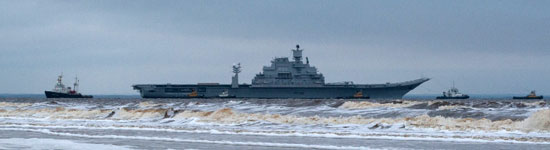
Vikramaditya at anchor at the port of Murmansk, December 2, 2013. Photo: Sevmash
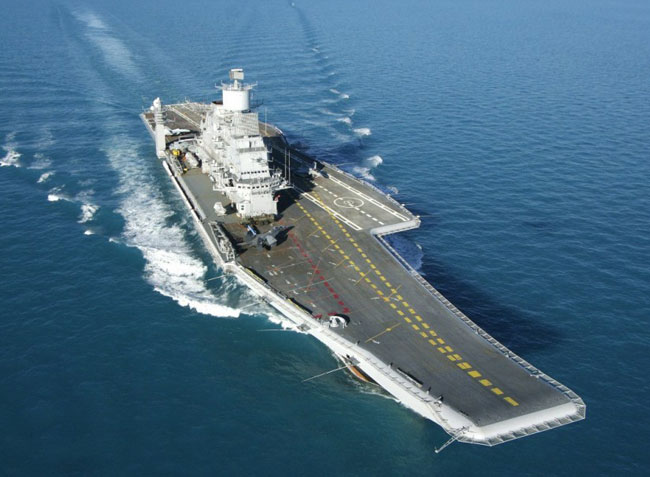
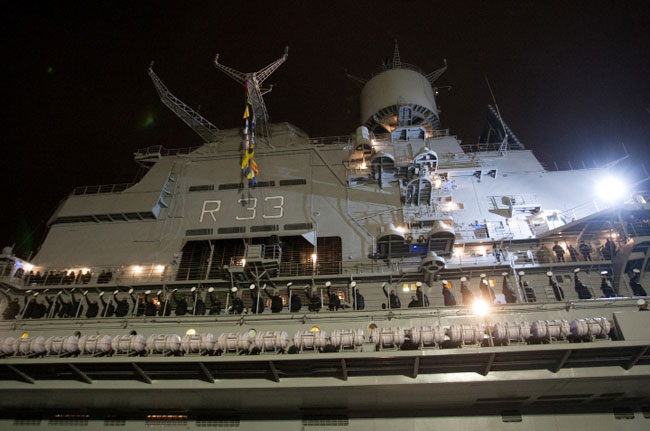
India’s Vikramaditya aircraft carrier left the Sevmash shipyard in northern Russia, embarking on a two-month voyage to its permanent base in the Karwar naval base near Goa in southwestern India. The aircraft carrier, which was handed over to the Indian navy on November 16, left Sevmash 26 November and anchored at Murmansk December 2nd to load supplies and prepare for the two month voyage home. On its way Vikramaditya will be accompanied by an Indian tanker and a frigate on the first leg of the voyage, which is expected to take about two months. Upon its arrival in India the carrier will be refitted with additional systems, including air defense missiles and electronic systems which could not be installed in Russia.
According to Sevmash, there are some 180 Russian specialists on board the warship who are tasked with monitoring the vessel’s overall performance and the on-site training of the Indian crew, as well as providing assistance in fixing any possible glitches in the operation of the ship’s systems, including air conditioning. Part of the Russian personnel will stay on the Vikramaditya after its arrival in India in order to provide maintenance services under a one-year warranty agreement, followed by a servicing contract for a period of up to 40 years, the Sevmash said.
INS Vikramaditya at sea
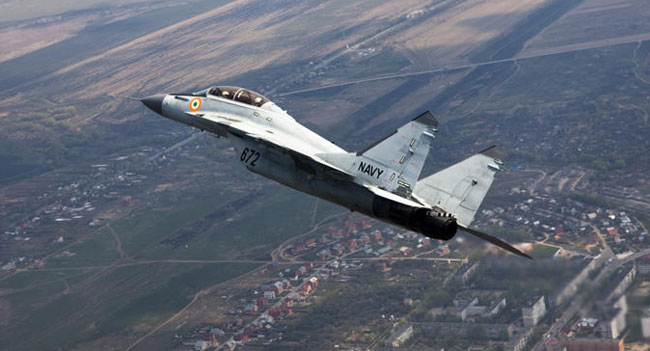
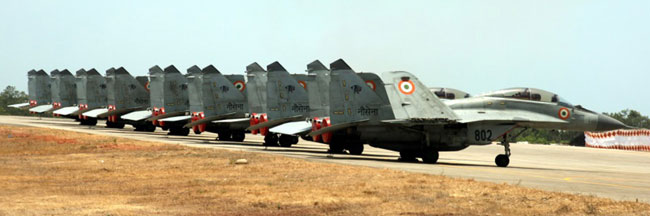
The Indian Navy has already taken delivery of 16 MiG-29K/KUB naval fighter aircraft destined for the carrier, which were completed before their parent ship was ready for sea. The first MiG-29K squadron INAS 303 ‘Black Panthers’ commissioned at INS Hansa near Goa in May 2013 will support the Vikramaditya, to be based at the nearby Karwar naval base, on the western seaboard. A second squadron to be based at the base INS Dega near the east coast port city Visakhapatnam, where the Navy plans to set up the base of aircraft carrier INS Vikrant, expected to be inducted into the Navy by 2017. The Navy intends to operate 45 such aircraft on all new flat deck carriers.
Indian sailors and Russian support personnel on the deck of the waving goodbye before sailing on the two month voyage to India. Photo: Sevmash shipyard
The MiG-29K is a naval variant derived from the MiG-29. It is being operated by the Russian and Indian air forces. The “K” suffix in the MiG-29K stands for “Korabelny,” meaning ship-borne in Russian. The MiG-29K (single seater) and KUB tandem two-seat operational trainer variant have been built for carriers that are not equipped with catapults (short-takeoff-but-arrested-recovery – STOBAR). On such vessels the take-off is performed using full engine thrust, accelerating the aircraft on a short run, assisted by a “ski-jump” shaped deck. Landing is performed using conventional tail hooks and arrester wires.
Indian Navy MiG-29KUBThe Indian Navy has already taken delivery of 16 of the carrier’s MiG-29K/KUB naval fighter aircraft, which were completed before their parent ship was ready for sea. The first MiG-29K squadron INAS 303 ‘Black Panthers’ commissioned at INS Hansa near Goa in May 2013 will support the Vikramaditya, to be based at the nearby Karwar naval base, on the western seaboard. Indian Navy
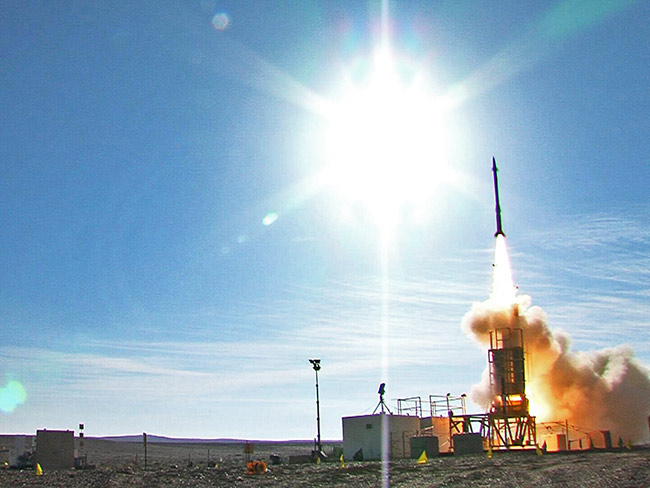
David's Sling System Stunner Missile during a intercept test at the Israeli Negev desert. Photo: U.S. MDA
The Israel Missile Defense Organization (IMDO) and the U.S. Missile Defense Agency (MDA) completed a successful intercept test of the David’s Sling Weapon System (DSWS) against a short-range ballistic missile today, Wednesday, November 20, 2013.
This is the second intercept test of the Stunner interceptor for the DSWS, The intercept test was conducted at a test range in southern Israel.
The first intercept test this year was performed in February, when RAFAEL validated the maturity of the David’s Sling system, scoring a direct hit on a rocket simulating a live medium range rocket.
David’s Sling System Stunner Missile intercept target during inaugural flight test. Photo: U.S. Missile Defense Agency
Today, at 7:30, the target missile was launched, IAI-Elta’s Multi Mission Radar (MMR) successfully detected and tracked the target and transferred target flight information to the ‘Golden Almond’ BMC (battle management control system), developed by Elisra-Elbit Systems. The Stunner interceptor successfully performed its planned trajectory and destroyed the target missile.
David’s Sling is designed as an additional layer of defense against ballistic missiles, to add interception opportunities to the joint U.S.-Israel Arrow Weapon System and to improve the active defense architecture of the State of Israel against missile threats.
The successful test is a major milestone in the development of the David’s Sling Weapon System and provides confidence in future Israeli capabilities to defeat the developing ballistic missile threat.
RAFAEL is the prime contractor and development authority with Raytheon the leading subcontractor and US program lead.
More testing, leading toward operational fielding by the year 2015 will follow today’s intercept.
Thales has unveiled its new integrated system for large‐scale event management and crisis management at Milipol 2013. Designed for civil security forces, this solution provides for effective collaboration between deployed units and command centers securing such events.
The authorities and forces responsible for public safety and security must contend with increasingly frequent and wide‐ranging incidents, from crime and accidents to natural disasters and crisis situations. They also need to process and analyze an ever‐growing volume of information and intelligence data gathered on the ground. These trends present a new set of challenges for security professionals. At command level, the risk is information overload. For units, response times can be slower, due to an inability to sort and analyse information.
To meet this need for increased efficiency, Thales has developed a new solution incorporating the key conventional functions — situation awareness, management of command information and crisis management system resources — combined with new modules, such as advanced decision support and asset coordination.
The system enables operations managers to gain a clear picture of forces deployed on the ground, via a touchscreen tablet. Coordination officers at a command centre can monitor overall operations as they evolve, using a screen wall. “This ability to disseminate the right information, calibrated to the needs of each user, according to their level of responsibility, is a distinctive feature of our new solution.” a Thales official said.
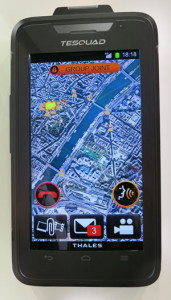
TeSquad – a new LTE mission Critical smartphone from Thales.
The system uses smartphones and tablets to facilitate mobile users’ access to multimedia data, including still and video imagery. In fact, users operating standard devices can have access to secure applications, tailored to the needs field agents. One such application is the ‘Field Observer’, which instantly enriches situation updates with georeferenced still and video imagery. A mobile component developed in partnership with Renault Trucks Défense offers additional functions, such as ‘last mile’ reconnaissance imagery, utilizing a micro‐UAV.
Other tools based around communities of interest, enables information sharing and a coordinated vision by different levels of command, from planning to debriefing. Such solutions are improving operational efficiency, synchronizing the information viewed from the highest decision levels of government through to field agents deployed on the scene. As a result, the authorities have a real‐time picture of the situation to support a proactive and timely resolution. This integrated and collaborative solution can be deployed at a national or regional operations centre or on‐site in a mobile command vehicle.
Thales has drawn on its experience with public safety and security, such as the Ciudad Segura (secure city) project in Mexico, and the the BDSP public security database for the Gendarmerie Nationale in France, to develop the new system.
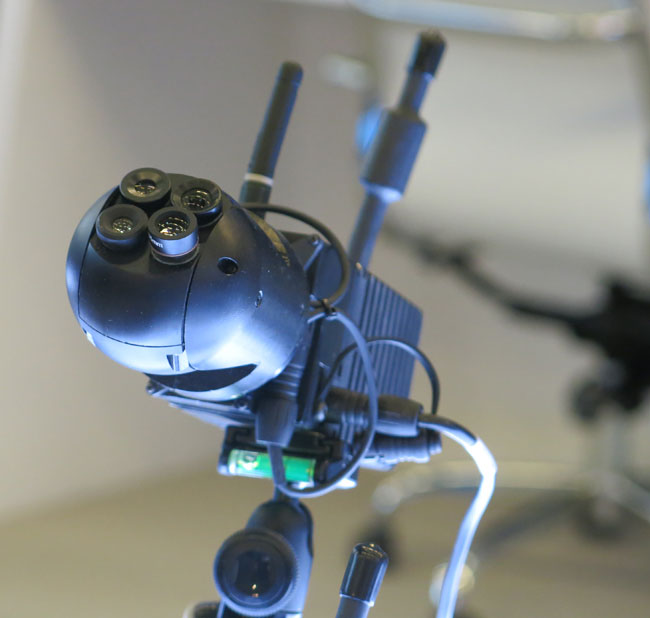
Cobhams' unattended ground sensor comprising multiple video cameras and communications link.
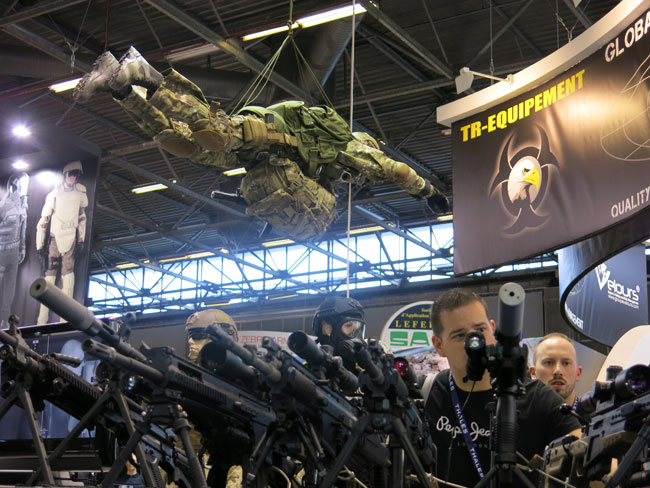
A brief photo-report highlighting some of the new devices on display at the Milipol 2013 exhibition. All photos: Tamir Eshel, Defense-Update.
Milipol 2013 provided an opportunity to address some of the trends highlighting the interests in current offerings.
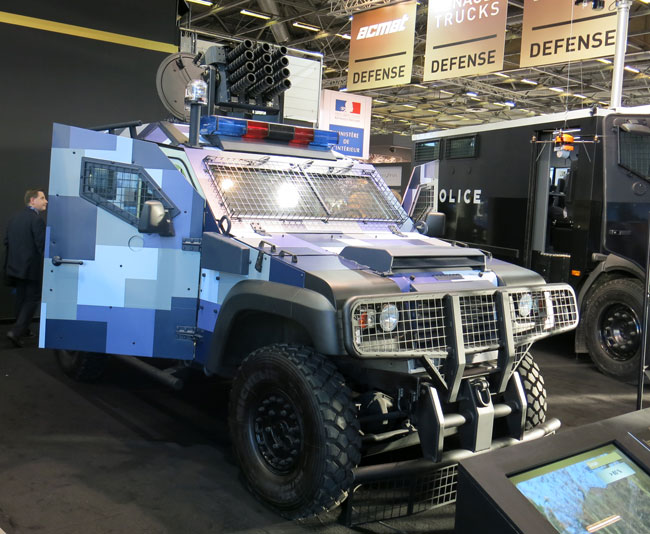
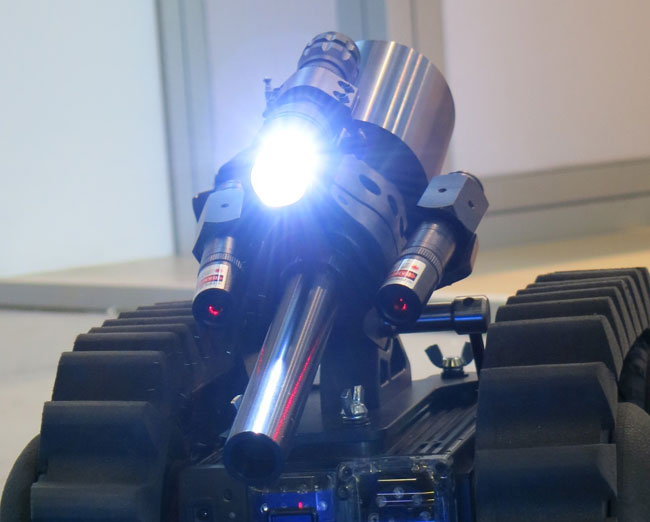
Non lethal weapons are now being introduced onto various weapon stations, one is seen here on a PVP vehicle.
Beretta unveils the new I-Protect System
A family of security vehicles lined up at Milipol’s main halls
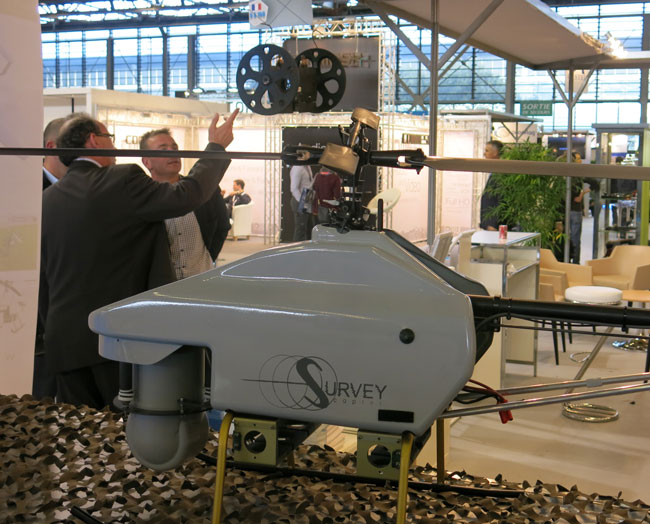
The French company Surveycopter displayed several unmanned systems at Milipol, one of them is this compact helicopter carrying a lightweight EO payload developed by the company. The other was a new hovering platform designed for operations indoors.
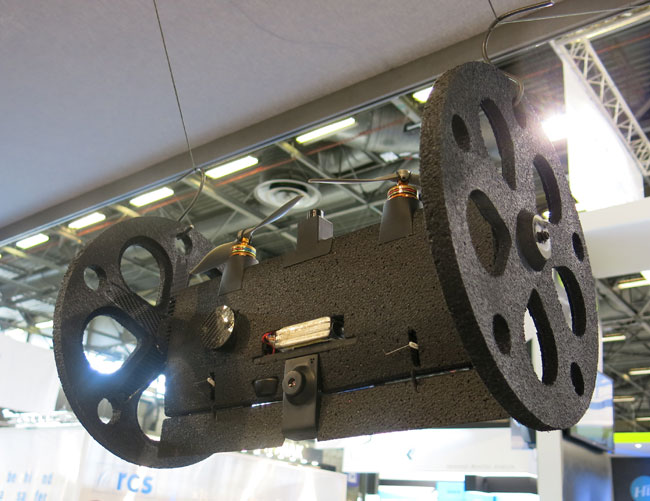
Dubbed ‘Roll & Fly’, this micro-UAV was designed by Surveycopter for indoor surveillance. It can fly on a mission 15 minute long, carrying a 0.5 kg payload.
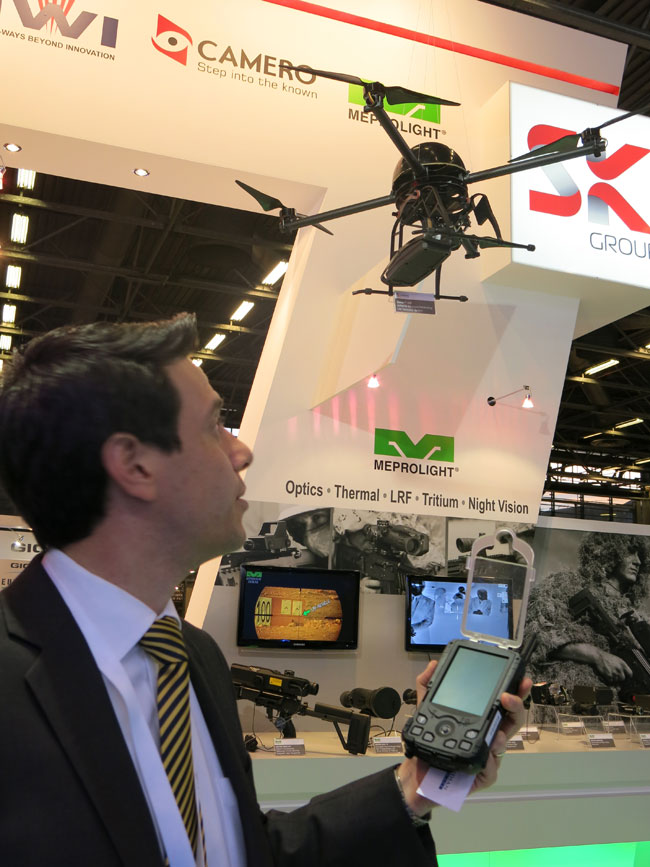
Camero unveiled at Milipol 2013 a new variant of the Xaver 100 wall penetrating radar, configured as a UAV payload. The new payload can penetrate ceiling, providing synthesized view of occupants or objects inside the room. Named Xaver Autonomous Imaging Drone AID 100, the new sensor can be carried by standard quadcopters, controlled by remove via Xaver AID 400 ground station. Covering an arc of 120 degrees, the payload penetrates up to 20 meter into the room below. The payload weighs 3.8 kg.
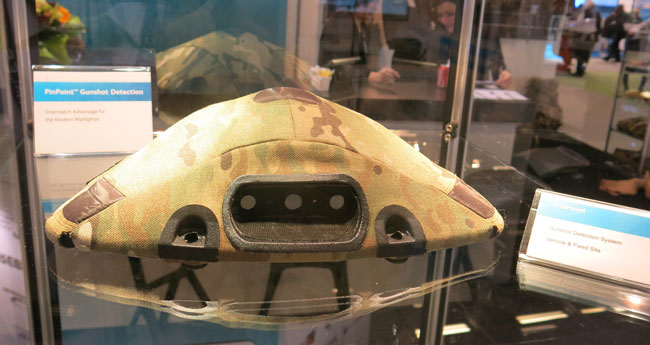
Cobham demonstrated here a complete range of ground sensors, including gunshot detector and various EO cameras. (below)
Cobhams’ unattended ground sensor comprising multiple video cameras and communications link.
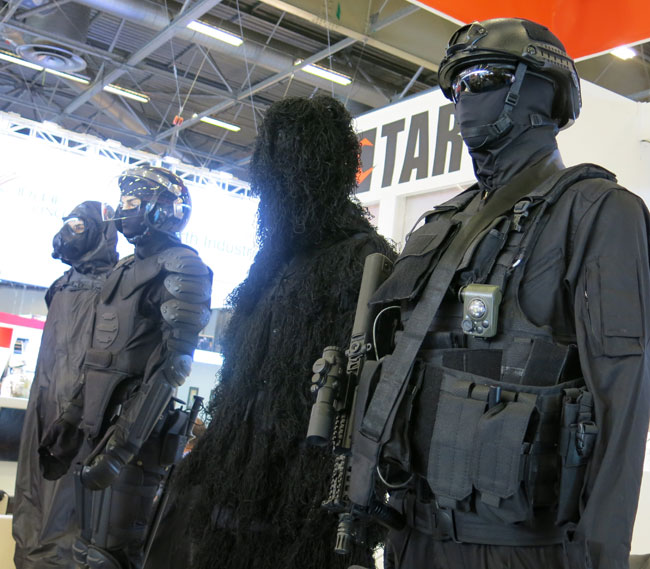
A camouflages sniper suite and special operations operatives’ full combat suit displayed at TAR Ideal booth at Milipol.
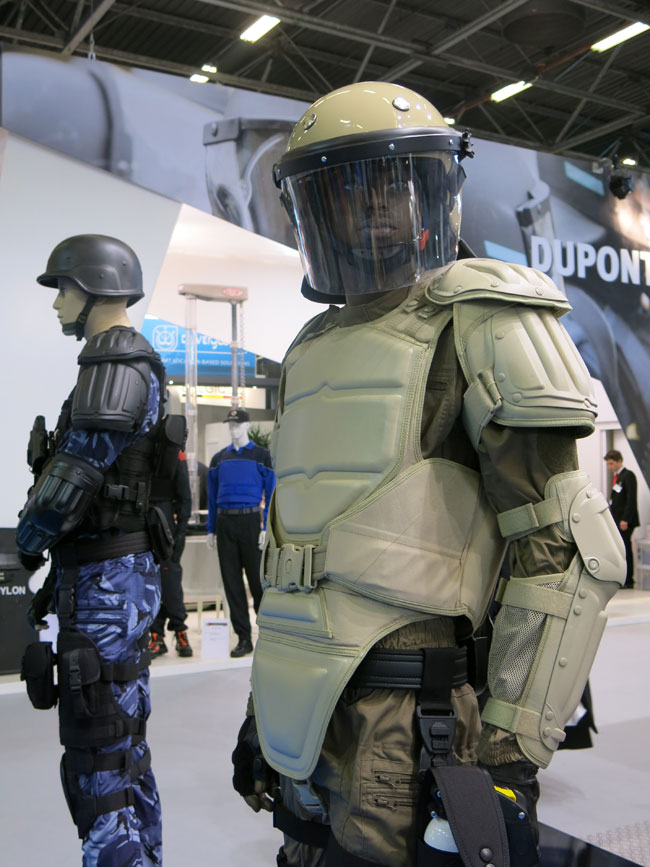
A new line of personal protection kits emphasizing design, low weight and improved ballistic tolerance.A close up view of the Eyedrive C-EOD payload
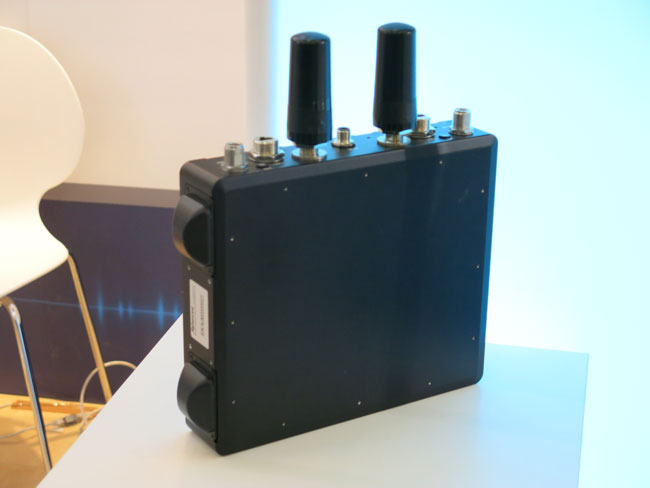
Netline from Israel introduced here a number of systems from its newly launched interceptor line, in this photo, the cellular interceptor is displayed. The company also provided the cellular interceptor and Wi-Fi interceptors, enabling government agencies and military users to tap information from wireless or wireline systems.
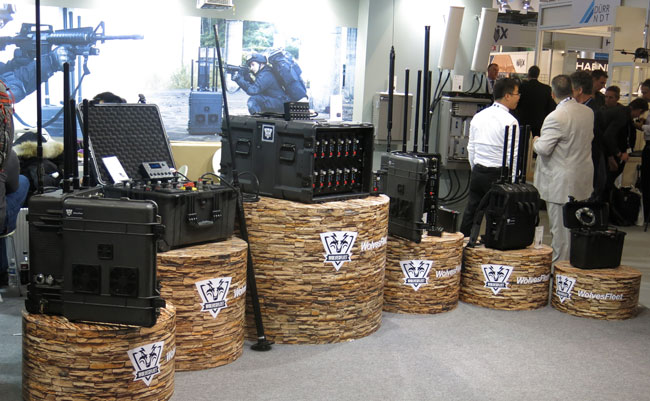
Wolffleet from China introduced here a wide range of RF jammers, from the largest, powerful systems for VIP vehicle protection, to the latest man-portable multi-band jammer.
Michael Foreman, Vice President of Government and International Sales at PointBlank demonstrates the new material that enabled PointBlank to produce a ballistic protecting material 25 percent stronger, lighter and thinner than ever before. Photo: Tamir Eshel, Defense-Update
Dyneema unveiled today the Dyneema Force Multiplier Technology at Milipol 2013 in Paris. Photo: Tamir Eshel, Defense-Update.
DSM Dyneema, the manufacturer of ultra high molecular weight polyethylene (UHMwPE) fiber, (branded as Dyneema) launched today at Milipol 2013 the ‘Dyneema Force Multiplier Technology’ – the company’s newest product development program. This new technology combines breakthroughs in polymer science, next-generation fiber technology and unique uni-directional engineering to deliver up to 25 percent higher ballistic protection while reducing weight by up to 20 percent. The new products based on Dyneema Force Multiplier Technology can be used to design personal protection (vests, inserts, helmets, soft armor applications and extremity protection) and vehicle armor. All Dyneema Force Multiplier Technology products are manufactured at the DSM Dyneema facility in Greenville, N.C.
“We have eliminated the traditional compromise between higher protection and lower weight, enabling armor manufacturers to meet tomorrow’s threats and design challenges,” said Shitij Chabba, Global Segment Director, Life Protection, DSM Dyneema.
Michael Foreman, Vice President of Government and International Sales at PointBlank demonstrates the new material that enabled PointBlank to produce a ballistic protecting material 25 percent stronger, lighter and thinner than ever before. Photo: Tamir Eshel, Defense-Update
Three companies joined the Dutch company demonstrating applications of the new technology – Rheinmetall Ballistic Protection GmbH, Point Blank Enterprises and TenCate Advanced Armour. These initial applications demonstrate the advantages of the new material, in reducing weight, improving flexibility and reducing thickness of protective used for both soft and hard ballistic protection.
DSM Dyneema views adoption of next-generation material technologies as critical in addressing major law enforcement and military trends that are intensifying the need to reduce the weight of protective gear. Dyneema Force Multiplier Technology delivers benefits of significantly lighter weight – enhanced comfort and flexibility for people and greater range, agility and capacity for vehicles – while providing extreme ballistic performance.
DuPont Protection Technologies, the maker of the famous Kevlar fiber, has introduced two new Kevlar products at Milipol 2013 – a new generation multi-threat solution designed for greater comfort to the ballistic vest wearer, the AS450X is designed to provide anti-stab, anti-spike, and combined ballistic protection in armor applications. It is designed to offer improved mobility and driving comfort, particularly when donned in patrol vehicles. The lightweight laminate film structure helps enhance flexibility and can cover a greater surface area.
“We focused on the variety of risks law enforce,net officers face at all times, and with these products we are addressing those threats” said Jeroen B. Jacobs, Global Marketing Director at DuPont. According to Jacobs; Handgun threats pose only 15 percent of the threat to law enforcement agents, after knife stabbing (35 percent) and blunt trauma (50 percent).
Difficult climate conditions also add to the challenges, noted Jacobs. DuPont has also introduced the XPS104 fabric, offering enhanced bullet stopping power and reduced back face deformation even in hot climates. Based on market research revealing that a water repellent ballistic solution is required, the new product improves the ballistic performance and comfort even in wet conditions. Jacobs added.
Lockheed Martin Skunk Works® and XTEND have achieved a major milestone in JADC2 by integrating the XOS operating system with the MDCX™ autonomy platform. This technical breakthrough enables a single operator to simultaneously command multiple drone classes, eliminating the friction of mission handoffs. From "marsupial" drone deployments to operating in GPS-denied environments, explore how this collaboration is abbreviating the data-to-decision timeline and redefining autonomous mission execution.
As traditional defense primes face mounting competition from agile “neoprimes” such as Anduril, Palantir and Helsing, the balance of innovation is shifting toward software-defined warfare and scalable, dual-use technologies, while global industry consolidation—marked by Boeing’s integration of Spirit AeroSystems and other strategic mergers—signals an intensified race to secure control over the defense technology value chain. Our Defense-Tech weekly report highlights these trends.
In early October 2025, a coordinated wave of unmanned aerial system (UAS) incursions—widely attributed to Russia—targeted critical infrastructure across at least ten European nations. The unprecedented campaign exposed the fragility of Europe’s air defenses...
Executive Summary
The past week (September 18-25, 2025) represents an inflection point where strategic defense concepts have transitioned from doctrine to tangible reality. An analysis of global events reveals four primary, interconnected trends shaping an...
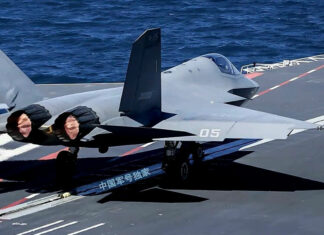
At the 2025 Air, Space & Cyber Conference, U.S. Air Force and Space Force leaders unveiled major updates on next-generation fighters, bombers, unmanned systems, and space initiatives, highlighting both rapid innovation and critical readiness challenges as the services race to outpace global competitors. A short version is available here, with a more detailed version for subscribers.
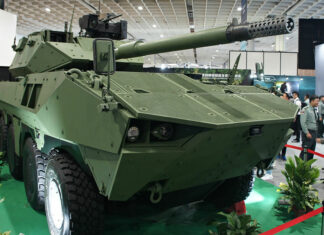
The Taipei Aerospace & Defense Technology Exhibition (TADTE) 2025 crystallized around four dominant strategic themes that collectively illustrate Taiwan's comprehensive approach to defense modernization amid escalating regional tensions. Based on a detailed report by Pleronix (available upon request). Includes a Podcast discussion on TADTE 2025's highlighting Taiwan's four strategic themes beyond the post's coverage.
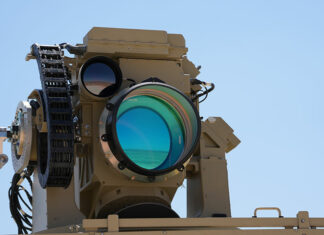
Israel’s Iron Beam 450 high-power laser system has completed final testing, marking a major leap in air defense. Developed by Rafael, it offers precise, cost-effective interception of rockets, UAVs, and mortars, and is set for IDF deployment by 2025.


 A large, classified unmanned aircraft developed by Northrop Grumman is now flying—and it demonstrates a major advance in combining stealth and aerodynamic efficiency, Aviation Week reported today. Defense and intelligence officials say the secret unmanned aerial system (UAS), designed for intelligence, surveillance and reconnaissance (ISR) missions, is scheduled to enter production for the U.S. Air Force and could be operational by 2015.