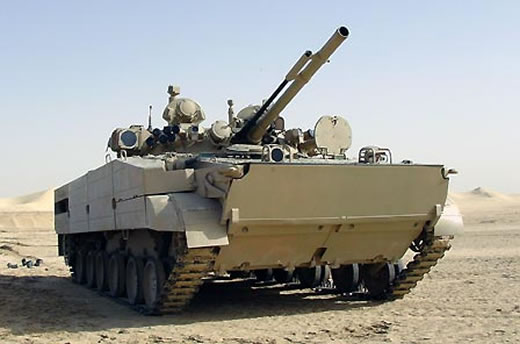
The UAE is upgrading 135 BMP-3 amphibious infantry carriers under a 74 million contract awarded through Russia's arme exporter Rosoboronexport.
The Indian Army has been using Russian made BMP-2 armored infantry combat vehicle (ICV) for many years, but since 1990s New Delhi is determined to build its own Future ICV (FICV). Two programs are in development – a weapon carrier (tank destroyer) called NAMICA and an AIFV technology demonstrator known as ‘Abhai’. However both programs are at limbo, facing a myriad of technical challenges and rejections from the services they are designed to serve.
This delay has opened an opportunity for BMP-3 to India, as a substitute or long term ‘stop gap’ positioned to replace the rapidly obsoleting BMP-2. If India decides to cancel its long overdue FICV, the BMP-3 could eventually take its place as India’s future ICV.
The Indian government is expected to fund 80% of the planned development cost but, although FICV is already four years in the making, no progress has been reported yet. The FICV program is projected to cost around $10 Billion for 2,600 vehicles.
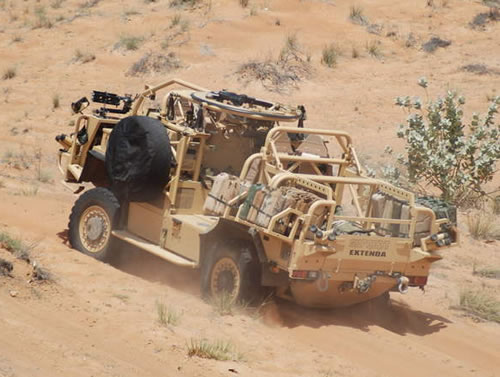
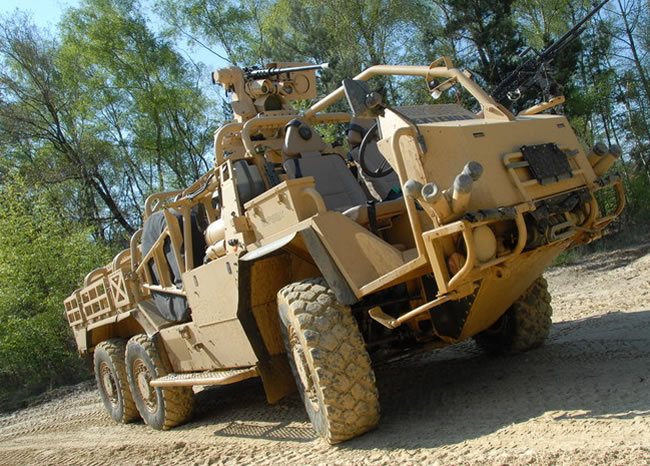
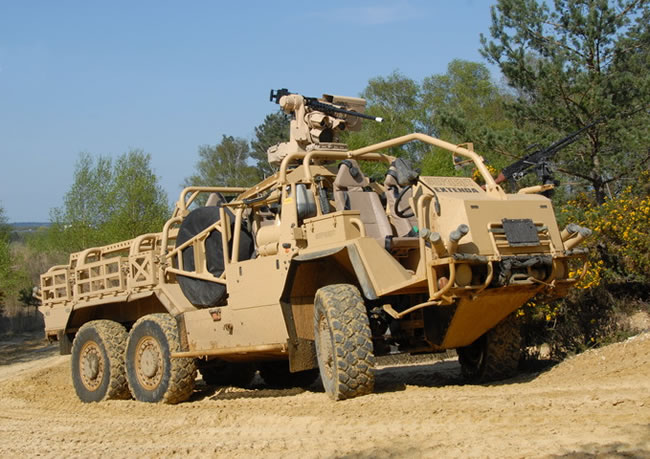
Supacat HMT Extenda 6×6 equipped with remote weapon station and pintle mounted 7.62mm machine gun.
Last month Supacat has delivered the first prototype of its new special operations vehicle to the Australian Defence Force. In April 2012 Supacat emerged the preferred bidder to provide a prototype vehicle for the Special Operations Vehicle element of the Australian Defence Material Organisation (DMO)’s JP2097 Ph 1B (REDFIN) program. The vehicle is the latest version of Supacat’s Special Forces HMT Extenda. The new vehicle retains a high level of commonality with the Australian Army’s existing Nary HMT fleet, delivered by Supacat in 2009, but provides improved capabilities, particularly in crew protection and vehicle versatility. The DMO will use the prototype during the evaluation phase in support of the options that will be provided to Government at second pass.
For this program Supacat Pty Ltd. has partnered with a team of 14 Australian companies. Supacat Team Australia partners include: Aerostaff, Andrew Engineering, Baker and Provan, Broens Industries, Cablex, Eggler Consulting Engineers, Hallmark Logistics & Engineering, Hofmann Engineering, Marand Precision Engineering, PS Management Consultants, QinetiQ, Tectonica Australia, Unique Solution Partners and VEEM. The team is also working with Elbit Systems of Australia – a subsidiary of the Israeli C4ISR and battle management systems and equipment provider for the Australian military.
In March 2012 Supacat Pty Ltd, the local subsidiary of the British high mobility vehicle specialist acquired the business assets and staff of engineering design services provider, Melbourne, AustraliaUnique Solution Partners Pty Ltd. “Supacat’s REDFIN 1B solution offers capability improvements in the key areas of firepower, protection, capacity, operability and safety, based upon direct feedback from the worldwide operational use of existing HMT fleets. There are also a number of additional options offered that the ADF may wish to choose,” Mr Mick Halloran Managing Director, Supacat Pty Ltd said.
The new vehicle, while retaining a high level of commonality with the Australian Army’s existing `Nary` HMT fleet, delivered by Supacat in 2009, provides improved capabilities, particularly, in the areas of crew protection and vehicle versatility. Supacat’s HMT series combines high levels of mobility, protection, payload and firepower. Designed for use by Special Forces, the HMT Extenda is is the most capable vehicle in its class. Its unique in being convertible to either a 4×4 or 6×6 configuration, to meet different operational requirements by inserting or removing a self-contained third axle unit. The vehicle can be supplied with optional mine blast and ballistic protection kits and with a variety of mission hampers, weapons, communications, ISTAR and force protection equipment to suit a wide range of operational roles.
Nick Ames, Managing Director of Supacat Ltd, said, “The REDFIN 1B award is pivotal to Supacat’s expansion and confirms the superiority of our HMT series as the Special Operations `vehicle of choice`. With our development of an in-country design and engineering capability, it positions Supacat to access future opportunities in the expanding Australian defence market as well as in diversified industry sectors in the Asia Pacific region”.
Supacat HMT 6×6 SOV was selected for testing for the REDFIN 1B (JP2097 Ph 1B) project. Photo: Supacat
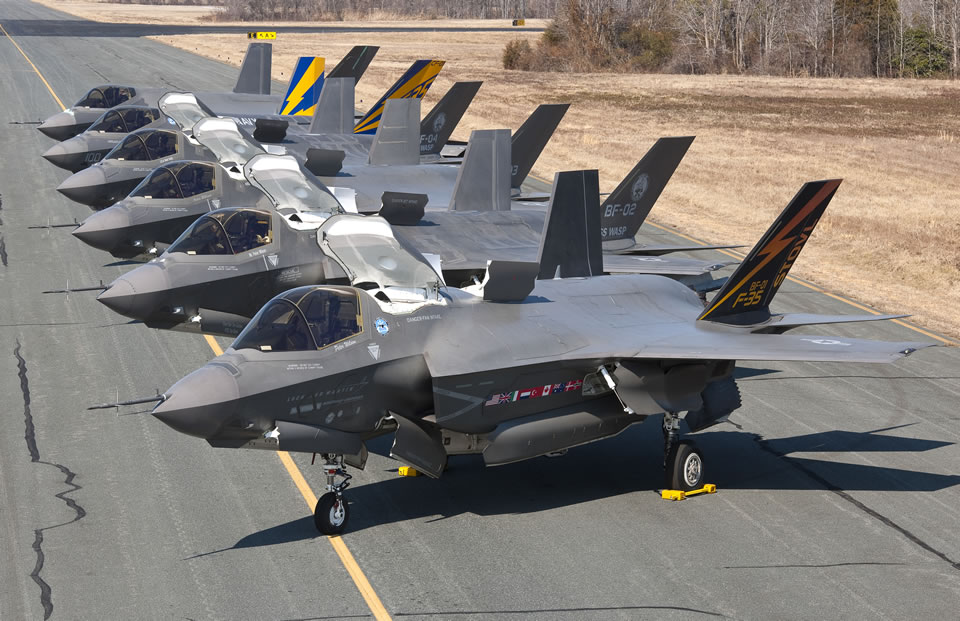
Five F-35Bs and one F-35C line up at Patuxent River for a photo op. Photo Lockheed martin
Late in 2012, US Secretary of Defense Leon Panetta revealed in public comments that the United States intended to send the first overseas contingent of F-35B Lightning IIs to the Marine Corps Air Station (MCAS) at Iwakuni, Japan located in Yamaguchi Prefecture on the southeastern coast of the archipelago’s main island of Honshu. Secretary Panetta stated that this move will go far in strengthening America’s security posture in the Asia-Pacific region and will represent the first operational overseas deployment of the controversial stealth fighter. The aircraft are scheduled to arrive in Japan by 2017.
The US Marine’s F-35B Short Take-off and Vertical Landing (STOVL) version of the Lightning II is designed to meet the unique needs of US Navy and Marine amphibious assault operations. Deploying the Joint Strike Fighter (JSF) to forward-based units in the Pacific is in keeping with the Obama administration’s “Asia-Pacific pivot.” This pivot entails relocating the bulk of US forces to the Pacific region to reinforce America’s presence in the area. The revised defense policy places the greatest emphasis on protecting maritime trade routes and strengthening stability in the Asian-Pacific area, a region of the world most defense and economic analysts agree represents a relatively untapped market of immense growth potential.
China’s surprising advances in military technology and a significant growth in the size and capabilities of Chinese military forces coupled with North Korea’s unexpected proficiency in missile and rocket technology have reinforced America’s determination to focus more attention on the region of the world with the greatest potential for economic growth.
On 10 January, the United States notified Japan that it intends to begin deploying an initial contingent of ten US Air Force CV-22 tiltrotor Osprey transports to the Kadena Air Force Base on the southernmost island of Okinawa in about two years.
Japanese groups opposed to the presence of US military forces on the island of Okinawa staged mass demonstrations in September and October of 2012 to protest the basing of a Marine Corps squadron of twelve MV-22B Ospreys at MCAS Futenma that is located very near the Okinawan urban center of Ginowan City. The Marine squadron became fully operational in December and a second squadron of twelve aircraft is due to arrive in mid-2013 as additional replacements for the Corps’ fleet of Vietnam-era CH-46 Sea Knights. When counting the twelve Marine MV-22B Ospreys currently stationed at MCAS Futenma and the additional squadron of twelve due to arrive in mid-2013 and the ten USAF CV-22s tentatively scheduled for arrival sometime in 2015, Okinawa will become home to a total of thirty-four or more Ospreys making the island host to the largest concentration of the tiltrotor aircraft in the Pacific.
When notified of the deployment plans during a briefing in Washington, Susumu Matayoshi representing the governor of Okinawa, flatly stated that the Okinawa Prefectural government could not possibly agree with such plans and would mount a determined protest to prevent the stationing of more Ospreys on the island. Following the meetings with Mr. Matayoshi, Department of Defense (DoD) press secretary George Little issued a public statement indicating that the Pentagon was evaluating numerous basing options as part of a continuous planning process intended to balance the military build-up in the Pacific. He stated that the possible deployment of USAF CV-22s to the Pacific is still years away and that “no construction has begun to support such a deployment.”
On 28 July 2012, eight United States Air Force (USAF) F-22 Raptor stealth fighters were stationed at Kadena Air Force Base to further bolster America’s aerial combat capabilities in the Pacific. The arrival of the F-22s met with no protests from local citizens.
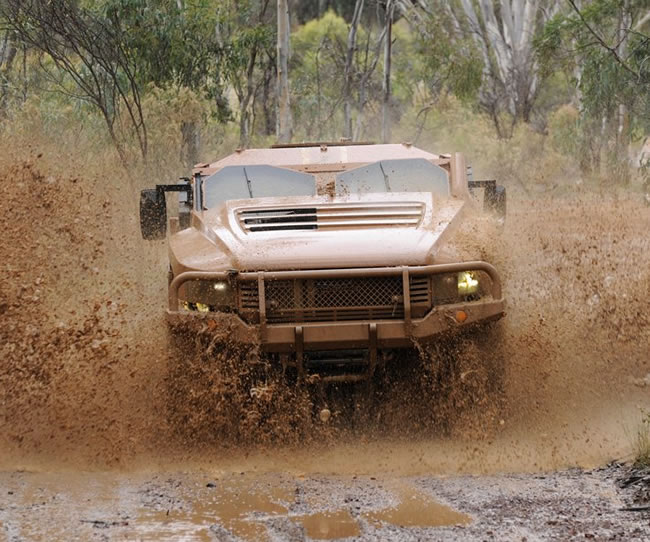
Gator faced Hawkei undergoing trials in Australia. Photo: Australian Defence
Gator faced Hawkei undergoing trials in Australia. Photo: Australian Defence
Evaluation of new combat vehicles for the Australian Army will sonn begin, with the delivery of the first Hawkei protected vehicle by Thales, for Project LAND 121 Phase 4. Supacat also delivered the first improved Special Operations Vehicles (SOV) developed under Project JP2097 Phase 1B. Defense-Update reports.
Thales Australia has handed over the first Hawkei protected mobility vehicle (PMV) and trailer prototypes to the Australian Army. Hawkei was the preferred platform for the Australian Defence A$1.5bn Project LAND 121 Phase 4 program.
In 2011 Thales was awarded A$38 million contract by the Australian Department of Defence (DoD) to develop and deliver six prototype Hawkei vehicles and one trailer, to the Australian Defence Forces (ADF) for testing, evaluation and user assessment trials.
The remaining five prototypes are scheduled for delivery by June 2013, after then the vehicles will undergo a comprehensive testing program, including communication system integration testing, reliability growth trials, survivability testing and user assessments throughout the year.
Under LAND 121 Phase 4 the Australian Defence is planning to buy up to 1,300 protected and unprotected light vehicles, beginning 2015, gradually replacing the Army’s existing Land Rover vehicle fleet.
HMT Extenda 4×4 SOV from Supacat was selected for the REDFIN 1B project.
Another program to enter prototype evaluation is Project JP2097 Phase 1B – the fielding of an improved Special Operations Vehicles (SOV). In April 2012 Supacat was selected to develop and deliver the prototype SOV. The vehicle can carry a range of weapons, communications and surveillance equipment meeting special operations specific and unique requirements. Following that win, the company has established a engineering design and analysis facility in Melbourne, manned by 18 engineers. It is the first facility Supacat has opened outside the UK. Supacat delivered the first prototype for testing in December 2012.
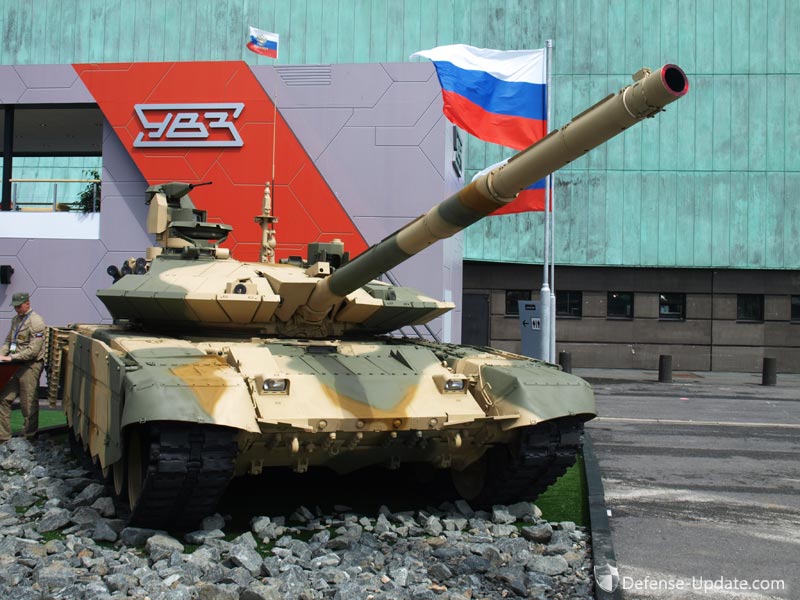
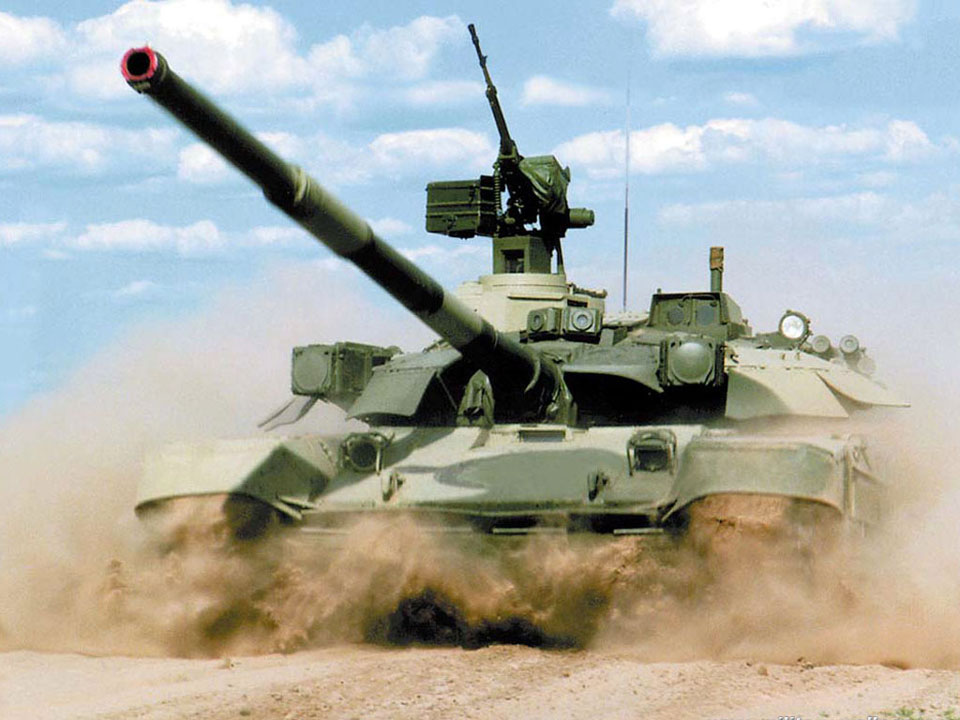
The Newly Upgraded T-90S. Photo: Tamir Eshel, Defense-Update
The Newly Upgraded T-90S. Photo: Tamir Eshel, Defense-Update
With the world’s largest armies (except China and India) have ceased procurement of Main Battle Tanks (MBT), third world countries are becoming more dominant customers for this weapon category. In recent years, following major reorganization programs, where western armies have been retiring their armored regiments, severely eroding the production base of heavy armored vehicles, countries of the former Soviet Union and China are finding markets for tanks in developing countries. New production orders for T-90 from Russia, T-84 Oplot from the Ukraine and Chinese MBT-2000) tanks are keeping these lines open. Thailand has placed orders for 200 T-84 tanks, and is expecting the first of these T-84s by May 2013. These tanks will be used for initial introduction and training. A second shipment completing the training unit and equipping the first battalion will be completed by 2015.
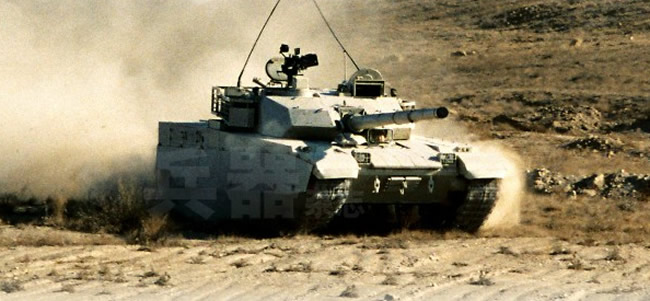
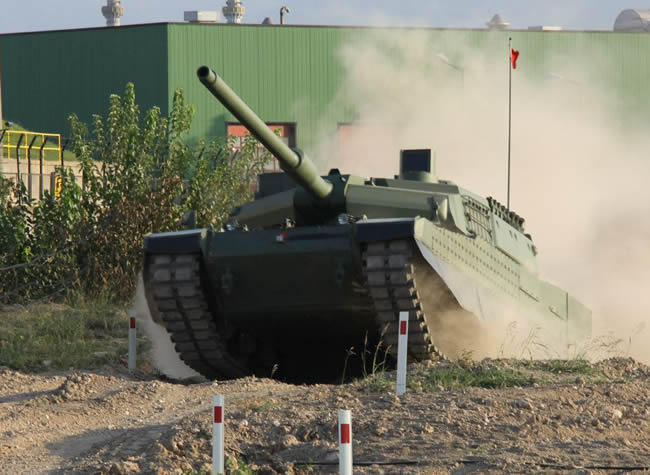
Chinese upgraded MBT2000 is provided with enhanced wedged armor suite, improved fire control electro-optics and added air conditioning.Turkish new main battle tank Altai is expected to enter production in 2015
South Korea and Turkey are two countries maintaining MBT production capacity based on a common design – the South Korean K-2 and Turkish Altai, which is still in prototype stage. The South Korean K-2 entered production in 2012. Hyundai Rotem Company was contracted by Turkey to provide the technology transfer for the Altai program. The company teamed with Otokar from Turkey to set up the production facility for the tank in Turkey. The first two prototypes went through initial testing in late 2012. However, since 2011 the Turkish side has assumed full responsibility for the program. One month into the testing, of the first two prototypes, Turkish officials expressed confidence the program could move into production by 2015 – two years ahead of schedule. Turkey plans to field up to 250 of the new tanks.
The Bangladesh Army has also begun inducting fourth-generation China-made MTB-2000 tanks. Bangladesh has placed an order for 44 of these MBT2000 tanks The deal is worth $162 million. The new tanks were displayed for the first time in September 2012 during an official ceremony. The MBT2000 closely resembles the Al Khalid tanks, which is in the service of the Pakistan army since 2001. This is the first time Bangladesh has obtained newly assembled Main Battle Tanks (MBTs). Its army has around 200 older-generation Chinese tanks, which have been upgraded in phases with Beijing’s assistance to keep them in service.
Indian T-72 being upgraded
The largest customer for MBTs – India, is planning to produce up to 1,700 Russian designed T-90 tanks. 310 of the tanks were ordered and supplied from Russia in 2001. Additional 300 were ordered in 2006, and are being assembled locally in India, at Heavy Vehicle Factory (HVF) in Avadi, Chennai. The projected order could cap over 2,000, some of which are expected to be upgraded T-90MS. India is also producing 124 domestically developed Arjun MkII tanks, these tanks are expected to be inducted into service after 2013. India is also undertaking continuous upgrades for its T-72 tanks, the most recent included fire control and night vision improvements. Future work could also include active protection systems and weapon improvements (including gun-fired missiles. As part of this upgrade India acquired 418 Israeli made Thermal Imaging Fire Control Systems (TIFAC) for around $230. Part of the system is locally produced in India.
Among western MBTs the M-1A2 and Merkava Mk 4 are in production, though in small numbers. Orders for Merkava 4 tanks in service only in the Israeli Army are annually, maintaining the production line in Israel open while the M-1 line is maintained with orders for the Egyptian Army. Significant upgrade work on M-1A2 is expected this years, secured by recent orders from the US Army and Saudi-Arabia.
General Dynamics Land Systems announced January 8th it has been awarded $132.7 million for the procurement and production of 69 Saudi M1A2 (M1A2S) Abrams tanks for the Kingdom of Saudi Arabia. his work is part of a plan by the Kingdom of Saudi Arabia to upgrade its fleet of tanks. This contract extends work started in 2008 to update M1A1 and M1A2 tanks to the M1A2S configuration for the Kingdom of Saudi Arabia. The M1A2S conversion increases the efficiency and capability of the tank. This order will help the company maintain the workforce at its Lima, Ohio plant through July 2014.
Leopard II is not in production but of the three, it has the brightest future, as both Qatar and Saudi Arabia have expressed interest in buying about 1,000 of these tanks. Unlike the M-1A1/A2 or Merkava, Leopard II has also become quite popular in the second-hand market, after most European armies have trimmed their heavy forces, and offered their tanks to foreign nations. The main customers for these tanks are Singapore, Malaysia, Indonesia, Portugal, Canada and Chile.
"A nice way to celebrate the New Year for the President was to jump in the ocean in his native state of Hawaii. He was on his annual Christmas vacation with family and friends, and went swimming at Pyramid Rock Beach in Kaneohe Bay." Official White House photo
In a quiet affair without fanfare, President Barack Obama signed into law the $633 billion Fiscal Year 2013 National Defense Authorization Act (NDAA) on 31 December while vacationing in his home state of Hawaii. While not an appropriations act providing the funding to pay for the provisions contained in the law, the NDAA does outline the specific projects and programs the Department of Defense (DoD) is authorized to pursue. Actual funding authorization will be included in an appropriations bill yet to be finalized.
Although several articles in the NDAA did not sit well with Secretary of Defense Leon Panetta and President Obama, the White House did get most of what was requested with $1.7 billion additional funding included. Secretary Panetta publicly expressed his disappointment that funding added by Congress for some items were neither requested nor needed by DoD. Mr. Panetta had hoped to have those funds reprogrammed into other projects he considered of greater importance.
While expressing opposition to the provisions of the law that limit the president’s authority to transfer terrorist detainees from the Guantanamo Bay, Cuba prison to other facilities for another year, the president was quoted as saying his signing of the bill was necessary to ensure that defense funding was not delayed and to ensure critical defense needs were covered.
Although the FY 2013 NDAA does represent a modest cut in defense spending, the reductions are those agreed to by the White House and Congressional leaders in August 2011.
Aircraft manufacturers and shipbuilders are pleased with the FY 2013 NDAA. The Act broadens authorization for several multiyear procurement (MYP) projects. The Act gives the Pentagon an additional year on the MYP for the EA-18G Growler electronic warfare aircraft and the F/A-18E/F Super Hornet strike fighter. Also included in the measure is an MYP slated to begin in 2013 for the V-22 Osprey tiltrotor aircraft, a 2013 MYP for construction of as many as ten Arleigh Burke-class guided-missile destroyers, and a 2014 MYP to cover the cost of constructing as many as ten nuclear-powered Virginia-class fast attack submarines.
Another provision in the Act gives the US Navy approval to continue with the major overhaul and refueling of the Nimitz-class aircraft carrier USS Abraham Lincoln. Incremental funding is also authorized for the new Gerald R. Ford-class aircraft carrier and authority to spend a maximum of $708 million to cover the cost of deactivating the USS Enterprise.
The Act also derails the Navy’s plans to deactivate four Ticonderoga-class guided-missile cruisers (CGs) and two Dock Landing Ships (LSDs) by prohibiting the use of FY 2013 funds for this purpose. The Act also requires the Navy to maintain a minimum fleet of twelve ballistic-missile submarines (SSBNs) and provides no funding for deactivation of these submarines.
Also included in the Act are provisions that clearly reflect Congressional intent to play a more active oversight role in determining future defense structure and capabilities. Language contained in the law requires the Navy to provide Congress with periodic reports detailing progress being made in the development of the Littoral Combat Ship (LCS) program to include specifics related to ship design, operational support, planned sustainment, and mission capabilities.
Congress also recommended that the Department of the Navy conduct an evaluation of the viability of its amphibious warfare fleet. The Act advises the Navy to review its plans for future investment in the development and procurement of a new generation of large amphibious assault ships. The Congress suggests the Navy give careful consideration to hull commonality issues and combat survivability concerns.
Wording in the Act further prohibits the Navy from naming a single prime contractor for the Unmanned Carrier-Launched Surveillance and Strike System (UCLASS) until a thorough Preliminary Design Review (PDR) is completed. The Navy is also required to deliver to Congress a progress report on development of the Shallow-Water Combat Submersible (SWCS) program.
Much to the Navy’s displeasure, the Act also requires the service to designate specific Initial Operational Capability (IOC) dates for both the F-35B and the F-35C Joint Strike Fighters (JSF) no later than June 2013. The Pentagon has been very reluctant to establish specific IOC dates for the JSF as the aircraft has been plagued with technical delays, production difficulties, and widely-publicized cost increases throughout the life of the program.
Marine Corps electronic warfare capabilities also drew the attention of Congress resulting in a requirement that Congress be given a detailed report addressing the planned disposition of the Corps’ EA-6B Growler electronic-warfare squadrons.
Included in the Act are also provisions designed to slow down development of a new East Coast missile-defense system. This new missile-defense shield, a favorite of many Republican lawmakers, is likely to be a hot topic in negotiations to craft an FY 2014 NDAA beginning this spring.
The NDAA also imposes new sanctions on Iran that are expected to have an impact on Iran’s energy and shipping industries, shipbuilding capabilities, and seaport services. Broadcasting services and trade in precious metals were also singled out for sanctions.
Although restrictions on the export of satellites and associated equipment were relaxed, restrictions on some nations will continue in effect. The measure continues restrictions prohibiting satellite exports for any launches originating in China, Iran, North Korea, Syria, Sudan, and Cuba.
Officials in Beijing have expressed their displeasure with the US refusal to export satellites to China in light of previous indications that the United States was sincere in improving relations with Beijing and had previously intimated that American exports of high-tech equipment to China for civilian use could be expected to increase.
On 9 January, one day after announcing the increase in defense spending requested for 2013, the Japanese Ministry of Defense (MoD) also announced that the new Abe administration is requesting an immediate defense increase of an additional $2.1 billion. This supplementary funding is reportedly earmarked for the purchase of additional Patriot Advanced Capability-3 (PAC-3) surface-to-air anti-ballistic missile batteries and to pay for upgrades to four Mitsubishi-built F-15J Eagle fighters and three SH-60J anti-submarine patrol helicopters.
While the JSDF is reasonably well-equipped with defensive weaponry, the air fleet is beginning to show its age and naval and ground forces have received little or no training in offensive operations. Japanese warfighting capabilities are limited and in serious need of improvement.
On 9 January, the Japanese Ministry of Defense (MoD) announced that a far-reaching economic stimulus package will include an additional $2.1 billion in defense spending to be initiated within the next few months. This supplementary funding is in addition to the existing funding previously programmed into the defense budget for 2012-2013, but is separate from an increase in defense spending requested for the next fiscal year that was announced on 8 January.
According to MoD officials, some of the new funding will be applied toward the purchase of more Patriot Advanced Capability-3 (PAC-3) surface-to-air anti-ballistic missile batteries. The supplementary funding will also be applied to finance upgrades to four of Japan’s aging fleet of F-15J Eagle fighters and three Mitsubishi-built SH-60J anti-submarine patrol helicopters.
This immediate increase in defense spending is in response to recent events that have raised security concerns among members of Japan’s new administration and has been characterized as being an “emergency economic measure in answer to increasingly tense security risks facing Japan in the Asia-Pacific region.
A MoD spokesperson said that funding to cover the cost of procuring three additional SH-60K anti-submarine patrol helicopters would also be requested. The MoD spokesperson singled out disputes with China regarding the sovereignty of the Senkaku/Diaoyutai Islands in the East China Sea and North Korea’s surprising success in missile technology as the primary reasons for requesting additional funding to finance immediate defense updates.
Potentially dangerous confrontations with Chinese forces have escalated to record levels in recent months, particularly following Japan’s purchase of three of the four barren rocks in the Senkaku Island chain that China adamantly insists belong to the People’s Republic.
On 5 January the Japanese Air Self-Defense Force (JASDF) scrambled F-15 fighters when a Chinese People’s Liberation Army Navy (PLAN) Y-12 maritime patrol aircraft made a close approach to the airspace over the Senkaku/Diaoyutai Islands. The Y-12 withdrew before entering the disputed airspace. This incident was the sixth such challenge in recent months. Chinese naval vessels have cruised through the disputed territory on numerous occasions prompting the immediate deployment of Japanese Coast Guard vessels to confront the Chinese ships.
In usual circumstances, approximately 70 to 80 percent of Japanese defense spending is funneled to domestic firms, but there is no legal requirement to do so.
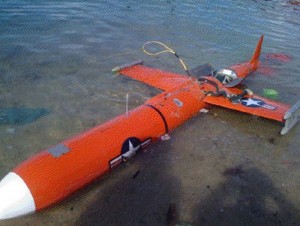
A suspected American BQM-74E target drone is brought ashore off Masbate Island in Central Philippines.
A suspected American BQM-74E target drone is brought ashore off Masbate Island in Central Philippines.
Philippine Navy officials have reported the discovery of an abandoned US drone floating in the waters near the central Philippines. According to published reports, Filipino fishermen discovered an orange BQM-74E target drone floating in the sea off the coast of the island of Masbate and turned it over to local authorities.
The deputy naval commander in the province, Captain Jason Rommel Galang, was quoted as saying the drone appeared to have been in the water for a lengthy period of time and had markings that indicated it was of American origin.
American forces were given Philippine government approval to conduct unmanned reconnaissance flights over Philippine territory some years ago. Aerial strikes using UAVs are not authorized. At least two other American drones are believed to have crashed on the southern island of Mindanao where the remains were recovered by local villagers.
Some 600 members of various branches of the US military have been rotating in and out of the Philippines since 2002 to assist in training Filipino forces to combat Islamic extremists in a decades-long war that has been raging in the southern islands of the archipelago. US forces, prohibited from engaging in direct combat operations, have employed surveillance/reconnaissance drones to assist Filipino forces to locate and engage Islamic militants known to have al-Qaida connections in the southern regions.
Masbate Island, near where the drone was recovered, is hundreds of kilometers distance from the center of the Islamic insurgency and no US forces are known to be located on the island. Residents of the island are known to support communist guerrillas who have also been engaged in a lengthy struggle with the central government.
On 8 January, the United States Embassy in Manila confirmed that the recovered drone was an “unarmed target drone” launched from the guided-missile destroyer USS Chafee while deployed in waters surrounding the island of Guam in September of 2012 during a naval warfare exercise.
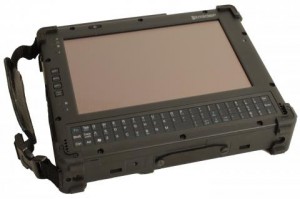
MilDef has released a new militarized tablet computer – the Panther DT6. This rugged device is designed for a wide range of military and field applications. It features 8.9” WSVGA LCD touchscreen with anti-glare and anti-reflective coating, making it easier use in all environments. This tablet is fitted with a small keyboard which enables typing of shorter messages or entering encryption keys without the need of an external keyboard. Its has a hard drive that can be easily removed as the situation in the field develops. With a wide array of accessories, port and communication options, customizable to meet special requirements. The standard unit is equipped with Bluetooth, USB, Serial Port and Ethernet, with further options including GPS, WLAN and WWAN connectivity.
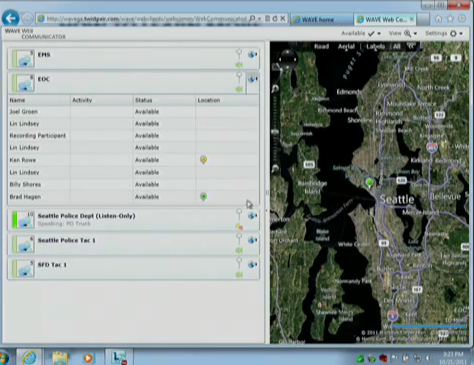
WAVE is offering various communications integration capabilities enabling access to disparate communications systems.
WAVE is offering various communications integration capabilities enabling access to disparate communications systems.
The U.S. Special Operations Command (USSOCOM) recently licensed Twisted Pair Solutions’ WAVE software for use throughout the Command. SOCOM has been operating WAVE through its different versions for the past decade. This software enables the service to to deploy and extend communications links and interoperability with other WAVE enabled networks, through tactical radio systems, PCs, smartphones and tablets. By deploying WAVE as an interoperability solution, warfighters, public-safety professionals, government agents and commercial organizations can communicate instantly with their teams, regardless radio system compatibility.
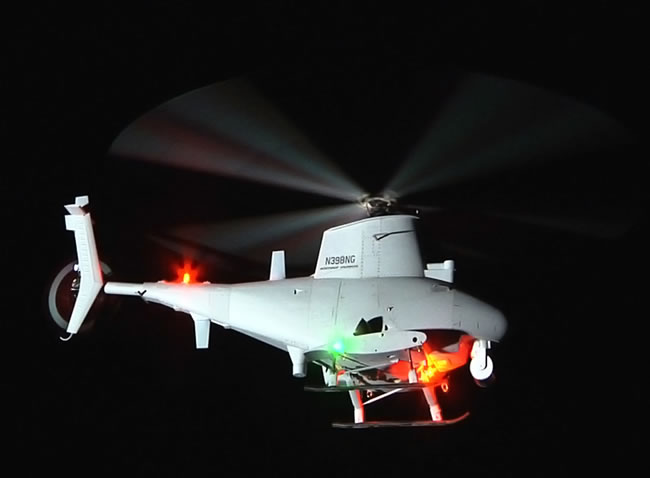
Telephonics Corporation announced Wedensday, January 9, that its AN/ZPY-4(V)1 multi-mode maritime surveillance radar for was selected by Northrop Grumman to equip the US Navy’s MQ-8B Vertical Take-Off and Landing Tactical Unmanned Aerial Vehicle (VTUAV) as part of the US Navy Fire Scout radar “Rapid Deployment Capability” program.
Northrop Grumman awarded Telephonics $33 million to provide the development, production, integration and testing of nine radar systems. For the larger version of FireScout known as MQ-8C. Northrop Grumman Originally pitched a variant of its own AN/ZPY-1(V) STARlite Synthetic Aperture Radar which has not been designed for maritime missions. Following the successful demonstration of the new radar from Telephonics on the MQ-8B in September 2012 they apparently decided to switch to the new and proven radar.
“We developed our RDR-1700B X-band with our own budget, to be a lightweight, compact high performance radar that could fit a wide range of aircraft, including light fixed and rotary wing manned and unmanned platforms” said Joe Battaglia, Telephonics President and CEO, The RDR-1700B was designed for search, surveillance, tracking, imaging and weather avoidance applications. “This radar provides all the features available in our larger radars, we spent much effort to miniaturize and downsize systems to meet the smallest space” Battaglia added. He said the new radar is one of few systems available in the market today and is positioned as the most competitive, in terms of performance, weight and cost.
The RDR-1700B+ which received the military nomenclature AN/ZPY-4(V)1 weighs about 68 pounds (31 kg). The system has integrated two unique features enhancing the usability, situational awareness and its performance over land and sea. These include automated classification aids and sensor management capabilities, being developed in cooperation with the U.S. Navy to further improve Intelligence, Surveillance, and Reconnaissance efficiency.
Among these features is the Ground Moving Target Indicator (GMTI) mode is providing FireScout operators the capability to move seamlessly from blue water, to shoreline, and to overland missions. The GMTI mode allows automatic detection and tracking of moving targets, using ground clutter cancellation techniques. The second unique feature integrated in the radar operating system is the integration of Automatic Information System (AIS) data providing rapid identification of vessels at sea and the capability to spot potential threats with minimum operator workload. AIS supports operations in a dense littoral target environment, using the U.S. Navy’s Ocean Surveillance Initiative (OSI) software that is fully integrated into the radar.
When integrated with other on-board sensors, the radar increases the VTUAV surveillance area rate coverage and operator efficiency by pointing the EO payload to points of interest detected through the radar’s wide area scan.
“This new radar strengthens our position in the maritime surveillance market and opens new opportunities for integration of such systems on a wider range of systems, manned and unmanned” Battaglia told Defense Update, “the ISR market in general, and specifically the maritime surveillance sector are expected to suffer les from reducing defense budgets, since securing the maritime borders and economic exclusion zones (EEZ) are important missions for every country” he added.
A new radar system from Telephonics will enhance night and all-weather capabilities of the Navy’s Vertical Take Off and Landing Unmanned System (VTUAV). Photo: Northrop grumman
The Indian Army, having long suffered from deficiencies in night fighting capability, is taking steps to correct this gap in equipping combat vehicles with advanced EO systems. Army chief Gen Deepak Kapoor, was quoted by Frontier India saying: “Indian Army’s tanks have a night vision capability of 20 percent while Pakistani’s have 80 percent and China has 100 percent”. Following massive procurement of night vision devices for combat troops, the army is now set to equip its second line tanks with similar capabilities. The armed forces will review their doctrine, capabilities and shortcomings and also identify latest trends and technologies at a two-day seminar “Night Vision India 2013” scheduled next week.
The Army’s objective is to equip over 1,600 T-72 tanks that form the backbone of the country’s armored forces, with advanced night fighting capabilities. The Army’s case for acquiring 700 TISAS (thermal imaging stand alone systems) and 418 TIFACS (thermal fire control systems) for its T-72 fleet at a cost of around $230 million is in various stages of the procurement process. 300 Israeli TISAS were installed as part of several T-72 upgrade phases, followed by 3,860 image intensifier-based night-vision devices. A huge requirement persists. 310 Russian produced T-90S Main Battle Tanks were also fitted with French Catherine TI cameras.
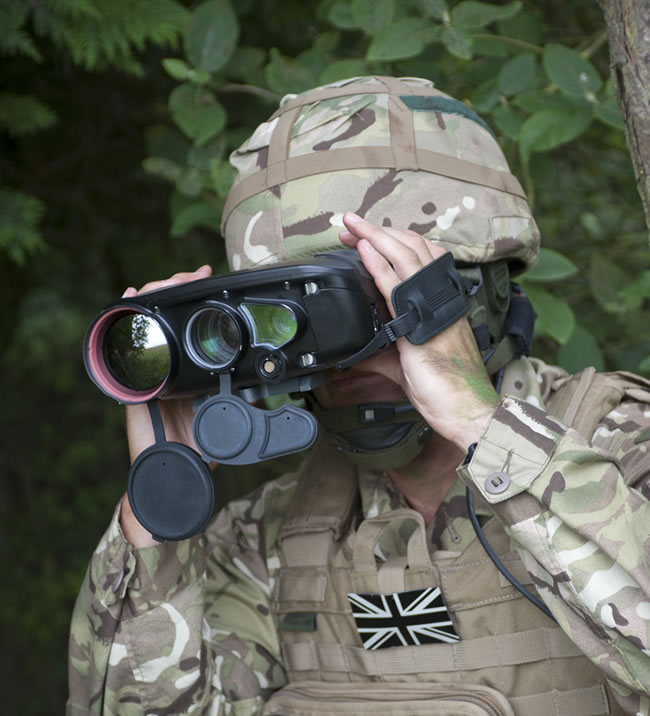
As a Hand Held Thermal Imager (HHTI) Thales Sophie UF2 is a light weight, fully integrated multi function system allowing the user to detect, recognise, identify and locate targets in day or night. Photo: Thales
The requirements for the Indian infantry formations are equally stunning. According to Major General RK Arora, editor of Indian Military Review magazine, the Army requires hand held thermal imaging (HHTI) sights integrated with laser range finders, for infantry, armored, air-defense, artillery and engineer regiments. The infantry is also looking for TI sights for medium machine guns and sniper rifles. RFIs for night sights for AK-47 assault rifles and other small arms have also been floated. On the horizon is the Indian Soldier System (INSAS) program,
Bharat Electronics Ltd (BEL) is the biggest supplier of night vision equipment to the armed forces. In 2007 the company has signed a memoranda of understanding (MoUs) with Elbit Systems Electro Optics ELOP Ltd, for the local production and support of thermal imaging systems. BEL recently supplied 30,600 passive night sights for rifles, rocket launchers and light machine guns, passive night vision binoculars and passive night vision goggles to the Army but the forces remain woefully short and are looking for the latest 3rd generation technology to reduce weight and extend the life of NVDs.
Another Israeli company to benefit from the Indian demand is SDS; the company received significant orders for its new lines of I2 weapon sights.
For the future, the procurement of new assault rifles and carbines for the Indian Army, replacing the INSAS currently used, will obviously require hundreds of thousands of sights, night vision sights and clip-on viewers, creating a signifiant drive for foreign companies to establish production in the country. The new rifles will also become part of the future infantry weapon system to be fielded by the Indian military and special forces.
The Indian military is also embarking on the replacement on the Indian 7.62mm Self Loading Rifle (INSAS), with a modern carbine currently in final evaluation. Through the initial screening process the military has narrowed five suppliers from 40 that approached the Request for Information (RFI) in 2010. Currently in the final phase are the US company Colt, Italian Beretta, Czech weapon manufacturer CZ, Israel’s IWI and Austrian SIG Sauer. The Indian military plans to buy at least 65,000 weapons directly from the winning manufacturer and follow on with local production of about 115,000 additional rifles to be produced by the Ordnance Factory Board (OFB). Eventually, additional procurement of 120,000 units could be added, with the planned procurement of Close Quarter (CQB) Carbines for military and paramilitary use. The total budget to be allocated for the program is nearly US$1.9 billion, spanned over several years. The new rifle will weigh 3.5 kg, and use two calibers, 5.56×45 and 7.62×39 cal and will come with a range of accessories, including under barrel grenade launchers, night vision scopes, optical or reflex sights and more.
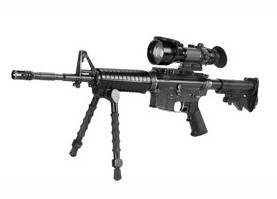
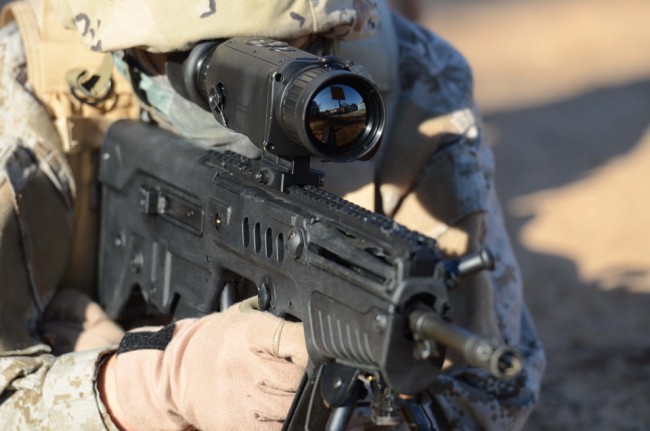
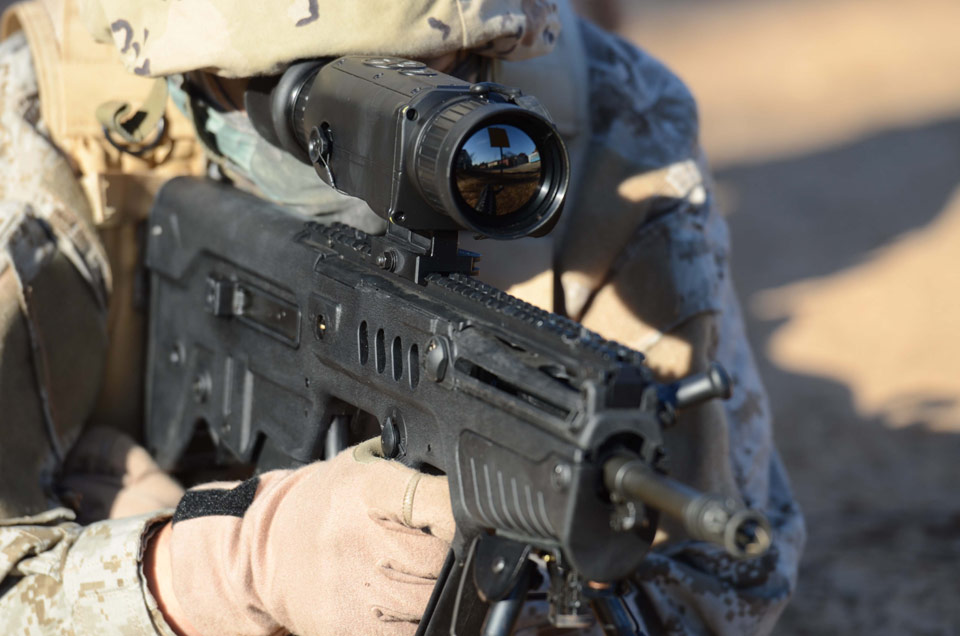
Meprolight is launching a new weapon sight at the Shot Show taking place at Las Vegas next week. The company will unveil the NYX 3X, a compact, uncooled Thermal Weapon Sight (TWS) offering X2.7 magnification. At a weight lower than one kilogram (less than 2.2 Lbs) this sight is designed to sustain recoils of 5.56, 7.62 and 338 Cal. rifles. Designed for military applications, NYX 3X meets the highest MIL SPEC requirements. The new sight extends the company’s line of sights supporting different magnifications of 2X, 3X, and 7X, meeting a wide range of operational and tactical needs.
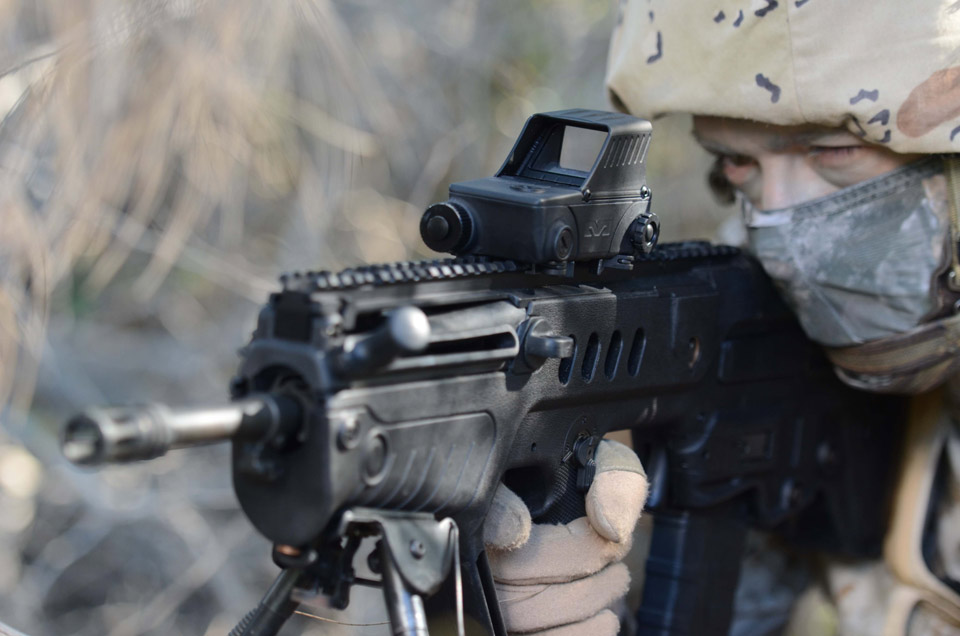
Other Meprolight products to be displayed include enhanced NOA XT4 Thermal Weapon/Surveillance clip-on thermal sight, the MEPRO 4X, and the MEPRO M5 Red-Dot electro-optical sight, optimized for ‘both eyes open’ shooting, will make their first appearances at the Shot Show.
The MEPRO 4X is a 1.7 Ibs combat 4x scope. Utilizing a quick release Picatinny adaptor, this MIL-STD sight provides five different brightness settings. The sight operates with a single standard battery and is equipped with an energy saver feature for extended operation.
The MEPRO M5 is a 0.7 lb MIL-STD, used with light machine guns, assault rifles, and sub-machine guns, the M5 features an enlarged 33 x 22 display and a 2-MOA red-dot aiming point with four variable brightness settings, and enables up to 8,000 hours of operation.
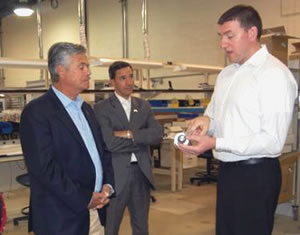
Dr. Caine Finnerty, president of Watt Fuel Cell, explains the SOFC technology to Senator Jack M. Martins and Senator Dean Skelos during their visit to WATT in 2011.
Solid Oxide Fuel Cells (SOFC) are positioned to provide an economical and viable alternative to small electrical generators in the near future, according to WATT Fuel Cell company that prepared for initial product rollouts of its products in 2013. Defense-Update reports. The company has recently concluded testing on a 500-watt propane-powered unit and is planning to demonstrate a 1-kilowatt systems by the end of this year. “Being able to use accessible fuel is key to the success of the fuel cell industry, and we’ve focused on our technology’s ability to use readily available gaseous and liquid fuels for commercial and military applications,” Dr. Caine Finnerty, president of WATT Fuel Cell said. Propane and natural gas will be used commercially, while liquid fuels such as Diesel (D2) and JP-8 will be suitable for the military.
As part of the system’s commercialization WATT has recently refined its patented cell manufacturing process, substantially reducing production times while increasing part quality, performance and yield. “Our process not only makes cost-effective stack manufacturing a reality, but also permits manufacturing scalability to quickly flex, matching market demand,” said Benjamin Emley, technology director at the company. According to Emley, the company is presently scaling into full-rate production at its manufacturing facility on Long Island.
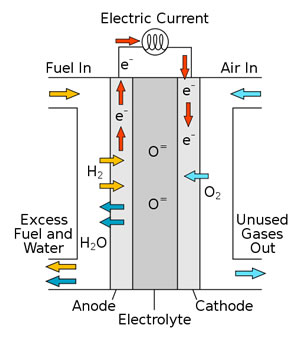
The SOFC working principle
Earlier this week Parker Hannifin and WATT Fuel Cell Corp. embarked on a strategic licensing and supply agreement to bring WATT’s propane-driven Solid Oxide Fuel Cell (SOFC) based products to commercial markets.The agreement will provide Parker’s an exclusive license of WATT Fuel Cell’s low-cost balance-of-plant (BoP) technology and exclusive stack supply for use in 500 to 3000 watt RV, marine and over-the-road trucking markets. Parker will manufacture the BoP and controls and also integrate the fuel cell stacks into complete, packaged SOFC products.
While the agreement with Parker aims at the commercial sector, the SOFC fuel-cell has many military applications as well, particularly with systems operating on JP-8 fuel. With such capability the fuel cell provides a powerful, quiet and logistically efficient energy source for various users, including robotics or unattended communications devices. WATT Fuel Cell has already integrated systems operating on both gaseous and liquid fuel. The fuel cell system replaces batteries offering six times the capacity for a given net weight (the weight of batteries providing less than 200 Wh/kg can be replaced by JP-8 fuel cell driving more than 12,000 Wh/kg). Key for performance improvement is the reduction in the size of the fuel cell and its electronic control circuits.
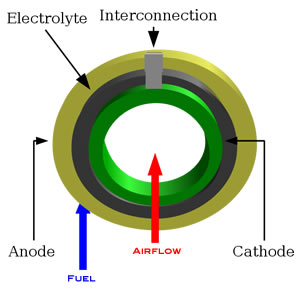
Micro-tubular SOFC fuel cell design geometries promise relatively fast start up times, typically on the order of minutes.
WATT Fuel Cell has identified several key applications within the military including UAVs, UGV’s, battery chargers and primary power to forward deployed forces. “We have taken a simplified approach to system and stack design in order to streamline production and product support. Reduction in system cost and standardization of componentry across various power platforms will enable us to provide a better product to the end user” Emley explained.
Lockheed Martin Skunk Works® and XTEND have achieved a major milestone in JADC2 by integrating the XOS operating system with the MDCX™ autonomy platform. This technical breakthrough enables a single operator to simultaneously command multiple drone classes, eliminating the friction of mission handoffs. From "marsupial" drone deployments to operating in GPS-denied environments, explore how this collaboration is abbreviating the data-to-decision timeline and redefining autonomous mission execution.
As traditional defense primes face mounting competition from agile “neoprimes” such as Anduril, Palantir and Helsing, the balance of innovation is shifting toward software-defined warfare and scalable, dual-use technologies, while global industry consolidation—marked by Boeing’s integration of Spirit AeroSystems and other strategic mergers—signals an intensified race to secure control over the defense technology value chain. Our Defense-Tech weekly report highlights these trends.
In early October 2025, a coordinated wave of unmanned aerial system (UAS) incursions—widely attributed to Russia—targeted critical infrastructure across at least ten European nations. The unprecedented campaign exposed the fragility of Europe’s air defenses...
Executive Summary
The past week (September 18-25, 2025) represents an inflection point where strategic defense concepts have transitioned from doctrine to tangible reality. An analysis of global events reveals four primary, interconnected trends shaping an...
At the 2025 Air, Space & Cyber Conference, U.S. Air Force and Space Force leaders unveiled major updates on next-generation fighters, bombers, unmanned systems, and space initiatives, highlighting both rapid innovation and critical readiness challenges as the services race to outpace global competitors. A short version is available here, with a more detailed version for subscribers.
The Taipei Aerospace & Defense Technology Exhibition (TADTE) 2025 crystallized around four dominant strategic themes that collectively illustrate Taiwan's comprehensive approach to defense modernization amid escalating regional tensions. Based on a detailed report by Pleronix (available upon request). Includes a Podcast discussion on TADTE 2025's highlighting Taiwan's four strategic themes beyond the post's coverage.
Israel’s Iron Beam 450 high-power laser system has completed final testing, marking a major leap in air defense. Developed by Rafael, it offers precise, cost-effective interception of rockets, UAVs, and mortars, and is set for IDF deployment by 2025.