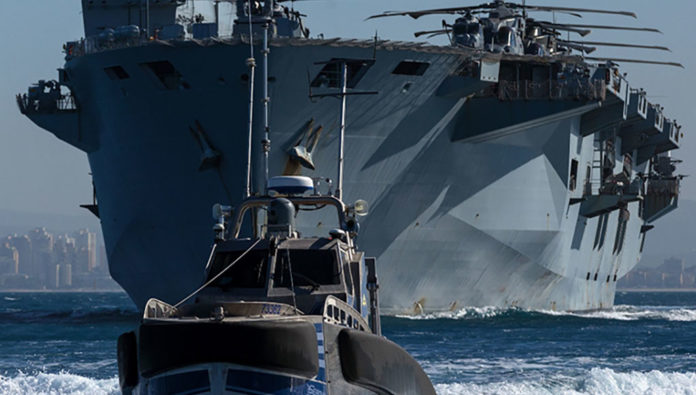
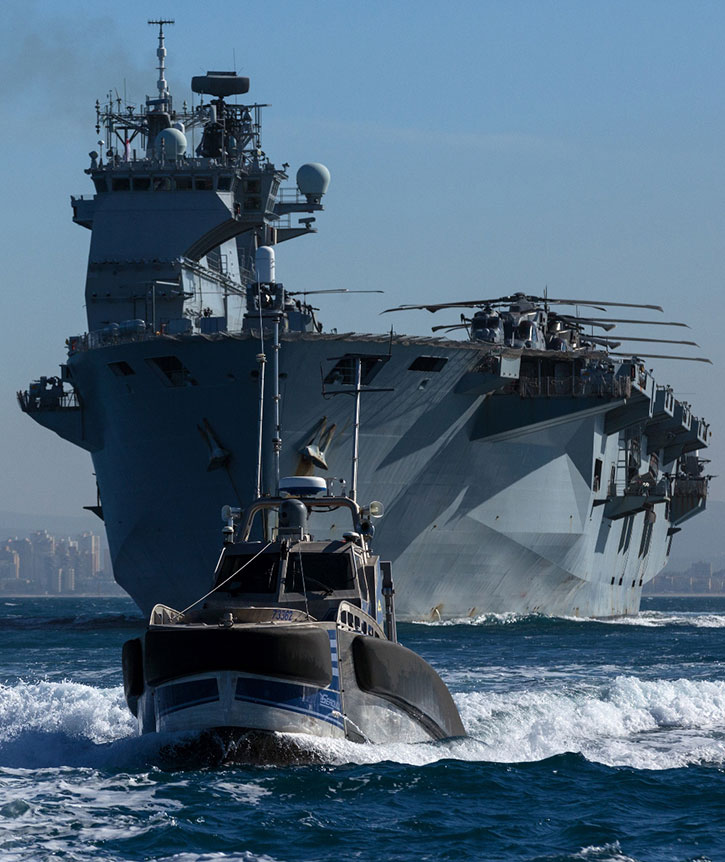
The Israeli Seagull mine countermeasures USV participated in a recent exercise with HMS Ocean, the Royal Navy flagship. The Seagull provided a pathfinder for the British ship, alerting the helicopter carrier of suspected mines along its path. The USV also performed tactical maneuvering with the British ship, sailing in formation with the Israeli Navy vessels and the British helicopter carrier.
On the recent visit of HMS Ocean at the port of Haifa, the flagship of the Royal Navy participated in a mine warfare exercise at the Haifa Bay, where Israeli Seagull Unmanned Surface Vessels (USV) acted as pathfinders for the British amphibious support helicopter carrier, sailing in simulated mine-infested waters. The mission was part of a joint exercise between the Israeli Navy and the British Royal Navy in the Haifa Bay. HMS OCEAN has returned to her base-port in HMNB Devonport after completing her final deployment prior to decommissioning in 2018.
During the exercise, the Seagull performed a Mine Counter Measure (MCM) mission, scanning and charting a secure path for HMS Ocean. Once encountering mine-like-objects, the Seagull alerted HMS Ocean to avoid them, thus securing its safe route. The Seagull performed the mission while being remotely operated from a Mission Control Station onshore. Developed by Elbit Systems, the Seagull is a modular USV that can be configured for a variety of naval missions, including mine countermeasures and anti-submarine warfare. In addition to the Israel Navy, Seagull is undergoing evaluations by a number of foreign navies.
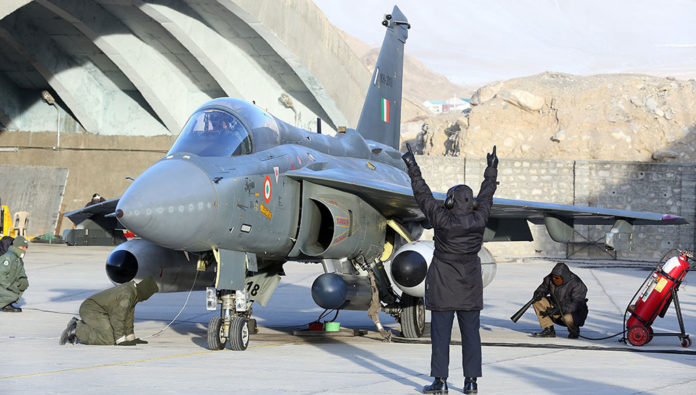
The Indian Air Force plans to order 83 additional Tejas MK1A light combat aircraft from HAL. Photo: ADA
The Indian Air Force (IAF) intends to buy 83 Light Combat Aircraft (LCA) Tejas MK1A from Hindustan Aeronautics Limited (HAL), according to a tender issued to HAL, as the sole source for the indigenously developed and built aircraft. Livefist reported. The Indian Air Force – currently has 40 Tejas MK1 LCA aircraft to equip the first two squadrons. The procurement of 83 will complete four LCA squadrons. With slow delivery and questionable performance of the current Tejas MK1, the IAF is reluctant to proceed with procurement of more Tejas, and will rather buy an off-the-shelf single-engine fighter, such as the F-16 or Gripen. But the MOD and government are determined to pursue with the program, expected to boost the country’s defense manufacturing by harnessing the private sector companies to produce systems more efficiently, in collaboration with foreign partners – as formulated by the government’s ‘Strategic Partnership’ scheme.
HAL has already delivered five Tejas MK1 aircraft of the first batch of 20 planes, and is lagging behind producing the remaining 15 aircraft (11 fighters + 4 trainers) and the second batch of 20 aircraft. HAL is outsourcing the production of fuselage modules, wings, and major subassemblies to private-sector companies, and improve the supply chain to support production and will open a second assembly line to ramp up production. To further accelerate production the Indian MOD plans to manufacture fighter aircraft through the ‘strategic partnership’ policy.
Tejas MK1A is a new and improved variant of the Tejas currently in production. Among the systems integrated into the new model are advanced EL/M-2052 AESA Radar and an electro-optic Electronic Warfare (EW) sensor suite, and aerial refueling capability. The Tejas MK1A is expected to enter production in 2019, after the LCA completes full operational capability certification. production
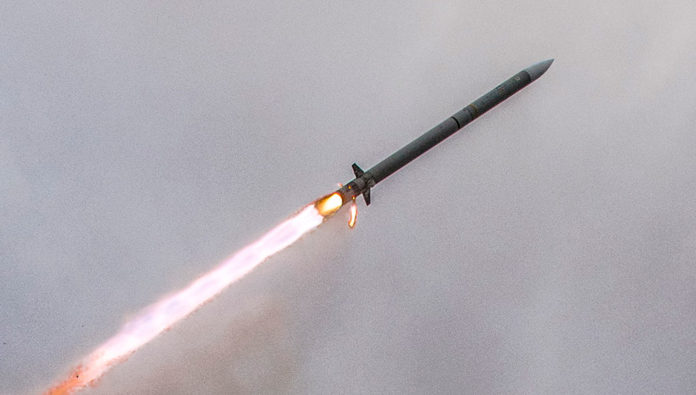
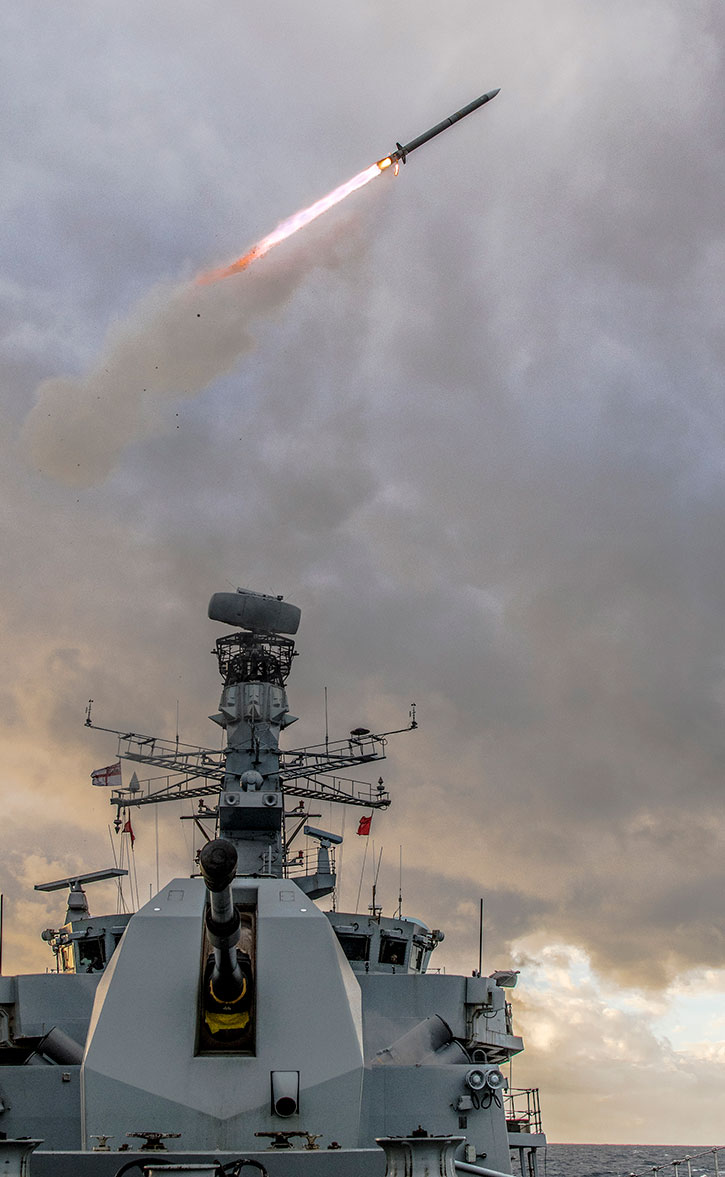
HMS Westminster Type 23 “Duke”-class frigate (F237) firing one of its new Sea Ceptor missiles during its recent qualification tests. Photo: MBDA
The Royal Navy has successfully conducted the final First of Class firing trials of the new Sea Ceptor air defense system – completing the qualification firings of this cutting-edge new capability for the Royal Navy. With HMS Argyll having completed development testing of Sea Ceptor, the weapon system is now being rolled out to the Royal Navy’s other Type 23 Frigates. The first of a series of installation test firings have been successfully completed on HMS Westminster. Each vessel will similarly complete an installation test firing in due course as they prepare to re-join frontline service after their refits.
Following on from the first round of trials this summer, the second set of trials from HMS Argyll saw the system tested against more complex scenarios, including rapidly engaging multiple simultaneous threats.
“HMS Westminster managed to explore the real potential of the system during her training and to say it is a real game changer is an understatement.” Lieutenant Nick Andrews, HMS Westminster’s Anti-Air-Warfare Officer, said, “Unlike its predecessor, the system is capable of defending ships other than Westminster herself. Whether it’s engaging multiple air threats or fast incoming attack craft, Sea Ceptor represents a massive capability upgrade for the Type 23 frigate.”
With HMS Argyll due to deploy to Japan next year, the trials successfully showcased the short-range capabilities of the new defense system. Another Type 23, HMS Sutherland, is due to deploy to Australia in the New Year.
Sea Ceptor offers a step-change in capability compared with legacy systems like Sea Wolf, which it is replacing in Royal Navy service. While Sea Wolf gave Royal Navy warships the capability to protect themselves, with Sea Ceptor the navy’s frigates will now also be able to protect other vessels.
Despite being brand new to the international market, the benefits that CAMM offers have already been widely acknowledged internationally; with a number of international customers having chosen it as the basis for their future local air defence capabilities.
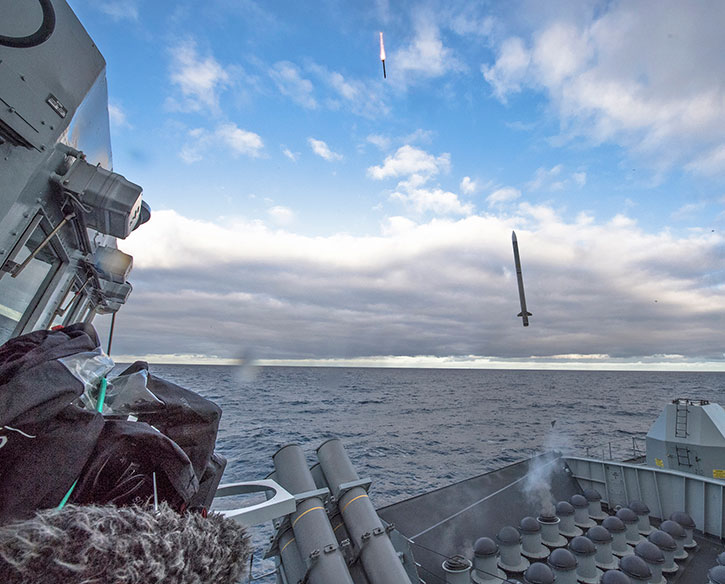
A salvo of two Sea Ceptor air defense missiles fired from HMS Argyll. The recently completed second set of trials from HMS Argyll tested the system against more complex scenarios, including rapidly engaging multiple simultaneous threats that required firing missiles in salvo. Sea Ceptor is being fitted to replace the Sea Wolf weapon system on the Type 23 frigates and will provide the same capability for the Royal Navy’s future Type 26 Frigates. Photo: Crown Copyright, UK MOD
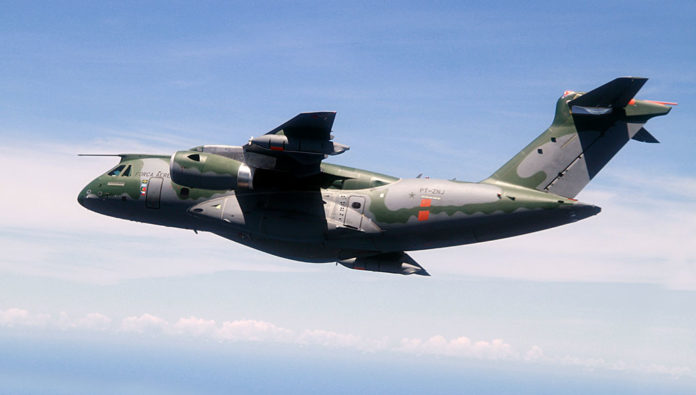
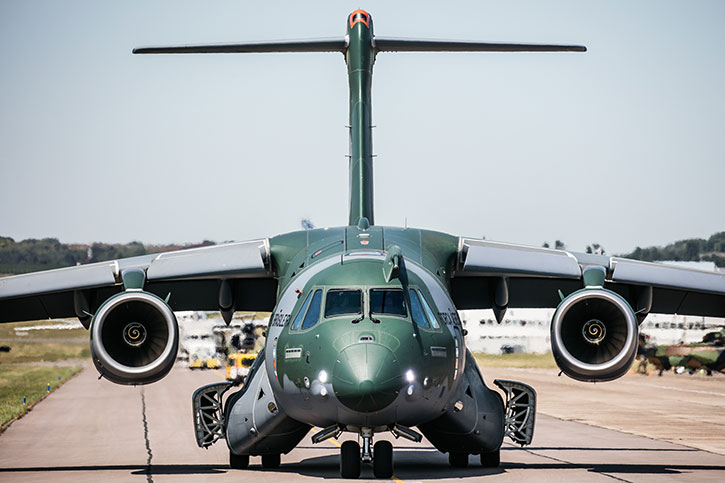
Brazilian Air Force KC-390 achieved Initial Operational Capability (IOC) today. Photo: Embraer
The Brazilian Air Force Embraer KC-390 achieved Initial Operational Capability (IOC) today. As part of the IOC, Embraer obtained a KC-390 Provisional Type Certificate from the Brazilian National Civil Aviation Agency (ANAC), According to the schedule, in 2018, the final Type Certificate will be issued.
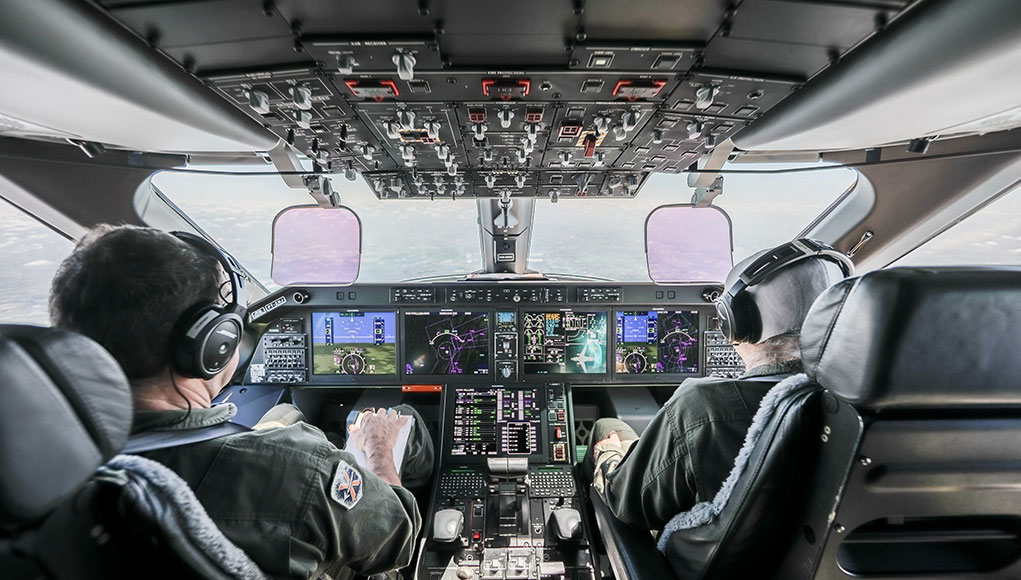
KC-390 has a modern avionics suit employing glass cockpit and HUD for the crew. Photo: Embraer
To date, the tests campaign has accumulated more than 1,500 flight hours with 2 prototypes and more than 40,000 hours of laboratory testing of the aircraft’s various systems. The structural tests campaign is nearing completion, with only the full-scale fatigue test remaining. In-flight tests of various military functionalities will be completed, including the remaining aerial refueling and cargo dropping tests, to fulfill the requirements to receive the final military certification of the aircraft with the achievement of the Final Operational Capability – FOC. Delivery of the first series aircraft to the FAB is also scheduled to take place in 2018.
“We are pleased to announce the achievement of this important milestone for the KC-390 Program,” said Jackson Schneider, President and CEO of Embraer Defense & Security. “The certification campaign has progressed as planned and the tests performed have been very successful, proving the maturity of the aircraft and confirming the performance and the anticipated capacities.” The achievement of the IOC ensures the necessary conditions have been met for the aircraft to start operations, in accordance with the scope agreed upon with the FAB.
KC-390 achieved initial operational capability with the Brazilian Air Force. Photo: Embraer
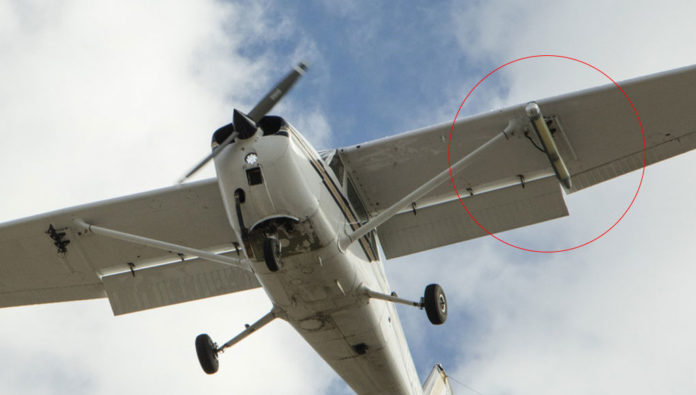
IMSAR successfully flight-tested their new extended range multi-mode radar, the NSP-5 ER, for the first time. Photo: IMSAR
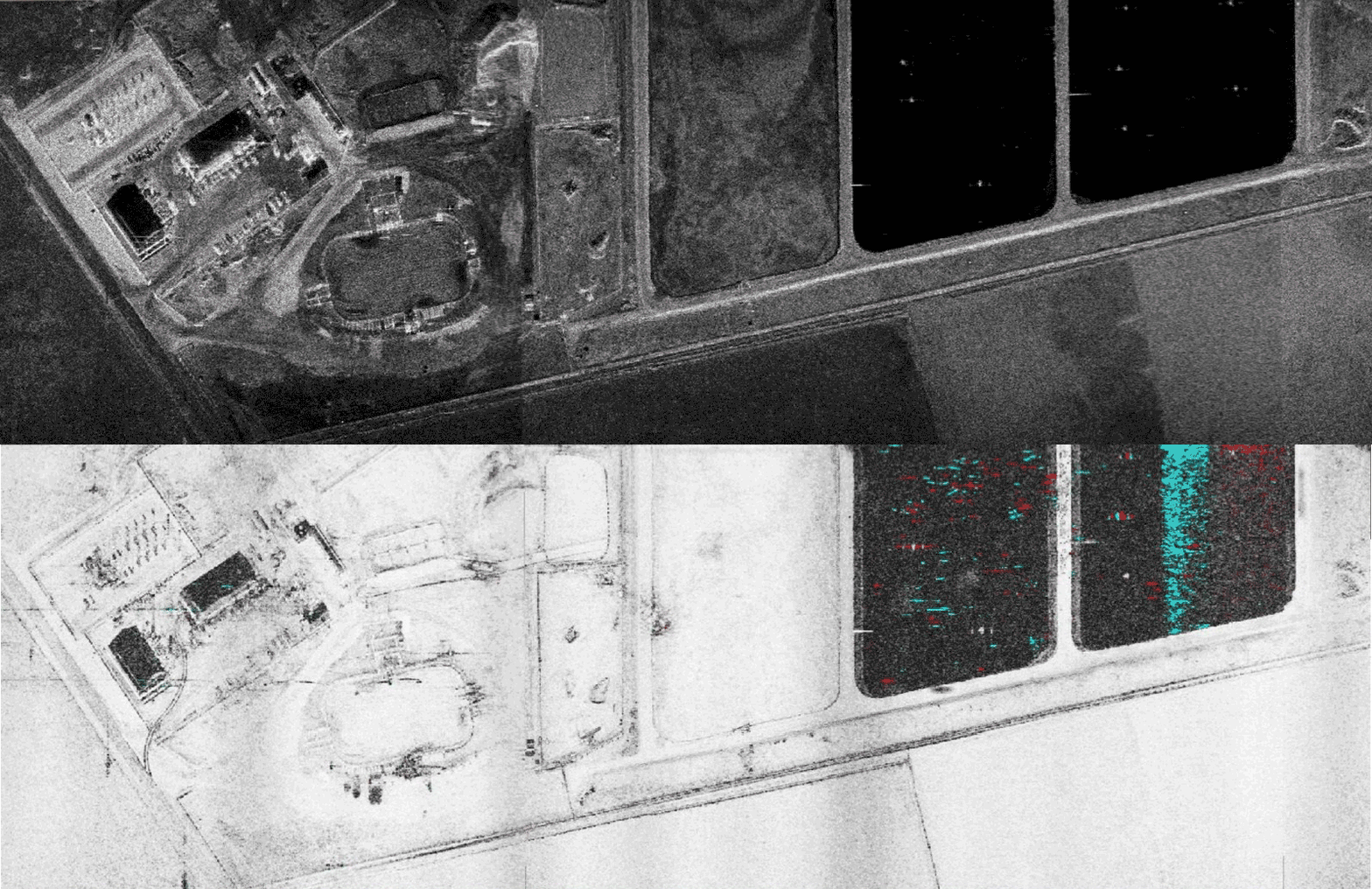
IMSAR successfully flight-tested an extended range multi-mode radar, the NSP-5 ER, for the first time. During the flight, the new sensor underwent testing to verify that image quality and impulse response metrics met IMSAR standards, delivering high-resolution imaging and coherent change detection modes. Following the successful flight test IMSAR began integration of the radar onto the Beechcraft King Air 200 for its first customer. In May 2018 the new radar was delivered to a Beechcraft King Air 200 customer.
According to the manufacturer’s technical specifications, the NSP-5 ER that operates in the Ku band can spot a 1-meter object in SAR image from 30 km on land, and detect moving targets (GMTI) from 20 km. Image resolution can be refined well below one meter, to 30 cm and lower. The complete, self-contained 58 inches (147 cm) long podded system weighs 10.9 kg (24 lbs) and consumes less than 275 watts of aircraft power.
Previously reserved for small Unmanned Aerial Vehicles, IMSAR has increased the operating range of their low Size, Weight, Power, and Cost (SWaP-C) multi-mode radar. The NSP-5 ER was designed for higher-altitude operation on larger, faster aircraft such as the King Air, PC-12, Caravan, and Gray Eagle. The NSP-5 ER provides these platforms with the same capabilities and low SWaP-C currently available on small UAVs while increasing range.
Previously reserved for Group 2 and Group 3 UAVs, IMSAR increased the operating range of their low Size, Weight, Power, and Cost (SWaP-C) multi-mode NSP-5 radar. The NSP-5 ER is designed for higher-altitude operation on larger, faster manned or unmanned aircraft such as the King Air, PC-12, Caravan, and Gray Eagle. The NSP-5 ER provides these platforms with the same capabilities and low SWaP-C currently reserved for smaller UAVs at lower speeds and altitudes. The radar has Synthetic Aperture Radar (SAR), Coherent Change Detection (CCD), Ground Moving Target Indicator (GMTI) and Maritime Moving Target Indicator (MMTI) modes.
“The NSP-5 ER produced beautiful Synthetic Aperture Radar (SAR) and Coherent Change Detection (CCD) products.” Larry Moore, Vice President of Engineering at IMSAR, said Photo: IMSAR
A situational map of the conflict in Yemen. Source: Southfront
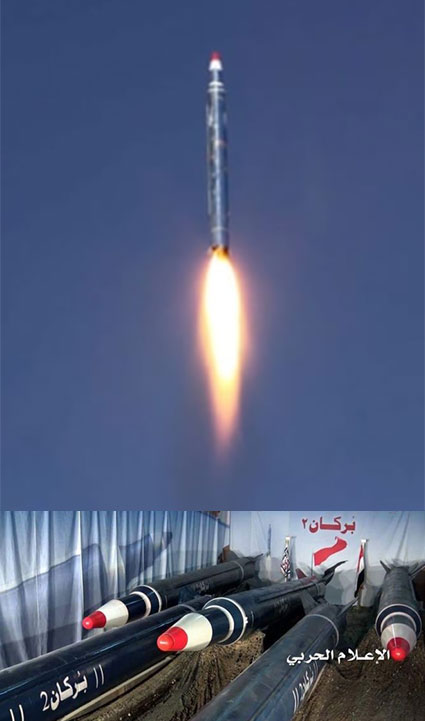
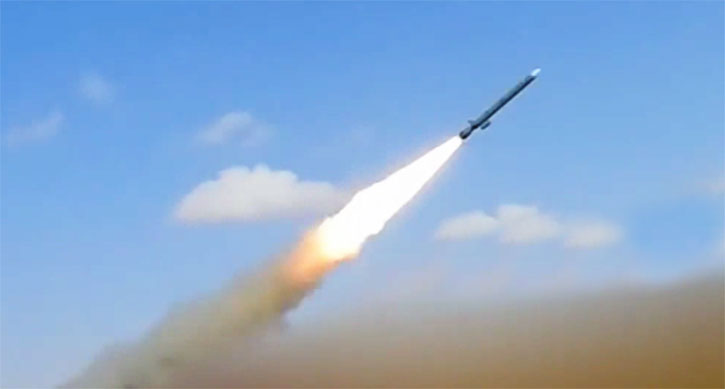
Likely provided by Iran, Burkan-2 ballistic missiles and Soumar cruise missiles are providing the ‘long arm’ of the Houthis. In February 2017 Yemeni news agency SABA released photos of five Burkan-2 missiles claimed to be produced in the country. So far three confirmed launches, in July, November, and December. The most recent was the only one launched in daylight.
Iranian backed Houthis in Yemen targeted the Saudi capital Riyadh today, launching a Burkan 2 ballistic missile. This was the second failed attempt by the Houthis to hit the capital of Saudi Arabia. The first targeted the city’s international airport. Today’s attack was directed at the Royal Court at al-Yamama palace, where a meeting of Saudi leaders was underway. The Saudi air defense intercepted and destroyed the missile at a relatively close range above the city.
Houthi spokesman Mohammed Abdussalam said that the Houthis fired a Burkan-2 ballistic missile at the Al-Yamama Palace in Riyadh. “The Saudis started the war. Our response will continue and increase, whether it’s targeting deep inside Saudi Arabia, targeting military positions where Saudi jets fly from, or military bases inside Yemeni territory,” Abdul Salam said.
Houthis claimed they have launched the first Burkan-2 at Riyadh on March 19, but provided no evidence of such attack. Burkan-2 is thought to be the Iranian Qiam-1 missile, a derivative of the Russian Scud-C, a ballistic missile with a range of 850 km. In its first launch at the Saudi port city of Yanboh on July 22, 2017, Burkan-2 achieved a longer distance than the range specified by the design – hitting a target at a distance of at least 920 km from the Saudi-Yemeni border.
In recent weeks several Houthi missiles were intercepted over Saudi Arabia, likely by Patriot air defense systems. On November 4 a Burkan-2 missile was intercepted not far from the Riyadh international airport, and on November 20 the military airbase at Khamis Mushayet was targeted by an unidentified missile that was also claimed to have been intercepted by the Saudi air defenses. In the past Houthis used SS-21 Tochka tactical short-range missiles, captured from the government forces. The Burkan-2 and Soumar were likely supplied by sea from Iran.
U.S. Ambassador to the United Nations Nikki Haley presents the remains the body of an Iranian Qiam-1 ballistic missile believed to be retrieved from one of the sites attacked by Houthi Burkan-2 missiles in recent months. At the terminal phase of its flight, the warhead is separated from the missile body that is seen in this picture. DoD photo by EJ Hersom
The Houthis also launched a single Sumar cruise missiles on December 3. The target claimed by the Houthis was a nuclear plant being constructed in Abu Dhabi. This was the first time the Houthis used such a weapon, likely to have been supplied by Iran. Considered a derivative of the Russian KH-55 cruise missile, Soumar has a theoretical range of 2,500 km, enabling it to reach the UAE from a launch site in Yemen. However, the missile developed a malfunction while in flight it crashed after flying about 140 km.
A situational map of the conflict in Yemen. Source: Southfront
Using the conflicts in Syria and Yemen to demonstrate the capabilities of their weapons, particularly missiles and long-range weapons, Iran is projecting power and influence throughout and beyond the region.
Unlike the Syrian regime Iran is assisting in Syria, the Iranian backed Houthis in Yemen are under pressure, as Saudi-led coalition backing local forces are now closing on the city of Hudaydah, a strategic seaport on the Red Sea providing the Iranians a logistical link to support the Houthis in Yemen. The Houthis control the mountainous heartland of Yemen, including the capital city Sana’a. The areas bordering Saudi Arabia also provide favorable locations for missile launches at coalition partners they are fighting in Yemen.
Soumar cruise missile was launched at a construction site of a nuclear plant in Abu Dhabi on December 3. The attack at such target was apparently meant to emphasize the potential of the weapon, even if it does not hit the target. “Our response will continue and increase, whether it’s targeting deep inside Saudi Arabia, targeting military positions where Saudi jets fly from, or military bases inside Yemeni territory” Houthi Houthi spokesman Mohammed Abdussalam said after today’s ballistic missile attack on Riyadh.
Israel Aerospace Industries (IAI) has recently completed the installation of the first secured border crossing in Argentina. The installation was completed just a few months after IAI had won a contract worth tens of millions of dollars for the provision of border control systems for four border crossings characterized by different topologies. IAI, through its Electronic Defense Group ELTA Systems (IAI/ELTA), has completed the first part of the installation at the La Quiaca border crossing and has delivered it to the Argentinean Home Security Ministry, for use by the Gendarmeria, Argentina’s border guard. The next border crossings awaiting installation are Salvador Mazza, Aguas Blancas, and Puerto Iguazu.
The system consists of fixed towers and mobile stations, allowing versatile operation of ground forces. The system extends security measures over long border lines, employing surveillance equipment such as radars, electro-optical equipment and other sensors, communication, command and control systems. Tactical unmanned systems, including BirdEye650D, mini UAV BirdEye400 small UAS and HoverMast100 tethered hovering sensors and ELI-3302 Granite ISRV vehicles also support the system. The information gathered by the sensors is sent to the local control center at each border crossing and dispatched in real time to a centralized information center where data is fused and enhanced to develop situational awareness and decision support.
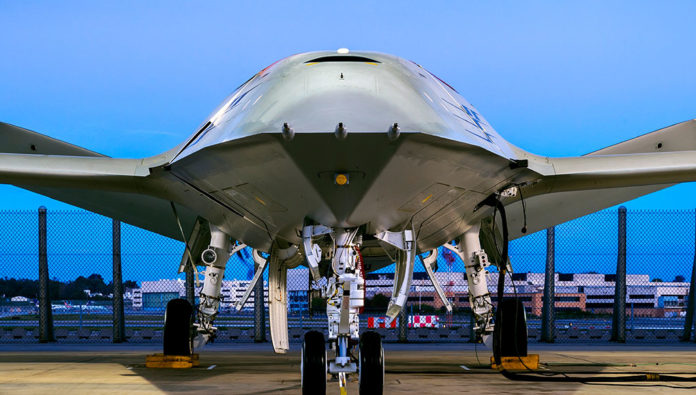
Boeing’s MQ-25 unmanned aircraft system is completing engine runs before heading to the flight ramp for deck handling demonstrations next year. Photo: Boeing by Eric Shindelbower
Boeing has unveiled a photo of an unmanned aircraft proposed to the U.S. Navy for an aerial refueling aircraft that will operate from aircraft carriers, to refuel Navy jets operating from aircraft carriers. Boeing designed and built a prototype of the aircraft at its Phantom Works. The UAS is completing engine runs before heading to the flight ramp for deck handling demonstrations early next year.
Through its MQ-25 ‘Stingray’ competition, the Navy is seeking unmanned refueling capabilities that would extend the combat range of deployed Boeing F/A-18 Super Hornet, Boeing EA-18G Growler, and Lockheed Martin F-35C fighters. The MQ-25 will also have to seamlessly integrate with a carrier’s catapult and launch and recovery systems. The Navy issued its final request for proposals in October. Proposals are due Jan. 3. General Atomics and Lockheed Martin are competing Boeing on this bid.
“Boeing has been delivering carrier aircraft to the Navy for almost 90 years,” said Don ‘BD’ Gaddis, a retired admiral who leads the refueling system program for Boeing’s Phantom Works technology organization. “Our expertise gives us confidence in our approach. We will be ready for flight testing when the engineering and manufacturing development contract is awarded.”
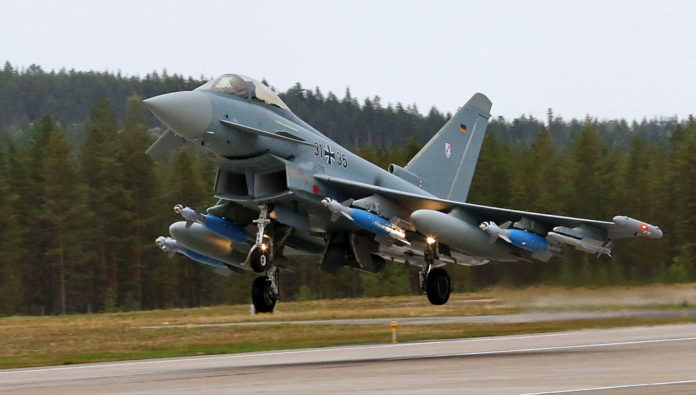
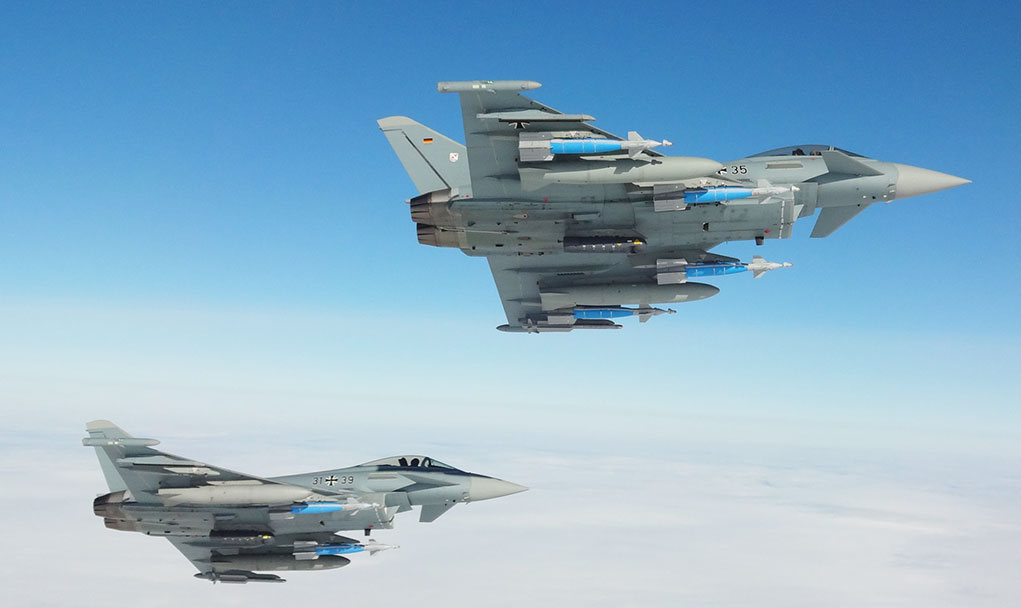
German Eurofighter Typhoon from TaktLwG 31 Boelcke takes off with four GBU-48 weapons. Photo: Ullrich Metternich
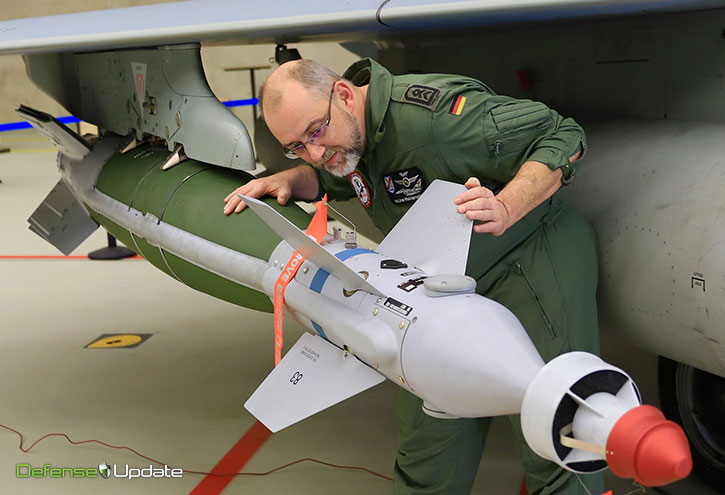
GBU-48 Enhanced Paveway II is a precision guidance kit comprised of a GPS guidance, semi-active laser homing, a wing assembly and control unit strapped on standard Mk-83 aerial bombs, turning them into precision-guided weapons. Photo: Luftwaffe, by Stefan Petersen.
TaktLwG 31 Boelcke, the Luftwaffe’s first operational Eurofighter wing based at Nörvenich Air Force Base, will also be the first unit to deploy the Typhoon fighter jets in the ground attack role, equipped with Enhanced Paveway II guided weapons. 27 of the unit’s 31 Eurofighters are to be equipped with the weapon. Germany currently operates 125 of the 143 Typhoons ordered from the Eurofighter consortium. Until now those fighters were restricted to the air defense role, which they pursued in combat patrols above the Baltic region.
This new capability will be critical for the German deployment in support of NATO’s Very High Readiness Joint Task Force (VJTF). Established in 2014, this is a rapid response task force made of 5,000 troops and backed by support elements from several alliance states, is currently led by the British forces. Germany, the Netherlands, and Norway will assume VJTF responsibility in 2019.
GBU-48 Enhanced Paveway II is a precision guidance kit comprised of a GPS guidance, enabling attack under all weather conditions, and semi-active laser homing, enabling high precision targeting using laser illumination. The kit also includes a wing assembly and control unit strapped on standard 1,000 pound Mk-83 aerial bombs, turning them into precision-guided weapons. Utilizing different activation fuses, the weapon can be activated by impact, airburst or delay facilitating target penetration and reduce collateral damage.
The Typhoon attack configuration for the Luftwaffe is comprised of four GBU-48 guided weapons and Litening III targeting pod. Photo: Luftwaffe / WTD 61
BIRD Aerosystems has won a contract for the installation of the AeroShield POD on a number of Airbus 320 Type aircraft Under this contract, the company will install the AeroShield POD with the AMPS-MV system on aircraft of a governmental customer in Europe. Under the contract, the company will provide installation design, integration testing and qualification for the system. This contract follows a successful program of the AeroShield POD with a similar configuration on Boeing 737 type aircraft.
The Aeroshield pod is an all-in-one, integrated Man Portable Anti-Aircraft Missile Systems (MANPADS) threat detection and countermeasure solution that complies with EASA/FAA civil aviation regulation procedures. The system enables the installation of Bird’s Airborne Missile Protection Systems (AMPS) on VIP and commercial aircraft with minimal disruption to operations. the AeroShield POD comprises BIRD’s AMPS system which includes five Missile Launch Detection Sensors (MILDS), one Missile Approach Confirmation Sensor (MACS), Flare Dispensers and an inertial measurement unit (IMU). The pod can be transferred between different aircraft.
Bird Aerosystems’ patented MACS sensor performs unique confirmation of suspected incoming missile threats detected by the main electro-optical passive sensors, and practically eliminates any false alarms. Upon receiving a pre-alarm warning from the electro-optical sensors, MACS slews to the direction of the incoming threat and verifies the threat’s validity. Concurrently, MACS also collects relevant information on the target (velocity and distance) and calculates its time-to-
impact, enabling the most effective countermeasure response to the incoming missile. This validation process between the electro-optical sensors and the MACS provides the most effective filtering for all nature and man-made known types of
false alarms that are usually detected by electro-optical sensors. MACS ensures that only real missiles will be declared by the system and reacted upon.
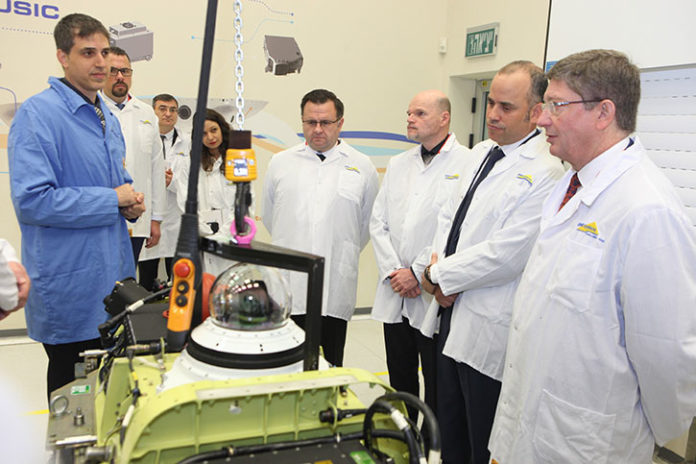
NATO MMF mission visit J-Music production line at Elbit Systems. Peter Dohmen - General Manager, NSPA, Ziv Ashkenazi Senior Director, ISTAR Division Elbit Systems, Colonel Jan Der Kinderen – MMF Project Leader , NL Royal Air Force, Adrian Kenn – MMF Contracting Officer , NSPA, Andreas ZUSCHKE – MMF Program Manager, NSPA, Benny Maor, ISTAR Division Elbit Systems. Photo: Elbit Systems
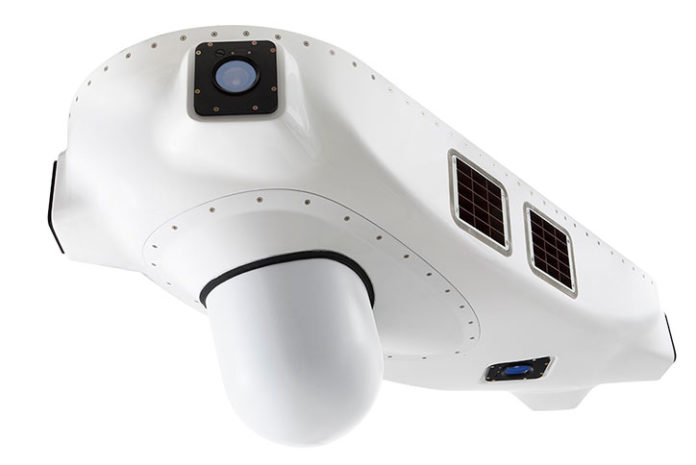
Europe’s Multinational Multi-Role Tanker Transport Flee will equip its A330 aerial tankers with self-protection systems made by Elbit Systems. The contract worth $46 million was awarded by NATO Support Procurement Agency (NSPA), deliveries will span over four years, to provide self-protection capabilities for the entire fleet of multinational tankers. Elbit Systems J-Music Directional Infrared Countermeasures (DIRCM) and PAWS-IR missile approach warning systems, comprising anti-missile self-protection systems were selected to be fitted to the new Airbus A330 Multi-Role Tanker Transport (MRTT) aerial tankers scheduled to join the fleet beginning 2020.
The MFF is formed to provide a European AAR capability by 2020, as it begins to ‘inherit’ aerial refueling responsibilities of several NATO members, including the Netherlands, Belgium, France, Greece, Spain, Hungary, Luxembourg, Poland, Portugal, and Norway. The fleet will operate from the Eindhoven Airbase in the Netherlands. The MFF currently has seven aircraft on order, with one more expected to be added to the orders in 2018. The first is due for delivery in 2020.
Williams Advanced Engineering will explore the use of lightweight composites and battery design for application with Airbus‘ Zephyr High Altitude Pseudo-Satellite (HAPS) programme. Craig Wilson, Managing Director of Williams Advanced Engineering said he hopes to share some of his team expertise in electrification, battery systems, and advanced lightweight materials.
Zephyr is a record-breaking, solar-powered, unmanned aerial system (UAS), or drone, with unique communications and surveillance capabilities. It will fly at more than 65,000ft, above commercial air traffic, for months at a time. The first production examples are being manufactured at Farnborough for the UK Ministry of Defence.
Williams is the sole battery supplier to the FIA Formula E championship since its inception. With four decades of experience at the pinnacle of motor racing, where lightweight materials and structures are crucial, Williams is now developing these technologies and finding innovative solutions to weight saving. “Our engineering teams are thrilled to have the opportunity to learn from the Formula 1 world and just as enthusiastic about sharing much of what we have learned in developing solutions to high-altitude, solar-powered flight.” Airbus Head of Unmanned Aerial Systems, Jana Rosenmann, said
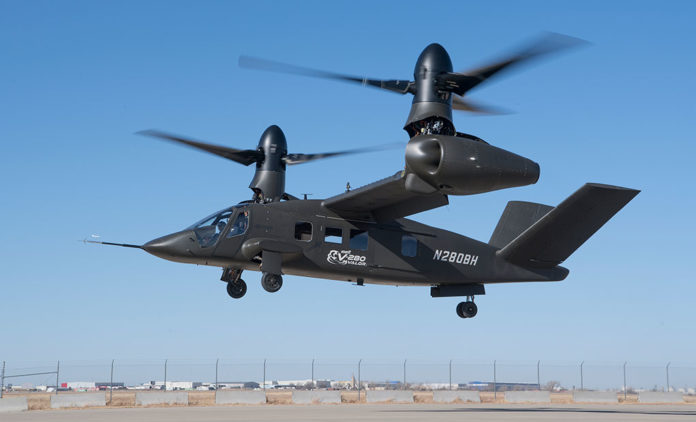
V-280 takes off on its first flight, December 18, 2017 at Amarillo, Texas. Photo: Bell Helicopter
Bell Helicopter’s V-280 Valor has achieved first flight yesterday, at Bell Helicopter facility at Amarillo, Texas. The V-280 Valor is Bell’s variant evaluated by the US Army Joint Multi-Role Technology Demonstrator initiative. As an advanced, second-generation tiltrotor that is designed to provide higher agility, speed, range and payload capabilities at an affordable cost. With twice the speed and range of conventional helicopters, the Valor is designed to offer future maneuver commanders the operational agility to self-deploy into a theater and perform a multitude of vertical lift missions currently unachievable in one aircraft.
The JMR-TD program is the science and technology precursor to the Department of Defense’s Future Vertical Lift program.
The V-280 program brings together the engineering resources and industrial capabilities of Bell Helicopter, Lockheed Martin, GE, Moog, IAI, TRU Simulation & Training, Astronics, Eaton, GKN Aerospace, Lord, Meggitt and Spirit AeroSystems—collectively referred to as Team Valor.
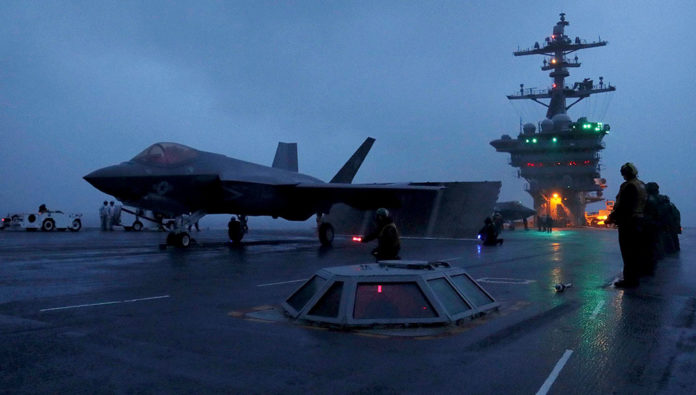
Sailors prepare to launch an F-35C Lightning II assigned to the "Rough Raiders" of Strike Fighter Squadron (VFA) 125 during flight operations aboard the Nimitz-class aircraft carrier USS Abraham Lincoln (CVN 72). Photo: US Navy by Josue Escobosa
On Friday, December 15, Lockheed Martin delivered the 66th F-35 aircraft for the year, meeting the joint government and industry delivery target for 2017.
These aircraft bring to 265 the total number of F-35 aircraft delivered to U.S. and international customers. More than 530 pilots and nearly 5,000 maintainers have been trained, and the F-35 fleet has surpassed more than 115,000 cumulative flight hours.
The delivery rate in 2017 represents more than a 40 percent increase from 2016, and the F-35 enterprise is prepared to increase production volume year-over-year to hit full rate of approximately 160 aircraft in 2023. As production ramps and additional improvements are implemented, Lockheed Martin’s goal is to reduce the cost of an F-35A to $80 million by 2020.
“The team continues to overcome program challenges and achieving this milestone gives our customers confidence that the F-35 enterprise can deliver on the increasing production quantities year-over-year,” said Lockheed Martin Executive Vice President and F-35 Program General Manager Jeff Babione. Process efficiencies, production automation, facility and tooling upgrades, and supply chain initiatives are some of the improvements implemented through the F-35 enterprise, resulting in continuous cost reductions.
In contrast to these positive news, the Pentagon’s contract management agency said the number of aircraft delivered in 2017 came short of its annual goal, because the 66 delivered included nine planes that were supposed to be delivered in 2016. According to a report published by Bloomberg, monthly deliveries of F-35s through 2017 were slower than scheduled. Nevertheless, the agency said delays were smaller this year, compared to those recorded in the past four years.
After completing her qualification in a week long mission in the Atlantic Ocean last week CVN-72 Abraham Lincoln is the first aircraft carrier qualified to operate the navalized Lightning II – F-35C. Photo: US Navy, Juan Cubano
First Aircraft Carrier Qualified to Operate F-35C
On the first week of December, while deployed at sea, the aircraft carrier USS Abraham Lincoln (CVN 72) successfully completed her qualifications to operate the F-35C Lightning II program. The Lincoln is the first aircraft carrier to qualify to operate the new fifth-generation fighter. Abraham Lincoln completed its four-year-long mid-life overhaul and refueling in May 2017 and is currently underway conducting carrier qualifications and training.
The Lincoln is considered the Navy’s most modernized and capable Nimitz-class aircraft carrier. Apart from the F-35C support systems she also has enhanced air search and air traffic control radars, Consolidated Afloat Networks and Enterprise Services (CANES), a modernized Command, Control, Communications, Computers, Intelligence, Surveillance and Reconnaissance (C4ISR) suite and even new crew galley equipment.
The Nimitz class Lincoln deployed the F-35C using standard steam catapults, unlike the first next-generation carrier – CVN-78 Gerald R. Ford, that uses the new Electromagnetic Aircraft Launch System (EMALS).
Abraham Lincoln operated in inclement weather during a portion of the qualification process, which gave the squadrons varying condition to test the Joint Precision Approach and Landing System (JPALS). This all-weather system works with the ship’s navigation system to provide accurate and reliable guidance for the aircraft. Prior to this deployment, F-35Cs only used JPALS for developmental testing. The mission also included the operational use of Autonomic Logistic Information System (ALIS) – the F-35 logistical support system.
With 14 F-35B Delivered, RAF Scheduled to Achieve IOC Next Year
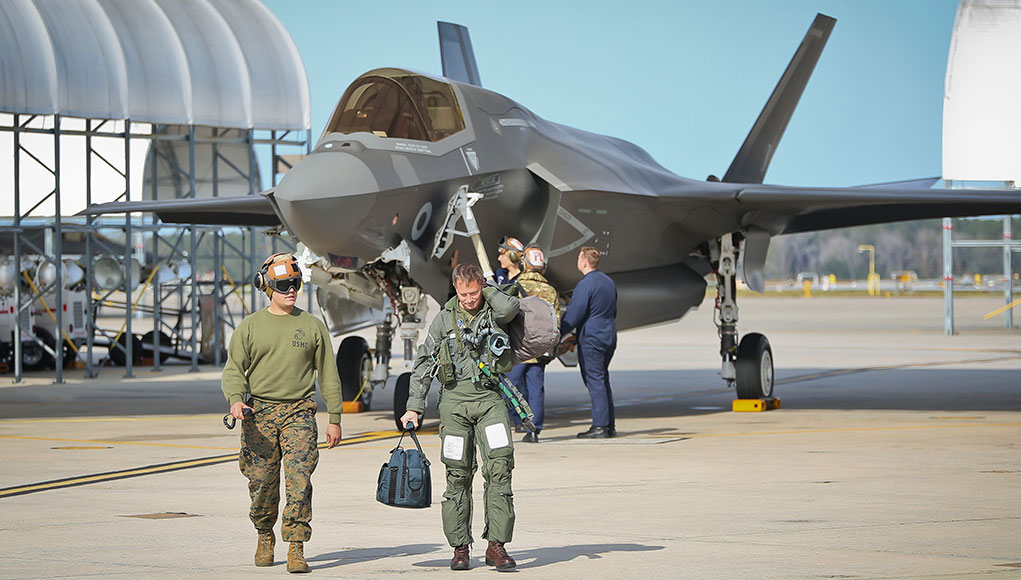
Among those recently supplied planes was the 14th F-35B delivered to the Royal Air Force. The British F-35s will be able to operate on land or embarked on the UK’s new aircraft carriers. The first of the two ships – HMS Queen Elizabeth Carrier (QEII)was commissioned into the Royal Navy earlier this month. The aircraft are expected to arrive at RAF Marham in Norfolk by the summer of 2018, to join 617 Squadron that is scheduled to achieve Initial Operating Capability (IOC) from land next year. The unit will also perform the carrier flight trials on QEII and plans to achieve Initial Operating Capability Carrier Strike in 2020.
The UK has taken delivery of its 14th F-35B Lightning II which flew into Beaufort, South Carolina last week. Photo: Crown Copyright, UK MOD.
Marham will be the Main Operating Base for the Lightning Force in the UK and from here, they will deploy forward to either embark on-board our Queen Elizabeth Class aircraft carriers or operate from Deployed Operating Bases. Following successful trials on the land-based ski-ramp design which is featured on the UK flagship, and with the RAF Marham runway infrastructure completed as part of a £250m major investment programme in preparation for the F-35 arrival, Defence Minister Harriett Baldwin earlier this year announced that the F-35 was cleared for take-off.
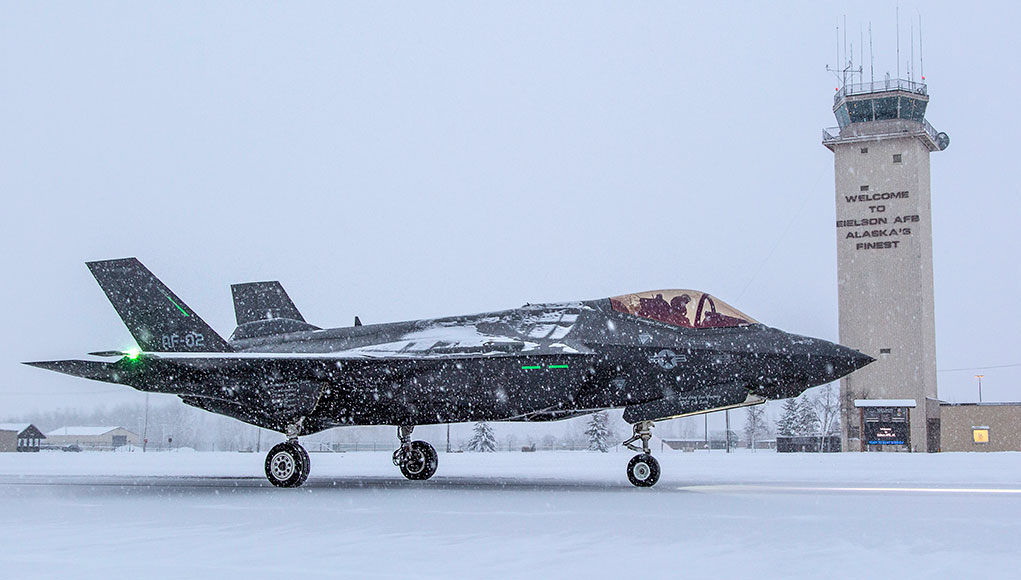
Other preparations include extreme cold weather testing of F-35A for the Norwegian Air Force. Tests on the icy runway were performed at Eielson Air Force Base, Alaska as part of the certification process for the Norwegian air force. The second phase of testing will deploy the Norwegian drag chute during landing operations and is planned for first quarter 2018 at Eielson. The F-35A drag chute is designed to be installed on all of Norway’s F-35As and is form fitted to ensure it maintains stealth characteristics while flying.
Maj. Jonathan “Spades” Gilbert, U.S. Air Force F-35 test pilot, demonstrates the handling qualities of the F-35 during icy runway ground testing at Eielson Air Force Base, Alaska. The Norwegian F-35A are equipped with a drag chute, designed to fit to ensure it maintains stealth characteristics while flying. Photo: Lockheed Martin,
Lockheed Martin Skunk Works® and XTEND have achieved a major milestone in JADC2 by integrating the XOS operating system with the MDCX™ autonomy platform. This technical breakthrough enables a single operator to simultaneously command multiple drone classes, eliminating the friction of mission handoffs. From "marsupial" drone deployments to operating in GPS-denied environments, explore how this collaboration is abbreviating the data-to-decision timeline and redefining autonomous mission execution.
As traditional defense primes face mounting competition from agile “neoprimes” such as Anduril, Palantir and Helsing, the balance of innovation is shifting toward software-defined warfare and scalable, dual-use technologies, while global industry consolidation—marked by Boeing’s integration of Spirit AeroSystems and other strategic mergers—signals an intensified race to secure control over the defense technology value chain. Our Defense-Tech weekly report highlights these trends.
In early October 2025, a coordinated wave of unmanned aerial system (UAS) incursions—widely attributed to Russia—targeted critical infrastructure across at least ten European nations. The unprecedented campaign exposed the fragility of Europe’s air defenses...
Executive Summary
The past week (September 18-25, 2025) represents an inflection point where strategic defense concepts have transitioned from doctrine to tangible reality. An analysis of global events reveals four primary, interconnected trends shaping an...
At the 2025 Air, Space & Cyber Conference, U.S. Air Force and Space Force leaders unveiled major updates on next-generation fighters, bombers, unmanned systems, and space initiatives, highlighting both rapid innovation and critical readiness challenges as the services race to outpace global competitors. A short version is available here, with a more detailed version for subscribers.
The Taipei Aerospace & Defense Technology Exhibition (TADTE) 2025 crystallized around four dominant strategic themes that collectively illustrate Taiwan's comprehensive approach to defense modernization amid escalating regional tensions. Based on a detailed report by Pleronix (available upon request). Includes a Podcast discussion on TADTE 2025's highlighting Taiwan's four strategic themes beyond the post's coverage.
Israel’s Iron Beam 450 high-power laser system has completed final testing, marking a major leap in air defense. Developed by Rafael, it offers precise, cost-effective interception of rockets, UAVs, and mortars, and is set for IDF deployment by 2025.