Countering Drones – 12-14 December 2017 – Chelsea Football Club, London, UK
Intelligence & Special Forces
13-December, 2017 – Tel Aviv, Israel
This year’s main conference subject will be Intelligence in a Dynamic Reality and Cope with Terrorism. Features include discussion on global terrorism, leadership, cyber intelligence, and big-data solutions.
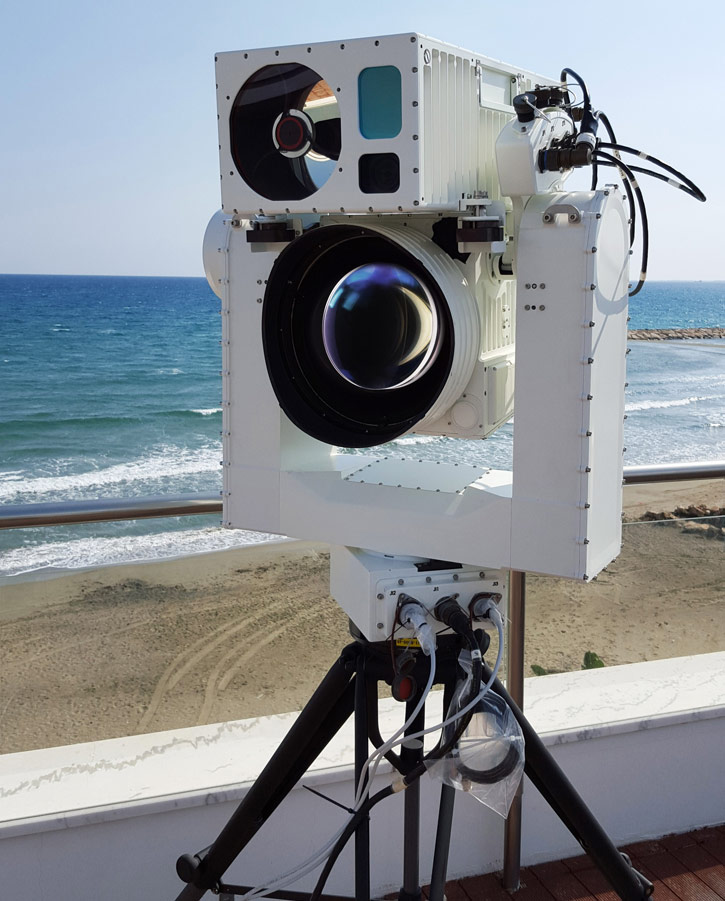
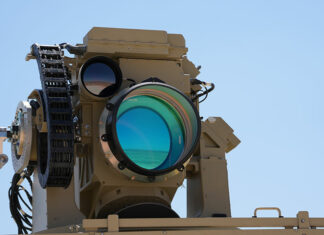
SPEED-ER addresses requirement for exceptionally long-range surveillance, of dozens of kilometers, under all weather conditions and at all hours of the day. Photo: Controp
Controp Precision Technology is unveiling a land-based observation system designed for operation at very long range. The gyro-stabilized SPEED-ER employs multiple sensors in parallel, operating in three channels – Visible, Thermal and SWIR (Short-Wave Infrared). The combination of images ensure sharp, clear and stabilized pictures under all visibility conditions. A new addition to night/day vision of standard IR/VIS imaging systems, SWIR provides outstanding images, even in conditions of haze, dust, rain or high humidity.
“We developed SPEED-ER as an answer to the acute problem of unclear pictures under limited visibility conditions such as during daytime with high humidity or dust and smoke, and during twilight hours, when year-round and round-the-clock surveillance is the utmost priority,” explain Johnny Carni, CONTROP’s VP Marketing & Sales.
Carni added that SPEED-ER is the ultimate solution for programs that require exceptionally long-range surveillance of dozens of kilometers, under all weather conditions and at all hours of the day. “Due to this particularly long range capability, fewer posts are required to protect a very large area, making this system even more cost-effective.”
Speed ER was originally designed for border surveillance, coastline protection and other land-based applications. The gimballed system can also be used in other applications, such as Vessel Traffic Services (VTS) and Air Defense – where it can be mounted on high masts, poles and fixed/mobile towers. Photo: Controp
The system comprises a cooled InfraRed Thermal Imaging camera operating in the medium infrared band (MWIR), fitted with a continuous zoom lens.The SWIR Camera also uses a continuous optical zoom lens. The system also uses two color day cameras, for wide to medium Field-of-View (WFOV) and for Narrow to super narrow Field-of-View (NFOV). Additional ancillary systems include a laser rangefinder and laser pointer and command and control unit.
The Thermal camera has a narrow FOV of 0.4°while the SWIR camera has an NFOV of 0.22°, enabling the system to detect a NATO target from a distance of more than 40 km.
Though initially designed for diversified land-based applications such as border surveillance and coastline protection, SPEED-ER is also ideal for Vessel Traffic Services (VTS) and Air Defense – and the advanced gyro-stabilization allows installation on high masts, poles and fixed/mobile towers.
According to Carni, the system is currently in production, fulfilling initial orders from customers, following extensive test and evaluation phase.
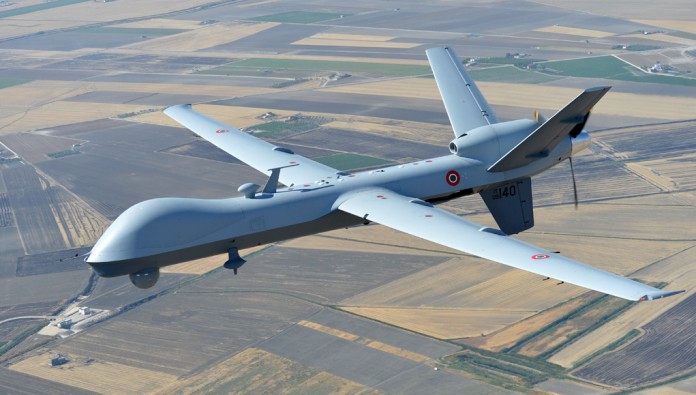
Italy is integrating the Israeli Reccelite tactical reconnaissance pod on its US-made General Atomics Aeronautical Systems, Inc. (GA‑ASI) Predator B/ MQ-9 Remotely Piloted Aircraft (RPA) systems. Integration tests are already underway and fielding of the new configuration is expected next year. The Reccelite, made by Rafael, is already flying on Italian Air Force fighter jets such as the Tornado and AMX. Reccelite is a versatile imagery reconnaissance pod .
designed to provide wide-area coverage using a gimballed, advanced, high-resolution multi-mega-pixel recce camera. The Reccelite pod will complement the Full-motion Video (FMV) provided by the Predator’s existing nose-mounted, Multi-spectral Targeting System-B (MTS-B). RecceLite provides geo-referenced, wide field-of-regard, high-resolution digital still imagery in the infrared and visible bands. To provide wide area coverage this imagery is post-processed into a mosaic image in the Ground Exploitation Station.
“Integrating this imagery enhancement capability onto Predator B is a significant milestone and could lead to similar efforts with other NATO customers that operate MQ-9,” said Linden Blue, CEO, GA-ASI. “Predator B’s open payload architecture enables users to integrate their own payloads easily, with minimal to no software changes required.”
A combined Italian Air Force, GA-ASI, and Rafael team is currently testing the integration hardware that will make this enhanced capability available to Italian operational forces. The team will execute developmental and operational flight tests under ItAF leadership in early 2017 at Amendola Air Base, Italy, with system fielding to occur shortly thereafter.
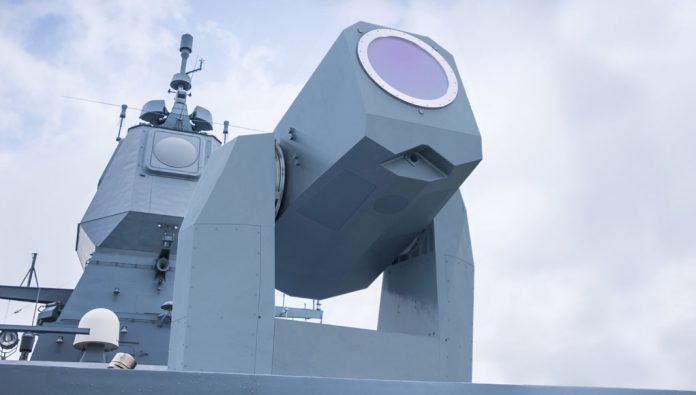
MBDA Deutschand unveiled a new laser effector for land and naval applications at the ILA 2016 airshow in Berlin. In the naval sector, laser effector systems could feature in both on board ship and port protection. Photo: MBDA
MBDA Deutschland has developed a rotatable laser effector designed to deploy on various land and sea-based platforms and is integrated with the platform via standardised interfaces. The company is displaying the new system this week at the ILA Berlin Air Show. The new weapon system is especially suitable for defence against highly agile targets such as UAVs, rockets and mortar shells.
With a beam guidance system covering a full hemisphere, the system can acquire targets in a 360-degree operational arc, track and then destroy specific targets using the weapon’s powerful laser beam.
The integrated tracking systems ensure a stable holding point on the target, and thus rapid target engagement. Short engagement times also make this effector capable of defending against swarming attacks such as UAVs attacking from different directions. The mirror optics used are capable of harnessing higher laser power levels than those currently available today.
“In recent years, MBDA Deutschland has invested a significant amount of its own resources into the development of laser technologies,” states Peter Heilmeier, MBDA Deutschland’s Head of Sales and Business Development. He indicated that the new laser effector is a further important step towards an operationally deployable system.
MBDA Deutschland has been working on laser effectors for several years. The company has successfully tested laser effectors in multiple trials against airborne targets such as shells and UAVs as well as other targets.
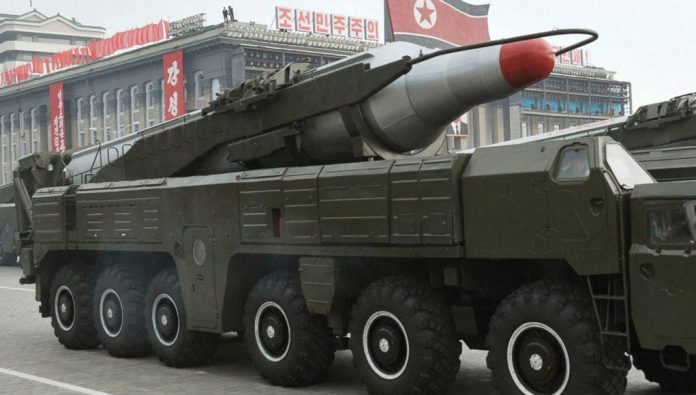
The defence ministry in Seoul said the missile test took place at around 5:20 am on Monday near the eastern port city of Wonsan. The missile likely a Musudan Intermediate-range Ballistic Missile (IRBM) was launched from a mobile transporter-launcher, and flew for seconds before exploding, the official said.
In April, the North failed three times to test-fire a Musudan. Tuesday’s launch appears to have been its first missile test since then, and experts said it was unusual to test-fire a missile so soon after a failure.
Musudan that has been declared ‘operational’ is capable – theoretically – to hit targets at ranges up to 4,000 km (2,500 miles). With the credible performance, this weapon represents the rough state’s highest threat to the region, as it can hit targets far beyond South Korea, in Japan as well US bases in the Pacific, including Guam.
“North Korea shows no sign of abandoning the development of nuclear missiles, and so we will continue to work closely with the U.S. and South Korea in response and maintain a close watch,” Japanese Minister of Defence Gen Nakatani told a media briefing.
Pyongyang has not tested the Musudan missile in flight since its inception in 2003. Analysts estimate North Korea may have produced 50 such missiles. Their public debut in 2010 indicated the induction of 31 such missiles with North Korean strategic forces. 19 such missiles were reportedly transferred to Iran, where it is designated BM25.
It appears to be the latest in a string of missile tests as the country tries to advance its weapons program in defiance of the international community and its closest regional ally, China. Neither Iran, nor Pyongyang have tested these missiles before 2016, nor did they validate their full range in flight.
The Musudan uses a propulsion system derived from the proven system that powers the Russian SS-N-6 Submarine-Launched Ballistic Missile (SLBM). Therefore, given that manufacturing process and subsystems are reliable, the Korean missile would also perform as expected since this propulsion system proved its reliability in 461 successful launches of the Russian ‘R27 Zyb’ SLBM.
However, this was not the case. The Korean developers probably suspected their system was not mature enough to take the challenge. Intelligence sources reported in 2013 on a previous aborted launch of the missile.
Assuming that the Korean missile engineers have retrieved missile parts after the explosions, and gathered flight data by telemetry, indicating the system’s failure dynamics during the flight, Western analysts expect they would be able to identify the causes of the failures, and improve the system’s reliability. However, compressing four test attempts in less than two months means they have not had enough time to assess their findings and implement adequate solutions.
When the Musudan/BM25 eventually reaches maturity, it is likely become a much bigger concern for countries in the Far East, MiddleEast and Eastern Europe, as all rest within its reach.
The competition authorities in Finland have granted their approval concerning the sale of 49.9 percent of the shares of the Finnish defense company Patria Oyj, fully owned by the State of Finland to Kongsberg Defence & Aerospace AS. The total value of the transaction is EUR 283.5 million. The State of Finland now owns 50.1 percent of Patria Oyj. The transaction will support Patria’s operations in the international market and open opportunities especially in maintenance business, systems deliveries and production of aerospace components.
The decision comes two years after the previous commercial owner – the Airbus group, decided to divest its minority stake in the company. Airbus owned 26.8 percent in Patria and sold its entire stake to the Finnish government.
”We at Patria are very pleased with the new minority owner and strategic partner. This is opening new opportunities for the development of our operations and surely for its part also affecting the future strategic choices. Additionally it will strengthen Patria’s position as a significant player in the Nordic and the leading defence company in Finland. Patria will also in the future be an essential part of the Finnish defence industry and security of supply”, says Heikki Allonen, President and CEO of Patria.
Kongsberg, listed in the Oslo Stock Exchange, is more than 200 years old company. The majority stockholder is the State of Norway with 50 percent. Patria itself has 50% stake in Nammo, a Norwegian defense company specialized in ammunition and rocket propulsion. The state of Norway is the other shareholder of Nammo.
Patria, Kongsberg and the Norwegian Nammo, which is producing ammunition and rocket motors and equally owned by Patria and the State of Norway, will together form a leading Nordic entity in its field.
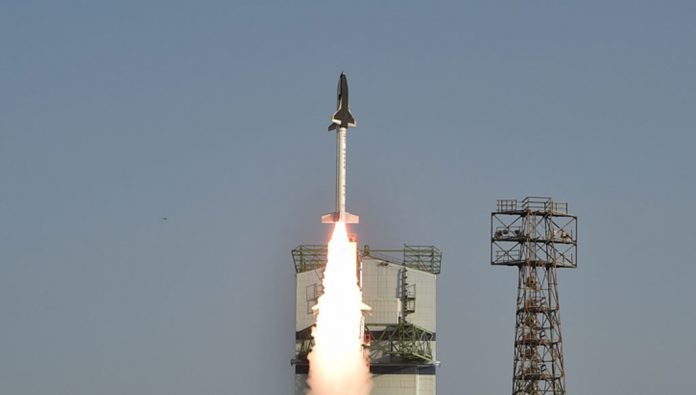
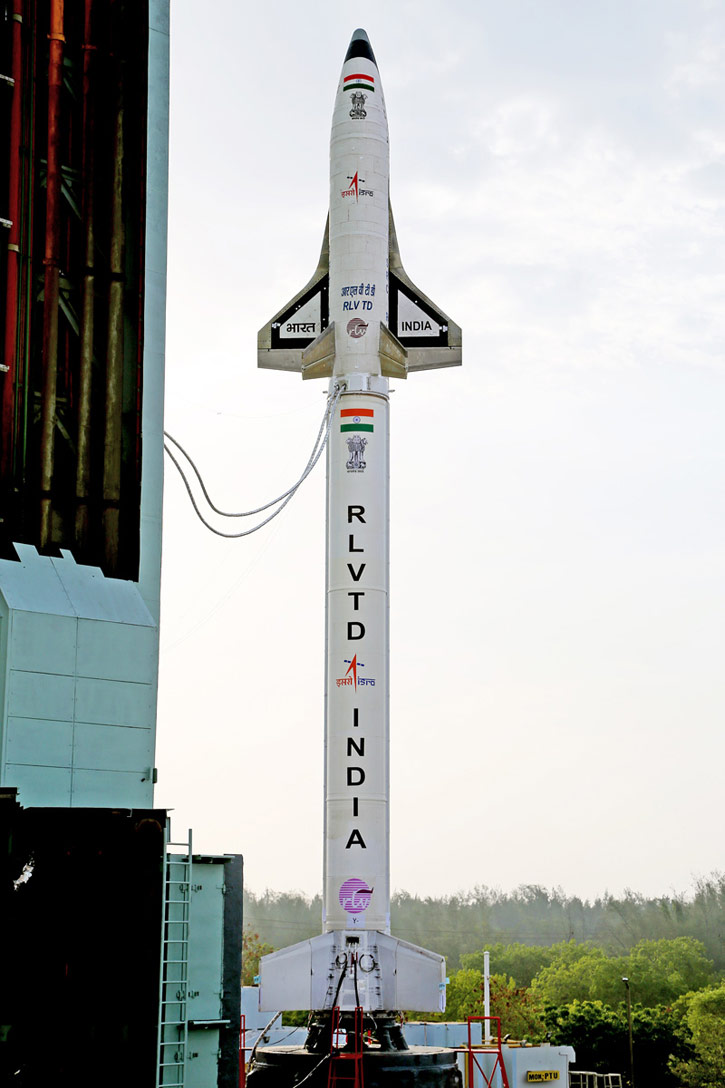
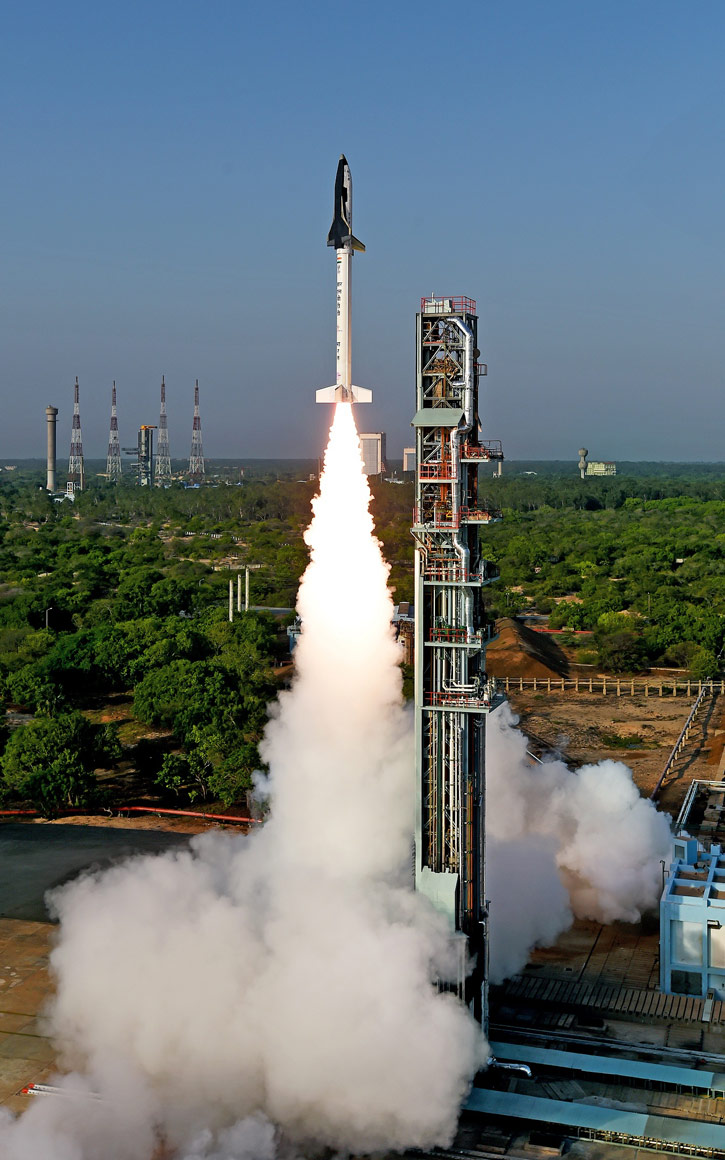
India conducted the first flight test of its ‘Reusable Launch Vehicle’ (RLV) developed by the Indian Space Research Organization (ISRO) on Monday, May 23, 2016, as the 6.7 m’ (22 ft) long vehicle was launched on top an HS9 solid rocket booster. Unlike the American space shuttle or X-37B space plane that perform most of their mission in orbit, the Indian RLV is designed to provide a reusable ‘upper stage’, to assist bringing satellites to orbit. Once completing its mission the launcher will be able to return to the atmosphere and land, refurbished for reuse on new missions. Employing such reusable elements for satellite launches, ISRO engineers’ hope they can bring down the launch cost to $2,000 per kg. An operational version would take 10-15 years to complete.
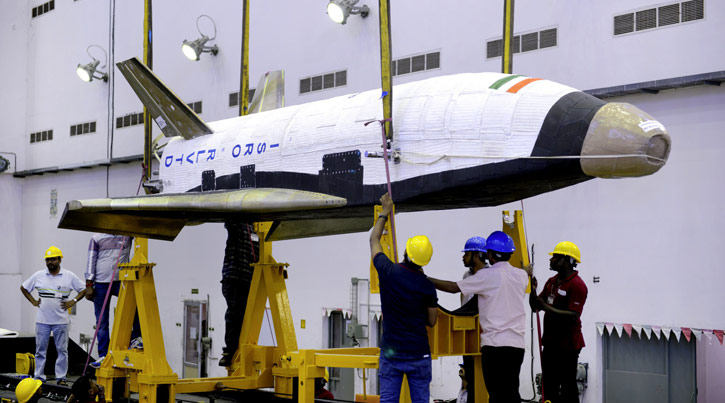
This event was the first successful test of the country’s first winged-body aerospace vehicle. The trial evaluated the aero-thermodynamics the new vehicles develops in hypersonic flight. The test also validated the vehicle’s autonomous mission management and certain aspects of its re-entry phase. Weighing 1.75 tons the RLV used a thermal protection system (TPS) comprising 600 heat-resistant silica tiles and a Carbon-Carbon nose cap to withstand the high temperature during atmospheric re-entry.
The 6.7 m’ (22 ft) long RLV was launched on top an HS9 solid rocket booster. Photo: ISRO
The test flight was launched at seven a.m. from the spaceport at Sriharikota, some 100 km from Chennai. Riding on a booster rocket, the RLV-Technology Demonstrator climbed for about 90 seconds before its burnout. Coasting to an altitude of 56 km, it separated from the booster and inclined further to 65 km. (over 200,000 ft.).
The RLV re-entered the earth’s atmosphere at Mach 5 and used on board navigation and employed guidance rules and with thrusters and aerodynamic controls to perform a safe descent, landing at a predefined spot at the Bay of Bengal, 450 km from the launch point, the ISRO announcement said. Total flight duration from launch to landing lasted for about seven minutes.
The vehicle made a re-entry into the earth’s atmosphere at Mach 5 (five times the speed of sound), glide and steer by its thrusters and aerodynamic controls in a safe and controlled descent, down to a pre-defined landing spot that simulated a ‘virtual runway’ in the Bay of Bengal, 450 km from Sriharikota. The RLV uses a double delta wing design enables the control of the vehicle in high instability conditions as the vehicle decelerates from high hypersonic to subsonic flight while maintaining the vehicle’s stability on launch when it rapidly accelerates to high speed.
Among the new developments introduced in the RLV-TD are the composite movable fin, flush air data system to measure the surface pressure on the aircraft, onboard computer, high-resolution data acquisition system, lithium ion battery, patch antennas and radar altimeter.
Weighing 1.75 tons the RLV used a thermal protection system (TPS) comprising 600 heat-resistant silica tiles and a Carbon-Carbon nose cap to withstand the high temperature during atmospheric re-entry. Photo: ISRO
Designed as an expendable demonstrator, the RLV was not retrieved after landing as it was not designed to float. The test was the first of four test flights planned for the RLV Technology Demonstrator (RLV-TD). The first was completed on Monday and examined the characteristics of hypersonic and evaluated guidance, flight controls and the landing maneuvering. In the next phase, the RLV-TD is expected to perform landing, return to flight condition and be launched for the following test. The final flight will evaluate a Scramjet propulsion technology developed for the vehicle.
As many as 600 engineers from ISRO centers, National Aerospace Laboratories, IITs and Indian Institute of Science were involved in the development of the RLV-TD over a period of eight years.
Unlike the American space shuttle or X-37B space plane, RLV is designed to provide a reusable ‘upper stage’, placing satellites in orbit. Photo: ISRO
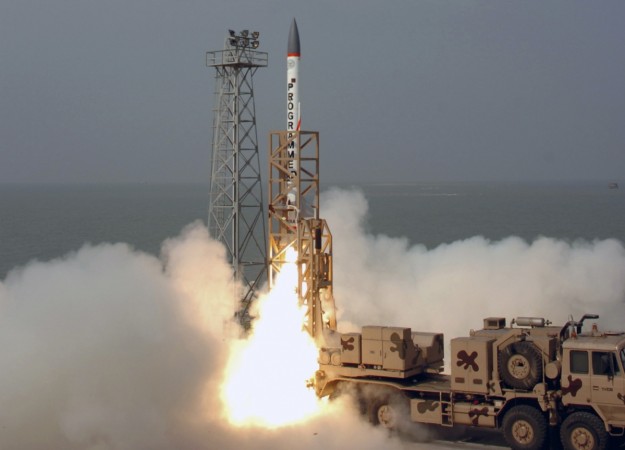
News reports published pictures of the interceptor being launched from the missile test range off Odisha coast. Photo: DRDO
On May 15, 2016 India’s Defense Research and Development Organization (DRDO) announced it conducted a ballistic missile intercept test, to evaluate part of the country’s multi-layered ballistic missile defense. The test involved a target missile – a modified Prithvi missile – launched from a naval ship in the Bay of Bengal and it mimicked the trajectory of a ballistic missile. The formal announcement said the test was successful. News reports published pictures of theAdvanced Air Defence (AAD) Interceptor being launched from the missile test range off Odisha coast.
But news reports aired a week later said it was a complete failure, in fact, the Hindu reported yesterday; the interceptor did not launch at all. “The interceptor never took off to intercept the incoming “enemy” missile which merely fell into the Bay of Bengal,” informed sources told The Hindu. “Post-flight analysis is going on. We do not know whether there was a problem in detecting the missile, whether radars tracked it and communicated it to the interceptor,” said the sources.
In April 2015, a similar mission aborted seconds after the lift-off of the interceptor. In April 2014, the warhead in the interceptor failed to explode, although the interception of the incoming “enemy” missile took place at an altitude of 120 km.
India has raised interest in acquiring the Russian S-400 for its Long Range Surface-to-Air Missile (LRSAM) requirement. Thy system is designed to intercept aircraft and missile targets from long range. India is expected to buy up to five units of the missile systems.
Inaccurate reports on successful missile defense tests are particularly susceptible to false reporting, as are test reports on strategic weapons, since they can create false over- or under-estimation of defensive and offensive power, which could lead to over- and under-estimation of enemy capability under a pretense of strategic power and defensive ability.
A similar failure happened in Israel two years ago, as a critical test of the Arrow missile defense system claimed a success but in fact failed, due to a system malfunction.
The US Navy is gearing to take its futuristic Railgun out of the lab where it has been tested for to past eight years. In the next biennium, these mighty weapons will be tested in open firing ranges and eventually at sea, where the futuristic electromagnetic gun will be able to demonstrate its full capacity to fire projectiles at targets 50-100 nautical miles (92 – 185 kilometers) away.
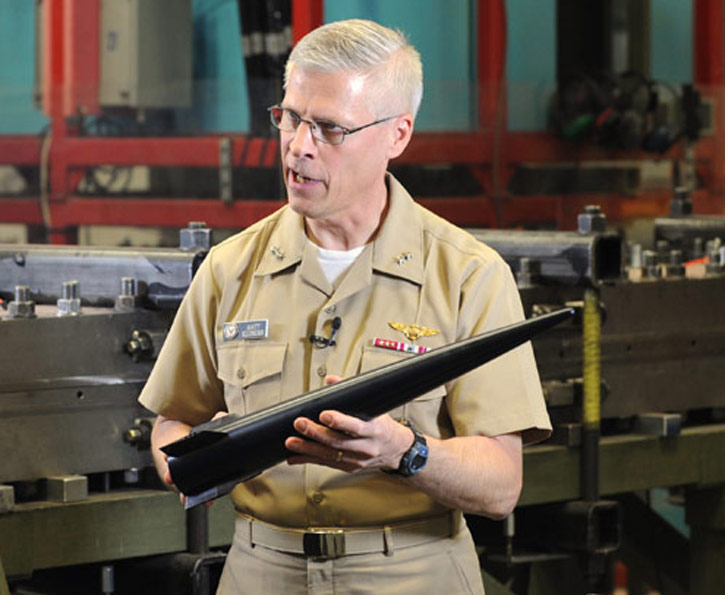
“The Electromagnetic Railgun is among several disruptive capabilities that the Naval Research Enterprise is championing to ensure a dominant, capable and relevant naval force for the future.” Chief of Naval Research (CNR) Rear Adm. Mat Winter said.
A railgun weapon system includes the launcher, projectile; high-density pulsed power, and fire control system. A railgun weapon can launch multi-mission projectiles with shorter time-to-target and greater effectiveness at longer range.
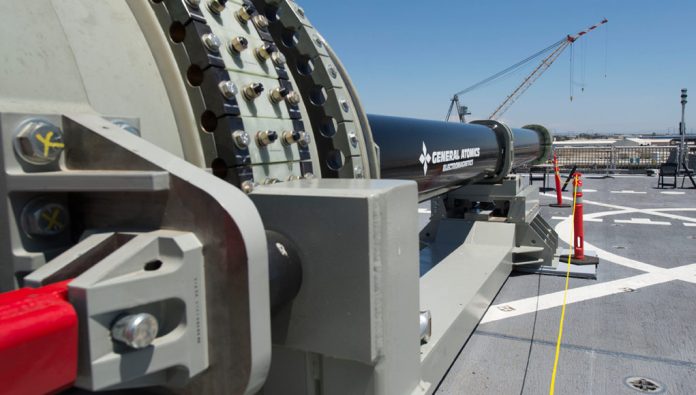
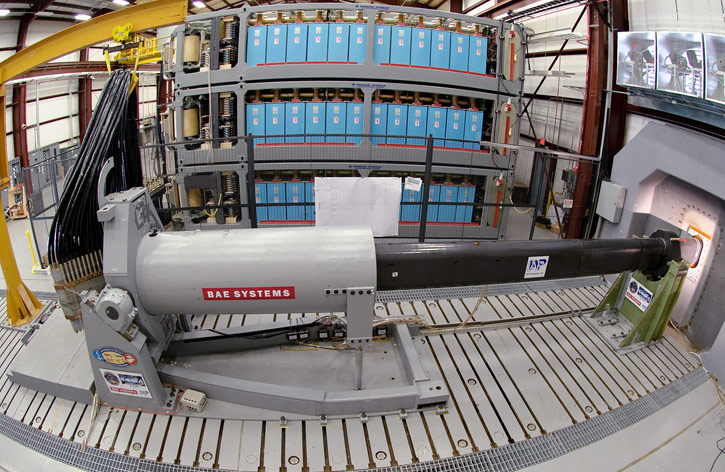
The Navy is evaluating two EM Railgun models. A 32-megajoule prototype built by BAE Systems and the 32 megajoule Blitzer developed by General Atomics Electromagnetic Systems (GA-EMS). The company has also developed a 3-megajoule railgun variant. In the future, the Navy plans to deploy railguns rated to 64-megajoule.
A railgun can deliver muzzle velocities greater than twice those of conventional guns. Using electromagnetic power, where magnetic fields created by strong electrical currents accelerate a sliding metal conductor between two rails, the railgun achieves muzzle speeds of more than Mach 7.5 without the use of chemical propellant.
Rear Adm. Matthew Klunder, chief of naval research, shows the Hypervelocity Projectile (HVP). The next-generation projectile is designed as common, low drag, guided projectile capable of completing multiple missions for gun systems such as the Navy 5-inch, 155-mm, and future railguns. Photo: US Navy by John F. Williams.
That velocity allows the weapon’s hyper-velocity projectiles (HVP) to rely on kinetic energy for maximum effect and reduces the number of high explosives and propellant carried on ships. Against specific threats, the cost per engagement is orders of magnitude less expensive than comparable missile engagements. It also minimizes the dangers of unexploded ordnance remaining on the battlefield. BAE Systems is developing the HVP under a separate contract awarded by the Office of Naval Research. The new low drag, guided projectile will provide lethality and performance enhancements to current and future gun systems, including Navy 5-Inch; Navy, Marine Corps, and Army 155-mm systems and railguns. The HVP’s low-drag aerodynamic design enables high-velocity, maneuverability, and decreased time-to-target. HVP will have a range of more than 50 nm (93 km) from Mk 45 Mod 4 guns, and exceed 100 nm (185 km) from EM Railgun.
The difficulty of deploying electromagnetic railguns might not lie in the technology necessary to build these weapons, but in producing the incredibly large amounts of electricity required for their operation and developing projectiles that can endure the enormous forces during acceleration.
In 2010 the railgun developed by BAE Systems was tested to deliver a 33-Megajoule shot, the energy equivalent of firing a projectile at a 110 nmi range. Photo: US Navy.
The first step toward mobilization of the new weapon was the delivery of the ‘Pulse Power Containers’ (PPC) – huge banks of capacitors or rechargeable batteries packed inside standard ISO containers. Each container packs enough energy to discharge 18 kilowatts for each shot. To enable the railgun to fire ten such shots per minute the PPC must recharge from the host ship in seconds and be able to store and discharge the energy in very short time while managing the thermal load generated by the process.
GE-AMS has already delivered a prototype of PPC for its weapon. Raytheon announced today the shipping of the first PPC units to the Navy. L-3 Applied Technologies is also expected to complete working on another version of PPC within a year.
Raytheon has completed the first examples of containerized pulse power packs designed to support field tests of the electromagnetic rail gun. Photo: Raytheon.
Another issue the Navy has tested is the endurance of onboard navigation and guidance electronics embedded into the projectiles. When launched by the railgun these systems are subjected on launch to extremely high loads of up to 30,000 Gs and extreme electromagnetic environment generated during launch. In tests held last year projectiles loaded with live electronic circuits have been tested by GA-AMS successfully measured in-bore accelerations and projectile dynamics, for several kilometers downrange, with the integral data link continuing to operate after the projectiles impacted the desert floor.
An artist’s rendering shows the Office of Naval Research-funded electromagnetic railgun installed aboard the joint high-speed vessel USNS Millinocket (JHSV 3). Illustration: U.S. Navy.
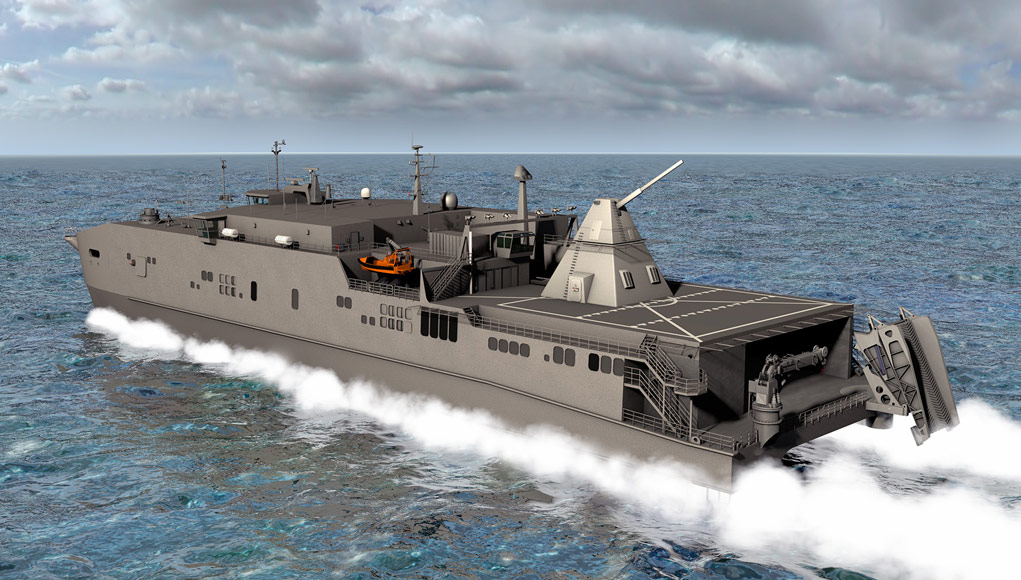
The Navy plans to test the new gun on one of its naval platforms. Initially, the platform of choice for the trial was expeditionary fast transport USNS Trenton (JHSV-5). However, since the test planned for 2016 is likely to be postponed until next year, Navy officials are recommending to push back the test a year further, and install the new rail gun on the third Zumwalt-class destroyer Lyndon B. Johnson (DDG-1002) where it will be used operationally. USS Trenton is a logistical transport ship that will not become an operational platform for the new gun.
Each of the three Zumwalt-class destroyers has two Advanced Gun Systems (AGS) mounting the BAE Systems 155/62 gun. The first two of the class, DDG 1000 and DDG 1001 will use the standard AGS but the last ship in this class, DDG 1002 could have the AGS in the first battery and the railgun in the second (rear). Both guns will be able to fire the hypervelocity projectiles designed for the rail gun, but the AGS will also be able to fire the Long Range Land Attack Projectile (LRLAP) – a guided munition developed by Lockheed Martin, as well as standard 155mm projectiles.
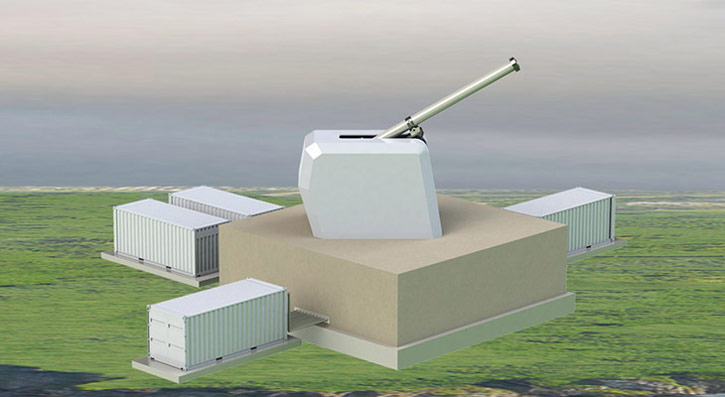
While the Railgun was developed for naval applications, it is also considered for coastal defense and counter – rocket, artillery and missile defense (C-RAM) applications. The PPC power source could become a critical factor in a land-based deployment of the railgun, as it enables fixed system to expand both railgun energy level and shot sequence, allowing for larger systems resulting in greater effective range. In such land-based installations, it would be used in fixed installation that will provide affordable, high capacity defense against massive threat raids of ballistic and cruise missiles. As such it will be used to reinforce tiered missile defense, providing terminal defense of key fixed assets.
The footprint of a land-based fixed railgun system has greater expandability than a shipboard or mobile application, allowing for larger systems resulting in greater effective range. A land-based fixed railgun system, integrated with other national assets, provides added capability in a layered defense architecture. Illustration: General Atomics.
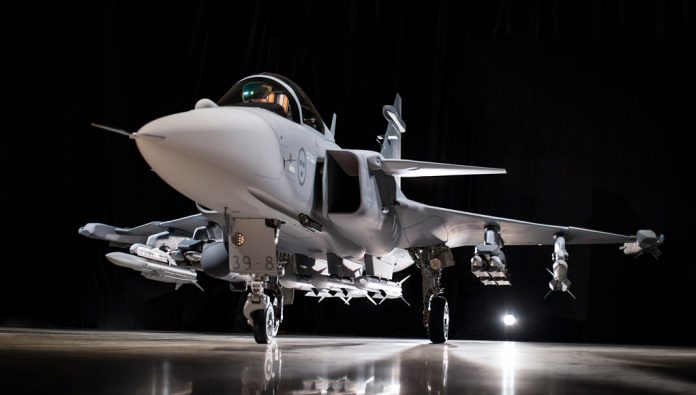
Gripen E has an increased maximum take-off weight enabling the aircraft to carry more weapons. In the rollout ceremony held on May 18, 2016 the aircraft was configured to carry five Meteor Air/Air missiles, two IRIS-Ts, eight GBU-39 small diameter guided bombs and a Litening recce pod. Photo: SaabThis weapon load include
Saab rolled out the newest member of the Gripen family of fighter jets – the Gripen E. Saab defines the new fighter as ‘revolutionary’ because it combines advanced technology and operational effectiveness in an affordable package that no other fighter aircraft can. Defense-Update takes a look at what the new fighter jet can do.
Based on the proven Gripen C/D platform, the Gripen E (also referred to as Gripen E/F) is designed as a multi-role fighter designed to perform air/air, air/ground and aerial recce with the same aircraft on a single mission. Compared with previous Gripen models (C/D) the new version has increased range and mission endurance. Its redesigned airframe operates at higher weights and is configured for maximum takeoff weight of 16.5 tons, allowing Gripen E to carry more fuel and weapons. The aircraft has 10 hardpoints and carries additional pylons to increase weapon capacity.
The integration of a powerful (98 kN) and efficient GE F414G engine provides a higher level of thrust. Digital fly-by-wire and canards are providing the high aircraft agility while the excess power delivered by the new engine sustains high speed (Mach 2) and super-cruising capability, a unique feature for a fighter jet of this size.
Saab is developing the single-seat version of the aircraft – Gripen E – for the Swedish Air Force and the Brazilian Air Force. Brazil’s Embraer is responsible for the development of a two-seater variant (Gripen F). The Brazilian Air Force plans to operate six such aircraft.
Since the Gripen A/B and C/D fighters currently fly with several NATO air forces, Gripen E is also designed to be NATO-interoperable and is tailored for the future Network Centric Warfare (NCW) environment. Such capabilities comprise advanced data communications, dual data links, satellite communications and video links. A formation of Gripen E will be able can share tactical and logistical information including the position, fuel and weapon status of each aircraft. Besides, the pilot can communicate two ways with every networked element, in the air, on the ground or at sea through the secure and multi-frequency data links, using line-of-sight or satellite links.
Advanced sensors available on board add new capabilities to air/air and air/ground warfighting capability, these include the Leonardo Selex ES-05 Raven Active Electronic Scan Array (AESA) Radar and Infrared Search and Track (IRST) adding passive tracking and target acquisition capability to the Gripen’s tactics portfolio. The antenna uses a swash-plate solution that gives the radar an area coverage of ± 100°.
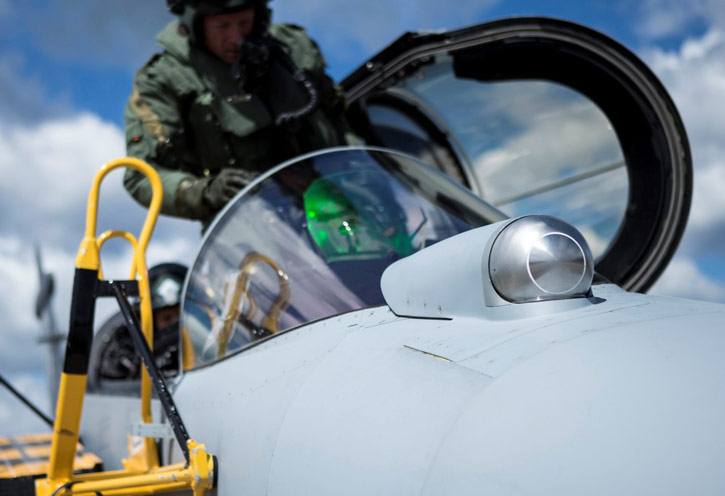
The Skyward IRST enables Gripen E pilots to track and engage targets without giving away their positions. Photo: Saab
The Skyward IRST (also built by Selex) can operate in synch with the radar, to provide visual target identification from a long distance, or function as ’passive radar’, enabling Gripen E pilots to track and engage targets without giving away their positions. The sensor is looking forward over a wide sector, registering heat emissions from other aircraft, helicopters, objects on the ground and sea surface.
The third sensor on board is the electronic countermeasures system, that can operate with active (Missile Approach Warning – MAW) and passive (Radar Warning Receiver – RWR) sensors, detecting hostile radar emissions that ‘paint’ the Gripen from a distance, or missiles closing in from afar, guided by radar signals. The EW system couples with active countermeasures, including chaff, flares and expendable decoys such as the BriteCloud, as well as RF jammer pod and anti-radiation missiles that could be integrated in the future, to defeat such threats.
These sensors are combined with cockpit instrumentation to provide the pilot with situational picture, using comprehensive display systems that include Helmet Mounted Display (which also combines night vision), Head-Up Display (HUD) and Wide Area Displays (WAD) to be integrated into the Gripen NGs destined for the Brazilian Air Force. This combination of displays delivers the ability to detect and destroy a wide variety of targets, even at night or in poor weather conditions.
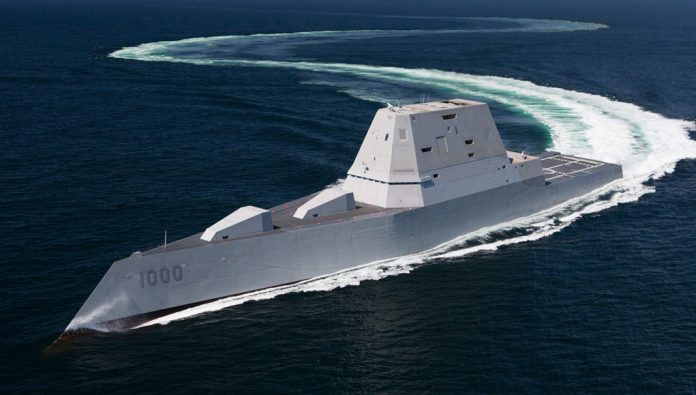
Zumwalt is the first U.S. Navy surface combatant to employ an innovative and highly survivable Integrated Power System (IPS) distributing 1000 volts of direct current across the ship. Each ship in the class features a battery of two Advanced Gun Systems, capable of firing Long-Range Land Attack Projectiles (LRLAP) that reach up to 63 nautical miles, providing three-fold range improvement in naval surface fires coverage. EOther weapon cells accommodate 80 Advanced Vertical Launch System cells storing various weapons including Tomahawk cruise missiles, Evolved Sea Sparrow and Standard air defense missiles, and Vertical Launch Anti-Submarine Rockets (ASROC) (VLA). Photo: US Navy
On May 20, 2016, the U.S. Navy accepted delivery of the lead ship of the next generation, ‘electric ship’ guided missile destroyer, Pre-Commissioning Unit (PCU) Zumwalt (DDG 1000). The Navy announced the home port of the new combatant at Naval Base San Diego following its commissioning in Baltimore, on October 15 this year. Zumwalt is scheduled to arrive in San Diego in late 2016.
Stationing destroyers in a West Coast port support the rebalance to the Indo-Asia-Pacific region, placing our most advanced capabilities and greater capacity in that vital theater. By 2020, approximately 60 percent of Navy ships and aircraft will be based in the region.
Zumwalt is the first U.S. Navy surface combatant to employ an innovative and highly survivable Integrated Power System (IPS) distributing 1000 volts of direct current across the ship. The IPS’ unique architectural capabilities include the ability to allocate all 78 megawatts of installed power to propulsion, ship’s service, and combat system loads from the same gas turbine prime movers based on operational requirements.
DDG 1000 is the lead ship of a class of next-generation multi-mission surface combatants tailored for land attack and littoral dominance with capabilities to defeat current and projected threats. Zumwalt will triple naval surface fires coverage, add an improved SONAR system to track deep and shallow water threats, as well as pace current anti-ship cruise missile threats. For today’s warfighter, DDG 1000 fills an immediate and critical naval warfare gap, meeting validated Marine Corps fire support requirements.
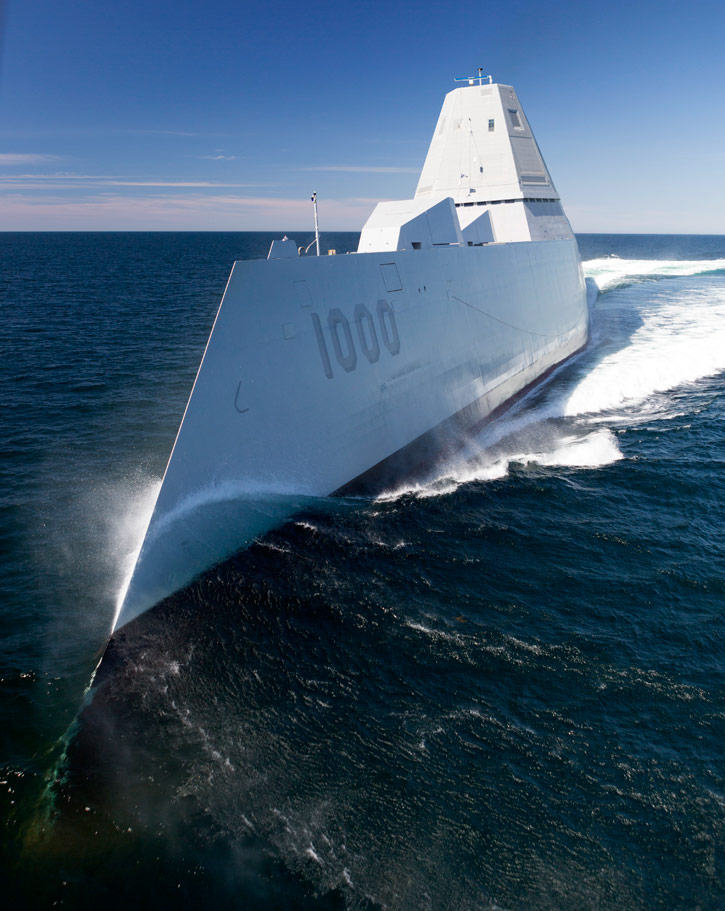
The 610-foot, wave-piercing tumblehome ship design provides a wide array of advancements. The shape of the superstructure and the arrangement of its antennas significantly reduce radar cross section, making the ship less visible to enemy radar at sea.
Each ship in the class features a battery of two Advanced Gun Systems, capable of firing Long-Range Land Attack Projectiles (LRLAP) that reach up to 63 nautical miles, providing three-fold range improvement in naval surface fires coverage. Each ship has 80 Advanced Vertical Launch System cells storing various weapons including Tomahawk cruise missiles, Evolved Sea Sparrow and Standard air defense missiles, and Vertical Launch Anti-Submarine Rockets (ASROC) (VLA).
The ship will employ active and passive sensors and a Multi-Function Radar (MFR) capable of conducting area air surveillance, including overland, throughout the extremely complicated and cluttered sea-land interface.
The multi-mission DDG 1000 is tailored for sustained operations in the littorals and land attack, and will provide independent forward presence and deterrence, support special operations forces, and operate as an integral part of joint and combined expeditionary forces. Its multi-mission design and littoral capabilities make it a 100 percent globally deployable asset to the Fleet.
Construction of Zumwalt commenced in Feb. 2009 at the General Dynamics-Bath Iron Works (BIW) in Baltimore. The ship was launched on Oct. 29, 2013. BIW is also constructing follow-on ships, the future Michael Monsoor (DDG 1001) and Lyndon B. Johnson (DDG 1002).
Currently, the ship is conducting Hull, Mechanical, and Electrical tests and trials with a subsequent period to follow for combat and mission system equipment installation, activation, and testing.
The 610-foot, wave-piercing tumblehome ship design provides a wide array of advancements. The shape of the superstructure and the arrangement of its antennas significantly reduce radar cross section, making the ship less visible to enemy radar at sea. Photo: US Navy
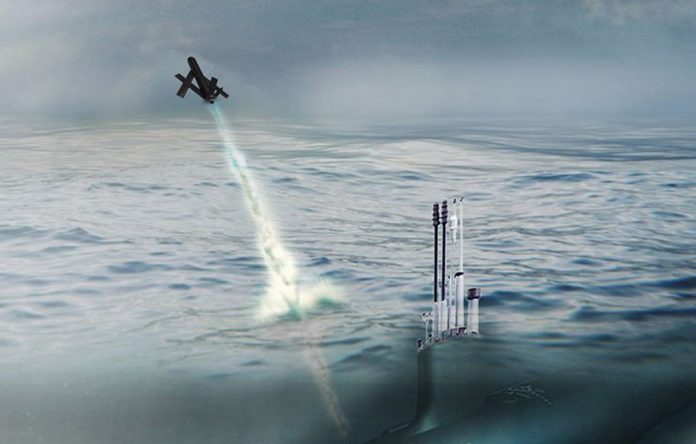
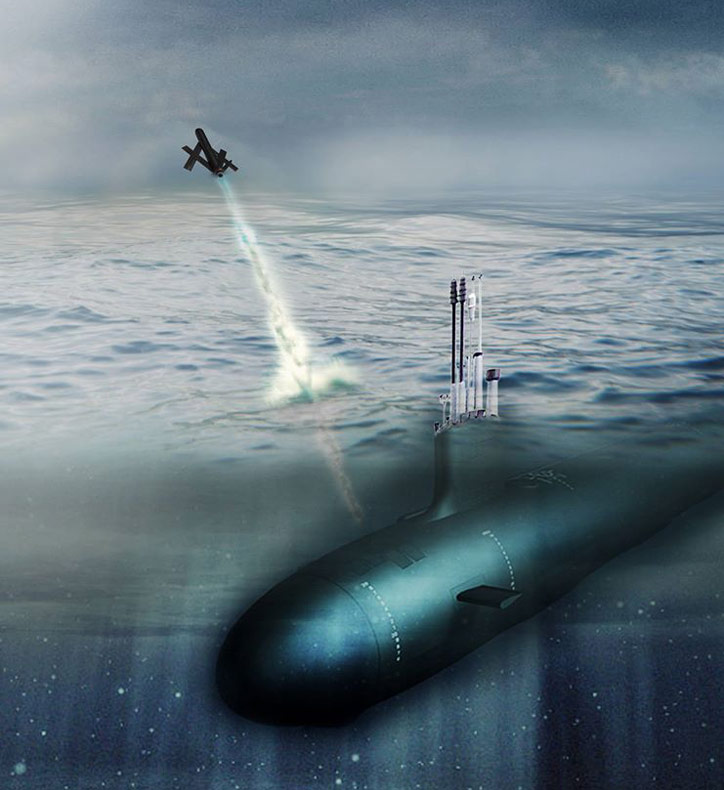
During the demonstration phase (2013-2015) the AWESUM “demonstrates submarine launch, data sharing and control across naval, special operations and air-force units. Photo via Aerovironment Inc.
The U.S. Navy plans to deploy unmanned aerial systems (UAS) on board submarines, to provide covert intelligence, surveillance, reconnaissance and target acquisition to support special operations and full-scale warfare, on sub-surface and surface operations. According to the Navy’s plans, attack and guided missile submarine will be equipped with a miniature UAS known as ‘Blackwing,’ produced by Aerovironment Inc. The Navy plans to buy 150 such systems. The company introduced the new unmanned vehicle at the Sea Air Space event in Washington DC.
Typical operation will see the Blacking deployed in the vicinity of targets in contested or denied airspace, where activities of other manned or unmanned platforms would be too risky. From its forward position, the Blackwing will provide target acquisition and battle damage assessment, in support of strikes performed from stand-off range.
Blackwing is believed to be a derivative of Aerovironment’s Switchblade Lethal Miniature Aerial Missile System (LMAMS), redesigned to fit the submarine’s 3” torpedo decoy launcher. It was developed under the Navy’s Advanced Weapons Enhanced by Submarine UAS against Mobile targets (AWESUM) Joint Capability Technology Demonstration (JCTD) launched in 2013. During the demonstration phase (2013-2015) the AWESUM “demonstrates submarine launch, data sharing and control across naval, special operations and air-force units,” the Navy announcement. This JCTD ended in September 2015 with a strong recommendation to transition the capability into the fleet.
Subscribe to read further analysis of this new capability.
The Navy also plans to evolve the submarine-launched drone concept with larger vehicles, launched through 21” torpedo tubes. In 2013, the Navy Research Lab (NRL) demonstrated a submerged launch of the Sea Robin UAV, from a modified Tomahawk cruise missile canister.
According to Aerovironment, The Blackwing drone is not limited to a submarine platform, and can also be integrated with and deployed from a variety of surface vessels and mobile ground vehicles to provide rapid response reconnaissance capabilities.
Lockheed Martin Skunk Works® and XTEND have achieved a major milestone in JADC2 by integrating the XOS operating system with the MDCX™ autonomy platform. This technical breakthrough enables a single operator to simultaneously command multiple drone classes, eliminating the friction of mission handoffs. From "marsupial" drone deployments to operating in GPS-denied environments, explore how this collaboration is abbreviating the data-to-decision timeline and redefining autonomous mission execution.
As traditional defense primes face mounting competition from agile “neoprimes” such as Anduril, Palantir and Helsing, the balance of innovation is shifting toward software-defined warfare and scalable, dual-use technologies, while global industry consolidation—marked by Boeing’s integration of Spirit AeroSystems and other strategic mergers—signals an intensified race to secure control over the defense technology value chain. Our Defense-Tech weekly report highlights these trends.
In early October 2025, a coordinated wave of unmanned aerial system (UAS) incursions—widely attributed to Russia—targeted critical infrastructure across at least ten European nations. The unprecedented campaign exposed the fragility of Europe’s air defenses...
Executive Summary
The past week (September 18-25, 2025) represents an inflection point where strategic defense concepts have transitioned from doctrine to tangible reality. An analysis of global events reveals four primary, interconnected trends shaping an...
At the 2025 Air, Space & Cyber Conference, U.S. Air Force and Space Force leaders unveiled major updates on next-generation fighters, bombers, unmanned systems, and space initiatives, highlighting both rapid innovation and critical readiness challenges as the services race to outpace global competitors. A short version is available here, with a more detailed version for subscribers.
The Taipei Aerospace & Defense Technology Exhibition (TADTE) 2025 crystallized around four dominant strategic themes that collectively illustrate Taiwan's comprehensive approach to defense modernization amid escalating regional tensions. Based on a detailed report by Pleronix (available upon request). Includes a Podcast discussion on TADTE 2025's highlighting Taiwan's four strategic themes beyond the post's coverage.
Israel’s Iron Beam 450 high-power laser system has completed final testing, marking a major leap in air defense. Developed by Rafael, it offers precise, cost-effective interception of rockets, UAVs, and mortars, and is set for IDF deployment by 2025.



 Arms & Security 2017 – 10-13 October 2017 – Kiev, Ukraine
 ADEX – 17-22 October 2017 – Seoul Airport, South Korea
 AUSA 9-11 October 2017 – Ronald Reagan Convention Center, Washington DC
 SEECAT – Special Equipment Exhibition & Conference for Anti Terrorism, 11-13 October, 2017 – Tokyo Big Sight, Tokyo, Japan
 Interpolitex, 17-20 October, 2017 – VDNH, Moscow, Russia
 Aerial Firefighting Europe
 Future Mortar Systems – 25-26 October 2017 – London, UK
 Defense & Security – 6-9 November 2017 – IMPACT Expo Center, Bangkok, Thailand
 International Fighter – 7-9 November 2017 – Mercure Hotel Moa Berlin, Berlin, Germany.
 Dubai Air Show – 12-16 November, 2017 – DWC, Dubai

 Military Airlift & Air-to-Air Refuelling
 Military Flight Training – Eastern Europe – 12-14 December 2017 – Stefania Palace, Budapest, Hungary
 Intelligence & Special Forces


 LIMA – April 2017 – Langkawi, Malaysia