
Sunday, December 21, 2025
More
    Home Blog Page 66

    Preview: Israel at Eurosatory 2016

    At the core of modern land warfare, fire support, armored vehicles, and dismounted forces are becoming more lethal, mobile, protected and smarter. Thousands of cutting-edge combat systems are on display at Eurosatory 2016, where manufacturers from around the world gather to show the best, most advanced land warfare technology.

    Don’t see the video? Click here to see it on Youtube

    SIBAT, the defense export directorate within Israel’s Ministry of Defense (MOD) highlights these capabilities at Israel’s national pavilion, hosting 29 defense companies representing the country’s defense technology at its best.

    Israel’s defense and security forces rely on indigenous platforms designed, integrated and manufactured by the MOD. Currently in production are combat proven Merkava Mk4 Tank and Namer heavy armored personnel carrier. In the coming decade, these platforms will be augmented by two new families of combat vehicles. Many of the systems to be included in these platforms are on display at this year’s exhibition.

    New types of ammunition for tank gun, guided missiles, remotely controlled turrets and ‘pocket artillery’ that includes mobile mortars and guided artillery projectiles represent the most recent firepower improvements, along with the systems that ensure effective and accurate fire in complex terrain.

    Traditionally the realm of artillery corps, fire support has also improved with technology, now able to turn statistic fires into precision effects. In addition to artillery and mortars and their munitions, guided missiles on display include loitering precision weapons that extend such effects to targets hundreds of kilometers away. Their high precision enables combat fire support at proximity to friendly forces.

    Survivability and Protection remain an important attribute of combat systems on display here. Protection is implemented in a number of areas. Avoiding detection by concealment and signature management, early detection of threats, using radar and infra-red sensors for situational awareness, enable the use of active protection means. Hard and soft kill are used to defeat threats before they hit the protected vehicle. As the last line of defense state of the art materials and design provide ballistic and blast protection. Complementing the physical protection are life support systems, including air filtration and conditioning, maintaining fresh, uncontaminated environment for the crew and passengers even under biological, chemical or radiological attack.

    Cyber protection is a new aspect of survivability, preventing exploiting or disabling computerized, connected combat systems.

    The third pillar – mobility – sustains the momentum and agility of the forces. Mobility is maintained by powerful propulsion and drive and suspension systems for tracked and wheeled vehicles. Obstacle breaching, mine and IED detection and countermeasures ensure operation in contested terrain. Strategic mobility is also an important argument as advanced transportation systems are used to mobilize massive military hardware.

    The infantry soldier is also becoming a combat system. Armed with precision weapons including multi-purpose guided missiles, assault and sniper rifles that also have sophisticated sights for accurate shooting in day and night. To see at night infantrymen use head-mounted vision systems; other sensors enable seeing through walls, while mini drones provide a bird’s eye view for the ground troops. Surveillance, targeting and electronic warfare systems that required truckloads to deploy in the past, are now miniaturized, becoming man portable for dismounted operations. Voice and data communications are essential to empower the squad with individual tracking and control for efficient operations. Ergonomic gear is also essential to carry the loads in combat. Preventing fratricide is a critical aspect of such complex operations that require unique combat identification solutions.

    In addition to firepower, mobility and protection, sensors, computers and communications that connect systems on board, and multiple weapon systems to each other, to establish cohesive fighting teams.

    Sharing information for situational assessment, planning, and coordination, targeting and target engagement. Networking and communications are essential for the integration of ‘Sensors’ and ‘shooters’.

    Some of the new sensors, combat-proven in recent operations, are on display at Israel’s National Pavilion at Eurosatory. These include man-portable, light tactical systems as well as airborne systems deployed on aerostats or unmanned aerial platforms. Such systems include radar systems, capable of searching for targets in complex terrain, along borders and coastlines, including urban or dense foliage. Others are designed to detect rocket and mortar attacks or defeat unmanned aerial vehicles.

    Other thermal, multispectral sensors are used for surveillance on land, and in the air to detect, track and report hostile activity, creating persistent surveillance over a large area. Persistent ground sensors also include acoustic, infrared and seismic sensing to establish in-depth surveillance of broad areas of interest.

    Monitoring human and military activity in the electronic domain, covering radio-electronic, cellular and the Internet help establish the tactical situational picture in the cyber domain.

    Israel is one of the world leaders in unmanned systems, and many such systems are making their debut here. Among these is the latest generation of small, tactical unmanned aerial vehicles designed to support tactical formations; those small drones are designed to operate as organic systems with the tactical echelon.

    On the ground, multi-purpose tactical robots expand their traditional counter-IED role to reconnaissance, assault and counter-terror applications. Robotic technology is also relevant to the new category of loitering missiles, presented here by several systems combining long endurance, surveillance, and engagement of ‘short live targets’ that characterize the modern asymmetric warfare.

    Some of the Israeli exhibitors at Eurosatory highlight the cutting edge technologies that characterize these advanced capabilities – including high-speed data-links, cooled and uncooled electro-optical detectors, and miniature, high-performance actuators.

    Israel’s National Pavilion at Eurosatory is located in Hall 6.

    Stay tuned to Defense-Update.com for more updates, as some of the products are expected to debut only at the exhibition next week. Defense-Update will be there to cover, assess and report.
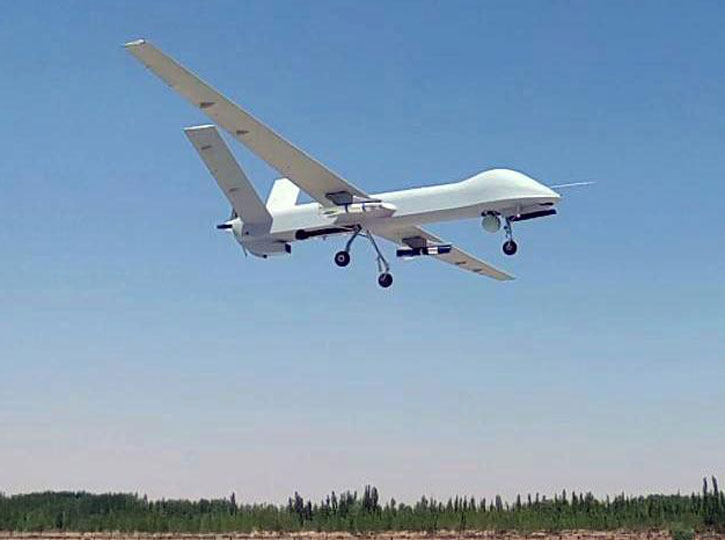
    China Tested an Upgraded CH-4 “Rainbow” Weaponized Drone

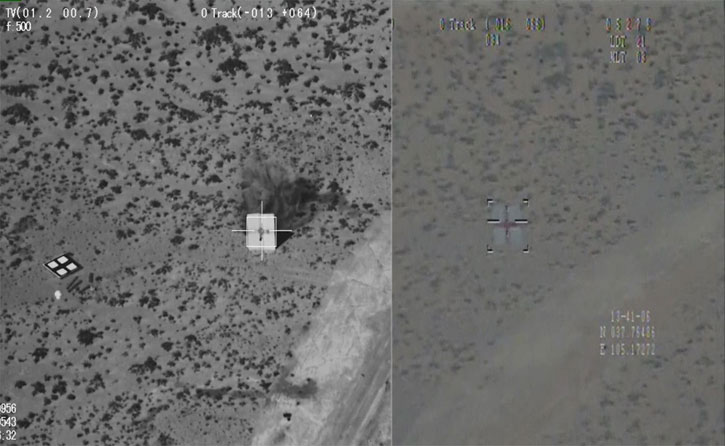
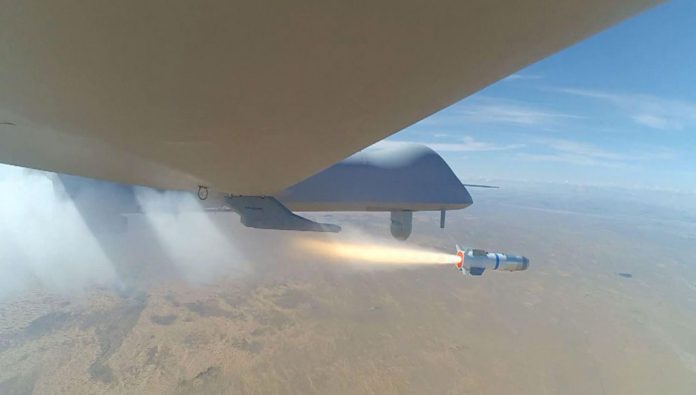
    A Chinese CH-4 Rainbow drone fires AR1 guided weapon at target, controlled via satellites from 1.000 km away.
    The CH-4 equipped with satellite communications terminal, AR-1 missiles and new EO payload deployed to a test range in Western China. It was controlled from a distance 1000 to the east.
    The CH-4 equipped with satellite communications terminal, AR-1 missiles and new EO payload deployed to a test range in Western China. It was controlled from a distance 1000 to the east.

    China Aerospace Science and Technology Corporation (CASC) has recently tested a new version of the Caihong-4 (CH-4) “Rainbow” drone equipped with satellite control and improved EO payloads supporting HD standards.

    During the test last month, the drone launched AR-1 missiles which struck their targets with high precision. Two tests were conducted, one with the current version of the aircraft, fitted with a new SATCOM data link, the second test also employed an upgraded electro-optical payload.

    During the first test the CH-4 drone equipped with satellite communications terminal patrolled a test range about 1,000 km west of the ground station controlling it, located at another base near Beijing. The beyond line of sight (BLOS) datalink, established via satellite, supported both reconnaissance, target verification and engagement using AR-1 missiles. Line-Of-Sight datalinks maintain control at a range up to 250 km for high altitude missions.

    The second test evaluated a new electro-optical HD sensor payload, improving the sensor output to high-resolution 1080p HD standard enabling target detection in daylight at 20 km range. The FLIR has also been upgraded into continuous zoom lense, compared to past fixed fields setup. The FLIR's detection range has also been increased to 18km, in day or night.
    The second test evaluated a new electro-optical HD sensor payload, improving the sensor output to high-resolution 1080p HD standard enabling target detection in daylight at 20 km range. The FLIR has also been upgraded into continuous zoom lense, compared to past fixed fields setup. The FLIR’s detection range has also been increased to 18km, in day or night.

    The second test evaluated a new electro-optical HD sensor payload, improving the sensor output to high-resolution 1080p HD standard enabling target detection in daylight at 20 km range. The FLIR has also been upgraded into continuous zoom lense, compared to past fixed fields setup. The FLIR’s detection range has also been increased to 18km, in day or night.

    The new payload use new servo controls providing better stabilization, smoother tracking and improved overall performance, and an integral Inertial Measuring Unit (IMU) supporting targeting accuracy. Software improvements now support auto-focus, auto-zoom and image enhancement.

    The CH4 “Rainbow” has a maximum takeoff weight of 1.3 tons, including 345 kg of payloads. When operating at a ceiling of 4000 m’ its mission endurance is 35 hours. The drone is currently operational in the Middle East, including Iraq, Saudi Arabia and Egypt. Algeria also evaluated these drones.

    The AR-1 missile is one of several small munitions used by China's UAS, both for local use and export.
    The AR-1 missile is one of several small munitions used by China’s UAS, both for local use and export.

    DARPA Teaches Drones to Collaborate (Under Human Supervision)

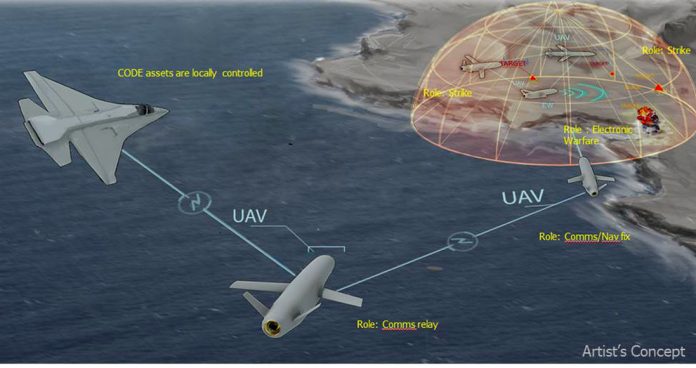
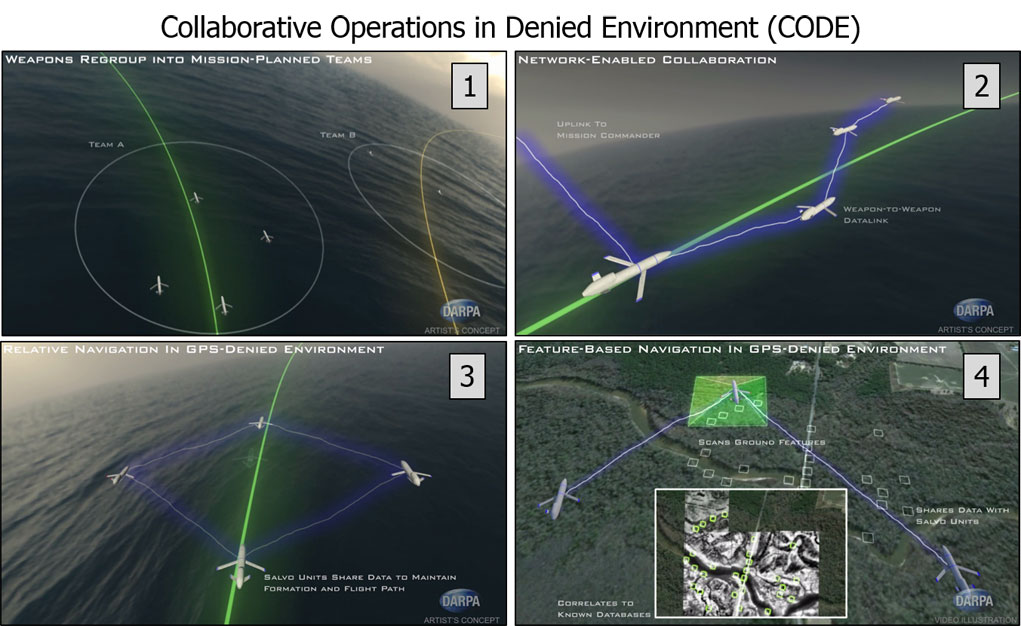
    CODE’s envisioned improvements to collaborative autonomy would help transform UAS operations from requiring multiple people to operate each UAS to having one person who is able to command and control six or more unmanned vehicles simultaneously. Commanders could mix and match different systems with specific capabilities that suit individual missions instead of depending on a single UAS that integrates all needed capabilities but whose loss would be potentially catastrophic. This flexibility could significantly increase the mission- and cost-effectiveness of legacy assets as well as reduce the development times and costs of future systems. Illustration: DARPA

    The US Defense Department’s Advanced Research Programs Agency (DARPA) selected Lockheed Martin and Raytheon as the prime contractors for the agency’s Collaborative Operations in Denied Environment (CODE) demonstration. The program seeks to help conduct dynamic Unmanned Aircraft Systems (UASs) operations over long distances, against short lived, moving targets in denied or contested electromagnetic airspace. While improving the flexibility of force projection CODE will decrease the communication bandwidth required to control such airborne forces and reduce cognitive burden on human supervisors.

    DARPA recently awarded Phase 2 system integration contracts for CODE to Lockheed Martin Corporation (Orlando, Fla.) and the Raytheon Company (Tucson, Ariz.). The two prime contractors for the program that will collaborate with six teams that continue their work from Phase 1, supporting technologies associated with CODE.

    the following six companies—all of which had Phase 1 contracts with DARPA to develop supporting technologies for CODE—will collaborate in various ways with the two prime contractors:

    • Daniel H. Wagner Associates (Hampton, Va.)
    • Scientific Systems Company, Inc. (Woburn, Mass.)
    • Smart Information Flow Technologies, LLC (Minneapolis, Minn.)
    • Soar Technology, Inc. (Ann Arbor, Mich.)
    • SRI International (Menlo Park, Calif.)
    • Vencore Labs dba Applied Communication Sciences (Basking Ridge, N.J.)
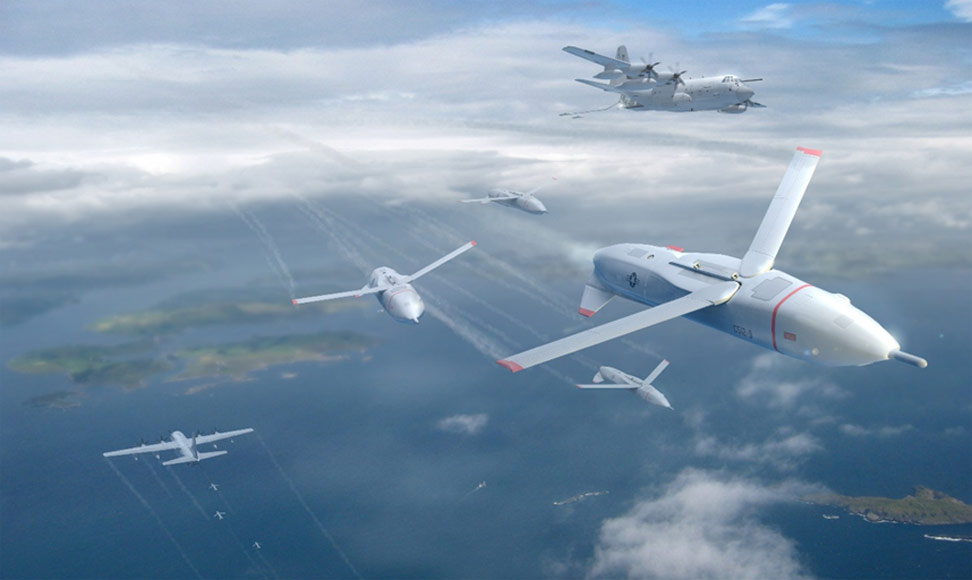
    The unmanned Gremlins would be deployed from support aircraft, and carry a mixture of mission payloads capable of generating a variety of effects. They will be operated in a distributed and coordinated manner, providing greater operational effectiveness and flexibility, compared with current, monolythic platforms. Artist concept: DARPA
    Under a different program, DARPA is develping the ‘Gremlins’. The unmanned Gremlins would be deployed from support aircraft, and carry a mixture of mission payloads capable of generating a variety of effects. They will be operated in a distributed and coordinated manner, providing greater operational effectiveness and flexibility, compared with current, monolythic platforms. Artist concept: DARPA

    CODE’s main objective is to develop and demonstrate the value of collaborative autonomy, in which UASs could perform sophisticated tasks both individually and in teams under the supervision of a single human mission commander. CODE-equipped UASs would perform their mission by sharing data, negotiating assignments, and synchronizing actions and communications among team members and with the commander.

    CODE’s modular, open software architecture embedded on board the UASs would enable multiple CODE-equipped unmanned aircraft to navigate to their destinations and find, track, identify, and engage targets under established rules of engagement.

    The UASs could also recruit other CODE-equipped UASs from nearby friendly forces to augment their capabilities and adapt to dynamic situations such as attrition of friendly forces or the emergence of unanticipated threats.

    A video showing promising early research into the interface is available below:

    “During Phase 1, we successfully demonstrated, in simulation, the potential value of collaborative autonomy among UASs at the tactical edge, and worked with our performers to draft transition plans for possible future operational systems,” said Jean-Charles Ledé, DARPA program manager. “Between the two teams, we have selected about 20 autonomous behaviors that would greaty increase the mission capabilities of our legacy UASs and enable them to perform complex missions in denied or contested environments in which communications, navigation, and other critical elements of the targeting chain are compromised. We have also made excellent progress in the human-system interface and open-architecture framework.”

    CODE’s prototype human-system interface (HSI) is designed to allow a single person, either a pilot or ground controller to visualize, supervise, and command a team of unmanned systems in an intuitive manner. Mission commanders can know their team’s status and tactical situation, see pre-planned and alternative courses of action, and alter the UASs’ activities in real time.

    For example, the mission commander could pick certain individual UASs from a team, circle them on the command station display, say “This is Group 1,” circle another part of the map, and say “Group 1 search this area.” The software then creates a sub-team with the circled UASs, divides up the search task among those assets, and redistributes the original tasks assigned to Group 1 assets to the remaining UASs. This capability significantly simplifies the command and control of large groups of UASs. Other parts of the HSI research focused on how to display the new plan, including the potential impact on other mission objectives, and—depending on pre-set mission rules—either directly executes the plan or waits for the commander’s approval to act.

    The HSI and autonomy algorithms are being developed in open architectures based on emerging standards. These include the Future Airborne Capability Environment (FACE) and Unmanned Control Segment (UCS) standards used by the U.S. Army and U.S. Navy, and the Open Mission Systems (OMS) and Common Mission Command and Control (CMCC) standards that the U.S. Air Force uses.

    During Phase 2, DARPA plans to implement an initial subset of the behaviors within each of the two open architectures and use those architectures to conduct live flight tests with one or two live UASs augmented with several virtual aircraft. If those tests are successful, DARPA could move to Phase 3, in which one team would test the capabilities using up to six live vehicles cooperating among themselves and with additional simulated vehicles. A single person would command the UAS team to perform a complex mission involving target search, identification, and engagement against an active, unpredictable adversary.

    CODE seeks to deliver a software system that would be resilient to bandwidth limitations and communications disruptions, yet compatible with existing standards and capable of affordable retrofit into existing platforms. If successfully demonstrated, these scalable, cost-effective capabilities would greatly enhance the survivability, flexibility, and effectiveness of existing air platforms, as well as reduce the development times and costs of future systems. Images: DARPA
    CODE seeks to deliver a software system that would be resilient to bandwidth limitations and communications disruptions, yet compatible with existing standards and capable of affordable retrofit into existing platforms. If successfully demonstrated, these scalable, cost-effective capabilities would greatly enhance the survivability, flexibility, and effectiveness of existing air platforms, as well as reduce the development times and costs of future systems. Images: DARPA

    Gray Eagle Firing Demonstrates JAGM UAS Suitability

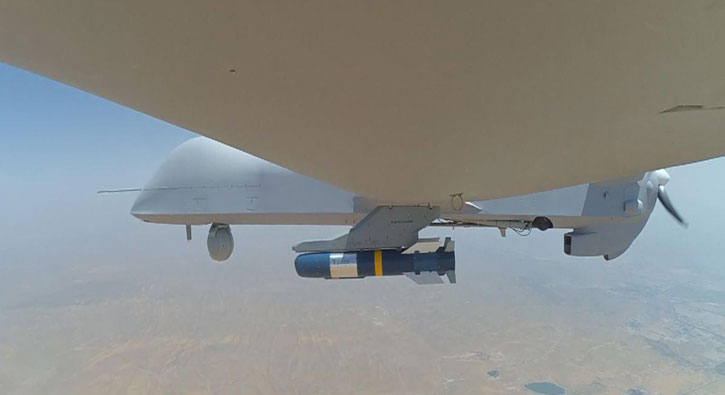
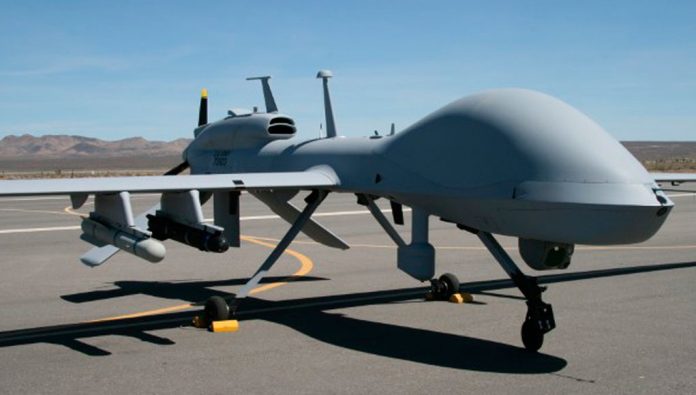
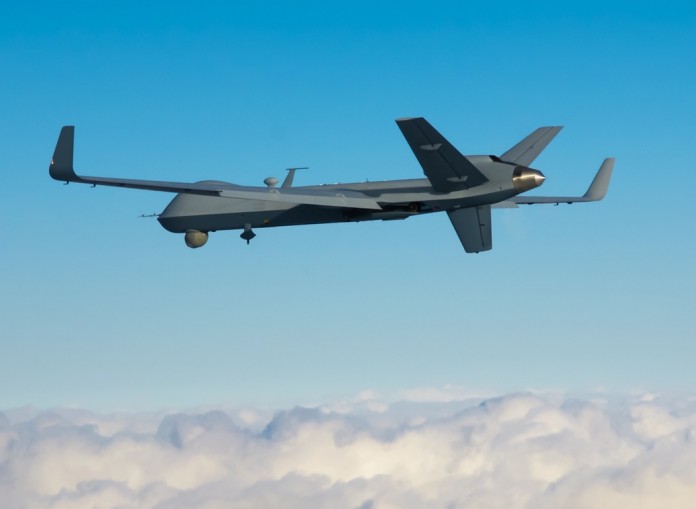
    In a recent test the Joint Air-to-Ground Missile (JAGM), developed by Lockheed Martin, has demonstrated firing from unmanned platforms. In a recent test the missile was fired from a US Army Gray Eagle (MQ-1C) Unmanned aircraft system (UAS) targeting a truck target moving at a speed of 20 mph. Photo: Lockheed Martin

    In a recent test the Joint Air-to-Ground Missile (JAGM), developed by Lockheed Martin, has demonstrated firing from unmanned platforms. In a recent test the missile was fired from a US Army Gray Eagle (MQ-1C) Unmanned aircraft system (UAS) targeting a truck target moving at a speed of 20 mph. The missile was fired from typical UAS operating altitude (about 15,000 ft) and struck the target from a distance of more than eight kilometers. The test took place at Dugway Proving Ground, Utah on May 25, 2016.

    The engagement demonstrated the missile’s ability to fire off-boresight, without having to point the platform at the target. This capability enables faster engagements of ‘targets of opportunity’ characterized by very short exposure time. The test on the Gray Eagle test was the seventh flight test for the JAGM missile. Previous platforms used for live firing include Apache attack helicopters and Marine Corps Cobra helicopters.

    By mid-summer, the Army intends to begin flight testing as part of the Engineering, Manufacturing and development phase. By the end of FY17, JAGM will reach Milestone C and qualified production line. The missile is intended to declare Initial Operational Fielding (IOC) in 2018.

    JAGM will replace the current air-launched BGM-71 TOW, AGM-114 Hellfire and AGM-65 Maverick missiles. It is an Army program with joint requirements from the Navy and Marine Corps. It is intended to be placed on Apache and Cobra attack helicopters, and will also be considered for deployment on Gray Eagle UAS.

    T-72 – Battle-Tank Fit For Urban Combat

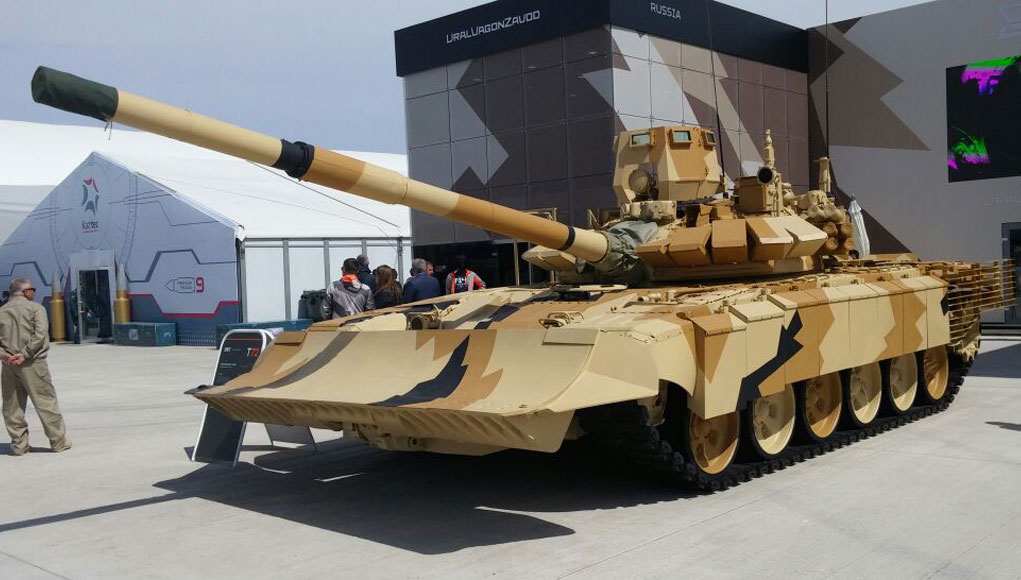
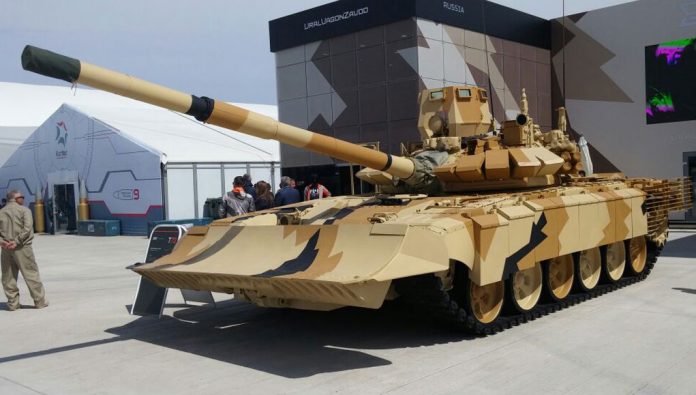
    The T-72B with added 'urban kit' displayed at KADEX 2016. Photo: UVZ

    The T-72 is the most popular tank currently in service. With over 22,000 produced, the T-72 is involved in almost every theater of war, and, with the transformation of warfare from symmetric to asymmetric combat, waged in urban areas, the T-72 must also adapt, to maintain its effectiveness in complex terrain.

    Part of this modernization is to equip the T-72 to be more effective and less vulnerable to close-in threats, such as obstacles, mines, IEDs and RPGs, all characteristic of urban warfare, The Russian company has designed this urban warfare kit based on the experience of the war in Syria.

    The tank displayed at KADEX 2016 shows additional reactive armor tiles expanding the protected areas on the turret and hull sides, and rear areas protected by slat armor. The tank also carries Counter-IED jammer to defeat radio-controlled threats. A distinctive feature is the protected shield built around the commander’s hatch, that enables the tank commander to observe to all sides and upwards, through the transparent shield and operate the heavy machine gun. For optronics and fire control the modernized tank employs the Sosna-U, multi-channel TV/thermal sight and missile guidance system. The gun is replaced with the improved 2A46M cannon and an auto loader modified to fire missiles. A dozen blade adds to the tank’s potential in obstacle clearing or counter-mobility operations.

    Considering large-scale modernization of its fleet of T-72 tanks, Kazakhstan has approached several providers from Russia, Turkey, and Israel. All are providing systems and components for the upgrading program to be done in the country. Among the systems displayed at KADEX was a T-72A fitted with a modern Optronics, thermal imaging and fire control provided by Elbit Systems. Another variant was the T-72B3 configured with a new urban warfare kit developed by the original manufacturer Uralvagonzavod.

    A Russian-Kazakh JV established by Uralvagonzavod and Kazakhstan Engineering in 2013 aims to modernize T-72 tanks and other variants based on this chassis. The JV is also set to convert decommissioned T-72 tanks into evacuation, obstacle-removing vehicles, and other heavy, special purpose machines. The Kazakh company has established another JV with the Turkish defense conglomerate Aselsan; this JV is also eying the T-72 upgrade as a major business opportunity.

    Part of this modernization is to equip the T-72 to be more effective and less vulnerable to close-in threats, such as obstacles, mines, IEDs and RPGs, all characteristic of urban warfare, The Russian company has designed this urban warfare kit based on the experience of the war in Syria. Photo: Dan Zeevi.
    Part of this modernization is to equip the T-72 to be more effective and less vulnerable to close-in threats, such as obstacles, mines, IEDs and RPGs, all characteristic of urban warfare, The Russian company has designed this urban warfare kit based on the experience of the war in Syria. Photo: Dan Zeevi.

    KADEX: Barys – The New 8×8 APC from Kazakhstan and South Africa

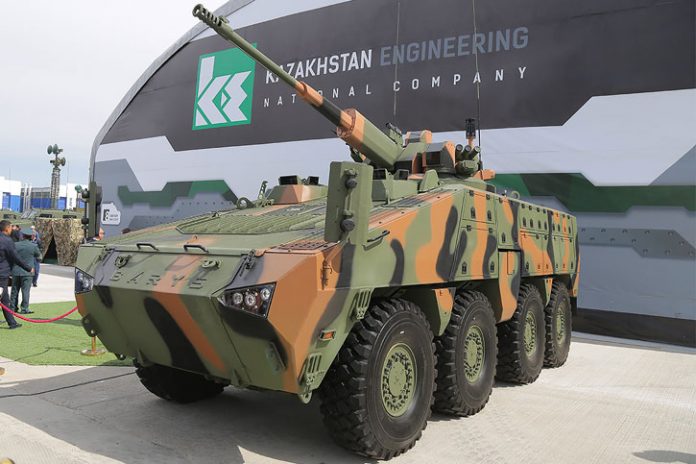
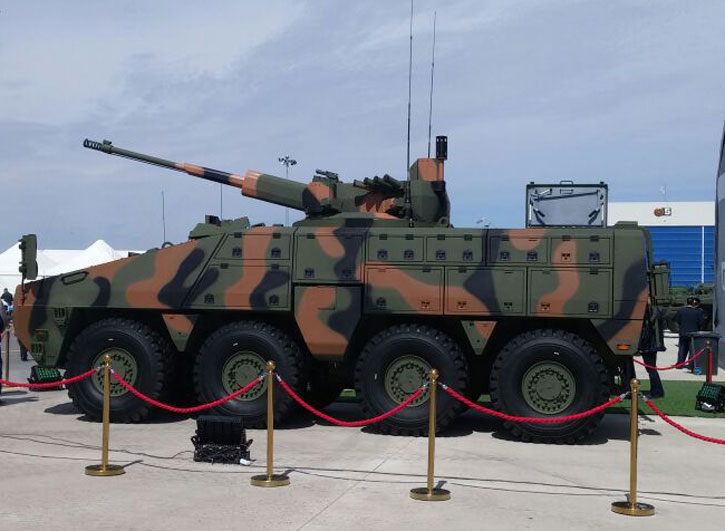
    The Barys - based on the South African Paramount Mbombe 8. Photo: UVZ

    The Kazakh-South-African joint venture, “Kazakhstan Paramount Engineering” (KPE) introduced the new Barys 8X8 armored fighting vehicle at the KADEX – Kazakhstan’s defense expo. The JV will start producing the vehicles at the new 15,000 square meters assembly plant opened in 2015 in the Kazakh capital Astana.

    KPE designed the facility to support a production rate of up to 200 vehicles per year, including 120 Barys. Therefore, they are seeking export ores to reach the full capacity. Kazakh sources said KPE is also designing the 6×6 variant that has recently begun assembly be in Jordan.

    The prototype displayed at KADEX is a wheeled 8×8 armored vehicle uses Paramount’s new Mbombe 8×8 platform as a baseline. At a gross vehicle weight of 28 tons and curb weight of 19 tons, the vehicle can carry up to nine tons of payload, including weapon system, ammunition, crew, and supplies.

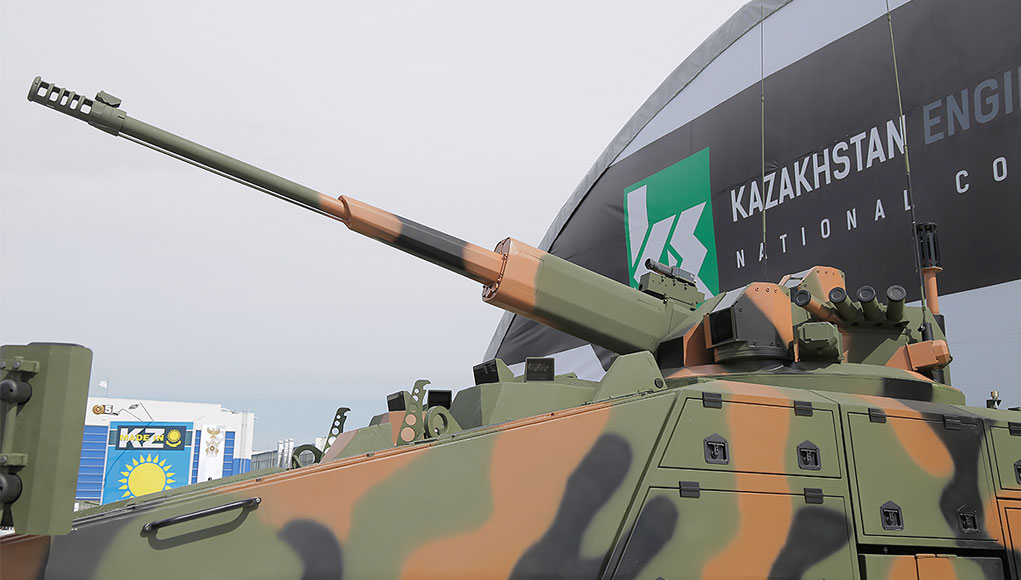
    The AU220M remotely controlled turret loaded with the powerful 57mm automatic cannon. Photo: UVZ
    The AU220M remotely controlled turret loaded with the powerful 57mm automatic cannon. Photo: UVZ
    Apart from the new 8×8 platform the Barys unveiled at KADEX is fitted with the Russian AU-220M stabilized, remotely controlled turret mounting the new 57mm automatic cannon. The AU-220M developed by Burevestnik, a subsidiary of the Russian Uralvagonzavod group. The turret mounts the dual-feed 57mm cannon and 7.62 mm coaxial machine-gun. The maximum range of the 57mm cannon is 12 km. Its rate of fire is 120 rounds per minute. The turret can rotate 360 degrees in azimuth and from -5 to +75 degrees in elevation. The hull protection uses ballistic armor conforming with Level 3+ STANAG 4569 and level 4a/b for mine protection.

    The KPE joint venture formed last year will produce three types of vehicles: One of them is the Barys; anther type already in production is the mine-resistant armor protected Arlan – a ‘winterized’ local variant of Paramount’s Marauder, which has entered production. The ‘winterized’ edition has heating and cooling systems and driveline that have been tested and cleared for operation in winter conditions of -55 °C and desert conditions of 55°C. A crew of three is operating the vehicle, which can carry eight fully equipped soldiers. KPE will also produce the Nomad, an armored police vehicle based on the Maverick. The Arlan was developed in collaboration with the Kazakhstan military and undergone trials with the country’s armed forces.

    A six cylinder 550hp turbocharged diesel engine powers the vehicle. Coupled to an automatic transmission with six gear gears it develops a maximum speed of 110km/h and 800 km operating range.

    The Barys - based on the South African Paramount Mbombe 8. Photo: Dan Zeevi
    The Barys – based on the South African Paramount Mbombe 8. Photo: Dan Zeevi

    According to Ben Jansen, CEO of Paramount’s armoured vehicle business, the new vehicle is part of a family of platforms comprising of 4 x 4, 6 x 6 and 8 x 8 AFVs which share over 80% of common components to reduce through life costs and make for easier training and logistics. “This commonality relates to both the driveline aggregates, as well as the fact that all three vehicles utilize a ‘conventional’ or ‘in-line’ automotive driveline configuration, positioning the power pack​ at the front of the vehicle and along its centre line. This configuration results in far greater efficiency in terms of the transfer of power from the power pack​ to the wheels, as the loss of power associated with a second transfer gearbox necessary for ‘unconventional’ drivelines, such as with side-engined vehicles, is eliminated.” Jansen noted.

    KADEX 2016 – Photo Report

    Part of this modernization is to equip the T-72 to be more effective and less vulnerable to close-in threats, such as obstacles, mines, IEDs and RPGs, all characteristic of urban warfare, The Russian company has designed this urban warfare kit based on the experience of the war in Syria. Photo: Dan Zeevi.
    bayrs_725
    The 8×8 Barys is a wheeled AFV displayed at KADEX 2016 for the first time by Kazakh-South African Kazakhstan Paramount Engineering (KPE). The vehicle is based on Paramount’s MBOMBE platform and was displayed here with the new UA220M remotely controlled turret mounting the 57mm cannon. Uralvagonzavod
    wingloong1_kadex16
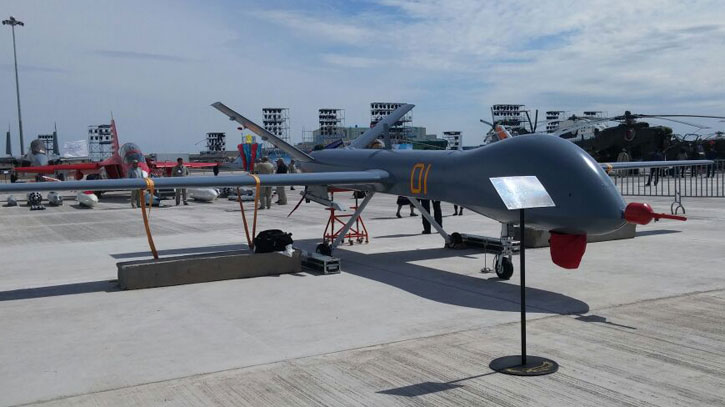
    Kazakhstan has ordered an undisclosed number of Wing Loong 1 ‘Pterodactyl’ drones from China. This armed UAV was displayed in Kazakh military colors for the first time at KADEX 2016. Photo: Dan Zeevi.
    kamaz_truck_bm21_kadex2016_725
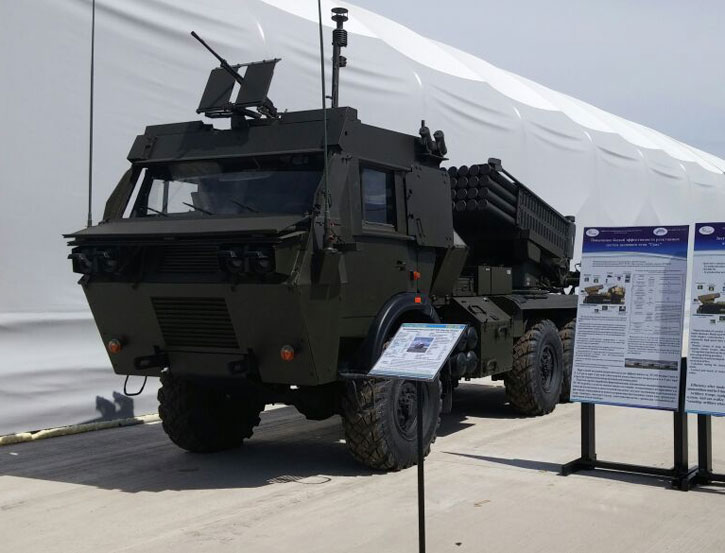
    An improvement of the BM21 multiple rocket launcher was unveiled by KAZTEC. The system uses the original MRL, mounted on a KAMAZ truck, fitted with a ballistic protected cabin. The vehicle is equipped with GPS navigation system and various improvements in setup and teardown, that enable the crew of three to ‘shoot and scoot’. Photo: Dan Zeevi.

    Super Puma Grounded

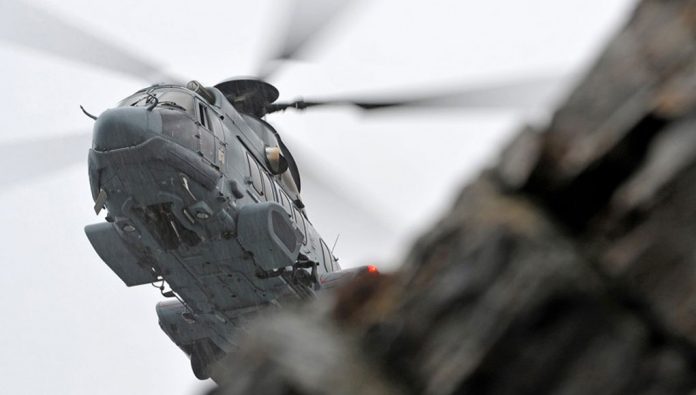
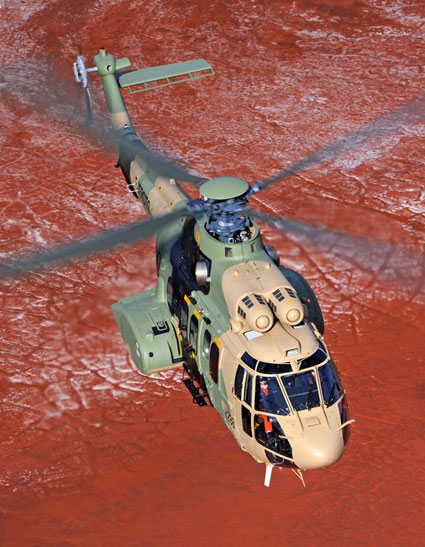
    H225 is operated by several countries in search and rescue missions. The civilian version is also used for SAR as well as offshore transportation. Photo: Airbus Helicopters

    Soon after the disastrous crash of an H225 helicopter near Turøy, Norway, which killed all 13 on board the aircraft manufacturer Airbus Helicopters lifted a temporary recommendation to ground the H225/EC225LP aircraft. A month later, following the preliminary findings of Norway’s Accident Investigation Board (AIBN), investigators are urgently requesting the European Aviation Safety Agency (EASA) to suspend the operations of the Super Puma H225 fleet. Anthony Tucker-Jones reports.

    Can it be that stalwart of military airlift the Super Puma is finally losing its lustre amid mounting safety concerns? Only last year, as part of Eurocopter’s rebranding as Airbus, the Eurocopter EC225 Super Puma was renamed the H225.

    The warning signs came earlier this year when Airbus announced it was cutting back production of its H225 by 50 per cent due to falling military sales.

    Although military and civilian operators of the H225 are about 50:50, military sales are inevitably more important because of the unit numbers involved.

    Airbus as with all other helicopter manufacturers is feeling the pinch because civilian demand has been cut by the depressed oil price. This inevitably was going to spill over into military procurement as well.

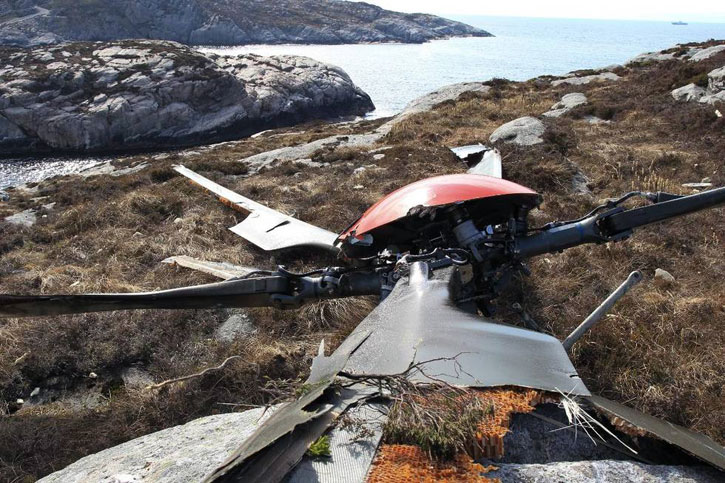
    The rotor of the H225 that crashed near separated from the helicopter at an altitude of 9000 ft.
    The rotor of the H225 that crashed near Bergen separated from the helicopter at an altitude of 9000 ft.

    Sales of the H225M military variant are now grappling with a public relations disaster. Airbus acknowledges public confidence in the H225 has been seriously shaken after a series of unwelcome civilian accidents – the most recent in April this year off Norway.

    The cause of the Norway crash, following the catastrophic loss of the rotor assembly has been put down to fatigue causing a main rotor gearbox failure Read more.

    An H225 was lost due to pilot error in 2009; three years later two came down in the North Sea due to gearbox problems. The gearbox design was modified and that seemed to be the end of the matter.

    As a result of the latest accident civil flight bans in the UK and Norway on the H225 and the AS332 variant of Super Puma could not have come at a worse time for Airbus. Public confidence has been so badly shaken there has even been a call for a permanent ban in the UK.

    In the view of the UK Civil Aviation Authority the H225 and AS332 are the same thing. They took a similar approach in 2013.

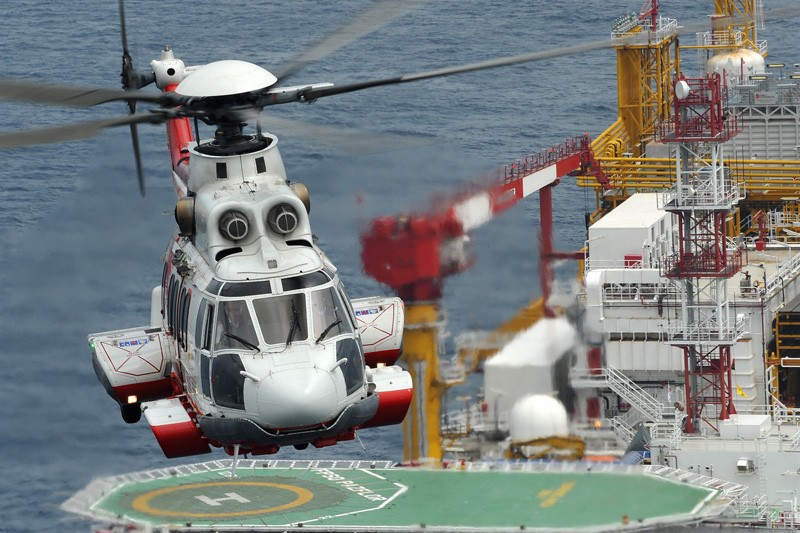
    H225 is supporting offshore oil and gas rigs. The helicopter that crashed in April, killing 13 on board, was on such mission. Photo: Airbus Helicopters
    H225 is supporting offshore oil and gas rigs. The helicopter that crashed in April, killing 13 on board, was on such mission. Photo: Airbus Helicopters

    The AS332 Super Puma is a proven military workhorse but the original design is almost 40 years old now, its much-upgraded predecessor the SA330 Puma even older. The AS332 has an extensive crash record with both military and civilian operators dating back to the late 1980s.

    In recent years the Spanish Air Force lost two and an AS532 Cougar, military variant, crashed in France in 2012.

    In light of this and ongoing safety concerns it is easy to see why potential military customers are very hesitant to commit with Airbus.

    Brazil, with 50 H225M on order after receiving less than 50 per cent has put the brakes on further deliveries due to the state of its economy. For Airbus this is an unwelcome blow at a time when it is struggling to secure firm sales for 90 H225M to India, Kuwait and Poland – the latter accounts for 50 of them and Kuwait 24.

    EXPH-0806-01
    The AS332 Super Puma is a proven military workhorse but the original design is almost 40 years old now, its much-upgraded predecessor the SA330 Puma even older. Photo: Airbus Helicopters

    Last year after criticism of the selection process the Polish Government was threatening to pull out of the H225M deal. Singapore is also seeking a dozen new helicopters to replace its fleet of aging of AS332/532 – but may be now having second thoughts about going back to Airbus.

    Reportedly the H225 is to stay in production until 2030 and it is planned there will be an overlap with its successor the proposed X6 – which has yet to leave the drawing board. In the meantime Airbus will need to work hard if military sales are ever to recover the growing scandal over the Norwegian crash. This poses the question has Super Puma had its day?

    Drone Anti-Collision System Completes Operational Test

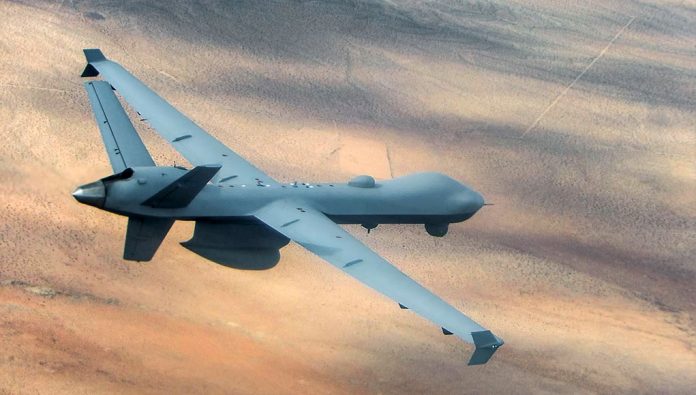
    CBP operates nine Predator B and Guardian aircraft and is the first customer to employ GA-ASI’s DAA/DRR system in an operational environment. Photo: GA-ASI

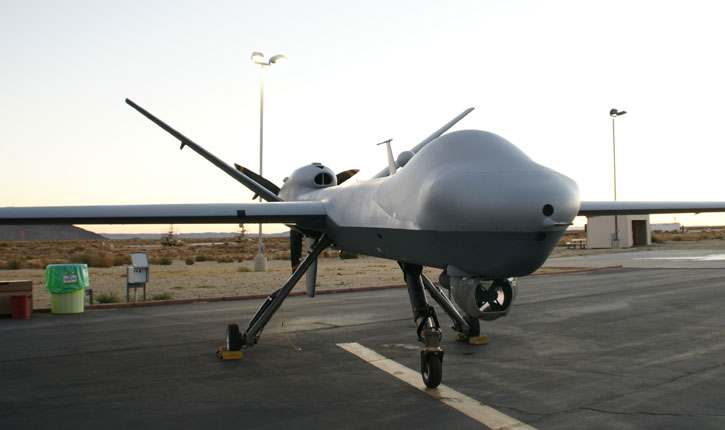
    General Atomics Aeronautical Systems, Inc. (GA‑ASI) completed the first operational testing of a Detect and Avoid (DAA) system on board the company’s Predator B Remotely Piloted Aircraft (RPA). The DAA system being tested included a Due Regard Radar (DRR) developed by the company, Honeywell’s Traffic Alert and Collision Avoidance System (TCAS) and Sensor Tracker, specifically designed for DAA. The system was flown on a U.S. Customs and Border Protection (CBP) Guardian, a maritime variant of GA-ASI’s Predator B RPA.

    “The successful completion of our anti-collision radar system operational testing by CBP is a huge milestone for our DAA system as it represents the first integration and evaluation of DRR on an operational UAS,” said David R. Alexander, president, Aircraft Systems, GA-ASI. “CBP’s follow-on operational use of the DAA system in domestic and international airspace will further validate the work being done by the FAA and NASA to introduce RPA into the National Airspace System.”

    Conducted in cooperation with CBP the tests demonstrated DRR’s functionality in the national and international airspace operational environment. DAA scenarios included ‘intruder’ aircraft such as a Cessna C-210 and UH-60 Black Hawk equipped with a mix of Mode A/C Transponders, TCAS, and Automatic Dependent Surveillance-Broadcast (ADS-B) transponder capabilities flying close to Guardian.

    Predator-B_Due-Regard-Radar_112014_725
    The mounted system DAA being tested included a Due Regard Radar (DRR) developed by the company, Honeywell’s Traffic Alert and Collision Avoidance System (TCAS) and Sensor Tracker, specifically designed for DAA. Photo: GA-ASI

    During each encounter, onboard sensor data was combined and downlinked to the pilot’s traffic display with DAA-specific alerts and guidance, ensuring safe separation between Guardian and the intruder aircraft. The initial overland testing began at GA-ASI’s Gray Butte Flight Operations facility near Palmdale, Calif., on March 10 and concluded April 25 over the eastern Pacific Ocean. The tests confirmed that the DAA system provided the RPA pilot with a clear picture of surrounding air traffic, at least as good as ‘eyes in the cockpit’ of a manned aircraft. They also proved the DAA system’s ability to be operated in concert with other radar payloads on the same aircraft, such as Guardian’s SeaVue maritime surface search radar.

    CBP operates nine Predator B and Guardian aircraft and is the first customer to employ GA-ASI’s DAA/DRR system in an operational environment. The successful operational testing of DRR aboard Guardian coincides with continued Predator B flight demonstrations conducted in partnership with the FAA, NASA, and industry partners. This work is helping to define airspace regulations that will allow further integration of RPA/UAS into civilian airspace.

    The Guardian was modified from a standard Predator B with structural, avionics, and communications enhancements, as well as the addition of a Raytheon SeaVue Marine Search Radar and an Electro -optical/ infrared sensor that is optimized for maritime operations. OAM pilots use the Guardian to conduct long -range surveillance in support of joint counter – narcotics operations in the southeast coastal and Gulf of Mexico border regions and drug source and transit zones, where maritime radar is necessary to detect a variety of threats. Video recorders document suspect activities for evidentiary use.

    According to CBP Office of Air and Marine (OAM) operations, six Guardians are assigned to the Southwest Border Region, two are assigned to the Northern Border and two s UAS are assigned to Cape Canaveral Air Force Station in Florida.

    Dogo – a Weaponized Robot Designed for Close Combat

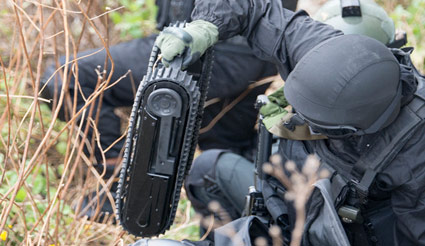
    Man portable, miniature robots have been used in military missions for several years, but due to their size, limited payload capacity and complex controls, their uses were restricted primarily to counter-improvised explosive devices (C-IED) and reconnaissance. A new robot developed by Israel’s General Robotics is introducing a new breed of ‘combat robots’ at Eurosatory 2016, designed to assist combat teams in urban assaults and counter-terror operations.

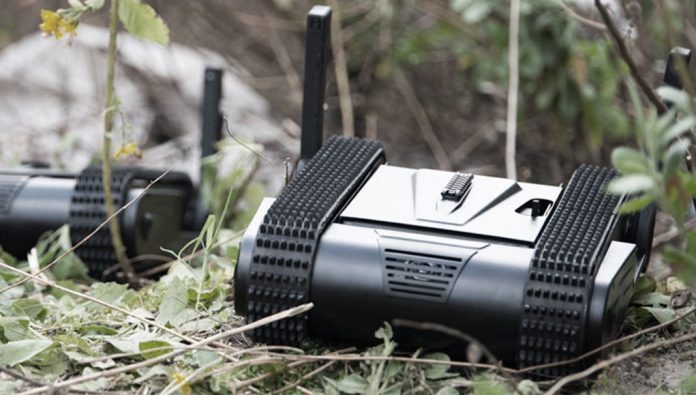
    At a mission gross weight of only 12 kg (26.5 lbs) the tactical tracked robot dubbed ‘DOGO’ packs enough battery power to last for a 2-5 hour mission, eight cameras covering 360 degrees, a fully loaded Glock 26 pistol and accessories mounted on Picatinny rails. The equipment carried on the rails provides various non-lethal effects, such as pepper spray module or a dazzler that temporarily blinds an aggressor from a distance of 5-10 meters.

    dogo_unpack_425
    At a mission gross weight of only 12 kg (26.5 lbs) the tactical tracked robot dubbed ‘DOGO’ packs enough battery power to last for a 2-5 hour mission. A fully loaded Glock 26 pistol included. Photo: General Robotics

    According to Shachar Gal, VP Business Development at General Robotics, DOGO was designed for Special Forces, SWAT teams, and infantry missions. The small, lightweight robot can climb stairs and move across difficult terrain. “The robot have certain advantages over the human warfighter.

    Since the stable platform is more accurate than a human, and, when operated from a safe distance, enables more time for situational assessment rather than the warfighters’ instinctive response. While the robot is limited in pursuit, using two DOGO in mutual cover would keep the target covered even in pursuit, trying to escape or engaging one of the robots. The small, stealthy robot is designed to be effective against targets much higher than itself – DOGO can aim its weapon very low – at targets lying on the floor or hiding under a bed, or aim up to hit a standing person at close range.

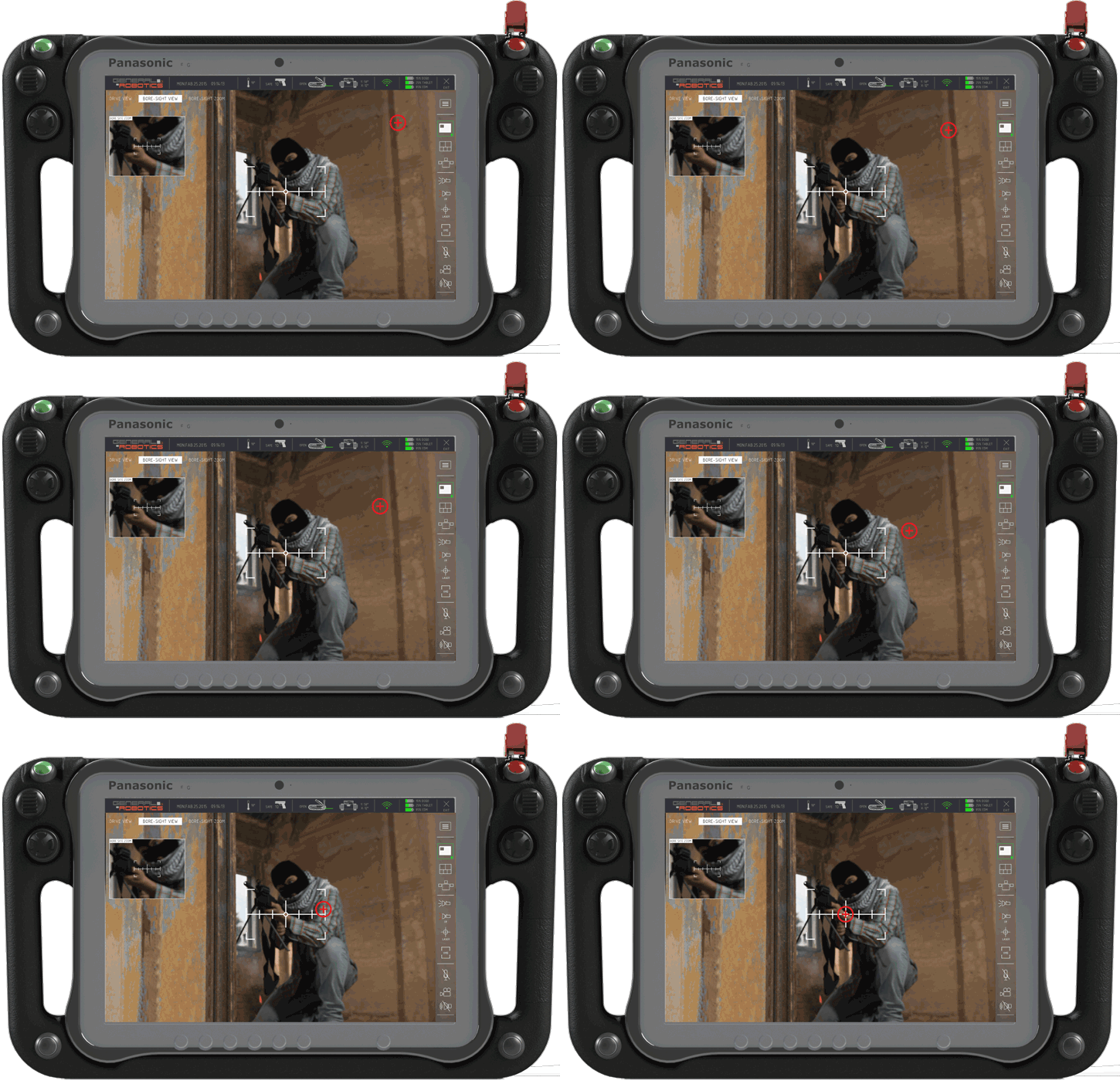
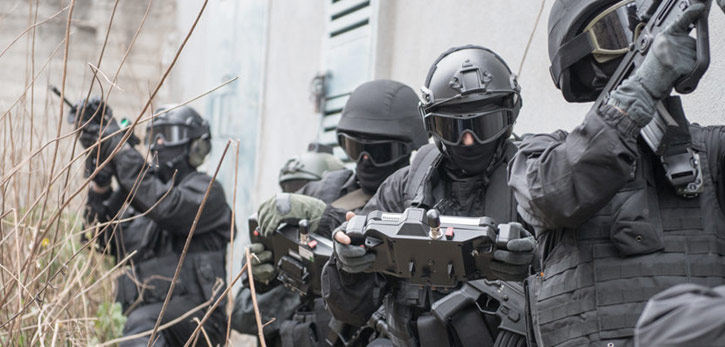
    The robot has an integral, locked case designed for the 9mm Glock 26. The fully loaded weapon has 14 cartridges is quickly attached to the DOGO, with remotely controlled safe/arm mechanism. The DOGO Robot is controlled by the ‘Ranger’ Remote Control Unit (RCU) developed by General Robotics. The RCU uses a commercial, off the shelf (COTS) Ruggedized FZ-G1 Panasonic Toughpad, encased with jacket providing the robotic controls.

    dogo_sight_725
    Operators that have mastered the system after short training have demonstrated the ability to bring the weapon and fire five rounds in two seconds. Photo: General Robotics

    The RCU provides joystick controls to navigate the robot with ‘Point & Shoot’ interface that allows the operate to designate the weapon towards a target by touching the target as it appears on the screen. Operators that mastered the system after short training have demonstrated the ability to bring the weapon and fire five rounds in two seconds.

    The robot generates persistent 360° view around the vehicle, provided by six cameras; two additional cameras provide boresight views for the weapon and payloads. The robot also has two-way audio and encrypted communications to control the payload and weapon, listen and intervene in hostage situations.

    doro_rover_725
    The RCU uses a commercial, off the shelf (COTS) Ruggedized FZ-G1 Panasonic Toughpad, encased with jacket providing the robotic controls. Photo: General Robotics

    Predator B ER Spreads Bigger Wings

    SONY DSC

    General Atomics Aeronautical Systems, Inc. (GA-ASI) conducted recently the longest flight of Predator B/MQ-9 Reaper Extended Range (ER) Long Wing, retrofitted with improved long-endurance wings with greater internal fuel capacity and additional hard points for carrying external stores. The recent endurance flight is a continuation of a test program that began on February 18th at GA-ASI’s Gray Butte Flight Operations Facility in Palmdale, Calif.

    The most recent flight proved Predator B Big Wing’s ability to boost flight time by over ten hours while replicating an operational mission in altitude and maneuver profile. During the flight, Predator B Big Wing demonstrated its ability to launch, climb to an operational altitude, loiter and conduct reconnaissance maneuvers, and land after 37.5 hours without incident. Follow-on tests will be conducted to expand its flight envelope further and push its endurance profile to the limit. Developed on Internal Research and Development (IRAD) funds, the new wingspan is 13-feet longer, increasing the aircraft’s endurance from 27 hours to 42 hours.

    According to Linden Blue, GA-ASI CEO, the new 79-foot wing span not only boosts the Predator B ER’s endurance and range, but also serves as proof-of-concept for the next-generation Predator B aircraft that will be designed for Type-Certification and airspace integration, “The wing was designed to conform to STANAG 4671 [NATO Airworthiness Standard for RPA systems], and includes lightning and bird strike protection, non-destructive testing, and advanced composite and adhesive materials for extreme environments.” Blue added.

    Additional improvements include short-field takeoff and landing performance and spoilers on the wings which enable precision automatic landings. The wings also have provisions for leading-edge de-ice and integrated low- and high-band RF antennas. An earlier version of Predator B ER featuring two wing-mounted fuel tanks is currently operational with the U.S. Air Force as MQ-9 Reaper ER.

    The long wings are the first components to be produced as part of GA-ASI’s Certifiable Predator B (CPB) development project, which will lead to a certifiable production aircraft in early 2018. Further hardware and software upgrades planned for CPB will include improved structural fatigue and damage tolerance, more robust flight control software, and enhancements allowing operations in adverse weather.

    Italian Drone Lost in the Mediterranean Sea

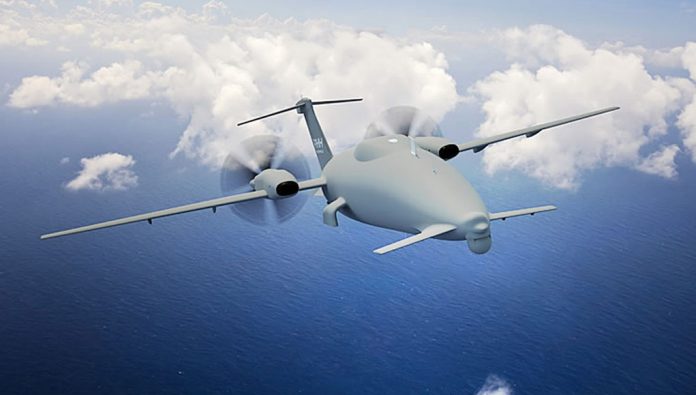
    The Piaggio Aerospace P.1HH HammerHead drone crashed yesterday off the Sicilian coast while on a test flight. According to …. the drone lost contact with the ground station during the flight and crashed into the sea, about 20 minutes after takeoff. The 14.4 m’ long Hammerhead drone is based on a Piaggio P.180 Avanti II commercial aircraft. Its maximum take-off weight of 6,146 kg. and the wingspan is 15.6 meters.

    The drone operated from Vincenzo Florio Airport, Trapani-Birgi Air Base in Sicily under a test flight series. “There has been no damage to people or things,” announced Piaggio Aerospace, which has commenced an internal investigation to understand the causes of the accident. The company plans to recover the drone to assess the cause of the mishap.

    Unveiled in 2013, the new drone was acquired by the UAE, as part of a $350 million acquisition. The Italian Air Force is also interested in operating three systems (6 drones in total). The Hammerhead drone can be fitted with intelligence, surveillance, reconnaissance (ISR) equipment for use in maritime surveillance, monitoring of illegal immigration, border surveillance and security of critical infrastructure.

    New Mobile VSHORAD Positioned to Replace German Stinger-Based leFlaSys

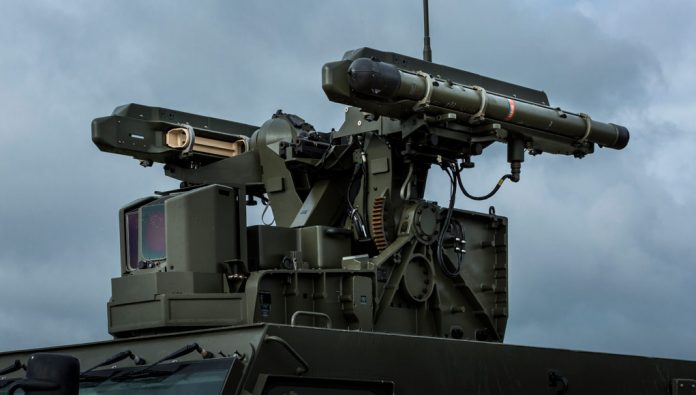
    Using the MBDA Mistral effectors and Rheinmetall MPCS turret, the new weapon station provides a solution for networked or autonomous short range mobile air defense systems.

    Rheinmetall and MBDA launched today a mobile air defense system designed to defeat aerial targets at close- and very close-range, including small and very unmanned aerial systems (UAS, LSS). Providing escort for mobile and mechanized forces, the system employs MBDA’s Mistral guided missiles mounted on Rheinmetall’s MPCS turret.

    The system employs the unified system architecture developed by the companies to connect sensors and effectors on different platforms. Using fully developed and operational systems reduce the development risk of the entire system. The modular design enables integration on differents platforms, from light vehicles to heavy Armored personnel Carriers.

    The new system is designed to seamlessly integrate into the German Tactical Air Defence System (taktisches Luftverteidigungssystem/TLVS) architecture. As an element of the future integrated air defence, the new modular system is positioned to become a possible successor to the lightweight air defence system leFlaSys/Stinger currently in use with the Bundeswehr.

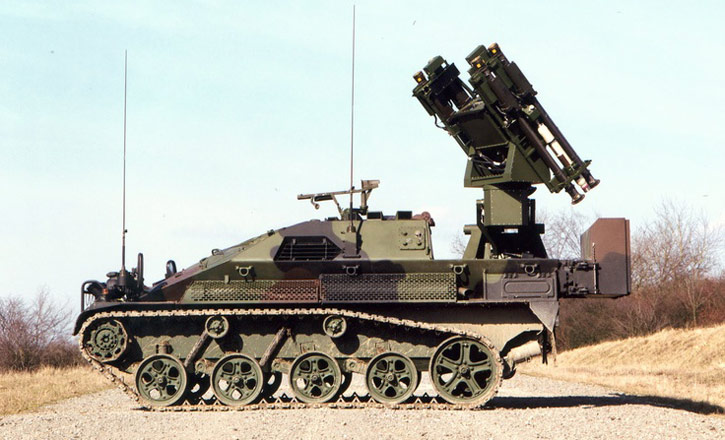
    The Ocelot LeFlaSys protects lighter and airmobile troops. It uses the Weisel vehicle as a platform and carries four Stinger missiles as surface-to-air weapons.
    The Ocelot LeFlaSys protects lighter and airmobile troops. It uses the Weisel vehicle as a platform and carries four Stinger missiles as surface-to-air weapons.

    Defense Exhibitions: Q3 2017

    Subscribe to see past eventsFor Events taking place before September 2017 – Click Here

    Travelling abroad? Try our Travel Partner Agoda – attractive deals – recommended hotels


    Intelligence & Special Forces – 5 July 2017 – Tel Aviv, Israel


    MAKS 2017 (AviaSalon) – 18-23 July 2017 – Zhukovsky, Russia


    Army 2017 – 22-27 August 2017 – Partiot Park near Kubinka (Moscow Region), Russia


    Homeland Security Expo – 29-30 August 2017 – ICE, Hanoi, Vietnam


    MSPO – 4-7 September 2017 – Kielce, Polans


    Interdrone – September 2017 – Las vegas, NV, USA


    AFA – Air Force Association – 16-20 September, 2017 – Gaylord National Harbour, MD


    AUS&R – September 2017 – Rishon Le’Zion, Israel


    Expomil – Bucarest, Romania

    Modern day Marine, 19-21 September 2017, Quantico, VA


    DSEI 12-15 September, 2017 – ExCel, London UK


    Travelling abroad? Try our Travel Partner Agoda – attractive deals – recommended hotels

    Want to include your event in our list?

    Include your event in our list
    Sending

    Skunk Works and XTEND Simplify Multi-Drone Command

    0
    Lockheed Martin Skunk Works® and XTEND have achieved a major milestone in JADC2 by integrating the XOS operating system with the MDCX™ autonomy platform. This technical breakthrough enables a single operator to simultaneously command multiple drone classes, eliminating the friction of mission handoffs. From "marsupial" drone deployments to operating in GPS-denied environments, explore how this collaboration is abbreviating the data-to-decision timeline and redefining autonomous mission execution.

    From Ukraine to Taiwan: The Global Race to Dominate the New Defense Tech Frontier

    0
    As traditional defense primes face mounting competition from agile “neoprimes” such as Anduril, Palantir and Helsing, the balance of innovation is shifting toward software-defined warfare and scalable, dual-use technologies, while global industry consolidation—marked by Boeing’s integration of Spirit AeroSystems and other strategic mergers—signals an intensified race to secure control over the defense technology value chain. Our Defense-Tech weekly report highlights these trends.

    Europe’s “Drone Wall”

    0
    In early October 2025, a coordinated wave of unmanned aerial system (UAS) incursions—widely attributed to Russia—targeted critical infrastructure across at least ten European nations. The unprecedented campaign exposed the fragility of Europe’s air defenses...

    Weekly Defense Update & Global Security Assessment

    0
    Executive Summary The past week (September 18-25, 2025) represents an inflection point where strategic defense concepts have transitioned from doctrine to tangible reality. An analysis of global events reveals four primary, interconnected trends shaping an...

    U.S. Air and Space Forces Push Next-Gen Programs at the AS&C 2025 Conference and...

    0
    At the 2025 Air, Space & Cyber Conference, U.S. Air Force and Space Force leaders unveiled major updates on next-generation fighters, bombers, unmanned systems, and space initiatives, highlighting both rapid innovation and critical readiness challenges as the services race to outpace global competitors. A short version is available here, with a more detailed version for subscribers.

    TADTE 2025: Reflecting Taiwan’s Strategic Themes

    0
    The Taipei Aerospace & Defense Technology Exhibition (TADTE) 2025 crystallized around four dominant strategic themes that collectively illustrate Taiwan's comprehensive approach to defense modernization amid escalating regional tensions. Based on a detailed report by Pleronix (available upon request). Includes a Podcast discussion on TADTE 2025's highlighting Taiwan's four strategic themes beyond the post's coverage.

    Iron Beam 450 Completes Testing, Soon to Join With Operational Air Defense Units

    0
    Israel’s Iron Beam 450 high-power laser system has completed final testing, marking a major leap in air defense. Developed by Rafael, it offers precise, cost-effective interception of rockets, UAVs, and mortars, and is set for IDF deployment by 2025.