Thursday, December 25, 2025
More
    Home Blog Page 109

    IAI unveils BirdEye 650D, mini-UAV designed for 24 hour missions

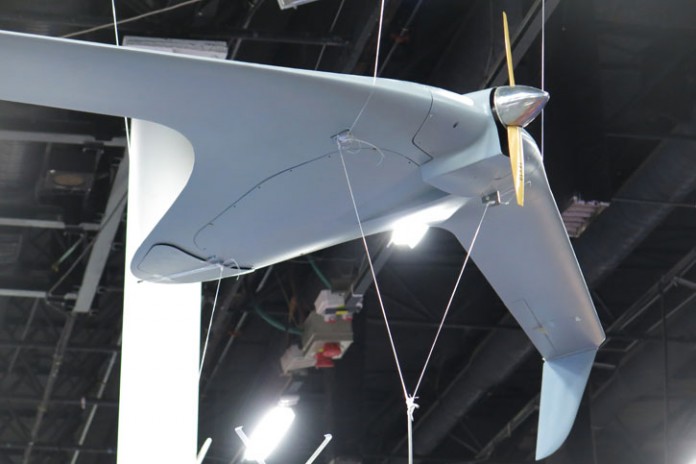
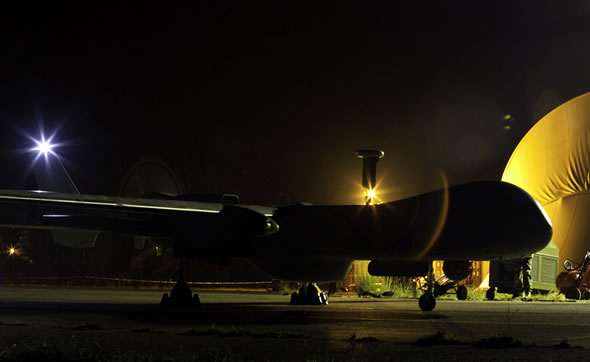
    BirdEye 650D showing the flying wing design. Photo: Tamir Eshel, Defense-Update
    BirdEye 650D showing the flying wing design. Photo: Tamir Eshel, Defense-Update
    BirdEye 650D showing the flying wing design. Photo: Tamir Eshel, Defense-Update

    Israel Aerospace Industries has unveiled its BirdEye 650D mini unmanned air vehicle (UAV) at the recent IDAS-BMD symposium in Tel Aviv. The new version is a third variant of the BirdEye 650 mini-UAV. The 650D is extending the platform’s mission endurance from two and three hours to 24. Previous versions required committing two or three UAVs to achieve a 24 hour cycle.

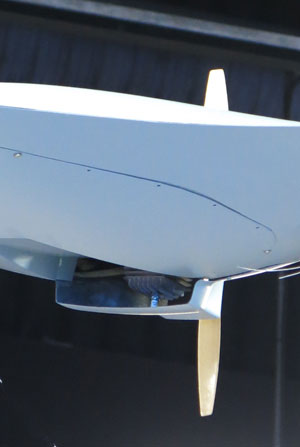
    birdeye650d_engine300
    The BirdEye 650D is powered by a front-mounted piston engine. The model on display does not show the planned position for the payload, which should be located between the engine cowling and parachute bay at the rear. Photo: Tamir Eshel, Defense-Update
    The BirdEye platform was launched with the BirdEye 400 electrically powered variant, carrying 1.2 kg (2.6lb) typically carrying the 1 kg (2.2lb) MicroPOP stabilized EO payload. This variant was later enhanced into the BirdEye 650, a 11 kg (24lb) drone doubling endurance to two hours with the same MicroPOP payload. A longer endurance version was later introduced, stretching the mission to 3.5 hours, taking advantage of lighter payloads and larger power pack. The BirdEye 650 have also been tested carrying fuel cells, on missions of up to six hours. Regardless of power source, electrical propulsion is not powerful enough to sustain long missions with the payload class required by tactical users, IAI sources indicated.

    These specifications typically require endurance of 20-24 hours and payload weight class of 5-6 kg. While IAI’s MiniPOP is slightly heavier for this application, lighter payloads conforming with this class are the multi-sensor TASE 350, comprising an IR and HD camera weighing 3.5 kg (7.25lb) from UTC or the Israeli T-Stamp, a 2.8 kg stabilized payload carrying a cooled IR and TV camera from Controp.

    Electrical propulsion is far from meeting such goals. To meet this goal with a compact platform, IAI engineers scaled up the BirdEye 650 platform, adding a small combustion engine, and fuel tank sustaining 20-24 hours (depending on the payload used). The BirdEye supports such mission endurance with a starter-alternator sustaining the charged battery supporting the avionics, datalink and payload on the extended mission. In this configuration the BirdEye 650D has a longer fuselage and larger wing span, enabling maximum take-off weight of 30kg (66lb). The new model has an operational radius of over 50km (27nm).

    The new version is launched from a catapult and retrieved by parachute and airbag. As performed by other BirdEye models, the 650D also uses a belly placed parachute that, when retrieved, flips the drone on its back, protecting the payload from ground impact. This flipped landing method eliminates the need for retractable turret. This mini-UAV will also be configured to operate from naval vessels, using a catapult launch systems and several, optional at-sea retrieval systems.

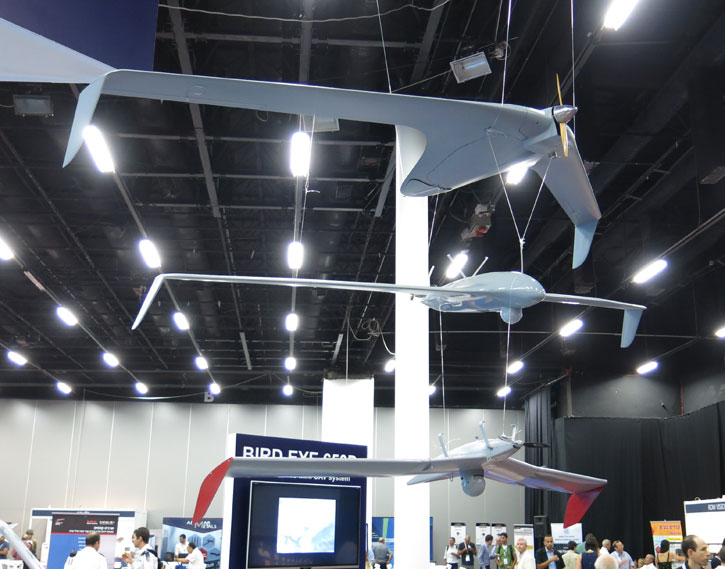
    birdeye650family725
    The Birdeye family of mini-UAVs showing (from top to bottom) the BirdEye 650D, BirdEye 650 and BirdEye 400. Photo: Tamir Eshel, Defense-Update

    3D printing, self healing, transforming, among UK future aircraft technologies

    Scientists and engineers at BAE Systems have lifted the lid on some futuristic technologies that could be incorporated in military and civil aircraft of 2040 or even earlier.

    Among the technologies depicted in this short video clip are self healing surfaces and airframe parts that can heal themselves in minutes. Another variant of this platform is shown in the video, used as an air defense platform is carrying a laser weapon to defeat precision targeted air-to-ground missile launched against a high value target.

    Another concept depicted on the video is a that of an unmanned transformer aircraft, composed of several autonomously controlled elements that can be joined into a single flying platform, or split, to carry out individual missions.

    An intriguing twist of the ‘transformer’ concept is the use of on-board 3D printing to create an ad-hoc ‘single use’ UAV to perform a specific mission. On the video clip, such UAV comprised of two individual vehicles, a reconnaissance carrying an embedded heavy lift quadcopter are printed on board a ‘mothership’, launched on a mission to find and rescue a person.

    Experts at BAE Systems’ Research and Development team at Warton are offering an unique insight into some ‘drawing board’ technologies that would normally be kept well under wraps. The team works with the UK’s leading aviation thinkers from universities, Government and a whole range of companies to predict and explore how aircraft engineering might evolve. Based on their thinking, the four futuristic concept aircraft technologies have been brought to life in short animations.

    Nick Colosimo, a Futurist and Engineering Manager within the R&D team said: “Of course we don’t know exactly what sorts of aircraft technologies will be used in 2040 with any certainty, but it’s great to be able to show the public some concepts that might be possible through projecting where today’s technology could get to. BAE Systems has a rich heritage in research and development, and our team builds on literally decades of previous R&D work by thousands of scientists and engineers.”

    Research and development has always played a key role in BAE Systems’ defence, aerospace and security business, with the Company investing £117M of its own capital in R&D in 2013.

    Update: F-35 fleet grounded pending results of recent engine fire investigation

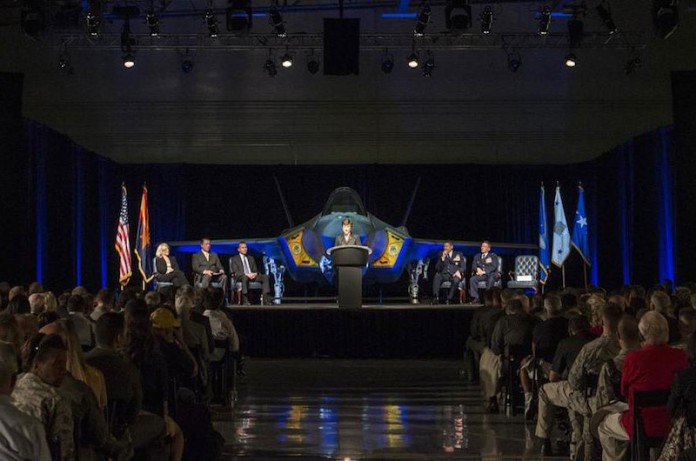
    More than 600 people came out to celebrate the F-35 arrival ceremony at Luke Air Force Base on March 14, 2014.

    “The root cause of the incident still remains under investigation. Additional inspections of F-35 engines have been ordered, and return to flight will be determined based on inspection results and analysis of engineering data. Defense Department leadership supports this prudent approach.” The Pentagon announced.

    Until this official announcement the F-35 fleet was under a “cautionary suspension of flight”, announced as a temporary measure until investigation details were available.

    Despite this setback the Pentagon is still preparing to send four F-35Bs across the Atlantic Ocean to the UK, to participate in the International Air Tattoo and Farnborough Airshow

    It was the first official endorsement of the incident on June 23, which involved a Low Rate Initial Production (LRIP 5) F-35A (not a test airplane) on a routine training flight. The fire that erupted in the third stage of the F135 engine ripped through the top of the plane Reuters reported and caused major damage to the engine and aircraft.

    Update: “There’s a growing body of evidence that this may have been an individual situation, not a systemic one. But we don’t know that for certain at this point in time,” Defense Undersecretary Frank Kendall told lawmakers on a hearing of the House Armed Services Committee on Thursday July 10. The F-35 is still grounded, and its planned participation at the Air Tattoo has been cancelled, but it is still scheduled to make it to Farnborough July 14, if the jet is returned to flight status by Saturday July 12.

    Breadcrumbs trails?

    The last major stand down of the F35 fleet was ordered on February 22, 2013, three days after cracks were found in a turbine blade of one of the F135 engine. This grounding took a week to lift off.

    At the time the engine manufacturer’s findings were that the crack detected in the third stage turbine of the F135 engine resulted from excessive stressful operating environment experienced in flight tests. The engine in which the crack was found was used on the second prototype, AF-2 and was operated at high temperatures for more than four times longer than a typical F-35 flight, this stressful regime has led to a separation of the grain boundary of the particular blade that experienced the crack.

    After inspections of other F-35 fighter jets did not find similar cracks or signs of excessive engine stress, no redesign was required for the JSF F-135 engines and the fleet grounding was waved. Last month an engine oil leak forced mandatory inspections of the entire fleet of 104 F35 jets. Three of the aircraft failed that inspection.

    Amos’ pressure is not merely political – a burning issue is the planned Initial Operational Capability (IOC) milestone for the corps’ first F35 – within 12-18 months

    In September 2009 an F135 test engine was damaged amidst a simulated 11 hour supersonic test cycle. After investigating the cause of the damaged F135 the manufacturer, P&W said it will introduce minor changes to the engines, to prevent repeated occurrences. A month later another damage occurred to the competing F136 engine, developed by GE and Rolls Royce. At the time two engine manufacturers were competing on providing two different engines for the F35. Howerver, the development of the F136 alternative engine was terminated in 2011, after the two partners stopped work on the project after failing to gather Pentagon support for further development. Although the Pentagon has invested over two billion dollars in the program since 2004 the Pentagon and Joint Program office did not ask for funding for the alternate engine since 2006, while congress, on its side maintained funding and support of the program until 2010.

    Having two engines supporting the operational fleet would mean that future fleet wide grounding of the F35 due to engine issues could be avoided.

    Bad timing

    Despite this setback the Pentagon is still preparing to send four F-35Bs across the Atlantic Ocean to the UK, to participate in the International Air Tattoo and Farnborough Airshow. A final decision will come early next week, Rear Admiral John Kirby, the Pentagon’s chief spokesman said.

    The current mishap is much more serious and may also cause significant political fallout, as the cross-atlantic deployment of the aircraft was planned to make a strong statement of the JSF program and the international support it has gained in recent months. High level officials including Marine Corps Commandant Gen. James Amos who have lead the campaign to send the F-35B to the UK, are committed to get the aircraft flying as soon as possibly can, of course, without compromising safety. Therefore, the Marine Corps is likely to do its best effort to conclude the investigation and get a safety waiver for their type to resume flying. Amos’ pressure is not merely political – the burning issue is the planned Initial Operational Capability (IOC) milestone for the corps’ first F35 squadron, Marine Fighter Attack Squadron (VMFA) 121 currently based in Yuma, Ariz.

    Based on the F-35 JPO schedule set in June 2013, the F-35B will reach the IOC milestone between July 2015 and December 2015. Marine Corps F-35B IOC shall be declared when the first operational squadron is equipped with 10-16 aircraft, and US Marines are trained, manned, and equipped to conduct CAS, Offensive and Defensive Counter Air, Air Interdiction, Assault Support Escort, and Armed Reconnaissance in concert with Marine Air Ground Task Force resources and capabilities.

    ARL: Bringing nano robots to reality

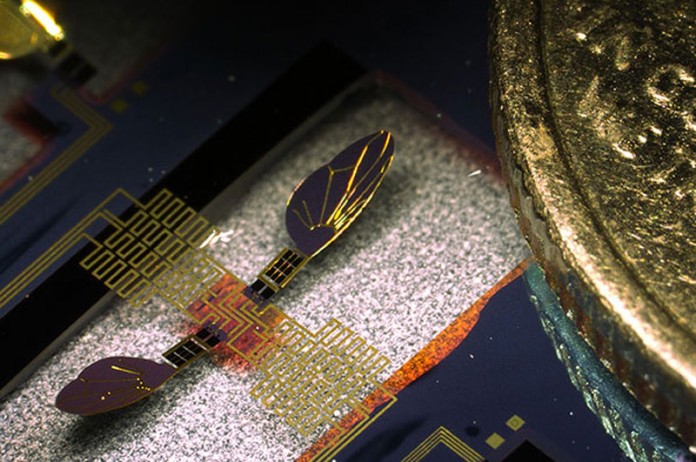
    An ARL demonstration of full range of motion and aerodynamic lift in fruit fly scaled microelectromechanical system (MEMS) fabricated wings. (Photo: ARL)
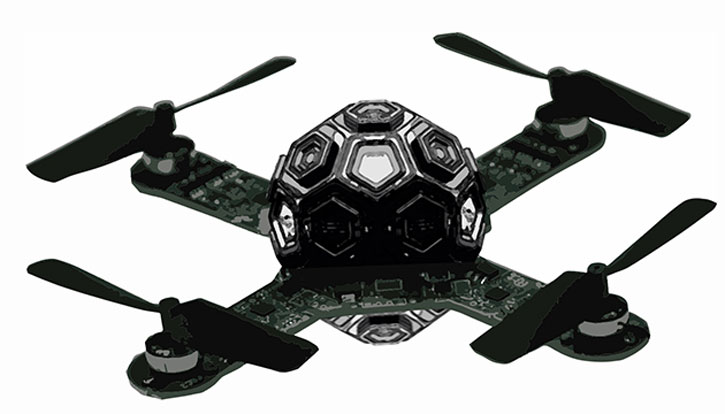
    ARL scientists want to equip Kumar's miniature quad rotor with a staring spherical camera. Built like an eye of a fly, the two camera will be able to stare over the upper and lower hemispheres of the platform, covering the full sphere. Photo: ARL
    ARL scientists want to equip Kumar’s miniature quad rotor with a staring spherical camera. Built like an eye of a fly, the two hemispheres will be able to stare over the upper and lower hemispheres of the platform, covering the full sphere. This wide-field sensing based on the neurophysiology of insects, will enable navigation and obstacle avoidance on micro aerial robots Photo: ARL
    Dr. Joseph Conroy checks the vehicle operation of the ARL micro-quadrotor, a platform for testing integrated sensing and processing on size constrained robotic systems. (ARL Photo by Doug Lafon)
    Dr. Joseph Conroy checks the vehicle operation of the ARL micro-quadrotor, a platform for testing integrated sensing and processing on size constrained robotic systems. (ARL Photo by Doug Lafon)

    Robots and structures on this size and scale can access difficult to reach areas, for search and rescue or reconnaissance behind closed doors

    The US Army Research laboratory (ARL) is studying micro-robots for use in future military applications, from covert monitoring and surveillance of suspected enemy targets to sensors assisting soldiers and leaders in situational assessment. For the more distant future, ARL scientists believe that teams of miniature ground and aerial robots may be able to enter the high-risk zones and conduct a coordinated search, communicating with one another, and ultimately conveying critical information to Soldiers who are far removed from harm’s way.

    Technologies studied under Developed ARL’s Micro Autonomous Systems and Technology (MAST) offer such potential capabilities under a collaborative technology alliance between ARL, the R&D community, industry and academia.

    Prof. Vijay Kumar, of the School of Engineering University of Pennsylvania. A pioneer in quadrotor robotics, Kumar is currently assigned to the White House Office of Science and Technology Policy where he serves as the assistant director for robotics and cyber physical systems.
    Prof. Vijay Kumar,of the School of Engineering University of Pennsylvania. A pioneer in quadrotor robotics, Kumar is currently assigned to the White House Office of Science and Technology Policy where he serves as the assistant director for robotics and cyber physical systems.

    “Since the program was awarded [in 2008], I am gratified at what has come out of MAST CTA.” ARL’s chief scientist Dr. Joseph Mait said. One of the programs was spun by Prof. Vijay Kumar of the University of Pennsylvania that produces a miniature quad-rotors made to fit in the palm of a hand and insect scaled platforms.

    “This device has a large percent of the capabilities that we have wanted.” Mait added, “That is a true sign of progress and the types of innovation that we supported through the MAST CTA. Within ARL itself, it has established us now as an organization capable of delivering autonomous platforms that are as large as a passenger vehicle but also as small as something that can be carried around with two arms then also carried in a single hand.”

    Researchers are currently working with the micro-quadrotor as a platform for testing integrated sensing and processing on size-constrained robotic systems. The system is currently able to fly using a manual pilot control or within a test environment that utilizes an external visual tracking system, such as a Vicon system. The next step will add autonomy to such systems. “We have people capable of developing autonomy at all of those scales, which opens up doors and greater creativity at how all these platforms can be used by teams of Soldiers of various sizes from a company down to a squad.” Mait concluded.

    “We are creating autonomous flying robots that are able to navigate in complex, three-dimensional environments with or without GPS with applications to search and rescue, first response and precision farming.” Kumar tells about the latest research projects on Kumarrobotics. “The robots are quadrotors with onboard sensors and processors customized for state estimation, control and planning. We rely on a range of sensors that can include an IMU, cameras, a laser range scanner, an altimeter and a GPS sensor. His smallest robot has a mass of 20 grams and is capable of navigating at 6 m/s in indoor environments.

    mast.2nanu_actuator
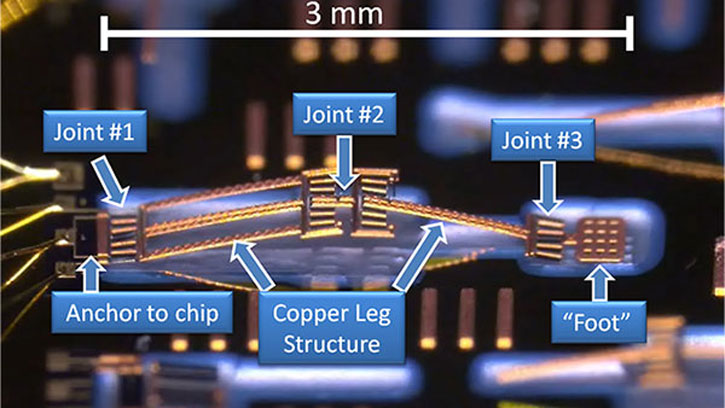
    ARL has demonstrated independently controlled large-displacement three-jointed insect inspired legs for future mm-scale robotic systems using microelectromechanical system (MEMS) fabrication techniques.
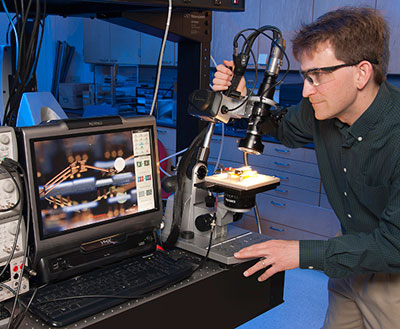
    Dr. Ronald Polcawich performs high-resolution imaging and testing of a millimeter-scale robotic leg structure. The roughly 3-mm-long leg consists of segments of piezoelectric thin-film actuators and thin-film copper sections designed to mimic the kinetics of a leg with a "hip," "knee" and "ankle" joint sections. These "legs" have demonstrated the ability to move, lift (e.g., salt crystal in image), and resist impact into the silicon substrate. (Photo by Doug Lafon)
    Dr. Ronald Polcawich performs high-resolution imaging and testing of a millimeter-scale robotic leg structure. The roughly 3-mm-long leg consists of segments of piezoelectric thin-film actuators and thin-film copper sections designed to mimic the kinetics of a leg with a “hip,” “knee” and “ankle” joint sections. These “legs” have demonstrated the ability to move, lift (e.g., salt crystal in image), and resist impact into the silicon substrate. (Photo by Doug Lafon)

    In terms of insect scaled platforms, ARL researchers are developing and testing millimeter-scale robotic leg structures. According to Dr. Ronald Polcawich, team lead for Piezoelectric-Micro Electro-Mechanical Systems Technology at ARL, the leg structures consist of segments of piezoelectric thin-film actuators and thin-film copper sections that are designed to mimic the kinetics of a leg and have the ability to move, lift and resist impact.

    The program seeks to enhance the tactical situational awareness of the dismounted Soldier, in urban and complex terrain, by autonomous, collaborative and multifunctional mobile microsystems

    “It is envisioned that robots and structures on this size scale can provide a unique set of advantages and capabilities to the Soldier. Their inherent size makes them useful to access difficult to reach areas such as in rubble for search and rescue and behind closed doors for reconnaissance,” stated Polcawich.

    “The MAST program seeks to enhance the tactical situational awareness of the dismounted Soldier in urban and complex terrain by enabling the autonomous operation of a collaborative ensemble of multifunctional mobile Microsystems,” said Dr. Brett Piekarski, chief of ARL’s Micro and Nano Materials and Devices Branch within the Sensors and Electron Devices Directorate and Cooperative Agreement Manager of the MAST Collaborative Technology Alliance (CTA).

    The structure and goals of the MAST CTA were developed by Dr. Tom Doligalski and Dr. Joseph Mait. Mait led the CTA when it was awarded in February 2008. The CTA is comprised of four research centers and numerous consortium members. The research centers include the Platform Integration Center, BAE Systems (Lead); Microsystem Mechanics Center, University of Maryland; Processing for Autonomous Operation Center, University of Pennsylvania; and Microelectronics Center, University of Michigan.

    Other ARL MAST consortium members include the California Institute of Technology, Georgia Institute of Technology, Harvard University, Jet Propulsion Laboratory, Massachusetts Institute of Technology, North Carolina Agriculture and Technical University, University of California-Berkeley, University of New Mexico and the University of Pennsylvania. The research is funded by ARL into 2017.

    The technical approach to meet the goals and objectives of the MAST CTA is to focus on the critical science and technology research areas as they pertain to small scale platforms including mobility, control and energetics; communication, navigation and coordination; sensing, perception, and processing.

    In the areas of mobility, control and energetics, researchers are studying aeromechanics at small scales, body and appendage design at small scales, algorithms for complex navigation and small-scale platform propulsion and actuation.

    In the area of communication, navigation and coordination, researchers are focusing on how to enable intelligent communication, networking and collaboration between micro autonomous robotic platforms. Under sensing, perception and processing, researchers are looking at low-power sensors for navigation, obstacle detection, and intelligence, surveillance and reconnaissance.

    An ARL demonstration of full range of motion and aerodynamic lift in fruit fly scaled microelectromechanical system (MEMS) fabricated wings. (Photo: ARL)
    An ARL demonstration of full range of motion and aerodynamic lift in fruit fly scaled microelectromechanical system (MEMS) fabricated wings. (Photo: ARL)

    China wants Swedish robo copters

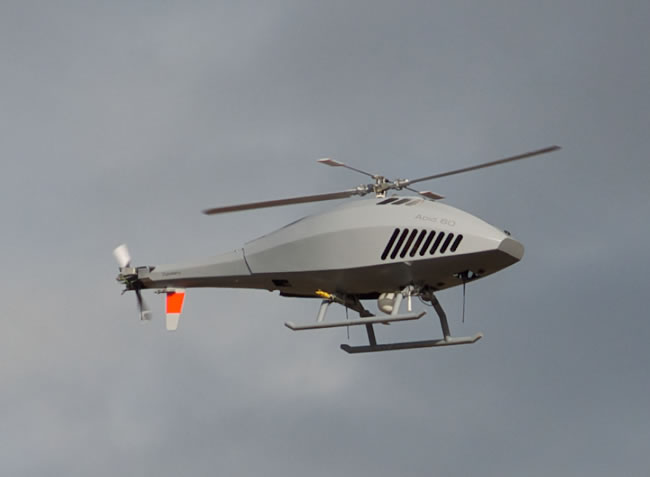
    CybAero APID 60 'Tier II' unmanned Vertical Take off and Landing Unmanned Aerial System (VTUAV). Aerovironment now plans to market this system in the US, positioning it to fulfil new requirements for responsive ISR in support of land and naval forces. Photo: CybAero
    CybAero APID 60 'Tier II' unmanned Vertical Take off and Landing Unmanned Aerial System (VTUAV). Aerovironment now plans to market this system in the US, positioning it to fulfil new requirements for responsive ISR in support of land and naval forces. Photo: CybAero

    The Swedish UAV company CybAero, which develops and sells unmanned helicopters, has landed an order from China worth over US$100 million (SEK 700-800 million) through an eight-year framework agreement. The order is dependent on an export permit being issued by the Swedish Agency for Non-Proliferation and Export Controls (ISP).

    The order has been placed by a company in the Chinese aerospace manufacturer AVIC group. The company expects to deliver at least 70 systems of rotary-wing drones, to be used by customs, coastguard services and agriculture services.

    Through the joint company, AVIC will target the civil and commercial markets – customs and coastguard services, the energy sector, agriculture, mapping and rescue services

    The order is linked to a framework agreement, through which AVIC has committed to purchasing at least 20 helicopter systems during the first three years and at least a further 50 systems during the following five years. This gives a total order value of SEK 700-800 million, depending on the final design of the systems. Each system includes helicopters, ground stations and data links. The agreement also covers training and support.

    “This represents a breakthrough in the market for the civil application of unmanned helicopters. Our goal is to become the global market leader with at least 30 percent of the global market. Through this order, which is our biggest to date, we’ve taken a significant step towards achieving this goal,” says Mikael Hult, CybAero’s CEO.

    CybAero will establish a joint company with AVIC in order to gain access to its volumes and production expertise. In the long-term, the company may carry out some production locally in China for the Asiatic market. CybAero expects to achieve economies of scale through the joint company, which among other things will result in the further streamlining of operations and the potential to operate closer to the local Asiatic market.

    Through the joint company, AVIC will entirely target the civil and commercial markets, e.g. customs and coastguard services, the energy sector, agriculture, mapping and rescue services, etc.

    “A condition of the order for AVIC is the granting of a permit by the Swedish Agency for Non-Proliferation and Export Controls”

    “The order is the largest ever anywhere in the world in the product segment within which CybAero operates, i.e. vertical take-off and landing unmanned aerial vehicles weighing less than 200kg. This order will be worth nearly SEK 100 million (US$14.8 mil) a year if we can turn out the orders over the eight years covered by the agreement. This will provide a stable basis for our entire business for many years to come,” says Mikael Hult, and continues:

    “A condition of the order for AVIC is the granting of a permit by the Swedish Agency for Non-Proliferation and Export Controls, but we don’t anticipate there being any problem with this at present. We received an order from the Chinese customs authorities in January worth SEK 50 million (US$7.5 mil), and we have been granted an export permit for this order, which is more complex and technologically advanced. The equipment for which we have now received an order is part of our standard system,” says Mikael Hult.

    Easy to maintain, robust and cost-effective, CybAero’s unmanned helicopters have a range of 20 miles and a flying time of up to six hours.

    Krauss-Maffei Wegmann and Nexter Systems plan alliance

    German armored vehicle manufacturer Krauss-Maffei Wegmann (KMW) and French government owned defense company Nexter Systems announced they are considering a merger between the two groups, under which the two companies will establish a strong Franco-German defense technology group.

    The two companies, both leading European providers of land defence systems, intend to share their future road ahead. The official announcement did not mention how the unified group will retain the existing portfolio of the two companies, although there is significant redundancy between the two, especially in the area of wheeled armored vehicles. Existing cooperations with other groups, including the German Rheinmetall, Italian Iveco and Swedish-French Volvo may also need revisit. “The two companies’ product portfolios and their regional presence in the world market complement each other almost without any overlap,” the two sides said in a joint statement.

    KMW, Nexter and their owners view this step as decisive for the consolidation of the defence technology industry in Europe. Their new strategic alignment makes it possible to retain jobs and skills in the heart of the European Union. The product portfolios of the two companies and their regional presences on the world market complement each other. The planned conglomerate currently employs 6,000 employees, has a current annual turnover nearing 2 billion euro, and an order book of around 6.5 billion euro.

    On 01. July 2014 in Paris, the owners of the French and German companies have signed a Heads of Agreement to this effect. The alliance of the two groups under the umbrella of a joint holding company creates a Franco-German defence technology group.

    The alliance of KMW and Nexter creates a group with the momentum and innovative force required to succeed and prosper in international competition. In addition, it offers to its European and NATO customers the opportunity of increased standardisation and interoperability for their defence equipment, with a dependable industrial base.

    Nexter S. A. is in the sole ownership of the French State holding company GIAT Industries S.A.; Krauss-Maffei Wegmann GmbH & Co. KG is in the sole ownership of Wegmann GmbH & Co in Kassel. For the intended unification of the two companies, the current sole owners intend to contribute their shares into a newly incorporated joint holding company. They will each receive 50 percent of the shares of this holding company, which will become the sole shareholder in KMW and Nexter.

    The governance of the holding company will take into account the balance between the two shareholders, who will be reference investors in the new combined group with a long term industrial perspective.

    The target date for the alliance is the second quarter of 2015. In the meantime, the two future partners will both be subject to a process of due diligence. The alliance project will be subject to legal and customary regulation approvals.

    Turkey Delays missile defense decision to August 30

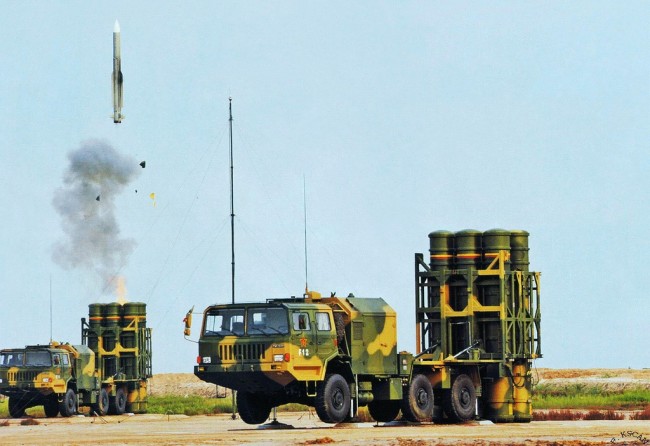
    FD2000 is the export version of the HQ-9 (dubbed the Chinese S300). FD2000 provides improved anti-stealth capability by incorporating the Type 120 low altitude search radar, and Type 305A AESA search radar for full anti ballistic missile capability, and YLC-20 passive sensor, improving counter-stealth capability.

    Turkey’s Undersecretariat for the Defense Industry (SSM) was expected to make the final decision concerning the procurement of a multi-billion dollar long-range air and missile defense system tender, with European and Chinese firms in the running. Instead, Ankara opted to delay its decision again, extending the deadline for bids until August 30, Hürriyet Daily News reported. This is the third time Ankara has extended the deadline for revised offers.

    Last September, the SSM executive committee chose China’s FD-2000 (HQ-9) long-range air and missile defense systems over Western competitors, including the Italian-French Eurosam’s SAMP/T Aster 30 systems. The Chinese manufacturer of the HQ-9 missile system, the state-run China Precision Machinery Import-Export Corporation (CPMIEC), offered a $3.4 billion high technology transfer. Turkish government officials announced they preferred the Chinese offer due to its competitiveness and potential for co-production in Turkey. the Turkish Daily Sabah reports.

    Facing unprecedented European and U.S. pressure to revert the selection Ankara has asked the competitors to ‘reconsider’ their bids. Since the announcement, the bidding deadline has been extended three times, and other bidding companies, Eurosam and Raytheon/Lockheed Martin, were given time to reconsider their bids until the end of June. As reported above, this target has now moved two month to the end of August.

    Despite the international pressure, government officials announced that they preferred the Chinese offer due to its competitiveness and potential for co-production in Turkey. Sources in the defense industry stated that SSM Undersecretary Ismail Demir visited China last week and held talks with officials from the Defense Ministry and the Chinese manufacturer of the FD-2000 missile system, the state-run CPMIEC. According to sources, Turkish officials demanded further cooperation and technology transfer and underlined that current conditions concerning technology transfer are not sufficient for Turkey.

    One of the main concerns for the Turkish planners are the integration of the new system with NATO’s evolving missile defense system. NATO insists the Chinese technology will not be compatible with the evolving ballistic-missile shield being built in Europe. There are also proliferation concerns, as the Chinese company has been on the U.S. State Department’s sanctions list since February 2013.

    Turkish defense companies are also objecting to the selection of the Chinese option, fearing that their partnerships in certain fields would not be able to continue if Turkey buys missiles from China.

    If Turkey decides not to continue with the Chinese company, Italian-French team Eurosam SAMP/T is in second place, and most likely Turkey will continue with the European firms.

    Europe has focused on high level discussions to promote its offering. Last week, Prime Minister Recep Tayyip Erdoğan visited Paris, with Defense Minister İsmet Yılmaz joining the delegation. French Leader Hollande and Prime Minister Erdoğan are believed to have discussed details about a potential missile deal and Eurosam’s offer during the bilateral talks. Antoine Bouiver, CEO of MBDA, a partner company of Eurosam, visited Turkey in March. During his visit, he said that Eurosam was ready to offer Turkey a coproduction in radar and other communication tools. His visit was followed by a delegation from Eurosam visiting Ankara in April for meetings with defense officials. According to sources, Eurosam updated its offer, lowered its price estimate to under $4 billion and increased the share of local contributions to the project.

    The U.S. applied pressure on Ankara to block the Chinese offer but did not change its proposal to become more attractive. An industry source familiar with the program remarked that the U.S. company did not revise its offer and declined to offer the options of technology transfer or coproduction to Turkey.

    Cyber Intelligence Report – July 1, 2014

    cyber_report

    Israel

    Israel among top cyber defense exporting countries 

    Israel National Cyber Bureau (INCB) published an astonishing statistic asserting Israel export of cyber related products reached 3 billion dollars in 2014. This places Israel second only after the USA in cyber export, making Israel 5% of the cyber world market. Additionally, Israeli cyber firms raised 165 million dollars in investment money, which is 14.5% of worldwide investment within the cyber field.

    Cyber campaigns in wake of Operation Brother’s Keeper

    In the ongoing Operation Brother’s Keeper, the Deputy Head of the Information Security Unit in the IDF (referred to as Deputy A) acknowledged enemies of Israel are using social media to gather tactical and strategic intelligence. In an interview with the IDF blog, Deputy A pertained: “We are under intelligence gathering campaign, which is being led by the radical axis, against Israel and the IDF. Over the past years the enemy has been accelerating the vector of information gathering through the web: from social media, application, and more, while the gathering is occurring through the cyber domain.” He added: “Our enemies learned that there is a lot of information that could be gathered in that domain, and from our understating they are pretty good at it.” The second step of building the cyber defense force (the first, establishing the INCB) ended after the 18th month when the practice drill “magic circle 1” concluded. The practice was applied at the Office of the Prime Minister and was designated to check the readiness of key players at the government in dealing with a major cyber event. “We must be prepared for every scenario. We will continue practicing the relevant players to raise the national readiness in a complex changing reality,” Dr. Evitar Matania, Head of the National Bureau explained.

    USA

    New US Ambassador in Beijing said Chinese cyber espionage is a threat

    A week ago, the new US Ambassador Max Baucus in Beijing declared he would use diplomatic and legal opportunities to cease Chinese cyber espionage activities against US industries. Diplomatic relations between the two countries have tensed since the US government have charged five Chinese military officers with cyber espionage activities against US defense and technology firms. China immediately rejected these accusations and deemed they were offended. The US Ambassador declared: “Cyber-enabled theft of trade secrets by state actors in China has emerged as a major threat to our economy and national security.” Ambassador Baucus added “The US-China relationship is their most important bilateral relationships.” If both countries want to keep good diplomatic and economic relations, a non-cyber spying agreement should be signed between the two nations. However, the actual international economic and security context has become so unstable that it would be difficult for the two countries to sign and respect such an agreement. To add fuel to the fire, China announced its Central Government Procurement Center rejected the American operating system Windows 8 in the bidding process for purchases of information technology products by the Chinese government because Microsoft and other US IT firms have been accused of cooperating with the US government to monitor Chinese Internet traffic.

    Russia and CIS

    A Russia plan to fight cyber extremism

    It has been reported by “Kommersant” that the Russian Interior Ministry has developed a plan to combat extremism, and one of the main means in dealing with extremism is tightening the cyber-medium. A priority of anti-extremist strategy in combating radical ideology and opposition is to spread their own ideology to the masses through cyber. Interior Ministry believes the most radical trends are distributed via the Internet, by the usage of social networks. The Russian government considers civil society to be involved in protests and rallies, which can result in riots and can occur because of the spreading of data in social networks. Law enforcement agencies will monitor the media materials and the Internet to discover information bearing a radical or extremist character.

    Russia develops a Stuxnet like cyber-attack directed towards US and Europe

    A malicious cyber malware known as “Energetic Bear” has been confirmed to hit over 1,000 energy and utility organizations in over 84 countries lasting 18 months, Symantec security firm revealed. The cyber-attack has been levelled at the sophistication of Stuxnet. The malicious malware “allows its operators to monitor energy consumption in real time or to cripple physical systems.” The majority of the attack focused on the United States and Spain where the malware compromised industrial control systems (ICS) equipment providers through a Trojan. The group of hackers who composed this malicious malware, Dragonfly, are considered to be a state-backed group with ties to Russia. Dragonfly hackers worked with Fapsi, a Russian electronic spying agency; however, the focus is on an entire sector “for strategic data and control speaks of some form of government sanction,” as stated by Stuart Poole-Robb, former M16 and military intelligence officer and founder of security consultancy KCS Group.

    Middle East

    SEA hacks Reuter’s through third party system

    The Syrian Electronic Army (SEA) hacked Reuters’ through Israeli ad agency, Taboola (Taboola uploads recommended ads onto Reuter’s). SEA compromised Taboola through a phishing attack, allowing SEA to gain access through the “back-office dashboard” and use HTML editing on Reuter’s widget. Also, it enabled SEA to add code to redirect any reader who clicked to access the article: “Attack from Syria kills teen on Israeli-occupied Golan.” Readers found themselves instead faced with the message “hacked by the Syrian Electronic Army,” as well as threats to Reuter’s to cease reporting false articles on Syria. This is not the first time Reuter’s has been hacked by the SEA; Reuter’s Twitter handle was hacked last July. This attack varies from previous attacks because they used a third party to breach the intended site; nonetheless, SEA still used its phishing, its most well-known method. Reuter’s was quick to point out Taboola, stating the news agency’s internal systems were not compromised, but that those of Taboola were. Taboola released a statement claiming the bug was fixed and insisted they would begin developing “two-factor authentication for backstage users” and remove other elements SEA was able to breach. Noted, Taboola is used for many other popular websites including TMZ, USA Today, Time, and the BBC.

    Anonymous begins operation against ISIS supporters

    Anonymous declared they would begin a series of cyber-attacks against nations funding or arming the radical Islamic terror group ISIS and Syria. In a statement Anonymous said: “We plan on sending straightforward message to Turkey, Saudi Arabia, Qatar, and all other countries that evidently supply ISIS for their own gain…we will begin defacing the government websites of these countries….” The campaign will be called Operation No2ISIS, and Anonymous has stated they will “unleash the entire legion” by hitting government websites with DDoS attacks. Anonymous decided to take countermeasures after hackers of ISIS breached the Anonymous Twitter handle @theanonmessage by posting graphic, violent pictures, similar to the techniques of the Syrian Electronic Army, making assumptions the two are linked. Because ISIS has little digital presence outside of social media, Anonymous decided to show their disdain for the radical Islamic terrorist group by attacking states supporting them.

    Europe

    The British Communication Intelligence Agency extends cyber cooperation

    The British Communication Intelligence Agency (GCHQ) has decided to increase its cyber cooperation. The Director of GCHQ, Sir Iain Lobban, declared at a private conference, IA14 that the agency is going to share relevant information with UK private companies. The goal of this information sharing partnership is to fight against industrial cyber espionage, which the British National Security Council has ranked as one of the major risks in the UK. The government is also pushing UK businesses to ensure and improve their cyber security. Moreover, talking at the IA14 conference, British MP Karen Bradley, Minister in Charge of Serious and Organized Crime, stated the British government is setting up new cyber police and fraud unit within the UK’s network of Regional Organised Crime Units. MP Bradley has also reported local British police forces have recently received a specific cyber training program. According to Bradley, the “UK will have a significant increase of the numbers of police officers and staff who have been cyber trained by 2015.” With all these cyber cooperation measures and agreements, England is without a doubt the most advanced country in Europe in terms of cyber security cooperation to protect national critical infrastructures.

    Europol and ENISA cooperate to fight cybercrime in Europe

    The European Union Agency for Network and Information Security (ENISA) and the European Police Europol announced a new cooperation to fight cybercrime. According to the two European agencies, this new strategic cooperation will include the exchange of information about cyber criminals and cyber threats from all over Europe. The organizations claimed: “This agreement is an important step in the fight against ever more skilled cyber criminals who are investing more time, money, and people on targeted attacks.” In addition: “By combining their areas of expertise, they can help to make Europe a safer place online.” Cybercrime is one of the top threats in Europe and is estimated to cost more than $400 billion each year. The ENISA and the EC3 Cyber Crime department of Europol are the two organizations charged with protecting and tracking cyber criminals in Europe. These two institutions include cyber experts from all over Europe who cooperate with the cyber police units throughout Europe.

    Dutch company hacked Google Glass

    A hacking experiment conducted by Dutch ICT company, Masc, and computing experts at Deloitte, were able to breach into Google Glass by sending pictures and videos from the hacked Google Glass and sending the photos and videos to remote computers; this has been dubbed as “seeing through the victim’s eyes.” Masc reported access into the Google Glass was extremely simple with little to no barriers either through Wi-Fi or through placing a USB stick into the Google Glass. Yet, the Google Glass once more raises the question of privacy, and Google acknowledged this breach has been problematic in earlier versions. Yet, when the Google Glass will be launched to a wide audience, it is to be protected by a PIN-style code.

    inss150About the Cyber Intelligence Report:

    This document was prepared by The Institute for National Security Studies (INSS) – Israel and The Cyber Security Forum Initiative (CSFI) – USA to create better cyber situational awareness (Cyber SA) of the nature and scope of threats and hazards to national security worldwide in the domains of cyberspace and open source intelligence. It is provided to Federal, State, Local, Tribal, Territorial and private sector officials to aid in the identification and development of appropriate actions, priorities, and follow-on measures. This product may contain U.S. person information that has been deemed necessary for the intended recipient to understand, assess, or act on the information provided. It should be handled in accordance with the recipient’s intelligence oversight and/or information handling procedures. Some content may be copyrighted. These materials, including copyrighted materials, are intended for “fair use” as permitted under Title 17, Section 107 of the United States Code (“The Copyright Law”). Use of copyrighted material for unauthorized purposes requires permission from the copyright owner. Any feedback regarding this report or requests for changes to the distribution list should be directed to the Open Source Enterprise via unclassified e-mail at: [email protected]. CSFI and the INSS would like to thank the Cyber Intelligence Analysts who worked on collecting and summarizing this report.


    Carbon fiber clouds hiding naval destroyers from anti-ship missiles

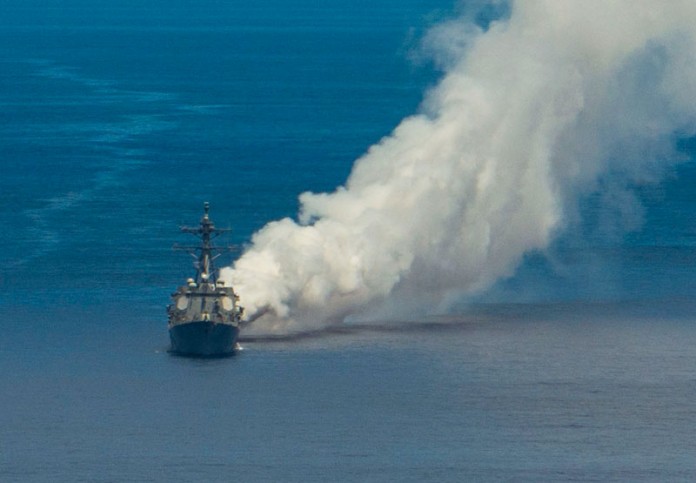
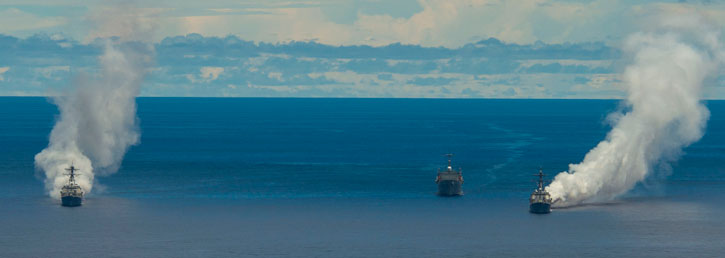
    USS Mustin (DDG 89), USS Wayne E. Meyer (DDG 108) and USS Frank Cable (AS 40) test maritime obscurants held south of Guam to assess their tactical effectiveness for anti-ship missile defense. The systems and tactics were tested under a variety of at-sea conditions using Seventh Fleet units and assets from the U.S. Army, Navy, and Air Force to evaluate how radar-absorbing, carbon-fiber clouds can prevent a missile from detecting and striking its target as part of a layered defense. (U.S. Navy photo by Mass Communication Specialist 2nd Class Timothy Wilson)
    USS Mustin (DDG 89), USS Wayne E. Meyer (DDG 108) and USS Frank Cable (AS 40) test maritime obscurants held south of Guam to assess their tactical effectiveness for anti-ship missile defense. Note how the distribution of the cloud can be manipulated by the ship, under the same wind conditions, while the vessels maintain the same heading. (U.S. Navy photo, Timothy Wilson)

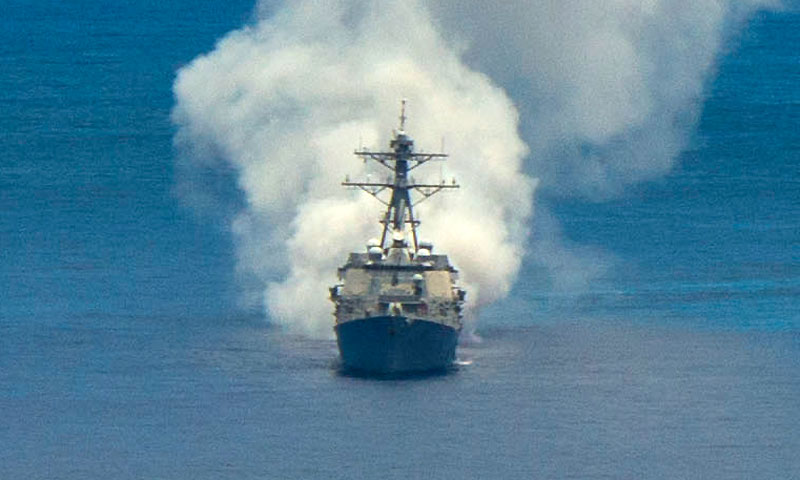
    The US Navy has recently tested a new anti-ship missile countermeasure system using an obscurant generator prototype. The systems and tactics were tested under a variety of at-sea conditions using assets from the U.S. Army, Navy, and Air Force to evaluate how radar-absorbing, carbon-fiber clouds can prevent a missile from detecting and striking its target as part of a layered defense.

    The Naval Warfare Development Command tested the maritime obscurant generator prototypes June 21-25 to assess their tactical effectiveness for anti-ship missile defense. The shipboard device generates carbon-fiber particles suspended in a cloud of smoke. These particles absorb and diffuse radar waves emanating from the seekers of incoming missiles, thus potentially obscuring the target from the missile’s seeker.

    pandora_fog800
    During the ‘Pandarra Fog’ evaluation, the systems and tactics were tested under a variety of at-sea conditions using Seventh Fleet units and assets from the U.S. Army, Navy, and Air Force to evaluate how radar-absorbing, carbon-fiber clouds can prevent a missile from detecting and striking its target as part of a layered defense. Photo: US Navy, by Timothy Wilson.

    “Pandarra Fog showed the value of quickly bringing together scientific and joint forces to tackle our hardest warfighting problems. This isn’t just smoke or chaff, this is high tech obscurant, which can be effective against an array of missile homing systems,” said Antonio Siordia, U.S. Seventh Fleet’s science adviser.

    Vice Adm. Robert L. Thomas Jr., commander U.S. Seventh Fleet, kicked off the “Pandarra Fog”, the multi-ship experiment in Guam. “Pandarra Fog is example of the quick-turn integrated technical and tactical development the Fleet is doing to master electromagnetic maneuver warfare and assure access of joint forces,” Thomas said.

    The experiment demonstrated maritime obscurant generation can be a key enabler of offensive manoeuvre of the fleet despite the global proliferation of anti-ship cruise and ballistic missiles.

    Thoughtful obscurant employment will significantly reduce the risk to surface ships from missile strikes

    “We are developing a layered approach using a full spectrum of active and passive capabilities to give us the advantage. It is not just about the technology, but also practicing how the fleet will employ these emerging capabilities,” said Capt. David Adams, who leads the Seventh Fleet Warfighting Initiatives Group. “A defense in depth approach has a lot of advantages. Not only do we know the smoke is effective, it adds a level of uncertainty and unpredictability to the equation,” said Adams.
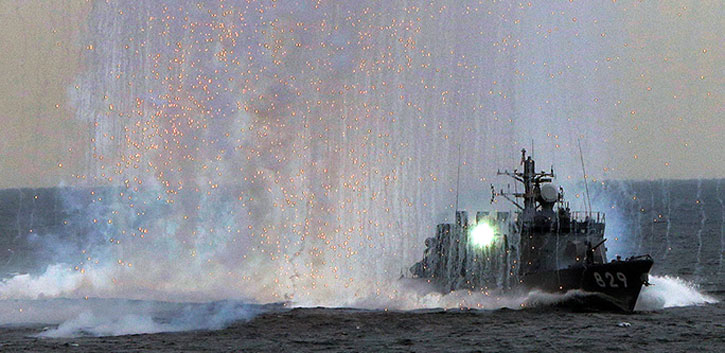
    Smoke screening is part of a multi-layered defense of surface vessels, which also includes active defense (air defense missiles), active decoys (jammers and RF decoys) chaff. The flares (seen in this photo) may be used for a last ditch defense, luring thermal seekers off target.
    Smoke screening is part of a multi-layered defense of surface vessels, which also includes active defense (air defense missiles), active decoys (jammers and RF decoys) chaff. The flares (seen in this photo) may be used for a last ditch defense, luring thermal seekers off target.

    In addition to having a significant level of effectiveness, the systems are relatively inexpensive when compared to other countermeasures and can be tactically employed through typical fleet maneuvers. The materials are environmentally friendly and sized to maximize operational effectiveness. “Our initial assessment is the testing was very successful in terms of tactical employment, usability and cost-effectiveness,” said Adams.

    Subscribe to read the full version of THIS article.
    Subscribe to read the full version of THIS article.


    Sagami-Bay-Japan-flares725
    The Japanese patrol boat Shiritaka (PG 829) fires a screen of flares on a naval display. On an operational deployment the flares create a screen of hot obscurant that can hide the vessel from incoming heat-seeking missiles.

    French Air Force tests UAV control via SATCOM

    Operators at the Harfang ground control station in Sicily monitor the aircraft electro-optical and radar payloads over a satellite communications link. The data collected on the 15 hour mission provides live intelligence day and night. Photo: EMA / armée de l'Air
    The drones are operated on 15 hour missions, directly from Sicily via satellite link. Photo: EMA, Armée de l'Air
    The drones are operated on 15 hour missions, directly from Sicily via satellite link. Photo: EMA, Armée de l’Air

    A Harfang UAS belonging to the French Air Force (FAF) controlled by a crew from the French Military Flight Test Centre (Centre d’Expérience Aérienne Militaire), the UAS Squadron “Belfort” (ED 1/33) and the UAS detachment stationed in the Sahel-Sahara region has successfully undergone testing to prove that once it has taken off from its overseas deployment base it can be controlled from a cockpit located in France.

    The flight represents a first for France and proves the “Reachback” concept.

    With a flight time of around one hour, the experimental flight carried out under operational conditions proved that the UAS piloting functions could be transferred from the cockpit in Niger, where the UAV took off from, to the cockpit in Cognac almost 5,000 km away, and that the main sensor of the UAV could be activated.

    This new capability enables an increased ISR (Intelligence, Surveillance, Reconnaissance) capacity without leaving national territory, should it be required in the theatre of operations.

    Operators at the Harfang ground control station in Sicily monitor the aircraft electro-optical and radar payloads over a satellite communications link. The data collected on the 15 hour mission provides live intelligence day and night.  Photo: EMA / armée de l'Air
    Operators at the Harfang ground control station in Sicily monitor the aircraft electro-optical and radar payloads over a satellite communications link. The data collected on the 15 hour mission provides live intelligence day and night. Photo: EMA / armée de l’Air

    The current Harfang fleet consists of four UAVs and three ground stations. Harfang (the French word for “arctic snowy owl”) is a Medium Altitude Long Endurance (MALE) UAS developed for the FAF. The French defence procurement agency DGA recently signed a contract with Airbus Defence and Space and Israel Aerospace Industries (IAI) for the upgrade of the FAF’s Harfang fleet, as well as for its on-condition maintenance until the end of 2017.

    It is equipped with optronic sensors and radar, which ensure that missions can be carried out around the clock in all weather conditions. Thanks to its long endurance capability, the UAS is capable of transmitting data in real time to national and international joint command structures. The programme is led by Airbus Defence and Space in close cooperation with IAI, which developed and constructed the aerial platform as well as a number of subsystems.

    The Harfang UAS has been successfully operated since November 2008 by the ED 1/33 Belfort of the FAF, which is stationed at the Cognac 709 air base in south-west France. For three years (2009-2012), Harfang was deployed in Afghanistan to support the ISAF (International Security Assistance Force) troops.

    Three Harfang (Heron I) drones undergoing maintenance. Note the parabolic antenna installed under the covered dome, used for a satellite downlink. The recent test also employed a satellite uplink, thus implementing full Reachback control. Photo: SIRPA
    Three Harfang (Heron I) drones undergoing maintenance. Note the parabolic antenna installed under the covered dome, used for a satellite downlink. The recent test also employed a satellite uplink, thus implementing full Reachback control. Photo: SIRPA

    The drone’s first combat deployment was at the US base in Bagram, where the Harfang system has performed 600 missions and clocked up around 5,000 flight hours. In 2011, Harfang was also deployed at the Sigonella base in Italy as part of the Harmattan operation conducted in Libya.

    More recently, the Harfang UAS has been used in several French operations in the Sahel region in Africa, notably since January 2013 in Operation Serval in Mali. During its 15-month deployment at the Niamey base in Niger, Harfang clocked up more than 3,500 flight hours in 250 missions. In February 2014, Harfang passed the symbolic mark of 10,000 flight hours, which it clocked up in over 900 missions for the FAF.

    Additionally, the Harfang system was granted military type certification in 2010 by the DGA. Thanks to this certification, the versatile system has since been used in regular operations over French national territory, for instance during FAF operator training in Cognac and for internal security purposes during major national events, such as the Bastille Day military parade, and international events, for example the G8 Summit, and, more recently, the D-Day anniversary ceremonies in Normandy.

    US Navy destroyer conducts longest ever surface-air engagement with new SM-6 missiles

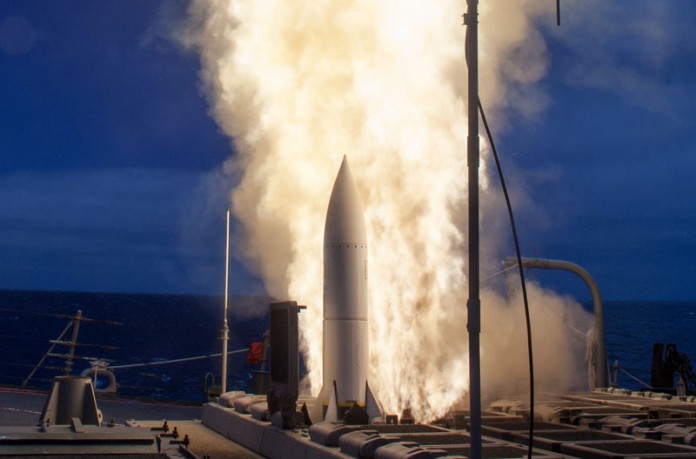
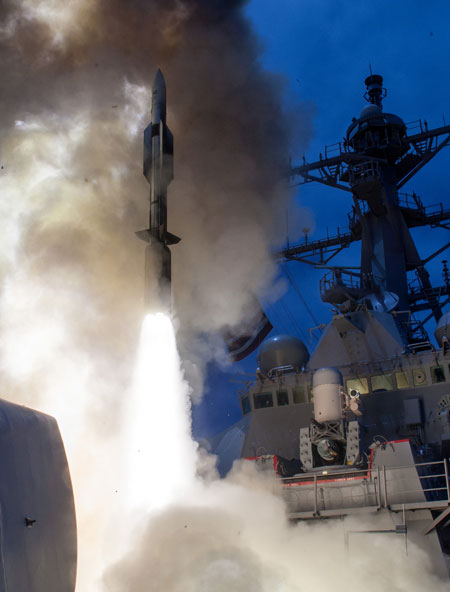
    The Arleigh-Burke class guided-missile destroyer USS John Paul Jones (DDG 53) launches a Standard Missile-6 (SM-6) during a live-fire test of the ship's aegis weapons system. Over the course of three days, the crew of John Paul Jones successfully engaged six targets, firing a total of five missiles that included four SM-6 models and one Standard Missile-2 (SM-2) model. Photo: US Navy
    The Arleigh-Burke class guided-missile destroyer USS John Paul Jones (DDG 53) launches a Standard Missile-6 (SM-6) during a live-fire test of the ship’s aegis weapons system. Over the course of three days, the crew of John Paul Jones successfully engaged six targets, firing a total of five missiles that included four SM-6 models and one Standard Missile-2 (SM-2) model. Photo: US Navy

    Over the course of three days June 18-20, the crew of Guided-missile destroyer USS John Paul Jones (DDG 53) successfully engaged six targets off the coast of Southern California, firing a total of five missiles that included four Standard Missile-6 (SM-6) missiles and one Standard Missile-2 (SM-2) missile. One of these exercises, designated as NIFC-CA AS-02A, resulted in the longest surface-to-air engagement in naval history.

    During the underway period, John Paul Jones also conducted its first ballistic missile tracking exercise while simultaneously tracking two supersonic and two subsonic missile targets. This event fully demonstrated the capabilities of Aegis Baseline 9C and of John Paul Jones as the first Integrated Air and Missile Defense (IAMD) destroyer.

    DDG 53 is now ready to assume the role as the Navy’s Integrated Air and Missile Defense test ship, following a change of homeport to Pearl Harbor later this summer

    The live-fire tests was part of the Baseline 9C Aegis Combat System during Combat Systems Ship’s Qualification Trials (CSSQT) and Naval Integrated Fire Control Counter Air (NIFC-CA) capability, preparing the missile destroyer for its new role as missile defense test ship.

    Since 2012 the vessel went through combat systems modernization the BAE ship repair facility in San Diego, as part of the destroyer modernization program. Over the course of a year, John Paul Jones received new computing infrastructure, SPY-1D transmitter upgrades, and a multi-mission signal processor which comprises the Aegis Baseline 9C suite.

    According to Cmdr. Andrew Thomson, the ship’s commanding officer, USS John Paul Jones is now ready to assume the role as the Navy’s Integrated Air and Missile Defense test ship, following a change of homeport to Pearl Harbor in Hawaii later this summer. In the coming years, John Paul Jones is expected to test newer and more advanced systems that will be used to defend the nation and U.S. and allied forces overseas.

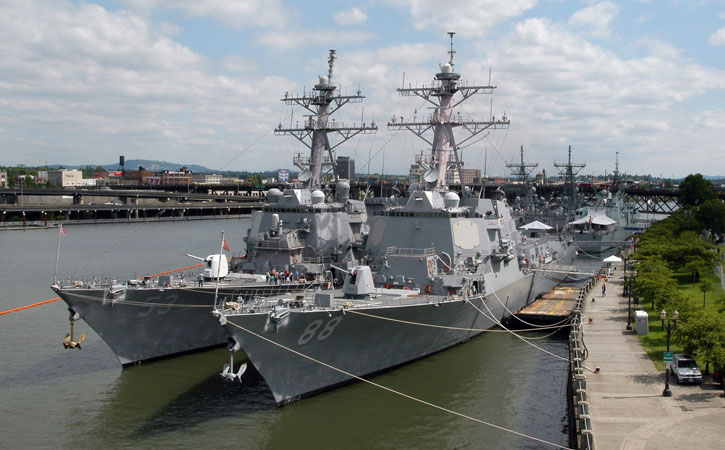
    Guided missile destroyers USS John Paul Jones (DG 53) and USS Preble (DDG 88) moored in Portland for the 99th Rose Festival. The John Paul Jones, originally based in San Diego will now deploy to Hawaii to become the Navy's newest missile defense test ship. U.S. Navy photo by Photographer's Mate 1st Class Bruce McVicar.
    Guided missile destroyers USS John Paul Jones (DG 53) and USS Preble (DDG 88) moored in Portland for the 99th Rose Festival. The John Paul Jones, originally based in San Diego will now deploy to Hawaii to become the Navy’s newest missile defense test ship. U.S. Navy photo by Photographer’s Mate 1st Class Bruce McVicar.

    Photo Report: Armored vehicles on the move – DVD’ 14

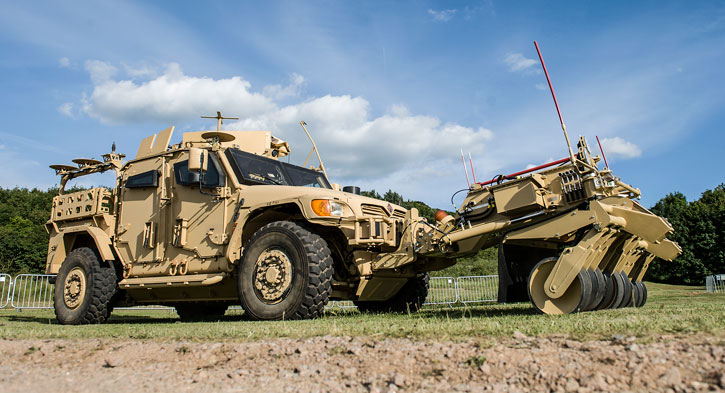
    High rollers, a Husky armored, mine protected vehicle pushes the Barbarian mine clearing roller at the DVD 2014 display. Photo: MOD, Crown Copyright

    The DVD 2014 event, held at the Millbrook proving ground brought together the MoD’s equipment and support organisation (DE&S), the Army and industry to showcase vehicles used by the military as well as new vehicles and systems proposed for future use, as the Army looks ahead to the future equipment requirements of Future Force 2020.

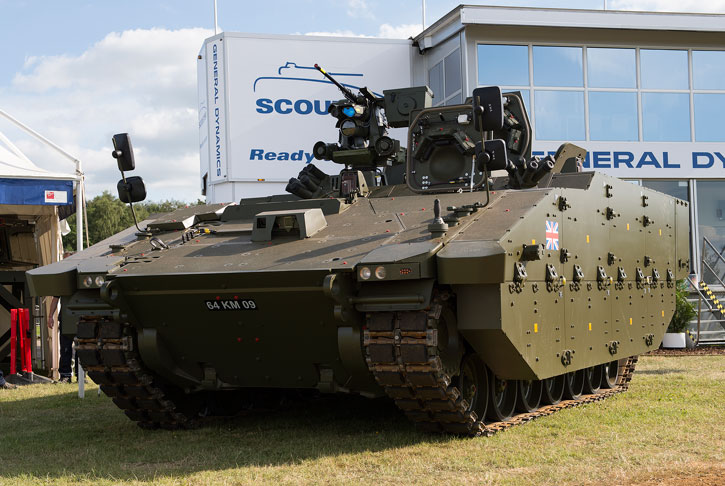
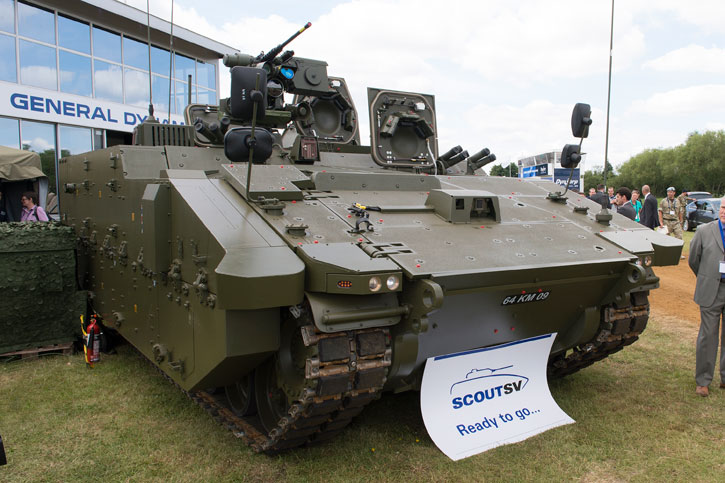
    Among the equipment on display was the latest prototype of the UK’s first fully digitised tracked armoured vehicle the Scout SV and the gun and turret it intends to carry.

    hawkei_dvd2014-800
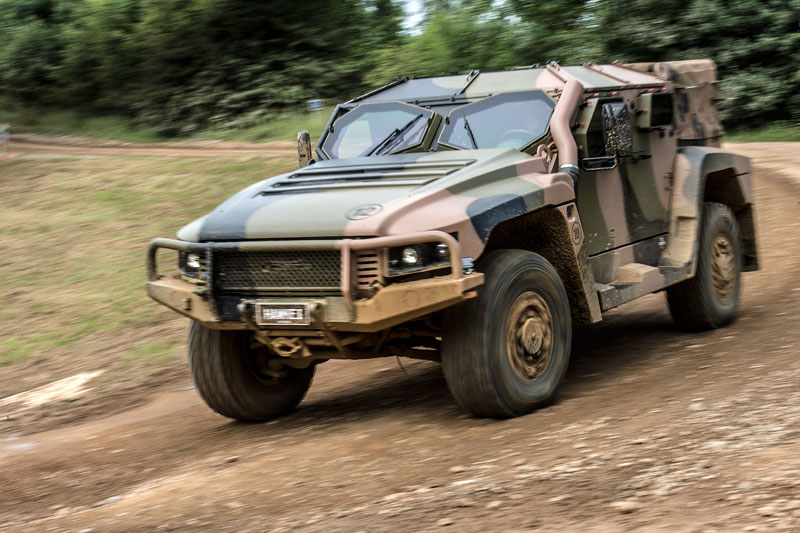
    The Thales group demonstrated the Hawkei light armored vehicle at the 2014 DVD. Hawkei, selected by the Australian military, is expected to be fielded next year. Thales is eying the British ‘Multirole Vehicle Protected’ program, under which the British Ministry of Defence is seeking a protected multirole vehicle able to undertake command-and-control, logistics and passenger-carrying duties. Photo: MOD, crown Copyright
    lmco_jltv_dvd2014_725
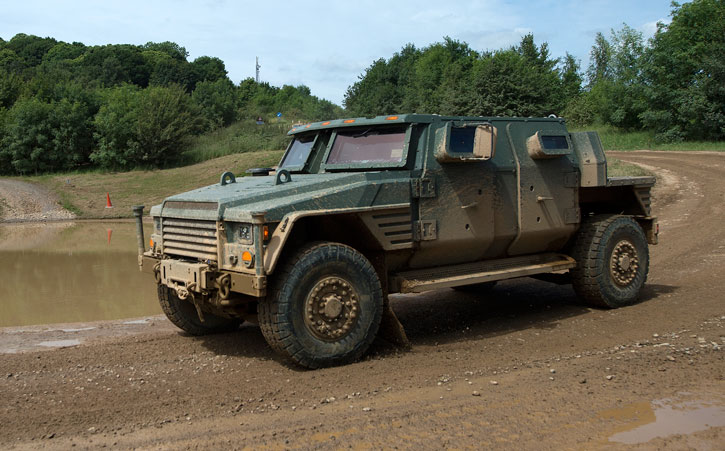
    Lockheed Martin displayed one of the prototypes built by the company for the JLTV program. The vehicle that was shown on the static display area at Eurosatory last week performed here a dynamic demonstration at Millbrook, UK. Lockheed Martin is also likely to bid its JLTV for the Multirole Vehicle Protected progrem. Photo: MOD, Crown Copyright
    streit_scorpion_dvd2014_725
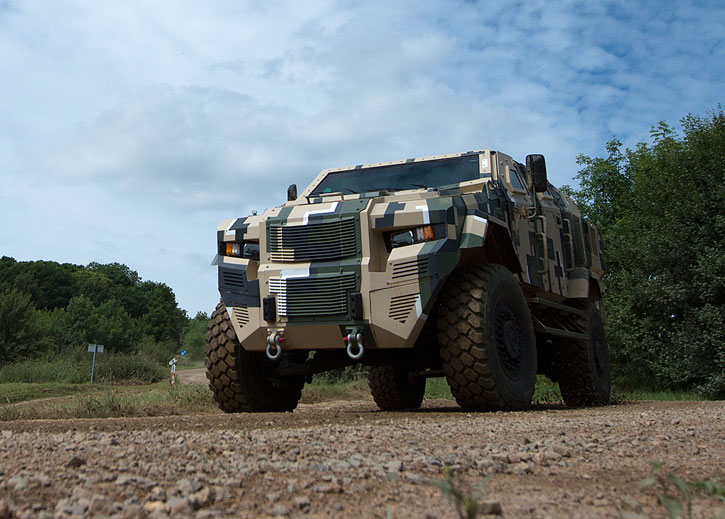
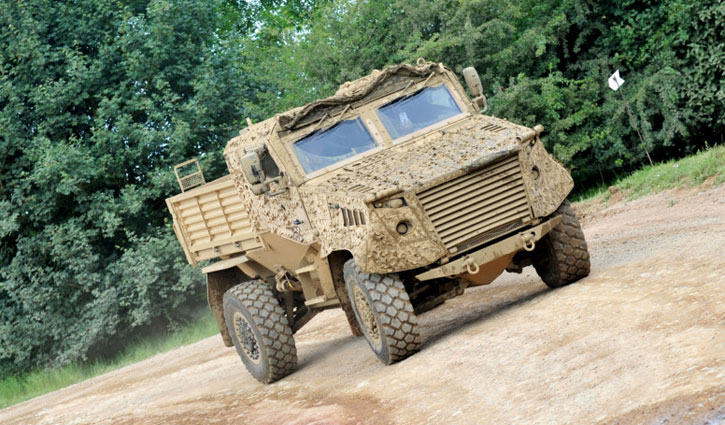
    Another likely competitor in the Multirole Vehicle Protected is the Scorpion mine protected armored (MRAP) vehicle from Streit group. The Scorpion was one of several foreign participants at DVD 2014 dynamic display. Weighing in at up to 11 tons the Scorpion can reach a top speed of 70 mph with a 6.7L turbocharged engine. It carries a driver and up to five passengers. Photo: MOD, Crown Copyright
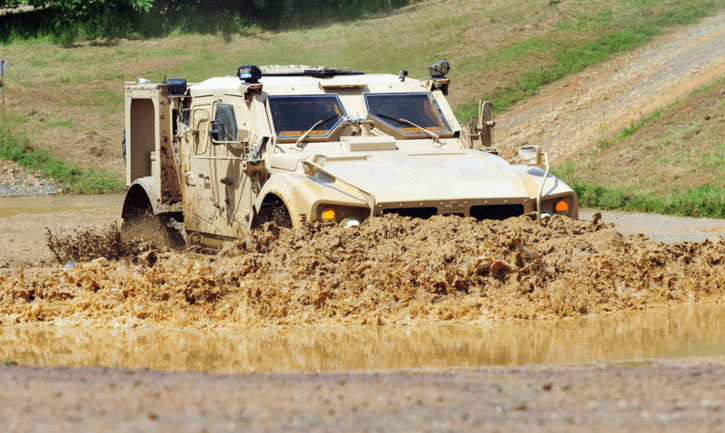
    An Oshkosh M-ATV on the dynamic display at the DVD 2014. Photo: Bedfordshire News
    An Oshkosh M-ATV on the dynamic display at the DVD 2014. Photo: Bedfordshire News
    husky_ied_dvd2014_725
    Husky, the armor protected vehicle from Navistar is pushing the Barbarian mine clearance attachment on display at DVD 2014. Although procured specifically for Iraq and Afghanistan, the vehicles will have a key role in future operations carried out by the Army. Photo: MOD, Crown Copyright
    ocelot_sf_dvd2014_725
    The British Army is operating the General Dynamics UK Ocelot vehicle in a light, fully armored configuration. At the DVD 2014 the Ocelot was also demonstrated in an open configuration, designed for special operations. Photo: MOD, Crown Copyright

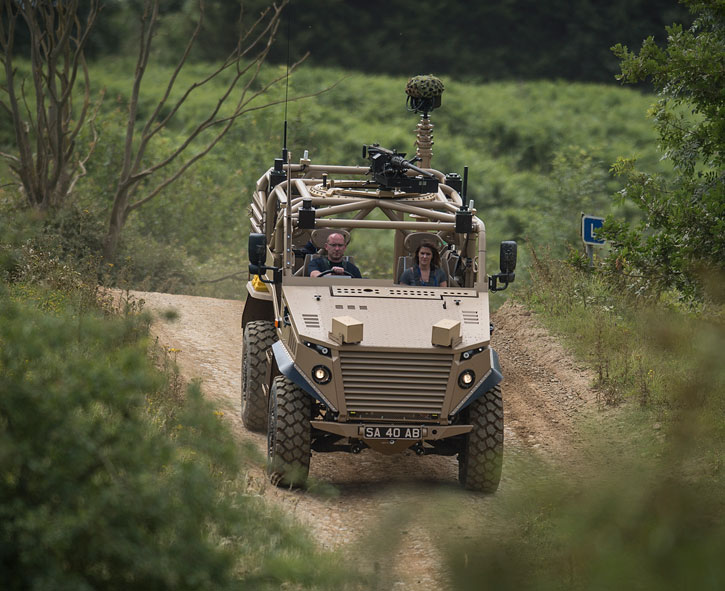
    General Dynamics has demonstrated two variants of the Ocelot Family of Vehicles (FoV). The Ocelot light tactical 4×4 protected patrol vehicle is in-service with the British Army in Afghanistan, known as Foxhound. At the DVE 2014 GD UK displayed the Ocelot (O) an open architecture (WMiK) variant, which combines the outstanding mobility and blast protection of the Ocelot protected patrol vehicle with greater local situational awareness, agility and firepower of open-topped vehicles used by specialist light role and special operations forces (pictured above). The company also displayed a utility variant Ocelot (U), a designed with a protected cabin accommodating a three man crew and flat-bed capable of carrying a 2.5 tons payload. Both vehicles use the same driveline and chassis as the UK’s Foxhound thus expanding the family of vehicles to assume more missions. The Foxhound is designed for quick reconfiguration in the field, with mission modules can be ‘swapped out’ in three to four hours. The family of vehicles was displayed last year at the DSEI show and this year took part in the dynamic demonstration.

    Ocelot utility vehicle shares a common chassis and many subsystems with the Foxhound. Its cabin accommodates three persons and the flatbed can load 2.5 tons. Photo: Bedfordshire News
    Ocelot utility vehicle shares a common chassis and many subsystems with the Foxhound. Its cabin accommodates three persons and the flatbed can load 2.5 tons. Photo: Bedfordshire News
    scout_sv_dvd2014_725
    The UK’s first fully digitised tracked armoured vehicle, the Scout Specialist prototype, will be on display to demonstrate how technology and capability requirements are evolving to meet the needs of Future Force 2020. Photo: MOD, Crown Copyright
    scoutsv_dvd2014_725
    The Scout SV was displayed here with a Protector Remote Weapon Station (RWS), alongside the special turret mounting the CTAS 40mm gun system, developed for the vehicle by Lockheed Martin. Photo: MOD, Crown Copyright
    wolfhound_ambulance_dvd2014_725
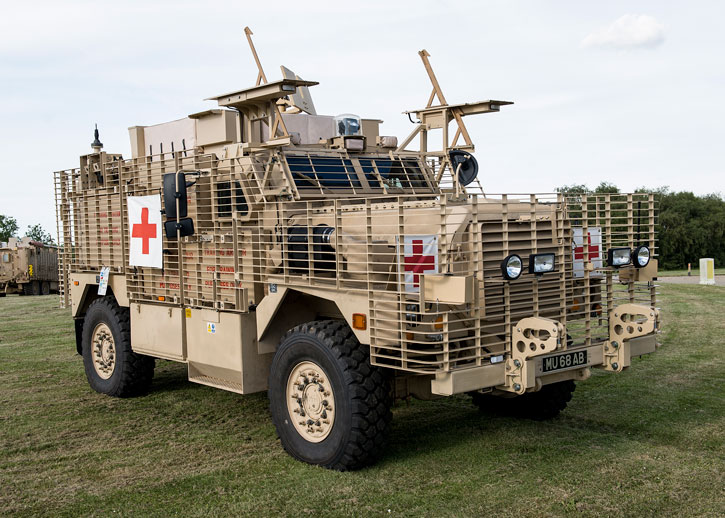
    An Ambulance variant of the Ridgback vehicle seen at the 2014 DVD. Although procured specifically for Iraq and Afghanistan, the vehicles will have a key role in future operations carried out by the Army. Photo: MOD, Crown Copyright

    New Scout SV armoured vehicle unveiled at DVD

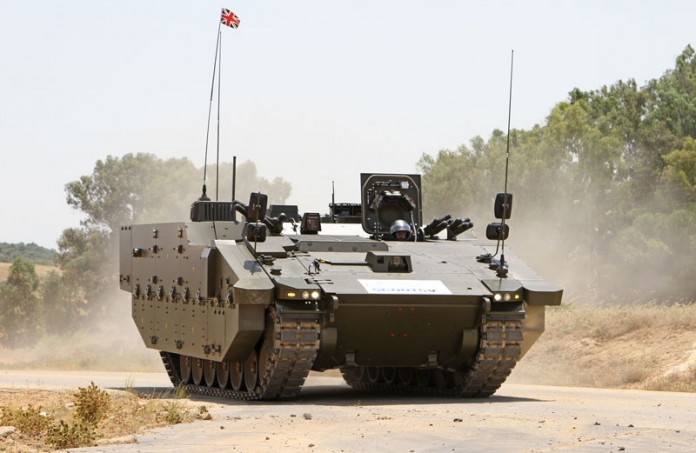
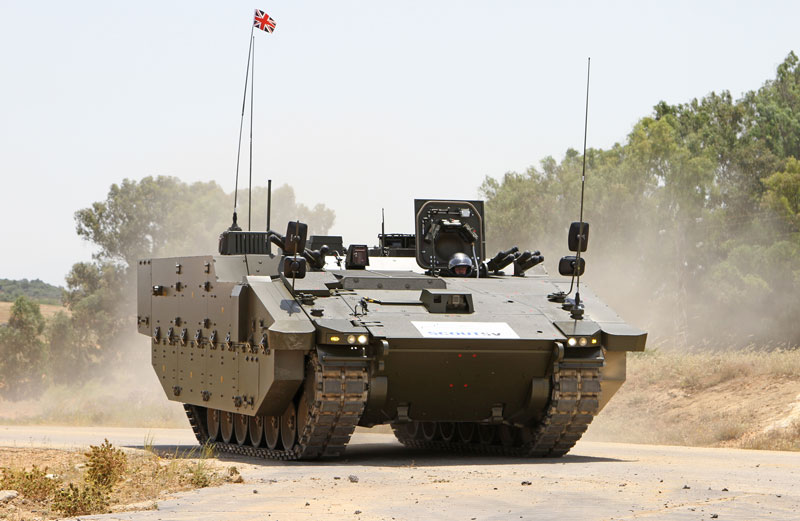
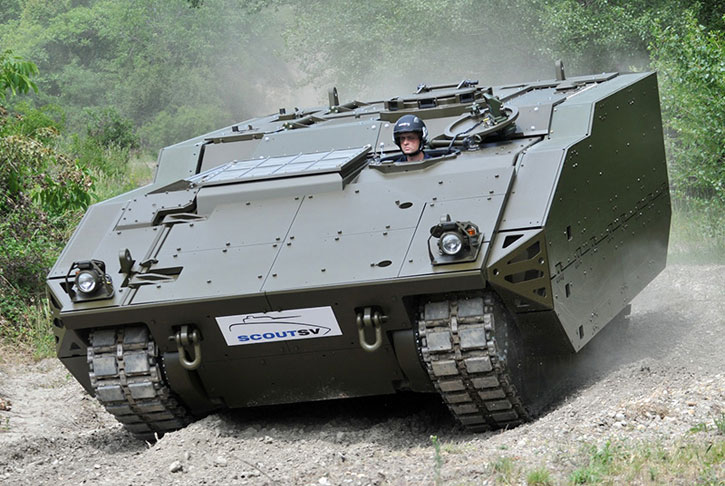
    The first SCOUT SV pre-production prototype, a Protected Mobility Recce Support (PMRS) variant. In service, PMRS will provide safe transportation of fully-equipped soldiers in a well-protected environment. On dismount, troops will be able to more effectively conduct a variety of tasks, such as dismounted surveillance (including patrols), observation posts and close target reconnaissance. Its extensive capabilities include acoustic detectors, a laser warning system, a local situational awareness system, an electronic countermeasure system, a route marking system, an advanced electronic architecture and a high performance power pack. Photo: General Dynamics UK
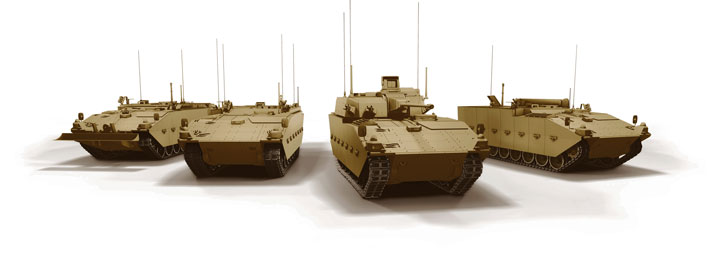
    The Scout SV family of vehicle. The first members of the family will include an infantry carrier, scout vehicle, command and recovery variants. Photo: GDUK
    The Scout SV family of vehicle. The first members of the family will include a troop carrier, scout, repair and recovery variants. Photo: GDUK

    General Dynamics UK (GDUK) unveiled today the Scout Specialist Vehicle (SV) at the DVD event in Millbrook Proving Ground in the UK. This is the first of a new generation of armoured vehicles being developed for the British Army.

    Left to right Lt General Chris Deverill Chief of Materiel Land, General Sir Peter Wall Chief of the General Staff, Roddy Malone Scout Team Leader and Major General Robert Talbot Rice in front of the Scout vehicle at today's DVD 2014 event. Photo: MOD, Crown Copyright.
    Left to right Lt General Chris Deverill Chief of Materiel Land, General Sir Peter Wall Chief of the General Staff, Roddy Malone Scout Team Leader and Major General Robert Talbot Rice in front of the Scout vehicle at today’s DVD 2014 event. Photo: MOD, Crown Copyright.
    The vehicle is a pre-production prototype of the ‘Protected Mobility Recce Support’ (PMRS) variant designed and built for the British Army. General Dynamics recently completed the Base Platform Critical Design Review (CDR) for the PMRS variant, as part of the SCOUT SV programme.

    The review covered the PMRS system architecture, including the physical architecture and software, its sub-systems and PMRS specific design interfaces, as well as confirming its mine and ballistic survivability design following an extensive test regime. The overarching CDR for the PMRS variant, which will take place this year, will establish the final design of the variant for future production, drawing upon lessons learned from the PMRS pre-production prototype.

    In April GDUK announced a major step forward with the completion of the critical design review (CDR) of the troop carrier variant of Scout SV. It is the first variant to have completed such a review

    In service, PMRS will provide safe transportation of fully-equipped soldiers in a well-protected environment. On dismount, troops will be able to more effectively conduct a variety of tasks, such as dismounted surveillance (including patrols), observation posts and close target reconnaissance. Its extensive capabilities include acoustic detectors, a laser warning system, a local situational awareness system, an electronic countermeasure system, a route marking system, an advanced electronic architecture and a high performance power pack.

    The first SCOUT SV pre-production prototype, a Protected Mobility Recce Support (PMRS) variant. In service, PMRS will provide safe transportation of fully-equipped soldiers in a well-protected environment.  On dismount, troops will be able to more effectively conduct a variety of tasks, such as dismounted surveillance (including patrols), observation posts and close target reconnaissance.  Its extensive capabilities include acoustic detectors, a laser warning system, a local situational awareness system, an electronic countermeasure system, a route marking system, an advanced electronic architecture and a high performance power pack. Photo: General Dynamics UK
    The first SCOUT SV pre-production prototype, a Protected Mobility Recce Support (PMRS) variant. In service, PMRS will provide safe transportation of fully-equipped soldiers in a well-protected environment. On dismount, troops will be able to more effectively conduct a variety of tasks, such as dismounted surveillance (including patrols), observation posts and close target reconnaissance. Its extensive capabilities include acoustic detectors, a laser warning system, a local situational awareness system, an electronic countermeasure system, a route marking system, an advanced electronic architecture and a high performance power pack. Photo: General Dynamics UK

    The Scout SV family of vehicles are based on Common Base Platform derived from the Ascod II, already used by the Spanish and Austrian military. The British version is modified and designed to address specific British requirements, maximise commonality in mobility, electronic architecture and survivability. Each variant of the family – one of which is the PMRS variant – will be a highly-agile, tracked, medium-weight armoured fighting vehicle, providing British troops with state-of-the-art protection.

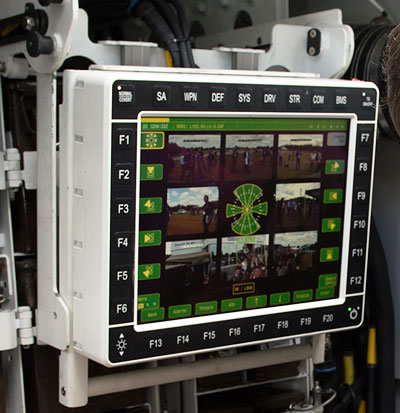
    The situational display inside the Scout SV, showing multi-image view taken by the cameras surrounding the vehicle, providing all-round situational display for the crew. Photo: MOD, Crown Copyright
    The situational display inside the Scout SV, showing multi-image view taken by the cameras surrounding the vehicle, providing all-round situational display for the crew. Photo: MOD, Crown Copyright

    Scout SV is initially being developed in four variants. Besides the troop carrier, which can carry eight soldiers, there is also a scouting vehicle and recovery and repair variants. The troop carrier and scout variants will both be armed with a 40mm cased telescope cannon, under development as a joint venture between BAE Systems and French company Nexter.

    The turret developed by Lockheed Martin UK is also on display at DVD. Lockheed Martin is displaying turret’s Engineering Development Unit (EDU), representing the Scout reconnaissance variant turret concept. The EDU is used to de-risk development and early testing and integration of the turret system. The EDU includes the CT40 cannon and ammunition handling system, the traverse and elevation motor and gearbox, primary and secondary sighting systems and the turret basket with seating.

    Scout SV prototype undergoing mobility testing.
    Scout SV prototype undergoing mobility testing.

    F-35A aborts mission after catching fire on takeoff

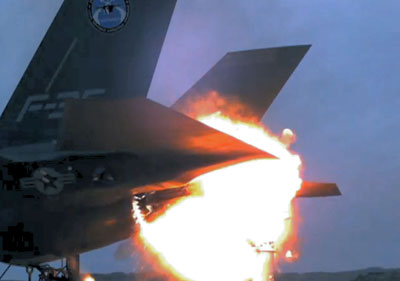
    F-35 takes a missile hit at the tail pipe, while undergoing live fire tests.

    A Lockheed Martin F-35 Joint Strike Fighter was severely damaged in a Monday morning fire on the runway at Eglin Air Force Base, Fla. The mishape occurred while the aircraft was taking off as part of a two-ship formation for a continuation training mission. This is the first large scale mishape occurring with the 33rd Fighter Wing, which has recently passed its 5,000th sortie in the F-35. No F-35s have been destroyed since production began in 2006.

    Update: The incident involved the third stage of the F135 engine built by Pratt & Whitney, a unit of United Technologies Corp, for all three models of the new warplane, a source told Reuters saying. “The engine ripped through the top of the plane”.

    U.S. and British military officials are working on a joint directive to require mandatory inspections of engines on all Lockheed Martin Corp F-35 fighter jets. Details are still being finalised, but the inspections could take about 90 minutes.

    The aircraft was an F-35A — the Air Force variant, flown by an instructor pilot with the 58th Fighter Squadron, assigned to the 33rd “Nomads” Fighter Wing, responsible for training F-35 pilots at the base. According to an Air Force statement the plane experienced a fire in the aft end of the aircraft. The pilot successfully shut down the plane and escaped unharmed, an F-35 program spokeswoman said. The fire was extinguished with foam by a ground crew. No details on the extent of damage to the aircraft were available. No injuries were reported and officials have begun an investigation into the incident, defense officials said.

    Engine pieces were found on the runway at a Florida air base after the fire incident on Monday, Reuters reported Saturday. according to sources familiar with the situation. The source said the discovery of the engine parts did not point to specific cause of the fire and said the investigation was continuing. 

    The fire is the second major incident experienced by the program in recent weeks. Test flights were temporarily halted on June 13 for inspections of an oil flow management valve fitting inside the engine. Lockheed has delivered more than 100 F-35s since then.

    “We have a robust and extensive training program in which every pilot and aircraft crew member is trained in order to respond quickly and correctly in the event emergencies occur,” said U.S. Navy Capt. Paul Haas, the 33rd Wing vice commander in the statement. “In this case, the pilot followed the appropriate procedures which allowed for the safe abort of the mission, engine shutdown, and egress.”

    The F-35 fleet of over 100 aircraft remained suspended on yesterday as Air Force officials investigated the causes of the fire. Marine Corps said it still plans to send jets to Britain for the Royal International Air Tatoo and farnborough air shows next month. Captain Richard Ulsh said flights of the Marine Corp’s F-35 B-model that can land vertically had been suspended at bases in Florida, Arizona and Maryland, pending the investigation. Reuters reported.

    The incident and planned inspection has stalled the departure of the planes that were to participate in the UK shows, but the U.S. Marine Corps said it was still planning to send four jets across the Atlantic. 

    “We will resume flying once we know more about the cause of the F-35A fire that occurred at Eglin AFB earlier this week,” Ulsh said. “At present, there are no changes to our plans to debut the aircraft in the UK.”

    The Air Force had planned to resume flights of the A-model jets at Eglin Air Force Base in Florida on Wednesday, but announced earlier that it would continue the flight ban “in the interest of safety,” said 1st Lieutenant Hope Cronin, a spokeswoman for the Air Force 33rd Fighter Wing. Navy commanders have also suspended flights at other bases, and Air Force officials are poised to follow suit, according to a defense official familiar with the situation.

    F-35 takes a missile hit at the tail pipe, while undergoing live fire tests.
    F-35 takes a missile hit at the tail pipe, while undergoing live fire tests.

    The photo associated with this post is used for illustrative purpose only and does not depict yesterday’s fire incident.

    Skunk Works and XTEND Simplify Multi-Drone Command

    0
    Lockheed Martin Skunk Works® and XTEND have achieved a major milestone in JADC2 by integrating the XOS operating system with the MDCX™ autonomy platform. This technical breakthrough enables a single operator to simultaneously command multiple drone classes, eliminating the friction of mission handoffs. From "marsupial" drone deployments to operating in GPS-denied environments, explore how this collaboration is abbreviating the data-to-decision timeline and redefining autonomous mission execution.

    From Ukraine to Taiwan: The Global Race to Dominate the New Defense Tech Frontier

    0
    As traditional defense primes face mounting competition from agile “neoprimes” such as Anduril, Palantir and Helsing, the balance of innovation is shifting toward software-defined warfare and scalable, dual-use technologies, while global industry consolidation—marked by Boeing’s integration of Spirit AeroSystems and other strategic mergers—signals an intensified race to secure control over the defense technology value chain. Our Defense-Tech weekly report highlights these trends.

    Europe’s “Drone Wall”

    0
    In early October 2025, a coordinated wave of unmanned aerial system (UAS) incursions—widely attributed to Russia—targeted critical infrastructure across at least ten European nations. The unprecedented campaign exposed the fragility of Europe’s air defenses...

    Weekly Defense Update & Global Security Assessment

    0
    Executive Summary The past week (September 18-25, 2025) represents an inflection point where strategic defense concepts have transitioned from doctrine to tangible reality. An analysis of global events reveals four primary, interconnected trends shaping an...

    U.S. Air and Space Forces Push Next-Gen Programs at the AS&C 2025 Conference and...

    0
    At the 2025 Air, Space & Cyber Conference, U.S. Air Force and Space Force leaders unveiled major updates on next-generation fighters, bombers, unmanned systems, and space initiatives, highlighting both rapid innovation and critical readiness challenges as the services race to outpace global competitors. A short version is available here, with a more detailed version for subscribers.

    TADTE 2025: Reflecting Taiwan’s Strategic Themes

    0
    The Taipei Aerospace & Defense Technology Exhibition (TADTE) 2025 crystallized around four dominant strategic themes that collectively illustrate Taiwan's comprehensive approach to defense modernization amid escalating regional tensions. Based on a detailed report by Pleronix (available upon request). Includes a Podcast discussion on TADTE 2025's highlighting Taiwan's four strategic themes beyond the post's coverage.

    Iron Beam 450 Completes Testing, Soon to Join With Operational Air Defense Units

    0
    Israel’s Iron Beam 450 high-power laser system has completed final testing, marking a major leap in air defense. Developed by Rafael, it offers precise, cost-effective interception of rockets, UAVs, and mortars, and is set for IDF deployment by 2025.