Thursday, December 25, 2025
More
    Home Blog Page 110

    US ballistic missile defense interceptor scores a direct hit in space

    ekv
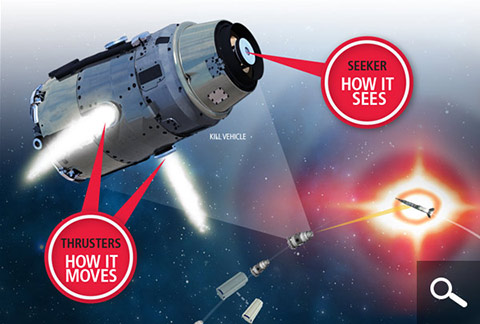
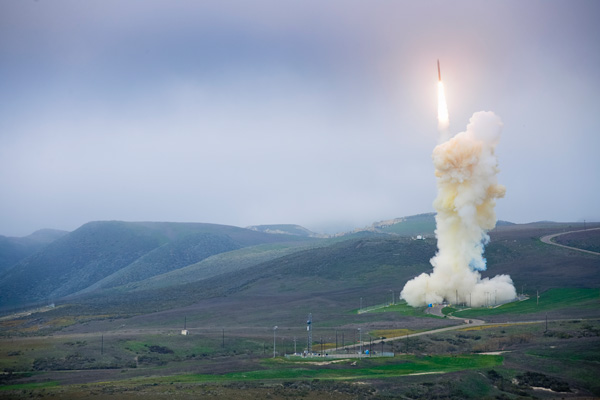
    The Exoatmospheric Kill Vehicle Capability Enhancement II (EKV CE-II) developed and built by Raytheon was used in the recent test to intercept and impact with the target missile in space, over the Pacific Ocean. Photo: Raytheon

    The US Missile Defense Agency has validated today the newest generation of ground based interceptor (GBI) interceptor designed to defend the United States from a possible intercontinental ballistic missile attack from North Korea.

    The test that employed the Raytheon Exoatmospheric Kill Vehicle Capability Enhancement II, or EKV CE-II, successfully collided and destroyed an incoming ballistic missile warhead high in space, identifying its targets amongst decoys and countermeasures representative of a long-range North Korean ballistic missile. The $200 million test was considered critical for the future of the US-based missile defense system, which suffered repeat failures in recent years.

    No further details were available about the test, in which an interceptor launched from Vandenberg Air Force Base in California hit a target used to simulate an intermediate-range missile that was launched from the Kwajalein Atoll in the Marshall Islands.

    The success of today’s test validates a revised firing strategy which reduces the amount of interceptors required to be fired at an incoming long-range ballistic missile, thereby increasing the capability of the limited number of 30 interceptors and reducing the cost of engagement. Experts claim the validated capability keeps the U.S. homeland missile defense a generation ahead of the current and near-future ballistic missile threats from North Korea and Iran. Both North Korea and Iran are working on such long-range missiles, but have not tested such weapons yet, nor did they pack a nuclear warhead of a sufficient sized.

    Today’s successful test validates a portion of the ground based interceptors currently deployed in Alaska and California which are loaded with the CE-II interceptor. The majority of interceptors still carry the CE-I. The validation leads the way forward to replace the entire fleet of 30 interceptors with CE-II interceptors, retiring the first generation CE-I which began deployment in 2004.

    The successful test is a significant milestone and long awaited requirement that demonstrates the system’s reliability and increases the confidence of the North American Combatant Commander and Command who is responsible for the defense of the country. The successful test is also expected to pave the way for the development and deployment of future discrimination sensors such as the Long Range Discrimination Radar, which will further enhance the reliability of this overall system.

    Indian-lead ‘Team Caesar’ promotes French mobile guns to the indian Army

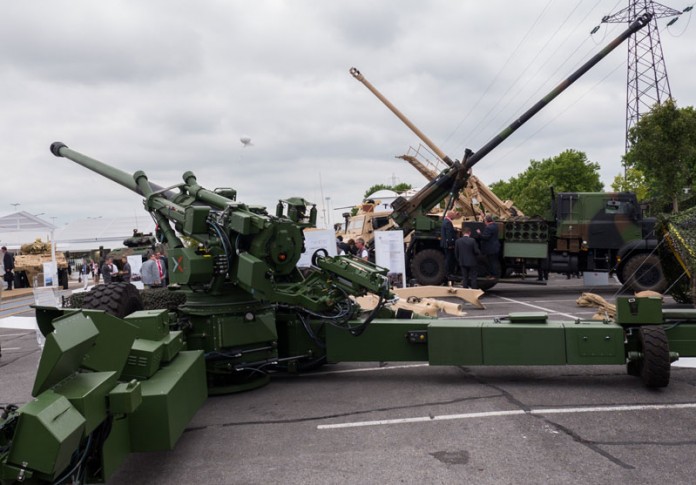
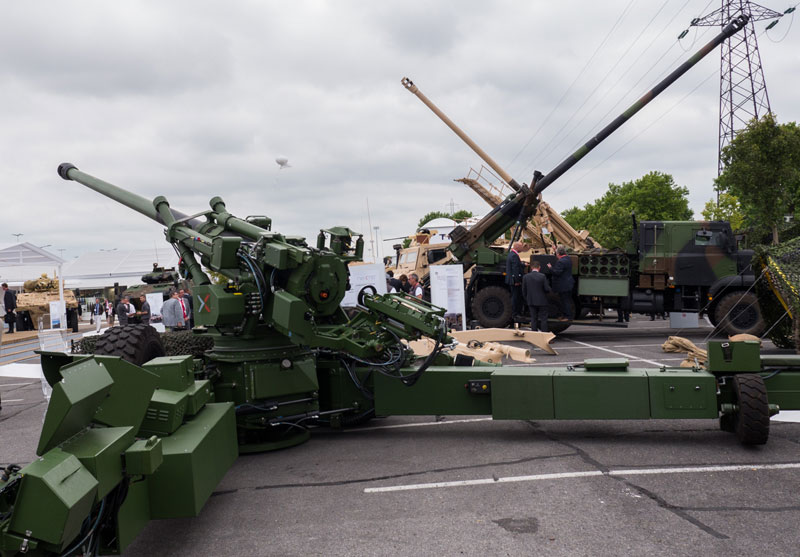
    The team headed by L&S is also proposing the French Trajan 155mm/52 CAL gun to the Indian Army. Photo: Noam Eshel, Defense-Update
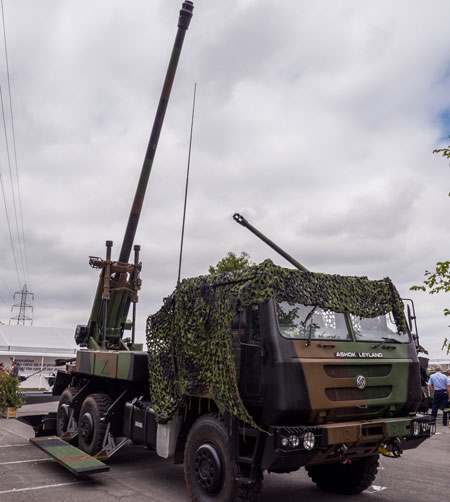
    Nexter's CAESAR self propelled gun displayed at the company's exhibit at Eurosatory 2014 last week in Paris. The 155mm 52 CAL  howitzer mounted on an Indian Ashok Leyland truck is proposed to the Indian Army Mobile Gun System (MGS) program by an industry team headed by Larsen & Turbo
    Nexter’s CAESAR self propelled gun displayed at the company’s exhibit at Eurosatory 2014 last week in Paris. The 155mm 52 CAL howitzer mounted on an Indian Super Stalion 6×6 Ashok Leyland truck is proposed to the Indian Army Mobile Gun System (MGS) program by an industry team headed by Larsen & Turbo. Photo: Noam Eshel, Defense-Update

    Nexter Systems announced today the establishment of an industry consortium with two Indian companies, to pursue the Indian Army Mounted Gun System (MGS) artillery program.

    The French defense company Nexter Systems has established an industry consortium with Larsen & Toubro Limited (L&T) and Ashok Leyland Defence Systems, eying collaboration opportunities for the Mounted Gun System (MGS) artillery program. The group, lead by Larsen & Toubro (L&S) offer a version of the Caesar truck-mounted mobile gun system for the Indian Army.

    The artillery system proposed for the MGS programme by the consortium led by L&T acting as prime contractor is a version of the CAESAR artillery system fitted onto a 6×6 Super Stallion chassis from Ashok Leyland. Unveiled for the first time at the DEFEXPO show in New Delhi in February 2014, the Indian version of the CAESAR was also on display this week at the Nexter stand at Eurosatory 2014. Nexter and L&T are already teaming for the Towed Gun System programme of the Indian ministry of defence, by proposing the TRAJAN which is under evaluation in India.

    On this program Nexter is competing against several international teams, including Elbit Systems, cooperating with Force Dynamics of the Kalyani Group, offering the ATMOS system. Other bidders include the Tata Power Strategic Electronics Division (SED), offering a derivative of the G5 from Denel Land Systems of the South Africa.

    L&S, the Indian a USD 14.3 billion technology, engineering, construction, manufacturing and financial services conglomerate was originally planning to offer the K9 Thunder self propelled gun from Samsung Techwin of South Korea, but has opted to lead the team offering the Caesar instead. Ashok Leyland is an Indian based automotive manufacturer specialized in trucks. The company has produced over 70,000 Stallion vehicles, the primary logistical support vehicle supporting the Indian military.

    The team headed by L&S is also proposing the French Trajan 155mm/52 CAL gun to the Indian Army. Photo: Noam Eshel, Defense-Update
    The team headed by L&S is also proposing the French Trajan 155mm/52 CAL gun to the Indian Army. Photo: Noam Eshel, Defense-Update
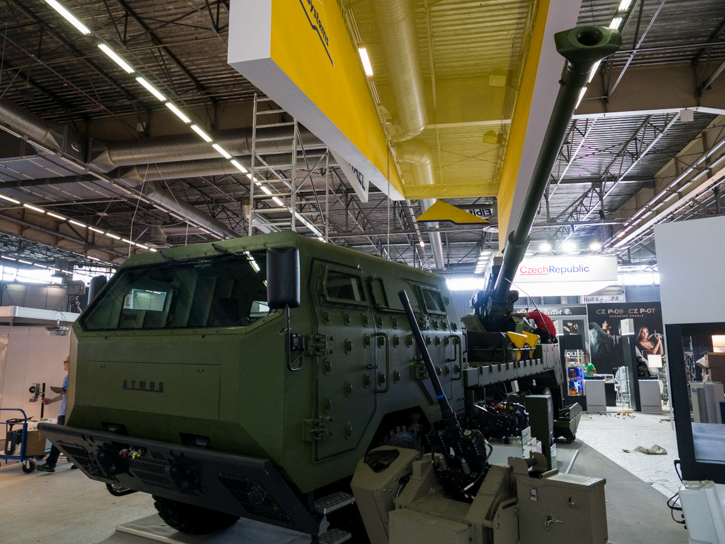
    ATMOS, the 155/52Cal howitzer from Elbit System is one of the largest vehicles displayed in Hall 6 at Eurosatory. this variant of the ATMOS is mounted on a Czech TATRA truck. Utilizing autonomous navigation and gun laying systems, and fitted with robotic gun laying and load assist mechanism, the howitzer can fire quickly after entering position, operated by a small crew.
    ATMOS, the 155mm /52Cal howitzer from Elbit System’s Soltam is one of the largest vehicles displayed in Hall 6 at Eurosatory. this variant of the ATMOS is mounted on a Czech TATRA truck. Utilizing autonomous navigation and gun laying systems, and fitted with robotic gun laying and load assist mechanism, the howitzer can fire quickly after entering position, operated by a small crew. Photo: Noam Eshel, Defense-Update

    Defense Exhibitions: 2015

    Subscribe to see past events


    Defense Exhibitions & Events 2015

    For events taking place Before October 2015 – Click Here

    Travelling abroad? Try these attractive deals from our Travel Partner – Agoda


    Expomil 2015 – October 1-4, 2015 – Romexpo Exposition Center, Bucharest, Romania


     International Astronautical Congress, IAC 2015 2015 October 12-16, 2015 – International Convention Center, Jerusalem, Israel
    book your hotel in Jerusalem:


     AUSA 2015 October 12-14, 2015 – Walter E. Washington Convention Center, Washington, DC


    Marine Week October 20 – 25, 2015 – Busan, Republic of Korea


     ADEX 2015 – Seoul International Aerospace & Defense Expo
    October 20 – 25, 2015 – Seoul Airport, Republic of Korea


    Reserve your hotel in Seoul now:


     CMAX – The Composites and Advanced materials expo October 26-29, 2015 – Dallas Convention Center, Dallas, TX


     MilCom 2015 October 26-28, 2015 – Tampa, FL, USA Tampa


    Hotels:


    US/Canada Border Conference (Rescheduled) October 27-28, 2015 – Cobo Center, Detroit, MI US/Canada Border Conference, a major conference and exhibition focused on advancing the “Beyond the Border” declaration.


    Hotel booking – Detroit:


     Airborne ISR October 26-27, 2015 – London, UK


    Asia Pacific Homeland Security 2015 October 27-30, 2015, Marina Bay Sands, Singapore


    Reserve a hotel room in Singapore:


     Defense & Security 2015 November 2-5, 2015 – IMPACT Expo center, Bangkok, Thailand


    Book your hotel in Bangkok:


     USCEI 2015 – Unmanned Systems Conference & Exhibition India, November 3, 2015, Air Force Auditorium, Indian Air Force, New Delhi, India


    AUVSI&UVID 2015 November 9-10, 2015 – Tel Aviv Exhibition Center, Jerusalem, Israel


    NCT CBRN Asia November 10-12, 2015 – Thailand


    Book your hotel in Bangkok:


    Turkey Defence Week 2015 November 10-12, 2015 – Ankara, Turkey


     Dubai Airshow 2015 November 8-12, 2015 – Dubai Worl Central (DWC), Jebel Ali, Dubai


    Find a hotel in Dubai


     Milipol 2015 November 17-20, 2015 – Parc des Expositions, Paris Nord, Villerpinte, France


    Reserve your hotel in Paris today:


     UAS November 19-20, 2015 – London, UK


     NIDV – Dutch Defence Industries Symposium 2015 – November 19, 2015 – Ahoy Rotterdam, Netherlands


     Future Armored Vehicles Survivability November 23-24, 2015 – London, UK


    Reserve your hotel in Paris today:


     INDESEC 2015 December 7-9, 2015 – New Delhi, India


    reserve your hotel in Delhi:


     I/ITSEC 2015 November 30 – December 3, Orlando FL, USA


    Going to I/ITSEC? Book a hotel in Orlando here:


     BRIDEX 2015 – Darussalam International Defense Exhibition – December 5-6, 2015, conference center, Brunei Book a hotel in Brunei


    Gulf Defense & Aerospace Expo 2015 December 8-10, 2015 – Kuwait International Fair, Kuwait City, Kuwait


    Find a hotel in Kuwait:

    Travelling abroad? Try these attractive deals from our Travel Partner – Agoda

    Defense Exhibitions & Events 2015

    For Events taking place before July 2015 – Click Here
    Travelling abroad? Try these attractive deals from our Travel Partner – Agoda


    Future Forces 4 HLS – July 21, 2015 – Rishon Lezion, Israel future180x150The Future Security Forces 2015 Conference will focus on the challenges modern security and counter-terror forces are facing, and the opportunities available for special-forces and law enforcement to carry out their tasks in the most successful and efficient way. “Israel’s Defense Forces (IDF), security forces and first responders have different requirements for equipment, addressed by local defense industries, and equipment providers. Future Forces is providing the stage to showcase the progress in this field. Defense Update is proud to be a sponsor of this event.


    Ohio UAS Conference – August 25-26, 2015 – Dayton, Ohio USA MAKS 2015 International Air & Space Salon – August 25 – 30 – 2015, Sukhovsky, LII Gromov, Russia Book a hotel in Moscow:


    MSPO 2015 – September 1-4, 2015 – Kielce, Poland


    AUS&R 2015 – September 7, 2015 – Lake Convention Center, Rishon Lezion, Israel. AUS&R180x150 AUS&R 2015, which is scheduled for September 7, has the major UAS market players showcasing their cutting edge innovations. This year’s event features flights and live performance demonstrations of the most advanced UASs. Following the success of the 2014 convention, this year’s 2015 was expanded to include the technological and operational envelope part of the industry, complete with dedicated arrays, materials, propulsion systems, C4I systems as well as unique data security innovations. Defense Update is proud to be a sponsor of this event. Book your hotel in Tel-Aviv: (20-30 min. ride from the AUS&R venue)


    InterDrone – September 9-11, 2015 – Las Vegas 180x150InterDrone, The International Drone Conference and Exposition, September 9-10-11 in Las Vegas, is the first global scale conference for the builders, flyers and buyers of commercial drones. It will feature a two-day technical conference for engineers and software developers and an overlapping conference for commercial drone “buyers and flyers” in more than a dozen vertical market segments. 2500+ attendees. Use code DU for a $200 discount off the full 3-day conference pass. Defense Update is proud to be a sponsor of this event. Book your hotel in Las Vegas:


    RAE 2015 – September 9 – 12, 2015 – 10th Russia Arms Expo, Nizhny Tagil, Russia rae150As the Russian premier military technology event, RAE 2015 is promoting Russian military equipment, arms and ammunition to both domestic and foreign markets. This event brings together all major stakeholders in the field of global military cooperation to review and discuss cutting-edge military equipment. With the Russian opening to international cooperation and import of defense hardware, RAE 2015 is also expanding the range of foreign partners, demonstrating the latest achievements of the Russian and foreign manufacturers, and developing business contacts between producers and buyers of the military equipment, weapons and ammunition from around the world. Defense Update is proud to be a Media Sponsor of RAE 2015

    • The largest international exhibition of military products held under the patronage of the Government of the Russian Federation
    • Intensive conference program
    • Unique opportunities for demonstration of combat and operational capabilities of the military equipment
    • Over 400 exhibitors from 50 countries

    Reserve your hotel in Yekaterinburg (exhibition shuttles available)


    AFA (Air Force Association) Air & Space Conference Sept. 14-16, 2015 – National Harbor, MD USA


    DSEI_Logo_180x150DSEI 2015 September 15-18, 2015 – ExCel Exhibition Center, London, UK DSEI is the largest fully integrated defence and security show in the world, featuring Air, Naval, Land and Security show content. Based in ExCeL, DSEI is held at the London every two years, provides unrivalled access to key markets across the globe. In April 2012 DSEI has won the ‘Best Trade Show’ category of the prestigious Exhibition News Awards. DSEI  2011 attracted more than 28,000 visitors from 121 countries. The internationality of the event was demonstrated by the presence of exhibitors from 46 countries, including 30 national pavilions. Defense Update is proud to be a sponsor of DSEI 2015. Book your hotel in London:


    Eurathlon 2015eurathlon – 17-25 September, 2015 – Piombino, Italy EURATHLON is a new robot competition supported by the European Commission in the FP7. The vision of EURATHLON is to provide real-world robotics challenges that will test the intelligence and autonomy of outdoor/off-road robots in demanding mock disaster-response scenarios. Inspired by the Fukushima disaster we envision a competition that requires autonomous flying, land and underwater robots acting together to survey the disaster, collect environmental data, and identify critical hazards. In 2013 the competition had its focus on land based vehicles. While in 2014 the competition addressed sea based vehicles, in 2015 it will be held as a joined land, sea and air event.


    Modern Day Marine 2015 – September 22-24, 2015 – Quantico, VA


    Unmanned Systems Institute – USI-2015 Conference – September 23-25, 2015 – Las Vegas, NV

    Book your hotel in Las Vegas


    IMAD – Integrated Air & Missile Defense 2015 – September 28-30, 2015 – Washington, DC


    Travelling abroad? Try these attractive deals from our Travel Partner – Agoda


    Defense Exhibitions & Events 2015

    Subscribe to see past events


    Future Armoured Vehicles Eastern Europe June 22-23, 2013 – Prague, Czech Republic

    180-x-150armorUnlike other events Future Armoured Vehicles Eastern Europe is designed to unite armoured vehicle procurement and technology experts with one goal, to enhance existing and future land forces capability through the effective deployment of military vehicles. At no other event in 2015 will you be able to meet such a well-rounded and unique set of military vehicle experts all present with one goal in mind-to advance their technical knowhow and increase the effectiveness of their new and ongoing programmes. Defense Update is proud to be a sponsor of this event.


    5th International Cyber Conference June 23-25, 2015 – Tel Aviv, Israel


    Soldier technology 2015 June 25-26, 2015 – Olympia Expo Center, London, UK


    IMDS 2015 1-5 July, 2015: Saint Petersburg, Russia


    Defense Exhibitions & Events 2015

    This list will be published in February 2015.
    It is open to Gold Members and subscribers without restriction.
    Interested? Join now


    High Noon Sunday!

    Ground-based Midcourse Defense (GMD) system Launch, 26 January 2013. Photo: MDA

    By Riki Ellison

    Sunday at high noon out of Vandenberg AFB, California provides a window of opportunity to test and demonstrate the reliability of the CE-II Ground Based Interceptor’s (GBI) capabilities to defend the United States of America from a single North Korean long-range ballistic missile.

    The CE-II interceptor makes up a small portion of the overall fleet of 30 interceptors that are in place today in silos in Alaska and California. The majority of the fleet in the field are the CE-I first generation interceptors that began deploying in 2004. If successful, the CE-II is projected to replace the CE-I interceptors and to be on the additional 14 interceptors to be deployed that the President requested by 2017. The CE-II has not demonstrated a successful intercept, failing in its only two-intercept tests in 2010. Due to these failures to intercept, it has been recognized that the CE-II’s seeker, more sensitive than the CE-I, was more affected by the vibrations of its thrusters while in space, throwing off its inertial measuring of its exact location required to successfully collide with the incoming target ballistic missile.

    The issue of dampening the vibrations in space within the CE-II Kill Vehicle has shown to be resolved in an extremely successful non-intercept test of the CE-II last year. In that test, the Kill Vehicle outperformed expectations that exceed well beyond a current and future projected long-range missile defense combat space environment. In addition to the dampening solutions, there has been four years of advanced technical development that has been put into this CE-II Kill Vehicle and on all of its boosters and rockets that propel to significantly increase its reliability.

    The test on Sunday should be a technical breakthrough and leap ahead in its live demonstration to North Korea, Iran and the world, showing the United States successfully defeating a long range ballistic missile reentry vehicle surrounded by countermeasures and decoys. Anything less than success in this test will stop the CE-II interceptor development, deployment and production, leaving the United States completely reliant on the first generation CE-I kill vehicle to protect the United States.

    Last Sunday in preview of this test, the Los Angeles Times published an article titled “40 Billion Missile Defense System Proves Unreliable” which misplaced the blame of responsibility for the reliability of the current system and misrepresented pertinent facts about the confidence our nation has today to track and destroy a long-range ballistic missile from North Korea with the current interceptors in Alaska and California. It is correct that our nation rushed deploy interceptors in 2004 because there was no defense for our nation against long-range missiles. That decision was driven by a report predicting a North Korean long-range capability within five years, and a 1998 North Korean missile test over Japan later that same year.

    Four successful intercept tests in a row took place with these interceptors prior to the decision to deploy them in 2004, instilling confidence in the capabilities of the system to defend our nation. Since the initial deployment the CE-I, it saw three more successful intercepts which reinforced confidence in the technical capabilities of the system for a 75 percent confidence level in its last four tests. This same interceptor series provides the overwhelming majority of the current deployed interceptors protecting our nation today.

    This system was never designed to be reliant on one shot; it operates by firing multiple interceptors at one missile thereby mathematically increasing confidence of reliability to intercept above 95 percent. None of the GBI interceptor tests have ever been operationally realistic because they just fire one interceptor at one missile. Our nation’s operational shot doctrine to fire multiple interceptors further increases confidence in the reliability to intercept above 95 percent.

    In that regard, our tests, which fire one missile against one target missile are much more demanding than our operational employment. Moreover, we clearly know where the North Korean launches start from, what their exact speeds and trajectories are to strike the United States and what the most likely warhead configuration and countermeasures on their missiles will be. Of course we should be conducting scripted tests against those exact specifics within the limitations of our test ranges over and over again. This is what increases confidence in the system protecting the nation.

    The responsibility of the failures and lack of annual testing of the CE-IIs is not due to the rush to deployment in 2004. It is directly related to the misguided leadership of the previous MDA director, and the lack of investment from the President’s budget into this system since 2008.

    These leadership decisions and lack of adequate funding over this time period impacted the confidence, reliability, maintenance and modernization of the entire GBI fleet and the system as a whole. In 2009, the new Multiple Kill Vehicle (MKV) replacement that the nation was invested in for all of the interceptors was halted and cancelled in 2010, and a cheaper adaptation to the interceptor was selected. That aggravated, rather than solved the problem that this test on Sunday will hope to overcome.

    Furthermore, a new long-term development support contract with Boeing was put in place that incentivized cost cutting rather than increased reliability and confidence in the system. Added to this was a reduction from the President’s budget from $1.4 billion to $761 million towards the development and research of these interceptors as well as having to add 14 new interceptors per the President’s request in March 2013. Then on April 30, 2014 a GAO report came forward on the cost to fix and demonstrate the CE-II rising from $236 million to $1.3 billion to get the system corrected that is yet to be budgeted. The dismal intercept record and lack of intercept testing of the CE-II interceptors for four years is a reflection of leadership and lack of investment.

    The MDA Budget Request from FY 2010, the first budget request on under former MDA Director LTG Patrick O’Reilly, stated:

    “We are requesting $983 million for the midcourse PE in FY 2010 compared to the $1.507 billion appropriated for this PE in FY 2009. Much of the decrease is attributable to transferring the European Capability funding (including testing of the two stage boost vehicle) to its own, new PE. Also we intend to stop construction of Missile Field #2 at Fort Greely, Alaska, curtail GMD development, and decrease the planned number of emplaced GBIs from 44 to 30. This reduction in silos still provides the United States with a substantial inventory of operational GBIs considering the very limited number of ICBM complexes in North Korea and Iran.”

    It is noteworthy that the President ultimately saw the course of action described in the 2010 MDA budget as the wrong course, and cancelled the SM-3 IIB interceptor and Phase 4 of the EPAA for the European Capability funding, a sizable investment of millions of dollars and engineering time. The President also reversed MDA’s decision to curtail GMD and has increased the GBIs from 30 to 44 with construction on Missile Field #2 at Fort Greely in 2013, deciding that 30 GBIs was not enough inventory to handle the missile threat from North Korea and potentially Iran.

    Our ground based missile defense system represents the very best of our technology, requires the very best engineering and is the only system our nation has to defeat long-range ballistic missiles. In its operational employment today it has the utmost confidence of our war fighters who are responsible for defending the United States of America. It is important that we continue to develop this technology and improve the systems that are fielded today. But it is very hard to do. It is, after all, rocket science – hitting metal on metal at Mach speeds within centimeters in space and it requires sustained investment and great leadership that changes culture to win like all world championship winning organizations and teams do.

    High Noon on Sunday will define the future for GMD, its investment, and its leadership.

    Riki Ellison is the Chairman & Founder of the US Missile Defense Advocacy Alliance.

    Eurosatory 2014 – Photo Report

    leopard2_international
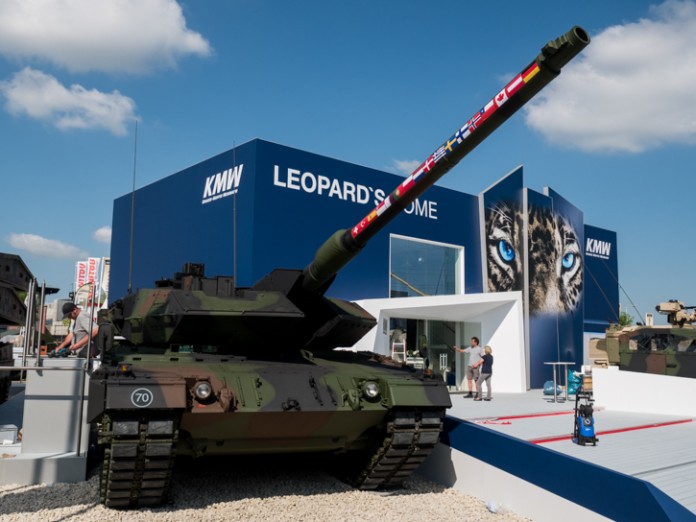
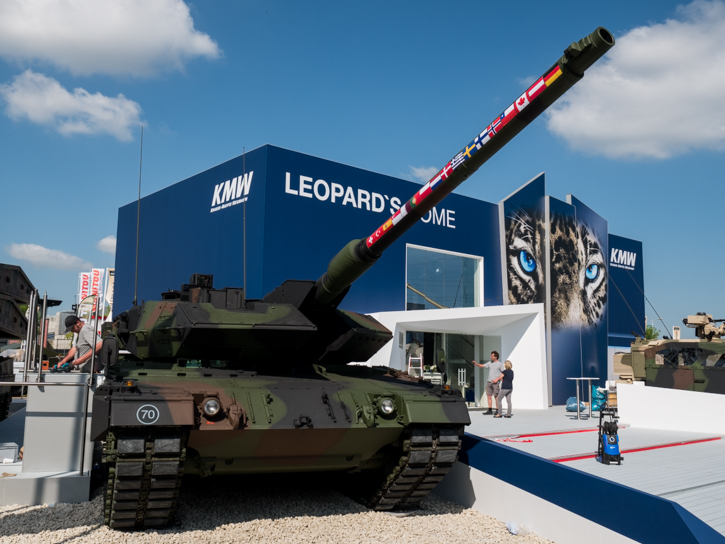
    The Leopard II main battle tank is displayed by the German KMW and Rheinmetall Groups. Although both are offering new production tanks to customers in the Middle East, most of the sales in recent years have been those of excess inventory tanks, the most recent were deliveries to Indonesia. Various modifications and upgrades are displayed at Eurosatory, introducing enhanced protection, optronics, command and control, among other changes.
    piranha5_kongsberg_turret
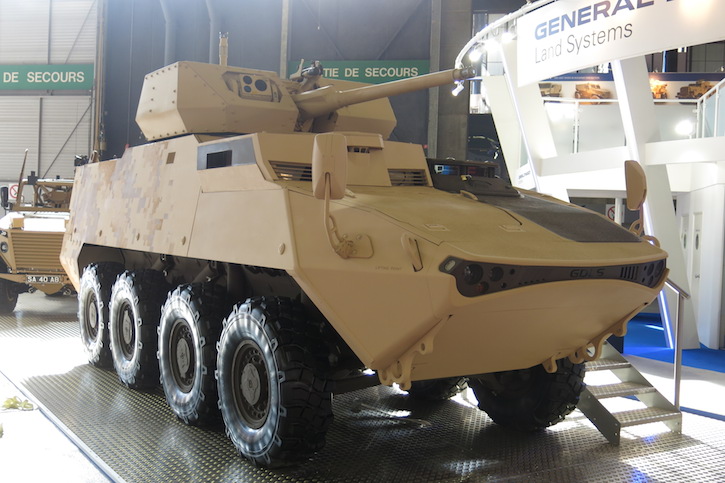
    General Dynamics Land Systems is displaying at Eurosatory the concept of the ‘LAV DEMONSTRATOR’, a a radically modernized LAV III carrying a remotely controlled turret, with the Protector RWS mounting 30mm cannon recently demonstrated for the US Army. The vehicle is equipped with modified front section, accomodating the larger powerpack. The vehicle also uses an enhanceddriveline, suspension, larger tires and more pozerful engine, providing better mobility and payload capability. It features better protection with the double hull design already implemented with US Army vehicles.


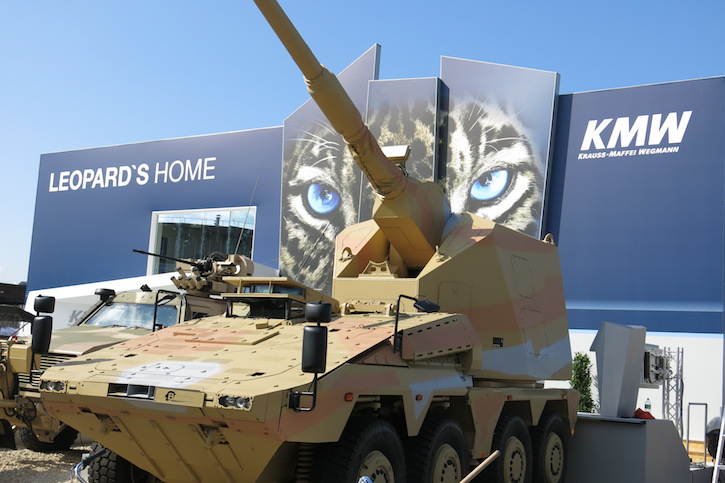
    The autonomous gun system turret developed by KMW is displayed here at Eurosatory 2014 on the Boxer chassis. This is the first public appearance of this configuration, which seems to carry the Boxer to the extreme. The AGM offers fully autonomous operation of the 155 /52 Cal artillery unit, controlled by the crew seated in the front section of the vehicle. Other configurations provide more spacious cabins for the crew.
    The autonomous gun system turret developed by KMW is displayed here at Eurosatory 2014 on the Boxer chassis. This is the first public appearance of this configuration, which seems to carry the Boxer to the extreme. The AGM offers fully autonomous operation of the 155 /52 Cal artillery unit, controlled by the crew seated in the front section of the vehicle. Other configurations provide more spacious cabins for the crew.
    ATMOS, the 155/52Cal howitzer from Elbit System is one of the largest vehicles displayed in Hall 6 at Eurosatory. this variant of the ATMOS is mounted on a Czech TATRA truck. Utilizing autonomous navigation and gun laying systems, and fitted with robotic gun laying and load assist mechanism, the howitzer can fire quickly after entering position, operated by a small crew.
    ATMOS, the 155/52Cal howitzer from Elbit System is one of the largest vehicles displayed in Hall 6 at Eurosatory. this variant of the ATMOS is mounted on a Czech TATRA truck. Utilizing autonomous navigation and gun laying systems, and fitted with robotic gun laying and load assist mechanism, the howitzer can fire quickly after entering position, operated by a small crew.
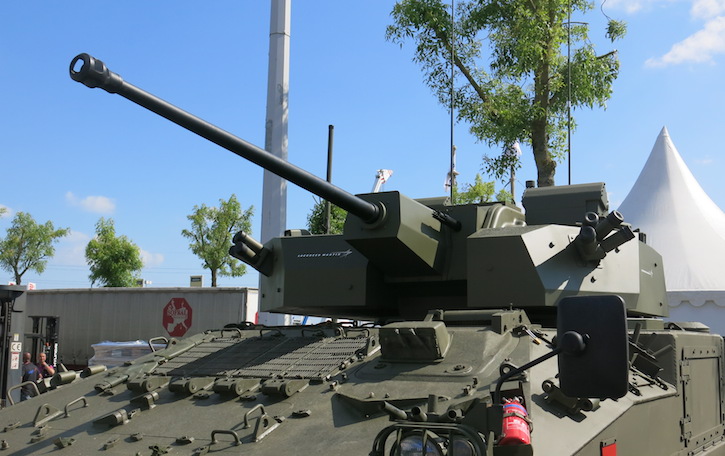
    Lockheed martin is showing at Eurosatory the new turret developed for the British Warrior. This turret mounts the new CTA 40 automatic cannon, firing new, 40mm telescopic caseless ammunition.
    Lockheed martin is showing at Eurosatory the new turret developed for the British Warrior. This turret mounts the new CTA 40 automatic cannon, firing new, 40mm telescopic caseless ammunition.
    pmmc_g5m113
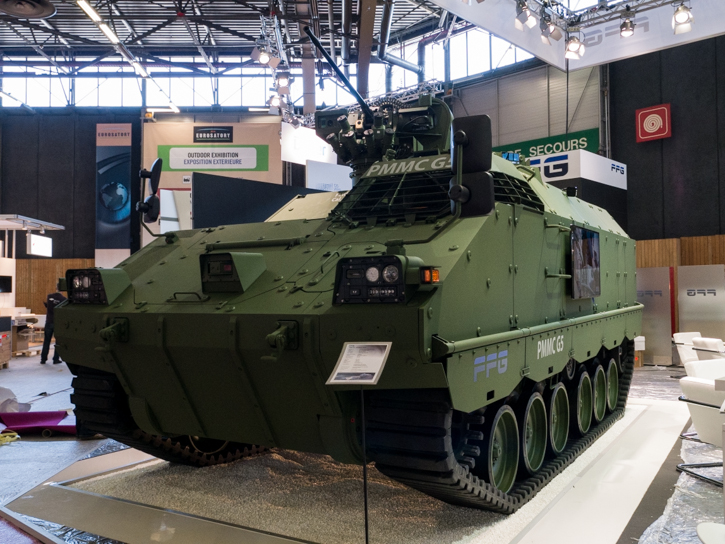
    The PMMC G5 vehicle developed by FFG is one of four contenders bidding for a Danish M-113 replacement program expected to be finalized by the autumn of 2014. The G5 is based on the M-113, but replaces most of the original vehicles’ parts and aluminum hull with steel made elements. The vehicle is fitted with more spacious driver’s position fitted with actual windows, offering the driver full autonomy in driving and maneuvering the vehicle. The G5 offers high blast and mine protection, and comes with modular armor design that can match different threat levels. The manufacturer claims the acquisition cost of those vehicles would be the lowest of all options offered for the Danes, while the life cycle cost would also be lowest, due to the simplicity and robustness of the design.
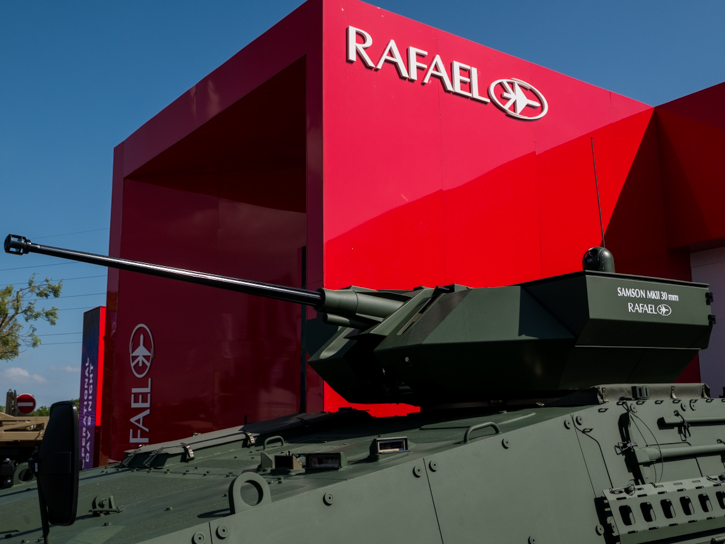
    RAFAEL is displaying at Eurosatory eight different weapon stations, one of those shown in the static outdoor area is the new Samson 30 mm turret, mounting an automatic 30mm cannon and two Spike ER missiles. It is installed on a modernized BMP-2 modernized by the Czech company Excalibur. Replacing the original Russian turret saved several tons that could be 'spent' on additional armor, while clearing more space for troops and equipment inside the protected fighting compartment.
    RAFAEL is displaying at Eurosatory eight different weapon stations, one of those shown in the static outdoor area is the new Samson MKII 30 mm turret, mounting an automatic 30mm cannon and two Spike ER missiles. It is installed on a modernized BMP-2 modernized by the Czech company Excalibur. Replacing the original Russian turret saved several tons that could be ‘spent’ on additional armor, while clearing more space for troops and equipment inside the protected fighting compartment.
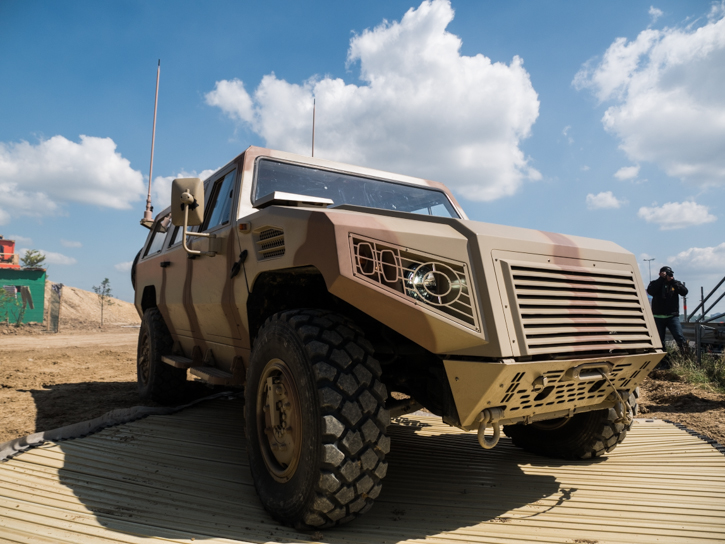
    The sleek and elegant Nimr made its European debut at Eurosatory, appearing on a daily live demonstration at the dynamic display.
    The sleek and elegant Nimr made its European debut at Eurosatory, appearing on a daily live demonstration at the dynamic display.

    French Army could expand UAS choices

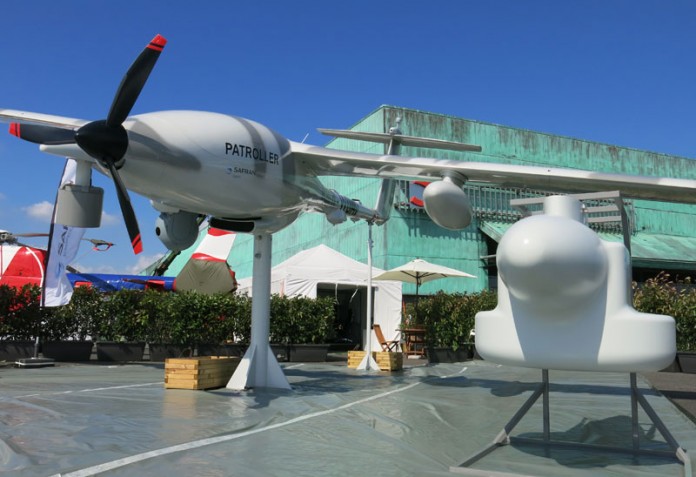
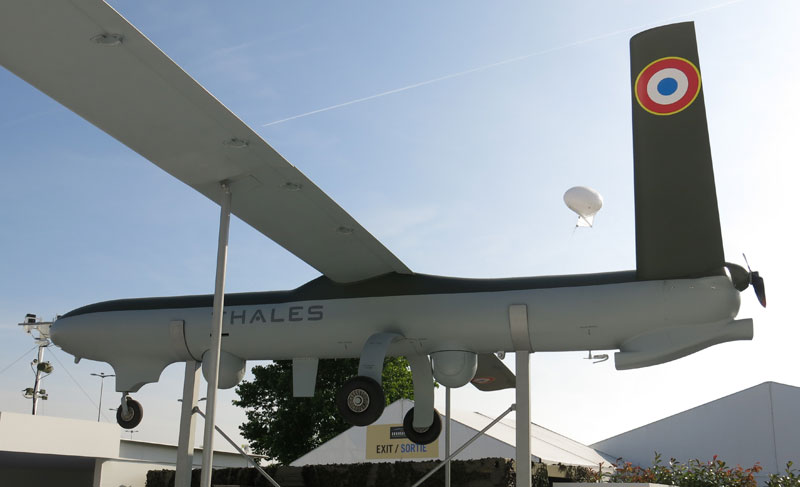
    It carries payloads up to 350kg capacity combining a wide variety of sensors as well as a wide-band Satcom datalink carried at the payload bay, nose and under the wings. Photo: Tamir Eshel, Defense-Update
    It carries payloads up to 350kg capacity combining a wide variety of sensors as well as a wide-band Satcom datalink carried at the payload bay, nose and under the wings. Photo: Tamir Eshel, Defense-Update

    The acquisition of new tactical drones for the French Army was included in the current five year plan (2014-2019), released by the defense ministry earlier in 2014. At the time only one option was on the table – Watchkeeper, a mature tactical UAS system developed by Thales, that has recently won the British type certificate of operation after a long process that has taken years and delayed operational fielding of the drones.

    The British side was eager to offer the drone, and the French buyers were also hopeful that the developmental cost associated with developping a new system could be avoided. But Paris wasn’t ready to remain a buyer, and demanded London to select  the VBCI developed for the French Army for British service.

    Until further decisions are made, the British Army is intending to send the Watchkeeper to Afghanistan later in 2014, with elements of the 32nd field artillery regiment, where it is expected to support elements of the French contingent during their final deployment to the country. It will be an opportunity for the French Army to get to know the system – assess its contribution to its military forces on contingency operations.

    Watchkeeper can carry about three times the payload weight of Sperwer, flying missions with about three times longer endurance. While originally developed to support launching by catapult, it is operated mainly from runways. The British requirements called for operation from unprepared runways, which required the redesign of carriage and wing mount. The French Army has been using drones since 2001, fielding 25 systems of the Système de Drones Tactiques Intérimaire (SDTI) developed by Sagem.

    SDTI, also known as Sperwer is a delta-winged drone that takes off from a catapult and lands by parachute. This operational method enables the Sperwer to deploy with military forces anywhere they are sent, even to locations without landing strips. However, the relatively short mission duration and high speed of the delta design took a toll from these drones. Between 2008 and 2012 the French 61 artillery regiment that operated the SDTI in Afghanistan lost 12 aircraft, flying about 2,000 missions, 50% of the losses occurred on landing.

    Watchkeeper, which is entering service with the British Army, is likely to support the French forces remaining in Afghanistan through 2014-2015, thus offering an opportunity to evaluate their match to French operational methods. Photo: Tamir Eshel, Defense-Update
    Watchkeeper, which is entering service with the British Army, is likely to support the French forces remaining in Afghanistan through 2014-2015, thus offering an opportunity to evaluate their match to French operational methods. Photo: Tamir Eshel, Defense-Update

    Since 2001 Sagem has produced 25 Sperwer systems and about 150 aircraft to support several operators – France, Canada, Netherlands and Denmark – of which only the French Army remained loyal to the system. The DGA continued to order replacement aircraft in 2012 (five) and 2013 (five). In addition, improvements were made to the EUROFLIR EO payloads, improving their geo-location capabilities.

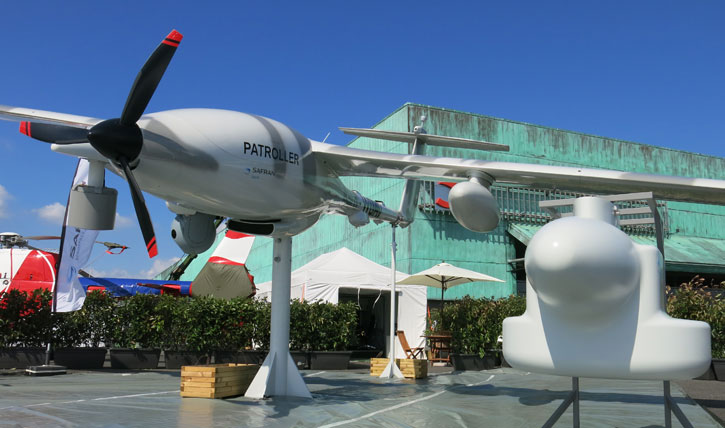
    Although Sagem introduced several improvements to the Sperwer, this specific line was discontinued for a different design, based on a commercial (manned) powered glider – the German Stemme S-15. The main reason for the decision was that such platform would be easier to receive flight worthiness certification in France and Europe, as it is based on an EASA-certified platform – an obstacle that is yet insurmountable for the US Predator and Reaper. The drone designated ‘Patroller’ is a one-ton class, long endurance UAS optimised for military, homeland security and maritime missions.

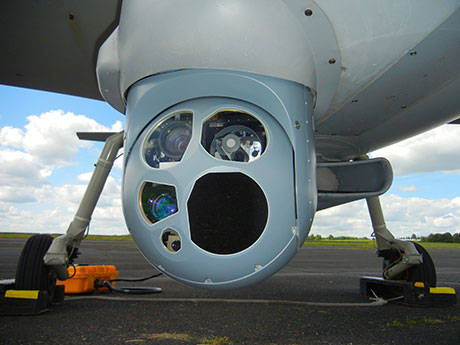
    The Euroflir 410 from Sagem was tested on 30 flights earlier this year. Photo: Sagem
    The Euroflir 410 from Sagem was tested on 30 flights earlier this year. This variant is fitted with a very high resolution spotter camera and a Matis AP thermal. Photo: Sagem

    Patroller Payloads

    It carries payloads up to 350kg capacity combining a wide variety of sensors as well as a wide-band Satcom datalink carried at the payload bay, nose and under the wings. At Eurosatory the Patroller was displayed with several new payloads, demonstrating the new EUROFLIR 410 EO payload, radar and SIGINT that can be carried underwing.

    The drone can operate on missions up to 20 hours, at an altitude up to 20,000 ft. Between April and June 2014, the Patroller flew 30 flights over France, as part of a test campaign, evaluating the new Euroflir 410 gyro-stabilised EO turret. This payload provides extended identification capabilities in day and night. In addition, this Euroflir 410 variant is fitted with very high resolution spotter and a Matis AP IR camera.

    On the Patroller UAS, this new generation imagery chain integrates a high rate data link which is fully compliant with the performance of the high definition sensors of the aircraft, allowing the restitution of the images without degradation. According to Sagem the combined payload configuration provides wide field of view intelligence, surveillance and targeting, enabled by automatic optronics pointing towards radar echoes and SIGINT/COMINT cues. The system also supports real-time data fusion form sensors, enabling rapid and efficient automatic target tracking by the EO sensor. The ground segment also encompasses new processing software and new tools to ease mission operations: automatic tracking of mobile targets, activity detection.

    New options on the table

    Seeking a replacement for these SDTI, the French Army has three basic options – obtain a modern aircraft that can fly longer missions and carry more payloads, but must operate from prepared airfields, or at least unprepared airstrips; choose a smaller drone that may fly longer missions, but carry less payloads, meaning that most of the investments in mission systems acquired for Sperwer would be lost. A third option could be to split the mission between different platform – carry out some on medium altitude, long endurance (MALE) drones that will be deployed from fixed sites while other other drones, designed for forward deployment with the tactical echelon will carry out other missions. These could be single payload carrying drones, launched by catapult or capable of vertical takeoff and landing (VTOL).

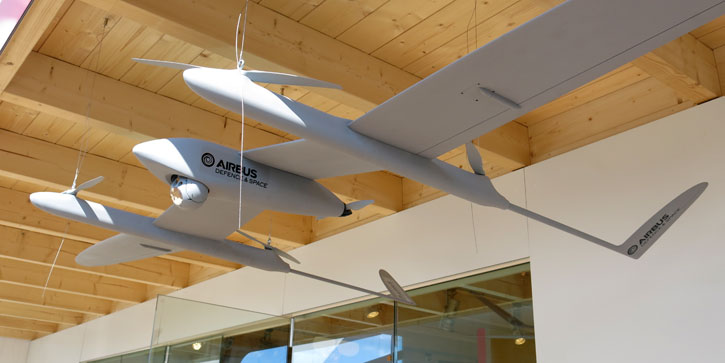
    The hesitance of the French authorities to force a solution on the market is reflected by the expectations that the French procurement authority DGA will soon publish is an international tender, opening the tenders beyond the French primes, to bidders from two of the nations leading in the UAV market – the USA and Israel. Among the potential bidders for such programs, is Airbus Defense and Space that has displayed a model of the Shadow M2 from Textron at At Eurosatory.

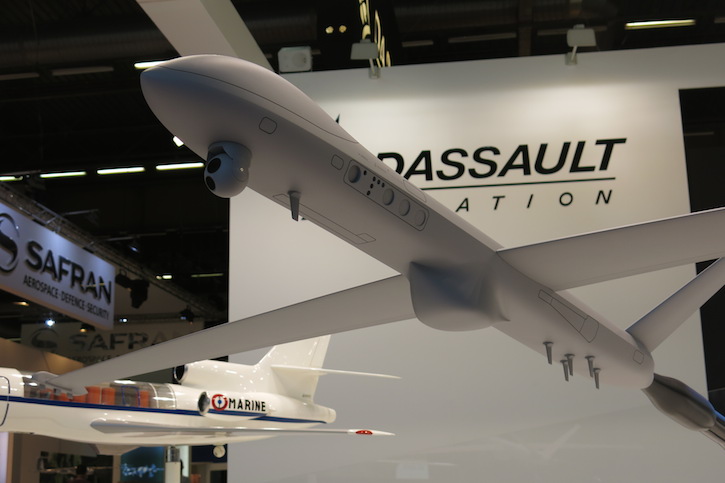
    Dassault also unveiled a model of its own MALE 2020, whose design can be traced to General Atomics Predator B Reaper with some modifications. Earlier in 2014 the governments of France, Italy and Germany announced their intention to fund a two-year study of a MALE 2020 concept to be based on European knowhow.

    A model of a mini-UAV fitted with a single pusher propeller ad four lift rotors, enabling vertical take-off and landing, alleviating the need for complex support systems for such drones. Photo: Tamir Eshel, Defense-Update
    A model of a mini-UAV fitted with a single pusher propeller ad four lift rotors, enabling vertical take-off and landing, alleviating the need for complex support systems for such drones. Photo: Tamir Eshel, Defense-Update
    Dassault provided a view of its MALE2020 concept for a future MALE drone it could develop with Italian and German partners under a pan-european governmental initiative. Photo: Tamir Eshel, Defense-Update
    Dassault provided a view of its MALE2020 concept for a future MALE drone it could develop with Italian and German partners under a pan-european governmental initiative. Photo: Tamir Eshel, Defense-Update

    At the lower end, bidders could offer vertical take off and landing, such as a new version of the Drac, also displayed at Eurosatory by Airbus Defense and Space. It is equipped with quad-rotors and an improved gyro-stabilized gimballed EO payload mounting multiple sensors. IAI could also be playing a role, offering the Panther tilt-rotor aircraft that could support the forward area segment of the program, carrying various payload and supporting extended mission endurance by using a hybrid propulsion. Another US potential candidate worth consideration is Boeing/Insitu offering the RQ-21A Blackjack.

    The system has entered operational service with the US Marine Corps and is also planned to enter service with the Dutch Army, that has used Sperwer in the past. It’s flight endurance is over twice that of the Sperwer, but the payload capacity is less than half. Moreover, the Blackjack is depended on proprietary launch and retrieval systems that could make its deployment more complex from a logistical point of view.

    If the tender is indeed opened to international players it is likely that Israel’s Elbit Systems would also get involved with its successful Hermes 900, which has grabbed eight orders in less than five years. Hermes 900 has much commonality with the Hermes 450, that is providing the basis for the Watchkeeper. Elbit is also offering the Hermes 90 which is designed for catapult takeoff and landing on unimproved landing strips, an element that could be interesting for the French.

    Aeronautics revamps Orbiter 2 – new B model is an all-digital system

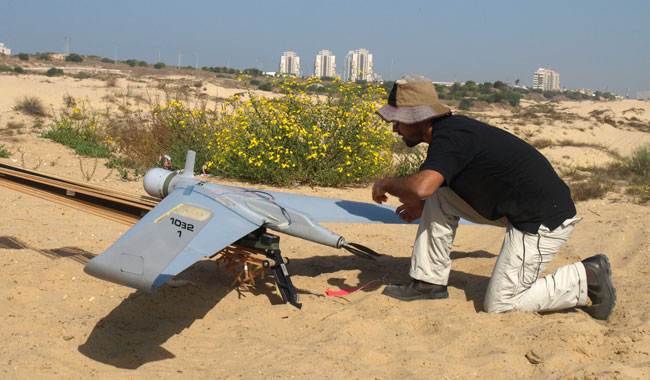
    The Orbiter II is prepared for the flight, taking off from a nearby dune. On the 26th Aeronautics plans to conduct a live display of the Orbiter III for the first time. Photo: Noam Eshel, Defense-Update
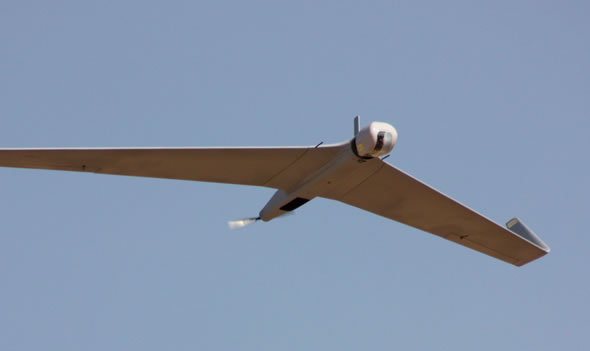
    Orbiter 2 is configured to carry the STAMP family stabilized EO payloads, including daylight, IR, IR-Zoom and the new multi-sensor (M-STAMP). Photo: Aeronautics
    Orbiter 2 is configured to carry the STAMP family stabilized EO payloads, including daylight, IR, IR-Zoom and the new multi-sensor (M-STAMP). Photo: Aeronautics

    Aeronautics has completed the development of a new variant of its Orbiter 2 mini-UAS, implementing many lessons learned through extensive operational use of these drones, by more than 20 countries. In fact the B model is a new mini UAS packed into the airframe design of the Orbiter 2. Among the systems upgraded through this redesign are avionics, datalink, navigation and mission security. The drone can carry 1.5 kg (3.3 lbs) of payload, including the standard EO payloads used by the Orbiter 2 – among them the Controp STAMP series, including the dual-sensor M-STAMP, integrating day camera, IR camera and laser pointer. The introduction of digital datalink enables the use of additional payloads providing the Orbiter 2B a broader mission capability hitherto available only to larger Intelligence, Surveillance and Reconnaissance (ISR) assets. The air vehicle has a proven operational record in extreme weather conditions, through snow, rain and wind gusts up to 40 knots.

    The digital datalink implemented in the new 2B replaces the previous analog communications link, offering improved security, and coverage of wider bandwidth, enabling maintaining several orbits in a given area. Digital communications also implements inherent encryption and frequency agility for improved communications security and more flexibility in overcoming interference.

    Another security feature is the ability to designate the operating airspace for the Orbiter 2B’s navigation system, triggering an alert on any deviation from its designated patrol area or operating altitude. If the situation continues, the drone enters the self-destruct mode, destroying the ‘brain’ and data from the avionics, payloads and memory, thus eliminating the enemy extracting information the wreck.

    An important aspect of the new upgrade is improved non-GPS navigation. In fact, the Orbiter 2B can perform its mission without GPS and without datalink, what makes the system far more resilient in case of electronic jamming and GPS spoofing which are becoming common in the modern battlefield.

    Unlike many mini-UAS that require stationary or dismounted elements for ground control, the Orbiter 2B can be controlled and monitored from moving vehicles, thus adapting well for providing overwatch on security and escort missions, as well as supporting precision strikes pursuing dynamic targets.

    The new system are also compatible with industry standards, including STANAG 4586 (NATO) for UAS controls and H.246 for the video streaming delivered by the drone, which enable better integration with other systems operated by users or supported forces.

    The Orbiter II is prepared for the flight, taking off from a nearby dune. On the 26th Aeronautics plans to conduct a live display of the Orbiter III for the first time. Photo: Noam Eshel, Defense-Update
    The Orbiter II is prepared for the flight, taking off from a nearby dune. Photo: Noam Eshel, Defense-Update

    Hovermast – a bird’s eye view over the hill

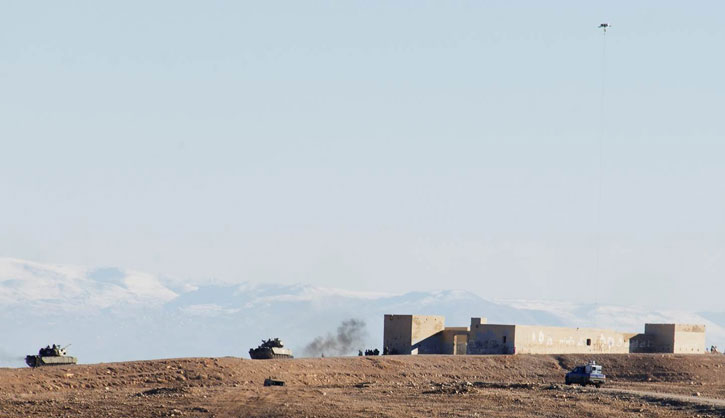
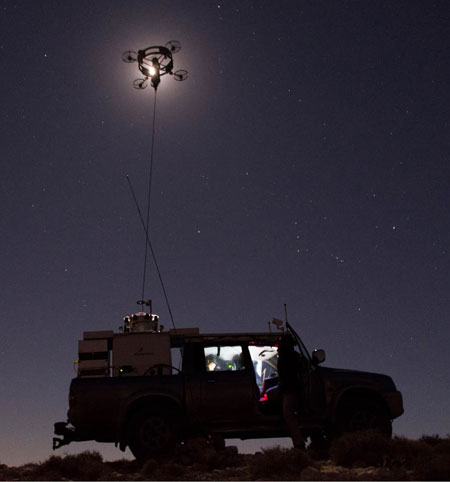
    Tethered from its support vehicle, Hovermast 100 hovers above an IDF armored formation, providing a 'view over the hill'. Photo: Sky Sapience.
    Tethered from its support vehicle, Hovermast 100 hovers above an IDF armored formation, providing a ‘view over the hill’. Photo: Sky Sapience.

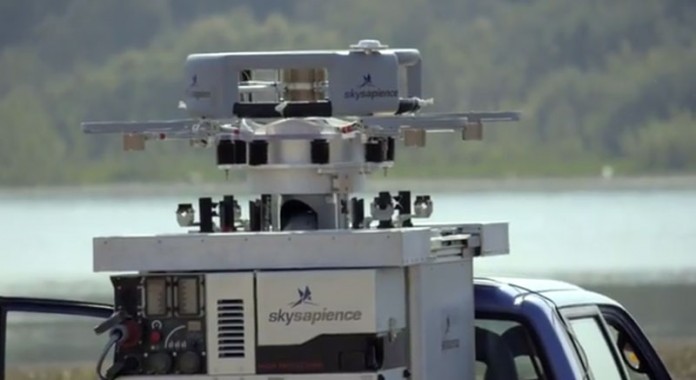
    The Hovermast 100 tethered observation system developed by the Israeli company Sky Sapience has completed development in 2013 and already entered operational service with the Israel Defense Forces (IDF). Sky Sapience has recently demonstrated the naval applications of its new Hovermast 100, during a demonstration for a foreign customer the system was deployed at sea, demonstrating effective border control, observation and surveillance missions in both land and maritime environments.

    One of the main advantages of the tethered system is its ability to operate in civilian and non segregated areas

    The Hovermast 100 carries 6 kg of payload, including the Controp T-STAMP  multi-sensor EO payload, weighing 2.8 kg. The images collected by the payload are displayed in real time at the ground station, and can be transmitted via wireless link to other users. Photo: Sky Sapience
    The Hovermast 100 carries 6 kg of payload, including the Controp T-STAMP multi-sensor EO payload, weighing 2.8 kg. The images collected by the payload are displayed in real time at the ground station, and can be transmitted via wireless link to other users. Photo: Sky Sapience

    Hovermast operates as a fully autonomous system, using a combination of two counter-rotating rotors and four stabilizing rotors managing lift, attitude, height and orientation. The system can operate from vehicles, vessels on the move or fixed positions. Self contained in a compact container weighing about 300 kg, the system can be installed on standard tactical vehicles, pick-up trucks, armored vehicles, as well as unmanned ground or naval platforms or small vessels. Powered through the tether, the Hovermast 100 can carry a payload weighing six kilograms (13.2 pounds).

    The platform can be lifted within seconds to an altitude of 50 meters (164 ft) above ground providing 360⁰ over-the-hill vision, it is ideal for surveillance and observation missions. It can operate at relatively high wind velocity of up to 25 knots. Unlike mast mounted payloads that must be flushed to vertical position, the tethered sensor can also deploy form a slope of up to 20 degrees. In addition to transferring power the tether is also conducting wide-band data transfer from the payload to the ground, eliminating electromagnetic emissions that could be monitored or jammed. The system has already been supplied to the IDF and selected by several international customers.

    One of the main advantages of the tethered system is its ability to operate in civilian and non segregated areas (practically everywhere) – areas where other unmanned aerial systems (UAS) are not certified to fly. Being a tethered platform and limited to operate at low altitude, below the level of civil air traffic, Hovermast is not a classified as an aerial vehicle, leaving the operator to maintain operational safety. Nevertheless, the system can deliver highly effective coverage form this altitude, providing military, security, first responders and firefighters an excellent surveillance capability over a wide area.

    The system’s operation is simple and intuitive, lifting and retracting is done by a flip of a switch. The vehicle is constantly monitoring its position, altitude and operating status and would issue warning alerts to the operator upon excessive wind velocity, power loss, malfunction or any other issue that would require retraction; the system will retract automatically if necessary.

    The Hovermast 100 was recently tested on board naval vessels, as part of a demonstration for a foreign customer. Photo: Sky Sapience
    The Hovermast 100 was recently tested on board naval vessels, as part of a demonstration for a foreign customer. Photo: Sky Sapience

    The standard payload selected for the Hovermast 100 is the T-STAMP from Controp, at a weight of only 2.8 kg, this stabilized payload comprises either a cooled 3-5 micron IR Camera with x 6 optical zoom Lens or an uncooled 8-12 micron Camera with x4 optical zoom. In addition, T-STAMP carries a CCD Day TV Camera with x 10 optical Zoom and a laser pointer. The platform can also be configured to carry additional payloads, including radars, lasers designators, hyprospectral sensors, communications relays, SIGINT and cellular antennas. The system is made of advanced composite materials, is impermeable to water and dust, and operates in adverse weather conditions.

    In recent months the company has refined the production version of the platform, implementing improved aerodynamic design, carbon fiber construction and introduction of rotor blades with optimized profiles, contributing to lower weight and higher durability. expanded its operational facilities, completing a new production facility in Yokneam, preparing for serial productions. Meeting a broader range of requirements the company is also developing a larger version of the tethered Hovermast, capable of deploying heavier payloads.

    Eurosatory 2014 – First Impressions

    Videoreport editor & photographer: Noam Eshel, Defense Update

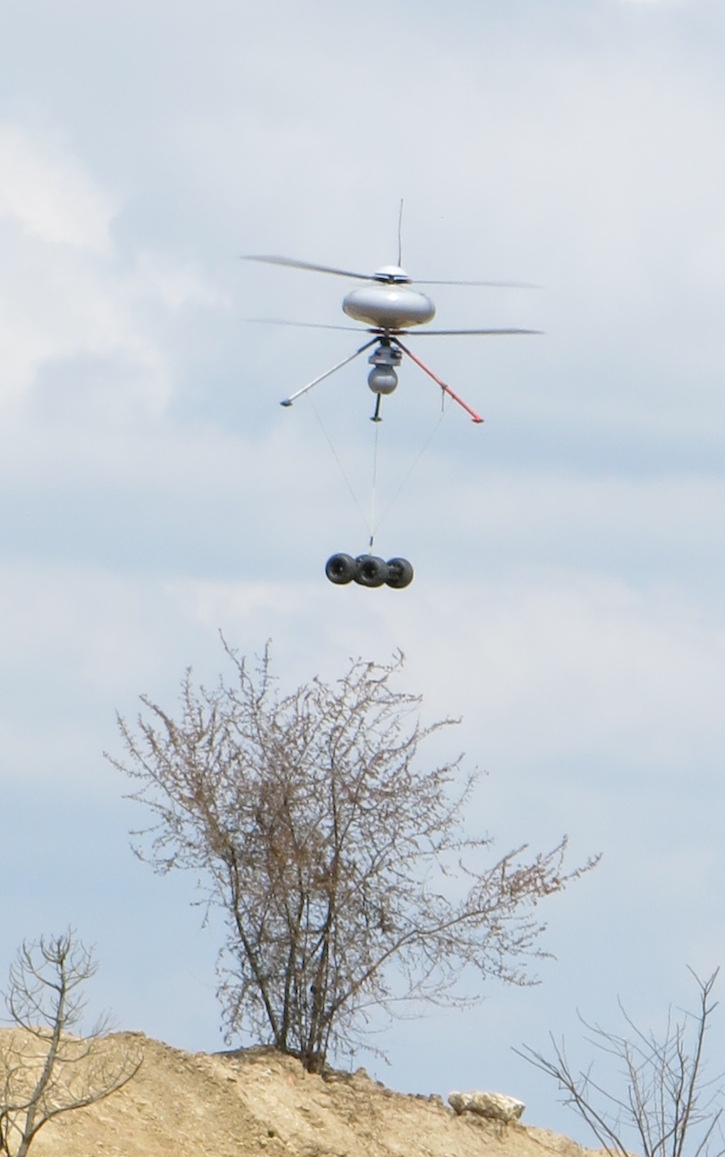
    Among the highlights from the dynamic demonstration held today at Eurosatory 2014 included the Infotron IT 180 unmanned rotorcraft deploying a Cobra Mk2 UGV, both unmanned vehicles are provided by the French robotics company ECA Robotics. Photo: Tamir Eshel
    Among the highlights from the dynamic demonstration held today at Eurosatory 2014 included the Infotron IT 180 unmanned rotorcraft deploying a Cobra Mk2 UGV, both unmanned vehicles are provided by the French robotics company ECA Robotics. The IT180 can lift five kilograms of payloads, which is about the weight of the Cobra. Photo: Tamir Eshel
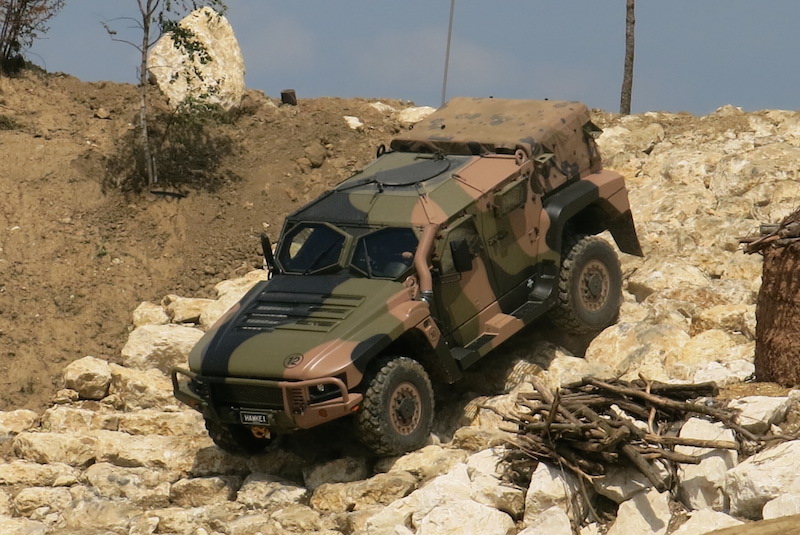
    The Thales Group displayed the Hawkei Light Protected Mobility Vehicle weighing 10 tons. Hawkei delivers unparalleled levels of blast and ballistic protection, for a helicopter transportable vehicle. Photo: Noam Eshel
    The Thales Group displayed the Hawkei Light Protected Mobility Vehicle weighing 10 tons. Hawkei delivers unparalleled levels of blast and ballistic protection, for a helicopter transportable vehicle. Photo: Tamir Eshel
    vab3_rdt
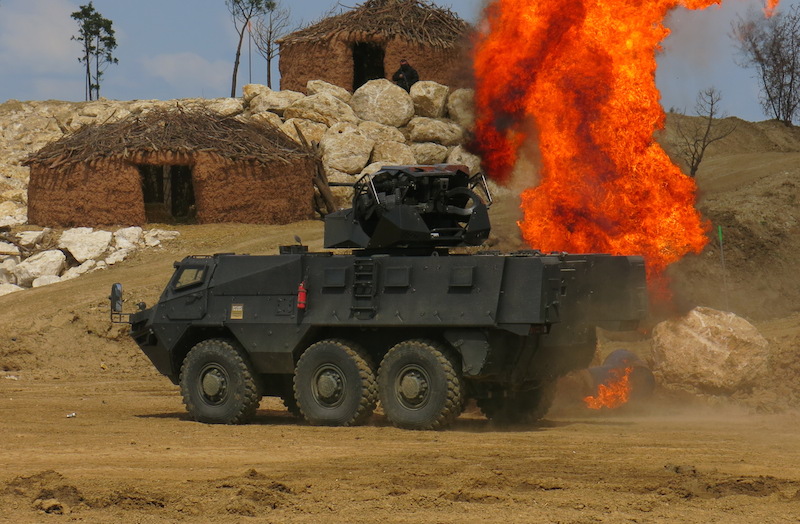
    Renault Defense Trucks demonstrated a number of vehicles, including the 20 ton VAB Mk III 6×6 armoured personnel carrier offering NATO Level 4 protection, anti-blast and IED protection. Photo: Tamir Eshel

    The Thales Group displayed the Hawkei Light Protected Mobility Vehicle weighing 10 tons, while Renault Defense Trucks demonstrated a number of vehicles, including the 20 ton VAB Mk III 6×6 armoured personnel carrier offering NATO Level 4 protection, anti-blast and IED protection. Another vehicle from Renault is ALTV, a lightweight 4×4 platform developed by ACMAT.

    anti-blast and IED protection. Another vehicle from Renault is ALTV, a lightweight 4x4 platform developed by ACMAT. Photo: Tamir Eshel
    anti-blast and IED protection. Another vehicle from Renault is ALTV, a lightweight 4×4 platform developed by ACMAT. Photo: Tamir Eshel
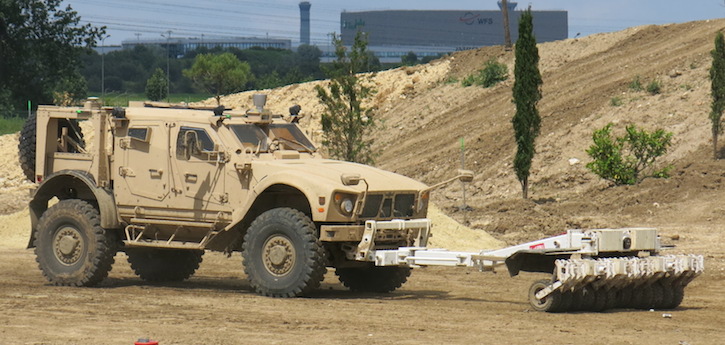
    Two unmanned vehicles were demonstrated here for the first time, the Terramax from Oshkosh, is an M-ATV rigged with the Terramax autonomy kit, enabling the vehicle to demonstrate a route clearing mission performed by standard military vehicles such as the M-ATV armoured vehicle and MTVR medium trucks, equipped to carry out autonomous unmanned missions. The Terramax was demonstrated here pushing a mine roller. Photo: Tamir Eshel
    Two unmanned vehicles were demonstrated here for the first time, the Terramax from Oshkosh, is an M-ATV rigged with the Terramax autonomy kit, enabling the vehicle to demonstrate a route clearing mission performed by standard military vehicles such as the M-ATV armoured vehicle and MTVR medium trucks, equipped to carry out autonomous unmanned missions. The Terramax was demonstrated here pushing a mine roller. Photo: Tamir Eshel
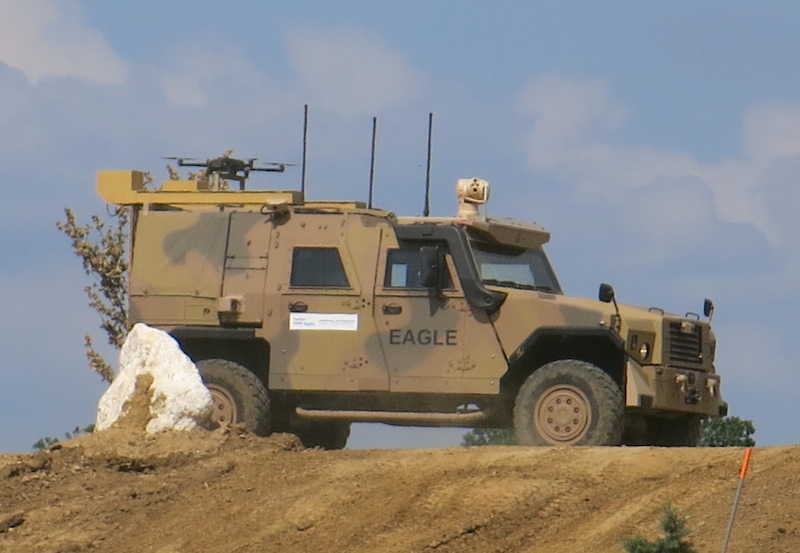
    The VERA robotic kit installed on an EAGLE IV armored vehicle from GD ELS. Photo: Tamir Eshel
    The VERA robotic kit installed on an EAGLE IV armored vehicle from GD ELS. Photo: Tamir Eshel
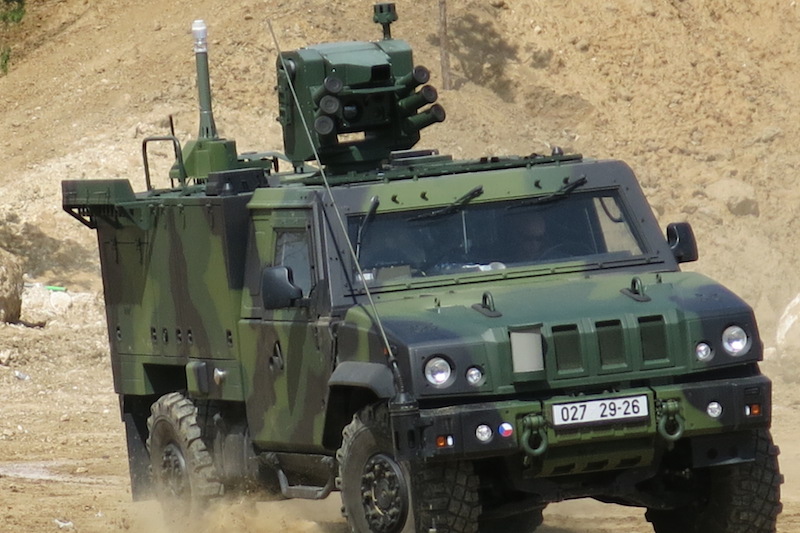
    Other vehicle demonstrated here is the LMV from Iveco, configured to carry out CBRN reconnaissance missions. Photo: Tamir Eshel
    Other vehicle demonstrated here is the LMV from Iveco, configured to carry out CBRN reconnaissance missions. Photo: Tamir Eshel
    The eight wheel ARGO all terrain vehicle mounting a Paradigm SRP remotely operated weapon station fitted with the PEARL gunshot detection system from Metravib. Photo: Tamir Eshel
    The eight wheel ARGO all terrain vehicle mounting a Paradigm SRP remotely operated weapon station fitted with the PEARL gunshot detection system from Metravib. Photo: Tamir Eshel

    More information about the vehicles and systems participating in the demonstration will be covered in forthcoming posts. Stay tuned…

    Cyber Intelligence Report – June 15, 2014

    cyber_report

    Israel

    Israel as a cyber-security superpower

    Brig. Gen. Eitan Eshal, Head of Research and Development at Mapat in the Defense Ministry, warned against the dangers of the growing dependence on cyberspace in daily life. “Every year we expose ourselves more and more to cyber-attacks. All of this creates a situation where everything is connected with everything, and cyberspace becomes a dimension of warfare.” This reality creates new challenges to cyber security. The old cyber defense tools are not enough “to deal with the new situation, security systems go in the direction of intelligence driven security.” Eshal also spoke about the growth of the Israeli cyber industry: “We have a tight cooperation with the industry. When we started we worked with 4 companies; today we are working with more than 30.” Eshal’s words correspond with those of the Minister of Science, Technology and Space, Yaakov Peri, who stated in the next two years his office and the Israel National Cyber Bureau will be investing millions of shekels in cyber security “turning Israel to a leading superpower in that field.

    USA

    United States and Australia strengthening cyber cooperation

    A few days ago, the United States and Australia announced they will strengthen their cooperation on cyber-security issues. According to the White House, it will be an “alliance for the future.” The White House declared: “The United States and Australia are also working to strengthen cooperation on space and cyber issues, including cyber defence and cyber security incident response.” It is not their first cooperation, as the US, UK, Australia, New Zealand, and Canada (which form the “Five Eyes Alliance”) have an international agreement of cooperation in signals intelligence. Additionally, President Barak Obama and the Canadian Prime Minister Abbott met at the White House in order to talk about this new collaboration, in terms cyber-defence. The cyber cooperation intends to strengthen the United States cyber security more so than ever, especially considering that the US is constantly targeted by foreign cyber spying operations.

    Russia and CIS

    Russian hacker accused by US for cyber money laundering

    US authorities accused Russian hacker Evgeny Bogachev in absentia of major  computer fraud, money laundering, and stealing millions of dollars from accounts of US citizens. American authorities announced Bogachev, also known to the US cyber security community under the nickname “Lucky12345” and “slavik,” was among the group of hackers who attacked about a million computers in the United States. As the representative of US Department of Justice stated at a press conference, Bogachyov created a bot-net (a network of infected computers) called Gameover Zeus, which since 2007 has been used to steal personal and financial data. US law enforcement authorities have requested assistance from Russia in search and arrest of Bogachyov. Currently in the US, there is a trial of another Russian hacker – Alexander Panin, accused of creating the malware SpyEye, affecting about 1.5 million computers worldwide.

    Middle East

    Cyber crime  second most common form of economic crime in the Middle East

    According to a recent PwC 2014 global economic crime survey, cybercrime is the second most common form of economic crime reported in the Middle East, though it is the fourth most common form of economic crime globally. The increase in digital applications and Internet adoption also means more complex security threats. According to the survey, an approximate amount lost due to cybercrime in the Middle East may vary between $1 million and $100 million annually. The countries most affected by cybercrime of financial services (between 2012 and 2013) included the UAE, Oman, and Lebanon.

    Iraqi Communication Ministry blocked Facebook, Twitter, and YouTube

    As Iraq faces an inner conflict in the north, the country’s Ministry of Communications has blocked access to a number of social media sites. According to Cyber Arabs, an organization based in Lebanon monitoring Internet freedom, confirmed Facebook, YouTube, and Twitter were all blocked in Iraq. Facebook and YouTube’s spokespersons mentioned they received reports of limited access to Internet services. Both confirmed there is no technical issue on their side and are checking into the reports. Many Iraqis have now reported using the social media site Whisper, which is an application allowing users to post anonymous posts (similar in the functionality to Twitter, yet with no trace to the original user).

    China and APAC

    China once again behind a cyber-espionage operation

    According to an intelligence report published by CrowdStrike, the Chinese hacker “Putter Panda,” a member of the PLA Hacking Unit61486, is responsible for a range of cyber intelligence operation against the US, UK, and French technology. The report explained the hacker’s strategy included sending emails from familiar addresses by sending fake invitations containing malware, hoping users press on the links and unwittingly give hackers access to their computer systems. The company said the goal of the hacker was “obtaining intellectual property and industrial secrets related to defense technology” with intent to “conduct space surveillance, remote sensing, and interception of satellite communications.” Beside the American accusation, China still denies these operations and is continuing its cyber espionage campaign to catch up in terms of space and technology.  China is targeting the US, UK, and France because they are among the most advanced countries in the space industry.

    Vietnam concerned about cyber security

    According to security reports by Microsoft, Symantec, and local security company, BKAV, Vietnam is one of the most vulnerable countries regarding cyber security. Seventy-eight percent of government websites reported having poor security, forty percent of websites contain security loopholes (compared to 15% in Europe and 5% in the United States), and some fifty percent of computers infected with malicious code (compared to 40% worldwide). Last year three Vietnamese popular news sites were attacked and paralyzed for three weeks, among over two thousand other sites that have been attacked. In an attempt to improve security and increase the number of cyber security experts, Vietnam’s Ministry of Information and Communication and Vietnam’s Computer Emergency Response Center (VNCERT) signed two Memorandums of Understanding with Microsoft Corporation. Microsoft will assist Vietnam to modernize IT facilities, provide monthly security reports, help develop cloud computing, and train Vietnamese cyber security experts. Additionally, Microsoft will help coordinate computer emergency assistance and inspect security breaches. The Vietnamese effort to improve security may improve its stand against China, which is suspected of holding significant cyber offensive capabilities. Tension between China and other nations over South China Sea rises lately, leading to clashes involving ramming of fishing boats and water cannon fights between Vietnamese and Chinese vessels. Chinese and Vietnamese hackers accompanied the maritime clashes with dozens of website hijackings and denial of services on both sides. In today’s new world of cyber warfare, Vietnam may face a new threat against whom it is poorly prepared to fight.

    Europe

    UK: The Bank of England in war against cyber crime

    The Bank of England is currently setting up a cyber intelligence army including ethical hackers to fight against cybercrimes. This decision was made last year after the Financial Policy Committee decided to improve the security of the financial system against cyber-attacks. Andrew Gracie, the Bank’s Executive Director for Resolution, explained CBEST is a framework including intelligence from government agencies and security companies to evaluate risks to the national financial system. Moreover, Gracie declared, “Unlike physical attacks, which are likely to be localised, the impact of a successful cyber-attack on the financial system as a whole is potentially more serious from a financial stability point of view.” The UK cyber security is in constant evolution, and the cooperation between the government and private companies is becoming stronger every day. England is one of the most advanced countries in Europe for cooperation in the field of cyber security. Moreover, it is also the most advanced country in terms of cyber technology development. They have understood the importance of a close cooperation between private and public sectors to ensure their national security.

    France officially joining NATO Cooperative Cyber Defence Centre of Excellence

    Since its return to the integrated military command of NATO, France is increasingly more active in the Atlantic organization. In fact, because of decisions taken last year by the French Ministry of Defence in terms of cyber defense, it is as expected that France would strengthen its international cyber cooperation. Just as the UK and Czech Republic, France is officially joining the center of excellence responsible for NATO cyber defense issues. Greece and Turkey are also joining the alliance. Since 2013, France is engaged in a process of strengthening its national security and placed cyber defense as a priority. The French Ministry of Defense and the National Agency for Information Security Systems are working closely to protect the French cyberspace. Beside its cyber defense policy, France is developing offensive cyber capabilities to counter eventual cyber-attacks.

    inss150About the Cyber Intelligence Report:

    This document was prepared by The Institute for National Security Studies (INSS) – Israel and The Cyber Security Forum Initiative (CSFI) – USA to create better cyber situational awareness (Cyber SA) of the nature and scope of threats and hazards to national security worldwide in the domains of cyberspace and open source intelligence. It is provided to Federal, State, Local, Tribal, Territorial and private sector officials to aid in the identification and development of appropriate actions, priorities, and follow-on measures. This product may contain U.S. person information that has been deemed necessary for the intended recipient to understand, assess, or act on the information provided. It should be handled in accordance with the recipient’s intelligence oversight and/or information handling procedures. Some content may be copyrighted. These materials, including copyrighted materials, are intended for “fair use” as permitted under Title 17, Section 107 of the United States Code (“The Copyright Law”). Use of copyrighted material for unauthorized purposes requires permission from the copyright owner. Any feedback regarding this report or requests for changes to the distribution list should be directed to the Open Source Enterprise via unclassified e-mail at: [email protected]. CSFI and the INSS would like to thank the Cyber Intelligence Analysts who worked on collecting and summarizing this report.


    Skunk Works and XTEND Simplify Multi-Drone Command

    0
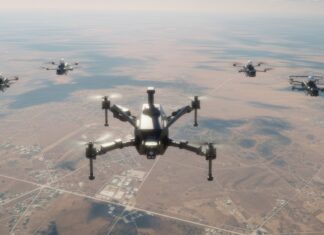
    Lockheed Martin Skunk Works® and XTEND have achieved a major milestone in JADC2 by integrating the XOS operating system with the MDCX™ autonomy platform. This technical breakthrough enables a single operator to simultaneously command multiple drone classes, eliminating the friction of mission handoffs. From "marsupial" drone deployments to operating in GPS-denied environments, explore how this collaboration is abbreviating the data-to-decision timeline and redefining autonomous mission execution.

    From Ukraine to Taiwan: The Global Race to Dominate the New Defense Tech Frontier

    0
    As traditional defense primes face mounting competition from agile “neoprimes” such as Anduril, Palantir and Helsing, the balance of innovation is shifting toward software-defined warfare and scalable, dual-use technologies, while global industry consolidation—marked by Boeing’s integration of Spirit AeroSystems and other strategic mergers—signals an intensified race to secure control over the defense technology value chain. Our Defense-Tech weekly report highlights these trends.

    Europe’s “Drone Wall”

    0
    In early October 2025, a coordinated wave of unmanned aerial system (UAS) incursions—widely attributed to Russia—targeted critical infrastructure across at least ten European nations. The unprecedented campaign exposed the fragility of Europe’s air defenses...

    Weekly Defense Update & Global Security Assessment

    0
    Executive Summary The past week (September 18-25, 2025) represents an inflection point where strategic defense concepts have transitioned from doctrine to tangible reality. An analysis of global events reveals four primary, interconnected trends shaping an...

    U.S. Air and Space Forces Push Next-Gen Programs at the AS&C 2025 Conference and...
    0
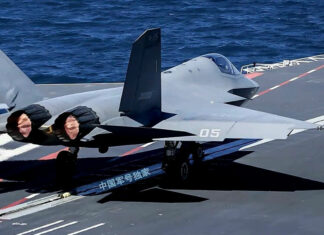
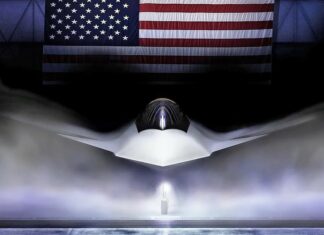
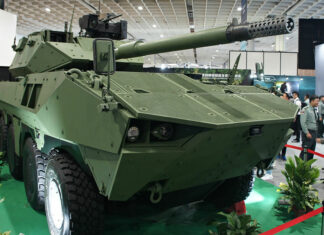
    At the 2025 Air, Space & Cyber Conference, U.S. Air Force and Space Force leaders unveiled major updates on next-generation fighters, bombers, unmanned systems, and space initiatives, highlighting both rapid innovation and critical readiness challenges as the services race to outpace global competitors. A short version is available here, with a more detailed version for subscribers.

    TADTE 2025: Reflecting Taiwan’s Strategic Themes

    0
    The Taipei Aerospace & Defense Technology Exhibition (TADTE) 2025 crystallized around four dominant strategic themes that collectively illustrate Taiwan's comprehensive approach to defense modernization amid escalating regional tensions. Based on a detailed report by Pleronix (available upon request). Includes a Podcast discussion on TADTE 2025's highlighting Taiwan's four strategic themes beyond the post's coverage.

    Iron Beam 450 Completes Testing, Soon to Join With Operational Air Defense Units

    0
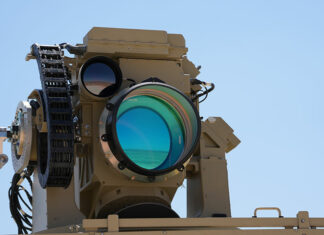
    Israel’s Iron Beam 450 high-power laser system has completed final testing, marking a major leap in air defense. Developed by Rafael, it offers precise, cost-effective interception of rockets, UAVs, and mortars, and is set for IDF deployment by 2025.