Thursday, December 25, 2025
More
    Home Blog Page 116

    Boeing P-8A Begins Advanced Airborne Sensor Testing

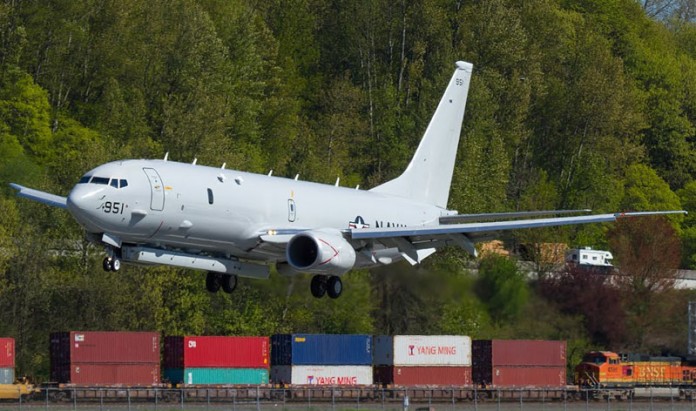
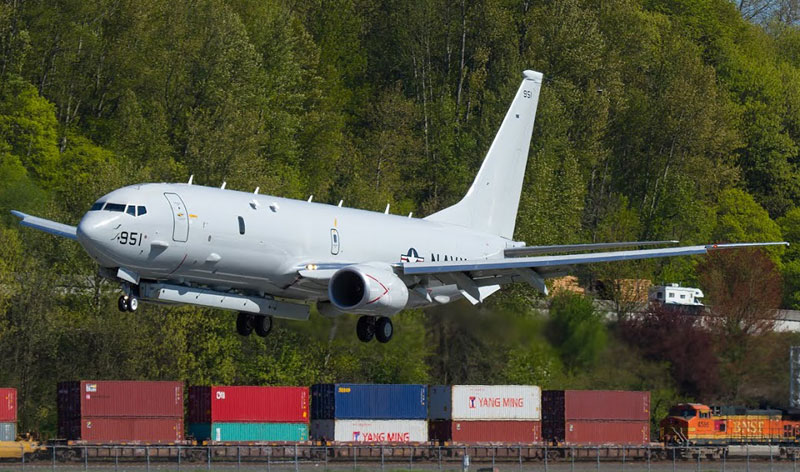
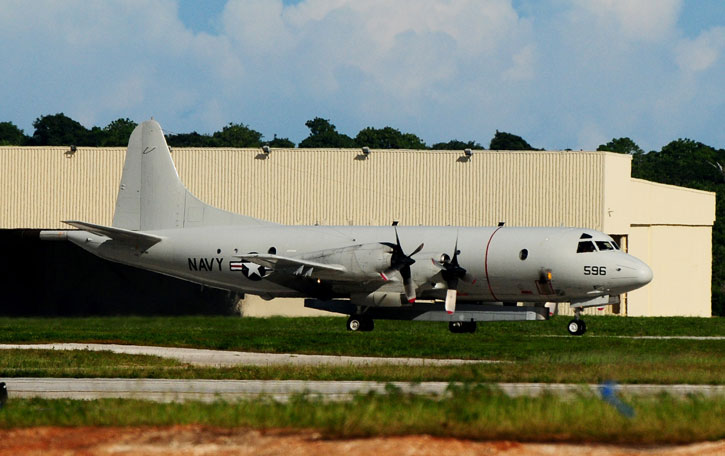
    Boeing and the US Navy began testing an Advanced Airborne Sensor (AAS) radar system for the P-8A Poseidon maritime surveillance and anti-submarine warfare (ASW) aircraft. Photo: Russell Hill
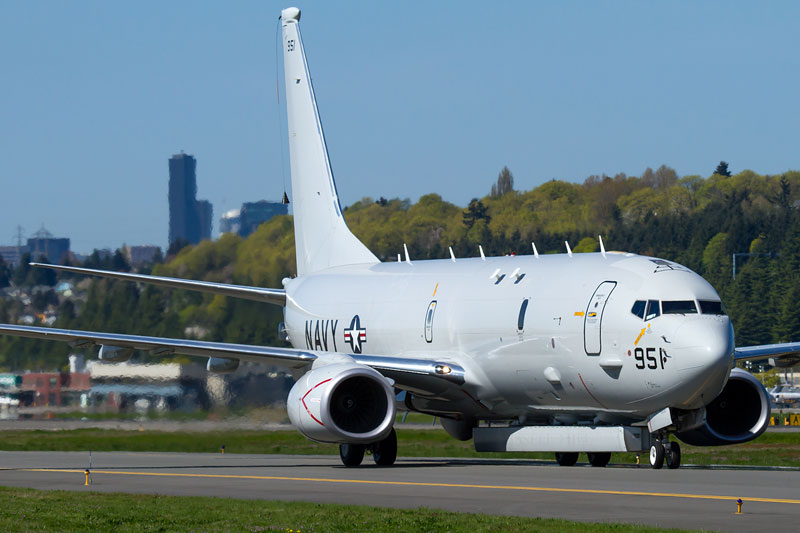
    Boeing and Raytheon companies are testing the Littoral Surveillance Radar System (APS-149 LSRS) on the Boeing P-8A. The Poseidon will carry the Advanced Airborne Sensor, an enhanced version of the APS-149. Photo: Russell Hill
    Boeing and Raytheon companies are testing the Littoral Surveillance Radar System (APS-149 LSRS) on the Boeing P-8A. The Poseidon will carry the Advanced Airborne Sensor, an enhanced version of the APS-149. Photo: Russell Hill

    Boeing and the US Navy began testing an Advanced Airborne Sensor (AAS) radar system for the P-8A Poseidon maritime surveillance and anti-submarine warfare (ASW) aircraft. A series of photos, taken by Russell Hill revealed earlier this week.

    The radar, developed by the Raytheon company, is a follow-on to the Littoral Surveillance Radar System (LRRS, APS-149 also built by Raytheon) currently operated with the P-3C Orion. The new radar is expected to be ready for deployment in 2016, as part of the P-8A Increment 2 upgrade. The P-3Cs currently flying the LRSR are operated by VP-46 out of NAS Whidbey Island in the Washington state. “We will be ready with intelligent technology when the Poseidon takes its place as the Navy’s ISR capability in the fleet,” Capt. Scott Anderson, LSRS and AAS program manager said in 2009.

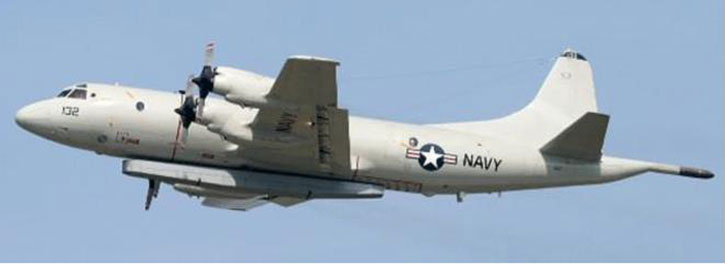
    Part of the P-3C operating with VP-46 out of NAS Whidbey Island, are configured to carry the APS-149 LSRS.
    Part of the P-3C operating with VP-46 out of NAS Whidbey Island, are configured to carry the APS-149 LSRS.

    The new radar fulfils several key missions for the maritime and littoral battlespace, providing wide area surveillance of land and sea areas, automatically detecting moving targets, spotting and alerting about human activities in designated areas. It can also deliver high resolution imagery of surface areas from long range, in day, night and under adverse weather conditions that would often prohibit the use of electro-optical imaging assets. The new radar can also provide high resolution “weapon grade” target location, enabling the rapid sensor-to-shooter engagement loops supporting guided, ‘networked’ weapons such as the Tomahawk, SLAM-ER, JASSM, SDB-2 and the future LRASM.

    The AAS uses a double-sided Active, Electronically Scanned Array (AESA) technology to deliver both Synthetic Aperture Radar (SAR), an Inverse SAR mode, capable of automatically ‘profiling’ vessels from long distance. It also provides Moving Target Indication (MTI) functions, automatically detecting, classifying and tracking moving objects over a wide area. Unlike the APY-7 side-looking radar carried by the Air Forces’ E-8 Joint Surveillance Target Attack Radar System (Joint STARS), the LRSR and AAS are looking to port and starboard, covering almost a full hemisphere. Furthermore, SAR and GMTI modes are interleaved, offering better flexibility and utilisation of airborne sensors. In 2010 the US Air Force assessed several alternatives for the E-8 but determined it cannot afford fielding a new ISR platform under the current fiscal constraints. Considering the obsolete platform carrying the E-8 and given the superior capabilities demonstrated by LRSR and even betted features expected form the AAS, the Navy could fulfil part of the ISR missions currently reserved for the Joint STARS.

    Boeing and the US Navy began testing an Advanced Airborne Sensor (AAS) radar system for the P-8A Poseidon maritime surveillance and anti-submarine warfare (ASW) aircraft. Photo: Russell Hill
    Boeing and the US Navy began testing an Advanced Airborne Sensor (AAS) radar system for the P-8A Poseidon maritime surveillance and anti-submarine warfare (ASW) aircraft. Photo: Russell Hill
    A U.S. Navy Lockheed P-3C Orion participating in the Valiant Shield 2010. The aircraft is equipped with a Raytheon AN/APS-149 Littoral Surveillance Radar System (LSRS). Note the difference between the longer, slanted box shaped LSRS and the box-shaped AAS carried under the Poseidon. US Navy Photo by Jeffrey Schultze.
    A U.S. Navy Lockheed P-3C Orion participating in the Valiant Shield 2010. The aircraft is equipped with a Raytheon AN/APS-149 Littoral Surveillance Radar System (LSRS). Note the difference between the longer, slanted box shaped LSRS and the box-shaped AAS carried under the Poseidon. US Navy Photo by Jeffrey Schultze.

    Russian Air Force to Receive More MiG-29SMT

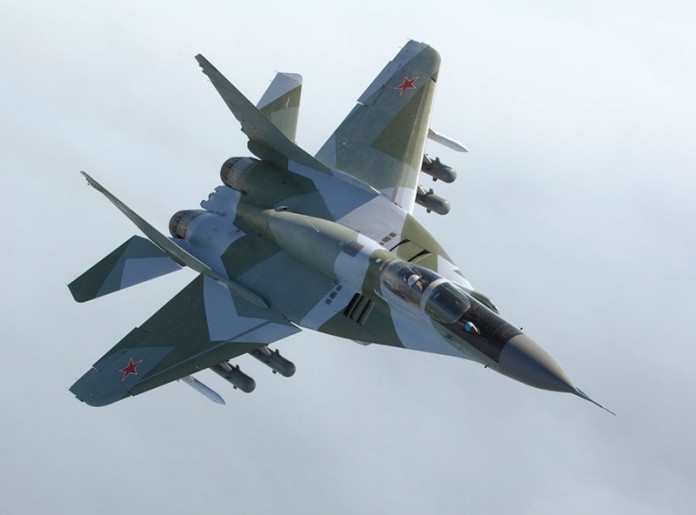
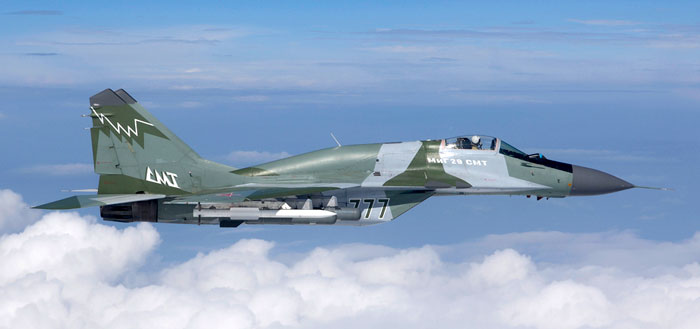
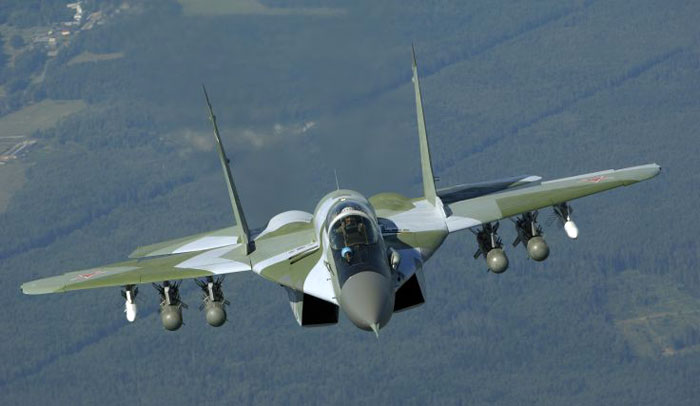
    MiG-29SMT is distinctive in its dorsal 'hump' containing an extra fuel tank, extending operational range to 1500 km.
    MiG-29SMT is distinctive in its dorsal ‘hump’ containing an extra fuel tank, extending operational range to 1500 km. Photo: RAC MiG

    The Russian Defense Ministry has signed a 17 Billion Rubbles ($473 million) contract with the United Aircraft Corp. (UAC) MiG corporation for the delivery of 16 MiG-29SMT fighters, the Novosti news agency reported. The MiG-29SMT is an upgraded variant of the MiG-29. It is operational with the Yemeni Air Force since the mid-2000s and with the Russian Air Force since 2008. In the past this model was also offered to India, Syria and Venezuela but failed to gain orders. More recently it was offered to Egypt.

    Under the new order the 16 aircraft will be delivered over the next 3 years; the current order will help maintain the MiG-29 production line, expected to shift to the manufacturing of the MiG-35S. By that time, UAC is expecting the initial order for 100 MiG-35Ss from the Russian Air Force to be signed, with initial deliveries commencing after 2016. The contract also includes ground support and test equipment. The MiG-29SMT is an upgrade package developed for the MiG-29, bringing the avionics and weapons delivery capabilities of existing MiG-29 fighters (9.12 to 9.13 Build) to those of the more advanced MiG-29M (9.15 Build). These aircraft will help rebalance the heavy/light fighter fleet within the Russian Air Force, currently tipping toward the modernised heavy fighters (Su-34, MiG-31, Su-30), while the light fighter fleet is comprised of much older MiG-29s (about 220).

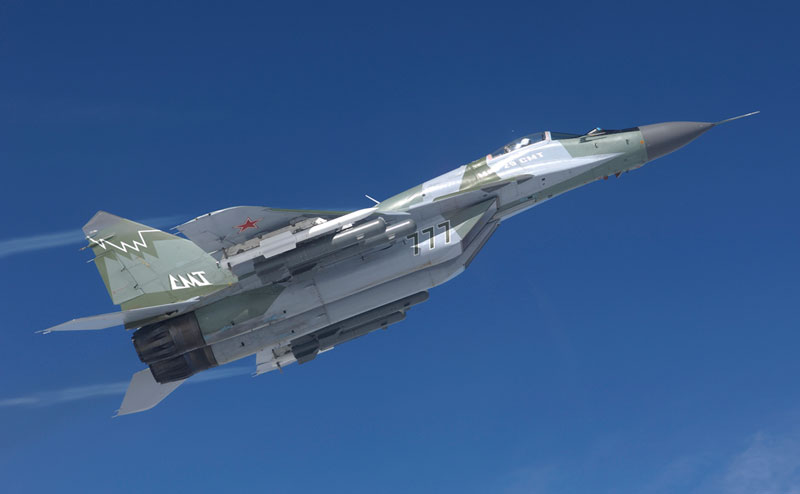
    MiG-29SMT8002
    MiG-29SMT carrying two RVV-AE air/air missiles and four KAB-500KR EO guided weapons underwing. Photo: RAC MiG

    The Russian Air Force already operates 28 such aircraft, primarily on air superiority missions. Introduced in 2004 and built in 2006-2007, these aircraft were originally destined for Algeria but were refused by the customer claiming they didn’t meet the agreed quality standard. Eventually the aircraft were handed over to the Russian Air Force. The 16 currently on order will be new build, receiving the SMT upgrade during assembly.

    As such, the new MiG-29SMT will be fitted with a multifunction, multimode Zhuk-ME radar with air/air and air/ground operating modes, uprated RD-33 ser.3 engines with afterburning thrust rated 8,300 kgf (81.4 kN) each. It will also get new avionics, a digital cockpit and improved navigation system. The cockpit of the MiG-29 SMT includes two new large-format multi-function display MFD-10-6 and implements the concept HOTAS. The aircraft is equipped for improved night attack capability, and secondary reconnaissance missions.

    The aircraft has six underwing hardpoints and a ventral hardpoint carrying centreline pylon carrying up to five tons of payload. Its basic air/air load is comprised of R-73E, RVV-AE or R-27R1/R2 air/air missiles and expanded weapons fit that includes guided weapons such as the Kh-29T(TE) air-to-surface missiles (TV guided), Kh-31P anti-radiation missiles or KAB-500KR/L EO/Laser guided bombs. For maritime strike missions the aircraft can carry Kh-31A supersonic antiship missiles.

    The MiG-29SMT carries an enlarged dorsal fuel tanks doubling the operational range of the ‘Fulcrum’ (to 836 nm / 1550 km). Having more fuel in the internal tanks would also clear more underwing hard points for weapon carrying. This modern is also fitted with aerial refuelling probe. To reduce radar reflection and improve survivability the MiG-29SMT is painted in special radar-absorbing paint.

    According to the manufacturer, the modernisation introduced in the MiG-29SMT has ‘tripled’ its combat effectiveness and reduced operating costs by 40 percent.

    mig29smt_front700
    MiG-29SMT carrying two RVV-AE air/air missiles and four KAB-500KR EO guided weapons underwing. Photo: RAC MiG

    International Debut for F-35 at Farnborough, Air Tattoo in July

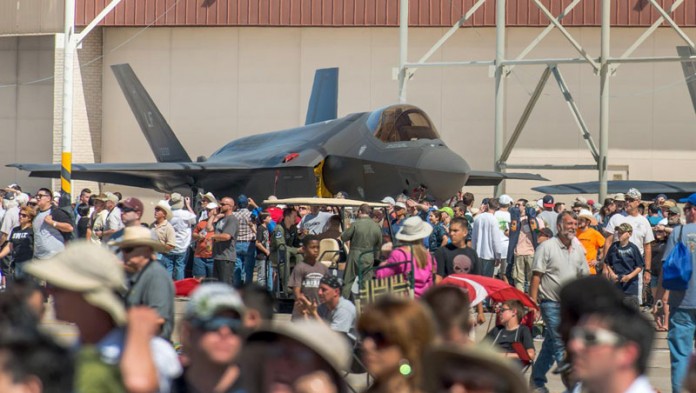
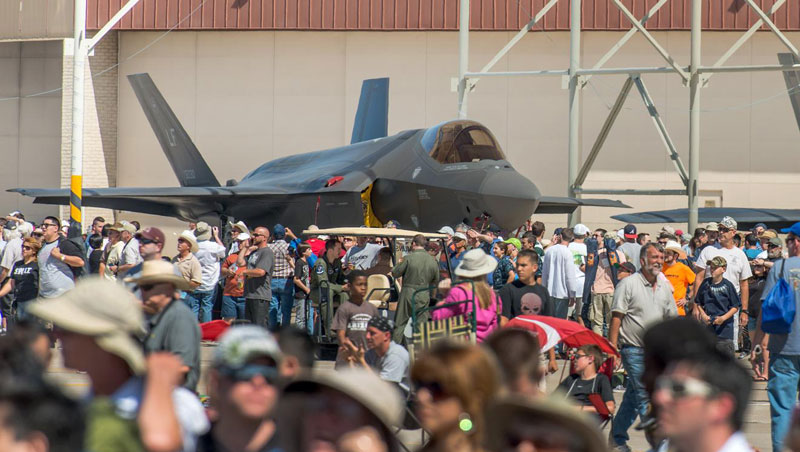
    SOfar the F-35 was displayed only in the USA. One of the recent were the F-35 participated was the the annual Luke airshow on March 15-16, 2014, hosting the first of 144 F-35s to be based here. The aircraft is assigned to the 56th Tactical Fighting Wing, scheduled to begin pilot training here at Luke, beginning in 2015. Photo: Lockheed martin
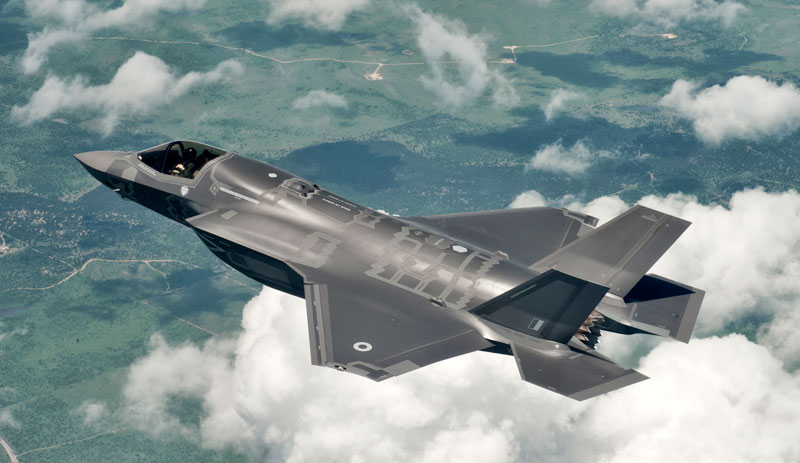
    The MoD has three aircraft which are all currently based in the US undertaking training  with Royal Navy and Royal Air Force pilots. Orders for further aircraft will be placed over the next few years.. Photo: Lockheed Martin
    The MoD has three aircraft which are all currently based in the US undertaking training with Royal Navy and Royal Air Force pilots. Orders for further aircraft will be placed over the next few years. Photo: Lockheed Martin

    The F-35 Lightning II aircraft will make its international debut in July this summer, the British Defence Secretary has announced.
    The F-35 Lightning II will participate in the flight demonstration at the Royal International Air Tattoo in Fairford (11-13 July, 2014). It will continue to the Farnborough International Air Show (14-20 July) where it will also participate in the aerial flight display. Current plans call for several F-35s to participate in these air shows, at least one will be the Short Take-Off and Landing (STOVL) variant F-35B ordered for the Royal Air Force and Naval Air Arm.

    The participation of the Joint Strike Fighter at an international airshow will undoubtedly support the positioning of the F-35 in several international fighter procurement programs currently underway in Denmark, Canada. It will further improve the exposure of the aircraft in countries that have already confirmed procurement but are still undecided about the quantities they will buy – Italy, Norway, Turkey, Israel and Japan.

    “The appearance of F-35 aircraft at Farnborough International Air Show and the Royal International Air Tattoo demonstrates the good progress being made on the Joint Strike Fighter Programme.” Chief of the Air Staff, Air Chief Marshal Sir Andrew Pulford, said. The decision to fly the combat aircraft outside of the United States for the first time followed discussions between British defense minister Philip Hammond and his US counterpart, Secretary Chuck Hagel. The selection of two UK airshows also demonstrates the significant role that Britain has in the programme. Approximately 15 per cent of every aircraft is built in the UK. “The US and the UK have worked closely together on the F-35 project from the beginning. We are the only country that is a Level 1 partner in the project, which is sustaining tens of thousands of jobs in the UK.” Hammond said, “This fifth generation stealth combat aircraft will be a major boost to British combat air power and it is entirely fitting that the F-35’s first stop outside the United States will be in the UK – its second home.”

    “The appearance of F-35 aircraft at Farnborough International Air Show and the Royal International Air Tattoo demonstrates the good progress being made on the Joint Strike Fighter Programme.”

    The MoD has three aircraft which are all currently based in the US undertaking training with Royal Navy and Royal Air Force pilots. Orders for further aircraft will be placed over the next few years. The UK’s first operational Lightning II squadron, 617 Squadron, is scheduled to transition to RAF Marham in Norfolk from the US in 2018 ahead of flight trials of the Queen Elizabeth Class Carrier later that year. The F-35 Lightning II will be capable of undertaking a wide range of operations from intelligence, surveillance and reconnaissance missions to high intensity combat, including air defence for a Carrier Task Group and offensive support for ground forces.

    “July will be a real milestone in the rebirth of the UK’s carrier strike capability.” First Sea Lord, Admiral Sir George Zambellas added, “Alongside the naming of HMS Queen Elizabeth by Her Majesty the Queen on 4 July, we can now also look forward to seeing the F35B – the Lightning 2 – flying on the international stage for the first time.”

    SOfar the F-35 was displayed only in the USA. One of the recent were the F-35 participated was the the annual Luke airshow on March 15-16, 2014, hosting the first of 144 F-35s to be based here. The aircraft is assigned to the 56th Tactical Fighting Wing, scheduled to begin pilot training here at Luke, beginning in 2015. Photo: Lockheed martin
    SOfar the F-35 was displayed only in the USA. One of the recent were the F-35 participated was the the annual Luke airshow on March 15-16, 2014, hosting the first of 144 F-35s to be based here. The aircraft is assigned to the 56th Tactical Fighting Wing, scheduled to begin pilot training here at Luke, beginning in 2015. Photo: Lockheed martin

    Cyber Intelligence Report – April 15, 2014

    cyber_report

    Israel

    Israel well prepared against cyber-attacks

    #OpIsraelBirthday occurred with no real damage, save for a few minor sites whose webpages were defaced, old credit cards number no longer available, and email accounts containing old passwords from last year. At the annual INSS cyber conference, held a day after the Anonymous operation, Maj. Gen. Uzi Moshkovitz addressed the attack: “We were prepared for this attack. We had known of the preparation, and we knew that nothing will come out of it. We don’t need to fear from these kinds of attacks. The problem is the enemy that we don’t know anything about.” While the Anti-Israeli hackers failed, a new Israeli hacker team referred to as the Israel Elite Force managed to pin-point members from the AnonGhost team and the Syrian Electronic Army (SEA) by revealing their identities, photos, I.P. addresses, and cyber actions. As expected, most of the hackers are from Arabic origins, with some of them residing in Portugal, Germany, Finland, and other countries. The few websites #OpIsraelBirthday managed to attack included low profile government sites such as the Israeli Education Ministry, the Postal Service, and the Central Bureau of Statistics. Anonymous issued a warning on YouTube prior to the attack and called their “brothers and sisters to hack, deface, hijack, database leak, admin takeover, and DNS terminate the Israeli cyberspace by any means necessary.” The attack was launched in retaliation for “crimes against humanity” that Israel committed against the Palestinians.

    New cyber centers being developed in Israeli universities

    While the attack revealed the strength of Israel’s cyber capabilities, it appears Israeli cyber faculty will expand as new academic cyber research projects are being prepped in Tel Aviv University (TAU) and Ben Gurion University (BGU). The TAU cyber initiative will be headed by Professor Yitzhak Ben Yisrael and will focus on cyber defence by combining exact sciences research, such as computer science and computer engineering, with research in the cyber field through social studies, with a budget of 10 million shekel. BGU will develop the national center for defending cyber space with the cooperation of the National Cyber Bureau. The center will advance a long term theoretical research in the cyber domain with the investment of 30 million shekels, which will be run by Professor Yuval Elovich.

    USA

    U.S. government suggest private companies share cyber-threat information

    President Barak Obama recently announced a lack of shared information between private companies, which is a deficiency needing to be addressed promptly. Obama’s administration suggested that through U.S. federal agencies, “companies should share cybersecurity information to protect consumers from hackers without violating antitrust rules.”  Moreover, a statement was made by U.S. General James Cole who declared: “We must encourage companies to rely on each other… to secure the nation’s networks of information and resources, members of the private sector must share information.” According to the U.S. government, resources for sharing information have already been available for around 15 years. However, U.S. lawmakers were unable to clearly agree on the legal limit for the sort of information companies can share in order to protect themselves from hackers and express additional concerns over the privacy rights of customers. It seems there is a divide between the U.S. government and the private sector regarding sharing information because companies could face antitrust exposure by collaborating on cyber threat issues. The difficulty remains how to establish working guidelines accepted by both the public and private sector.

    Russia

    Foreign social networks banned in Russia

    A decree banning the activities of foreign social networks in Russia has been proposed in Kremlin. According to Russian officials, the measure will protect Russians from U.S. intelligence agencies that are claimed to steal sensitive information. Referring to the revelations through U.S. whistle-blower Edward Snowden, Russia believes the National Security Agency monitors accounts of Russians citizens stationed in Western social networks.

    Middle East

    Iranian and Syrian cyber-attack activity on the rise

    According to the cyber company Mandiant, 2013 had an unprecedented number of cyber-attacks due to a political conflict spurred by hackers acting against websites not in support of their beliefs. Many of the attacks are linked and identified with Iran and Syria. The energy sector is one of the principal targets of cyber-attacks suspected to be linked to Iranian based hackers. The report did not identify if attacks are limited to DNS or bigger, more damaging attacks. In the case of SEA, there was a clear goal – to gain public awareness, as SEA has mainly focused on wide-reaching, popular websites.

    China and APAC

    Japan and U.S. hold second cyber security cooperation meeting

    Japan and U.S held their second cooperation meeting on cyber security issues in April. This second meeting focused on the issues surrounding bilateral cooperation, including critical infrastructure protection, cybercrime, cyber terrorism, and national security. The U.S. security and technology departments were present at the meeting, led by the U.S. Coordinator for Cyber Issues from the Department of State. From the Japanese side, the delegation was conducted by Japan’s Ambassador in charge of Cyber Policy and the Deputy Director General of the Foreign Policy Bureau. This cooperation is supposed to be beneficial for both countries even though Japan requires a greater extent of assistance in the issue from the U.S. In fact, Japan suffered multiple cyber-attacks, resulting in their networks being hit approximately 3,000 times per year. Japan is one of the most advanced countries in cyber security in the Eastern Asian region alongside China, Singapore, and South Korea.

    Europe

    The British GCHQ to approve U.K. postgraduate degrees in cyber security

    The British intelligence agency, GCHQ, which is responsible for national cyber security and communications surveillance, is about to approve U.K. postgraduate degrees in cyber security offered by different U.K. universities. The report is claiming that, due to the large number of cyber security degrees offered by U.K. universities, it is difficult to assess the quality of the degrees on offer.” Moreover the document is claiming in order to become certified with a Master’s degree in cyber security, a candidate must offer a “general, broad foundation in cyber security” and include a detailed knowledge of threats to online activity including “common attacks,” “malicious code,” and “adversarial thinking.” This new certification will be valid for a period of five years and will be renewed. This certification system has existed in the States for a number of years. In fact the NSA/CSS has certified American universities offering these cyber security programs as a pledge of good quality. Cyber security is a fast growing field, and it is difficult for students who are interested in the field to evaluate the level of quality of a university’s curriculum. It is for this reason governments decided to create a certification system to indicate the  quality of education.

    inss150About the Cyber Intelligence Report:

    This document was prepared by The Institute for National Security Studies (INSS) – Israel and The Cyber Security Forum Initiative (CSFI) – USA to create better cyber situational awareness (Cyber SA) of the nature and scope of threats and hazards to national security worldwide in the domains of cyberspace and open source intelligence. It is provided to Federal, State, Local, Tribal, Territorial and private sector officials to aid in the identification and development of appropriate actions, priorities, and follow-on measures. This product may contain U.S. person information that has been deemed necessary for the intended recipient to understand, assess, or act on the information provided. It should be handled in accordance with the recipient’s intelligence oversight and/or information handling procedures. Some content may be copyrighted. These materials, including copyrighted materials, are intended for “fair use” as permitted under Title 17, Section 107 of the United States Code (“The Copyright Law”). Use of copyrighted material for unauthorized purposes requires permission from the copyright owner. Any feedback regarding this report or requests for changes to the distribution list should be directed to the Open Source Enterprise via unclassified e-mail at: [email protected]. CSFI and the INSS would like to thank the Cyber Intelligence Analysts who worked on collecting and summarizing this report.

    World First: Neuron UCAV flying in formation with Rafale, Falcon 7X

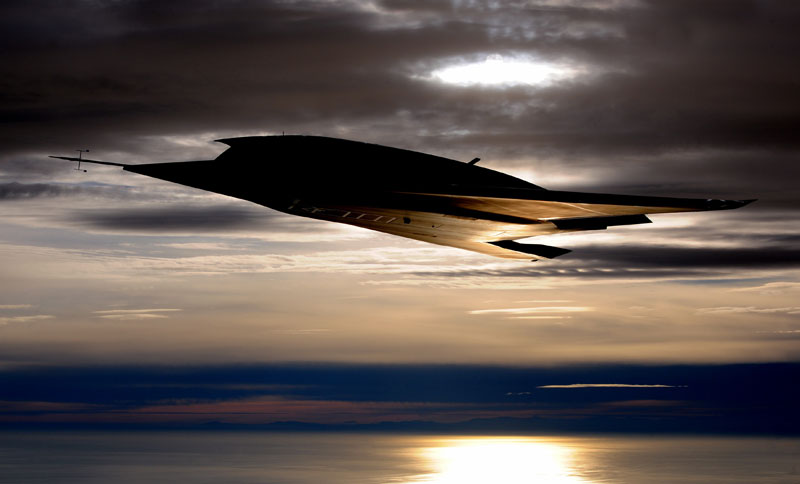
    nEUROn, the European Unmanned Combat Aerial Vehicle (UCAV) in flight at dusk over the Mediterranean. Photo: Dassault Aviation by Anthony Pecchi.
    nEUROn, the European Unmanned Combat Aerial Vehicle (UCAV) in flight at dusk over the Mediterranean. Photo: Dassault Aviation by Anthony Pecchi.

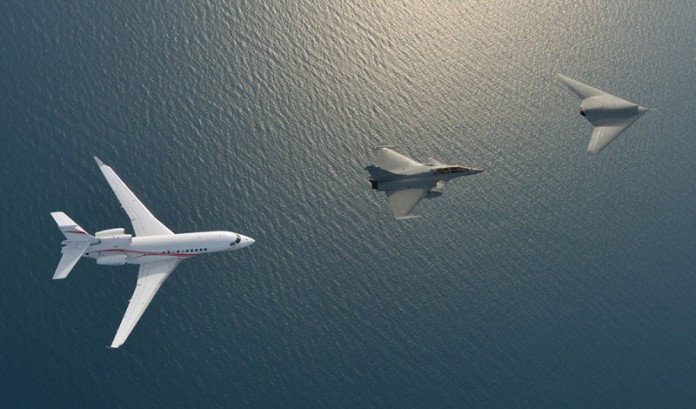
    On March 20, 2014 Dassault Aviation has performed a unique formation flight in which the nEUROn unmanned combat air vehicle (UCAV) was flown in formation with a Rafale fighter and a Falcon 7X business jet, both produced by the company. Organizing a formation flight like this was a daunting challenge, company spokesperson explained, for each maneuver in the planned sequence, aircraft from different holding points and with very different characteristics had to fly alongside each other in a confined space.

    On March 20, 2014, Dassault Aviation organized a formation flight of the nEUROn unmanned combat air vehicle (UCAV) with a Rafale fighter and a Falcon 7X business jet. This was the first time in the world that a combat drone flew in formation with other aircraft. The entire operation lasted 1 hour and 50 minutes and took the patrol out over the Mediterranean to a range of several hundred kilometers. Photo: Dassault Aviation by Katsuhiko Tokunaga
    On March 20, 2014, Dassault Aviation organized a formation flight of the nEUROn unmanned combat air vehicle (UCAV) with a Rafale fighter and a Falcon 7X business jet. This was the first time in the world that a combat drone flew in formation with other aircraft. The entire operation lasted 1 hour and 50 minutes and took the patrol out over the Mediterranean to a range of several hundred kilometers. Photo: Dassault Aviation by Katsuhiko Tokunaga

    An additional challenge was being able to control the pilotless aircraft flying near four other aircraft – all manned (Rafale, Falcon 7X and two chase aircraft for photography). Engineers had to plan ahead to take into account the risk of interference, including aerodynamic turbulence between the aircraft. Preventing unexpected electromagnetic interference (EMI) with communications between the nEUROn drone and its ground control station was also a concern that had to be dealt with.

    “This achievement clearly reflects our expertise in state-of-the-art technologies. Our skills in both military and civil aviation mutually enrich each other, enabling us to design exceptional airplanes suited for both the armed forces and Falcon business jet operators.” Eric Trappier, Chairman and CEO of Dassault Aviation commented.

    This was the first time in the world that a combat drone flew in formation with other aircraft. Drones are often escorted by chase airplanes, as part of flight testing, but these are not performed as part of a formation flying, in which the drone’s handling is coordinated with the other aircraft in the formation. The entire operation lasted 110 minutes and took the patrol out over the Mediterranean to a range of several hundred kilometers.

    USAF to complete upgrading the F-22 oxygen system in 12 months

    A U.S. Air Force F-22 Raptor aircraft with the 1st Fighter Wing in flight. July 10, 2012. (DoD photo by Master Sgt. Jeremy Lock, U.S. Air Force)
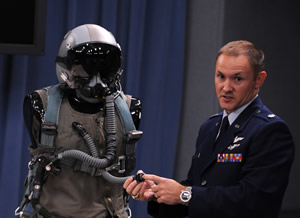
    The current backup oxygen system requires manual activation. ABOS will enable automatic activation, ensuring additional oxygen flow to the pilot in case the main supply is insufficient. Photo: US Air Force
    The current backup oxygen system requires manual activation. ABOS will enable automatic activation, ensuring additional oxygen flow to the pilot in case the main supply is insufficient. Photo: US Air Force

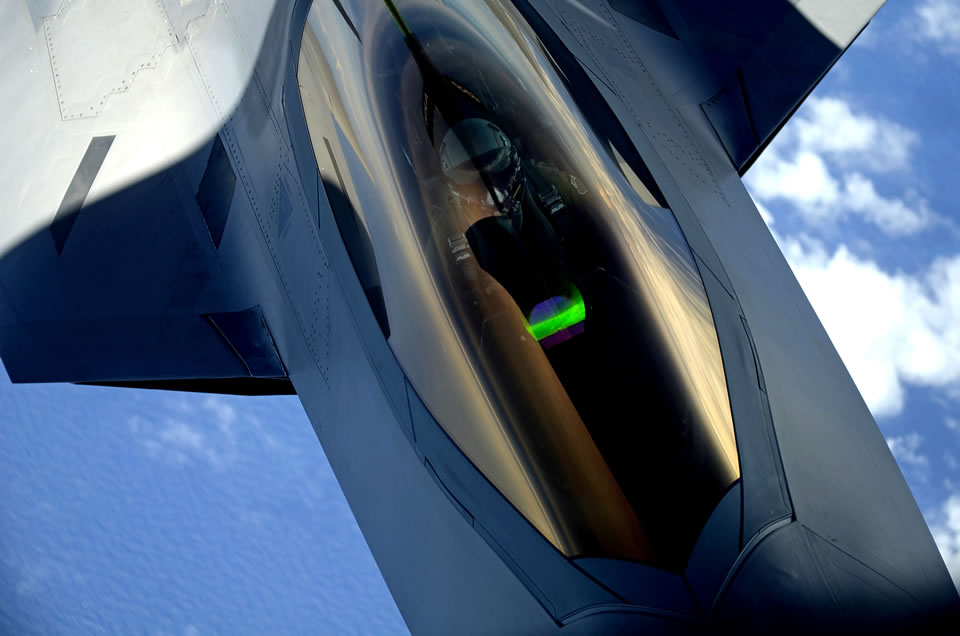
    Following a lengthy investigation into the cause of numerous incidents causing F-22 Raptor pilots to suffer from hypoxia-like symptoms, the U.S. Air Force is upgrading the Raptor’s life support system, installing an Automatic Back-up Oxygen System (ABOS). Existing back-up oxygen systems were manually activating. The upgrade will be completed within a year. Raptors in Alaska have already begun using the system. The Air Force denied that the cause of a fatal accident in November 2010, killing Alaskan-based F-22 pilot Captain Jeff Haney was caused by Hypoxia.

    “ABOS is automatically activated to supply the pilot 100% oxygen in the event of a rapid decompression or low primary breathing air pressure supply”

    The upgrade followed the recommendation of the Air Force Scientific Advisory Board to improve the Raptor’s aircrew life support system, including the installation of an automatically-activated backup oxygen system. The Air Force awarded more than $30 million in multiple contracts to Lockheed Martin to install the systems. According to Mike Connolly, ABOS Program Manager at the F-22 Life Cycle Management Center at Wright patterson, the ABOS is a simply designed system that is integrated into the breathing regulator. It has a control panel in the cockpit within the pilot’s reach so that he or she can manually turn it on if backup oxygen is needed. Unlike the current system that requires manual activation by the pilot, the ABOS is typically left in the auto position, which will automatically provide the pilot 100% oxygen in the event of a rapid decompression or low primary breathing air pressure. Automatic activation prevents the risk of oxygen cutoff when the pilot may be unconscious or blurred, as some of the pilots suffering from hypoxia reported.

    Royal Air Force’s II(AC) Squadron foils insurgent bombers in Afghanistan

    AUAB_UNC_20140224_012_248
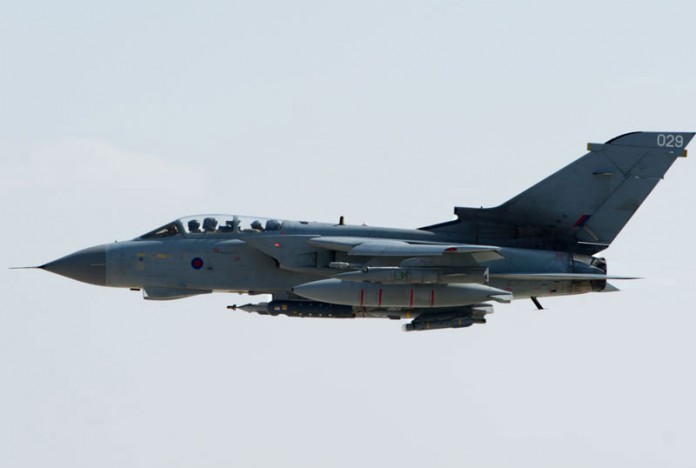
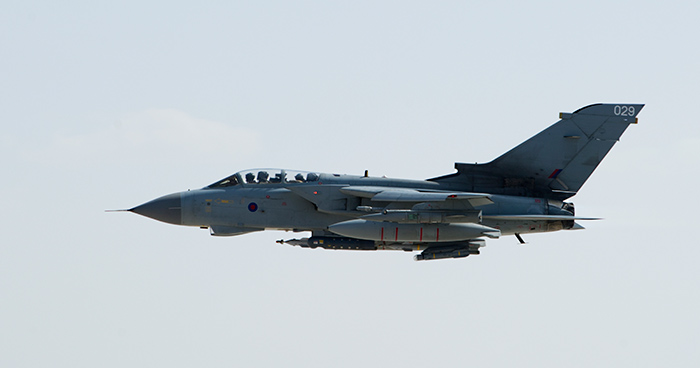
    Royal Air Force Tornado GR4. Photo: UK MOD, Crown Copyright
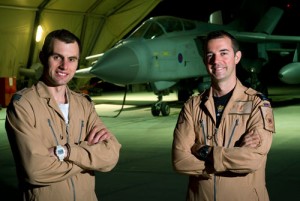
    2(AC) Sqn Tornado GR4 crew, L-R:Pilot Flight Lieutenant Geoff Williams and Navigator, Flight Lieutenant Mark Hodgkiss, at Kandahar Airfield, Afghanistan. Photo: Crown Copyright
    2(AC) Sqn Tornado GR4 crew, L-R:Pilot Flight Lieutenant Geoff Williams and Navigator, Flight Lieutenant Mark Hodgkiss, at Kandahar Airfield, Afghanistan. Photo: Crown Copyright

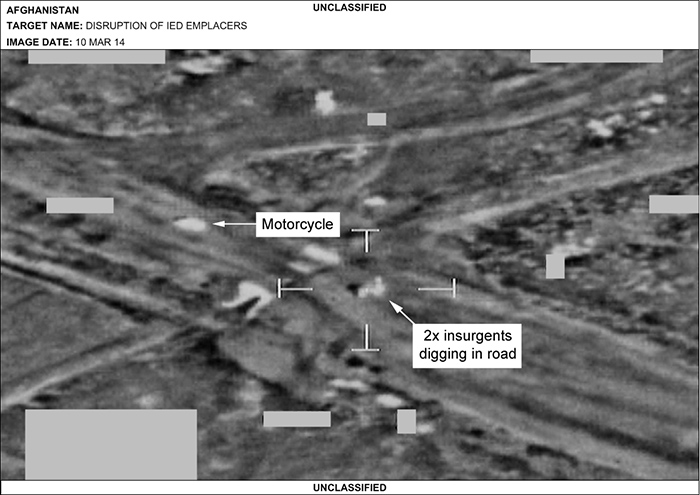
    The following event demonstrates the force protection role of Royal Air Force Tornado GR4 strike fighters supporting ground forces in Afghanistan. On a recent mission in Afghanistan, two Tornado GR4s from II(AC) Squadron have yet again protected civilians and Afghan-led international forces on the ground by scattering insurgents who were attempting to plant a roadside bomb ahead of an ISAF convoy. Using the advanced Litening III surveillance pod, on 10 March the aircraft helped ISAF troops capture and destroy a lethal quantity of explosives that could have taken the lives of civilians or security forces.

    The jets’ aircrew spotted insurgents placing the deadly improvised explosive device (IED) just hundreds of metres ahead of the convoy of US and Afghan troops, which II(AC) Squadron had been called to support following an earlier IED blast. II(AC) Squadron pilot Flight Lieutenant Geoff Williams flew one of the aircraft above the convoy. He said: “Identifying insurgent activity from 10,000 feet can be challenging but in this case it was clearly suspicious. Two people on a motorbike rendezvoused with two others waiting by a small bridge. They collected items stored under the bridge and began digging in the road.”

    Alert to the risk that the insurgents were planting a roadside bomb, Flight Lieutenant Williams flew an intimidating ‘show of presence’ over them – flying low and fast and firing flares to startle and deter them and reassure the friendly convoy. He said: “Having been startled by our jet noise the insurgents fled by motorbike. The whole event was over in a minute. The presence of a Tornado provides a huge psychological impact, reassuring ISAF troops and the civilian population, and sparking fear in the insurgents.”

    20140323-DISRUPTION_OF_IED_EMPLACERS_01-ANNOTA
    A video grab from the Litening III FLIR showing two insurgents digging an IED placement in the road, and the motorcycle they will soon use to egress the site (see video for details). Photo: MOD, Crown Copyright.

    The RAF is considering upgrading their targeting pods to the Litening 4 standard. These pods will be carried by the Eurofighter Typhoon as well. The latest variant of the pod has gone through major enhancements in sensors, resolution, image processing and algorithmic processing capabilities. “Litening has transformed from a targeting pod into a much broader sensor pack that extends the aircraft and pilot’s capabilities, far beyond target acquisition.” Yuval Miller, manager of RAFAEL’s Air and C4ISR Division told Aviation Week. The new version extends the effective observation range, enabling detection and recognition of targets from tens of kilometers away.“

    The sensor‘s high resolution enables pilots to reliably identify the combat objects and consequently to avoid collateral damage” Miller added, noting the pod has proven operational combat record in day, night and adverse weather conditions.

    Many automated processes previously employed only in ultra-sophisticated reconnaissance systems are now implemented in the Litening, enabling fighter pilots to assume missions and
    capabilities far beyond lasing a target for smart weapons.

    In addition to ground attack the pod also assists pilots in identification of aerial targets from Beyond Visual (BV) ranges.

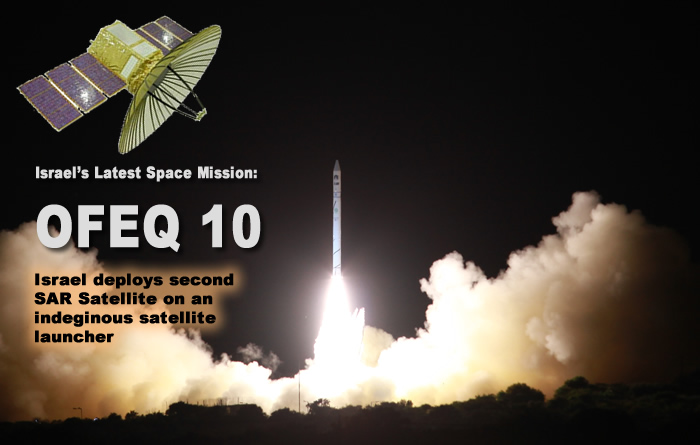
    Israel Launches OFEQ 10 Spy Satellite

    A Shavit satellite launcher lifts off from the Palmachim test range south of Tel Aviv April 9, 2014, carrying the OFEK 10 satellite, the eights satellite in the OFEK family, built by IAI MBT Space division. Photo: IMOD
    A Shavit satellite launcher lifts off from the Palmachim test range south of Tel Aviv April 9, 2014, carrying the OFEK 10 satellite, the eights satellite in the OFEK family, built by IAI MBT Space division. Photo: IMOD
    A Shavit satellite launcher lifts off from the Palmachim test range south of Tel Aviv April 9, 2014, carrying the OFEQ 10 satellite, the eights satellite in the OFEQ family, built by IAI MBT Space division. Photo: IMOD

    The Israeli spy satellite Ofeq 10 was launched this evening, (April 9th 2014, 20:15 GMT) from the Palmachim Air Force Base on Israel’s Mediterranean coast. Once the satellite enters orbit around the Earth, it will undergo several tests to confirm its serviceability and accurate performance. Few hours later the satellite reached its intended orbit and communicated with IAI’s ground control sending telemetry and images. Further tests are underway before the satellite begins its operationalservice. The deployment was completed with minimal manoeuvring, leaving more fuel for extended life cycle, IAI sources told Defense-Update.

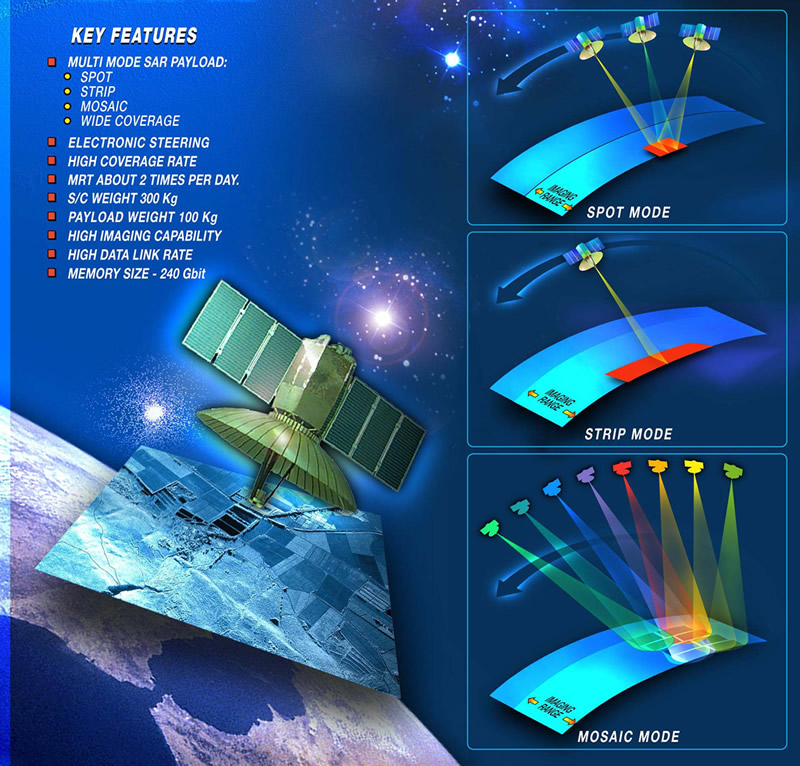
    The new satellite is the third Synthetic Aperture Radar (SAR) satellite built by IAI MBT Space Division and Elta Systems. The first two examples of this satellite were launched on the Indian PSLV rockets. OFEQ 10 carries a more advanced version of the EL/M-2070 SAR payload, introducing evolutionary enhancements over the first two models.

    For the OFEQ satellites Israel have utilized an indigenously developed three stages launcher called ‘Shavit’ which, according to foreign sources, is based on a ballistic missile system developed in Israel since the late 1960s, the missile itself was based on a French missile design. The current configuration of Shavit is sufficient to lift the weight of the TECSAR’s 295 kg, using the three solid fuel rocket stages and a liquid-propelled upper stage motor. According to IAI, since 1988 Shavit successfully launched several satellites, with maximum Weight of 290 kg (Westward). The advanced variant of the SHAVIT Launcher is configured to increase lift capability to 350 kg (Westward) which will be required to lift the OPSAT 3000, expected to weigh about 400 kg. Israel is determined

    “Ofek 10” is an earth-observing remote-sensing satellite that employs SAR technology to deliver advanced, high-resolution imagery, capable of operating day or night and in all weather conditions.

    As its predecessor OFEQ 8, the Ofeq 10 uses the new bus system developed by IAI MBT Space division for mini-satellites. The same platform is also being used for the new OPSAT 3000 imaging satellite being built for the Italian government. It is also likely that the forthcoming OFEQ 11 will also follow this configuration, as well as the future EROS-C (yet to be ordered).

    Israel currently has three operational remote sensing satellites in heliosynchronous low-earth orbit (LEO) – OFEQ 7, OFEQ 9 and TECSAR I radar imaging satellite. In addition, two additional commercial satellites are deployed in polar orbits – EROS A and EROS B. These two satellites are believed to be similar to the OFEQ 7 class.

    The OFEQ program is managed by the Defense Research and Development Directorate (DR&DD) a the Israel’s Ministry of Defense. IAI is the satellite developer and system integrator. The main payload SAR is developed by IAI’s Elta Systems division and launch vehicle is provided by IAI’s MLM, part of IAI’s Space division. Other companies taking part in the development and production of the launcher and satellite include Rafael, Spectralink from Elbit Systems, Rokar, and Israel Military Industries. Several branches of the Israel Defense Forces were also involved including the Intelligence Branch and the Air Force.

    The TECSAR SAR satellite and its modes of operations.
    The TECSAR SAR satellite and its modes of operations.

    New ‘Samson’ C-130J Super Hercules Aircraft Lands in Israel

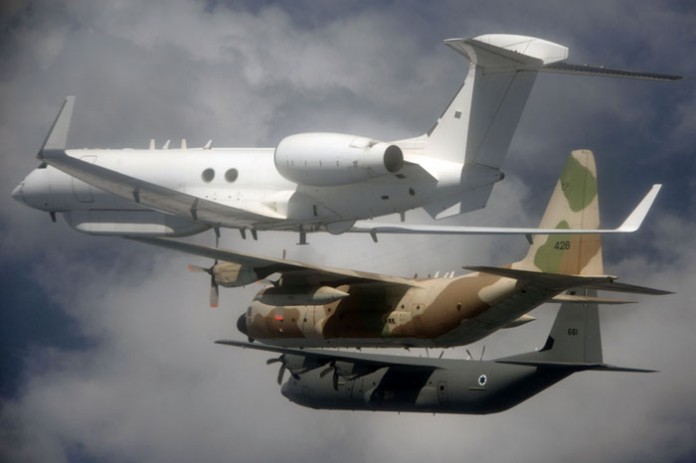
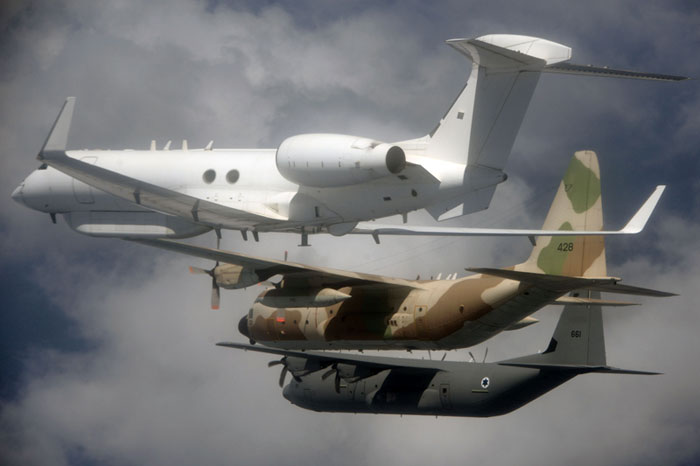
    The Israel Air Force received today the first of three new C-130J delivered to Israel by the US Government. Built by Lockheed Martin, the new aircraft is joining the two existing C-130 squadrons operating from Nevatim. On its arrival to its new home the aircraft dubbed 'Samson' in Hebrew, was escorted by other squadron members, C-130H 'Karnaf', SIGINT Gulfstream G550 'Shavit' and Boeing 720 aerail refuelling aircraft 'Reem'.
    The Israel Air Force received today the first of three new C-130J delivered to Israel by the US Government. Built by Lockheed Martin, the new aircraft is joining the 103 squadron (Elephants) operating C-130s from Nevatim IAFB. On its arrival to its new home the aircraft dubbed 'Samson' in Hebrew, was escorted by other squadron members, C-130H 'Karnaf', SIGINT Gulfstream G550 'Shavit' and Boeing 720 aerail refuelling aircraft 'Reem'.
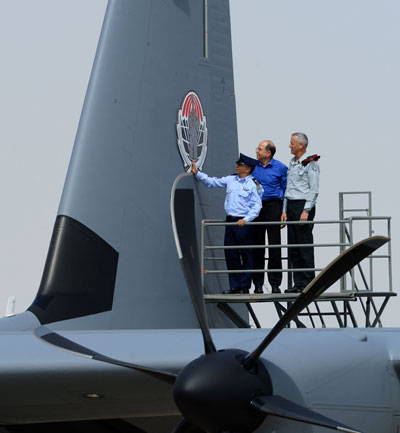
    The Israel Air Force received today the first of six new C-130J delivered to Israel by the US Government. Built by Lockheed Martin, the new aircraft tail-marked 661 is joining the 103 squadron, one of two units operating the C-130 from Nevatim. On its arrival to its new home the aircraft dubbed ‘Samson’ in Hebrew, was escorted by other members operating from the same base, the C-130H ‘Karnaf’, SIGINT Gulfstream G550 ‘Shavit’ and Boeing 720 aerial refuelling aircraft ‘Reem’. Photo: IDF

    In a ceremony held today at the Nevatim Israel Air Force base, the new C-130J Super Hercules military aircraft landed in Israel. The new type is designated ‘Samson’ by the Israel Air and Space Force (IASF). This is the first ‘Samson’ C-130J Super Hercules aircraft to join the newly established ‘Samson’ squadron. Five more are scheduled to arrive in the coming years. The three currently being completed or under production will be delivered in July 2014 and over the course of 2015 and 2016. The goal is to provide the IASF with nine such aircraft, augmenting and later replacing the fleet of C-130H currently in service.

    “we will be able to operate faster, in all weather conditions, in greater distance, in lower altitude and in maximum discretion”

    The new C-130J Super Hercules has joined the 103 Squadron (Elephants) at the IAF base of Nevatim.  The squadron is already operating C-130Hs, part of which will also be upgraded by local contractors, Israel Aerospace Industries (IAI) and Elbit Systems. In the photo IAF Commander in Chief Maj. General Amir Eshel, Chief of staff Lt. General Benni Gantz and defense minister Lt. General (ret) Moshe Yaalon  are inspecting the new emblem on the tail of the Samson. Photo: IDF
    The new C-130J Super Hercules has joined the 103 Squadron (Elephants) at the IAF base of Nevatim. The squadron is already operating C-130Hs, part of which will also be upgraded by local contractors, Israel Aerospace Industries (IAI) and Elbit Systems. In the photo IASF Commander in Chief Maj. General Amir Eshel, Chief of staff Lt. General Benni Gantz and defense minister Lt. General (ret) Moshe Yaalon are inspecting the new emblem on the tail of the Samson. Photo: IDF

    The new transport aircraft enhances the IASF’s long-range transport and assault capabilities, with missions including airborne cargo delivery, transportation of paratroops and commandos, aerial refueling for helicopters and planes, electronic warfare, maritime patrol and special operations.

    According to the Israel Defense Force (IDF) Chief of the General Staff, Lieutenant General Benjamin (Benny) Gantz, The new aircraft gives the IDF extended operational flexibility and strengthens our long range capabilities, making us more accurate and powerful than ever. The progressive systems the “Samson” aircraft is equipped with will allow us to execute more complex operations than in the past – “we will be able to operate faster, in all weather conditions, in greater distance, in lower altitude and in maximum discretion.” Gantz said.

    Over the past year, squadron members have trained in Italy and in the United States in order to thoroughly familiarize themselves with the aircraft and its capabilities. The new aircraft is joining the 103 Squadron already operating the C-130H from Nevatim.

    The delivery of the first C-130J is a first milestone in the modernization of the Israel Air Force, Under the current plan the IASF is expecting deliveries of 30 Alenia Aermacchi M346 advanced trainers from Italy over the next two years, six US built Bell-Boeing V-22 tilt-rotor aircraft will be supplied in 2016 and F-35 Lightning II stealth fighters built by Lockheed Martin. The first of the 19 aircraft ordered is expected to arrive in Israel in 2017.

    India test fires Brahmos supersonic cruise missile

    India carried out a successful test firing of the BrahMos supersonic cruise missile yesterday. The missile was launched from a land mobile launcher, at the Pokhran test range in Rajasthan in the northwest of India.

    The missile flew the maximum range of 290 kilometres on this test. The Brahmos is in service with the Indian military since 2007. Two variants of the missile are currently in service, the land mobile launchers deployed with two missile regiments of the Indian Army, and a naval surface-launched variant deployed on Indian Navy frigates.

    Some of the Indian Su-30MKI fighter jets will also be equipped with the missile, the first test flight of the airborne variant is expected to be held later in 2014. A submarine-launched variant is also in development. 

    The Ukrainian crisis – a cyber warfare battlefield

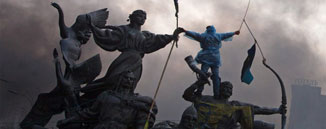
    statue300The crisis in Ukraine was the largest battlefield of cyber war since Russia’s cyber-attacks on Estonia in 2007 and Georgia in 2008. Simon Tsipis, cyber warfare researcher at the INSS think tank reports.


    Russia has managed to hit almost all Ukraine government websites and it was able to take control and to put on surveillance and monitoring all the Internet and telephone communications lines, before the invasion and occupation of Crimea by its military. Russian Special Forces managed to derail all important communications systems through direct physical impact on them by combined field and high-tech operation.

    Cyber espionage is an integral part of military strategy and foreign policy of Russia towards the countries of the former Soviet Union. Being able to access information systems of diplomatic, government and military organizations for many years, since the USSR collapse, giving Russia a huge advantage in predicting their tactics, actions and analyzing the thinking of their neighbours.

    The largest military cyber attack was the attack implemented by the Russian Military Intelligence (GRU) on the armed forces of Ukraine, as reported by BBC. According to the law enforcement agencies of Ukraine, Russian cyber attacks collapsed the communication systems of almost all Ukrainian forces that were based in Crimea that could pose danger to the invading Russian troops. Attacks of a lesser scale were directed at government websites, news and social networks. Similar handwriting and set of actions has been committed by the Russian military during the war against Georgia, a fact which suggests that the invasion operation in the Crimea has been carefully planned in advance. The Head of the Security Service of Ukraine, Valentin Nalevaychenko admitted, that mobile communication systems of members of the Ukrainian government were attacked in order to neutralize and disrupt communication between government agencies. As the Ukrainian company Ukrtelecom announced, unmarked gunmen penetrated into their infrastructure objects and the optical fiber and conductor units were knocked out, which in turn led to the collapse of all communication. Despite this, western experts say that Russian forces were relatively moderate in their actions and are able to engage much more global cyber-attacks.

    Being able to access information systems of diplomatic, government and military organizations for many years, since the USSR collapse, gave Russia a huge advantage in predicting their tactics, actions and analyzing the thinking of their neighbours

    According to a former senior officer of the CIA’s Special Operations department Marty Martin, the more extreme attacks will be held by the Russians in case of greater escalation of the conflict. “Sometimes it is useful to keep some lines of communication working, in order to be able to monitor and control, than completely derail them and deprive yourself from intelligence sources.” says Martin. In fact, experts say, no one in the world so far, including the CIA, is not able to assess the possibility of Russian cyber-capabilities as large-scale conflict with its participation yet haven’t been at place.

    Additional obstacle to Western intelligence agencies, in the definition of “friend or foe” and who on which side, was the fact that both sides are communicating virtually on the same language, writing scripts by the similar rules and often attack each other with similar IP addresses.

    A founder of U.S. cyber security consulting company “Red Branch Consulting” Paul Rozenshveyg argues that Russia is quite strong in cyber, but he warns that we should not overestimate the cyber-space as a place of major future wars, in comparison with ground operations, if the situation gets out of control. “Cyber attacks will not bring much damage,” Paul said “when the tanks will get on course.”

    According to the director of the California based privet cyber-security company “CrowdStrike” Dmitri Alperovitch, there have been observed a great amount of cyber attacks and surveillance activity in Ukraine cyberspace during the crisis. Dmitry also said that despite the fact that both the Ukrainian and Russian hackers came out of the same “schools”, the difference in the capabilities of Russia and Ukraine is essential. Russia, he said, ranks among world leaders for its cyber capabilities, while Ukraine “doesn’t even come close to a third …”

    Another expert in this field, the director of the initiative group “Atlantic Council on the State of Cyber-management” and former adviser on cyber-security issues of the White House, for the Bush administration, Jason Harley, argues that today we are witnessing a different approach to cyber warfare from the Russian side, rather than in the conflicts in Georgia and Estonia. Moscow, he says, applied in the Ukrainian case, higher level of “hands-on” attacks. This is, an old school Cold War tactics. Physical contact with cyber equipment in hostile territory is an old, and far not ineffectual way, the Russian security services used to work in the past. In the near future, we will see more large-scale operations by such means, he added. In the case of Ukraine, there was absolutely no difficulty for Russian special forces to penetrate any military or strategic facility in Ukraine, since the equipment and facilities were built by the same experts when the two countries were under one rule. The Russian intelligence services are possessing all the required documents and location maps of all the important objects in the territory of the former Soviet Union, as well as specialists, some of whom participated in the construction of these objects and are today reside in Russia. Thus, says Harley, any kind of intervention or sabotage in the former Soviet Union territories, can be quickly and efficiently suppressed by Russian security services, which makes such attempts almost meaningless. Today, all cyber-space mainly based on remote attacks such as denial-of-service (DDoS), while if physical penetration and chopping off or putting under control of telephone and Internet communication is possible, remote attacks lose most of its effect.

    One of the techniques used by the Russians for cyber espionage was the “Snake”, also known as Ouroboros and Uroburos. It was developed in Russia at least four years ago, with some elements of software created in 2005. Its name, Urobos has been taken from Greek mythology and it is capable of inducing chaos in communication system, and this is exactly what it did in Ukraine. What’s interesting about it is the fact, that it is able to combine two in one. It is able to be used as stealthy means for network surveillance and data collection, it can also carry out a ‘warhead’ – able to physically destroy computer networks specifically targeted by its operators. The use of Urobos, along with the physical attacks against networks therefore combined both “old school” operations with modern, cyber warfare techniques to gain the desired impact.

    While Russian cyber operations in Ukraine were based on the experience and lessons learned from previous attacks on Estonia and Georgia, they haven’t left ‘fingerprints’ leading to the sources. Todays cyber wars are waged in a domain that lacks rules of war, what could bring a country threatened by such all-out cyber offensive to turn to physical retaliation, in the absence of effective international legal and cyber security tools.

    As for the Ukraine, some details on the use of cyber-means in the country are now been disclosed. The extents of the corruption of the Yanukovych’s government, after his overthrow, are crawling out. It became known that in December 2013, when the confrontation on Independence square (the Maydan) were gaining strength, Ukrainian hackers have posted online information about some senior members of the government that appealed to them with requests to crack Internet sites and other resources of the State Government Organizations for personal means. Thus, on the night of December 23 2013, all sites of Ukrainian government were hacked by the cyber-activists. However, hackers have published the stolen information in the public domain, admitting that they were forced to do so, as they had not been paid for hacking the databases. Furthermore, according to those hackers, First Deputy Chairman of the Verkhovna Rada of Ukraine and the former chairman of the State Customs Service of Ukraine Igor Kalyetnik addressed them, requesting access to the Unified State Register of Voters of Ukraine. He asked for “full control over more than a hundred public mailboxes of government members. In addition, hackers received a request to access the e-mail of the Chairman of the Verkhovna Rada of Ukraine Volodymir Rybak and Minister of Internal Affairs of Ukraine Vitaliy Zakharchenko. inss150It is important, that in addition to mail-boxes, Kalyetnik wished to establish control over personal mobile devices of the aforementioned officials. According to cyber criminals, there is still a lot of information at their disposal, and they intend to publish the data of the Ministry of Finance, bank account numbers and other details of the Treasury of Ukraine.

    Cyber events during the Russia-Ukraine conflict

    December 16, 2003: Ukrainian hackers group “KiberBerkut” direct an attack against several NATO websites, their actions were attributed to the presence of “the NATO occupiers” on Ukraine territory.

    “March 7, 2014: Attacks are directed against Russian news and media websites, the Ukrainian hackers group “Kibersotnya” claimed to be responsible for the collapse of the site “Russian newspaper”. Another cyber attack has undergone news agency Lenta.ru, administration.

    March 9, 2014: Indian government confirms that a military documents concerning Indo-Russian negotiations over fighter aircraft were compromised by unknown hackers. The assumption is that someone, not necessarily Ukraine, trying to explore the possibilities of Russian Air Forces, through hacking databases with such information that are available in other country’s air-forces whose systems are much less secure than the Russia’s.

    March 14, 2014: Russian armed forces were able to intercept and seize American reconnaissance and strike UAV over Crimea. The drone, an Israeli built MQ-5B ‘Hunter’, one of 18 operated by the US Army’s 66th Military Intelligence Brigade. The unit regularly stationed in Bavaria, Germany was transferred to Ukrainian Kirovograd in early March, from where the UAVs performed reconnaissance raids over Ukraine, Crimea and the Russian border regions.

    March 14, 2014: Multiple Distributed Denial of Service (DDoS) attacks, allegedly by Ukrainian hackers, are directed at Russian government and commercial websites. Targets include the Mr. Putin’s presidential website, the official government website and the Central Bank of Russia, Portals of the Russian Ministry of Foreign Affairs and energy consortium Gazprom. As suggested by the FSB, all the attacks committed by Ukrainian hackers or hackers hired by Ukrainian opposition but, Russian law enforcement agencies also do not rule out the fact that in those attacks may have been involved foreign individuals or entities as well.

    March 17, 2014: VTB and the Alpha bank, two of the largest Russian banks, suffer major cyber attacks damaging the on-line banking service and credit organization. An anonymous Caucasus hacker group took responsibility for those attacks.

    North Korean drone incursions drive South Korean air surveillance revamp

    The mini-drone that landed near Paju has a wingspan of 1.92 meters (6 ft 3 in), and a length of the 1.43 meters (4 ft 8in).

    In the past week South Korea recovered two unidentified unmanned aerial vehicles (UAVs) believed to be North Korean spy drones that were not detected by the South’s radar surveillance network. Following this incident Seoul is likely to probe its aerial surveillance capabilities, particularly with counter-UAV performance in mind.

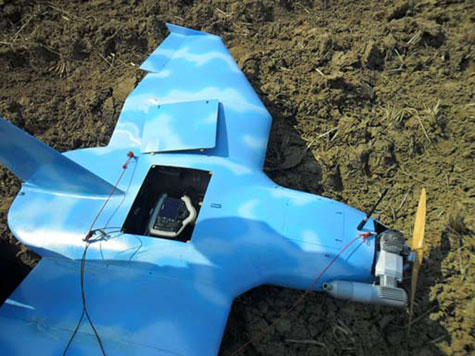
    The drone that landed in the island of Baeknyeong is 1.83 meter long, has a wingspan of 3.2 meter wing span. The drone has a V-shaped (swallow) tail and it is powered by a piston engine, providing engine.
    The drone that landed in the island of Baeknyeong is 1.83 meter long, has a wingspan of 3.2 meter wing span. The drone has a V-shaped (swallow) tail and it is powered by a piston engine, providing engine.

    Alarmed by the incursions, Seoul stressed the urgent need to prepare more efficient countermeasures. According to Korean defense officials, the drones were on intelligence gathering missions but could be used on terror attack if adapted for such missions. The drones were likely on intelligence gathering missions, reflecting the intensive spying activities North Korea is directing at the South. In recent years the ‘Democratic’ Republic of Korea (DPRK) has invested significant efforts in the development of unmanned platforms, which include intelligence gathering and attack systems. Nevertheless, the level of sophistication demonstrated by the two captured drones is not as advanced as could be expected, as the two drones lack real-time communications or high resolution payloads expected from such platforms. The vulnerability of the South to North Korean drones was realized in 2010, during artillery barrages fired by the north, Back then, the North reconnoitered areas near Baeknyeong and Yeonpyeong Islands with a drone that flew undetected by radar and mostly invisible to the naked eye.

    “The military is preparing measures to deal with unmanned aerial vehicles, including North Korea’s lightweight aircraft, to complement the air-defense operation system,” a source at the defense ministry in Seoul said. “The ministry will also consult with the related agencies to draw up measures to control civilian UAVs and the registration system,” he added. The presidential national security adviser Kim Jang-soo presided over an emergency meeting of the National Security Council to discuss how to beef up the country’s air defenses against such unmanned aircraft, sources said. The plan will call up measures to defend against such drones and other small aircraft that are hard to detect by radar and strengthen regulations on civilian drones. Following the North Korean drone incursions, the Defense Acquisition Program Administration (DAPA) said it is pushing to resume a troubled blimp development project, which has been delayed over technical problems.

    This mini-UAV was found in October 2013 on the east coast area of South Korea, near the town of Samcheok. (Photo: South Korean Defence Ministry)

    “DAPA will hold a meeting later this week to approve a plan to restart the surveillance airship project,” a DAPA official said. “Although front-line troops have spotted unmanned aerial vehicles believed to be sent by North Korea several times recently, the low-altitude radar recognizes them as birds,” an Army official said, commenting on the performance of existing TPS-830K low-level surveillance radar in service with the South Korean military. The military is considering purchasing advanced low-altitude surveillance radar to better monitor moving targets. The Demilitarized zone is located at a mountainous area north of the capital, which clutters the view of ground-based radars, particularly at low altitudes, where small drones are operating. The Air Force has placed Gap Filler radar systems with a range of about 100 km in the front, but even these are not fully covering the area. Seoul had also pushed to build a surveillance airship to better monitor the North Korean military near the western maritime border, after North Korea shelled a border island in November 2010, killing four people. The 24 billion won (US$21.9 million) project initially aimed at deployment from 2012, but has since been delayed as arms makers struggled to make an airship suitable for the rapidly changing weather conditions in the western sea. Seoul is also seeking to deploy GPS jamming systems that are likely to disrupt the navigation systems guiding the North Korean drones’ mission control systems. However, these systems could also risk civil aviation traffic and friendly drones, as demonstrated during a drone accident that killed an Austrian UAV technician in South Korea 2012.

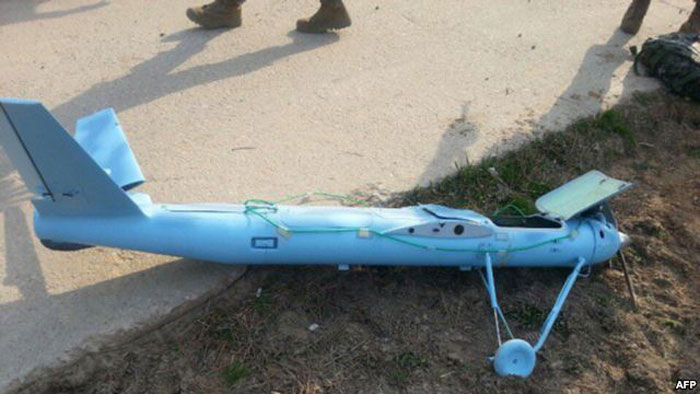
    The mini-drone that landed near Paju has a wingspan of 1.92 meters (6 ft 3 in), and a length of the 1.43 meters (4 ft 8in).
    The mini-drone that landed near Paju has a wingspan of 1.92 meters (6 ft 3 in), and a length of the 1.43 meters (4 ft 8in).

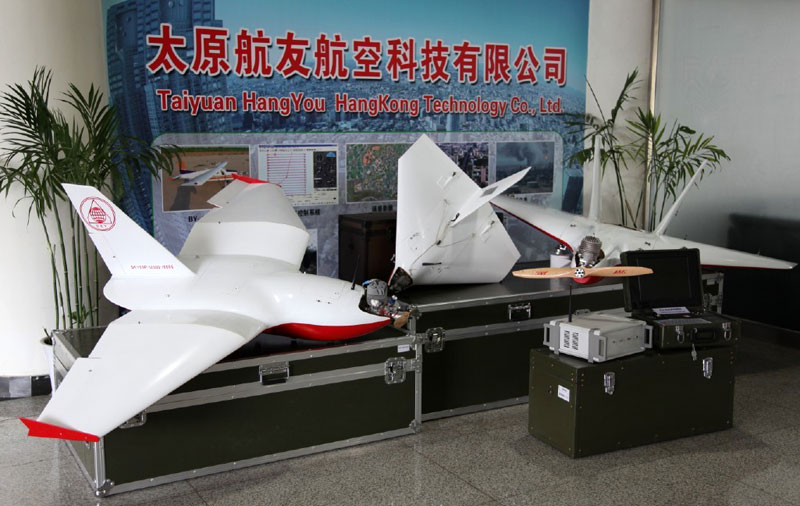
    The drone found on March 24 was a small ‘mini UAV’ class vehicle, it flew in a southward direction toward the capital Seoul, navigating by pre-set GPS waypoints. After flying over the city and taking images of the presidential office, the drone turned back toward north but crashed near the town of Paju, close to the DMZ. Throughout its flight it was not detected by the low-altitude surveillance radar, South Korean official admitted. When investigators probed the drones’ camera they were amazed to find pictures of military installations the residential quarters of Seoul’s presidential compound. According to ‘Alert 5’ blog, these drones are commercial off-the-shelf SKY-09P models made in China, by Taiyuan Navigation Technology. Based on the manufacturer’s data this mini-drone is launched by a catapult and retrieved by parachute. It can carry a payload of 3 kg on a 90 minute mission, controlled in flight over a distance of 30-40 km.  The company also offers a larger variant, SKY-19 that can fly for two hours and carry 5kg of payload.

    The mini drones operated by North Korea over South Korea are the SKY 09 made in China by the Taiyuan Navigation Technology company. The models operated by North Korea was equipped with a muffler, to reduce the drone's acoustic signature. Photo: Taiyuan
    The mini drones operated by North Korea over South Korea are the SKY 09 made in China by the Taiyuan Navigation Technology company. The models operated by North Korea was equipped with a muffler, to reduce the drone’s acoustic signature. Photo: Taiyuan

    The Defense Ministry said Sunday that a wild-ginseng digger first found the drone in October of last year on a mountain in Samcheok, Gangwon Province, and reported it to the military authorities last Friday. It was of the same model found in Paju last month. Preliminary analysis also shows the computer components inside the drone contain chips and microprocessors released back in the early 1990s, but have long been obsolete. There were almost certainly many more that made the flight but made it back to the North safely. The true value of the intelligence is marginal. South Korean military personnel commented, given the poor imaging quality of the payload and lack of communications link, transferring images to the ground in real-time. However, the virtual blindness of South Korean surveillance against those drones render such systems a potential weapon application, if equipped for terror attacks.

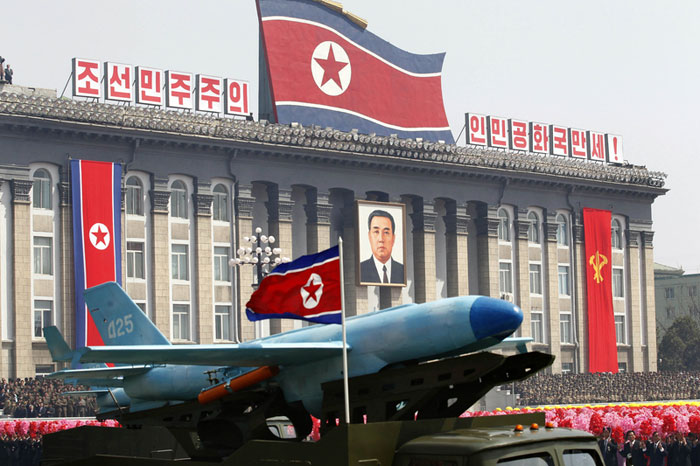
    While the drones are based on basic technology, both have demonstrated an alarming capability gap in detecting and engaging unmanned aerial systems, particularly small and miniature drones that often evade detection by radar or acoustic means. The drone found in Paju was not detected by radar despite the fact it loitered over Seoul’s presidential office and highway linking the capital and the Demilitarized zone. This drone contained long shots of Cheong Wa Dae, the presidential reception palace in Seoul, raising doubt about the safety and protection of the airspace of the South Korean capital. The drone found a week later in the island of Baengnyeong was larger, capable of flying at an altitude of 3 km with a maximum speed of 162 km per hour, carrying a mission payload of 20-25 kg. This drone was likely on post-mission surveillance, assessing South Korean units deployment following the artillery exchange in that area, in which North Korea fired 100 artillery rounds into the sea on the South Korean side of the maritime border, prompting Seoul to fire its own rounds back into northern waters. No one was injured in the exchange. This drone was reportedly detected by radar but the air defense did not engage it despite the fact it loitered over five different islands, watching military installations, including the 6th Marine Brigade stationed at the island in the midst of an artillery fire exchange between the north and south Korean armies. Pyongyang is not limiting the use of drones for reconnaissance and intelligence. The North Koreans reverse-engineered several models of the US made MQM-107D Streaker targeting drones they acquired form Syria, modified into an attack drone. The drones were displayed publicly for the first time in April 2012 on a military parade in Pyongyang. They were demonstrated in operation in 2013. Although the drone retrieved in Baengnyeong resembles that drone, the two platforms are different in size, propulsion, payload configuration and capacity. North Korea is also believed to have used other types of unmanned aerial vehicles, including drones whose design is based on China’s D-4 and R-3 Rey.

    The North Koreans reverse-engineered several models of the US made MQM-107D Streaker targeting drones they acquired form Syria, modified into an attack drone. The drones were displayed publicly for the first time in April 2012 on a military parade in Pyongyang. They were demonstrated in operation in 2013.
    The North Koreans reverse-engineered several models of the US made MQM-107D Streaker targeting drones they acquired form Syria, modified into an attack drone. The drones were displayed publicly for the first time in April 2012 on a military parade in Pyongyang. They were demonstrated in operation in 2013.

    Cyber Intelligence Report – April 1, 2014

    cyber_report

    Israel

    Israel: Cyber Attacks vs Cyber Defense

    In the 10 years since Ahmed Yassin death, Hamas has sent various threatening text massages to Israeli civilians stating they will be the next Gilad Shalit and that Hamas will conquer Israel. These bouts of messages were sent via the “Israel Defense” email distribution list. The hackers have also replaced the “Israel Defense” homepage with a picture of the Sheikh and two messages.

    #OpIsraelBirthday promises damage to Israel via cyberspace

    The website meethackers.in interviewed two hackers participating in the current #OpIsrael. The two hackers, “Mrlele” and “Anonxoxtn,” are both members of AnonGhost, the Anonymous group behind #OpIsrael. When asked the intentions of the operation, Mrlele informed: “Leaking personal data’s, spamming emails, spamming cell phones, leaking website, leaking emails and password, defacing, DDoS attacks and maybe publishing hacked website and gov.” When asked if he received threatening messages in response to his actions, he claimed three countries did but refused to state which ones. When the two were asked if they fear retaliations from Israeli hackers, they laughed and explained there was “no such thing.” When asked of Anonxoxtn what the overall message of the operation is, he answered: “The message is clear; we will not remain silent in front of the Zionism massacre in Palestine, Palestine will be free, we will not remain  silent anymore to support our brothers and sisters in Palestine, there is no place for Israeli in Palestine.” Anonxoxtn also declared the attack will be bigger and more powerful than ever before. When asked if he had anything to say to Israel, he replied: “I have a message from AnonGhost team to Israhell: you call us terrorist and we are proud to be terrorist but we won’t stop hacking defacing leaking exposing your pigs, there is no israhel its only Palestine.”

    The #OpIsraelBirthday operation has been successful in conducting a hack against the Israeli Agriculture Research Organization, a domain within the Israeli Ministry of Agriculture and Rural Development. The message left stated: “Hi Israel! We always here to punish you as we did on the last Operation 7 April and we are back again to celebrate it. Because we are the voice of Palestine and we will not remain silent!! Muslims are everywhere – We will enter Palestine soon 🙂 Remember this 😀 Alkhilafah is coming soon Insha’Allah.” It is believed that the hacking against this specific domain is a warm up for what lies ahead. Nevertheless, the website was fully functioning later in the day.

    Israel cyber security market in continual expansion

    The Israeli cyber security market is seeing two big investments. The first being the Israeli cyber security firm, Cyvera, which specializes in unique threats. Cyvera was bought by the American company Palo Alto for $200 million dollars. The second company bought for $115 million, is NSO, a homeland security firm developing technology, which can listen to cell phone calls and text messages and monitor all uses of the phone through a phone number without notifying the phone provider.

    USA

    US signs agreement with EU on cyber issues

    The US-EU summit took place in Brussels, where a new agreement was reached and signed between the US and the European Union on cyber security issues.   According to the U.S government, the new agreement provides both participants the ability to share more information about fundamental rights and freedoms of citizens. Moreover, the cooperation will focus on international security, international cyber policy, and Internet freedom. The agreement provides the creation of an international working group focused on key areas such as cyber incident management, critical infrastructure, cyber security, cybercrime, and other cyber defense issues.

    The US Defense planning to increase cyber workforce by 2016

    The US Defense Secretary, Chuck Hagel, announced the US intends to increase its cyber workforce in the coming years because “our nation’s security reliance on cyberspace outpaces our cybersecurity.” According to Hagel, the Pentagon has already started to recruit cyber security professionals, and the US cyber workforce intends to increase membership of the Defense Department’s Cyber Mission Force by 6000 people by 2016. These positions are intended to be filled by those who have served in the military, even if they have no previous cyber or IT experience. This cyber workforce is aimed to face new challenges such as cyber-attacks from other states and cyber terrorist groups especially from China, Russia, and Iran. To manage these new cyber security professionals, the U.S government nominated Vice-Admiral Mike Rogers, who is currently the head of the Navy’s Cyber Command. Rogers is actually awaiting the US Senate confirmation to start his new position and succession to General Keith Alexander, who has been the director of Cyber Command and the NSA since 2005. However, Hagel emphasized he has no intention to “militarize cyberspace” and instead wishes to focus more on cyber operations than espionage.

    Russia

    Russia deploying highly sophisticated cyber weapons

    As reported by the ArsTechnica Information Agency, Russia deployed highly sophisticated cyber operations during the Ukrainian crisis. A current example is Snake (other aliases include Ouroboros and Uroburos), which is an espionage tool of which multiple instances were detected in Ukraine. This is a long-standing exploit whose deployment dates back at least four years, with some elements of the software created as far back as 2005. Russia managed to shut down almost all of the Ukrainian government websites and managed to track mobile and phone equipment of numerous government figures. In Crimea, prior to the invasion in February, Russian Special Forces managed to shut down all essential communications physically by direct incursion. Cyber espionage is a crucial aspect and tool of Russian foreign policy in former USSR countries. Accessing the information systems of diplomatic, government, and military organizations over the years enabled Russia a major advantage in predicting tactics and position of its neighbours.

    Middle East

    Emirate: First global cybersecurity conference in Abu Dhabi

    The New York Institute of Technology (NYIT) held its first Global Cybersecurity Conference in March. The conference began with the contribution of His Excellency Sheikh Nahayan Mabarak Al Nahayan, Minister of Culture of the UAE.  The NYIT’s conference welcomed cyber defense professionals, information technologists, banking and finance executives, and others from the US, China, United Arab Emirates, and throughout the Middle East and the North African region. It has been estimated that cybercrime costs more than $113 billion annually, with 378 million victims. In addition, the UAE recently disclosed plans to nearly double its security budget in the coming decade, with most of the increase to be used for cyber security.

    China and APAC

    China training cops for cyber war

    China decided to train its police to become professional cyber cops. The Chinese government selected a group of police officers to provide them with cyber training. The goal is not only to train them in defensive operations, but to teach them about offensive cyber-attacks. The creation of these new cyber war units are likely related to the growing threats of Internet based criminal groups within China. Several cyber police units are currently being organized to assist Chinese firms and local governments to improve their network security. Moreover, some of these new cyber war police units will have offensive capabilities, probably in order to respond to groups perceived as enemies of China. The developing cyber war police units are using cyber technologies developed in China. These new cyber war units are also aided by the military hackers Unit 61398.

    Palo Alto opened cyber security lab in Singapore

    Palo Alto Networks has opened its new headquarters and cyber security lab in Singapore. According to Mark McLaughlin, CEO of Palo Alto, the opening of the cyber security lab will provide customers within the region the opportunity to learn more effectively about the latest cyber technology for countering cyber threats, including advanced persistent threat (APT) protection, new firewall technology, IDS/IPS systems, and URL filtering. Additionally, the opening of the new headquarters in Singapore enables access in the region where cyber security developments remain dynamic. Moreover, Sharat Sinha, who is the Asia-Pacific VP of the company, explained: “The region is home to the highest number of Internet users in the world, with exponential growth in online banking, shopping, and social media activity, making it a prime target for cybercriminals.”

    Europe

    Romania is world’s top hacking and global cyber-attack country

    The number of cases, scammers, and resulting victims  of fraud originating in Romania rose dramatically over the last few years, with 2.8% of global cyber-attacks occurring through Romania. This makes the Balkan country ranking 7th in the world of hacking and cyber-attacks. Romania is a haven for cyber criminals, where schools provide high-level IT training; however, rough economic conditions push experts to cyber criminal activity. The latest massive data hack may have compromised the personal information of 110 million customers, mostly Americans. Bucharest estimated Romanian cybercriminals steal around $1 billion every year by hacking US computers. Romanian cyber cops and FBI agents are working closely to recruit 600 Romanian investigators in combating cybercrime, arresting 100 people across Romania every day, and bringing more than 1000 cases before the court.

    UK launched  Computer Emergency Response Team after delay

    The British newspaper “The Guardian” announced the British government launched its new Computer Emergency Response Team (CERT) after a delay. The establishment of CERT was announced in December 2012 by the Cabinet Office claiming to provide one of the most important parts of the £650m UK cybersecurity strategy. According to the British government, the new CERT will work in cooperation with UK security agencies such as the GCHQ, the Centre for the Protection of National Infrastructure, and the CSIRT. The new CERT team already shares information about cyber incidents with CSIRT through the Janet network, and they work hard together on the latest cyber threats.

    According to Charlie McMurdie, former head of the London Metropolitan Police Central e-Crime Unit (PCeU), who was involved in the CERT-UK’s development, “The unit should act as an overarching unit that will enhance the response to major attacks being monitored by other incident response teams.” The British government is expecting CERT to be a center of coordination with the existing UK computer incident response community, and together they produce efforts to secure UK cyberspace more effectively.

    Darknet

    TOR escalates in hiding criminal activity

    According to Kaspersky Labs, TOR increasingly was being utilized by criminals in the last year and has uncovered evidence of 900 services using TOR with 5,500 plus nodes (server relays) and 1,000 exiting nodes (servers of emerging traffic). Kaspersky researchers report TOR is playing host to the ChewBacca point-of-sale keylogger and the ZeuS banking malware control infrastructure, the first TOR Trojan for Android. Currently, TOR is being used to hide 900 botnets, and the main problem of which is that computer owners are unaware of the malicious malware in transmission to other computers through the Internet on their individual computers (including spam or viruses). Sergey Lozhkin, a Kaspersky researcher, also explained that money laundering services have expanded on TOR as cybercriminals use the easy mechanism to spread a single transaction through dozens of different wallets, making it difficult to track.

    inss150About the Cyber Intelligence Report:

    This document was prepared by The Institute for National Security Studies (INSS) – Israel and the Cyber Security Forum Initiative (CSFI) – USA to create better cyber situational awareness (Cyber SA) of the nature and scope of threats and hazards to national security worldwide in the domains of cyberspace and open source intelligence. It is provided to Federal, State, Local, Tribal, Territorial and private sector officials to aid in the identification and development of appropriate actions, priorities, and follow-on measures. This product may contain U.S. person information that has been deemed necessary for the intended recipient to understand, assess, or act on the information provided. It should be handled in accordance with the recipient’s intelligence oversight and/or information handling procedures. Some content may be copyrighted. These materials, including copyrighted materials, are intended for “fair use” as permitted under Title 17, Section 107 of the United States Code (“The Copyright Law”). Use of copyrighted material for unauthorized purposes requires permission from the copyright owner. Any feedback regarding this report or requests for changes to the distribution list should be directed to the Open Source Enterprise via unclassified e-mail at: [email protected]. CSFI and the INSS would like to thank the Cyber Intelligence Analysts who worked on collecting and summarizing this report.


    50 Years Young, RPGs Keep Improving

    Improved RGP Designs are Challenge Bar Armor Manufacturers

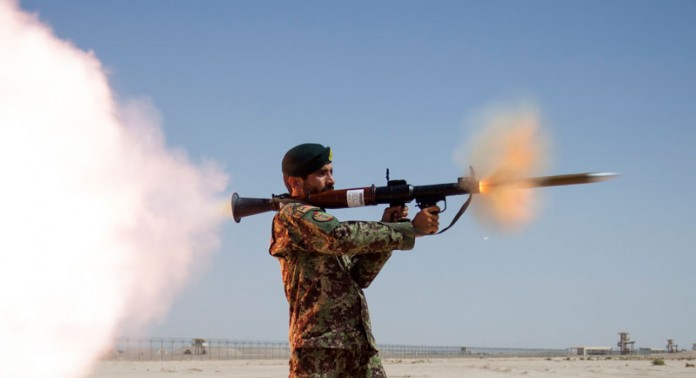
    Since their introduction in operational service in 1961 the Rocket Propelled Grenade Mk 7 (RPG-7) over nine million RPGs have been produced, and hundreds of thousands fired in combat in war zones around the world.

    Although RPG-7s proved their battle effectiveness in every conflict since the 1970s, NATO and coalition forces were surprised and ill prepared when they first encountered RPGs in Iraq in 2004. At the time these weapons were used primarily against heavy armored fighting vehicles, while Improvised Explosive Devices (IED) were directed at the less protected or unprotected tactical vehicles.

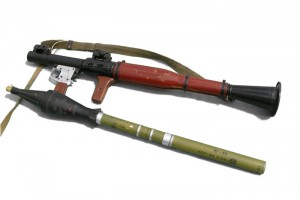
    RPG-7, launcher and rocket
    RPG-7, launcher and rocket

    Realizing the gravity of this evolving threat, coalition forces began to protect their armored vehicles with add-on armor solutions designed to defeat RPGs. Since the PG-7VL High Explosive Anti-Tank (HEAT) warhead penetrates over 500 mm of steel armor with its shaped charge hitting the target, the only affordable solution was to eliminate the threat from hitting its target. Reactive add-on armor was an effective countermeasure applied to the heavier armored vehicles. Less protected vehicles were encapsulated with bar-armor cages.

    The bar-armor cage is preventing RPGs from detonating their shaped charge close to the vehicle’s armor, thus penetrating the armor and causing severe internal damage. The cages are assembled from steel or aluminum bars. Bars are spaced in a form that would ‘trap’ the incoming warhead.

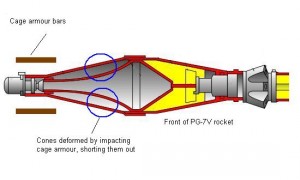
    The operating mechanism of bar armor is simple and effective. As the RPG flies through the cage the warhead is smashed between two bars, deforming the conductive layers that form the ogive (cone) holding the piezoelectric precursor and covering the explosive charge. As the external liner bends in, it would touch the inner liner, causing a short circuit that disrupts the explosive triggering chain.

    This image depicts the classical bar armor RPG-7 defeat mechanism.
    This image depicts the classical bar armor RPG-7 defeat mechanism.

    The first-generation bar armor made of steel or aluminum were relatively heavy, weighing about 20-30 kg/square meter. Follow-on solutions that included counter-RPG net came in much lighter weight but suffered from the same lower efficiency with the same neutralization mechanism. Although the method provided reasonable protection, it did not provide conclusive results. In fact, it is likely that every second RPGs would ‘slip away’ and defeat the bar armor protection, either with full hollow charge penetration of the shaped charge, or while having a secondary explosion and piercing the platform hull (without forming the plasma jet). Such risk is especially evident on the less protected parts of the armored vehicles. Ceilings are often composed of thin armor and are rarely protected by bar armor cages or nets; the windshield and side windows are also vulnerable to secondary explosions.

    Hence, this RPG protection is referred to as ‘statistical protection’, since the efficiency of the armor is not conclusive, but dependent on where and how each RPG will hit. Typical effectiveness of bar armor in defeating various RPG-7 warheads depends on the type of warhead (different manufacturers produce HEAT warhead diameters from 70 to 90mm). Hence, statistical protection ranges from 50 up to 70 percent for first and second generation.

    In recent years, new types of bar armor, net protection systems and various hybrid systems were introduced and applied to most of the vehicles deployed in Afghanistan. More recently, French vehicles operating in Mali and elsewhere in Africa are also equipped with counter-RPG protection, with high level of performance, attributed to the latest, most advanced non-bar type solutions.

    The reactive armor, first introduced by the Israeli army in the first Lebanon war in 1982 proved highly effective against RPGs and anti-tank missiles, driving the development of tandem warheads. The RPG-7 received such a warhead, designated PG-7VR in 1988. These warheads were first employed against US armor in Iraq in 2004.

    Insurgents, becoming aware of the bar armor and its weaknesses, have employed several methods to defeat bar armor, among them rudimentary extensions of the impact sensor (piezoelectric trigger located at the tip of the round). These extensions would cause the fuse to activate before the ogive is smashed by the armor, thus activating the shaped charge ahead of the armor.

    While passive RPG armor technology is improving, particularly by reducing weight and improving the theoretical statistical protection, more progress on the side of the RPGs would render the systems relying on the ‘smashing‘ totally ineffective.

    In recent years, RPG manufacturers have also introduced enhancements to overcome common bar armor techniques and nets technology. “RPG manufacturers are applying protective layers at the base of the cone, thus avoiding potential short-circuits caused by deformation,” an armor expert told Defense-Update. Challenged by these improved RPGs, armor designers are now seeking to find alternative solutions by employing mechanisms that would guarantee the defeat of the warhead regardless of the type of RPG they are encountering.

    According to our sources, since 2012 some RPG manufacturers have added a durable plastic sheet between the two conductive layers forming the ogive. This sheet prevents the two layers from short circuiting in case they are smashed, thus rendering the ogive operational even after it has hit a bar or passed through a net. The damaged RPG will continue flying and will hit the vehicle, initiating the shaped charge on contact. “In fact, as it will hit at an angle, the behind armor effect could be increased, as the spall is distributed at a larger lethal cone, hitting more of the vehicle occupants,” the expert warned. “We are going to see more and more of these in the battlefield.”

    Skunk Works and XTEND Simplify Multi-Drone Command

    0
    Lockheed Martin Skunk Works® and XTEND have achieved a major milestone in JADC2 by integrating the XOS operating system with the MDCX™ autonomy platform. This technical breakthrough enables a single operator to simultaneously command multiple drone classes, eliminating the friction of mission handoffs. From "marsupial" drone deployments to operating in GPS-denied environments, explore how this collaboration is abbreviating the data-to-decision timeline and redefining autonomous mission execution.

    From Ukraine to Taiwan: The Global Race to Dominate the New Defense Tech Frontier

    0
    As traditional defense primes face mounting competition from agile “neoprimes” such as Anduril, Palantir and Helsing, the balance of innovation is shifting toward software-defined warfare and scalable, dual-use technologies, while global industry consolidation—marked by Boeing’s integration of Spirit AeroSystems and other strategic mergers—signals an intensified race to secure control over the defense technology value chain. Our Defense-Tech weekly report highlights these trends.

    Europe’s “Drone Wall”

    0
    In early October 2025, a coordinated wave of unmanned aerial system (UAS) incursions—widely attributed to Russia—targeted critical infrastructure across at least ten European nations. The unprecedented campaign exposed the fragility of Europe’s air defenses...

    Weekly Defense Update & Global Security Assessment

    0
    Executive Summary The past week (September 18-25, 2025) represents an inflection point where strategic defense concepts have transitioned from doctrine to tangible reality. An analysis of global events reveals four primary, interconnected trends shaping an...

    U.S. Air and Space Forces Push Next-Gen Programs at the AS&C 2025 Conference and...

    0
    At the 2025 Air, Space & Cyber Conference, U.S. Air Force and Space Force leaders unveiled major updates on next-generation fighters, bombers, unmanned systems, and space initiatives, highlighting both rapid innovation and critical readiness challenges as the services race to outpace global competitors. A short version is available here, with a more detailed version for subscribers.

    TADTE 2025: Reflecting Taiwan’s Strategic Themes

    0
    The Taipei Aerospace & Defense Technology Exhibition (TADTE) 2025 crystallized around four dominant strategic themes that collectively illustrate Taiwan's comprehensive approach to defense modernization amid escalating regional tensions. Based on a detailed report by Pleronix (available upon request). Includes a Podcast discussion on TADTE 2025's highlighting Taiwan's four strategic themes beyond the post's coverage.

    Iron Beam 450 Completes Testing, Soon to Join With Operational Air Defense Units

    0
    Israel’s Iron Beam 450 high-power laser system has completed final testing, marking a major leap in air defense. Developed by Rafael, it offers precise, cost-effective interception of rockets, UAVs, and mortars, and is set for IDF deployment by 2025.