


Thursday, December 25, 2025
More
    Home Blog Page 117

    Cyber Intelligence Report – March 26, 2014

    cyber_report

    Executive Cyber Intelligence Bi-Weekly Report by INSS-CSFI

    March 18th, 2014

    Israel

    Two weeks of diverse cyber-attacks in Israeli cyberspace

    Since the start of the month, Israeli companies are experiencing numerous cyber-attacks. One of the companies, Wix, which provides a platform for building html5 sites, reported a DDoS attack hitting their services. Wix has a defense system allowing them to deal with cyber-attacks; nevertheless, the magnitude of this cyber-attack made a variety of Wix sites go offline. The cyber consulting company, Cyber Hat, reported the spread of the Cryptolocker malware in some Israeli companies, which is a ransomware deployed to a company network by phishing and encrypts files onto the company servers. The original email from Cryptolocker comes with a ransom note demanding payment of 400 Euros through Bitcoin currency in return for the decrypting files.

    The increase of cyber-attacks co-exists with the Anonymous operation #OpIsraelBirthday, which is scheduled to take place April 4th and is meant to erase Israel from the Internet. #OpIsrael is being led by members of AnonGhost, which held a previous #OpIsrael operation in April, 2013. AnonGhost is known as a prevalent player behind Mauritania Attacks. The first phase of the cyber operation was held on March 10th, but except for a few personal files published, there was no report of a major damage. AnonGhost uses social media networks like Facebook and Twitter to spread malware coded programs for those wishing to participate, with a blog including a YouTube video and a countdown to April 4th. According to The Amman Group disclosed, an Israeli cyber security firm, as the date of #OpIsraelBirthday approaches, more Israeli websites are being compromised, with databases exposed.

    USA

    SEA claims to have succeeded in hacking CENTCOM

    Syrian Electronic Army (SEA) breached the United States Central Command (CENTCOM), enabling them to access hundreds of confidential documents. SEA tweeted they targeted CENTCOM. In response to doubt, SEA posted a screen shot of the information on Twitter depicting a military system in the US Air Force and Army Knowledge Online (AKO) with folders directing to command units. However, it appeared that the screenshot was of unclassified information only. AKO, a sharing network for military members to confidentially access unclassified and FOUO information,  was slow to respond to the attack, and CENTCOM denied the cyber breach. SEA expressed the attack was because of President Obama’s decision to attack SEA through cyber warfare. Additionally, SEA threatens more information will be published.

    Vice Adm. Michael Rogers, elected Director of NSA, offered a grim assessment of the growing cyber threat against the United States and their abilities to overcome the risks. He stated that enemies may consider the U.S. “an easier mark” because the procedures and requirements facing a response to cyber-attacks “lead the adversary to believe, rightly or wrongly, that we do not have the will to respond in a timely or proportionate manner.” Rogers added improvements to staffing and resources will be made to the Cyber Command will be one of the responses.

    AKO does NOT contain classified information. Communication via AKO is meant to be confidential (encrypted, with military users accessing it with their CAC [Common Access Card]), but it is not for classified files.

    Russia

    Russian citizens called for terrorist activities on social networks

    Because of the continued crisis in the Ukraine, which began in November, 2013 that led to the invasion of Russian troops to the Crimea peninsula, news and media source, Dojd TV, reported the Office of the General Russia Federation Prosecutor appealed to the FSB (Russian Federal Security Service) to block community and social media networks. Prosecutors found the appeal to “address the Russian citizens with direct appeals to carry out terrorist activities and to participate in unsanctioned public events.” After the removal of illegal information, some community networks were again unblocked. It is still unclear how the operation was executed.

    Middle East

    Kuwait urges Arab countries to unite against security challenges

    In a meeting held in Marrakech, Morocco, on March 11, Kuwait’s Deputy Prime Minister and Minister of Interior, Sheikh Mohammad Khaled Al-Hamad Al-Sabah, appealed to Arab countries to unite in the face of security challenges, while pushing forward with economic developments. At the Arab Interior Ministers’ meeting held in March, Sheikh Mohammad underlined Kuwait’s support to uniform Arab positions and addressed security challenges the Arab region is facing in the coming year. The Kuwaiti official explained that Arab countries need to double the efforts in the face of rumors spreading through social media networks of violent behavior, money laundering, counterfeiting, drugs, organized crimes, and cyber crimes.

    Kenya’s ministry of transport website hacked

    A Turkish Muslim group named Ayyildiz Tim, hacked the Kenyan Ministry of Transport website, accusing the Kenyan government of disrespecting Islam. The hackers published the following message on the government website: “All the Muslims are together. The CYBER-WAR will be appeared all the Countries which not respecting Islam. Ayyildiz promises that they will visit your areas too…”  Ayyildiz Tim supports terrorist organizations and threatens a surge of cyber-attacks hitting Kenya since the incursion into Somalia to fight Al Shabaab, a terrorist organization.

    Iran and Russia partnering to launch cyber-attacks

    Former chairman of the House’s Permanent Select Committee on Intelligence, Rep. Peter Hoekstra, stated in a lecture in front of lawmakers that the Iranian regime is emerging as a “world class” cyber threat, mainly due to its close ties to Russia and cooperation between the two states will only increase in the coming months. According to Hoekstra, “Iran and Russia will develop a much closer relationship… Russia and Iran have so much to gain from more significant cooperation, and the immediate impacts will be profound.” This cooperation is becoming more significant given Russia’s continued aggressive stance toward the USA.

    China and APAC

    New Chinese stealth fighter aircraft created because of cyber-spying operation.

    For several years cyber espionage became the specialty of China, which has many cyber espionage operations against the U.S. defense industry to catch up on their industrial delay. The latest evidence of the intensive cyber espionage activity is the launch of a new stealth fighter jet constructed with stolen plans through a cyber-espionage operation conducted several years ago against the F-35 Lightning II from Lockheed Martin. Proof of the stolen plans was confirmed through a Chinese military forum. Pictures were published of a recently developed version of the J-20 stealth jet, a twin aircraft under development by the Chinese People Liberation’s Army.

    According to the Washington Free Beacon, the initial J-20 prototype was revealed in 2011 through a video showing the aircraft equipped with new electro-optical targeting system assisting the aircraft to hide from radars. According to the Pentagon, a Chinese military group known as Technical Reconnaissance Bureau based in the Chengdu province stole the data. The information was passed to the Aviation Industry Corporation (AVIC), which transferred the stolen plans to the Chengdu Aircraft Industry Group, incorporating the information into the new design.

    Europe

    UK expanding cyber training to children

    The UK government intends to train children ages 11-14 in cyber security in an effort to prepare future generations in the UK for cyber threats, technological skills, and economic growth by providing the necessary materials to take part in advanced understanding of such topics through apprenticeships. This concept is part of the “Cyber Security Skills: Business Perspectives and Government Next Steps,” which was published with feedback directly from businessmen in the private and public sector. Children interested can sign up for the Massive Open Online Course, as well as be part of the Secure Futures provided in certain cities in England. Sire David Pepper, part of the Cyber Security Skills Alliance stated: “It is clear from this and our own research that the national shortage of cyber skills is a key issue for businesses and government in the fight against the growing threat from cyber crime.”

    NATO websites targeted by Ukrainian cyber-attack

    On March 15th, several NATO websites were targeted by a cyber-attack related to the Russian-Ukrainian conflict. A group of hackers called ”Cyber Buerkout” claimed the attack was carried out by Ukrainian patriots unhappy about the way NATO is dealing within their country. The Berkout, the anti-riot Ukrainian police, was disbanded. The police were accused of killing dozens of protesters in the days leading up to the impeachment of President Viktor Yanukovych on February 22. Cyber Berkout Groups already attacked several Ukrainian websites in the past weeks, according to computer security experts. Cyber hacktavists, Anonymous, have also assisted in the cause with #OpRussia leaking state documents. This is one example of cyber warfare being conducted in the Crimea crisis against government websites and officials. Networks all over the Ukraine have been infected with malicious software performing surveillance, access personal data, and DoS and DDoS attacks. Many malware and breaches have been traced back to Russia such as the malware Snake. The cyber aggression has been performed on both sides.

    Latvia establishing new Cyber Defense Unit

    Latvia launched a new cyber defense unit, which has become an extension of the National Guard of Latvia. It will be composed of 13 cyber security experts coming from both the private and public sector. Among them will be Eric Dobelis, a computer expert running an IT consulting company in Riga. In case of serious cyber-attacks on Latvia’s critical infrastructures, the cyber unit will cooperate with Latvia’s Computer Security Incident Response Team charged with responding to cyber-attacks. Moreover, the new cyber unit operates under the authority of the Latvia’s Ministry of Defense and has access to more than 600 IT experts working for the government. According to Ministry of Defense, people applying to join the Cyber Defence Unit are checked for security clearance before receiving classified information. The intention is to expand the unit to a 100 guardsmen in the coming years. Additionally, they envision creating a similar team consisting of teenage IT security experts. Like Hungry, Lithuania, Poland, and Slovakia, Latvia is part of the NATO cyber defence cooperation and has cyber soldiers working at the NATO cooperative Cyber Defence of Excellence.

    inss150About the Cyber Intelligence Report:

    This document was prepared by The Institute for National Security Studies (INSS) – Israel and The Cyber Security Forum Initiative (CSFI) – USA to create better cyber situational awareness (Cyber SA) of the nature and scope of threats and hazards to national security worldwide in the domains of cyberspace and open source intelligence. It is provided to Federal, State, Local, Tribal, Territorial and private sector officials to aid in the identification and development of appropriate actions, priorities, and follow-on measures. This product may contain U.S. person information that has been deemed necessary for the intended recipient to understand, assess, or act on the information provided. It should be handled in accordance with the recipient’s intelligence oversight and/or information handling procedures. Some content may be copyrighted. These materials, including copyrighted materials, are intended for “fair use” as permitted under Title 17, Section 107 of the United States Code (“The Copyright Law”). Use of copyrighted material for unauthorized purposes requires permission from the copyright owner. Any feedback regarding this report or requests for changes to the distribution list should be directed to the Open Source Enterprise via unclassified e-mail at: [email protected]. CSFI and the INSS would like to thank the Cyber Intelligence Analysts who worked on collecting and summarizing this report.

    Snowden: “Prism isn’t just metadata, it is about content” NSA: “If you are not connected to a terrorist target you are of no interest for us”

    Appearing by telepresence robot, Edward Snowden speaks at TED2014 about surveillance and Internet freedom. The right to data privacy, he suggests, is not a partisan issue, but requires a fundamental rethink of the role of the internet in our lives — and the laws that protect it. “Your rights matter,” he says, “because you never know when you’re going to need them.” A system administrator at the US National Security Agency (NSA) until 2013, Snowden leaked thousands of classified NSA documents, sparking a global conversation about citizens’ rights to privacy on the Internet. He spoke with Chris Anderson on a recent TED interview.

    [ted id=1950]

    Few days later, following Edward Snowden’s interview, NSA deputy director Richard Ledgett answers Anderson’s questions about the balance between security and protecting privacy. Ledgett is the deputy director of the agency, acting as the agency’s chief operating officer, responsible for guiding and directing studies, operations and policy.

    [ted id=1952]

    Ledgett claims that Snowden has placed national security assets and human lives at risk, by disclosing capabilities to adversaries of the USA. The need for surveillance is ubiquitous and protected by law, Ledgett said, “we are on the same network” Ledgett said, “I am using the same email network that is the No 1 email service of choice for terrorists”. He justified the large scale surveillance operations the NSA is conducting, including the ‘Bullrun’ saying – “everyone does it” about surveillance by metadata, he said” metadata is the information that lets you find connections that others are trying to hide”. he added that the alternative to that will be gigantic content collection that will be more invasive to privacy. “If you are not connected to those valid intelligence targets you are of no interest for us”.

    Italian Navy Test Fires Vulcano Ballistic Extended Range Projectiles

    Oto Melara has conducted firing tests of the Ballistic Extended Range Vulcano 127 projectile designed for the 127/46 gun mounted on the Italian FREMM and German F125 frigates. Photo: Oto Melara/
    Oto Melara has conducted firing tests of the Ballistic Extended Range Vulcano 127 projectile designed for the 127/46 gun mounted on the Italian FREMM and German F125 frigates. Photo: Oto Melara/
    Oto Melara has conducted firing tests of the Ballistic Extended Range Vulcano 127 projectile designed for the 127/46 gun mounted on the Italian FREMM and German F125 frigates. Photo: Oto Melara/

    On 6 March 2014, the Italian Navy carried out a number of firing trials on board the frigate Bersagliere to test the 127/54 C gun equipped with Vulcano-Kit (V-kit). The firing trials, conducted with 127 Vulcano Ballistic Extended Range (BER) ammunition, proved to be successful, with projectiles achieving a range of over 38 km. The field of fire was limited to 40 km for security reasons.

    Vulcano 127 has already performed firing testing verifying the enhanced ballistic characteristics of the projectile. The one in the photo is the 127mm Guided Long Range projectile, showing the canard section and GPS/INS guidance and advanced multi-mode fuse section installed in the nose. Photo: Oto Melara
    Vulcano 127 has already performed firing testing verifying the enhanced ballistic characteristics of the projectile. The one in the photo is the 127mm Guided Long Range projectile, showing the canard section and GPS/INS guidance and advanced multi-mode fuse section installed in the nose. Photo: Oto Melara
    The Vulcano BER ammunition used in the firing trials are part of a pre-production lot; the production-line qualification is underway on a first pilot lot of ammunition. It is the first time a military ship, not equipped with the naval gun systems used in the Second World War, has reached such ballistic ranges. Vulcan BER ammunition provide very accurate and high precision firing actions at ranges beyond 60 km.

    Commenting on the successful test OTO Melara said it is ready to supply Vulcano BER ammunition to the Navies employing the new 127/64 LW weapon system and those employing the previous version 127/54 C naval gun with the V-kit upgrade.

    In addition to the BER variant, Vulcano guided ammunition family also include the Guided Long Range (127GLR) and Semi Active Laser (GLR-SAL) guided versions, which will be available on board ships for firing trials starting from next year. The entire family of trajectory-corrected and guided projectiles will be able to conduct naval fire support at ranges from 35 km up to over 100 km, utilizing the OTO Melara naval guns systems.

    First M-346 Lavie trainer for the Israel Air Force rolls out in Italy

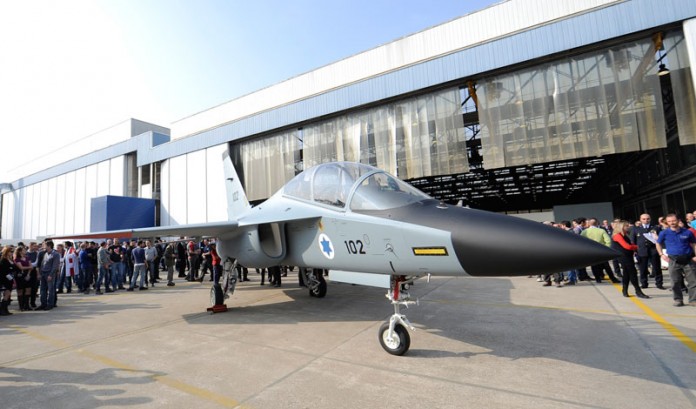
    Alenia Aermacchi Roll-Out of first M-346 for Israeli MOD and the Israeli Air and Space Force. Photo: Alenia Aeronautica
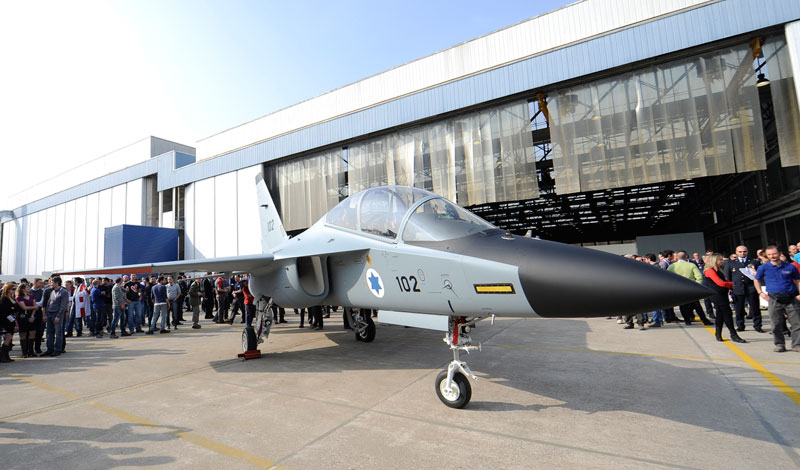
    Alenia Aermacchi Roll-Out of first M-346 for Israeli MOD and the Israeli Air and Space Force. Photo: Alenia Aeronautica
    The Roll-Out of first M-346 for Israeli MOD and the Israeli Air and Space Force at Alenia’s Venegono Superiore plant. Photo: Alenia Aermacchi

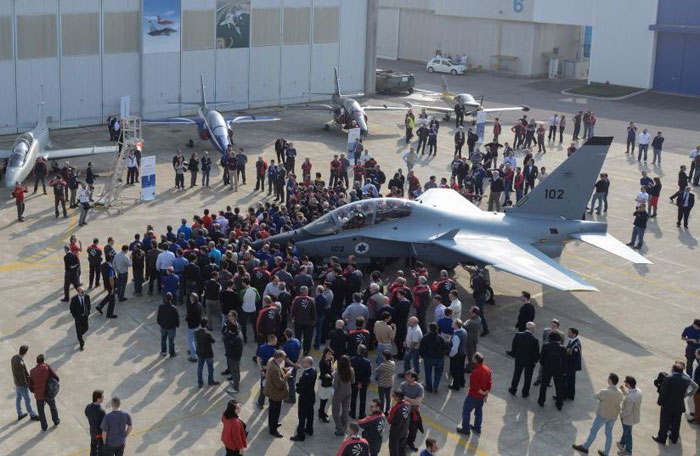
    The first M-346 advanced trainer for the Israeli Air & Space Force was rolled out yesterday in a ceremony held at Alenia Aermacchi’s plant in Venegono Superiore, Italy. The first ‘Master’ to the Israeli Air Force is scheduled for the summer of this year. When it enters service the new trainer will be called ‘Lavie’. The roll-out ceremony was attended by officials from the Israeli Ministry of Defence, Israeli Air & Space Force, Italian institutional key representatives, as well as representatives from Alenia Aermacchi and other industrial partners.

    The roll out comes less than two years after Alenia has signed the contract with the Israel MOD. The program is conducted under an industrial collaboration package agreed between Italy and Israel, which also includes Alenia Aermacchi’s industrial counterparts, TOR and Honeywell.

    The M-346 ‘Master’ has also been recently ordered by Poland that becomes the fourth customer of the aircraft after Italy, Singapore and Israel. A total of 56 M-346 have been ordered so far. The aircraft is already in service with the Italian and the Republic of Singapore Air Forces.

    The Roll-Out of first M-346 for Israeli MOD and the Israeli Air and Space Force at Alenia's Venegono Superiore plant. Photo: Alenia Aermacchi
    The Roll-Out of first M-346 for Israeli MOD and the Israeli Air and Space Force at Alenia’s Venegono Superiore plant. Photo: Alenia Aermacchi

    Brimstone Completes Drone Test Trials

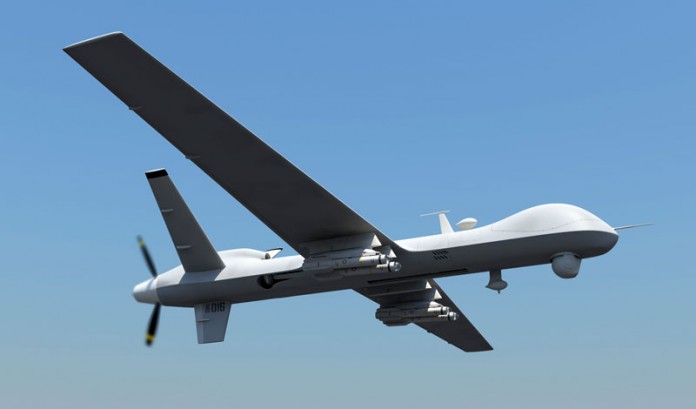
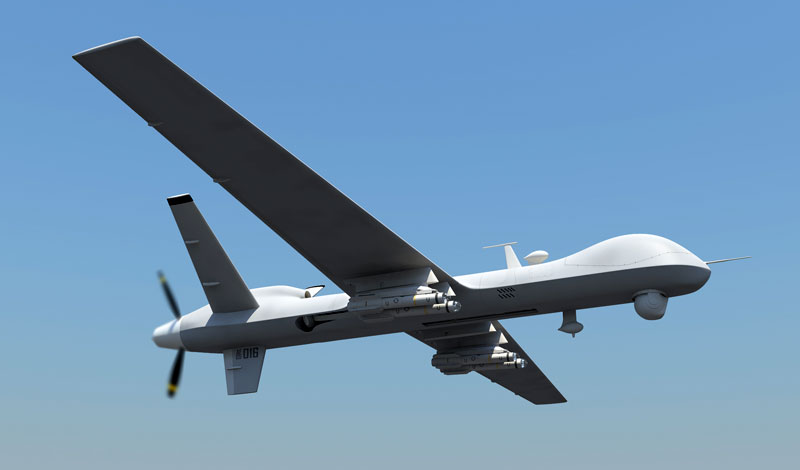
    MQ-9 Reaper carrying six Dual-Mode Brimstone missiles. Photo: MBDA

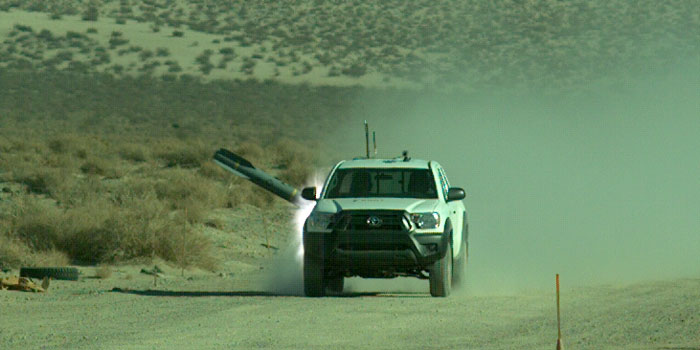
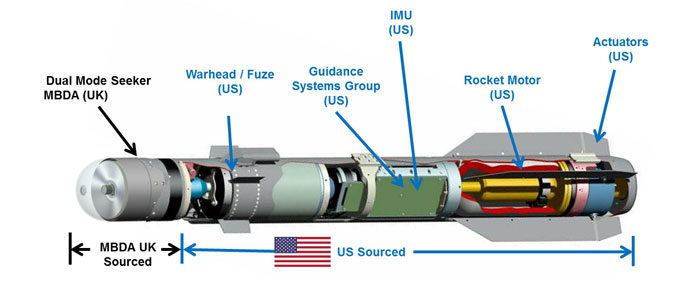
    MBDA has successfully demonstrated the operation of Dual Mode Seeker Brimstone (DMB) missile from an MQ-9 Reaper Remotely Piloted Aircraft (RPA), scoring nine direct hits against a range of targets including very high speed and manoeuvring vehicles. The main advantage of Brimstone is its dual-mode operating capability, combining millimetre guidance with semi-active laser targeting, enabling the operator to accurately designate a target, after the milimeter-wave seeker locks on the designated target the missile independently follows that target independent of further laser designation, through the engagement. The tests pave the way for the deployment of the weapon on Britain’s MQ-9 Reapers. Beyond their use with aerial platforms, Brimstones were also been tested on fast naval crafts, fired against speedboat simulating swarm attacks.

    MQ-9 Reaper carrying six Dual-Mode Brimstone missiles. Photo: MBDA
    MQ-9 Reaper carrying six Dual-Mode Brimstone missiles. Photo: MBDA

    The trials began with captive carry of Avionics and Environmental Data Gathering Missiles, proving the successful integration of the two systems and gathering additional evidence to support future clearance activities. These were quickly followed by a series of live Operational Missile and inert Telemetry Missile firings. The firings were taken from realistic ‘middle of the envelope’ profiles; typically 20,000ft release altitude and 7km – 12km plan range, with the platform being remotely piloted in operationally representative beyond line of sight (SATCOM) conditions, with tracking and designation of targets being conducted in a mixture of manual-track and auto-track modes. Two of the more challenging scenarios were against trucks travelling at 70mph in a crossing target scenario.  At times, the targets were manually tracked by the REAPER crews, showing how the integrated Semi-Active Laser and Active MMW radar seeker works in tandem to ensure direct hits, even while operators are tracking and designating targets manually over satellite communications. “Every Operational and Telemetry missile performed as designed” MBDA announced, “Following the successful demonstration Brimstone can now provide more flexibility to Reaper operators, reducing collateral damage risk while retaining first pass, single shot lethality against high speed manoeuvring targets on land, at sea and in complex environments.”

    brimstone_target_50mph700
    A Brimstone missile hitting a target moving at a speed of 50 miles per hour (80 km/h). Photo: USAF Big Safari

    The original Brimstone missile used a milimeter-wave seeker to defeat massive armor formations in ‘fire and forget’ engagements. Royal Air Force (RAF) Tornado GR4 strike fighters were fitted to carry clusters of Brimstones, to kill multiple tanks in a simultaneous attack. DMSB, the new variant of the missile was optimised to engage asymmetric threats, by turning the fire-and-forget missile into high-precision weapon combining some ‘man in the loop’ capability, allowing the operator to designate the target for the missile, in case the MMW seeker couldn’t lock or was looking elsewhere. In an asymmetric engagement, ‘man in the loop’ function enables the operator to correct a missile that locks on the wrong target, divert the missile to an alternate target or order the missile to abort attack, hitting a pre-defined area, thus avoiding collateral damage. In addition to the dual-mode seeker capability, Brimstone fired from Tornado GR4 demonstrated the ability to engage, from a high off-boresight, targets travelling at up to 70mph. The targets were engaged from longer ranges, without the need to revert to straight and level flight, whilst operating in Close Air Support (CAS) role. These tests were carried out by the RAF in October 2013.

    The use of MMW seeker enables the missile to effectively engage moving targets, a task that would require multiple Hellfire missiles. MBDA is employing a focussed, low fragmentation warhead optimised to defeat targets from Fast In-Shore Attack Craft Fast In-Shore Attack Crafts (FIAC) to fast moving armored or unarmored vehicles. In Libya, those characteristics reportedly made it one of the few weapons NATO commanders could use to hit enemy armored vehicles in urban areas.

    MBDA is lobbying the USA to select the Dual Mode Brimstone missile to arm the Reaper drones operated by the US government, as an alternative to pursuing further investment in the Joint Air-Ground Missile (JAGM). This missile, developed by Lockheed Martin, was designed to replace Hellfires used by all US military services but is currently pursued only by the Army. It will also employ a dual-mode seeker combining the Hellfire laser seeker and Longbow MMW radar seekers in a similar way the utilised by the Brimstone.

    brimstone_cutaway
    MBDA is lobbying the USA to select the Dual Mode Brimstone missile to arm the Reaper drones operated by the US government, as an alternative to pursuing further investment in the Joint Air-Ground Missile (JAGM).


    DARPA’s Selects Four Developers for new X-Plane Program

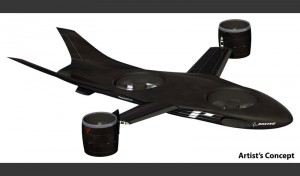
    Boeing has developed this concept UAS at its phantom works using advanced design methods. The X-Plane win will enable toe creation of large scale air vehicle of this type. Image: Boeing
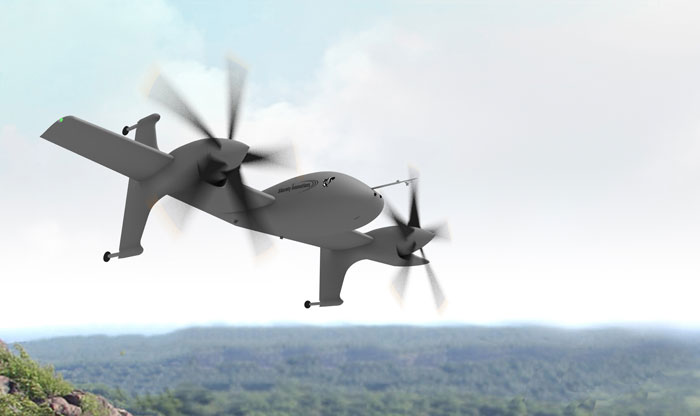
    Karem Aircraft proposed a drone utilizing the company's proprietary Optimum Speed Tilt-Rotor (OSTR) technology to provide its VTOL X-Plane design unique advantages in speed, range and endurance.
    Karem Aircraft proposed a drone utilizing the company’s proprietary Optimum Speed Tilt-Rotor (OSTR) technology to provide its VTOL X-Plane design unique advantages in speed, range and endurance.


    DARPA has tasked four companies with designing new aircraft to revolutionise vertical takeoff and landing (VTOL) flight capabilities. The four are Aurora Flight Sciences Corporation, The Boeing Company, Karem Aircraft, Inc. and Sikorsky Aircraft Corporation. The next major milestone for VTOL X-Plane is scheduled for late 2015, when the four performers are required to submit preliminary designs. At that point, DARPA plans to review the designs to decide which to build as a technology demonstrator, with the goal of performing flight tests in the 2017-18 timeframe. (Full story is available here)

    For generations, new designs for vertical takeoff and landing aircraft have remained unable to increase top speed without sacrificing range, efficiency or the ability to do useful work. DARPA’s VTOL Experimental Plane (VTOL X-Plane) program seeks to overcome these challenges through innovative cross-pollination between the fixed-wing and rotary-wing worlds, to enable radical improvements in vertical and cruise flight capabilities. In an important step toward that goal, DARPA has awarded prime contracts for Phase 1 of VTOL X-Plane to the four companies.

    Boeing has developed this concept UAS at its phantom works using advanced design methods. The X-Plane win will enable toe creation of large scale air vehicle of this type. Image: Boeing
    Boeing has developed this concept UAS at its phantom works using advanced design methods. The X-Plane win will enable toe creation of large scale air vehicle of this type. Image: Boeing

    “We were looking for different approaches to solve this extremely challenging problem, and we got them,” said Ashish Bagai, DARPA program manager. “The proposals we’ve chosen aim to create new technologies and incorporate existing ones that VTOL designs so far have not succeeded in developing. We’re eager to see if the performers can integrate their ideas into designs that could potentially achieve the performance goals we’ve set.”

    VTOL X-Plane seeks to develop a technology demonstrator that could achieve a top sustained flight speed of 300 – 400 kt, raise aircraft hover efficiency from 60 percent to at least 75 percent and Carry a useful load of at least 40 percent of the vehicle’s projected gross weight of 10,000-12,000 pounds. Another goal will be to present a more favorable cruise lift-to-drag ratio of at least 10, up from 5-6.

    All four winning companies proposed designs for unmanned vehicles, but the technologies that VTOL X-Plane intends to develop could apply equally well to manned aircraft. Another common element among the designs is that they all incorporate multipurpose technologies to varying degrees. Multipurpose technologies decrease the number of systems in a vehicle and its overall mechanical complexity. Multipurpose technologies also use space and weight more efficiently to improve performance and enable new and improved capabilities.

    Sikorsky has also been selected for the VTOL X-Plane flyoff competition in 2015.
    Sikorsky has also been selected for the VTOL X-Plane flyoff competition in 2015.

    Cyber Intelligence Report – March 18, 2014

    cyber_report

    Executive Cyber Intelligence Bi-Weekly Report by INSS-CSFI

    March 18th, 2014

    Israel

    Two weeks of diverse cyber-attacks in Israeli cyberspace

    Since the start of the month, Israeli companies are experiencing numerous cyber-attacks. One of the companies, Wix, which provides a platform for building html5 sites, reported a DDoS attack hitting their services. Wix has a defense system allowing them to deal with cyber-attacks; nevertheless, the magnitude of this cyber-attack made a variety of Wix sites go offline. The cyber consulting company, Cyber Hat, reported the spread of the Cryptolocker malware in some Israeli companies, which is a ransomware deployed to a company network by phishing and encrypts files onto the company servers. The original email from Cryptolocker comes with a ransom note demanding payment of 400 Euros through Bitcoin currency in return for the decrypting files.

    The increase of cyber-attacks co-exists with the Anonymous operation #OpIsraelBirthday, which is scheduled to take place April 4th and is meant to erase Israel from the Internet. #OpIsrael is being led by members of AnonGhost, which held a previous #OpIsrael operation in April, 2013. AnonGhost is known as a prevalent player behind Mauritania Attacks. The first phase of the cyber operation was held on March 10th, but except for a few personal files published, there was no report of a major damage. AnonGhost uses social media networks like Facebook and Twitter to spread malware coded programs for those wishing to participate, with a blog including a YouTube video and a countdown to April 4th. According to The Amman Group disclosed, an Israeli cyber security firm, as the date of #OpIsraelBirthday approaches, more Israeli websites are being compromised, with databases exposed.

    USA

    SEA claims to have succeeded in hacking CENTCOM

    Syrian Electronic Army (SEA) breached the United States Central Command (CENTCOM), enabling them to access hundreds of confidential documents. SEA tweeted they targeted CENTCOM. In response to doubt, SEA posted a screen shot of the information on Twitter depicting a military system in the US Air Force and Army Knowledge Online (AKO) with folders directing to command units. However, it appeared that the screenshot was of unclassified information only. AKO, a sharing network for military members to confidentially access unclassified and FOUO information,  was slow to respond to the attack, and CENTCOM denied the cyber breach. SEA expressed the attack was because of President Obama’s decision to attack SEA through cyber warfare. Additionally, SEA threatens more information will be published.

    Vice Adm. Michael Rogers, elected Director of NSA, offered a grim assessment of the growing cyber threat against the United States and their abilities to overcome the risks. He stated that enemies may consider the U.S. “an easier mark” because the procedures and requirements facing a response to cyber-attacks “lead the adversary to believe, rightly or wrongly, that we do not have the will to respond in a timely or proportionate manner.” Rogers added improvements to staffing and resources will be made to the Cyber Command will be one of the responses.

    AKO does NOT contain classified information. Communication via AKO is meant to be confidential (encrypted, with military users accessing it with their CAC [Common Access Card]), but it is not for classified files.

    Russia

    Russian citizens called for terrorist activities on social networks

    Because of the continued crisis in the Ukraine, which began in November, 2013 that led to the invasion of Russian troops to the Crimea peninsula, news and media source, Dojd TV, reported the Office of the General Russia Federation Prosecutor appealed to the FSB (Russian Federal Security Service) to block community and social media networks. Prosecutors found the appeal to “address the Russian citizens with direct appeals to carry out terrorist activities and to participate in unsanctioned public events.” After the removal of illegal information, some community networks were again unblocked. It is still unclear how the operation was executed.

    Middle East

    Kuwait urges Arab countries to unite against security challenges

    In a meeting held in Marrakech, Morocco, on March 11, Kuwait’s Deputy Prime Minister and Minister of Interior, Sheikh Mohammad Khaled Al-Hamad Al-Sabah, appealed to Arab countries to unite in the face of security challenges, while pushing forward with economic developments. At the Arab Interior Ministers’ meeting held in March, Sheikh Mohammad underlined Kuwait’s support to uniform Arab positions and addressed security challenges the Arab region is facing in the coming year. The Kuwaiti official explained that Arab countries need to double the efforts in the face of rumors spreading through social media networks of violent behavior, money laundering, counterfeiting, drugs, organized crimes, and cyber crimes.

    Kenya’s ministry of transport website hacked

    A Turkish Muslim group named Ayyildiz Tim, hacked the Kenyan Ministry of Transport website, accusing the Kenyan government of disrespecting Islam. The hackers published the following message on the government website: “All the Muslims are together. The CYBER-WAR will be appeared all the Countries which not respecting Islam. Ayyildiz promises that they will visit your areas too…”  Ayyildiz Tim supports terrorist organizations and threatens a surge of cyber-attacks hitting Kenya since the incursion into Somalia to fight Al Shabaab, a terrorist organization.

    Iran and Russia partnering to launch cyber-attacks

    Former chairman of the House’s Permanent Select Committee on Intelligence, Rep. Peter Hoekstra, stated in a lecture in front of lawmakers that the Iranian regime is emerging as a “world class” cyber threat, mainly due to its close ties to Russia and cooperation between the two states will only increase in the coming months. According to Hoekstra, “Iran and Russia will develop a much closer relationship… Russia and Iran have so much to gain from more significant cooperation, and the immediate impacts will be profound.” This cooperation is becoming more significant given Russia’s continued aggressive stance toward the USA.

    China and APAC

    New Chinese stealth fighter aircraft created because of cyber-spying operation.

    For several years cyber espionage became the specialty of China, which has many cyber espionage operations against the U.S. defense industry to catch up on their industrial delay. The latest evidence of the intensive cyber espionage activity is the launch of a new stealth fighter jet constructed with stolen plans through a cyber-espionage operation conducted several years ago against the F-35 Lightning II from Lockheed Martin. Proof of the stolen plans was confirmed through a Chinese military forum. Pictures were published of a recently developed version of the J-20 stealth jet, a twin aircraft under development by the Chinese People Liberation’s Army.

    According to the Washington Free Beacon, the initial J-20 prototype was revealed in 2011 through a video showing the aircraft equipped with new electro-optical targeting system assisting the aircraft to hide from radars. According to the Pentagon, a Chinese military group known as Technical Reconnaissance Bureau based in the Chengdu province stole the data. The information was passed to the Aviation Industry Corporation (AVIC), which transferred the stolen plans to the Chengdu Aircraft Industry Group, incorporating the information into the new design.

    Europe

    UK expanding cyber training to children

    The UK government intends to train children ages 11-14 in cyber security in an effort to prepare future generations in the UK for cyber threats, technological skills, and economic growth by providing the necessary materials to take part in advanced understanding of such topics through apprenticeships. This concept is part of the “Cyber Security Skills: Business Perspectives and Government Next Steps,” which was published with feedback directly from businessmen in the private and public sector. Children interested can sign up for the Massive Open Online Course, as well as be part of the Secure Futures provided in certain cities in England. Sire David Pepper, part of the Cyber Security Skills Alliance stated: “It is clear from this and our own research that the national shortage of cyber skills is a key issue for businesses and government in the fight against the growing threat from cyber crime.”

    NATO websites targeted by Ukrainian cyber-attack

    On March 15th, several NATO websites were targeted by a cyber-attack related to the Russian-Ukrainian conflict. A group of hackers called ”Cyber Buerkout” claimed the attack was carried out by Ukrainian patriots unhappy about the way NATO is dealing within their country. The Berkout, the anti-riot Ukrainian police, was disbanded. The police were accused of killing dozens of protesters in the days leading up to the impeachment of President Viktor Yanukovych on February 22. Cyber Berkout Groups already attacked several Ukrainian websites in the past weeks, according to computer security experts. Cyber hacktavists, Anonymous, have also assisted in the cause with #OpRussia leaking state documents. This is one example of cyber warfare being conducted in the Crimea crisis against government websites and officials. Networks all over the Ukraine have been infected with malicious software performing surveillance, access personal data, and DoS and DDoS attacks. Many malware and breaches have been traced back to Russia such as the malware Snake. The cyber aggression has been performed on both sides.

    Latvia establishing new Cyber Defense Unit

    Latvia launched a new cyber defense unit, which has become an extension of the National Guard of Latvia. It will be composed of 13 cyber security experts coming from both the private and public sector. Among them will be Eric Dobelis, a computer expert running an IT consulting company in Riga. In case of serious cyber-attacks on Latvia’s critical infrastructures, the cyber unit will cooperate with Latvia’s Computer Security Incident Response Team charged with responding to cyber-attacks. Moreover, the new cyber unit operates under the authority of the Latvia’s Ministry of Defense and has access to more than 600 IT experts working for the government. According to Ministry of Defense, people applying to join the Cyber Defence Unit are checked for security clearance before receiving classified information. The intention is to expand the unit to a 100 guardsmen in the coming years. Additionally, they envision creating a similar team consisting of teenage IT security experts. Like Hungry, Lithuania, Poland, and Slovakia, Latvia is part of the NATO cyber defence cooperation and has cyber soldiers working at the NATO cooperative Cyber Defence of Excellence.

    inss150About the Cyber Intelligence Report:

    This document was prepared by The Institute for National Security Studies (INSS) – Israel and The Cyber Security Forum Initiative (CSFI) – USA to create better cyber situational awareness (Cyber SA) of the nature and scope of threats and hazards to national security worldwide in the domains of cyberspace and open source intelligence. It is provided to Federal, State, Local, Tribal, Territorial and private sector officials to aid in the identification and development of appropriate actions, priorities, and follow-on measures. This product may contain U.S. person information that has been deemed necessary for the intended recipient to understand, assess, or act on the information provided. It should be handled in accordance with the recipient’s intelligence oversight and/or information handling procedures. Some content may be copyrighted. These materials, including copyrighted materials, are intended for “fair use” as permitted under Title 17, Section 107 of the United States Code (“The Copyright Law”). Use of copyrighted material for unauthorized purposes requires permission from the copyright owner. Any feedback regarding this report or requests for changes to the distribution list should be directed to the Open Source Enterprise via unclassified e-mail at: [email protected]. CSFI and the INSS would like to thank the Cyber Intelligence Analysts who worked on collecting and summarizing this report.
    Cyber Operations Become Part of the Red-Flag Game Plan

    While the aircrews soared over the Nevada Test and Training Range (NTTR) duking it out with the aggressor fighters, intelligence and cyber specialists fought off “enemy” cyber attacks at the Combined Air Operations Center-Nellis. For the first time in Red Flag’s nearly 40-year history, the 24th Air Force played a significant role as the Cyber Mission Force (CMF), at the Air Combat Command-sponsored Red Flag exercise.

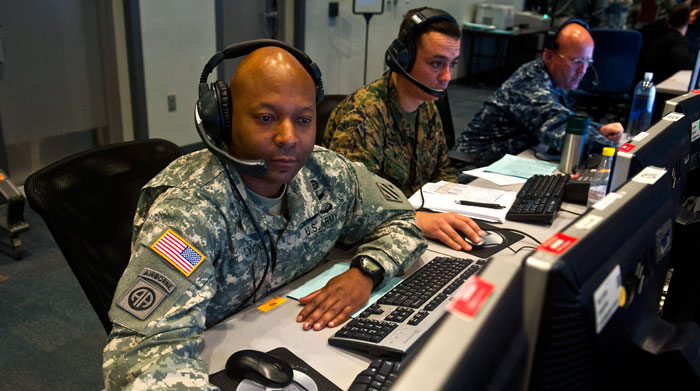
    Army Chief Warrant Officer 2 Michael Lyons looks through information on a workstation inside the Combined Air and Space Operations Center-Nellis during Red Flag 14-1, on Feb. 5, 2014, at Nellis Air Force Base, Nev. This is the first exercise that truly integrates advanced operational and tactical air, space and cyber training in a live, virtual, constructive environment. Lyons is a Joint Tactical Communications Office communications operator. photo: USAF, by Brett Clashman
    Army Chief Warrant Officer 2 Michael Lyons looks through information on a workstation inside the Combined Air and Space Operations Center-Nellis during Red Flag 14-1, on Feb. 5, 2014, at Nellis Air Force Base, Nev. This is the first exercise that truly integrates advanced operational and tactical air, space and cyber training in a live, virtual, constructive environment. Lyons is a Joint Tactical Communications Office communications operator. photo: USAF, by Brett Clashman


    When Red Flag 14-2 started three weeks later, information aggressors were also hard at work. “The integrated cyber domain is key to providing a realistic full-spectrum opposing force training environment for our war fighters,” said Quinn Carman, 57th Information Aggressor Squadron technical lead and team chief.

    “”This is an asymmetric capability that we’re scratching at the surface to employ” Brig. Gen. Robert J. Skinner, XO AFCYBER “

    “In any modern conflict, our forces are going to face an enemy which will use cyber both directly and indirectly to deny, degrade and disrupt. The 57th IAS is able to bring threat-representative cyber capabilities to the Red Flag Exercise as a part of a complete and integrated Aggressor Opposing Force.

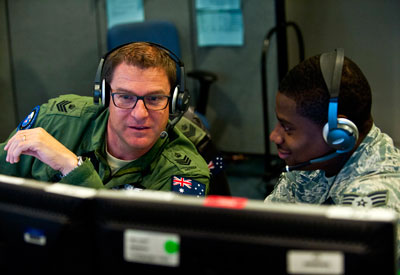
    Royal Australian air force Flight Sgt. Sean Bedford (left) and U.S. Air Force Senior Airman Frederick analyze air missile defense systems inside the Combined Air and Space Operations Center-Nellis during Red Flag 14-1, on Feb. 5, 2014, at Nellis Air Force Base, Nev. Space duty technicians direct air missile ballistic warnings and provide communication to combat search and rescue teams. Beford is an Australian Space Operations Centre space duty technician and Frederick is a 603rd Air and Space Operations Center space duty technician. Photo: USAF, Brett Clashman
    Royal Australian air force Flight Sgt. Sean Bedford (left) and U.S. Air Force Senior Airman Frederick analyze air missile defense systems inside the Combined Air and Space Operations Center-Nellis during Red Flag 14-1, on Feb. 5, 2014, at Nellis Air Force Base, Nev. Space duty technicians direct air missile ballistic warnings and provide communication to combat search and rescue teams. Beford is an Australian Space Operations Centre space duty technician and Frederick is a 603rd Air and Space Operations Center space duty technician. Photo: USAF, Brett Clashman

    “The warfare centre fundamentally changed how Red Flag is being carried out this year in an effort to fully integrate non-kinetic operations and intelligence, surveillance and reconnaissance capabilities. “Developments happening with cyber and ISR are all in preparation for operations in a contested environment,” said Capt. Andrew Caulk, a spokesman for AFISRA. “We train like we fight.” Changes to the Red Flag construct, which now links scenarios across several days, allowed intelligence to be gathered in a more realistic world setting. This Red Flag was also the first time 24th AF has been fully integrated with the Air Force Intelligence, Surveillance and Reconnaissance Agency.

    Subscribe to read more...
    Subscribe to read more…

    “This is an asymmetric capability that we’re scratching at the surface to employ,” said Brig. Gen. Robert J. Skinner, the AFCYBER deputy commander. “We are more engaged with Red Flag, allowing more opportunities to provide mission effects at the point of our choosing and at the drop of a hat for joint force commanders to use… We use Red Flag for advanced training to hone our skills, and we continue to learn great lessons to employ in the next one,” Skinner said. “You can see us taking advantage of operations to become better, faster and leaner.” RAAF No.77 Squadron Group Capt. Robert Chipman confirmed,”The immersion into the fog of war is just phenomenal in Red Flag, and that’s what really sets it apart from any other exercises we’ve participated in… You’re expected to be ready to perform in a complex air environment on day one.”

    Turkey distancing from missile deal with China

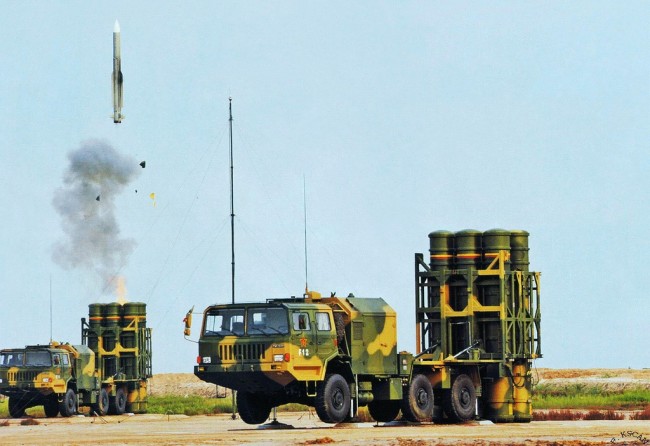
    FD2000 is the export version of the HQ-9 (dubbed the Chinese S300). FD2000 provides improved anti-stealth capability by incorporating the Type 120 low altitude search radar, and Type 305A AESA search radar for full anti ballistic missile capability, and YLC-20 passive sensor, improving counter-stealth capability.

    Objections of Western allies and reservations of local subcontractors over potential consequences of association with the blacklisted CPMIEC are distancing the Chinese contractor from the coveted $3.44 Billion missile defense contract with Ankara – Hurriyet Daily News reports.

    FD2000 is the export version of the HQ-9 (dubbed the Chinese S300). FD2000 provides improved anti-stealth capability by incorporating the Type 120 low altitude search radar, and Type 305A AESA search radar for full anti ballistic missile capability, and YLC-20 passive sensor, improving counter-stealth capability.
    FD2000 is the export version of the HQ-9 (dubbed the Chinese S300). FD2000 provides improved anti-stealth capability by incorporating the Type 120 low altitude search radar, and Type 305A AESA search radar for full anti ballistic missile capability, and YLC-20 passive sensor, improving counter-stealth capability.

    After months of consistent support for the deal, Turkey’s defense procurement establishment and intended industry partners are wearing down over the potential $3.44 billion deal with China Precision Machinery Import-Export Corp (CPMIEC), as the administration reassesses the broader consequences of their September 2013 decision to award the controversial contract to  the Chinese company. With CPMIEC being on the US black list, its potential Turkish subcontractors would be exposed to similar sanctions. “Aselsan is especially increasingly cautious,” Hurriyet quoted an anonymous source in the defense administration, military electronics specialist Aselsan, Turkey’s biggest defense firm, has been designated as the program’s prime local subcontractor.

    Turkey has come under strong pressure from its NATO allies since it announced its decision over the T-LORAMIDS long-range air and anti-missile system. Ankara said it had chosen CPMIEC FD-2000 missile-defense system over rival offers from Franco-Italian Eurosam SAMP/T and Raytheon of the United States. Ankara said the decision was based on better price and better terms of technology transfer but the selection raised much controversy among NATO allies, refusing to allow integration of the Chinese system into the NATO air defense network and fact that the Chinese company has been sanctioned under the Iran, North Korea and Syria non proliferation act.

    Turkey’s Defense Industry Executive Committee oversees major procurement decisions, including the air defense system. The committee is chaired by Prime Minister Recep Tayyip Erdoğan, while its other members include Defense Minister İsmet Yılmaz, Chief of General Staff Gen. Necdet Özel and SSM chief Murad Bayar. Bayar said Feb. 27 that Turkey was aiming to decide on talks with CPMIEC and finalize a roadmap on the program next month. “Our talks with China are ongoing. We have extended the bidding until the end of April. We are aiming to get results in early April on this,” Bayar said.

    There are indications that Turkey’s procurement agency, the Undersecretariat for Defense Industries (SSM), may have distanced itself from the Chinese option. “We think that the SSM now has a more NATO-centric view over the competition, not just military,” a Turkish security official dealing with NATO said. NATO and U.S. officials have said any Chinese-built system could not be integrated with Turkey’s joint air defense assets with NATO and the U.S. and that it may harm Turkey’s relations with the alliance.

    Final decision would be made by a committee chaired by Erdoğan. However, pre-election political turbulence in Turkey may have diverted Erdoğan’s attention from the contract. “The prime minister has been pro-active in all stages of the program. But we are not sure if this is a priority matter for him at the moment.” Defense officials told Hurriyet the program may drag into further uncertainty after local polls on March 30. “A decision on a program of this size and complexities may require better political stability than we have today,” one source said.


    Russia ‘Welcomes’ the US Destroyer Truxtun, by Moving Bastion Anti-Ship Missiles to Crimea

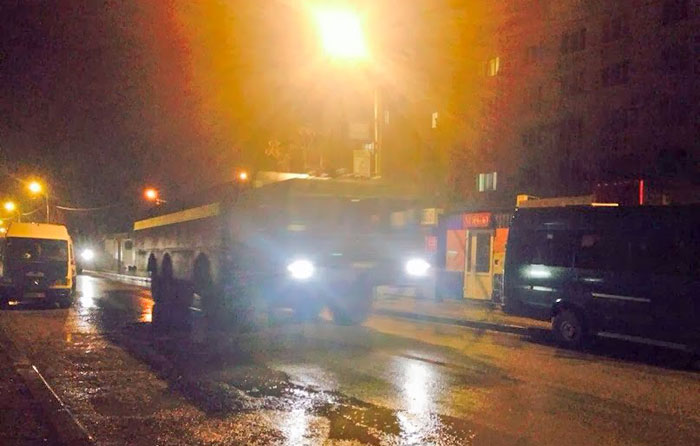
    Bastion launcher carrier were moved to Crimea last night.
    Bastion launcher carriers were moved to Crimea last night.

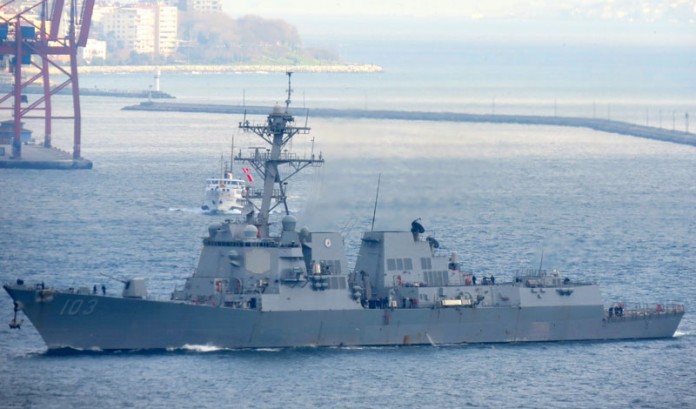
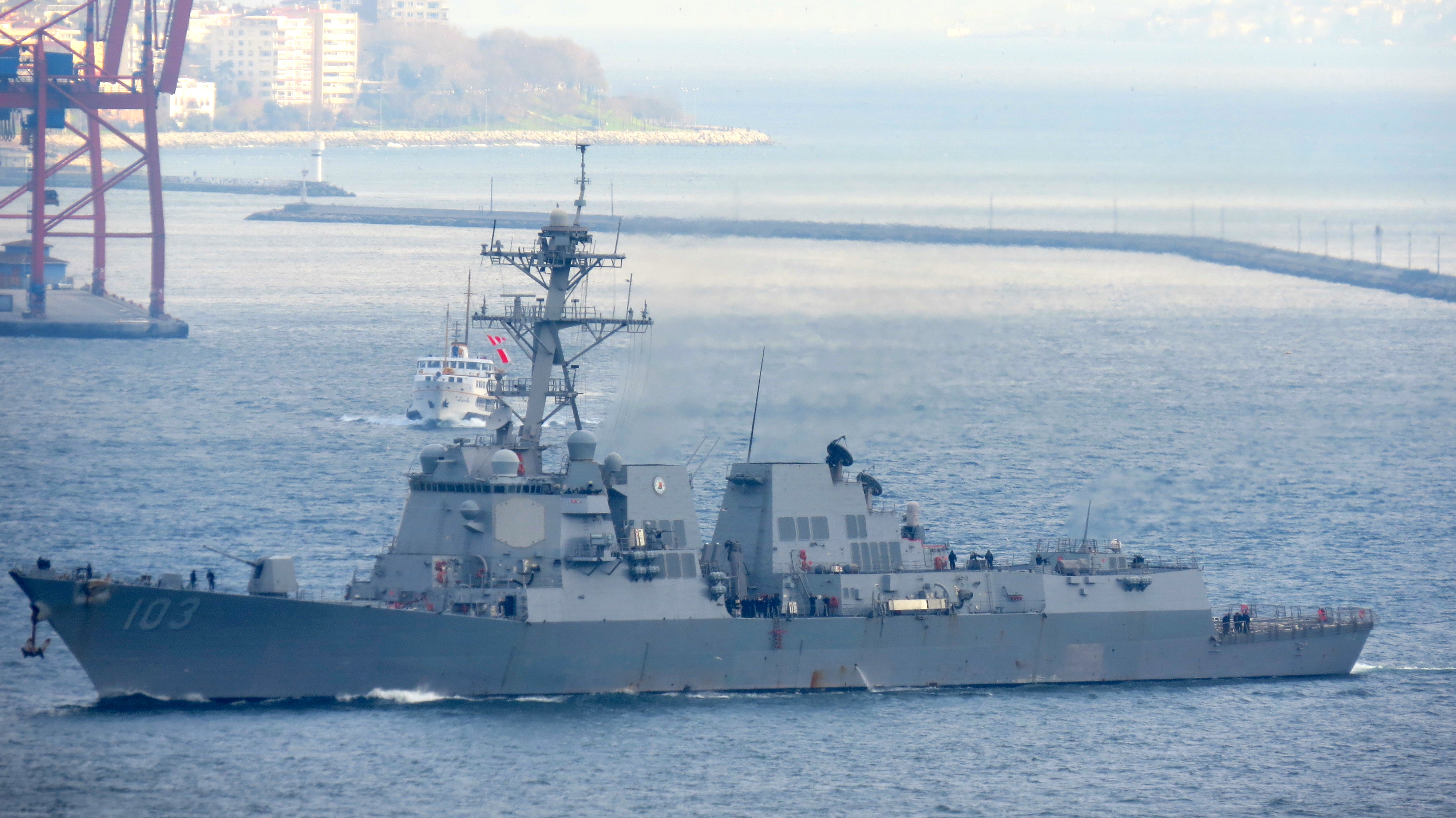
    Unconfirmed news reports claim the Russian Navy is deploying land-based ‘Bastion’ anti-ship missile systems as a response to the recent U.S. move entering two naval vessels to the Black Sea. The two American Arleigh Burke class destroyer USS Truxtun (DDG-103) crossed the Bosphorus Strait Friday, headed into the Black Sea, as tensions simmer over Ukraine’s Crimea region. The Russians also moved two naval combatants from the Mediterranean Task Force back to the Black Sea Fleet. Tension is mounting in the Crimea Peninsula with the preparations for a referendum on independence from Ukraine later this week.

    As of today, the Truxtun remain the only US warship in the Black Sea following the southbound passage of FF(G)-50 USS Taylor through the Bosphorus. The Taylor, a Perry class frigate was deployed to the Black Sea before the 2014 Sochi Olympic Games started. USS Taylor and the flag ship of the US 6th Fleet USS Mount Whitney were sent to the Black Sea to help with the evacuation of US athletes and spectators in case of an terror attack to the Games. However, when visiting the Black Sea port of Samsun, Turkey, the frigate damaged her propelled and had to be towed away to Souda, Crete for repairs.

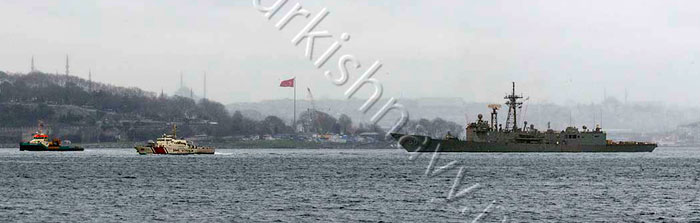
    USS Taylor being towed by the tug Coastal Voyager. The tug Kurtaran 1 from Turkish Coastal Safety Agency is preventing the ship from drifting at the back. Turkish Coast Guard vessel TCSG-90 is providing security. Photo via Turkishnavy.net
    USS Taylor being towed by the tug Coastal Voyager. The tug Kurtaran 1 from Turkish Coastal Safety Agency is preventing the ship from drifting at the back. Turkish Coast Guard vessel TCSG-90 is providing security. Photo via Turkishnavy.net

    The US Navy said in a statement on Thursday that the ship was bound for the Black Sea to conduct military exercises with Bulgarian and Romanian naval forces. According to the Montreux Convention, warships of countries which do not border the Black Sea can only stay in the waters for 21 days.

    The Bastion anti-ship missile system was deployed last night (8-9 March) to Sevastopol from the Russian town of Anapa, Krasnodar, about 250 miles to the East. Follow bystanders recorded the movement of Bastion anti-ship launcher complex on the streets Crimea. The K-300P Bastion-P employs P-800 Yakhont (SS-N-26) anti-ship cruise missile hypersonic anti-ship missiles carried on mobile transporter-erector-launchers (TEL) is a Russian. The missiles are used as mobile coastal defence systems, having an effective range of 300 km.

    truxtun800
    USS Truxtun Passed Through The Bosphorus March 8, 2014. Photo: Ms. Eser Çelebiler, via Turkishnavy.net

    Successful EXCALIBUR Test Brings DARPA Closer to Compact High Energy Lasers

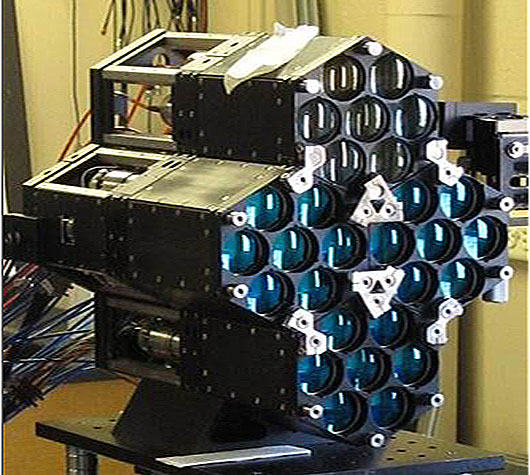
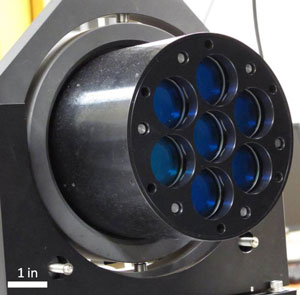
    The compact optical array used for the Excalibur phased array laser test included three modules, each comprising seven separate laser channels and measuring only 10 centimeters across. Photo: DARPA
    The compact optical array used for the Excalibur phased array laser test included three modules, each comprising seven separate laser channels and measuring only 10 centimeters across. Photo: DARPA
    The compact optical array used for the Excalibur phased array laser test included three modules, each comprising seven separate laser channels and measuring only 10 centimeters across. Photo: DARPA

    DARPA successfully tested an optical phased array (OPA) combining 21 laser beams, as part of the Excalibur program. With each of the 21 array elements driven by fiber laser amplifiers the low power array was able to precisely hit a target at a distance of 7 kilometers (4.3 miles). In three years the agency expects to scale up the design, delivering 100 kW weapon-class energy levels on target.

    The OPA used in these experiments consisted of three identical clusters of seven tightly packed fiber lasers, each cluster measures only 10 centimeters across. According to Joseph Mangano, DARPA program manager, the agency is planning to scale up the design over the next three years, ultimately transmitting up to 100 kilowatts of power – levels otherwise difficult to achieve in such a small package.

    “Beyond laser weapons, this technology may also benefit low-power applications such as laser communications and the search for, and identification of, targets.” Joseph Mangano, DARPA PM

    Future tests aim to prove the OPA’s capabilities in even more intense environmental turbulence conditions and at higher powers. Such advances may one day offer improved reliability and performance for applications such as aircraft self-defense and ballistic missile defense.

    The recent test employed four of these modules  grouped into a laser arrays. DARPA plans to test coherent array of 10's of these subapertures, each driven with a multi-kW coherently combinable fiber laser amplifiers, to deliver ~100 kW class laser systems for precision strikes against both ground and air targets. Photo: DARPA
    The recent test employed four of these modules grouped into a laser arrays. DARPA plans to test coherent array of 10’s of these subapertures, each driven with a multi-kW coherently combinable fiber laser amplifiers, to deliver ~100 kW class laser systems for precision strikes against both ground and air targets. Photo: DARPA

    “The success of this real-world test provides evidence of how far OPA lasers could surpass legacy lasers with conventional optics,” said Mangano, “With power efficiencies of more than 35 percent and the near-perfect beam quality of fiber laser arrays, these systems can achieve the ultra-low size, weight and power requirements (SWaP) required for deployment on a broad spectrum of platforms,” said Mangano. “Beyond laser weapons, this technology may also benefit low-power applications such as laser communications and the search for, and identification of, targets.”

    In addition to scalability, Excalibur demonstrated near-perfect correction of atmospheric turbulence — at levels well above that possible with conventional optics. While not typically noticeable over short distances, the atmosphere contains turbulent density fluctuations that can increase the divergence and reduce the uniformity of laser beams, leading to diffuse, shifted and splotchy laser endpoints, resulting in less power on the target.

    “In addition to scalability, Excalibur demonstrated near-perfect correction of atmospheric turbulence — at levels well above that possible with conventional optics.”

    The recent Excalibur demonstration used an ultra-fast optimization algorithm to effectively “freeze” the deeply turbulent atmosphere, and then correcting the resulting static optically aberrated atmosphere in sub-milliseconds to maximize the laser irradiance delivered to the target. These experiments validated that the OPA could actively correct for even severe atmospheric distortion. The demonstration ran several tens of meters above the ground, where atmospheric effects can be most detrimental for military applications. In addition, these experiments demonstrated that OPAs might be important for correcting for the effects of boundary layer turbulence around aircraft platforms carrying laser systems.

    The successful demonstration helps advance Excalibur’s goal of a 100-kilowatt-class laser system in a scalable, ultra-low SWaP OPA configuration compatible with existing weapon system platforms. Continued development and testing of Excalibur fiber optic laser arrays may one day lead to multi-100 kilowatt-class High-energy lasers (HEL) in a package 10 times lighter and more compact than legacy high-power laser systems.

    Under the Excalibur program DARPA explores the development of coherent optical phased array technologies able to reduce the size and weight of laser weapons 10 times lighter and more compact than existing high-power chemical laser systems. The optical phased array architecture provides electro-optical systems with the same mission flexibility and performance enhancements that microwave phased arrays provide for RF systems. As such, future multifunction Excalibur arrays may also perform tasks including laser radar, target designation, laser communications, and airborne-platform self protection.

    “Excalibur fiber optic laser arrays may one day lead to multi-100 kilowatt-class HELs in a package 10 times lighter and more compact than legacy high-power laser systems”

    Unlike the chemical lasers that rely on a single high power source, these phased arrays will coherently combine lower-power electrically driven lasers, such as diode lasers and fiber laser amplifiers. Coherently combinable single-mode diode lasers and fiber-based systems can provide overall laser efficiencies greater than 50 percent and 30 percent, respectively, while maintaining near-diffraction-limited beam quality. To produce a weapons-grade system, however, their output power must be increased without introducing additional optical phase noise and modal instability. Beam-steering technologies will be pursued to make these arrays conformal with the airframe, to provide rapid retargeting across a large field of regard, and to compensate for the effects of atmospheric turbulence.

    High-energy lasers have the potential to benefit a variety of military missions, particularly as weapons or as high-bandwidth communications devices. However, the massive SWaP of legacy laser systems limit their use on many military platforms. Even if SWaP limitations can be overcome, turbulence manifested as density fluctuations in the atmosphere increase laser beam size at the target, further limiting laser target irradiance and effectiveness over long distances.

    Australia Continues Heron I Mission in Afghanistan

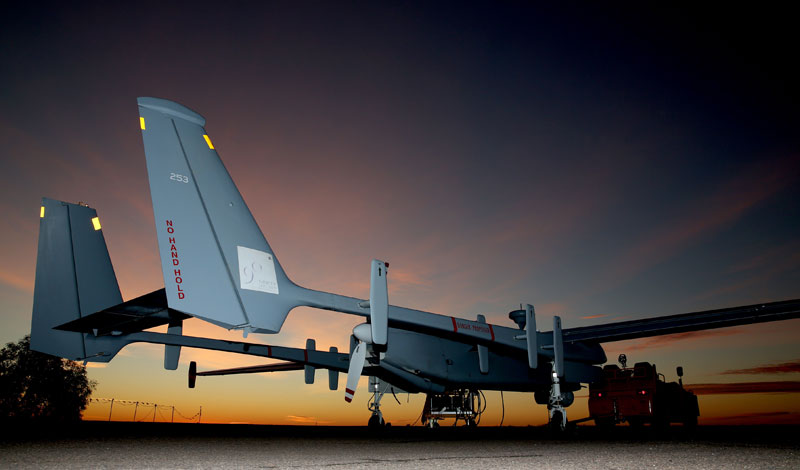
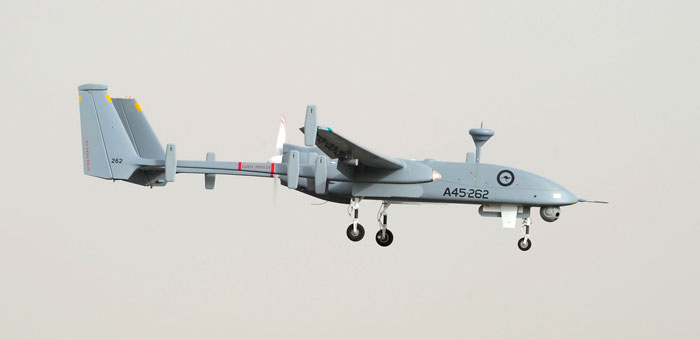
    Heron I RPA are operating from Kandahar airbase, Afghanistan and from Woomera Test Range in South Australia, where operators are trained for the missions in Afghanistan. Photo: RAAF, Aaron Curran
    Heron I RPA are operating from Kandahar airbase, Afghanistan and from Woomera Test Range in South Australia, where operators are trained for the missions in Afghanistan. Photo: RAAF, Aaron Curran
    Heron I RPA are operating from Kandahar airbase, Afghanistan and from Woomera Test Range in South Australia, where operators are trained for the missions in Afghanistan. Photo: Australian defence by Aaron Curran

    While coalition forces begin to withdraw from Afghanistan, the Heron I remotely piloted aircraft (RPA) operated with the Australian Heron Detachment is set to continue providing invaluable Intelligence, Surveillance and Reconnaissance (ISR) information to coalition troops operating inside Afghanistan, well into 2014. Built by Israel Aerospace Industries, the Heron I is leased and operated by the Canadian company MDA.

    In November 2013 the Australian Heron detachment marked the 20,000 operational flight hours milestone. The Heron RPAs (newspeak for Unmanned Aerial Vehicle or UAV) are flying between 400 to 500 hours each month, performing medium altitude, long endurance (MALE) missions. It can conduct single missions in excess of 24 hours, with a maximum speed of more than 100 knots (180 km/h) at altitudes of up to 10,000 metres.

    According to Royal Australian Air Force sources, the decision to extend the Heron mission sees the Tri-Service Detachment working for a new client, ISAF (International Security Assistance Force) Regional Command South. Based at Kandahar Airfield, Heron Detachment’s ongoing tenure in Afghanistan originated from a request from ISAF to the Australian Government.

    A Heron returns to Kandahar from a recce mission. On such mission the drone carries an EO/IR and COMING payload. The Australian Air Force Heron detachment operates from the Kandahar Airfield in Southern Afghanistan. Photo: RAAF, Raymond Vance
    A Heron returns to Kandahar from a recce mission. On such mission the drone carries an EO/IR and COMING payload. The Australian Air Force Heron detachment operates from the Kandahar Airfield in Southern Afghanistan. Photo: RAAF, Raymond Vance

    Heron detachment Payload Operator, Flight Lieutenant Zalie Munro-Rustean, in the Ground Control Station at the Heron compound at Kandahar Airfield. Photo: RAAF Paul Berry
    Heron detachment Payload Operator, Flight Lieutenant Zalie Munro-Rustean, in the Ground Control Station at the Heron compound at Kandahar Airfield, 2011. Photo: RAAF Paul Berry

    Previously the Herons were supporting exclusively the Australian forces operating in Uruzgan. They will now support coalition forces through their operations in Southern Afghanistan. The Tri-Service Detachment Rotation 13 is expected to return to Australia by mid-year 2014.

    Unlike small unmanned aerial vehicles (UAVs), the 1.1 tonne Heron Remotely Piloted Aircraft is operated from an airfield runway in conjunction with other manned aircraft. The Australian Heron is based at Kandahar, which is anecdotally the busiest single-runway airfield in the world. To ensure the safe and effective operation of the aircraft at such a busy airfield, Air Force uses military pilots who have experience with the complex and dynamic airspace to pilot the Heron.

    Pilots qualified on Army helicopters, F/A-18 Hornets, F-111s, AP-3C Orion and C-130J Hercules have deployed and operated the Heron Remotely Piloted Aircraft since August 2009. The Heron pilot is supported by a Payload (Sensor) Operator who also acts as co-pilot for the Heron.

    In addition, up to seven operational staff process, analyse and disseminate information from the Heron’s sensors. The operational staff may include aircrew, intelligence staff, operations officers, engineering staff, administration officers and logisticians.

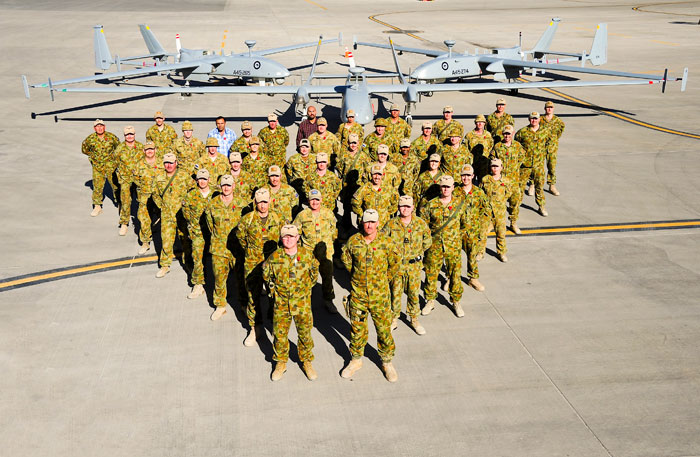
    In November 2013 the Royal Australian Air Force Air Component completed 20,000 combat flying hours in Afghanistan. In this photo, the unit commander Group Captain Tony McCormack stands alongside members of the Heron Remotely Piloted Aircraft Detachment (Rotation 13) that operated the mission on this milestone flight.  Each Heron detachment consists of about 30 ADF personnel based at Kandahar Airfield in Southern Afghanistan. Photo: RAAF Chris Moore
    In November 2013 the Royal Australian Air Force Air Component completed 20,000 combat flying hours in Afghanistan. In this photo, the unit commander Group Captain Tony McCormack stands alongside members of the Heron Remotely Piloted Aircraft Detachment (Rotation 13) that operated the mission on this milestone flight. Each Heron detachment consists of about 30 ADF personnel based at Kandahar Airfield in Southern Afghanistan. Photo: RAAF Chris Moore
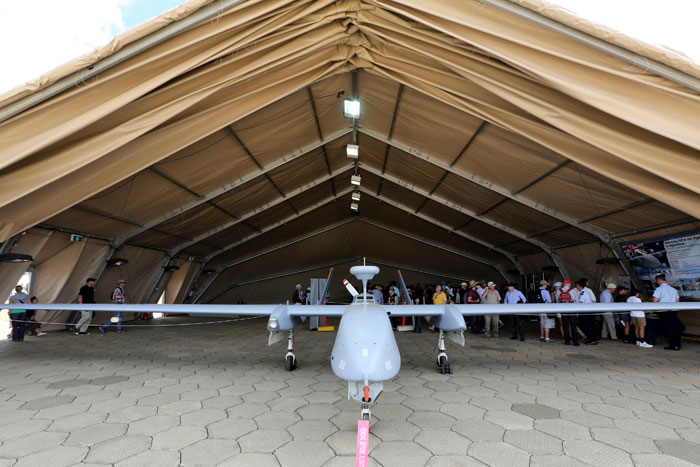
    On 1-2 March the RAAF hosted the Centenary of Military Aviation Air Show at RAAF Williams - Point Cook. Among the popular attractions at the show was the Heron Remotely Piloted Aircraft (RPA), displayed in a deployable hangar. Photo: Australian Defence by Aaron Curran
    On 1-2 March the RAAF hosted the Centenary of Military Aviation Air Show at RAAF Williams – Point Cook. Among the popular attractions at the show was the Heron Remotely Piloted Aircraft (RPA), displayed in a deployable hangar. Photo: Australian Defence by Aaron Curran

    Vladivostok – Mistral Class LHD Bound for Russia Begins Sea Trials in the Atlantic

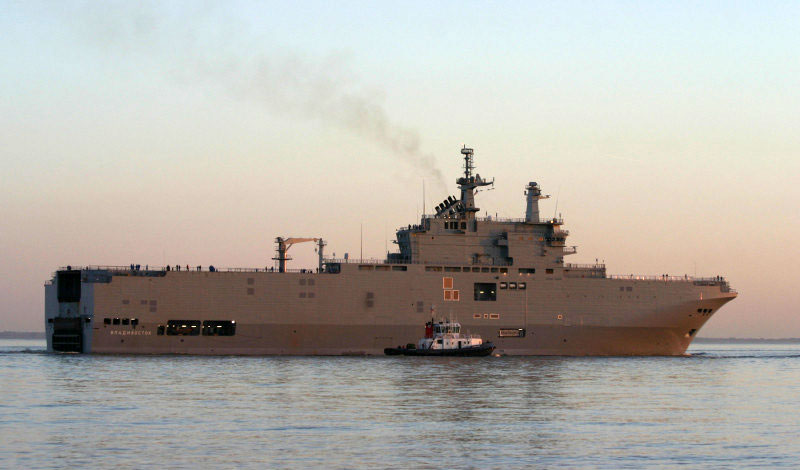
    In March 2014 Vladivostok began her sea trials sailing out of the Atlantic port of Saint Nazaire.

    A French-built helicopter carrier Vladivostok has set sail from the French Atlantic port of Saint-Nazaire on its first sea trial. The warship is part of a 1.2-billion-euro deal ($1.6-billion) that marked the biggest-ever sale of NATO weaponry to Moscow.

    In March 2014 Vladivostok began her sea trials sailing out of the Atlantic port of Saint Nazaire.
    On March 5, 2014 Vladivostok began her sea trials sailing out of the Atlantic port of St. Nazaire.

    The Vladivostok is on track to be delivered by the last quarter of this year, said spokesman Emmanuel Gaudez of DCNS, a state-backed naval shipbuilder manufacturing the warships along with South Korean-controlled shipbuilder STX. A sister ship, the Sevastopol is scheduled to be delivered about a year later.

    The two carriers will be delivered to the Russian Pacific Fleet in 2015 and 2016. Under the contract, France shall build each Mistral ship within 36 months. The first of them, the Vladivostok, is to arrive in St. Petersburg from Saint-Nazaire, France, in December 2014. The vessel will receive its additional Russian systems at the Severnaya Verf shipyard in St. Petersburg, and then be handed over to Russia’s Pacific Fleet in November 2014.

    The Vladivostok will carry eight Ka-52K attack helicopters and eight Ka-29 anti-submarine/multi-mission helicopters.
    The Vladivostok will carry eight Ka-52K attack helicopters and eight Ka-29 anti-submarine/multi-mission helicopters.

    The Mistral-class assault landing ship has a displacement of 21,000 tons; its overall length is 210 meters. The vessel can operate on missions at ranges of up to 20,000 miles sailing at a speed of over 18 knots. It is operated by a crew of 160 men plus 450 marines. The air wing operating on board comprises 16 helicopters, of which six are placed on the flight deck. The Russian Navy plans to deploy eight Ka-52K attack helicopters and eight Ka-29 multi-mission/ASW helicopters on the ship.

    Agreement on Mistral ships is one of the largest contracts in the history of Russian-French military cooperation. Moscow and Paris signed the EUR 1.2-bln contract for two Mistrals in June 2011.

    The first crew comprising 177 seamen and 60 instructors is already undergoing training in France. The first stage of training began in February and will continue until the end of May. The second stage will take place from June through October in Saint-Nazaire both onshore and onboard the Vladivostok.

    Supporting the Russian Pacific Fleet, the two vessels are expected to increase the at-sea to in-port ratio of the Fleet, increasing the average mission endurance of the new vessels. The port facilities for the two ships will be located at an existing naval base on the shore of the Uliss Bay near the Far East city of Vladivostok.

    Vladivostok under construction at DCNS' shipyard at St Nazaire. Photo: Christian Plagué.
    Vladivostok under construction at DCNS’ shipyard at St Nazaire. Photo: Christian Plagué.

    Sonardyne Maritime Security Delivers Largest Sentinel Order to Asian Customer

    Sentinels sonars are commonly used to protect critical infrastructure facilities, offshore platforms, sea ports or private yachts at anchor. Photo: Sonardyne

    Sentinels sonars are commonly used to protect critical infrastructure facilities, offshore platforms, sea ports or private yachts at anchor. Photo: Sonardyne
    Sentinels sonars are commonly used to protect critical infrastructure facilities, offshore platforms, sea ports or private yachts at anchor. Photo: Sonardyne
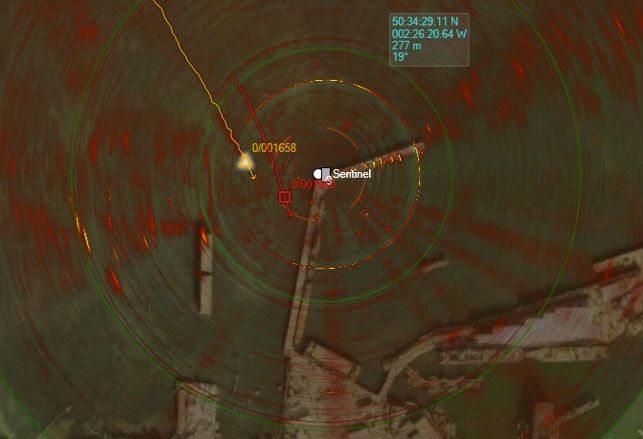
    Sonardyne International has announced the delivery of its largest ever order of Sentinel Intruder Detection Sonar systems to an undisclosed country in Asia. The sonars will be deployed to protect strategically important naval bases across the country and will be configured to provide long range, wide area detection, tracking and classification of underwater threats.

    The system uses Sonardyne’s latest tracking software that combines data from multiple sonars to produce a single picture of the underwater environment, providing wide area situational awareness to operators and commanders.

    Sentinel was developed to meet the underwater security requirements of private, commercial, government and naval end users. The system is designed to detect, track and classify divers and small underwater vehicles approaching a protected asset. Such systems are commonly used to protect critical infrastructure facilities, offshore platforms, sea ports or private yachts at anchor. Once deployed, the system provides autonomous monitoring of its surrounding over 360° and at long range, and low false alarm rates.

    Once deployed, Sentinel provides autonomous monitoring of its surrounding over 360° and at long range, and low false alarm rates. Photo: Sonardyne
    Once deployed, Sentinel provides autonomous monitoring of its surrounding over 360° and at long range, and low false alarm rates. Photo: Sonardyne

    Skunk Works and XTEND Simplify Multi-Drone Command

    0
    Lockheed Martin Skunk Works® and XTEND have achieved a major milestone in JADC2 by integrating the XOS operating system with the MDCX™ autonomy platform. This technical breakthrough enables a single operator to simultaneously command multiple drone classes, eliminating the friction of mission handoffs. From "marsupial" drone deployments to operating in GPS-denied environments, explore how this collaboration is abbreviating the data-to-decision timeline and redefining autonomous mission execution.

    From Ukraine to Taiwan: The Global Race to Dominate the New Defense Tech Frontier

    0
    As traditional defense primes face mounting competition from agile “neoprimes” such as Anduril, Palantir and Helsing, the balance of innovation is shifting toward software-defined warfare and scalable, dual-use technologies, while global industry consolidation—marked by Boeing’s integration of Spirit AeroSystems and other strategic mergers—signals an intensified race to secure control over the defense technology value chain. Our Defense-Tech weekly report highlights these trends.

    Europe’s “Drone Wall”

    0
    In early October 2025, a coordinated wave of unmanned aerial system (UAS) incursions—widely attributed to Russia—targeted critical infrastructure across at least ten European nations. The unprecedented campaign exposed the fragility of Europe’s air defenses...

    Weekly Defense Update & Global Security Assessment

    0
    Executive Summary The past week (September 18-25, 2025) represents an inflection point where strategic defense concepts have transitioned from doctrine to tangible reality. An analysis of global events reveals four primary, interconnected trends shaping an...

    U.S. Air and Space Forces Push Next-Gen Programs at the AS&C 2025 Conference and...

    0
    At the 2025 Air, Space & Cyber Conference, U.S. Air Force and Space Force leaders unveiled major updates on next-generation fighters, bombers, unmanned systems, and space initiatives, highlighting both rapid innovation and critical readiness challenges as the services race to outpace global competitors. A short version is available here, with a more detailed version for subscribers.

    TADTE 2025: Reflecting Taiwan’s Strategic Themes

    0
    The Taipei Aerospace & Defense Technology Exhibition (TADTE) 2025 crystallized around four dominant strategic themes that collectively illustrate Taiwan's comprehensive approach to defense modernization amid escalating regional tensions. Based on a detailed report by Pleronix (available upon request). Includes a Podcast discussion on TADTE 2025's highlighting Taiwan's four strategic themes beyond the post's coverage.

    Iron Beam 450 Completes Testing, Soon to Join With Operational Air Defense Units

    0
    Israel’s Iron Beam 450 high-power laser system has completed final testing, marking a major leap in air defense. Developed by Rafael, it offers precise, cost-effective interception of rockets, UAVs, and mortars, and is set for IDF deployment by 2025.