
Friday, December 26, 2025
More
    Home Blog Page 130

    Avionics, Weapons Bay Upgrades Increase the B-52H Conventional Attack Versatility

    b52_b17
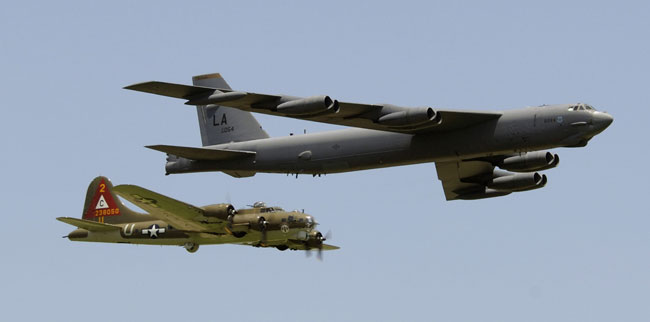
    B-17 flying along the B-52. The Stratofortress has already passed 60 years in service and is expected to remain in active service with the US Air Force through 2045. Photo: USAF

    US Air Force B-52 bombers is undergoing modifications to increase the capacity of smart weapons carried by the aircraft by 50 percent. Under a US$24.6 million contract awarded to Boeing, the company will modify existing weapon launchers to fit into the bomb bay, allowing aircrews to use the B-52’s entire weapons capacity. The bomb bay upgrade will also enable the B-52 to carry weapons internally only, increasing fuel efficiency in flight. The modernization work will use parts from existing Air Force rotary launchers repurposed for conventional missions, as well as hardware and software already developed for the wing pylons. Under a separate program known as 1790 Internal Weapons Bay Upgrade (IWBU), the bombers’ rotary launcher is rewired to digitally connect to the aircraft weapon system. The rotary launcher was originally designed to support strategic nuclear tipped weapons such as air-launched cruise missiles (ALCM) and nuclear bombs. Under the IWBU upgrade, digital interfaces are added to the rotary launcher, to fit it to support conventional weapons. Resulting from these upgrades, Two B-52 bombers will be able to carry 40 weapons, compared to three B-52s carrying 36 weapons today – thus lowering the number of crews and amounts of fuel needed for typical mission.
    b52_drops_jdam
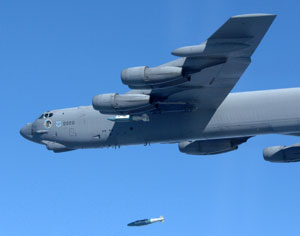
    B-52 dropping a GBU-32 JDAM over a test range in Florida. Photo: U.S. Air Force photo/ Lt. Col. Tim Pfeifer

    Boeing will produce three prototype launchers for test and evaluation. Initial capability is expected in March 2016, and potential follow-on efforts could add additional weapons and allow a mixed load of different types of weapons. Following the upgrade’s first phase, the B-52s will be able to carry 24 500-pound Joint Direct Attack Munitions (GBU 30 JDAM) or 20 2,000-pound JDAMs (GBU-32). Later phases will add the Joint Air-to-Surface Standoff Missile (AGM-158A JASSM) and its extended range variant (JASSM-ER – AGM-158B), as well as the Miniature Air Launched Decoy (MALD) and its jammer variant (MALD/J – ADM-160C).
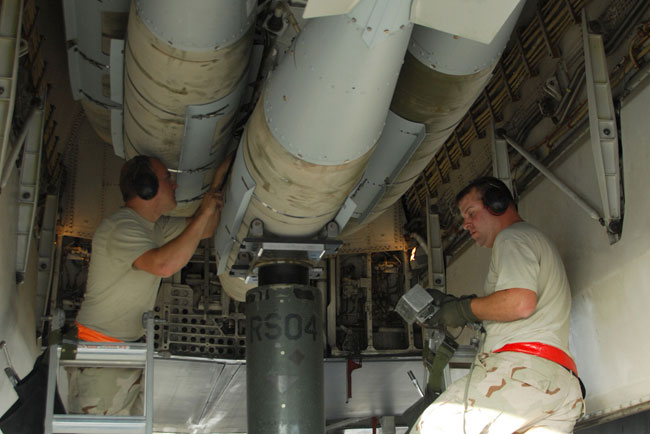
    A Weapons Load Crew with the 379th Expeditionary Aircraft Maintenance Squadron at a Southwest Asia air base, loads two-thousand pound bombs onto a B-1B Lancer to prepare it for a mission December 21. Staff Sgt. Brandon Neitz (left) and Technical Sgt. James Sheldon (right) attach the bomb to the conventional rotary launcher inside the bomb bay of the aircraft. (United States Air Force photo by Staff Sergeant Douglas C. Olsen)
    A Weapons Load Crew with the 379th Expeditionary Aircraft Maintenance Squadron at a Southwest Asia air base, loads two-thousand pound bombs onto the conventional rotary launcher carried inside the bomb bay of the B-1B Lancer. By 2017 all B-52H bombers will also be equipped with a rotary launcher modified for conventional weapons. (United States Air Force photo by Staff Sergeant Douglas C. Olsen)

    “When you combine that ability with the extremely long flying time of the B-52, you have an efficient and versatile weapon system that is very valuable to warfighters on the ground,” said Scot Oathout, Boeing’s B-52 program director. “This weapons capacity expansion joins the Combat Network Communications Technology (IWBU, CONECT) program, a $1.1 billion communication upgrade currently being installed on the aircraft, to give the warfighter even more flexibility.”

    CONECT upgrades include software and hardware such as new servers, modems, radios, data-links, receivers, and digital workstations for the crew. One piece is the ARC-210 Warrior, a beyond-line-of-sight software programmable radio able to transmit voice, data and information in real time between B-52s and ground command and control centers, allowing for the transmission and receipt of data packets and files with updated intelligence, mapping or targeting information while the aircraft is in flight. Previously, an in-flight target change required copying down coordinates, while the ARC-120 allows machine to machine transfer of that data. This is useful on long-endurance missions where targets may have changed locations in the time it takes for the B-52 to travel to the combat zone. The aircraft will be able to receive information through Link-16. “We are bringing this amazing workhorse of a bomber into the digital age and giving our customer the infrastructure necessary for continued future improvements,” Oathout commented.

    A demonstration of the massive weapon load carried by the B-52 Stratofortress. Photo: USAF
    A demonstration of the massive weapon load carried by the B-52 Stratofortress. The Common Strategic Rotary Launcher (CSRL) seen in the center is located inside the weapon bay, carrying eight air launched guided missiles (ALCM). Photo: USAF
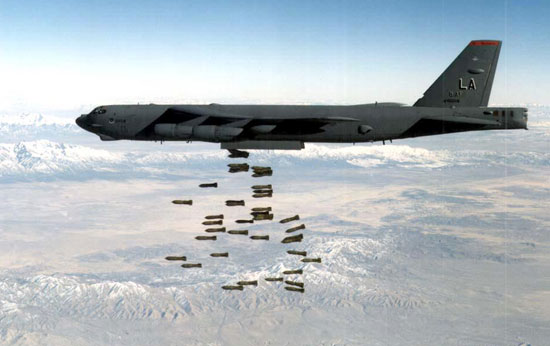
    A B-52 dropps a load of unguided conventional weapons. With the current upgrades, the aircraft would be able to carry 20-24 precision weapons, individually guided to specific targets. Photo: USAF
    A B-52 dropps a load of unguided conventional weapons. With the current upgrades, the aircraft would be able to carry 20-24 precision weapons, individually guided to specific targets. Photo: USAF

    B-52s are periodically refurbished at USAF maintenance depots such as Tinker Air Force Base, Oklahoma. The Buff is expected to remain in service at least until 2045, nearly 90 years after the first B-52 entered service. The USAF continues to rely on the B-52 because it remains an effective and economical heavy bomber, particularly in the type of missions that have been conducted since the end of the Cold War against nations that have limited air defense capabilities. The B-52 has the capacity to loiter for extended periods over (or even well outside) the battlefield, and deliver precision standoff and direct fire munitions. It has been a valuable asset in supporting ground operations during all recent conflicts. Boeing is currently delivering eight kits in 2013. The first aircraft is currently undergoing the upgrading process, to be completed by April 2014. 10 additional kits will be delievered in 2014 and 2015.

    Structurally, the airframes are still sturdy, but in terms of electronics capabilities, the bomber is a stone age relic. In July 2013, the air force began a fleet-wide upgrade of its B-52 bombers, introducing avionics, communications and cockpit upgrades under the Combat Network Communications Technology (CONECT). The new systems will enable aircrews to send and receive information via satellite links, which will enable them to change mission plans and retarget weapons while in flight. In addition, pilots will be able to interact better with other aircraft and with ground forces. Currently, mission information must be uploaded to a B-52 before a flight. Other improvements will include a state-of-the-art computing network with workstations at each crew position and an integrated digital interphone with increased capacity that will allow crew members to talk to each other on headsets equipped with noise-canceling technology. The $76 million CONECT upgrade will be performed by Boeing and covers low-rate initial production of the first CONECT kits, along with spare parts and maintenance and service at Tinker.
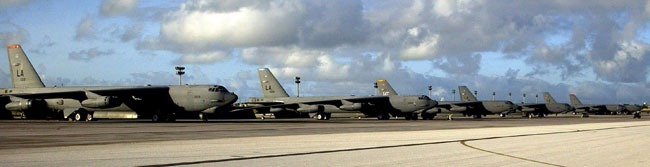
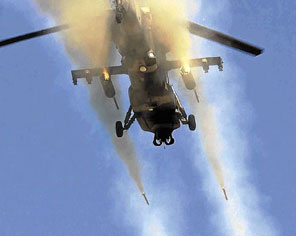
    A row of B-52 Stratofortresses from Barksdale Air Force Base, La., and Minot AFB, N.D., await their next mission on the flightline at Andersen AFB, Guam. The different colored tail markings represent the individual squadrons each bomber is assigned to at their home station. The deployment to Guam is part of a scheduled rotation of bomber units into the Pacific theater. (U.S. Air Force photo/Senior Master Sgt. Don Perrien)
    A row of B-52 Stratofortresses from Barksdale Air Force Base, La., and Minot AFB, N.D., await their next mission on the flightline at Andersen AFB, Guam. The different colored tail markings represent the individual squadrons each bomber is assigned to at their home station. The deployment to Guam is part of a scheduled rotation of bomber units into the Pacific theater. (U.S. Air Force photo/Senior Master Sgt. Don Perrien)
     

    Combat Debut for Rooivalk

    Rooivalk firing rockets on firing demonstration.
    One of three Rooivalh helicopters painted white for the mission in the Democratic Republic of Congo, was seen at SAAF AFB Bloemspruit, home to the SA Air Force’s 16 Squadron, which operates 11 Rooivalks. Photo via Defenseweb.
    One of three Rooivalh helicopters painted white for the mission in the Democratic Republic of Congo, was seen at SAAF AFB Bloemspruit, home to the SA Air Force’s 16 Squadron, which operates 11 Rooivalks. Photo via Defenseweb.

    The South African Denel DH-2 Rooivalk attack helicopter made its combat debut on Monday 4 November, 2013 while conducting armed overwatch and close air support flights of UN personnel in the Democratic Republic of Congo (DRC), South African media has reported. The SAAF deployed three Rooivalk helicopters to the DRC in late October, clearing them to begin operations on the day that this first contact took place. This is the first time Rooivalk helicopters have engaged in combat since the prototype’s first flight 23 years ago. Another South African news outlet, DefenceWeb, reported that the Rooivalks had conducted their offensive operations against M23 positions in partnership with a pair of Mil Mi-24/35 ‘Hind’ helicopters of the FIB. The report was not clear on who was operating these Hinds, but India and Ukraine are known to have contributed such helicopters to MONUSCO – the United Nations Organization Stabilization Mission in the DR Congo.

    Rooivalk firing rockets on firing demonstration.
    Rooivalk firing rockets on firing demonstration.

    Two South African Air Force (SAAF) Rooivalks fired multiple 70 mm rocket salvos against M23 rebel bunkers close to the Rwandan border, while operating on behalf of the MONUSCO and its Force Intervention Brigade (FIB). According to the South African website African Defence Review, early reports from sources in the area indicate that the action was successful, with the Rooivalks’ tactical approach through the clouds taking the M23 defenders by surprise and their rocket fire being accurate enough to disperse them and destroy one of the 14.5 mm anti-aircraft guns that had been previously used to fire at the Rooivalks and other helicopters.

    The attack was combined with a renewed FARDC (Armed Forces of the Democratic Republic of Congo) assault and subsequent claims by the DRC government that the remaining M23 senior commanders have now fled across the border into Rwanda. However this could not be independently verified. Established in November 1999 to monitor and keep the peace in the DRC, MONUSCO currently comprises some 20,688 military and police personnel from 56 countries. According to UN figures, 61 MONUSCO personnel have been killed since the mission began.

    50 Modernized T-72B1 to Upgrade Military Units in Eastern Russia

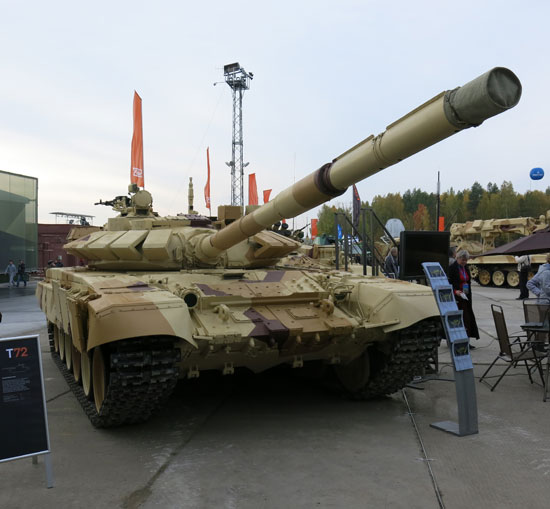
    T72B1 displayed at the recent RAE 2013 arms exhibition at Nizhny Tagil. Photo: Noam Eshel, Defense-Update
    T72B1 displayed at the recent RAE 2013 arms exhibition at Nizhny Tagil. Photo: Noam Eshel, Defense-Update

    More than 50 modernized T-72 main battle tanks will be put in service with mechanized infantry brigades of the 35th Army, deployed in Russia’s Far East, by the end of 2013, a spokesman for the Eastern Military District said Wednesday. “The army will receive over 50 new T-72B1 tanks by the end of the year,” Lt. Col. Alexander Gordeyev said. He said the first shipment of new tanks will be delivered directly from tank-manufacturing plants ithis month.

    The T-72B1 is a much improved version of the T-72 main battle tank, featuring a new engine and main gun, additional armor protection and advanced fire control system among other improvements, which makes its characteristics comparable to those of a more modern T-90 tank. The main gun, an upgraded 125-mm smoothbore 2A46M, has improved performance characteristics and uses ammunition with increased armor-penetrating capability.

    VideoReport: MEADS Passes Major Milestone Conducting Two Simultaneous Intercepts at White Sands

    MEADS tested in 2013
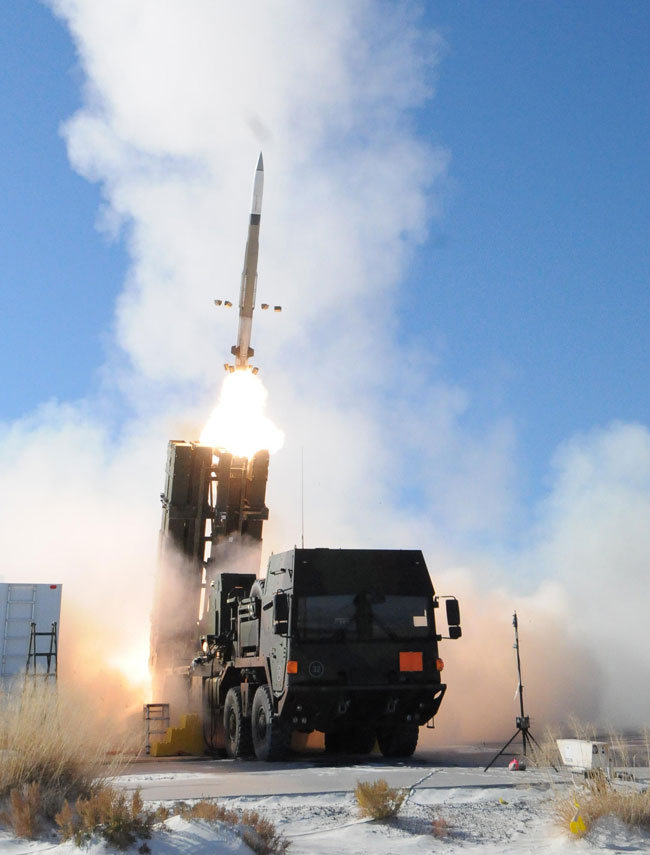
    MEADS firing two Patriot MSE missiles in a 'shoot-shoot' protocol, engaging a balistic missile target on a flight test at White Sands yesterday. Photo: MEADS International.
    MEADS firing two Patriot MSE missiles in a ‘shoot-shoot’ protocol, engaging a balistic missile target on a flight test at White Sands yesterday. Photo: MEADS International.

    The Medium Extended Air Defense System (MEADS) has passed an important milestone today, intercepting and destroying two simultaneous targets attacking from opposite directions during a stressing demonstration of its 360-degree air and missile defense (AMD) capabilities at White Sands Missile Range, N.M. Accroding to preliminary report the flight test achieved all criteria for success.

    meads_test
    According to the plan, two missiles were launched at the ballistic missile target following ‘shoot-shoot’ protocol. A third interceptor was launched at the QF-4 target, demonstrating ‘over-the-shoulder’ maneuverability of the PAC-3 MSE Missile in engaging the targets.

    The first target, a QF-4 air-breathing target, approached from the south as a Lance missile, flying a tactical ballistic missile trajectory, attacked from the north. The MEADS Surveillance Radar acquired both targets and provided target cues to the MEADS battle manager, which generated cue commands for the 360-degree MEADS Multifunction Fire Control Radar (MFCR). The MFCR tracked both targets successfully and guided missiles from launchers in the Italian and German configuration to successful intercepts. According to the plan, two missiles were launched at the ballistic missile target following ‘shoot-shoot’ protocol. A third interceptor was launched at the QF-4 target, demonstrating ‘over-the-shoulder’ maneuverability of the PAC-3 MSE Missile in engaging the targets.

    “Today’s successful flight test is the culmination of three countries working together to design, develop and build the most advanced and capable air and missile defense weapon system in the world. No fielded ground-mobile AMD System can intercept targets from two directions at the same time, as MEADS did today,” said NATO MEADS Management Agency General Manager Gregory Kee. “MEADS technology can now be leveraged as mature, network-ready battle management, sensors and launchers to achieve the networked AMD capabilities envisioned by Germany, Italy and the United States.”

    All elements of the MEADS system were tested, including the 360-degree MEADS Surveillance Radar, a networked MEADS battle manager, two lightweight launchers firing PAC-3 Missile Segment Enhancement (MSE) Missiles and a 360-degree MEADS Multifunction Fire Control Radar (MFCR). All system elements worked as planned.

    The MEADS program is 3-for-3 in achieving flight test objectives. In November 2011, MEADS performed a simulated intercept of an air-breathing target. In November 2012, MEADS acquired, tracked and destroyed an MQM-107 target. Both tests demonstrated full-perimeter, 360-degree defense with the PAC-3 MSE Missile performing unique over-the-shoulder maneuvers to defeat targets attacking from behind the MEADS emplacement.

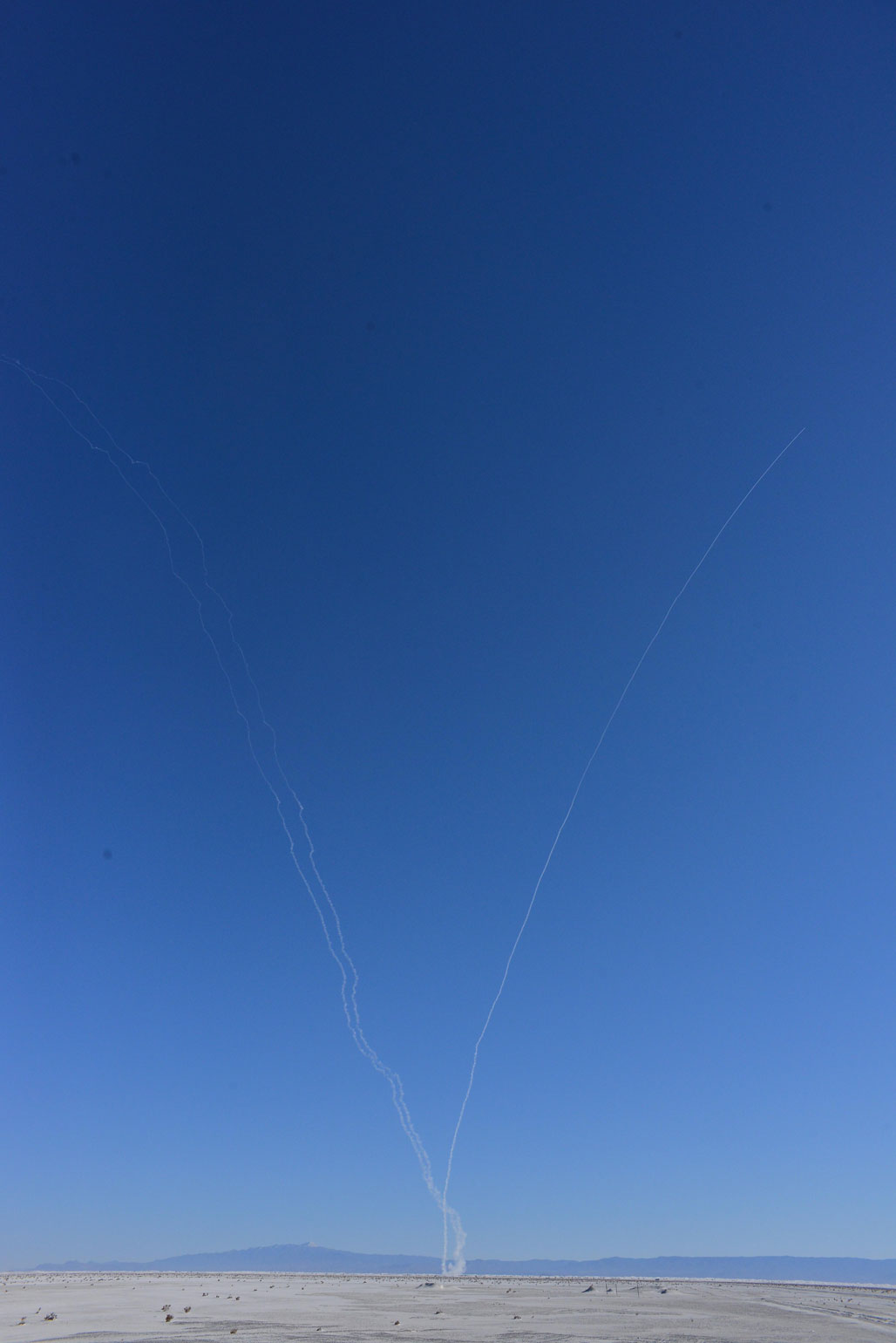
    Three smoke trails go into the sky above White Sands Missile Range during a test of the MEADS missile system. Photo: White Sands Missile Range PA
    Three smoke trails go into the sky above White Sands Missile Range during a test of the MEADS missile system. Photo: White Sands Missile Range PA

    MEADS is a next-generation, ground-mobile AMD system that incorporates 360-degree radars, netted and distributed battle management, easily transportable launchers and the hit-to-kill PAC-3 MSE Missile. The MEADS program management agency NAMEADSMA is located in Huntsville, Ala. MEADS International, a multinational joint venture headquartered in Orlando, Fla., is the prime contractor for the MEADS system. Major subcontractors and joint venture partners are MBDA in Italy and Germany, and Lockheed Martin in the United States. “Based on the maturity of the MEADS hardware and software, we asked our customer to expand this test to a dual intercept,” said MEADS International President Dave Berganini. “The MEADS program continues to meet or exceed its commitments. Earlier this year, MEADS successfully demonstrated radar cueing, interoperability with networked NATO systems during Joint Project Optic Windmill (JPOW) and certification of our Mode 5 IFF system. Now we’re thrilled to demonstrate an unprecedented dual-intercept that has met test objectives and readies MEADS for further development and testing in Europe.”

    MEADS was intended to provide the NATO replacement for the Patriot missiles, in service with Germany, Italy and the US. Unlike the Patriot covering a limited forward sector, MEADS offers hemispherical coverage and its range and missile kinematic performance are superior to that of the Patriot missile.

    Unfortunately, the program fell victim to the budgetary cuts in 2011, as the Pentagon announced it will not fund the program beyond the development phase that is expected to complete in 2014. A German decision not to procure the system has followed the US announcement, leaving Italy as the only production sponsor of the program.  Nevertheless, the National Armaments Directors of Germany, Italy, and the United States approved a contract amendment that funds two flight intercept tests, a launcher/missile characterization test, and a sensor characterization test before the MEADS Design and Development contract ends in 2014. The current test was part of that program.

    Poland is reportedly interested in the MEADS partnership, as well as Japan. If no partners are be found, defense officials hope that some of the MEADS hardware will be used to field enhancements for the Patriot missile system, providing “minimum engagement capability.”


    Thai Black Widow Spider

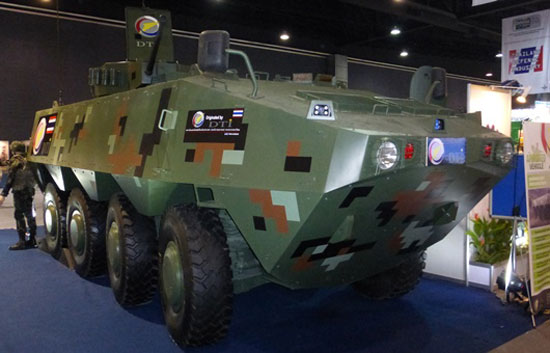
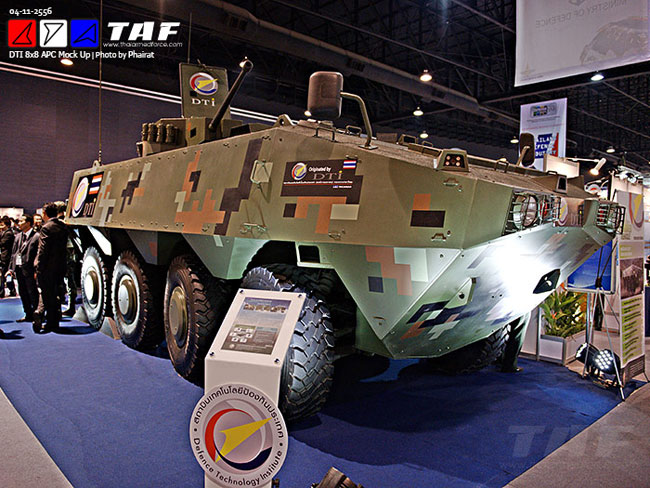
    The Black WIdow Spider 8x8 APC bears resemblence to Singapore Technologies' Kinetics Terrex infantry carrier vehicle. For the Thai vehicle DTI has teamed with British vehicle designer Ricardo. Photo: via Ricardo
    The Black WIdow Spider 8×8 APC bears resemblence to Singapore Technologies’ Kinetics Terrex infantry carrier vehicle. For the Thai vehicle DTI has teamed with British vehicle designer Ricardo. Photo: via Ricardo
    black_widow_spider_afvThe Defence Technology Institute (DTI) – the Thai ministry of defence’s research and development agency – today announced that it will partner with UK automotive designer company Ricardo on the next phase of development of its Black Widow Spider 8×8 armoured vehicle programme, developed in support of the Royal Thai Army. The vehicle has been designed by DTi over the past two years and is currently undergoing advanced development in a programme led by DTi and featuring collaboration across Thailand’s land-based defence industry base.

    DTI was set up to develop Thailand’s defence technology capability and to help build the local defence industry; the Black Widow Spider represents its first major military vehicle programme. Under the advanced development phase DTI and Ricardo have already completed the initial phase of technology development for the Black Widow Spider 8×8, and displayed the vehicle configuration at the recent Defence & Security 2013 exhibition hosted in Bangkok. The vehicle has been designed to provide protected firepower and extreme mobility in reconnaissance, command and control and fire support roles.

    “DTI and Ricardo have agreed to work together to develop the next phase of the Black Widow Spider 8×8 project,” confirmed Colonel Tawiwat Veeraklaew, DTI’s executive director of R&D. “I am looking forward to working closely with Ricardo on this important project for Thailand’s defence industry.”

    “Ricardo is proud to have been selected by DTI to partner with it on this key vehicle programme,” commented Andy North, Ricardo chief engineer, defence. “This work builds upon our extremely strong reputation for the design, development and production of class-leading, agile and highly crew-protected defence vehicles, including the Foxhound, WMIK and Vixen platforms used by British forces. We look forward to working with DTI on this important programme and helping to develop a truly world-class defence vehicle.”

    The Black Widow Spider 8x8 platform will be common for all variants. The APC shown on dislay has a manned turret.
    The Black Widow Spider 8×8 platform will be common for all variants. The APC shown on dislay has a manned turret.

    Pneumatic Bomb Racks for the Reaper

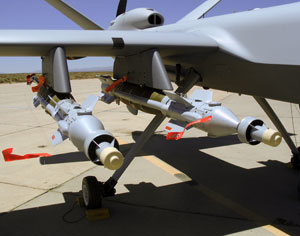
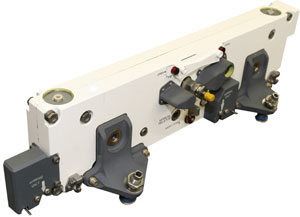
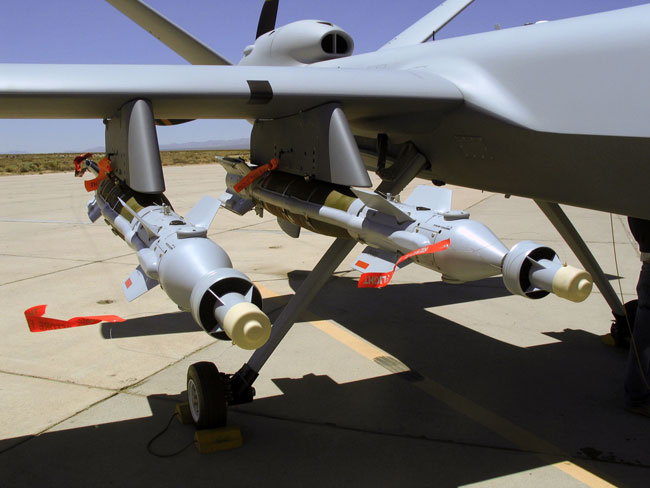
    Exelis BRU-71/A implements a pneumatic release system to carry and drop a single load up to 1000 lbs in weight. Photo: Exelis
    Exelis BRU-71/A implements a pneumatic release system providing a lightweight and efficient weapon carriage. Each BRU-71/A carries a single load of up to 1000 lbs in weight. Photo: Exelis

    Exelis is producing improved stores ejector rack for the Predator B/MQ-9 Reaper remotely piloted aircraft (RPA) under a $20.6 million contract awarded by General Atomics Aeronautical Systems Inc. This award is the second BRU-71/A (Bomb Rack Unit) follow-on production contract for Exelis. The first, for 208 units, was received in February 2011. Under the contract, Exelis will deliver 500 units beginning November 2013 through June 2015.

    The BRU-71/A delivers an advanced, high-performance airborne carriage and release capability,” said Pete Martin, director of defense systems for the Exelis electronic attack and release systems business area. “It is also one-third the weight of existing ejector racks in its class, a critical factor in the performance and endurance of unmanned platforms.”

    The BRU-71/A is a newly developed 14-inch pneumatic bomb rack recently qualified for use on the MQ-9 Reaper. At a weight of 19.4 pounds (8.8 kg) the BRU-71/A carries loads up to 1000 lbs (453 kg) in weight. The pneumatic operation offers users significant benefits over previous generation bomb racks. These include ease of loading via independent, self-latching hooks, pneumatic operation eliminating the need for pyrotechnic impulse cartridges and the resultant cleaning/maintenance actions required after weapon release, zero retention force arming units, and a high reliability pneumatic in-flight lock.

    The BRU-71/A is a pneumatic carriage and release system employing compressed air instead of electro-explosive charges to deploy payloads. This technology reduces overall system maintenance and lifecycle costs. According to Excelis, the rack is adaptable to a number of aircraft. The company has also developed a lighter rack variant called Specter, which can also carry stores up to 1000 lbs mass class. The crutching system can accommodate store diameters down to six inches therefore facilitating carriage of emerging 250 lb (113 kg) class weapons such as GBU-39 and AASM-125. Specter weighs only 14 pounds (6.4 kg), including the gas cartridge, twin arming units and store-on-station sensor. This new ejector is designed as a direct replacement for MAU-46, commonly used in Triple Ejector Racks (TER). It is ideally suited to training, transport, helicopter and unmanned air platforms and fast jet multiple store carriage systems.

    The BRU-71/A bomb rack upgrade is part of a comprehensive enhancement of the MQ-9 known as ‘Block 5’. The upgrade package includes the incorporation of improved main landing gear, an upgraded electrical system with more power, an additional ARC-210 radio, encrypted datalinks, redesigned avionics bay and digital electronic engine control system, high-definition video support, and upgraded software. A Block 5 Reaper is expected to enter flight testing in 2014.

    The Genera Atomics MQ-9 Reaper will receive the RBU-71A advanced weapon carrying racks as part of the Block 5 future upgrade for the RPA
    The Genera Atomics MQ-9 Reaper will receive the RBU-71A advanced weapon carrying racks as part of the Block 5 future upgrade for the RPA

    Colombian Kfirs intercept Russian bombers enrout to Venezuela

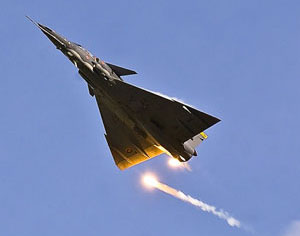
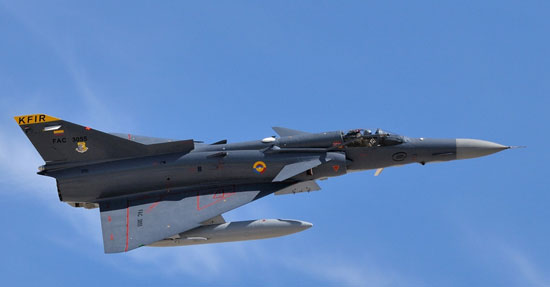
    Colombian Kfir C10/12 participated in the Red-Flag 7/2012 exercise, claiming eight simulated kills of F-16 and F-15s.
    A pair of Colombian IAI/Kfir C10/12 intercepted two Russian Tu-160 Blackjack bombersover the Island of San Andrés last week, as the Russians returned to Caracas, Venezuela from a short visit to Nicaragua. The bombers violated Colombian airspace twice, on the flight in and out of Nicaragua.

    Two Russian Tupolev Tu-160 (NATO Reporting Name: Blackjack) strategic bombers triggered a diplomatic raw last week, violating Colombian airspace two times on a mission flown from Caracas, Venezuela to Managua, Nicaragua. The two bombers entered Columbian airspace as they were flying over an Colombian island in the Caribbean sea, without propper request. The aircraft were detected about 11:00 am by the air surveillance radar of San Andrés. According to Colombian records, the two aircraft carried registration numbers XM94115 XM94104.

    tu160-venezuela
    Colombian Kfirs intercept Russian bombers enrout to Venezuela

    The Russian bombers were intercepted by two Colombian KFIR fighters approximately 80 miles of Barranquilla. The Colombian fighters were scramblled from this base where they were stationed on high readiness alert. Barranquilla, a civil airport also supports some of the Colombian Counter-Insurgency (COIN) operations with aircraft such as the T-37 and A-29B, operating on counter drug traficking. The Kfirs followed the Russian bombers for about five minutes, until the intruders left Colombian airspace. “Barranquilla Control reports to the Command and Control Center of the Air Force, the aircraft transferred from Curacao Control, had no diplomatic clearance for overflying respective Colombian airspace” the military announcement said. The Russian bommbers were not allowed to continue on their planned route and avoid the 12 nautical miles zone from the island. Finally, they crossed to the south of the archipelago and lost contact with them when they were on Honduran territory.

    According to the Russian ministry statement, the bombers covered a distance of more than 10,000 kilometers (over 6,200 miles) during a 13-hour non-stop flight. On their way to Venezuela, on October 28, two NATO F-16 fighter jets were scrambled from Bodo air base in Norway to monitor their flight near the Norwegian airspace.

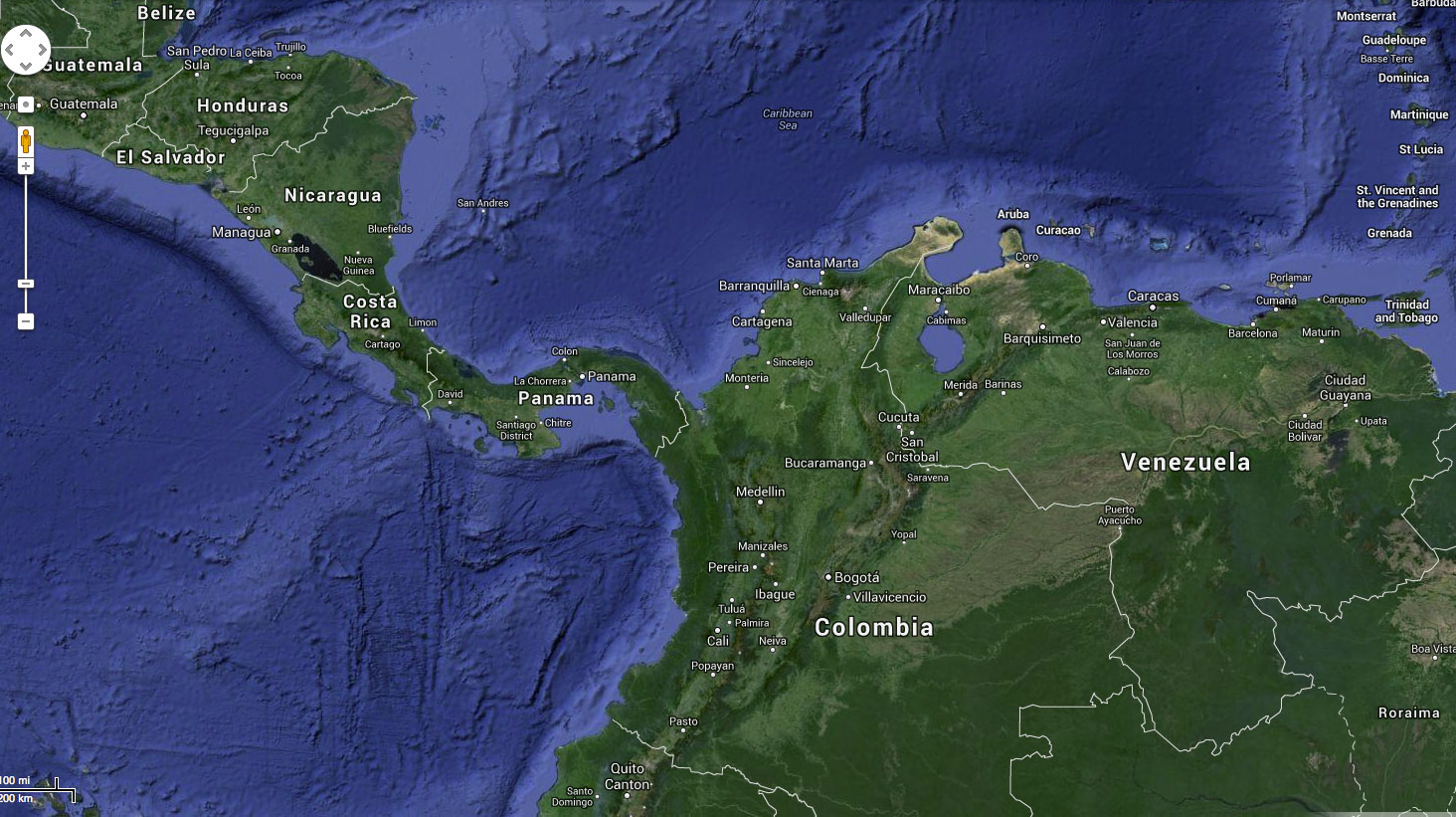
    A map of the southern Caribbean Sea, showing Colombia, Venezuela, Nicaragua, Honduras and Panama. San Andreas island is located close to the Nicaraguan coast, but is, in fact a Colombian territory. Map: Google maps.
    A map of the southern Caribbean Sea, showing Colombia, Venezuela, Nicaragua, Honduras and Panama. San Andreas island is located close to the Nicaraguan coast, but is, in fact a Colombian territory. Map: Google maps.


    Enhancing the Royal Thai Army

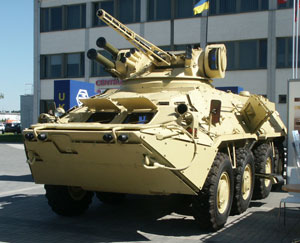
    Ukrainian BTR-3E1M in desert camouflage.
    Ukrainian BTR-3E1M in desert camouflage.

    In recent years the Ukraine is becoming a dominant player in the Thai defense market, particularly in all matters related to land combat. Since 2008 Ukrspetsexport, Ukraine’s state-run export agency has sealed major deals with the Royal Thai Army (RTA). The first deal was the sale of a family of armored vehicles including 96 BTR-3E1 8×8 armored vehicles configured into armored personnel carriers (APC), command vehicles, 81mm and 120 mortar carriers, AT missile carrier (employing the ‘Barrier’ missile system), recovery and ambulance variants.

    Five years later Ukrspetsexport followed up with a further 21 vehicles requested by Thailand in August 2013.
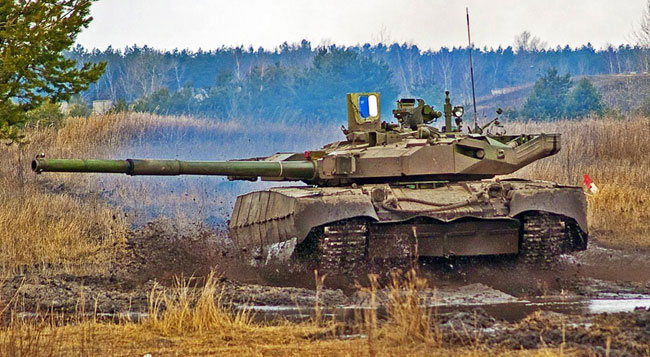
    The Thai government proceeded to order 49 T-84 Oplot Main Battle Tanks (MBT) from Ukraine in 2011. These Oplot tanks will replace the obsolete M41 ‘Walker Bulldog’ tanks in service with the RTA. The first Oplot, featuring 125mm main gun and explosive reactive armor (ERA) suite was presented to Thai officials in Ukraine last June. The first deliveries of the tank to Thailand are expected in December 2013.

    In April 2013 the Ukrainian truck manufacturer KrAZ has won a sizeable contract supplying 6×6 trucks for the RTA, the first deliveries are also expected in 2013.

    The first shipment of Oplot M main battle tank from the Ukraine will soon be delivered to Thailand.
    The first shipment of Oplot M main battle tank from the Ukraine will soon be delivered to Thailand.

    China is a regular provider of military equipment to Thailand; the China Precision Machinery Import and Export Corp (CPMIEC) is providing technologies and collaborating with the Defense Technology Institute (DTi), for the development of multiple-launch rocket (MRL) systems. The two parties signed a memorandum of understanding on March 7, 2013 for the MRL launcher platform (DTi-l) and the guided rockets (DTi-lG), based on the Chinese WS-1 302 mm rocket system.

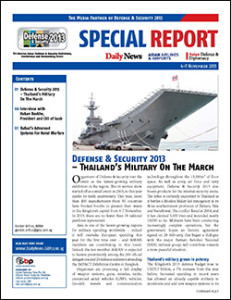
    D_S_cover
    Read the special coverage by Asian Defense & Diplomacy

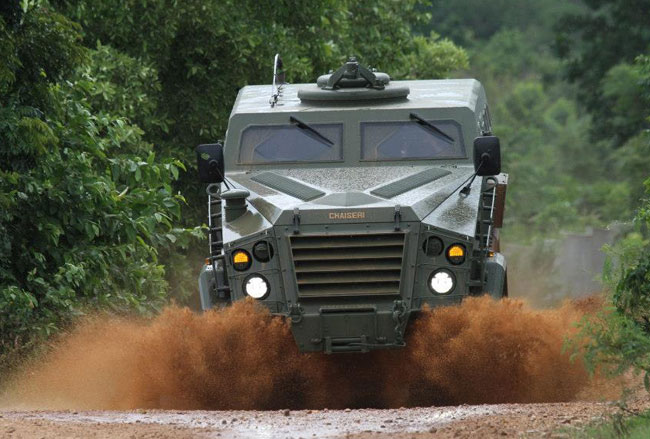
    A local producer of armored vehicles, Chaiseri Metal Rubber Company is the builder of the ‘First Win’ – a 4×4 armored vehicle that weighs 10,800 kg and carries eleven personnel. The vehicle entered service in July 2012, with its principal function being to operate in the country’s insurgency-plagued southern provinces. The RTA has already ordered 21 vehicles and the Ministry of Justice 18. Over the years, Chaiseri has expanded from overhauling military trucks to attaining the ability to manufacture complete armored vehicles. Chaiseri is marketing the vehicle to customers in the Middle East and Africa, an offer that could gain traction, with the collaboration with DRB-Hicom in Malaysia, as the two companies are offering First Win to the Malaysian Army, as a future replacement of the current Condor APC. Should it meet with success, Thailand would produce the initial batch of vehicles before Malaysia takes over licensed production.

    This article, first published by Gordon Arthur in Asian Defense & Diplomacy special edition for Defense & Security 2013 is part of a three-part series reviewing recent acquisition programs in Thailand:


    Chaiseri Metal Rubber Company is the builder of the ‘First Win’ - a 4x4 armored vehicle that weighs 10,800 kg and carries eleven personnel.
    Chaiseri Metal Rubber Company is the builder of the ‘First Win’ – a 4×4 armored vehicle that weighs 10,800 kg and carries eleven personnel.

    Modernizing the Royal Thai Air Force

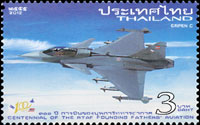
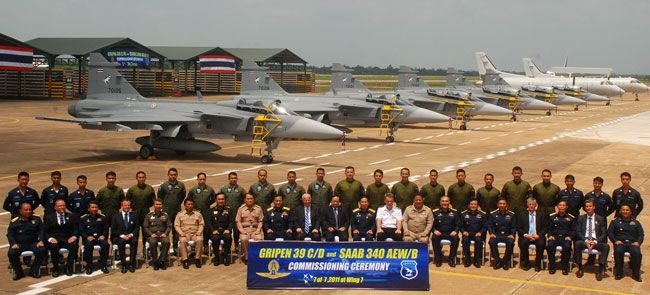
    A stamp commemorating the fielding of the first Gripen unit 7th Fighter Wing, RTAF
    A stamp commemorating the commissioning of the first Gripen unit 7th Fighter Wing, RTAF

    The kingdom’s 2013 defense budget rose to US$5.7 billion, a 7% increase from the year before. Increased spending in recent years has allowed an already capable military to modernize and add new weapon systems to its inventory. The website Global Firepower actually ranks Thailand as the 20th most powerful military in the world.

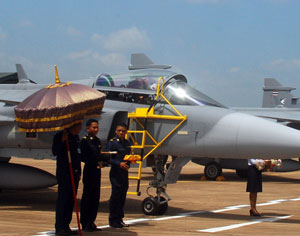
    Swedish company Saab has made giant inroads into the Thai market in terms of both aircraft and shipborne systems. On September 4th, 2013 Saab delivered the final four Gripen JAS39C/D fighters to the Royal Thai Air Force (RTAF). Two tranches of aircraft have given the air force a total of 12 Gripens, two Saab 100B Argus Airborne Early Warning & Control (AEW&C) aircraft fitted with Erieye radar, and two Saab 340 aircraft. Thailand’s new fighters will also gain RBS-15F anti-ship missiles as part of their armament.

    Saab is reportedly interested in basing its planned Saab Gripen Fighter Weapon School in Thailand, this after South Africa failed to support the initiative. Saab opened an office in Bangkok in August to help expand its footprint throughout the Asia-Pacific region. The office will serve as a regional hub to integrate work already undertaken by offices in Australia, Indonesia, Japan, Malaysia, Singapore and South Korea.

    7wing_gripen
    The Gripen fighters are, together with the airborne surveillance system (Erieye) part of a new integrated air defence system operated under the 7 Wing of the RTAF.

    The USA, a security treaty partner with Thailand, has long enjoyed sales successes in the Kingdom. For example, Thailand is upgrading 18 F-16A/B Block 15 fighters in the RTAF via Foreign Military Sales (FMS). The first F-16 entered the $700 million Midlife Upgrade (MLU) program in November 2012. Improvements to the F-16 include installation of modular mission computer, Northrop Grumman APG-68(V)9 radar, Terma AN/ALQ-213 electronic warfare management system, Link 16 datalink and Joint Helmet Mounted Cueing System (JHMCS). In mid March 2013 the Thai government approved funding for the second six-aircraft batch upgrade.

    Read the special coverage by Asian Defense & Diplomacy
    Read the special coverage by Asian Defense & Diplomacy

    In June 2013 the RTAF gained a green light to order an Airbus ACJ320 jet for VIP transportation.

    Thailand is also a keen buyer of helicopters. The country is desperately in need to replace its aging fleet of UH-1H Hueys. In August 2012, Thailand approved the procurement of four Eurocopter EC725 helicopters from France, to replace part of those Hueys tasked with search and rescue missions. In October 2012 the Thai Army also signed up tor two AgustaWestland AW139 helicopters, due for delivery in 2014.

    Continuing with the aircraft theme, in mid 2012, Enstrom completed delivery of 16 480B training helicopters. Thailand has also been a long-time user of US helicopters and this is not going to alter anytime soon. In June 2013, the US Congress was informed of a potential sale of six US manufactured UH-72A Lakota helicopters; the RTA already operates the Sikorsky UH-60L Black Hawk, and the Army has signed up for three new UH-60Ms. Since 2012 Thailand is also operating the Lockheed Martin TPS-77 long-range air surveillance radar.

    The RTAF is leading a program to develop a UAV to improve border and territorial surveillance. Project Tiger Shark has already developed several prototypes but Thailand is also believed to have purchased the Aerostar UAVs from Aeronautics in Israel for that role.

    This article, first published by Gordon Arthur in Asian Defense & Diplomacy special edition for Defense & Security 2013 is part of a three-part series reviewing recent acquisition programs in Thailand:


    Thailand’s Military on the March

    D_S_cover
    Read the special coverage by Asian Defense & Diplomacy

    Organizers of Defense & Security 2013 in Bangkok tout the event as the fastest-growing military exhibition in the region. The tri-service show started off as a small event in 2003, so this year marks its 10th anniversary. This year, more than 400 manufacturers from 50 countries have booked booths to present their wares in the Kingdom’s capital from 4-7 November. In 2013, there are no fewer than 19 national pavilions represented.

    Asia is one of the fastest-growing regions for military spending worldwide – indeed it will overtake European spending this year for the first time ever – and ASEAN members are contributing to this trend.

    Indeed, the ten-member ASEAN is expected to feature prominently among the 200 official delegations and 25 defense ministers attending the IMPACT Exhibition Center in Bangkok.

    Organizers are promising a full display of weapon systems, guns, missiles, tanks, unmanned aerial systems, vehicles, vessels and communications technology throughout the 13,500 M2 of floor space. As well as army, air force and navy equipment, Defense & Security 2013 also boasts products for the internal-security arena.

    The latter is certainly important to Thailand as it battles a Muslim Malay-led insurgency in its three southernmost provinces of Pattani, Yala and Narathiwat. The conflict flared in 2004, and it has claimed 5,500 lives and wounded nearly 10,000 so far.

    Militants have been conducting increasingly complex operations, but the government hopes an historic agreement signed on 28 February, that begun a dialogue with the major Barisan revolusi Nasional (BRN) militant group, will contribute towards a more peaceful situation.

    Currently, just 10% of the Thai military equipment is produced domestically, and the country wants to improve this situation. One way of doing this could be through a defense-offset policy that the Thai MOD may enact in 2014.

    This article by Gordon Arthur was first published in a special edition of Asian Defense & Diplomacy magazine, for Defense & Security Thailand, 2013

    Following are three reviews of recent acquisition programs in Thailand, featuring air, naval and land systems:

    Upgrading the Royal Thai Naval Capabilities

    Gwanggaeto_class
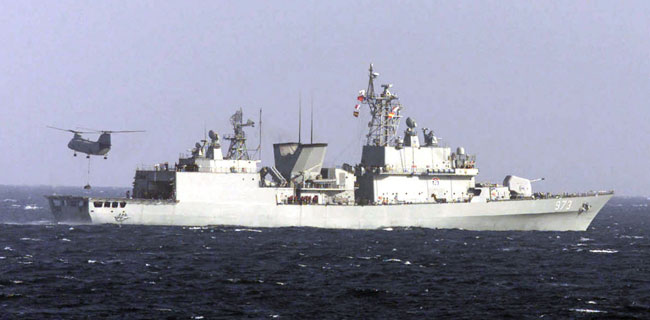
    The Royal Thai Navy confirmed it is purchasing two ton frigates from Daewoo Shipbuilding & Marine Engineering (DSME) in South Korea. Contract signature for the first frigate took place in August 2013. DSME’s design is derived from the KDX-1 destroyer in service with the South Korean Navy.

    Thailand has traditionally turned to Asian countries as well to expand its naval fleet. In April 2012, the RTN received HTMS Ang Thong, a landing platform dock (LPD) vessels, similar to Singapore’s Endurance class LPDs. Built by ST Marine in Singapore, Thailand’s first LPD is sure to find practical use for any disaster relief missions around the region.

    More recently, the Navy confirmed it is purchasing two ton frigates from Daewoo Shipbuilding & Marine Engineering (DSME) in South Korea. Contract signature for the first frigate took place in August 2013. DSME’s design is derived fr

    Read the special coverage by Asian Defense & Diplomacy
    Read the special coverage by Asian Defense & Diplomacy

    om the KDX-1 destroyer in service with the South Korean Navy. The first frigate will be delivered to Thailand in 2018. DSME has already contracted Saab via $134 million deal to integrate the company’s 9LV Mk4 CMS and radar systems onto the first frigate. Little detail has been released so far, but the new vessels are expected to feature ESSM in an eight-cell Mk41 vertical launch system from Lockheed Martin, an Oto Melara 76/62 Super Rapid gun and two MSI Defense Seahawk 30mm cannons. The contract for the second ship is dependent on sufficient government funding.

    The HTMS Naresuan frigate was delivered from China in 1995.
    The HTMS Naresuan frigate was delivered from China in 1995.

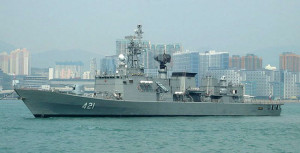
    Work is ongoing to upgrade two type 25T purchased from China and commissioned in 1995. BAE Systems was awarded a contact in July for three Mk 25 Model 0 quad pack canisters for Raytheon’s RIM-162 Evolved Sea Sparrow Missile (ESSM). These will be fitted to the two Naresuan Class frigates. Saab was also awarded two contracts in June 2011 to fit its CEROS 200 fire control system, Sea Giraffe AMB radar, EOS 500 optronic director, data-link and 9LV Mk4 Combat Management System (CMS), to be fitted to each of the upgraded frigates. This work is expected to conclude in 2015.

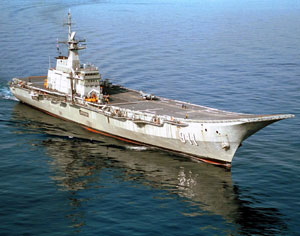
    Additionally, the Swedish company announced in April 2012 it was upgrading the RTN’s flagship, aircraft carrier HTMS Chakri Naruebet. The relevant contract includes the 9LV Mk4 CMS and Sea Giraffe surveillance radar as well When concluded, these three ships will be able to seamlessly intercommunicate with Saab built aircraft as Thailand expands its joint service network-centricity via the RTAF Defense System (RTAD).

    River Class patrol craft operated by the RTN.
    River Class OPV operated by the RTN.

    BAE Systems will have a presence at Defense & Security, fresh from commissioning the RTN’s first Offshore patrol Vessel (OPV), commissioned August 26, 2013. HTMS Krabi, a variant of the Royal Navy’s River Class, was built by Bangkok Dock under a technology transfer agreement. The 1,969 ton OPV features an Oto Melara 76/62 Super Rapid Gun and two MSI-Defense 30mm cannons. There is an expected follow-on requirement for three more OPVs of this class. Local shipbuilders are certainly growing in capability. In May 2013, three M21 patrol boats constructed by Marsum Company were commissioned. Marsum is also building three larger M26 coastal patrol boats that should enter service in 2014.

    This article, first published by Gordon Arthur in Asian Defense & Diplomacy special edition for Defense & Security 2013 is part of a three-part series reviewing recent acquisition programs in Thailand:


    Skydivers’ miraculous escape as planes collide

    Visit NBCNews.com for breaking news, world news, and news about the economy

    An exclusive NBC News video showing a midair collision between two light aircraft carrying skydivers over Wisconsin yesterday. One plane appears to fly right on top of another, forcing skydivers from both planes to jump while avoiding burning debris. All skydivers and the two pilots safely escaped. NBC’s Anne Thompson reports.

    Five Air Forces to Participate in Israel’s ‘Blue Flag’ Air Combat Exercise

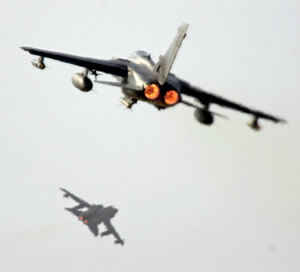
    Tornado IDS, Ovda, ITAF
    A pair of ITAF Tornado strike fighters take off from IAF Base Ovda. Photo: IDF
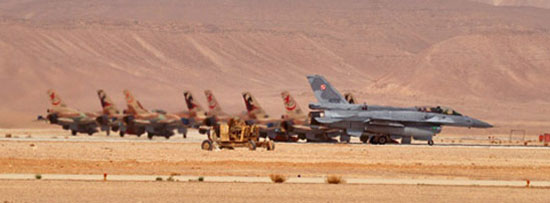
    Polish and Israeli F-16s lined up at the southern IAF base Ovda for a training exercise in 2012. The Polish fighter jets are expected to be back at this year's inaugural 'Blue Flag' event taking place at Ovda later this month. Photo: xairforces.net
    Polish and Israeli F-16s lined up at the southern IAF base Ovda for a training exercise in 2012. The Polish fighter jets are expected to be back at this year’s inaugural ‘Blue Flag’ event taking place at Ovda later this month. Photo: xairforces.net

    U.S., Greek, Polish and Italian fighter jets are planned to deploy to Ovda Israel Air Force Base this month, to participate in the Israel Air Force’s ‘Blue Flag’ air warfare exercise over the southern Negev Desert. Over 100 aircraft and about a thousand air and ground crews are expected to participate. Israeli sources have not confirmed the specific nations taking part in the exercise but foreign sources have indicated these are likely to include Greece, Poland, Italy, the US and Israel (1, 2).

    Each of these air forces have already trained separately with the IAF, and some were also deployed here for training, but the ‘Blue Flag’ will be the first opportunity for the IAF to conduct a multinational exercise of this scale, since Israel was excluded from the NATO ‘Anatolian Eagle’ exercise as a result from the deteriorating relations between Turkey and Israel in recent years. Foreign air forces have been flying the Eager Tiger and Eager Lion exercises in Jordan for several years but for the Israelis, the ‘Blue Flag’ is a first of a kind opportunity.

    The exercise will employ the IAF Aggressor squadron based at Ovda, and scores of ground based targets and air defense assets positioned throughout the southern Negev, simulating a modern threat environment. While the aggressor role is similar to that of the US “Top Gun” school and ‘Red Flag’ exercises, the aggressor role is tasked on different squadrons every 24 months, thus keeping pilots combat ready and proficient in the IAF combat missions. The squadron flies F-16A Block 15 Falcons, in service with the IAF since 1980.

    The exercise simulates realistic engagement with situations from asymmetric warfare engaging low-signature targets to full fledged ‘symmetric’ opponent, where opposing air forces required to operate in denied access environment, penetrating heavy air defenses and aerial threats. The aggressor squadron has been trained in simulating various opposing air forces tactics, particularly Arab aerial tactics, to train other squadrons.

    The IAF conducted a ‘grand rehearsal’ in January 2013, deploying five squadrons to the southern base, simulating a surge in missions and operational tempo conducted over several days. For the actual exercise the visiting air forces will deploy to Ovda on November 13, for orientation and preparation, with the exercise itself staged between 17 and 28 November.

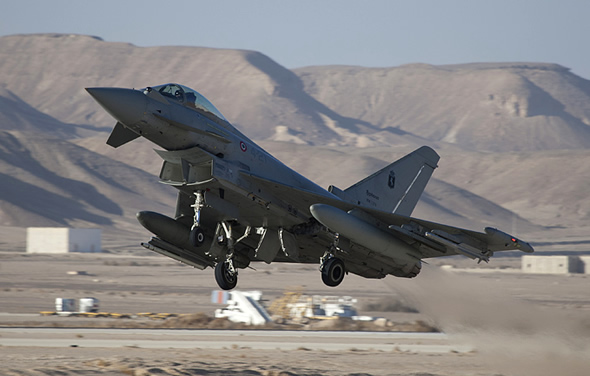
    Italian Air Force Typhoon takes off from IAF Base Ovda. The aircraft carries two IRIS-T air/air missiles. Photo: Nehemia Gershuni, www.ngphoto.biz
    Italian Air Force Typhoon takes off from IAF Base Ovda. The aircraft carries two IRIS-T air/air missiles. Photo: Nehemia Gershuni, www.ngphoto.biz

    DARPA Awards Five Contracts for the Evaluation of TERN Naval UAS

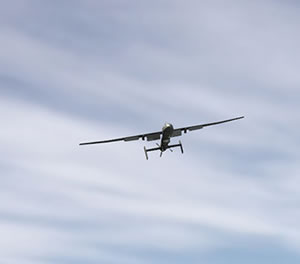
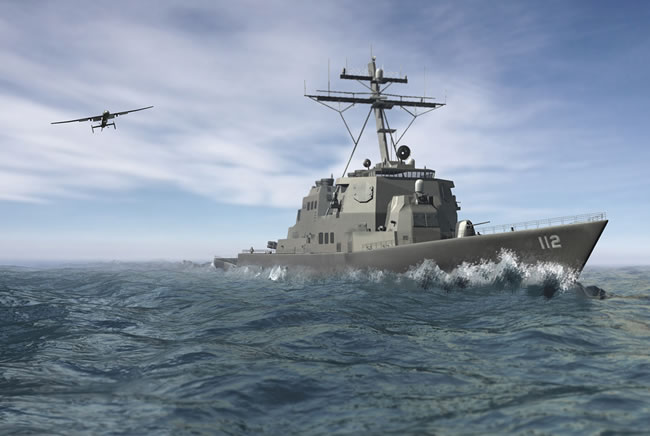
    DARPA wants to introduce a new class of MALE UAS that will be able to deploy from destroyer and frigate size vessels, such as the Independence Class Littoral Combat Ship (LCS-2),extending the Naval ISR and strike capabilities to deploy faster and farther, anywhere in the world. DARPA Artist concept
    DARPA wants to introduce a new class of MALE UAS that will be able to deploy from destroyer and frigate size vessels, such as the Independence Class Littoral Combat Ship (LCS-2),extending the Naval ISR and strike capabilities to deploy faster and farther, anywhere in the world. DARPA Artist concept

    Since August 2013 the U.S. Defense Advanced Research Projects Agency (DARPA) has awarded several contracts for concept evaluations of the ship-based Tactically Exploited Reconnaissance Node (TERN) – a low-cost, Medium Altitude Long Endurance (MALE) unmanned aerial vehicle program aimed to explore an innovative vertical takeoff and landing UAS suitable for vessels with limited deck space. These contracts are the first element in a three phase development and demonstration program, aimed to demonstrate the system design and technology maturation, culminating in actual flight demonstrations taking place in 2017.

    Over the course of three development phases that would demonstrate automatic launch and recovery and key technologies required by a TERN objective system. The mission performance goals for the operational TERN system are comparable to emerging land-based MALE UAV capabilities.

    According to the agency, the ultimate goal for a TERN objective system air vehicle is to enable persistent ISR capabilities with payloads of 600 pounds while operating up to 900 nautical miles from a host vessel. The TERN objective system is intended to operate from multiple ship types, including Littoral Combat Ship 2 (LCS-2) class ships, and in elevated sea states.

    Through the current TERN Phase I DARPA is exploring several conceptual designs and trade studies toward a future TERN design. Several companies were awarded contracts worth $2.8 – $2.2 million each for this work. These companies include Northrop Grumman, Aurora Flight Sciences, AeroVironment, Carter Aviation Technologies and Maritime Applied Physics Corp.

    “TERN represents an entirely new category of UAS that has the potential to meet the evolving needs of customers for ISR capabilities” said Roy Minson, AeroVironment senior vice president and general manager of the company’s UAS business segment. Aurora also commented on its role in the program, Dr. John S. Langford, Aurora’s CEO and founder said his company is forming an industry team that includes leading experts in shipboard integration, naval operations, robotics, and flight controls. “Aurora’s TERN solution would be a disruptive technology capable of transforming how the US Navy conducts operations in the 21st century,” said . “TERN would enable unmanned air vehicles with significant payload capabilities to operate from a large number of ships that do not have runways.” Dr. Langford added.

    Aurora would design a deployable UAS capable of launch and recovery from small naval ships. Leveraging innovative autonomous flight control technology originally developed for Aurora’s Orion UAS and Centaur Optionally Piloted Aircraft (OPA), Aurora would take a systems level approach to address the challenges of capture dispersion, capture load management, and ship-board integration with a minimal on-board footprint.

    Skunk Works and XTEND Simplify Multi-Drone Command

    0
    Lockheed Martin Skunk Works® and XTEND have achieved a major milestone in JADC2 by integrating the XOS operating system with the MDCX™ autonomy platform. This technical breakthrough enables a single operator to simultaneously command multiple drone classes, eliminating the friction of mission handoffs. From "marsupial" drone deployments to operating in GPS-denied environments, explore how this collaboration is abbreviating the data-to-decision timeline and redefining autonomous mission execution.

    From Ukraine to Taiwan: The Global Race to Dominate the New Defense Tech Frontier

    0
    As traditional defense primes face mounting competition from agile “neoprimes” such as Anduril, Palantir and Helsing, the balance of innovation is shifting toward software-defined warfare and scalable, dual-use technologies, while global industry consolidation—marked by Boeing’s integration of Spirit AeroSystems and other strategic mergers—signals an intensified race to secure control over the defense technology value chain. Our Defense-Tech weekly report highlights these trends.

    Europe’s “Drone Wall”

    0
    In early October 2025, a coordinated wave of unmanned aerial system (UAS) incursions—widely attributed to Russia—targeted critical infrastructure across at least ten European nations. The unprecedented campaign exposed the fragility of Europe’s air defenses...

    Weekly Defense Update & Global Security Assessment

    0
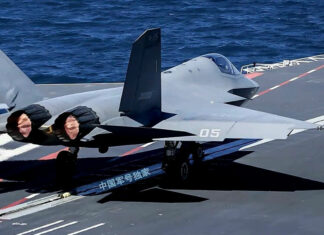
    Executive Summary The past week (September 18-25, 2025) represents an inflection point where strategic defense concepts have transitioned from doctrine to tangible reality. An analysis of global events reveals four primary, interconnected trends shaping an...

    U.S. Air and Space Forces Push Next-Gen Programs at the AS&C 2025 Conference and...

    0
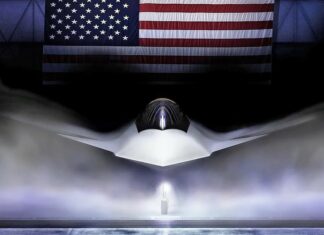
    At the 2025 Air, Space & Cyber Conference, U.S. Air Force and Space Force leaders unveiled major updates on next-generation fighters, bombers, unmanned systems, and space initiatives, highlighting both rapid innovation and critical readiness challenges as the services race to outpace global competitors. A short version is available here, with a more detailed version for subscribers.

    TADTE 2025: Reflecting Taiwan’s Strategic Themes

    0
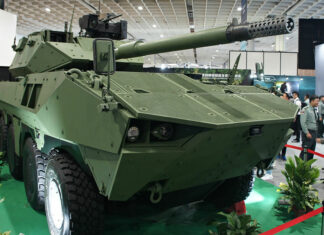
    The Taipei Aerospace & Defense Technology Exhibition (TADTE) 2025 crystallized around four dominant strategic themes that collectively illustrate Taiwan's comprehensive approach to defense modernization amid escalating regional tensions. Based on a detailed report by Pleronix (available upon request). Includes a Podcast discussion on TADTE 2025's highlighting Taiwan's four strategic themes beyond the post's coverage.

    Iron Beam 450 Completes Testing, Soon to Join With Operational Air Defense Units

    0
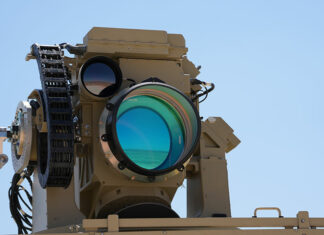
    Israel’s Iron Beam 450 high-power laser system has completed final testing, marking a major leap in air defense. Developed by Rafael, it offers precise, cost-effective interception of rockets, UAVs, and mortars, and is set for IDF deployment by 2025.