
Friday, December 26, 2025
More
    Home Blog Page 131

    SR-72, a Hypersonic Drone is Positioned to be the Successor of SR-71 ‘BlackBird’

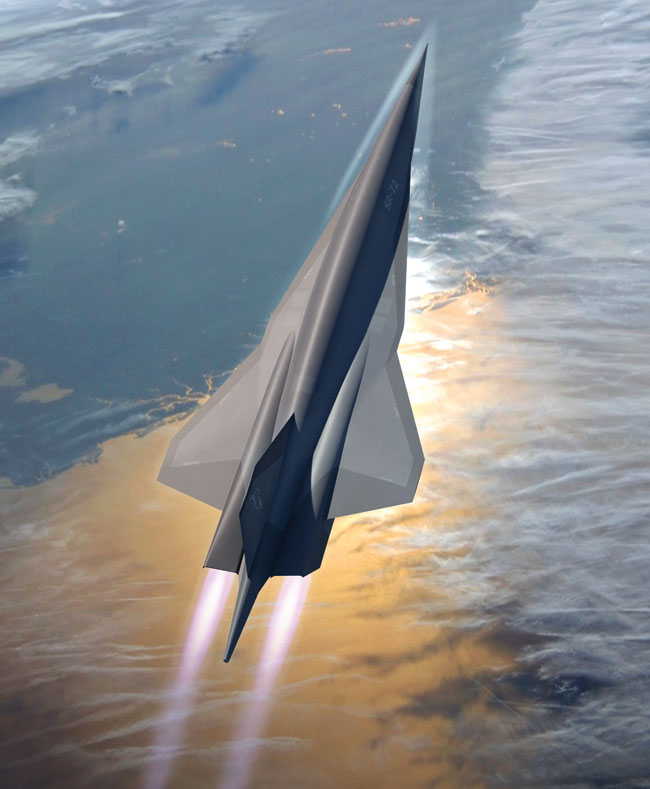
    The Skunk Works SR-72 design – a hypersonic aircraft developed to execute Intelligence, Surveillance and Reconnaissance and strike missions at speeds up to Mach 6. Photo: Lockheed Martin
    The Skunk Works SR-72 design – a hypersonic unmanned aircraft developed to execute Intelligence, Surveillance and Reconnaissance and strike missions at speeds up to Mach 6. Such an aircraft, coupled with hypersonic missiles, could penetrate denied airspace and strike at nearly any location across a continent in less than an hour. Photo: Lockheed Martin

    Lockheed Martin broke silence today about the development of an unmanned hypersonic aircraft it is proposing for future reconnaissance and long-range strike missions. The company said it is ready to embark on the development of the SR-72 hypersonic unmanned aircraft that could enter service with the U.S. Air Force in 2030.

    The proposed drone is positioned the follow-on to the Air Forces’ fastest known strategic reconnaissance aircraft – Mach 3 SR-71 ‘BlackBird’, developed by the legendary designer Clarence “Kelly” Johnson, the chief designer of the Lockheed skunk works in the early 1960s . Envisioned as an unmanned aircraft, the SR-72 would fly at speeds up to Mach 6, or six times the speed of sound. At this speed, the aircraft would be so fast, an adversary would have no time to react or hide.
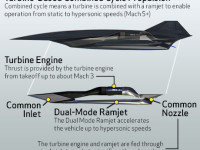
    Turbine Based Combined Cycle Propulsion
    Turbine Based Combined Cycle Propulsion

    An SR-72 could be operational by 2030. For the past several years, Lockheed Martin Skunk Works has been working with Aerojet Rocketdyne to develop a method to integrate an off-the-shelf turbine with a supersonic combustion ramjet air breathing jet engine to power the aircraft from standstill to Mach 6.

    The turbine based combined cycle propulsion means the turbine is combined with a ramjet to enable operation form static to hypersonic speeds of Mach 5+. At the turbine stage thrust is provided by the turbine engine from takeoff up to about Mach 3, where the ramjet kicks in, accelerating the aircraft up to hypersonic speeds. The turbine engine and ramjet are fed through a single inlet nozzle to significantly reduce drag.

    The result is the SR-72 that Aviation Week has dubbed “son of Blackbird,” and integrated engine and airframe that is optimized at the system level for high performance and affordability. “Conceived as a solution to the proliferation of mobile weapons platforms, which can be concealed from satellites, the jet would fly so fast that adversaries would not be able to react in time to hide a mobile target.” Aviation Week writer Guy Norris said.

    Lockheed Martin said it is ready to embark on the development of the new hypersonic drone. The SR-72’s design incorporates lessons learned from the HTV-2, which flew to a top speed of Mach 20, or 13,000 mph, with a surface temperature of 3500°F.

    According to Brad Leland, Lockheed Martin program manager, Hypersonics, a hypersonic aircraft will be a ‘game changer’. “Hypersonic aircraft, coupled with hypersonic missiles, could penetrate denied airspace and strike at nearly any location across a continent in less than an hour,” said Leland. “Speed is the next aviation advancement to counter emerging threats in the next several decades. The technology would be a game-changer in theater, similar to how stealth is changing the battlespace today.”

    SR-72 is not the first hypersonic Skunk Works aircraft. In partnership with the Defense Advanced Research Projects Agency, engineers developed the rocket-launched Falcon Hypersonic Technology Vehicle 2 (HTV-2). The HTV-2 research and development project was designed to collect data on three technical challenges of hypersonic flight: aerodynamics; aerothermal effects; and guidance, navigation and control.
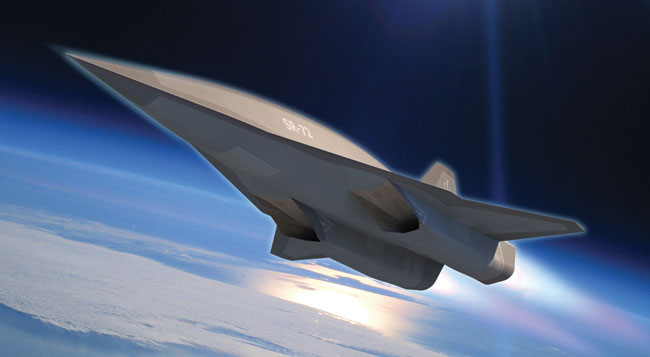

    The Skunk Works SR-72 design – a hypersonic aircraft developed to execute Intelligence, Surveillance and Reconnaissance and strike missions at speeds up to Mach 6. Photo: Lockheed Martin
    The Skunk Works SR-72 design – a hypersonic aircraft developed to execute Intelligence, Surveillance and Reconnaissance and strike missions at speeds up to Mach 6. Photo: Lockheed Martin

    Israel Could Receive V-22 Ospreys by 2015

    V-22 Osprey approaching an MC-130H for aerial refueling. Six of the 18 aircraft intended for the Marines will be diverted to equip the Israel Air Force by 2015. Photo: Lance Cpl. Uriel Avendano, USMC
    V-22 Osprey approaching an MC-130H for aerial refueling. Six of the 18 aircraft intended for the Marines in 2014 will be diverted to equip the Israel Air Force by 2015. Photo: Lance Cpl. Uriel Avendano, USMC

    The US plans to expedite the delivery of six V-22 Osprey tilt rotor aircraft to Israel, Defense Secretary Chuck Hagel said. The Pentagon will reallocate part of the next production group originally destined to the US Marine Corps to meet the Israeli request for six aircraft. The V-22 is produced under a multi-year procurement, FY2014 budget plan is funding the production of 21 aircraft in 2014, including 18 for the US Marine Corps and three for the Air Force Special Operations Command. The USMC is intended to receive 78 such aircraft over the next five years. Israel will be the first U.S. ally to get the Osprey, which has excelled in combat operations in Afghanistan. Join as a member to get more insight

    “Israel will get six V-22s out of the next order to go on the assembly line, and they will be compatible with other [Israeli defense] capabilities,” Hagel said. but Israel placed a formal request for the six aircraft this week, following its annual budget review process. Hagel announced the US is ready to offer the V-22 to Israel in April, but Jerusalem delayed its decision until the biennial budget is sealed. Israel could get the aircraft within as early as two years.

    Boeing is optimistic about the future of the V-22, hoping that the first export sale would further increase international demand for the aircraft, thus help the company to face the decline in U.S. military spending in the near future. Discussions with Japan are already underway, as Tokyo is increasingly aware of the aircraft capabilities since the Marine Corps deployed the V-22 in Okinawa.

    Other countries briefed about the Osprey include Saudi Arabia, Qatar, the United Arab Emirates, Italy, Brazil, Colombia, Singapore and Australia.

    Bigger Fire Scout MQ-8C Perform First Flight Tests

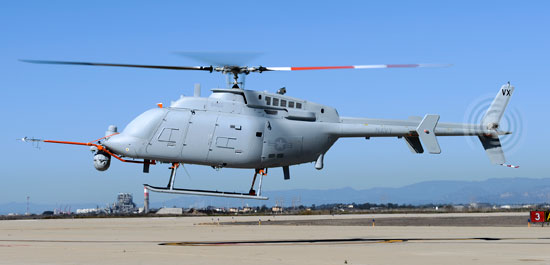
    An MQ-8C Fire Scout unmanned aerial vehicle takes off from Naval Base Ventura County at Point Mugu, October 31, 2014.  Initial operating capability for the MQ-8C is planned for 2016, with the potential for an early deployment in 2014. Photo: Northrop Grumman
    An MQ-8C Fire Scout unmanned aerial vehicle takes off from Naval Base Ventura County at Point Mugu, October 31, 2014. Initial operating capability for the MQ-8C is planned for 2016, with the potential for an early deployment in 2014. Photo: Northrop Grumman

    The Navy’s newest variant of the Fire Scout unmanned helicopter completed its first day of flying today, Oct. 31 at Naval Base Ventura County at Point Mugu, CA. The unmanned helicopter lifted off at 12:05 pm PDT and flew for seven minutes in restricted airspace to validate the autonomous control systems. The second flight that took off at 2:39 pm was also flown in a pattern around the airfield, reaching 500 feet altitude. The Northrop Grumman MQ-8C is a larger air vehicle will can provide, has a range of 150 nautical miles and a payload capacity of more than 700 pounds. The MQ-8C air vehicle upgrade will provide longer endurance, range and greater payload capability than the MQ-8B, which is currently operating aboard USS Samuel B. Roberts.

    According to Capt. Patrick Smith, Fire Scout program manager at Patuxent River, Md., the MQ-8Cs will conduct initial shipboard testing on Guided Missile Destroyers (DDG)-class ships but the program is looking into supporting Littoral Combat Ship (LCS) missions. The Navy will continue to use the MQ-8B as we phase in the MQ-8C. Lessons learned from MQ-8B have been applied to MQ-8C variant, Smith said. Initial operating capability for the MQ-8C is planned for 2016, with a potential for early deployment in 2014.

    “It is a big accomplishment for the integrated government and industry team to fly this air vehicle for the first time”, said Smith “MQ-8C, will require fewer aircraft [than the MQ-8B], to operate at maximum performance and will meet the U.S. Africa and Special Operation Commands urgent needs requirement.”

    “With the MQ-8C, we took a commercial Bell 407 helicopter and modified it to include additional fuel capability, upgraded engines and improved reliability to provide increased range and endurance and then integrated the majority of the MQ-8B avionics and payloads onto that air frame. This method allows us to maintain the entire infrastructure we have already invested in.” Smith added.

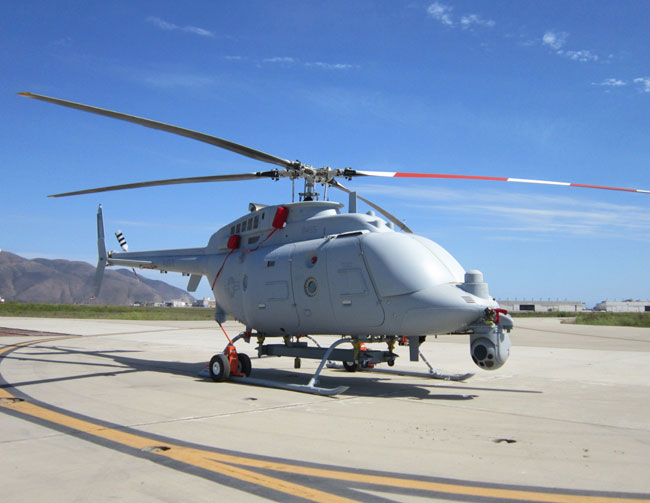
    MQ-8C awaiting the first flight at Point Mugu, CA. Following the maiden flight the aircraft will enter a rigorous test schedule before being deployed at sea. The Navy expects it to be ready for deployment by the fourth quarter of fiscal year 2014. Following the initial testing the MQ-8C will be integrated into the Guided Missile Destroyer (DDG) for maritime assessment. Photo: US Navy
    MQ-8C awaiting the first flight at Point Mugu, CA. Following the maiden flight the aircraft will enter a rigorous test schedule before being deployed at sea. The Navy expects it to be ready for deployment by the fourth quarter of fiscal year 2014. Following the initial testing the MQ-8C will be integrated into the Guided Missile Destroyer (DDG) for maritime assessment. Photo: US Navy


    Enhanced Payload Supports Real-Time Targeting for Geo-Targeted Weapons

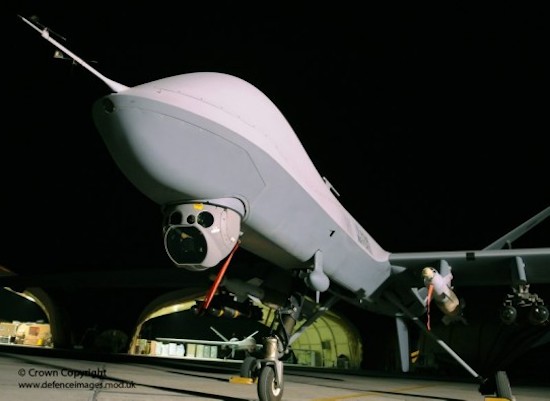
    Enhanced sensor package will now be able to support  geotargeting in real-time for the MQ-9 Reaper, enhancing the drone's ability to operate GPS-guided weapons. Photo: MOD
    Enhanced sensor package will now be able to support geotargeting in real-time for the MQ-9 Reaper, enhancing the drone’s ability to operate GPS-guided weapons. Photo: MOD

    The Raytheon Company and General Atomics have integrated an advanced targeting capability into the U.S. Army’s Common Sensor Payload (CSP) airborne intelligence, surveillance and reconnaissance targeting system, (also known as MTS-B), enabling mission commanders to directly utilize an airborne tactical sensor’s geo-location data for real-time targeting of ‘J Class’ coordinate-seeking weapons. (a.k.a JDAM, or SDB). Subscribe for more insight

    The new sensor comprises the high MTS-B definition sensor imagery and integrates a new, multi-color diode-pumped laser produced by General Atomics Aeronautical, an accurate range receiver, improved precision inertial sensors, advanced geo-positioning algorithms, precise internal/external event timing and rigorous error propagation to generate real-time targeting information.

    “Our Direct Geo-Positioning Metric Sensor technology provides a major leap in capability to the warfighter with direct, real-time targeting and fire control of coordinate-seeking weapons,” said Andy Bonnot, director of Surveillance and Targeting Systems in Raytheon’s Space and Airborne Systems business.

    In October 2013, Raytheon and General Atomics Aeronautical Systems collaborated to complete development and fly the CSP High Definition and Target Location Accuracy sensor, the industry’s first demonstration of a sensor that meets Department of Defense/National Geospatial-Intelligence Agency (NGA) requirements for target location and error knowledge.

    Previously, target coordinates and imagery from an airborne tactical sensor had to undergo a remote and time-consuming image registration process () to meet Department of Defense/National Geospatial-Intelligence (NGA) Agency coordinate-seeking weapons delivery requirements for real-time targeting. Now, target coordinates can be transferred directly in real time from the CSP sensor to the weapon, significantly reducing the delivery timeline while increasing accuracy.

    The CSP High Definition and Target Location Accuracy sensor is fully compliant with DoD and NGA specific requirements for a Direct Geo-Positioning Metric Sensor and marks the first time the capability has been integrated into a single airborne tactical package and flown.


    Sharing Data Between Top Secret and Unclassified Security Domains

    cyber_lockLockheed Martin has developed a cyber security solution that allows intelligence to be securely shared among personnel working at all security levels – from highly classified intelligence sites to unclassified users in the field. This high assurance information solution, called Trusted Sentinel, allows data to be manually and/or automatically transferred between two or more differing security domains by using a single consolidated configuration of hardware and software.

    “In today’s complex cyber threat environment, protecting and securing our data is critical,” said Jim Quinn, vice president of C4ISR Systems for Lockheed Martin Information Systems & Global Solutions. “Trusted Sentinel addresses the difficult challenge of sharing relevant information across security domains and between organizational echelons.”

    Trusted Sentinel supports the secure flow of intelligence data between all clearance levels by ensuring that sensitive information does not escape the highest clearance levels. It also ensures that information traveling back up the chain from un-cleared sources does not contain malicious code that could corrupt secure networks. By incorporating a suite of network protection capabilities that ‘guards’ classified data from unauthorized access, Trusted Sentinel controls the release of information commensurate with the security level of the information being processed, including clearance level, formal access approval and user need as determined by assigned confidentiality requirements.

    Trusted Sentinel was developed by combining the capabilities of two of Lockheed Martin’s Unified Cross Domain Management Office (UCDMO)-approved Cross Domain Solutions. The UCDMO is a joint Department of Defense and Intelligence Community organization that provides centralized coordination and oversight of cross-domain initiatives across these communities. The solution, which has received design approval from the accrediting organization, is being prepared for placement into an operational environment.

    Rafael Enters as Minority Shareholder in South Korean Telecom company PineTelecom

    Rafael Advanced Defense Systems from israel and the South Korean Pine Telecom developer have reached an agreement for Rafael’s acquisition of 49% of PineTelecom shares. The two companies are already working together in the framework of several local defense programs and will now cooperate more closely in the development and manufacturing of C4I for the Korean market
    and potentially for export. The two companies are aiming to develop and market high-end communications systems for the Korean military, and the minority ownership will enable Rafael to offer technology transfer to the jointly held establishment.

    “This cooperation is another step forward in our efforts to grow into a system level second tier Communication Systems provider for the Korean and international defense markets, and realize the vision of becoming a leading defense industry, both domestically and internationally.” Mr. M.H. Yun, Owner of Pine Telecom stated. “This move has already contributed to a number of wins and successes in the Korean market, and will promote many more, for the mutual benefit of the two partners.” a source in RAFAEl told Defense-Update. It is suggested that e new acquisition will improve RAFAEL’s potential to win government orders, particularly in military and airborne communications, an activity considered a main growth market for the company. In recent years RAFAEL has expanded its C4I and networking portfolio, and is currently offering advanced network-centric systems such as the Binet Software Defined Network Enabled tactical radio, Tacmax wimax based network, datalinks and other network enabled capabilities.

    As part of the agreement, Pine Telecom will continue to operate as an independent company with engineering and operational collaboration from Rafael, enabling PineTelecom to strengthen its competitiveness in the Korean and international defense communication market and continue offering comprehensive solutions and advanced systems to Korea’s and international defense communication market.

    “Today’s signing marks our strong faith in PineTelecom’s role as a partner in the Korean market. PineTelecom, like Rafael, is a strong believer in the development of holistic systems, rather than individual components.” CEO of Rafael, VADM (ret.) Yedidia Yaari said, “With this common vision, we look forward to sharing our knowledge and expertise with PT. Our partnership will allow our companies to continue developing leading technologies and to explore new possibilities in the field of C4I. Our cooperation will be mutually-beneficial and will combine PineTelecom’s impressive experience in the development and manufacturing of communication systems with Rafael’s long-standing expertise in the field.”

    India Offers the Pragati Short Range Missile for Export

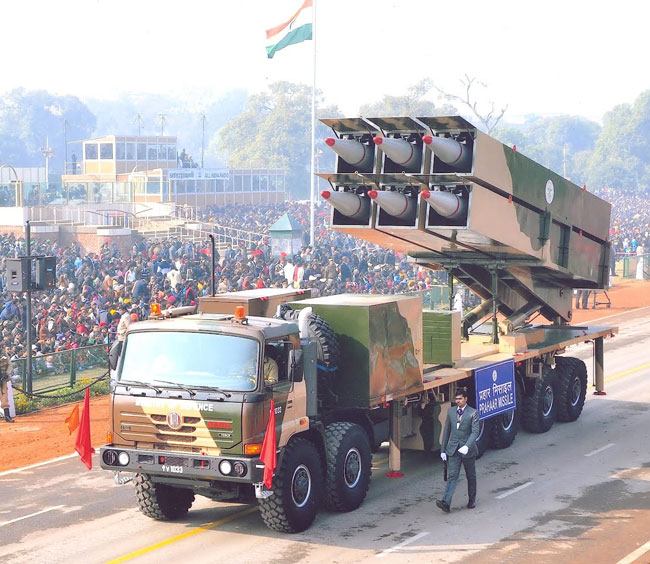
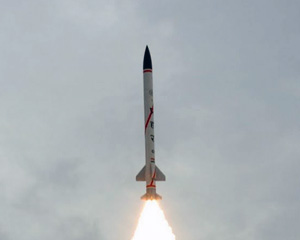
    Prahaar missile launched on the 2011 flight.
    Prahaar missile launched on the 2011 flight.

    India’s Defence Research establishment (DRDO) is promoting an indigenously developed short range ballistic missile called Pragati, designed to strike targets at ranges of 60 – 170 kilometers. The new missile meets the limitations of Missile Technology Control Regime (MTCR) limiting the export of missile technology carrying warheads heavier than half a ton beyond 300 kilometers. As such, it is positioned to compete with a number of similar weapons already available from the China, Iran, Israel, North Korea, Russia and the USA.

    It is based on the Prahaar missile, developed by the DRDO for the Indian Army and is considered as the export variant of that missile. Although India has been promoting the Brahmos supersonic cruise missile for export, Pragati will be the first ballistic missile offered for export. The first international appearance of the missile was this week at the ADEX defense expo in Seoul.

    The new missile measures 7.4 meters (24′, 3″) and 0.42 meter (16.5″) in diameter, it carries a conventional warhead weighing up to 200 kg. The Pragati missile uses solid propellant and is launched from a Mobile Launcher System (MLS). 2-6 missiles are carried by each vehicle (depending on the configuration). The system is designed for quick reaction, enabling a second missile launch five seconds after the first has cleared the rail. The Indian missile Prahaar was tested in 2011 striking a target at a range of 150 km with a precision of 10 meters.

    At a maximum speed of 4 Mach the flight time would be 120 – 360 seconds. The missile uses a combination of thrust vectoring and aerodynamic control to stabilize its ascent and shape flight trajectory to achieve a circular error point (CEP) hit probability of ‘less than 20 meters’. For guidance, Pragati uses a combination of Ring Laser Gyro (RLG) based inertial navigation system assisted by global positioning navigation (GPS) reference.

    The missile system has quick deployment with salvo firing capability. The system includes One Battery Control Center (BCC) command & Control four launch units connected via Fiber Optic/LOS wireless link. The MLS is configured on High Mobility Vehicles (HMV) with six, four or three axles, depending on the weight and number of launchers used (six, four or two canisterised missiles respectively. The MLS has an electro-mechanical auto-leveling and articulation system enabling quick positioning of the system.

    Prahar launch vehicle carrying six missiles shown on the independence day march in New Delhi.
    Prahar launch vehicle carrying six missiles shown on the independence day march in New Delhi.

    Russian Tu-160 Strategic Bombers Land in Venezuela

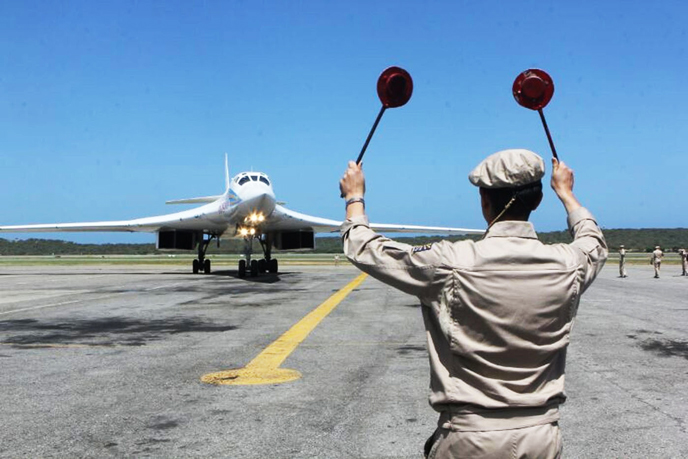
    tu-160-venezuela

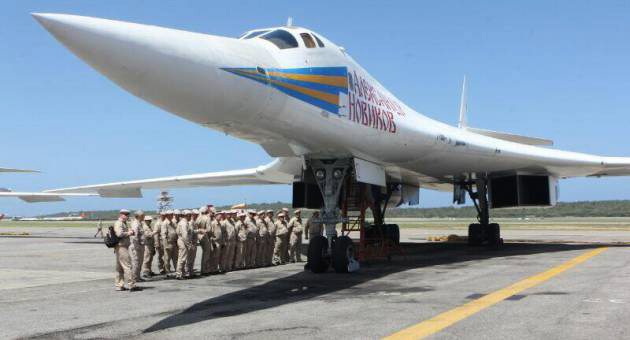
    Two Russian Tupolev Tu-160 (NATO Reporting Name: Blackjack) strategic bombers on Monday (October 28, 2013) flew from an airbase in southwestern Russia and landed in Venezuela, the Russian Defense Ministry said. The nuclear-capable bombers, which took off from the Engels air base in the Volga region, flew over the Caribbean, the eastern Pacific and along the southwestern coast of the North American continent, and landed at Maiquetia airfield in Venezuela. On Thursday the two bombers departed Venezuela and landed in Nicaragua.

    tu160-venezuela

    This mission on Friday, November 1 to Nicaragua triggered an international incident. As the aircraft flew from Caracas Venezuela to Managua, the two bombers entered Columbian airspace without propper request. The aircraft were detected about 11:00 am by the air surveillance radar of San Andrés. According to Colombian records, the two aircraft carried registration numbers XM94115 XM94104.

    The Russian bombers were intercepted by two Colombian KFIR fighters approximately 80 miles of Barranquilla. The Colombian fighters followed the Russian bombers for about five minutes, until the intruders left Colombian airspace. “Barranquilla Control reports to the Command and Control Center of the Air Force, the aircraft transferred from Curacao Control, had no diplomatic clearance for overflying respective Colombian airspace” the military announcement said. The Russian bommbers were not allowed to continue on their planned route and avoid the 12 nautical miles zone from the island. Finally, they crossed to the south of the archipelago and lost contact with them when they were on Honduran territory.

    According to the Russian ministry statement, the bombers covered a distance of more than 10,000 kilometers (over 6,200 miles) during a 13-hour non-stop flight. Two NATO F-16 fighter jets were scrambled from Bodo air base in Norway to monitor their flight near the Norwegian airspace. The ministry said the current mission was carried out “in line with the program of combat training.” The 3 hour ‘hop’ to Nicaragua took the bombers over a 2,500 kilometer above the neutral waters of the Caribbean Sea.

    On November 5 the bombers were back in Engels, after flying directly from Venezuela’s Maiquetia airfield, a distance of about 13,000 kilometers [8,000 miles]. Over the Sea of Norway they refuelled from an Ilyushin Il-98 air tankers over neutral waters before landing at their base, the Russian Defense Ministry said. Russian strategic bombers conducted a similar mission in 2008. It was followed by a visit to Venezuela by a Russian naval task force, which took part in joint exercises with the Venezuelan navy.

    The Tu-160 Blackjack is a supersonic, variable-geometry heavy bomber, designed to strike strategic targets with nuclear and conventional weapons deep in continental theatres of operation.

    tu-160_maks

    Turkey Orders 10 Anka UAVs

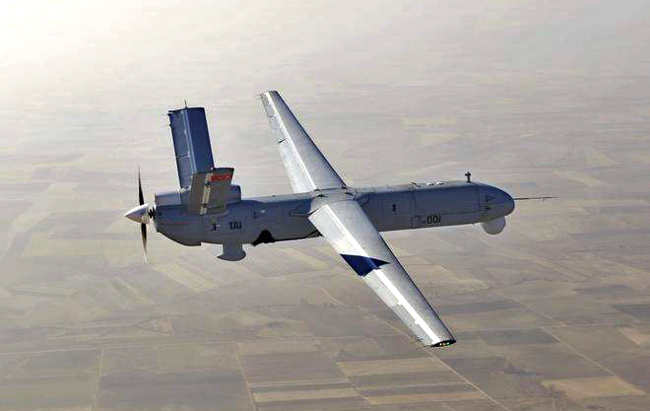
    Photo: TAI
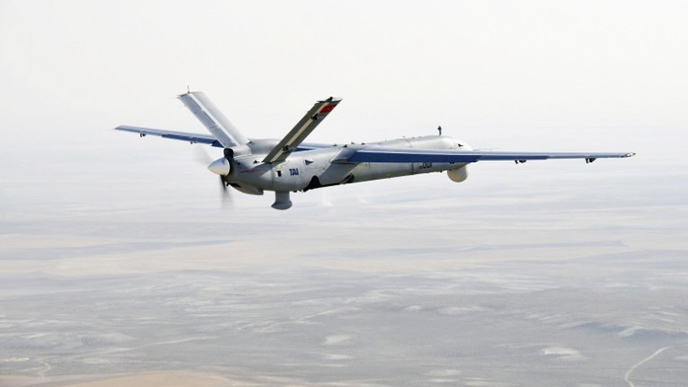
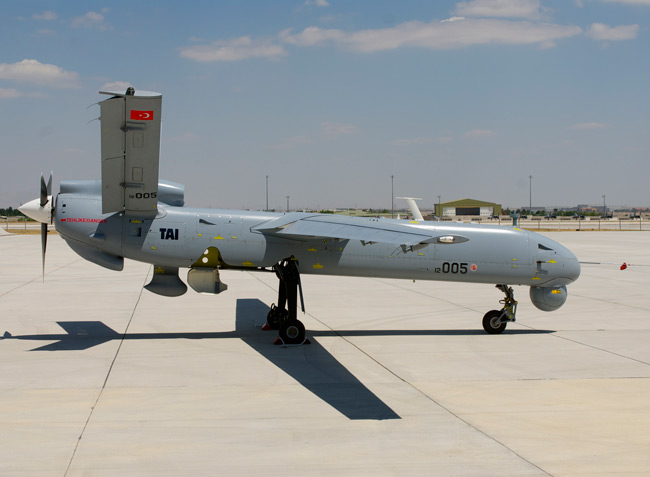
    The Anka MALE drone developed by Turkish Aerospace Indusries. Photo: TAI

    The Turkish Under-secretariat for the Defense Industry (SSM) has signed an agreement with local producer Turkish Aerospace Industries (TAI) for 10 ANKA unmanned aerial vehicles (UAVs). According to a statement from the SSM Sunday, October 27, the agreement was signed on October 25 and the vehicles and their ground control systems will be delivered between 2012 and 2018. “In the framework of our project to take the utmost advantage of local opportunities, TAI, as the main contractor, will employ the services of many Turkish firms,” the statement said.

    ANKA-ground

    The ANKA, a medium-altitude, long-endurance (MALE) class UAV, is used by the armed forces for reconnaissance, observation and targeting. The UAV is designed to fly at an altitude of 30,000 feet for 24 hours. ANKA has a wingspan of 17.3 meters and is powered by a diesel engine rated at 155-hp, It’s eight meter long fuselage is made of composite materials.

    Anka uses the locally developed ASELFLIR 300T payload developed by Aselsan. This payload includes a multi-sensor electro-optical system comprising a day TV, and Thermal Camera (IR-Infrared) / Laser Range Finder / Laser Designator (LRF/LD) and Laser Spotter. The Anka also carries a Synthetic Aperture Radar / Moving Target Indicator (SAR/MTI) which also supports with Inverse SAR ISAR operating mode for maritime missions.

    Philippines to Buy Eight AW109 Power Helos for $80 Million

    Photo: AgustaWestland


    Photo: AgustaWestland
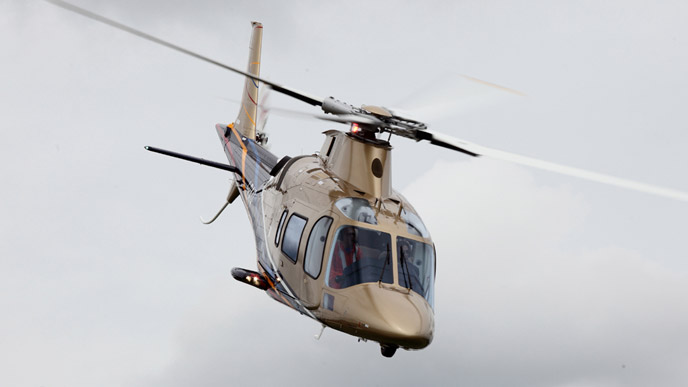
    AW109 Power. Photo: AgustaWestland

    AgustaWestland has won the bidding to supply eight attack helicopters worth $80 million for the Philippine Air Force (PAF). The Philippine STAR reports. A notice of award was issued to AgustaWestland late last month. Defense Undersecretary Fernando Manalo confirmed the report, saying the helicopters may be delivered next year if the budget is released soon.

    “If the DBM (Department of Budget and Management) releases the cash allocation, the letter of credit could be opened immediately and the helicopters could be delivered before the end of December next year,” Manalo said. According to Defense Assistant Secretary Patrick Velez the helicopters will be armed with two .50 caliber machine guns and rocket launchers. According to the bid documents the helicopters will be capable of navigating in bad weather and performing close air support. They will be delivered with full night operation capability with complete weapons system and integrated logistics support package.

    AgustaWestland, the only bidder for the project, offered to supply the eight helicopters for $80 million US$. Defense officials previously said that the bid price is lower, compared to the helicopters purchased by other countries. According to the STAR, the bid translates to $10.3 million usd per unit, lower than the package price per unit of the helicopters acquired by the Bulgarian police ($10.4 million usd) and the Bangladesh Navy ($11.9 million usd).

    Increased Operational Capabilities for Eurofighter Typhoon

    Eurofighter-typhoon-aircraft

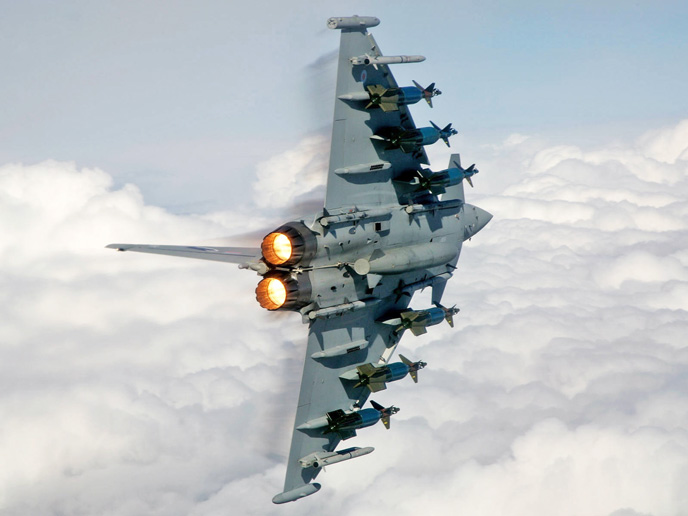
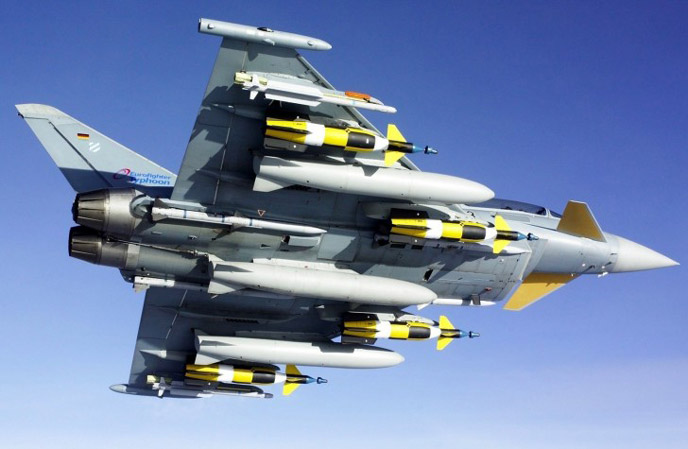
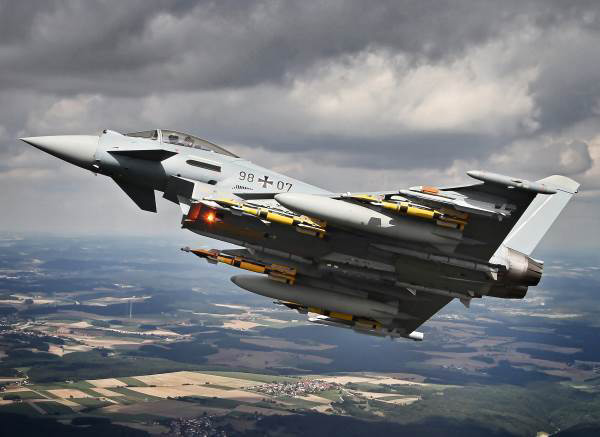
    Cassidian, the defence division of EADS, has successfully finalized its flight testing of the Eurofighter Typhoon Phase 1 Enhancements (P1E) programme. After an intensive test programme of this First Batch of Enhancements on Instrumented Production Aircraft 4 and 7, this enhancement is confirmed to deliver a robust simultaneous multi-/swing-role capability to the Nations’ Air Forces. It will be ready for the customers by the end of 2013.

    The testing took place at Cassidian´s Military Air Systems Centers in Manching/Germany and Getafe/Spain, in cooperation with BAE Systems and Alenia Aermacchi. “The Phase 1 Enhancements will provide a significant leap in Eurofighter’s operational capabilities. Deploying multiple weapons with attack constraints simultaneously in all weather has never been easier”, said Chris Worning, Cassidians Eurofighter Project pilot.

    Eurofighter_Typhoon
    P1E implements full Air-to-Surface capability on Eurofighter Typhoon – including the Laser Designating Litening targeting Pod -, full smart bomb integration, modern secure Identification Friend or Foe (Mode 5), improved Radios and Direct Voice Input, Air-to-Surface Helmet Mounted Sight System, improved Air-to-Air capabilities including digital integration of Short Range Air-to-Air Missiles and updated MIDS (Multifunctional Information Distribution System) Datalink functionalities for enhanced interoperability with Coalition Forces.

    The enhancements cover the design, development, qualification and clearance of the first major upgrade after the Main Development Contract. It is a major milestone in the development of Eurofighter Typhoon giving seamless air-to-ground integration to the weapon system and forming the baseline for further enhancements such as AESA (Active Electronically Scanned Array) radar and Meteor missile.

    Eurofighter-Typhoon-PE1
    Photo: Cassidian

    New Sukhoi T-50 Fighter Jet Prototype Joins Testing Program

    Sukhoi-PAK-FA

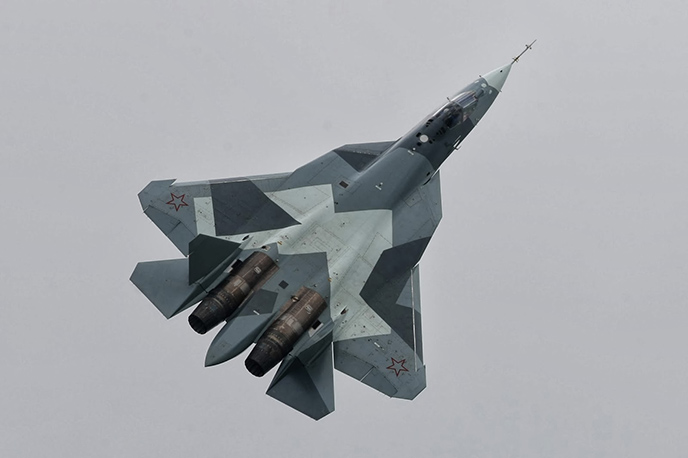
    A fifth flying prototype of Russia’s future T-50 fighter jet has flown for the first time at a manufacturing plant in Russia’s Far East, the Sukhoi aircraft maker said. RIA Novosti reports.

    The 50-minute flight at the Gagarin factory in Komsomolsk-on-Amur has successfully tested the aircraft’s overall performance, including its stability in the air and the work of its engines.

    “The aircraft performed well in all phases of the planned flight program. The pilot confirmed reliability of all systems and equipment,” Sukhoi said in a statement.

    The T-50, which will be the core of Russia’s future fighter fleet, is a fifth-generation multirole fighter aircraft featuring stealth and nanotechnology coating, super-maneuverability, supercruise capability (supersonic flight without use of afterburner), and an advanced avionics suite including an X-band active phased-array radar, according to Sukhoi. The preliminary testing program conducted by Sukhoi has so far involved six prototype airframes, including four flying, one static and one systems test airframe. More than 450 flights have been carried out to date under the program.

    The four flying prototypes have already been transferred to the Zhukovsky airfield near Moscow prior to state flight tests, which are scheduled to begin in 2014. The aircraft is expected to enter service with the Russian Air Force in 2016. The T-50, also known as PAK-FA (future tactical fighter aircraft), first flew in January 2010 and was unveiled to the public at the MAKS air show near Moscow in 2011.

    SDB II, JSOW C1 Demonstrate Advanced Aerial Strike Capabilities

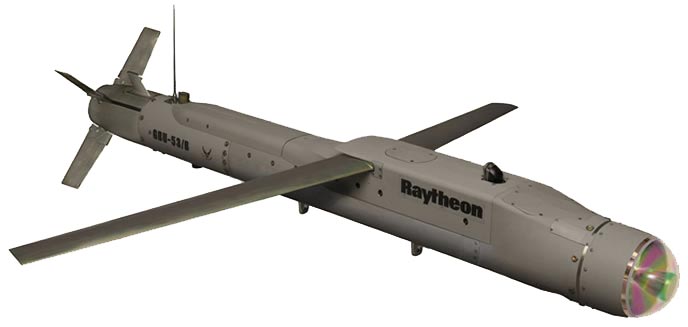
    sdb_ii_34

    Raytheon Company and the U.S. Air Force concluded a series of test flights with the Small Diameter Bomb II (SDB II) culminating in direct hits on targets moving at operationally representative speeds. SDB II can hit targets from a range of more than 40 nautical miles. It has a powerful warhead capable of destroying armored targets, yet keeps collateral damage to a minimum through a small explosive footprint. It is highly accurate and offers warfighters the flexibility to change targets through a datalink that passes inflight updates to the weapon.

    “These successes are the latest in a series of test flights demonstrating Raytheon’s readiness to progress the SDB II program to the System Verification Review and Milestone C,” said John O’Brien, SDB II program director for Raytheon Missile Systems. “These tests showcase the game-changing capability of Raytheon’s tri-mode seeker to detect, track and engage moving targets in adverse weather.”

    According to Raytheon, earlier supporting tests were performed in a multitude of different environments and scenarios, key to maturing seeker algorithms and validating the weapon’s aerodynamic performance. “All test flights helped reinforce the system’s capability to satisfy a critical warfighter need.” the announcement said. The Department of Defense has invested more than $700 million in the SDB II program.

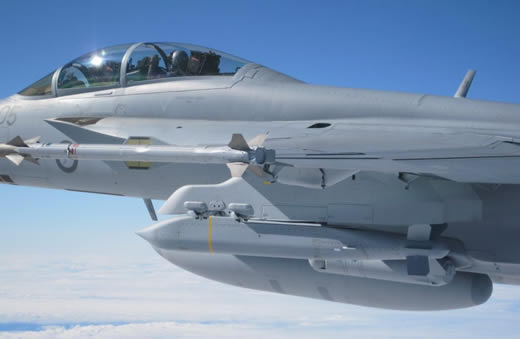
    Under another test program Raytheon, with the US Navy have recently confirmed testing the capability to guide the newest version of the Joint Standoff Weapon (JSOW) C-1 from an E-2D airborne early warning and control aircraft. The team demonstrated how an F/A-18E/F Super Hornet aircraft, an E-2D Advanced Hawkeye aircraft and the JSOW C-1 can network together for such task.

    The test was part of the Navy’s Trident Warrior 2013 demonstration in July. During the demonstration, fighters simulated the launch of a JSOW C-1 while the E-2D directed the weapon toward the positively identified target. The E-2D aircraft also received status updates sent from the JSOW C-1.

    “The success of the Trident Warrior 2013 demonstration proves the feasibility of providing the fleet a means of executing the complete kill chain with carrier-based assets utilizing the F/A-18E/F, JSOW C-1 and E-2D to engage maritime targets at range,” said Cmdr. Errol Campbell, the U.S. Navy’s Precision Strike Weapons program office deputy program manager for the JSOW program.

    Additionally, the team was able to track and designate a target; simulate the launch of the JSOW; send, receive and acknowledge target updates; and receive bomb hit indication data from the weapon.

    “This test further verifies the flexibility and seamless plug-and-play connectivity of JSOW C-1’s network-enabled capability,” said Celeste Mohr, JSOW program director for Raytheon Missile Systems. “The test demonstrates the relative ease with which the U.S. Navy can build on the ongoing integration of the JSOW C-1 on the U.S. Navy’s F/A-18 and expand the interoperability and connectivity to a fielded carrier-capable tactical airborne early warning aircraft.”

    In 2009, the Navy performed a similar demonstration of connectivity and interoperability among sensor platforms, a shooting platform and the JSOW C-1 during the Joint Surface Warfare Joint Capability Technology Demonstration. This demonstration involved a P-3 Orion aircraft’s littoral surveillance radar system and an E-8C Joint Surveillance Target Attack Radar System aircraft.

    An Australian Super Hornet carrying AGM-154C Joint Standoff Weapon on transit to Woomera Test Range, South Australia. Photo: Sqn. Leader Ben Numan, Australian Defence
    An Australian Super Hornet carrying AGM-154C Joint Standoff Weapon on transit to Woomera Test Range, South Australia. Photo: Sqn. Leader Ben Numan, Australian Defence

    Zumwalt – the Newest Destroyer for the US Navy is Launched

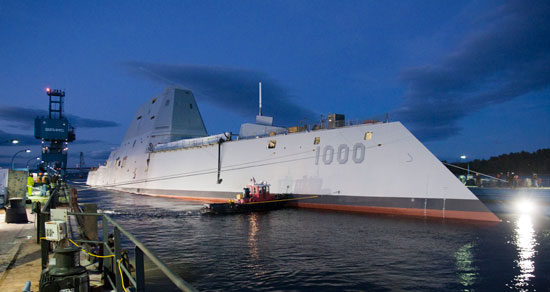
    The Zumwalt-class guided-missile destroyer DDG 1000 is floated out of dry dock at the General Dynamics Bath Iron Works shipyard. The ship, the first of three Zumwalt-class destroyers, will provide independent forward presence and deterrence, support special operations forces and operate as part of joint and combined expeditionary forces. Photo: General Dynamics
    The Zumwalt-class guided-missile destroyer DDG 1000 is floated out of dry dock at the General Dynamics Bath Iron Works shipyard. The ship, the first of three Zumwalt-class destroyers, will provide independent forward presence and deterrence, support special operations forces and operate as part of joint and combined expeditionary forces. Photo: General Dynamics

    General Dynamics Bath Iron Works (BIW) successfully launched the Navy’s first Zumwalt-class destroyer Oct. 28 at their Bath, Maine shipyard. The future USS Zumwalt (DDG 1000) will be the lead ship of the Navy’s newest destroyer class, designed for littoral operations and land attack. At 610 feet (186 meter) long, and 15,610 (long) tons displacement, the Zumwalt looks unlike any ship the navy has sailed, with an angular superstructure, a low-slung “tumblehome” hull to “pierce” waves for a smoother ride, Other new provisions include electric propulsion and a futuristic bridge, that looks more like it belongs on Star Trek’s USS Enterprise than a real Navy ship.

    The $4 billion warship, built by Bath Iron Works in Maine, was launched on the Kennebec River Monday, five years after construction began. The Zumwalt, hull number DDG-1000, was meant to be the first of a class to replace the DDG-51 Arleigh Burke-class destroyers. Rising construction costs caused caused the Pentagon to tack, limiting the program to just three Zumwalts. They are 100 feet longer than their predecessor, but require half the crew.

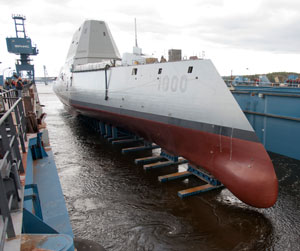
    The ship began its translation from Bath Iron Works' land-level construction facility to a floating dry dock on Friday. Once loaded into the dry dock, the dock was flooded and the ship was removed from its specially designed cradle. By late Monday, the dock had been flooded and the ship was floated off and tied to a pier on the Kennebec River. Photo: General Dynamics
    The ship began its translation from Bath Iron Works’ land-level construction facility to a floating dry dock on Friday. Once loaded into the dry dock, the dock was flooded and the ship was removed from its specially designed cradle. By late Monday, the dock had been flooded and the ship was floated off and tied to a pier on the Kennebec River. Photo: General Dynamics

    Because of the complexity of the first-of-class ship, the Navy will perform a two-phase delivery process. Bath Iron Works will deliver the ship itself to the Navy in late 2014. Upon delivery, the Navy will then conduct combat systems activation, tests and trials, to include multiple underway periods. The ship is expected to reach its initial operating capability in 2016. The BIW will deliver the USS Zumwalt in fall of 2015. DDG-1001, the USS Michael Monsoor, is scheduled for 2016 delivery, and the DDG-1002, USS Lyndon B. Johnson, is expected in 2018.

    As one of the Defense Department’s largest acquisition organizations, PEO Ships, an affiliated PEO of the Naval Sea Systems Command, is responsible for executing the development and procurement of all major surface combatants, amphibious ships, special mission and support ships and special warfare craft.

    The Zumwalt floating after the completed launch. "The launch was unprecedented in both its size and complexity," said Capt. Jim Downey, the Zumwalt-class program manager for the Navy's Program Executive Office, Ships.
    The Zumwalt floating after the completed launch. “The launch was unprecedented in both its size and complexity,” said Capt. Jim Downey, the Zumwalt-class program manager for the Navy’s Program Executive Office, Ships.

    The ship, the first of three Zumwalt-class destroyers, will provide independent forward presence and deterrence, support special operations forces and operate as part of joint and combined expeditionary forces. The Navy has incorporated many new technologies into the ship’s unique tumblehome hull, including an all-electric integrated power system and an Advanced Gun System, designed to fire rocket-powered, precision projectiles 63-nautical miles. The vessel will carry two MH-60R helicopters or one MH-60R and three unmanned vertical takeoff and landing unmanned helicopters (VTUAS). The Zumwalt’s 148 sailors will also enjoy improved on-board amenities, with fewer sailors per quarters, high-end food preparation and satellite laptops.

    The USS Zumwalt may be the biggest destroyer ever built for the Navy, but it should be the hardest to spot on radar. The shape of the superstructure and the arrangement of its antennas significantly reduce the ship’s radar cross section, making the ship less visible to enemy radar at sea. The design also allows for optimal manning with a standard crew size of 130 and an aviation detachment of 28 Sailors thereby decreasing lifecycle operations and support costs.

    Construction began on DDG 1000 in February 2009, and the Navy and its industry partners have worked to mature the ship’s design and ready their industrial facilities to build this advanced surface combatant. Zumwalt is currently more than 87 percent complete, and the shipbuilder will continue remaining construction work on the hull prior to planned delivery late next year.

    The lead ship and class are named in honor of former Chief of Naval Operations Adm. Elmo R. “Bud” Zumwalt Jr., who served as chief of naval operations from 1970-1974. The official christening of the ship was cancelled earlier this month. Originally scheduled for Oct. 19, the ceremony was postponed until a future date due to the US administration shutdown.

    Skunk Works and XTEND Simplify Multi-Drone Command

    0
    Lockheed Martin Skunk Works® and XTEND have achieved a major milestone in JADC2 by integrating the XOS operating system with the MDCX™ autonomy platform. This technical breakthrough enables a single operator to simultaneously command multiple drone classes, eliminating the friction of mission handoffs. From "marsupial" drone deployments to operating in GPS-denied environments, explore how this collaboration is abbreviating the data-to-decision timeline and redefining autonomous mission execution.

    From Ukraine to Taiwan: The Global Race to Dominate the New Defense Tech Frontier

    0
    As traditional defense primes face mounting competition from agile “neoprimes” such as Anduril, Palantir and Helsing, the balance of innovation is shifting toward software-defined warfare and scalable, dual-use technologies, while global industry consolidation—marked by Boeing’s integration of Spirit AeroSystems and other strategic mergers—signals an intensified race to secure control over the defense technology value chain. Our Defense-Tech weekly report highlights these trends.

    Europe’s “Drone Wall”

    0
    In early October 2025, a coordinated wave of unmanned aerial system (UAS) incursions—widely attributed to Russia—targeted critical infrastructure across at least ten European nations. The unprecedented campaign exposed the fragility of Europe’s air defenses...

    Weekly Defense Update & Global Security Assessment

    0
    Executive Summary The past week (September 18-25, 2025) represents an inflection point where strategic defense concepts have transitioned from doctrine to tangible reality. An analysis of global events reveals four primary, interconnected trends shaping an...

    U.S. Air and Space Forces Push Next-Gen Programs at the AS&C 2025 Conference and...

    0
    At the 2025 Air, Space & Cyber Conference, U.S. Air Force and Space Force leaders unveiled major updates on next-generation fighters, bombers, unmanned systems, and space initiatives, highlighting both rapid innovation and critical readiness challenges as the services race to outpace global competitors. A short version is available here, with a more detailed version for subscribers.

    TADTE 2025: Reflecting Taiwan’s Strategic Themes

    0
    The Taipei Aerospace & Defense Technology Exhibition (TADTE) 2025 crystallized around four dominant strategic themes that collectively illustrate Taiwan's comprehensive approach to defense modernization amid escalating regional tensions. Based on a detailed report by Pleronix (available upon request). Includes a Podcast discussion on TADTE 2025's highlighting Taiwan's four strategic themes beyond the post's coverage.

    Iron Beam 450 Completes Testing, Soon to Join With Operational Air Defense Units

    0
    Israel’s Iron Beam 450 high-power laser system has completed final testing, marking a major leap in air defense. Developed by Rafael, it offers precise, cost-effective interception of rockets, UAVs, and mortars, and is set for IDF deployment by 2025.