Sunday, December 28, 2025
More
    Home Blog Page 151

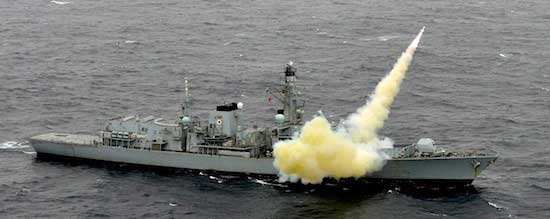
    HARPOON MISSILE OBLITERATES TARGET IN SUCCESSFUL HIGH SEAS FIRING

    Royal Navy warship HMS Montrose fires a Harpoon anti-ship missile off the coast of Scotland. Photo: Crown Copyright
    Royal Navy warship HMS Montrose fires a Harpoon anti-ship missile off the coast of Scotland. Photo: Crown Copyright
    Royal Navy warship HMS Montrose fires a Harpoon anti-ship missile off the coast of Scotland. Photo: Crown Copyright

    The Royal Navy conducted a test firing of Harpoon anti-ship missile from HMS Montrose at the Scottish exercise areas in the Northern sea. HMS Montrose, a Duke Class Type 23 frigate is based at Devonport Naval Base, fired the Harpoon missile during a specialist training week following her participation in Exercise Joint Warrior – a multinational exercise off the coast of Scotland. One of the aims of the firing was to put into practice some of HMS Montrose’s pre-deployment training, prior to a seven-month deployment overseas this summer.

    Although this class of frigate was designed primarily for the anti-submarine warfare role, Montrose is now designated as a “general purpose frigate” and is fitted with a broad suite of the latest sonar, radar and communications systems. HMS Montrose carries a Lynx helicopter and Sting Ray torpedo. Air defence is provided by a Vertical Launch Sea Wolf weapon system. Surface armaments include the Harpoon missile and the 4.5inch gun for naval fire support.

    The missile is around 15ft long, about 1ft diameter and is launched from Type 23 frigates. A booster rocket helps launch the Harpoon before the turbojet then powers it along at Mach .9 – just under the speed of sound. Commanding Officer of HMS Montrose, Commander James Parkin, said: “Of all the times I have said ‘command approved’ in my career so far, it was this one that I enjoyed the most. A successful firing of our Harpoon missiles has proven that my professional team of highly trained sailors are at the top of their game, and that we are ready for any tasking that we are given.”

    A Blueprint for Cyber Deterrence: Building Stability through Strength

    INSS LogoBy Frank J. Cilluffo, Sharon L. Cardash, and  George C. Salmoiraghi
    INSS – Cyber Warfare Program

    19176446_sn many ways, deterrence in cyberspace is eminently more complicated than deterrence in the Cold War. The nature of the domain makes it so. Even the most sophisticated theories behind nuclear deterrence will prove inadequate for dealing with the complexities of a man-made domain with a virtually infinite number of constantly changing actors, motivations, and capabilities.” I-HLS reports.

    Cyber threats pose a real and growing problem, and to date, United States efforts to counter them have lagged. While the ability to defend against an attack or intrusion must be maintained, the US, like any country, would be well served by deterring its adversaries from acting in the first place – at least when it comes to the most serious of actions, namely cyber warfare. Clearly not all hostile behavior can be deterred, but it is important to identify priorities in this regard and determine how best to address those that lead the list. Despite animated discussions, development of a grand unified solution has remained elusive, in part because the complexity and crosscutting nature of cyber deterrence requires a comprehensive and cohesive solution that encompasses stakeholders in both the private and public sectors.

    Cyber threats pose a real and growing problem, and to date, United States efforts to counter them have lagged. While the ability to defend against an attack or intrusion must be maintained, the US, like any country, would be well served by deterring its adversaries from acting in the first place – at least when it comes to the most serious of actions, namely cyber warfare. Clearly not all hostile behavior can be deterred, but it is important to identify priorities in this regard and determine how best to address those that lead the list. Despite animated discussions, development of a grand unified solution has remained elusive, in part because the complexity and crosscutting nature of cyber deterrence requires a comprehensive and cohesive solution that encompasses stakeholders in both the private and public sectors.

    In order to help structure the debate and advance toward the goal, we propose a framework that examines the issue critically and looks to dissuade, deter, and compel both state and non-state hostile actors. Placing potential threats into conceptual relief this way helps clarify the sources of danger and serves as a starting point for determining and attaching responsibility for hostile action(s) against a country or its allies. This then allows the relevant players who have been targeted by hostile actors to proceed with necessary discussions and action as both a precursor to, and actual execution of, appropriate and effective response measures. The rubric thus yields a further corollary benefit by aiding to identify areas that would benefit from or even require cooperation among affected/targeted entities. In short, this framework provides a starting point to explore ways to deter hostile actors, and as such offers a conceptual lens that can be of value to the US and its allies alike. Neither the range of actors nor their potential activities detailed below is meant to be exhaustive. It is instead a snapshot, and a rough one at that, intended to help convey a sense of who, what, how, why, and so on, as a prelude to a more in-depth discussion of strategy and policy in the area of cyber deterrence.

    State Actors

    Foreign militaries may engage in computer network attack/computer network exploitation (CNA/CNE) to limit, degrade, or destroy another country’s abilities, in furtherance of a political agenda. Foreign militaries are increasingly integrating CNA and CNE capabilities into their war fighting and military planning and doctrine. Such efforts have conventional battlefield applications (i.e., enhancing one’s own weapon systems and platforms, and/or stymieing those of others); and unconventional applications, as cyberspace extends the battlefield to incorporate broader civilian and societal elements. Cyber domain activity may cover intelligence preparation of the battlefield, to include the mapping of critical infrastructures of perceived adversaries.

    Foreign intelligence and security services: Exploits may include political, military, economic, and industrial espionage; theft of information from or about another government; or theft of intellectual property, technology, trade secrets, and so on in the hands of private corporations and universities. Many foreign intelligence services are engaged in industrial espionage in support of private companies.   Ultimate aims of activities by this actor category include the desire to influence decisions, and affect the balance of power (regionally, internationally, and so on). Convergence of human and technical intelligence is especially notable in this category, and includes the “insider” threat.

    Hybrid aspects: Elements of state capability may be integrated to achieve a whole that is greater than the sum of its parts. Alliances (state-to-state) may be invoked for a similar effect. Joint activity in this respect may include collection of information, sharing of findings obtained by a single party, and joint execution of field operations (attacks). States may also seek and enlist the assistance of non-state actors, such as hackers for hire who do not feel bound or restricted by allegiances.

    Non-State Actors

    Non-state terrorist organizations may conduct CNA/CNE in furtherance of a specific political agenda. They place high value on the internet (to recruit, train, fundraise, plan operations, and so on).    US and allied counterterrorism efforts yielding success in the physical world may lead al-Qaeda and their ilk to enter the cyber domain ever more deeply. The latter might try to learn lessons from (or even “surf” in the wake of) the actions of “Anonymous” and other “hacktivists” who use the cyber domain to bring attention to the cause they espouse.

    Non-state criminal enterprises, which include theft of intellectual property, identity, and the like, as well as fraud, are generally motivated by profit. Cyber-specific tools and techniques can yield major monetary rewards. The global cybercrime market was valued at $12.5 billion-plus in 2011,  though estimates vary (validity of calculation methodologies and impartiality of certain sources is debated and empirical evidence is difficult to obtain).

    Hybrid aspects: Alliances of convenience are possible among non-state actors (terrorist and criminal groups, and even individuals) to fill capability gaps, generate force multiplier effects, and so on. Similar arrangements of mutual convenience are also possible between state and non-state (terrorist, criminal, lone hacker) entities; a non-state actor serves to expand a state’s skills and capabilities, or acts as a state’s proxy for other purposes. Such arrangements further compound the attribution challenge (who is responsible) and provide for additional plausible deniability.

    Against deterrence in the nuclear realm, the cyber  counterpart bears both similarities and differences. The cyber domain in particular demands a focus on actors, rather than weapons/capabilities alone; hence prioritizing these actors according to the scope, scale, and nature of the threat that they pose is critical. Only after racking and stacking them can we focus on the actors that matter most, and do so in a way that confronts and neutralizes their specific intentions and capabilities.

    Defense and offense are both crucial components of a multilayered and robust US posture and strategy designed to ensure national safety. Deterrence can provide an additional layer of protection by preventing those with interests inimical to the United States from leaving the starting blocks. To preserve as well as further national/homeland security, it is therefore important to think through, develop, and sustain over time in a quickly evolving (technological and security/defense) ecosystem the requisite US capabilities and capacities to support the country, credibly and effectively, in standing ready and being able to dissuade, deter, and compel its adversaries. While concerted efforts directed toward these ends should be pursued in parallel with committed efforts to defend systems, such an approach and stance must not be taken as a substitute for building and maintaining strong additional means of reconstitution that give rise to strong resilience. Indeed, resilience itself may be a powerful deterrent. Reflecting the wisdom of Sun Tzu, the capacity to bounce back after an incident plus the demonstrated will and ability to respond to a cyber attack should serve to strengthen US deterrence efforts and thereby avoid battle and bloodshed: “For to win one hundred victories in one hundred battles is not the acme of skill. To subdue the enemy without fighting is the acme of skill.”

    Contours of the Cyber Threat

    The United States and its interests are under daily cyber threat from both state and non-state actors. Potential US targets are many and varied, and extend to critical sectors such as water, power, finance, and telecommunications. According to press reports citing a spokesman for the National Nuclear Security Administration, the US “Nuclear Security Enterprise experiences up to ten million ‘security significantevents’ each day.” Tallies of the Department of Homeland Security reveal tens of thousands of cyber intrusions (actual/attempted) each year, and dozens of attacks on critical infrastructure systems – the latter total increasing by several orders of magnitude from 2010 to 2012. The range of senior officials, past and present, who have sounded the alarm bell is striking, and includes Assistant to the President for Homeland Security and Counterterrorism John O. Brennan; Director of the National Security Agency and Commander of US Cyber Command General Keith Alexander; former Homeland Security Secretary Michael Chertoff; former National Coordinator for Security and Counterterrorism, and former Special Advisor to the President for Cyber Security, Richard Clarke; the Chairman of the Senate Homeland Security Committee, Senator Joseph Lieberman; ranking member on the Senate Armed Services Committee, Senator John McCain; and FBI Director Robert Mueller, who recently predicted that the cyber threat will in the future displace terrorism as the top threat to the country.

    One commentator noted vividly, “Foreign spies and organized criminals are inside of virtually every U.S. company’s network. The government’s top cybersecurity advisors widely agree that cyber criminals or terrorists have the capability to take down the country’s critical financial, energy or communications infrastructure.” Yet in addition to suffering monetary losses that the Office of the National Counterintelligence Executive and other US officials number in the billions due to computer network exploitation in the form of backdoor theft of valuable intellectual property, the country is taking a more ominous hit as the subject of adversarial efforts to engage in the cyber equivalent of intelligence preparation of the battlefield – including China’s mapping of critical US energy and water supply infrastructures, which could later be leveraged so as to deter, dissuade, or compel action on the part of the United States.

    Critical industries in other countries have experienced cyber attacks. Saudi Aramco (state owned and “the world’s biggest oil producer”) saw a virus of external origin infect roughly 30,000 of its computers in August 2012. Shortly thereafter Qatar’s RasGas (“the second largest producer of liquified natural gas in the world”) was also hit. Newspaper reports suggest that the “French nuclear power group Areva was the target of a cyber attack in September [2011].” And the list goes on.

    While countries possess abilities of varying degrees and sophistication, dozens are expanding their cyber capabilities, including the United States and its allies (Israel is a prime player in this domain). Vis-à-vis the United States, China is a key source of “advanced persistent threats,” though state sponsored fingerprints are not always evident on the mouse or touch screen.

    Attribution is all the harder when there is a substantial delay between the event and the victim’s report or request for assistance. Evidence of Chinese intent, though, has existed for more than a decade: in 1999, two Chinese army colonels published a book titled Unrestricted Warfare, which highlighted alternative means to defeat an opponent, distinct from traditional direct military action.

    Russia too is a sophisticated and determined adversary in the cyber domain. In the 2008 conflict between Russia and Georgia, Russia attacked and disrupted Georgia’s communications network. As Ambassador David Smith observes, “Russia has integrated cyber operations into its military doctrine”; though “not fully successfulRussia’s 2008 combined cyber and kinetic attack on Georgia was the first practical test of this doctrine… [and] we must assume that the Russian military has studied the lessons learned.” In 2007, Estonia’s government, banks, and other entities were also the target of “large and sustained distributed denial-of-service attacks (DDoS attacks)many of which came from Russia.” Hackers and criminals based in Russia have made their mark. Cyberspace has proven to be a gold mine for criminals, who have moved ever more deeply into the domain as opportunities to profit there continue to multiply. The value of the global cybercrime market in 2011 has been pegged at over $12.5 billion, with Russia’s slice of the pie being $2.3 billion (close to double of its absolute value compared to the prior year). There are indications, moreover, that the forces of organized crime in the country have begun to join up “by sharing data and tools” to increase their take.

    The potential for cooperation between and among actors with substantially different motivations is of serious concern. For instance, states that lack indigenous capabilities but wish to do harm to the United States or its allies may co-opt or simply buy/rent the services and skills of criminals and hackers to help design and execute cyber attacks. Do-it- yourself code kits for exploiting known vulnerabilities are easy to find, and even the Conficker worm (variants of which still lurk, forming a botnet of approximately 1.7 million computers) was rented out for use.

    Thus, lack of access to the infrastructure or backing of a powerful state is not prohibitive. Proxies for cyber capabilities are available. There exists an arms bazaar of cyber weapons. Adversaries do not need capabilities, just intent and cash. This is a chilling prospect, bearing in mind that al- Qaeda has called for electronic mujahidin to attack the US government and critical US infrastructure. Rear Admiral Samuel Cox at Cyber Command noted that al-Qaeda operatives are actively pursuing the means to attack US networks, a capability that they could buy from criminal hackers. In addition, cyber capabilities (however acquired) may be used as a force multiplier in a conventional attack.

    Other notable actors of concern in this context include North Korea and Iran. What both of those countries may currently lack in capability they make up for in abundance of intent. Iran is investing heavily to expand and deepen its cyber warfare capacities. The country has also long relied on proxies such as Hizbollah, which now boasts a companion organization called Cyber Hizbollah, to strike at perceived adversaries. Law enforcement officials note that Cyber Hizbollah’s goals and objectives include training and mobilizing pro-regime (meaning pro-government of Iran) activists in cyberspace. In turn and in part, this involves schooling others in the tactics of cyber warfare. Hizbollah is deftly exploiting social media tools such as Facebook to gain intelligence and information. Each such exploit generates additional opportunities to gather yet more data, as new potential targets are identified, and tailored methods and means of approaching them are developed.

    In addition, elements of Iran’s Revolutionary Guard Corps (IRGC) have openly sought to pull hackers into the fold. There is evidence that at the heart of IRGC cyber efforts one will find the Iranian political/criminal hacker group Ashiyane; and the Basij, who are paid to do cyber work on behalf of the regime, provide much of the manpower for Iran’s cyber operations. In the event of a conflict in the Persian Gulf, Iran could combine electronic and computer network attack methods to degrade US and allied radar systems, complicating both offensive and defensive operations of the US and its allies. In Hizbollah’s own bid to deter, moreover, Hizbollah leader Hassan Nasrallah has stated publicly that there will be no distinction drawn between Israel and the United States in terms of retaliation, should Israel attack Iran to halt its progress toward a nuclear weapons capacity: “If Israel targets Iran, America bears responsibility.”

    In sum, states are exploiting cyberspace to advantage, furthering their own interests by gathering information, gaining the ability to degrade the capabilities of perceived adversaries, and so on. Non-state actors, terrorists, and criminals are also leveraging cyberspace to their own ends, benefiting from a domain that levels the playing field and allows smaller and even individual actors to have a disproportionate impact. This asymmetry gives rise to an ecosystem that is fraught with a range of perils that did not previously occupy the focus and energies of major powers. Hence the concerns of the major powers, for the impact of certain scenarios raised above could significantly undermine, if not shatter, trust and confidence in the system (be it American or another).

    Nor is the threat unique to the United States. Asymmetric warfare is of course one of the defining features of the Israeli experience on both the kinetic and virtual battlefields. Consider also other (arguably) lesser known casualties of the cyber struggle. As outlined by the Office of the National Counterintelligence Executive in its 2011 Report to Congress:

    Germany’s Federal Office for the Protection of the Constitution (BfV) estimates that German companies lose $28 billion-$71 billion and 30,000-70,000 jobs per year from foreign economic espionage. Approximately 70 percent of all cases involve insiders.

    South Korea says that the costs from foreign economic espionage in 2008 were $82 billion, up from $26 billion in 2004. The South Koreans report that 60 percent of victims are small- and medium-sized businesses and that half of all economic espionage comes from China.

    Japan’s Ministry of Economy, Trade, and Industry conducted a survey of 625 manufacturing firms in late 2007 and found that more than 35 percent of those responding reported some form of technology loss. More than 60 percent of those leaks involved China.

    Observations by French Senator Jean-Marie Bockel, recorded in an “information report” of France’s Senate Committee on Foreign Affairs, Defence and Armed Forces, are equally striking:

    In France, administrative authorities, companies and vital service operators (energy, transport, health, etc.) are victims daily of several million cyber attacks.These cyber attacks may be carried out by computer hackers, activist groups, criminal organisations, as well as by competitor companies, or even by other States. The finger of suspicion often points towards China or Russia, even if it is very difficult to identify the authors of these attacks precisely.

    So too the assessment of Jonathan Evans, Director General of the United Kingdom’s Security Service:

    Britain’s National Security Strategy makes it clear that cyber security ranks alongside terrorism as one of the four key secu- rity challenges facing the UK. Vulnerabilities in the internet are being exploited aggressively not just by criminals but also by states. And the extent of what is going on is astonishing – with industrial-scale processes involving many thousands of people lying behind both State sponsored cyber espionage and organised cyber crime….One major London listed com- pany with which we have worked estimates that it incurred revenue losses of some £800m as a result of hostile state cyber attack – not just through intellectual property loss but also from commercial disadvantage in contractual negotiations. They will not be the only corporate victim of these problems.

    Evans has reasoned further as follows:

    So far, established terrorist groups have not posed a signifi- cant threat in this medium, but they are aware of the potential to use cyber vulnerabilities to attack critical infrastructure and I would expect them to gain more capability to do so in future.

    The necessary question is, therefore, what should be done.

    Cyber Deterrence and Multidimensional Response

    Given the manifold and disturbing evidence of cyber capability and hostile intent on the part of both state and non-state actors, the United States must carefully chart and craft a way forward that comes to terms powerfully and proportionately with the facts and realities of concern that characterize the cyber domain today (and are unlikely to disappear any time soon). It would be false comfort to think that the US or its allies can firewall a way out of this problem. Instead, and in order to help shore up both cyber security and the protection of critical infrastructure, the US should formulate, articulate, and implement a cyber deterrence strategy.

    A spirited but embryonic policy debate on the subject has already been held in certain select quarters, yet the complex, cross-sector, and multidisciplinary nature of the challenge has so far rendered a strategic, integrated response out of reach. Threats are evolving daily, adding an extra layer of complication, and notwithstanding the pace and volume of the threat stream, information about threat vectors is often not shared across sectors or made public. At the level of principle, this reticence is certainly not beyond reason, as government seeks to protect classified material and industry seeks to protect proprietary information. In practice, though, such reluctance throws sand in the gears of response as well as prevention efforts.

    Against this background the scale of the task is admittedly daunting, but the United States would be well served to elaborate and execute a cyber deterrence strategy and policy that seeks to dissuade, deter, and compel, both as a general matter and in a tailored manner that is actor/ adversary-specific. A solid general posture meaning basic security steps (protection, hygiene, technology), could serve as an 80 percent solution, neutralizing the majority of threats before they manifest fully. This would free up resources (human, capital, technological) to focus in context- specific fashion on the remainder, which constitute the toughest threats and problems, in terms of their level of sophistication and determination. To make such recommendations operational, lines in the sand or, in this case the silicon, must be drawn. Preserving flexibility of US response by maintaining some measure of ambiguity is useful, so long as parameters are made clear by laying down certain markers or selected red lines whose breach will not be tolerated.

    To effectively deter an individual or entity and thereby prevent it from accomplishing its goal – or ideally, prevent it from acting in the first place – it is imperative to understand fully just what the initiating party hopes to achieve. (The idea is a variation on the theme/principle of noted strategist Miyamoto Musashi: “Know your enemy, know his sword.”) This foundational understanding constitutes the first step to dissuade or compel one’s adversary; and taking that step requires examining the situation through the eyes of the other. While bearing in mind that all of the sources of threat referenced above are exploring and exploiting information and systems via cyber means, these various actors have different and distinct objectives. Though using virtual means in a virtual medium, each such actor is after specific real world results and seeks to collect (or worse) from its target(s) accordingly.

    What must the United States do to convince state actors not to engage in computer network exploitation or computer network attack through their military and intelligence services in furtherance of broader goals? Here the US cyber response should be an outgrowth of its broader deterrence strategy relative to a given actor, meaning that the cyber deterrence component should be consistent with and complementary to any preexisting, broader US deterrence strategy for that player. Other countries need to understand and appreciate that the United States can and will impose a proportionate penalty if attacked in a cyber manner and medium, though US response may ultimately be cyber or kinetic, with all options on the table. Regarding cyber response, offensive capability must be demonstrated in such a way as to leave no doubt as to the consequences of breaching a US red line. Such demonstration, however, must be undertaken with full recognition of the fact that any tool, technique, tactic, or procedure employed could subsequently be taken up, tweaked, and used in turn in retaliation, including against allies. Response in this context is predicated on the ability to attribute an attack to one or more specific actors (foreign powers).

    On the intelligence side, since their inception states have been engaged in stealing secrets. Though espionage has gone digital, taking and adapting the world’s second oldest profession to the twenty-first century, foreign governments are using cyber means for the original purpose: to obtain information that can be used to shape and sharpen decision making. Put another way, states are using cyber means (think of Russian and Chinese hackers working in service of their governments, for example) to augment their ability to collect information of interest to their respective policymakers. The question then becomes, what information are these actors interested in obtaining, and why? To the extent that practitioners of cyber deterrence can inject insights and articulate a detailed answer to this double-barreled query, the targeted government (be it US or allied) will be able to defend systems better and tailor deterrence activities correspondingly.

    Industrial espionage is a subset of this type of state sponsored activity. The intent is to increase the economic prosperity or viability of business concerns in a given state. Although the espionage activity is state directed, the ultimate beneficiaries may be private or semi-private entities. On the flip side, from the target’s perspective, the consequences that follow from the theft of trade secrets may be profound and extend beyond economic loss, to diminished national stature in the eyes of the world. In the assessment of US National Counterintelligence executive Robert “Bear” Bryant, cyber-espionage is “a quiet menace to our economy with notably big results….Trade secrets developed over thousands of working hours by our brightest minds are stolen in a split second and transferred to our competitors.”

    US productivity and innovation may also suffer as a result, with further potential knock-on effects for future growth and development. If military relevant information is exposed and extracted, there may also be national security implications. It takes little imagination to conjure up what a hostile party could do, for example, with stolen US technology that holds potential military application.

    Much like states, transnational terrorist organizations seek an asymmetric advantage that they can leverage in trying to enact their desired political agenda. By and large, however, such groups possess fewer resources than states, and have largely eschewed engaging in the political process, favoring instead the use of violence to achieve their aims. From this standpoint it would not be much of a stretch for terrorists to seek more bang for their buck, by turning to digital means as a force multiplier for kinetic action. The more detail that can be learned and discerned about these groups’ tactical cyber and strategic political objectives and aspirations, the more helpful fodder there will be for crafting a cyber deterrent that thwarts them.

    The forces of terror and crime may also converge, merging into a hybrid threat founded on an alliance of convenience, in which each party draws on the other’s skills and assets to further their respective ends. Contrary to their non-state counterparts whose mainstay is crime alone, pure and simple profit is not what makes terrorist groups tick. This difference in kind actually presents an opening of sorts, which could be exploited through skillful exposition and execution of a tailored cyber deterrence strategy.

    Recall that deterrence is a subset of coercion that seeks to cause an adversary to refrain from acting by influencing its belief that the likelihood of success is slight, or that the pain from the response is greater than it is willing to bear. Historically, deterrence has been taken to require “three overt elements: attribution, signaling, and credibility.” In present context, deterrence presupposes that the contours of US red lines are made clear to its adversaries as well as its allies; that it has signaled that breaches of these boundaries will not be tolerated; and that it can and will visit consequences for any such breach upon the party that trespasses. The expected US reaction should be sufficiently threatening to the potential perpetrator to dissuade it from undertaking the activity in the first place.

    When defining US red lines in cyberspace, substantial forethought and caution must be exercised, bearing in mind that activities that approach but do not cross these lines will, as a corollary of boundary definition, be considered from a less punitive perspective. Activities that do not have an otherwise benign purpose, such as efforts to map US critical infrastructure, should be assessed accordingly. Nothing good can come when a foreign country or non-state actor has intimate knowledge of these systems.

    Attribution is crucial to underpin deterrence. One must know who has acted in order to visit consequences upon them. However, it is hard to find a smoking keyboard in cyberspace since the domain is made for plausible deniability. The magnitude and significance of the attribution challenge in the context of cyber attack response has been underscored by prominent analysts, though a contrarian strain does exist. Difficulty aside, being able to attach the action to the actor enables the aggrieved party to react. The possibility of response in kind increases the number of options that a targeted entity can draw upon after the fact, which could include the potential to give better than the original target may have gotten. Concerted effort directed towards developing improved attribution capacities through technological and other means are time and resources well spent.

    So too must adversaries understand and appreciate that the United States stands poised to use the full spectrum, breadth and depth, of its powers to enforce these rules. To credibly convey that message and have it hit home with those who bear hostile intent, there must be a public display of capabilities that is sufficient to make the point, without exposing so much that the display becomes self-defeating because it gives away the store, by permitting adversaries, for example, to reverse engineer (or otherwise mimic) and use the very US means and methods that are on display. The “display” aspect of the exercise is made even trickier by the fact that the laws governing cyber warfare are still nascent, evolving, and thus to some extent unclear. Caution and proceeding with care are therefore warranted on a second level as well.

    Although the United States must demonstrate that it has in its toolkit the requisite items for use against hostile parties when necessary, there has not been a clear cut public demonstration of cyber dominance to date for which the US has definitively taken and actively sought ownership.

    Against this background, should the United States consider engaging in the digital equivalent of an above-ground nuclear test? This is a question for US policymakers, practitioners, and technologists alike, as they seek to define a path forward and elaborate both doctrine and strategy for the cyber domain. The ironic possibility that if conducted with care (commensurate to the enormity of the exercise) the cyber equivalent of such a test may be instrumental to deterring hostile actors and thereby preclude a fight is not to be dismissed out of hand.

    Building Stability through Strength

    It is sometimes said that the best defense is a good offense. According to open source reports, the United States is developing rules of engagement regarding cyber attacks, and the Defense Department is seeking to bolster its arsenal of cyber weapons (though a cyber attack may engender a cyber or kinetic response). As former Vice Chairman of the Joint Chiefs of Staff General James E. Cartwright has observed, efforts and investments of the type just described would help recalibrate the defense to offense ratio – which until relatively recently stood at 90 percent to 10 percent in favor of defense  – and would strengthen and build credence in the US ability to deter effectively adverse action in the cyber domain.

    However, the US cyber security community, like its allied counterparts, remains a work in progress. In the US in particular, the community still has a long way to go before it reaches the level of skill and maturity now displayed by the US counterterrorism community. The synchronization of Titles 10 and 50 of the United States Code, harmonizing military and intelligence functions, has been a major post-9/11 breakthrough that significantly enhanced the US overall ounterterrorism posture. The US can leverage this achievement by tailoring and applying the concept to the cyber context, bearing in mind the (yet-to-be-met) twin challenges of codifying rules of engagement and pursuing a more proactive stance.

    To move forward smartly in the cyber domain, the United States and its allies must demonstrate leadership and possess vision, together with a sound plan of action. For too long, incidents have driven strategy – in effect, tactics masquerading as strategy. While the United States possesses some unique capabilities, these capabilities will not be used to fullest advantage unless and until there is a broader strategic framework in which to embed them. Building on the conceptual framework set out above, certain key tenets emerge that can serve as a foundation for developing and enacting an effective cyber deterrence strategy, capacity, and posture. Those tenets, the beginnings of a blueprint for cyber deterrence, are as follows:

    Calibrate to meet the mission. Capability supports credibility in this context. To the extent that investments and efforts may reflect a defense to offense ratio that suggests an imbalance that could negatively impact on homeland/national security, the existing calibration should be considered carefully and adjusted as necessary. As a prerequisite to imposing consequences, calibration (or recalibration) goes hand in hand with the political will to act, when called upon, to impose sanctions.

    Start and build from a position of strength. To deter or dissuade successfully requires the capacity to convince potential adversaries that the costs of hostile action will exceed the perceived benefits. Developing and signaling the existence of a first strike capability is therefore fundamental.

    Put the accent on speed, surprise, and maneuverability. Nanoseconds can make a difference in cyberspace. Response in close to real time should therefore be the goal. While there should be no doubt about the principle that any breach of red lines will incur consequences, there is value in maintaining a measure of ambiguity about the precise nature of those consequences, so as to keep the object looking constantly over its shoulder. Flexibility plus clarity may seem a non sequitur, but in fact is strategically prudent here.

    Leave no person behind. A first strike capability alone would leave the country vulnerable to and unprepared for a response in kind, should the adversary possess such capacity. As in the Cold War stage of the nuclear era, both prudence and forethought mandate a second strike capability to ensure force protection. Maintaining dominance in science and technology is crucial, since there are technical solutions to even vexing challenges in the cyber domain.

    Know thy adversary. The maxim may be worn and tired, but it still applies. To defeat potential adversaries, a deep understanding of the particular aims and aspirations of each is needed. This insight should then inform the strategy and tactics for that case, allowing these elements to be tailored to a specific opponent, thereby maximizing the potential to thwart them. The so-called “OODA loop” – observe, orient, decide, and act – applies.

    Lead by example. Implicit in the idea of robust cyber deterrence is the presupposition that the entity poised to deter has inoculated itself against that which it may visit upon others (since the possibility of blowback exists). To proceed differently is to jump off the plane without a parachute. The US government should therefore strive to place its own house in order as a crucial corollary to meeting the threat. Moreover, the government should initiate the steps needed to facilitate information sharing so that critical facts reach all key defenders of national assets and resources, including those owned and operated by the private sector (critical infrastructure).

    Partner for success. No single component of government or even the government as a whole can go it alone in the cyber domain. Genuine intra- and cross-sector partnerships are essential. Within government, for example, the careful synchronization and harmonization of military and intelligence functions (Titles 10 and 50) for cyber deterrence purposes could prove valuable, as it has in the counterterrorism context. The importance of inoculating ahead of time extends beyond the public sector to critical networks and systems that lie in private hands. Accordingly, the private sector must commit to undertake the steps necessary to reinforce homeland/national security. To ensure that bar is met, federal authorities should reach out to the private sector, taking a carrot and stick approach that combines both positive and negative incentives designed to produce the desired outcome.

    Think and act internationally. Transnational challenges require transnational solutions, and cyberspace is by definition borderless. Trusted partners on the international level can and should bring much to the table in this context. Admittedly, national interests may impede the ability to share the most sensitive of data and information. Nevertheless, it would be self-defeating to refrain from leveraging key bilateral relationships and alliances, from the “Five Eyes” intelligence partnership (Australia, Canada, New Zealand, the United States, and the United Kingdom) to NATO to the EU plus other strategic partners such as in the Mediterranean region and Asia, to include Israel, Singapore, India, and Japan.

    With inspired leadership – the cyber warfare equivalents of Billy Mitchell, Bill Donovan, or George Patton, who truly understood the tactical and strategic uses of new technologies and weapons – the United States can forge and execute a powerful cyber deterrence strategy that looks through its adversaries’ eyes in order to be adequately prepared for cyber events, ideally with just bits and bytes rather than bullets, bombs, and bloodshed.


    INSS Cyber LogoFrank J. Cilluffo is director of the George Washington University Homeland Security Policy Institute (HSPI) and co-director of GW’s Cyber Center for National & Economic Security (CCNES). Sharon L. Cardash is associate director of HSPI and a member of CCNES. George C. Salmoiraghi is an attorney and advisor to HSPI in Washington, D.C.

    This article was first published in Military & Strategic Affairs journal. Volume 4, issue 3.

    To read the full article, press here (link):

    A Blueprint for Cyber Deterrence – Building Stability through Strength

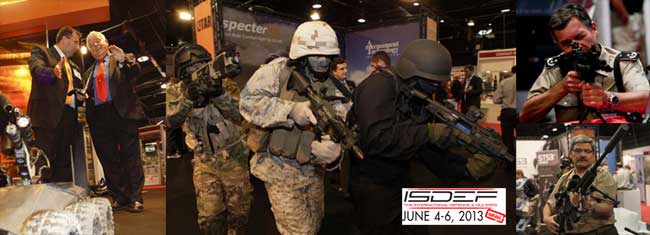
    ISDEF 2013 Preview

    ISDEF 2013

    Positioned to be the largest defense expo in Israel, the 6th edition of ISDEF defence and security exhibition has become a summit of business and defence. Taking place in Tel Aviv exhibition center in June 4-6, 2013 the event is expected to host 250 exhibiting companies and 15,000 visitors from 60 countries. As a media sponsor, Defense Update will publish a daily coverage of the show highlights and featured products and companies. If you exhibit at ISDEF and would like to add your company or product please contact us.

    Israel is a high potential target market for defense and security and ISDEF has positioned itself as a leading international defence, highlighting the country’s security technologies to foreign visitors and introducing international solutions to the lucrative Israeli market.

    Despite global budgetary restraints and economic uncertainty, the need for defence and security is constant.  This has led to an increase in the number of cooperation agreements and joint ventures between local and foreign defence and security companies. Israel is one of the leading countries to use this joint venture commercial logic, which has become a vital condition to guarantee continued defence industry profitability. This has lead to the creation of established ties of joint production and R&D with companies from many countries.

    In addition to the exhibition, the summit will highlight five professional events and seminars including:

    Civil Security: Financial and municipal leaders will share their ideas and policies for disaster events, discussing economic recovery and emergency response, resilience and continuity of services. This conference is held by the head of Israel’s Civilian Security.

    Negotiation in the war Against Terror: This conference aimed at SWAT negotiating teams, will analyse the changes in strategies, the logic of action and tactics implemented by modern terror and discuss the changes required in negotiation tactics.

    I-HLS Big Data Fusion (BDF): This conference will focusing on Israel’s approach to BDF in the defence & HLS arena.

    Israel’s International CBRNe and C-IED: The conference focus on the Israeli approach to CBRNe and C-IED defense, discussed by CBRN First Responders from Israel and the USA, IDF CBRN Special Forces, Israeli and US Government Officials, US Army, UN and more.

    I-HLS Video Data Analytics: Focusing on the Israeli approach to video and visual information in the HLS market.

    THis year ISDEF is also introducing the ‘New Innovations Pavilion’, a new themes highlighting the roles of small and medium companies (SME), enterprises which play a pivotal role in the economic development of all countries worldwide, are an indispensable part of the industrial supply chain. It is a preference of OEMs and Prime Contractors to work with SME’s because of their innovative capabilities, flexibility, and lower costs. “Our purpose at ISDEF is to highlight cooperation and innovative technology that has been implemented in defence and security projects” said Neil Margolius International Relations executive at ISDEF.

    One of the attractions at ISDEF will be the live demonstration area, both indoor and outdoor. 74 Sqm of space has been reserved and designed to replicate different combat zones, incorporating a variety of terrain and objects including desert, vegetation, evacuated building, car, gate, etc.

    AIS Introduces a New Line of Marine PCs

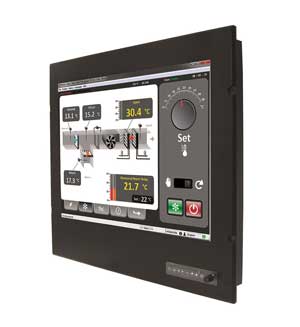
    Marine grade panel PC. Photo: AIS.

    American Industrial Systems (AIS) has launched a new line of marine PCs which come with rugged touch screen interface. the new touch PCs are designed to withstand the harsh maritime environment, has long-term vibration resilience and low sensitivity to electromagnetic interference (EMI). The new touch PCs are suitable for bridge control display, navigation, monitoring and ship automation applications.

    These marine PCs also offer a range of industrial features such as optional optical bonding, wide view angles, and full range dimming. The touchscreen panel is fully integrated with the computer to reduce system integration costs and minimize required footprint. Full support is provided for wide range of panel resolutions in order to meet the specific requirements of many different marine applications. AIS professional high quality design provides marine users with reliable, cost-efficient, and ready to run solutions. AIS COTS rugged marine display computers are offered in screen sizes 10.4”, 12.1”, 15”, 17”, 19” and 24”.

    The new line complies with marine equipment IEC 60945, DNV 2.4, and IACS-E10 standards defining maritime navigation and radio communications equipment and systems. According to AIS, their marine computers are DNV certified for a range of extreme conditions including temperature, humidity, vibration, EMC compatibility and enclosures; with environmental ratings for enclosures based on NEMA 4, 4X, IP65, IP67 type for degree of protection against falling dirt, rain, windblown dust, splashing water, hose-directed water, and corrosion.

    M51 Nuclear Missile Fails on a Test Launch from a Newly Upgraded Submarine

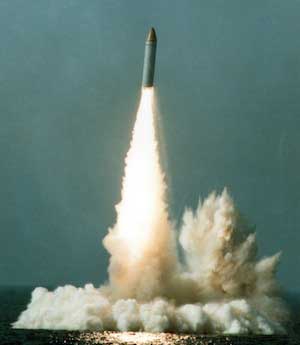
    Working on the behalf of the French defence procurement agency DGA (French Ministry of Defence procurement agency), since the 1960's, the company has produced the submarine-launched MSBS family (M1, M2, M20, M4) of the French deterrent force. The latest version, the M-45, is currently deployed on board France's new generation submarines. The MSBS-M51, an ultra-modern missile with considerably enhanced performance, has been under development since 1992.
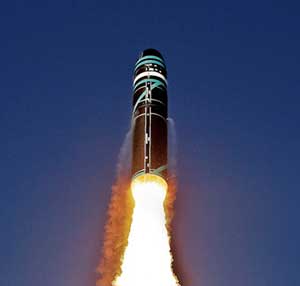
    The first sea launch of the M51 SLBM. The missile is produced by EADS' Astrium division for the French Navy Strategic Force. Photo: EADS
    The first sea launch of the M45 SLBM. The missile has been operational with the French Navy Strategic Force since 1997. Photo: EADS

    A French M51 submarine launched nuclear ballistic missile malfunctioned during a test launch Sunday, and had to be destroyed while in flight, the Ministry of Defense said. It was the 6th flight test of the latest strategic ballistic missile. For the test flight the missile’s nuclear warhead was removed. An investigation was immediately launched into the cause of the aborted test of the M51 missile over Normandy. Defense-Update reports.

    Military officials told reporters the problem occurred in the first phase of the missile’s ascent and triggered a self-destruct order. The exact nature of the malfunction was not immediately known, Radio France Internationale said. According to the French MOD, the missile was launched form a test site at the baie d’Audierne (Finistère) and crashed into an area that had been cleared of civilian air and maritime traffic. The missile would have landed in the middle of the Atlantic Ocean if its flight had been successful.

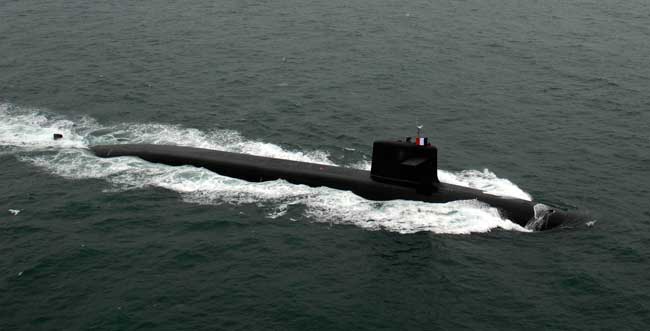
    France operates four SSBNs in its strategic Oceanic force. Each of these submarines is carrying 16 M51 missiles. The M51 is a strategic ballistic missile is carried by four French Navy nuclear powered missile submarines. The missile was launched from the French Navy nuclear powered ballistic missile submarine (SSBN) Le Vigilant S618; the ‘Triumphant class submarine has a length of 138 meter long and a submerged displacement of 14,200 tonnes. It is powered by a nuclear driven turbo-reactor developing 30mW of power. Each submarine is manned by two crews of 100 personnel. In addition to the ballistic, nuclear armed missiles, the submarine is also equipped with four 533 mm torpedo tubes firing Exocet anti-ship missiles or F17 torpedoes.

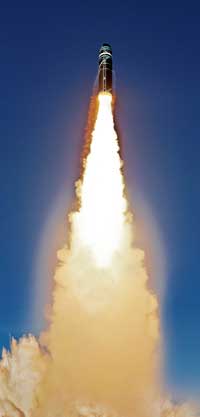
    Working on the behalf of the French defence procurement agency DGA (French Ministry of Defence procurement agency), since the 1960's, the company has produced the submarine-launched MSBS family (M1, M2, M20, M4) of the French deterrent force. The latest version, the M-45, is currently deployed on board France's new generation submarines. The MSBS-M51, an ultra-modern missile with considerably enhanced performance, has been under development since 1992. Photo: EADS
    EADS Astrium has been producing the MSBS family (M1, M2, M20, M4) for the French deterrent force since the 1960s. The MSBS-M51, an ultra-modern missile with considerably enhanced performance, has been under development since 1992. Photo: EADS

    The French deterrent force

    The M51 missiles were loaded on the submarine during the two-year upgrade that was completed in October 2012. Through the overhaul process the submarine’s combat information system was also upgraded, and a new navigation system added. Following the refit the submarine entered a testing phase which also included test firing of the missiles.The M51 is replacing the M45 currently in service. At a weight of 54 tonnes, the new missile is 40% heavier than its predecessor. One meter longer than the M45, the M51 has a larger diameter which corresponds to more powerful and energetic propulsion. The three stages carry the missile over a distance of 6,000 km. The first variant, M51.1 was fitted to the first SSBM Le Terrible in 2010. This model uses the same warhead as the previous SRBM – the M45. The M51.2 has a larger warhead, extended range and highly accurate stellar tracking navigation, augmenting the standard inertial navigation system. It is also designed with better penetration capability.

    Working on the behalf of the French defence procurement agency DGA (French Ministry of Defence procurement agency), since the 1960’s, the company has produced the submarine-launched MSBS family (M1, M2, M20, M4) of the French deterrent force. The latest version, the M-45, is currently deployed on board France’s new generation submarines. The MSBS-M51, an ultra-modern missile with considerably enhanced performance, has been under development since 1992.

    Source: Defense-Update

    Vigilant is a  Triumphant class nuclear powered ballistic missile submarine (SSBN) built by DCSN the submarine was commissioned in 2004. Photo: DCSN
    Vigilant is a Triumphant class nuclear powered ballistic missile submarine (SSBN) built by DCSN the submarine was commissioned in 2004. Photo: DCSN

    Updated: Air Attacks – Syria 2013 – An Open Hunting Season?

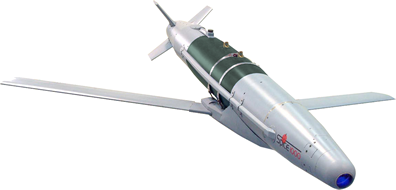
    The Israel Air Force is already operating the Spice 2000 weapon, carrying the Mk84 1 ton pound warhead (2,000 pounds). Photo: Rafael
    The Israel Air Force is already operating the Spice 2000 weapon, carrying the Mk84 1 ton pound warhead (2,000 pounds). Photo: Rafael

    The recent escalation of tension in Syria comes at a time when the Assad regime, actively supported by the Iranians through their Lebanese proxy Hezbollah and backed by quiet nod from Moscow, is succeeding to turn the tide of repeated wins by the rebels. Until this turn, Sunni rebels were closing slowly on some of the regime’s power centers in Damascus and in other cities throughout the country. Defense-Update reports.

    With their back to the wall, the ruling Allawis, backed by the Shiites turned to the use of massive bombardments and use of military forces, including ballistic missiles fired on areas held by rebels, indiscriminately hitting populated urban areas. In recent weeks more evidence came to light about the use of chemical weapons by the regime, although the means of delivery haven’t been clear. The world turned its back on this evidence, despite repeated warning. The main concern of the West was that such weapons would fall into the hands of islamic terror organizations and used elsewhere, causing massive casualties or  extortion. For Israel, the danger that such weapons could fall into the hands of Hezbollah were unacceptable.

    Whether the Syrians were using missiles, artillery, air attacks or unmanned aircraft, facts proving the regime deployed such weapons, despite international warnings, are now evident. Following the escalation Washington has been considering ways to change its policy to assist the rebels. However, given the conflicting Russian interests in Syria, a direct involvement of Washington seems unlikely. The Israelis are inevitably drawn into this vaccum, by taking advantage of the Syrian chaos  by reducing the intervention of Iran and its proxies and destroying game changing weapon shipments from Tehran to hezbollah and destroying their strategic reserves based in Syrian arms depots.

    With Hezbollah eagerly supporting the Syrian Assad regime with Iranian assistance, Syrian government forces have won back control of areas along the Lebanese border. But elsewhere, the situation is deteriorating as the country collapses into total chaos. Iran, which for years has used Syria as a protecting staging area sustaining its Lebanese proxy  Shi’ite Hezbollah is realizing it is time to liquidate its investments, and seek a safer home for its assets – inside Lebanon. The missile storage at Mt. Qasioun served as one of their storage sites. On this mountain site, overlooking the capital Damascus, protected by the close proximity of the Syrian presidential palace and its prominent military installations, Iran stored ballistic missiles and ammunition which it planned to ship to Hezbollah in time of war.

    But at the present Syrian chaos, Qasioun seemed no longer safe. In fact, the fighting turmoil became an opportunity to open a virtual ‘hunting season’, seeking and destroying these missiles, and other weapons, the Israeli military considers ‘strategic’ keeping their military balance with Hezbollah. Since Thursday night, May 2rd, 2013 reports from Lebanon indicated the Israeli air force repeatedly performed ‘mock airstrikes’ from Lebanese territory toward the Syrian border, in daylight and at night.

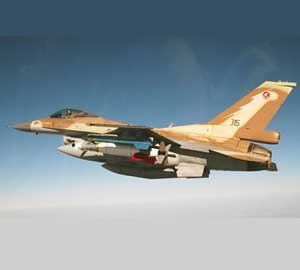
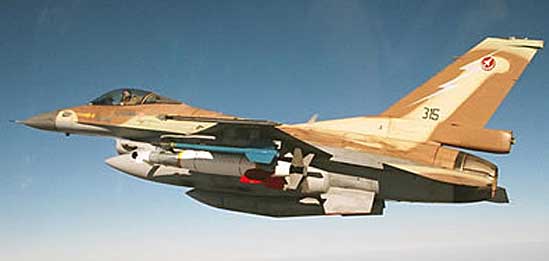
    It seems now cleareniugh, that these manoeuvres were not mock attacks but the real thing – as the aircraft actually may have  launched stand-off weapons such as the advanced SPICE glide bombs and Popeye missiles, made by RAFAEL. These weapons are capable of hitting point targets over 100 kilometers away. The SPICE is a glide weapon, which does not leave any smoke trail or other indication, until impact. Such tactics would keep the Israeli fighters immune from Syrian air defense missiles that are still actively protecting Syrian airspace. Indeed, seen in the videos apparently taken around Damascus during the attack only explosions could be heard, without the noise of the attacking jets.

    The targets attacked on Thursday seemed to include a new shipment of missiles stored near Damascus International airport. They were actually targeted immediately after this very shipment of Iranian missiles landed on Damascus airport, indicating on the excellent intelligence involved.

    According to US sources these missiles were the latest Fateh-110 Mod 4 missiles, offering increased lethality and precision. About that time sirens were also activated on the Israeli side of the border, although no attacks were reported. Authorities attributed the repeated alarms to ‘technical errors’ but bo further explanation was given. Another attack that followed on Saturday night aimed at four storage bunkers on Jabel Qasioun, west of the Damascus. It was actually a secret Hezbollah storage depot keeping their strategic reserves safe against hostile attack. Video clips taken after the attack show massive explosions that followed the initial attacks, apparently caused by secondary explosions of rocket fuel or warheads. By morning, as rescue forces arrived at the area, explosions were still heard throughout the scorched area.

    Using stand-off attacks from Lebanon enabled the Israelis to achieve their goal while keeping risks at manageable level. Although Israel demonstrated more than once its ability to overcome the Syrian defenses. However going after such prime targets, where enemy air defenses are in high alert requires significant prior preparation and massive destruction of most of the enemy’s air defense before the attack starts. Such a campaign, as was brilliantly executed over the Lebanese Baka’a in 1982. Under the present conditions, it could however draw Israel, Syria and Lebanon into a massive missile exchange if not all out war.

    The Israelis recognize the risk that the recent moves could draw some retaliation from Syria or Hezbollah, but considers such response short term and limited in its intensity. For good measure the Israeli Air Defense command has deployed two Iron Dome counter-rocket batteries to the north of Israel, protecting the major population centers and strategic sites likely to present targets to such missile attacks. The airspace in Northern Israel was also closed to civilian traffic, clearing the area for military operations; the Haifa municipality also increased its alert status, and announced that the 11 km long Carmel Tunnels would be providing a shelter in case the city is attacked as it was in 2006.

    Update: On Monday afternoon two mortar bombs were fired from Syria at an Israeli outpost in the Golan Height, without causing damage. The Israelis filed a complaint with the UN.

    But the likelihood of counterattack is considered low. Since the strikes were directed at Hezbollah and Iranian assets, not directly targeting the Syrian military, the Syrian regime can continue to threaten and promise painful retaliation as it did in the past, but refrain from punitive action against Israel, at least not in an act that would escalate the situation. For Hezbollah, it seems the worst time to engage Israel in a military conflict  – with their Iranian supply lines clearly exposed, as demonstrated by the recent Israeli attacks they would prefer to bolster the safety of their precious weapons depots for the future.

    Source: Defense-Update

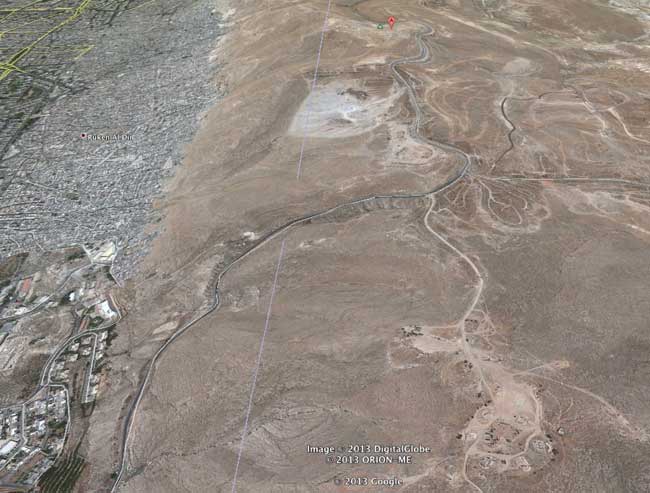
    Two storage areas and a SAM-3 missile site Jabel Qasioun are clearly seen in this Google earth satellite image. The missile storage areas were relatively exposed hence the huge fireballs caused by spelt fuel and ammunition. The SAM site was not targeted by the attack. Photo: Google Earth
    Two storage areas and a SAM-3 missile site Jabel Qasioun are clearly seen in this Google earth satellite image. The missile storage areas were relatively exposed hence the huge fireballs caused by spelt fuel and ammunition. The SAM site was not targeted by the attack. Photo: Google Earth

    Some U.S. lawmakers say Israeli airstrikes in Syria demonstrate that the United States could take action to protect Syrian civilians. Sofar the U.S. has provided non-lethal aid to Syrian rebels and humanitarian assistance for Syrian refugees, but the administration has resisted calls for establishing a no-fly zone over Syria. Washington is reluctant to hand out military assistance to rebels, since some of the groups are extremist Sunni Islamists, including those affiliated al-Qaida. The U.S. had learned their lessons from Afghanistan, Iraq, Egypt and Libya, where Islamists tend to sieze power when they have a chance. Last week, U.S. Defense Secretary Chuck Hagel said the administration is re-thinking a full range of options, including possibly arming Syrian rebels. He stressed that no decisions had been made (VOA).

    India’s CCTV boom

    Picture3The Indian closed circuit television (CCTV) market is growing at an annual rate of 30 % – I-HLS reports.
    Rapid economic growth and rising industrial activities amid security threats, fear of potential terrorist attacks has fuelled the demand for CCTV cameras evidently as government authorities and even private sector are investing huge amount of money in installing CCTVs to secure their offices and public places across the country.

    The Indian CCTV market is witnessing immense growth from sectors such as city surveillance, hospitality, airport security, BFSI, retail, BPO, manufacturing, college campuses, infrastructure companies and education.

    The government, in general, is the biggest segment in terms of volume demand. The private sector, enterprises as well as SMBs, shows potential although their demand is dwarfed by that of the government sector.

    Following the December 16 Delhi gang-rape, the demand for CCTV and surveillance cameras is growing in the city.
    The demand has risen by 10% in the past month and that is across sectors.

    The Indian CCTV industry is going to emerge as a huge market in the next few years in wake of rising demands from sectors like hospitality industry, services, healthcare, retail and transportation.

    The ease to inter-connect all monitoring systems, traffic systems, various market places with police stations and defense headquarters in the real time make the CCTV surveillance a prominent and feasible security solution.

    Source: IHLS – Israel’s Homeland Security Home

    Israel Extends SPICE Family of Air-Launched EO Guided Weapons

    Rafael's Spice 1000 guided weapon carries a 500 kg (1,000 pound) Mk 83 warhead. It is capable of attacking targets at ranges extended beyond 60 km. Photo: Rafael
    Rafael’s Spice 1000 guided weapon carries a 500 kg (1,000 pound) Mk 83 warhead. It is capable of attacking targets at ranges extended beyond 60 km. Photo: Rafael

    The Israeli Air Force (IAF)  has a proven capability to attack targets from standoff range. One such weapon is the Spice weapon guidance kit developed by the country’s leading missile developer RAFAEL. I-HLS reports.

    The guidance kit has become more lethal and can now be used in a “variety” of attack techniques to achieve maximum impact in a short time. The locally produced Spice is now one of the “main systems” in the Inventory of the IAF, along with GPS-guided JDAM and laser guided bombs imported from the US. The kit has also been exported to a number of airforces that are using it on some of their bombs.

    Spice has been adapted to a number of standard warheads, from Mk-84/BLU-109 (900 kg, 2000 lbs), Mk-83/BLU-110 (450 kg, 1000 lbs) general purpose bombs. The weapon has recently been adapted now to 113 kg (250 lbs) pound small smart bombs (SSB) that are increasingly preferred by airforces due to their lower collateral damage.

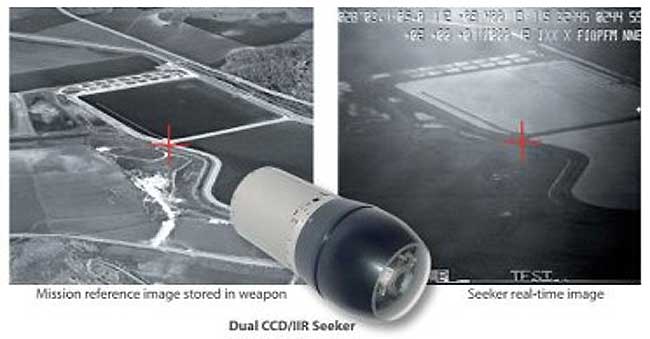
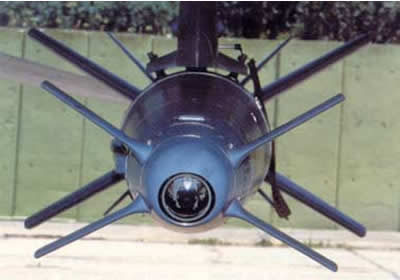
    The kit uses an imaging seeker for navigation and terminal homing. The system uses image matching techniques giving the weapon a Circular Error Probability (CEP) of less than three meters. Spice can be loaded with 100 optional targets in a given area. In addition to the passive image-based navigation the kit also includes Global Positioning Satellite / Inertial Navigation System (GPS/INS) navigation for reference and backup. But the main sensor of the Spice is the CCD/IIR dual seeker that provides pinpoint accuracy and positive target identification and according to Rafael , overcomes target location error and GPS jamming. The Kit’s automatic target acquisition capability is based on a unique scene-matching technology that can handle scenery changes, counter-measures, navigation errors and target location errors. The technology is based on the continuous comparison of  a real-time image received from the dual CCD/IIR seeker with a reference image stored in the weapon’s computer.

    The basic kit includes a strap-on forward guidance section and fixed, stubby wings and tail fins aft of the main charge, heaviest Spice uses the MK-84 (2000 pounds) general purpose bomb, with a flatter trajectory the Spice kit extends the weapon’s range beyond 60 km. This version is operational in the israeli airforce and was used in combat. Another kit has been adapted to Mk-83 (1000 pounds) bombs, featuring a wing-set that further extends the weapon range beyond 100 km. The Spice’s deployable wings allow an aircraft to carry more bombs. The latest addition of the SSB type weapon enables a single F-16 to carry up to 16 small smart bombs.

    Source: i-HLS ISRAEL Homeland Security 

    This scene matching example shows the correlation between the target pointed by the reference image (left) and the target picked by the weapon's computer during a flight test. Photo: RAFAEL
    This scene matching example shows the correlation between the target pointed by the reference image (left) and the target picked by the weapon’s computer during a flight test. Photo: RAFAEL

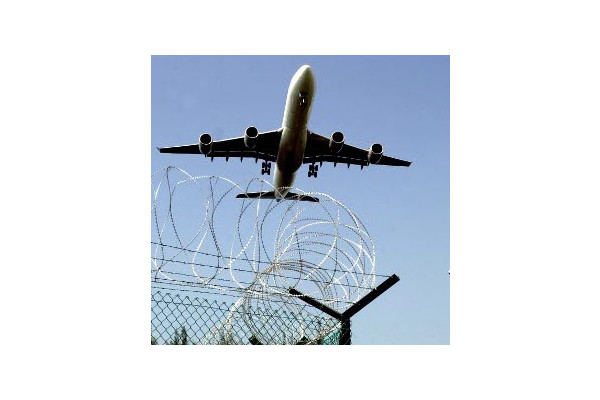
    Airport perimeter security in the U.S. – a declining market

    The Americans do not believe in perimeter defenses around airports, in spite of the proven performance of these systems. I-HLS reports

    U.S. airport perimeter manufacturers — makers of fences, gates, sensors and cameras — will likely face a steep drop in demand over the next several years, a Frost & Sullivan report found.
    In 2012, the Federal Aviation Administration awarded airports $58 million in grants to improve safety, but a decline is expected through 2017, said John Hernandez, an aerospace defense senior industry analyst at Frost & Sullivan, a Mountain View, Calif.-based market consulting firm.

    Demand for airport perimeter systems and barriers skyrocketed after 9/11, Hernandez said. Between 2001 and 2011, they garnered nearly $650 million. But funding is expected to taper off as demand weakens, Hernandez said. “You will see some stagnation and a decline [in the market],” said Hernandez. “It will never go up to the point it went up to after 9/11.”

    Hernandez does not foresee any major airports being built soon, and most work needed at existing airports will be limited to small repairs or refurbishing. Contracts to repair most perimeter control measures will be limited to local vendors.

    In 2012, nearly $69 million was invested in airport perimeter-security measures. By 2017, that number will drop to an estimated $47.5 million per year, the study found.
    While the outlook for the fencing-and-gate side of the market appears grim, the security enhancement sector — which includes cameras and sensors — looks rosier, he said.

    i-HLS ISRAEL Homeland Security Home 

    Small Boats – Big Gains

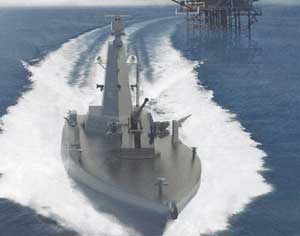
    The Super-Dvora Unmanned Surface Vessel (SD-USV) concept - proposed for maritime surveillance and EEZ patrol missions.
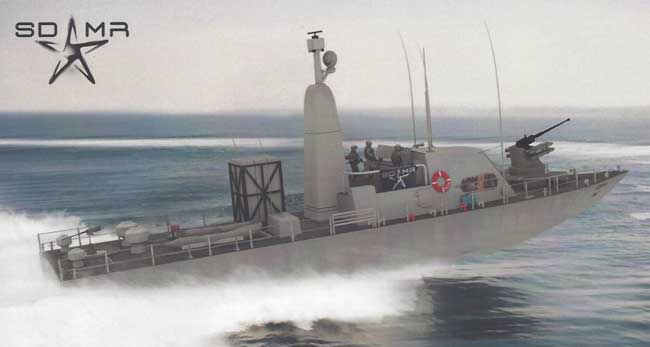
    Super Dvora Multi Role concept drawing
    Super Dvora Multi Role concept drawing
    Visit IAI at IMDEX 2013
    Visit IAI at IMDEX 2013

    As domestic economies change into a global market, dependent on the ocean for energy, food and transportation, the open seas becoming contested areas, and pirates, outlaws and terrorists using isolated littorals as safe haven, prowling waterways and the open sea along international merchant routes, no wonder that governments are looking for new means to deal with the new challenges. Defense-Update reports from IMDEX 2013.

    Changing interest span from securing off-shore assets throughout littoral and Economical Exclusion Zone (EEZ), protecting economical rights including fishery, mineral resources and merchant marine routes. Coastal protection, particularly addressing terror threats and infiltration from the sea, is also critical in defending urban centers, key infrastructure, port facilities, power stations and other strategic assets.

    With the rising costs of maritime security, government agencies are interested in smaller, highly versatile boats that could operate effectively in peacetime, emergency and at war. Boats that can effectively chase smugglers, and human traffickers, defeat well-armed terror attacks and become part of the nation’s maritime power in time of war.

    According to Ramta, on the SMDR, a crew of 10 can effectively fulfill all tasks. The key to such efficiency is newly designed Combat Information Center (CIC) and operating consoles. Instead of dedicating specific console for each task (detection, identification, defensive systems, offensive systems, situational display, communications etc.) IAI introduced a common, compact operating station integrating all functions into a single display, similar to those used in the cockpit of fighter aircraft. Specific tasks are shown on different displays, integrated into the situational picture, which also supports routine operations. A typical CIC layout in the SDMR comprises three common and interchangeable workstations that support regular operations in peacetime and can be easily reconfigured into detection, defense and offense workstations at war. To simplify these tasks the system employs extensive automation to simplify and expedite certain processes by minimizing user interactions.

    The Super-Dvora Unmanned Surface Vessel (SD-USV) concept - proposed for maritime surveillance and EEZ patrol missions.
    The Super-Dvora Unmanned Surface Vessel (SD-USV) concept – proposed for maritime surveillance and EEZ patrol missions.

    Eventually, IAI/Ramta plans to expand the Super Dvora to unmanned surface vessels, extending capabilities developed and fielded by the company in the past 30 years. Such autonomous vessels would establish routine patrols, generate the marine situational picture required for operation and security, supporting manned and unmanned operators with maximum security at an affordable cost.

    Source: Defense-Update

    Foreign sources: Fateh-110 Rockets Enroute to Hezbollah Destroyed in Syria by Israeli Air Attack

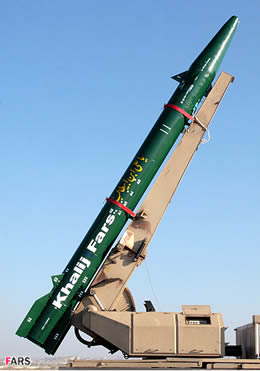
    EO Guided version of Fateh 110 (M-166) Iranian missile
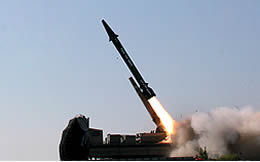
    Fatah 110 missile launched on an Iranian field exercise. Photo: FARS
    Fatah 110 Mod 4 missile showing the forward section's guidance seeker and wings.
    Fateh 110 Mod 4 missile showing the forward section’s guidance seeker and wings.

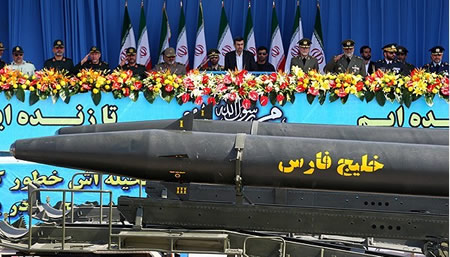
    The Iranians have developed an improved model of medium-range rocket Fateh-110. The current model is held by Hezbollah in Lebanon and Israel believes that the advanced model was on its way to the missile units of the organization. The Iranians have not provided many details about this new rocket model, but experts in Israel said yesterday that Iran’s rockets and missile industry make constant efforts to improve the directive mechanism, I-HLS reports.

    The guided version of Fateh 110 can strike targets on land or at sea with 450kg warhead. Photo: FARS news agency
    The guided version of Fateh 110 can strike targets on land or at sea with 450kg warhead. Photo: FARS news agency

    According to foreign sources, the attacks carried out by Israel in Syria in recent days were aimed, among other things, at the delivery of these rockets. Rockets of the Fateh-110 model remain the primary medium-range rocket power held by Hezbollah. The Rocket has a maximum range of 250 km and its warhead weighs half a ton. With such a range – this rocket threatens Israel all the way to Beer-Sheba area in the Negev. The rocket was developed by the Iranian military industry, and is launched by a launcher similar to that used by the SA-2 surface to air missile.

    EO Guided version of Fateh 110 (M-166) Iranian missile
    Fateh 110 missile launched on an Iranian field exercise. Photo: FARS News Agency

    Fatah-110 warhead is almost double in weight than warheads that armed the Scud missiles fired at Israel during the first Gulf War. These weighed about 300 kg. The length of the rocket is about 8 meters, diameter of 61 cm and overall weighs about three tons.

    According to the expert, Fateh-110 is manufactured in two versions. One with “free flight” like that of Zelzal rockets and Katyusha missiles, the second uses inertial guidance, allowing it to hit preselected targets with higher precision.  Insight Note (Members Only) 

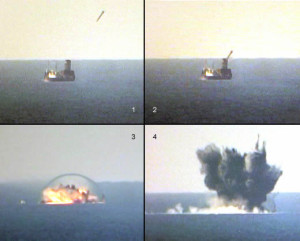
    In 2011 Iran demonstrated the capability to hit a floating target with precision guided, short range ballistic missile of the Fateh 110 (M-600) class. Photo: FARS news agency

    Missile defense systems such as the Israel Aerospace Industries Arrow II or the American Patriot PAC-2 air defense missile from Raytheon are capable of intercepting rockets such as the Fatah-110 rocket. Future systems such as Rafael’s David’s Sling are currently in development under joint US-Israeli program designed to improve the capability to handle massive attacks by such rockets. Syria was planning to locally produce the Fateh-110 under the designation M-600. In 2010 Israeli sources reported that Syria has transfered ‘hundreds‘ such missiles to Hezbollah. Israel estimates that Iran’s weapons industry analyzed the results of Hezbollah rocket attacks on Israel during the Second Lebanon War and has improved due to several of its products, including the Fatah -110 model rocket.

    Source: I-HLS – Israel’s Homeland Security Home

    Below: Syrian military video depicting firing of different missiles. The M-600 is shown on the clip starting 00:20.

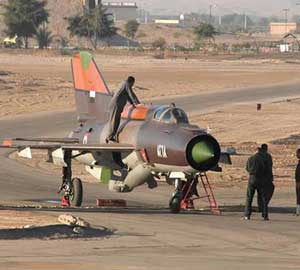
    Unmanned Syrian Mig-21 fitted for chemical warfare?

    The Syrian air force Russian-made MiG-21 plane landed with in the King Hussein military base in Mafraq. Jordan has granted political asylum to the Syrian pilot, Colonel Hassan Merei al-Hamade.
    The Syrian air force Russian-made MiG-21 plane landed with in the King Hussein military base in Mafraq. Jordan has granted political asylum to the Syrian pilot, Colonel Hassan Merei al-Hamade.
    The Syrian air force Russian-made MiG-21 plane landed with in the King Hussein military base in Mafraq. Jordan has granted political asylum to the Syrian pilot, Colonel Hassan Merei al-Hamade.

    Is this Syria’s “doomsday ” weapon? Intelligence sources say that the Syrian air force has adapted old Russian made MIG-21 fighter aircraft to fly unmanned and carry chemical warfare materials.

    This information is now being investigated by a number of intelligence organizations i-HLS reports.

    A Syrian MiG-21, that landed in  Jordan in June 2011 flown by a Syrian air force colonel, had been adapted to fly unmanned and  carry a “deadly  volume of chemical weapons. According to intelligence sources there are indications that Russian engineers helped with the upgrade.

    The Syrian pilot colonel Hassan Hamada, took off in his MiG-21 from al-Dumair military airport northeast of Damascus and flew to King Hussein Air Base just across Syria’s southern border with Jordan. Upon landing in Jordan, Hamada removed his rank and requested political asylum.

    The Syrian regime immediately admitted the pilot had defected and called him a traitor. But unlike in earlier defections Syria has put heavy pressure on Jordan to return the MIG-21.

    i-HLS.com, Israel’s Homeland Security Home

    Hypersonic Missile Sets World Record on Longest Hypersonic Flight

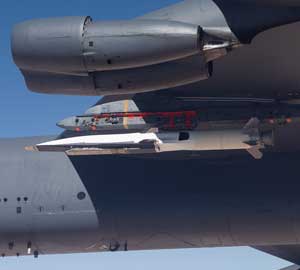
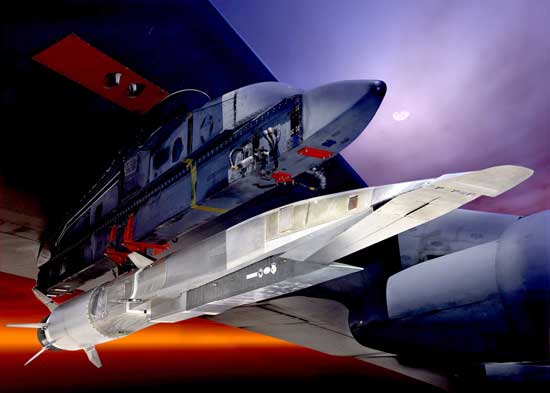
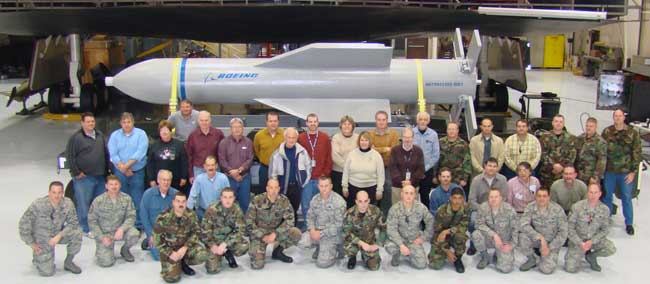
    Boeing X-51A Waverider hypersonic missile carried by a US Air Force B-52H prior to the third and final test flight. Photo: USAF
    The X-51A Waverider prepares for flight
    The X-51A Waverider prepares for the longest the longest air-breathing hypersonic flight ever.

    The fourth and final flight of the Boeing X-51A Waverider test program has accomplished a breakthrough in the development of flight reaching Mach 5.1 over the Pacific Ocean May 1. The WaveRider unmanned hypersonic vehicle traveled more than 230 nautical miles in just over six minutes over the Point Mugu Naval Air Warfare Center Sea Range, Calif.

    It was the longest air-breathing, scramjet-powered hypersonic flight in history, flying for three and a half minutes on scramjet power at a top speed of Mach 5.1. The vehicle flew for a total time of more than six minutes. Charlie Brink, the X-51A program manager for the Air Force Research Laboratory Aerospace Systems Directorate described the test as “full mission success”. It was the last of four test vehicles originally conceived when the $300 million technology demonstration program began in 2004. The program objective was to prove the viability of air-breathing, high-speed scramjet propulsion.

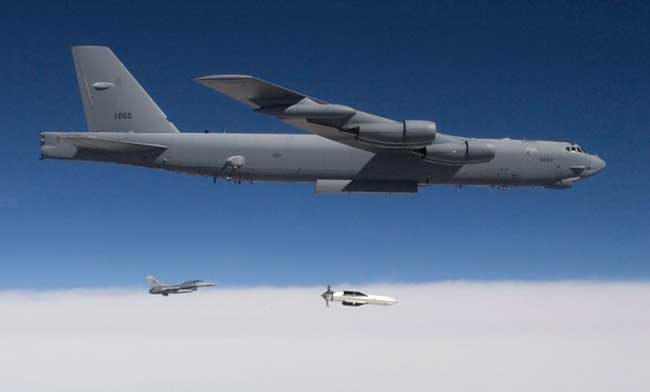
    The X-51A Waverider prepares to launch its historic fourth and final flight. The cruiser achieved Mach 5.1 traveling 230 nautical miles in just over six minutes, making this test the longest air-breathing hypersonic flight ever. (U.S. Air Force photo/Bobbi Zapka)
    The X-51A Waverider prepares to launch its historic fourth and final flight. The cruiser achieved Mach 5.1 traveling 230 nautical miles in just over six minutes, making this test the longest air-breathing hypersonic flight ever. (U.S. Air Force photo/Bobbi Zapka)

    “This demonstration of a practical hypersonic scramjet engine is a historic achievement that has been years in the making,” said Darryl Davis, president, Boeing Phantom Works. “This test proves the technology has matured to the point that it opens the door to practical applications, such as advanced defense systems and more cost-effective access to space.”

    A U.S. Air Force B-52H Stratofortress from Edwards Air Force Base released the X-51A from 50,000 feet above the Point Mugu Naval Air Warfare Center Sea Range at 10:55 a.m. Pacific time. After the B-52 released the X-51A, a solid rocket booster accelerated the vehicle for about 26 seconds to Mach 4.8 before the booster and a connecting interstage were jettisoned. After separating from the booster, the cruiser’s supersonic combustion ramjet, or scramjet, engine then lit and accelerated the aircraft to Mach 5.1 at 60,000 feet. After exhausting its 240-second fuel supply, the vehicle continued to send back telemetry data until it splashed down into the ocean and was destroyed as designed. At impact, 370 seconds of data were collected from the experiment. The X-51A made a controlled dive into the Pacific Ocean at the conclusion of its mission.

    The X-51A is unique primarily due to its use of JP-7 hydrocarbon jet fuel in its scramjet engine. Other vehicles have achieved hypersonic, generally defined as speeds above Mach 5, flight with the use of hydrogen fuel. Without any moving parts, hydrocarbon fuel is injected into the scramjet’s combustion chamber where it mixes with the air rushing through the chamber and is ignited in a process likened to lighting a match in a hurricane.

    “I believe all we have learned from the X-51A Waverider will serve as the bedrock for future hypersonics research and ultimately the practical application of hypersonic flight,” Brink said. As a technology demonstration program, there is no immediate successor to the X-51A program. However, the Air Force will continue hypersonic research and the successes of the X-51A will pay dividends to the High Speed Strike Weapon program currently in its early formation phase with AFRL.

    Aviation Week Guy Noris added: “The success of the flight, which included 240-seconds of powered flight in scramjet mode – the longest ever achieved by an air-breather, is particularly important to the Air Force as it seeks to develop a hypersonic capability. Interest in high-speed, long range strike weapons which can fly at hypersonic speeds grew in the 2000s with the requirement to prosecute fleeting targets in counter-terrorism operations, and is assuming fresh importance with the strategic ‘pivot’ to Asia.”

    Noris added this last flight incorporated improvements and lessons learned from the three former flights. These included better sealing between interfaces in the engine flow-path, hardware and software changes and redesign of the control fins.

    The X-51A program is a collaborative effort of the Air Force Research Laboratory and the Defense Advanced Research Projects Agency, with industry partners Boeing and Pratt & Whitney Rocketdyne. Boeing performed program management, design and integration in Huntington Beach, Calif.

    USAF Readies Massive Ordnance Penetrator for Showdown in Iran

    USAF B-52H drops a GBU-57A-B MOP demonstrator on a flight test. Photo: USAF
    Weapon specialists look on as a mock up of the Massive Ordnance Penetrator sits in bomb bay of the B-2 weapons load trainer Dec. 18 at Whitman Air Force Base, Mo. (U.S. Air Force photo)
    Weapon specialists look on as a mock up of the Massive Ordnance Penetrator sits in bomb bay of the B-2 weapons load trainer Dec. 18 at Whitman Air Force Base, Mo. (U.S. Air Force photo)

    The US has enhanced its biggest bunker buster bomb specifically to enable the destruction of Iran’s underground Fordow uranium enrichment plant near the city of Qom. 20 such bombs – the biggest and heaviest bomb in the US arsenal, will be delivered this year, following the completion of upgrades and testing. The redesigned Massive Ordnance Penetrator (MOP) GBU-57A-B is now adapted for operations in heavily contested environment, where it will require to operate against Iran’s most protected nuclear sites. Defense-Update reports.

    The target: Iranian uranium enrichment deeply burried underground site at Fordow. Photo:
    The target: Iranian uranium enrichment deeply burried underground site at Fordow. Photo: Astrium – ISIS

    The White House see the development of the weapon as critical to convincing Israel that the U.S. has the ability to prevent Iran from getting a nuclear bomb if diplomacy fails, and also that Israel’s military can’t do that on its own. According to an article published by the Wall Street Journal, several times in recent weeks, American officials, seeking to demonstrate U.S. capabilities, showed Israeli military and civilian leaders secret Air Force video of an earlier version of the bomb hitting its target in high-altitude testing, and outlined the development made recently to improve the weapon. In the video, the weapon can be seen penetrating the ground within inches of its target, followed by a large underground detonation, according to people who have seen the footage.

    According to the Wall Street Journal, the improvements are meant to address U.S. and Israeli concerns that Fordow couldn’t be destroyed from the air. Overcoming that obstacle could also give the West more leverage in diplomatic efforts to convince Iran to curtail its nuclear program. The upgraded MOP was enhanced almost exclusively to hit the Fordow Enrichment Plant, Iran’s largest nuclear facility, located under a mountain near the city of Qom. It’s buried so deep that, according to the Wall Street Journal, experts believe it would take several MOPs to destroy it, with one creating a crater and the rest using the improved guidance system to dive in after it and destroy the complex. The MOP was upgraded because officials didn’t believe the previous version could penetrate Fordow. The bombs could also be used to strike North Korea’s less protected nuclear bunkers. The message the MOP sends is clear: While the United States almost certainly won’t use nuclear weapons, it still has a pretty formidable arsenal capable of taking out even Iran’s most secure facilities, the newspaper added. “We are committed to trying to resolve concerns about Iran’s nuclear program diplomatically,” Caitlin Hayden, White House National Security Council spokesperson, told the Journal. “But, as President Obama has made clear: The U.S. will not allow Iran to acquire a nuclear weapon. The onus is on Iran and it knows that time is not unlimited.”

    The GBU-57A-B weighs 16.6 tonnes (30,000-pound) most of the weight is its steel casing, enabling the 6.24 meter (20 foot) bomb bomb to penetrate through 18 meters (60 foot) of reinforced concrete. Only two platforms currently operational with the US Air Force can carry such a heavy weapon – the B-2 Spirit stealth bomber and old B-52H. The Air Force is managing and funding the program, with support from Defense Threat Reduction Agency (DTRA). The project began in 2004 as a proof of technology demonstration, viewing a conventional weapon that could support the President Bush Nuclear Policy Review, with emphasis on providing conventional weapon options to national commands, thus reduce the nation’s dependence on nuclear weapons as a deterrent in the national security strategy. Early tests of MOP were conducted by DTRA under the MOP Technology Demonstration effort. These tests began in 2004 with DTRA partnering with the Air Force Research Laboratory. DTRA conducted flight tests from 2008 to 2010.

    In February 2010, the DTRA MOP Technology Demonstration transitioned to the Air Force as a Quick Reaction Capability Program demonstrating an operational capability to attack hard and deeply-buried facilities. Air Force officials long stated that they had a long-standing requirement for this capability. In 2009 Boeing was awarded the contracts to complete MOP/Aircraft integration and produce 20 weapons. In recent months the weapon went through the final cycle of upgrades, which adjusted fuses to maximize its burrowing power, adjusted specifically to withstand impact with layers of granite and steel that encase the nuclear facility. Other upgrades address the guidance systems to improve the precision of its inertial navigation system and deny the effect of GPS jamming or other electronic countermeasures. According to the US Air Force, flight tests have been successfully conducted at White Sands Missile Range, New Mexico.

    According to Air Force sources, MOP integration activities for initial weapon delivery are also complete. Final system refinement, design and test was completed in 2012 with additional weapon deliveries planned in 2013 but according to sources, the upgraded MOP hasn’t been dropped from a plane yet. Officials said they believe the enhanced bomb would be even more effective against North Korea’s nuclear bunkers, which the U.S. thinks aren’t as heavily fortified as Iran’s.

    Source: Defense-Update

    Weapon specialists gather in front of a mock up of the Massive Ordnance Penetrator and the B-2 weapons load trainer Dec. 18 at Whitman Air Force Base, Mo. Photo: USAF
    Weapon specialists gather in front of a mock up of the Massive Ordnance Penetrator (MOP) and the B-2 weapons load trainer Dec. 18 at Whitman Air Force Base, Mo. In 2012 members of the MOP program team received the 16th annual William J. Perry Award in recognition of their contributions to precision strike systems. The program team, consisting of representatives from the Air Force, Defense Threat Reduction Agency and in partnership with The Boeing Company, was honored for their technical excellence in the development, testing and fielding of the MOP, one of the Secretary of Defense’s number one weapons programs, according to the award citation. Photo: USAF

    Skunk Works and XTEND Simplify Multi-Drone Command

    0
    Lockheed Martin Skunk Works® and XTEND have achieved a major milestone in JADC2 by integrating the XOS operating system with the MDCX™ autonomy platform. This technical breakthrough enables a single operator to simultaneously command multiple drone classes, eliminating the friction of mission handoffs. From "marsupial" drone deployments to operating in GPS-denied environments, explore how this collaboration is abbreviating the data-to-decision timeline and redefining autonomous mission execution.

    From Ukraine to Taiwan: The Global Race to Dominate the New Defense Tech Frontier

    0
    As traditional defense primes face mounting competition from agile “neoprimes” such as Anduril, Palantir and Helsing, the balance of innovation is shifting toward software-defined warfare and scalable, dual-use technologies, while global industry consolidation—marked by Boeing’s integration of Spirit AeroSystems and other strategic mergers—signals an intensified race to secure control over the defense technology value chain. Our Defense-Tech weekly report highlights these trends.

    Europe’s “Drone Wall”

    0
    In early October 2025, a coordinated wave of unmanned aerial system (UAS) incursions—widely attributed to Russia—targeted critical infrastructure across at least ten European nations. The unprecedented campaign exposed the fragility of Europe’s air defenses...

    Weekly Defense Update & Global Security Assessment

    0
    Executive Summary The past week (September 18-25, 2025) represents an inflection point where strategic defense concepts have transitioned from doctrine to tangible reality. An analysis of global events reveals four primary, interconnected trends shaping an...

    U.S. Air and Space Forces Push Next-Gen Programs at the AS&C 2025 Conference and...

    0
    At the 2025 Air, Space & Cyber Conference, U.S. Air Force and Space Force leaders unveiled major updates on next-generation fighters, bombers, unmanned systems, and space initiatives, highlighting both rapid innovation and critical readiness challenges as the services race to outpace global competitors. A short version is available here, with a more detailed version for subscribers.

    TADTE 2025: Reflecting Taiwan’s Strategic Themes

    0
    The Taipei Aerospace & Defense Technology Exhibition (TADTE) 2025 crystallized around four dominant strategic themes that collectively illustrate Taiwan's comprehensive approach to defense modernization amid escalating regional tensions. Based on a detailed report by Pleronix (available upon request). Includes a Podcast discussion on TADTE 2025's highlighting Taiwan's four strategic themes beyond the post's coverage.

    Iron Beam 450 Completes Testing, Soon to Join With Operational Air Defense Units

    0
    Israel’s Iron Beam 450 high-power laser system has completed final testing, marking a major leap in air defense. Developed by Rafael, it offers precise, cost-effective interception of rockets, UAVs, and mortars, and is set for IDF deployment by 2025.