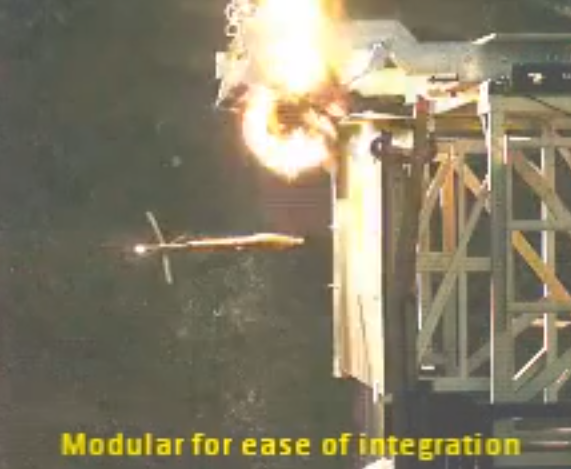
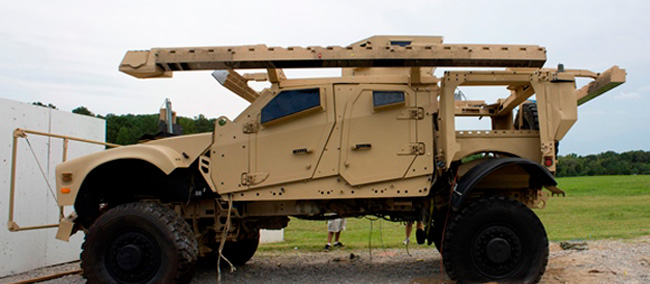
Iron Curtain APS installed on a M-ATV for the government sponsored Live Fire test. Photo: Artis
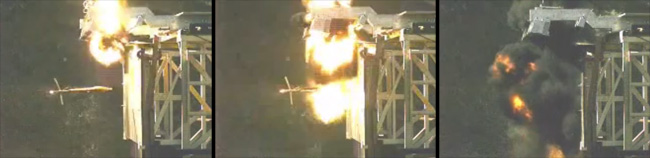
The Iron Curtain active protection system (APS) for protected vehicles has recently passed a successful test series on board a Ground Combat Vehicle (GCV) prototype developed by BAE Systems for U.S. government testing. Artis is a member of the BAE Systems GCV team.
Keith Brendley, CEO Artis LLC.
Two Ground Combat Vehicles (GCV) models, developed by BAE Systems / Northrop. Artis is a member of this team, responsible for APS. Photo: BAE Systems
According to Keith Brendley, CEO of Artis, LLC, developer of Iron Curtain, the system performed flawlessly during the month long tests, defeating all shots directed at the vehicle through a highly demanding test series. “We proved not only that Iron Curtain defeats threats and saves lives, but the risk from collateral damage is minimal, especially when compared with the alternative.” Brendley said the Iron Curtain has proved itself as a mature APS solution, capable of defeating a wide range of threats required for GCV survivability. At present the Army does not require an APS for its future GCV.
“In addition to these compelling test results, Iron Curtain has an approved safety architecture as unanimously recommended by the Joint Services Weapons Safety Review Board. These accomplishments along with our cost studies show that this system is affordable and ready to integrate today,” said Brendley.
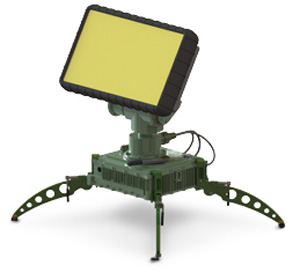
Iron Curtain intercepts threats such as rocket-propelled grenades few inches from the protected vehicle, rendering them inert, even if the threat was fired from extremely close range. Iron Curtain uses two independent sensors – radar and optical, coupled with high-speed processor and effectors surrounding the protected vehicle, providing a protective curtain. The system’s radar was developed by Mustang Technology Group in Plano, Texas under a parallel sensor program at DARPA. Brendley said the Iron Curtain can also work with other radars available in the market.
“In addition to these compelling test results, Iron Curtain has an approved safety architecture as unanimously recommended by the Joint Services Weapons Safety Review Board. These accomplishments along with our cost studies show that this system is affordable and ready to integrate today,” said Brendley. He added that Iron Curtain can be configured to cover 360 degree hemisphere, protecting from multiple attacks by horizontal or top-attack threats.
According to Mark Signorelli, Vice President and General Manager Vehicle Systems, BAE Systems Land and Armaments, Iron Curtain was selected for the test because of its test history, maturity, robust capability against many types of threats, and safety to personnel outside the vehicle.
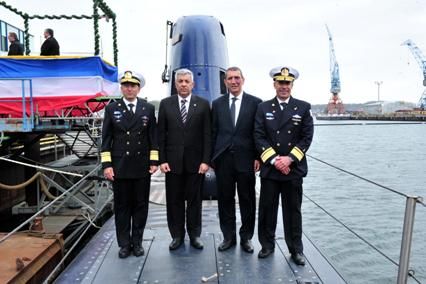
Israeli officials at a ceremony in Kiel, Germany to receive a Dolphin-Class submarine. Photo: IDF.Received
Israel received today the fifth Dolphin-Class submarine in an official ceremony in Kiel, Germany. MOD Director General, Maj. Gen. (Res.) Udi Shani; Commander of the Navy, Rear Admiral Ram Rothberg; in addition to other high ranking Israeli officials and their German counterparts inaugurated the fifth Dolphin Class submarine. This ceremony signaled the end of a lengthy process led by the Procurement Administration of the Ministry of Defense and the Israeli Navy.
“INS Rahav” will arrive in Israel during the course of 2013, upon the completion and installation of its relevant systems. It is considered one of the most advanced and sophisticated submarines in the world, and will be Israel’s most expensive piece of military equipment. Israel’s first three Dolphin-class submarines are believed to be some of the most advanced diesel-electric submarines in the world. The fourth submarine Tanin, the first of the new generation Dolphin II subs, was delivered about a year ago, on May 2012.
Germany donated the first two submarines after the First Gulf War and split the cost of the third with Israel. The fourth was received last year. In March 2012, Israel signed a contract for a sixth submarine, meaning that by the end of the decade the navy will have doubled its fleet.
The Rahav submarine is extremely versatile with a range of capabilities enabling it to adapt to a multitude of missions. The submarines are the multiplier force of the Israeli Navy, the IDF, and the State of Israel.
As the prime contractor HDW was responsible for development, construction and integration of all Dolphin class submarines and the advanced combat systems with which the vessel is equipped. The acquisition of the three submarines is estimated to cost about US$1.5 billion, with a third of the cost covered by German Government assistance.
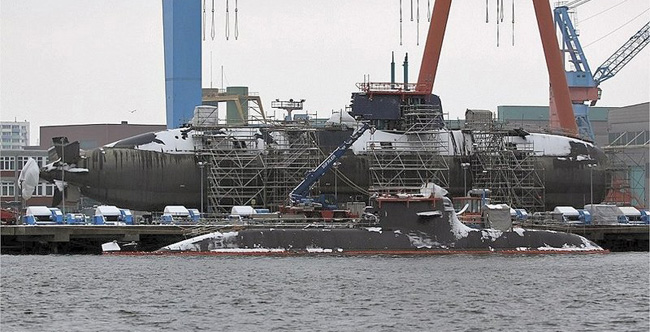
The new INS Rahav is seen here at the dry dock at Kiel, Germany. A German Navy Type 212 submarine berthed in front of the Rahav provides a size comparison between the two classes.
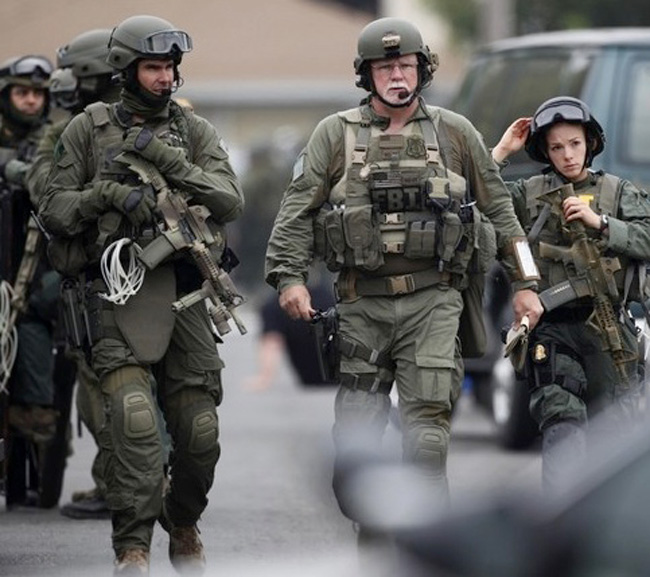
FBI Tactical team deployed to Boston, 2012. Team members’ kits include the C4OPS, to offer clear communications and hearing protection on assault operations.
Warfighters pay a high price for lack of auditory protection, but often they consider such price justified, for it keeps them sharp to react quickly and effectively, thus staying alive in combat. Beside the long-term effect suffered by the individual, implications of auditory damage effect on the team’s performance are also evident. Stunning effect of noise peaks in excess of 130db, often caused by explosions (friendly or hostile), severely degrade the team’s performance and expose the individuals to unnecessary risks.
Auditory damage caused by blast effect
Auditory injuries are often caused by exposure to gunshots or explosions, particularly those experienced in close quarters and built-up areas or by IED blasts. When team members firing nearby, tank gun blasts, or explosive charges going off, warfighters experience excessive noises in combat, in situations they do not expect and therefore, cannot prepare for.
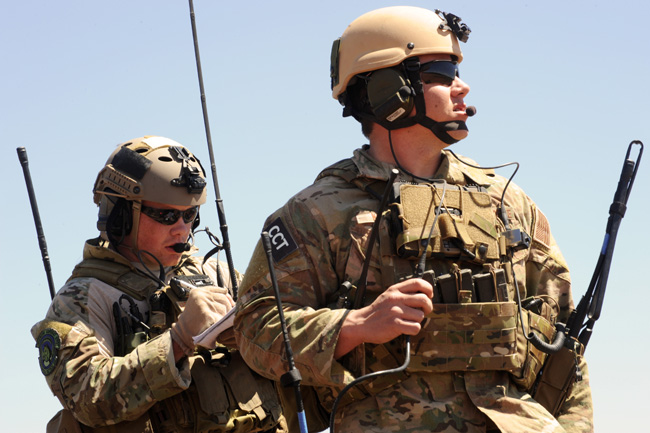
Two Air National Guard Combat Controllers wearing different types of helmets – MICH with cropped ear protection (front) and FAST (rear) both are worn with Peltor ComTac II earmuffs (Photo: Tech. Sgt. John Hughel, USAF)
Immediately after an explosion, particularly those coming as a surprise, soldiers experience few seconds of shock, or incapacitation, their ears buzzing. Through this time they are vulnerable and exposed.
According to the US Department of Veteran Affairs, hearing loss is one of the most common type of disability reported by veterans and the second largest segment in compensation payments. The US Government spends over $1.1 billion annually on compensation to veterans with hearing losses caused mostly during service in combat.
“We must use all of our energy finishing development within the time and money we have, we must continue to drive the cost of producing F-35s down, and we must start today to attack the long term life cycle costs of the F-35 weapon system.” Air Force Lt. Gen. Christopher C. Bogdan have set these three goals in his testimony to the Senate Armed Services Committee’s airland subcommittee Wednesday, April 24, 2013.
Bogdan, the Program Executive Officer for the F-35 Joint Strike Fighter (JSF) told the committee the program has made progress, but obstacles still remain, in software integration, affordability and future operating and support costs. Sequestration further complicates the acquisition as well, he added.
Sequestration has the potential either to stretch the development program out or reduce the capabilities warfighters can get, Bogdan said. By cutting funds from the program Sequestration is likely to stretch out, causing the more cost overruns for the troubled program that has just recently recovered from major delays and cost increases. “This will have impacts on international partners,” Bogdan warned. “The increases may result in reduction of their aircraft quantities, which would, in turn, increase unit costs even more and cause them to relook their commitment to the program” Bogdan said.
The French President Francois Hollande will release a long-awaited update to the nation’s defense strategy Monday. Aviation Week reports. On a post in the Ares blog, Amy Svitak comments the document will outline France’s response to changes in the defense and security environment since 2008, when the most recent iteration of the strategy was issued under former French President Nicolas Sarkozy.
According to French Defense Minister Jean-Yves Le Drian three things have changed since the last white paper was issued in 2008: The evolution of American defense posture with a new orientation to the Asia-Pacific region; a need for European and other nations to clean up their finances; and a more focused push to create a common European defense policy.
“The nation has to basically put its house together by ensuring budgetary independence, because when we have a colossal debt, and we do, we’re not sovereign,” he said. “But we have to maintain a defense posture equivalent to our place in the world. That’s the difficulty here.”“We do a white paper at moments of great evolution in our mission of security and defense for the nation,” Le Drian told French air force personnel on a recent visit at Avord air base. “We had a white paper when the deterrent force was decided. We had one when it was time to think about the professionalization of the army. We had another at the fall of the Berlin Wall, a period of historical change globally.”
The Israel Defense Forces (IDF) has selected Gilat Satellite Networks’ SatTrooper-1000 military Manpack Satellite Communications (SATCOM) terminal to equip combat units with advanced, beyond line of sight tactical communications. I-HLS reports
The new terminal communicates data, video and telephony at broadband speeds, via a satellite link, thus overcoming distance or interference typically encounters in urban or mountainous operations. Read more on SatTrooper1000 in our Members Edition
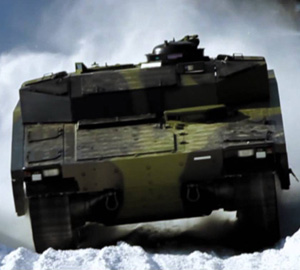
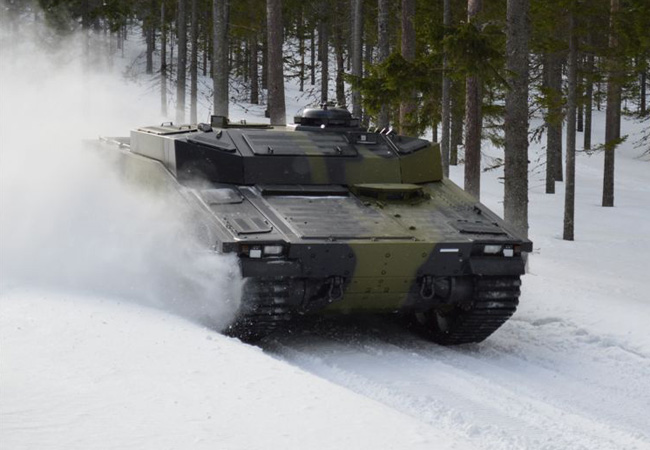
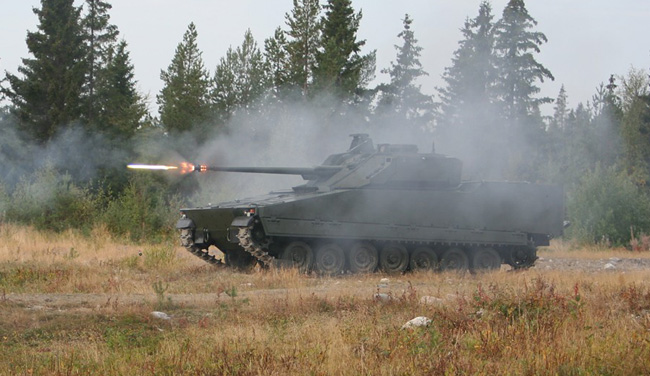
Armadillo is a turretless version of CV90 with ballistic and mine protection which exceed Stanag 4a/b. Removal of the turret gives six tonnes of “spare” payload for further protection or other purposes on top of its “fighting configuration”. Photo: BAE Systems
The Danish Army has received five Armadillo type armored infantry fighting vehicles for testing. Defense-Update reports. The vehicle is based on the CV90 chassis was configured by BAE Systems Sweden for protected infantry transport. Earlier in April BAE shipped the five vehicles to the Danish army Oksbol base for competitive evaluation. The tests, which begin in April and continue through September, will evaluate the new vehicle’s ability to meet Denmark’s armored personnel carrier requirement. BAE Systems is also offering the vehicle to other countries, among them Canada.
Armadillo is a turretless version of CV90 with ballistic and mine protection which exceed Stanag 4a/b. Removal of the turret gives six tonnes of “spare” payload for further protection or other purposes on top of its “fighting configuration” while its state-of-the-art electronic architecture allows “plug and play” of new systems.
The CV90 was originally designed by Hagglunds and was fitted with a Bofors gun turret. It came into service in 1993. The light tank variant of the vehicle, designated CV9035 MkIII infantry fighting vehicle is operational with the Danish Army since 2007. Denmark plans to replace its existing fleet of M113s and BAE Sweden is one of four contender for the program. Other options considered are the Piranha V from GDLS Europe and G5, yet another upgrade of the M-113, proposed by FFG, which will bring this old design to a new APC status. Denmark is expected to select its future APC variant in 10 months, around February 2014. First deliveries will commence in 2015.
According to BAE Systems, Armadillo offers class-leading protection and optimum mission flexibility. Unlike the G5 or Piranha V, it will be produced on a ‘hot’ production line, with CV90 tanks built for Norway, therefore offer the benefit of production scale and shared costs. Moreover, CV90 platforms are currently operational with six existing operators, adding to the platform’s attractiveness as a low-risk solution, both for initial purchase and long-term sustainment and upgrade. The Danish contract requires the supplier to bind to support the fleet over a period of 15 years.
A new Pentagon assessment of Iran’s military power maintains that in two years time, Iran could flight-test an intercontinental ballistic missile capable of striking the United States, given “sufficient foreign assistance”, is provided to Tehran. The new assessment reiterated a longstanding estimate of the U.S. intelligence community. Iran could test such a missile by 2015 with assistance from nations like North Korea, China or Russia. Pyongyang is already in the process of developing the KN-08, an extended range ballistic missile that can reach the US West Coast. The missile’s range could be extended to provide the missile an intercontinental strike capability. Pyongyang and Tehran have been collaborating and exchanging technologies regarding ballistic missiles and nuclear weapons for many years; both countries are seeking to match the two technologies to acquire nuclear weapons delivery capabilities. U.S. experts agree that North Korea and Iran could be capable of developing and testing few ICBM class missiles based on liquid propellants, but doubt they could acquire solid-propelled weapons in the near future. The lengthy pre-flight procedures required for fuelling liquid-propelled missiles means that such weapons cannot be mass-fired without warning, as the shorter range missiles could, therefore, providing the defender time to respond, employ missile defense or conduct preemptive attack.
An unclassified portion of the “Annual Report on Military Power of Iran,” dated January 2013 and made available by the Pentagon today, also states that Iran is continuing to develop both the “technological capabilities applicable to nuclear weapons” and “ballistic missiles that could be adapted to deliver nuclear weapons.” In December 2012 US sources were sceptical about Iran’s ability to reach such milestone by 2015. Tehran encountered a major obstacle in 2011, after an explosion killed 21 people during a test, among the casualties was Hasan Tehrani Moghaddam, who was in charge of the country’s missile program.
The Defense Department adds that Iran “continues to develop technological capabilities applicable to nuclear weapons” and is “proceeding with uranium enrichment and heavy-water nuclear reactor activities in violation of multiple U.N. Security Council resolutions.”
Iran “also continues to develop ballistic missiles that could be adapted to deliver nuclear weapons,” it states. Despite “increased pressure resulting from sanctions” imposed by the United Nations, there “has been no change to Iran’s national security and military strategies over the last year,” according to the report.
In the past Iran was reportedly working on ‘Project Koussar’, a ballistic missile capable of reaching targets at ranges of 4000 – 5000 km. These missiles, sometime referred to as Shahab 5 and Shahab 6 were believed to be based on different propulsion used on the Shahab 3. Some sources indicated the Iranians were erlying on the RD-216 originally developed for the SS-5 IRBM and also used to with the Kosmos SL8 satellite launcher.
James Clapper, the director of national intelligence, told the Senate Select Committee on Intelligence last month that “we do not know if Iran will eventually decide to build nuclear weapons.” The U.S. government’s 17 intelligence agencies, according to Clapper, “judge Iran would likely choose a ballistic missile as its preferred method of delivering a nuclear weapon, if one is ever fielded,” he said in the U.S. intelligence community’s annual worldwide threat assessment. These missiles are capable of delivering a weapon of mass destruction, he said.
“In addition, Iran has demonstrated an ability to launch small satellites, and we grow increasingly concerned that these technical steps — along with a regime hostile toward the United States and our allies — provide Tehran with the means and motivation to develop larger space-launch vehicles and longer-range missiles, including an intercontinental ballistic missile,” according to Clapper.
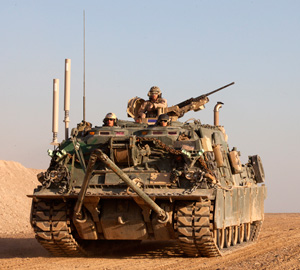
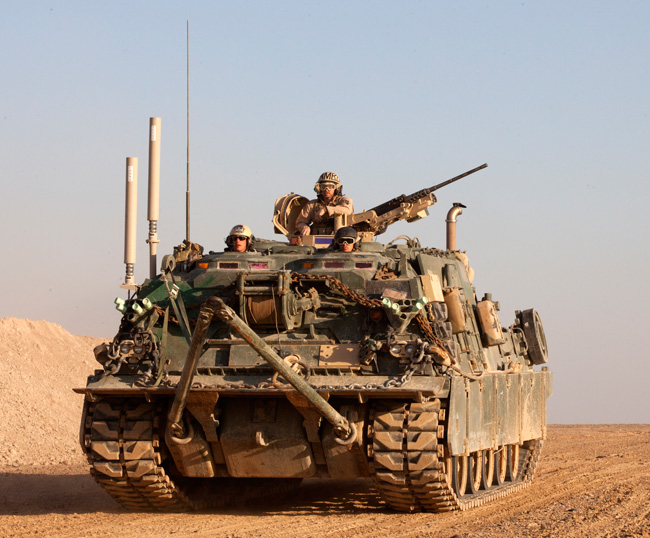
A U.S. Marine Corps M88A2 Hercules Recovery Vehicle assigned to Mobile Assault Company, 2nd Combat Engineer Battalion, enters the main staging area for units supporting Operation Dynamic Partnership in Shurakay, Helmand province, Afghanistan, Feb. 9, 2013. (Photo: Cpl. Alejandro Pena, USMC)
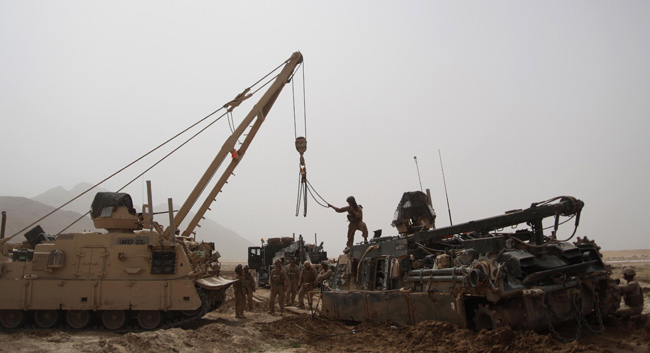
Marines with 1st Combat Engineer Battalion use an M88A2 Hercules to recover another M88A2 after getting stuck in a mud patch, March 16, 2011
BAE Systems received a $28.7 million contract to upgrade 11 M88A1 Medium Recovery vehicles to the M88A2 Heavy Equipment Recovery Combat Utility Lift Evacuation System (HERCULES) configuration. HERCULES is the improved recovery system of choice for today’s 70-ton combat vehicles. To date, 575 HERCULES vehicles have been fielded against an overall U.S. Army requirement of 632 vehicles, and a total of 84 vehicles have been fielded to the U.S. Marine Corps. The award brings the total value of U.S. Government contracts that BAE Systems has been awarded on the HERCULES program to $2.1 billion.
“This contract demonstrates the continued need to invest in the HERCULES and shows the Army’s commitment to the irreplaceable role it serves.” said Mark Signorelli, vice president and general manager or Armored Combat Systems at BAE Systems. The upgrade work will be performed by the existing workforce at BAE Systems operations in York, Pennsylvania and Aiken, South Carolina. The contract was awarded by the U.S. Army TACOM Life Cycle Management Command with deliveries to conclude in March 2014.
The M88 plays a critical role the company’s campaign to maintain the Bradley Industrial Base by protecting the affordability of the Army’s combat vehicles. BAE Systems’ York facility is responsible for four of the five U.S. Army Armored Brigade Combat Team (ABCT) vehicles, including the Bradley and the M88. In addition to proposing that Congress provide base level investment in critical combat vehicle improvements, BAE Systems is working with the Army to secure increased funding for the M88 program to help carry the workload at the facility.
The M88A2 HERCULES offers operational and logistics commonality with the existing M88A1 fleet, which provides simplified training and parts availability benefits to the end-user. Key upgrades for the HERCULES include: improved power-assisted braking, steering, winching, hoisting, and increased horsepower. HERCULES has the lowest acquisition, operational and maintenance cost of any 70-ton capable recovery system, answering the need for cost-effective, self-supporting heavy recovery performance. The M88A2 provides unparalleled capability for recovering today’s 70-ton combat vehicles including the M1A1, M1A2, Leopard MBT, bridging systems, and other medium weight vehicles.
A U.S. Marine Corps M88A2 Hercules Recovery Vehicle assigned to Mobile Assault Company, 2nd Combat Engineer Battalion, enters the main staging area for units supporting Operation Dynamic Partnership in Shurakay, Helmand province, Afghanistan, Feb. 9, 2013. (Photo: Cpl. Alejandro Pena, USMC)
The Israeli company Elbit Systems Ltd. and South Korean Maintenance, Repair and Overhaul (MRO) provider Sharp Aviation K Inc. announced the establishment of a joint venture company – Sharp Elbit Systems Aerospace, Inc. (“SESA”). The new company will be based in Ansan, south of the capital Seoul. The company will support advanced military aircraft avionics. Sharp which sofar offered services to commercial aircraft, will be the majority owner in the new company and, as part of the transaction, Sharp intends to transfer contracts currently operated.
Mr. Soon-Suk Paik, President and CEO of Sharp Aviation K commented: “Working with the Defense Acquisition Program Administration (DAPA) of Korea and international and Korean manufacturers, SESA will offer the Korean aerospace market advanced solutions and systems, made in Korea and based on Elbit Systems’ technological portfolio and Sharp Aviation K’s vast experience in aviation and avionics, strong local presence and deep understanding of the Korean market”. For Elbit Systems and other international suppliers, SESA will offer an attractive offset solutions to foreign suppliers and OEM’s selling defense goods and services in Koera.
The Israeli partner will have an option to increase its share from 19 to 50%. n addition to maintenance, repair and production, SESA will provide research and development of systems and avionics for both existing and future projects, such as the Korean Light Attack Helicopter (LAH) and the Korean Future Fighter (KFX) development projects. The Large Area Displays developed by Elbit Systems for modern fighter aircraft and helmet display solutions are well positioned for integration in these future projects and other Korean modernization programs. Elbit Systems already has significant ongoing operations in South Korea; the company is leading an upgrading project for the modernization of RoKAF C-130s, its Electronic warfare unit Elisra has supplied electronic countermeasures for some of the RoKAF aircraft for many years and Electro-Optics unit ElOp has supplied various reconnaissance systems to the Korean Air Force.
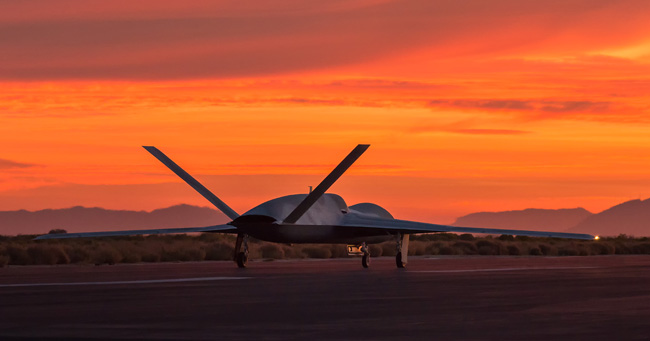
A Predator C Avenger lined up on the runway at GA-ASI’s Gray Butte Flight Operations Facility in Palmdale, Calif. Photo: GA-ASI.
General Atomics Aeronautical Systems Inc (GA-ASI) has successfully demonstrated the command of the Predator C Avenger stealth drone from a new, Advanced Cockpit Ground Control Station’s (GCS). Defense Update reports.
“This flight paired our most advanced GCS with our most advanced aircraft”, said Frank W. Pace, president, Aircraft Systems Group, GA-ASI. “Since 1994, our GCS have amassed over two million flight hours. The Advanced Cockpit is the next logical step in GCS progression. Our objective with this GCS is to fully satisfy customer interoperability requirements, enabling any GA-ASI RPA to be flown from the system.”
“Advanced Cockpit’s wrap-around visual display and multi-dimensional moving map dramatically increases situational awareness, while the integrated digital checklist decreases pilot workload,” said Jason McDermott, the test pilot who successfully handed off control of Avenger from GA-ASI’s legacy GCS to the Advanced Cockpit and controlled the flight during a 3-hour mission. “The combination of these unique features greatly increases the ease and simplicity of mission planning, reduces pilot workload, thereby increasing flight safety.” The flight occurred November 15, 2012 at the company’s Gray Butte Flight Operations Facility in Palmdale, Calif,
“Advanced Cockpit’s wrap-around visual display and multi-dimensional moving map dramatically increases situational awareness, while the integrated digital checklist decreases pilot workload,”
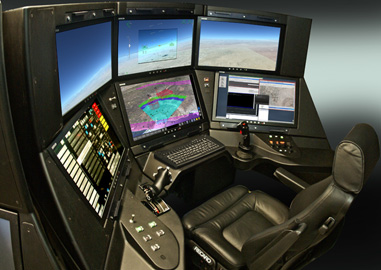
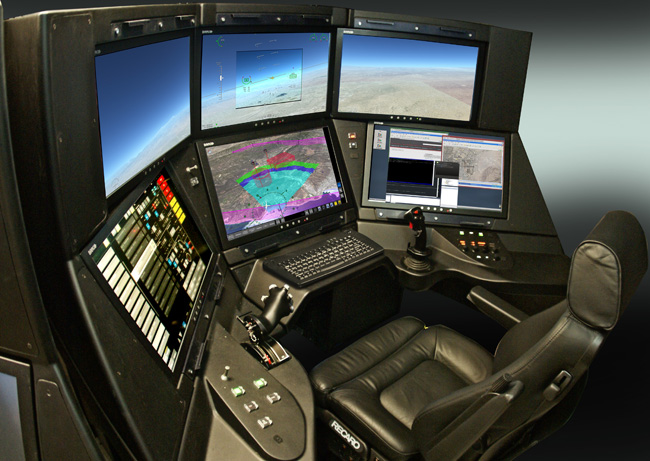
The Advanced Cockpit GCS features intuitive interfaces designed to make hazardous situations easier to identify, enhancing safety and improving the pilot’s reaction time and decision-making processes. Its ergonomic human-machine interface significantly improves situational awareness and reduces workload so the pilot can more effectively and efficiently accomplish his or her mission.
The flight test was conducted under a Congressionally-directed, U.S. Air Force (USAF)-supported program to demonstrate was to demonstrate how the new cockpit’s open systems’ software architecture adapts for other RPA operations. In 2011 the system successfully flew the MQ-1 Predator over a three-month period and, in April 2012, the Advanced Cockpit flew the SARC-1 UAS under a jointly funded company effort with Strategic Simulation Solutions. This effort demonstrated the system’s ability to control third party RPA. This summer, the Advanced Cockpit is scheduled to fly Predator B/MQ-9 Reaper.
GA-ASI designed the Advanced Cockpit GCS to enable interoperability with all USAF RPA, in accordance with the U.S. Air Force’s Unmanned Aircraft System Command and Control Initiative and the U.S. Department of Defense’s vision for GCS interoperability and commonality, as outlined by the Office of the Secretary of Defense’s Unmanned Control Segment Working Group.
The Advanced Cockpit GCS features intuitive interfaces designed to make hazardous situations easier to identify, enhancing safety and improving the pilot’s reaction time and decision-making processes. Its ergonomic human-machine interface significantly improves situational awareness and reduces workload so the pilot can more effectively and efficiently accomplish his or her mission. Photo: GA-ASI.
Boeing reaffirmed today its guidance for 2013 financial performance. The company reported strong revenue of $18.9 billion, reflecting higher deliveries of commercial aircraft, with net orders worth $20 billion in the past quarter, bringing the company’s backlog to a record $392 billion.
In the Defense, Space & Security’s (BDS) Boeing presented lower revenues of $8.1 billion, about half of the sales were generated by Boeing Military Aircraft (BMA) with first-quarter revenue was $4.1 billion, primarily reflecting lower revenue on the F-15 program, partially offset by higher C-17 and Apache deliveries. Operating margin increased to 10.5 percent, due to delivery mix. During the quarter, BMA delivered the first Indian Air Force C-17 to flight test and completed the second Phantom Eye flight. Boeing reaffirmed its forecast for sales of $82-$85 billion throughout the year, with commercial airplanes delivering $51-$53 billion in revenue and BDS delivering $30.5-$31.5 billion
Northrop Grumman Corporation reported today its first quarter 2013 net earnings dropped by $17 million to of $489 million, (or $2.03 per diluted share), compared to the first quarter of 2012.
based on the funding levels provided for by the FY 2013 appropriations bill enacted on March 26, 2013 Northrop Grumman feels its financial outlook of $24 billion in sales and 10-11% operating margins is solid for 2013; “Considering the impact of sequestration, and assuming that an appropriations bill or continuing resolution for FY 2014 will be in effect beginning on Oct. 1, 2013, in each case continuing to support and fund the company’s programs.” the report said, “Guidance for 2013 also assumes no disruption or shutdown of government operations resulting from a federal government debt ceiling breach and no cancellation or termination of any of our significant programs.” the company report added.
“Strong operating performance and effective cash deployment drove first quarter results.” said Wes Bush, chairman, chief executive officer and president. “Looking ahead, we recognize that we are operating in an uncertain and constrained budget environment. We are maintaining our focus on program performance, effective cash deployment and portfolio alignment as we drive to best serve our shareholders, customers and employees.”
The effect on the earning per share was minimized due to the company’s shares repurchase campaign, Northrop Grumman purchased d 6.5 million shares of its common stock in the 2013 first quarter; $1 billion remains on its current share repurchase authorization.
First quarter 2013 total operating income decreased $37 million or 5 percent, and operating margin rate decreased 40 basis points to 12.4 percent due to lower segment operating income. Segment operating income declined $41 million due to a 2 percent sales decline and a lower segment operating margin rate than in the prior year period. The change in segment operating margin rate includes the impact of a $91 million decrease in net favorable adjustments, which was partially offset by the reversal of a $26 million non-programmatic risk reserve in Electronic Systems.
As of March 31, 2013, total backlog was $39.4 billion compared with $40.8 billion as of Dec. 31, 2012, and includes new awards of $4.7 billion during the first quarter of 2013. The decline in backlog and new awards is due to customer response to the current U.S. government budget environment.
The Aerospace Systems, Northrop grumman’s largest division increased sales by 4 percent in this quarter, to $2.485 billion, up from $2.383 billion in Q1/2012 due to higher volume for manned military aircraft and unmanned programs. The increase is attributed to deliveries of 10 major subsections for F-35 aircraft under low rate initial production lot 5 (LRIP 5). Higher unmanned volume reflects the ramp-up of the NATO AGS and Fire Scout programs, and the decline in space systems sales is due to lower volume for restricted programs. Aerospace Systems first quarter 2013 operating income declined 3 percent and operating margin rate was 10.9 percent.
Information Systems dropped significantly in the past quarter, where sales declined $170 million or 9 percent compared to Q1/2012. Besides program completion and organizational changes, that attributed to $25 million of the drop, the company stated the drop is attributed lower funding levels across the existing program portfolio, and in-theater force reductions. “Volume declined across a broad number of programs, and no single program accounted for a material amount of the total sales decline.” the report said.
A Soldier from the 2nd Brigade Combat Team, 1st Armored Division uses the new version of the Army’s friendly force tracking and messaging – FBCB2-JCR. This system is the first Blue Force Tracking system supporting both FBCB2 and Movement Tracking System (MTS). Photo: US Army by Claire Schwerin, PEO C3T
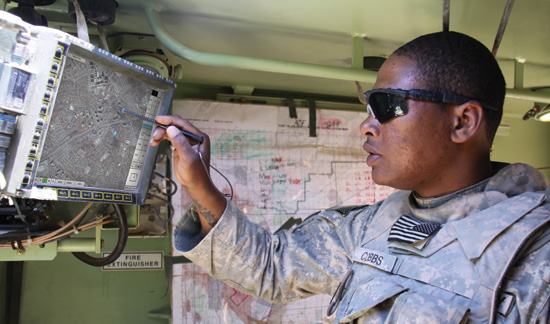
The US Army is finally integrating a blue-force tracking system common to manoeuvre and logistics elements. Defense-Update reports. For the first time on the battlefield, maneuver and logistics forces will be able to share situational awareness and messaging, forming a complete and seamless operational picture. This essential capability was not feasible in the past, as the combat and support levels in the brigade combat team employed separate and incompatible communications networks that could not exchange information in real time. The new capability was delivered by integrating the vehicle-based Movement Tracking System (MTS) into the Army’s upgraded friendly force tracking system known as ‘Joint Capabilities Release’ (JCR), the latest addition to the Force XXI Battle Command Brigade and Below /Blue Force Tracking (FBCB2/BFT) system. That systems provides two-way situational awareness and message exchange between convoys and the maneuver formations they are supporting in the combat zone. “Before, MTS was a standalone network and separate software baseline. Now, logistics get the same mapping capability, the same operational picture and they pick up the same message sets as maneuver forces.” said Lt. Col. Bryan “BJ” Stephens, product manager Blue Force Tracking for the Army’s Program Manager (PM) Joint Battle Command-Platform, (JBC-P). “On top of that, we’ve consolidated two field support processes, two training elements and two fielding teams into one operation.”
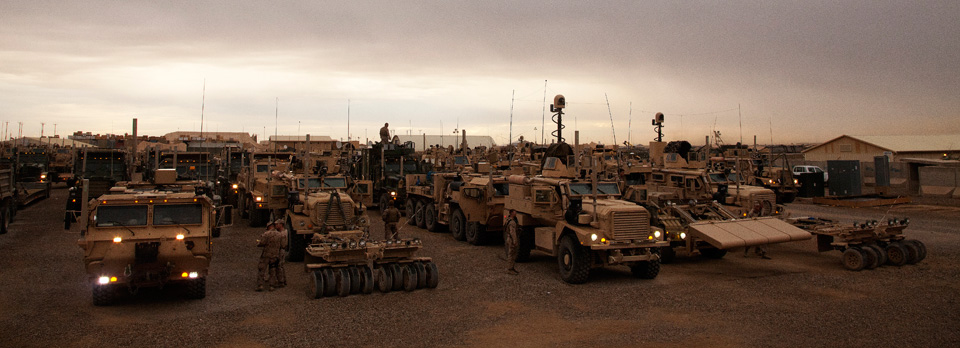
U.S. Marines assigned to Mobile Assault Company, 2nd Combat Engineer Battalion (CEB), stage their vehicles and make last minute gear adjustments while waiting to leave on a convoy mission from Camp Leatherneck, Helmand province, Afghanistan on Dec. 7, 2012. (Photo: Cpl. Alejandro Pena, USMC)
Besides improving situational awareness and minimizing risks of fratricide, the new tool will also streamline the logistical supply service offering more streamlined delivery and coordination, avoiding navigation errors and scheduling timely and precise meeting points.
JCR Logistics builds on the technology Soldiers have relied on for situational awareness in Iraq and Afghanistan, FBCB2/BFT has been integrated on more than 120,000 platforms and authorized or fielded to every brigade combat team in the Army. Primarily used in military vehicles, FBCB2’s display screen shows blue and red icons over a geospatial imagery map. It paints a complete picture of the battlefield – including friendly and enemy forces, as well as terrain hazards — enabling units to synchronize operations and avoid friendly fire incidents. The JCR upgrade, developed by program integrator Northrop Grumman is the first of two planned upgrades, brought faster satellite network delivered by ViaSat and Type 1 secure data encryption, as well as the improved capabilities to logistics platforms.
The MTS system based on hardware and systems provided by Comtech, was designed to track logistics formations, included a Radio Frequency Identification, or RFID, capability to provide in-transit, near-real time visibility of critical cargo. By integrating MTS into JCR Logistics, users can communicate with and track maneuver and logistics platforms together, enabling the safe and timely completion of distribution missions in support of full spectrum operations.
The new, integrated capability introduced with the logistics formations is known as ‘JCR Logistics’. Logistics vehicles including freight haulers, Heavy Expanded Mobility Tactical Trucks, or HEMTTs, and fuel tankers that transport goods on the battlefield to feed, fuel and arm maneuver formations will now be equipped with JCR Logistics. JCR installation into logistics supporting platforms in Afghanistan was completed in March 2013. “The fielding to Afghanistan is a major step forward,” said Col. Michael Thurston, project manager for JBC-P. “This is laying the groundwork for CS 13 and getting an important capability into the hands of our Soldiers.”
CS 13 is the Army’s first integrated communications package that spans the entire brigade combat team, or BCT, formation, connecting the fixed tactical operations center to the commander on-the-move to the dismounted Soldier. CS 13, which includes JCR, is comprised of networked vehicles, radios, satellite systems, software applications, hand held devices and other network components, integrated and vetted by Soldiers through the Network Integration Evaluation (NIE) process. Two BCTs of the 10th Mountain Division are currently training on the capability set in preparation for deployment later this year. “Instead of having to run back to the vehicle or wait for grid coordinates, I can look down, see where (my Soldiers) are at and be able to make a decision of where to deploy them on the battlefield,” said 1st Lt. Jason Kruger, 2nd Brigade, 1st Armored Division, who used the new technologies during the Army’s most recent NIE 13.1. By combining blue force tracking technology with the handhelds, it provided “situational awareness anywhere you go.”
“This is a game-changer,” said Thane C. St. Clair, chief of Product/Capabilities Distribution for PM JBC-P. “Before, MTS was a stand-alone system, using a separate network and different protocols that prevented the sharing of information. Now, JCR-equipped systems can communicate with and track maneuver and logistics platforms together for seamless situational awareness.”
With JCR Logistics, Soldiers have improved visualization across the network, with the ability to locate and track not only friendly forces and the enemy, but also combat support and combat service support vehicles delivering necessary supplies.
The integration came as part of a streamlining of the two C3 networks that began in 2006, under the Department of the Army directive to phase out the MTS as a separate program, thus consolidating the two networks under one management eliminated separate program management, contracts, satellite channels and operation elements which effectively duplicated costs. The directives greatly improved capabilities and interoperability provided to both MTS and FBCB2/BFT users. According to Army estimates, the merging of the two programs saved about $20 million by avoiding redundant expenses. By 2016 it is expected to save additional $120 million.
The JCR upgrade, developed largely based on Soldier feedback, introduces JCR-Logistics, which integrates JCR capability with the Movement Tracking System (MTS), resulting in a seamless, two-way situational awareness and message exchange between convoys and the maneuver formations to which they are delivering goods. JCR also utilizes the BFT 2 network, a new satellite infrastructure that can handle significantly more data than the first BFT. This capacity increase allows for more frequent and larger message traffic, and in many cases cuts the system’s refresh rate from minutes to seconds. Since October 2012, PM JBC-P has fielded or upgraded a total of 275 JCR platforms and 32 JCR Tactical Operation Center (TOC) Kits in Afghanistan. Also, a total of 242 JCR-Logistics platforms and 34 JCR-Logistics control stations have been upgraded.
The next step in the JCR upgrade is upgrade currently in testing, is the JBC-P, a battle command network that offers enhanced blue force tracking capabilities through a modern, more intuitive user interface featuring contemporary ‘touch’ gestures common in tablets and smartphones, like touch-to-zoom maps and drag-and-drop icons. The upgrade brings enhanced data encryption, improved maps, better collaboration tools and more precise location information for vehicles, aircraft and dismounted Soldiers.
Lockheed Martin Skunk Works® and XTEND have achieved a major milestone in JADC2 by integrating the XOS operating system with the MDCX™ autonomy platform. This technical breakthrough enables a single operator to simultaneously command multiple drone classes, eliminating the friction of mission handoffs. From "marsupial" drone deployments to operating in GPS-denied environments, explore how this collaboration is abbreviating the data-to-decision timeline and redefining autonomous mission execution.
As traditional defense primes face mounting competition from agile “neoprimes” such as Anduril, Palantir and Helsing, the balance of innovation is shifting toward software-defined warfare and scalable, dual-use technologies, while global industry consolidation—marked by Boeing’s integration of Spirit AeroSystems and other strategic mergers—signals an intensified race to secure control over the defense technology value chain. Our Defense-Tech weekly report highlights these trends.
In early October 2025, a coordinated wave of unmanned aerial system (UAS) incursions—widely attributed to Russia—targeted critical infrastructure across at least ten European nations. The unprecedented campaign exposed the fragility of Europe’s air defenses...
Executive Summary
The past week (September 18-25, 2025) represents an inflection point where strategic defense concepts have transitioned from doctrine to tangible reality. An analysis of global events reveals four primary, interconnected trends shaping an...
At the 2025 Air, Space & Cyber Conference, U.S. Air Force and Space Force leaders unveiled major updates on next-generation fighters, bombers, unmanned systems, and space initiatives, highlighting both rapid innovation and critical readiness challenges as the services race to outpace global competitors. A short version is available here, with a more detailed version for subscribers.
The Taipei Aerospace & Defense Technology Exhibition (TADTE) 2025 crystallized around four dominant strategic themes that collectively illustrate Taiwan's comprehensive approach to defense modernization amid escalating regional tensions. Based on a detailed report by Pleronix (available upon request). Includes a Podcast discussion on TADTE 2025's highlighting Taiwan's four strategic themes beyond the post's coverage.
Israel’s Iron Beam 450 high-power laser system has completed final testing, marking a major leap in air defense. Developed by Rafael, it offers precise, cost-effective interception of rockets, UAVs, and mortars, and is set for IDF deployment by 2025.