


Sunday, December 28, 2025
More
    Home Blog Page 154

    Lockheed Martin Estimates Sequestration Impact in 2013 to Exceed US$800 million

    lockheedmartinThe world’s largest defense contractor Lockheed Martin assesses the potential effect of sequestration measures taken by the US Government could reduce its 2013 net sales by approximately $825 million. Lockheed Martin was the first major defense company to comment on the scale of sequestration impact on its performance since the drastic measures took effect last month.

    The company reported today its net sales decreased 2 percent in the first quarter of 2013, to $11.1 billion; the business activity generated $2.1 billion. The company invested $0.5 billion for repurchasing 5.1 million shares, thus increasing net earnings 14 percent over the first quarter of 2012. With $761 million in net earning reflecting an $2.33 “Earnings per diluted share”, reflecting an increase of 15 percent over Q1/2012.

    “While the impact of sequestration on our business has been limited to date, we continue to work closely with our customers to better understand the future impact sequestration may have on our programs. Despite the challenging budget environment, we will continue to innovate and deliver value to our customers and shareholders.” said Lockheed Martin Chief Executive Officer and President Marillyn Hewson, “Our team delivered strong results this quarter by focusing on program execution and delivering on our commitments to customers.” After considering the potential sequestration estimate along with its first quarter 2013 results, the Corporation has revised the 2013 outlook to indicate that the Corporation expects its net sales to be near the low end of the range provided in January ($44,500 million)

    In January, the Corporation provided an outlook for 2013 premised on the assumptions that the U.S. Government would continue to support and fund programs through March 2013, that FY 2013 budget will be approved by the Congress at a level consitent with the President’s proposed defense budget and that sequestration would not go into effect. Although sequestration is currently in effect, the company said that customers have not yet informed it of specific decisions taken in response of this act, except in some very limited circumstances. However, the situation is expected to change in the coming months. Expecting sequestration measures bearing impact on Department of Defense and other federal procurements, Lockheed Martin expects its 2013 revenues to be within the low margin of the amount projected in January 2013.

    “Sequestration reductions will be achieved through delaying and deferring new program starts, versus modifying or restructuring existing programs that have contractually obligated schedule and delivery requirements” the company commented. Nevertheless, other market-wide implications of Sequestration could cause ‘collateral effects’, such as significant rescheduling or termination activity with the Corporation’s supplier base, contractual actions including partial or complete terminations, severance payments made to the Corporation’s employees, facilities closure expenses, and impairment of assets or goodwill, all these have the potential to align the Corporation’s cost structure to a lower sales base.

    Aeronautics sales were down over US$ 0.5 billion from $3,706 in Q1/2012, primarily due to lower sales in F-16, C-130J and C-5 programs. Missiles and Fire Control sales increased $222 million over the same quarter last year, attributed to JASSM program. Mission Systems and Training unchanged but improved their operating profit by 28 percent.
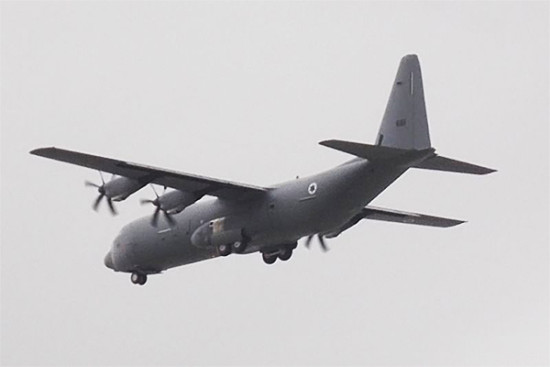
    First Flight for the Israeli C-130J Samson

    C-130J 661 bearing Israel Air Force markings returning from its first flight April 18, 2013.

    The first C-130J destined for the Israel Air Force (IAF Tail number 661) made its first flight this week at Lockheed Martin plant in Marietta, GA USA. The aircraft was flown by an American crew and lasted three hours. IAF Lt. Col. Uri reported it as successful. The new aircraft is one of three C-130Js ‘Samson’ tactical transport planes ordered by the IAF. The first is scheduled to arrive in Israel in 2014.

    For the first flight the aircraft flew in its basic configuration, “After this flight, Israeli systems will be installed in it. The IAF is interested in matching the airplane’s abilities to its missions”. Among the systems the IAF is planning to install on the aircraft are the “Toplite” stabilized electro-optical payload from RAFAEL, adding night-vision capability, a data link and satellite communications terminal, precision airdrop supporting autonomously guided parachute systems, as well as mission-planning and debriefing system.

    C-130J 661 bearing Israel Air Force markings returning from its first flight April 18, 2013.
    C-130J 661 bearing Israel Air Force markings returning from its first flight April 18, 2013.

    Bundling Israel Paves Way for Pentagon Sale of Strike Weapons to Saudi-Arabia, UAE

    osprey_mountains
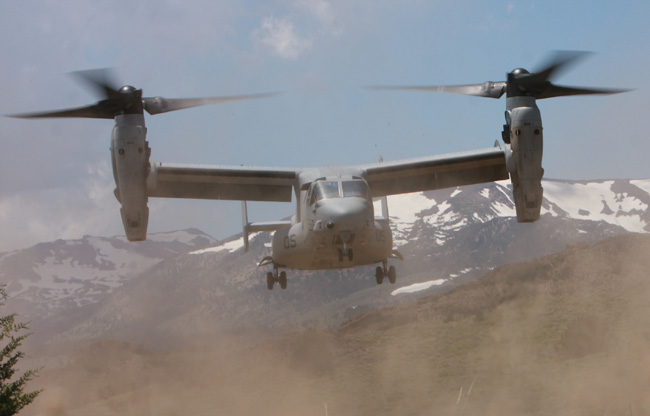
    A MV-22 Osprey from Marine Medium Tiltrotor Squadron 261, based out of Marine Corps Air Station New River, N.C., makes one of many landings, June 25, in training area Dodo at the Mountain Warfare Training Center in Bridgeport, Calif. Photo: Lance Cpl. Michael Nerl, USMC

    The US is preparing a multi-billion arms deal that will include the sales of advanced fighter planes, air-to-ground strike weapons and special mission aircraft to Israel, Saudi Arabia and the UAE. The total value of these packages is expected to exceed $10 billion.

    As part of these sales the United States has agreed to deploy standoff precision attack weapons to Saudi Arabia and the UAE. Although the exact type of anti-radiation or standoff weapon has not been detailed by the Pentagon, it is believed that those weapons are the AGM-154C Joint Stand-Off Weapon (JSOW-C) built by Raytheon,

    to be carried by Boeing F-15SA and Lockheed Martin F-16 Block 60s, and Advanced Anti Radiation Guided Missile (AARGM – AGM-88E) destined for the Israeli F-16s and F-15s.

    The sale of advanced strike weapons has always been a sour issue for US exports, as such plans traditionally encountered opposition in Congress. Last month the US lost an opportunity in South Korea, after Seoul opted to buy a German weapon after failing to get approval for buying the US JASSM. Sales of strike weapons to Middle Eastern air forces met similar opposition, strengthened by Israeli supporters on the Hill.

    This time the arms packages are bundled in a way that could defuse potential opposition often raised by plans to transfer offensive weapons to Middle Eastern countries. “A key part of the agreement is that we believe, and the Israelis believe, that [providing] these capabilities in no way diminishes Israel’s qualitative military edge, but are consistent with [the need to] commonly address threats in the region.” Pentagon official said. The United States will jointly train with the Emirati and Saudi pilots, as has been the case for other sales of military aircraft, he noted, adding that “There will be enhanced end-use monitoring consistent with what we provide with sensitive technology to our other allies and partners around the region… and there will be consultations prior to any of the weapons’ deployment.”

    Defense Secretary Chuck Hagel is expected to discuss and finalize the agreements on these arms sales this week, during his visits in Israel, Jordan, and Saudi Arabia. According to senior Pentagon sources, the secretary’s a six-day trip will includes meetings with counterparts and officials in Israel, Jordan, Saudi Arabia, Egypt and the United Arab Emirates. Sources said Hagel plans to discuss the ‘historic arms deal’ that involves Israel, Saudi Arabia and the UAE, along with the situations in Syria, Iran, and the Sinai Peninsula.

    To continue reading the full version of this article
    please subscribe to Defense-Update Premium plan

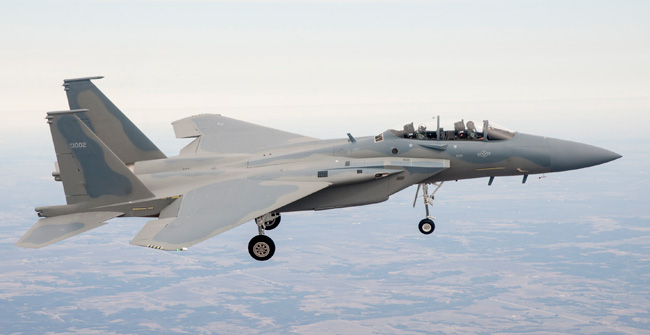
    Boeing has developed an enhanced version of the Eagle, F-15SA for the Royal Saudi Air Force. The aircraft has avionics enhancements that include a fly-by-wire flight control system, digital electronic warfare (EW) suite, an infrared search and track (IRST) system, and active electronically scanned array (AESA) radar. The first F-15SA is seen here on a flight test. Photo: Boeing
    Boeing has developed an enhanced version of the Eagle, F-15SA for the Royal Saudi Air Force. The aircraft has avionics enhancements that include a fly-by-wire flight control system, digital electronic warfare (EW) suite, an infrared search and track (IRST) system, and active electronically scanned array (AESA) radar. The first F-15SA is seen here on a flight test. Photo: Boeing

    Qatar’s Armored Brigade to Receive Leopard 2 MBTs, Pzh2000 Artillery

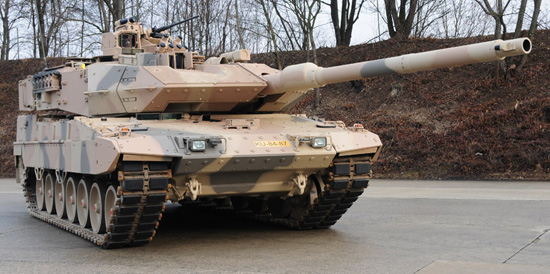
    Leopard 2A7+ is the latest version of the Leopard 2 tank from KMW. It is well adapted for asymmetric and full scale warfare. Photo: KMW
    Leopard 2A7+ is the latest version of the Leopard 2 tank from KMW. It is well adapted for asymmetric and full scale warfare. Photo: KMW

    The German company Krauss-Maffei Wegmann (KMW) announced it has signed a contract with the Emirate of Qatar to modernize the Emirate’s single armored brigade, at an investment of about $2.5 billion. The acquisition is part of a comprehensive modernization program the Emirate’s military forces is undergoing in recent years. In the past years Qatari authorities have evaluated offers from the U.S., China, France, Germany, South Korea and Turkey to equip their armored brigade.

    The Emirates’ land forces, comprising some 8,500 soldiers has not received significant modernization in recent years. Despite the country’s wealth from oil and trade, Qatari land forces were not spoiled with modern equipment in recent years. In fact, the Qatari forces still operate a fleet of French AMX-30B2 main battle tanks and South African G5 towed howitzers and Mk F3 self-propelled guns acquired in the 1980s. The only new infusion of hardware was in the air defense of the island, fielding 12 batteries of Patriot PAC-3. Qatar is likely to become one of the first international operator of the Terminal High Altitude Air defense (THAAD) missile defense system.

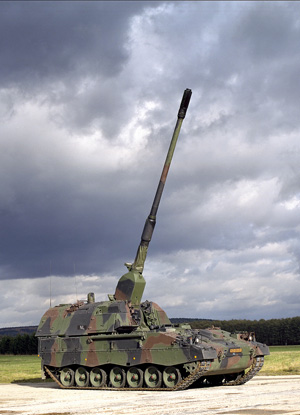
    The PzH2000 SP Howitzer is in active service with the German, Italian, Hellenic and Dutch military. Qatar is buying 24 of these Howitzers. Photo: KMW
    The PzH2000 SP Howitzer is in active service with the German, Italian, Hellenic and Dutch military. Qatar is buying 24 of these Howitzers. Photo: KMW

    Under the armored brigade’s modernization package signed with KMW the Emirate will receive two battalions of Leopard 2 MBTs, that will replace the AMX-30s. The package will also include 24 PzH2000  SP guns replacing the G5s. The latest version of Leopard 2 KMW is currently offering is the A7+, implementing an enhanced protection, firepower and digitization systems better adapting the tank for operations in asymmetric, urban environment. Rumors of the deal surfaced in Germany in 2012, claiming that Qatar is interested in buying up to 200 Leopard 2 tanks.

    The Qatari armored brigade currently employs one tank battalion, one mechanized battalion and an artillery regiment. With the quantity of new hardware doubling the number of tanks and artillery being replaced (62 vs 30+), it is likely the Qatari Army will deploy these assets in more flexible formations, better equipped and organized for modern warfare. According to French recommendations, the brigade should include one tank regiment, two infantry regiments and an artillery regiment. Such formations enable the flexible deployment of multiple task forces. Such reorganization could also lead to the procurement of modern infantry fighting vehicles. The Qatari Army is currently using various wheeled armored vehicles for protected infantry transport, including Piranha, VAB and AMX-10 of Swiss and French origin.

    According to KMW, the project’s total amount reaches €1.89 billion, including the delivery of peripheral equipment, training installations and additional services. The systems delivered to Qatar by Krauss-Maffei Wegmann are intended to progressively replace the emirates outdated artillery and tanks of French and South African origin. According to the German company, these outdated assets “will be scrapped”.

    The Qatari deal was in the making for over two years. KMW is pursuing other opportunities in the Middle east, particularly in Saudi Arabia, where Germany is offering to sell the kingdom some 800 Leopard 2 tanks and Boxer armored fighting vehicles. However, the possibility of selling the tanks to the Saudis has raised considerable opposition in Germany.

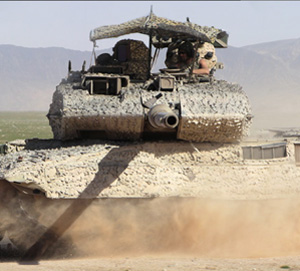
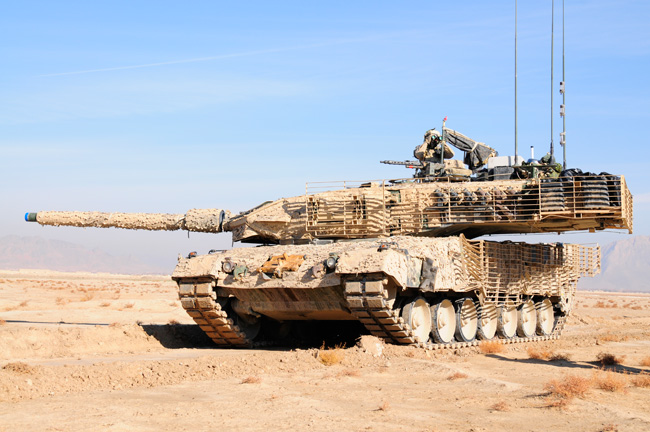
    Leopard 2A6 is the variant widely used in Afghanistan by the German, Canadian and Danish forces. Photo: KMW
    Leopard 2A6 is the variant widely used in Afghanistan by the German, Canadian and Danish forces. Photo: KMW

    Software Integration Remains One of the F-35 Highest Risks – GAO

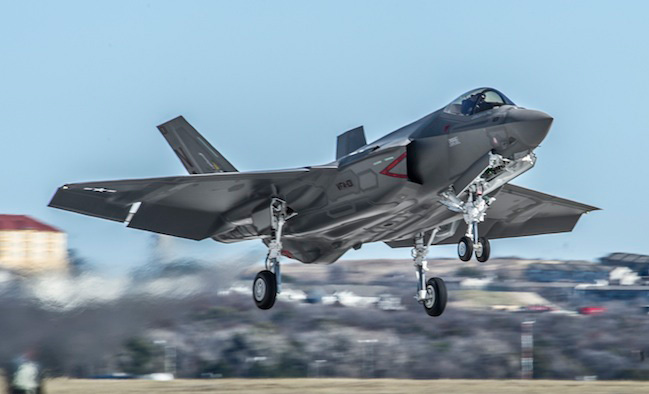
    Last month we published a review of a preliminary report prepared by the Government Accountability Office (GAO) about the F-35 program. The report revisited four of the 10 key management objectives mentioned previously, indicating seven were met or made substantial progress. However, two objectives on aircraft deliveries and a corrective management plan were not met. The report that was officially released today stated that additional work remains to fully address those risks.

    f35_costs
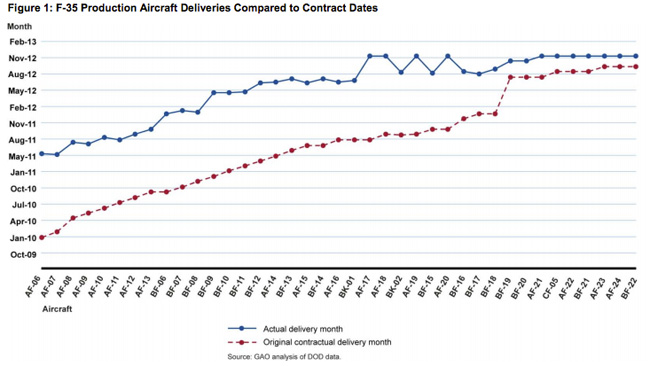
    Positive signs of improvement: Figure 1 illustrates the improvement in production aircraft delivery time frames by comparing actual delivery dates against the dates specified in the contracts. Key manufacturing metrics and discussions with defense and contracting officials indicate that F-35 manufacturing and supply processes improved during 2012. While initial F-35 production overran target costs and delivered aircraft late, the latest data through the end of 2012 shows labor hours decreasing and deliveries accelerating. The aircraft contractor’s work force is gaining important experience and processes are maturing as more aircraft are built. The labor hours needed to complete aircraft at Lockheed Martin’s assembly plant decreased, labor efficiency since the first production aircraft improved, time to manufacture aircraft in the final assembly area declined, factory throughput increased, and the amount of traveled work declined.

    The GAO report indicates that little progress has thus far being made on the advanced ‘block 3.0’ software. “The program intends initial block 3.0 to enter flight test in 2013. This is rated as one of the program’s highest risks because of its complexity.” the GAO report warns.

    Software development remains a major concern. Over time, F-35 software requirements have grown in size and complexity and Lockheed Martin has taken more time and effort than expected to write computer code, integrate it on aircraft and subsystems, conduct lab and flight tests to verify it works, and to correct defects found in testing. GAO acknowledged that recent management actions refocused on software development activities and other improvement initiatives implemented appear to be yielding benefits, however, software continues to be a very challenging and high-risk undertaking, especially for mission systems parts of the fighter’s software.

    Those elements are critical enablers of F-35’s combat effectiveness, employing next generation sensors with fused information from on-board and off-board systems, integrating Electronic Warfare (EW), Communication Navigation Identification (CNI), Electro-Optical Target System (EOTS), Electro-Optical Distributed Aperture System (DAS), radar, and data links.

    While most of the aircraft’s software code has been developed, a substantial amount of integration
    and test work remain before the program can demonstrate full warfighting capability. About 12 percent of mission systems capabilities have now been validated, up from four percent about a year ago. However, progress on mission systems was limited in 2012 by contractor delays in software delivery. The versions finally released were of limited capability, needed repeated fixes and retesting of multiple software versions. GAO warns that “Further development and integration of the most complex elements—sensor fusion and helmet mounted display—lie ahead.”

    F-35 software capabilities are being developed, tested and delivered in three major blocks and two increments—initial and final—within each block. The testing and delivery status of the three blocks is described below:

    Block 1.0, providing initial training capability, was largely completed in 2012, although some final development and testing will continue. Also, the capability delivered did not fully meet expected requirements relating to the helmet, ALIS, and instrument landing capabilities.

    Block 2.0, providing initial warfighting capabilities and limited weapons, fell behind due to integration challenges and the reallocation of resources to fix block 1.0 defects. The initial increment, block 2A, delivered late and was incomplete. Full release of the final increment, block 2B, has been delayed until November 2013 and will not be complete until late 2015.

    Block 3.0 providing full warfighting capability, to include sensor fusion and additional weapons, is the capability required by the Navy and Air Force for declaring their respective initial operational capability dates.

    Thus far, the program has made little progress on block 3.0 software. The program intends initial block 3.0 to enter flight test in 2013. This is rated as one of the program’s highest risks because of its complexity.

    Another area of concern was the Helmet mounted display (HMD) — DOD continued to address technical issues with the HMD system. The original helmet mounted display, integral to mission systems, encountered significant technical deficiencies and did not meet warfighter requirements, the report mentioned. The program is pursuing a dual path by developing a second, less capable helmet while working to fix the first helmet design. In its recent report GAO informed that in 2012, the program office began dedicated ground and flight testing to address these issues. “Both variations of the helmet mounted display are being evaluated and program and contractor officials told us that they have increased confidence that the helmet deficiencies will be fixed.” the report said, adding that the Pentagon may make a decision in 2013 as to which helmet to procure.

    The Autonomic Logistics Information System (ALIS) – a tool designed to predict and diagnose aircraft maintenance and supply issues could also limit the aircraft operability overseas, when deployed. A preliminary version of ALIS, with limited capability, is already operational with the F-35 training and testing locations. “More capable versions of ALIS are being developed and program and contractor officials believe that the program is on track to fix identified shortcomings and field the fully capable system in 2015” the report indicated. However, the current version is designed for a lab use, and does not easily support operational deployments. “Limited progress was made in 2012 on developing a smaller, transportable version needed to support unit level deployments to operating locations” the report stated.

    As for the Navy, carrier based F-35Cs will not be able to deploy on aircraft carriers until their arresting hook is fixed. The Navy will not be able to use its The F-35C, the carrier variant of the Lightning II, has encountered problems with its arresting hook system, which necessitated redesign to improve the ability of the hook to catch the arresting line on the carrier deck. Lack of an effective hook prevented the F-35C from performing flight trials on board aircraft carriers. “The program accomplished risk reduction testing of a redesigned hook point to inform this new design” GAO said in the report, “The preliminary design review was conducted in August 2012 and the critical design review in February 2013. Flight testing of the redesigned system is slated for late 2013.”

    Finally, there are some issues with the durability of the airframe; testing has discovered bulkhead and rib cracks on the aircraft. “In 2012 the JSF completed structural and durability testing, to verify that all three variants can achieve expected life and identify life-limited parts. As a result of these findings, the program is testing some redesigned structures and planning other modifications. “Officials plan to retrofit and test a production aircraft already built and make changes to the production line for subsequent aircraft. Current projections show the aircraft and modifications remain within weight targets.” the report added.

    GAO: U.S. Military Camouflage Duplication Has Waisted Billions

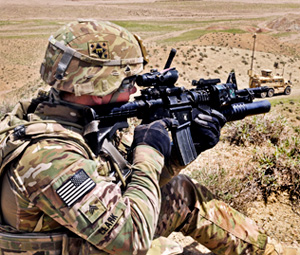
    Since 2010 the Army has issued Multicam patterned combat fatigue and combat gear claimed to be supperior in their camouflage performance, compared to the standard UCP issued by the Army. Photo: US Army.
    General Odierno wearing the UCP uniform. Photo: US Army
    General Odierno wearing the UCP uniform. Photo: DOD, Master Sgt. Jerry Morrison

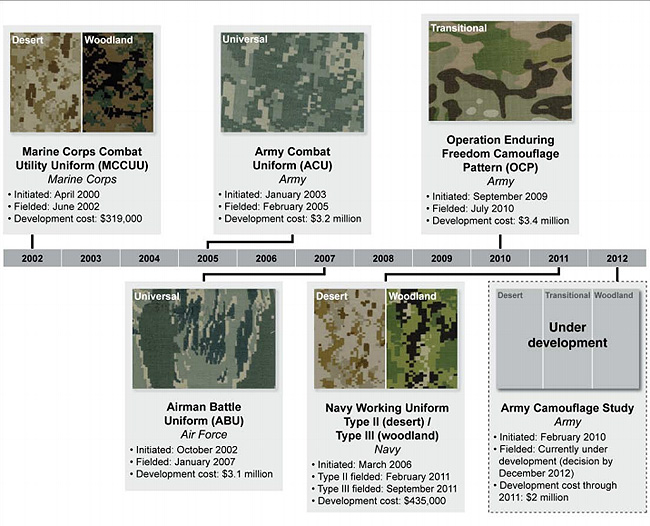
    Four different branches of the U.S. military are spending millions of dollars to equip troops with combat uniforms in seven different but similar camouflage patterns, wasting money and potentially exposing some troops to increased risk on the battlefield – the U.S. Government Accountability Office said.

    Before 2002, all the military services had used only two basic camouflage patterns – a woodland pattern matching the European and Korean theaters and a desert pattern. However, after the Marine Corps introduced their digital patterns in 2002 and branded the Corps symbol into it, other services followed, providing with their troops service-specific camouflage patterns. These pixilated patterns, particularly the Army’s Universal Camouflage Pattern (UCP), introduced in 2004, was known for its poor performance in Afghanistan. “Contracting separately for similar uniforms, GAO says, has resulted in “numerous inventories of similar uniforms at increased cost to the supply chain.” GAO said.

    Different camouflage patterns used by the four services may have caused billions of dollars waisted in duplicated procurement. Photo: GAO
    Different camouflage patterns used by the four services may have caused billions of dollars waisted in duplicated procurement. Photo: GAO

    The original report was published in September 2012 but earlier this month GAO repeated its critical review including this wasteful, duplicated procurement as an example of waste that could be avoided in federal procurement. A plan to replace the Army’s current UCP with yet another camouflage scheme was recommended by the Army Chief of Staff Ray Odierno.

    Since 2010 the Army has issued Multicam patterned combat fatigue and combat gear claimed to be supperior in their camouflage performance, compared to the standard UCP issued by the Army. Photo: US Army.
    Since 2010 the Army has issued Multicam patterned combat fatigue and combat gear claimed to be supperior in their camouflage performance, compared to the standard UCP issued by the Army. Photo: Staff Sgt. Shane Hamann, US Army.

    According to Military.com, the top Army officials scrambled to brief the Army Secretary John McHugh on the selection of yet another camouflage pattern, to become the Army’s next official camouflage pattern. The UCP replacement plan was launched four years ago, under the Phase IV camouflage improvement plan, as PEO Soldier and Natick Soldier Systems Center began to evaluate the effectiveness of different camouflage schemes.

    Critics of the UCP maintain that the service has spent $5 billion on uniforms and equipment all printed in the inadequate UCP. The GAO estimates that the Army will have to spend another $4 billion on uniforms and equipment over the next five years when it selects its new family of camouflage patterns.

    Following repeated calls from the field uniform experts and scientists have been evaluating alternative patterns. The Army awarded developmental contracts to four vendors in early 2012, to Crye Precision, ADS, Inc., teamed with Hyperstealth, Inc., of Virginia Beach, Va.; Brookwood Companies, Inc of New York; and Kryptek, Inc. of Fairbanks, Alaska.

    Results from the evaluations are yet to be published, but according to Military.com none of the four patterns clearly outperformed one another through all the test environments although they provided superior results, compared to UCP, a fact that reiterated previous evaluations conducted in 2006 and 2009, testing UCP against other alternatives. In 2010 the Army selected MultiCam as the clear winner over several other patterns to issue to soldiers deploying to Afghanistan.

    Although MultiCam is issued to soldiers deploying to Afghanistan, UCP is still the Army’s standard issue Army Combat Uniform.

    The Government Accountability Office last year criticized the Army and the Air Force for their camouflage development efforts that have wasted millions of dollars and put troops at risk. All four services universally wore the Army Battle Dress and Desert Camouflage patterns Defense Department leaders have failed to require services to “collaborate and standardize the development and introduction of camouflage uniforms” causing the military to potentially “forego millions of dollars in potential cost savings,” GAO wrote.

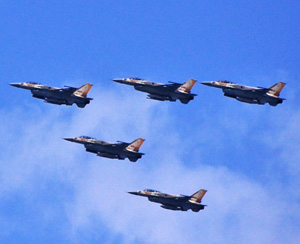
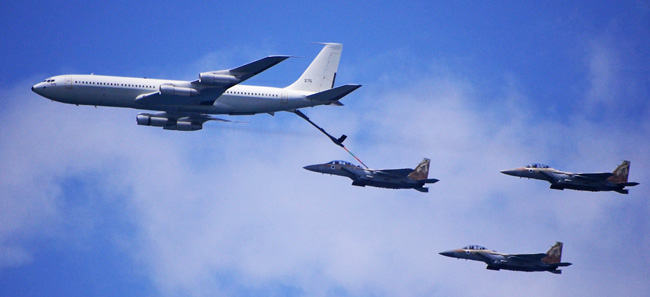
    IAF 65th Independence Day Flypast

    Boeing 707 (Reem) Flying Tanker refuelling F-15I (Raam) strike fighters. Photo: Noam Eshel
    Boeing 707 (Reem) Flying Tanker refuelling F-15I (Raam) strike fighters. Photo: Noam Eshel

    Additional photos are awaiting on our Facebook page

    Nemesis Man-Portable Missile Extends Precision Strike to 12 kilometers

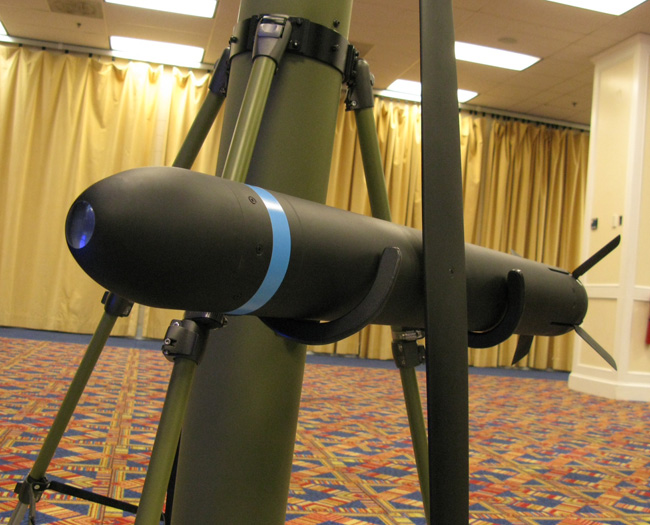
    Nemesis man-portable, vertically launched precision guided missile was developed by Lockheed Martin. The missile was displayed at the Special Operations Low-Intensity Conflict exhibition in January 2013.
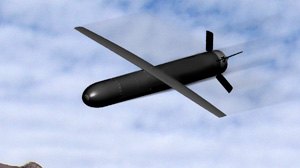
    The Nemesis weapon as modelled by Lockheed Martin.
    The Nemesis weapon as modelled by Lockheed Martin.
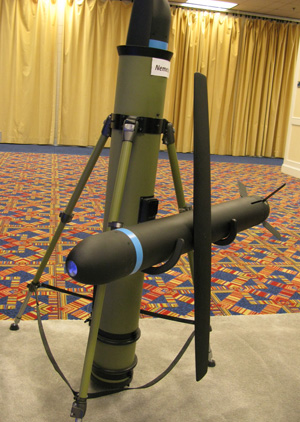
    Nemesis can be launched vertically from a carrying container/launch tube. The same weapon is also configured for carrying on small UAVs, using the standard carriage system.
    Nemesis can be launched vertically from a carrying container/launch tube. The same weapon is also configured for carrying on small UAVs, using the Common Launch Tube standard carriage system.

    Lockheed Martin performed a successful flight demonstration of a company funded lightweight, precision guided weapon called Nemesis. The company announced today it has successfully demonstrated the launch, guided flight, target acquisition and precision strike capability of its Nemesis missile in three flight tests at White Sands Missile Range, N.M. Nemesis is a man-portable, surface-launched missile that enables warfighters to engage targets with precision lethality from as close as 100 meters to well beyond line of sight. The missile can be employed during dismounted operations as well as be adapted for employment from various ground, maritime or airborne platforms.

    In the first two tests, Nemesis demonstrated vertical launch, GPS navigation to targets located at distances of eight and 12 kilometers, engagement by the missile’s semi-active laser (SAL) seeker and live warhead detonation. In both flights, Nemesis performed flawlessly, destroying the intended targets. The successful third shot demonstrated the vertical launch of an inert round, followed by GPS-only navigation to a target positioned just 100 meters away.

    Nemesis is fired vertically from its launch tube, enabling 360-degree engagement capability. A combat-proven rocket motor, deployable wing and GPS guidance enable the missile to engage targets in excess of 12 kilometers. The missile’s SAL seeker activates in the terminal phase of flight to provide precision accuracy and minimize collateral damage. The user is also able to select height of burst or point-detonation fuzing options to optimize lethality against enemy personnel, light armored vehicles and structures.

    “Nemesis provides critical performance to forward-deployed troops in response to a stated warfighter capability gap,” said Frank St. John, vice president of tactical missiles and combat maneuver systems at Lockheed Martin Missiles and Fire Control. “Warfighters must be able to trust that the weapons they deploy will deliver the intended effects every time. Our three-for-three flight tests demonstrate the missile is reliable and lethal.” Nemesis’ ability to be deployed from airborne Common Launch Tubes fulfills existing Special Operations Forces and U.S. Marine Corps requirements for a standoff precision guided munition. The missile can also be configured for internal or external carriage on other fixed- and rotary-wing platforms.

    Lockheed Martin funded the development of the Nemesis missile, building upon proven technologies from demonstrated systems, including HELLFIRE II, DAGR and Scorpion. Using components from these systems reduces risk and shortens the time from initial development to participation in government-funded flight tests.

    Nemesis man-portable, vertically launched precision guided missile was developed by Lockheed Martin. The missile was displayed at the Special Operations Low-Intensity Conflict exhibition in January 2013.
    Nemesis man-portable, vertically launched precision guided missile was developed by Lockheed Martin. The missile was displayed at the Special Operations Low-Intensity Conflict exhibition in January 2013.

    While Military Spending Falls Worldwide – China and Russia’s Spending Rises

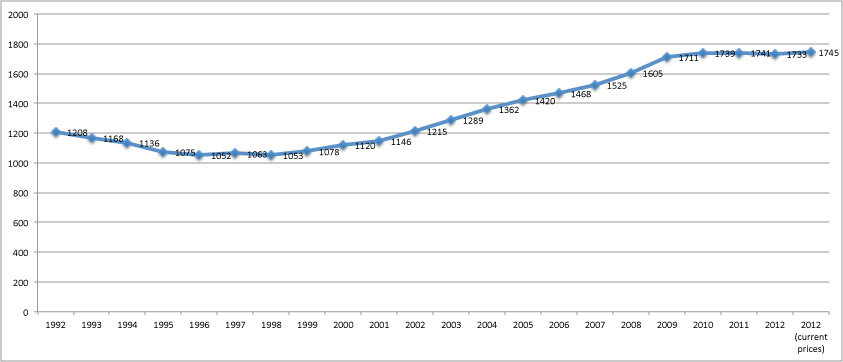
    World military expenditure totalled $1.75 trillion in 2012, a fall of 0.5 per cent in real terms since 2011, according to figures released today by Stockholm International Peace Research Institute (SIPRI).

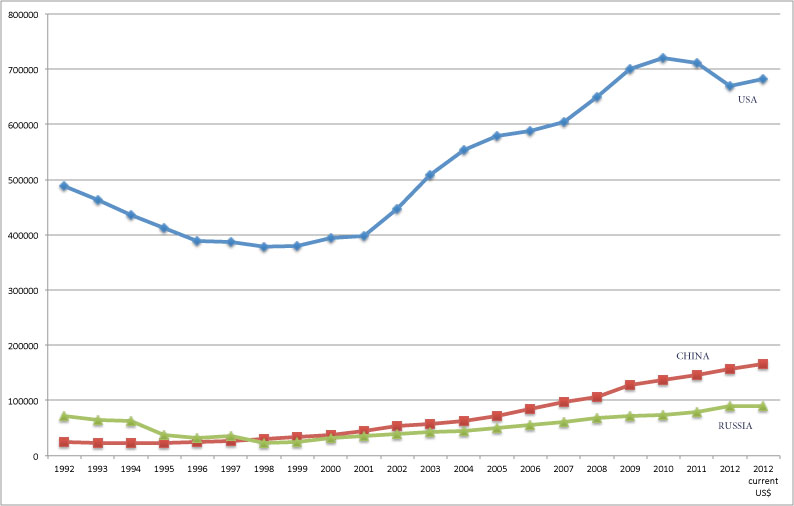
    The fall—the first since 1998—was driven by major spending cuts in the USA and Western and Central Europe, as well as in Australia, Canada and Japan. The reductions were, however, substantially offset by increased spending in Asia, Eastern Europe, the Middle East and North Africa, and Latin America. China, the second largest spender in 2012, increased its expenditure by 7.8 per cent ($11.5 billion). Russia, the third largest spender, increased its expenditure by 16 per cent ($12.3 billion).

    “We are seeing what may be the beginning of a shift in the balance of world military spending from the rich Western countries to emerging regions, as austerity policies and the drawdown in Afghanistan reduce spending in the former, while economic growth funds continuing increases elsewhere” – Dr Sam Perlo-Freeman

    Despite the drop, the global total was still higher in real terms than the peak near the end of the cold war.

    ‘We are seeing what may be the beginning of a shift in the balance of world military spending from the rich Western countries to emerging regions, as austerity policies and the drawdown in Afghanistan reduce spending in the former, while economic growth funds continuing increases elsewhere,’ said Dr Sam Perlo-Freeman, Director of SIPRI’s Military Expenditure and Arms Production Programme. ‘However, the USA and its allies are still responsible for the great majority of world military spending. The NATO members together spent a trillion dollars.’

    Global Military Expenditure in constant US dollars, 1992–2012 - Source: Sipri
    Global Military Expenditure in constant US dollars, 1992–2012 – Source: Sipri

    The USA: wars ending, cuts biting

    In 2012 the USA’s share of world military spending went below 40 per cent for the first time since the collapse of the Soviet Union. A declining trend that began in 2011 accelerated in 2012, with a drop in US military spending of 6 per cent in real terms to $682 billion.

    The decline is mostly the result of reduced war spending, which fell from $159 billion in FY 2011 to $115 billion in FY 2012, and is set to continue its downward course, with only $87 billion requested for 2013.

    US military spending in 2012 was also projected to be $15 billion lower than previously planned as a result of cuts to the Department of Defense linked to the 2011 Budget Control Act. The bulk of cuts under this legislation will begin in 2013.

    A wider slowdown

    Austerity policies also caused falls in military spending in most of Europe in 2012. Since the 2008 global financial crisis, 18 of the 31 countries in the European Union or European NATO have cut military spending by more than 10 per cent in real terms.

    Top 3 Global Military Spenders - 1992 - 2012 (million US$) |  Source: SIPRI
    Top 3 Global Military Spenders – 1992 – 2012 (million US$) | Source: SIPRI

    Even in those parts of the world where spending has increased, the effects of the economic crisis can still be seen: slowing economic growth in emerging regions has led to slower rates of growth in military spending. Only the Middle East and North Africa increased their rate of military spending between 2003–2009 and 2009–2012.

    The average annual rate of military spending increase in Asia, for instance, has halved from 7.0 per cent per year in 2003–2009, to 3.4 per cent per year in 2009–2012. The slow-down was most dramatic in Central and South Asia, where military spending was growing by an average of 8 per cent per year in 2003–2009, but by only 0.7 per cent a year since 2009, and actually fell in 2012, by 1.6 per cent.

    ‘All the indications are that world military spending is likely to keep falling for the next two to three years—at least until NATO completes its withdrawal from Afghanistan at the end of 2014,’ said Dr Perlo-Freeman, ‘However, spending in emerging regions will probably go on rising, so the world total will probably bottom out after that.’

    Notable regional developments

    • Military expenditure in Asia and Oceania rose by 3.3 per cent in 2012. Large increases were seen in Viet Nam, where tensions with China are prompting major naval purchases, and in Indonesia. Spending in India decreased by 2.8 per cent.
    • Military spending increased sharply across North Africa, by 7.8 per cent in real terms, the result of both ongoing military modernization and concern over terrorist groups in the Sahel. Military spending in sub-Saharan Africa fell by 3.2 per cent.
    • Military spending in the Middle East rose by 8.4 per cent rise in 2012. The largest percentage increase worldwide in 2012 was by Oman (a 51 per cent rise). Saudi Arabia also increased spending by 12 per cent. Spending by Iran, Qatar, Syria and the United Arab Emirates is unknown.
    • In Latin America military spending increased by 4.2 per cent in 2012. The largest increases were by Paraguay (43 per cent) and Venezuela (42 per cent). The increasing role of the military in combating drug cartels pushed Mexico’s spending up by 9.7 per cent.
    • Military spending in Eastern Europe increased by 15.3 per cent in 2012, the largest regional increase. Besides Russia, Ukraine also increased its spending substantially—by 24 per cent.

    N.B.: All percentage increases and decreases are expressed in real terms (constant 2011 prices).

    The comprehensive annual update of the SIPRI Military Expenditure Database is accessible from today at SIPRI. SIPRI’s research on military spending monitors developments in military expenditure worldwide and maintains the most comprehensive, consistent and extensive data source available on military expenditure. Military expenditure refers to all government spending on current military forces and activities, including salaries and benefits, operational expenses, arms and equipment purchases, military construction, research and development, and central administration, command and support. SIPRI therefore discourages the use of terms such as ‘arms spending’ when referring to military expenditure, as spending on armaments is usually only a minority of the total.

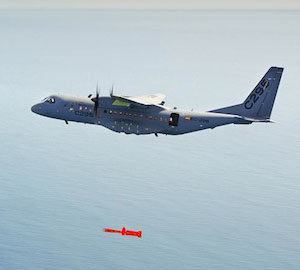
    Airbus Military Test MBDA Marte MK2/S Anti-Ship Missile with C295

    Airbus Military and MBDA have successfully demonstrated the release of an instrumented Marte MK2/S anti-ship inert missile installed under the wing of the C295 maritime patrol aircraft. The installation of weapons under the wings provides new operational capabilities to the C295 MPA allowing the aircraft to perform new missions demanding by the customers. In the anti-submarine warfare (ASW) role, the C295 is already in-service carrying the MK46 torpedo.

    This flight was the last of a series of trials performed in a joint Airbus Military – MBDA collaboration to validate the aerodynamic integration of Marte on C295, its handling qualities and performance tests. This successful trial provides further proof of the operational versatility of the Marte missile and clearly establishes it as the benchmark weapon in the medium weight anti-ship missile sector.

    The Marte Mk2/S is a fire-and-forget, all-weather, medium-range sea-skimming anti-ship missile. The weapon is already integrated on the AW-101 and the NFH (Naval NH90) helicopters in service with the Italian Navy and integration activities for the Marte ER on the Eurofighter Typhoon are currently underway.

    The missile is equipped with inertial mid-course guidance and radar homing terminal guidance, and capable of destroying small vessels and heavily damaging major vessels. The missile has a weight of 310 Kg and is 3.85 m long.

    Pacific Allies on High Alert for Pyongyang’s Next Move

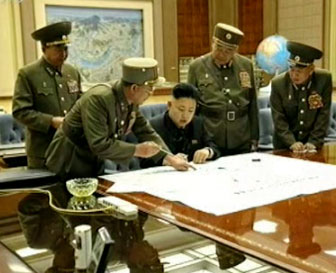
    From left to right: Col.-Gen. Ri Yong Kil, Director of Operations Bureau of KPA General Staff Department, Lt.-Gen. Kim Rak Kyom, Commander of KPA Strategic Rocket Forces, Kim Jong Un, General Hyon Yong Chol, Chief of KPA General Staff Department, and General Kim Yong Chol, Director of KPA General Reconnaissance Bureau (Photo from KCTV)
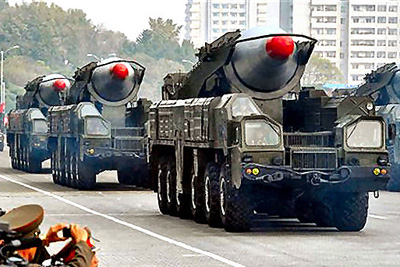
    North Korean Musudan medium-range ballistic missiles on a march. Photo: AP
    North Korean BM25 Musudan medium-range ballistic missiles on a march. Photo: AP

    South Korean and US force have heightened their alert status in the belief that North Korea intends to initiate a missile launch in the very near future. The US-South Korean Combined Forces Command (CFC) raised their Watch Condition, commonly known as “Watchcon,” from Level 3 to Level 2 indicating that a vital threat exists. The lowest alert status used by CFC is Watchcon 4 in effect in normal peacetime situations, Watchcon 3 is ordered when an important threat exists, and Watchcon 1 is reserved for wartime conditions. The Watchcon system deals only with surveillance preparedness and is separate from the Defense Condition (Defcon) alert system.

    Latest intelligence indicates that the North Korean People’s Army (KPA) has completed preparations for multiple missile launches that might include short-range Scuds, medium-range Rodong-1s, and the new intermediate-range BM25 Musudan missiles. No evidence has been uncovered to indicate the Taepodong-2 intercontinental ballistic missiles (ICBM) have been readied for launching.

    According to the US Department of Defense, the United States is striving to maintain a continuous satellite presence over the area since satellite imagery accounts for the bulk of intelligence available to analysts for use in identifying and classifying North Korean movements. In recent days, inclement weather conditions over the Peninsula have hampered analysts in their attempt to develop a more detailed overview of what the North may be planning.

    An analysis of the limited imagery that is available seems to indicate that the redeployed missiles under surveillance have been fueled and can be launched at almost any time.

    South Korean and US intelligence sources have identified two BM25 Musudan in position aboard mobile launchers in the Wonsan area of the North’s eastern Gangwon Province and four or five Transporter Erector-Launchers (TEL) located in the eastern provinces of South Hamyeong and Gangwon along the coast of Donghan Bay. The TELs in the Donghan Bay area are believed to be mounting Scuds, Rodong-1s, or both.

    Pyongyang has a history of conducting simultaneous multiple missile launches that adds further credence to the belief multiple launches have been planned. On 5 July 2006, the North launched a Taepodong-2, four Scuds, and two Rodong-1 missiles on the same day. This was the first known launch of the Taepodong-2 and the missile reportedly failed 35 to 40 seconds after liftoff. On 4 July 2009, Pyongyang repeated the multiple launch scenario when the KPA conducted a simultaneous launch of five Scuds and two Rodong-1 missiles.

    Not much is known about the Musudan and some analysts declared it to be nothing more than an elaborate prop when it first appeared during a military parade in October 2010. The missile has never, to anyone’s knowledge, been tested, but it is believed to have a range of 2,500 to 4,000 kilometers and is estimated to be capable of carrying a warhead of 1,000 to 1,250 kilograms. It is possible the missile can be fitted with a nuclear warhead as well as conventional munitions. North Korea’s Scud-D (Hwasong-7) missiles have a range of 700 to 800 kilometers while the Rodong-1 missiles can reach out between 1,300 and 1,500 kilometers. However, analysts say these missiles can be configured to vary their range with adjustments to launch angle and fuel load.

    At present, the US Navy has three Arleigh Burke-class guided-missile destroyers on station in the waters around the Korean Peninsula along with two South Korean Aegis guided-missile destroyers deployed to the east and the west of the Peninsula. Japan has also dispatched at least two Aegis guided-missile destroyers to the Sea of Japan with a third expected to take up station in a more southerly location soon.

    These Aegis destroyers are equipped with the Aegis Ballistic Missile Defense System (ABMD) designed to shoot down enemy ballistic missiles using Lockheed Martin’s Aegis Weapon System and the Raytheon RIM-161 Standard Missile 3 (SM-3).

    The CFC has three sophisticated radar systems available to detect, track, and target North Korean missile launches. Airborne surveillance is being provided by Boeing 737 Airborne Early Warning and Control (AEW&C) aircraft dubbed “Peace Eye.” At sea, the Aegis destroyers are fitted with Lockheed Martin’s AN/SPY-1D advanced radar capable of simultaneously tracking as many as 100 targets at long range.

    On the ground, the CFC has the Israeli-designed EL/M-2080 Green Pine ground-based missile-defense radar on watch. The Green Pine system is a transportable Active Electronically Scanned Array (AESA) radar reportedly capable of tracking more than 30 targets simultaneously at a range of approximately 500 kilometers.

    In addition to all these resources, it is believed that the United States has also deployed its sea-based X-Band Radar vessel, SBX-1, to the western Pacific. The SBX-1 features an AESA radar mounted on a semi-submersible floating drilling rig capable of withstanding the harsh conditions commonly encountered in the open sea. A one-of-a-kind vessel, the SBX-1 has a detection range of 4,700 kilometers and is designed to feed tracking data to seaborne and land-based anti-missile batteries to effect a shoot down if appropriate.

    These surveillance resources allow the Pacific allies to detect and track a missile launch almost immediately and project an estimated trajectory within minutes. If the estimated trajectory appears to be a danger to allied territory or populations, it is expected that anti-missile batteries would be ordered to shoot the missile down. Should the projected trajectory appear to be only a test that represents no danger, it is likely the missile would be allowed to complete its flight.

    The commander of US Pacific Command, Admiral Samuel Locklear, recently testified before a US Senate Armed Services Committee hearing regarding Pacific defense capabilities. Admiral Locklear assured the assembled Senators that the United States and her allies were prepared for any scenario, including a simultaneous multiple missile launch, and were fully prepared to intercept and destroy any missile or missiles the North might fire should they present a danger to life or property.

    Although evidence is lacking, a likely launch date may be planned to coincide with the North’s anniversary celebration to honor the birth of the nation’s founder, Kim Il-sung, on 15 April. Preparations are now underway in the North to mark this date in apparent disregard of the intense discomfort of the current situation. This commemoration is one of the most important holidays in the North and could be considered an ideal opportunity for Kim Jong-un to dazzle the populace with an unprecedented demonstration of Pyongyang’s military might.

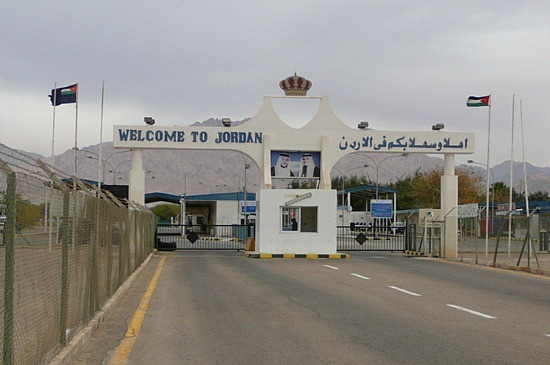
    Raytheon to Establish Border Surveillant Systems on the Jordanian Border

    Raytheon Company announced it has won a contract to implement an integrated surveillance system along parts of the Jordanian border, under a US$35.9 million contract awarded by the U.S. Defense Threat Reduction Agency (DTRA) border security. The work will span over three years and include the planning and implementation of the system, as well as training, maintenance and repair.

    Raytheon has performed cooperative threat reduction work for DTRA under a number of contracts. The Cooperative Threat Reduction (CTR) Integrating Contract (CTRIC II), awarded in April 2011, is a multiple award indefinite delivery, indefinite quantity contract, and the Jordan project is part of CTRIC II.

    Brazil’s GUARANI to Replace EE-11 URUTU Armored Vehicles by 2015

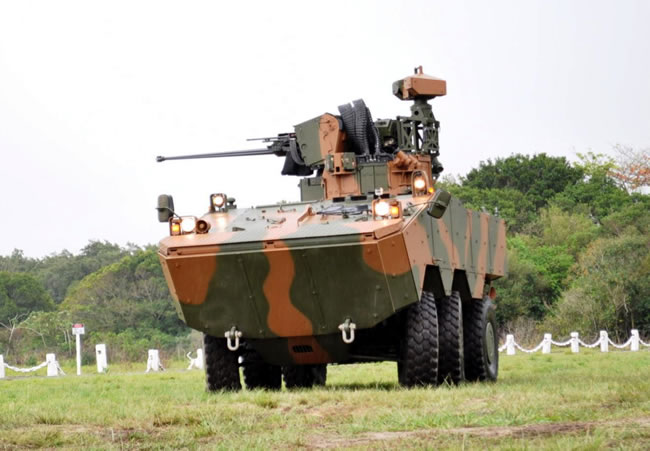
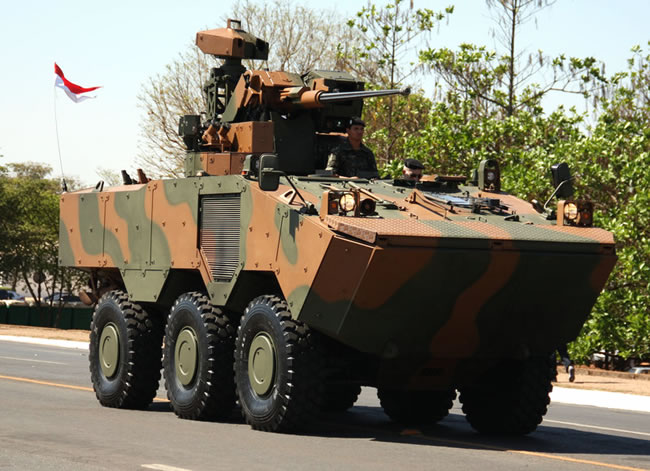
    The Brazilian Army has already inducted over 86 VBTP-MR GUARANI 6x6 APCs armed with remote weapon stations. The Brazilian Army plans to induct additional 2,044 units by 2030.
    The Brazilian Army has already inducted over 86 VBTP-MR GUARANI 6x6 APCs armed with remote weapon station under the URUTU-3 modernisation programme to replace their EE-11 URUTU by 2015.
    The Brazilian Army has already inducted over 86 VBTP-MR GUARANI 6×6 APCs armed with remote weapon station under the URUTU-3 modernisation programme to replace their EE-11 URUTU by 2015.

    One of the leading displays at Brazil’s LAAD exhibition opening today is the GUARANI project new VBTP-MR, a combat armored vehicle at full recommended weight (GVW) of 18-20 ton, supporting amphibious capacity up to 17.5 tonnes. It will be powered by a FPT diesel engine coupled to an automatic gearbox, and is designed to carry a crew of 10 dismounts plus the driver. The vehicle is designed to fit into a C-130 Hercules or forthcoming Brazilian KC-390 transport aircraft.

    The Brazilian Army has already inducted over 86 VBTP-MR GUARANI 6×6 APCs armed with remote weapon station under the URUTU-3 modernisation programme to replace their EE-11 URUTU by 2015. The Brazilian Army plans to induct additional 2,044 units of the VBTP-MR GUARANI 6×6 APCs by 2030. Development and manufacturing of the VBTP-MR is being carried out jointly by the Brazilian Army, through the project Mobility Strategy and the DCT – Department of Science and Technology and Iveco.

    VBTP-MR can be fitted with a variety of remote-controlled weapon stations for additional firepower, the model selected by the Brazilian Army is Elbit Systems’ ORCWS UT-30BR, mounting a 30mm cannon with provisions to carry additional anti-tank missiles. Standard UT-30BR armament is a 30mm cannon, 7.62mm co-axial machine gun, and smoke grenades, along with a panoramic commander’s sight and a laser warner. Elbit System’s Brazilian subsidiary Ares Aeroespacial e Defensa announced in October 2012 a $25 million contract to supply its stabilised REMAX remote weapon stations to the Brazilian Army. This is the first production order, and deliveries will be made from 2012-2014. REMAX was designed to be part of the VBTP programme, and seems to be characterised by a simple and easy to maintain design. The RCWS has already completed testing, and can also be mounted on other vehicles.

    The Brazilian Army has already inducted over 86 VBTP-MR GUARANI 6x6 APCs armed with remote weapon stations. The Brazilian Army plans to induct additional 2,044 units  by 2030.
    The Brazilian Army has already inducted over 86 VBTP-MR GUARANI 6×6 APCs armed with remote weapon stations. The Brazilian Army plans to induct additional 2,044 units by 2030.

    Boeing’s ‘Phantom Phoenix’ Introduce Medium, Small and Nano Satellites

    Small satellite prototypes that can quickly and affordably be manufactured and configured for specific missions are under development at Boeing. The satellites are part of a program called ‘Phantom Phoenix’ designed to introduce affordable, quick reaction access to space for intelligence, surveillance and reconnaissance to planetary science.

    “Our customers need greater mission flexibility from smaller satellites that can be built more affordably, and delivered more quickly, without sacrificing quality,” said Boeing Phantom Works President Darryl Davis. “Building upon the success Boeing has had with expanding our 702 satellite family, we’ve rapidly developed a line of satellites to address the market between large geosynchronous spacecraft and nanosatellites.” The different satellites share common architecture, flight software and simplified payload integration options.
    Equipped with tailored avionics and selective redundancy options, the satellites meet mission requirements for reliability and service life at an affordable cost. The satellites also feature high autonomy, streamlined operations and low-risk integration. Boeing will conduct initial technology development in Huntington Beach, Calif.

    Phantom Phoenix prototypes are configured in three categories ranging from 500-1000 medium class to 4 kilogram nano-satellite platform. these satellites will be designed for all major launch vehicles.

    The largest variant in the family is Phantom Phoenix – a 500 to 1,000 kg medium-class satellite designed for launch as a single payload or in tandem. Phantom Phoenix ESPA is a 180 kg ESPA-class satellite that can be attached to a common interstage adapter allowing for the launch of more than one satellite at a time. Up to six such small satellites could be deployed during a single mission, reducing launch costs. The smallest of the family is Phantom Phoenix Nano available in 4 to 10 kg nanosatellite configurations. Such nanosatellites offer highly affordable sensor technology for science and weather missions.

    Boeing [NYSE: BA] is developing a family of small satellite prototypes, called Phantom Phoenix, that can quickly and affordably be manufactured and configured for specific missions. Image: Boeing
    Boeing [NYSE: BA] is developing a family of small satellite prototypes, called Phantom Phoenix, that can quickly and affordably be manufactured and configured for specific missions. Image: Boeing

    Skunk Works and XTEND Simplify Multi-Drone Command

    0
    Lockheed Martin Skunk Works® and XTEND have achieved a major milestone in JADC2 by integrating the XOS operating system with the MDCX™ autonomy platform. This technical breakthrough enables a single operator to simultaneously command multiple drone classes, eliminating the friction of mission handoffs. From "marsupial" drone deployments to operating in GPS-denied environments, explore how this collaboration is abbreviating the data-to-decision timeline and redefining autonomous mission execution.

    From Ukraine to Taiwan: The Global Race to Dominate the New Defense Tech Frontier

    0
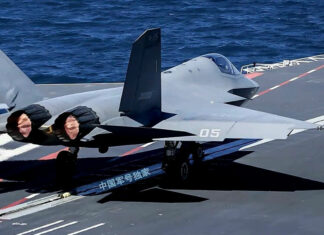
    As traditional defense primes face mounting competition from agile “neoprimes” such as Anduril, Palantir and Helsing, the balance of innovation is shifting toward software-defined warfare and scalable, dual-use technologies, while global industry consolidation—marked by Boeing’s integration of Spirit AeroSystems and other strategic mergers—signals an intensified race to secure control over the defense technology value chain. Our Defense-Tech weekly report highlights these trends.

    Europe’s “Drone Wall”

    0
    In early October 2025, a coordinated wave of unmanned aerial system (UAS) incursions—widely attributed to Russia—targeted critical infrastructure across at least ten European nations. The unprecedented campaign exposed the fragility of Europe’s air defenses...

    Weekly Defense Update & Global Security Assessment

    0
    Executive Summary The past week (September 18-25, 2025) represents an inflection point where strategic defense concepts have transitioned from doctrine to tangible reality. An analysis of global events reveals four primary, interconnected trends shaping an...

    U.S. Air and Space Forces Push Next-Gen Programs at the AS&C 2025 Conference and...

    0
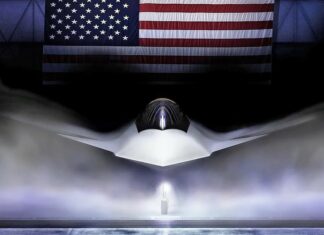
    At the 2025 Air, Space & Cyber Conference, U.S. Air Force and Space Force leaders unveiled major updates on next-generation fighters, bombers, unmanned systems, and space initiatives, highlighting both rapid innovation and critical readiness challenges as the services race to outpace global competitors. A short version is available here, with a more detailed version for subscribers.

    TADTE 2025: Reflecting Taiwan’s Strategic Themes

    0
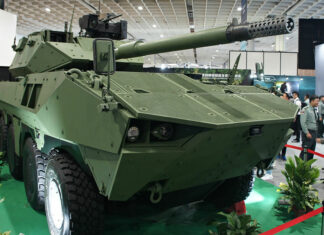
    The Taipei Aerospace & Defense Technology Exhibition (TADTE) 2025 crystallized around four dominant strategic themes that collectively illustrate Taiwan's comprehensive approach to defense modernization amid escalating regional tensions. Based on a detailed report by Pleronix (available upon request). Includes a Podcast discussion on TADTE 2025's highlighting Taiwan's four strategic themes beyond the post's coverage.

    Iron Beam 450 Completes Testing, Soon to Join With Operational Air Defense Units

    0
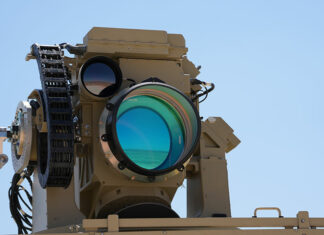
    Israel’s Iron Beam 450 high-power laser system has completed final testing, marking a major leap in air defense. Developed by Rafael, it offers precise, cost-effective interception of rockets, UAVs, and mortars, and is set for IDF deployment by 2025.