
Monday, December 29, 2025
More
    Home Blog Page 162

    Indian Air Force’s first Pilatus PC-7 Mk II – Face Off!

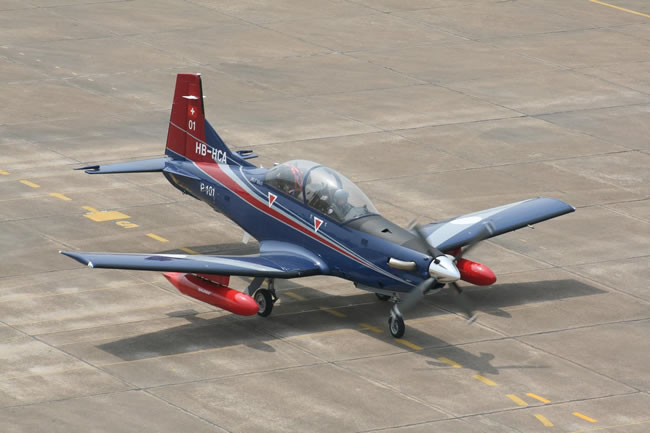
    One of the two Pilatus PC-7 MkII that arrived in India last week.
    One of the two Pilatus PC-7 MkII that arrived in India last week.
    One of the two Pilatus PC-7 MkII that arrived in India last week.

    The Indian Air Force’s first Pilatus PC-7 Mk II trainer flew into India on the eve of Aero India 2013. This aircraft (tail number P101), which has, somewhat unusually, retained Pilatus company house colours, was flown to AFS Yelahanka on the morning of 5 February. In the cockpit were Pilatus test pilot Stefan Greub, along with Sqn Ldr S Mitra of the IAF. Delivery of the last batch of 75 PC-7s on order will be completed by end-2015. Reacting to reports that this batch will be followed either by orders for additional aircraft directly from Pilatus or that HAL will undertake licence production of the type in India, an IAF officer has said that there was no provision in the existing contract for the latter option. This hints at a face off between the IAF whose requirement for basic training aircraft totals 181 units, and HAL which is currently engaged in designing its HTT- 40 turboprop basic trainer against the Air Staff Requirement issued to it by the IAF. Chairman HAL has stated that design and development of the HTT-40 is proceeding and Vayu learns that metal cutting is to begin “shortly.”

    Visit Elbit Systems at Aero-India
    Elbit Systems at Aero-India

    Design engineers at HAL’s ARDC are confident that the HTT-40 will not only meet the IAF’s requirements fully, but also that the type would have considerable advantages over the Pilatus aircraft. Scoffing at “rumours” that the HTT-40 is more expensive than the PC-7 Mk II, a HAL executive said that while the Pilatus costs Rs 37 crore per unit, the HTT-40 would be for Rs 34.5 crore per unit, of which only the powerplant and ejection seats are imported at an FE of Rs 6 crore. Most importantly, while the Swiss government forbids employment of any armament on its aircraft, the indigenous equivalent will have six weapon stations underwing and a centreline station for a targeting/reconnaissance pod. The IAF could certainly employ the indigenous trainer for light attack and COIN tasks as a secondary role. The Air Chief, however, has been vocal in his rejection of the HTT-40, saying that there was “no need for it.” Further, he said “we have the Pilatus PC-7. It’s a proven aircraft. The project HAL plans is from scratch. Our indications are that the costs will be too high. There is no need for all this.” Chairman HAL stated in his interview with Vayu, “most of the preliminary design, including configuration studies and sizing, cockpit layout and wind tunnel model testing have been completed… any cost comparison with other basic trainers should be on the basis of life cycle costs, ensuring maintenance support for the next 30 years, in which HAL will be competitive.”

    For a different view, check Shiv Aroor’s recent post at Livefist
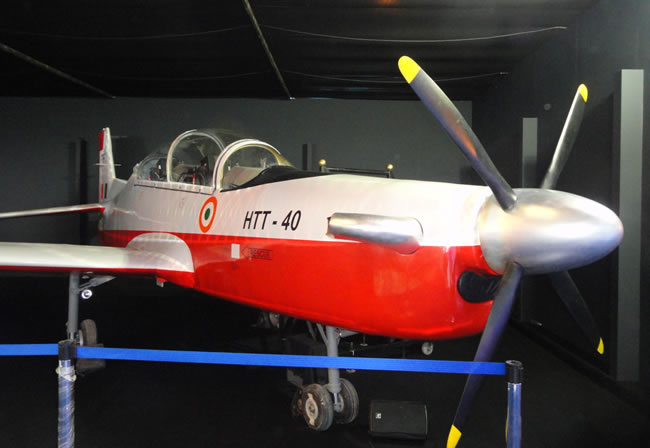
    Could the IAF reluctance to endorse the domestic version for the HTT-40 based on the model on display? We doubt it is that simple...
    Could the IAF reluctance to endorse the domestic version for the HTT-40 based on the model aircraft on display at HAL’s pavilion? If that was so simple…

    PMF vs AMCA – Indigenuity At What Cost? (Updated)

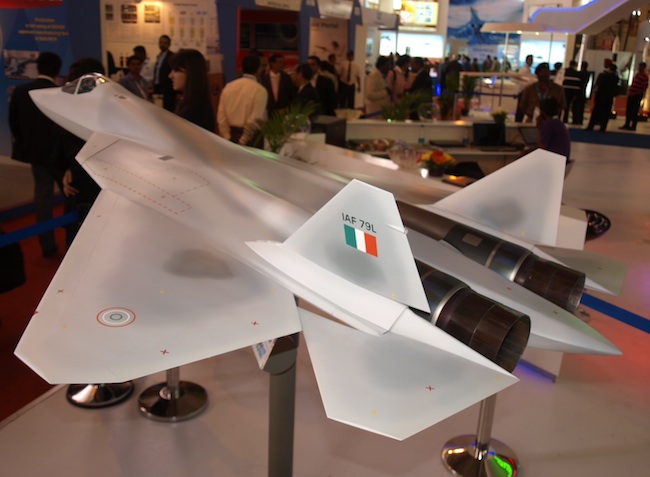
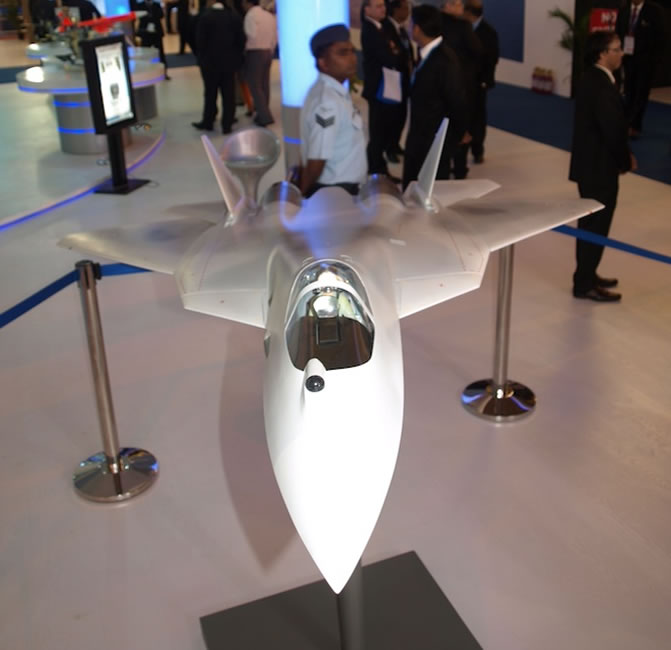
    Another view of the T-50/PAK-FA in Indian Colors.
    The model welcoming you at the HAL hall - the real thing will land here by 2015! Photo: Tamir Eshel, Defense Update
    The model welcoming you at the HAL hall – the real thing will land here by 2015! Photo: Tamir Eshel, Defense Update

    In pride of place at the entrance of HAL’s dominant presence in Hall E at Aero India is a model of the Sukhoi T-50 PKA-FA 5th generation fighter aircraft, now being referred to as the Perspective Multirole Fighter (PMF). Chairman HAL, Dr RK Tyagi, during his press conference on 7 February stated that the project definition phase (PDP) of this joint Indo-Russian program would be completed by March 2013 as HAL engineers are currently positioned with their Russian counterparts, preparing drawings and translation of documentation to Western equivalents. Vayu reports from Aero-India 2013.

    Another view of the T-50/PAK-FA in Indian Colors.
    Another view of the T-50/PAK-FA in Indian Colors.

    The first of three PMF prototypes allocated to India will be positioned at HAL Nasik in 2015, followed by the second in 2017, and third in 2018. These test and development aircraft will be subject to flight evaluation and extensive trials by the IAF, followed by selection of systems, which also differ from the Russian variant.

    Production of the PMF will be the responsibility of HAL’s Nasik Division, which will manufacture the airframe, carry out final assembly and conduct flight-testing. The definitive powerplant (as distinct from the current engines on the prototypes) will be produced at HAL Koraput. The first Indian-manufactured PMF will fly in 2022, with deliveries to the Indian Air Force to follow thereafter.

    Visit Elbit Systems at Aero-India
    Elbit Systems at Aero-India

    However, there is considerable debate on the practicability of near-simultaneous development of two fifth-generation fighters for the IAF, the PMF in a sense ‘competing’ with India’s Aeronautical Development Agency (ADA)’s Advanced Medium Combat Aircraft (AMCA). Concerns range from duplication of effort to whether India has the resources (both monetary and technical) to carry out both programs through to fruition.

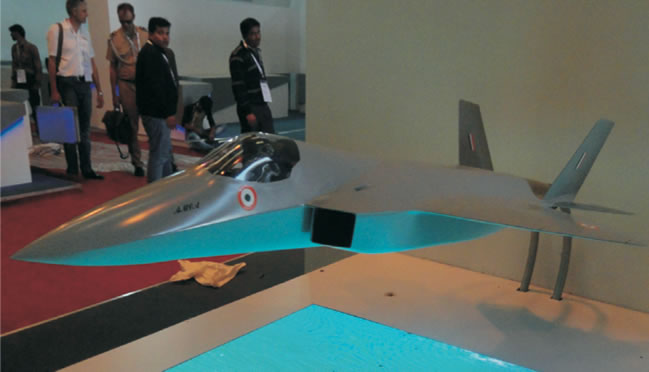
    Advanced Medium Combat Aircraft - ACMA, to be designed by the ACA
    Advanced Medium Combat Aircraft – AMCA, to be designed by the ADA

    We have added the following details from the presentation provided by HAL at the event. This extra is available as a premium content reserved for our subscribers.

    Rudra Growing Claws

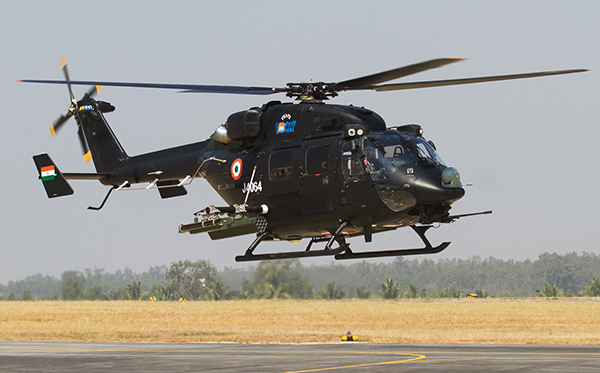
    The attack version of indigenously-built Advanced Light Helicopter (ALH) ‘Rudra’. Credit: Angad Singh
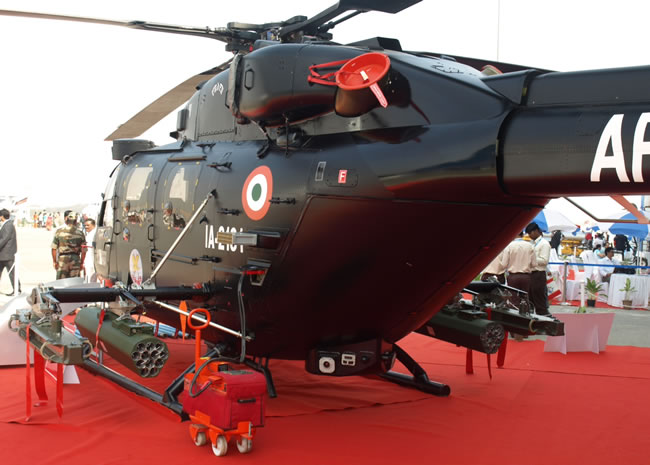
    The ALH Mk.IV IWA 'Rudra' shown with its weapon complement at Aero-India 2013
    The ALH Mk.IV WSI ‘Rudra’ shown with its current weapon complement at Aero-India 2013. The weapons include the M621 20mm automatic cannon, Mistral Air/Air missiles, 30 mm gun and ammo and unguided 68mm rockets.

    Hindustan Aeronautics Ltd. (HAL) has received the initial operational clearance (IOC) for its Advanced Light Helicopter Mk.IV-WSI named as the ‘Rudra’. Dr. K. Tamilmani, CEO, Centre for Military Airworthiness and Certification (CEMILAC) presented the certificate to HAL at a function in Bangalore last week. Speaking on the occasion, Dr. Tamilmani stresses that potential for helicopters in India remains ‘massive’ and the country has the ability to meet technical challenges on this front.

    Mr. P. Soundara Rajan, Managing Director of HAL Helicopter Complex, stated that integration of multiple weapon systems simultaneously is a complicated task. “In this particular case it involved four major groups of systems and weapons, involving eight countries: Israel, France, Belgium, South Africa, Germany, Italy, USA and India. Nearly 23 kilometers of cables had been laid and hundreds of hours in flight and ground tests were carried out.” The Indian Army has already received considerable numbers of the Advanced Light Helicopter (ALH), most of it being Mk.IIIs which are formed into a number of utility helicopter squadrons, deployed in various operational areas in northern and eastern India, including at very high altitude bases in Ladakh. The Mk.IV Rudra will endow major strike power to formations on the western borders.

    IAI_AERO-125X125The helicopter on display here at Aero-India 2013 displays the entire weapon mix currently configured for the platform. This armament is currently limited to a chin-mounted Nexter 20mm M621 cannon mounted onto a THL 20 turret, 70mm rockets in four pods and four MBDA Mistral short-range air/air missiles. The Helicopter will carry up to eight anti-tank missiles – the Helicopter NAG (HELINA) missiles are planned. These weapons have been selected for the helicopter as a typical ‘arranged marriage’, when both platform and missile were too young and premature do decide upon. While the ALH has grown up and matured, NAG still lags behind and the Indian Army will have to take a decision soon, if it continues to commit to HELINA or move to one of the alternatives currently awaiting decision – PARS 3LR from MBDA or Spike ER from Rafael.

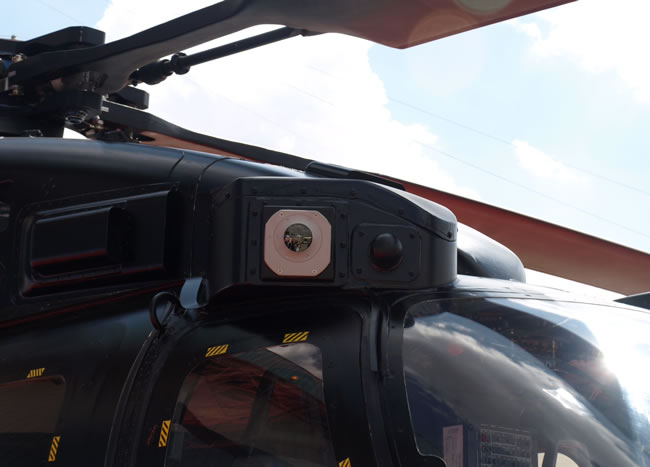
    The COMPAS stabilized multi-sensor payload from Elbit Systems provides the eyes for the helicopter's weapons. Photo: Tamir Eshel, Defense Update
    The COMPAS stabilized multi-sensor payload from Elbit Systems provides the eyes for the helicopter’s weapons. Photo: Tamir Eshel, Defense Update

    The cockpit represents an advanced glass-cockpit layout, with large area multiple MFDs and helmet displays. Mounted over the beek-like nose is the stabilized multi-sensor COMPASS payload, providing the crew the imagery necessary for reconnaissance and target acquisition. COMPASS, developed by Elbit Systems,  incorporates daylight and thermal cameras with powerful zoom, and three different lasers – a rangefinder, target designator and IR laser pointer, assisting in covert air/ground coordination.

    Saab's Integrated defensive Aids System (IDAS-3) protects the Rudra from various types of anti-aircraft threats. Photo: Tamir Eshel, Defense-Update
    Saab’s Integrated defensive Aids System (IDAS-3) protects the Rudra from various types of anti-aircraft threats. Photo: Tamir Eshel, Defense-Update

    The helicopter is fitted with an integrated defensive aids system (IDAS-3) from SAAB, which delivered the system’s components while the aircraft integration was provided by HAL. IDAS-3 utilizes UV missile approach warning sensors, LWS-310 laser warning sensors and RWS-300 radar warning receivers and flare dispensers. Two units are clearly visible on the upper cockpit sides.

    rudra_rear_view
    A rear view of the Rudra showing the questionably odd placement of the defensive aid system, in a position that does not have good coverage against elevated threats, nor would it benefit from back blasts caused by repeated firing from the side rails.

    For more photos check this gallery at: Livefist.

    The attack version of indigenously-built Advanced Light Helicopter (ALH) ‘Rudra’. Credit: Angad Singh
    The attack version of indigenously-built Advanced Light Helicopter (ALH) ‘Rudra’. Credit: Angad Singh

    Tata Power SED, Rockwell Collins Team to Win the Indian Air Force Software Defined Radio Program

    Rockwell Collins and Tata Power Strategic Engineering Division (Tata Power SED) are teaming to jointly pursue of the Indian Air Force Software Defined Radio program due for selection in the near future. “This announcement formalizes what has been a long-standing and positive working relationship with Tata Power SED and will provide the Indian Air

    Visit Elbit Systems at Aero-India
    Elbit Systems at Aero-India

    Force with advanced air and ground connectivity to meet their requirements.” Ram Prasad, managing director of Rockwell Collins India commented, “This relationship is very strategic in nature and would provide Indian defense an access to state-of-the-art technology.” he added. For the Indian Air Force program, Rockwell Collins is providing a digital radio architecture that allows easy reprogramming with different waveforms and operating modes through the use of digital signal processing technology.

    Under the terms of the agreement, Tata Power SED is the prime contractor and Rockwell Collins will provide technology for the team’s software defined radio offering. “With this collaboration, we bring to India a proven hi-tech communication technology with indigenous security, platform and system engineering as a trustworthy solution” Rahul Chaudhry, CEO of Tata Power SED commented. If selected, the team of Tata and Rockwell Collins plan to perform the majority of the program effort in India, providing faster delivery times, as well as more responsive in-country service and support for the customer.

    Bharat Forge and Elbit Systems to Establish a JVC for Artillery Systems in India

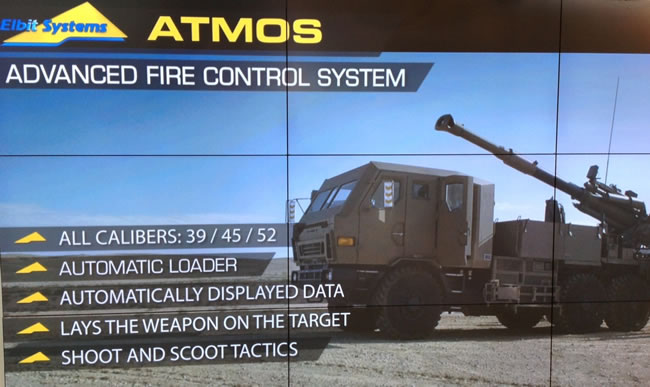
    Elbit Systems ATMOS gun provides an autonomous, highly manoeuvrable and advanced artillery system
    Elbit Systems ATMOS gun provides an autonomous, highly manoeuvrable and advanced artillery system

    Elbit Systems and Bharat Forge Limited announced today plans to establish a Joint Venture Company (JVC) to address the Indian Ministry of Defence and other potential Indian government customers’ requirements for advanced artillery and mortars systems solutions. in addition to addressing current programs and operationally proven systems the JVC will also address future looking programs, including the Advanced Indian Gun System.

    Visit Elbit Systems at Aero-India
    Elbit Systems at Aero-India

    “The Strategic Cooperation between Elbit Systems and Bharat Forge, and specifically the JVC, will address Indian defence requirements with operationally proven systems from Elbit Systems that have been customized and adapted for Indian conditions and manufactured at the World class manufacturing facility for end-to–end solutions for artillery systems and armored vehicles upgrades established by Bharat Forge recently in India,” said Mr. Baba Kalyani, Chairman and Managing Director of Bharat Forge Limited.

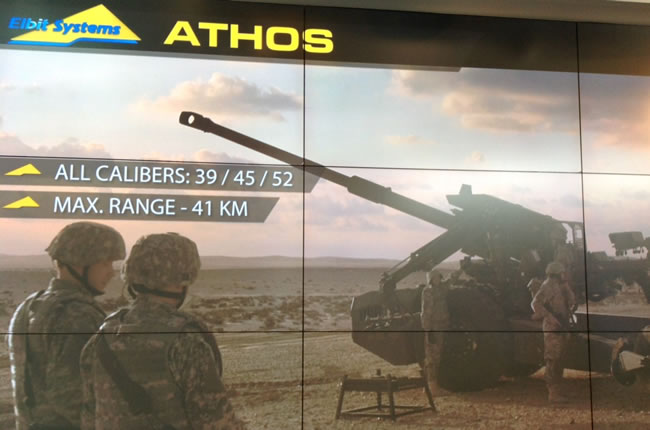
    The JVC will offer solutions in the artillery guns and mortars segment based on Elbit Systems’ operationally proven portfolio, which currently includes systems such as the ATHOS 155/52 Towed Gun System, the ATMOS 155/52 Mounted Gun System and the upgraded 130 mm M46 Gun to a 155/45 Gun (KARAN). The JVC will also role out a range of futuristic products like the Advanced Indian Gun System.

    athos
    Elbit Systems’ ATHOS towed howitzer system

    Mr. Bezhalel (Butzi) Machlis, Elbit Systems’ Executive Vice President – President and CEO Designee, and formerly General Manager of Elbit Systems Land and C4I Division, noted: “We believe that offering innovative solutions, based on our combined vast operational experience and technological capabilities will position the JVC as a leading supplier to the Indian Ministry of Defence and other potential Indian government customers”.

    Bharat Forge Limited, the flagship company, of the Kalyani Group, and Elbit Systems Land and C4I Ltd., a wholly owned subsidiary of Elbit Systems Ltd., The JVC will bring together Elbit Systems’ cutting edge technology and system integration capabilities and Bharat Forge’s advanced capabilities in the areas of design, engineering, manufacturing, testing and validation.

    Controp Scouting for Applications for SPEED-A Aerostat-Based Payloads

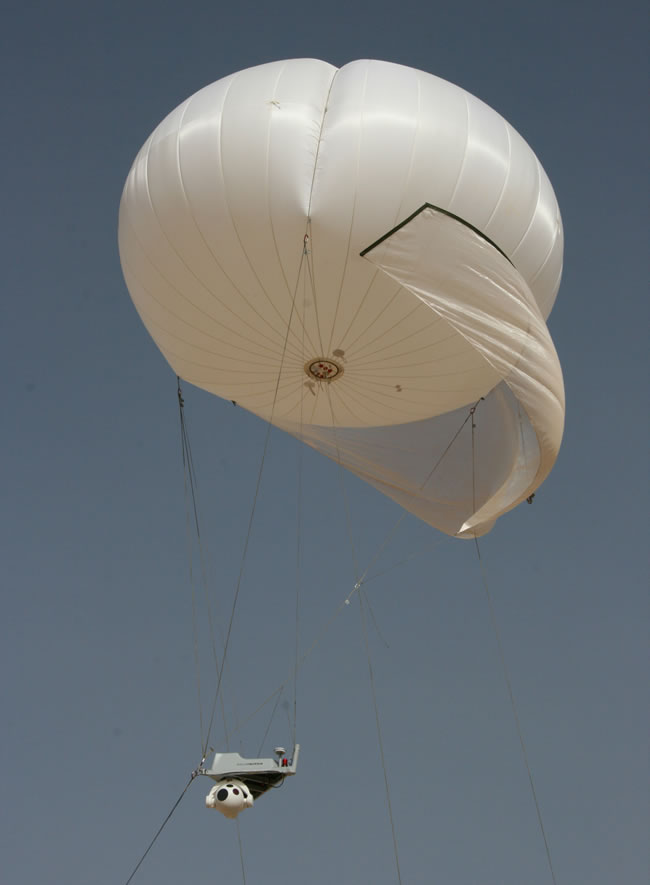
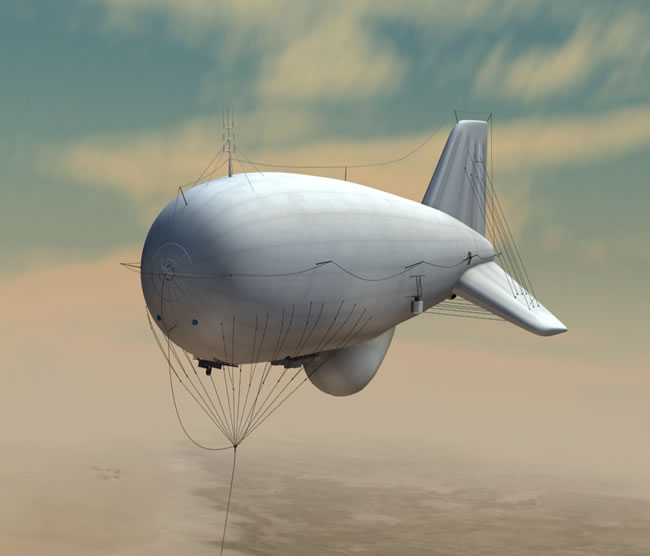
    SPEED-A Payload suspended under an aerostat
    SPEED-A Payload suspended under an aerostat
    speed_a_skystar300
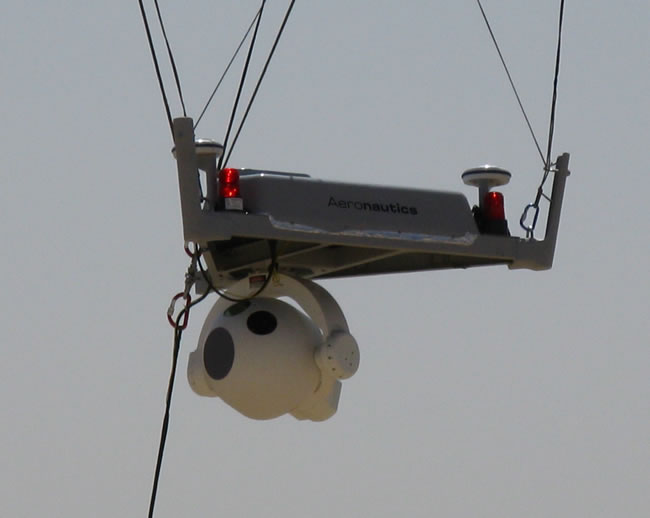
    The SPEED A payload was designed specifically to match the unique movement patterns of tethered platforms, thus providing high level of stabilization unachieved by other systems of this weight class. Photo: Controp

    Controp is displaying its latest aerostat-optimized SPEED-A stabilized electro-optically payload system at Aero-India 2013, in anticipation of new opportunities maturing fr this unique system. Defense-Update reports.

    The company is hopeful the system would be applicable for the Indian requirements for border and coastal protection, site protection and force protection, where tethered systems are have proved highly effective and economical in covering large areas, particularly over densely vegetated  urban or flat terrain. The ability to provide high fidelity surveillance at low weight and reasonable cost means payloads can generate images and live video at live-video rate and at quality level necessary for security applications. Controp Precision Technology designed the 23kg SPEED-A for these applications, providing extra stabilization in patterns suitable for tethered platforms. The system has already been deployed and is operational with several customers worldwide. Most recently it has been selected by a European customer, the payload for tethered aerial surveillance applications. SPEED A has already been fielded and with the Israeli and Canadian military, on board Aeronautics’ Skystar 300 surveillance aerostat.

    Source: Defense-Update

    IAF Looks at Ad-Hoc Networking for Future Communications

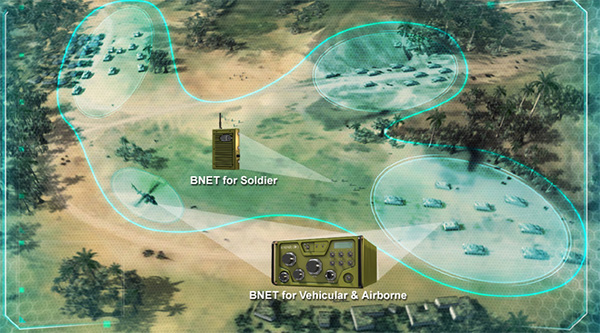
    Rafael BNET Illustration. Image: Rafael
    Rafael BNET Illustration. Image: Rafael
    Rafael BNET Illustration. Image: Rafael

    WebThe Indian Air Force (IAF) is planning to deploy an advanced communications network, the MOD has invited several international companies to participate in an international tender to offer software defined radio based communications for the networks’ airborne and ground based segments. Initial testing are expected to commence in February 2013. The companies competing in this program are IAI and RAFAEL from Israel, the US company Rockwell Collins and Rhode & Schwartz of Germany.

    The use of ad-hoc networking optimizes the spectrum utilization, while the use of advanced waveforms deliver high speed networking, supporting live video, image transfer, voice and data. Reliance on SDR also ensures ‘future-proof’ upgradability and interfacing with legacy systems.

    According to RAFAEL, the system they are offering is based on a new family of SDR systems developed by the company in recent years, that have been recently selected by the Brazilian and Columbian Air Forces for airborne networking applications. RAFAEL began the development of BNet as a ground based network, adapting the system for airborne and air-ground applications. RAFAEL plans to transfer considerable elements of the system development and production to India, enabling local partners to share a major part of the program in the current phase and also benefit from its future spinoffs.

    According to RAFAEL, the efficiency of BNet as an adaptable network means that the airborne communications could provide in the future the basis for advanced terrestrial communications, supporting land-based applications as well.

    Hermes 900 Takes on Maritime Missions

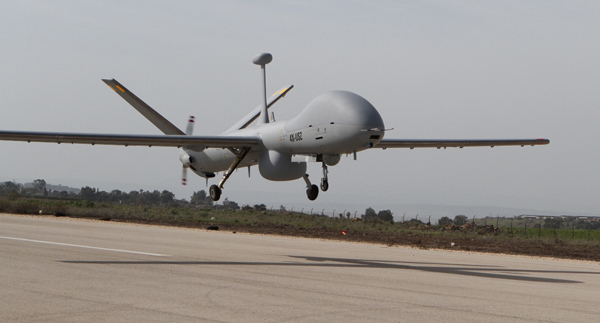
    Hermes 900 Maritime Equipped with Maritime Patrol Radar (MPR) and EO & IR Payloads. Photo: Elbit Systems
    Hermes 900 Maritime Equipped with Maritime Patrol Radar (MPR) and EO & IR Payloads. Photo: Elbit Systems
    Hermes 900 Maritime Equipped with Maritime Patrol Radar (MPR) and EO & IR Payloads. Photo: Elbit Systems

    Elbit Systems is launching a maritime configuration of its Hermes 900 medium altitude long endurance drone, aiming at the growing demand for UAS in maritime missions worldwide, and particularly in Asia. The company is unveiling the new configuration at the Aero India 2013 event in Bangalore this week.

    Visit Elbit Systems at Aero-India
    Elbit Systems at Aero-India

    Maritime surveillance and patrol capabilities are specifically important in recent years, as countries are required to cover growing maritime areas claimed by the Economical Exclusion Zones (EEZ) that span up to 200 nautical miles from their coastline or farthest island. In the case of India, for example, such area covers a huge expanse of the Indian Ocean, bordering Indonesia in the east to Somalia in the west. A country cannot cover such vast space from its coastal radar stations, nor can it commit manned patrol flights to cover the entire area.

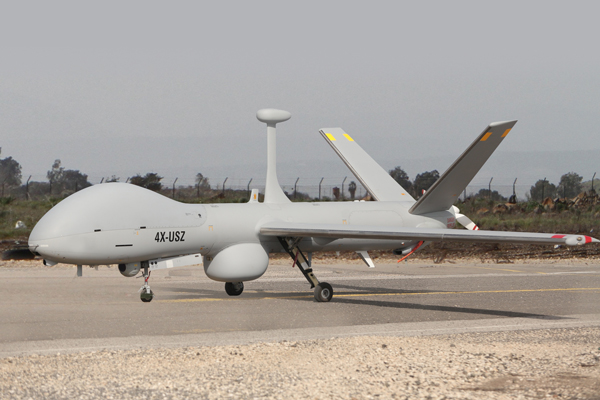
    The Hermes 900 maritime configuration launched at Aero-India 2013 can carry payloads of up to 350 kg, including maritime surveillance radar, Automatic Identification System (AIS), an electro-optical multi-sensor payload and electronic surveillance systems. The radar being tested on the Hermes 900 is the SELEX Galileo’s Gabbiano T200, supporting surface search, inverse SAR (ISAR), high resolution synthetic aperture radar and ground moving target indication modes. According to Ofer Ber-Dov, VP Marketing & Business Development at the company’s Unmanned Systems Division, the Maritime Hermes 900 has the endurance to cover vast ocean areas, it is equipped with redundant line-of-sight and satellite communications links and radio relay, enabling the operator to ‘talk through’ to vessels at sea. “The aerodynamic efficiency of the Hermes 900 enables the operators to perform frequent changes in flight profiles, to enable visual identification of vessels at sea in addition to the classification of vessels based on their Inverse SAR (ISAR) signature, provided by the radar.” Satellite communication enables it to fly to mission areas at extended ranges as far as 1000 nautical miles from shore. The redundancy in datalinks enables the control of two UAS simultaneously from a single ground control station. This has a significant effect on the assets, manpower and operating cost, as well as in improving the efficient utilization of UAS that can now cover more area or run a denser surveillance over a given area.

    The Hermes 900 Maritime Version. Photo: Elbit Sysyems
    The Hermes 900 Maritime Version. Photo: Elbit Sysyems

    The entire command and control (C2) is located in a single shelter, which can be operated on shore in a mobile shelter base or indoor configurations at sea or co-located in several locations. Elbit Systems’ C2 system has been integrated into the Maritime Hermes 900 Ground Control Shelter, supporting specific mission planning applications such as maritime search, anti-submarine missions or search and rescue. To further improve the efficiency of the country’s EEZ, particularly nations with large maritime territories, Elbit Systems has teamed with Windward Ltd., integrating the WindWard’s satellite-based maritime intelligence analytic system into the Hermes 900 maritime C2 system. As a global information system, MarInt covers any area of interest, assisting in tracking maritime traffic, detecting illegal fishery monitoring, and effectively managing port traffic. The system performs deep behavior analysis on each ship in its footprint, searching for irregularities and discrepancies from routine activities. Vessel behavior is analyzed to detect anomalous and suspicious behavior, which differs from routine maritime patterns, and could indicate to illicit activities. “Such analysis can reveal areas of suspicious activity, pinpointing patrols to specific vessels showing certain anomalous behavior” Ben-Dov added, “such information enables operators to task unmanned assets to patrol those designated areas, identify and track the suspicious vessels, thus significantly optimize the aerial patrol and increase mission effectiveness while reducing cost.”

    Advanced Systems Improve Tejas’ Fighting Skills

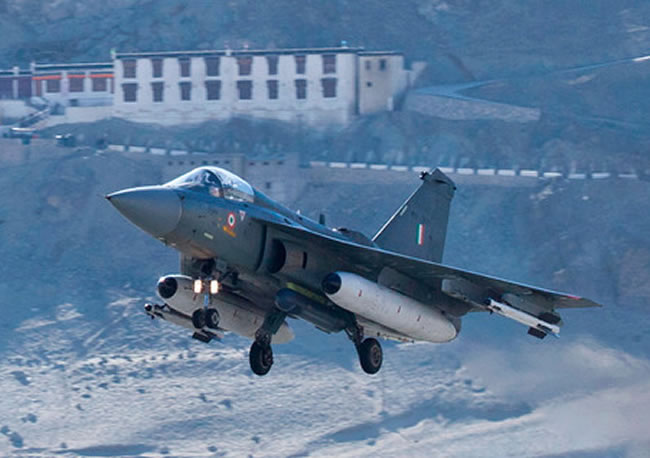
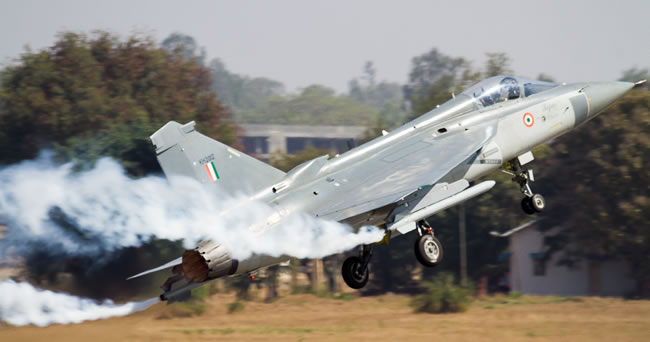
    Tejas LCA taking off from LEH on a January 2013 winter test flight. Note the Litening targeting pod carried under the fuselage. Photo: ADA via Livefist
    LCA taking off on display flight at Aero India 2013. Photo: Angad Singh
    LCA taking off on display flight at Aero India 2013. Photo: Angad Singh

    As the Tejas Light Combat Aircraft (LCA) has been in the making for much too long, but despite the delays, the aircraft that slowly moves toward the finish line is ‘born old’. If and when it is announced ‘fully mission capable’ by next year, Tejas will represent a mid-1990s generation platform, but will be ready to deploy with combat systems of the 21st century.

    This has not come by choice – the Indian Government and research establishments insisted for decades that the LCA as other indigenous weapon systems should be 100 percent Indian designed and made. This attitude has stumbled the project for years, as Indian R&D centers were coping with knowledge gaps, technological issues or manufacturing capabilities. After three decades, as the aircraft is finally pacing toward the coveted (and much delayed) ‘full operational capability’ status, it is clear that many of its subsystems are not domestic, and many others may be built in India but not Indian designed.

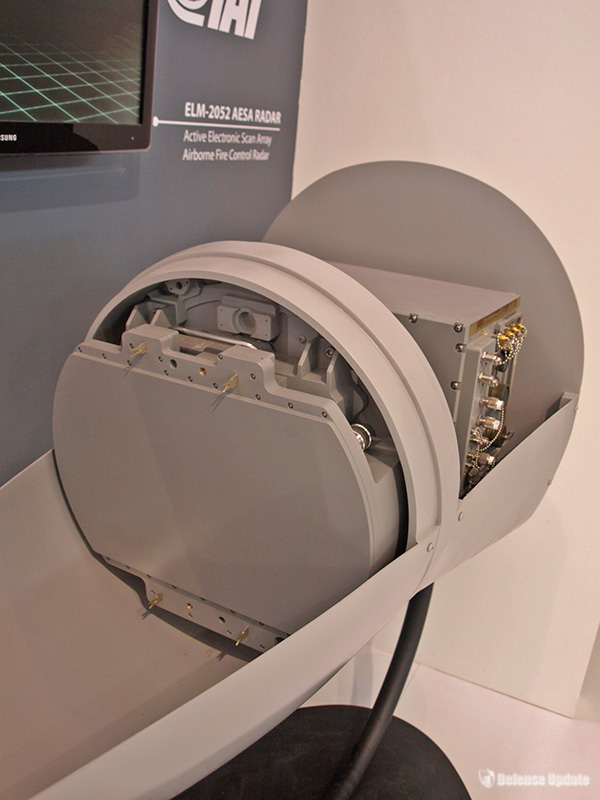
    EL/M2052 AESA radar with a compact antenna array will be integrated in the LCA. Tamir Eshel, Defense-Update
    EL/M2052 AESA radar to be integrated in the LCA. Tamir Eshel, Defense-Update
    IAI_AERO-125X125
    Visit IAI at Aero-India

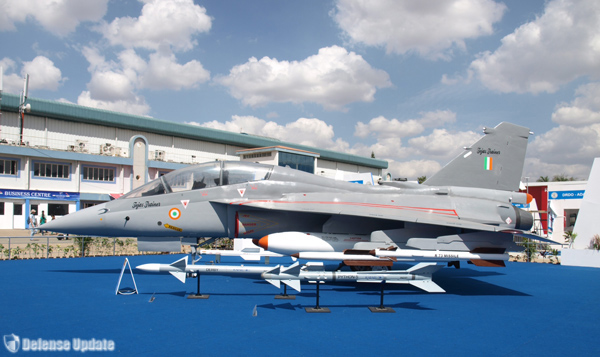
    Assuming the Astra missile currently developed for the aircraft not meet the full flight envelope performance goals, the IAF and Indian Naval Aviation are integrating the Derby and Python 5 missiles on the aircraft, along with Russian R73 that was slated for the aircraft from the beginning, to meet the required full-operational capabilities level for the fighter. These weapons will be needed primarily to meet the Indian Navy requirement for carrier air defense, as the LCA will begin to replace the Sea Harriers that currently carry those missions with these weapons.

    Visit Elbit Systems at Aero-India
    Elbit Systems at Aero-India

    The LCA will also carry the EL/M-2052 active electronically scanned array (AESA) radar developed by IAI Elta. Originally, the EL/M-2032 was selected but the new 2052 now available with a more compact antenna is best designed to fit the nose cones of LCA and Jaguar, offering enhanced capabilities for both fighters. This agile radar, along with the DASH-3 helmet mounted display sight from Elbit Systems will enable a Tejas pilot to acquire targets at all combat ranges and engage them in full sphere, shooting the missiles by merely looking at the target, without having to maneuver the LCA toward the target, thus making the Tejas much more potent than the sum of its aerodynamic capabilities offer. In fact, such smart combat systems could provide the LCAs just that amount of survivability it needs to avoid trouble, safely carry out its mission and even win a dogfight if the situation ‘gets ugly’.

    The aircraft will also be carrying the Litening targeting pod, enabling the LCA to deploy precision guided weapons of various types – from laser guided, to GPS or EO guided weapons.

    Tejas LCA shown with Derby and Python 5 missiles
    The Tejas LCA shown with Derby and Python 5 missiles for the first time. Tamir Eshel, Defense-Update
    Tejas LCA taking off from LEH on a January 2013 winter test flight. Note the Litening targeting pod carried under the fuselage. Photo: ADA via Livefist
    Tejas LCA taking off from LEH on a January 2013 winter test flight. Note the Litening targeting pod carried under the fuselage. Photo: ADA via Livefist
    We recommend Livefist for more photos from the recent test campaign
    Aero India 2013 Photo Report #1

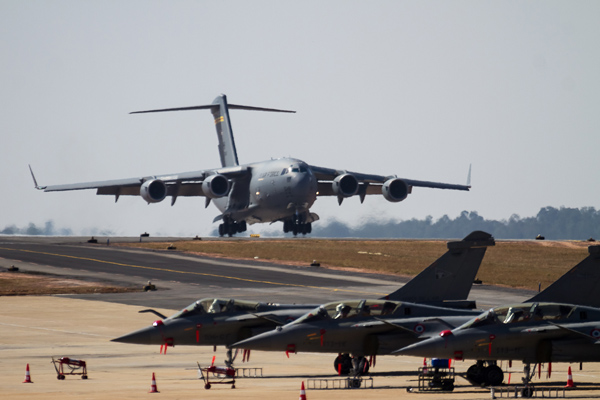
    The U.S. Air Force C-17 Globemaster landing at Aero India 2013. Credit: Angad Singh

    IAI_AERO-320X50

    Check Photo Report #2 Published Post Aero-India 2013

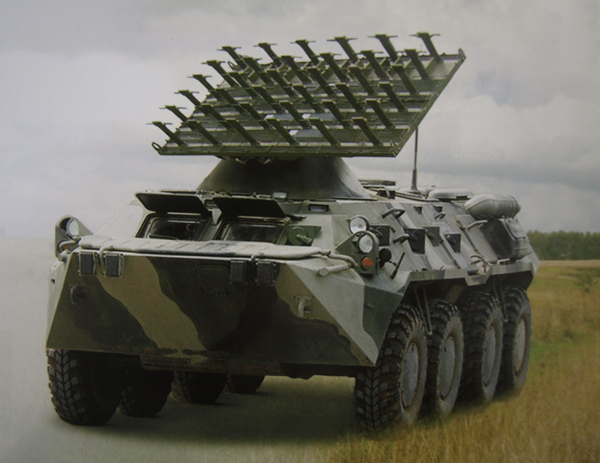
    1L121E mobile 3D radar covers full hemisphere, with on-the-move surveillance, detecting a wide range of threats including guided weapons and mini-uavs. This new radar supports air defense assets. Tamir Eshel, Defense-Update
    1L121E mobile 3D radar covers full hemisphere, with on-the-move surveillance, detecting a wide range of threats including guided weapons and mini-uavs. This new radar supports air defense assets. Tamir Eshel, Defense-Update
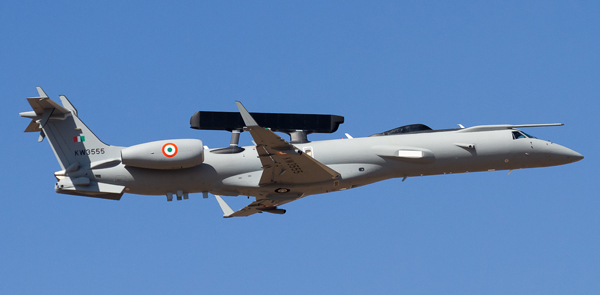
    The Indian Air Force First Embraer 145 AEW&C Aircraft. Credit: Angad Singh
    The Indian Air Force First Embraer 145 AEW&C Aircraft. Credit: Angad Singh

    Web

    The U.S. Air Force  C-17 Globemaster landing at Aero India 2013. Credit: Angad Singh
    The U.S. Air Force C-17 Globemaster landing at Aero India 2013. Credit: Angad Singh
    The attack version of indigenously-built Advanced Light Helicopter (ALH) ‘Rudra’. Credit: Angad Singh
    The attack version of indigenously-built Advanced Light Helicopter (ALH) ‘Rudra’. Credit: Angad Singh

    VISIT ELBIT SYSTEMS AT AERO-INDIA 2013

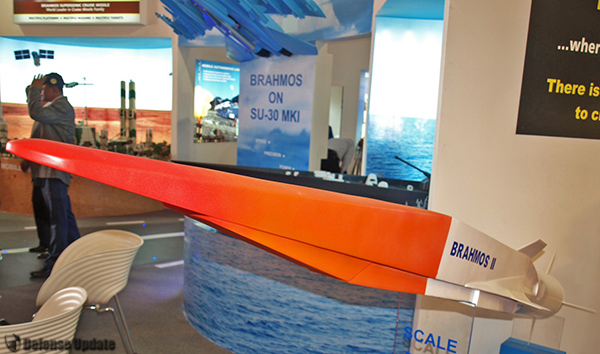
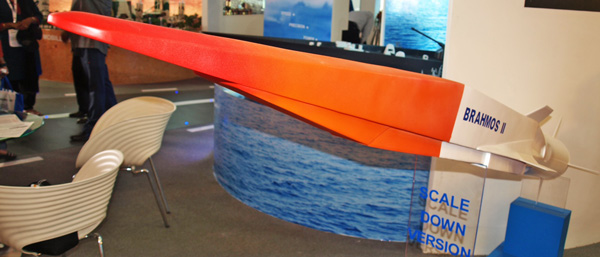
    Brahmos 2 hypersonic missile
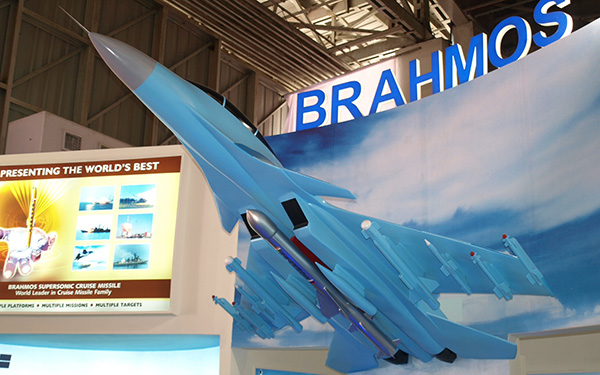
    A model of the Brahmos 2 hypersonic missile was displayed on the Brahmos stand. Tamir Eshel, Defense-Update
    brahmos2-su-30mki
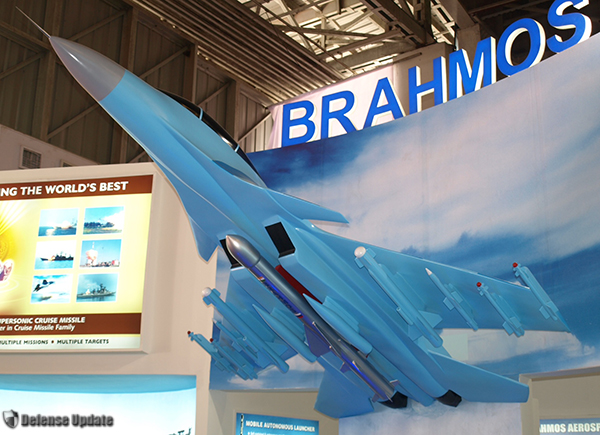
    The specially modified Su-30MKI will carry a single air-launched BrahMos supersonic anti-ship missile, and two subsonic two Kh-59. The different weapons could be launched from different ranges at different times to coordinate a ripple-effect, saturate the target defenses. Tamir Eshel, Defense-Update
    EL/M-2052 showing the two module architecture of the new system, designed to fit into compact spaces like the LCA nose cone. Tamir Eshel, Defense-Update
    EL/M-2052 showing the two module architecture of the new system, designed to fit into compact spaces like the LCA nose cone. Tamir Eshel, Defense-Update
    EL/M2052 AESA radar to be integrated in the LCA. Tamir Eshel, Defense-Update
    EL/M2052 AESA radar to be integrated in the LCA. Tamir Eshel, Defense-Update
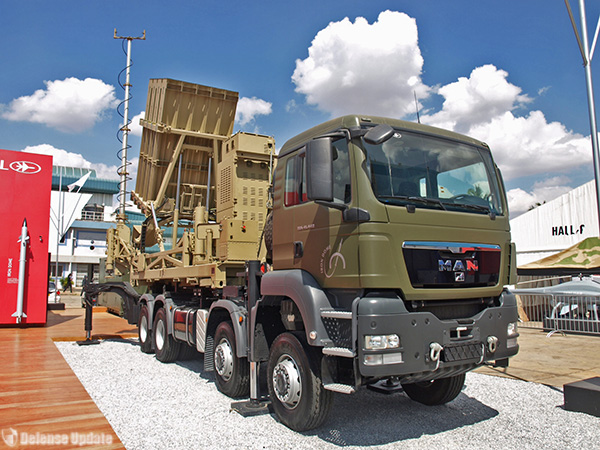
    Aero-india was the world debut for the Iron Dome missile - the real thing
    Aero-india was the world debut for the Iron Dome missile – the real thing, just unarmed and defuelled. The photo clearly shows the ogive that blows off when the missiles nears its target, exposing the seeker that is responsible for the missile’s terminal effect that has demonstrated over 500 kills in recent months. Tamir Eshel, Defense-Update
    Tejas LCA shown with Derby and Python 5 missiles
    The Tejas LCA shown with Derby and Python 5 missiles for the first time. Tamir Eshel, Defense-Update
    Mobile version of the Iron Dome can cover a wider area and rapidly reposition against new threats. Provided with a full multimission radar, it can also perform air defense missions. Tamir Eshel, Defense-Update
    Mobile version of the Iron Dome can cover a wider area and rapidly reposition against new threats. Provided with a full multimission radar, it can also perform air defense missions. Tamir Eshel, Defense-Update
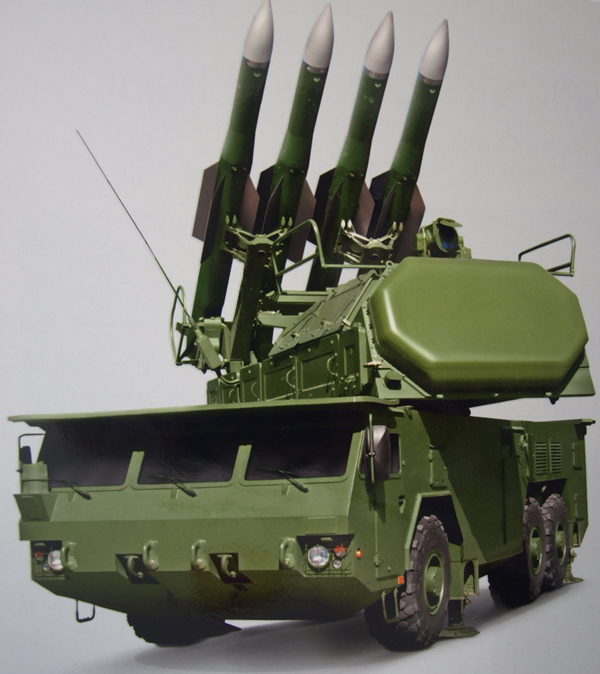
    SA-17 BUK-M2E air defense missile system. Note the EO/IR camera above the main radar, providing the system continuity of engagement even under heavy electronic attack. Photo: Tamir Eshel, Defense-Update
    SA-17 BUK-M2E air defense missile system. Note the EO/IR camera above the main radar, providing the system continuity of engagement even under heavy electronic attack. Photo: Tamir Eshel, Defense-Update
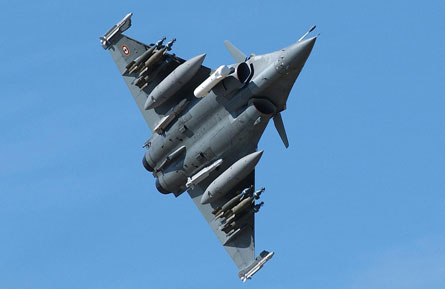
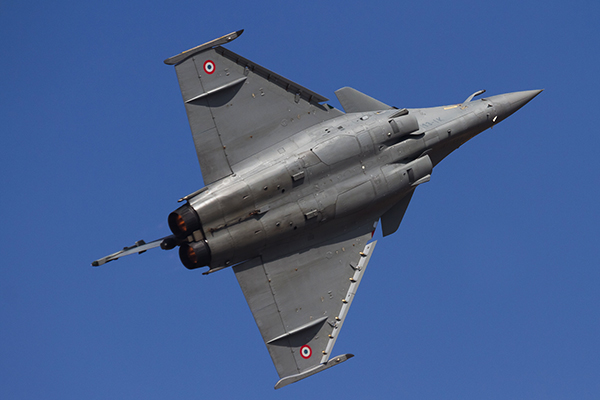
    The Rafale on a display pass. Credit: Angad Singh
    The Rafale on a display pass. Credit: Angad Singh

    Check Photo Report #2 Published Post Aero-India 2013

    Aero-India 2013: The Indian Air-Force Plans to Induct BrahMos by 2015

    The specially modified Su-30MKI will carry a single air-launched BrahMos supersonic anti-ship missile, and two subsonic two Kh-59. The different weapons could be launched from different ranges at different times to coordinate a ripple-effect, saturate the target defenses. Photo: Tamir Eshel, Defense-Update
    brahmos-aero-india
    A model of the Brahmos 2 hypersonic missile was displayed on the Brahmos stand. Photo: Tamir Eshel, Defense-Update

    The Indo-Russian BrahMos missile is advancing well and is slated to begin flight testing late in 2013. According to Shivathnu Pillai, CEO and managing director of BrahMos Aerospace, the missile is scheduled to be fully integrated on the Su-30MKI by the time the enhanced Su-30MKI aircraft is handed over the Indian Army next year. The missile is already in service with the surface vessels of the Indian Navy and by the Indian Army strategic forces, while the Indian Air Force will get it next year and expect to induct the new aircraft into service in 2015.

    Visit Elbit Systems at Aero-India
    Visit Elbit Systems at Aero-India 2013

    The IAF is planning to arm 40 Su-30MKI Flanker-H fighters with BrahMos missiles. To carry the 2.5 ton weapon the belly hardpoints, weapon carrying pylons and entire structure were strengthened, while extra weight was reduced elsewhere. The first test will be done at the end of 2013. Induction in the IAF will be in 2015,” he continued. “The pontoon test will be done this year and then we go into new variants.” The land and naval variants are identical in design, both are launched from a canister that also serves as the storage and transportation container. the air-launched version has introduced few modifications – reduced weight and additional tail fins improving stability during launch.

    The BrahMos is claimed to be superior to most contemporary anti-ship missiles – offering three times more velocity, flight range and seeker range. Combined higher speed, the 200-300 kg offers kill energy up to nine-times that of other anti-ship missiles, the company claims.

    The current missile is also undergoing improvements. Earlier this year, the Indian Navy successfully tested a highly maneuverable version of a sea-based BrahMos supersonic cruise missile. Russia and India have recently agreed to continue the development of the BrahMos weapon system. BrahMos is developed in three block configurations. Block I is the anti-ship/precision strike version, primarily destined for use in coastal defense. BrahMos Block II is available for the land-based variant, equipped with additional target discrimination features enabling the missile to perform ‘surgical strike’ missions. This variant is adapted for urban and desert warfare. BrahMos Block III recently tested, employs added features for enhanced manoeuvrability, enabling terminal steep dive endgame. This version is developped to enable surgical strike at mountain areas but will also be useful against naval targets that are more difficult to defend against vertical threats.

    The company now studies a futuristic hypersonic (Mach 5-7) BrahMos 2 missile, which will be able to outperform any defense available today. According to Pillai, the next generation BrahMis 2 will be part of the next five-year development cycle to commence in 2017. The missile could ready for hypersonic test flight by year 2020. While flying at such high velocities BrahMos II will maintain the missile’s high precision capability.

    The specially modified Su-30MKI will carry a single air-launched BrahMos supersonic anti-ship missile, and two subsonic two Kh-59. The different weapons could be launched from different ranges at different times to coordinate a ripple-effect, saturate the target defenses. Photo: Tamir Eshel, Defense-Update
    The specially modified Su-30MKI will carry a single air-launched BrahMos supersonic anti-ship missile, and two subsonic Kh-59. The different weapons could be launched from different ranges at different times to coordinate a ripple-effect saturating the target defenses. Photo: Tamir Eshel, Defense-Update

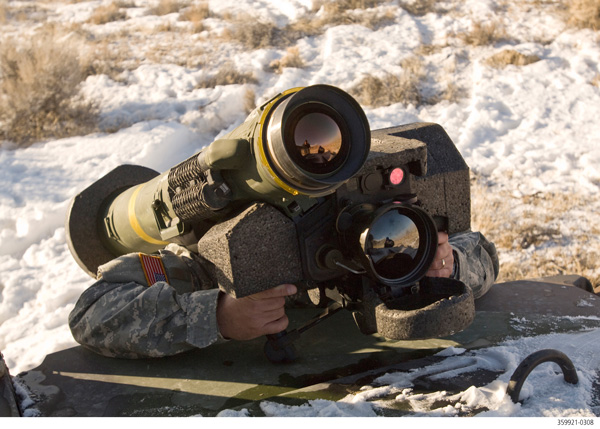
    Javelin prepares for Vehicles – Tested to Engage Targets up to 4,725 m’

    Photo: Raytheon
    Photo: Raytheon
    Photo: Raytheon

    The Javelin missile recently demonstrated the ability to engage targets beyond its current maximum range requirements. During the U.S. Army tests, the Javelin system acquired and engaged targets up to 4,750 meters. This capability would position the missile to better fit with remote weapon station (such as the Protector) where more powerful target acquisition systems are readily supporting extended range, while the weapon itself was not originally designed to perform at the longer range.

    “These tests prove that, under favorable conditions, Javelin can have reliable, solid performance as a close-combat weapon system well beyond the current maximum range requirement of 2,500 meters,” said Duane Gooden, Javelin Joint Venture president and Raytheon Javelin program director. “There were two direct hits on the threat representative target at the extended range.” Demonstrating Javelin’s extended range performance will further enhance survivability of the dismounted Javelin gunner in combat.

    Most vehicle requirements are for a missile that can engage a target at 4,000-plus meters,” said Barry James, Javelin Joint Venture vice president and Javelin program director in Lockheed Martin’s Missiles and Fire Control business. “The results of these tests indicate the fire-and-forget Javelin missile can potentially be used in both vehicle and dismounted roles.”

    Raytheon and Lockheed Martin are partners in the Javelin Joint Venture.

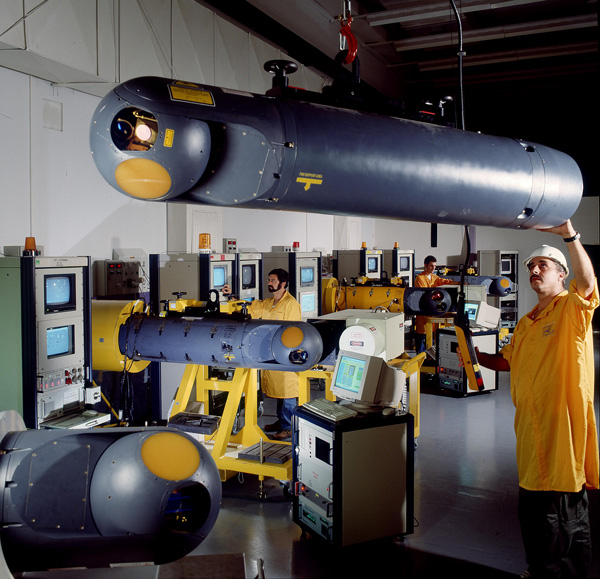
    Indian Selection of Future Targeting Pod in 2013

    Rafael Litening targeting pod production. Photo: Rafael
    Rafael Litening targeting pod production. Photo: Rafael

    WebIndia has floated a tender for the delivery of more than 100 advanced targeting pods for its strike fighters, Two systems are under consideration – the French Damocles pod, already employed on Mirage 2000 and Rafale, offered by Thales of France, that has teamed with Bharat Electronics Ltd. (BEL) for this program, and the Israeli Litening, the latest version of the targeting pod developed by RAFAEL. According to company officials, the Litening pods being offered are superior in technological terms. RAFAEL and Lockheed Martin are often competing targeting pod procurements worldwide as their products – Litening and Sniper are similar in capabilities and performance. In India, however, the US company remained out of the competition for unexplained reasons.

    India is already operating previous generations of Litening on its fighter planes and RAFAEL has sourced Indian subcontractor significant contracts for the supply of subsystems and services for these products.

    Both companies have passed the technical selection and are expected to demonstrate their pods in upcoming months. Selection of the Lowest Bidder (L1) will follow later this year (2013).

    Damoclespod
    Thales Damocles targeting pod on an IAF Rafale F3. Photo: Thales

    While the teaming Thales has struck with BEL positions it as a favorite supplier for MMRCA and Mirage 2000 upgrades, the advantages of commonality with existing and new targeting pods is not ignored by the IAF, even if it is not part of the parameters to be considered for the selection.  Thales recently announced it is embarking on an improvement of its Damocles pod, a step likely to assist its product offering in India as well.
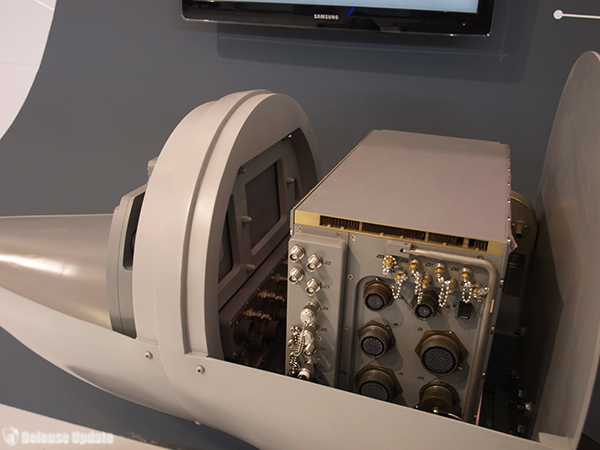
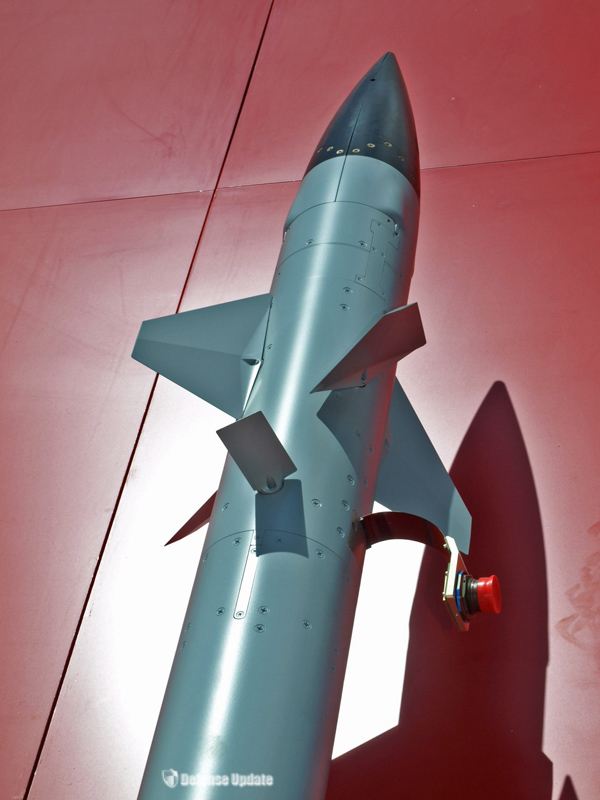
    According to RAFAEL, the Litening pods deployed with the IAF could be upgraded to the same level as the new pods, bringing the total inventory of targeting pods to more than 200, all would be interchangeable between all strike aircraft configured to carry targeting pods. These aircraft could also carry our recce missions, using the RECCELITE pod that has recently become operational with the IAF.

    Negotiations between India and Israel Underway to Proceed with Aerostats Program

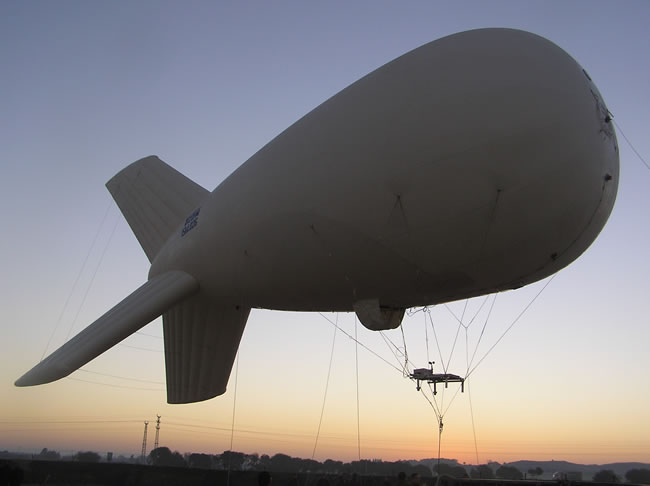
    Airstar aerostat system can carry payloads of several tons in weight, enabling the platform to operate multiple sensors . Photo: RAFAEL
    Airstar aerostat system can carry payloads of several tons in weight, enabling the platform to operate multiple sensors . Photo: RAFAEL
    Airstar aerostat system elevated on a test mission without a payload. Photo: RAFAEL
    Airstar aerostat system elevated on a test mission without a payload. Photo: RAFAEL

    India and Israel are negotiating a follow-on delivery of four aerostat systems, augmenting the first delivery of aerostats that has already been deployed along India’s north-eastern border. Both India and Pakistan are deploying aerostat-borne radars along their border to tighten control over this sensitive area.

    RAFAEL, the prime contractor for these aerostat systems has delivered 71 meter aerostat systems to India, this program is currently moving toward completion, with follow-on deliveries of additional four units under discussion. These aerostats carry a variety of sensors, including EL/M-2083 air surveillance radars provided by IAI Elta Systems, communications intelligence (COMINT) and Signals Intelligence (SIGINT) payloads providing persistent, all-weather wide-area coverage of sensitive border areas, particularly covering sectors where land-based radars offer limited coverage, due to the topography or other limiting factors. At that altitude, a large aerostat can carry a two ton payload. The cable also supplies power, which means the blimp can stay up for about 30 days at a time before it has to be brought down for maintenance on its radars. Often, two radars are carried. One is a surveillance radar, the other is a precision track and illumination radar (PTIR). The surveillance radar provides long-range coverage (about 500 kilometers for the EL/M-2083), while the PTIR, which is a steerable system capable of tracking multiple targets, can focus in on items of interest.

    WebThese 71 meter aerostats are built by US Aerostat specialist TCOM, and are among the largest currently available. India is expected to buy additional aerostats, and, in fact, is already considering future procurement of additional systems of various classes, as part of an international tender. RAFAEL is expected to be one of the companies to be invited to participate, pitted against competitors from Israel, USA and Europe. Domestic competitors could also appear for smaller aerostat platforms, although the indigenous Indian aerostat (Akashdeep) is not expected to be available in the high volume class for years to come.

    Operating an aerostat system is a complex task, maintaining several tons of payload suspended in an aerostat, keeping it in position even in high winds, even the 20,000 foot long tether connecting the aerostat to the ground and supplying power weighs several tons.

    Airstar aerostat system can carry payloads of several tons in weight, enabling the platform to operate multiple sensors . Photo: RAFAEL
    Airstar aerostat system can carry payloads of several tons in weight, enabling the platform to operate multiple sensors . Photo: RAFAEL

    Skunk Works and XTEND Simplify Multi-Drone Command

    0
    Lockheed Martin Skunk Works® and XTEND have achieved a major milestone in JADC2 by integrating the XOS operating system with the MDCX™ autonomy platform. This technical breakthrough enables a single operator to simultaneously command multiple drone classes, eliminating the friction of mission handoffs. From "marsupial" drone deployments to operating in GPS-denied environments, explore how this collaboration is abbreviating the data-to-decision timeline and redefining autonomous mission execution.

    From Ukraine to Taiwan: The Global Race to Dominate the New Defense Tech Frontier

    0
    As traditional defense primes face mounting competition from agile “neoprimes” such as Anduril, Palantir and Helsing, the balance of innovation is shifting toward software-defined warfare and scalable, dual-use technologies, while global industry consolidation—marked by Boeing’s integration of Spirit AeroSystems and other strategic mergers—signals an intensified race to secure control over the defense technology value chain. Our Defense-Tech weekly report highlights these trends.

    Europe’s “Drone Wall”

    0
    In early October 2025, a coordinated wave of unmanned aerial system (UAS) incursions—widely attributed to Russia—targeted critical infrastructure across at least ten European nations. The unprecedented campaign exposed the fragility of Europe’s air defenses...

    Weekly Defense Update & Global Security Assessment

    0
    Executive Summary The past week (September 18-25, 2025) represents an inflection point where strategic defense concepts have transitioned from doctrine to tangible reality. An analysis of global events reveals four primary, interconnected trends shaping an...

    U.S. Air and Space Forces Push Next-Gen Programs at the AS&C 2025 Conference and...

    0
    At the 2025 Air, Space & Cyber Conference, U.S. Air Force and Space Force leaders unveiled major updates on next-generation fighters, bombers, unmanned systems, and space initiatives, highlighting both rapid innovation and critical readiness challenges as the services race to outpace global competitors. A short version is available here, with a more detailed version for subscribers.

    TADTE 2025: Reflecting Taiwan’s Strategic Themes

    0
    The Taipei Aerospace & Defense Technology Exhibition (TADTE) 2025 crystallized around four dominant strategic themes that collectively illustrate Taiwan's comprehensive approach to defense modernization amid escalating regional tensions. Based on a detailed report by Pleronix (available upon request). Includes a Podcast discussion on TADTE 2025's highlighting Taiwan's four strategic themes beyond the post's coverage.

    Iron Beam 450 Completes Testing, Soon to Join With Operational Air Defense Units

    0
    Israel’s Iron Beam 450 high-power laser system has completed final testing, marking a major leap in air defense. Developed by Rafael, it offers precise, cost-effective interception of rockets, UAVs, and mortars, and is set for IDF deployment by 2025.