

Monday, December 29, 2025
More
    Home Blog Page 170

    Armor and Protection

    Our sponsor: RADA Electronic Industries.

    Another area facing a temporary slowdown is the ballistic and blast protection. In past years, armor manufacturers were relatively small and specialist companies that supplied armor products to prime contractors like GDLS and BAE Systems. This has changed in the mid 2000s, as the US raced to build armor-protected vehicles to counter the growing threats in Southwest Asia. Bigger ones acquired smaller specialists, and prime contractors obtained their own capabilities, expanding production volumes. Now, as the demand for armor is reduced, smaller, specialist manufacturers that leverage lower production volumes could once again have the advantage, pursuing new opportunities to supply lighter and more effective protection to growing threats. The planned selection of prime contractor for the Ground Mobile Vehicle (GMV 1.1) for the Special Operations Command could represent such opportunity. These manufacturers could also benefit from a small but steady demand for armor replacement kits, replacing worn out or obsolete applique armor ‘B-Kits’ with new and lighter materials are introduced, offering more benefits to the user.


    Our Sponsor: IAI

    Another growth area is the long neglected blast protection. Blast mitigation features such as belly plates, blast protecting seats and paddings, are introduced as part of combat vehicle reset and modifications, enhancing ballistic protected vehicles with blast-proof designs protecting the occupants from excessive accelerations caused from IEDs and mines. Blast protection is not limited to the vehicle, but also extend to the warfighter’s own gear – helmet, boots and combat suite.

    Effectiveness in military means deployed forces are well prepared, equipped, informed and connected – the key for all these is excellent leaders and superior command and control. Advanced, broadband networking, intelligence gathering, particularly at the tactical level, where timely dissemination of data is critical, is essential for success.

    While the regular and reserve forces are to be reduced, the investment in Special Operations is expected to grow, as these forces are viewed as more effective and efficient in dealing with ‘low profile’ with international challenges. Since they usually operate covertly, their failures remain secretive while politicians quickly attribute to their successes. For industry, Special Forces contracts will also become important again, after years where mainly small niche players addressed these smaller, low-volume programs.

    The following topics are covered in our preview:

    These articles will be opened for all readers on Defense-Update on Sunday (21/10) and are currently available in the downloadable PDF format.

    This issue is offered to Defense-Update readers as a complimentary preview issue. Forthcoming reports from the exhibition will be available nightly from Defense Update in web & PDF format, providing excerpts for all readers and full features for our paid subscribers.

    You are invited to Subscribe Here!
    Vehicle Modernization Programs

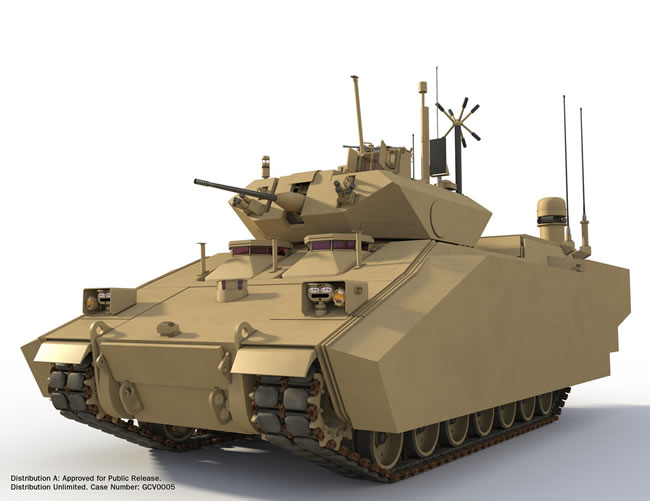
    Two Ground Combat Vehicles (GCV) models, developed by BAE Systems / Northrop and GDLS / Lockheed Martin teams will be evaluated for the future Army procurement of vehicles replacing M-113s and Bradley IFVs.
    Our sponsor: RADA Electronic Industries.
    Two Ground Combat Vehicles (GCV) models, developed by BAE Systems / Northrop and GDLS / Lockheed Martin teams will be evaluated for the future Army procurement of vehicles replacing M-113s and Bradley IFVs. Photo: BAE

    Contrary to the Army planner’s foresight in the 2000s, this decade is not about grand programs, but on reconstruction, reconstitution and incremental building of forces. Those military units that survive the cuts will have to do more with less. For the defense industry, it means that there will be fewer platforms to build but more parts and kits resets, modifications and modernization to deliver.

    Doing more with less also means more effective processes. Hence, saving energy costs, in fuels, batteries, and harnessing renewable energy in affordable costs would become more popular. It also means fewer soldiers mastering more skills, for which training, simulation and expert assistance will be critical. Among these modernization programs are the replacement of M-113 armored carriers. At present, the leading candidate is the Bradley platform, made by BAE Systems. Currently, the Heavy Brigades in the US Army are equipped with the Bradley infantry carrier and scout vehicle.


    BAE is offering to replace the M-113 support vehicles such as medical evacuation, medical treatment, mortar carrier and command post vehicles with Bradley chassis versions. In addition, the company is supporting the reset of existing vehicles – earlier in October the company was awarded $97 million contract to reset 146 Bradley Fighting Vehicles as part of the vehicle’s life cycle support program.

    Our Sponsor: IAI

    The Ground Combat Vehicle (GCV) is one of two Army new starts, along with the Joint Tactical Light Vehicle, procured under a joint program with the Marine Corps. BAE Systems and General Dynamics Land Systems (GDLS) are competing on the GCV, while Lockheed martin, Oshkosh Defense and AM General race for the JLTV. For some, losing a program could spell doom. While Oshkosh (which recently celebrated the delivery of the 100,000th military vehicle) maintains its military trucks production lines and BAE Systems has high hopes for the continuation of Bradley platforms, For GDLS and AM General, the GCV represent the single large-scale prospect for the future.


    The following topics are covered in our preview:

    These articles will be opened for all readers on Defense-Update on Sunday (21/10) and are currently available in the downloadable PDF format.

    This issue is offered to Defense-Update readers as a complimentary preview issue. Forthcoming reports from the exhibition will be available nightly from Defense Update in web & PDF format, providing excerpts for all readers and full features for our paid subscribers.

    You are invited to Subscribe Here!
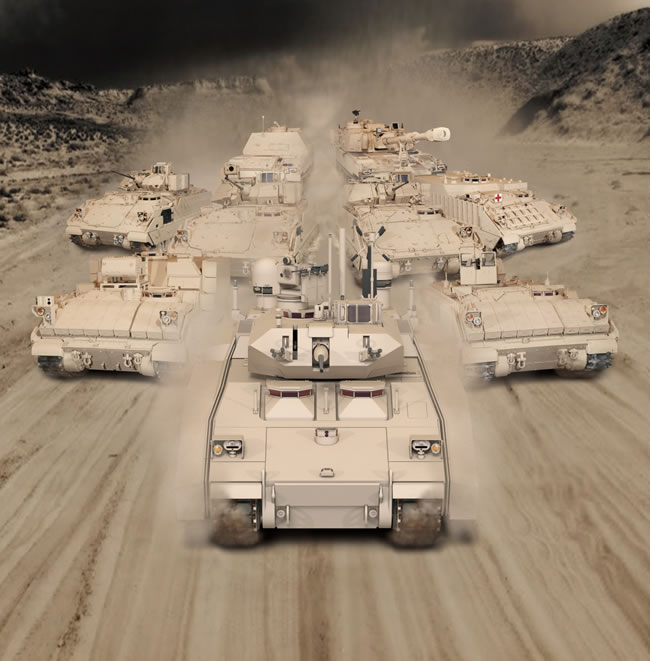
    The M-1A2 Abrams tank, Various Bradley variants, GCV, M88 Hercules and M-109 Paladin SP Howitzers will form the future Heavy Brigade. Photo: BAE Systems

    Precision Fires

    Our Sponsor: IAI

    In terms of weapons systems the trend today is towards smaller, focused effects.

    The days of big bang and carpeting are long gone. Today, the yield is not measured by body count but in the high precision and minimized collateral damage. The military is seeking higher precision kits for its artillery, rockets and mortars, and precision guidance for missiles and aerial delivered weapons. At the unit level, enhancing fire precision by using improved rifle sights and improving sniper accuracy are considered, along more exotic methods, such as miniature suicide drones trained to seek and hit a fleeting target from a distance of several miles.


    Controlling kinetic effects is another aspect of the use of force, as the military seek to minimize the use of firepower as possible, particularly in the presence of non-combatants and civilians. In the asymmetric warfare, every action is supervised, monitored and cleared by higher command, a mode of operation that will not be possible in other forms of combat. Nevertheless, the evolution of ‘common picture’ shared at multiple levels will contribute to the ability of tactical elements to employ maneuver and firepower to gain the upper hand in future combat.

    Our sponsor: RADA Electronic Industries.

    Another aspect of asymmetric warfare is the necessity to minimize the use of lethal force throughout the military operations. This goal is achieved through adequate training and fielding of various non-lethal effects, employed from existing weapons or from dedicated devices. These could be laser dazzlers used for warning, denying or limiting movement of personnel and vehicles, as well as non-lethal ammo and suppressant. All these could prevent military forces from using lethal force only to the instances it is absolutely necessary.

    The following topics are covered in our preview:

    These articles will be opened for all readers on Defense-Update on Sunday (21/10) and are currently available in the downloadable PDF format.

    This issue is offered to Defense-Update readers as a complimentary preview issue. Forthcoming reports from the exhibition will be available nightly from Defense Update in web & PDF format, providing excerpts for all readers and full features for our paid subscribers.

    You are invited to Subscribe Here!
    Special Forces Mobility

    The Storm SRTV from HDT
    Our sponsor: RADA Electronic Industries.
    The Storm SRTV from HDT

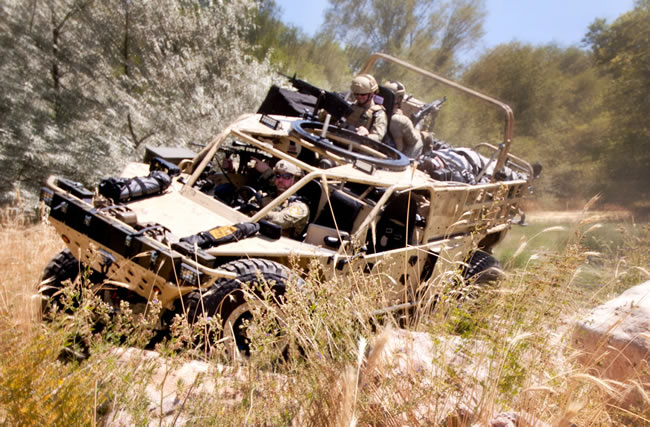
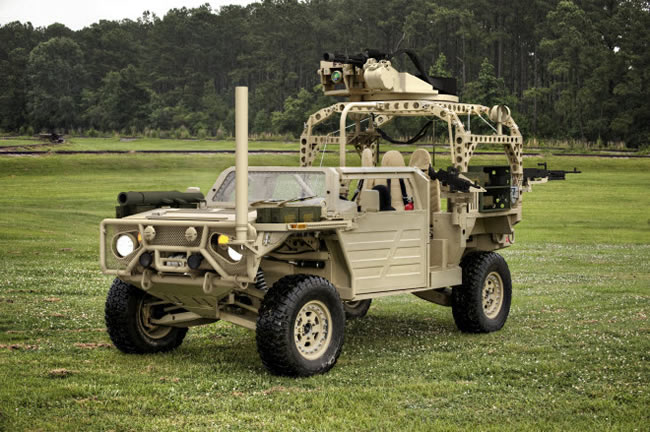
    The opportunity to sell thousands of medium and light tactical vehicles to SOCOM has attracted almost all major US military vehicle manufacturers to last months’ Modern Day Marine 2012 expo (MDM) in Quantico, and is bound to repeat here at AUSA this week. Some of these requirements address certain ‘special application’, particularly combat rescue. Others are needed to replace vehicles worn down by years of use in harsh conditions.

    SOCOM looks at purchasing several types of vehicles, some high mobility vehicles of the All Terrain Vehicle (ATV) class for which a contract award is expected in few months. Others are aimed to replace the HMMWVs with a new Ground Mobility Vehicle (GMV 1.1) – SOCOM is after about 1,300 such vehicles. With an RFP expected for January 2013 and a contract in January 2014.


    Our Sponsor: IAI

    The vehicles on display at MDM were representative of the different applications, and hint on the different approaches and priorities each competitor is focused on. These vehicles included the SRTV from HDT, Spectre from GDLS and Flyer displayed by Flyer Defense and GD-OTS and the new S-ATV from Oshkosh. Polaris displayed the MRZR and ArmorWorks also displayed another model of the Polaris, configured into the LVATV. At AUSA more competitors are showing their vehicles, including a team by Northrop Grumman and BAE Systems, competing for the GMV 1.1 program the debut of the Hyena fast attack recon vehicle from ArmorWorks.

    The following topics are covered in our preview:

    The Spectre from GDLS

    Better Force Protection

    Q-NET counter RPG system is being issued as a standard protection for the M-ATV. Photo: QinetiQ
    Our Sponsor: IAI
    Q-NET counter RPG system is being issued as a standard protection for the M-ATV. Photo: QinetiQ

    In the past 10 years force protection has been at the focus, as the military invested tens of billions of dollars buying anything that could enhance the survivability and protection of troops. However, since such devices are often required to counter specific and evolving threats that were uncommon or unfamiliar before, most of these acquisitions are managed as ‘urgent requirements’ and procured through accelerated acquisition by the Rapid Equipping Force (REF). While REF is mostly responsible for the adaptation, evaluation and fielding of existing equipment, the Joint IED Defeat Organization (JIEDDO) is responsible for combatting the No 1 threat to warfighters today – Improvised Explosive Devices (IED). Like REF, JIEDDO is responsible for the acquisition of equipment, but this organization also invests and motivate industry and research institutions to suggest and develop new countermeasures, and methods to detect, and fight IEDs and the networks that support them.


    It also manages training and knowledge centers supporting deployed forces throughout the world, by collecting information on threats, and suggesting recommended tactics and countermeasures, in an effort to enable front line units to stay ahead of the threat.

    Our sponsor: RADA Electronic Industries.

    Until recently, C-IED equipment focused on equipping specialized teams of combat engineers tasked with the job. A large acquisition program currently underway will prepare ordinary units to better deal with IEDs, using simple to use man portable unmanned ground vehicles (UGV). The Ultra-Light Recon Robot (ULRR) program is equipping combat units with robots that can defeat IEDs employing simple and tested methods. While initial orders have already been issued to some of the bidders, the competition is still open, and all the robots competing for this program are present at AUSA to promote their products. These include the SUGV from iRobot and DragonRunner from QinetiQ, MTGR from Roboteam and the miniature Throwbot from recon Robotics

    Improving the warfighters’ situational awareness is another facet of force protection – by expanding the security and surveillance circles beyond the unit perimeter. Radars, ground and aerial observations, unmanned aerial vehicles and unattended sensors are all part of this growing capability. Yet, since fewer, and smaller deployed units are expected to do ‘more with less’, all these sensors must work together, supporting the common goal providing a common situational picture. They should trigger an alarm before the enemy can act, and minimize false alarms, thus reducing the possibility of collateral damage from unnecessary response and reduce the workload of the troops.

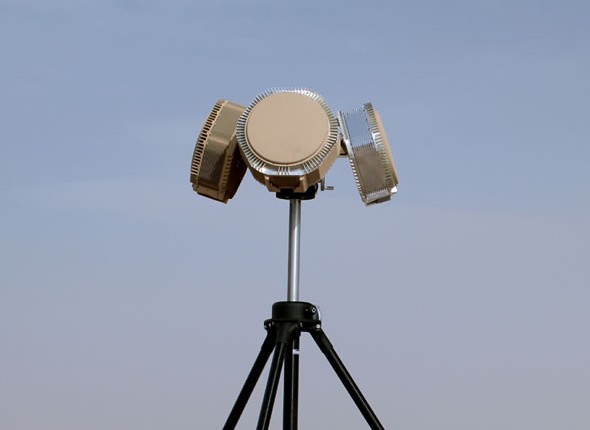
    RADA’s MHR radar is a software defined radar that can be configured to different missions, including fire alerting, border protection and tactical air surveillance.

    Among the new sensors currently being fielded or completing development are advanced radar designed to trigger automatic alarms and localize sources of artillery, mortar and rocket fire, and even small arms and RPGs. Such radars are available in large sizes, covering wide sectors, or tactical mobile or vehicle mounted radars, offering protection for battalions, companies and even smaller units. Utilizing similar technologies, other Ground Surveillance Radars are providing troops with standoff surveillance capability looking many miles into enemy area, others are designed to cover close-range, to maintaining a safe perimeter of few hundred meters protecting ambushes out in the open or forward operating bases and other facilities, located in urban terrain.

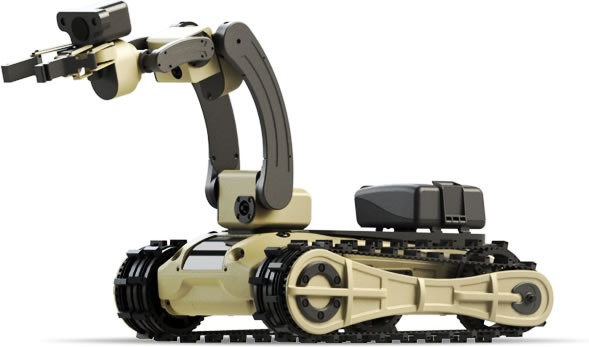
    The MTGR mini-robot carrying mini-arm manipulator designed to perform simple C-IED missions. Photo: Roboteam

    Other systems extending the situational awareness of forward operations bases (FOB) are unattended ground sensors, providing persistence monitoring of specific locations of interest (for intelligence gathering) or wider areas around the bases (perimeter security). New types of seismic, acoustic and visual (VIS) UGS enable operations over months, even years with one power pack. Other devices provide enhanced coverage with autonomous EO/IR/Radar sensors, remotely controlled and monitored from a distance, offering persistent surveillance for force protection and border security applications. Other sensors are tailored specifically for urban terrain and underground warfare rely primarily on robotic systems backed by dedicated MESH networking to support uninterrupted communications and navigation in radio and GPS denied environments.

    The following topics are covered in our preview:

    These articles will be opened for all readers on Defense-Update on Sunday (21/10) and are currently available in the downloadable PDF format.

    This issue is offered to Defense-Update readers as a complimentary preview issue. Forthcoming reports from the exhibition will be available nightly from Defense Update in web & PDF format, providing excerpts for all readers and full features for our paid subscribers.

    You are invited to Subscribe Here!
    SPECIAL COVERAGE: AUSA 2012 PREVIEW

    Every four years, the annual AUSA 2012 Exposition, taking place in Washington DC next week, is well timed to reflect the priorities – and constraints on defense budgets, reflected by the political debate toward the elections. In 2012 the debate is becoming more intense, as sequestration looming over the horizon could topple any agenda the candidates or their supporters promote. Even without the drastic reductions mandated by sequestration, U.S. Army leaders realize that significant cuts in programs, force structure and procurement will be made. The theme this week will therefore be – carry on building the future force, with the resources and capabilities we already have.

    DOWNLOAD YOUR FREE COPY HERE


    Contrary to the Army planner’s foresight in the 2000s, this decade is not about grand programs, but on reconstruction, reconstitution and incremental building of forces. Those military units that survive the cuts will have to do more with less. For the defense industry, it means that there will be fewer platforms to build but more parts and kits resets, modifications and modernization to deliver. Doing more with less also means more effective processes. Hence, saving energy costs, in fuels, batteries, and harnessing renewable energy in affordable costs would become more popular. It also means fewer soldiers mastering more skills, for which training, simulation and expert assistance will be critical. Among these modernization programs are the replacement of M-113 armored carriers. At present, the leading candidate is the Bradley platform, made by BAE Systems. Currently, the Heavy Brigades in the US Army are equipped with the Bradley infantry carrier and scout vehicle.

    The following topics are covered in our preview:

    These articles will be opened for all readers on Defense-Update on Sunday (21/10) and are currently available in the downloadable PDF format.

    This issue is offered to Defense-Update readers as a complimentary preview issue. Forthcoming reports from the exhibition will be available nightly from Defense Update in web & PDF format, providing excerpts for all readers and full features for our paid subscribers.

    You are invited to Subscribe Here!
    Elbit Systems Extends Dismounted C2 System to Infantry Squads and SF Teams

    PNR-1000A network radio and the Raptor computing device are the two main elements of Elbit Systems' new Dominator II LD optimized for squad-level C2. The gross weight of the system is 2.2 pounds - less than one kilogram. Photo: Elbit Systems
    PNR-1000A network radio and the Raptor computing device are the two main elements of Elbit Systems' new Dominator II LD optimized for squad-level C2. The gross weight of the system is 2.2 pounds - less than one kilogram. Photo: Elbit Systems
    The Raptor miniature computing device is part of Elbit Systems' new Dominator II LD optimized for squad-level C2. Photo: Elbit Systems
    The Raptor miniature computing device is part of Elbit Systems’ new Dominator II LD optimized for squad-level C2. Photo: Elbit Systems

    Elbit Systems of Israel has introduced a subset of the Dominator IICS integrated combat system designed for the dismounted soldier. While the current kit (SC) is designed for company and platoon leaders, focusing on powerful C4I capabilities, the new LD is configured for the squad, supporting both the leader and squad members. Dominator LD employs compact and lighter equipment, geared specifically for the tactical dismounted infantry soldier and Special Forces.

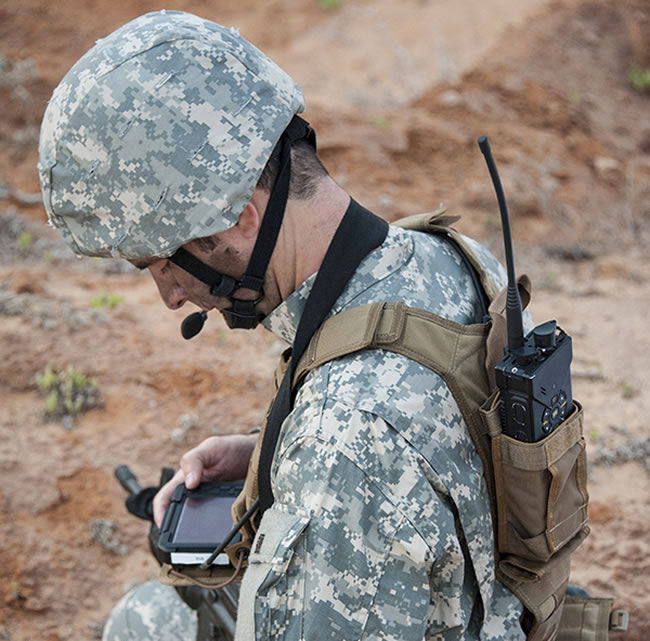
    The minimum set employs Elbit Systems’ Raptor rugged, all-in-one wearable computer running a subset of the TORC²H-D battle management command and control (C²) application, supported by the Tadiran PNR-1000 UHF encrypted personal network radio. This radio supports simultaneous duplex exchange of voice conferencing, data and video. Location reporting is embedded in the system utilizing the radio’s integral GPS-AGPSR. Both radio and Raptor are fit into an ergonomically designed load carrying harness. Both systems feed on a central power source (battery) supporting the system for 24 hours, both can also use their internal battery as a backup. The entire system with the central powerpack weighs about 2.2 pounds (1 kg).

    The PNR-1000A software based radio offers flexible configuration of command and control in the platoon, operating hierarchical sub-networks for individual teams or squads, spanning over distances of 2-3 km. It also provides intra-team wireless conferencing communications, at transfer rates of up to 1 mbps, as well as interconnectivity to long range VHF/HF/UHF networks, via vehicular intercom system or other interface units. The JS Eyepiece handheld display (used in the CS version) is also available as an option. According to Elbit Systems, the system’s modular design enables the user configure the kit into mission-specific ensembles, to support different operational needs.

    The combination of PNR-1000A voice/data communication and the Raptor processing and display capabilities enable the soldier to send and receive information in real-time, view an up-to-the-minute common operational picture shared by other members and higher command level, access live videos from external sensors from Remotely Operated Weapons, Unmanned Aerial Vehicles, ground robots and Unattended Ground Sensors, as well as from on-body and on-weapon sensors such as the rifle sight or helmet camera. These images can be captured and transmitted, along with position and other metadata, to other squad members or to the command post. The LD derivative of TORC²H-D was adapted specifically to address Special Forces requirements, featuring optimized man-machine-interface providing more intuitive access to specific tactical-relevant processes, enabling the user to access rapidly the content and functions they need under stressful operating conditions in combat and training.

    Ceradyne, Threat4 Introduce the MOHAWK Integrated Helmet System

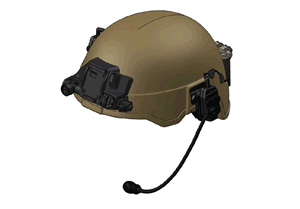
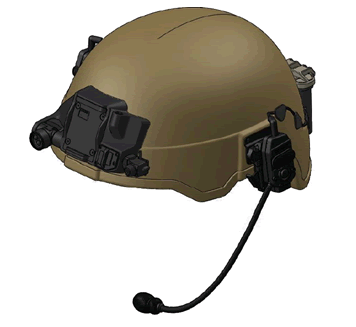
    Ceradyne's MOHAWK integrated helmet.
    Ceradyne’s MOHAWK integrated helmet.

    Ceradyne, Inc. in conjunction with Threat4 Inc., is showing a new concept of helmet and head protection called ‘MOdular HArd Wired Kitted’ (MOHAWK). The Boltless (patent pending) combat helmet comes with integrated radio communication headset and hearing protection; the tactical in-ear radio communication headset developed by Threat4 Inc. The helmet utilizes Ceradyne’s advanced Seamless Ballistic technology and new Boltless design.

    The helmet provides increased protection against fragments, small arms and rifle bullets. The shell uses Ceradyne Diaphorm’s proprietary Seamless Ballistic Helmet (SBH) forming and Thermoplastic Composite Helmet (TCH) molding technologies. SBH technology is used to form the helmet shell geometry from a multi-layered laminate without having to cut or dart any of the individual layers while creating a helmet shell with virtually no folds in the laminate. The resulting molded shell offers performance uniformity and thickness repeatability.


    The new combat helmet is based on a boltless retention system design with minimal inside surface obstruction. The helmet is further enhanced with a multi-conductor central modular bus bar system integrated into the helmet shell, with multiple universal mounting points to attach any combination of powered helmet accessories.

    The Threat4 tactical headset mounted on the MOHAWK is a variant of Threat4’s traditional x-62000 series headset which has been modified to include brackets to mount it on either side of the MOHAWK and to draw power from the bus bar system. Other accessories that are mountable to the MOHAWK include IFF (identification friend-or-foe) transponder, NVG (night vision goggle) with integrated camera and LED flashlight, all powered from the rear battery pack. The integration of a headset communication system with hearing protection to the helmet contributes to weight and logistics savings to the warefighter by eliminating the traditional headset’s power source and connecting to the power rail.

    A ROBOT TEAM STANDS UP TO FIGHT IEDs

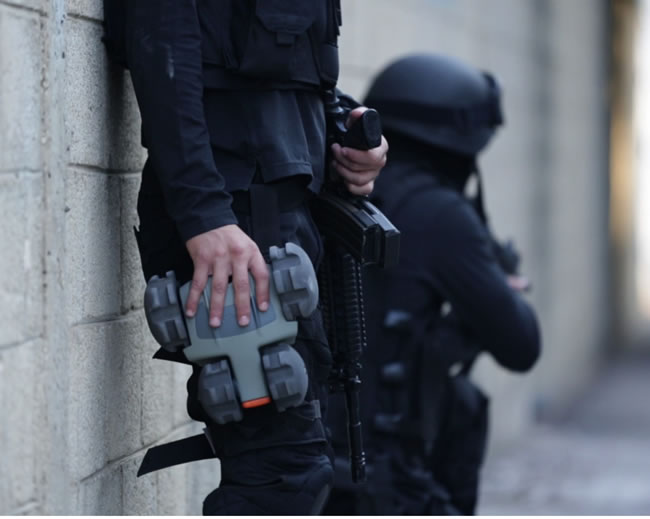
    MTGR is a new miniature recon robot designed for carrying and operation by a single soldier. Photo: Roboteam
    MTGR is a new miniature recon robot designed for carrying and operation by a single soldier. Photo: Roboteam

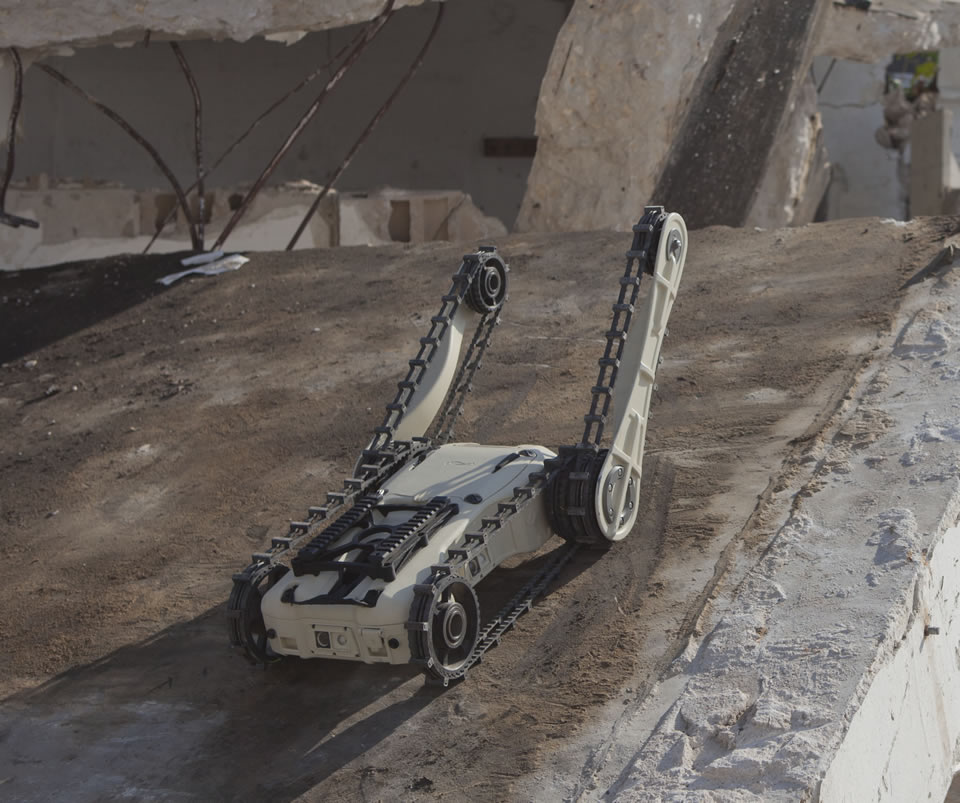
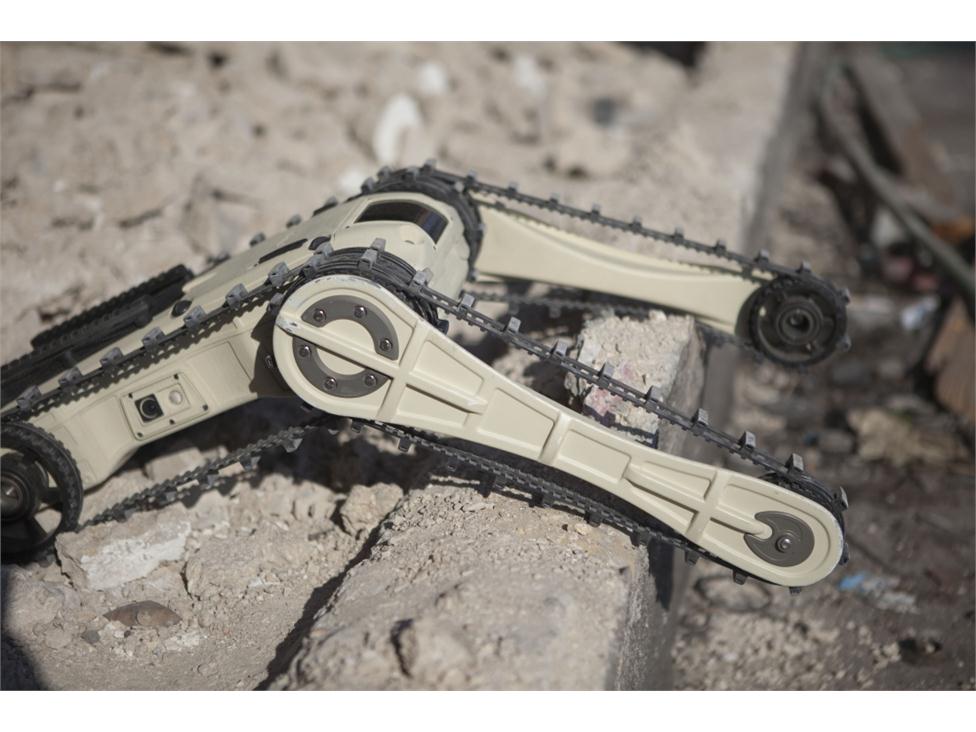
    The Israeli robotics developer Roboteam is introducing a new miniature robot designed for intelligence gathering and counter IED (C-IED) operations. The ultra-light, 13-lb, highly maneuverable robot can be carried by an individual soldier, climbs stairs and 60⁰ obstacles, operates effectively indoors utilizing secure MANET data link.

    Subscribe to get the full version of this articleExternally, MTGR looks different than any robot today. At a gross weight of 13 pounds (5.9kg), the backpacked MTGR weighs less than half of other robots in its climbing stairs class. “Through the development we fought on every gram and every cent, to come up with a robot that will be truly suitable for operation by a single soldier” Wolf said, the platform comprises carbon fibers for the elements carrying the highest loads and impact, with other composites forming other parts and covers for. Curved shapes were employed to carry loads or and absorb impact at minimum weight. Hollow tracks have also saved weight without compromising on performance and reliability.

    The propulsion system used was optimized to deliver large torque and high speed at the same time. MTGR is designed to operate in extreme environmental conditions, including wet, dusty and dark environments. It can fully operate after falling from a height of several meters. And can automatically upright itself, if it lands on the side or flipped on its back. The robot can rapidly climbs tall stairs and overcome large vertical obstacles. MTGR can carry any add–on up to 10 pounds such as manipulator and or explosives

    The MTGR is designed to deliver video and acoustic intelligence, surveillance and reconnaissance. Fitted with built-in color-zoom video camera and laser illuminator, both can tilt up or down, and additional four low-light CMOS cameras covering 360 degrees, the robot has a standard accessory port interfacing with power, Ethernet, RS232 and video / data connection. Mil Std. 1913 Picatiny rail accepts an additional day/night camera, a micro-manipulator to move debris or emplace counter-IED micro-charges. Another sensor payload called SAFIRE developed by the company, provides real time distance measurement using passive multi stereoscopic image processing (instead of Laser radar LIDAR), for semi-autonomous operations. Other built-in features include a GPS receiver, inertial sensors and magnetic compass, allowing position reporting (Blue Force Tracking) and C4I integration even when the robot operates in GPS denied areas, underground or indoors.

    A unique feature employed in all its robots is the use of secure digital datalink employing Mobile MESH network. This architecture enables robots to communicate with other MESH network nodes to increase operational distance. This digital datalink technology is based on advanced, commercial-off-the-shelf (COTS) elements facilitating fully encrypted, COMSEC protected two-way datalink, with efficient spectrum utilization enabling multi-robot operating environment.

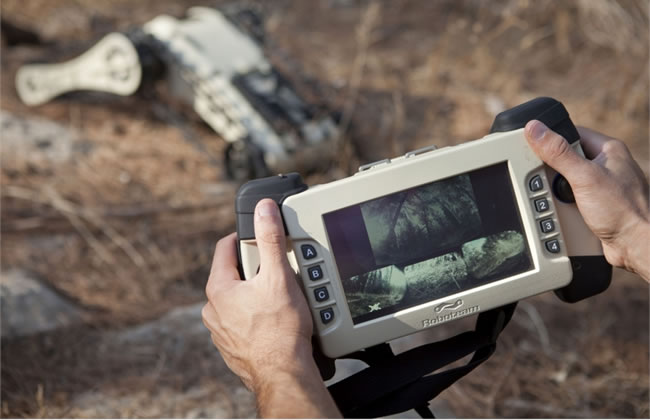
    MTGR is controlled via the RCOU7 console over a wireless mesh networking datalink. Photo: Roboteam
    MTGR is controlled via the RCOU7 console over a wireless mesh networking datalink. Photo: Roboteam

    The Remote Operation Control Unit (ROCU7) developed by the company complements the robotic system, addressing the requirement for ‘simple and intuitive operation’. The control unit comes with HD 7” display, and controls derived from the videogame world. These MIL-STD NVIS compliant systems operate with either Android or Windows 7 operating systems. Both the ROCU and the robot itself operate with standard BA-2557 batteries, therefore simplifying field sustainment. The robot operates for 3.5 hours and ROCU can operate for four hours. The company has also developed larger (10” and smaller 5”) versions of ROCU to support other applications.

    IRIS is a lightweight (1 kg) robot designed to provide video and audio intel from indoors or underground environments, where it can operate continuously for four hours. Photo: Roboteam
    IRIS is a lightweight (1 kg) robot designed to provide video and audio intel from indoors or underground environments, where it can operate continuously for four hours. Photo: Roboteam

    The smaller ROCU5 supports the Individual Robotic Intelligence System (IRIS), a throwable, miniature 4×4 robot weighing 2.2 pounds (les than 1 kg), designed to extreme maneuverability.

    IRIS will be thrown into the target area, (it can absorb an impact falling 10 meters high). IRIS uses the same datalink of the MTGR and, therefore, can act as a node in the datalink MESH network supporting multiple robots. With extremely power efficient, IRIS can run on six AA batteries for up to four hours. IRIS is designed as a compact system, enabling the warfighter to carry it in a side pocket or a thigh case.

    MTGR has a standard accessory port interfacing with power, Ethernet, RS232 and video / data connection. Mil Std. 1913 Picatiny rail accepts an additional day/night camera, a micro-manipulator to move debris or emplace counter-IED micro-charges. Photo: Roboteam
    MTGR has a standard accessory port interfacing with power, Ethernet, RS232 and video / data connection. Mil Std. 1913 Picatiny rail accepts an additional day/night camera, a micro-manipulator to move debris or emplace counter-IED micro-charges. Photo: Roboteam

    F-35A Drops Guided Weapons over China Lake

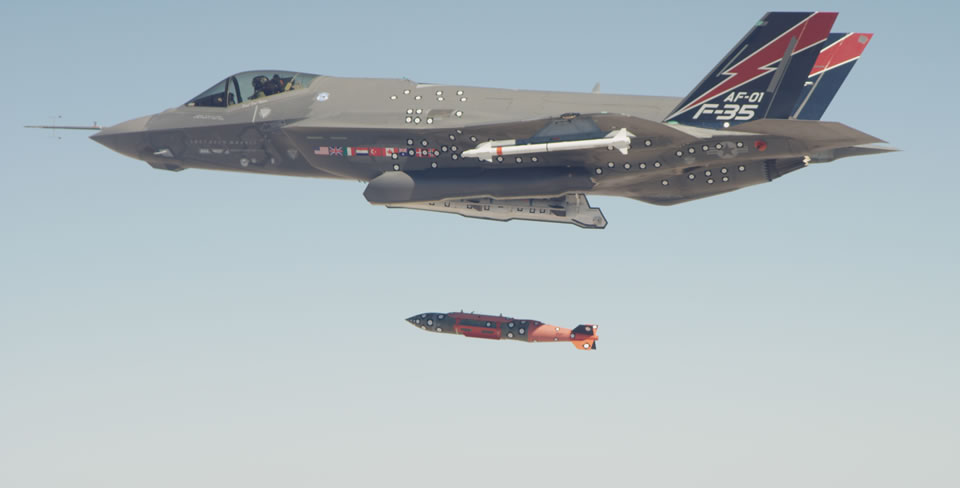
    An F-35A completed the first in-flight weapons release of a 2,000 pound GBU-31 BLU-109 Joint Direct Attack Munition (JDAM) over the China Lake test range yesterday, October 16, 2012. Photo: Lockheed Martin
    An F-35A completed the first in-flight weapons release of a 2,000 pound GBU-31 BLU-109 Joint Direct Attack Munition (JDAM) over the China Lake test range yesterday, October 16, 2012. Photo: Lockheed Martin
    An F-35A completed the first in-flight weapons release of a 2,000 pound GBU-31 BLU-109 Joint Direct Attack Munition (JDAM)  over the China Lake test range yesterday, October 16, 2012. Photo: Lockheed Martin
    The AF-1 F-35A completed the first in-flight weapons release of a 2,000 pound GBU-31 BLU-109 Joint Direct Attack Munition (JDAM) over the China Lake test range yesterday, October 16, 2012. Photo: Lockheed Martin

    As part of the continued weapons integration and validation tests, an F-35A conventional takeoff and landing (CTOL) aircraft, completed the first in-flight weapons release of a 2,000 pound GBU-31 BLU-109 Joint Direct Attack Munition (JDAM).

    The test was performed yesterday, Oct. 16 as U.S. Air Force Maj. Matthew Phillips jettisoned an instrumented GBU-31 from AF-1 over the China Lake test range. Previous weapon separation tests were already performed on the F-35B variant of the Joint Strike Fighter at Patuxent River.

    The weapon was carried internally, at left internal weapons bay. The F-35A can carry two such weapons internally plus two missiles, on four internal weapons stations, maintaining full stealth configuration. When stealth is not mandatory, the aircraft can carry up to 18,000 pounds using 10 weapon stations. The CTOL aircraft can three external weapon stations per wing if required.

    MBDA’s Miniature Missile Complete First Test Flight

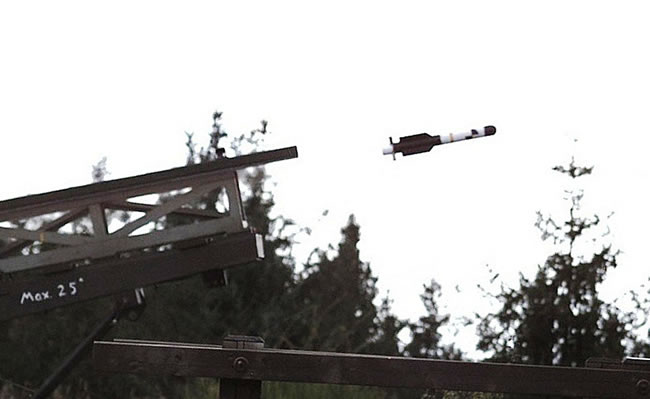
    The first firing trial of MBDA's Kleinflugkörper (KFK) miniature missile. Photo: MBDA
    The first firing trial of MBDA's Kleinflugkörper (KFK) miniature missile. Photo: MBDA

    The first firing trial of MBDA's Kleinflugkörper (KFK) miniature missile. Photo: MBDA
    The first firing trial of MBDA’s Kleinflugkörper (KFK) miniature missile. Photo: MBDA
    MBDA performed the first test flight The KFK missile on 19 September 2012 at the military training centre in Baumholder, Germany. On this test the miniature missile demonstrator performed two successful unguided firings, with the missile travelling the planned distance in each case. The test was attended by German officials.

    Under the project supervision and funding of MBDA Germany, MBDA with the support of various government offices has been financing the a Kleinflugkörper (Small Missile) Technology Demonstration Programme. The current phase spans over one year and is funded by the MBDA. The missile concept was developed by building on the mission experience of the German Bundeswehr and more generally on the lessons learned from recent conflicts. 

    The small missile addresses evolving requirements for an affordable, compact and lightweight precision multipurpose weapon that can be carried and operated by a single soldier. The KFK concept is positioned as a complimentary weapon to existing existing shoulder-fired infantry weapon systems, enabling the dismounted infantry to engage different targets with high precision at the relevant combat ranges, with high precision, with minimal exposure to the operator.

    “We are pursuing this project drawing on multinational capabilities across MBDA. This multinational approach is particularly interesting in view of the shrinking budgets in Europe’s defence markets. MBDA is breaking new ground here with respect to the rapid, multinational implementation of innovative solutions for international customers” explains Peter Heilmeier, Market and Business Development Director at MBDA Germany.

    Soldier Technology 2013


    January 28 – 31, 2013
    Marriott Gateway, Crystal City – Jan. 28-30
    Officers Club, Ft. Belvoir – January 31


    I would like to introduce to you Soldier technology 2013 – a leading event sponsored by Defense-Update.

    If you haven’t attended the Soldier Technology meeting and exposition before, let me keep you up to date on the program developments and let you know about a special offer expiring next week.

    Download the program which contains acquisition updates and requirements briefs from over 40 soldier modernizers. Read on if you are involved in soldier, marine, airborne soldier and Special Operations programs of record….

    What is Soldier Technology?

    Soldier Technology is the annual meeting of senior soldier and marine system modernization leaders in Crystal City, Arlington where decisions about future capabilities for the small unit and squad take shape.

    It is the only place where over 550 government and industry program managers meet and learn from Pentagon, Army, Marine Corps and industry leadership about soldier system modernization requirements and business opportunities to unburden, connect, train and protect ever more lethal small units and squads. There is no better forum to monitor activity across the full spectrum of US and international soldier and marine systems acquisition programs than Soldier Technology.

    [box type=”info” size=”large” style=”rounded”]Special Offer for Defense Update Readers: Register Your Place By October 19 and Get up to $300 Off! Enter code: DU[/box]

    Here are 6 ways in which Soldier Technology will give you more value than any other similar event:

    1. Boost your domestic and foreign military sales by understanding the latest US Marine Corps, allied nations and the US Army requirements
    2. Get your message across to a qualified audience of government and industry soldier, marine and squad program managers in an open environment
    3. Gain introductions to the people, programs and ideas driving marine and soldier modernization today
    4. Exchange new ideas, discuss new equipment as well as collaborate on joint initiatives with domestic and foreign customers and partners
    5. Have your technical questions answered directly about your equipment in the field or soon to be deployed
    6. Align your business and product lines by getting insight on all soldier modernization initiatives in North America

    See the full list of speakers confirmed to date to find out who you’ll meet and hear from!

    Given that Soldier Technology offers you a unique set of opportunities and benefits to improve your awareness of innovations for the soldier and marine plus put you in touch with all the industry subject matter experts for your future information needs, this is one meeting you simply can not afford to miss.

    [box type=”info” size=”large” style=”rounded”]Special Offer for Defense Update Readers: Register Your Place By October 19 and Get up to $300 Off! Enter code: DU[/box]

    Email me today if you would like to receive more information on the agenda, speakers and special offer from our Customer Service Team: [email protected]

    Alternatively, book in one of the easy ways below:

    Visit: www.soldiertechnologyus.com
    Call: +1 (888) 482.6012
    Fax: +1 (646) 200.7535

    I look forward to receiving your registration and welcoming you onsite.

    Best regards,
    Tom Webber
    Director, Soldier Technology 2013

    P.S. If you have enough information to register, book by October 19 to get $300 off!


    Industry & Manufacturers: Only a limited number Exhibition and Partnership opportunities remain, contact us for information on:

    • Exhibition booth space
    • Presenting opportunities
    • Branding opportunities

    How can you find out more?

    See details online, request a call with information or call on +44 (0) 20 7368 9465

    Elbit Systems to Deliver a New Configuration of the ATMOS SP GUN for a Customer in East Asia

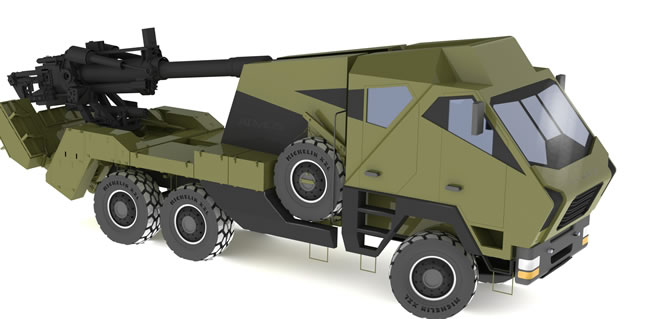
    The New ATMOS from Elbit Systems (Soltam). The recessed gun positioned for travel contributes to the vehicle's lower silhouette. The vehicle also has a wide blade, for faster deployment and entry into firing position. Image: Elbit Systems

    The New ATMOS from Elbit Systems (Soltam). The recessed gun positioned for travel contributes to the vehicle’s lower silhouette. The vehicle also has a wide blade, for faster deployment and entry into firing position. Image: Elbit Systems
    The New ATMOS from Elbit Systems (Soltam). The recessed gun positioned for travel contributes to the vehicle’s lower silhouette. The vehicle also has a wide blade, for faster deployment and entry into firing position. Image: Elbit Systems

    The New ATMOS from Elbit Systems (Soltam). The recessed gun positioned for travel contributes to the vehicle’s lower silhouette. The vehicle also has a wide blade, for faster deployment and entry into firing position. Image: Elbit Systems[/caption]

    Elbit Systems Ltd. reported today that it was awarded two contracts from a Far Eastern country to supply self-propelled artillery systems and communications equipment with a total value of approximately $50 million.

    Under the first contract, Elbit Systems will supply the country’s Artillery Corps the ATMOS autonomous artillery system, for approximately $30 million. The artillery units will be delivered within three years. The system, mounted on various wheeled platforms, enhances mission flexibility, reaction speed and survivability of both the crew and the system. Elbit unveiled a new configuration of the ATMOS, utilizing a redesigned cabin and recessed, low profile carriage for the howitzer.

    Under the second contract Elbit Systems will supply the country’s Armed Forces with personal radio systems, for approximately $20 million, which will be supplied within a year.

    Israel Navy to Modernize Hetz Class Missile Boats with the New ALPHA Radar

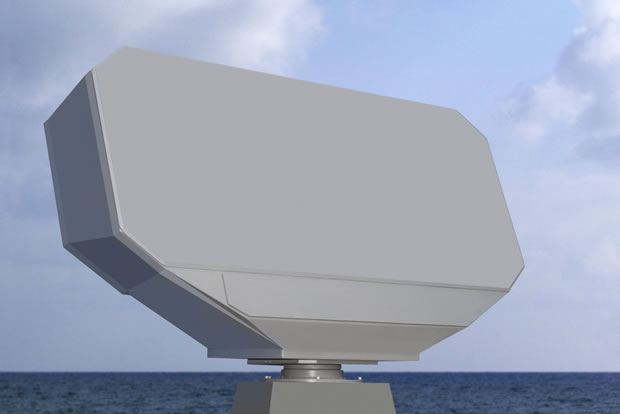
    The EL/M-2258 ALPHA radar from IAI Elta
    The EL/M-2258 ALPHA radar from IAI Elta. Photo: IAI Elta Systems
    The EL/M-2258 ALPHA radar from IAI Elta
    The EL/M-2258 ALPHA radar from IAI Elta. Photo: IAI Elta Systems

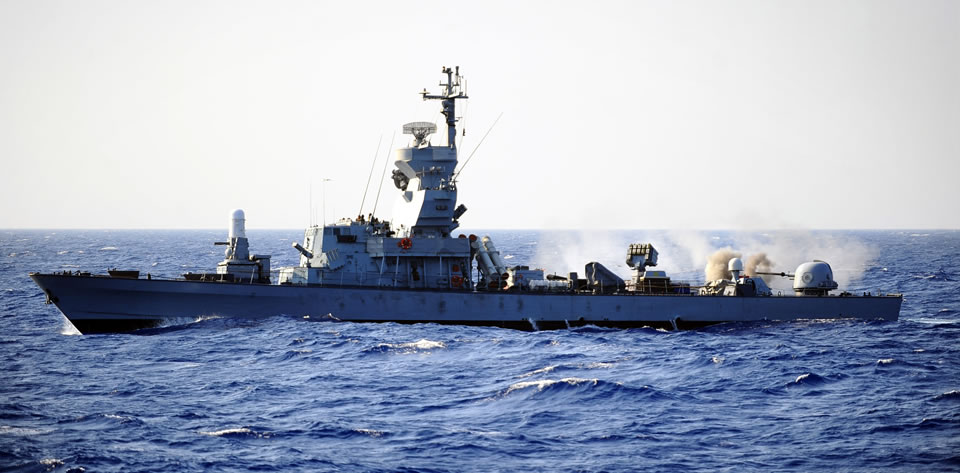
    The Israel navy has awarded IAI Elta a first contract for the development and integration of the Advanced Lightweight Phased Array (ALPHA) Naval Radar on the Hetz Class Saar 4.5 Missile Boats. The contract is the first step in the next, long anticipated upgrading of the SAAR 4.5 ‘Hetz’ class missile boats, operational with the Israel Navy since the 1980s. These missile boats currently operate with several mission specific radars, including the IAI/Elta EL/M-2221 naval fire control radar, an area search radar and the Automatic Missile Detection Radar (AMDR), supporting the Barak 1 close-in weapon system.

    The EL/M-2258 Software Defined Radar will replace all those radars with a single system, more reliable, flexible and agile. This S-band radar utilizes solid-state, electronically scanned radar array rotating over 360 degrees. The radar employs advanced beam forming techniques for multipath suppression and Electronic Counter-Countermeasures (ECCM). It is designed to detect targets with low Radar Cross Section (RCS) even in highly cluttered conditions. The system will improve the naval theater situation awareness picture and support on board weapon systems are designed to operate under tough environmental conditions and against challenging targets expected in the existing and future naval arena.

    The new radar employs modern phased array technology, utilizing the same solid-state Transmit/Receive (T/R) modules derived from Elta’s larger EL/M-2248 MF-STAR radars. The company has already delivered the first MF-STAR radar for installation on three new Project 15A guided missile destroyers of the Indian Navy. A smaller version of the MF-STAR is also in production for the Israeli Navy, destined to modernize the three Saar V corvettes of the Israel Navy, as part of their upgrade that will include the installation of barak 8 air and missiles defense weapon system.

    As its bigger brother, the Alpha is also designed for operation in open sea and littorals. Unlike the MF-STAR that weighs several tons, the ALPHA weighs only 1.2 tons, and its mast mounted segment weighs only 700 kg with the remaining 500 kg stored below deck. Its compact dimensions enable the ALPHA to be installed on small corvette size vessels. The system uses two-dimensional electronic beam steering, providing instantaneous multi-beam emission supporting simultaneous multi-mission functionality. The system provides high resolution maritime surface surveillance and tracking, 3D long-range air surveillance and tracking, 3D medium range automatic threat alert (supporting self-defense anti-missile systems) performed within the area scan. It also provides target classification of surface and airborne targets (including helicopters), gunnery control and splash spotting for fire correction. The radar provides supports very high tracking update rate and accuracy for priority targets.

    Israel's Navy Saar 4.5 Class Missile Boats currently operate the EL/M 2221 fire control radar also developed and produced by Elta Systems. Photo: Ori Shifrin, IDF.
    Israel’s Navy Saar 4.5 Class Missile Boats currently operate the EL/M 2221 fire control radar also developed and produced by Elta Systems. Photo: Ori Shifrin, IDF.

    Skunk Works and XTEND Simplify Multi-Drone Command

    0
    Lockheed Martin Skunk Works® and XTEND have achieved a major milestone in JADC2 by integrating the XOS operating system with the MDCX™ autonomy platform. This technical breakthrough enables a single operator to simultaneously command multiple drone classes, eliminating the friction of mission handoffs. From "marsupial" drone deployments to operating in GPS-denied environments, explore how this collaboration is abbreviating the data-to-decision timeline and redefining autonomous mission execution.

    From Ukraine to Taiwan: The Global Race to Dominate the New Defense Tech Frontier

    0
    As traditional defense primes face mounting competition from agile “neoprimes” such as Anduril, Palantir and Helsing, the balance of innovation is shifting toward software-defined warfare and scalable, dual-use technologies, while global industry consolidation—marked by Boeing’s integration of Spirit AeroSystems and other strategic mergers—signals an intensified race to secure control over the defense technology value chain. Our Defense-Tech weekly report highlights these trends.

    Europe’s “Drone Wall”

    0
    In early October 2025, a coordinated wave of unmanned aerial system (UAS) incursions—widely attributed to Russia—targeted critical infrastructure across at least ten European nations. The unprecedented campaign exposed the fragility of Europe’s air defenses...

    Weekly Defense Update & Global Security Assessment

    0
    Executive Summary The past week (September 18-25, 2025) represents an inflection point where strategic defense concepts have transitioned from doctrine to tangible reality. An analysis of global events reveals four primary, interconnected trends shaping an...

    U.S. Air and Space Forces Push Next-Gen Programs at the AS&C 2025 Conference and...

    0
    At the 2025 Air, Space & Cyber Conference, U.S. Air Force and Space Force leaders unveiled major updates on next-generation fighters, bombers, unmanned systems, and space initiatives, highlighting both rapid innovation and critical readiness challenges as the services race to outpace global competitors. A short version is available here, with a more detailed version for subscribers.

    TADTE 2025: Reflecting Taiwan’s Strategic Themes

    0
    The Taipei Aerospace & Defense Technology Exhibition (TADTE) 2025 crystallized around four dominant strategic themes that collectively illustrate Taiwan's comprehensive approach to defense modernization amid escalating regional tensions. Based on a detailed report by Pleronix (available upon request). Includes a Podcast discussion on TADTE 2025's highlighting Taiwan's four strategic themes beyond the post's coverage.

    Iron Beam 450 Completes Testing, Soon to Join With Operational Air Defense Units

    0
    Israel’s Iron Beam 450 high-power laser system has completed final testing, marking a major leap in air defense. Developed by Rafael, it offers precise, cost-effective interception of rockets, UAVs, and mortars, and is set for IDF deployment by 2025.