
Monday, December 29, 2025
More
    Home Blog Page 171

    EADS – BAE Systems Merger Talks Collapse

    BAE and EADS decided to drop the proposed merger. After four week discussions it became clear that the two companies could not reconcile their tripartite interests in a unified entity. “BAE Systems and EADS have therefore decided it is in the best interests of their companies and shareholders to terminate the discussions and to continue to focus on delivering their respective strategies,” BAE said in a statement. BAE said it had become clear that the interests of the French, British and German governments could not be reconciled with each other or with the objectives that BAE and EADS established for the merger. The German side posed most of the obstacles, over concerns raised at the highest level of government about share ownership, and potential consequences of redundancies related to workforce and operating facilities. London and Paris were generally supportive of the proposed merger.

    Although BAE is a private British company, over half its revenues are derived from its US based subsidiaries. In contrast, the Franco-German EADS, is largely influenced by civil aviation market trends (Airbus is its largest holding), the German and French industrial groups and the French government. Eventually, it was the German Government that objected to the merger and was the main roadblock in the process. Germany does not currently have a direct stake in EADS, but is represented by industrial ally Daimler AG, which holds just over 22 percent. Daimler said it still aims to reduce its EADS stake this year despite the failed merger talks. The companies had until 1600 GMT today to declare their intentions. The merged company could become the world’s largest aerospace, defense and security company with over quarter million workforce. While Britain and France supported the merger, it was Germany who posed most of the demands, which were met by the other parties.

    EADS, BAE Systems Discuss a Merger Creating the World’s Largest Defense & Security Group

    Munchen, London – September 13, 2012: BAE Systems plc (BAE Systems) and EADS N.V. (EADS) confirmed yesterday that they are negotiating a possible merger which would create the world’s largest aerospace and defense company. In practice, the two groups would create a dual listed company structure, under which both companies would operate as one group, by means of equalisation and other agreements, but would be separately listed on their existing exchanges. In response to BAE systems’ announcement that came after sudden share price movement in the London Stock Exchange, EADS confirmed it is in talks with BAE but cautioned that the matter is subject to the approval of the Board of EADS and there can be no certainty that these discussions will lead to a transaction.

    According to BAE announcement it will own 40% of the shares of the enlarged group’s shares with EADS owning the majority (60%). It is contemplated that there would be a unified board and management structure with identical boards and executive committees at each of BAE Systems and EADS. In addition, subject to receiving appropriate shareholder approvals, the parties envisage issuing special shares in BAE Systems and EADS to each of the French, German and UK governments to replace the existing UK government share in BAE Systems and the stakeholder concert party arrangements in EADS.

    Under the transaction structure being discussed between the parties, BAE Systems and EADS envisage that certain of their defence activities would be ringfenced with governance arrangements appropriate to their strategic and national security importance, particularly in the USA, given the importance of that market to the enlarged group.

    BAE Systems and EADS have a long history of collaboration and are currently partners in a number of important projects, including the Eurofighter and MBDA joint ventures. The potential combination would create the world’s largest aerospace, defence and security group with substantial centres of manufacturing and technology excellence in France, Germany, Spain, the UK and the USA with business volume twice as big as today’s leader Lockheed martin.

    BAE Systems and EADS operate highly secure and sensitive defence businesses in the USA, the UK, France, Germany, Spain, Saudi Arabia and Australia, amongst other countries. Discussions have therefore been initiated with a range of governments about the implications of the potential transaction.

    “BAE Systems and EADS believe that the potential combination of their two businesses offers the prospect of significant benefits for customers and shareholders of both companies. These benefits include cost savings, such as from procurement and sourcing efficiencies available to the enlarged group, and substantial new business opportunities.” BAE’s announcement said.
    Military Transports to Safely Fly Low-Level IFR with new Terrain Following and Terrain Avoidance (TF/TA)

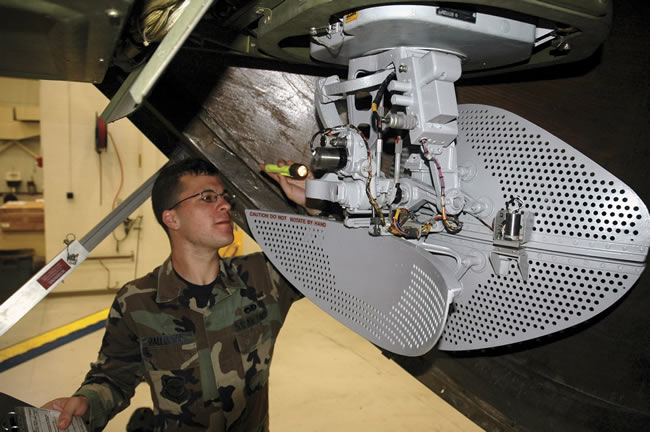
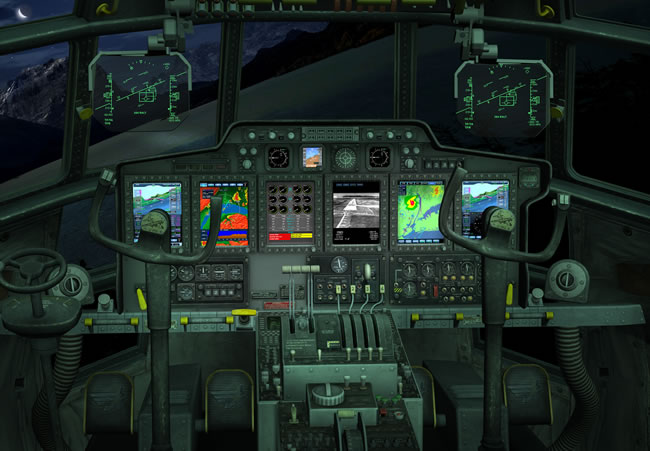
    Elbit Systems and Northrop Grumman Collaborate in Developing Terrain Following and Terrain Avoidance (TF/TA) System to Improve Tactical Low-Level Flight Safety for Military Transport Planes. Photo: Elbit Systems
    Elbit Systems and Northrop Grumman Collaborate in Developing Terrain Following and Terrain Avoidance (TF/TA) System to Improve Tactical Low-Level Flight Safety for Military Transport Planes. This new capability could be integrated into the IAF upgrade. Photo: Elbit Systems
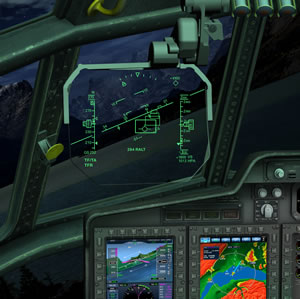
    The Head-Up Display view of the TF/TA system developed for the C-130. Photo: Elbit Systems
    The Head-Up Display view of the TF/TA system developed for the C-130. Photo: Elbit Systems

    An innovative Terrain Following and Terrain Avoidance (TF/TA) system under development at Elbit Systems, in cooperation with Northrop Grumman, will enable pilots to fly and maneuver more safely in Terrain Following/Terrain Avoidance (TF/TA) flight mode under all weather conditions, day and night.

    The two companies will display the new system at the C-130 Hercules Operators Council organized by the aircraft manufacturer Lockheed Martin in Atlanta, later this month.

    Under the collaborative deveplopment, Elbit Systems’ TF/TA head-up display (TA/TF HUD) application is coupled with Northrop Grumman’s AN/APN-241 Terrain Following Radar for an avionic upgrade for existing or new C-130 Hercules transport aircraft. The TF/TA HUD demonstrator is expected to fly within the upcoming year on an international customer’s C-130 Transport Aircraft.

    The TF/TA system relies on a Digital Terrain Elevation Database and the Terrain Following Radar as an active sensor, driven and controlled by Elbit Systems’ Smart Displays. Implemented as part of a “Glass Cockpit” concept, the system is positioned as a competitive and attractive enhancement for C-130 modernization and upgrading.

    The system evolved in Elbit Systems’ Futures Lab, the company’s innovation center tasked with rapid prototyping and proof of concept evolving aerospace systems. The TF/TA system has already been selected for integration into an ongoing C-130 upgrade program.

    AN/APN-241 weather/terrain avoidance radar from Northrop Grumman is used on the C-130J and C-27J tactical transport aircraft
    AN/APN-241 weather/terrain avoidance radar from Northrop Grumman is used on the C-130J and C-27J tactical transport aircraft

    Northrop Grumman’s AN/APN-241 radar has been selected as the standard radar for the Lockheed Martin C-130J Super Hercules and Alenia C-27J transport aircraft. Additionally, the AN/APN-241 radar has been integrated and installed on the CASA C-295 transport aircraft.

    Elbit Systems and Northrop Grumman Collaborate in Developing Terrain Following and Terrain Avoidance (TF/TA) System to Improve Tactical Low-Level Flight Safety for Military Transport Planes. Photo: Elbit Systems
    Elbit Systems and Northrop Grumman Collaborate in Developing Terrain Following and Terrain Avoidance (TF/TA) System to Improve Tactical Low-Level Flight Safety for Military Transport Planes. Photo: Elbit Systems

    OPTIMUS to Extend UAV Autonomy, Under Human Supervisory Control

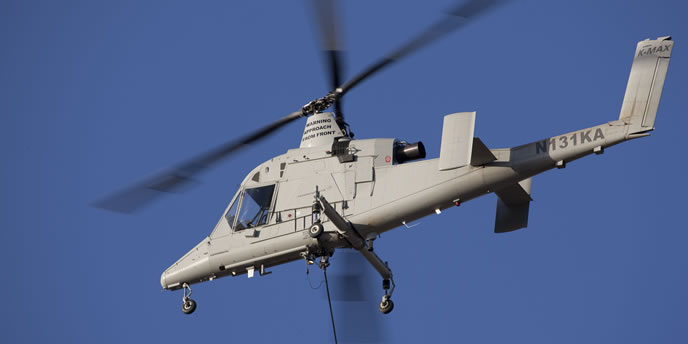
    The autonomous K-MAX unmanned helicopter will provide air transportation of the UGV and will also provide an aerial watch of the target area. Photo: Lockheed Martin

    The Office of Naval Research has awarded a $13.5 million contract to an industry team led by Lockheed Martin to explore advanced autonomous technologies aboard an unmanned vertical take-off and landing aircraft. The technology will enable aircraft to operate under supervisory control – a human operator will interact with the system at a high level while low level control is left to the automation.

    During this first, 18-month phase of the five-year effort, the team will demonstrate the capabilities of its Open-Architecture Planning and Trajectory Intelligence for Managing Unmanned Systems (OPTIMUS) architecture. OPTIMUS is designed to be platform-agnostic, drawing from Lockheed Martin’s experience with the unmanned K-MAX cargo resupply program and the combined teams’ expertise in the fields of sensing, autonomy and human-machine interaction.

    The team lead by Lockheed Martin includes industry, government, and academic partners. “This contract provides our team the opportunity to demonstrate how far we can expand the technology envelope,” said Roger Il Grande, director of Airborne Systems for Lockheed Martin’s Mission Systems & Sensors business. “Some of our cutting edge technology has already been demonstrated on K-MAX for the Army’s Autonomous Technologies for Unmanned Air System program, and is now deployed with the Marine Corps on the aircraft in Afghanistan.” The resulting technology will have the potential to improve the utility and effectiveness of current unmanned vertical take-off and landing aircraft, as well as offer pilots supplemental decision aids on legacy manned platforms.

    Toward a ‘New Age of Carriers’ in Asia Pacific

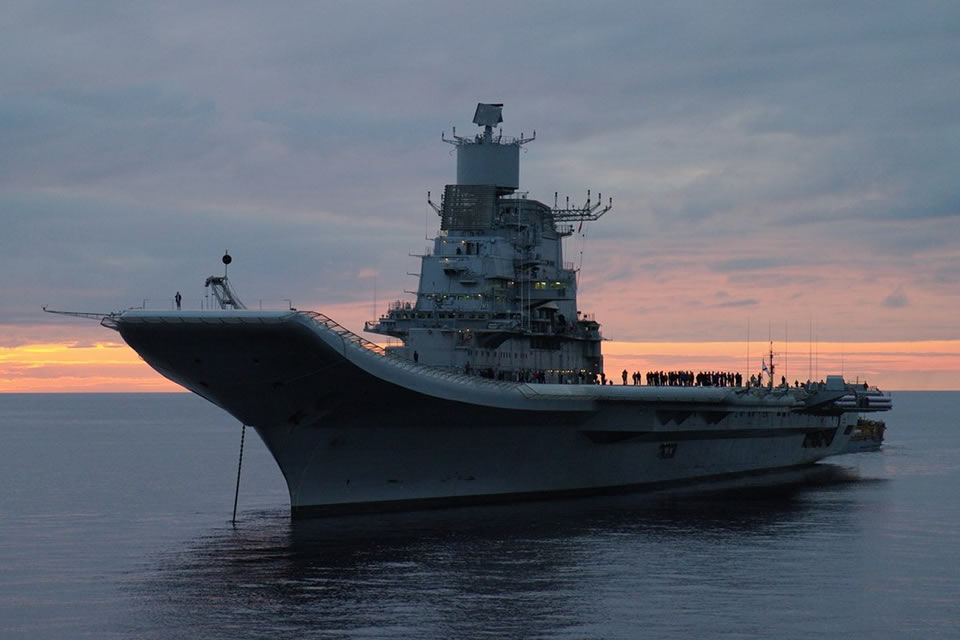
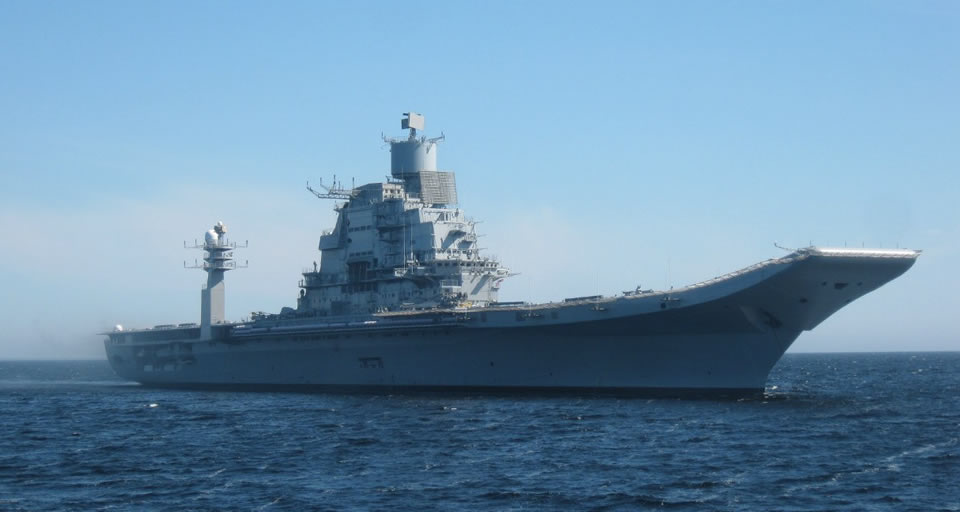
    Vikramaditya sailing to the White Sea on its sea trials
    Vikramaditya sailing to the White Sea on its sea trials

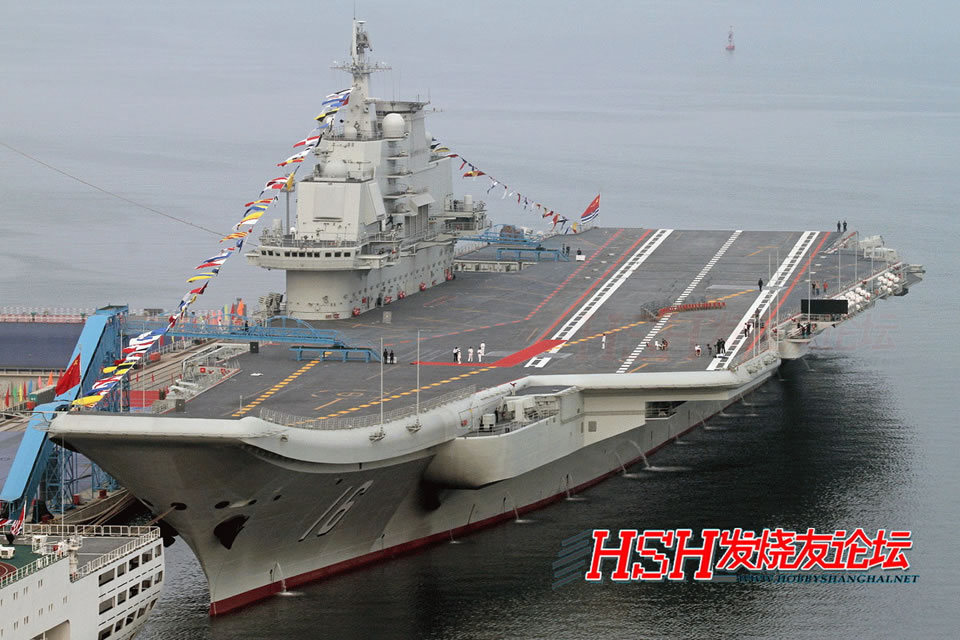
    After decades of unchallenged naval supremacy in the Pacific and Indian Ocean, new naval powers are looming in the area, and new alliances are formed. The ceremonial commissioning of the first aircraft carrier by China, and the planned commissioning of the ex-Russian aircraft carrier Vikramaditiya (planned for December but later delayed to 2013) are two points indicating this new vector of growing importance of regional naval air power in Asia Pacific and the Indian Ocean.
    China's first Aircraft Carrier Liaoning ready for the commissioning celebration Sept 25, 2012
    China’s first Aircraft Carrier Liaoning ready for the commissioning celebration Sept 25, 2012

    While the two carriers, by themselves, are not challenging the US supremacy at sea, undoubtedly, more will be fielded over the coming decade. Russia is planning to build six new aircraft carriers after 2020. Russian naval planners foresee at least one Russian Carrier Battle Group (CVBG), comprising 15 vessels supporting the aircraft carrier will be deployed in the Pacific Ocean by 2017. A second CVBG will be deployed with the Northern Fleet. Each CVBG will include at least one flat deck carrier (CV), missile cruisers (CG), destroyers (DDG), multi-purpose submarines (SSN), frigates (FFG), corvettes, landing craft and other ships such as icebreakers for the Arctic zone.

    11 U.S. aircraft carriers are birthed in the Pacific Ocean. The US plans to reduce the number of carriers deployed with the Third and Seventh fleets in the Pacific Ocean to five, with the planned withdrawal of the USS Enterprise, but the number will increase again in 2015, as the new Gerald R. Ford is commissioned in 2015.

    China has already indicated that the new ‘Liaoning’ is only a training platform, for its navy to practice the operational and technical aspects of naval aviation operations. These lessons will be implemented in the design, construction and fielding of future Chinese built carriers. India is also planning to build two Majestic class aircraft in the next 10 years. India has been operating aircraft carriers since 1961 when the ex-Royal Navy HMS Hercules was inducted into service as INS Vikrant. She was retired in 1997, replaced by the INS Viraat (formerly HMS Hermes), which entered service with the Indian Navy in 1987.

    Through the years India has built a sizable naval aviation force, extending its reach into the Indian Ocean. As part of this plan, India prepared to deploy three carrier battle groups in the Indian Ocean by the year 2015, reflecting its growing Indian interests as a regional power. However, with the commissioning of its new carrier delayed for next year, and introduction of the first indigenous carrier delayed at least to 2017, the Indian naval air power is hanging on the thread of the 60 year old Viraat, whose service is now stretched at least through 2020. To prepare for the extended service life, INS Viraat is scheduled to enter four months refit at the Cochin Shipyard, to be completed around April 2013, leaving India without any operational carrier…

    Eventually, Viraat will be succeeded by the first of two indigenously built Majestic class carriers – INS Vikrant, to be commissioned not earlier than 2017. The second Majestic class carrier, INS Vishal is currently planned to enter service in 2022.

    The Thai Navy also operates one aircraft carrier but does not have strike aircraft to support combat operations. Other navies in the pacific are operating ‘helicopter carriers’ landing assault ships include Japan, South Korea and, in the near future -Australia. Other navies in the Pacific While the number of aircraft carriers in the Pacific Ocean will not reach the World War II levels, the range, operational flexibility and firepower they possess will make these naval assets as dominant and crucial as their WW II predecessors.

    This article is part of three-part series including:

    Raytheon Receives Multi-Year Contract to Supply over 6,000 TOW-RF Guided Missiles

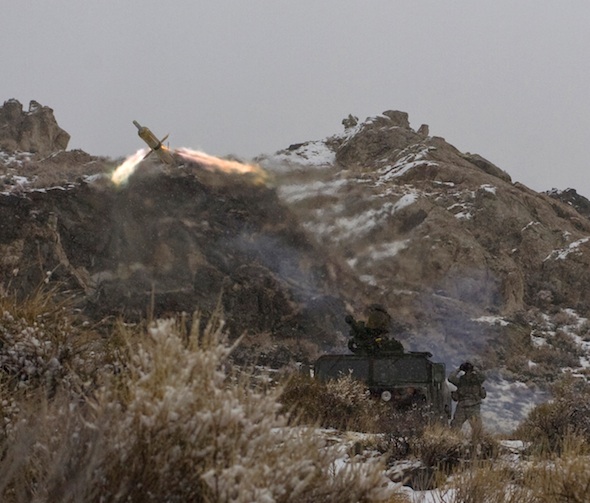
    TOW Missile launched from a HMMWV. Photo: Raytheon

    Raytheon announced it has won a multiyear contract worth US$349 million, to deliver 6,676 TOW RF missiles to the US Army and Marine Corps over the next five years.

    The TOW system is a command line-of-sight system that requires the gunner to track the target until the missile impacts. It has been employed by U.S. forces in every conflict since Vietnam and continues to be used today in Afghanistan. The missile is planned to remain in service at least until 2025.

    In February 2012 Raytheon has tested a new propulsion system for the Tube-Launched, Optically-Tracked, Wireless (TOW) missile. The new system developed by ATK doubles the range of the TOW missile and reduces the missile’s flight time by one-third. During the test, the developmental propulsion system flew the missile more than seven kilometers (4.35 miles), reaching four kilometers (2.5 miles) in significantly less time. The propulsion improvement is part of a broader modernization program, extending the weapon’s range, lethality, operator’s survivability and safety. However, the missiles included in the current order will not include this new development.

    The propulsion system the company tested in February was developed by ATK, as part of the missile system’s upgrade. “This launch, boost, sustain technology greatly enhances the TOW gunner’s survivability by allowing us to engage targets outside the threat range of direct engagement systems and by reducing the time we must track a target,” said Scott Speet, TOW program director for Raytheon Missile Systems.

    Raytheon and ATK’s Missile Products Group worked closely to develop a propulsion system that improves the performance of the TOW missile. The launch, boost, sustain (LBS) propulsion system also incorporates a rocket motor designed with Insensitive Munitions (IM) features to provide added safety: IM compliant systems are less likely to react explosively when subjected to bullet and fragment impacts, external fire or other hazardous events.

    “We brought an IM propulsion system to a technology readiness level that can be demonstrated to our government customer and which greatly reduces the research and development costs necessary to provide this enhancement to an existing combat-proven system,” said Michelle Lohmeier, vice president for Land Combat at Raytheon Missile Systems.

    The original wire guidance link limited the TOW range to 3,750 meters. In 2002 Raytheon introduced an alternative Radio Frequency (RF) command link, enabling the missile to extend the effective combat range beyond the limit imposed by the wire guidance. The current order is the third multi-year order for these TOWs. Other improvements introduced more versatile warheads, including more advanced tandem (TOW-2B) which were also adapted to the RF version (TOW 2B Aero) and ‘bunker buster’ variants. It is expected that the new LBS will further extend the weapon’s performance, striking targets at longer distances and in shorter engagement cycles. TOW is currently in service in more than 40 international armed forces and integrated on more than 15,000 ground, vehicle and helicopter platforms worldwide. Platforms currently employing the TOW include the US Army heavy brigade’s Bradley and Stryker Brigades’ Stryker armored vehicles, US Marine Corps HMMWV and AH-1W Cobra helicopter gunships.

    With the wireless system built into the missile and the missile case, the new TOW missile works with existing launch platforms, including more than 4,000 Improved Target Acquisition System (ITAS), Improved Bradley Acquisition System, TOW2 Subsystem and M220 Ground TOW. Raytheon is currently developing a new airborne launcher designed to employ the RF-TOW. The new airborne launcher will be compatible with past, present and future versions of the TOW missile. The system performs exactly like the wire-guided version, enabling soldiers and Marines to continue using the proven weapon without changing tactics or incurring additional training.

    December 2012 marks the 50th anniversary of the TOW Missile Program, with more than 650,000 missiles produced.

    Asia-Pacific Defense-Update

    Asia Pacific Defense Update October 8, 2012
    The October edition is here!

    The new issue of Asia pacific Defense Update is here! This digest of 28 articles highlighting recent defense news events from the region is based on the full version (premium content) from Defense Update and other sources, brought to you in a concise, pdf edition you can store on your desktop, read on tablets and smartphones.


    This edition, published twice a month, is available to our premium subscribers.

    To get access to the report, join now!


    US and South Korea Agree to Extend Missile Range

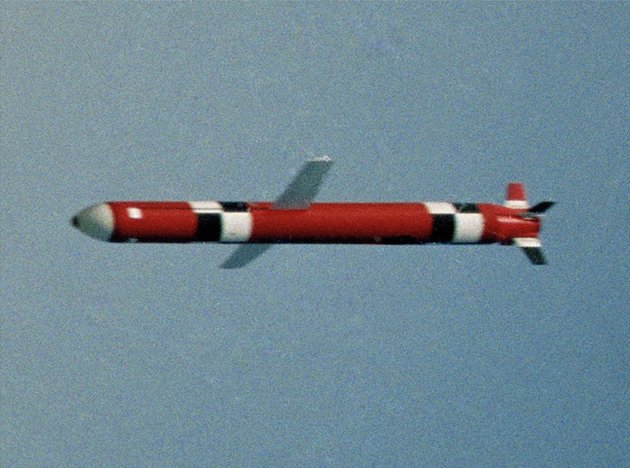
    South Korean Hyunmu 3 cruise missile
    South Korean Hyunmu 3 cruise missile

    After years of negotiation, South Korea and the United States have reached an agreement in support of extending the reach of the South’s ballistic missiles.  Under this agreement, Seoul will be allowed to deploy ballistic missiles with a range of 800 kilometers bringing all of North Korea within striking range of the South’s missile arsenal.

    Under a 1979 agreement between the two allies, revised later in 2001, South Korean ballistic missiles were limited to a range not to exceed 300 kilometers and a maximum weapon’s payload of 500 kilograms.  Successive American administrations had sought to restrict Seoul’s ballistic missile capabilities in keeping with limitations outlined in the Missile Technology Control Regime (MTCR), a voluntary international accord designed to limit a burgeoning proliferation of advanced missile technology.

    The restrictive provisions of the 2001 agreement placed South Korea in an inferior position compared to North Korean missile capabilities, a situation that has caused Seoul considerable unease as Pyongyang continued an unrelenting policy of modernizing the capabilities of the North’s military force.

    North Korea’s ruling regime has successfully developed a ballistic missile arsenal capable of reaching any location in the South and all US military facilities in Japan and Guam.  In contrast, some key military sites in the North were previously out of range of South Korea’s ballistic missiles limiting the South’s ability to deliver a decisive retaliatory strike should hostilities once again erupt between the two Korean Peninsula rivals.

    Pyongyang attempted a long-range rocket launch in April that proved to be a highly-publicized failure when the rocket exploded shortly after launch.  This attempt was undertaken in total disregard of widespread international opposition and was quickly condemned by the United Nations’ Security Council.  The United States and her Pacific allies considered this launch to be nothing more than a thinly-disguised ballistic missile test despite Pyongyang’s claims that this endeavor was an attempt to place a satellite into Earth orbit.

    Hyunmoo 2 short range ballistic missile was developed by South Korea to comply with the MTCR restrictions. More advanced versions are likely to surpass those limits. The missile is likely to have an accuracy of about 30 meter (CEP) and is equipped with a cluster munition warhead. Photo released by ADD.

    The revised US-South Korean agreement authorizes Seoul to develop ballistic missiles with a range of 800 kilometers while continuing to limit warhead capacity to 500 kilograms.  The South would be able to deploy missiles of 550-kilometer range with an increased payload of one ton.  The new arrangement also authorizes the South to deploy unmanned drones limited to carrying a payload of 2,500 kilograms should they have a maximum range in excess of 300 kilometers.  Drones with a range of 300 kilometers or less could be deployed without regard to payload restrictions.

    South Korea is also authorized to deploy cruise missiles of unlimited range provided they are restricted to a payload not to exceed 500 kilograms.  Some media sources have previously reported that Seoul has already deployed cruise missiles capable of flying more than 1,000 kilometers, claims the Seoul government has repeatedly refused to comment on.

    The more lenient attitude with cruise missiles is tacit acknowledgement that cruise missiles, in general, fly at lower altitudes and much slower speeds than ballistic missiles are capable of and are, therefore, easier to intercept and defend against.  Despite their altitude and speed limitations, cruise missiles are generally considered to be more accurate than other missiles.

    White House Press Secretary Jay Carney told reporters accompanying President Obama on a campaign trip to California that the provisions of this agreement “are a prudent, proportional, and specific response” to the challenges and dangers posed by North Korea’s advanced military capabilities.

    Pyongyang has yet to deliver a media response to the new agreement, but is expected to unleash a flood of criticism and threats.  Undoubtedly, Pyongyang will characterize this agreement as proof Washington and Seoul are preparing to go to war against the North.

    Technically, the North and South are still at war since the Korean Conflict of 1950-1953 ended in a ceasefire and not a peace treaty.

    Extending the range of the South’s ballistic missiles will likely ignite protests from Russia and China as well and is likely to be an irritant to Japan in light of the continuing territorial dispute between Tokyo and Seoul.

    It seems only prudent to equip South Korean forces with weapons at least equal to those the North possesses.  If for no other reason, this agreement may give Pyongyang pause in the future when provocative activities against the South are being considered.

    India to Induct Loitering Weapon, Upgrade Israeli Searcher Mk II, Heron I Fleet

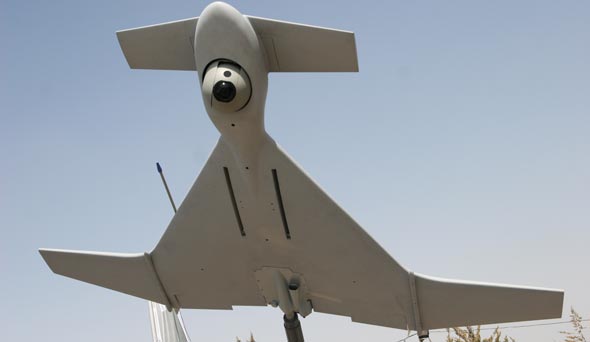
    India is inducting the Israeli HAROP loitering weapon. Photo: Noam Eshel, Defense Update
    India is inducting the Israeli HAROP loitering weapon. Photo: Noam Eshel, Defense Update
    India is inducting the Israeli HAROP loitering weapon. Photo: Noam Eshel, Defense Update
    India is inducting the Israeli HAROP loitering weapon. Photo: Noam Eshel, Defense Update

    The Indian Air Force is planning to embark on a tri-service wide upgrade of its Israeli-supplied unmanned aerial vehicles (UAVs), as part of an unprecedented program that could cost up to one billion US$. Indian military services are already operating more than 150 UAVs, mostly Searcher Mk II and Heron I procured from Israel Aerospace Industries since the early 2000s.

    The upgrading program is likely to introduce new technologies developed in the past decade, particularly in more compact, capable and reliable avionic equipment, improved propulsion (currently provided with Searcher Mk III). As for the Heron, modern configurations are currently deployed with satellite link, providing for better performance over mountainous terrain and at longer range. Part of the Indian Herons, particularly the new batch, are likely to be equipped with such capabilities and the upgrade will bring other platforms up to date, thus simplifying maintenance and support.

    To learn about the new the modernization offered for these UAV , Sign up for Defense-Update Premium Account 

    The Indian military currently has about 100 searcher Mk II and 50 Heron I drones. Since the initial fielding of these drones India has not attempted to equip drones with weapons, but New Delhi has clearly indicated it has the plans and is investing the resources to obtain combat UAV capabilities.

    In parallel to the upgrading of its UAVs, The Indian Air Force is preparing for the induction of the first ‘suicide drone’ wing, utilizing the Harop loitering weapons obtained in 2010 from Israel. The first of 10 HAROP units is expected to become operational in 2013. India is already operating the radar suppression variant of the weapon, the HARPY.

    IAF to Raise Four More SU-30MKI Squadrons

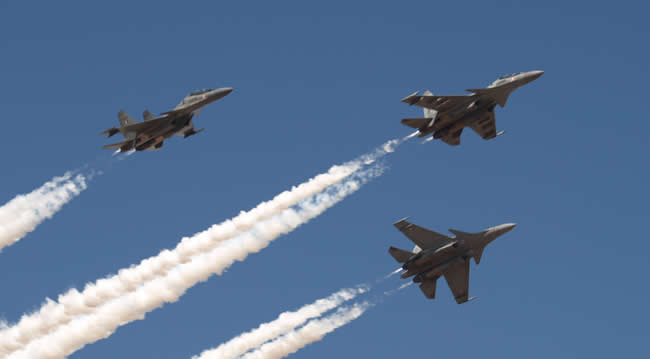
    The Indian Air Force is planning to field over 270 Su-30MKI fighters in 14 squadrons. Photo: Tamir Eshel, Defense-Update
    The Indian Air Force is planning to field over 270 Su-30MKI fighters in 14 squadrons. Photo: Tamir Eshel, Defense-Update
    The Indian Air Force is planning to field over 270 Su-30MKI fighters in 14 squadrons. Photo: Tamir Eshel, Defense-Update
    The Indian Air Force is planning to field over 270 Su-30MKI fighters in 14 squadrons. Photo: Tamir Eshel, Defense-Update

    The Indian Air Force (IAF) plans to raise four more Su-30MKI fighter squadrons in the near future, as it prepares to induct the tenth unit of the aircraft in Punjab along the Pakistan border. No 220 Squadron ‘Desert Tigers’ is the first Su-30MKI squadron deployed in the Western Air Command (WAC) at Halwara Air Force Station in Punjab. By December 2012 the IAF plans to commission the tenth Su-30MKI unit – No 15 Squadron ‘Flying Lancers’ also to be based in Punjab, Air Chief Marshal N A K Browne said the new unit is expected to become operational in the middle of next 2013. In addition to the new squadron established in the northeast, four additional squadrons will deploy in the near future bringing the total force to 13-14 squadrons. Two new squadrons will deploy in India’s eastern sector, bringing the total count to four squadrons, two additional squadrons will deploy to the south and an additional unit will be stationed in the Punjab. Browne added.

    India and Russia are expected to sign a new $3.5-billion deal for the procurement of 40 additional SU-30MKI fighter aircraft, of the Super Sukhoi upgraded configuration. With the delay in the fielding of MMRCA (of which a contract has yet to be signed), the Su-30 MKI fleet will reach a total strength of 270 aircraft by 2014-2015, making it the mainstay of the Indian air force. India ordered the first 90 Su-30MKI from Russia in 1996 and 2007. License for the local production of 140 planes by Hindustan Aaronautics Industries (HAL) was obtained in December 2000. This production, in several batches, is scheduled for completion by 2017. The agreement for the procurement of 42 upgraded Su-30s was reached last year. These aircraft will have a new cockpit, advanced radar and certain stealth features. It will also be better equipped as a multi-role strike fighter, becoming the first aerial platform to be capable of carrying the Brahmos cruise missile. With the first delivery expected in 2014-15, the SU-30MKI will become IAF’s leading fighter aircraft.

    Australia Joins P-8A, Completing an Investment of $325 in the Poseidon Program

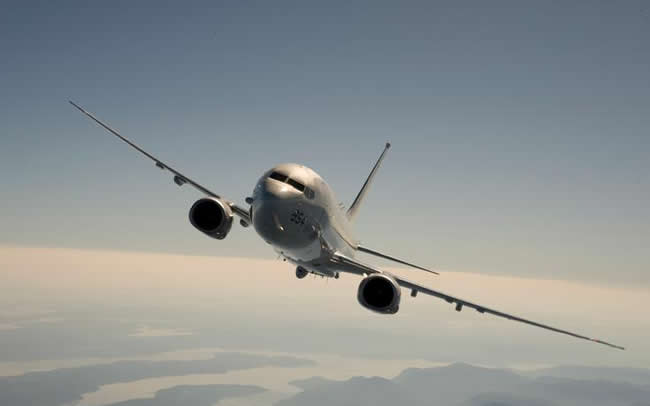
    P-8A Poseidon in flight. Photo: Boeing
    P-8A Poseidon in flight. Photo: Boeing
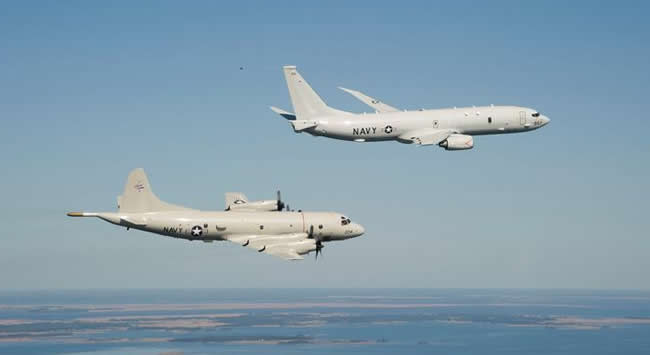
    The P-8A arriving at Patuxent River, flying in formation with the P-3C off the coast of Maryland.
    The P-8A arriving at Patuxent River, flying in formation with the P-3C off the coast of Maryland. Photo: US Navy

    Australia has invested $73.9 million to complete its investment and enter the US Navy P-8A development program as a partner. The $5 billion program has sofar been endorsed only by the US and Indian Navies. Australia has signed an agreement with the US Defence Minister Stephen Smith and Minister for Defence Materiel Jason Clare have signed a new agreement with the United States Navy to participate in the third P-8A development stage, contributing $73.9 million towards the project. “We will ultimately replace our Orion P-3s with the P-8 (but) that is a long-term project,” said Minister for Defence Stephen Smith, adding ”the P-3 Orions have serves Australia well, the Orions are expected to remain in service until the end of this decade or the start of the 2020s. But we have committed ourselves to further work on the P-8 project in collaboration with our United States colleagues.”

    In 2007, the government gave initial approval to acquire the Poseidon, an aircraft based on the widely-used Boeing 737 airliner and which is set to replace Orions in US Navy service. Australia initially contributed $150 million to join the P-8A program, subsequently adding a further $100 million. Once deployed, the Poseidons are likely to be based in RAAF Edinburgh South Australia where the Orions are currently stationed.

    The RAAF currently operates 19 Lockheed AP-3C Orions which entered service in the mid-1980s. They have been progressively upgraded with advanced radar and camera systems and can perform maritime and overland surveillance, search and rescue missions and also hunt for submarines.

    Orions have played an important role in border protection operations and two operated in the Middle East from 2003, conducting missions over the Persian Gulf region as well as over Afghanistan.

    P-8A Poseidon in flight. Photo: Boeing
    P-8A Poseidon in flight. Photo: Boeing

    China to Build Two Missile Corvettes for Bangladesh

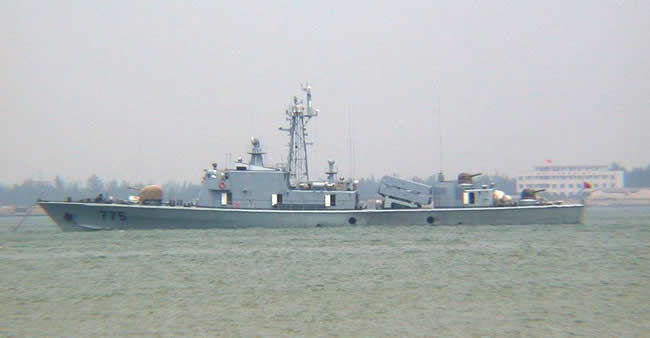
    Pakistan has received the first two Azmat class fast missile boats this year. Based on the Houjian, the Pakistani design is slightly shorter and equipped with different complement of armament.
    Pakistan has received the first two Azmat class fast missile boats this year. Based on the Houjian, the Pakistani design is slightly shorter and equipped with different complement of armament.
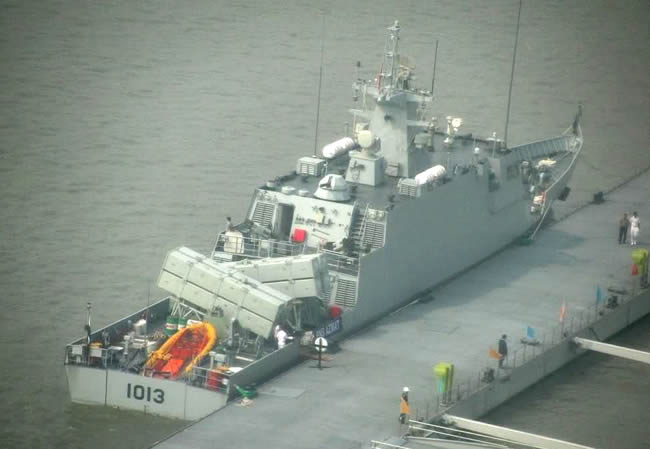
    The Chinese People's Liberation Army Navy (PLAN) is operating several Houjian Class fast missile boats.
    The Chinese People’s Liberation Army Navy (PLAN) is operating several Houjian Class fast missile boats.

    The Government of Bangladesh has signed a contract with the Chinese Wuchan Shipyard, for the construction and delivery of two 64 meter corvettes, similar to, but slightly larger than the Azmat class fast missile boats supplied earlier this year to Pakistan. The first vessel will be completed in 2013. Each of the boats will have a displacement of 648 tons and a top speed of 28 knots. Based on the Houjian-class (Type 037/2) missile craft in service with the People’s Liberation Army Navy, the vessel is designed to carry eight C-802A anti-ship missiles, two 25 mm guns and two 12.7 mm machine guns


    Iran Flexing Muscles Part 2: a New ‘Stealth’ Frigate?

    The newly built hull of IRI Sahand launched at Bandar Abas - September 2012
    The newly built hull of IRI Sahand launched at Bandar Abas - September 2012
    The lead ship of the Moudge class - IRI Jamaran light missile frigate
    The lead ship of the Moudge class – IRI Jamaran light missile frigate

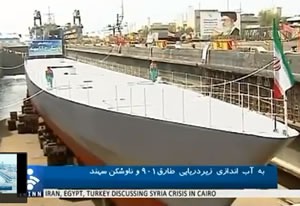
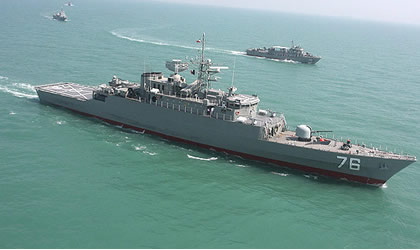
    The lead ship of a new class of missile frigates was launched last month at Iran’s Southern port city of Bandar Abbas. The new vessel – IRI Sahand was described at the official announcement as the largest, most modern naval vessel built by the Islamic Republic of Iran. The new vessel utilizes a new radar absorbing hull structure, although the design itself is based on the current 1,500 ton Moudge Class light frigate.

    The lead ship of the class, IRI Jamaran was delivered in 2010 and is now in service. The second ship – IRI Velayat is under construction at Iran’s Northern port city of Bandar Anzali and is expected to be completed and delivered to the Iranian Navy Casipan Sea fleet by March 2013 – several months later than scheduled. Construction of two additional vessels of this class – yet unnamed Moudge 3 and 4 is currently underway, according to Iranian Naval sources. The Jamaran succeeded the three locally Vosper Mk 5 light frigates built in Iran in 1968-1969 and are still operating with the Iranian Navy today.

    Want to learn more on the Iranian Moudge and Shahand frigate? Sign up for Defense-Update Premium Account to know more…

    Iran Flexing Muscles: (Subscriber version)

    Iran Flexing Muscles Part 3: Air Defense & Ballistic Missiles

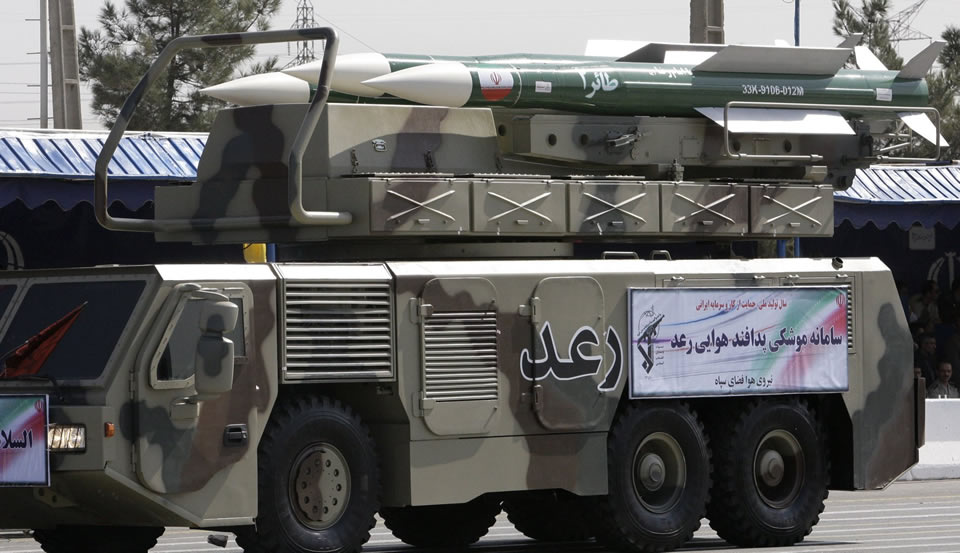
    The Raad air defense missile comprises of the Taer air defense missiles
    Three Taer air defense missile are carried on this specialized 6x6 vehicle, which appeared for the first time in Tehran on the September military display.
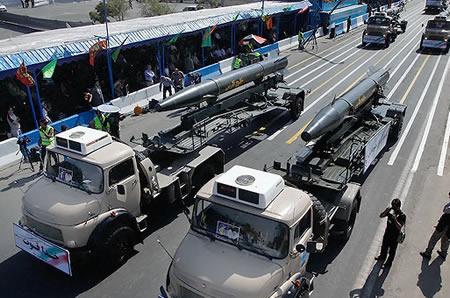
    Iranian Fatah 110 Gen IV (guided) Missiles
    Iranian Fatah 110 Gen IV (guided) Missiles

    In recent weeks Iran has introduced new guided weapon systems claimed to be based on indigenous developments. Among these weapons are the Shahed 129 attack Unmanned Aerial Vehicle (UAV), precision guided version of the Zelzal medium range rocket, and Taer medium-range air-defense missile, positioned to be a precursor for the country’s new category of air defense weapon systems.

    As for the improved precision of Zelzal-2, Major General Mohammad Ali Jafari, Commander of the Islamic Revolution Guards Corps confirmed the level of accuracy of Zelzal rockets has been increased, “the precision [of Zelzal rockets has been increased and their margin of error has been lowered to less than 50 meters,” the IRGC commander explained.

    General Jafari confirmed the country’s missile development is back on track, following the devastating explosion occurred during a test, on November 12, 2011. The explosion killed 17, among them General Hassan Tehrani Moqaddam, known as the father of the Islamic Republic missile technology. “Iran’s missile development has been delayed in about six months after this event” Jafari said in a recent interview to the Fars news agency. He said the explosion took place at the IRGC center in the vicinity of Tehran, when scientists were conducting research on solid fuel for satellite carries. “It was just a part of our missile research program that was hit by the accident.” General Jafari said, “The accident could only delay our research for 6 months and now the program is back on.”

    As part of its strategic missile program, Tehran is deploying part of its missiles on transportable launchers. While missiles propelled by solid-rocket, maintained in high readiness and are ready for launch within minutes, missiles propelled by liquid fuel require lengthy refueling and are therefore much more vulnerable to preemptive attack. These missiles are likely to be stored in underground silos – such as the Jask-2, recently unveiled by the Iranian military. Such a facility was first unveiled during the opening stage of the 2011 ‘Great Prophet 6’ exercise, where ballistic missiles were fired against, and destroyed a naval surface target.

    According to senior commanders of the IRGC Aerospace Force, Iranian experts have been busy with developing the technology and infrastructures for the underground silos for the last 15 years. The pads have the capability to launch different types of missiles, including long-range Shahab class missiles.

    Iran is also developing a new air defense missile system dubbed Raad. 6×6 transporter vehicles each carrying three ‘Taer’ missiles were displayed on the annual military march in Tehran in September. The system is claimed to be of a local development, include a radar system, fire control complex and multiple missile transporter-launchers. The missile is said to be effective against aircraft, helicopters and drones, it has an intercept range of 50 kilometers and the system is claimed to be effective at altitudes from70 to 70,000ft (22 km).

    To learn about the new Iranian missiles, Sign up for Defense-Update Premium Account to know more…

    In addition to the medium air defense systems Iran has also invested in the development of early warning systems based on indigenous design. In June 2011, the IRGC marked the first deployment of the long-range Ghadir radar system, allegedly capable of tracking aerial targets at ranges up to 500 km (‘coverage of 1,100 km range’) and at altitude of 300km, making it capable of tracking satellites orbiting at ‘very low earth orbits’, according to Iranian sources. (most LEO satellites are, however, orbiting at higher altitudes). The radar operates over a wide frequency range. The Iranians also said their new radar can detect radar-evading aircrafts (stealth), cruise missiles and ballistic missiles as well. Another radar developed indigenously is capable of detecting Unmanned Aerial Vehicles (UAVs), assisting air defense weapon systems to engage such targets.

    Iran Flexing Muscles: (Subscriber version)
    Part 1: Combat UAVs
    Part 2: a New ‘Stealth’ Frigate
    Part 3: Air Defense & Ballistic Missiles

    Pakistan, India Test Fire Nuclear Capable Missiles

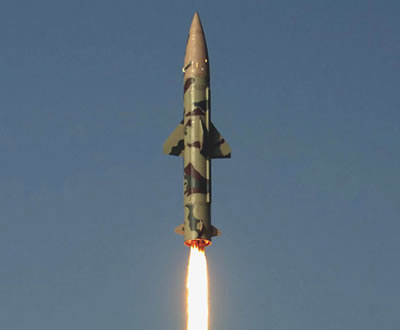
    Prithvi 2 missile launched
    Prithvi 2 missile launched

    Pakistan announced it had test-fired a nuclear-capable cruise missile on Monday, September 17, 2012. Two days after the Pakistani test India has test fired its long-range nuclear-capable strategic missile AGNI IV, with a range of about 4,000km (2485 miles). This missile is India’s second longest-range missile (the AGNI V was tested in April 2012 for the first time).

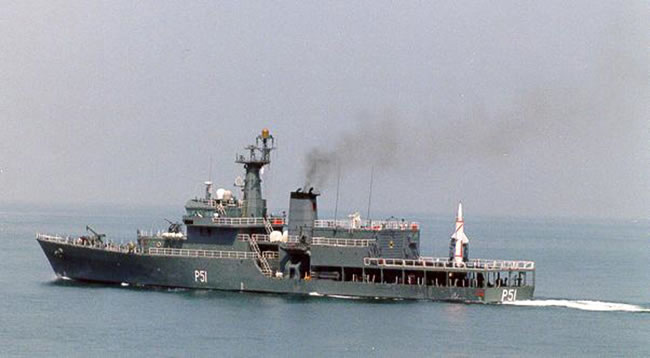
    INS Subhadra (P51) carrying the Dhanush missile on the aft deck.
    Two offshore patrol vessels of the Sukanya Class, INS Subhadra (P51) and INS Suvarna (P53), were retrofitted with a missile stabilisation platform to launch the Dhanush ship-based ballistic missiles.
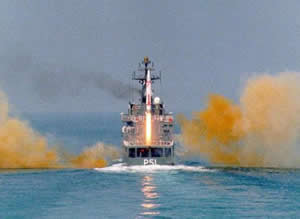
    INS Subhadra (P51) launching the Dhanush missile from its aft deck.
    INS Subhadra (P51) launching the Dhanush missile from its aft deck.

    Two weeks later India has launched two short-range (350 km) Prithvi-II ballistic this week, the first was launched from the Chandipur missile test range off the Odisha coast on October 4, as part of the Indian Army strategic readiness evaluation program. A day later, a Dhanush missile (the naval version of the Prithvi II) was launched from this launch has reportedly demonstrated high precision, hitting the within 20 meters from the planned impact point. The missile can carry 500 – 1,000 kg warhead, and is defined as a ‘nuclear capable’ missile.

    Prithvi 2 missile launched
    Prithvi 2 missile launched

    Dhanush and Prithvi-II are both operational ballistic missiles, deployed by the Indian land and naval forces as part of the country’s strategic ‘triad’. Sharing the same launch vehicle, the two weapons were developed by the Indian Defence Research and Development Organisation (DRDO), under the country’s Integrated Guided Missile Development Programme (IGMDP). Other missiles developed and deployed include the Agni II medium range ballistic missile.

    The Agni V long-range ballistic missile. Other types include the submarine-launched Sagarika (K-15) ballistic missile (700 km, 1 ton warhead) and Nirbhay cruise missile; all three are currently in development.

    Skunk Works and XTEND Simplify Multi-Drone Command

    0
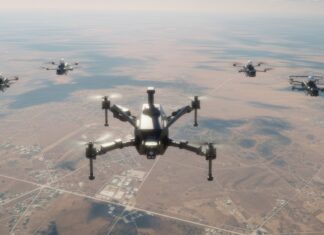
    Lockheed Martin Skunk Works® and XTEND have achieved a major milestone in JADC2 by integrating the XOS operating system with the MDCX™ autonomy platform. This technical breakthrough enables a single operator to simultaneously command multiple drone classes, eliminating the friction of mission handoffs. From "marsupial" drone deployments to operating in GPS-denied environments, explore how this collaboration is abbreviating the data-to-decision timeline and redefining autonomous mission execution.

    From Ukraine to Taiwan: The Global Race to Dominate the New Defense Tech Frontier

    0
    As traditional defense primes face mounting competition from agile “neoprimes” such as Anduril, Palantir and Helsing, the balance of innovation is shifting toward software-defined warfare and scalable, dual-use technologies, while global industry consolidation—marked by Boeing’s integration of Spirit AeroSystems and other strategic mergers—signals an intensified race to secure control over the defense technology value chain. Our Defense-Tech weekly report highlights these trends.

    Europe’s “Drone Wall”

    0
    In early October 2025, a coordinated wave of unmanned aerial system (UAS) incursions—widely attributed to Russia—targeted critical infrastructure across at least ten European nations. The unprecedented campaign exposed the fragility of Europe’s air defenses...

    Weekly Defense Update & Global Security Assessment

    0
    Executive Summary The past week (September 18-25, 2025) represents an inflection point where strategic defense concepts have transitioned from doctrine to tangible reality. An analysis of global events reveals four primary, interconnected trends shaping an...

    U.S. Air and Space Forces Push Next-Gen Programs at the AS&C 2025 Conference and...

    0
    At the 2025 Air, Space & Cyber Conference, U.S. Air Force and Space Force leaders unveiled major updates on next-generation fighters, bombers, unmanned systems, and space initiatives, highlighting both rapid innovation and critical readiness challenges as the services race to outpace global competitors. A short version is available here, with a more detailed version for subscribers.

    TADTE 2025: Reflecting Taiwan’s Strategic Themes

    0
    The Taipei Aerospace & Defense Technology Exhibition (TADTE) 2025 crystallized around four dominant strategic themes that collectively illustrate Taiwan's comprehensive approach to defense modernization amid escalating regional tensions. Based on a detailed report by Pleronix (available upon request). Includes a Podcast discussion on TADTE 2025's highlighting Taiwan's four strategic themes beyond the post's coverage.

    Iron Beam 450 Completes Testing, Soon to Join With Operational Air Defense Units

    0
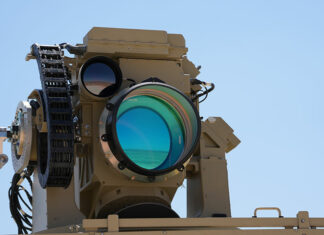
    Israel’s Iron Beam 450 high-power laser system has completed final testing, marking a major leap in air defense. Developed by Rafael, it offers precise, cost-effective interception of rockets, UAVs, and mortars, and is set for IDF deployment by 2025.