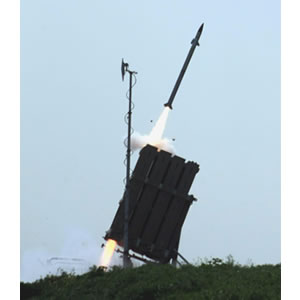
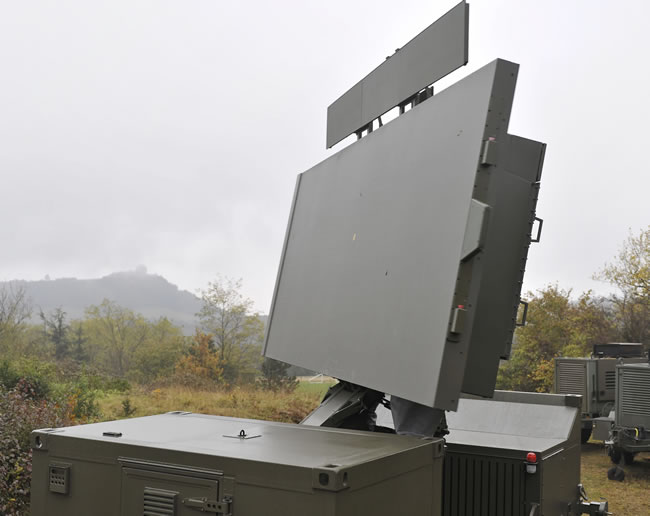
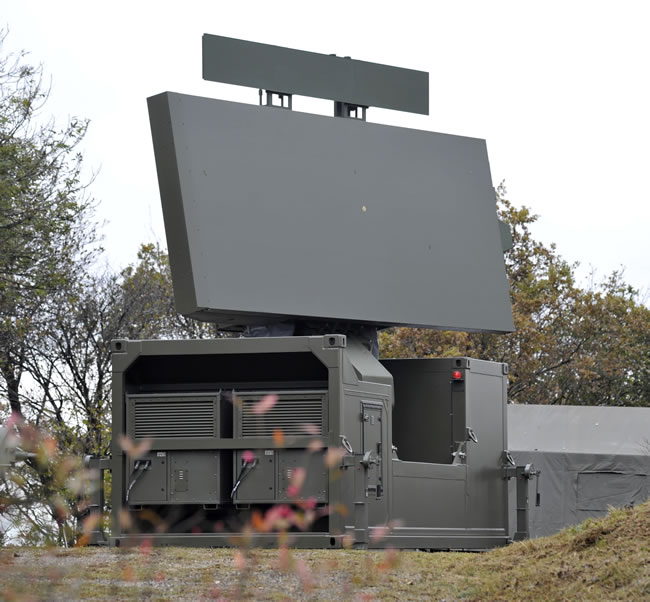
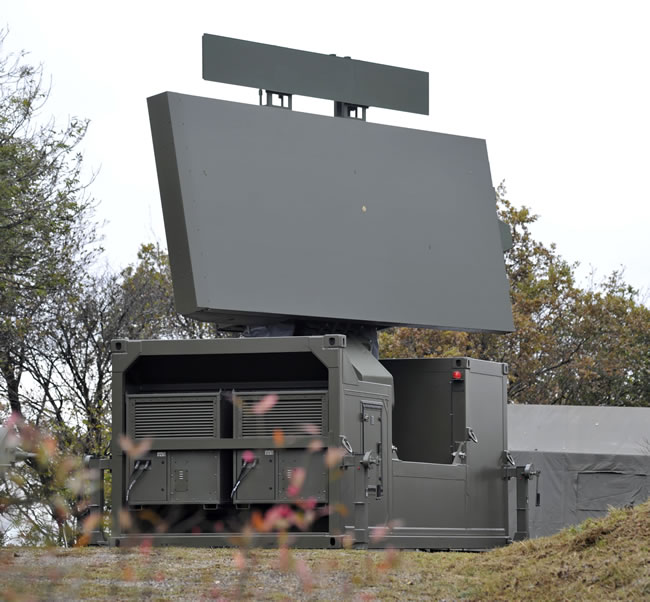
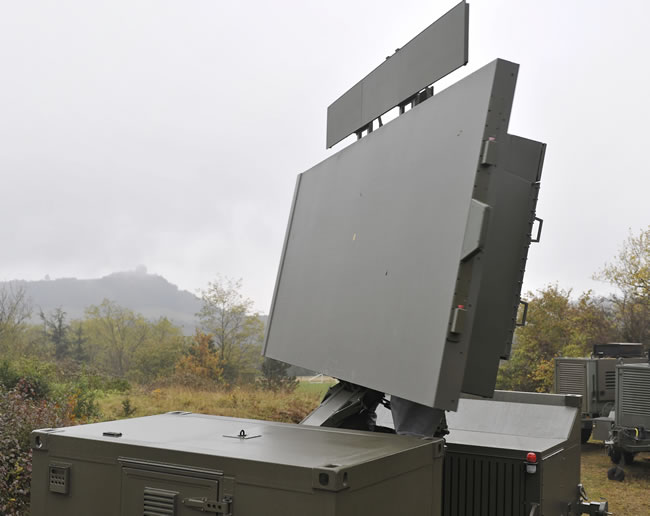
The first upgraded Iron Dome unit is scheduled for delivery to the Israel Air Force 'within weeks', following a successful series of intercepts where the system demonstrated the enhanced capabilities against advanced threats. Photo: Shaul Golan via RAFAEL
The first upgraded Iron Dome unit is scheduled for delivery to the Israel Air Force ‘within weeks’, following a successful series of intercepts where the system demonstrated the enhanced capabilities against advanced threats. Photo: Shaul Golan via RAFAEL
The Defense Research and Development Division of the Ministry of Defense successfully completed trials testing the upgraded operational capability of the ‘Iron Dome’ system. In the past few days, the Israel’s Missile Defense Organization (IMDO) has been carrying out a series of intercept trials with the upgraded system where the enhanced system successfully met the design goals. These trials are designed to expand and improve the operational capabilities of the system to face more advanced threats. These trials are part of a wider program to develop and upgrade the ‘Iron Dome’ system. Based on the successful trials, MOD plans to deliver the fifth operational ‘Iron Dome’ battery ‘within weeks’. According to the MOD, this unit will be the first upgraded ‘Iron Dome’ battery in the IAF. Most upgrades will also be retrofitted to the four operational units. The fifth and sixth units are part of the second production batch of four Iron Dome units funded by the US DoD in May 2011.
RAFAEL, the system developer and integrator, has implemented improvements and modifications to operational systems since the first deployments of the systems in March 2011. Software ‘patches’ changes are introduced frequently after combat engagements, implementing necessary improvements where required. More comprehensive software upgrades are also implemented on a periodical basis to keep the system updated. The current ‘Block Upgrade’ enabled the developers to implement more robust upgrades enhancing the system based on more comprehensive and thoroughly tested upgrade cycle. Major contributors to the system’s enhanced engagement capabilities are the improved radar developed by IAI/Elta Systems and battle management system developed by mPrest.
IMDO – also known as ‘Homa’ – is part of the Defense Research and Development Division of the Ministry of Defense, and is responsible for the multi-level missile defense systems. These include the ‘Iron Dome’ counter Rocket, Artillery and Missile (C-RAM) system and ballistic missile interceptor system ‘Arrow 2’, both already operational, and ‘David’s Sling’ (also dubbed ‘Magic Wand’) and ‘Arrow 3’ currently in various phases of developmental testing. Both are scheduled to undergo comprehensive integration testing in the near future.
In addition to Safetank, Rodgard has developed an innovative fire suppression method for protecting external fuel tanks. The capsules ruptured by the blast disperse the flame retardant liquid to suppress the flame caused by explosions.
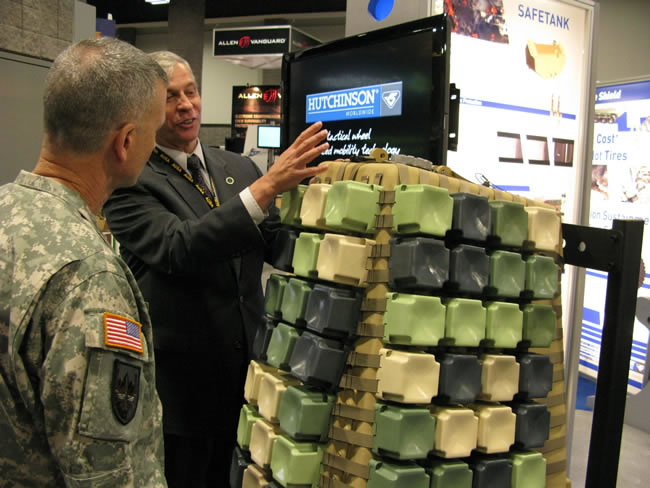
Safetank, an explosion-proof self sealing fuel tank for vehicles from Rodgard uses self-sealing and insulating foam and flame retardant coating to protect the tank from explosion under fire.
Fires in combat vehicles can be caused by combat damage (hit by enemy fire, IEDs or a fire bomb thrown at it) or accidentally, by the crew or by malfunction. Regardless of the cause, fire erupting in the engine or fighting compartment can cause significant damage, leading to catastrophic effect if the ammunition begins to explodes. To quickly put out such fires, automatic fire suppression systems are used, employing different methods in each zone – crew compartment, engine, tires, fuel tank, battery or outer envelope. Multi-zone systems are important to minimize subjecting the crew and passengers to toxic fumes of smoke and fire extinguishing materials.
For example, the use of ‘Clean Agent’ that effectively suppress the fire and prevents explosion, but requires rapid evacuation of the crew. Operations in asymmetric warfare often expose vehicles to fire hazards from molotov cocktails or IEDs that do not penetrate the armor. Therefore, having a fire suppression system that mandate the evacuation of the protected vehicle poses an unnecessary risk.
To equip MRAP and other tactical vehicles Nitrogen based (N2) and water-vapour fire suppression are employed to quickly choke out the fire without affecting the human occupants. Alternatively, water mist can be used to suppress fire and keep temperature down, allowing the crew more time to respond.
Particularly effective in protecting security and law enforcement vehicles as well as the military, operating in asymmetric conflict, are fire suppression for vulnerable parts such as fuel tanks and tires. The Israeli company LVT has developed tire fire suppression system combined into AAFS installed in MRAP-type vehicles. LVT has delivered over 3,000 fire suppression systems protecting MaxxPro MRAP vehicles. Typically, such systems equip the crew compartment with fire suppression agents to shield crew, provides outer body protection, against fire bombs and explosives and uses high performance extinguishing agent to protect the tires in case they catch fire. Separated from the crew compartment the engine and Battery compartments are protected by a clean agent fire suppression system. Fuel tank protected against fire caused by Molotov cocktails or IEDs.
Vulnerable elements of the vehicle, such as hydraulics or fuel tanks, require special attention in armor protection. At the recent AUSA 2012 exhibition Hutchinsons’ Rodgard Mobility Solutions unveiled several new systems protecting fuel tanks from small arms fire and shrapnel and punctures caused by artillery and mortar fire, mines or IEDs. For example, the Safetank system seals the damaged tank, maintaining the veicle’s mobility and reducing the risk of sympathetic explosion of ammo and eliminating loss of fuel or the risk of potential ignition of spilled fuel.
In addition to Safetank, Rodgard has developed an innovative fire suppression method for protecting external fuel tanks. The capsules ruptured by the blast disperse the flame retardant liquid to suppress the flame caused by explosions.
Safetank is applied as a coating around the container, protecting against small arms fire of up to 7.62 NATO/AP, 50 cal/12.7mm and 14.5 mm rounds. Moreover, the tank itself can be filled with anti-explosion foam or mesh inserts to minimize risks of electrical short circuits igniting vapor explosions. An outer layer of flame retardant prevents fires from spreading, eliminating overheating of the fuel in the protected container. The use of Safetank eliminates the need to protect fuel tanks with much heavier armor plates, thus saving up to 100 kg per vehicle. It can also protect large tankers transporting up to 5,000 gallons.
Asia Pacific Defense Update November 3, 2012
The November edition is here!
The new issue of Asia pacific Defense Update is here! This digest of 28 articles highlighting recent defense news events from the region is based on the full version (premium content) from Defense Update and other sources, brought to you in a concise, pdf edition you can store on your desktop, read on tablets and smartphones.
This edition, published twice a month, is available to our premium subscribers.
International Armoured Vehicles, the largest show dedicated solely to the armoured vehicles community, is launching a live dynamic vehicle experience at the Long Valley Test Track during the 2013 event, which will take place at the FIVE in Farnborough, UK February 5-8, 2013. The Long Valley Test Track, located in Aldershot, features different terrains and obstacles, such as an ‘alpine track’, sand traps and water obstacles, providing for an enhanced live experience. Open for test track exhibitors and their military guests, the dynamic vehicle experience is designed for vehicle manufacturers to showcase their products to their clients in an “immersion” setting, with each track running a duration of anywhere from 15-30 minutes at a time.
With this new installation, the 2013 International Armoured Vehicles show marks a clear evolution in Defence IQ’s flagship armoured vehicle event. The event is traditionally comprised of a large scale conference of 600+ attendees, combined with a focussed exhibition hall, which annually welcomes 2,100+ visitors from 47 countries.
Quoted in February 2012 in his previous role, Lieutenant General Christopher Michael Deverell, Director Land Materiel, DE&S UK MoD commented,“There are lots of conferences around, but there’s not another one on this sort of scale that is specifically focussed on armoured vehicles, so it fills a very useful niche.”
Running for its 12th time in 2013, International Armoured Vehicles once again offers a high-level and technical programme during the conference, with topics focussing on Survivability, Innovative Armour, Simulation, Maintenance and Industry Requirements. The popular introduction of last year’s G6 Industry Panel sees its return for 2013, with new panellists such as General Dynamics, Iveco, Lockheed Martin, Nexter, Renault and Textron, as well as the addition of the International Industry Leaders Panel (IILP). Much like the G6 Panel, the IILP will feature leaders in the international space, discussing up-and-coming markets of interest to the land defence industry, such as Turkey, Brazil, Russia and the Middle East.
The 2013 show also introduces the Industry Focus Day, which is designed to provide a platform for technical experts from Tier 1 companies to present their current projects, challenges and future capability requirements to members of the military and Tier 2 and 3 groups.
Amongst the prestigious speaker faculty are Lieutenant General David Halverson, Deputy Commander TRADOC, Major General Andrew Sharpe OBE, DG DCDC UK Ministry of Defence and Fleet Admiral Marco Antonio Guimaraes, General Commandant of the Brazilian Marine Corps.
Joining themare over 50 senior government officials and international flag officers from 24 countries, including:
Major General H. R. McMaster, Commanding General Maneuever Center of Excellence, US DoD
Major General Ian Copeland, Director Joint Support Chairn, DE&S, UK MoD
Major General Ruben Dario Alzate Moura, Head of Land – Materiel, Colombian Army
Major General Topply Lubaya, Chief of Staff, Zambian Army
Brigadier General Anders Steffanson, Deputy Commander, Swedish Army
Brigadier General Rajmund Andzejzak, Commander 17th Armoured Division, Polish Army
Additional military speakers will represent international organisations such as the Malaysian DoD, German Army, Danish DoD, French Army, Australian DoD, Italian Armed Forces, and the Indian DRDO.
The Exhibition spans the whole of the FIVE venue, and is set to feature 100 exhibitors from around the world, the International Armoured Vehicles Awards, as well as the Innovation Stage. Featuring direct updates from upcoming vehicle programme requirements from major OEMs, to the SMEs providing the newest and most innovative solutions for today’s capability challenges, the 2013 Innovation Stage provides attendees insight into the future of the armoured vehicles market. Last year’s Innovation Stage offered exhibition guests insight from guest speakers of leading industry such as General Dynamics, Kaller, Thales and Tawazun. The official programme for the Innovation Stage is scheduled for release in early November 2013.
Full details on the dynamic vehicle experience at the Long Valley Test Track, conference and exhibition are available on the event website, www.internationalarmouredvehicles.com.
Professionals involved in armoured vehicles are encouraged to register for a free exhibition pass to the 2013 Exhibition (does not include the conference), or to join Defence IQ’s extensive social media community on www.defenceiq.com, LinkedIn group (Armoured Vehicles Networking Group), Twitter (http://twitter.com/IAVehicles) and Facebook.
Interested parties can contact [email protected] for conference pricing options. The event runs from 5-8 February 2013 (Exhibition open from 6-7 February 2013) and is open to defence-related professionals.
Defence IQ is delighted to invite Defence Update members to attend the main conference at a special discount rate of saving 20% off the standard conference price. Email [email protected] or call +44 (0)20 7368 9300 with code IAVs2013_DU for more information.
Offshore Patrol & Security 2013 23rd and 25th April 2013 – Portsmouth, UK
With Hurricane Sandy at the forefront of maritime organisations concerns at the moment, the increase in focus on border enforcement, economic exclusion zone protection and counter-piracy operations on-going, a key event is running next year to discuss how naval forces, coastguard agencies, industry and other relevant organisations can increase cooperation to improve maritime security, humanitarian relief from the sea and international naval cooperation.
Because of this ever-increasing focus, on the 24th April 2013, over 300 delegates will attend the world’s largest maritime security and platform related event in the UK with the aim of deciding upon the next actions to be taken in this ever changing and complex task. Offshore Patrol & Security 2013 will take place at the Historic Dockyard in Portsmouth between the 23rd and 25th April 2013.
The event, Offshore Patrol & Security 2013, which has been running annually for four years, will attract an audience consisting of the most senior and influential naval personnel from every major nation. The delegation will be discussing the very latest issues surrounding all aspects of maritime security including counter-piracy, port protection, economic zone protection and enforcement along with recent technological innovations.
High on the agenda at next year’s meeting will be the continued operations off the coast of Somalia, a topic which has repeatedly been seen in the news over recent months and years. A focus on counter-piracy and counter terrorism in the Middle East and Asia Pacific regions will also be of the upmost priority.
“Offshore Patrol & Security has often been seen as one of the most influential gatherings of key personnel from around the globe that wish to discuss the latest developments in maritime security” said Nathan Martin, Managing Director of the event organizer, Development Network. ” From the overwhelming number of attendees already signed up, we can clearly see that issues surrounding this area are still top of the priority list for many nations.” Martin added, saying the event is often seen as one of the most critical meeting points for nations wishing to decide upon the future of their maritime security policies along with discussion based presentations focusing on key alliance policies such as NATO and the European Union.
Abeking and Rasmussen, a German based shipbuilder will be the lead sponsor for the 2013 event and will discuss the close relationship between navies, coastguard agencies and industry in these tough economic times. Defense Update is proud to be one of the media sponsors of this event.
For more information please contact:
Richard Mathews
Head of Production
The Development Network
Tel: +44 (0) 1245 707 530
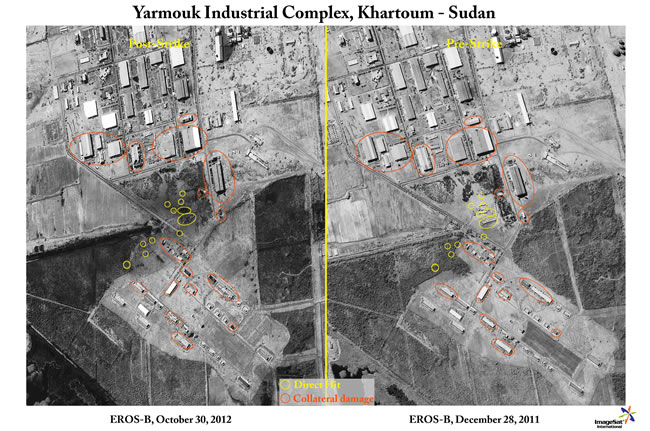
EROS Satellite images of the Yarmouk ammunition plant in Khartum, Sudan, before and after the pre-dawn attack October 24, 2012. Photos: Imagesat
EROS Satellite images of the Yarmouk ammunition plant in Khartum, Sudan, before and after the pre-dawn attack October 24, 2012. Photos: Imagesat
A powerful explosion at the Yarmuk military factory rocked Sudan’s capital before dawn, sending detonating ammunition flying through the air and causing panic, the Sudan official news agency and local media reports said. Thick black smoke covered the sky over the Military Industrial Complex in southern Khartoum. Sudan’s media reported that nearby buildings were damaged by the blast, their roofs blown off and their windows shattered. The effects of the blast suggested a “highly volatile cargo” was at the epicenter of the explosion.
The Sudanese minister who immediately accused Israel of carrying out an aerial strike on a weapons factory near Khartoum apparently knew what he was talking about. Although located inside a strong security perimeter around it, the so-called Yarmuk compound run by the Military Industry Corporation, is well known to Sudanese as Iranian territory, serving as a stopover in weapons smuggling to Hamas Gaza. The minister showed journalists a video of a huge crater next to two destroyed buildings and what appeared to be an unidentified rocket motor lying on the ground. Analysing the explosions and the massive fire which blazed for hours, setting off more fires even days after the attack, it seems that the “factory” must have contained a large amount of explosives and inflammatory substances, indicating military nature. It also seems viable that the target could have been a series of containers stored inside the compound, which were loaded and ready for dispatch.
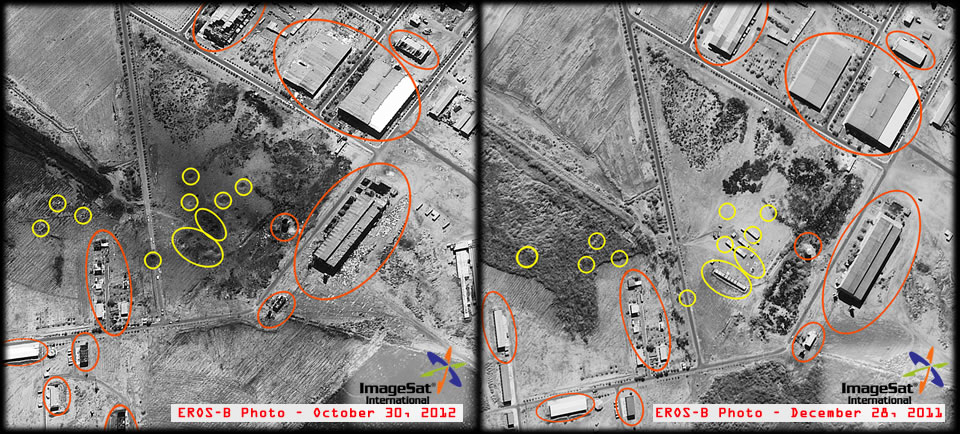
Two images of the Yarmouk ammunition plant in Khartum, Sudan, taken by the Israeli EROS-B spy satellite, before and after the attack. The image on the right, taken December 28, 2011 shows the container storage area. The image on the left, taken after the attack, October 30, 2012 shows 11 craters, most probably created by aerial weapon’s explosions. Most of the hits are in the storage area where the containers were parked in the open since late last year. It is likely these containers were storing explosives and propellants or finished missiles, loaded with both. The craters at the site indicate relatively small weapons, but the effects of a huge secondary explosion are evident at distance of up to 500 meters. Structures facing the parking area that exploded were shuttered, debris on the opposite side indicate the impact of the blast. The fire that erupted from the trailer park consumed a wide area around the base as well. Several hits marked outside the target area, including one that has hit the access road, are believed to be misses. Photos: Imagesat
Witnesses testified to seeing jets fly over the area at dawn should not be reliable, as manned aircraft would not have flown so close to the ground in an attack to be identified. However, the so-called aircraft could have been weaponized unmanned aerial vehicles, or drones performing post-strike battle-damage assessment. Israel has long-range UAV, some of these very large aircraft, but so far the authorities have denied them carrying weapons.
This factory, which is situated inside a military compound near Khartoum and allegedly manufactures various types of rockets and light weapons, was constructed with Iran’s assistance some four years ago in the framework of a cooperation agreement between the two ‘pariah’ states.
Sudan is isolated from the international community due to the genocide in Darfur, and the West has imposed crippling sanctions against Iran over its nuclear program. Both governments have an interest in transferring arms to Hamas in Gaza. In 2009, a convoy carrying weapons in northeastern Sudan was targeted from the air, killing dozens. It was widely believed that Israel carried out the attack on a weapons shipment headed for Palestinian militants in the Gaza Strip. Israel never confirmed or denied that.
Sudan is already a well known major hub for al-Qaeda militants and remains a transit for weapon smugglers and African migrant traffickers. Israeli officials believe arms that originate in the Iranian port of Bandar Abbas go through Sudan before crossing Egypt’s lawless Sinai desert and into Gaza through underground tunnels.
In May 2010 the Sudanese newspaper Ray Al-Sha’b reported that the Iranian Revolutionary Guards Corps was operating a secret weapons factory in Sudan to supply weapons to terrorist groups across Africa and the Middle East. It also suggested Iran was cooperating with Sudan to produce nuclear weapons. The Khartoum regime closed the paper immediately and arrested the deputy-editor.
The factory’s name, “Yarmouk,” also alludes to the identity of its Palestinian “clients.” As part of the deal, the Sudanese earned money and apparently received weapons, while the Iranians shortened the supply routes to Hamas in Gaza, Hezbollah in Lebanon and perhaps even to Syria, thus decreasing the risk of Israeli attacks on arms convoys – or so they thought at the time.
In 1998, Human Rights Watch published a report based on information from Sudanese opposition organizations which said that the Yarmouk plant was used to store chemical weapons for Iraq. Sudan vehemently denied the allegations.
That year, the United States used cruise missiles to bomb a Khartoum pharmaceutical factory suspected of links to al-Qaeda in the aftermath of the terror group’s bombings of U.S. embassies in Kenya and Tanzania that killed 224 people.
The Sudanese regime has a “distinguished pedigree” supporting international terrorism. In the 1990s it gave sanctuary to so many outlaws, the capital, Khartoum, was known as “the Holiday Inn for Terrorists.” Al Qaeda, Hamas, Islamic Jihad and Carlos the Jackal all called Khartoum home. It was Khartoum’s five years playing gracious host to Osama bin Laden that earned it US sanctions in 1997.
Moreover, Sudan is a terrorist state in its own right. The same Arab nations condemning Israel this week have been mute in the face of Khartoum’s ruthless suppression of its own Muslim citizens in Darfur since 2003, and thirty years of ethnically cleansing those within its own borders it considers insufficiently enthusiastic about its version of Islamism.
Should the Sudanese minister’s claim that four Israeli warplanes bombed the arms factory be reliable, then this was an impressive display of the IDF’s long strategic arm. The Israeli Air Force already proved 27 years ago that it can successfully attack targets located over 1,500 kilometers away. In 1985 Israeli jets bombed the PLO headquarters in Tunis, but the fact that the target was situated near the coast helped Israeli forces approach it undetected. Khartoum, on the other hand, is located deep inside Sudanese territory and is surrounded by numerous radar facilities.
The Sudanese minister said Israeli planes used electronic countermeasures to avoid detection by Sudanese air defenses, but experts say they could have flown over “dead areas” where they could not be detected by radars. In any case, the Sudanese cannot prove Israel attacked the arms factory.
However, if Israeli jets did carry out the strike, it means it took place some 1,600 kilometers from Israel, nearly the same distance between central Israel and the uranium enrichment plants in Iran – one near the city of Kashan (“Natanz”) and the other near Qom (“Fordo”). Therefore, the attack, if it was carried out by Israel, also sent a strong message to Tehran.
The Satellite Sentinel Project, an American monitoring group said on Saturday that satellite images of the aftermath of the Wednesday explosion suggested the site was hit by an airstrike. The images released by the Satellite Sentinel Project to the Associated Press showed at least six 52-foot (16-meter) wide craters at the compound. The Israeli EROS-B imagery confirms these facts with higher resolution images, (displayed above). The EROS_B images also indicate at least four ‘near misses’ which may have caused some of the fires that erupted around the compound.
Until now the Iranians did not take Israel’s threats seriously. They did not believe Israel had the ability to attack its nuclear installations or that the Israeli government would have the courage to risk losing dozens of pilots and planes. But now, after the attack in Sudan and the bombing of a Syrian reactor in 2007, which foreign media attributed to Israel, the Iranians may reassess Netanyahu and Barak’s seriousness when they declare that “all options are on the table.”
There is no doubt that the explosions at the Sudanese arms factory have given elements in Khartoum, Gaza and Tehran something to think about.
GROUND Master 400 is part of ThalesRaytheonSystems’s fully digital 3D air defense radar family. Photo: Thales
ThalesRaytheonSystems (TRS) has been selected by the French defense procurement agency (DGA) to supply the French Air Force with a Ground Master 406 radar base and provide on-site support at Nice Mont-Agel airbase. The contract, awarded on September 7, 2012, calls for the supply and installation of a Ground Master 406 (GM 406), associated civil engineering, through-life support for three years with guaranteed operational availability of 98%, and information system security for the radar base.
This new-generation radar, the cornerstone of France’s airspace surveillance capability, will be integrated with the air defense network of the SCCOA air command and control system to provide airspace monitoring, which is a high-priority mission under the country’s Permanent Security Posture (PSP). France has already acquired a radar station based on the GM 406 that will be part of the protection of the Kourou spaceport in French Guiana.
The new GM 406 radar will be coupled with the NATO ACCS C2 centers, the SCCOA system and C3M system (the deployable component of the French SCCOA program) centers as well as Navy and Army installations.
GROUND Master 400 is part of ThalesRaytheonSystems’s fully digital 3D air defense radar family. Photo: Thales
The French Air Force will position a new Ground Master 406 radar base and provide on-site support at Nice Mont-Agel airbase overlooking Monte Carlo. Photo: Thales
The GM 406 is part of the ThalesRaytheonSystems family of fully digital 3D air defense radars. The Ground Master radars are a range of versatile air defense radars dedicated to the protection of key assets and expeditionary forces.
These systems are specifically designed to deliver high detection performance, high track accuracy suitable for weapon assignment, high operational availability and simplified maintenance as well as high mobility. They are able to detect a vast array of modern threats, including UAVs, missiles, mortars and rockets, from very low to very high altitude.
Introduced in 2008, the Ground Master 400 has been selected by Canada, Estonia, Finland, France, Germany, Malaysia, Slovenia and a number of undisclosed countries.
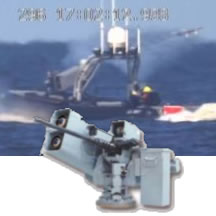
Spike missile fired form Mini Typhoon weapon station mounted USV-PEM, during an evaluation of the missile by the US Navy last week. Photos: US Navy, Rafael
Spike missile fired form Mini Typhoon weapon station mounted USV-PEM, during an evaluation of the missile by the US Navy last week. Photos: US Navy, Rafael
The US Navy has test fired the Israeli Spike Electro-Optically Guided Missile from an unmanned boat last week, on Oct. 24th, as part of an operational demonstration of the weapon by the Chief of Naval Operation’s Expeditionary Warfare Division and the Naval Sea Systems Command’s Naval Special Warfare Program Office. During the test, operators successfully launched six Spike missiles from a Mini-Typhoon weapon station installed on the ‘unmanned surface vessel precision engagement module (USV PEM), engaging stationary and moving targets out to 3.5km using different attack profiles. It was the first time the Navy has shot a Spike missile from an unmanned surface vessel.
The demonstration is part of a joint project between the U.S. and Israel accomplished under an international agreement with the Combating Terrorist Tactics Support Office. The integration of the PEM into the USV was done with cooperation from the Naval Undersea Warfare Center Newport, Naval Surface Warfare Center Crane and Naval Surface Warfare Center Dahlgren.
Guided missiles like the Spike adds kinetic engagement capability to the arsenal of naval unmanned platforms; the USV PEM, a remotely operated eleven meter boat armed with missiles and a .50 caliber machine gun, represents the first significant step forward in surface unmanned combat capability. “The U.S. military has had the capacity for several years to target and engage enemy forces remotely using missiles from unmanned airborne vehicles comparable technological progression has not been achieved for unmanned surface going vessels.” NAVSEA sources commented.
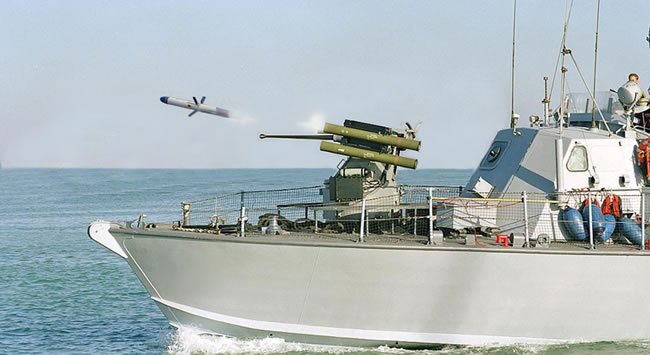
The basic Mini Typhoon naval weapon system mounts an 0.5″ Cal machine gun, GAU-17 Gatling gun or Mk19 40mm automatic grenade launcher. Integrated electro-optical system, built in ballistic computer and automatic target tracker facilitate effective engagements throughout the weapon’s operational range. The system is also designed to accomodate two Spike LR missiles mounted on the side. The Mini-Typhoon can be operated as a stand-alone system relying on its own sensors and controls or alternatively, through integration to other on-board combat systems. The Mini-Typhoon has been selected by the US Navy as the Remote Operated Small Arms Mount (ROSAM), designated Mk 49 Mod 1.
The increase in attention and effort for water borne technological advancements coincides with the drawing down of U.S. military resources in the land locked campaign in Afghanistan and a strategic refocusing to problem regions were unconventional maritime threats must be accounted for. “The USV PEM project was developed in response to recent world events which have increased the concern over swarms of small attack craft, as well as threat assessments outlined in recent studies conducted by the Naval Warfare Development Command,” said NAVSEA Naval Special Warfare Assistant Program Manager Mark Moses. “The study punctuates the effectiveness of these swarm attacks against both military re-supply ships and naval vessels. Technology demonstrated in this project can provide a capability to combat terrorists who use small low-cost vehicles as weapons platforms.”
The PEM, which aims, fires, and updates the missile in the flight, is operated by shore-based personnel. These personnel, sitting in a remote control center, use onboard sensors to control the boat and obtain and destroy targets. The Spike missile uses electro-optic and infrared sensors to identify and lock onto the target. “The fiber optic tether is ultra thin and is spooled up and uncoils automatically during flight,” said Moses “This allows the operator to view updated targeting information to the missile while it is in flight and to confirm the missile is tracking the intended target up to the moment of impact.”
Spike LR Missile launched from a Typhoon weapon station on an Israel Navy Super Dvora Mk 2. A similar configuration was recently tested by the US Navy, from an unmanned surface vessel (USV-PEM). Photo: RAFAEL
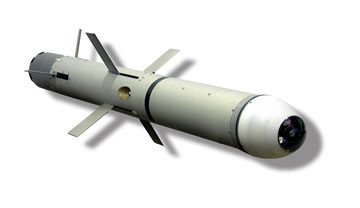
RAFAEL’s Spike ER EO guided missile. Photo: RAFAEL
After decades of relying exclusively on laser and GPS for precision attack, the military and US special operations community is slowly opening to consider Electro-Optically (EO) guided weapons, gaining strike precision at extended range. In a recent test conducted by NAVSEA, six Spike EO guided missiles were launched from an USV-PEM unmanned boat, engaging targets 1.9 nautical miles (3.5 km) away. Such capabilities will further develop as EO guidance techniques become feasible and affordable, relying on matured image processing techniques, Micro-Electro Mechanical Systems (MEMS), miniaturized imaging sensors, navigation and communications derived from commercial off the shelf technologies.
This trend is correlated with a shift in military focus, from traditional linear battles toward asymmetric warfare. Different from the hardened, well-protected and distinct military targets of the past that could be neutralized by massive penetrating warheads today’s targets are vulnerable, yet illusive. They lack distinct signatures pursued by automatic target recognition, but are clearly recognized by the human operator, hence, bringing back ‘man in the loop’ control. Such control has been realized as imperative for modern asymmetric warfare, facilitating maximum flexibility in seizing short term opportunities while eliminating engagement of innocent people which the enemy often use as ‘human shields’, when briefly exposed in the open.
Outside the USA EO guided missiles became much more popular, with the Israeli Spike missile with its four variants leading the way for more than 20 armies worldwide, including the largest forces in NATO. Spike was developed and produced by RAFAEL Advanced defense Systems. This weapon offers the most advanced level of EO guidance, dubbed ‘4th Generation’. The Israeli Tamuz – also known as Spike NLOS, was fielded by the IDF two decades ago, became the first land-based missile to strap a thermal imaging sensor to enable the operator to ‘see’ the target from the missile’s point of view. For the first time, the lengthy and complex ‘sensor to shooter’ coordination cycle was reduced into minutes and seconds.
The Spike developer RAFAEL considers the system should maintain its development course as an EO system – enhancing the system through the improvement phased improvements – introducing Miniature Electro-Mechanical Systems (MEMS), large matrix imaging sensors and versatile actuating systems enabling manufacturers to drive weapons cost to the level of laser guided weaponry, shrinking the size to introduce smaller and lighter precision weapons, and enabling the warfighters on land, at sea and in the air to carry out their missions much more effectively, while remaining safe at stand-off distance.
Spike LR Missile launched from a Typhoon weapon station on an Israel Navy Super Dvora Mk 2. A similar configuration was recently tested by the US Navy, from an unmanned surface vessel (USV-PEM). Photo: RAFAEL
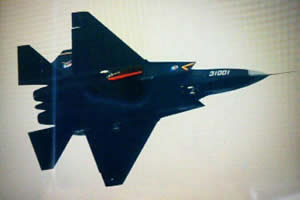
China’s J-31, the new stealth fighter prototype developed by AVIC Shenyang Aircraft Corporation (SAC) took off on its maiden flight on October 31, 2012 on 10:32 Beijing local time. It landed after nine minutes. Photo: China Defence Mashup
China’s J-31, the new stealth fighter prototype developed by AVIC Shenyang Aircraft Corporation (SAC) took off on its maiden flight on October 31, 2012 on 10:32 Beijing local time. It landed after nine minutes. Photo: China Defence Mashup
China’s J-31, the new stealth fighter prototype developed by AVIC Shenyang Aircraft Corporation (SAC) took off on its maiden flight today, October 31, 2012 on 10:32 Beijing local time. The flight lasted only ten minutes. SAC developed the J-31, China’s second stealth fighter prototype, in only 19 months. This model is positioned to become China’s leading export fighter. It will also be positioned as an alternative to the larger and assumingly more costly Chengdo J-20. China Defense Mashup reports.
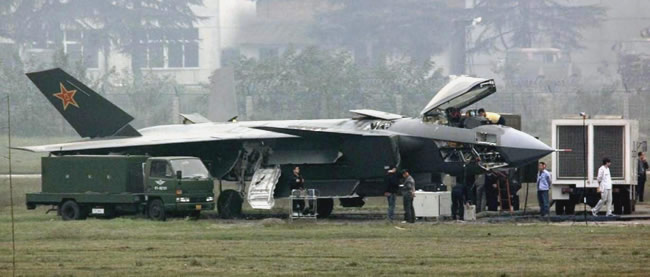
Chengdu has already flown two J-20 prototypes, marked 2001 and 2002. Photos recently obtained by the China Defense Blog indicate some changes to the design, reflected by a modified version or a third, slightly revised prototype that could be used for avionics integration flight-testing. The prototype that follows changes initially introduced in the second J-20, now depicts dorsal and forward fuselage access to avionics bays; the pitot tube was repositioned at the tip of the nose cone, opening the nose cone space for AESA radar and Electro-Optical Infra-Red Search / Track (IRST) sensors.
The latest J-20 prototype now depicts dorsal and forward fuselage access to avionics bays; the pitot tube was repositioned at the tip of the nose cone, opening the nose cone space for AESA radar and Electro-Optical Infra-Red Search / Track (IRST) sensors. (China Defense Blog)
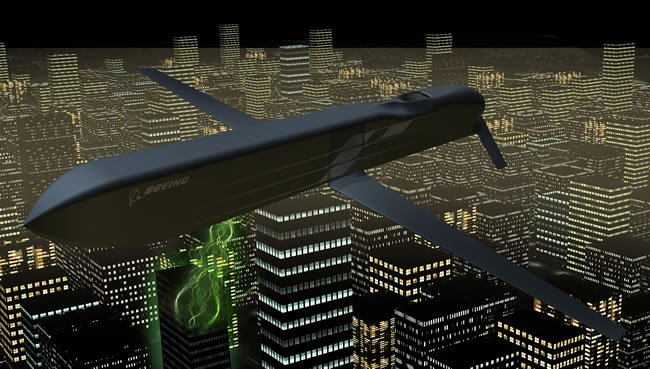
A recent weapons flight test in the Utah desert may change future warfare after the missile successfully defeated electronic targets with little to no collateral damage.
Boeing and the U.S. Air Force Research Laboratory (AFRL) Directed Energy Directorate, Kirtland Air Force Base, N.M., successfully tested the Counter-electronics High-powered Microwave Advanced Missile Project (CHAMP) during a flight over the Utah Test and Training Range. The flight test demonstrated multi-shot and multi-target capability of the aerial HPM demonstrator, to degrade, damage, and destroy electronic systems.
The CHAMP high power microwave (HPM) aerial demonstrator is a multiyear, joint capability technology demonstration that includes ground and flight tests. CHAMP, which renders electronic targets useless, is a non-kinetic alternative to traditional explosive weapons that use the energy of motion to defeat a target.
During the test, the CHAMP missile navigated a pre-programmed flight plan and emitted bursts of high-powered energy, effectively knocking out the target’s data and electronic subsystems. CHAMP allows for selective high-frequency radio wave strikes against numerous targets during a single mission.
“This technology marks a new era in modern-day warfare,” said Keith Coleman, CHAMP program manager for Boeing Phantom Works. “In the near future, this technology may be used to render an enemy’s electronic and data systems useless even before the first troops or aircraft arrive.”
The $39 million contract for the development and construction of five flight vehicles and a small HPM payload was awarded to Boeing in 2009. Under the 39 months program Boeing is building five aerial platforms. Two are destined for flight tests and one is used for ground testing.
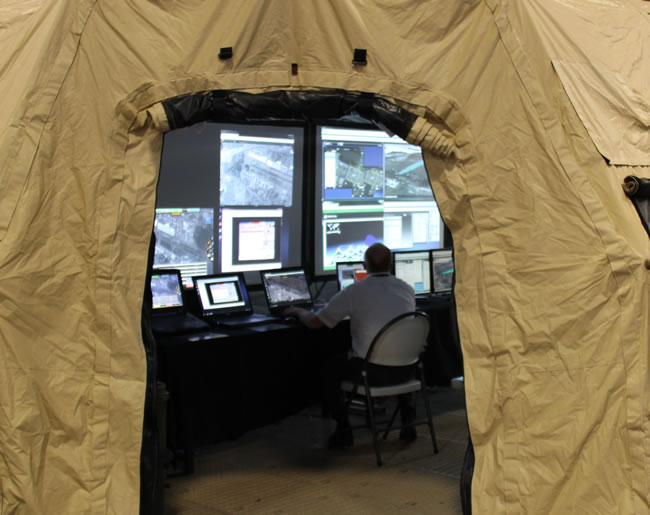
Our sponsor: RADA Electronic Industries.A view into the Tactical Command Post (TOC)
This process, known as Capability Set Management, is a significant departure from the previous practice of fielding systems individually and often to only one element of the operational force at a time. Capability Set Management is executed in a deliberate and disciplined process in accordance with the Army Force Generation (ARFORGEN) Process.
Improvements in command, control, communications and computing (C4) have been part of military modernization for decades. While in the past, such modernization focused on specific projects and capabilities, in recent years, the military is taking a holistic approach to field incremental upgrades throughout its systems, removing technological bottlenecks to maximize system efficiency, improve services and assets utilization.
To maximize the performance and efficiency of new equipment, modernization is implemented in ‘Capability Set’ delivered and installed with brigade combat teams, through all their command elements and subordinate units. The current upgrades implemented in the CS 13 phase addresses 11 critical Operational Need Statements submitted by theater, giving commanders and soldiers vastly increased abilities to communicate and share information. Significant capability enhancements include Mission Command on the Move, allowing leaders access to network capabilities found in Tactical Operation Centers while mounted in combat vehicles; other applications in CS13 are delivering the network to individual soldiers at the squad level.
Our Sponsor: IAI
The main elements included in CS 13 are the General Dynamics C4 (GDC4S) Warfighter Information Network-Tactical (WIN-T) Increment 2, Joint Capabilities Release (JCR) Blue Force Tracker 2 from Northrop Grumman, Joint Battle Command-Platform (starting 3Q FY13), Company Command Post capability, Mission Command Common Operating Environment v1.0 and Harris tactical radios that include the AN/PRC-117G with Advanced Network Waveform 2 (AWN2), the GDC4 AN/PRC-154 Joint Tactical Radio System (JTRS) Rifleman Radio and Handheld Manpack Small Form Fit (HMS) radio and Harris AN/PRC-152A Soldier Radio Waveform (SRW) appliqué radios. For dismounted operations, yet-to be awarded Nett Warrior dismounted C2 kits will provide situational awareness and networking down to the squad leader level, while individual Soldiers will be connected with the Rifleman Radio.
Looking beyond the current Capability Sets, industry is already preparing for future broadband military network, to rely heavily on commercial protocols, and COTS. Such networks employing WiMAX or GEN 4/LTE technology, hardened for military use, could offer the services the advantages of affordable hardware, improved obsolescence and reduced development costs. Implementation of tactical networks serving military operations in contingency areas will also improve with the deployment of adequate numbers of wireless devices employing ad-hoc MESH networks. Protocols supporting these functions are already implemented in the new generations of radios. Unique applications, such as sensor feeds and ISR have specific requirements met by specific types of radios. Serving those needs are dedicated sets that are optimized for such services, using spectrum segments, waveforms and protocols optimized for high data throughput for real-time and on-demand applications.
These articles will be opened for all readers on Defense-Update on Sunday (21/10) and are currently available in the downloadable PDF format.
This issue is offered to Defense-Update readers as a complimentary preview issue. Forthcoming reports from the exhibition will be available nightly from Defense Update in web & PDF format, providing excerpts for all readers and full features for our paid subscribers.
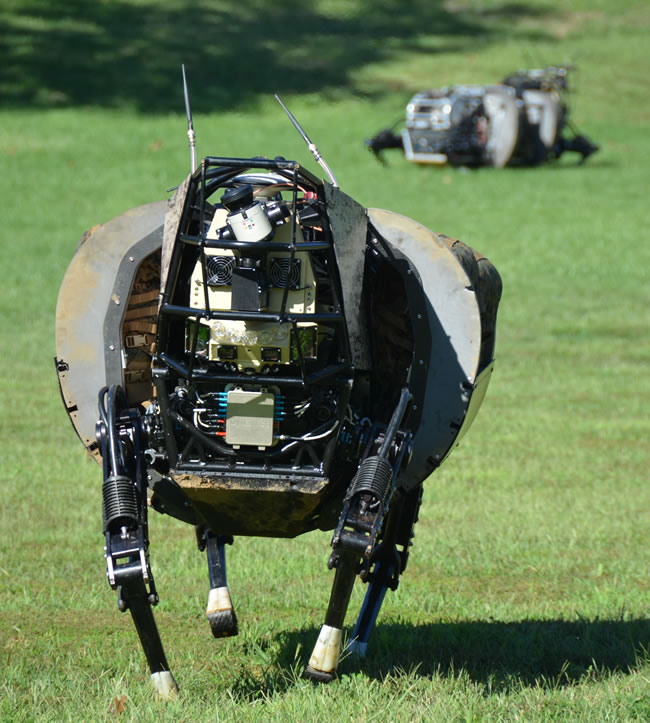
Two of these robotic mules (LS3) are being tested by the Marine Corps as support platforms for dismounted squads. Photo: DARPA
Our sponsor: RADA Electronic Industries.Two of these robotic mules (LS3) are being tested by the Marine Corps as support platforms for dismounted squads. Photo: DARPA
Sustaining combat operations in high intensity ‘linear’ warfare has always represented a huge challenge to military planners, pushing supplies to forward supply bases and forward units by sea, air and land. Engaged in asymmetric warfare, without a clear ‘forward line of troops’, where every truck, supply base or civilian tanker supplying water to a FOB becomes a target for an RPG or IED, today’s military is focused primarily on protecting its supply lines over hundreds of miles. Reducing the vulnerability of those elements and the ’logistical footprint’ supporting the combat units in those areas, without eroding overall security or mission objectives.
Reducing the logistical footprint could be achieved by optimizing energy consumption, by exploiting renewable energy, generating the water and electrical power necessary for local consumption, rather than pushing it forward from logistical centers. Minimizing cooling and heating requirement by using efficient isolation materials can also reduce fuels consumption (with the added benefit of saving in energy costs). It also means standardizing fuels and electrical power sources (batteries), thus minimizing supply bottlenecks and optimizing logistical reserves maintained at the different levels.
Our Sponsor: IAI
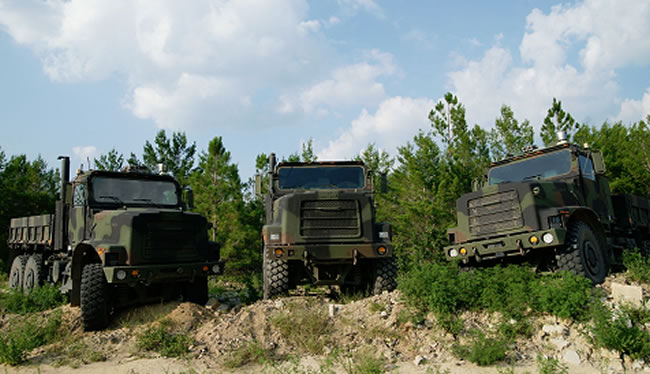
Improving the survivability of convoys is another aspect dealt with by the military. First, minimizing the need for ground transportation means less trucks will be exposed to ambushes and IEDs. The marine Corps is already implementing aerial resupply by unmanned helicopters, while the Air force employs precision aerial delivery using guided parachutes, to deliver supplies reliably and precisely to forward bases, with minimal risk of losing cargo or exposing troops on the ground to enemy fire. Yet, for the bulk of the heavy loads, truck convoys are necessary. Logistics trucks are utilizing protected cabins, offering relatively good protection for the crew, but the goal is to reduce the number of drivers, by using semi-autonomous driving systems, enabling fewer ‘drivers’ to control many more robotic trucks. The Army has tested such a concept before and the Marine Corps Warfigting Lab (MCWL) is currently conducting such test to evaluate the operational effectiveness of this concept.
Other robotic vehicles are employed to support small unit dismounted operations. Often referred to as a ‘mule’, these support vehicles are much more than weight carriers, supporting the unit with power generation capability to recharge batteries, a platform for casualty evacuation or even remotely operated lookout, carrying mast mounted sensors or counter-IED systems such as a flail or explosive line charge. Some of these robots, like the STSS and Probot are almost ready for fielding today, while others – like DARPA’s ‘Big Dog’ Legged Squad Support System (LS3) are still in early experimentation.
These articles will be opened for all readers on Defense-Update on Sunday (21/10) and are currently available in the downloadable PDF format.
This issue is offered to Defense-Update readers as a complimentary preview issue. Forthcoming reports from the exhibition will be available nightly from Defense Update in web & PDF format, providing excerpts for all readers and full features for our paid subscribers.
The TERRAMAX robotic truck from Oshkosh Defense is being tested by the US Marine Corps to perform as driverless truck in manned or unmanned convoys. Photo: Oshkosh
Lockheed Martin Skunk Works® and XTEND have achieved a major milestone in JADC2 by integrating the XOS operating system with the MDCX™ autonomy platform. This technical breakthrough enables a single operator to simultaneously command multiple drone classes, eliminating the friction of mission handoffs. From "marsupial" drone deployments to operating in GPS-denied environments, explore how this collaboration is abbreviating the data-to-decision timeline and redefining autonomous mission execution.
As traditional defense primes face mounting competition from agile “neoprimes” such as Anduril, Palantir and Helsing, the balance of innovation is shifting toward software-defined warfare and scalable, dual-use technologies, while global industry consolidation—marked by Boeing’s integration of Spirit AeroSystems and other strategic mergers—signals an intensified race to secure control over the defense technology value chain. Our Defense-Tech weekly report highlights these trends.
In early October 2025, a coordinated wave of unmanned aerial system (UAS) incursions—widely attributed to Russia—targeted critical infrastructure across at least ten European nations. The unprecedented campaign exposed the fragility of Europe’s air defenses...
Executive Summary
The past week (September 18-25, 2025) represents an inflection point where strategic defense concepts have transitioned from doctrine to tangible reality. An analysis of global events reveals four primary, interconnected trends shaping an...
At the 2025 Air, Space & Cyber Conference, U.S. Air Force and Space Force leaders unveiled major updates on next-generation fighters, bombers, unmanned systems, and space initiatives, highlighting both rapid innovation and critical readiness challenges as the services race to outpace global competitors. A short version is available here, with a more detailed version for subscribers.
The Taipei Aerospace & Defense Technology Exhibition (TADTE) 2025 crystallized around four dominant strategic themes that collectively illustrate Taiwan's comprehensive approach to defense modernization amid escalating regional tensions. Based on a detailed report by Pleronix (available upon request). Includes a Podcast discussion on TADTE 2025's highlighting Taiwan's four strategic themes beyond the post's coverage.
Israel’s Iron Beam 450 high-power laser system has completed final testing, marking a major leap in air defense. Developed by Rafael, it offers precise, cost-effective interception of rockets, UAVs, and mortars, and is set for IDF deployment by 2025.