
Wednesday, December 31, 2025
More
    Home Blog Page 188

    US Army Evaluates the Israeli Namer, Swedish CV9035 AIFVs at Ft. Bliss

    Namer AIFV undergoing operational evaluation by US Army teams at Ft. Bennings, June 2012. Photo: US Armyesting
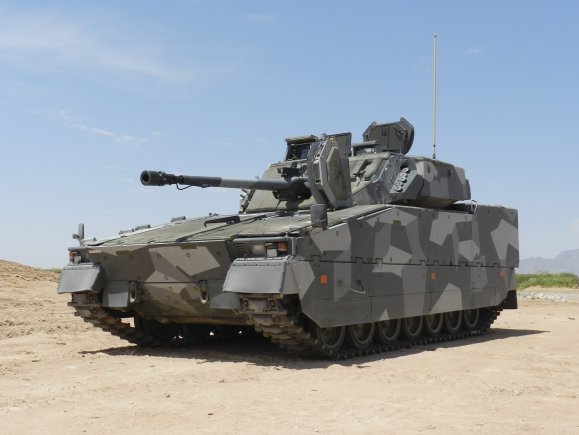
    The BAE Systems CV9035 at Ft. Bliss. Photo: US Army

    Soldiers who took part in the Maneuver Battle Lab’s Ground Combat Vehicle (GCV) assessment last month at Fort Bliss, Texas, praised the various capabilities and features on the five vehicles used in the week-long evaluation. The EXFOR conducted platoon-level operations on five different platforms at Fort Bliss: M2A3 Bradley Fighting Vehicle, Turret-less Bradley, Double V-Hull Stryker, Swedish CV9035 vehicle and the Israeli Namer. Each vehicle was evaluated for durability, capacity, modularity, lethality, interior space and operational capability.


    Harry Lubin, the Maneuver Battle Lab’s Live Experimentation Branch chief, said the Army is assessing the best attributes on each vehicle as part of an effort to consolidate them into a design that could replace the Bradley Fighting Vehicle in the future.

    The Ground Combat Vehicle assessment’s first stage unfolded in Israel this past winter, when the experimentation force took part in a month-long evaluation of the Israeli Namer. In March, the Soldiers were in Denmark working with the Swedish CV9035 vehicle. The Fort Benning Soldiers ran six missions a day — three during the day and three at night — across open desert and urban terrain.

    “Maneuverability was my focus,” said Spc. Michael Platzer, a driver. “The CV9035 was the most responsive, but the two Bradleys were a close second. I found that the vehicles with a three-man crew allowed us to maneuver and fight better, and they were still capable of carrying a whole squad.” Maneuver Battle Lab officials said a key objective in the Army’s campaign is to produce a vehicle that can carry nine fully equipped Infantrymen and three crew members. The M2A3 Bradley Fighting Vehicle currently in use holds a maximum of seven Infantry Soldiers.

    A US turretless Bradley, Swedish CV9035 and Israeli Namer line up for evaluation at Ft. Bliss US, June 2012. Photo: US Army

    Sgt. Nehemiah Robertson, a gunner, said he identified a target at 1,500 meters in the Swedish CV9035 vehicle but also liked the Bradley’s sights capability. Both delivered great firepower. “We liked the bigger-gun capabilities,” Manilla said. “Any vehicle without a large cannon to destroy armored vehicles gave us some challenges because it forced the Soldiers to dismount.”

    Each vehicle provided different levels of situational awareness, said Maj. Jerel Evans, the EXFOR commander. The Israeli Namer, for example, had seven cameras — they can show the positions of dismounted squad members and where the gunner is firing.
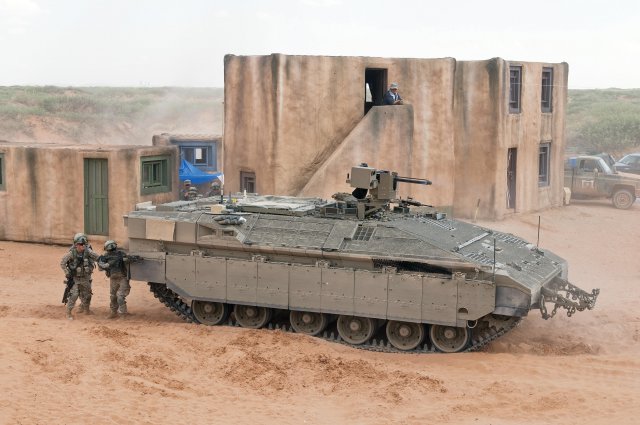
    Namer AIFV undergoing operational evaluation by US Army teams at Ft. Bliss, May 2012. Photo: US Army

    “All those vehicles and emerging technologies allow Soldiers to have that situational awareness before they hit the ground,” he said. “Survivability is a big feature the Army is going after in a new ground combat vehicle. It has to be able to maneuver in urban environments and off-road terrain. The IED (improvised explosive device) threat has changed the way we fight. It’s put more emphasis on survivability.”

    Evans said he likes the direction taken by the Army in seeking a vehicle that’s as versatile, lethal and adaptive as the individual warfighter.

    “We need a vehicle that deals with the capability gaps we’ve had in other vehicles,” he said. “This comes from lessons learned since we’ve been fighting in 10-plus years of war in Iraq and Afghanistan. I love this new concept.”

    “As these assessments go, it went successfully well at Fort Bliss,” Lubin said. “We built the scenarios and command-and-controlled the exercise to get at those data points we needed to get at. Our goal, for the whole process, was to provide feedback to the Mounted Requirements Division so we can make an informed decision down the road. It’s critical they get the requirements right so industry knows what to build to.”

    About 75 personnel from Fort Benning had roles in Phase 2 of the nondevelopmental assessment, which was aimed at informing Army leaders about eventual requirements for a new Infantry fighting vehicle. It included about 45 Soldiers from A Company, 1st Battalion, 29th Infantry Regiment, 197th Infantry Brigade, the post’s experimentation force, known as the EXFOR.

    The results of these evaluations could shape the Army’s attitude toward refining the scope of the future GCV, especially when tradeoff between cost and requirements will unfold, as the program move through its next phases. Given the role of BAE Systems (CV9035, Bradley) and GDLS (Stryker, Namer)as prime contractors for two of the foreign vehicles, positive conclusion of the testing could also trigger expanding the scope of potential vehicle  types or vendors considered for the future program.

    BAE Systems provided the turretless version of the Bradley developed by the company. BAE is offering a number of variants, proposed as potential replacement of the M113. Photo: US Army

    Missile Mini-Interceptor (EAPS) Completes Test Flight

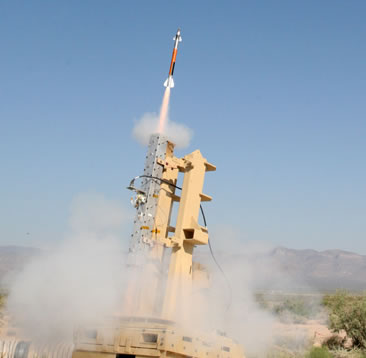
    Lockheed Martin EAPS-ID missile test, 26 May 2012. Photo: Lockheed Martin
    Lockheed Martin is pursuing a terminally guided Hit-to-Kill (HTK) mini-missile kinetic interceptor for the Extended Area Protection and Survivability (EAPS). Photo: Tamir Eshel, Defense Update

    Lockheed Martin conducted a successful controlled vehicle test flight of the missile interceptor effector element of the Extended Area Protection and Survivability Integrated Demonstration (EAPS ID) program The test was conducted on May 26 at White Sands Missile Range, N.M. Data collected at this test will support the guided flight tests, against live RAM targets, beginning in the second half of 2012.


    Earlier in March 2012 the Army selected the competing design by Northrop Grumman to proceed to the next level of development. Both companies have yet to demonstrate the technologies developed under the first phase. Lockheed Martin EAPS solution uses a Miniature Hit-to-Kill (MHTK) interceptor that defeats Rocket, Artillery and Mortar (RAM) targets at ranges greatly exceeding those of current systems (few kilometers, as characterized by the Phalanx or AHED rapid fire cannons).

    Lockheed Martin EAPS-ID missile test, 26 May 2012. Photo: Lockheed Martin

    Unlike the cannon’s unguided projectiles, the EAPS interceptor is a highly agile missile, designed as a small hit-to-kill interceptor that weighs approximately 3 kilograms. It is less than 50 millimeters in diameter and less than 1 meter long. The interceptor is designed to be affordable and will meet the AMRDEC Average Unit Production Cost goal at specified quantities. Paired with a fire control sensor, EAPS defeats targets through body-to-body impact at tactical ranges.During the flight test, the tactically configured MHTK interceptor was launched vertically and then conducted a series of maneuvers to demonstrate required performance while capturing data.

    “Providing improved protection to our deployed soldiers and other personnel is extremely important; the AMRDEC is very pleased with this test. This flight test shows excellent progress in demonstrating the technologies that will be required for employing the MHTK concept in the defeat of RAM threats,” said Loretta Painter, AMRDEC EAPS program director. “This flight test provided the program with critical data, which is now being analyzed and the resultant will be incorporated into the system as this effort moves into guided flight tests, intercepting RAM targets.”

    The company conducted this test in collaboration with the U.S. Army Research Development & Engineering Command/Aviation Missile Research Development & Engineering Center (RDECOM/AMRDEC).

    Other US companies involved in C-RAM interceptor programs include Raytheon, which was recently awarded a $79.2 million contract under the Accelerated Improve Intercept Initiative (AI3) and the EAPS-ID Battle Element (BE), for which Northrop Grumman was selected as sole source earlier this year. Raytheon was awarded in March, where it will combine a Raytheon-developed interceptor with government-furnished launcher, fire-control and command-and-control (C2) systems. Raytheon has been cooperating with Israel’s RAFAEL Advanced Defense Systems on potential partnership and marketing of Rafael’s Iron Dome in the US market. Raytheon said in its announcement it will leverage ‘mature technology’ from existing programs.

    The purpose of the EAPS ID is to create a mobile missile system (or BE) that can engage multiple, in-flight RAM threats accurately, and protect forward-deployed forces over a larger defended area at a much lower system cost, and cost-per-hit, than is currently possible. The first phase, which covered the development and demonstration of miniature missiles, included development by both Lockheed Martin and Northrop of low-cost vertical-launch interceptor missiles.

    Northrop Grumman was selected to develop the EAPS Battle Element for the demonstration program. Photo: Tamir Eshel, Defense Update

    Cam Ranh Bay is the Prize, Are Lethal Weapons the Cost?

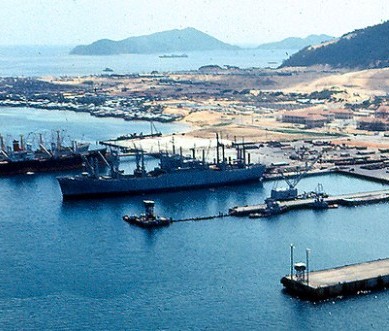
    Cam Ranh Bay harbor in Vietnam, as seen in 1969
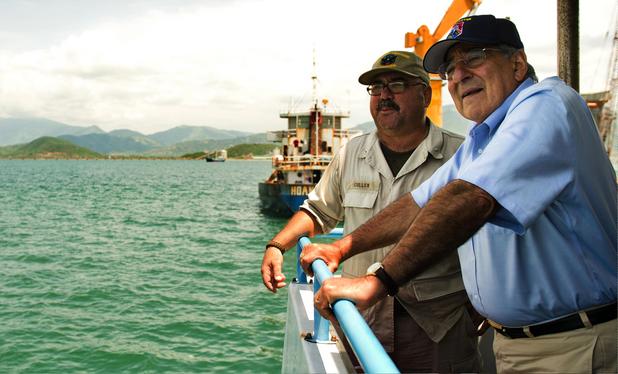
    Defense Secretary Panetta visiting the Cam Ranh Bay in Vietnam

    Just one day after his speech at the Shangri-La Dialogue in Singapore, US Secretary of Defense Leon Panetta stood on the flight deck of USNS Richard E, Byrd (T-AKE-4), a US maritime cargo ship, and gazed out over the wide expanse of Vietnam’s Cam Ranh Bay becoming the most senior US government representative to visit Vietnam since the end of the Vietnam Conflict in 1975.


    Panetta, continuing his eight-day tour through the Pacific, arrived in Vietnam for discussions with Vietnamese leaders to explain the United States’ plans to reinforce America’s presence in the region and to expand its cooperative military and diplomatic relationships with Vietnam. The Secretary hopes to reassure the Vietnamese that the United States is firmly committed to ensuring that freedom of navigation through the region’s waterways is guaranteed and that maritime rights are protected.

    The Obama administration’s plan to realign American military resources to refocus attention on the Asia-Pacific and Indian Ocean regions includes efforts to assist nations in both regions develop enhanced military capabilities to ensure these nations have a realistic means of defending themselves. From the deck of the USNS Byrd, Secretary Panetta addressing this need for improved defensive abilities said that “it is very important that we be able to protect key maritime rights for all nations in the South China Sea and elsewhere.”

    Although Mr. Panetta never mentioned China by name in his comments, it is very likely that Chinese leaders will view his Vietnam visit with considerable irritation. China’s growing military strength and aggressive posturing have increased concerns in both the US and Vietnam that China represents a critical threat to maritime territorial claims in the South China Sea and other Pacific areas. In light of this, Vietnam is warming up to the idea of a stronger US presence in the region to offset Chinese intentions.

    While relations between Vietnam and the US have experienced an unexpected positive turn in the past two years, there still remain some very sensitive matters that are likely to slow development of cooperative friendship between the two former enemies. Vietnamese leaders, according to anonymous sources, welcome renewed US attention on developments in the Pacific, but also harbor a persistent fear that the United States may attempt to interfere in Vietnamese domestic affairs or may try to shape Vietnam’s foreign relations in a manner that may not always coincide with Vietnamese policies. Vietnamese leaders are also compelled to consider the possibility that improving relations with the United States too quickly might precipitate an undesirable response from China.

    The US and Vietnam agreed to normalize diplomatic relations 17 years ago and last year the two nations signed a Memorandum of Understanding (MOU) pledging cooperation in non-lethal defense matters including humanitarian operations, search and rescue, and maritime security. Now, the United States wishes to expand this dialogue as the need for facilities suited to host an increased US military presence becomes increasingly more important.

    The US is not looking to establish permanent bases to support additional forces, preferring to develop facilities that can service units rotating through the region thus reducing vulnerabilities associated with permanent, fixed positions. A rotational strategy also serves to reduce local opposition to the presence of sizeable US forces.

    Currently, US warships have no authority to enter Cam Ranh Bay while other US ships do take advantage of the bay’s facilities. The USNS Byrd, being one of the US Navy’s Military Sealift Command ships crewed by a mostly civilian team, has been approved to enter Cam Ranh Bay and the port at DaNang. Since 2003, more than 20 US naval vessels have visited Vietnamese ports, none of them warships.

    Throughout the Vietnam Conflict Cam Ranh Bay served the US as a premiere deep-water port, claimed by many to be “the jewel of deep, warm-water ports in Southeast Asia.” Although not mentioning specifics, Secretary Panetta made it clear in his comments that the United States desired to open the bay to increased use by US warships.

    Secretary Panetta said that the US hoped to “work with our partners like Vietnam to be able to use harbors like this as we move our ships from our ports on the West Coast towards our stations here in the Pacific.” He went on to say that allowing US warships to enter Cam Ranh Bay “is a key component of this relationship (with Vietnam) and we see a tremendous potential here for the future.”

    With Vietnam working to develop Cam Ranh Bay into a profitable international commercial port, the US hopes to convince Vietnamese leaders that giving the United States military access would help to boost the profitability of the bay. In time, the US would like to gain enough trust to encourage Vietnam to host US troops and warships rotating through the region. With rotational deployments now forming the central theme guiding the US pivot to the Pacific, access to Vietnamese port facilities would be a very welcome contribution to the success of a renewed American presence in the region.

    During a joint press conference with Secretary Panetta on 4 June, Vietnam’s Defense Minister General Phuong Quang Thanh called on the United States to revoke its ban on the sale of lethal weapons to Vietnam. Minister Thanh said that lifting the ban “would also help to fully mobilize the relationship between the two countries.”
    Secretary Panetta stated that his reason for visiting Vietnam “is to do whatever we can to strengthen the defense relationship between the United States and Vietnam.”

    Minister Thanh said that once the lethal weapon’s ban was removed, Vietnam would like to buy American items that could be used to repair and refurbish weapons Vietnam has collected from the Vietnam Conflict. He went on to say that Vietnam may then be interested in buying “certain kinds of weapons for the process of modernization of our military.” Thanh said any decision to buy additional weapons would be contingent on Vietnam’s specific needs and financial constraints.

    Secretary Panetta said that the United States welcomed the opportunity to provide Vietnam with additional assistance, but he did qualify his statement by saying that such assistance would depend on advances in Vietnam’s efforts to guarantee human rights and other ongoing reforms.

    Both Thanh and Panetta pledged to continue their efforts to strengthen the existing US-Vietnamese relationship as they strive to develop an even stronger partnership that would benefit both nations.

    Secretary of Defense Panetta Outlines Broad Framework of US Pivot to the Pacific

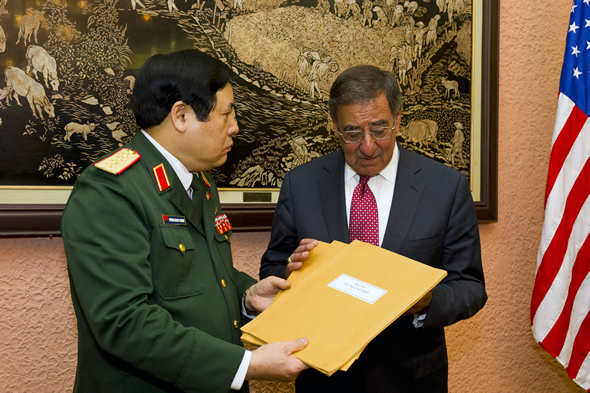
    U.S. Defense Secretary Leon E. Panetta accepts letters from Vietnamese Defense Minister Phung Quang Thanh, in Hanoi, Vietnam, June 4, 2012. The letters were written by American service members from the Vietnam war. DOD photo by Erin A. Kirk-Cuomo.
    U.S. Defense Secretary Leon E. Panetta meets Vietnamese Defense Minister Phung Quang Thanh, in Hanoi, Vietnam, June 4, 2012.

    US Defense Secretary Leon Panetta, speaking before representatives of Asia-Pacific nations attending the Shangri-La Security Dialogue symposium in Singapore on 2 June, offered a broad outline of US plans to strengthen US naval forces deployed to the Pacific region.


    Secretary Panetta, on an eight-day tour of the Asia-Pacific region, used his speaking opportunity at the 11th Asia Security Summit to outline US plans for a revised defense strategy, military realignment, and strengthening of long-term relationships that emphasize America’s commitment to the Asia-Pacific/Indian Ocean region.

    The projected “pivot” of US attention to the Asia-Pacific region was announced by President Obama last year and a Pentagon strategic guidance policy statement in January affirmed US plans to renew and strengthen the nation’s historic link to the Pacific by means of military realignments, renewal of relations with vital Asia-Pacific partners, and creation of new relationships with other nations in the region.

    Secretary Panetta’s trip is expected to garner support for the new US strategy and to reassure America’s Pacific allies that the US is truly committed to creating a stronger presence in the region. In a public statement made enroute to Singapore, Panetta said the United States was firmly committed to building “a region that enjoys peace, prosperity, security, and stability.”
    In generally broad strokes, the Secretary outlined the framework of a military realignment of US forces to the Asia-Pacific region during his speech. He indicated that an estimated 60 percent of the US Navy fleet would be committed to the Pacific by 2020. He said that the United States will maintain a naval force in the Pacific to “include six aircraft carriers in this region, a majority of our cruisers, destroyers, Littoral Combat Ships, and submarines.”
    Currently the US has 11 active carrier strike groups with six dedicated primarily to Pacific duties – two homeported in California, three located in Washington State, and one forward deployed to Yokosuka, Japan. Should the USS Enterprise be retired later this year as scheduled, the Pacific Fleet would be reduced to five operational carrier strike groups. It is unknown if another group might be relocated as a replacement for the Enterprise group, an expensive and time-consuming endeavor, or if the Pacific Fleet will operate only five groups until the USS Gerald R. Ford is ready for service. The Ford is scheduled to be completed in 2015.

    As of March this year, the US Navy had an active fleet of 282 ships. This number is expected to drop to 276 ships during the next two years. After that, more ships are scheduled to enter service as the Navy works toward its 30-year goal of fielding a 300-ship fleet. Pentagon officials have been forthcoming in their warnings that economic woes, excessive cost overruns, and fiscal constraints pose serious obstacles to achieving this goal.

    While acknowledging the US faced severe budget reductions, Secretary Panetta stated that the Department of Defense budget plan included a “detailed blueprint for implementing this strategy, realizing our long-term goals in this region and still meeting our fiscal responsibilities.”

    The Secretary stated that, “over the next five years we will retire older Navy ships, but we will replace them with more than 40 far more capable and technologically advanced ships.” He also outlined the Pentagon’s plan to “increase the number and the size of our exercises in the Pacific.” In 2011, the US conducted 172 joint training exercises with other nations in the region. The new defense strategy will also involve a wider distribution and more frequent schedule of Pacific port visits to include ports in the Indian Ocean.

    Mr. Panetta told the audience that the United States had firm plans in place to invest in new and emerging technologies to maintain US military capabilities. He mentioned that the US will be investing in “an advanced fifth-generation fighter, an enhanced Virginia-class submarine, new electronic warfare and communications capabilities, and improved precision weapons — that will provide our forces with freedom of maneuver in areas in which our access and freedom of action may be threatened.”

    Secretary Panetta emphasized the far-reaching extent of America’s commitment to the Pacific in his comments. He highlighted the US agreements and alliances that have created long-term partnerships with Japan, South Korea, Taiwan, Australia, the Philippines, and Thailand. He also stressed America’s determination to forge similarly strong bonds of friendship and cooperation with Singapore, New Zealand, Indonesia, Malaysia, India, and Vietnam.
    In his comments, Mr. Panetta said he was familiar with claims that the US shift in emphasis was undertaken as a counterbalance to China’s growing economic and military influence in the Pacific and responded to these allegations by saying, “I reject that view entirely. Our effort to renew and intensify our involvement in Asia is fully compatible with the development and growth of China.”

    He went on to say that an increased US presence in the region “will benefit China as it advances our shared security and prosperity for the future.” He continued in this vein by stating that he was “personally committed to building a healthy, stable, reliable, and continuous military-to-military relationship with China.”

    Panetta’s trip through the Pacific comes during a period of unrest and tense territorial disputes in the South China Sea between Beijing and her Pacific neighbors that have revived regional distrust and fear of China’s intentions. In his speech, Secretary Panetta said that “China has a critical role to play in advancing security and prosperity by respecting the rules-based order that has served the region for six decades.” He emphasized the importance of regional neighbors working together to resolve disputes peacefully while guaranteeing that regional rights are protected.

    During this tour, Secretary Panetta is accompanied by the US Chairman of the Joint Chiefs of Staff (CJCS), General Martin Dempsey, and commander of the US Pacific Command, Admiral Samuel Locklear. In Singapore, China appeared to make a point of displeasure with America’s renewed focus on the Asia-Pacific region by sending a less illustrious team of representatives. The Chinese delegation, unlike last year, was headed by the Vice President of the Academy of Military Sciences and did not include Defense Minister Liang Guanglie.

    Following stops in Hawaii and Singapore, Secretary Panetta is scheduled to visit Vietnam and India for high-level strategic and economic discussions. The Secretary also said he would be making a trip to China in the near future. General Dempsey will also be holding discussions with representatives of other Asia-Pacific nations to further explain US plans for the region.

    Where are the MRAP Going?

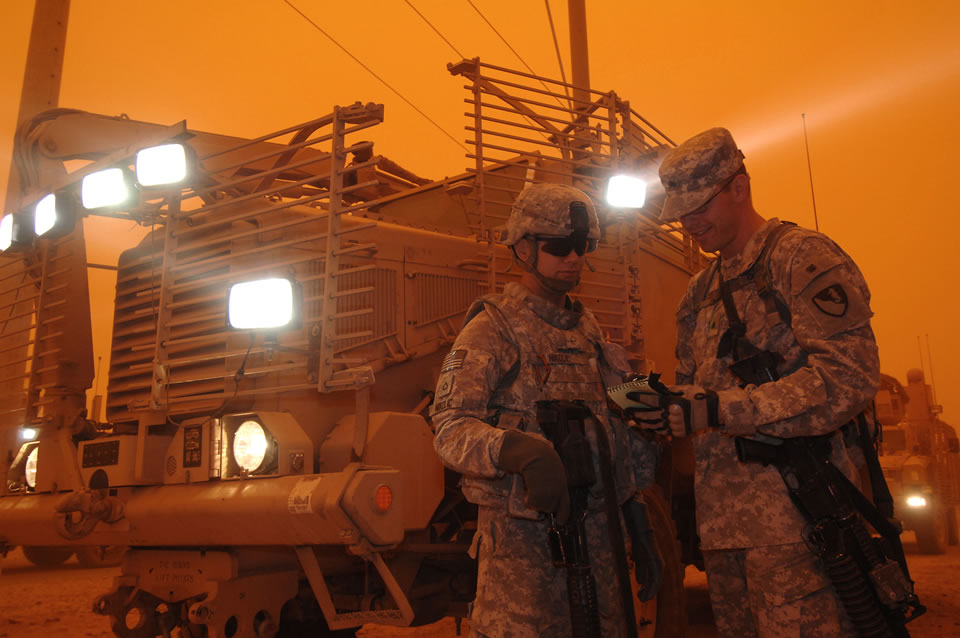
    A road clearance team prepares for mission amid a sandstorm near Tikrit, Iraq. Photo: Michael Heckman, US Army.

    Over the past five years the U.S. military has fielded over 20,000 Mine Resistant Ambush Protected (MRAP) vehicles at a US$45 million investment, representing about 7 percent of the Army’s vehicle inventory, providing protected transport to support combat operations, primarily in Iraq. The vehicles fielded in Iraq being heavy and restricted to road mobility, needed extensive modifications before they could deploy to Afghanistan.


    With missions in Iraq completed and Afghanistan drawing down, the Army hasn’t decided what to do with these monsters, available in many variants, from the massive Cougar to the all-terrain vehicle M-ATV, some are torn out by years of harsh service, others brand new, as they haven’t travelled a mile yet. Others will be mothballed or used for training purposes. While most vehicles have left Iraq already, the Army plans to scrap some of the vehicles, and could leave behind about 60 percent of the 21,000 MRAPs, to be stored in prepositioned stockpiles prepared for future contingency or sold to local military forces. Since most MRAP configurations are too high for storage at sea, the vehicles are likely to remain on land in prepositioned unit bases, somewhere in Soutwest Asia. Some of the MRAPs that will reach the US will be mothballed at the Army depots in the California high Sierra or sold for scrap.

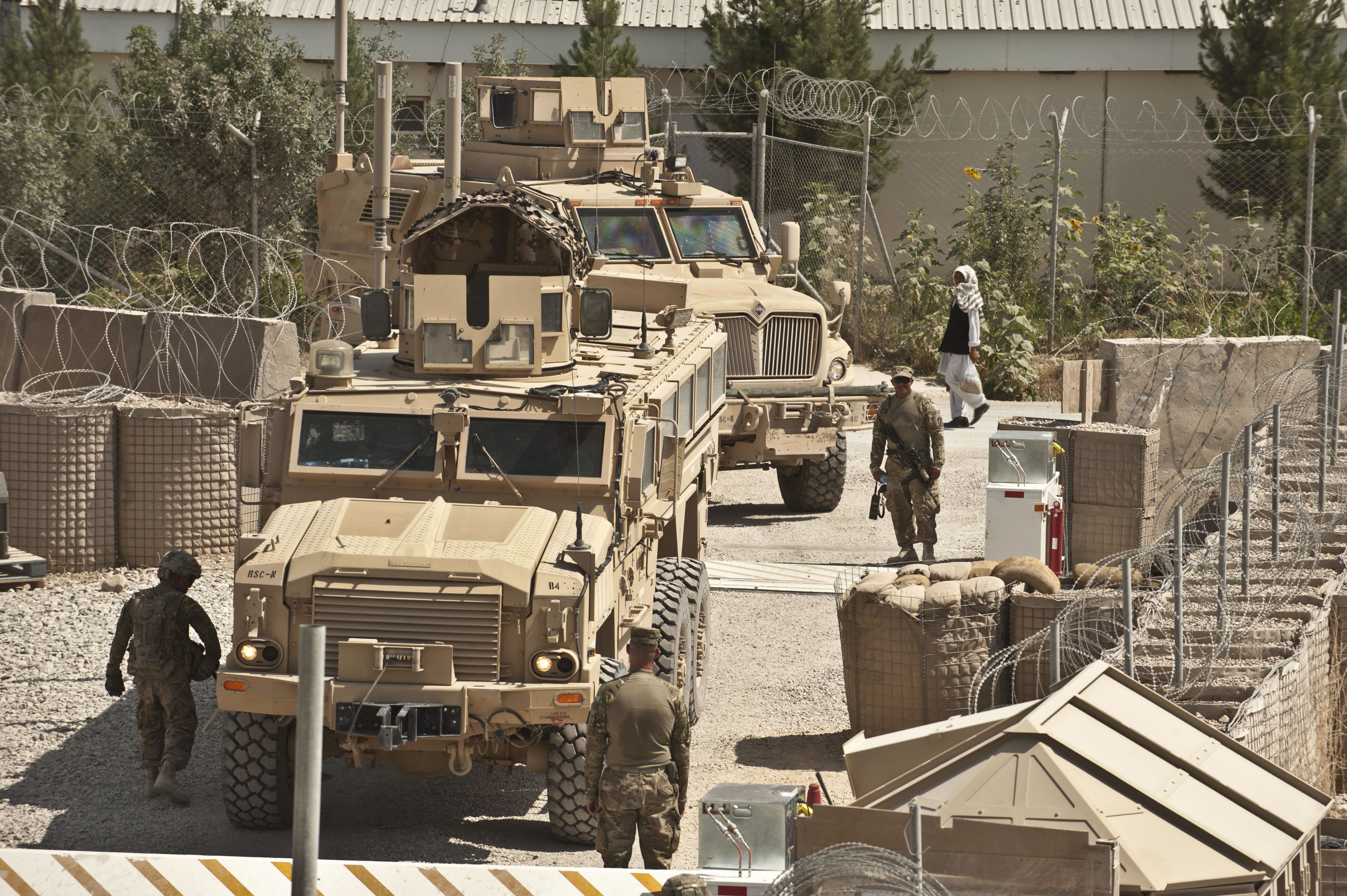
    The urgent demand for MRAP required the services to field as many vehicles as they could, from different makes and types. In this picture, a Maxxpro and RG33 operated by the 170th Infantry Brigade Combat Team return to Camp Spann, after patrol in the Afghan Baghlan province. Photo: US Army

    About 30 percent of these vehicles (up to 6,000 but most likely much less) will be heading home, to join the brigade combat teams route clearance missions and transportation units, providing protected transport for troop and supplies transport in high threat areas. To maintain driver and crew proficiency, about 2,000 of the vehicles will be sent to training bases in the continental US for training.Part of the Army’s hesitance of maintaining the MRAP is the lack of funding for through-life support. In the past five years the Pentagon procured about 26,000 MRAPs vehicles through the war supplemental budget that has dried out in recent years. With the Afghanistan drawdown effectively completed by the middle of the decade, the Army will have to find the resources to support the MRAP in its annual operations and sustainment budget, and obviously, in these hard times, MRAP support would be the last priority for the Army.

    Nevertheless, since some MRAPs will be maintained in service for at least 10 years, the remaining fleet will undergo reset and sustainment process at Army depots such as the Red River Depot, Texas, and Letterkenny Depot, Pa., Part of this process is aimed at bringing most MRAPs into a common configuration to enable more efficient training and support, partly through the cannibalization of existing vehicles.

    Part of the motivation of the services maintenance of MRAP for the near term is the continued development of the Joint Tactical Light Vehicle (JLTV) currently underway. The JLTV is scheduled to become operational in 2016 and is expected to be available in critical masses toward the end of the decade, introducing HMMWV level mobility and MRAP-level protection to brigade combat teams. The Army and Marine Corps plan to acquire as many as 50,000 JLTVs by 2035.

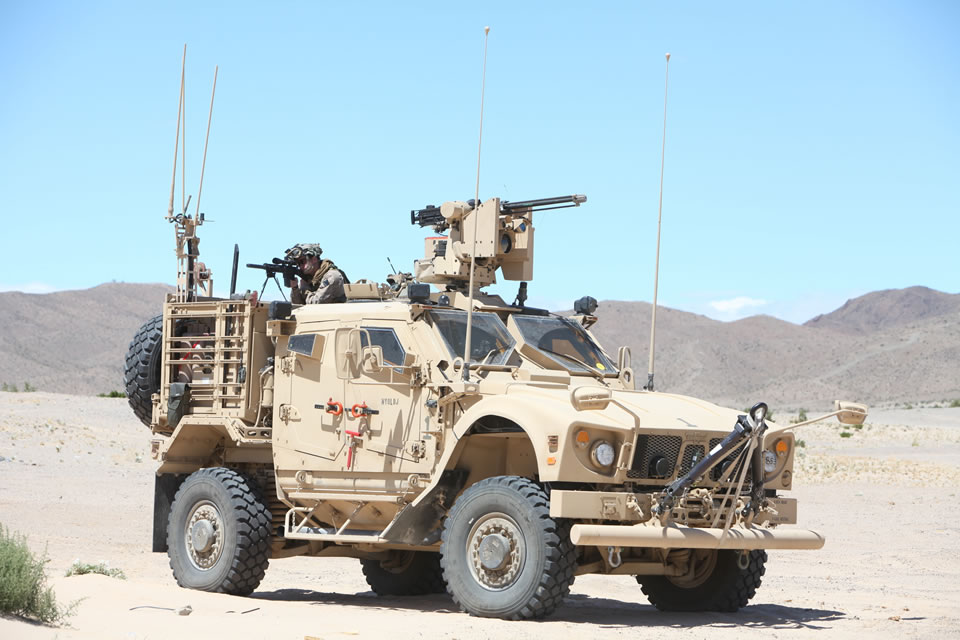
    The M-ATV from Oshkosh was the first MRAP to be designed for off-road mobility. A Marine sniper with U.S. Marine Corps Forces, Special Operations Command, provides security from the back of an M-ATV during a medical engagement as part of a pre-deployment exercise at the National Training Center, Fort Irwin, Calif., The three-week exercise is designed to prepare MARSOC Marines for deployment to combat operations in Afghanistan by immersing them in an environment as realistic and comprehensive as possible. Photo: Cpl. Kyle McNally, US Marine Corps.
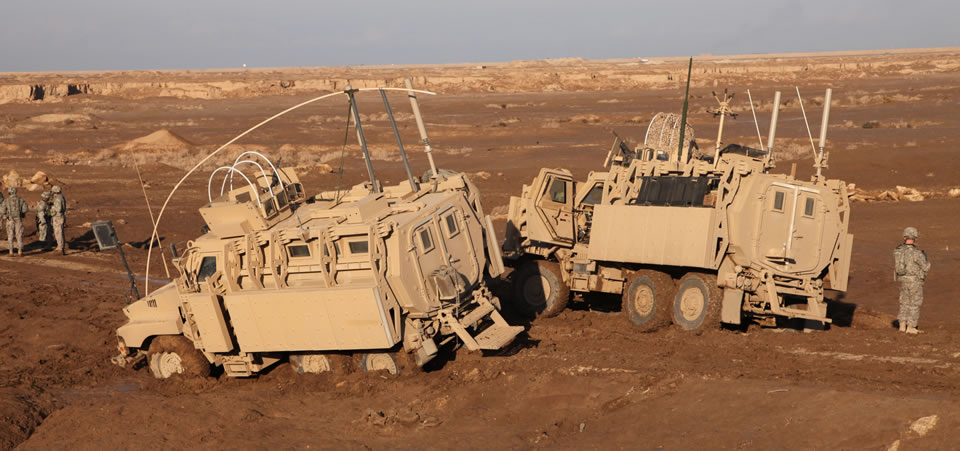
    A Caiman MRAP stuck on a muddy roadside near Nassariyah, Iraq. 2009. A recovery mission was organized in order to evacuate the two vehicles which had gotten stuck in the mud after a particularly heavy rainfall for the region. Photo: Spc. Gavriel Bar-Tzur, US Army

    South Korea Planning Major Increase in Missile Force

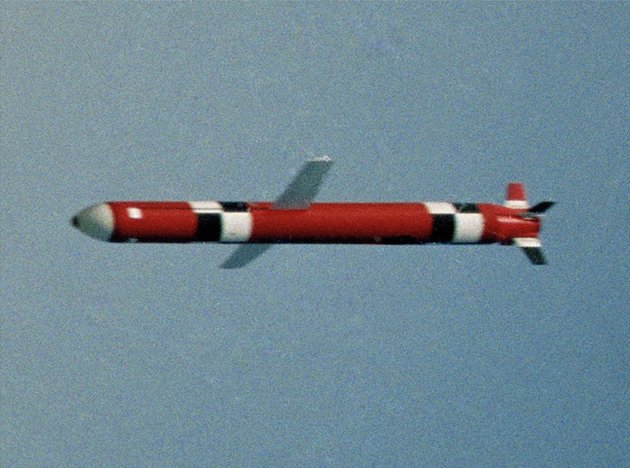
    South Korean Hyunmu 3 cruise missile
    South Korean Hyunmu 3 cruise missile

    The Korean Chosun Ilbo newspaper has published a story indicating that the ROK Defense Ministry has received President Lee Myung-Bak’s blessing to spend as much as $2.14 billion to buy between 500 and 600 new missiles. The proposed buy is expected to be extended over a five-year period. Korea’s Yonhap News Agency also released a similar story. According to the news reports, the Defense Ministry requested approval for the missile procurement following North Korea’s failed satellite launch on 13 April as a necessary step towards reinforcing the South’s defense capabilities against Pyongyang’s campaign of hostile provocations directed toward the South.


    At a ministry-level meeting on 28 April, according to information purportedly provided by an unnamed government source, President Lee Myung-Bak gave his approval to the missile procurement request. The South’s Defense Ministry declined to comment on the reports, but a spokesperson did offer that the Republic recognized “the necessity of bolstering its missile capability.”

    The $2.14 billion funding will be used, according to South Korean sources, to procure additional numbers of its Hyunmu-3 series cruise missiles and increase the number of Hyunmu-2 series of tactical ballistic missiles available for deployment.

    On 19 April, Seoul unveiled a new cruise missile with a reported range of 1,500 kilometers giving the South the ability to strike targets located anywhere in North Korea. This missile, the Hyunmu-3C, represents a quantum leap in the South’s capability of responding to any armed provocations Pyongyang might initiate in the future. South Korean sources report that the Hynmu-3C has been deployed along the border with the North and are aimed at strategic targets that represent the most immediate threat to the South.

    On the same day Seoul publicized its new cruise missile, officials also introduced a new tactical ballistic missile with features similar to the Hyunmu-2B. Although South Korea abides by the dictates of the Missile Technology Control Regime (MTCR) and a 2001 agreement between the US and South Korea that restricts ballistic missiles to a maximum range of 300 kilometers, some sources claim the new ballistic missile boats a range of 500 kilometers. The US and South Korea have been negotiating to lift the 300 kilometer range limit on ballistic missiles partly in response to North Korea’s recent failed rocket launches.

    As a cruise missile, the Hyunmu-3C is not subject to the range limitations imposed on tactical ballistic missiles and with a range of 1,500 kilometers would be able to strike vital installations and facilities located anywhere in the North. The missile’s range would also bring it within reach of some locations in Russia and China. The Hyunmu-3C can be launched from ground-based mobile launchers as well as Aegis-capable ships. Both new missiles are reported to carry a 500 kilogram warhead and are believed to be more accurate than other missiles now in service. The Hyunmu-3C is said to be more accurate than the US Tomahawk cruise missile with the ability to hit within one to three meters of its intended target.

    For more than 30 years the United States has made every effort to discourage Seoul from developing long-range ballistic and cruise missiles for fear that a proliferation of missiles on the Korean Peninsula could provoke armed conflict between the two Koreas. Despite US reluctance to assist, South Korea continued development efforts that culminated in the production and deployment of the 180-kilometer range Hyunmu-1 and 300-kilometer range Hyunmu-2A/B ballistic missiles, the 500-kilometer range Hyunmu-3A and Hyunmu-3B cruise missiles, and now the 1,500-kilometer range Hyunmu-3C. Last year Seoul deployed an unspecified number of its MGM-140B Army Tactical Missile Systems (ATACMS) surface-to-surface missile batteries closer to the North Korean border. The ATACMS fires a 610 millimeter missile from an American MLRS rocket launcher, has a range of 165 kilometers, and features GPS guidance. South Korea currently has only 220 missiles.

    North Korea is believed to have approximately 800 road-capable mobile missiles of which 600 are believed to be Scuds able to hit South Korean targets. The North also has some 200 Rodong-1 missiles with enough range to reach Tokyo. The reliability and effectiveness of Pyongyang’s missile force has often be called into question.

    On 22 May, the US Defense Security Cooperation Agency (DSCA) published formal Congressional notification of the government’s intent to pursue a potential Foreign Military Sale (FMS) of 18 UGM-84L Submarine launched Harpoon Block II All-Up-Round Missiles to Seoul. The proposed buy includes necessary parts, logistical support, equipment, and training and is estimated to be worth $84 million.
    A sizeable force of long-range cruise missiles gives South Korea a very credible deterrent to North Korean provocations. Even when carrying a modest conventional payload, cruise missiles in large numbers are a fearful threat that may give Pyongyang some pause before initiating any action in the future that may exacerbate tensions on the Peninsula. With sufficient range and accuracy to target critical infrastructure facilities in the North, long-range cruise missiles represent a greater risk than their size and payload indicate.

    In addition to a missile build-up, South Korea is also shopping around for new attack helicopters and a fifth-generation fighter to modernize and expand its military prowess. Seoul appears poised to create a modern force of significant size, strength, and capability.

    Taiwan Deploys Cruise Missiles With Range to Reach Chinese Mainland

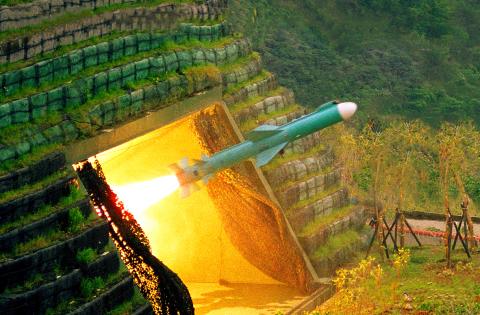
    A Taiwanese Hsiung Feng II (HF-2) missile is launched during the Han Kuang 18 military exercises in 2002.
    A Taiwanese Hsiung Feng II (HF-2) missile is launched during the Han Kuang 18 military exercises in 2002.

    A report in The Liberty Times newspaper in Taipei claims that the Defense Ministry has deployed cruise missiles in positions capable of reaching key military installations along the southeast coast of the Chinese mainland. According to the news report, the Taiwanese-built “Hsiungfeng” (Brave Wind) IIE (HF-IIE) has a range of approximately 600 to 650 kilometers and entered low-rate production in 2005 with a mobile-launch version entering production in 2008. Full-volume production is reported to have started in 2011 with a goal of producing approximately 500 missiles.


    Taiwan currently has three versions of the HF-II in service, ship-based, air-launched, and the land-based/mobile-launched HF-IIE. The ship-based version was scheduled for replacement with RGM-84 Harpoons, but the funding for this was eventually cancelled. The HF-III, a next-generation supersonic surface-to-surface missile, has been developed and is expected to enter production soon while development of the HF-II series continues.

    Sources claim that the HF-IIE is not an enhanced version of the HF-II anti-ship missile, but is instead a completely new design with a striking resemblance to the US Tomahawk cruise missile. It is basically a weapon designed to strike high-value land-based targets like air defense positions, communications facilities, and command-and-control assets. Due to its relatively small warhead and the limited number of missiles procured seems to indicate that the HF-IIE was never intended as a “first strike” weapon.

    The HF-IIE Block I missile carries a 200-kilogram warhead and is equipped with inertial navigation, GPS, and terrain-identity upgrades. It travels at high subsonic speed and uses an Imaging Infrared IIR and autonomous digital target recognition system for target acquisition and to optimize point-of-aim on final approach. The HF-IIE program is believed to have cost about $1.02 billion.

    This missile deployment represents the first time Taiwan has positioned cruise missiles aimed at China. It is believed that as many as 100 missiles have been deployed while defense analysts estimate that China has as many as 1,600 missiles of various types targeted on Taiwan.

    Taiwan’s Ministry of Defense has so far declined to comment on the reports.

    In related news, a Taiwanese legislative committee approved a proposal to arm the Navy’s newest fast-attack missile boats, now being developed, with the HF-IIE missiles. The new Hsun Hai (“Swift Sea”) fast-attack missile boat project is expected to produce corvettes of 450 tons capable of launching retaliatory strikes against Chinese targets

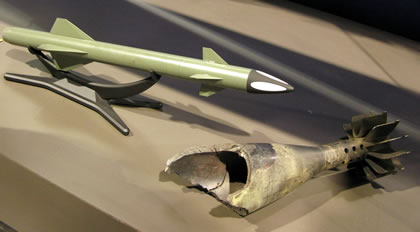
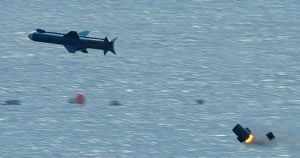
    HS II is accelerated to the cruising speed by a rocket booster. The missile can be seen on the left, with the spent booster seen after being jettisoned, on the right.

    should armed conflict ever arise. Chinese Nationalist Party (KMT) legislator Lin Yu-fang stated that arming the new corvettes with HF-IIE missiles would provide the Navy with an improved capability of stealthy and unpredictable strikes from the sea. Chan Shih-chang, Deputy Minister of National Defense, told the committee that the proposal would receive detailed evaluation.

    As for the HS III, Taiwan is also planning to equip its eight 3,000-ton Chengkung-class (PERRY Class) frigates with this supersonic anti-ship missile. The military has earmarked about US$400 million to produce 120 such missiles, completing the equipment of the six remaining frigates and twelve missile boats.

    Each of the frigates will carry four HS III in addition to the four HS II missiles currently on board. Taiwan is also introducing the supersonic HS III In addition, twelve 580 ton 12 Chinchiang-class missile patrol boats are also been equipped with four HS III missiles each. HS III is considered as Taiwan’s ‘carrier killer’ weapon, designed to counter the growing threat of Chinese seapower and especially the aircraft carriers China plans to field later in this decade. The missile has an effective range of 130 km.

    Two of the Taiwanese frigates have already been fitted with container-launchers modified to carry the new missile. For the foreseeable future these frigates will maintain both weapons on board, gaining the capability to engage targets with multiple, coordinated attacks. Moreover, the HS-IIE will offer engagement at significantly longer distances, possibly cooperating with missile boats to be configured to carry either HS II or HS III, deployed to forward positions.

    Speed is the main advantage of this new antiship missile, as it dramatically reduces the reaction time available to the target. Supersonic missiles are not common with today’s navies. Only the Russian and Indian Navy currently have Mach 2 anti-ship missiles in their inventory. The typical reaction time against high-subsonic anti-ship (Mach 0.85) missile like the Harpoon or Exocet, when it is detected by the target vessel’s onboard radar, is about 2 minutes. An HF-3 missile, flying at just above Mach 2 at comparable sea-skimming altitude during the attack phase could cover the same distance in less than 50 seconds.

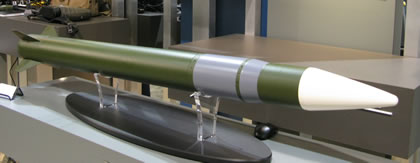
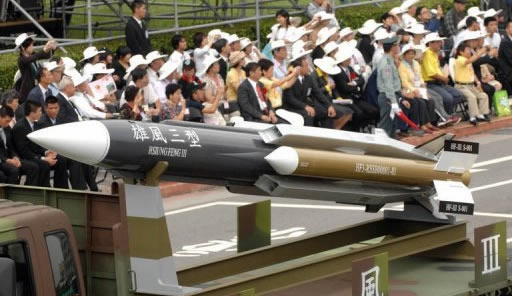
    Hsiung Feng III (HF-3) supersonic anti-ship missile displayed on a Taipei parade in 2009. The missiles are being deployed on Taiwan's frigates and missile boats.

    Sharpening the Little Dragon’s Teeth

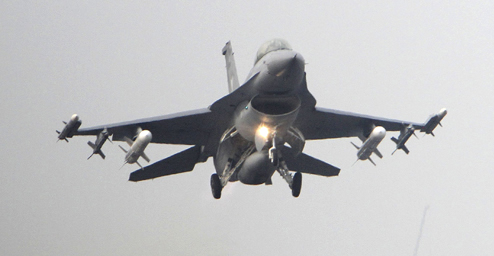
    ROCAF F-16A loaded with Sparrow and Sidewinder air/air missiles and Harpoon AGM-84L Anti-ship missile takes off from a highway on an emergency drill. Photo: AP
    ROCAF F-16A loaded with Sparrow and Sidewinder air/air missiles and Harpoon AGM-84L Anti-ship missile takes off from a highway on an emergency drill. Photo: AP

    For five years and longer, the United States delayed reaching a decision regarding Taiwan’s repeated requests to buy new F-16C/D Fighting Falcons to replace its aging fleet of F-16A/B fighters in hopes of preventing the Chinese regime from closing the door on a wide-range of Sino-American issues of benefit to both nations. The US government has long feared that equipping Taiwan with a modernized force might lead to a prolonged breach in diplomatic discourse between the US and China, a situation the US would very much like to avoid.

    After years of delay, Taiwan seems to be on track to procure the full US$5.2 billion upgrade package for its fleet of F-16A/B fighter jets as notified to the US Congress in September last year. Taipei may defer acquiring part of the package, worth about US$1.5 billion — but will eventually get the whole package as originally requested.


    Today, China and Taiwan are basking in the warmth of the most promising relations the two nations have ever enjoyed. In 2005, China became Taiwan’s largest trading partner and cross-strait economic relations reached new heights with the signing of the China-Taiwan Economic Cooperation Framework Agreement (ECFA), a bilateral preferential trade agreement, in 2010. Although China represents Taiwan’s most lucrative trade partner, having displaced the United States for this title, Beijing has never given up on its political strategy to keep Taiwan from achieving international recognition as a sovereign nation. Beijing has also never repudiated its threat of using armed conflict to reunite Taiwan, a rogue province in Chinese eyes, with the remainder of the nation.
    Taiwan has attempted, on four previous occasions since 2006, to deliver a Letter of Request (LoR) asking for pricing and availability of new F-16C/D Block 50/52 Falcons.

    The four LoR’s were never actually delivered to the US government; all were withdrawn by Taiwan in response to US State Department pressure. Each time, the State Department argued that the timing of such a sale was not favorable in light of US desires not to disrupt improving Sino-US relations and noting that approval of such a sale could adversely impact any decisions on future arm’s sales.

    In January 2010, the Obama administration approved a Taiwanese arm’s deal valued at $6.4 billion representing the second largest deal with Taiwan since the Bush administration agreed to sell Taiwan $6.6 billion in weaponry in 2008. The 2010 deal included 114 Patriot air-defense missiles valued at $3 billion, 60 UH-60 Black Hawk helicopters worth $3.1 billion, Harpoon anti-ship missiles, Osprey minehunters, ammunition, and communications equipment for Taiwan’s F-16A/B fleet.

    China’s response to the 2010 weapon’s sale was swift and vehement. Chinese leaders filed a formal protest with the US and temporarily suspended US-China military-to-military cooperation.

    In September 2011, the Obama administration ignored Taiwan’s request for 66 new F-16C/Ds and offered instead a sizeable upgrade package to modernize the island’s exiting fleet of F-16A/Bs purchased back in 1992. Rationale for this alternative was based on a desire not to antagonize the PRC and also not to demonstrate any public favoritism for Taiwan President Ma Ying-jeou who was then fighting for reelection.

    The US upgrade offer, priced at $5.85 billion to modernize 145 F-16s, includes 176 Active Electronically Scanned Array (AESA) radar sets of unspecified manufacture, 128 Joint Helmet Mounted Cueing Systems (JHMCS) and Night Vision Goggle sets to support deployment of AIM-9X air-to-air missiles and precision guided air/ground munitions, integrated GPS Inertial Navigation Systems (GPS-INS), 140 AIM-9X Sidewinder missiles, enhancements for the APX-113 Advanced Identification Friend-or-Foe (IFF) transponders, targeting pods, precision guided munitions, and advanced upgrades to improve radar and thermal evasion capabilities.

    The Obama administration has proposed the argument that the upgrade offer is in Taiwan’s best interest and would deliver more immediate benefits than the acquisition of new aircraft. Critics claimed that the administration’s offer was little more than a misguided attempt to placate the Chinese and limit the inherent risk of causing a rift in Sino-US relations.

    As expected, China’s leaders publicly protested the upgrade offer, but have so far initiated no significant retaliation and appear disinclined to do so in the near term.
    Taiwan’s hopes of getting new F-16C/D Block 50/52 aircraft instead of an upgrade for its older aircraft received an unexpected boost when a 27 April White House letter to US Republican Senator John Cornyn of Texas acknowledging deficiencies with Taiwan’s air fleet became public. This policy shift, outlined in a letter from Robert Nabors, Director of the Office of Legislative Affairs speaking on behalf of the administration, said the government was giving “serious consideration” to the situation in recognition of “the growing military threat to Taiwan.”

    Although the letter did not make any specific promise to sell Taiwan the newer version F-16s, it did demonstrate that the Obama administration is giving the issue a second look. China’s expanding fleet of highly-capable front-line combat aircraft is likely one of the reasons the administration is revisiting the issue now. In his letter, Robert Nabors acknowledged that the White House was dedicated to “addressing the disparity in numbers of aircraft” between China and Taiwan noting that China had 2,300 combat aircraft in service compared to only 490 Taiwanese combat aircraft.

    Senator Cornyn was blocking confirmation of Mark Lippert, President Obama’s choice for the position of Assistant Secretary of Defense for Asia, in retaliation for the administration’s position on the F-16 sale to Taiwan. The senator withdrew his opposition to Lippert’s appointment and he was confirmed on 26 April.

    A US change in policy is also likely predicated on developments in Asia that may make the sale of new aircraft to Taiwan a much more palatable possibility. With China itself in the midst of an upcoming leadership change and suffering from some widely-reported national scandals, the Communist Party is in a vulnerable state of internal stress creating a greater than usual level of confusion among members of the ruling hierarchy.

    An environment of uncertainty and internal struggle, a slowing economy, and a critical need to maintain good relations with the West are all likely to limit China’s disapproval and are less likely to result in any severe response from the nation’s leaders.

    Disputes between Beijing and her neighbors, a rapidly growing Chinese military force, US plans to focus more attention on the Asia-Pacific region, and the need for the US to prove its commitment to its Pacific allies also offer the administration a level of support not enjoyed before.

    In addition to all other considerations, the US House of Representatives included a provision in their version of the 2013 Defense Authorization bill that mandates the sale of 66 F-16C/D Block 50/52 jets to Taiwan. Although the US Congress has long been staunch in its support of Taiwan’s defense, some language in the Republican-sponsored House version of the Defense bill does not sit well with all members of the Senate and the F-16 mandate may not survive Congressional negotiations to finalize the bill.
    Both the Senate and the House are advocating restoration of Defense Department budget cuts that President Obama has indicated would lead to a presidential veto. For now, only time will tell.

    Phantom Eye Damaged After First Flight

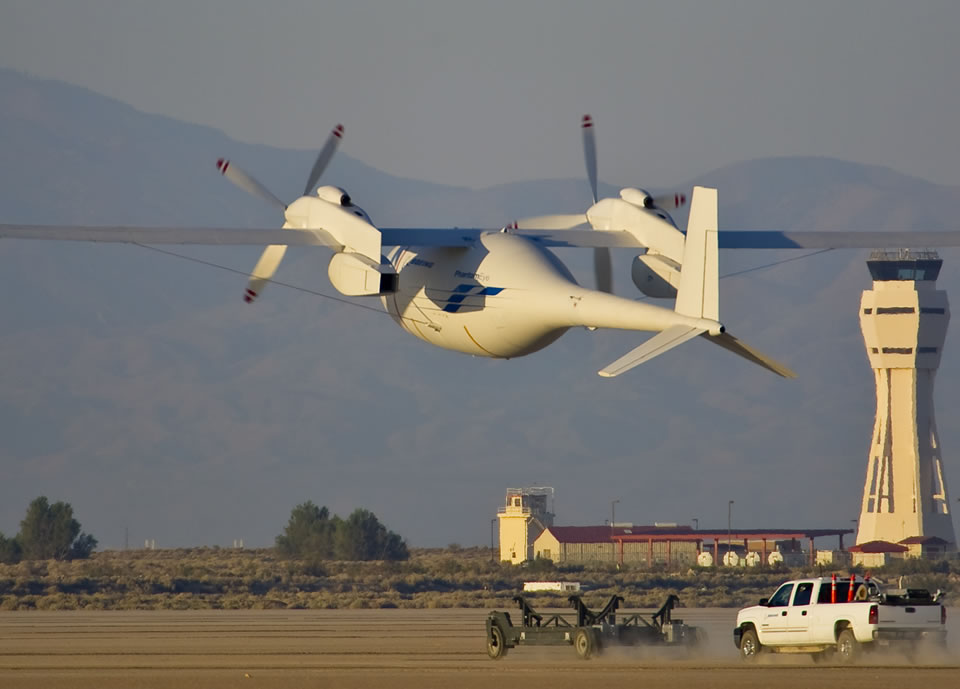
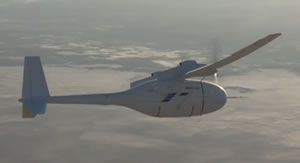
    Boeing's [NYSE: BA] Phantom Eye unmanned airborne system (UAS) completed its first autonomous flight June 1 at NASA's Dryden Flight Research Center at Edwards Air Force Base, Calif. In this photo, the UAS takes off on its 28-minute flight. Photo: Boeing
    Phantom Eye on its first flight.

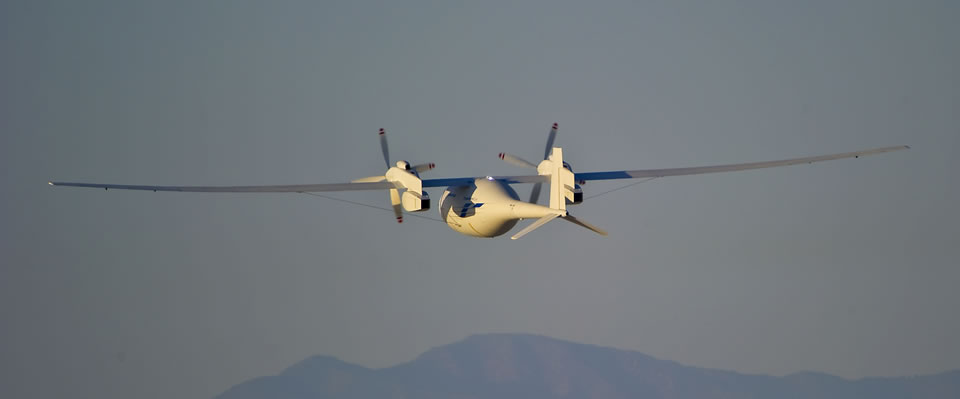
    Boeing’s Phantom Eye unmanned airborne system (UAS) completed its first autonomous flight June 1 at NASA’s Dryden Flight Research Center at Edwards Air Force Base, Calif. The 28-minute flight began at 6:22 a.m. Pacific time as the liquid-hydrogen powered aircraft lifted off its launch cart. Phantom Eye climbed to an altitude of 4,080 feet and reached a cruising speed of 62 knots. After touching down, the vehicle sustained some damage when the nose landing gear dug into the lakebed and broke. (Phantom Eye uses a special cart for takeoff; for landing the drone uses the centerline skid as the main landing gear and a nose wheel that come down for landing. This wheel was the one broke down on landing.)


    “This day ushers in a new era of persistent Intelligence, Surveillance and Reconnaissance (ISR) where an unmanned aircraft will remain on station for days at a time providing critical information and services,” said Darryl Davis, president, Boeing Phantom Works. “This flight puts Boeing on a path to accomplish another aerospace first — the capability of four days of unrefueled, autonomous flight.” While Phantom Eye is important for many reasons, future ISR, strike and bomber programs also will benefit from the technologies we are developing and maturing for our customers, said Davis.

    Phantom Eye is the latest in a series of Boeing-funded rapid prototyping programs, which include Phantom Ray, Echo Ranger, ScanEagle Compressed Carriage, and an associated Common Open Mission Management Command and Control (COMC2) system capable of managing all of the company’s unmanned assets.

    Boeing's Phantom Eye unmanned airborne system (UAS) shown during its 28-minute first flight, June 1, 2012. Photo: Boeing

    The flight took place following a series of taxi tests in April that validated ground guidance, navigation and control, mission planning, pilot interface and operational procedures. “This flight demonstrated Phantom Eye’s initial handling and maneuverability capabilities,” said Phantom Eye Program Manager Drew Mallow. “The team is now analyzing data from the mission and preparing for our next flight. When we fly the demonstrator again, we will enter higher and more demanding envelopes of high-altitude flight.”

    Phantom Eye’s innovative and environmentally responsible liquid-hydrogen propulsion system will allow the aircraft to stay on station for up to four days while providing persistent monitoring over large areas at a ceiling of up to 65,000 feet, creating only water as a byproduct. The demonstrator, with its 150-foot wingspan, is capable of carrying a 450-pound payload.

    The company’s portfolio of UAS solutions includes the A160T Hummingbird, H-6U Unmanned Little Bird, S-100 Camcopter, Integrator, ScanEagle (which is currently in service in Canada, Australia, Poland, the Netherlands and Malaysia), Dominator, Phantom Eye and Phantom Ray.

    South Korea Names Three on Shortlist for Attack Helicopters

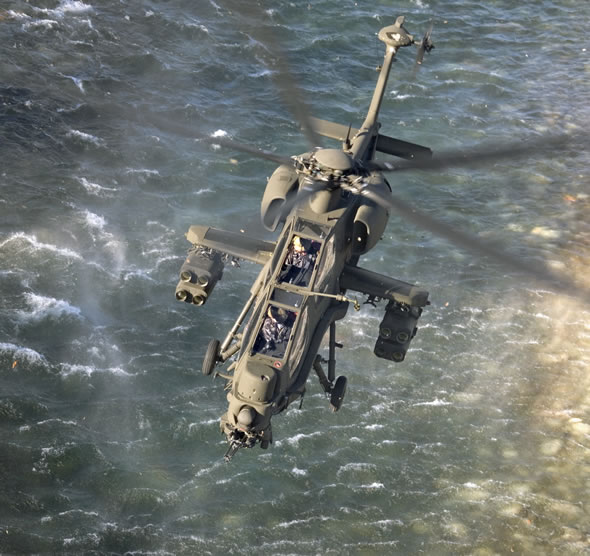
    AgustaWestland and TAI are offering the T129 for the Korean helicopter tender. Photo: Agustawestland
    AgustaWestland and TAI are offering the T129 for the Korean helicopter tender. Photo: Agustawestland

    South Korea announced its shortlist of contractors in competition for a multi-billion competition to supply 36 attack helicopters on 29 May. The attack helicopters will be used to strengthen the South’s ability to contend with Pyongyang’s fast gunboats often deployed in the Yellow Sea.

    The three finalists are Boeing, Bell Helicopter Textron, and a joint venture AgustaWestland-Turkish Aerospace Industries (TAI) team. AgustaWestland is now a wholly owned subsidiary of Finmeccanica of Italy. Boeing and Bell have a long history of providing helicopters to nations worldwide while AgustaWestland-TAI will deliver the first nine of their new 59 T-129 attack helicopters to the Turkish Army later this year.


    To be included on this shortlist is considered a major boost for the credibility of the new AgustaWestland-TAI T-129, a Turkish version of the A-129 Mangusta attack helicopter. The A-129 was the first attack helicopter designed and produced wholly in Western Europe.

    Shortlisting the T-129 is significant confidence builder for AgustaWestland-TAI since the aircraft has not yet entered active service and has now been selected to compete against proven performers in the Boeing AH-64D Apache Block III gunship and the Bell AH-1W SuperCobra. The EC-665 Eurocopter was widely considered a strong contender as well, but was not included on Seoul’s shortlist. A Turkish government official has confirmed that South Korean government representatives will be present to observe T-129 testing in July.

    Most defense analysts consider the Boeing Apache to be the best attack helicopter available in the world with a distinguished lineage of service history and the Bell SuperCobra is also recognized as a reliable combat aircraft with an impressive heritage. Both American helicopters are expected to come with enticing price tags that are likely to require AgustaWestland-TAI to review and undoubtedly reduce the offering price of the T-129.

    Bell Helicopters is offering the AH-1Z Super Cobra, the model currently fielded by the US Marine Corps. Photo: Bell Helicopters

    South Korean military leaders have previously demonstrated a strong desire to acquire the AH-64D Block III gunship and Boeing is anxious to lock down this multi-billion dollar deal. Bell Helicopter Textron is equally determined to wrap up a deal of this magnitude.The Turkish-Italian team is facing extreme competition from the Americans and this stress, coupled with the fact that Italy is mired in a severe economic crisis, intensifies the pressure on this team to win the order. Some analysts believe that AgustaWestland-TAI will be willing to offer the T-129 at a competitive price in hopes of outbidding the American companies.

    Turkey and South Korea have enjoyed friendly political relations since the days of the Korean Conflict and have developed a lucrative level of bilateral trade over the years. Adding further drama to the helicopter competition is the trade imbalance now existing between Seoul and Ankara.

    Of the seven billion dollars in trade between the two nations, Turkey’s exports to South Korea account for only about $500 million of the total. This imbalance has created some political headaches for Turkish Prime Minister Recep Tayyip Erdoğan. In light of this situation, when the two nations concluded a free trade agreement recently it included a promise from Seoul that appropriate measures would be undertaken to reduce the imbalance.

    Possibly in Turkey’s favor is a soon to be announced selection to name a prime contractor to build a nuclear power plant in the nation’s northern region. South Korea’s Kepco energy giant is in stiff competition with an international array of contenders for this $10 billion contract. Although the power plant deal and the helicopter procurement are not directly tied to each other, selecting the T-129 would go far in balancing the trade imbalance that now exists and might give Kepco a decided edge in the power plant competition.

    Also of note is the fact that Turkey builds South Korean field howitzers under a $1 billion licensing agreement. Korean Aerospace Industries is also engaged in a $450 million joint venture with TAI to build 50 basic trainers in the TAI factory, an arrangement that will soon be completed. Another venture, worth $500 million, has South Korea’s Hyundai Rotem assisting Turkey’s Otokar design and produce four prototype tanks. This tank prototype, the Altay, is scheduled for completion in 2017.

    India recently decided to reduce the field of competitors to provide 22 attack helicopters to a single contractor, Boeing. The Russian Mi-28N Night Hunter and a version of the UH-1N Huey were recently dropped from the competition leaving the Boeing AH-64D Block III as the last remaining candidate. This development is likely to give the Apache another positive boost in the South Korean competition and in future arm’s deals.

    In addition to the attack helicopters, Seoul is also looking at several competing models to fulfill the ROK Navy’s need for multi-mission helicopters that can serve in both anti-submarine warfare (ASW) and anti-surface warfare roles.

    On 16 May, the US Defense Security Cooperation Agency (DSCA) formally notified Congress of a potential sale of eight Sikorsky MH-60R Seahawk multi-mission helicopters to Seoul, a deal valued at approximately $1.0 billion that would be executed through the Foreign Military Sales (FMS) program. This notification is required under US law and does not constitute a completed sale.
    Seoul is expected to announce a contract winner in October when a winner of the South’s new fighter contract is also announced. The entire South Korean aviation procurement package is estimated to exceed $8 billion.

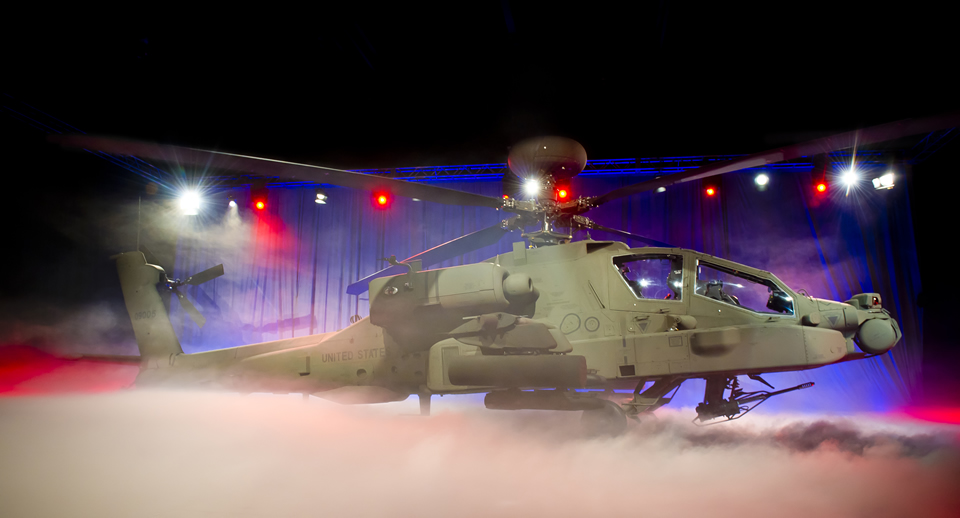
    Rollout of the first production AH64D Block III Apache Longbow. Photo: Boeing

    Tactical Remote Turrets to Modernize Slovak APCs?

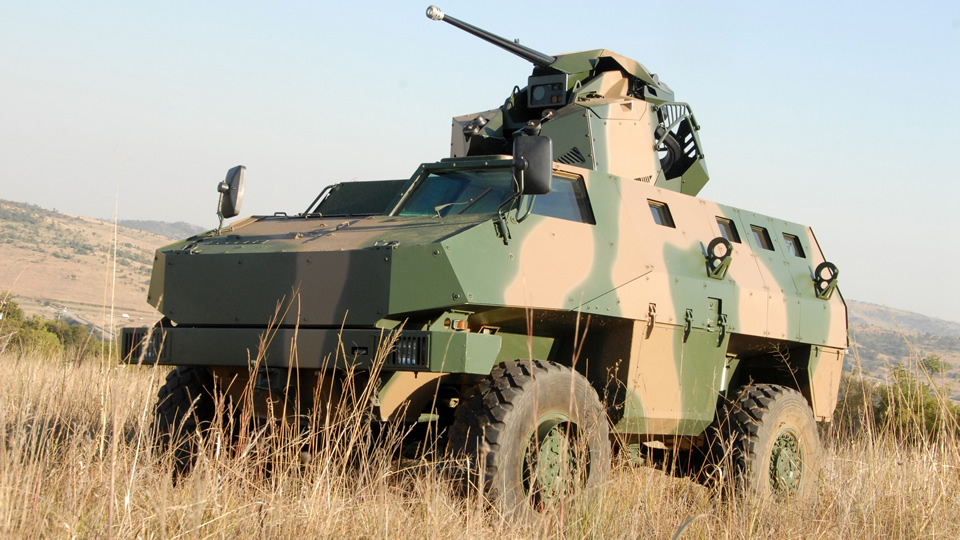
    RG34 multi-purpose mine protected vehicle. Photo: BAE SYstems
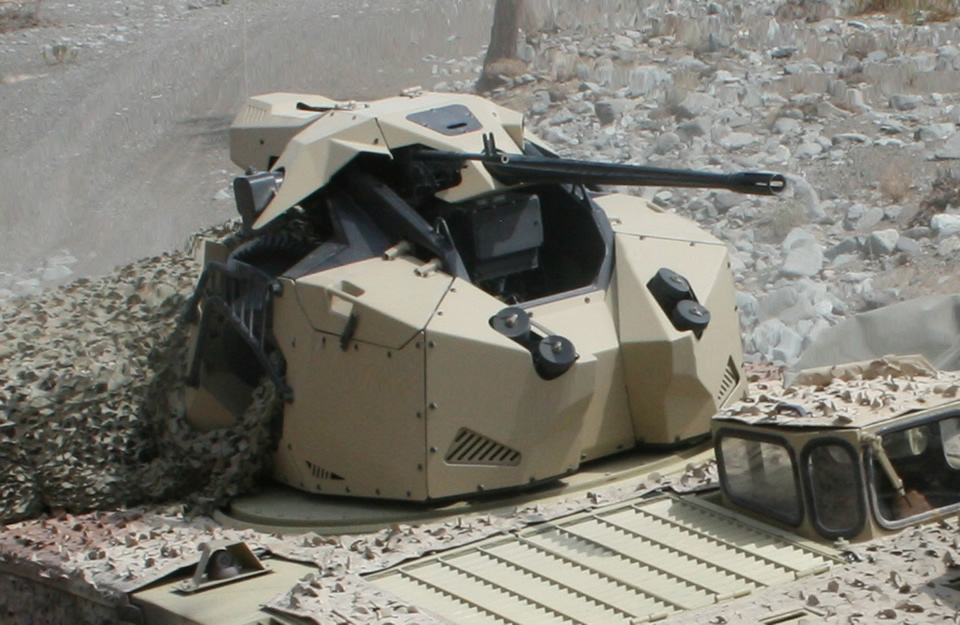
    The TRT25 turret from BAE Systems SOuth Africa. Photo: BAE Systems

    BAE Systems Land Systems South Africa (BAES) has teamed with PPS Vehicles, a subsidiary of Slovak-based Company SITNO, to offer the Tactical Remote Turret (TRT) for armored vehicle modernization and upgrading programs scheduled by armed forces of the Eastern Europe region. According to Ludovit Cernak, member of the SITNO board in Slovakia, this new cooperation follows a market shift in the modernization of ex-Soviet combat systems.


    The TRT is a family of remotely controlled turrets operated by a single gunner, offering self-protection and ground fire support for Light Armored Vehicles, Mine Protected Vehicles and Infantry Combat Vehicles. The low weight makes it also feasible for amphibious applications. The armament suite combines a rapid-fire cannon, co-axial machine gun and antitank guided missiles or combination thereof.

    A simple vehicle interface enables integration of the turret on existing vehicles as part of a modernization program, with benefits such as weight reduction, increased internal space for crew or load capacity, and improved operator interface.

    RG34 multi-purpose mine protected vehicle. Photo: BAE SYstems

    Russia, Southern Republics Opt for Israeli UAVs

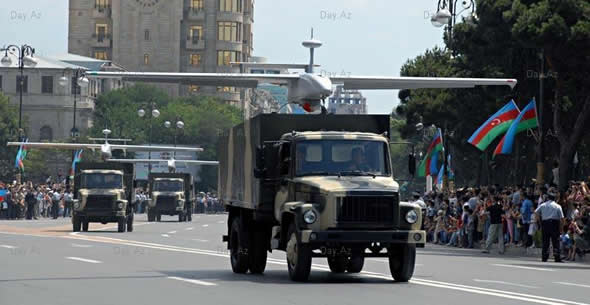
    Azeri Aerostar UAVs on the march at Baku, 2008. Photo: Day.Az
    Azeri Aerostar UAVs on the march at Baku, 2008. Photo: Day.Az

    Russia could be buying more unmanned aerial vehicles from Israel as part of a new $50 million package negotiated with Israel’s third UAV manufacturer Aeronautics. Russia has been a customer of Aeronautics since the early 2000s, with first acquisitions of Aerostar UAVs and Skystar aerostats in 2004-2006 for homeland security and law enforcement applications. In 2010 Russian authorities ordered three Orbiter systems for law enforcement applications, as part of a $3 million order. The current package includes 24 Orbiter Mini-UAV systems, each including two or three aerial vehicles and a ground control segment.


    According to foreign sources, Russia and its neighboring southern republics have been steadily growing customers for Israeli UAS. In recent years Russia has placed a $53 million order with IAI, for Searcher Mk. 2 and I-View Mk150 tactical UAS systems and BirdEye 400 mini-UAV systems. Additionally, Moscow was reported to be interested in building the heron I UAVs in Russia, under a $300-400 million multiyear acquisition program.
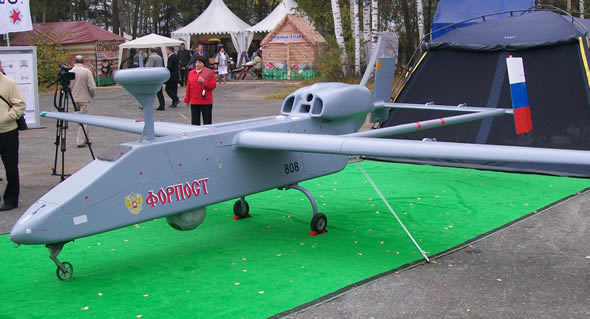
    IAI Searcher Mk 2 was displayed as 'Outpost 2' at the 2011 inter0arms expo at Nizhny Tagil in Russia. Photo via Wikimedia

    The Russian interest in Israeli UAVs evolved after the 2008 war with Georgia, where Georgia used Hermes 450 and Skystar UAVs obtained from Israel in the years 2004-2007. The interest in Israeli UAVs evolved among all the Southern Republics since the mid 2000s, partly in support of securing pipelines delivering oil westwards. According to Azeri and other foreign sources, Aeronautics has been the first to seize this opportunity, delivering 10 Orbiter and Aerostar tactical UAS systems to Azerbaijan in 2005. It was followed by the delivery of eight Hermes 450 systems by Elbit Systems, in 2010. One of these UAVs was shot down over the disputer Armenian territory of Nagorno Karabach a year later (see video below)In 2009 Aeronautics moved to establish the Azad assembly plant in Baku, producing UAVs for domestic use and, potentially for export.Elsewhere in the region, foreign sources mention Kazakhstan has also received Orbiter UAS as part of a large-scale artillery modernization package bought from Israeli manufacturers while Uzbekistan is believed to be operating an unknown number of Hermes 450 systems obtained from Elbit Systems in recent years. The company was reported planning to establish a support center in the country.

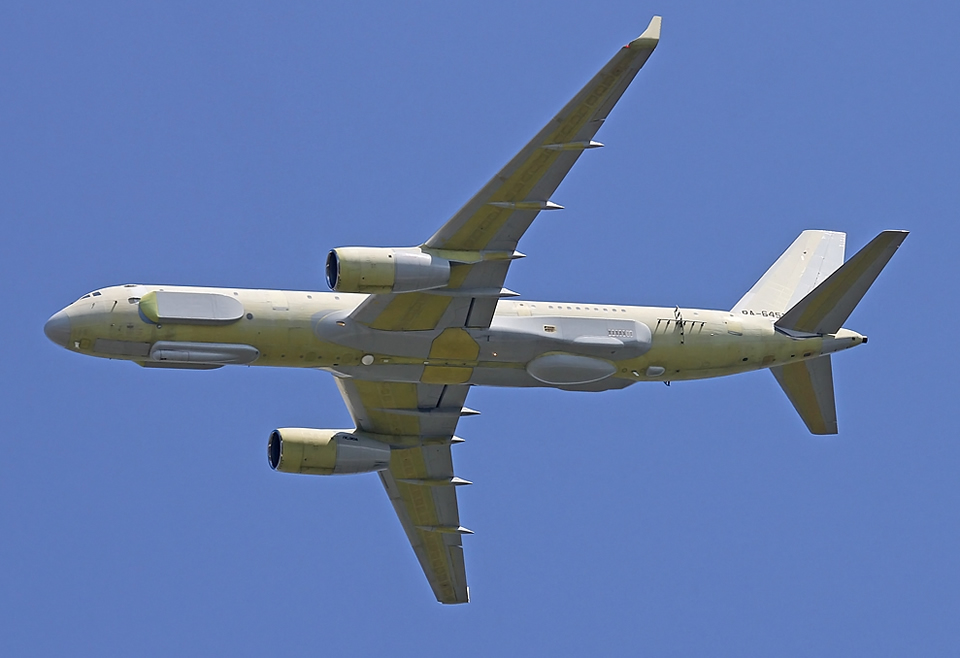
    Fielding of Russian Special-Mission Aircraft Delayed Until 2013-2014

    Tu-214R, the Russian next-generation special mission aircraft. Photo: Russianplanes.net

    Tu-214R, the Russian next-generation special mission aircraft. Photo: Russianplanes.net
    The Russian Air Force has contracted the Tupolev design bureau to develop and produce two prototypes of special-mission versions of its Tu-214 commercial transport aircraft, designated Tu-214R, developed under the codename ‘Project 141’.

    The aircraft is considered as the successor of the Ilyushin IL20M ELINT aircraft, which has remained in operational service for five decades. The Tu-214R was originally scheduled to enter service in 2008 but by that time the aircraft hasn’t made its first flight yet. At present the scheduled Initial Operational Service milestone is expected by mid 2013 with the follow on prototype fielded a year later.


    The aircraft is configured to carry the MRC-411 multi-intelligence payload, to include electronic intelligence (ELINT) sensors, side-looking Synthetic Aperture Radar (SAR) and other Signals Intelligence (SIGINT) and Communications Intelligence (COMINT). In addition, the aircraft will carry multi-spectral electro-optical systems, providing a true Multi-Int support to Russian military forces.

    Tu-214R first flew in 2009 and is expected to become available by 2013, following the completion of the test flying campaign. The second prototype, currently in assembly at Kazan Aircraft Production Association (KAPO) will enter service in 2014. KAPO has teamed with the Tupolev Design Bureau to become the manufacturing center for its civil and military aircraft, including the Tu-214R. The delay has exposed KAPO to legal actions by the Ministry of defense but Moscow is still supportive of this program.
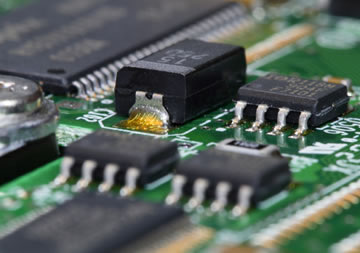
    Counterfeit Electronics in DoD are Widespread and Threaten National Security

    A US Senate investigation has uncovered a “flood” of counterfeit electronics in use by the Department of Defense (DoD). The Senate Armed Services Committee (SASC) made public the results of a 14-month long investigation on 21 May that detailed the discovery of 1,800 cases where fake parts were in use or in DoD’s supply chain. The cases detected involved more than a million individual parts between 2009 and 2010.

    The investigation was initiated by Democratic Senator Carl Levin of Michigan, Chairman of the Senate Armed Services Committee, and the ranking Republican committee member, Senator John McCain of Arizona. The SASC report follows on the heels of a US General Accountability Office (GAO) report released in March that detailed the ease with which counterfeit electronics could be ordered from suppliers on the Internet.


    The 112-page report identified the counterfeit parts as coming primarily from China and, Senator Levin said, “threatens national security and the safety of our troops and American jobs.” According to the report, more than 70 percent of the fake parts came from China and the bulk of the remainder originated in the United Kingdom and Canada. Included in the report are comments that chide China for refusing committee members travel visas during the course of their investigation. A Chinese embassy official is quoted as stating that an adverse report would be “damaging” to relations between the two nations.

    While the report singles out China for the majority of criticism and blame, the Committee also contained strong words of condemnation for US procurement officials and government contractors. The report faults contractors and procurement agents for creating an environment within DoD’s supply system that perpetuated vulnerabilities in the procurement process through failures to detect suspicious items or report fake parts to cognizant military officials.

    The Department of Defense was strongly criticized for failing to recognize the “scope and impact of counterfeit parts on critical defense systems.” DoD was also censured for failing to exercise prudent oversight of the procurement process and an overreliance on doing business with “unvetted” independent contractors and distributors to supply critical parts for military use. Contractors were also cited for failing to properly and systematically test parts to ensure they met the standards of quality and reliability required of such vital components.

    The investigation discovered fake parts in a wide-range of critical military systems. Counterfeit memory chips were located in the display arrays of the US Air Force’s C-17 Globemaster III and C-130J cargo aircraft and the ice detection modules in the US Navy’s P-8A Poseidon were found to be rebuilt components and not new. The P-8A Poseidon is a modified Boeing 737 tasked with anti-submarine warfare (ASW) missions and can be employed in anti-surface warfare situations as well.

    The SASC report provides detailed information outlining how counterfeit components are entering the Defense supply chain. One example cited in the report describes how one Chinese supplier, Hong Dark Electronics Trade Company, based in Shenzhen delivered an estimated 84,000 suspect parts that were then incorporated into the US Air Force’s Traffic Alert and Collision Systems (TCAS) designed to equip Air Force C-SAMP, C-12, and Global Hawk air assets. Suspect parts were also identified in systems designed for use with the US Missile Defense Agency’s Terminal High-Altitude Area Defense (THAAD) and on vital military aircraft including CH-46 Marine helicopters, AH-64 attack helicopters, and C-27J cargo aircraft.

    Hong Dark components were also included in the Electromagnetic Interference Filters fitted to the Navy’s SH-60B helicopters used for night missions and are a critical component in the “Hellfire” missile system. Other fake parts were identified in the Navy’s P-3 ASW aircraft, Special Operations Forces’ A/MH-6M “Little Bird” light attack/reconnaissance helicopters, Excalibur artillery rounds, US Army Stryker Mobile Guns, and the Navy’s Integrated Submarine Imaging Systems. Hong Dark was placed on the US government’s Excluded Parties List as of 16 May 2012.

    In the 1,800 cases investigated by SASC, it was learned that parts were procured from more than 650 companies and these companies employed the services of another layer of suppliers. Since the chain of supply relies upon a huge network of suppliers, end users who are expected to make use of critical components cannot verify the origin of the parts they receive.

    The SASC report notes that trade in counterfeit parts is an “open” and very lucrative industry in China and accuses the Chinese government of failing to initiate measures to halt counterfeit operations and calls on Chinese leaders to “rectify” the situation. The report goes on to say that DoD and government contractors have not been as aggressive as they need to be to identify and prevent fake parts from entering the supply chain and, as a result, jeopardize the safety and reliability of essential military equipment.

    Investigators learned that the apparatus designed to prevent the procurement of fake parts was being underutilized by the DoD and government contractors making the entire procurement system even more vulnerable. The Government-Industry Data Exchange Program (GIDEP), a DoD reporting system, was placed into operation to help procurement officials and contractors share information that could then be used to identify fake components. The Senate Committee discovered that this system was not being updated or maintained as designed with data entry being routinely ignored.

    Military electronics and associated hardware risks were not the only focus of the SASC report. The Committee also stated that the widespread counterfeiting represented a serious threat to American jobs, intellectual property rights, and placed the United States’ economy at risk. The US Semiconductor Industry Association (SIA) claims that this counterfeiting costs American companies as much as $7.5 billion annually and has resulted in the loss of as many as 11,000 jobs in the US.

    With access to a preliminary draft of the report’s findings last November, Senators Levin and McCain included provisions in the 2012 National Defense Authorization Act intended to correct weaknesses identified in the military supply chain. The Senate version, with the Levin and McCain additions, included adoption of specific DoD preventative measures to keep fakes out of the supply system and placed the burden of replacing fake parts on the shoulders of government contractors. The final bill, with some revisions, was signed by President Obama in December 2011.

    Skunk Works and XTEND Simplify Multi-Drone Command

    0
    Lockheed Martin Skunk Works® and XTEND have achieved a major milestone in JADC2 by integrating the XOS operating system with the MDCX™ autonomy platform. This technical breakthrough enables a single operator to simultaneously command multiple drone classes, eliminating the friction of mission handoffs. From "marsupial" drone deployments to operating in GPS-denied environments, explore how this collaboration is abbreviating the data-to-decision timeline and redefining autonomous mission execution.

    From Ukraine to Taiwan: The Global Race to Dominate the New Defense Tech Frontier

    0
    As traditional defense primes face mounting competition from agile “neoprimes” such as Anduril, Palantir and Helsing, the balance of innovation is shifting toward software-defined warfare and scalable, dual-use technologies, while global industry consolidation—marked by Boeing’s integration of Spirit AeroSystems and other strategic mergers—signals an intensified race to secure control over the defense technology value chain. Our Defense-Tech weekly report highlights these trends.

    Europe’s “Drone Wall”

    0
    In early October 2025, a coordinated wave of unmanned aerial system (UAS) incursions—widely attributed to Russia—targeted critical infrastructure across at least ten European nations. The unprecedented campaign exposed the fragility of Europe’s air defenses...

    Weekly Defense Update & Global Security Assessment

    0
    Executive Summary The past week (September 18-25, 2025) represents an inflection point where strategic defense concepts have transitioned from doctrine to tangible reality. An analysis of global events reveals four primary, interconnected trends shaping an...

    U.S. Air and Space Forces Push Next-Gen Programs at the AS&C 2025 Conference and...

    0
    At the 2025 Air, Space & Cyber Conference, U.S. Air Force and Space Force leaders unveiled major updates on next-generation fighters, bombers, unmanned systems, and space initiatives, highlighting both rapid innovation and critical readiness challenges as the services race to outpace global competitors. A short version is available here, with a more detailed version for subscribers.

    TADTE 2025: Reflecting Taiwan’s Strategic Themes

    0
    The Taipei Aerospace & Defense Technology Exhibition (TADTE) 2025 crystallized around four dominant strategic themes that collectively illustrate Taiwan's comprehensive approach to defense modernization amid escalating regional tensions. Based on a detailed report by Pleronix (available upon request). Includes a Podcast discussion on TADTE 2025's highlighting Taiwan's four strategic themes beyond the post's coverage.

    Iron Beam 450 Completes Testing, Soon to Join With Operational Air Defense Units

    0
    Israel’s Iron Beam 450 high-power laser system has completed final testing, marking a major leap in air defense. Developed by Rafael, it offers precise, cost-effective interception of rockets, UAVs, and mortars, and is set for IDF deployment by 2025.