In yet another startling revelation surrounding the continuing saga vilifying the Chinese for involvement in selling counterfeit electronics, research scientists with Cambridge University have released a report claiming they have discovered that a Chinese-built microprocessor in widespread use by the US armed forces comes complete with a built-in “backdoor” that can be reprogrammed.
The microchip in question has been employed in many applications including military weapons, nuclear power facilities, and public transportation systems. The built-in backdoor, according to the Cambridge scientists, cannot be “fixed” and the only remedy is to replace the chip itself.
Chinese companies have long been suspected of producing counterfeit electronic components that have eventually been incorporated into vital US military weapon’s systems placing US national security at risk and endangering the lives of American servicemembers. A US Senate Armed Forces Committee (SASC) report released in May and a General Accountability Office (GAO) report released in March appear to provide irrefutable evidence to support these suspicions.
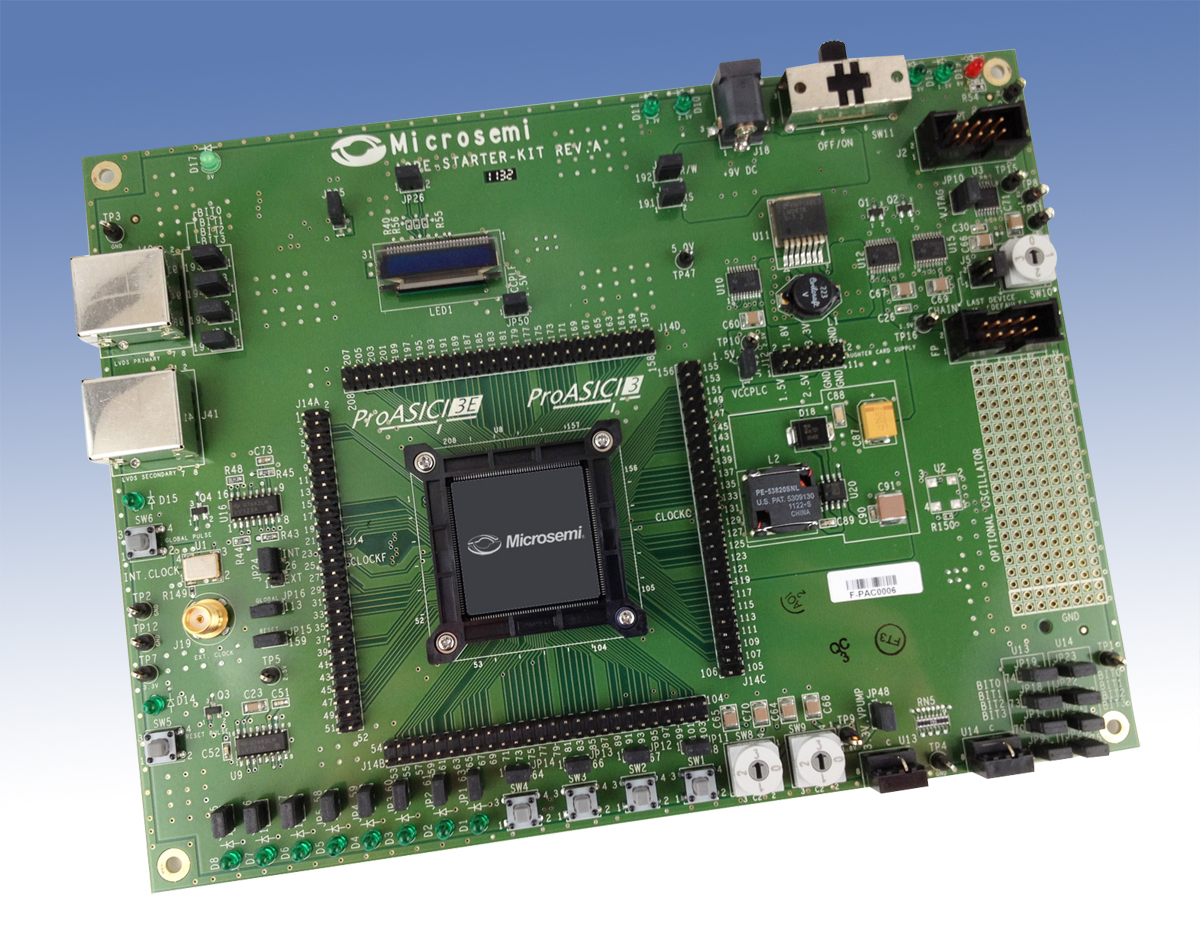
Cambridge scientists focused their efforts on examining the American-designed, Chinese-manufactured ProASIC3 A3P250 microprocessor, a component more commonly known as the PA3 distributed by the Microsemi Corporation of San Jose, California. The PA3 is a Field Programmable Gate Array (FPGA) designed to be programmed by the end user as needed.
Sergei Skorobogatov with Cambridge University’s Quo Vadis Laboratory said his team “scanned the silicon chip in an affordable time and found a previously unknown backdoor inserted by the manufacturer.”
Skorobogatov went on to say that this backdoor could be programmed to create an advanced Stuxnet Trojan horse that could disable or disrupt millions of automated systems. The chip has a “key” that Skorobogatov says his team was able to extract, a key that could be accessed for reprogramming even after the user locked the chip with their own key.
No one at Cambridge can say with absolute certainty that the backdoor originated with the Chinese manufacturer and not with the American designer. The PA3 may have been designed with the backdoor included as an integral part of the chip and was meant to be constructed with a backdoor in place.
Alec Muffett, writing for ComputerWorldUK, stated that the backdoor is a serious concern, but claims that making use of the backdoor would not be an easy task. Muffett says that associated security measures would have to be overcome, hardware would have to be accessed, and some very high-tech equipment would have to make a physical connection to actually make reprogramming possible. Such an endeavor, he says, would be on the same level as a “Mission Impossible” scenario.
The PA3 is considered to be one of the best military-grade microprocessors available today and is used in military weapons, guidance systems, flight control networks, and communications. Nuclear power facilities, power distribution grids, public transportation systems, and automotive components also make use of the PA3.
While discovery of this backdoor is a concern, any unauthorized reprogramming efforts appear to be reasonably unlikely and much less of a threat than initially believed. From a real-world perspective, the chip is in widespread use and replacing all of those now in use is a virtual impossibility. And besides, it’s also realistic to believe the chip was designed to have a backdoor in place.
Of course, the possibility that cyber warriors somewhere in the world can exploit this backdoor cannot be lightly dismissed. Finding a backdoor feature in a chip of such vital importance does call into question the reliability and security of critical electronics everyone in the world relies on to energize the modern world we live in.
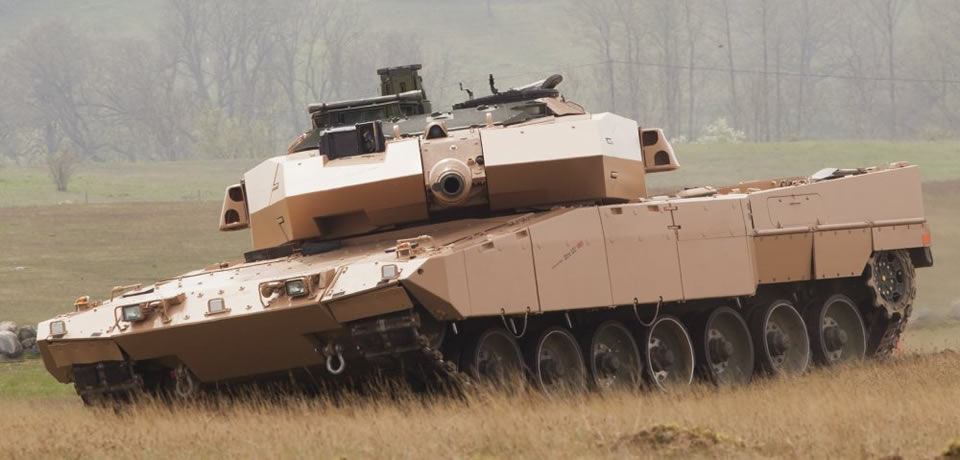
Leopard 2A5 (MBT 122) fitted with the Evolution up-armoring kit. Photo: IBD
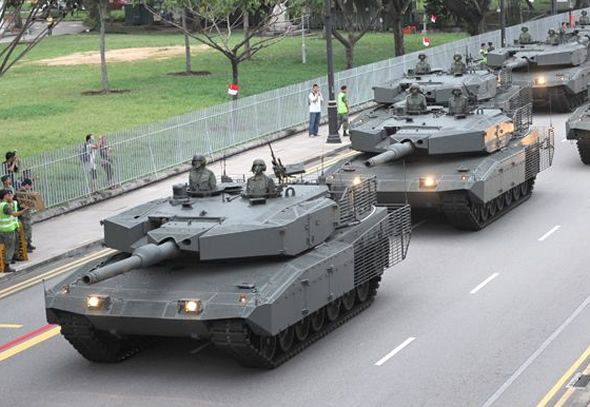
Singaporean Leopard 2A4 fitted with Evolution up-armoring kits from IBD. Photo: Cyberpioneer/MINDEF
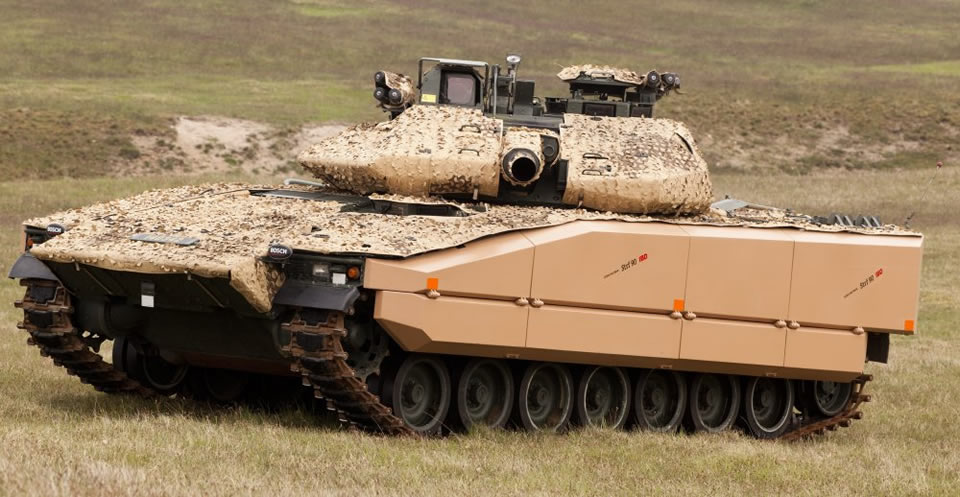
The German company IBD along with its Swedish subsidiary Åkers Krutbruk have demonstrated the latest MBT protection study for the MBT122 and CV9040, improving the tank’s protection over 360 degrees, as required to defend from Improvised Explosive Devices (IED), Explosively Formed penetrators (EFP) and Rocket Propelled Grenades (RPG), all weapons typical of asymmetric threats.
The two platforms have adapted the modular Evolution Kit developed by IBD, designed and modified to meet enhanced protection at low, or no weight increase, depending on the selected protection solution. (The baseline MBT 122B Evolution configuration incurred only 350 kg in additional weight and maintained vehicle width at four meters, allowing unobstructed urban operations and bridge crossing).
Leopard 2A5 (MBT 122) fitted with the Evolution up-armoring kit. Photo: IBD
The new armor concept, sponsored by the Swedish Defense Material Administration (FMV) was displayed at the recent Swedish Armed Forces open day event. IBD has already delivered the Evolution ‘urban armor kits’ employed on the Leopard 2A4 tanks of the Singapore land forces.
Evolution up-armoring kit applied to the BAE Systems CV9035. Photo: IBD
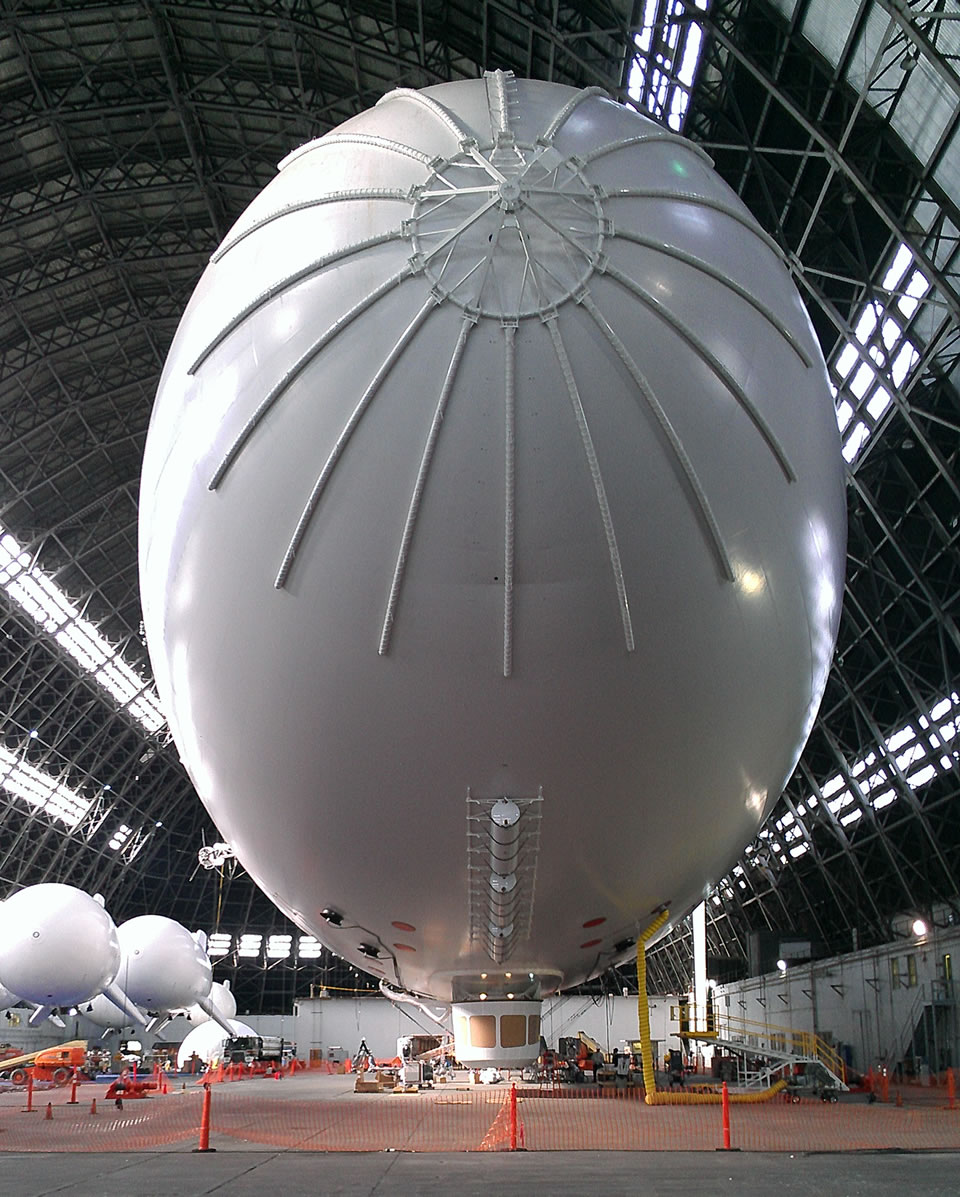
A front view of the M1400 airship, developed for the Blue Devil 2 unmanned sensor platform. Photo: MAV6
The US Air Force has decided to terminate the Blue Devil II Airship (BD2) project. Air Force representatives have given the prime contractor, MAV6 LLC, notice to discontinue work on the program due to ‘unacceptable performance’ and ‘recurring failures to meet minimum operating standards’.
Blue Devil II was initially scheduled for rapid deployment to Afghanistan in February 2012, only 18 months after contract award.
After the Air Force assumed responsibility for BD2 from the Army Engineer Research and Development Center (ERDC) back in early 2011, it’s first official act was to try to kill the BD2 effort in favor of a conventional fixed-wing UAV program, but with supporters in Congress and the Office of Secretary of Defense (OSD) the program was kept alive. To date, the airship has not achieved the first test-flight status.
A front view of the 123 meter long M1400 airship, developed for the Blue Devil 2 unmanned sensor platform. Photo: MAV6
MAV6 LLC, a once promising newcomer under the leadership of two retired US Army generals, has been unable to deliver on its promises for the Blue Devil II program. Built at a cost of $211 million by TCOM LP, the airship was projected to be capable of operating a 2,500 pound payload of intelligence-gathering sensors and equipment including the Defense Advanced Research Projects Agency’s Autonomous Real-Time Ground Ubiquitous Imaging System (Argus). A version of Argus has been placed in use aboard the A160T Hummingbird unmanned ISR aircraft. The airship was planned to carry two individual Axsys video balls able to deliver high-definition video imagery. In addition to other equipment, the USAF was exploring the possibility of also fitting the airship with the “Pennant Race” signals-intelligence collector, an enhanced upgrade of a system now in use aboard the MQ-9 Reaper.
The Blue Devil II represented the second phase of a two-phase program that began with the original Blue Phase I Airship. The Blue Devil I system has been operating in Afghanistan, mounted aboard a Beechcraft King Air 90 turboprop, to collect intelligence data. Blue Devil I relied on a wide-angle camera and equipment designed to track ground targets, specifically focused on tracking individuals.
Airships designed for war zone deployments have created a flood of interest in recent years and Blue Devil II was one example senior Defense officials believed held great promise and might prove to be an excellent vehicle to deliver much needed intelligence data while parked in the open skies over Afghanistan.
The complex development effort to build the world’s largest UAV and most advanced multi-sensor processing system was not the only obstacle MAV6 faced, company officials claim. A hostile government customer, sweeping government-imposed requirements changes and persistent funding constraints constantly eroded the program eventually bringing it to a halt.
As technical difficulties mounted and development costs increased, the Air Force gradually scaled back the range of work MAV6 was authorized to continue. While under Army management, the Blue Devil II program was initially estimated to be delivered at a cost of $137 million, but after the budget was transferred to the Air Force, the scope of the program was reduced and subsequently, the budget scaled down to $86 million, an estimate that was obviously more wishful thinking than anything else as a recent Air Force analysis estimated the costs to be much higher with an operating cost that might exceed four times the funding awarded to MAV6.
MAV6 agrees that there was cost overrun in the program, but blames the Air Force for delaying the acquisition process “We did underestimate the complexity and scale of the effort,” MAV6 official comments, but it wasn’t only the company to blame for the problems, “It has been the Air Force’s failure to fund Mav6′s BD2 contract in a timely manner that has represented the biggest impact to the program.” company officials commented in the ‘Edgefighter‘ blog post. “It took almost a year for the Air Force to definitize Mav6′s contract – almost six months longer than the maximum time limit stipulated by the Federal Acquisition Regulations. During this period and despite that fact that Congress provided the Air Force with full funding for the BD2 program, Mav6′s ‘undefinitized’ contract was incrementally funded in small blocks. This constraint made it impossible for Mav6 to fully staff the BD2 development effort or fund subcontractors and vendors.
MAV6 said the program has incurred only 12% cost growth over the $86 million, which, according to MAV6, will bring the total investment to just above $126 million for the M1400 to reach flyaway status, well below the original $137 million originally budgeted for this quick reaction program. MAV6 claims it has already accumulated 90-95% of the M1400 development effort and are months away from first flight. “To date, the U.S. taxpayers have invested $150 million (more if you include funds executed directly by the Air Force) in development of the BD2 capability… ” MAV6 said. The company complained that after the initial move by the Air Force to terminate the BD2 program has failed, the Air Force demanded ‘wholesale changes’ to the BD2 development plan, including the new requirement for FAA flight certification for the unmanned M1400 airship, without providing additional funding for these tasks. This requirement is not exclusive for MAV6, since 2010 it became mandatory for all vehicles flying in national airspace. in contrast, MAV6 is contesting this claim, saying UAS as well as manned combat aircraft (such as the F-16, F-22 or F-35) are not subjected to such requirements although they transit in national airspace.
The Air Force has also been critical of the program, detailing cost overruns, design complications, overweight tailfins, unexpectedly complex avionics, software glitches, and a failure to integrate the Argus system with other onboard systems have all contributed to the decision to terminate the project. The Air Force also included no request for Blue Devil II funding in its 2013 budget request. The Air Force intends to use the project’s remaining funds to disassemble, pack, and transport hardware and parts to a storage facility.
David Deptula, MAV6 CEO and formerly the Air Force’s chief of intelligence, was naturally disappointed and not in full agreement with the cancellation saying that the decision “not to capitalize on this game-changing potential now may be penny-wise, but pound-foolish.” Contrary to the Air Force decision, MAV6 claim they can continue the program with the remaining budget and complete it within the FY 2012 funds. “There is over $50 million in remaining FY12 BD2 funds to support completion of the M1400 airship and operational demonstration of the BD2 capability.” MAV6 officials said.
Regardless the Air Force decision to terminate the program, Blue Devil II is not dead yet. Airship type platforms were never too popular within the Air Force, yet they provide important advantages for ground and naval operations, particularly supporting persistent operations. The Army is currently managing a competing program (LEMV) developed by Northrop Grumman, which has also lagged behind schedule.
LEMV is scheduled to begin flight testing in June 2012. Upon completion of the flight testing the airship will fly to Florida to be outfitted with a custom gondola containing its mission payloads. By early 2013 it is expected to deploy to Afghanistan, to support coalition forces there.
Blue Devil II was considered a more affordable alternative for $517 million LEMV, and as such, its mere existence should reduce the risk of airship-based persistent surveillance platforms. Therefore, a possible use of the remaining budget would be to transfer it from the Air Force to other agencies, ‘inside or outside DOD’, where its unique capabilities will be more appreciated, therefore keeping Blue Devil II on ‘life support’ until the fate of LEMV is determined.
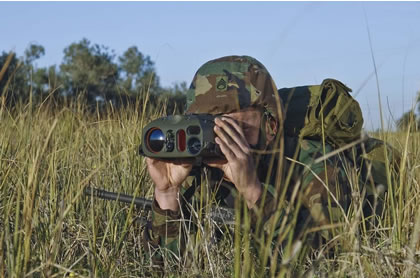
The MARS handheld target acquisition system from Elbit Systems.
The Finnish Army has selected the Israeli company Elbit Systems to supply ‘soldier systems’ equipping Finnish infantry commanders to function command, control and communications in dismounted operations. This acquisition is the first phase of a comprehensive ISTAR (Intelligence, Surveillance, Target Acquisition and Reconnaissance) program known as STAR. The solution offered by Elbit Systems includes the compact MARS handheld targeting device, coupled with a computer systems loaded with situation awareness software, connected through the man-portable PNR1000 wearable soldier radio. The system is intended to enhance the operational capabilities of the Finnish Army in the areas of reconnaissance, terrain dominance and dismounted operations. The new system will also support the Finnish Army in developing new combat doctrines, and as a basis for developing its future forward observation program.
Bezhalel (Butzi) Machlis, General Manager of Elbit Systems’ Land and C4I Division, commented: “We are proud that Finland, a NATO Partner of Peace, has selected our systems following a rigorous competition, including field testing in Lapland. This win affirms yet again our leadership as a supplier of advanced solutions for soldier systems.”
The ‘future soldier’ program for the Finnish Army known as ‘Warrior 2020’ is currently conducted on a parallel path, under the Technology Programme 2010 (TP2010) framework spanning four years of evaluation and development of advanced soldier systems for the Finnish Army, scheduled to be fielded by 2017. The Finnish Army is seeking three different versions of the suite, designed for the Regular forces, Territorial Army, and Special Operations. Prime contractor of the TP2010 program is the British company Savox, with Finnish EO manufacturer Millog, network expert Nethawk and Instra acting as subcontractors.
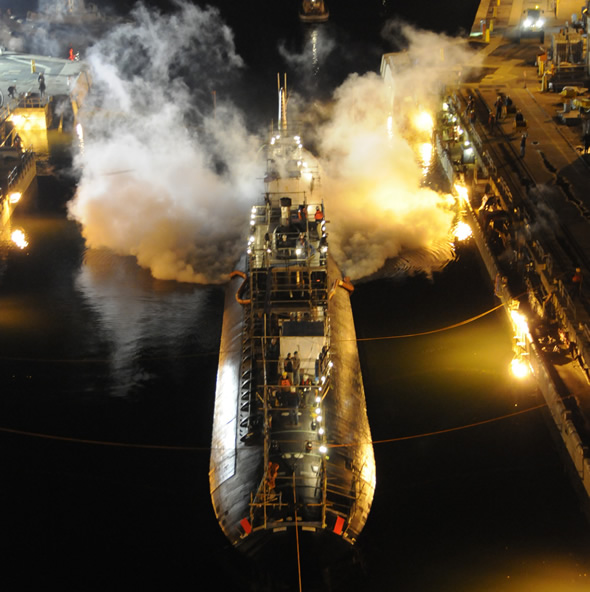
The Los Angeles-class attack submarine USS Miami (SSN 755) enters dry dock to begin an engineered overhaul at Portsmouth Naval Shipyard. (U.S. Navy photo by: Jim Cleveland)
USS Miami (SSN 755) entered dry dock in March 2012 for an overhaul at Portsmouth Naval Shipyard. (U.S. Navy photo)
A fire raged through the nuclear-powered Los Angeles-class fast attack submarine USS Miami on Wednesday 23 May while sitting in a dry dock at the Portsmouth Naval Shipyard in Kittery, Maine. The fire is reported to have started during the evening hours and was extinguished through the heroic efforts of shipyard firefighters, Miami crewmembers, and firefighters from more than a dozen fire departments from Maine and New Hampshire.
The USS Miami (SSN-755) was built by the Electric Boat division of General Dynamics in Groton, Connecticut and was commissioned on 30 June 1990 at a cost of approximately $900 million. The boat is permanently assigned to Submarine Group Two in Groton, Connecticut. The Miami was laid up in a Portsmouth dry dock on 1 March 2012 to undergo a 20-month overhaul and system’s upgrade.
According to US Navy sources, the submarine’s nuclear reactor was not in operation at the time of the fire and no weapons were aboard. The Navy also indicated that some internal equipment had been removed to facilitate the overhaul and some compartments had been gutted in preparation for necessary upgrades.
Rear Admiral Richard Breckenridge, commander of Submarine Group Two, speaking for the US Navy said that the fire raced through confined internal spaces of the boat that are very difficult to access creating “a challenging situation for initial responders.” The Admiral went on to praise the heroic efforts of the firefighters responding to the emergency and the crew of the USS Miami in saving the ship.
By all indications, the fire was confined to forward compartments and presented no threat to the ship’s nuclear propulsion system or engineering spaces. Preliminary damage assessments have identified extensive damage to the ship’s living quarters, forward torpedo room, and the command and control spaces. Admiral Breckenridge said that the rear compartments of the ship remain habitable and noted that some crewmembers remained in the rear section throughout the fire.
The Navy has made it quite clear that there is no danger to the ship’s reactor as it has been shut down for over two months. Although it is not known how many crewmembers were aboard the ship at the time of the fire, Navy sources have stated that the engineering compartments and the nuclear-propulsion spaces were fully manned throughout the emergency. Initial reports counted seven persons injured while battling the fire; two crewmembers, two civilian firefighters, and three firefighters with the shipyard’s fire department. All of the injuries are reported to be relatively minor.
The cause of the blaze has not been announced yet and the extent of the damage to the ship will not be known until a thorough investigation is completed. Considering the age of the Miami, salvage and repair of the ship is a question that will take some time to be answered. Admiral Breckenridge stated that no decision on salvage could be addressed until a detailed damage assessment could be completed.
Before workers can begin to introduce fresh air into the internal spaces to vent smoke and dangerous fumes from inside the ship, the damaged compartments have to be cooled sufficiently to avoid the possibility of a backflash. Once this venting operation is completed, damage-control teams will then begin a detailed damage assessment.
Since the Miami is no longer a state-of-the-art ship, some analysts believe that returning her to active service following a fire of this intensity is very unlikely. Should the ship require extensive repairs, the US Navy will have to decide if salvage costs can be justified, given the Miami’s age, in light of ongoing efforts to reduce defense spending. Repairs could prove to be cost prohibitive and the Navy may be forced to scrap the ship.
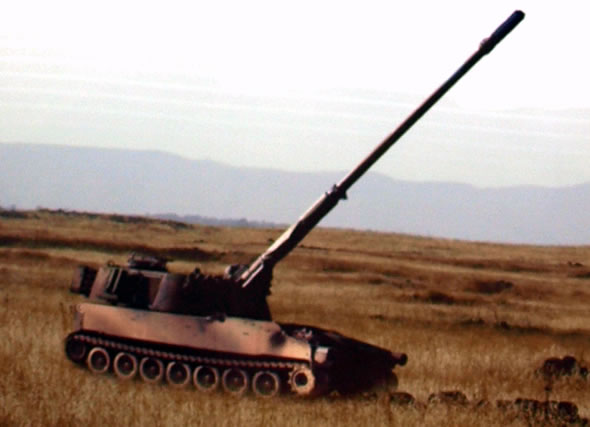
The M109I7 mounts the L52 155mm/52 caliber gun offering 42 km firing range.
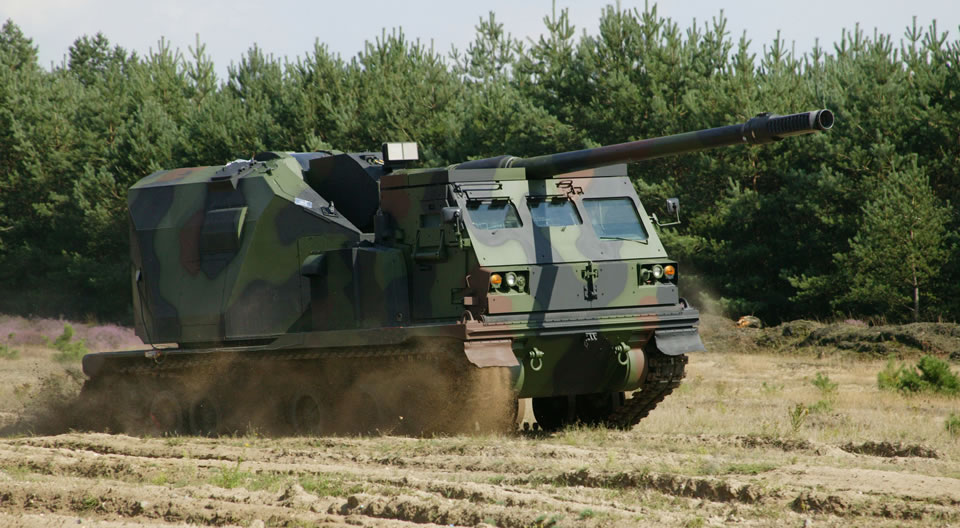
The first implementation of the AGM concept is the Donar, mounted on the ASCOD chassis. Photo: KMW
IMI has teamed with the German company Rheinmetall Defence to offer an upgrade package for the Israel Defense Forces M-109A5 self propelled howitzers. The modular package will enable the IDF to introduce a list of long awaited upgrades, required to maintain the M109 in service for 40 years. The upgrade, known as M109I7 ‘Spark’ comprises the introduction of a longer, modern 155/52 caliber barrel, with improved muzzle break and bore evacuator, sliding breech and automated loader or loader assist system (Automatic Munition Flow or AMF system), reducing the crew from six to only 3-4 gunners. The upgrade package will also include the Combat NG artillery C3 system and autonomous navigation and gun laying system, enabling the cannon to operate autonomously. If the IDF will deploy the new TopGun guided projectiles (currently under development at IAI), the SPG will also be able to fire such projectiles at very high accuracy.
The M109I7 mounts the L52 155mm/52 caliber gun offering 42 km firing range. Photo: IMIThe advanced systems enable the cannon to fire six rounds per minute. Most of the elements of the gun system have been operational and NATO type qualified with the German, Hellenic, Italian and Dutch armies.
The L52 cannon has seen extensive combat use in Afghanistan in recent years. The upgrade has been implemented with the M109L52 design back in 2002, designed to fit the requirements of armies that did not budgets complete replacement of the M109 artillery. The system employs significant elements of the German PzH2000 program, and offers 90% of its capabilities, but costs only 20% of that gun. This design has been implemented with the M109 A3GE model fielded with the reserve components of the German Army, and phased out in 2007, as these units were disbanded. These SPGs were eventually transferred to Greece.The upgrade will also include a new powerpack, comprising a 460 hp engine, replacing existing 405-440 hp Detroit Diesel types.
The M109I7 can be fitted with the L39 or L52 guns, enabling maximum firing range of 30 to 40 kilometers with standard projectile and base-bleed ammunition. The gun’s maximum effective range increases to 42 km when firing improved Extended Range Base ERFB base-bleed projectiles and exceeds 52 km when firing the rocket-assisted V-LAP projectile. Equipped with autonomous firing capability, the M109I7 can ‘shoot and scoot’ within five minutes, thus improving survivability rate in high intensity combat. A crew of 3-4 can fire three rounds in 15 seconds, or six rounds in one minute. Among the advanced firing modes enabled with this SPG are ‘multiple round simultaneous impact’ (MSRI), enabling up to five rounds to hit the target zone at the same time by firing projectiles in different trajectories at the same target, all timed to impact at the same time.
When on the move, the system can carry out a fire mission 60 seconds after coming to a halt, and can move into a new fire position just 60 seconds later. This gives the vehicle’s 3- or 4-man crew the edge in evading detection and enemy counter-battery fire.
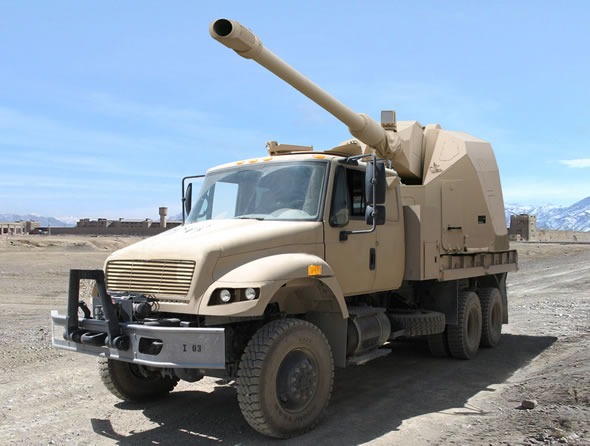
The M109I7 howitzer upgrade program is not the only L52 implementation evaluated by the IDF. The artillery corps also evaluates the Autonomous Gun Module (AGM) proposed by the german company KMW, as a possible replacement for the M-109. However, fielding a new artillery platform at the numbers required by the IDF represents financial burden the IDF will be hard to accept, especially as it already plans to field new, highly accurate 160mm ACCULAR short range mobile rocket systems. The AGM represents a bold departure from the manned artillery systems, leaping forward into the field of ‘intelligent weapon systems’. The AGM implements a 12.5 ton unmanned turret mounting the 155 mm / L52 howitzer, which can be deployed on stationary positions, tracked or wheeled platforms, including Merkava tracked chasis, offering commonality with other IDF platforms. The AGM module is usually supported by one or two soldiers.
AGM module transported on a 6x6 truck. The module that uses the L52 155mm / 52 Cal. howitzer (same gun used with the PzH2000 SPG) can be controlled remotely from the vehicle's cabin or from a nearby operation cell. Photo: KMW
Krauss-Maffei Wegmann GmbH & Co. KG has taken over the UK company WFEL Ltd. based in Stockport, Cheshire. WFEL is regarded as the world-market leader for mobile bridging systems in both military and civil applications. The acquisition provides an exit for WFEL’s private equity investors Dunedin, which backed a management buyout of the business in 2006 for £48 million.
This is KMW’s first in the UK, it will provide WFEL with new opportunities to accelerate its international sales growth, while generating synergies for new and existing customers through a combined product portfolio of vehicle and bridging solutions offered by KMW.
WFEL bridges are used in places where other opportunities for crossing terrain, obstacles and bodies of water have been destroyed. The self-supporting structures can span up to 46 metres with a maximum load capacity of 125 metric tons. The global WFEL portfolio numbers about 40 governments and includes the USA, UK and Switzerland. In fiscal year 2011, the company’s 228 employees achieved sales of about EUR 45 m. WFEL, originally founded as the Fairey Aviation Company in 1915.
Prior to the takeover by Krauss-Maffei Wegmann, WFEL was majority-owned by Dunedin LLP, a UK private equity company. Frank Haun, Chief Executive Officer of Krauss-Maffei Wegmann, stated that the purchase is a logical step for WFEL, Dunedin and KMW: “Expanding our bridge business by including the mobile bridge systems from WFEL is a rational addition to our product range within a growing market. Mobile bridging systems are essential, both for military applications and in the civil sphere in case of natural catastrophes.”
WFEL began manufacturing bridging systems in the 1970s after winning a design contest with the Ministry of Defence to produce a new tactical military bridging asset. The resulting Medium Girder Bridge, of which over 500 systems have been sold globally, first entered service with the British Army in 1971. It later developed the Air Portable Ferry Bridge, which entered service in 2005, and the Dry Support Bridge, which was first deployed by the US in Iraq in 2003. In recent years WFEL has secured several major new contracts, growing annual sales almost 70% to £36.2 million (YE 31 December 2011). In 2009, it won a £17.7 million order from the U.S Department of Defense to supply a further tranche of its Dry Support Bridge system, followed last year by a £57 million order with the Swiss Armed Forces to supply tactical military bridging assets after an international procurement contest. In 2012, the company has already secured further orders from the USA and Indonesia.
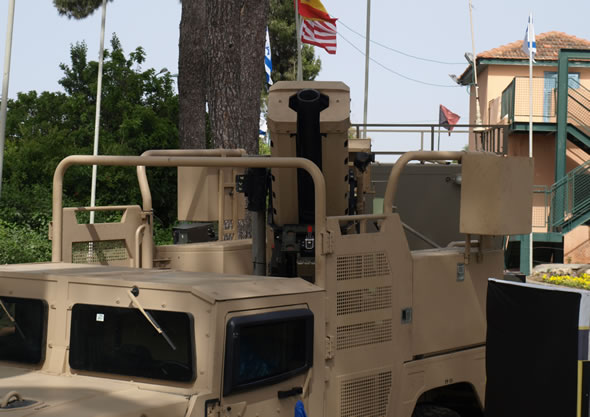
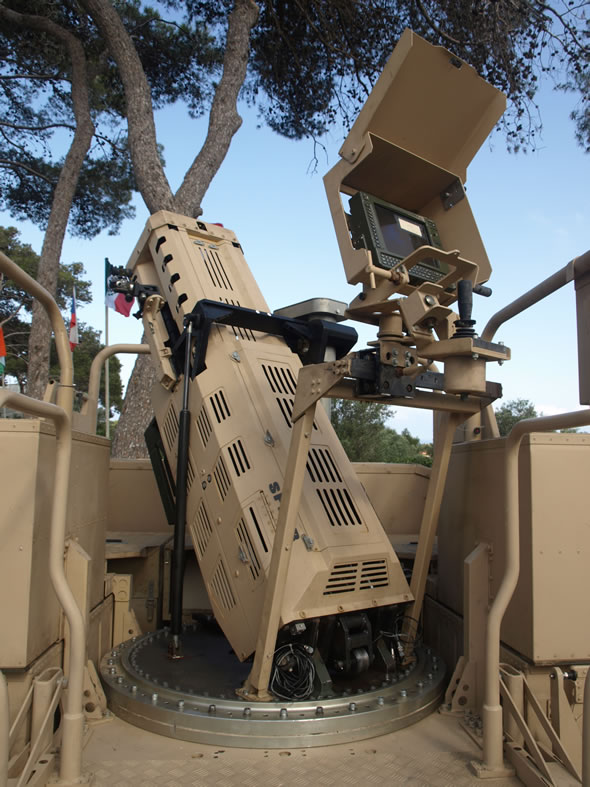
A forward view of the SPEAR autonomous mortar, the new recoil system reduces the firing loads to 10 tons. Photo: Tamir Eshel, Defense Update
SPEAR - an autonomous mortar from Elbit Systems Soltam.
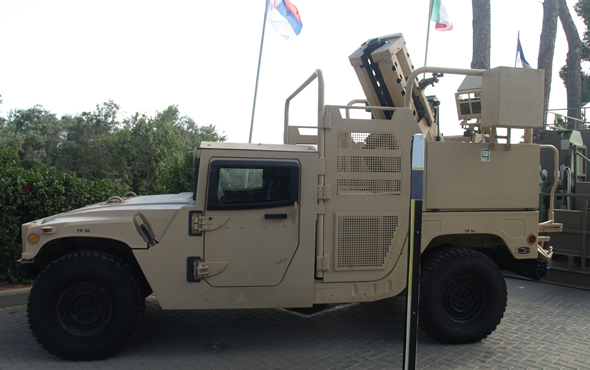
Elbit Systems unveiled today the Soltam SPEAR 120mm autonomous, soft recoil mortar system, designed for light wheeled platforms. The company has already tested the system on a modified HMMWV displayed at the 3rd. Fires and Artillery Conference in Zikhron Yaakov, Israel. The new design introduces a second-generation development of the combat proven CARDOM system developed by Soltam, which has been widely deployed with the US Army on Stryker wheeled APCs and Israel Defense Forces Keshet M-113 based self-propelled mortars.
A forward view of the SPEAR autonomous mortar, the new recoil system reduces the firing loads to 10 tons. Photo: Noam Eshel, Defense Update
The patent pending recoil system employed with this system reduces the barrel firing load (typically 120 tons) to less than 10 tons, therefore enabling a relatively light chassis to sustain the firing jolt within few seconds. As a result, the SPEAR can sustain a high rate of fire of up to 15 rounds per minute, and deliver accurate fire with a 30 meter circular error point (CEP). The mortar used is a derivative of the smooth-bore, muzzle loaded and turntable-mounted type used by the US Army, NATO and IDF.
The SPEAR has already been tested on a HMMWV platform, it can also deploy on other tactical vehicles, special purpose platforms or pickup trucks enabling deployment of such fire support assets on helicopters and light air transport aircraft. The system can rapidly deploy into action or pack and prepare for movement in just 60 seconds.
As the Keshet autonomous mortar operational with the IDF grond forces, SPEAR is equipped with full digital computerized aiming and navigation system, enabling the mortar to be operated autonomously and aimed without the need for external reference points.
Side view of the SPEAR autonomous mortar system from Elbit Systems. Photo: Noam Eshel, Defense Update
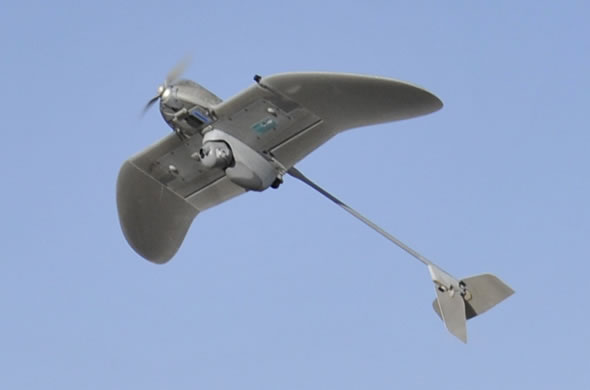
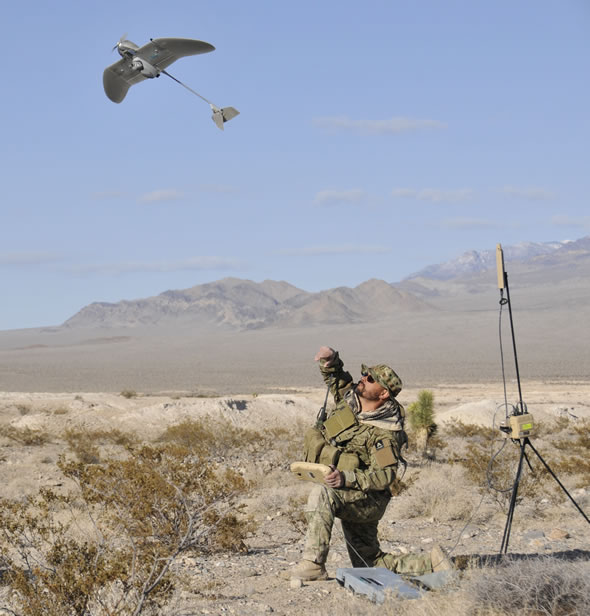
AeroVironment WASP AE, is joining the USAF BATMAV ProgramThe U.S. Air Force has included AeroVironment’s new WASP AE to its Battlefield Air Targeting Micro Air Vehicle (BATMAV) program. This inclusion enabled the Air Force to place a $2.5 million order for this enhanced configuration of the WASP Micro Air vehicle (MAV), which has already been adopted by the Air Force and Marine Corps for small unit tactical intelligence, surveillance and reconnaissance. Weighing 2.8 pounds (1.3 kilograms), the Wasp AE air vehicle is designed for ground and water landing, making it suitable for both land and maritime missions, and is capable of 20 percent greater flight duration than the prior Wasp.
The acceptance of the WASP AE followed over one year of compliance testing and validation by the BATMAV program. According to AV, The successful completion of these assessments and the resulting acceptance supports Wasp AE procurement by other U.S. Department of Defense customers.
The drone is equipped with AV’s digital data link, supporting interoperability with other small UAVs such as the Digital Puma, Raven, and Shrike VTOL. It is also supported by a portable ground control station common to all AV‘s SUAS, capable of encrypted communication, beyond line-of-sight operation and voice, video, text and data relay.
Wasp AE incorporates latest and the smallest version of the Mantis – the Mantis i22 weighing 275 gram. Being AV’s smallest stabilized EO payload, it gives operators both color and infrared video imagery from a single sensor package.
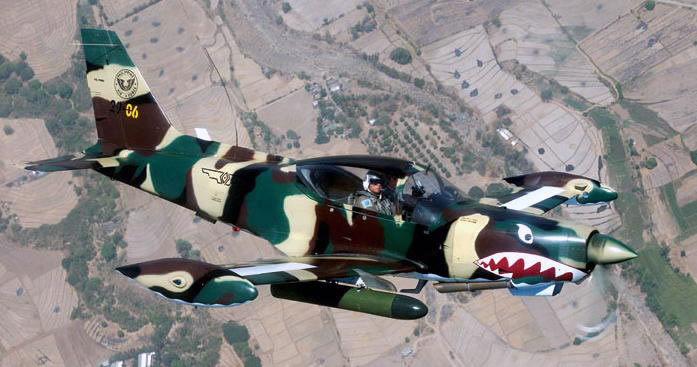
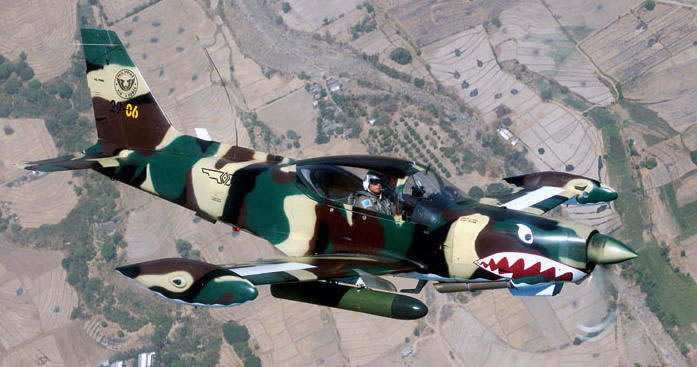
The PAF operates these SF260TP trainers since the mid 1990s. One such plane crashed Friday off Lamonja island, with two crew members on board.
For the first time in its history, the Philippines is looking to non-USA sources for combat aircraft to strengthen the nation’s warfighting capabilities. The Philippine Department of National Defense (DND) is reported to be in the market to purchase as many as two squadrons of combat aircraft and, according to DND representatives, has already entered into negotiations with non-USA manufacturers. Usually, a squadron would consist of 15 to 18 aircraft, but each squadron is configured to meet specific defense needs. On 7 May Dr. Peter Paul Galvez, speaking for the DND, announced that the Philippines had approached several nations with an eye towards procuring war materials needed to upgrade the nation’s armed forces. He stated that France, the United Kingdom, Italy, and South Korea were all prime candidates being considered.
Dr. Galvez indicated that his nation was in the market for second-hand combat aircraft and missile-firing gunboats in an effort to modernize the military and build an effective defense force. In consideration of the nation’s budget limitations, the DND seeks to achieve an acceptable balance of cost, capability, maintenance needs, and longevity in purchasing the desired warfighting assets.
The Philippines is now locked in a tense maritime dispute with China over ownership and control of Scarborough Shoal in the South China Sea. Chinese and Filipino ships have been in a face-to-face standoff for more than a month now with no end in sight. Both nations have dispatched ships to the area to secure their claims to the Shoal and the surrounding waters. Dr. Galvez also stated that the DND is also reviewing the possibility of procuring jet trainers for the Philippine Air Force (PAF). The PAF currently flies Italian Marchetti S211 jet trainers, aircraft that are frequently used in a ground-attack role in the nation’s continuing war against insurgents.
The Philippines wants to negotiate “government-to-government” purchases in an effort to save money. When asked if the Philippines was planning to buy modern multi-role aircraft, Dr. Galvez said that such an acquisition was a dream of the DND, but one that would not likely fit into the defense budget. He also mentioned the substantial costs involved in maintaining new aircraft, costs the Philippines is presently not able to afford. He said that if they can buy “cheaper planes of the same quality and firepower, that’s another plus factor” for the Philippines.
PAF is currently using the OV10 Bronco for ground attack / counter insurgency operations. A cost effective replacement for both bronco and the F-5s, retired in 2005 could be the Korean FA-50, planned to replace the Korean F-5s by 2013. Aero Image photo via PAF
During a radio interview on 16 May, Philippine President Benigno Aquino stated that he had requested second-hand F-16 Falcons from the United States, but this request may not be practical considering the maintenance costs associated with keeping the aging aircraft operational. He said, “It’s not necessarily the F-16s. We are also looking at jet fighters with the same capability as that of the F-16 but are cost-efficient and low in maintenance.”
President Aquino went on to say that his government was looking to spend between $400 and $800 million for each of two combat squadrons. He also pointed out that the PAF’s last fighter jet, a Vietnam War-era Northrop F-5A/B Freedom Fighter, was retired in 2005. For all practical purposes, the Philippines no longer has a credible air defense capability.
Last month, Manila requested additional military assistance from the United States including aircraft, radar systems, and gunboats. This request was submitted as a means of enabling the Philippines to create a “minimum credible defense.” Aquino went on to say that his government had various options to consider and that the nation has the “capacity to buy brand new, but not from America.” He declined to mention any specific aircraft model being considered and he said he was not at liberty to mention the country of manufacture at that time.
The president also stated that the DND’s acquisition endeavors also included upgrading the Navy. The flagship of the Philippine Navy, and largest warship the Navy has, is a former US Hamilton-class Coast Guard cutter, now renamed the BRP Gregorio del Pilar. A second and more capable Hamilton-class cutter, the USS Dallas, is expected to be delivered in November of this year.
President Aquino said that the DND was in the process of completing 132 projects with the expectation that these efforts would be finalized by the end of July of this year. The projects now in the works are unlikely to approach the level some analysts believe is needed for the Philippines to deploy an effective defense capability.
The Center for a New American Security (CNAS), an American think tank, has published what their analysts believe are the Philippines’ minimum defense needs. According to CNAS, the Philippines needs at least four F-16 squadrons (48 aircraft), modern frigates, fast corvettes, minesweepers, and four to six mini-submarines to meet the challenges posed by China’s military modernization. CNAS claims that upgrading the Philippines’ defense posture as a counter to Chinese ambitions is in the best interest of the United States and her Asia-Pacific allies.
A Philippine modernization on the scale CNAS advocates is almost certainly beyond Manila’s financial ability at the present time. Such an extensive modernization would undoubtedly require financial assistance from the US and other Asia-Pacific nations, a prospect that is unlikely given the global economic challenges now hobbling the United States and other nations.
With a flourish in launching four satellites aboard a single launch vehicle, Japan gave the world notice that it is now prepared to compete in the international space cargo business. This launch was the first time a foreign satellite was carried aloft by a Japanese rocket.
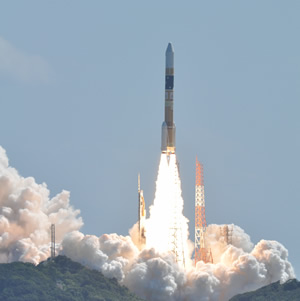
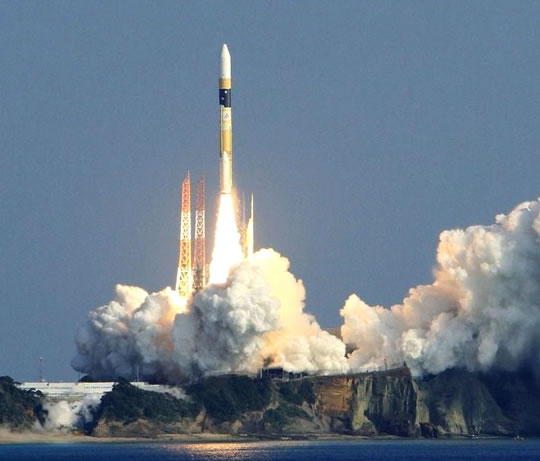
In the early morning hours of 18 May, a Japanese H-IIA/202 rocket lifted off from the Japan Aerospace Exploration Agency’s (JAXA) Tanegashima Space Center on Tanegashima Island in southwestern Kagoshima Prefecture carrying three Japanese satellites and one from South Korea.
Japan’s Global Change Observation Mission – Water Satellite 1 (GCOM-W1), nicknamed Shizuku, was the largest of the three Japanese satellites aboard the rocket. The Shizuku (a Japanese word meaning “drop” or “tear drop”) will fly a Sun-Synchronous Orbit at an altitude of 700 kilometers and is expected to have a lifespan of five years. An Earth observation satellite, Shizuku is designed to monitor water-related events as part of an international collaboration to collect data associated with global climate change. It is equipped with an enhanced microwave system, known as the Advanced Microwave Scanning Radiometer 2 (AMSR2), capable of detecting a wide-range of radiometers, naturally occurring microwave emissions emanating from Earth, which can then be used to analyze significant environmental changes.
A second device, a Second Generation Global Imager (SGGI), is also aboard Shizuku. The SGGI is designed to measure atmospheric and surface changes related to variations in climatic conditions and will collect data from observations of cloud formations, vegetation, snow accumulations, and ice fields.
Two smaller Japanese satellites were also along for the ride aboard the H-IIA/202 rocket. The Small Demonstration Satellite-4 (SDS-4) is a 50-kilogram satellite designed to test innovative new technologies that may be placed in operation aboard functional satellites in future launches. The second small satellite, Horyu-2, is a microsatellite designed by students with Japan’s Kyusyu Institute of Technology weighing only 7.1 kilometers. Horyu-2 will fly at an altitude of 680 kilometers with a primary focus on efforts to generate 300 volts of photovoltaic power, a photovoltaic power level never achieved in space previously. The Horyu-2 is also fitted with an Earth observation camera and a debris sensor.
The fourth satellite aboard the H-IIA/202 was South Korea’s Kompsat-3 (Korea Multi-Purpose Satellite-3). The Kompsat-3, also known as Arirang-3, is reported to be a lightweight Earth observation satellite equipped with an enhanced high-resolution optical sensor. It will follow a Sun-Synchronous Orbit (SSO) at an altitude of 685 kilometers and has an estimated lifespan of four years.
The Kompsat-3 was developed by Korea’s Aerospace Research Institute at a cost of an estimated $240 million following five years of intense research and development. The satellite is equipped with a multispectral camera capable of delivering imagery of 0.7-meter maximum resolution co-produced by EADS Astrium and the German Aerospace Agency. This camera is expected to provide high-resolution electro-optical (EO) images in support of Geographical Information Systems (GIS) for the purpose of monitoring agricultural, environmental, and oceanographic conditions.
JAXA confirmed that all four satellites entered orbit as planned and no equipment malfunctions were detected. The H-IIA rocket has been Japan’s most successful launch vehicle having recorded twenty launches since 2001 with a ninety-five percent success rate. Industrial giant Mitsubishi Heavy Industries Limited (MHI) has been the primary contractor for launch services and manufacturer of the rocket since the program was privatized in 2007.
This launch represents Japan’s first foray into the rapidly growing space-launch business, an industry that is quickly filling with a long list of experienced competitors and newcomers. Mitsubishi Heavy Industries is hopeful this launch will attract more foreign customers as the domestic launch business has been limited almost exclusively to government orders with no commercial orders having been placed. Although MHI claims to have received more than 100 inquiries from potential customers, only South Korea’s Aerospace Research Institute followed through with a contract.
Mitsubishi Heavy Industries has made impressive progress in reducing costs, but the nation’s high cost for labor and materials continues to plague the entire Japanese industrial base. To be successful Japan will have to overcome several well-entrenched competitors, experienced firms with established records of successful launches. French-based Arianespace and Russia’s Proton have an enviable lead on Japan and newcomers like America’s SpaceX and a maturing Indian space program will all challenge Japanese efforts to build a profitable customer-base.
Japan will almost certainly be burdened by cost considerations and questionable capacity, concerns that are not nearly as critical for the other firms in the industry. MHI’s success in managing cost issues has been significantly offset by the persistent strength of the Japanese yen in global markets. The competition has a decided edge in pricing, especially with SpaceX offering its Falcon rocket for an estimated $35 million when compared to $100 million for Japan’s H-IIA/202.
Even Japan’s domestic firms have regularly selected foreign firms to handle their satellite needs. Two of the most frequent Japanese users of launch services, SkyPerfect JSAT Holdings Incorporated and Broadcasting Satellite System Corporation, have shown a decided preference for Arianespace as a service provider. SkyPerfect has indicated a willingness to consider using the H-IIA/202 in the future, but cost will still be an important consideration that JAXA/MHI cannot ignore.
South Korea’s choice of the Japanese H-IIA/202 was a perfectly logical move. This is particularly true given widespread speculation among defense analysts that the Kompsat-3 may also serve as something of a spy satellite. Representatives from the Korean space agency have not entirely discounted this possibility saying only that the satellite “has a number of roles,” but also claiming that it was not “necessarily designed for national security purposes.”
Some industry experts believe that Japan is entering the satellite-launch business more for national prestige and not to turn a profit. However, JAXA director Keiji Tachikawa announced that the agency would begin work on an improved H-III rocket sometime next year with a projected first-launch date of 2022. MHI claims that the H-III will be a cost-competitive entrant in the launch business when it comes on line.
To further cut costs, MHI is looking to streamline production facilities by borrowing advanced computer technology from the aviation industry and automotive manufacturers. Another prospect for Japan to overcome its pricing problem is to offer developing nations a complete space program package that would combine launch services with ground-control operations.
A successful first launch of a foreign satellite is a major step forward for Japan, but the future of the program is fraught with uncertainty and burdened by a national economy that is far from healthy. The whole effort may be too little too late.
The U.S. Air Force awarded Raytheon the largest order yet for the Griffin missile,amounting over $85 million. The first delivery order will buy 22 all-up rounds and 43 telemetry rounds, to be delivered by July 2013. Previous orders of the Griffin were destined for the Special Operations Forces were awarded last year (2011) by the Army and U.S. Air Force.
These orders funded the procurement of 140 Block IIA and 25 telemetry rounds for about $30 million. Raytheon has been contracted annual firm-fixed-price orders for these weapons since 2008.
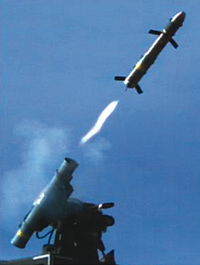
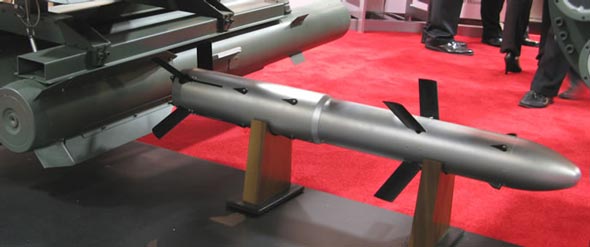
Griffin is 43 inches long, weighs 33 pounds and has a 13-pound warhead. Its range is believed to exceed the Hellfire’s 8 km range, reaching up to 12km when fired from high altitude. The Griffin uses loft maneuver and trajectory shaping to maximize range and achieve a steep angle of attack, thus maximizing hit accuracy while minimizing the risk of collateral damage or laser reflection errors.
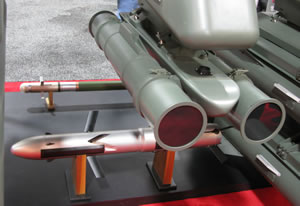
The Griffin B on display at AUSA 2010.
The Griffin missile is in production and has already been integrated on the C-130 Harvest Hawk where it already was fired in anger in Afghanistan. Griffin A is an aft-eject missile designed for employment from non-conventional platforms such as the C-130 aircraft. Griffin B is a forward-firing missile that launches from rotary- and fixed-wing aircraft and ground-launch applications. (Each B model is contained in launch tube weighing 12 pounds. ) One of the platform considered as a carrier is the AT-6, the Griffin has also been fired from the OA-58D/F Kiowa Warrior helicopter. Other launching platforms already believed to be operational are the MQ-9 Reaper and MQ-1 Predator unmanned aircraft systems (UAS); the Navy also planned test firing the missile from an MQ_8B FireScout but that has not been confirmed yet. Surface platforms being tested include the Rolling Airframe Missile (RAM) launcher used on some of the US Navy vessels (such as the Littoral Combat Ship – LCS). The Griffin was also launched from simple surface mounted ‘wedge launcher’, to be used for the protection of forward operating base (FOB).
During a test performed earlier this year the Army tested the Griffin B missile demonstrating how such missiles could be used to secure FOBs and small combat outposts. During the test, warfigthers fired a Griffin missile from a launcher at a static target more than 4 kilometers (2.5 miles) away. Using GPS coordinates generated by a tethered aerostat, the missile directly impacted the target. In another demonstration carried out last year, a Griffin was fired from a land-based RAM launcher at a static target more than 3 kilometers (approximately 2 statute miles) away. The weapon, guided by GPS and laser, scored a direct hit on the target. Both tests achieved all demonstration objectives, Raytheon said.
“Griffin enables ground forces to protect their locations by precisely engaging targets in a 360-degree radius,” said Harry Schulte, vice president of Raytheon Missile Systems’ Air Warfare Systems product line. “Griffin enables sailors to defend against small, fast-moving surface craft employed by pirates and other non-traditional threats” Schulte added. The Griffin’s user-friendly graphic interface enables the user to guide the weapon to the target using GPS coordinates or laser designation. To maximize effectiveness, the user can choose to engage the target with height of burst, point detonation or fuze delay.
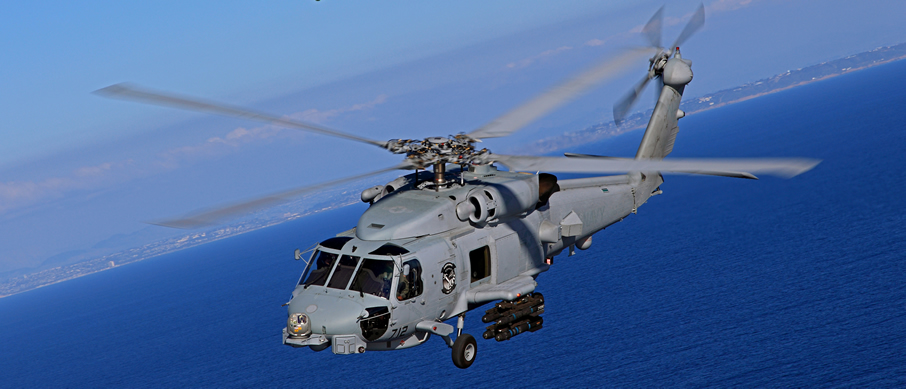
Lockheed Martin expects to deliver the first two completed MH-60R aircraft of an eventual 24 to the Australian Navy in the first quarter of 2014. Photo: Lockheed Martin
South Korea has requested buying eight MH-60R SEAHAWK Multi-Mission Helicopters through the U.S. Foreign Military Sale (FMS), the Defense Security Cooperation Agency (DSCA) has notified U.S. Congress Tuesday, May 16. The estimated cost of the complete package is estimated to be around $1.0 billion.
South Korea is considering several models of ASW helicopters to equip its frigates and destroyers,with improved anti-submarine warfare and anti-surface warfare capabilities.
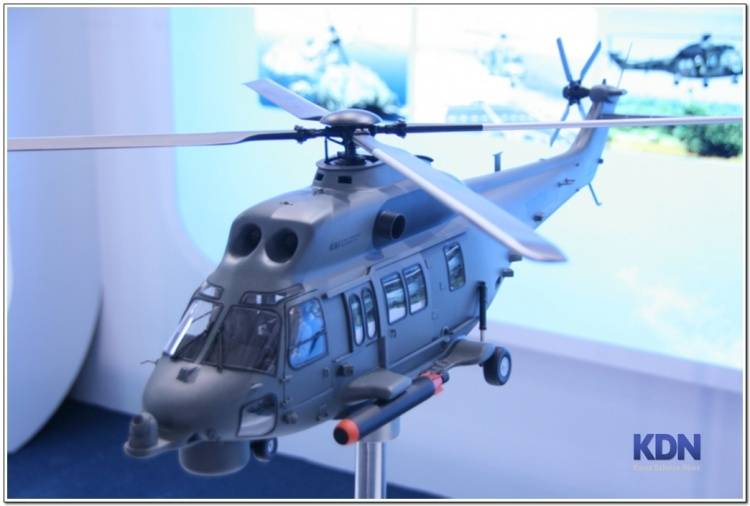
The Surion based Korean Haval Helicopter (KNH)
The MH-60R is one of the models being considered for the MHX, the future helicopter for the South Korean Navy. Other competitors expected to be considered include AgustaWestland offering the AW159 Lynx Wildcat – a new model replacing the Navy Lynx 99 currently used by the Korean Navy, offering about 1000 lbs (470 kg) increase in maximum take-off weight. Other competitors likely to bid are NH Industries offering a navalized version of the NH90. The naval version of the Surion, developed by an industry team led by Korean Aerospace Industries (KAI) and Eurocopter is also being considered with Israel’s Elbit Systems providing avionics and mission systems. Seoul is expected to select the winning bidder in October.
Japanese H2A commercial satellite launcher lifts off from Tanegashima space center
Kobalt M Satellite
Friday May 18th was a busy day in the rapidly growing space-launch industry with three rockets, launched from three separate locations, placing six satellites into Earth orbit. In contrast to the global fanfare that followed the failed South Korean launch attempt, these flawless launches from Russia and Kazakhstan were hardly noticed by the world media.
The first to launch was a Russian Soyuz U lifting off from Russia’s Plesetsk Cosmodrome military spaceport. The rocket is reported to have placed a Yantar-4K2M (Kobalt-M) optical reconnaissance satellite into low-Earth orbit (LEO). The Kobalt-M is a classified military reconnaissance satellite equipped with enhanced optical imaging capabilities featuring a film-return capsule arrangement designed to physically return captured and recorded imagery back to Earth.
The second, following shortly after the Soyuz U launch, was a Japanese H-IIA/202 rocket lifting off from the Japan Aerospace Exploration Agency’s Tanegashima Space Center carrying four satellites into orbit, three of Japanese origin and one for South Korea. The H-IIA/202 carried aloft Japan’s Global Change Observation Mission – Water Satellite 1 (GCOM-W1), nicknamed “Shizuku” meaning “drop” or “tear drop” designed to monitor global patterns of water circulation and changes in climate patterns as part of the A-Train international collaborative program.
Hitching a ride with the GCOM-W1 were two smaller Japanese satellites, the SDS-4 and the Horyu-2. The SDS-4 (Small Demonstration Satellite-4) is part of a Japanese program developed to test new and emerging space technologies for future incorporation in operational satellites. The Horyu-2 was designed by students with Japan’s Kyusyu Institute of Technology to test an experimental high-voltage solar array.
The fourth satellite aboard the H-IIA/202 was South Korea’s Kompsat-3 (Korea Multi-Purpose Satellite-3). The Kompsat-3, also known as Arirang-3, is reported to be a lightweight Earth observation satellite equipped with an enhanced high-resolution optical sensor. The Kompsat-3 features a multispectral camera with a 0.7-meter maximum resolution purportedly designed to provide high-resolution electro-optical (EO) images in support of Geographical Information Systems (GIS) to include enhanced imagery for agricultural, environmental, and oceanographic monitoring purposes.
The last launch of the day was a Proton rocket lifting-off from a launch site at Baikonur, Kazakhstan. This launch placed the Nimig-6 communications satellite into a geosynchronous transfer orbit to deliver Ku-band direct-broadcast television service to Canada. The upper stage, Breeze-M, of this rocket requires a series of burns before final separation approximately nine hours after launch.
With its ambitious satellite launch on Friday, and the first instance of launching a foreign satellite, Japan has successfully achieved its goal of joining the global satellite-launch industry, a $4.3 billion business of immense promise.
Commercial satellite launches have increased dramatically in recent years and is now attracting a growing field of competent competitors looking to cash in on the promise of lucrative returns for those firms able and willing to provide this unique service at reasonably low cost. Considering the costs involved in reaching this goal and the costs yet to come, Japan’s ability to offer competitive pricing is a matter of significant concern when the cost of Japanese labor is factored in. For now, it certainly looks like Japan is in the crowded race for future business.
Lockheed Martin Skunk Works® and XTEND have achieved a major milestone in JADC2 by integrating the XOS operating system with the MDCX™ autonomy platform. This technical breakthrough enables a single operator to simultaneously command multiple drone classes, eliminating the friction of mission handoffs. From "marsupial" drone deployments to operating in GPS-denied environments, explore how this collaboration is abbreviating the data-to-decision timeline and redefining autonomous mission execution.
As traditional defense primes face mounting competition from agile “neoprimes” such as Anduril, Palantir and Helsing, the balance of innovation is shifting toward software-defined warfare and scalable, dual-use technologies, while global industry consolidation—marked by Boeing’s integration of Spirit AeroSystems and other strategic mergers—signals an intensified race to secure control over the defense technology value chain. Our Defense-Tech weekly report highlights these trends.
In early October 2025, a coordinated wave of unmanned aerial system (UAS) incursions—widely attributed to Russia—targeted critical infrastructure across at least ten European nations. The unprecedented campaign exposed the fragility of Europe’s air defenses...
Executive Summary
The past week (September 18-25, 2025) represents an inflection point where strategic defense concepts have transitioned from doctrine to tangible reality. An analysis of global events reveals four primary, interconnected trends shaping an...
At the 2025 Air, Space & Cyber Conference, U.S. Air Force and Space Force leaders unveiled major updates on next-generation fighters, bombers, unmanned systems, and space initiatives, highlighting both rapid innovation and critical readiness challenges as the services race to outpace global competitors. A short version is available here, with a more detailed version for subscribers.
The Taipei Aerospace & Defense Technology Exhibition (TADTE) 2025 crystallized around four dominant strategic themes that collectively illustrate Taiwan's comprehensive approach to defense modernization amid escalating regional tensions. Based on a detailed report by Pleronix (available upon request). Includes a Podcast discussion on TADTE 2025's highlighting Taiwan's four strategic themes beyond the post's coverage.
Israel’s Iron Beam 450 high-power laser system has completed final testing, marking a major leap in air defense. Developed by Rafael, it offers precise, cost-effective interception of rockets, UAVs, and mortars, and is set for IDF deployment by 2025.