Sunday, December 28, 2025
More
    Home Blog Page 235

    IVECO Inagurates New Production Plant in Brazil Supporting the VBTP Program

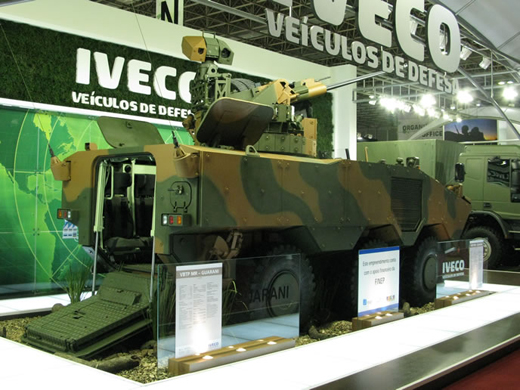
    The VBTP. Photo: Tamir Eshel, Defense-Update

    IVECO is displaying the first prototype of the VBTP amphibious armored vehicle destined for the Brazilian Army. The vehicle is the first of a 2044 production series to be manufactured by Iveco in Brazil. After the exhibit follows the prototype for the proving ground of the Brazilian Army in Marambaia (RJ), for a period of testing. At the same time, Iveco Defence Vehicles will start the construction of a pilot batch of 16 vehicles set out in the period of development.

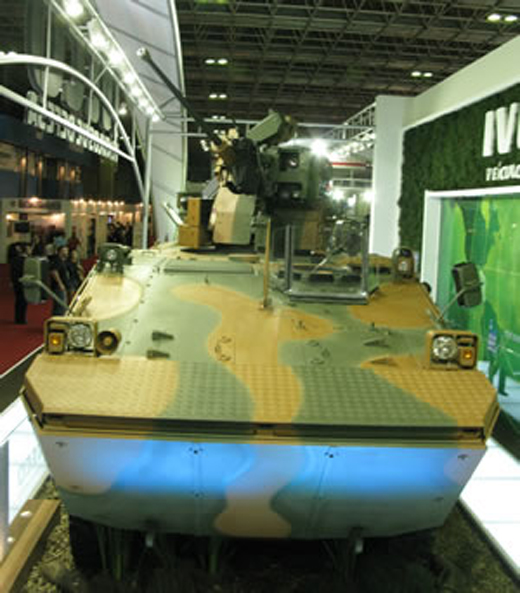
    The VBTP. Photo: Tamir Eshel, Defense-Update
    Our sponsor - Rafael
    Photo: Tamir Eshel, Defense-Update

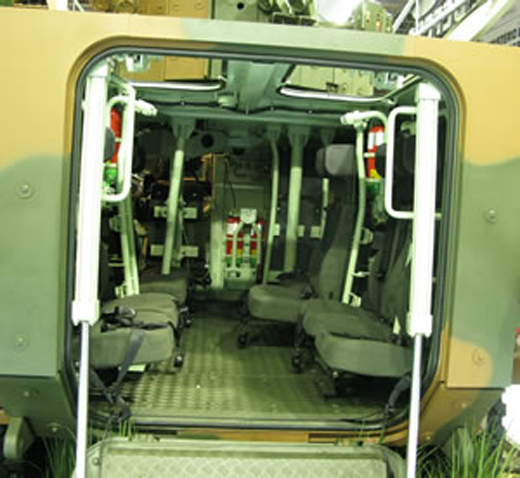
    Iveco displayed a fully configured version of the 6×6 VBTP vehicle, developed for the Brazilian Army, to be produced in Brazil. The vehicle was displayed with a UT-30 unmanned weapon station mounting the 30mm automatic cannon, optronic systems and laser-warning sensors. the internal view shows the side mounted individual seating arrangement, with three crew positions at the front (driver, commander at left, gunner at right.

    Iveco announced the creation of a new division – Iveco Defence Vehicles, whose first action will be managing the project’s Armored Vehicle Transport Personnel (VBTP-MR), amphibious vehicle, which the company developed in conjunction with the Brazilian Army. The new division begins with an investment of $ 75 million to build a manufacturing facility within the industrial complex of Iveco in Sete Lagoas in Brazil.

    Besides the armored vehicles, the new business unit will produce militarized modified versions of Iveco trucks, as it already does in Europe.

    Photo: Tamir Eshel, Defense-Update


    LAAD 2011 Photo Review

    Photo: Tamir Eshel, Defense-Update
    Iveco displayed a fully configured version of the 6x6 VBTP vehicle, developed for the Brazilian Army, to be produced in Brazil. The vehicle was displayed with a UT-30 unmanned weapon station mounting the 30mm automatic cannon, optronic systems and laser-warning sensors. the internal view shows the side mounted individual seating arrangement, with three crew positions at the front (driver, commander at left, gunner at right. Photo: Tamir Eshel, Defense-Update
    Photo: Tamir Eshel, Defense-Update
    Photo: Tamir Eshel, Defense-Update
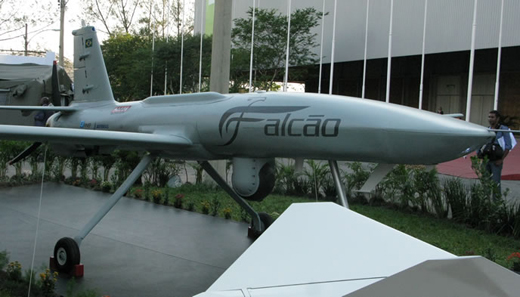
    Many displays of unmanned systems show the increased attention given to UAS in Brazil. Three domestic UAV developers introduced new UAS designs here. At the outdoor display, Avibras is displaying the Falcao, a medium size tactical UAV carrying a single EO payload, designed for medium range operations. Avibras has invested along with EADS in the development of tactical drones, and the current development seems to align with its ambition to provide long range aerial raegeting to support its growing range of artillery rockets, also displayed at LAAD 2011. Photo: Tamir Eshel, Defense-Update
    Another new UAV was displayed by Orbisat, showing the first Brazilian UAV featuring an airborne remote sensing radar. The sensor, embedded into the platform, operates in teh X- and P-band, suitable for operation in day, night and under adverse weather cloud and heavy rain conditions. Furthermore, the unique operating mode enable thisadar to penetrate forest canopy to accurately map sensly forrested terrain typical for Brazil's amazpon rain forest region. The UAV can ates on 10 hour long missions, and is positioned to be specially suited for mapping or monitoring of small areas. Photo: Tamir Eshel, Defense-Update
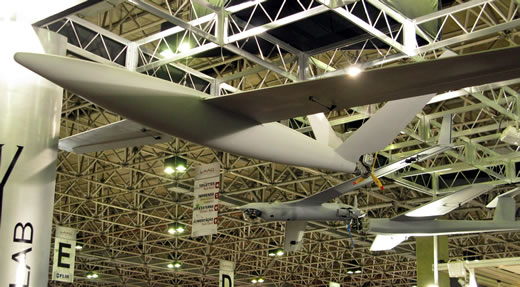
    Santos Lab has introduced a range of UAVs designed for a wide range of missions, from short range, short duration missions carrying miniature payloads, to medium size platforms carrying more advanced payloads. At LAAD 2011 Embraer Defense and Security and Santos Lab annouced plans for cooperation in the field of unmanned systems. Photo: Tamir Eshel, Defense-Update
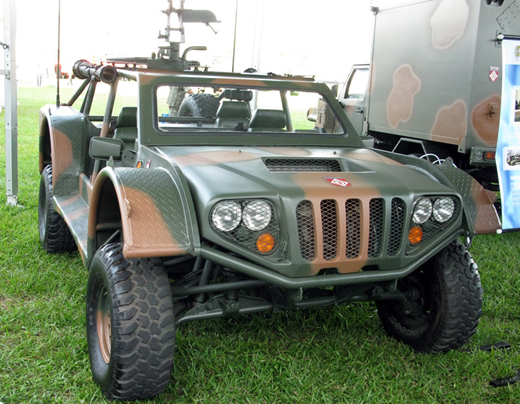
    Developed by the Brazilian GauchoCenter of Military Technology (CTEX) under an Argentinian-Brazilian cooperation, Gaucho is designed as a light, air transportable strike vehicle (ALSV). This versatile vehicle was developed to support the needs of paratroops and special forces of both armies. It can perform command, logistics, casualty evacuation, communications and reconnaissance missions. It has an all-wheel drive system, an independent suspension of four wheels, providing high mobility on and off road. two cauchos can be stacked on each other , allowing the transportation of five vehicles on a single C-130 mission. The Gaucho can be air transportable or air-droppedvia parachute air launching or low-level parachute extraction drop. Photo: Tamir Eshel, Defense-Update


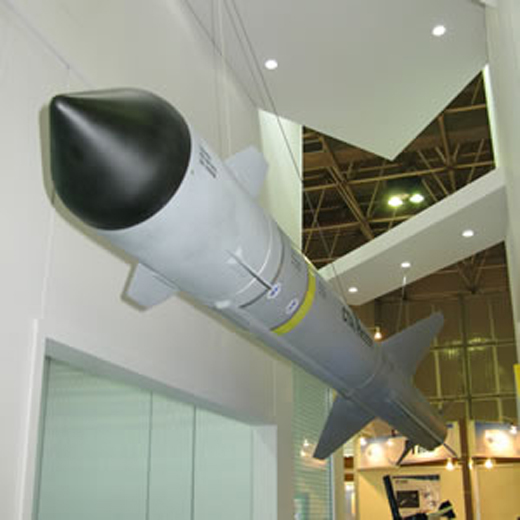
    The Mectron company is developing the MAR-1 anti-radiation missile under a Brazilian Air Force program. The missile offers air forces tactical, anti-radiation air-to-surface attack option, engaging surface ships, anti-aircraft weapons and radars. MAR primary mission is to suppress a wide range of surface radars, from high power, fixed surveillance and early warning radars up to low-power, mobile systems supporting air-defense artillery. The missile has full ECCM capability and uses passive guidance on pre-programmed (typically long range) mode, self defense (reactive mode) or ópportunity used primarily for area suppression or attack of unexpected targets. The MAR-1 weighs 586 lbs (266 kg) and carries a warhead weighing 195 lb (90 kg). The missile has been test fired on the Brazilian A-1 (AM-X) fighter. In 2008 Brazil's government approved the export of 100 MAR-1 missiles to Pakistan, as part of a US$167 million contract.
    MAS-1 AMX. Photo: Tamir Eshel, Defense-Update
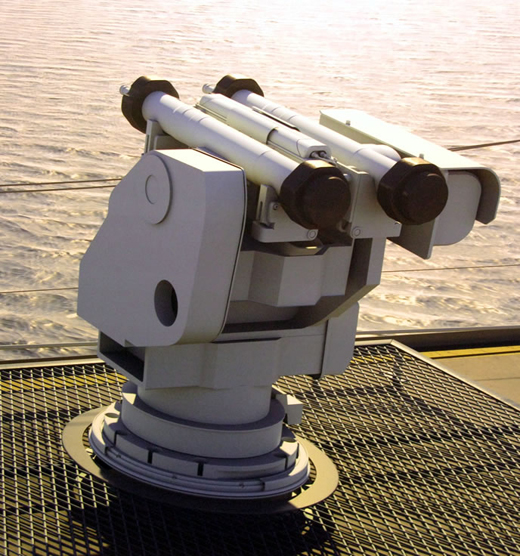
    Dynamit Nobel has unveiled at LAAD 2011 a new concept in equipping surface vessels with innovative, powerful and effective self protection systems. The Maritime Remotely Operated Weapon Station is designed specifically for the maritime environment, carries two sealed launchers of RGW-90AS weapon, modified for to operate at very close range (14 - 500 meters). Unlike the 0.5mm machine gun that has mainly a deterrent effect, the devsatating anti-structure (AS) warhead of the RWG-90 will eliminate most targets that could pose a risk to the protected vessel even at very short range, after all other measures have failed. As such, MARCOWS could provide an excellent close-in defense system protecting the vessel against pyracy attacks, as wel as suicide fast boat attacks.
    Our Sponsor: IAI

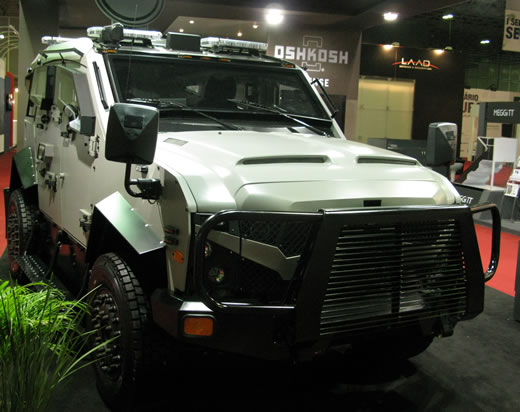
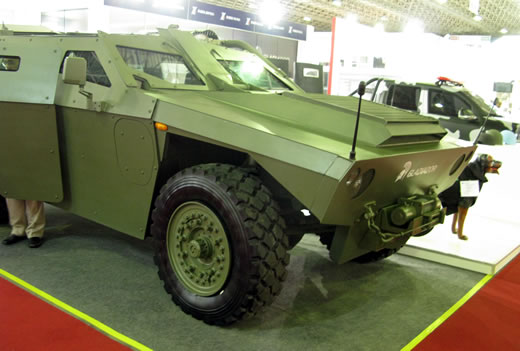
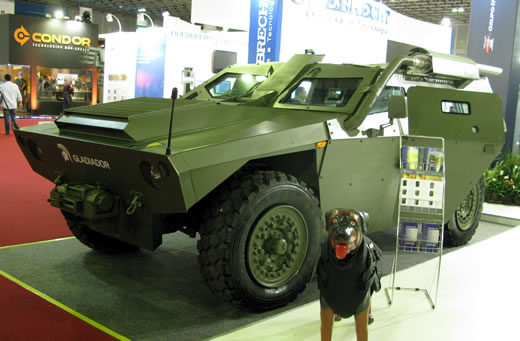
    Among the armored vehicles on display were the SandCat from Oshkosh, and the Gladiator, making its debut at LAAD 2011.

    Gladiator is a bulletproof vehicle developed as a ‘shielded car’supporting Civil Disturbance Control (CDC) law enforcement teams. The vehicle, introduced at the show by the Brazilian company InbraFiltro, is the first production example of the vehicle. It is a 4×4 vehicle, based on a locally produced chasis made by Agrale Industry powered by a 185 hp MWM engine. It is designed to operate on any terrain, and travel at a speed of 105 km/h on road.

    The Gladiator is armoed to Level IV ballistic protection level. It weighs about seven tons, and has a maximum capacity to take 7 occupants including the driver. The vehicle has a lower deflector shield providing protection against landmines. The external body maintains a flat surface, without screws or hinges, eliminating rioters climbing ón the vehicle. To enable the vehicle to safely ram into obstacles, the engine cooling system is placed under the hood. The front fender and closure of the rear fender form a blast mtigating element, as they are made of non-ballistic material, designed to break apart aiming to break landmine explosions and avoid tipping of the vehicle.

    The company positions the basic version of the Gladiator to cost US$350,000.

    Sandcat. Photo: Tamir Eshel, Defense-Update
    The Gladiator. Photo: Tamir Eshel, Defense-Update
    Gladiator. Photo: Tamir Eshel, Defense-Update
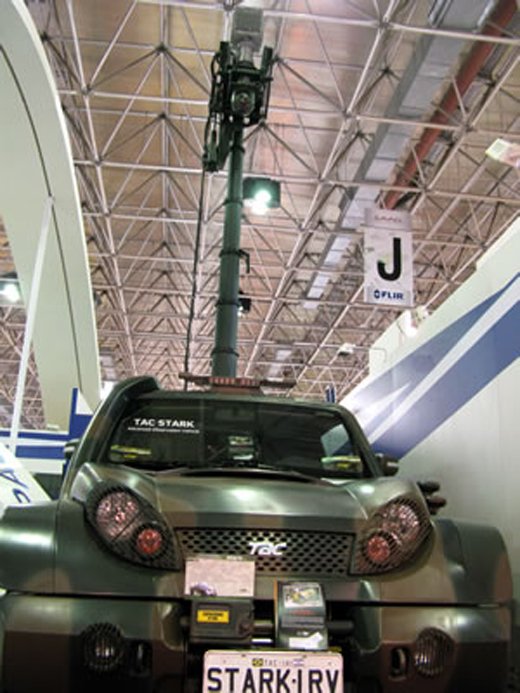
    The new Stark IRV (IRV (Inteligência, Reconhecimento e Vigilância), a reconnaissance vehicle developed by IAI’s subsidiary Elta Systems. The Stark IRV is based on a Brazilian platform produced by TAC Motors, designed for intelligence collection and observation. This 4×4 tactical vehicle was designed for high mobility over rough terrain. Photo: Tamir Eshel, Defense-Update

    Embraer Enters Unmanned Vehicles Market through Partnership with Elbit Systems, Santos Lab

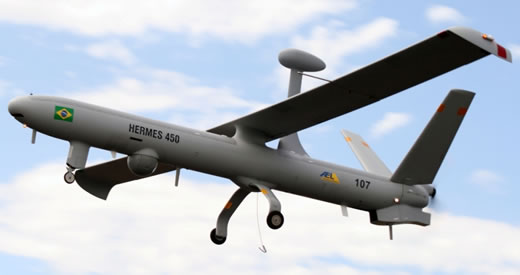
    Brazil's new Hermes 450 will be delivered and supported by Elbit Systems' local subsidiary Aeroeletrônica Ltda. (AEL). Photo: Elbit Systems

    Embraer Defense and Security division (Embraer Defesa e Segurança S.A) has entered into a strategic agreement with AEL Sistemas S.A (“AEL”), a wholly owned subsidiary of Elbit Systems. The two companies have yet to define the specific programs to be pursued but, according to officials from the two companies, the main goals of the current cooperation will be the expanding of joint activities in the area of unmanned aircraft systems (UAS), including the anticipated creation of a jointly owned company, with majority participation of Embraer D&S. One of the primary goals of the JV will be to promote the introductio and use of Elbit Systems Hermes 450 UAV in the service of the Brazilian Air Force.

    Brazil's new Hermes 450 will be delivered and supported by Elbit Systems' local subsidiary Aeroeletrônica Ltda. (AEL). Photo: Elbit Systems
    Our sponsor - Rafael

    Embraer also announced a cooperation with Brazilian based UAV specialist company Santos Lab, aimed at establishing foothold in the area of small UAVs. Santos has been licensed to operate the Scan eagle UAV in Brazil, and at the LAAD 2011 exhibition, has launched a new, mini-UAV designed for short range reconnaissance and security.

    According to Luiz Carlos Aguiar, President of Embraer D&S, his company considers that the announce agreement intends will strengthen both companies’ offerings in the Brazilian market. ”Tese vehicles allow for dual-use for monitoring of ports, agricultural, forest, and coastal areas, traffic, etc”. Aguiar added.

    Shlomo Erez, Director General of AEL considers this strategic agreement with Embraer significant milestone for AEL, seeking to establish UAS competencies in Brazil. This cooperation with Embraer will leverage new business opportunities and enhance Brazilian know-how in the development and manufacture of unmanned systems, offering latest generation technology in order to meet the specific demands and needs of our country”. Erez added: “The agreement foresees the evaluation of joint activities in marketing, development, systems integration, manufacturing and support of UAS, as well as in simulators and activities for the modernization of avionics systems, and the anticipated participation of Embraer Defesa e Segurança in the capital of AEL”.”

    Other areas considered for future cooperation are aircraft modernization and upgrading. Embraer and AEL have a successful track record of cooperative relationships with AEL providing avionics for aircraft upgrades undertaken by Embraer. AEL is hopeful that by establishing joint partnership with Brazil’s leading aircraft manufacturer, this relationship could be taken into a new level.

    AEL was one of the first suppliers of systems for the turboprop Tucano basic trainer and the subsonic fighter AMX, aircraft manufactured by Embraer in the 1980s and 1990s. Currently, AEL provides the avionics for the turboprop light attack and advanced training Super Tucano, as well as the avionics of the F-5M fighter, modernized by Embraer for the Brazilian Air Force (FAB).

    Elbit Systems Introduces Highlights Avionics, C2 and Homeland Security at LAAD 2011

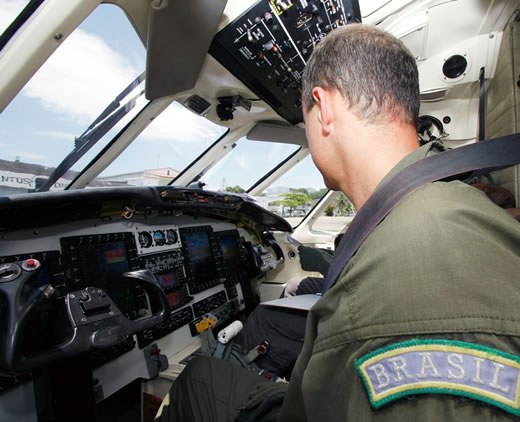
    A view of the Embraer C-95 cockpit taken on the maiden flight. Photo: Aeroeletrônica (AEL)

    Elbit Systems and its Brazilian subsidiary Aeroeletronica S.A. (AEL) are promoting here modern avionics suites, comprising computer interface and high definition smart displays, Unmanned Aircraft Systems (UAS), Laser Guided Munitions, electro-optic payloads, high-speed digital data-links, remote controlled weapon stations for armored vehicles and more.

    A view of the Embraer C-95 cockpit taken on the maiden flight. Photo: Aeroeletrônica (AEL)

    As Israel’s leading defense company Elbit Systems has been active in the Brazilian market for a number of years and views Brazil as a key market for its full portfolio. The company has already made significant progress in this market, introducing unmanned turret systems for the Brazilian Army’s Land Forces as part of the Guarani Project; fielding Hermes 450 tactical UAS with the Brazilian Air Force, and the development of avionic suites as part of Brazilian aircraft upgrade, under cooperation with Embraer. Presently the company is also aiming at homeland security, tapping Brazil’s expansion in this field. Among these applications Elbit is featuring a new upgraded cockpit designed for the Embraer C-95 Bandeirante (EMB-110A). This upgrade includes integration of digital maps, modern digital displays, and advanced communication and navigation systems improving pilot performance.

    At LAAD, Elbit Systems highlights its command, control and communications solutions, through the introduction of the Dominator Integrated Infantry Combat System (IICS), and new software-defined radios, the new SDR-7200HH hand-held radio and vehicular SDR-7200 model.

    Marine surveillance and security systems are represented by the Aqua Marine – a new, integrated ESM/ECM suite for naval applications developed by Elisra, an Elbit-Systems subsidiary. Aqua-Marine is a combat-proven, integrated and modular, delivering situation awareness, electronic attack, ship self-defense and electronic intelligence. The company has also developed Radar Warning Reciever and a Laser Warning Sensor Suite implemented for the protection of small patrol boats. Such systems are essential to handle threats from offshore, short range Radar and Laser guided missiles. The small, lightweight, modular systems provide both audio and visual alarms and are equipped with threats library, with laser add-ons available.

    For homeland security applications Elbit Systems is preforming a live demonstration of a city or state operations room, dealing with crisis management scenarios featuring an explosion of an oil tanker in the heart of the city, an intruder trying to enter a strategic oil & gas facility, large-scale sport events security management, emergency response to natural disasters, crime fighting and more. The event scenario will be managed in several phases, from detection to surveillance, analysis, management and finally response. The simulation features a number of new products introduced by the company, including the Mobile Surveillance and Control Vehicle (MSV) and Hermes 450 tactical long endurance Unmanned Aerial System (UAS), the ‘Rotundus’ command and control (C2) management system optimized for security applications, emergency operations and management of first responders operations. Elbit System’ HLS2 is a simulation tool used for planning and training of security events management.

    RADA Unveils a New Radar Optimized for Homeland Security

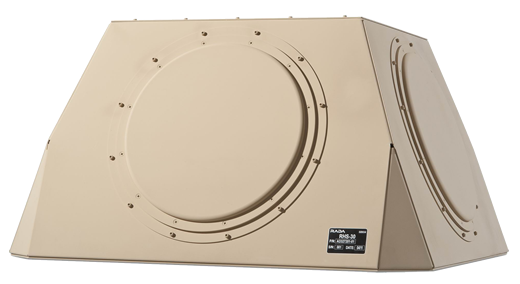
    Assembled in four panels formed in a pyramid-like structure MHSR provides almost full hemispheric coverage of ground and air surveillance over 360° in azimuth, and 80° in elevation at tactical ranges.

    Israel’s defense electronics company RADA is unveiling at LAAD 2011 a new phased array ground and air surveillance radar optimized for homeland security applications. The RHS-40 Multimode Hemisphere Surveillance Radars (MHSR) is a new member RADA’s Family of Pulse Doppler, AESA, Solid State Radars, utilized for active protection systems, perimeter defense and now – air and ground surveillance.

    Assembled in four panels formed in a pyramid-like structure MHSR provides almost full hemispheric coverage of ground and air surveillance over 360° in azimuth, and 80° in elevation at tactical ranges.
    Our sponsor - Rafael

    The MHSR combines four individual elements synchronized into hemispheric 3D coverage. Each element covers a sector of 90° and can operate independently. Assembled in four panels formed in a pyramid-like structure MHSR provides almost full hemispheric coverage of ground and air surveillance over 360° in azimuth, and 80° in elevation at tactical ranges. According to RADA, the radar was designed to provide an affordable, modular solution for border protection and coverage of wide areas, offering optimal detection capability of ground targets and aerial targets, specifically HLS relevant objects flying slow at very low level.

    The MHSR is programmable for multi-mode operation, detecting typical threats relevant to the homeland security and military domains. In February this year RADA launched another member of its static ground surveillance radar family, the RHS-20 Perimeter Surveillance Radar (PSR). This model uses a different configuration also covering 360° and is capable of detecting and tracking multiple moving targets such as pedestrians, vehicles and marine vessels as well as slow, low-flying targets such as UAVs and Ultra-Light Motorized Aircraft (ULA/ULM).

    The PSR operates in the C-Band, offering superior performance in poor visibility conditions and under adverse weather conditions (heavy rain and snow). According to RADA, its new radars easily interface with any security system and other radars and sensors via Ethernet links.

    Oshkosh Provides Underbody Protection for HEMTT A4

    The Oshkosh LVSR Wrecker. The recent order will buy the up-armored version of this vehicle. Photo: Oshkosh

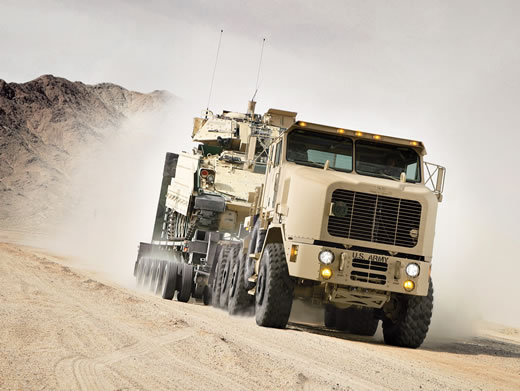
    Oshkosh Defense announced this week a number of major orders for its heavy tactical vehicles. The company will deliver 270 Heavy Equipment Transporters (HET) A1, under a $119 million order from the U.S. Army, to be fulfilled by Spetember 2012. This new version of HET includes increased protection, more powerful engine, higher capacity front suspension, standard air conditioning, electrical upgrades and improved diagnostics.

    The new configuration of Heavy Equipment Transporter (HET) A1 offers increased horsepower, higher-capacity front suspension, a larger vehicle cab, electrical upgrades and air conditioning. Photo: Oshkosh
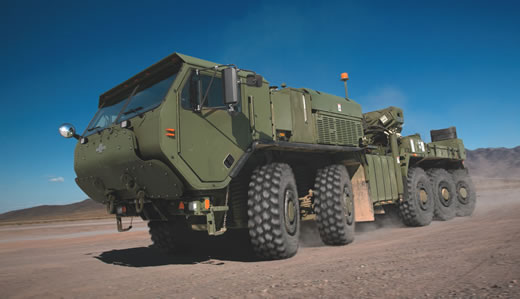
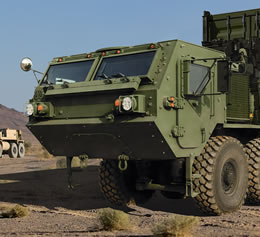
    Designed to be compatible with the Army's Long Term Armor Strategy, this HEMTT A4 uses the heavier, more protected 'B kit'. The recent order for underbody armor will add more protection to the vehicles. Photo: Oshkosh.

    Under a separate contract the company was awarded the first order for new underbody armor protection kits for the Heavy Expanded Mobility Tactical Truck (HEMTT) A4 vehicles. The armor was developed in response to an urgent need in the field to increase protection for HEMTT wreckers and Light Equipment Transporters (LET) recovering Mine-Resistant Ambush Protected (MRAP) vehicles in Afghanistan’s challenging terrain. The company will deliver more than 400 underbody armor protection kits for the vehicles, under a $26 million contract awarded by the U.S. Army TACOM Life Cycle Management Command (LCMC).

    The HEMTT platform’s 13-ton payload and off-road capabilities make it the backbone of the U.S. Army’s logistics fleet. The HEMTT A4 is compliant with the Army’s Long-Term Armor Strategy (LTAS). As such, it is produced with factory-installed armor and attachments for mounting add-on armor (B-kit), raise protection levels to match specific threat levels.

    The vehicle also has a wrecker variant, capable of recovering vehicles weighing in excess of 50 tons, it is able to flat tow 55 tons, and lift and tow 48 tons. The Marines have been operating the Logistics Vehicle System Replacement (LVSR) wreckers in Afghanistan since September 2009. The Marine Corps Systems Command (MARCORSYSCOM) recently awarded Oshkosh an additional $12 million order for the supply of 15 up-armored LVSR wreckers, as part of the corp’s effort to protect Marines recovering MRAPs in theater. Delivery of the armor kits and up-armored LVSR vehicles is expected this summer.

    The Oshkosh LVSR Wrecker. The recent order will buy the up-armored version of this vehicle. Photo: Oshkosh


    iRobot Introduces a New Mini-Robot

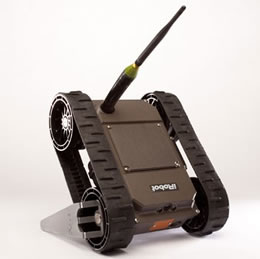
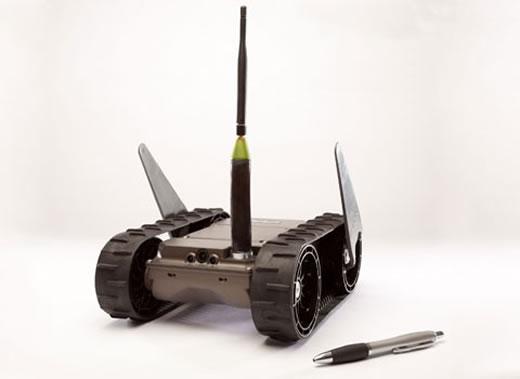
    The 110 FirstLook uses an automotive system derived from other iRobot vehicles. Photo: iRobot

    iRobot has unveiled pre-production prototypes of its latest new product, the iRobot 110 FirstLook unmanned ground vehicle (UGV). This small, light and throwable robot provides hasty situational awareness, performs persistent observation and investigates confined spaces. “FirstLook is going to be a very important tool for warfighters and first responders,” said Robert Moses, president of iRobot’s Government and Industrial Robots division.

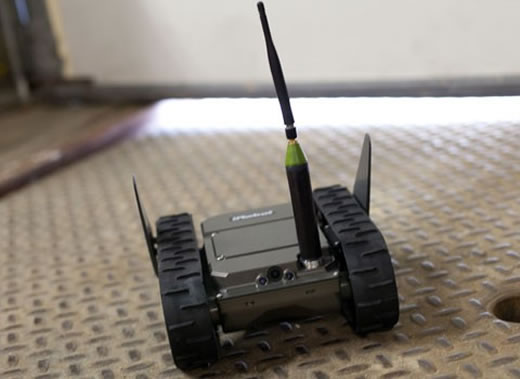
    iRobot 110 FirstLook miniature UGV is designed as a throwable sensor for indoor surveillance. Photo: iRobot
    The 110 FirstLook uses an automotive system derived from other iRobot vehicles. Photo: iRobot

    “Given its small size, ruggedness and state-of-the-art capabilities, the robot is ideal for a range of infantry missions and special operations.” iRobot 110 FirstLook weighs less than 2.5 kg (about five pounds) and is 10 inches long, making it ideal for building clearing, raids and other close-in scenarios. iRobot 110 FirstLook is designed to survive drops from height of five meters (15-foot) onto concrete, and is waterproof to a depth of one meter (three feet.) The robot can climb steps up to 20 cm (about 8 inches) high, overcomes curbs and other obstacles, turns in place and self-rights when flipped over. According to the developers, the robot can run more than 6 hours of runtime on a typical mission and up to 10 hours performing stationary video monitoring.

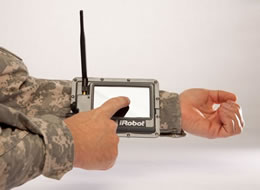
    The iRobot 110 is controlled through a wrist wearable control unit controlling the robot via wireless link. Photo: iRobot.

    The robot uses IR illumination to enhance low light and no light operations. This mini-robot has four built-in cameras and two-way audio communication. The robot uses an integral, digital mesh network node, allowing multiple robots to relay radio communications over greater distances, effectively transferring communications indoors. User control is provided through a wrist-mounted, touchscreen operator control unit (OCU) with a built-in radio.

    The new robot will be available for delivery to customers in 2012. iRobot plans to introduce the new robot to military customers and law enforcement personnel.


    iRobot 110 FirstLook miniature UGV. Photo: iRobot

    IAI Unveils Hovering Aerial and Ground Observation Vehicles at LAAD 2011

    Yitzhak Nissan, President and CEO of IAI
    Yitzhak Nissan, President and CEO of IAI

    Israel Aerospace Industries is unveiling an all-terrain, ground observation vehicle designed for paramilitary, border security and countering drug trafficking and smuggling. Other highlights at IAI are unmanned systems such as the Medium Altitude Long Endurance Heron TP, which could augment the Heron already operated by the Brazilian internal security police forces.

    Other highlights on IAI’s agenda are Airborne Early Warning and Control (AEW&C) prospects. Brazil is already operating the Swedish EriEye radar and Brazil’s leading aircraft manufacturer Embraer has embarked on a joint program with India’s DRDO, modifying its ERJ-145 platform into AEW missions. In this retrospect, IAI has indicated that its product portfolio displayed here will include AEW&C systems, developed by its subsidiary Elta Systems. These systems, says IAI are ‘applicable for various aircraft’, hinting at opportunities in Brazil and beyond Brazil. Other highlights at IAI will include ‘electro-optical sensors, radars designed for operation in extreme conditions and precision guided weapon systems.’

    IAI Elta reported today the award of contracts by Latin American countries, for the delivery of multi-mission radars for air forces, navies and federal police forces. Systems to be delivered include fire control radars to be integrated in fighter aircraft undergoing upgrades; naval search radars for maritime surveillance aircraft and lightweight, compact maritime search radars optimised for unmanned aerial vehicles (UAVs).

    Our Sponsor: IAI

    Emphasizing comprehensive technological solutions for homeland security and civil defense, IAI will unveil unique observation systems, such as the Hovering Aerial Vehicle (HAV) providing persistence surveillance in urban areas; IAI is also displaying a border security and control system, designed for the protection of land and maritime areas. Also on display is a new information system, supporting the management of first responders in emergency situations such as fires, earthquakes or floods.

    “IAI is offering Brazil and its customers in Latin America a wide range of products, backed by extensive technological knowhow and unique operational experience, all integrated and supporting the concept of: ‘know – decide – act’” said Yitzhak Nissan, the President and CEO of IAI.

    “We are already operating in Brazil, getting to know Brazil’s unique needs and operational requirements, and we are ready to provide the solutions Brazil needs. We plan to expand our activities in Brazil through cooperation with local companies. ” Nissan said.

    At the LAAD exhibition IAI will unveil the new Stark IRV (IRV (Inteligência, Reconhecimento e Vigilância), a reconnaissance vehicle developed by IAI’s subsidiary Elta Systems. The Stark IRV is based on a Brazilian platform produced by TAC Motors, designed for intelligence collection and observation. This 4×4 tactical vehicle was designed for high mobility over rough terrain.

    Its mission payload, provided by Elta, includes a target acquisition system which operates in day, night and adverse weather conditions. The Stark IRV sensor suite includes an advanced ground surveillance radar, a powerful day and night electro-optical system and a line-of-sight (LOS) or satellite communication (SATCOM) system. Operated by the vehicle’s crew, the ISR  system detects, classifies, identifies and tracks targets in the area of interest under all weather conditions. Real-time reports are communicated directly to law enforcement forces deployed in the area.

    The vehicle is equipped with a common control console, supporting all sensors, combined with an integrated command and control system, creating a dynamic situational picture that can be shared with operational forces or higher command levels via on-board communications, supporting decision making.

    The Stark IRV enables the crew to maintain continuous tracking of multiple targets, providing rapid, flexible and effective capabilities for changing intelligence requirements. The vehicle is designed to support law enforcement, para-military and border security forces engaged with security, combating drug trafficking and smuggling, monitoring mining areas etc.

    Stay tuned for the Stark IRV to be published next week.

    Update: Iron Dome Intercepts Palestinian GRADs Targeting the Israeli City of Ashkelon

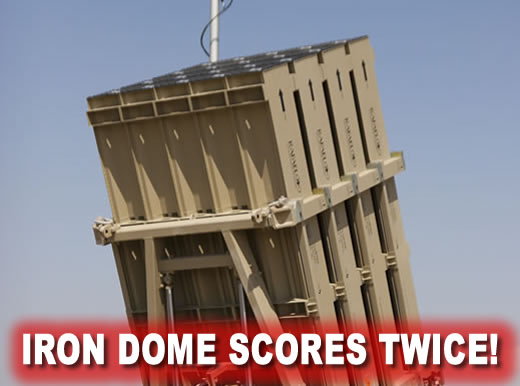
    On its first combat encounter Rafael's Iron Dome rocket interceptor scored a double-kill, intercepting Palestinian GRAD missiles frired from Gaza against the Israeli city of Ashkelon. Photo: Noam Eshel, Defense Update

    Israel’s newest rocket interceptor ‘Iron Dome’ was tested today in combat for the first time, intercepting GRAD rockets fired by the Palestinians from the Gaza strip. The ‘Iron Dome’ battery positioned near Ashkelon is one of two sites recently deployed in the Northern Negev, protecting population centers against rocket attacks. On Friday, the same unit successfully intercepted a salvo of three GRAD rockets fired at the city. Effectively closing the targeting loop seeking the rocket launchers, IAF strikes succeeded in hitting some of the launch teams before escaping the sites.

    On its first combat encounter Rafael's Iron Dome rocket interceptor scored a double-kill, intercepting Palestinian GRAD missiles frired from Gaza against the Israeli city of Ashkelon. Photo: Noam Eshel, Defense Update

    The Multi Mission Radar (MMR) operating in the area detected the launch of rockets fired from Gaza toward Ashkelon and triggered ‘code Red’ alert sending the city to the shelters. Simultaneously, ‘Iron Dome’ went into action, Assessing the projected impact point of some of the rockets to be within the protected area, the battery launched its interceptors to defeat the specific rockets posing a potential risk, scoring direct hits. Identifying the Palestinian rockets’ launch point, the IAF conducted an air attack targeting the location. The conflict between Israel and the Palestinians has escalated in recent weeks, as Palestinians fired rockets at the city of Beer Sheva.

    Earlier this week Israel’s Defense Minister Ehud Barak requested the Israeli Government to allocate funding for the acquisition of five additional Iron Dome batteries. Funding for seven batteries was approved last year by the U.S. Congress but the actual funding was not allocated yet.

    Today, the Palestinians further increased the level of fishes, firing an AT-15 Kornet anti-tank missile at an Israeli school bus transporting children back from school, wounding the driver and one passenger on board, a 15 year schoolboy. The attack was followed by intensive Qasam (improvised rockets) and mortar fire throughout the region. By introducing such precision weapon against a civilian target, the attack triggering an escalated Israeli response by firing artillery and direct fire by helicopter gunships.

    IDF Armor Merkava Tank Crew Undergoing Proficiency Course

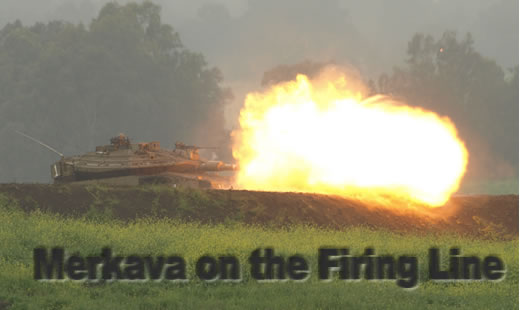
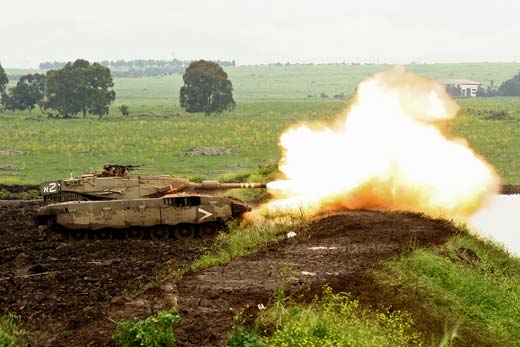
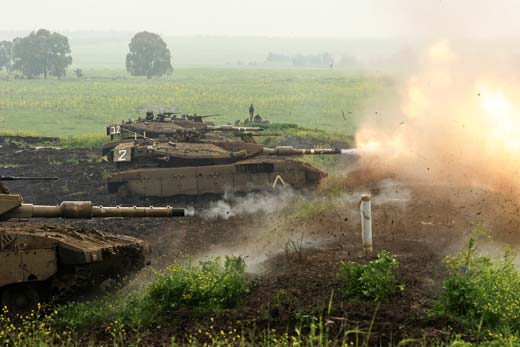
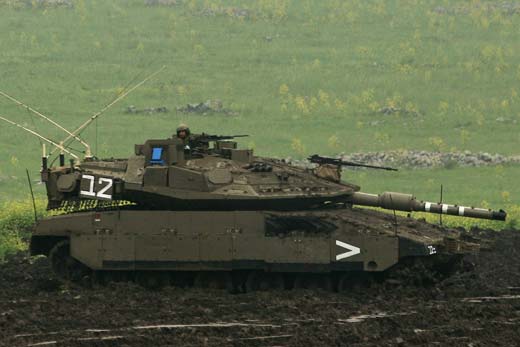
    Merkava Mk 4B of the 401 Armored Brigade opens fire on the gunnery range in the Golan Heights, the brigade was one of seven units competing for the annual Armor Proficiency trophy. Photo: Tamir Eshel

    Defense Update is visiting the IDF Armor Proficiency competition today at the Golan Heights.

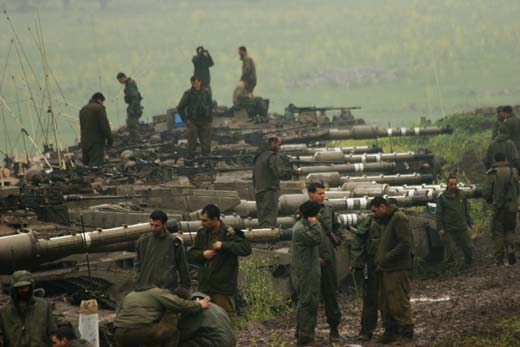
    Tank and recce crews from Seven brigades operating Merkava Mk 2, 3 and 4 and M60 mark 8 (Magach 8 ) are taking part in the competition, rated for best performance in a number of areas. Competitions included crew proficiency, navigation, handling targets with Battle Management Systems (BMS) and gunnery, against short range (infantry, anti tank) and long range (up to five kilometers). The rainy day, deep mud and limited visibility did not deter the crews, which performed their mission as expected. Tank gunnery training is being improving within IDF armored units, with the implementation of a ‘Master Gunner’ course, qualifying gunnery experts in battalions and brigades, responsible for developing gunner skills and gunnery expertise in operational units.

    Merkava Mk 4B of the 401 Armored Brigade opens fire on the gunnery range in the Golan Heights, the brigade was one of seven units competing for the annual Armor Proficiency trophy. Photo: Tamir Eshel

    On the tank display the armored corps unveiled the latest model of Merkava Mk 4M, which includes the Trophy active protection system as a standard, along with many small yet important ergonomic improvements.

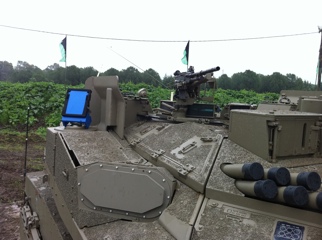
    A close-up showing the Trophy (ASPRO-A) active protection system installed on the Merkava Mk4M. The tank was one of five models taking part in the annual IDF Armor proficiency competition. Photo: Noam Eshel
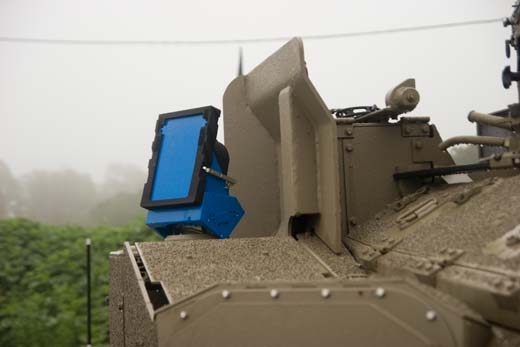
    The ASPRO-A (Trophy) APS showing all elements - the radar (scanted oval object in front), the auto-loader, the shield protecting the commander from possible fragments, and an inert training interceptor (painted blue). Photo: Tamir Eshel


    Merkava Mk2 on the firing range. Photo: Noam Eshel
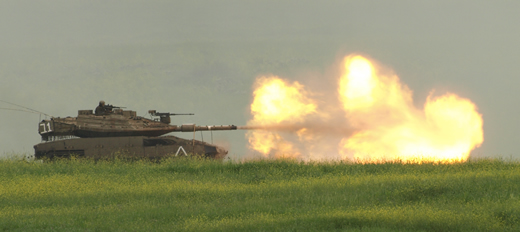
    Merkava Mk3 firing. Photo: Noam Eshel
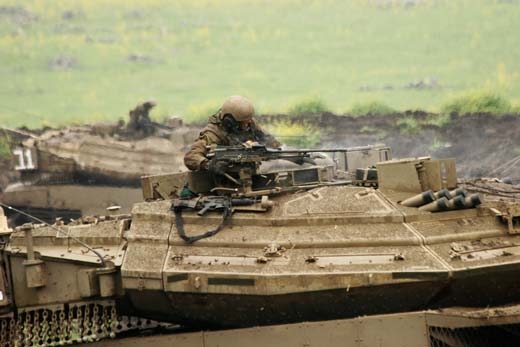
    A Merkava Mk2 crewman loads a smoke canister prior to the assault phase of the exercise. Photo: Noam Eshel
    Merkava Mk4M with Trophy APS. Photo: Noam Eshel
    Rolled out of the assembly line only a week ago, the Merkava Mk4M, equipped with Trophy APS took part in the exercise, scoring high marks for gunnery, crew skills and BMS operations. Photo: Noam Eshel,
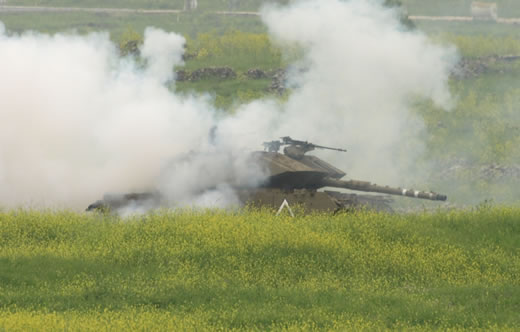
    One of the operational Israeli armored corps reserve unit operating M-60 Mk 8 (Magach 8 ) took part in the exercise, demonstrating excellent gunnery skills, with this tank's 105mm cannon. The Magach is shown here maneuvering into a smoke cloud generated by injecting diesel into the engine exhaust, performing a classic maneuver in evading enemy fire. Photo: Tamir Eshel
    Merkava Mk 2 tanks marking targets on the firing range. Gunnery target ranges varied for from few hundred meters to over five kilometers. Photo: Noam Eshel
    Merkava Mk4B tank commander prepares for the firing course. Photo: Noam Eshel
    Merkava Mk4B firing on the move in the Golan Heights. Photo: Tamir Eshel

    Photos Credit: Noam Eshel, Defense-Update

    Following Latin-American Success, Israel’s Defense Technology Innovator RAFAEL Charts Brazil Expansion

    Lova Drori, Executive Vice President for Rafael Advanced Defense Systems.
    Lova Drori, Executive Vice President for Rafael Advanced Defense Systems.

    This interview is also available in Portuguese and Spanish

    Israel’s leading defense systems manufacturer Rafael Advanced Defense Systems is one of the largest exhibitors at the Israeli pavilion at LAAD. The company is showing here a wide range of systems, addressing maritime and coastal security, area surveillance, monitoring and control for land and urban areas, and airborne and space reconnaissance.

    Addressing specific Brazilian interest in short and medium range air-defense capabilities, Rafael are presenting here two of its Spyder air defense systems and the Iron Dome counter rocket, mortar and missile system. The company also highlights an integrated approach to air dominance, employing reconnaissance and associated ground processing center, targeting pods, guided weapons and real-time command, control and communications (C3) systems. For the naval arena, Rafael is also promoting the Toplite stabilized multi-sensor payload, Mini-Typhoon remotely controlled, stabilized weapon system and Protector, an unmanned surface vessel. These systems can operate effectively under all weather conditions.

    Our sponsor - Rafael

    Lova Drori, Executive Vice President for Rafael Advanced Defense Systems outlines Rafael’s aims in the Latin American market and, specifically Brazil.

    Defense Update: What are the main market opportunities you see in Latin America and Brazil for 2011?

    Drori: Rafael has a wide presence in some of Latin American armed forces, primarily Colombia, Chile and Peru. Some of our systems are also flying with the Brazilian Air Force, and we are looking forward to expand our cooperation with customers and industry partners, in major security and defense programs planned in Brazil.

    Toplite, an electro-optical multi-sensor payload, is offered for various land, air and naval , military and security applications. Photo: Rafael

    In recent years LAAD evolved from a local Brazilian event into a regional exhibition; therefore, we address the entire region with a different focus. Regarding Brazil, evolving into a major power on a regional as well as global scale, we emphasize various aspects of security and defense, including air-defense, maritime and coastal security, leveraging our command, control and intelligence technologies for security management over vast regions of land and sea, utilizing derivatives of our military systems.

    Realizing Brazil’s emphasis on domestic procurement in most of their defense and security programs, LAAD is providing Rafael an excellent venue for expanding its networking within the local industry and business sector. Setting the stage for future industrial cooperation, joint ventures as well as potential acquisition of local enterprises, in pursuit of market opportunities in Brazil, Rafael is positioning itself as a partner in local or international consortia, bidding on security and defense acquisition programs, contributing as potential technology innovator, hardware supplier and system provider.


    There are several programs where our systems could be integrated, including securing offshore facilities and coastal areas, the Amazon security initiative, world cup and Olympics games and other regional or nation-wide activities. Rafael is ready to supply Brazilian authorities with the most advanced technologies or cooperate with local industries as team member, providing key technologies for integration in such programs.

    These include sensors and systems for air, land and maritime surveillance, image processing technologies, advanced communications. The company is also ready to offer its latest microsatellite technology, developed at Rafael, to provide Brazil with highly responsive, affordable space-based reconnaissance capability.

    Defense Update: Do you have offerings in the field of intelligence gathering, wide area surveillance that fit the Brazilian needs? The environment here is very different from other areas of operation you were involved with in the past?

    Drori: Our command, control, communications and intelligence systems can also be implemented to support rapid response in emergency situations, providing decision makers at local, regional and national level with tools for rapid situational assessment, decision making and first response. Such capabilities can be employed to support a number of missions, from wide area monitoring and protection of natural resources, to monitoring and response to evolving security issues, floods, earthquakes and wild fires, to internal unrest or foreign threats. Each contingency requires different levels of information flow, response time and peripheral capabilities.

    Surveillance and monitoring systems are not exclusively designed to counter security risks or military threats. Technological solutions can cover areas of any size; it is the response rate the customer defines that will determine the efficiency and utilization of the system. Whether monitoring an area for violations of land use, burning forests, conduct illegal fishing, smuggling drugs or stealing from oil rigs. There are many uses for monitoring and control systems, which must be integrated with effective means of enforcement and response.

    Defense Update: Has the Brazilian approach toward Israel changed in past years? Was Israel always welcome here?

    Drori: Brazil is doing business with many countries, among them Israel. The Brazilians are familiar with the Israeli capabilities in general and appreciate its capabilities. The Brazilians consider Israel, along with Sweden and France, as a potential leading providers of state-of-the-art defense technology for their country.

    Sweden, considered one of three finalists for the F-X program is offering the Gripen with a wide choice of weapons and systems. Part of them, like the Python V and Derby missiles, Spice guided bombs, Litening targeting pod (seen above) or Reccelite pod, are made by Rafael, may be included. Photo: Rafael

    Defense Update: Brazil is considering buying the French Rafale, U.S. Super Hornet or Swedish Gripen. Can Rafael offer weapons, recce / targeting and other systems to each of these?

    Drori: Sweden, considered one of three finalists for the F-X program is offering the Gripen with a wide choice of weapons and systems, part of them, like the Python V and Derby missiles, Spice guided bombs, Litening targeting pod and Reccelite pod, made by Rafael, may be included. The other bidders, France and the USA, have traditionally offered their fighters with locally built weapons and systems only. In certain cases, it was the customer who dictated what weapons and systems will be integrated in the aircraft. Brazil also has Rafael systems in its inventory and we hope they will take a similar approach when selecting their future fighter.

    This interview is also available in Portuguese and Spanish

    For more information on Defense-Update on-site LAAD report click here

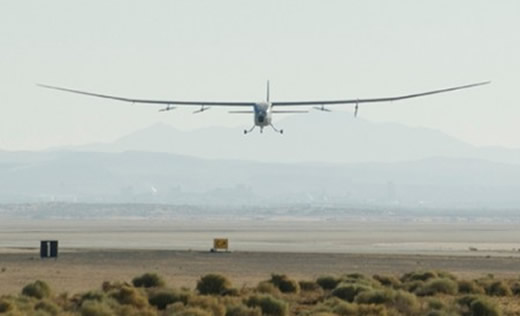
    Global Observer Crash on Test Flight from Edwards

    Global Observer

    An unmanned aircraft crashed early Friday around 2:30 a.m. near the southwest corner of Rogers Dry Lakebed off the Edwards Air Force Base, Calif., where it was flying on test flights. The Global Observer designed and built by Aerovironment has a 175-foot wingspan. The unmanned aircraft was flying with the 412th Test Wing were testing the Global Observer to assess the aircraft’s potential government, civil and military uses.

    The Pentagon was hopeful that equipped with currently available payloads, two Global Observer aircraft would alternate coverage over any location on the globe every 5 to 7 days. Photo: Aerovironment

    The aircraft is designed to operate at high altitude, around 65,000 feet on missions up to one week long. From such altitude the aircraft will be able to have a ground line of sight up to 600 miles distance, covering an area of about 280,000 square miles. It is powered by a hybrid-electric propulsion system comprising four liquid-hydrogen powered engines, designe dfor operation at very high altitude backed up by battery powered props.

    The Global Observer flew on its first flight from Edwards AFB on August 5, 2010. The Pentagon was hopeful that equipped with currently available payloads, two Global Observer aircraft would alternate coverage over any location on the globe every 5 to 7 days. The aircraft was providing a test platform for the evaluation of the platform, as well as for evaluating potential communications and intelligence, surveillance and reconnaissance (ISR) payloads for future missions.


    Northrop Grumman is Out of Shipbuilding Business

    The naval shipbuilding operations that Northrop Grumman owned for the last ten years began life yesterday as an independent company called Huntington Ingalls Industries. Northrop Grumman CEO Wes Bush decided shortly after assuming the helm of the parent company last year that shipbuilding was a poor cultural fit with his company’s aerospace and electronics competencies, and therefore elected to spin off the three shipyards in a transaction completed last night.

    The headquarters of the new enterprise will be located at the most capable shipyard in the Western Hemisphere, the sprawling Newport News Shipbuilding complex founded in Virginia’s tidewater region 125 years ago by railroad magnate Collis P. Huntington. Huntington Ingalls will also operate two other yards on the Gulf Coast, one of which — Ingalls Shipbuilding in Pascagoula, Mississippi — is the biggest conventional shipbuilding facility in the U.S. (Newport News builds mainly nuclear-powered vessels).


    Some observers may view Northrop Grumman’s retreat from shipbuilding as a defeat, but it is really the triumph of common sense for a company that backed into naval shipbuilding while trying to construct a very different kind of enterprise. Bush had the good sense to see that a strategy of conglomeration doesn’t work any better in defense than it does in commercial markets, and that companies need to focus on the core competencies where they have a true competitive advantage. His peers in the defense sector have made similar determinations in recent years, which is why Lockheed Martin sold off its Pacific Architects & Engineers unit involved in battlefield logistics and Raytheon got rid of a former E-Systems unit engaged in building classified aircraft. Like Huntington Ingalls, the properties Lockheed and Raytheon divested were sound enterprises, they just weren’t a good fit for the companies that had acquired them.

    The Huntington Ingalls yards should be the most successful naval shipbuilders in the nation, because they have greater capacity, better locations and more favorable regulatory environments than their General Dynamics counterparts in California and New England. The fact that GD’s yards are more highly regarded by the Navy customer speaks volumes about why heavy, metal-bending industries shouldn’t be run by managers with a background in aerospace engineering.

    Wes Bush may be the smartest CEO in the defense sector, but he has watched Northrop’s management team try everything over the past ten years to get shipbuilding results on a par with those of the company’s other business units, and each effort failed. It’s not that shipbuilding was losing money, it’s just that low margins and uneven performance were dragging down the results for more lucrative lines like aerospace, electronics and information technology. The company found itself constantly at loggerheads with its Navy customer while other parts of the company such as military space were winning nearly 100 percent of award fees and the praise of equally demanding federal customers. So shipbuilding had to be separated from the rest of the enterprise for the sake of shareholders, stakeholders and customers.

    The irony of the spinoff is that once free of each other, the two companies will both perform better. Northrop Grumman will be focused in areas where no other company in the world can surpass its capabilities, and Huntington Ingalls will be able to bring the full weight of its remarkable skills, impressive facilities and broad political support to bear on the shipbuilding enterprise. In other words, the companies will be able to focus on what they do best rather than trying to reconcile conflicting cultures.

    Huntington Ingalls begins its life as an independent company knowing the Navy customer can’t live without it — that it is the only supplier of aircraft carriers and amphibious assault ships to the Navy Department, an essential part of the submarine construction process, and capable of building every other type of warship in the fleet. So when newly-minted Huntington Ingalls CEO Mike Petters finally gets a handle on problems like skill retention in the Gulf yards, he will find himself sitting atop a money machine. As for Wes Bush, he now gets to run a company in which all the pieces are performing well and performing predictably — which is what he needed to meet the ambitious expectations of a very demanding board of directors.

    The spinoff looks like a win-win situation for all involved, and a case study in why analysis always trumps sentimentality in the business world.

    Originally published by Loren B. Thompson, Ph.D., the Lexington Istitute

    Após Sucessos Na América Latina, RAFAEL, A Inovadora Da Tecnologia De Defesa Israelense, Projeta Oportunidades De Expansão No Brasil

    A produtora de sistemas de defesa líder de Israel, a Rafael Advance Defense Systems, é uma das maiores exibidoras no pavilhão de Israel na LAAD. A companhia está apresentando aqui um grande número de sistemas, endereçados à segurança marítima e costeira, vigilância de área, monitoria e controle para áreas terrestres e urbanas, e reconhecimento aerotransportado e espacial. Respondendo ao interesse específico do Brasil em capacidades de defesa aérea de curto e médio alcance, a Rafael está apresentando aqui dois de seus sistemas Spyder de defesa aérea e o sistema contra foguetes, morteiros e mísseis Iron Dome. A companhia também frisa uma abordagem integrada de domínio do ar, empregando sistemas de reconhecimento e centro associado de processamento no solo, pedestais de mira, armas guiadas e sistemas de comando, controle e comunicações (C3). Para a arena naval, a Rafael está também promovendo a carga útil estabilizada multi-sensor Toplite, o sistema de arma estabilizada Mini-Typhoon, controlado remotamente, e Protector, uma lancha de superfície não tripulada. Estes sistemas podem operar efetivamente sob todas as condições atmosféricas.

    Lova Drori, Vice Presidente Executivo da Rafael Advance Defense Systems, fala sobre os objetivos da Rafael no mercado da América Latina e especificamente o Brasil.

    Defense Update: Quais são as principais oportunidades de marketing que você vê na América Latina e no Brasil para 2011?

    Drori: A Rafael tem uma larga presença em algumas forças armadas latino-americanas, principalmente da Colômbia, Chile e Peru. Alguns de nossos sistemas estão também com a Força Aérea Brasileira, e temos vontade de expandir nossa cooperação com clientes e parceiros industriais em grandes programas de segurança e defesa planejados para o Brasil.

    Nos últimos anos, a LAAD evolveu de um evento local brasileiro numa exibição regional, e, portanto, nos endereçamos a toda a região com um foco diferente. Em relação ao Brasil, que está se desenvolvendo numa potência em escala regional assim como global, enfatizamos vários aspectos de segurança e defesa, incluindo defesa aérea e segurança marítima e costeira, com a utilização de nossas tecnologias para comando, controle e inteligência para gerenciamento da segurança sobre vastas regiões de terra e mar, utilizando derivativos de nossos sistemas militares.

    Ao entender a ênfase do Brasil em compras domésticas na maioria de seus programas de defesa e segurança, a LAAD está proporcionando à Rafael um excelente local para expandir sua rede dentro da indústria e comércio local. Armando o palco para uma futura cooperação industrial e projetos conjuntos, assim como a aquisição potencial de empresas locais, na busca de oportunidades de marketing no Brasil, a Rafael está se colocando como uma parceira em consórcios locais ou internacionais, oferecendo programas de aquisição de segurança e defesa, contribuindo assim como uma poderosa inovadora de tecnologia, fornecedora de hardware e provedora de sistemas.

    Existem vários programas onde nossos sistemas poderiam ser integrados, incluindo a segurança de instalações offshore e áreas costeiras, a iniciativa de segurança do Amazonas, a Copa do Mundo e os Jogos Olímpicos e outras atividades regionais ou nacionais. A Rafael está pronta para fornecer às autoridades brasileiras as mais avançadas tecnologias ou cooperar com indústrias locais como membro da equipe, proporcionando tecnologia de ponta para a integração destes programas. Isto inclui sensores e sistemas para vigilância aérea, terrestre e marítima, tecnologias de processamento de imagens, e comunicações avançadas. A companhia também está preparada para oferecer sua mais recente tecnologia de micro-satélites, desenvolvida na Rafael, para proporcionar ao Brasil uma capacidade de reconhecimento baseado no espaço de alta rapidez de resposta e custo-efetiva.

    Defense Update: Vocês têm ofertas no campo de coleta de inteligência e vigilância de largas áreas que servem para as necessidades do Brasil? O ambiente aqui é muito diferente de outras áreas de operação onde vocês estiveram envolvidos no passado?

    Drori: Nossos sistemas de comando, controle, comunicações e inteligência podem também ser implementados para suportar uma rápida resposta em situações de emergência, proporcionando aos detentores de decisões em nível local, regional e nacional instrumentos para uma rápida avaliação situacional, tomada de decisões e primeiras respostas. Estas capacidades podem ser empregadas para suportar várias missões, desde monitoria e proteção de largas áreas de recursos naturais, monitoria e resposta de temas envolvendo a segurança, enchentes, terremotos e incêndios florestais, e até distúrbios internos ou ameaças externas. Cada contingência requer um nível diferente de fluxo de informações, tempo de resposta e capacidades periféricas.

    Os sistemas de observação e monitoria não são desenhados exclusivamente para se opor a riscos de segurança ou ameaças militares. As soluções tecnológicas podem cobrir áreas de qualquer tamanho. A velocidade da resposta definida pelo cliente é que determinará a eficiência e a utilização do sistema, se monitoria de uma grande área para violações de uso da terra, queimadas em florestas, conduta de pesca ilegal, contrabando de drogas ou furtos em instalações de petróleo. Existem muitas opções de uso para os sistemas de monitoria e controle, que devem ser integrados com meios efetivos de cumprimento e resposta.

    Defense Update: A abordagem brasileira em relação a Israel mudou nestes últimos anos? Israel sempre foi bem vinda aqui?

    Drori: O Brasil está fazendo negócios com muitos países, entre eles Israel. Os brasileiros conhecem as capacidades de Israel em geral e as apreciam. Os brasileiros consideram Israel, junto com a Suécia e a França, como provedoras potenciais líderes de tecnologia estado da arte de defesa para seu país.

    Defense update: O Brasil está considerando comprar o Rafale francês, o Super Hornet americano ou o Grippen sueco. A Rafael pode oferecer sistemas de armas, reconhecimento, mira e outros sistemas para cada um destes?

    Drori: A Suécia, considerada uma das três finalistas para o programa F-X, está oferecendo o Grippen com uma larga escolha de armas e sistemas, parte deles, como os mísseis Python V e Derby, bombas guiadas Spice, pedestal de mira Litening e o pedestal Reccelite, produzidos pela Rafael, podem estar incluídos. Os outros contendores, França e Estados unidos, têm tradicionalmente oferecido seus caças apenas com armas e sistemas produzidos localmente. Em certos casos, foi o cliente que ditou quais armas e sistemas serão incluídos na aeronave. O Brasil também tem sistemas Rafael no seu inventário e esperamos que tenha uma abordagem similar quando selecionar seu caça futuro.

    Para maiores informações sobre reportagens na LAAD pelo Defense Update, clique aqui.

    Skunk Works and XTEND Simplify Multi-Drone Command

    0
    Lockheed Martin Skunk Works® and XTEND have achieved a major milestone in JADC2 by integrating the XOS operating system with the MDCX™ autonomy platform. This technical breakthrough enables a single operator to simultaneously command multiple drone classes, eliminating the friction of mission handoffs. From "marsupial" drone deployments to operating in GPS-denied environments, explore how this collaboration is abbreviating the data-to-decision timeline and redefining autonomous mission execution.
    From Ukraine to Taiwan: The Global Race to Dominate the New Defense Tech Frontier

    0
    As traditional defense primes face mounting competition from agile “neoprimes” such as Anduril, Palantir and Helsing, the balance of innovation is shifting toward software-defined warfare and scalable, dual-use technologies, while global industry consolidation—marked by Boeing’s integration of Spirit AeroSystems and other strategic mergers—signals an intensified race to secure control over the defense technology value chain. Our Defense-Tech weekly report highlights these trends.

    Europe’s “Drone Wall”

    0
    In early October 2025, a coordinated wave of unmanned aerial system (UAS) incursions—widely attributed to Russia—targeted critical infrastructure across at least ten European nations. The unprecedented campaign exposed the fragility of Europe’s air defenses...

    Weekly Defense Update & Global Security Assessment

    0
    Executive Summary The past week (September 18-25, 2025) represents an inflection point where strategic defense concepts have transitioned from doctrine to tangible reality. An analysis of global events reveals four primary, interconnected trends shaping an...

    U.S. Air and Space Forces Push Next-Gen Programs at the AS&C 2025 Conference and...

    0
    At the 2025 Air, Space & Cyber Conference, U.S. Air Force and Space Force leaders unveiled major updates on next-generation fighters, bombers, unmanned systems, and space initiatives, highlighting both rapid innovation and critical readiness challenges as the services race to outpace global competitors. A short version is available here, with a more detailed version for subscribers.

    TADTE 2025: Reflecting Taiwan’s Strategic Themes

    0
    The Taipei Aerospace & Defense Technology Exhibition (TADTE) 2025 crystallized around four dominant strategic themes that collectively illustrate Taiwan's comprehensive approach to defense modernization amid escalating regional tensions. Based on a detailed report by Pleronix (available upon request). Includes a Podcast discussion on TADTE 2025's highlighting Taiwan's four strategic themes beyond the post's coverage.

    Iron Beam 450 Completes Testing, Soon to Join With Operational Air Defense Units

    0
    Israel’s Iron Beam 450 high-power laser system has completed final testing, marking a major leap in air defense. Developed by Rafael, it offers precise, cost-effective interception of rockets, UAVs, and mortars, and is set for IDF deployment by 2025.