
Sunday, December 28, 2025
More
    Home Blog Page 234

    Pakistan Tests HATF IX Nuclear-Capable Short Range Tactical Guided Weapon

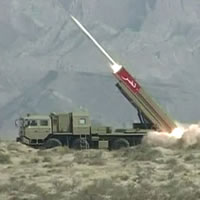
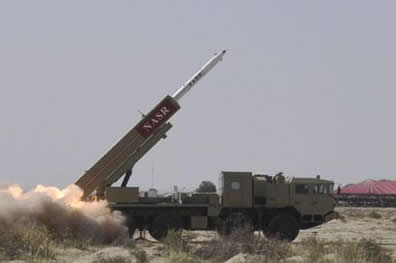
    Pakistan's nuclear-capable tactical missile HATF IX (Nasr) is practically a guided rocket that can be loaded with a compact, sub-kiloton nuclear warhead. Photo: ISPR.

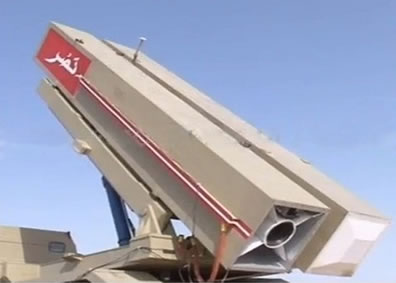
    Pakistan has tested a nuclear-capable tactical missile dubbed HATF IX (also known as Nasr). The missile was developed as a ‘quick response weapon’, two missiles contained in transported and launched from a Transporter-Erector-Launcher (TEL) unit carried on a vehicle, similar to a multiple rocket launcher. The single stage solid-fuel missile, developed by Pakistan’s National Development Complex (NDC), has a range of 60 km. It is powered by a high-thrust single-stage solid-propellant rocket motor. The missile has a midcourse guidance system, employing movable control surfaces emplaced behind the nose. Tail fins also help stabilizing the missile in flight. A terminal guidance system is also employed, further improving hit accuracy. Nasr test firing also demonstrates that Pakistan has progressed with the development of compact sub-kiloton, low yield tactical nuclear warheads.

    The test indicates Pakistan has the technology to build a small nuclear warheads for all kinds of delivery platforms, said Mansoor Ahmed, a lecturer at Quaid-e-Azam University here who specializes in nonconventional weapons and missiles, quoted by Defense News. “Theoretically, 1 kilogram of weapons-grade plutonium boosted with 4-5 grams of tritium gives a 10-20KT yield, provided the trigger is sophisticated,” Ahmed said. “However, the diameter size of Nasr suggests that the warhead would be less than 1 kilogram, and would be of sub-kiloton range, suitable for battlefield use and could be a fission boosted sub-kiloton fission device.”Pakistan will now “not accept any cap in plutonium production in the foreseeable future,” he said.

    The missile offers Pakistan’s military a quick response system, enabling the country to rapidly deploy massive firepower based on nuclear delivery capability, employing effective “shoot-and-scoot’’ tactics. These assets are believed to effectively counter India’s ‘Cold Start’ strategy, part of its ‘limited war’ doctrine, using massive air-land attack by forces maintained at high readiness level. According to Pakistani Lt. General (Retd.) Khalid Ahmed Kidwai, Director-General of Pakistan’s Strategic Plans Division at the National Command Authority, Nasr represents a new milestone in consolidating Pakistan’s strategic deterrence capability at all levels of the threat spectrum. It means Pakistan could potentially refrain from using strategic nuclear weapons in a limited conflict, by employing a low-yield tactical warheads as ‘battlefield weapons’ capable of deterring and inflicting unacceptable losses among overwhelming mechanized forces that could be employed by India under a ‘Cold Start’ attack. While India is not expected to reassess its ‘Cold Start’ strategy yet, such a move will be required once Pakistan demonstrates its tactical weapons capability by detonating such a low-yield warhead.

    While the Pakistani move was applauded at home, as a counterweight to a potential Indian threat, some voices are also questioning the value within Pakistan’s overall defense strategy.
    China’s J-15 New Carrier Based Fighter Get Ready for More Test Flights

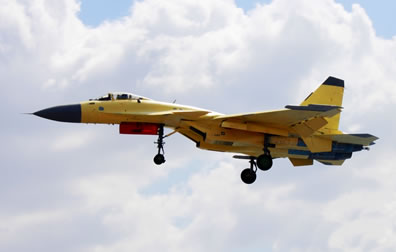
    The second J-15 prototype made its first flight yesterday (April 26) from 112 plant at Shenyang, China.

    China is moving forward in completing the refurbishment of Shi Lang, the first aircraft carrier for its navy, and has recently unveiled (unofficially) the fighter planes to be operating on board, the J-15.

    The Chinese People’s Liberation Army (PLA) Navy’s Shi Lang, formerly known as Varyag was commissioned in 1988. Following the collapse of the Soviet Union it was operated by the Ukraine Navy and was sold to China in 1998, where has undergone refurbishing work in the port of Dalian since 2002. The vessel is expected to commence training operations around the end of 2011, according to Tsai Der-sheng the director of the Taiwan’s National Security Bureau. Chinese made J-15 ‘Flying Shark’ fighter aircraft developed in China, based on the Russian Su-33 design, were spotted in China last week and.


    China does not operate the Su-33 and is believed to have reverse-engineered the plane from a single Su-33 also obtained from the Ukraine in the late 1990s. Like the Su-33, China’s Shenyang J-15 is designed for operation from ‘ski-jump’ decks. The aircraft is powered by two improved Shenyang WS-10 turbofan engines, has a tailhook, for arrested landing on short carrier decks, folding wings, shortened tail cone and bulked-up landing gear to enable storage and movement below deck. Analysts expect the J-15 to integrate some of the enhancements introduced in other Chinese fighters, such as the anti-ship enhanced Pulse-Doppler radar and the glass cockpit and the improved turbofan engines, derived from the Chinese J-11.

    The J-15 prototype made its maiden flight on Aug. 31, 2009 and performed the first takeoff from a land-based ski-jump in May last year. The aircraft is scheduled to become operational by 2015, operating on China’s new, indigenous built carriers. The SU-33 fighter jets, or the J-15 derivative which are likely to be based on the Shi Lang, have a maximum range of 800 km, determining the vessels’ radius of action and influence at 500 – 800 km at maximum. In comparison, U.S. aircraft carriers have a radius of influence of up to 1,000 km.

    Its firepower is expected to consist of Chinese designed weapons, including PL-8 and PL-12 AAMs. Its primary air/surface weapon is believed to be the YJ-83K air-launched guided missile (an air-launched derivative of the surface-launched C-803) with a range of +100 km. This anti-ship missiles was developed by HaiYing Electro-Mechanical Technology Academy in China for use by surface ships, submarines, land and airborne platforms. While China is also believed to be working on introducing advanced surface and air launched weapons to equip carrier based assets, the limited payload carrying capacity of the Su-33/J-15 leaves much to be desired. At the current state it is believed to be used primarily for air defense, with a secondary attack role.

    Armed Aerial Scout AAS-72X Undergoing Flight Demonstrations

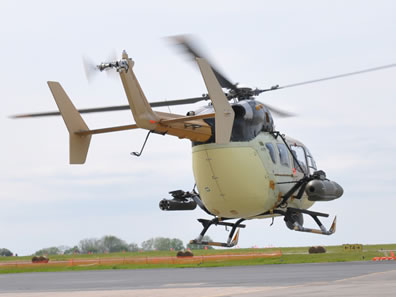
    The TDA-1 made its first flight in December 2010, and is being used to validate the AAS-72X’s ability to meet the U.S. Army’s current armed aerial scout mission requirements. Photo: American Eurocopter

    EADS North America unveiled the company funded Armed Aerial Scout 72X (AAS-72X) helicopter in flight demonstrations held at the Nashville International Airport, coinciding with the recent Army Aviation convention held at the city’s convention center at that time. The industry team promoting the AAS-72X includes American Eurocopter, an EADS USA company and Lockheed Martin (NYSE: LMT). Investing in the development and flight demonstration of three AAS-72X Technical Demonstrator Aircraft (TDA) as part of the team’s developmental and risk reduction activities, the program highlights the maturity of AAS-72X, based on the commercial EC145 helicopter platform.

    Among the AAS-72X advantages is the twin-engine safety, ample energy reserves for high/hot operating performance, considered critical to the Army’s Armed Scout mission. Photo: Eurocopter USA
    A chin-mounted Multi-Spectral Targeting System (MTS), made by Raytheon, was part of the AAR-72X mission system. A similar platform from Eurocopter UAS, the H-72A Lakota has already deployed with a similar EO payload, Army National Guard Security and Support Battalions. Photo: Eurocopter USA

    TDA-1 presented at the Nashville Airport was equipped with a full Mission Equipment Package (MEP) including a chin-mounted Multi-Spectral Targeting System (MTS), made by Raytheon, communications suite and weapons. A similar platform from Eurocopter UAS, the H-72A Lakota has already deployed with Army National Guard Security and Support Battalions with similar multi-sensor payloads. The helicopter demonstrated the multi-purpose pylons, designed to accommodate the full range of precision and unguided munitions expected to be required by the Army for the Armed Scout. Weapon loads demonstrated at Nashville comprised a multi-purpose pylon carrying an HMP 400 heavy machine gun pod fitted with a 50-caliber M3P machine gun loaded with 400-rounds of ammunition and a M260 seven-shot rocket launcher, firing 2.75-inch folding fin aerial rockets.

    The Armed Scout was equipped with manned-unmanned teaming capability, advanced avionics and 3 axis auto-pilot. The helicopter features modern avionics include the instrument panel’s Vehicle and Engine Management Display (VEMD), which aids pilots in integrating and synthesizing flight and vehicle information – increasing situational awareness and reducing pilot workload.

    The TDA-1 made its first flight in December 2010, and is being used to validate the AAS-72X’s ability to meet the U.S. Army’s current armed aerial scout mission requirements. Prior to first flight of the TDA helicopter, the company conducted high/hot hover-out-of-ground-effect, endurance and payload testing in 2009 at Alamosa, Colo., successfully operating at 6,000 feet and 95-degree density altitude. The team also conducted a key transportability test when five militarized EC145 aircraft were successfully loaded in a C-17 transport aircraft. Additionally, EADS North America and Lockheed Martin established a System Integration Laboratory (SIL) and hangar in April 2010 at Lockheed Martin’s Orlando, Fla. facility.

    Among the AAS-72X advantages is the twin-engine safety, ample energy reserves for high/hot operating performance, considered critical to the Army’s Armed Scout mission.

    If Eurocopter wins the Army scout program, AAS-72X production will co-locate with te UH-72A Lakota production line at American Eurocopter’s Columbus, Miss. This line has delivered more than 160 UH-72A Lakotas to the U.S. Army along with five H-72A versions to the U.S. Navy for test pilot training.

    The TDA-1 made its first flight in December 2010, and is being used to validate the AAS-72X’s ability to meet the U.S. Army’s current armed aerial scout mission requirements. Photo: American Eurocopter

    Sikorsky to Supply Turkey 109 Locally Built S-70 Based Utility Helicopters

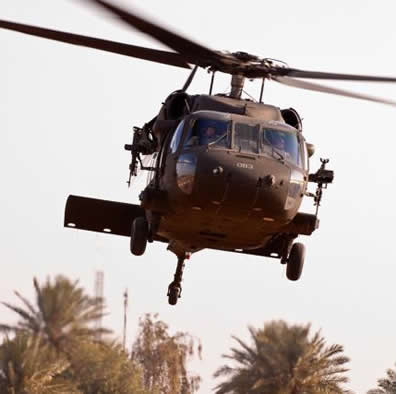
    The Turks will locally manufacture the new T-70S and will also offer it for export. Turkey is expecting a a market for 600 such helicopters over the next 20 years. Photo: U.S. Army

    Turkey will buy 109 announce it plans to buy Sikorsky T-70S Black Hawk helicopters as part of the $3.5 billion Turkish Utility Helicopter Program (TUHP) program, announced last week. Accordfing to Sikorsky, the configuration of the T-70 baseline helicopter is based on the S-70i Black Hawk helicopter. The T-70S will be locally built by the state owned Turkish Aerospace Industries (TAI) company.

    The Turks will locally manufacture the new T-70S and will also offer it for export. Turkey is expecting a a market for 600 such helicopters over the next 20 years. Photo: U.S. Army

    Turkish defence minister Vecdi Gonul announced the selection following a 21 April meeting by Turkey’s undersecretary of defence industries (SSM). TAI is already producing subsystems for Sikorsky’s S-70 helicopters, and will expand the use of locally sourced produced subsystems for the T-70S, to include landing gears, transmissions, engine components and part of the avionics. The helicopters will be operated by the Air Force, Army and Ministry of Interior. The program is expected to include the production of 20 T-70s for the Army land forces, 11 for the Turkish special forces, and 18 additional helicopters allocated equally to the air force, navy and electronic systems command. The remaining 70 helicopters will be delivered to the Turkish Gendarma (30), the police (20) and forest ministry (20) to be used as firefighting assets. The expected 10-year contract also would call for aftermarket support, including training and maintenance, leveraging Sikorsky’s and Turkey’s existing maintenance infrastructure to provide service and to supply parts and components to customers worldwide.

    As part of its contract proposal, Sikorsky committed to invest in expanding the dynamic components manufacturing capability of Alp Aviation, which is 50 percent owned by Sikorsky. Additionally, the industrialization proposal will allow Turkish industry access to the Sikorsky global supply chain including sale of Turkish assembled aircraft to future Sikorsky international customers.

    AgustaWestland, the competitor that offered the TUH-149, a version of the new AW149 specially designed for the Turkish requirements lost the tender despite ‘unprecedented level of cooperation’ offered, along with guaranteed technology transfer, with design and manufacturing autonomy.’ said Ugo Rossini, vice president of European activities, AgustaWestland. AgustaWestland said it was committed to carrying on with the development of the AW149, that still has ‘significant market potential’ replacing more than 8,000 ageing helicopters of the same class, expected to be replaced in the next 35 years. In fact, Sikorsky and its new Turkish partners are also eying this market for the new T-70S; according to the agreement with Sikorsky, Turkey will be able to export the T-70S. The Turks are expecting a market for 600 such helicopters over the next 20 years.

    MICA-VL Demonstrates its Capability Intercepting Stand-Off Weapons

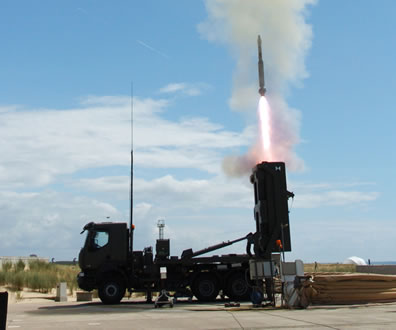
    MICA VL launched from a mobile launcher on a test flight. The objective of the recent test firing was to demonstrate the capabilities of the VL MICA system against precision weapons launched from a stand-off range. Photo: MBDA

    MBDA has recently tested the MICA VL land-based short range air defense system intercepting a target representing a guided weapon. The recent test was the 17th test of the MICA VL system. It took place on the 13th April 2011, at the French DGA-Essais Missiles test centre in Biscarosse, South West France. The developer funded test followed on the recently concluded evaluation by the French Air Force, as part of their Sol-Air à Lancement VErtical (SALVE) technical demonstration program.

    MICA VL launched on one of teh recent tests. The recent developer funded test, followed on the recently concluded evaluation by the French Air Force, as part of their Sol-Air à Lancement VErtical (SALVE) technical demonstration program

    The objective of the recent test firing was to demonstrate the capabilities of the VL MICA system against precision weapons launched from a stand-off range. The firing was carried out using a ground based Conteneur Lanceur Autonome (Autonomous Launch Container) vertical launcher conforming to a standard series production model. Controlled by the MBDA developed Tactical Operations Centre (TOC), the missile quipped with an active electromagnetic seeker intercepted a maneuvering target flying at medium altitude and at a range greater than 15 km.

    MICA VL launched from a mobile launcher on a test flight. The objective of the recent test firing was to demonstrate the capabilities of the VL MICA system against precision weapons launched from a stand-off range. Photo: MBDA

    Switzerland Awards $20 Million SFR for IMESS Soldier Systems’ Production Engineering

    On March 1 the company announced receiving a contract worth over 20 million Swiss francs from the Swiss defence procurement authority Armasuisse, for the advanced production engineering of the Integrated and Modular Engagement System for the Swiss Soldier (IMESS) program. While the selection of Cassidian’s Warrior21 by Switzerland was publicized before, the new contract puts the program in motion for the preliminary production phase.

    IMESS prototypes based on Warrior 21 have been proving their worth since 2007 through field tests and demonstrations. Under the current phase these combat suites will be designed for production standard, employing more efficient, powerful and durable components, utilizing optimized communication media, significantly improved weight and energy balance enabled by the deployment of new and optimized components. The system is expected to integrate into the Swiss Army joint reconnaissance, command and action forces. To ensure command-and-control capability on high-mobility operations, the contract also provides for the equipping of combat vehicles – including the tactical military vehicle DURO and the armored assault vehicle PIRANHA – and their integration into the IMESS network.

    IMESS systems address tactical command-and-control functions from company level to the individual soldier level. The system supports soldiers operating on dismounted or vehicular operations. Enhanced situational awareness and navigation is maintained through the use of head/helmet mounted displays, and better night fighting and reconnaissance capabilities through such means as navigation aids and video streaming of night weapon sights (optronics).

    The system uses more powerful, energy-efficient ‘electronic backbone’ offering reduced unit count and more reliable harnesses, cabling and connectors being integrated to handle the heavy loads encountered in infantry operation scenarios. The systems’ PowerController enables the soldier to tap into a wide range of energy sources gaining constant power upon availability. The system’s modular architecture supports a wide range of standard interfaces to sensors, as well as modules for link-up with external systems.

    Germany Expands iDZs Soldier Systems with 400 Additional Systems

    Many modern military services are pursuing ‘modern soldier systems’ to achive such goals. Two important wins for Cassidian’s Soldier Systems Program announced in daily succession this week have underlined the company’s position among the European leading soldier modernization providers.

    In view of the increasingly asymmetric threat situations arising and the challenges presented by missions within the context of network-enhanced operations, individual soldiers and small infantry units are required to act faster, control larger areas while avoiding friction with non-combatants. They can do so by having better communication, coordination and control of distributed, dismounted forces, able to operate more decisively and effectively, assertively, and rapid, depending on secure information exchange through powerful information and communication systems.


    Among the armies to have already implemented modern soldier systems is the German Bundeswer, pioneering the ‘modern infantry system’ since 2004. Germany was followed by the U.S. Army, that currently equip two brigade combat teams with the Land warrior system developed by General Dynamics, the France Army fielding the first regiment equipped with Felin systems from Sagem. Other countries pursuing such programs are the U.K with FIST developed by Thales; Norway with the NORMANS, Italy with Selex’ Soldato-Futuro and Israel, developing the ANOG infantry system designed by Elbit Systems.

    On March 2nd the German Federal Office of Defence Technology and Procurement (BWB) contracted Cassidian to deliver additional 400 basic versions of the ‘Future Soldier System’ (Infanterist der Zukunft or iDZ BS) combat suites to support German troops operating in Afghanistan, raising the Bundeswehr’s total number of IdZ BS equipment sets to 2,900. The system entered service with the German Army, Navy and Air Force back in 2004 and has since proved its worth on the Bundeswehr’s foreign missions. It offers soldiers better protection, increased situational awareness improved command and control, navigation and weapon employment.

    An IdZ BS system for equipping an infantry squad (ten soldiers) consists of an identical basic configuration for all soldiers (including modular bullet-proof vest in protection class I to IV, C4I equipment including NaviPad for situational awareness and transmitting messages, target data and images, night vision device, tactical radio) and various special items (such as laser range finder, camera, thermal image sighting device).

    Cassidian and Rheinmetall defense were competing head to head on the development and anticipated procurement of the second generation phase of iDZ, for which Cassidian was developing the Warrior21 system. But Switzerland, not Germany, is expected to be the first to utilize Cassidian’s advanced soldier system.

    Post strike Battle Damage Assessment – Lybia , April 2011

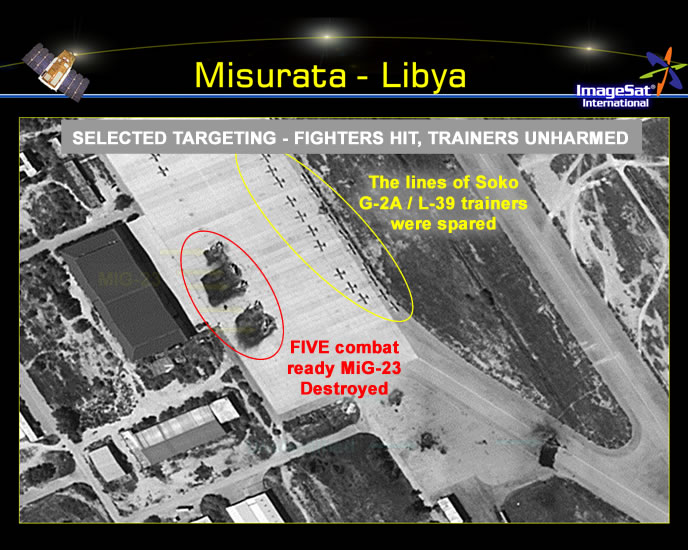
    Post strike Battle Damage Assessment (BDA) views taken after NATO attacks at the Libyan Air Force base at Miserata, prior to the rebels takeover of the town. These views clearly show the precision of the attacks and the quality of prior intelligence NATO had on the base. The air strikes performed with precision attacks hit could hit only operational aircraft posing threat to the rebels, but left two dozen trainers unharmed, parking on the same area. (first) Elsewhere at the base, the attacks were also directed at hangars where surface to air missile were stored, Two hangars were hit, destroying SA-3 and SA-2 missiles stored there, which were kept hidden to replenish and reactivate SAM sites. Photos: EROS B satellite, Imagesat.

    NATO attacks at Misrata Airbase

    Post strike Battle Damage Assessment (BDA) views taken after NATO attacks at the Libyan Air Force base at Miserata, prior to the rebels takeover of the town. These views clearly show the precision of the attacks and the quality of prior intelligenceNATO had on the base. The air strikes performed with precision attacks hit could hit only operational aircraft posing threat to the rebels, but left two dozen trainers unharmed, parking on the same area. (above) Elsewhere at the base, the attacks were also directed at hangars where surface to air missile were stored, Two hangars were hit, destroying SA-3 and SA-2 missiles stored there, which were kept hidden to replenish and reactivate SAM sites. Photos: EROS B satellite, Imagesat.

    NATO Strikes at Libyan Air Defense Sites

    March 25 – April 19, 2011

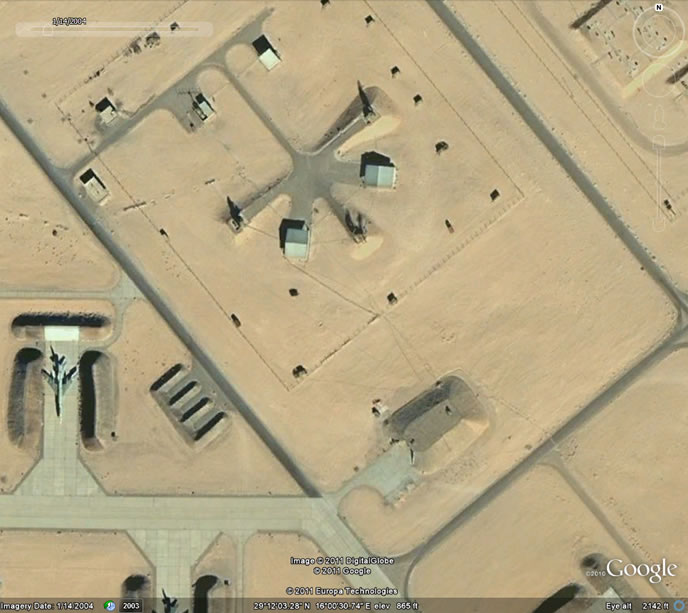
    As seen by satellite photos, The Libyan Airbase at Al Jufra remains dormant for years, as aircraft suc as the Tu-22 seen at the lower-left corner havent moved for more than seven years. Nevertheless,since the base is active, and is part of the Libyan air defense network. As part of the NATO counter-air strike, a bunker suspected to support nearby air defense radars was targeted and destroyed, as seen in the photos below. (two penetration hits on the surface, debris nearby, indicating internal explosions.) The attacks spared most of the aircraft at the base, even those which could pose a risk – the MiG-25 seen prepared outside its hardened shelter, indicating some aircraft at the base could still be operational. Photos – above: Google Earth. Below: Imagesat.

    While the central air defense network was destroyed by missiles and electronic attack, this SAM-3 surface-to-air missile site in Tripoli was destroyed by eliminating the SNR-125 LOW BLOS engagement radar, denying the site from guiding its missiles.

    A similar strike took place at at the desert airbase Okba Ibn Nafa, near the Tunisian border. An SA-3 site protecting the base was destroyed by eliminating the LOW-BLOW target engagement radar and a nearby air defense. alerting radar, supporting the site and airbase air defense. The color photo shows the site in relation to the airbase, as taken by a U.S. satellite in 2004. The image at the bottom shows a close-up of the site, taken March 25, 2011 after the NATO attack.

    Read Defense Update features on NATO precision attack weapons

    AVIBRAS Unveil a New UAV, Guided Cruise Missile at LAAD 2011

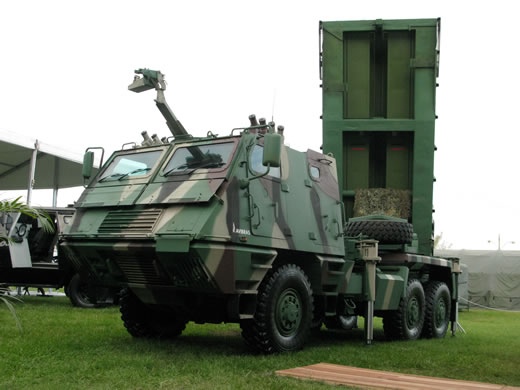
    AVIBRAS, established in 1961 as an independent aerospace company in Brazil shifted its focus in the 1970s to the development of artillery rockets. At LAAD Avibras displayed their latest member of the ASTROS 2 Mk 5 multiple launch rocket system, the AV-SS-80 300 mm rocket, fully compatible with the ASTROS II system, this 300mm rocket can hit targets up to 85 km afar. The SS80 rocket has already been sold to several international customers, including Saudi Arabia and other Gulf states. ASTROS II was originally developed in the late 1970s as an area saturation weapon, with the first customer being Iraq, utilizing the system in the later phase of its war against Iran in the 1980s. The rocket was used by both sides in the First Gulf War in 1991, as it was used by Iraq and Saudi Arabian armies.

    ASTROS II multiple launch rocket system, carrying 300 rockets, on display at AVIBRA’s outdoor area at LAAD 2011. Photo: Tamir Eshel

    Since then the Brazilian Army has also adopted the system, fielding the SS-30 127mm, SS-40 180 mm rockets and SS-09 TS 70 mm subcaliber training rounds. The Brazilian military has also renewed its interest in Avibras guided-rocket program, a 450mm ‘cruise missile’ version of the rocket (the ASTROS II will be able to carry two such missiles with the current system’s current launchers). The tactical missile (ASTROS II TM) will have a range of 300 km and carry a warhead weighing about 250 kg. It will employ INS/GPS guidance and will follow a pre-programmed route. The missile shown on display shows different features that, according to AVIBRAS officials have not been concluded yet. For example, the missile uses a rocket and turbo-jet propulsion – the final version will have either boost-sustain rocket-turbojet combination of a rocket propulsion sustaining the missile through its flight. The missile will have an auto-pilot system controlling two flight surfaces for cruise phase.  The basic missile will offer typical INS;GPS precision level which could be further improved by adding a terminal guidance seeker.

    AVIBRAS is also working on the development of trajectory correction system improving the precision of its long-range rockets, although, according to company officials, there will always be a need for the original area saturation capability offered with the ‘free flight’ version.

    At LAAD 2011 the Brazilian defense company Avibras Is showing its new unmanned aerial vehicle called Falcao. The UAV is currently in advanced development and the first flight test is scheduled for later in 2011. This UAV has is designed for a gross takeoff weight of 650 kg, carrying 150 kg of payload over a range of 2500 km flying at 15,000 ft altitude. Falcao is designed for a wide range of applications. It was developed by the Aerospace Technology Development authority FINEP, under a Brazilian Air Force program, with AVIBRAS being a leading partner. Falcao can be used in support of many military and homeland security applications, including supporting other AVIBRAS weapon systems.

    IAI, Synergy Group Embark on Expansion Plan in Brazil

    Yair Shamir, Chairman, IAI
    Yair Shamir, Chairman, IAI

    IAI and its Brazilian partner Synergy Group have established a unique joint venture structured to expand IAI’s offerings in Brazil through acquisitions of local companies and activities, thus rapidly expanding the combined offerings of IAI and the Synergy Group in Brazil. The new Brazil based company EAE Aerospace Solutions was established to become the shareholder and holding company of the group’s activities in Brazil, some have recently acquired by the Synergy Group. Synergy has recently announced a substantial investment in the Brazilian company Flight Technologies, a local manufacturer of tactical UAVs for the Brazilian Army. The Synergy Group also has relevant activities, including the control of theEISA Shipyard, currently building a 500 ton patrol ship for the Brazilian Navy, and the Brazilian Digex company, operating in aircraft maintenance area.

    “This formation provides IAI the growth and flexibility enabling us to grow in the Brazilian market” IAI Chairman Yair Shamir told Defense Update at the LAAD 2011 exhibition in Rio de Janeiro. “The unique formation offers IAI, and the Synergy Defense and Security Group acting as our local partner to acquire companies that will be able to absorb, promote and localize the wide range of capabilities offered by IAI, tailoring it for the Brazilian requirements.” Shamir added.

    Our Sponsor: IAI

    According to Shamir, among the fields of interest of the new JV are companies providing aircraft maintenance and support, which could offer IAI’s aircraft modernization, upgrading and support programs, providers of electronics and avionics, positioned to promote IAI’s avionics design, integration products, and companies associated with maritime operations, capable of introducing maritime systems and capabilities. ÏAI brings a wealth of technologies and know how, especially in the field of system integration, being a complex, yet critical phase of every modernization and upgrading program” said Shamir.

    “We entered Brazil with determination to be an active, leading player in the Brazilian defense and security market” said Shamir, “While we are pursuing several defense and security programs in the Brazilian market we are not necessarily waiting for these tenders to mature, or wins to establish our presence here.” IAI regards the growing demand for Homeland Security as a springboard to enter the Brazilian market, said Shamir, “we are crafting our technologies to offer the Brazilian government and federal customers with comprehensive solutions to specific needs, that will eventually improve the security, and emergency response of Brazilian authorities, utilizing mature, efficient and ubiquitous intelligence, situational awareness and information management capability.“ As part of this operation, IAI has already embarked on a large scale UAV program supporting the Brazilian Federal Police, and is pursuing the SISFRON (Integrated System for Border Management) and other opportunities.

    “We are determined to invest what is necessary to establish our position, introduce our capabilities and, along with our local partners, introduce the solutions we feel as mature and suitable for our Brazilian customers. We believe this market leadership strategy will win in the long run, as this market being in the advanced development phase, is searching for solutions we can offer” Shamir concluded.

    KMW Establishes a Brazilian Subsidiary Supporting Land Systems Activities

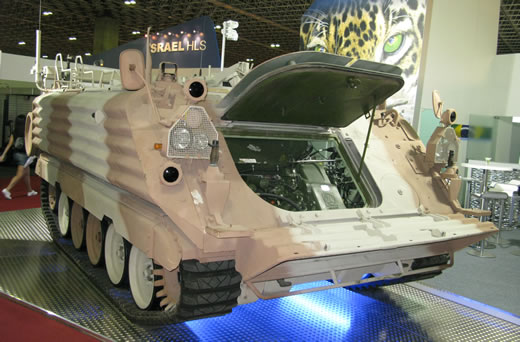
    KMW has brought to LAAD the latest version of its upgraded M113, offering a new powerpack, passive armor improvements, mobility enhancements, and rubber tracks, improving the vehicle's road mobility. Photo - Tamir Eshel, Defense Update.

    The German armored vehicles company KMW is establishing a Brazilian subsidiary named KMW do Brasil, to be located in Santa Maria in the southern state of Rio Grande do Sul. The newly founded company will act as a continental hub for KMW’s regional activities. Offering support and services for systems already deployed in the region, such as the LEOPARD 1A5 main battle tank, the new company will also provide a local basis for implementing KMW-technologies with on specific South American vehicle solutions, to be manufactured in Santa Maria in the future.

    KMW has brought to LAAD the latest version of its upgraded M113, offering a new powerpack, passive armor improvements, mobility enhancements, and rubber tracks, improving the vehicle's road mobility. The company is anticipating future requirements from the Brazilian Army, to upgrade few hundreds of their 600+ M-113s. Photo - Tamir Eshel, Defense Update.
    Our Sponsor: IAI

    At LAAD 2011 KMW is promoting a new M-113 upgrade kit, which features new passive armor, rubber tracks, RPG protective ‘chicken net’, protected headlights and more. military transport vehicles destined for the regional defense and security market.

    DCNS Highlights Scorpene, Andrasta SSN Submarines, Decoy technologs at LAAD 2011

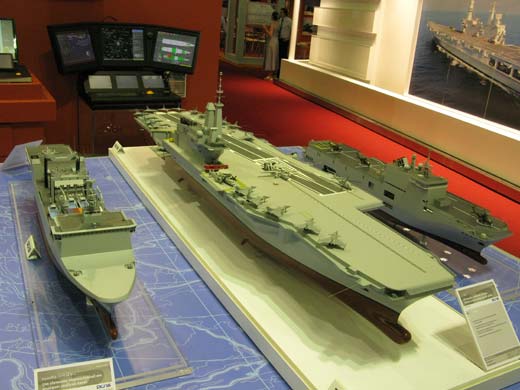
    Other models of vessels on the DCNS display include the FREMM and new aircraft carrier being built for the French Navy.

    DCNS is a major supplier of surface vessels and submarines in the Latin America region and, specifically Brazil. Since 2008, the Brazilian Navy and DCNS embarked on a large scale program to design and construct of four Scorpene type conventional-propulsion submarines, under a technology transfer agreement in which the French designer will provide the technical assistance for the design and construction of the submarine, as well as the non-nuclear part of the first Brazilian nuclear-powered submarine. DCNS also provides support services for the construction of a new naval base and a shipyard to support these vessels.

    A cutaway model showing the cutaway of the Scorpene with Andrasta at the background. Photo: Tamir Eshel, Defense-Update
    Our Sponsor: IAI
    A cutaway model of the Andrasta. Photo: Tamir Eshel, Defense-Update

    At LAAD 2011 DCNS is displaying models of its compact submarine, designed for operation in coastal waters, a theatre of growing importance to all maritime nations. Andrasta is a direct descendant of the Scorpene already selected by Brazil. According to the designers, Andrasta combines a state-of-the-art design with stealth, agility and power.

    The company highlights here the F21 heavyweight torpedo, designed to replace the French Navy’s current-generation F17 mod2 torpedo carried by its SSBN (Ship Submersible Ballistic Nuclear) ballistic missile submarine fleet and has also been selected for the next-generation Barracuda-type SSN fleet. The F21 is being developed in response to new and emerging operational challenges to offer the host submarine unrivalled dominance. Its discretion, range and fire power will give it an unrivalled tactical advantage over all adversaries. The new torpedo is designed to knock out enemy surface vessels and submarines.

    Other models of vessels on the DCNS display include the FREMM and new aircraft carrier being built for the French Navy. Photo: Tamir Eshel, Defense-Update

    As for self-protection of the submarines, DCNS highlights the Contralto-S torpedo countermeasures suite for submarines, designed to defeat latest-generation torpedoes by using acoustic decoys employing ‘confusion/dilution’ principle. Contralto-S is designed for all types of submarines and can be incorporated into new-build designs or added to existing boats as part of a refit or modernization program. The Brazilian Navy has already selected the Contralto-S for its new class of submarines, following the French Navy use of the system as part of the Nemesis program protecting its conventional attack submarines.

    DCNS also highlights its expertise in integrating submarine combat systems. The principal system is SUBTICS, which combines the submarine handling, long-range navigation and weapons control, including torpedoes, anti-ship missile, counter-measures, and land-attack capability. As a fully-integrated system, all functions are operated from multi-function common consoles and its open architecture and modularity guarantee that the system can be adapted to every type of submarines and configured according to operational requirements.

    Skunk Works and XTEND Simplify Multi-Drone Command

    0
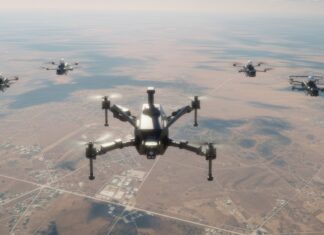
    Lockheed Martin Skunk Works® and XTEND have achieved a major milestone in JADC2 by integrating the XOS operating system with the MDCX™ autonomy platform. This technical breakthrough enables a single operator to simultaneously command multiple drone classes, eliminating the friction of mission handoffs. From "marsupial" drone deployments to operating in GPS-denied environments, explore how this collaboration is abbreviating the data-to-decision timeline and redefining autonomous mission execution.

    From Ukraine to Taiwan: The Global Race to Dominate the New Defense Tech Frontier

    0
    As traditional defense primes face mounting competition from agile “neoprimes” such as Anduril, Palantir and Helsing, the balance of innovation is shifting toward software-defined warfare and scalable, dual-use technologies, while global industry consolidation—marked by Boeing’s integration of Spirit AeroSystems and other strategic mergers—signals an intensified race to secure control over the defense technology value chain. Our Defense-Tech weekly report highlights these trends.

    Europe’s “Drone Wall”

    0
    In early October 2025, a coordinated wave of unmanned aerial system (UAS) incursions—widely attributed to Russia—targeted critical infrastructure across at least ten European nations. The unprecedented campaign exposed the fragility of Europe’s air defenses...

    Weekly Defense Update & Global Security Assessment

    0
    Executive Summary The past week (September 18-25, 2025) represents an inflection point where strategic defense concepts have transitioned from doctrine to tangible reality. An analysis of global events reveals four primary, interconnected trends shaping an...

    U.S. Air and Space Forces Push Next-Gen Programs at the AS&C 2025 Conference and...

    0
    At the 2025 Air, Space & Cyber Conference, U.S. Air Force and Space Force leaders unveiled major updates on next-generation fighters, bombers, unmanned systems, and space initiatives, highlighting both rapid innovation and critical readiness challenges as the services race to outpace global competitors. A short version is available here, with a more detailed version for subscribers.

    TADTE 2025: Reflecting Taiwan’s Strategic Themes

    0
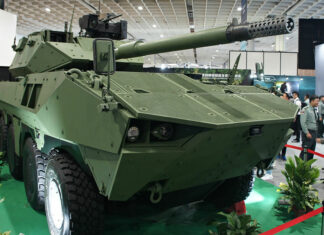
    The Taipei Aerospace & Defense Technology Exhibition (TADTE) 2025 crystallized around four dominant strategic themes that collectively illustrate Taiwan's comprehensive approach to defense modernization amid escalating regional tensions. Based on a detailed report by Pleronix (available upon request). Includes a Podcast discussion on TADTE 2025's highlighting Taiwan's four strategic themes beyond the post's coverage.

    Iron Beam 450 Completes Testing, Soon to Join With Operational Air Defense Units

    0
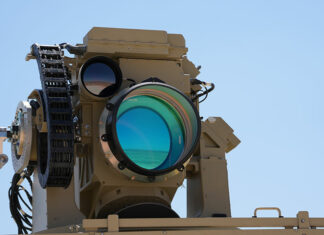
    Israel’s Iron Beam 450 high-power laser system has completed final testing, marking a major leap in air defense. Developed by Rafael, it offers precise, cost-effective interception of rockets, UAVs, and mortars, and is set for IDF deployment by 2025.