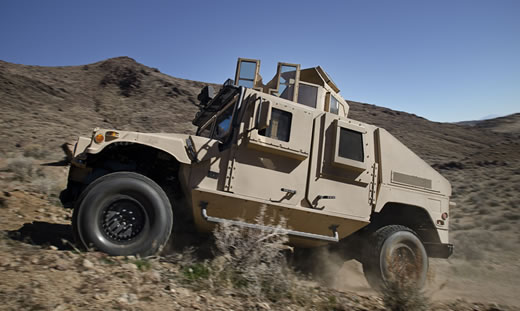
Force Protection Australasia has delivered to the Australian government two Ocelot armored vehicles – a utility and command variants of the Protected Light Mobility Vehicle (PMV-L). The vehicles are being tested in Monegeetta Proving Grounds in Victoria, under the next phase of evaluation, toward the Australian Defence Land 121 Phase 4 program. Force Protection is one of three companies selected for consideration to undertake the next phase of the Land 121 Phase 4 Manufactured and Supported in Australia (MSA) program, with the contract for the future production of up to 1,300 vehicles valued at more than $A1 billion by the Australian Government.
The Ocelot light armored vehicle has been selected by the British MOD and is currently offered for the Australian Land 121 Phase 4 and Canadian TAPV programs. Photo: Force Protection
If the company is successful in winning Land 121 Phase 4 production contract, Force Protection is planning to manufacture and support the Ocelot vehicles in Adelaide, in Southern Australia. “Local suppliers and South Australian Government representatives have been extremely positive about working with us to manufacture the Ocelot in Australia,” said Michael Moody, Force Protection Inc. Chairman and CEO.
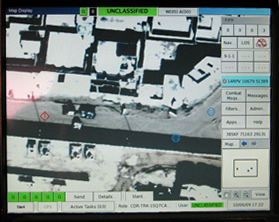
A screen view of an early version of FBCB2 JCR displayed at the AUSA 2009 exhibition. Photo: Defense Update
The U.S. Army has approved the fielding of a major upgrade for its Force XXI Battle Command Brigade and Below (FBCB2) system, called Joint Capabilities Release (JCR). JCR implements next-generation capabilities with FBCB2, by increasing network bandwidth, security, situational awareness and response. Better suitable for communications and operation on the move communications, the system is refreshing situational pictures within seconds rather than in minutes.
To gain higher communications speed JCR is implementing Blue Force Tracking 2 (BFT 2), a high-speed force-tracking satellite-communications network offering communications update 10 times faster than the existing BFT. In addition, the new system will enable troops to share critical, sensitive information through the system’s new Programmable In-Line Encryption Device, which is fully compatible with JCR. Other new JCR capabilities include the Commercial Joint Mapping Tool Kit and an over-the-air self-descriptive situational awareness (SDSA) capability. SDSA will eliminate inflexible fixed databases and allow FBCB2-equipped units to change task organizations in the field to meet new mission requirements.
JCR represents a major departure from the original FBCB2 architecture which dates back to 1995. The new JCR approach called the “Battle Command Product Line” (BCPL) eliminates the “stovepipe” development approach taken by earlier command and control systems. It will enable the Army to develop, test, certify and deploy software capabilities faster, and at a lower cost.
The version that will be fielded is JCR-Vehicle L-Band (v) 1.1.1.4 V-4. The Army and Marine Corps are currently testing JCR V1.3.1 and considering it for a fielding upgrade this year. Today, most FBCB2 systems communicate via a satellite-based network; about 30 percent use the Enhanced Position Location Reporting System (EPLRS) tactical radio network.
More than 95,000 FBCB2 systems are currently providing the main situational awareness and command-and-control system for the U.S. and coalition forces. JCR is the most recent upgrade of the FBCB2 system, originated in 1995. Following the Army approval it will be incorporated into the LandWarNet/Battle Command Baseline for fielding to deploying units scheduled to receive FBCB2 software block 2.
JCR also provides a common FBCB2 platform solution for both the Army and U.S. Marine Corps. “The ability to receive and share battlefield data through a broad-based, reliable network is increasingly important and critical to the mission. JCR provides new collaboration tools and other enhancements that are orders of magnitude more capable than what is available to soldiers and Marines today,” said Joe G. Taylor, Jr., vice president of the Ground Combat Systems business unit within Northrop Grumman’s Information Systems sector.
The U.S. Defense Department is expected to announce today (Feb. 24, 2011) the winner of a $35 billion Air Force aerial refueling tanker contract fought over by Boeing and European rival EADS for nearly a decade. The announcement is expected this afternoon, after financial markets close. The Defense Department is seeking to replace 179 tankers in an aging U.S. Air Force fleet of Boeing KC-135s that date back to the 1950s. The two competitors, U.S. based Boeing and the European Aeronautic Defence and Space (EADS) delivered their best and final bids last week.
Boeing NewGen Tanker. Photo: Boeing
According to Loren B. Thompson of the Lexington Institute, “Judging from the frequency with which Pentagon acquisition chief Ashton Carter has been talking up the notion of a ‘globalized’ defense market recently, European aerospace giant EADS is the winner.” An indication of a weary Boeing position surfaces earlier this month, when Boeing declined to enter a US$2 billion Indian tender for six aerial tankers for the Indian Air Force. Boeing cited uncertainty with the U.S. Air Force’s order for 179 aerial tankers as a reason for not entering the competition for the Indian order. EADS opted to enter the Indian tender with the MRTT (KC-45) aircraft it is proposing for the U.S. Air Force program.
“If EADS rival Boeing has indeed lost, it probably will not issue substantive comments on the outcome until it has been debriefed by the Air Force.”Thompson comments, “Once it has heard how the decision was made, it can determine whether there are grounds for a formal protest.”
EADS is already acting like it has won, which isn’t surprising since it knows its plane received a higher warfighting effectiveness rating. Boeing could challenge the rating methodology and several other facets of the selection process, but since price is the key discriminator in the outcome, it is more likely to pursue a political strategy focusing on EADS use of prohibited trade subsidies in developing and marketing its planes.
Boeing won the first KC-X tender in 2006, but its selection was cancelled amid a Pentagon procurement scandal. The second round was won by a team formed by EADS and Northrop Grumman. This selection was withdrawn after the Government Accountability Office (GAO) upheld Boeing’s objections that the process was flawed. The current competition is waged between Boeing and EADS, competing without a U.S. major. Each company has grouped a number of supporting industries and states positioned to benefit from the Pentagon decision.
Thales Australia is strengthening its position in the Australian ordnance market through a newly announced strategic teaming with U.S.-based General Dynamics Ordnance and Tactical Systems (GD-OTS). Thales and GD-OTS have been cooperating in the Australian market for years, and the new 10 year agreement is expected to formalize and strengthen this cooperation, including offering the Australian company potential export opportunities. The agreement also covers the transfer of technology transfer from GD to Thales in Australia, gaining better focus and access to existing munitions contracts in Australia. According to Chris Jenkins, Thales Australia’s CEO, the teaming agreement will reinforce Thales’ product modernizing, addressing Australia’s Strategic Reform Program.
Al Jaber Group of the United Arab Emirates (UAE) and the German company Diehl Defence have signed a joint venture for the modernization and upgrade of the Emirates’ military land vehicles. As part of this cooperation Diehl will supply components and upgrade kits including propulsion packs, suspension and tracks and assume system responsibility for vehicle upgrading to be performed by UAE personnel at Al Jaber Group facilities. The German company will also transfer relevant know-how and will outsource significant work to local industry in the UAE. Diehl Defence has already established relationships with UAE Armed Forces through the modernization and continuous support of self-propelled howitzer M109. Furthermore, Diehl Defence has been supplying tracks and road wheels to the UAE Armed Forces for the MBT Leclerc as well as tracks for the SP howitzer M109 and the APC M113.
"With the ISV, we aimed to clearly demonstrate that the HMMWV’s survivability can significantly be improved, while its overall mobility, ride quality and stability are enhanced utilizing proven technology,” said Chris Chambers, Line Leader with BAE Systems’ Global Tactical Systems business. Photo: BAE Systems
BAE Systems demonstrated the improved HMMWV known as ‘Integrated SMART V’ (ISV) to U.S. Army and Marine Corps officials at the Nevada Automotive Test Center’s (NATC) annual Vehicle Systems Demonstration held February 9 in Carson City, Nevada.
Additional blast-protection is expected to become part of the recapitalization program for an estimated 60,000 U.S. Military HMMWVs, expected to be identified for repairs and underbody blast improvements. BAE is proposing the Integrated SMART V system, which stands for ‘Survivable, Modular and Affordable while utilizing a high Re-use strategy and proven innovative Technology.’
"With the ISV, we aimed to clearly demonstrate that the HMMWV’s survivability can significantly be improved, while its overall mobility, ride quality and stability are enhanced utilizing proven technology,” said Chris Chambers, Line Leader with BAE Systems’ Global Tactical Systems business. Photo: BAE Systems
The ISV solution features a lightweight monocoque V-shaped hull with front and rear frame clips that attach to the hull to provide the most rigid side- and mine-blast protection available in one affordable package. According to BAE Systems, the ISV™ has significantly improved underbody protection with a highly survivable and adoptable modular design that has three distinct sections creating greater flexibility to tailor each vehicle. The ability to re-use the power train components and the use of low cost materials (not exotic) make this an affordable solution reducing the logistics footprint.
“Proving paper claims through rigorous tests and demonstrations is essential, and the NATC event provided us with the ideal venue to do the latter while also getting valuable feedback from Army and Marine Corps experts. With the ISV, we aimed to clearly demonstrate that the HMMWV’s survivability can significantly be improved, while its overall mobility, ride quality and stability are enhanced utilizing proven technology,” said Chris Chambers, Line Leader with BAE Systems’ Global Tactical Systems business.
Iron Dome seen here on one of its earlier firing tests, launched from a test rig. The recent flights were carried out from the system's multi-launcher firing assembly, designed for rapid deployment and autonomous operation in the field. Photo: Rafael
The Israel Air Force’s first Iron Dome counter Rocket, Artillery and Missile (C-RAM) system has passed a significant milestone last week, with the first Iron Dome battalion performing successful, intercepts of multiple targets simulating five different operational scenarios of threats fired at different trajectories and ranges. Following the successful induction process, the Iron-Dome battalion is expected to be announced operationally ready within the upcoming weeks – several months after the scheduled deployment plan.
According to Haaretz reporter Anshel Pfeffer, the IAF was in possession of the first of two Iron Dome batteries for a number of months already. Owing to a series of technical problems, initial operational capability was delayed, and is now expected to take place ‘within a number of weeks’. Some parts of the second battery have already been delivered to the IAF.
The IAF estimates that 13 Iron Dome systems will be required to effectively protect Israeli civilians from short-range missiles. It is not yet clear if and when the new battery will be deployed in southern Israel. The IAF currently plans on positioning the battery in the base and only deploying it upon demand. Despite that, members of the Knesset’s (Israel’s parliament) Foreign Affairs and Defense Committee demand the battery be positioned in the Israeli towns near the Gaza border.
In late 2010, the U.S. allocated $205 million for Iron Dome procurement; however, the actual funding has yet to be approved as part of U.S. federal 2011 budget.
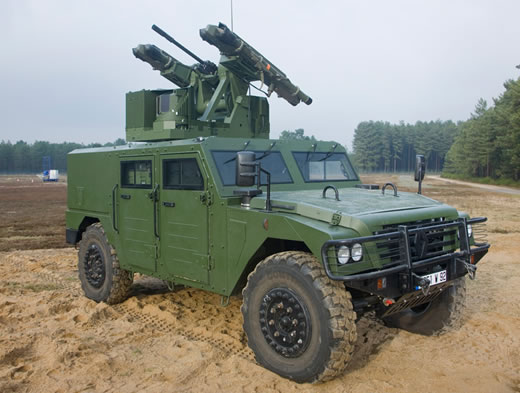
MBDA has recently announced the first sale of an air-defense configuration of its mobile, multi-purpose combat vehicle (MPCV), mounting the Mistral very short range air defense (VSHORAD) system. The first series production MPCV vehicle should be delivered as of 2013. Photo: MBDA
MBDA has unveiled an integrated air-defense system combining the Short-Range Air Defense Mistral and VL MICA missiles. The two systems are controlled from a unified, Improved Missile Control Post (IMCP) which integrates, both system’s command and control within a single shelter. According to MBDA, the new integrated system has already been selected by a first customer with first deliveries expected in 2014.
The new system comprises the new Platoon Command Post (PCP) – a modular command system derived from the VL MICA Tactical Operations Centre (TOC), which handles command, control and coordination of multi-layer, tactical air defense assets. The system also interfaces with a 3D radar capable of detecting and identifying aerial targets at ranges of 80 km.
A new command and control system enhances MICA-VL and Mistral surface-to-air missiles into a multi-layered air defense system. Photo: MBDAs
PCP establishes such multi-layer surface-to-air defense units by linking Very Short Range (VSHORAD) Mistral and short-range (SHORAD) VL MICA missile launchers. The system interfaces with air space coordination elements, and provides self-coordination with similar command and control systems operating with neighboring units.
The detection, identification and tracking functions are carried out via a link to the IMCP which, in this case, is completely remote-controlled by one of the three operators manning the PCP. The IMCP is an evolution of the Mistral Coordination Post (MCP). MBDA has sold over 40 MCP systems.
MBDA has recently announced the first sale of an air-defense configuration of its mobile, multi-purpose combat vehicle (MPCV), mounting the Mistral very short range air defense (VSHORAD) system. The MPCV turret will be integrated within the customer’s existing air defense architecture which already uses the Mistral systems. The first series production MPCV vehicle should be delivered as of 2013.
The final qualification of the MPCV was commenced by France’s Direction Générale de l’Armement (DGA’s) in 2010 at the missile test firing center at Biscarosse in the Landes region of France. This phase culminated in an extensive series of test firings demonstrating the system’s ability in countering multiple targets representing a saturating air attack. The tests were witnessed by several foreign delegations.
MBDA has recently announced the first sale of an air-defense configuration of its mobile, multi-purpose combat vehicle (MPCV), mounting the Mistral very short range air defense (VSHORAD) system. The first series production MPCV vehicle should be delivered as of 2013. Photo: MBDA
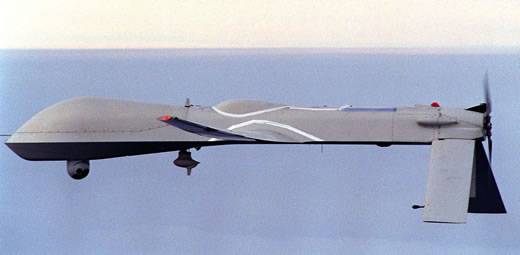
General Atomics is introducing an export version of the RQ-1, designated XP. The new UAS is currently offered to the government of the UAE. Photo: GA-ASI.Predator
General Atomics Aeronautical Systems, Inc. (GA‑ASI) is offering a new export version of the Predator unmanned aerial system. The export of the standard RQ-1 Predator system has been limited by U.S. Government export restrictions, to select NATO members and allied nations. To meet the export potential of the system GA-ASI has recently expanded its aircraft portfolio to offer an export version of the Predator UAS – designated Predator XP. Offering comparable ISR capabilities as the standard Predator, the new ‘XP has been licensed by the U.S. Government to be proposed for sale to a broader customer base, including countries in the Middle East and North Africa.
General Atomics is introducing an export version of the RQ-1, designated XP. The new UAS is currently offered to the government of the UAE. Photo: GA-ASI.Predator
One of the potential markets for the system is the gulf states. At the IDEX 2011 exhibition GA-ASI embarked on a marketing campaign to promote the new system in the United Arab Emirates (UAE). GA-ASI The company has signed a Memorandum of Understanding (MOU) with International Golden Group (IGG), a UAE based supplier of integrated defense systems, to offer the Predator to meet the surveillance needs of the Emirates.
Predator XP exhibits the same physical dimensions, altitude, speed, and long endurance (up to 40 hours) as the original RQ-1 unarmed Predator aircraft flown by the U.S. Air Force since the early 1990s. Battle-proven since its first combat flight in the Balkans in 1995, Predator aircraft have amassed over one million flight hours to date. Equipped with the same ISR capabilities employed on the RQ-1, Predator XP can be integrated with multiple exportable sensors, including Electro-Optical Infrared (EO/IR) payloads and GA-ASI’s Lynx multi-mode Synthetic Apperture Radar/Ground Moving Target Indicator (SAR/GMTI) sensor.
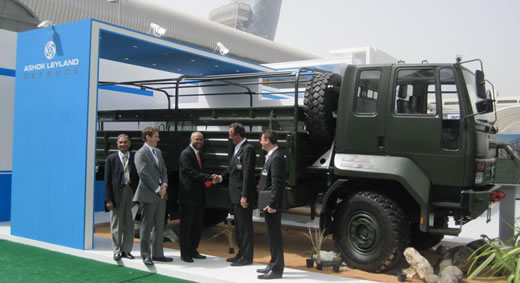
Ashok Leyland Defence Systems Ltd. and Krauss-Maffei Wegmann have signed an MOU to jointly introduce armored wheeled vehicles, recovery vehicles, artillery & combat systems, bridge laying systems and other military vehicles in the Indian market and abroad. Photo: KMW.
Chennai (India) based Ashok Leyland Defence Systems Ltd. (ALDS) and Krauss-Maffei Wegmann GmbH & Co. KG from Munich (Germany) have concluded a Memorandum of Understanding during the IDEX defence exhibition in Abu Dhabi to co-operate in the development of advanced defense systems for the Indian Defense establishment, as well as other defense forces worldwide.
The scope of the co-operation will initially include the development of armored wheeled vehicles, recovery vehicles, artillery & combat systems, bridge laying systems and other similar products.
Ashok Leyland Defence Systems Ltd. and Krauss-Maffei Wegmann have signed an MOU to jointly introduce armored wheeled vehicles, recovery vehicles, artillery & combat systems, bridge laying systems and other military vehicles in the Indian market and abroad. In the photo: Dr. V. Sumantran (3rd f.l.) and Frank Haun (4th f.l.) in front of the Ashok Leyland truck - Stallion 4x4 at IDEX 2011. Photo: KMW.
ALDS, the Defence sector affiliate of the Hinduja flagship Ashok Leyland, brings to this strategic alliance the expertise and experience of designing and developing Defence vehicles that has made Ashok Leyland, the largest supplier of logistics to the Indian Army, with over 60,000 of its Stallion vehicles forming the Indian Army’s logistics backbone. Krauss-Maffei Wegmann (KMW) will provide the technology and the technical assistance that will be required for the development of these defense systems.
Based on the Embraer ERJ 145 regional jet, the new special-mission aircraft features an in-flight refueling system, satellite communications capability, a significant increase in electrical and cooling capacities, and a comprehensive set of aerodynamic and structural changes.
Embraer presented today at its headquarters in São José dos Campos, Brazil the first of three EMB 145 Airborne Early Warning and Control (AEW&C) platforms developed for India’s Defense Research and Development Organization (DRDO).
These improvements will allow the installation of the advanced electronic systems currently being developed by India’s DRDO, under Centre for Airborne Systems (CABS) coordination. Following its official presentation, the aircraft will start intensive ground and flight tests. The ferry flight to India is scheduled for the second semester of this year, where it will receive the equipment being developed by the DRDO.
Based on the Embraer ERJ 145 regional jet, the new special-mission aircraft features an in-flight refueling system, satellite communications capability, a significant increase in electrical and cooling capacities, and a comprehensive set of aerodynamic and structural changes.
Eduardo Bonini, Senior Vice President Operations & COO – Embraer Defense and Security attributed the success of the project to the good will and the high level of professionalism that both the Indian and Brazilian teams have demonstrated over the last two-and-a-half years. “Given Embraer’s experience in the field of ISR aircraft and equipment, we believe that this jointly developed product will offer outstanding operational capability, and we look forward to its entry into service” Bonini added.
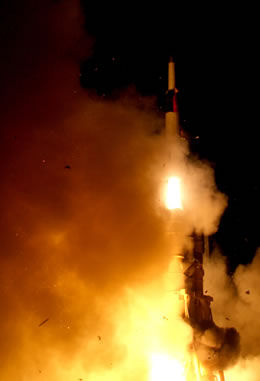
Arrow-2 ASIP ballistic missile interceptor launched from Pt. Mugu, February 22, 2011
Arrow-2 ASIP ballistic missile interceptor launched from Pt. Mugu, February 22, 2011
The joint U.S.-Israel Arrow Weapon System successfully intercepted a ballistic target missile today, during a flight test conducted over the Pacific Ocean. The test was part of the Arrow System Improvement Program (ASIP), conducted jointly by the Israel Missile Defense Organization and the U.S. Missile Defense Agency.
The missile was launcehd from the U.S. Naval Air Warfare Center, Weapons Division-Pt. Mugu Sea Range, at 10:30 p.m. Pacific Standard Time (PST). The target missile was launched from a Mobile Launch Platform (MLP) off the coast of California, within the Pt. Mugu test range. According to the joint MDA/MOD announcement, the target was representative of potential ballistic missile threats facing Israel. A previous test scheduled for July 22, 2009 was aborted after the system failed to develop an intercept solutyion within the launch ‘window’ provided by the test range. The 2009 target was representing an Iranian long range missile with payload capacity conforming to a missile carrying a nuclear warhead. A similar target is believed to have been used on today’s test as well.
The Arrow Weapon System’s Green Pine radar successfully detected and tracked the target and transferred information to the Citron Tree battle management control system. The Arrow Weapon System launched an interceptor missile which performed its planned trajectory and destroyed the target missile. According to the official announcement, the test represented a realistic scenario and all the elements of the weapon system performed in their operational configuration.
The Arrow-2 program is a joint U.S.-Israeli program developing and deploying missile defense capabilities protecting Israel from ballistic missile threats. Arrow-2 ASIP is the latest version of the missile. A new missile known as Arrow-3 is currently in development, augmenting the Arrow-2 ASIP with an ‘upper tier’ interception layer capable of engaging incoming missiles through their midcourse phase, while in space. The upper layer intercept will significantly improve the defensive capability of the integrated system, implementing ‘shoot-shoot-look-shoot’ stragegy ‘shoot-look-shoot’ strategy of current missile defense assets.
The main contractor for the integration and the development of the Arrow Weapon System is MLM of the Israel Aerospace Industries (IAI). The “Green Pine” Radar is developed by ELTA Industries and the “Citron Tree” BMC is developed by Tadiran Electronic Systems, Ltd.
Elbit continues the consolidation of its domestic acquisitions. Following the successful completion of buyout of the remaining ITL Lasers shares held by the public, traded on the Tel-Aviv Stock Exchange, Elbit Systems announed today the procurement of 30% of the remaining shares of Elisra Electronics Systems, held by IAI subsidiary Elta Systems. With this acquisition Elbit Systems will 100% holding of Elisra shares. For these stocks Elbit will pay Elta $67.5 million.
A world leader in Information Warfare, Elisra has about 1,500 employees Elisra has an annual turnover of $300 million, mostly in electronic-warfare, data-links and special communications applications. The majority of the company’s business is derived from export (70%), with customers and projects in more than 50 countries. Since 1973 Elisra has been positioned as a center of excellence for indigenous EW development, equipping all Israel Air Force fighter aircraft, helicopters and transport planes with advanced self-protection active and passive electronic warfare suits.
The U.S. Air Force and Lockheed Martin team has delivered the first geosynchronous (GEO-1) Space Based Infrared System (SBIRS) spacecraft to Cape Canaveral Air Force Station, Fla., where it will be prepared for an early May liftoff aboard a United Launch Alliance Atlas V launch vehicle.
SBIRS GEO-1, with its highly sophisticated scanning and staring sensors, will provide the nation with significantly improved missile warning capabilities and support other critical missions simultaneously including missile defense, technical intelligence and battlespace awareness.
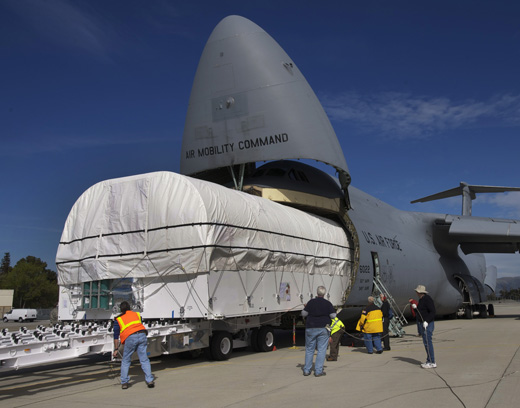
In preparation for shipment to the launch site, SBIRS GEO-1, in its container, is loaded onto the U.S. Air Force C-5 at Moffet Field in Sunnyvale, Calif. Photo: Lockheed Martin
“Shipment of SBIRS GEO-1 is a testament to the strong government and industry partnership, and the hard work and dedication of the entire SBIRS team. We remain focused on achieving mission success for this critical program,” said Col. Roger Teague, the U.S. Air Force’s Infrared Space Systems Directorate director. “GEO-1 will play a vital role in our national security space architecture, and we look forward to getting this satellite on-orbit.”
In Sunnyvale, Calif., Lockheed Martin engineers prepare the first geosynchronous (GEO-1) Space Based Infrared System (SBIRS) spacecraft for shipment to Cape Canaveral Air Force Station, Fla. Photo: Lockheed Martin
SBIRS GEO-1 will now be prepared for launch at Cape Canaveral Air Force Station’s former Defense Satellite Communications System (DSCS) Processing Facility, which was upgraded significantly in preparation for GEO-1. Facility upgrades were made to the electrical power supply, communication networks, environmental control systems, and cleanroom processing areas. A new access road was also built from the landing strip directly to the processing facility, which significantly reduces transport time and risk moving through traffic areas.
Prior to launch, the GEO-1 spacecraft will undergo post shipment testing, fueling and payload fairing encapsulation while in the DSCS Processing Facility. Upon completion of processing, the spacecraft will be mated on top of the Atlas V launch vehicle and perform final integrated testing and closeout preparations for launch. Approximately 24 hours before launch, the Atlas V/SBIRS GEO-1 spacecraft will roll to the launch pad and perform the final countdown preparations for launch.
“GEO-1 delivery to Cape Canaveral Air Force Station represents the program’s most significant milestone to-date and I am proud of the entire SBIRS team dedicated to delivering this cutting edge missile warning spacecraft,” said Jeff Smith, Lockheed Martin’s SBIRS vice president and program director. “When GEO-1 is launched , declared operational and its data is fused into the DSP and HEO constellation, SBIRS will deliver unprecedented, global, persistent, infrared surveillance capabilities to our nation for decades to come.”
The 22nd Airlift Squadron of Travis Air Force Base, Calif., and the 129th Rescue Wing of Mountain View, Calif., provided critical support of the delivery of SBIRS GEO-1. The U.S. Air Force C-5 crew, commanded by Major Brad Silver, ensured GEO-1 was transported safely and efficiently to the launch site, and worked with the SBIRS government and industry team throughout the mission to monitor the payload and ensure its safe delivery. The 129th Rescue Wing, Security Forces Squadron secured the entire operation at Moffet Air Field prior to departure.
The SBIRS team is led by the Infrared Space Systems Directorate at the U.S. Air Force Space and Missile Systems Center. Lockheed Martin is the SBIRS prime contractor, with Northrop Grumman, as the payload integrator. Air Force Space Command operates the SBIRS system.
Lockheed Martin’s original SBIRS contract includes HEO payloads, two geosynchronous orbit (GEO) satellites, as well as ground-based assets to receive and process the infrared data. The team is also under a follow-on production contract to deliver additional HEO payloads and the third and fourth GEO satellites, and associated ground modifications.
Lockheed Martin Skunk Works® and XTEND have achieved a major milestone in JADC2 by integrating the XOS operating system with the MDCX™ autonomy platform. This technical breakthrough enables a single operator to simultaneously command multiple drone classes, eliminating the friction of mission handoffs. From "marsupial" drone deployments to operating in GPS-denied environments, explore how this collaboration is abbreviating the data-to-decision timeline and redefining autonomous mission execution.
As traditional defense primes face mounting competition from agile “neoprimes” such as Anduril, Palantir and Helsing, the balance of innovation is shifting toward software-defined warfare and scalable, dual-use technologies, while global industry consolidation—marked by Boeing’s integration of Spirit AeroSystems and other strategic mergers—signals an intensified race to secure control over the defense technology value chain. Our Defense-Tech weekly report highlights these trends.
In early October 2025, a coordinated wave of unmanned aerial system (UAS) incursions—widely attributed to Russia—targeted critical infrastructure across at least ten European nations. The unprecedented campaign exposed the fragility of Europe’s air defenses...
Executive Summary
The past week (September 18-25, 2025) represents an inflection point where strategic defense concepts have transitioned from doctrine to tangible reality. An analysis of global events reveals four primary, interconnected trends shaping an...
At the 2025 Air, Space & Cyber Conference, U.S. Air Force and Space Force leaders unveiled major updates on next-generation fighters, bombers, unmanned systems, and space initiatives, highlighting both rapid innovation and critical readiness challenges as the services race to outpace global competitors. A short version is available here, with a more detailed version for subscribers.
The Taipei Aerospace & Defense Technology Exhibition (TADTE) 2025 crystallized around four dominant strategic themes that collectively illustrate Taiwan's comprehensive approach to defense modernization amid escalating regional tensions. Based on a detailed report by Pleronix (available upon request). Includes a Podcast discussion on TADTE 2025's highlighting Taiwan's four strategic themes beyond the post's coverage.
Israel’s Iron Beam 450 high-power laser system has completed final testing, marking a major leap in air defense. Developed by Rafael, it offers precise, cost-effective interception of rockets, UAVs, and mortars, and is set for IDF deployment by 2025.