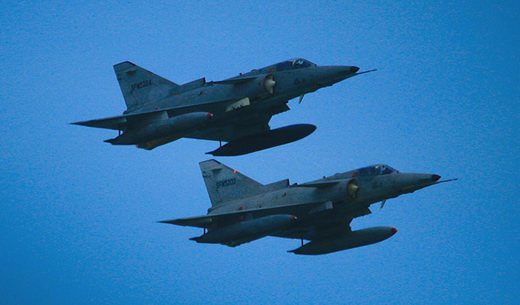
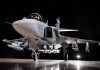
Two Sri-Lanka Air Force (SLAF) IAI Kfir jet fighters operating from the Katunayake Air Base have collided in mid-air when flying in tight formation, rehearsing a fly past in preparation for the 60th anniversary celebrations of the Sri Lanka Air Force. According to a preliminary investigation, one of the pilots, 28 year old Flight Lieutenant Monath Perera lost control of the aircraft and collided with the lead aircraft, flown by No. 10 Squadron Leader Vajira Jayakody. Jayakody managed to eject safely but Perera failed to eject and was killed in the crash.
Before the crash the Sri-Lankan Air Force operated ten Kfir fighters - eight Kfir C2, two C7s and two TC2 two-seater versions. Photo: Isuru Wakkumbura
The Commander of the Air Force has appointed a Board of Investigation headed by Air Vice Marshal Kapila Jayampathi to look into the causes of the accident. A preliminary report is expected next week. Before the crash Sri-Lanka operated ten Israeli Kfirs flying with No. 10 fighter squadron. The unit was equipped with eight Kfir C2 two C7s and additional two C7 two-seat trainers.
The SLAF acquired the first six Kfir C.2s and a single TC.2 from Israel in 1995-1996. Nine additional fighters, including four C.2s, four C.7s and a one two-seater TC2 were acquired in 2005 to replace aircraft attrition during the civil war.
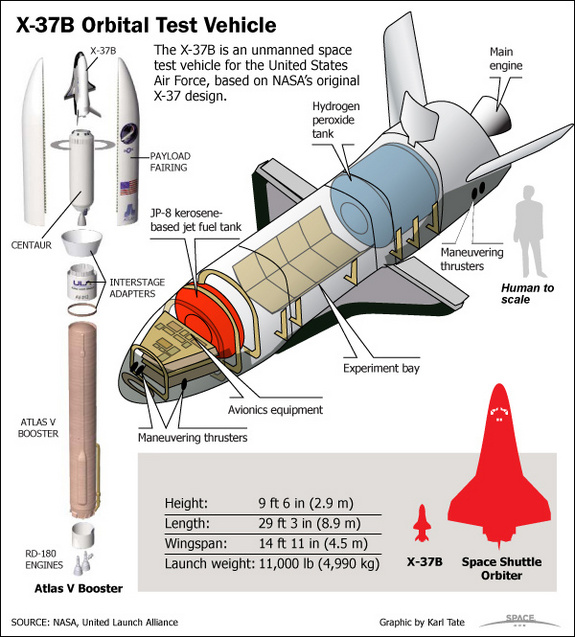
On Friday, March 4, the U.S. Air Force is scheduled to launch the second X-37B prototype space plane from Cape Canaveral. The first space plane of the two prototypes built by Boeing Phantom Works, which the Air Force launched in April 2010, stayed on orbit for seven months.
On the eve of the second flight, the X-37B’s mission is still unclear. The Air Force has declined to discuss the program’s budget publicly or provide a detailed explanation of its objectives.
The first X-37B prepared for launch at Vandenberg AFB, APril 2010. Photo: U.S. Air Force
The unique capability of the space plane appears to be its ability to return from orbit and land autonomously on a runway. This capability requires extra structure, such as wings and heat-shielding, to withstand the rigors of re-entry, which makes the plane significantly heavier than spacecraft that are not designed to return to Earth. Because of this extra mass, the space plane is more difficult to maneuver in space and costs tens of million dollars more to launch.
Dr. Laura Grego, Senior Staff Scientist, Global Security Program at the at the Union of Concerned Scientists (UCS).
“Because of its weight and relative lack of maneuverability, the space plane is not well-suited for a number of missions,” said Laura Grego, a senior scientist with Union of Concerned Scientists (UCS)’s Global Security Program. “For example, it would have a harder time carrying payloads into orbit, maneuvering in space, rendezvousing with satellites, and releasing multiple payloads. Yes, the space plane may offer more flexibility and is potentially reusable, but that comes at a very high price compared with the alternatives. We have not seen an analysis that shows why it is worth that high price.”
The Air Force says the X-37B will allow it to carry out experiments in space over a long period of time and return them to Earth. Thus far, however, the Air Force has not provided any cost or capability analyses that compare the space plane with simpler systems, for example, those that return by parachute rather than a runway landing.
Given the Air Force’s reticence in discussing the rationale behind the space plane and the fact that the program was created by a branch of the U.S. military, other countries may infer that the X-37B has a specialized military purpose. But, according to Grego, the space plane does not make sense as a space weapon or even for deploying space weapons.
“With the current emphasis on cutting budgets and getting the most for our tax dollars,” said Grego, “the space plane is an extravagant system without a convincing mission.”
For further analysis published by Dr. Grego refer to her two posts ( 1, 2 ) in UCS’ ‘All Things Nuclear’ blog.
PAC-3, PAC-3 MSE and THAAD lined up on a Lockheed Martin air-defense missile display at AUSA 2009. Photo: Defense-Update
Lockheed Martin conducted a second successful intercept of a threat representative tactical ballistic missile target using the PAC-3 Missile Segment Enhancement (MSE) at the White Sands Missile Range, N.M. The first intercept conducted by PAC-3 MSE was performed in February 2010. “We continue to test the PAC-3 MSE Missile at higher altitudes and against more challenging targets, and it continues to meet expectations,” said Richard McDaniel, director of PAC-3 Missile Programs at Lockheed Martin Missiles and Fire Control. “We look forward to delivering this important enhanced capability to the warfighter in the near future.”
The PAC-3 MSE Missile provides increased performance, greater altitude and range than the PAC-3 Cost Reduction Initiative (CRI) Missile. The PAC-3 MSE Missile variant incorporates threat-driven and technology-enabled hardware and software upgrades to defend against the advancing threat set. The PAC-3 Missile is the only Patriot missile that utilizes hit-to-kill technology to engage incoming targets.
The Patriot missile launcher was originally designed to carry four missiles on each launcher. The PAC-3 missile, being much shorter and thinner than the original missile, packs four missile canisters for each slot. The larger MSE is packaged again in a single canister that stacks on the Patriot launcher, to provide flexibility for the Patriot or Medium Extended Air Defense System (MEADS) launcher load-out requirements. Therefore, each launcher can carry a mix of PAC-3 and PAC-3 MSE missiles.
The PAC-3 MSE Missile was selected as the primary interceptor for the multi-national MEADS in September 2006, operating along with the German Diehl BGT IRIS-T SL (Surface Launched) as a secondary MEADS missile for the German fire units. The MEADS program completed Critical Design Review in 2010 and is now integrating and testing the radars, launchers, tactical operation centers and reloaders needed for system tests at White Sands Missile Range in 2012. However, the MEADS program being US$0.7 Billion over budget and 1.5 years behind schedule provided the U.S. and German governments to pull back from further investing in the acquisition phase, suspending MEADS at the current development phase, due for completion by 2013.
58 percent of the MEADS development program is funded by the United States, 25 percent by Germany, and 17 percent by Italy.
Cancellation of MEADS is not expected to represent a total loss for the U.S., as MSE could become a future replacement for current Patriot units. Lockheed Martin is also offering the missile as an air-launched boost-phase interceptor, carried by F-15C, F-22 and F-35 fighters as well as a sea-based hit-to-kill terminal defense system, although the U.S. is currently committed to seaand land based SM-3 as its primary missile interceptor. According to Aviation Week, Lockheed proposed the air-launched MSE would be housed inside a pod under the wing of an F-15C. Upon launch, a clamshell door on the pod would open, the weapon would drop and ignite, engaging the target. Intercepting a boosting ballistic missile is generally easier because the target is traveling in a straighter trajectory and is slower than in the terminal phase.
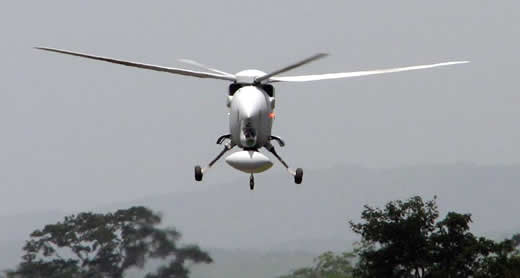
A160T Carrying the FORRESTER foliage penetrating radar hovering over the Mountain Pine Ridge in Western Belize, during the system's evaluation in August 2010. Photo: Adele Ramos Show and Amandala Newspaper via Village View Post.
Frontier Systems was awarded $14 million cost-plus-fixed-fee contract for the upgrade of two YMQ-18A Hummingbird (A-160T) unmanned helicopters. The two Hummingbirds will be completed by year’s end, modified into YMQ-18A Block II configuration.
A160T Carrying the FORRESTER foliage penetrating radar hovering over the Mountain Pine Ridge in Western Belize, during the system's evaluation in August 2010. Photo: Adele Ramos Show and Amandala Newspaper via Village View Post.
Technology upgrades likely to be included in the program as outlined by the U.S. Special Operations Command include the integration of Satellite Communications (SATCOM) for Non Line of Site (NLOS) communications, environmental hardening preparing the air vehcile for all-weather operations, to include strengthening of the blade leading edge, and air intake redesign to better cope with sand erosion, dust and minimizing igestion of debries during takeoff and landing from unprepared locations. Justifying the MQ designation indicating recce/attack role, the YMQ-18A can be configured with stubby wings mounting hardpoints for the carrying of up to eight one Hellfire missiles. The aircraft will also be equipped with redundant flight controls. Modifications supporting unmanned resupply missions have already been implemented through another $30 million contract, awarded to Boeing/Frontier Systems by the U.S. Navy in December 2010, for the delivery of two unmanned cargo lifters to support Marine Corps units in Afghanistan.
Currently undergoing extended User evaluation, the YMQ-18A unmanned rotary wing aircraft was designed as a long-endurance vertical takeoff and landing (VTOL) UAS, has flown a world record 18.7 hours with a 300 pound payload. The aircraft’s current maximum gross weight is 5,500 pounds with a design objective of 6,500 pounds and speeds in excess of 140 knots.
The Block II Hummingbird will be enhanced to support military intelligence missions, as part of the Army Intelligence future aerial intelligence gathering team. To support this role Frontier won a $12 million contract modification by DARPA, for the YMQ-18A air vehicle modification and integration of a modified ARGUS-IS pod. In 2010 the U.S. military has tested an unarmed version of the A160 Hummingbird UAV in Belize, for operational evaluation of the Foliage Penetration Reconnaissance, Surveillance, Tracking and Engagement Radar (FORESTER).
A160T prepared for flight at the hanger, Central Farm air-strip at , Cayo-Belize. Note the large FORRESTER radar pod carried underneath the aircraft. Photo via Village Voice post.
Frontier Systems Inc. was founded in 1991. the company was acquired by Boeing in 2004, and is operating since as a subsidiary of Boeing Co. Frontier manufactures unmanned aerial vehicles (UAVs) including the A-160 Hummingbird, Maverick VTOL, FRP28 Pod Family, Shadow, W570 UAV, and Apollo Avionics.
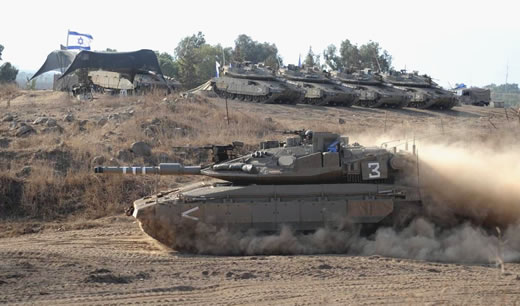
An Israeli Merkava Mk4 tank seen at a training area in the Golan height. Note the non-explosive training module replacing the trophy's explosive countermeasure on training activities. Photo: Rafael
With the deployment of Merkava Mk 4 tanks equipped with Rafael Defense Systems’ Trophy (ASPRO-A) Active Protection Systems (APS) along the Gaza border last month (January 2011), that followed a Merkava tank being hit by a Kornet anti-tank missile fired by the Palestinians, battle testing of the Trophy APS was only a matter of time. Today (1st March 2011), the system was baphtized in combat, proving its worth in a first combat engagement with a hostile RPG, fired by Palestinain anti-tank team from Gaza. The system and crew performed exactly as expected, integrating automatic response to neutralize an immediate threat, rapid situational understanding and decision and forcible response, effectively eliminating the threat.
IDF Merkava Mk 4 equipped with Rafael’s Trophy (ASPRO-A) APS are now deployed along the Israeli border with Gaza. Photo: MOD
According to IDF sources, the Merkava tank was patrolling the border with Gaza, when a ‘missile launch’ was detected by the tank’s defensive system. Trophy uses the Elta System’s EL/M 2133 ‘WindGuard’ radar as the primary sensor detecting missiles and RPG threats. When such threat is classified by the system as ‘acute’ (aimeing directly at the protected vehicle), the system alerts the crew and tracks the missile closing-in on the tank. As the RPG enters the system’s kill-zone, Trophy automatically activates its hard kill countermeasure (Multiple Explosive Formed Penetrators – MEFP), destroying the threat at a safe distance from the tank. Some reports indicated the intercept was close enough to trigger the tank’s automatic fire ‘Spectronix’ protection, which have lead to Palestinian claims of actually hitting the tank. Shortly afterwards, IDF soldiers identified several terrorists in the launching area and fired in their direction, scoring a hit.
An Israeli Merkava Mk4 tank seen at a training area in the Golan height. Note the non-explosive training module replacing the trophy’s explosive countermeasure on training activities. Photo: Rafael
Such a procedure is inherently supported by the Trophy. Beside its role as the Trophy’s primary sensor, detecting the threat and calculating Time-to-Impact (TTI) and plotting the optimal intercept point, the Windguard radar also localizes the firing position of the missile being tracked, enabling the IDF troops to rapidly engage active enemy positions, eliminating follow-up attacks on its armor.
During the Second Lebanon War in 2006 more than 40 tanks were hit, most of them by anti-tank missiles, repeatedly fired by Hezbollah from hidden positions that were difficult to detect by IDF tank crews. Following this conflict, the IDF accelerated the development of Active Protection Systems (APS), and is currently fielding the system with tank battalions, being equipped with new armored vehicles. This includes new Merkava Mk4 tanks being equipped with APS and the new Namer Infantry Fighting Vehicles which will also mount the system.
A different version of Rafael’s Trophy has recently completed a six-weeks test evaluation series on a Stryker Armored Fighting Vehicle, withstanding numerous missiles and rockets attacks. The test was conducted in collaboration with the U.S. Office of Secretary of Defense and the U.S. ARMY at Aberdeen Proving Ground, as part of an evaluation of domestic U.S. and foreign APS solutions. Rafael is also developing a compact vesion of the system called Trophy Light, being evaluated for use with U.S. MRAP All Terrain Vehicle (M-ATV). The system is also being evaluated for the protection of Israel Navy fast patrol boats, which, like the tanks, are exposed to RPG and missile attacks.
Another view of the Trophy APS installed on an up-armored Stryker. This view clearly shows the significant reduction in size between the first and second generation APS. While Trophy 1 was developed for main battle tanks, Trophy Light is designed specifically for integration on smaller, lighter vehicles.
An Israel Defense Forces (IDF) Stryker Armored Fighting Vehicle fitted with the ASPRO-A (TROPHY) Active Protection System developed by Rafael Advanced Defense Systems successfully completed a series of evaluation tests at the U.S. Army Aberdeen proving Ground, as part of foreign APS evaluation mandatded by the U.S. Congress and Office of Secretary of Defense (OSD). During the six week testing, the system withstood numerous missiles and rockets attacks.
For the OSD evaluation Rafael has integrated the TROPHY System on an IDF Stryker Armored Fighting Vehicle utilizing a new configuration optimized for the up-armored version of the vehicle. The Stryker system visible here comprises of two types - the standard ASPRO-A on the vehicle's left side and the new TROPHY-LIGHT on the left, both systems are linked to the 'WindGuard' radar, (two of the four panels are visible here). Both countermeasure units are adapted to match the latest add-on hybrid armor modules developed by Rafael for the Stryker. Photo: RAFAEL
Rafael’s TROPHY is an operational Active Protection System (APS) currently fielded on the IDF Merkava Mk4 main battle tanks. The system passed its first combat engagement yesterday, successfully intercepting an RPG fired at a Merkava tank by a Palestinian guerillas.
The TROPHY Situational Awareness and Active Protection Hard Kill System, operates in three major stages: threat detection, threat tracking, followed by hard kill (HK) countermeasure (Multiple Explosive Formed Penetrators – MEFP) activation and threat neutralization. The countermeasure activation takes place only if the threat trajectory is aimed to hit the platform. In addition to the Active Protection, the TROPHY System provides the location of the threat’s launching point to the vehicle’s Battle Management Systems (BMS) and/or Remote Controlled Weapon Station (RCWS), thus enabling quick engagement with the target.
The recent tests in the U.S. were part of a broader evaluation of several APS from different vendors, including the South-African LEDS 150 system developed by Saab, the Israeli Iron-Fist from IMI, the TRAPS, produced by Textron Systems and Iron Curtain, developed by the u.S. company ARTIS. Other systems being tested were the FCLAS and IAAPS developed in the U.S. in the mid 2000s. Trophy was the last of seven systems tested as part of the program since 2009.
For the OSD evaluation Rafael has integrated the TROPHY System on an IDF Stryker Armored Fighting Vehicle utilizing a new configuration optimized for the vehicle. The Stryker system comprised the regular four panel ‘WindGuard’ radar, and two countermeasure units positioned on each side of the vehicle. “We chose to be evaluated on a Stryker to show TROPHY’s diversity – on one hand the system protects Merkava 4 MBT along Israel’s borders and on the other hand it can protect light and medium Armored Fighting Vehicles as they are part of the current battlefield” said Giora Katz, Corporate VP and General Manager of Land and Naval Sector at Rafael.
TROPHY LIGHT was integrated on the Stryker armored vehicle integrated. Photo: Rafael
During the intensive six-week test program the system demonstrated its worth under complex combat scenarios, intercepting a variety of advanced threats from Anti-Tank Rockets (ATRs) and Guided Missiles (ATGMs), including those equipped with tandem warheads (defeating contemporary reactive armor protection). Test results were presented by OSD test manager to senior OSD and U.S Army representatives in a VIP day, on January 25th, 2011.
Rafael is currently developing another version known as TROPHY LIGHT, under an evaluation contract for the U.S. Space and Naval Warfare Systems Command (SPAWAR) to be demonstrated on a Mine Protected Ambush Resistant (MRAP) All Terrain Vehicle (M-ATV). Beside offering the protection level required by the servcie, the application of such system on a smaller and lighter vehicle requires minimal modification to the vehicle, maintaining the system’s cost at acceptable level. For this evaluation, TROPHY-LIGHT will be evaluated along with the TRAPS, representing a non-kinetic RPG protection solution.
Another view of the Trophy APS installed on an up-armored Stryker. This view clearly shows the significant reduction in size between the first and second generation APS. While Trophy 1 was developed for main battle tanks, Trophy Light is designed specifically for integration on smaller, lighter vehicles.
Counter terror Expo, Olympia, London 19-20 April, 2011
Counter terror Expo, Olympia, London 19-20 April, 2011
Counter Terror Expo is now established as the premier global event for public and private sector professionals tasked with ensuring a formidable and effective response to the threats we face today.
Established with the intent to deliver a unique and secure environment in which professionals within the critically important counter terrorism arena can come together to share experience and gain knowledge, the event has grown to become a truly key gathering of the leading experts in the field from within government, military, the security services, law enforcement, and academia worldwide.
Counter Terror Expo features a highly relevant centerpiece conference designed to deliver insight, analysis and perspective to current threats. An extensive and highly specialized program of workshops has been developed to offer an in-depth examination of specific issues and provide a focused forum for debate, and the showcase exhibition is one of the largest of its kind anywhere, and attracts the world’s leading vendors.
The event offers the chance to see over 400 exhibiting companies and hundreds of products dedicated to counter terrorism and the specialist security arenas. The large-scale program of free-to-attend educational sessions and high-level conferences complement the exhibition and ensures that Counter Terror Expo offers something for everyone.
A new B2B service at the event matches aims to match between vendors and buyers, bringing together 55 international and national buyers from government, critical national infrastructure, armed forces, security services, law enforcement, tasked with delivering a measured response to the threat of international terrorism.
The event will also showcase live demonstrations of the latest range of EOD ROV platforms, Counter-IEDD equipment and night vision capabilities.
The horrific scenes of September 11th 2001 will not readily dim for many of those that witnessed those events. It was a Berlin Wall moment, something that we can all vividly recall. The Counter Terror 2011 Conference in London in April provides a moment for many with hugely busy agendas to take stock of the current situationwith respect to terrorism ten years on.
That the form of trans-national terrorism witnessed in New York and Washington and subsequently in Bali, Madrid, London and Mumbai has not been defeated cannot be in doubt. Globally over the last year nearly1,000 terrorist related incidents a month have occurred with over 11,000 events recorded in 2010, up slightlyon the previous year. International terrorism is an enduring problem.
For all of the undoubted pressure applied to Al Qaeda and its franchises over the past ten years the organisation has shown a remarkable ability to maintain a low level of operational activity. Whilst no reoccurrence of the large scale act of mass murder that occurred on September 11th 2001 has been repeated, attempts to bring down airliners and to mount other major attacks aimed at causing mass casualties have continued.
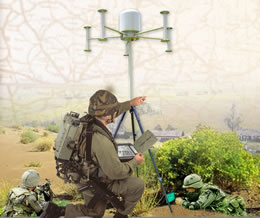
The 'NEWS Portable' system introduced by Elisra answers demands from the field for compact, lightweight COMINT/DF capabilities in real time. Photo: Elisra
The 'NEWS Portable' system provides dismounted forces with real time COMINT/DF capabilities. Photo: Elisra
Elisra is introducing a man-portable Communications Intelligence Direction Finding (COMINT-DF) system designed to support tactical, dismounted combat units. The new system, designated ‘NEWS Portable’ will be unveiled this week at the upcoming Avalon 2011 Airshow in Australia.
Previously regarded as an exclusive asset for operational and strategic echelons, the new system extends COMINT support to the tactical units enabling small units and special forces to monitor the military and civil communications spectrum (25-3000MHz), identify, track and exploit adversary or otherwise suspicious radios, radio-telephones or cellular sets, accurately locating their position enabling intelligence gathering in near-real-time.
“This system answers demands from the field for a compact, lightweight system that enables COMINT/DF capabilities in real time and integrates with all intelligence, EW, and Command & Control systems in the battlefield” Shlomo Yariv, VP and General Manager C³EW – Command & Control, COMINT & EW Systems Division explains, adding that the system can be configured with two different antennae – either a portable tripod-mounted unit when operating on the halt, or use a small directional antenna for dismounted operations. The selection of the antenna can be made in the field, according to the mission requirements. Portable COMINT systems became a standard issue supporting long range patrols operations in Afghanistan, supporting coalition forces and special forces with vital, ad-hoc intelligence support indicating enemy activity along the movement routes, remote villages, or locations prone to attack from ambushes.
The compact, lightweight is carried and operated by a single person. The system designated ‘NEWS Portable’ detects, locates and monitors signals of interest from specific locations. With this on-the-move capability, soldiers can locate emitters and adjust their route according to the signal’s source. NEWS can be used as an intelligence gathering tool, an element in a broader COMINT DF array, operating as part of Electronic Combat capability; it can also operate as a stand-alone unit, providing early warning on potential hostile activity near the operating unit. It can also enhance situational awareness.
Harris Corporation will supply Brazil’s armed forces Falcon III and Falcon II tactical radios under a new contract worth $14 million awarded by the Federative Republic of Brazil. Brazil plans to deploy the radios in a range of humanitarian, security and disaster relief missions. The communications gear included in this order is comprised of the Falcon III RF-7800V Very-High Frequency (VHF) handheld combat net radio, supporting forward-deployed forces with voice communications and data transfer services at rates up to 192 Kbps over the 30 to 108 MHz frequency band. The delivery also includes the Falcon II High-Frequency (HF) manpack radio set, providing the forces with secure, beyond-line-of-site communications. These radios were found most useful for operations in remote, mountainous or jungle areas, where on line-of-sight communications is restricted to short range only.
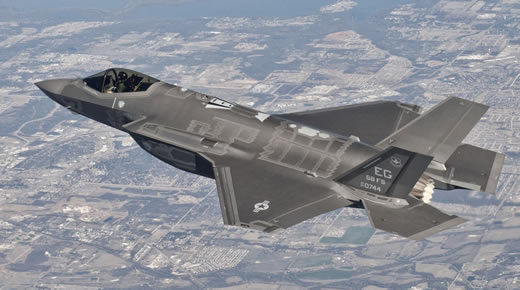
F-35A (AF6) on its first flight, with Lockheed Martin test pilot Bill Gigliotti in the cockpit. The aircraft took off from Naval Air Station Fort Worth Joint Reserve Base February 25, 2011 on at 3:05 p.m. CST for a test flight lasting one hour. Photo: David Drais, Lockheed Martin via Aviation Week
The first production model of the Lockheed Martin F-35 Lightning II made its inaugural flight February 25, 2011, in preparation for delivery to the U.S. Air Force this spring. The F-35A conventional takeoff and landing (CTOL) variant – designed to meet U.S. Air Force requirements – is also the primary export version of the Lightning II. The air forces of Italy, the Netherlands, Turkey, Canada, Australia, Denmark, Norway and Israel will employ the F-35A.
The second production F-35A, (AF-7) takes off on its maiden flight March 4, 2011 from Ft. Worth. The two aircraft form the first low-rate initial production lot (LRIP-1) of the Lightning II JSF. Photo: Lockheed Martin
The aircraft known as ‘AF-6’ is one of two production aircraft included in the Low-Rate Initial Production 1 (LRIP 1) batch. It is scheduled to go through flight tests in Fort Worth for about a month before it is accepted by the Air Force, heading to Edwards Air Force Base, Calif., along with the second LRIP-1 AF-7, which flew its maiden flight a week later, on March 4th, to support developmental testing shortly after the Air Force takes delivery.
Deliveries of the F-35B short takeoff/vertical landing variant to the U.S. Marine Corps also begin this year, while deliveries of the F-35C carrier variant to the U.S. Navy start in 2012.
As for the flight testing, 17 F-35 are now operating within the F-35 test fleet have logged more than 683 test flights, including 78 flights in 2011. The F-35B has completed 32 vertical landings, including 22 in 2011. The F-35C is scheduled to begin land-based catapult launches and arrested recoveries later this year, with ship-board test flights beginning in 2013. The F-35B will begin test operations from U.S. Marine Corps amphibious assault ships this fall.
F-35A (AF6) on its first flight, with Lockheed Martin test pilot Bill Gigliotti in the cockpit. The aircraft (serial # 07-0744) took off from Naval Air Station Fort Worth Joint Reserve Base February 25, 2011 on at 3:05 p.m. CST for a test flight lasting one hour. Photo: David Drais, Lockheed Martin via Aviation Week
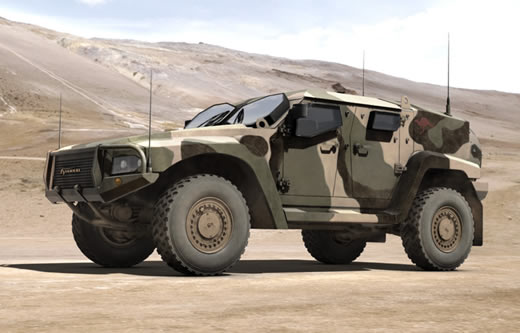
The Hawkei is characterized by a large protected interior space for crew, equipment and stores; four doors for easy access; Bushmaster levels of blast and ballistic protection; advanced technology for rapid up-armoring in the field; and straightforward reconfiguration between variants. Illustration: Thales Australia
Thales Australia has also delivered two prototypes of its Hawkei vehicle, for verification and validation under the Department’s LAND 121 Phase 4 program, which will replace part of the Army’s fleet of Land Rovers with up to 1,300 light protected mobility vehicles (PMV-L) at an investment of more than $A1 billion.
The Hawkei is characterized by a large protected interior space for crew, equipment and stores; four doors for easy access; Bushmaster levels of blast and ballistic protection; advanced technology for rapid up-armoring in the field; and straightforward reconfiguration between variants. Illustration: Thales AustraliaAn artist concept of the Thales Hawkei command vehicle. Illustration: Thales Australia
“The speed the Hawkei team has demonstrated to develop these prototypes shows that we have the capability to manufacture and deliver this cost-effective and versatile vehicle in response to urgent requirements, as Australia’s only genuinely local manufacturer of protected mobility vehicles” said Chris Jenkins, Thales Australia’s CEO. In the development of the new vehicle Thales has leveraged the experience gained on the Australian Bushmaster program. The company has teamed with Israel’s ballistic and mine protection expert Plasan, Boeing Defence Australia and the PAC Group, to complete the development of the Hawkei vehicle on time. The Hawkei is characterized by a large protected interior space for crew, equipment and stores; four doors for easy access; Bushmaster levels of blast and ballistic protection; advanced technology for rapid up-armoring in the field; and straightforward reconfiguration between variants.
Undergoing a parralel evaluation at the Monegeetta Proving Grounds in Victoria, are two Force Protection Ocelot vehicles competing for the same program.
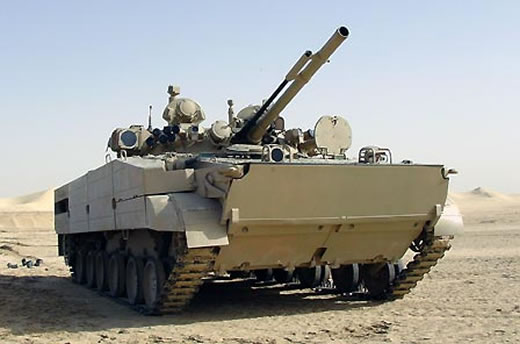
The UAE is upgrading 135 BMP-3 amphibious infantry carriers under a 74 million contract awarded through Russia's arme exporter Rosoboronexport.
The United Arab Emirates has announced at IDEX 2011 the conclusion of an agreement for the modernization of 135 Russian produced BMP-3 amphibious infantry fighting vehicles in service with the UAE land forces. The a $74-million upgrade contract was negotiated with Russian arms exporter Rosoboronexport.
The current upgrade is expected to modernize these vehicles into ‘BMP-3M’ level, integrating a modern turbocharged 660 hp UTD-32 engine, improved fire control system and upgraded armor package. Rosoboronexport is offering the new BPM-3M with the Arena-E Active Protection System (APS), but to date, this APS system has not yet been ordered by foreign (or domestic) customers.
The UAE is upgrading 135 BMP-3 amphibious infantry carriers under a $74 million contract awarded through Russia's arme exporter Rosoboronexport.
The main armament remains unchanged, with three coaxial weapons – the 2A70 low-velocity 100mm gun (which can also fire guided missiles), a 2A72 30mm automatic cannon, and 7.62mm coax machine gun. The vehicle carries two additional 7.62mm machine guns mounted on hull and turret positions. The turret of the M’ model is equipped with all-new optronics and fire control system, a new ammunition loader, the BZS1 gunner sight, integrated thermal imager and laser illuminator provided by Sagem and new commander’s periscope.
BMP-3 is capable of speeds up to 70 kilometers per hour when driving on the highway, or up to ten miles an hour swimming at sea. The cruising range of the upgraded model is 600 kilometers.
The UAE is the largest international operator of BMP-3 vehicles. Between 1992 and 2000 about 600 BMP-3 were delivered. The chassis were manufactured by the Kurganmashzavod plant in western Siberia and turrets delivered by the Tula based Instrument Design Bureau (KBP). These vehicles have already received an armor upgrade in the year 2000, fitting reactive armor panels on 400 of the BMP-3s. These vehicles are now reaching their mid-life point and require significant improvements.
A prototype of a modified BMP-3 developed in Germany by the Industriewerke Saar (IWS) company uses forward-mounted engine and rear-mounted turret, offering more efficient use of space. Photo via ArabDefense blog.
The UAE has also pursued parallel tracks for the vehicle’s upgrade; few years ago Industriewerke Saar GmbH (IWS), a member of the Diehl Defence group, was contracted by the UAE to develop an ambitious modification of the vehicle. IWS introduced a single prototype of the modified BMP-3 but, apparently, this effort has not been pursued further.
While the basic BMP-3 accomodates nine troops in addition to the three-man crew, the redesigned vehicle offers only six positions, but these ergonomic positions offer more sustainable combat missions, rapid disembarkation and more useful space.
IWS has moved the engine from the original lower rear position to the front, clearing more spacious accommodation for six troops. The front-mounted powerpack comprised a MTU-V6 engine and Renk automatic transmission. To maintain floating stability the turret was moved backward.
The UAE has also explored utilizing parts of the BMP-3 on other vehicles. In 2007 a version of the Patria AMV was displayed at the IDEX exhibition mounting the BMP-3 turret.
The UAE is currently the largest international operator of the Russian BMP-3.
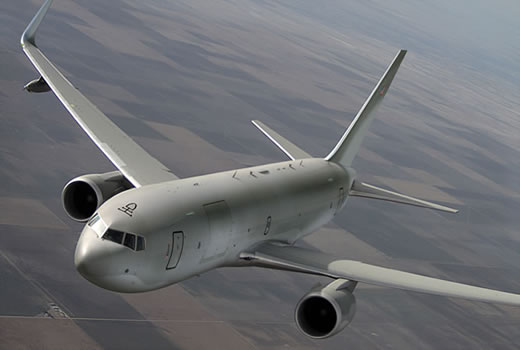
Boeing was selected to deliver 175 'NewGen' aerial tankers based on the Boeing 767 platform, as part of a $35 Billion program, considered as one of the largest procurement programs undertaken by the U.S. Air Force.
The Pentagon announced Boeing has been awarded over US$3.5 Billion in fixed price, incentive firm contract for engineering and manufacturing development of the KC-46A (formerly KC-X) aerial refuieling tanker. The awarded amount will buy 18 NewGen tankers to be delivered by 2017. Basing decisions for the aircraft will take place over the next couple of years. The proposed tanker uses the Boeing 767-200 platform, enhanced with a ‘787 cockpit and fitted with a refueling boom derived from the KC-10 aircraft. Unlike current U.S. Air Force tankers, the KC-46A will be equipped with hose and drogue refueling systems in addition to the standard boom, enabling the aircraft to support joint forces operations (supporting U.S. Navy, Marine Corps fighters, Special Operations airplanes and coalition air forces.)
Boeing was selected to deliver 179 'NewGen' aerial tankers based on the Boeing 767 platform, as part of a $35 Billion program, considered as one of the largest procurement programs undertaken by the U.S. Air Force.
According to Cobham, the British supplier selected by Boeing to deliver these refueling systems, each of the 179 KC-46A aircraft will be equipped with a centreline drogue system provided by Cobham. Approximately 30 tankers will also be provided with a pair of wing-mounted aerial refuelling pods, also supplied by the British company, manufactured at its new specialist air-to-air refuelling facilities in Davenport, Iowa.
“Many factors were evaluated during the tanker selection process,” said Secretary of the Air Force Michael Donley. “Selection took into account mission effectiveness in wartime and life cycle costs as embodied in fuel efficiency and military construction costs,” said Donley, emphasizing that both offerors met all the mandatory requirements. Richard Aboulafia of the Teal Group said rising fuel prices had widened the gap in operating costs between the larger Airbus A330-based tanker and Boeing’s more modest 767.
“The thorough and transparent selection process was marked by continual dialogue with offerors to ensure the Air Force had a clear understanding of their proposals and the companies clearly understood the service’s analysis of their offers,” said Donley. “Gen. Schwartz and I are confident in the fact that when our young pilots, boom operators and maintainers receive this aircraft, they will have the tools they need to be successful at what we ask them to do,” Donley said.
This initial order is the preliminary phase of the KC-X program, which will span over decades, delivering up to 179 aerial tankers, at an estimated cost of $35 Billion. Analysts were expecting the competitor EADS to win the Air Force selection.
On March 4, 2011 Reuters reported that Europe’s EADS is expected to announce it will not protest the winning of the U.S. tanker deal by its U.S. rival Boeing Company, giving up on the current aerial tanker program. EADS has until March 7 to decide whether it will protest, but company officials are already shifting their focus to other U.S. weapons competitions and the hunt for acquisitions that could help it expand its footprint in the United States. EADS and Boeing are likely to battle it out again in coming years, when the Pentagon plans to stage separate competitions for other 300-plus refueling planes. “We have given our competitor a tough fight and forced them to offer a very low price. For Boeing, losing this would have been a disaster; for us it is only a lost business opportunity.” Airbus Chief Executive Tom Enders commented.
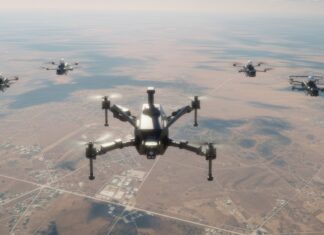
Lockheed Martin Skunk Works® and XTEND have achieved a major milestone in JADC2 by integrating the XOS operating system with the MDCX™ autonomy platform. This technical breakthrough enables a single operator to simultaneously command multiple drone classes, eliminating the friction of mission handoffs. From "marsupial" drone deployments to operating in GPS-denied environments, explore how this collaboration is abbreviating the data-to-decision timeline and redefining autonomous mission execution.
As traditional defense primes face mounting competition from agile “neoprimes” such as Anduril, Palantir and Helsing, the balance of innovation is shifting toward software-defined warfare and scalable, dual-use technologies, while global industry consolidation—marked by Boeing’s integration of Spirit AeroSystems and other strategic mergers—signals an intensified race to secure control over the defense technology value chain. Our Defense-Tech weekly report highlights these trends.
In early October 2025, a coordinated wave of unmanned aerial system (UAS) incursions—widely attributed to Russia—targeted critical infrastructure across at least ten European nations. The unprecedented campaign exposed the fragility of Europe’s air defenses...
Executive Summary
The past week (September 18-25, 2025) represents an inflection point where strategic defense concepts have transitioned from doctrine to tangible reality. An analysis of global events reveals four primary, interconnected trends shaping an...
At the 2025 Air, Space & Cyber Conference, U.S. Air Force and Space Force leaders unveiled major updates on next-generation fighters, bombers, unmanned systems, and space initiatives, highlighting both rapid innovation and critical readiness challenges as the services race to outpace global competitors. A short version is available here, with a more detailed version for subscribers.
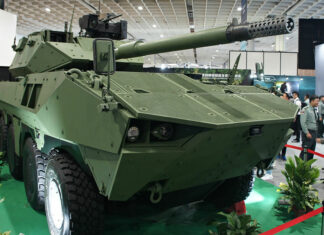
The Taipei Aerospace & Defense Technology Exhibition (TADTE) 2025 crystallized around four dominant strategic themes that collectively illustrate Taiwan's comprehensive approach to defense modernization amid escalating regional tensions. Based on a detailed report by Pleronix (available upon request). Includes a Podcast discussion on TADTE 2025's highlighting Taiwan's four strategic themes beyond the post's coverage.
Israel’s Iron Beam 450 high-power laser system has completed final testing, marking a major leap in air defense. Developed by Rafael, it offers precise, cost-effective interception of rockets, UAVs, and mortars, and is set for IDF deployment by 2025.