Monday, December 22, 2025
More
    Home Blog Page 388

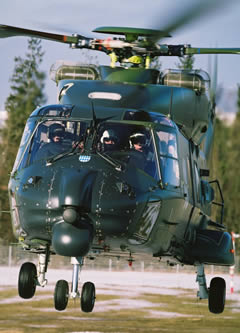
    German Army Air Corps Recieved First Three NH90 Tactical Transport Helicopters

    The German Army accepted the first three NH90 Tactical Transport Helicopters (NH90 TTH) on December 13th, 2006. The German Army is the first customer to take delivery of this model. The helicopters will be used for flight and maintenance training with the German Army Air Corps.

    Following the qualification of the helicopter by NATO HElicopter Management Agency (NAHEMA) on March 31st this year the German type certification was granted on December 1st, 2006, clearing the way for deliveries to the German Army and international customers.

    Until the end of 2007, 14 aircraft will be delivered. The NH90 program acquired a backlog of 500 aircraft (400 firm orders plus options for additional 100) from Germany, France, Italy, the Netherlands, Portugal, Finland, Norway, Sweden, Greece, Oman, Australia and New Zealand. Negotiations are proceeding with Spain and Belgium about respectively 45 and 10 additional TTH.

    NHIndustries, the industrial joint venture between AgustaWestland (32%), Eurocopter (62.5%) and Stork Fokker (5.5%).
    A prototype of the NH90 TTH

    KMW Acquires The Defense Division Of Blohm+Voss Industries

    A new merger in the German defense market. Krauss-Maffei Wegmann (KMW) has acquired the defense division of Blohm + Voss Industries.

    KMW was the main customer of this division, which produced over 10,000 turret and hull structures for the Leopard tanks, as well as add-on armor for military vehicles designed by KMW. The transfer will be completed by 31st January, 2007, subject to the approval by the Federal Cartel-Office and settlement of interest with the representatives of its 2,800 employees.

    This acquisition is the second transaction in the European armor market announced this week, following the acquisition of Danish armor specialist Roshield by the Dutch TenCate group.

    F-35 is Airborne!

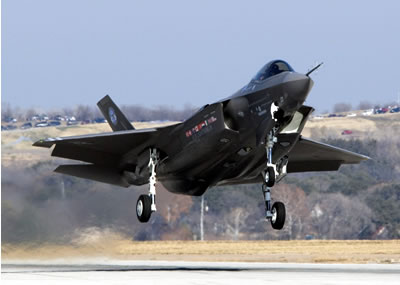
    Lockheed Martin F-35 JSF takes off on its first flight, December 15, 2006 (Photo: Lockheed Martin)

    The first F-35 Lightning II Joint Strike Fighter took off on its initial test flight from Lockheed Martin in Fort Worth, Texas on 12:44 December 15, 2006 piloted by the program’s Chief Pilot Jon Beesley. The aircraft was airborne 35 minutes on its maiden flight. the jet lifted off and began a climb-out to 15,000 feet. Beesley then performed a series of maneuvers to test aircraft handling and the operation of the Pratt & Whitney F135 turbofan and subsystems.

    Dan Crowley, Lockheed Martin executive vice president and general manager of the F-35 program, said the aircraft has continued to meet or exceed expectations during its assembly and pre-flight checkouts. It has now embarked on a 12,000-hour flight-test program designed to validate tens of thousands of hours of testing already completed in F-35 laboratories.

    Lockheed Martin F-35 JSF takes off on its first flight, December 15, 2006 (Photo: Lockheed Martin)

    Harris Links Military, Government & Civilian Networks

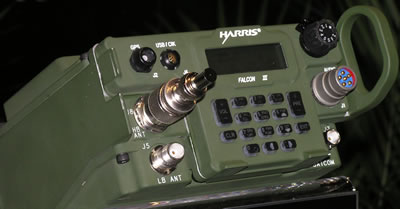
    Harris continues to expand the envelope of its latest Falcon family member – the AN/PRC-152(C) Falcon III radio. Following the recent SCA certification Harris Corporation demonstrated a new application of a software-programmable waveform that enables this software configurable radio to communicate between military, national guards and reserve units and commercially available APCO P25-based radios, commonly used with law enforcement, FBI, FEMA and other first responders.

    This waveform will allow communications interoperability among military users, civil authorities, and first responders. The radio offers interoperability with a wide range of military radios, including Type-1 secured SINCGARS, Havequick II, HPW, VHF/UHF, and MIL-STD-188- 181B UHF SATCOM communications capabilities. The production version of the APCO P25 waveform will be available by summer 2007. The system’s Software Communications Architecture (SCA) was recently and certified by the Joint Tactical Radio System Test and Evaluation Laboratory (JPEO JTEL) to be compatible with the SCA standard governing all futureJTRS radio’s waveforms. This certification ensures compatibility with future JTRS radios which will augment, and later replace all current military combat net radios.

    DRS To Develop Laser Receiver For Threat Warning Application

    DRS Technologies will develop and demonstrate a new near-mid wavelength infrared active detection receiver system under a U.S. $6.3 million contract awarded by the Defense Advanced Research Projects Agency (DARPA). The ultra-sensitive infrared detection device will utilize DRS’ unique Mercury Cadmium Telluride (HgCdTe) electron avalanche photodiode (e-APD) focal plane array technology. When associated with suitable laser illumination source, it could be used for detecting land-based threats, forming a key subsystem for next-generation electro-optical threat warning systems. The receiver will be delivered for testing by November 2008. The total contract award could reach $13.7 million, if a $7.4 million option is exercised.

    New Datalink Demonstrates High Capacity Airborne Networking

    L-3 Communications completed flight tests of a new IP-enabled, wideband Multi-Platform Common Data Link (MP-CDL) demonstrating the capability to sustain high capacity airborne networking. The test involved multiple missions flown by two Big Crow NKC-135 aircraft, establishing up to 274 Mbps datalinks over distances of 300 nautical miles (km). Simultaneous video transmission to man-packable ROVER III terminal validated the system’s ability to provide real-time, full-motion video through the net-centric MP-CDL terminal directly to warfighters on the ground.


    The demonstration established datalinks between the two aircraft and from the aircraft to the Global Information Grid (GIG), the Internet, and the public switched telephone network using the Department of Defense’s (DoD) Network CDL, Standard CDL, and MP-CDL is a production-ready data link delivering advanced communications capabilities including automatic self-healing network formation, IP routing, adaptive transmit power and data rate selection, automatic signal acquisition and jam resistance.

    Network applications demonstrated simultaneously on Big Crow through the MP-CDL terminals included multiple simultaneous high bandwidth video streams, video teleconferencing, high-definition video, Voice over Internet Protocol (VoIP) with access to the public switched telephone network and Internet access to the World Wide Web and e-mail.

    The Big Crow flights passed high-bandwidth data from one aircraft to the other, automatically routing traffic through to the ground site and distant networks when required. Standard Ethernet interfaces allowed personal computers onboard the aircraft to communicate through the system to the Internet at high data rates, with a variety of user application software.

    Additionally, L-3 Integrated Systems (L-3 IS) demonstrated their third generation EV-3 Office In The Sky application suite with the MP-CDL system and utilized the high bandwidth, net-centric data link capability to provide an eight-way real time Video Teleconferencing (VTC) connecting the two airborne platforms and multiple ground locations, including Washington, DC. Their integrated VoIP was also used to provide connectivity with the public telephone networks.

    ARTEMIS Hyperspectral Payload Delivered For New Satellite

    Raytheon delivered new space based hyper-spectral imaging payload designed to spot that could help troops identify potential threats on the ground such as weapons, equipment and combatants. The sensor called ARTEMIS (Advanced Responsive Tactically Effective Military Imaging Spectrometer) was developed as an experimental device, under a U.S. $14 million program within 15 months. The new payload was developed to address the U.S. Air Force’s responsive-space approach, addressing the rapid development, assembly and deployment of satellites and their cargo. Conceivably, systems could be assembled, loaded and launched into low-earth orbit within a week, compared to months or years required for the conventional processes.

    German Parliament Approves Boxer Acquisition

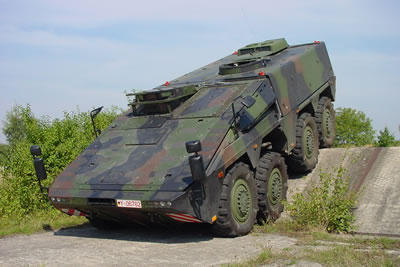
    The German parliament approved the procurement of 272 BOXER armored protected vehicles for the German Army. The Dutch armed forces already confirmed the procurement of 200 vehicles which will be co-produced by the German-Dutch ARTEC consortium, where German and Dutch companies have equal shares.

    The Boxer is built with a modular design approach, enabling rapid reconfiguration of the vehicle, with different mission modules. The common vehicle chassis is configured for highly protected personnel transport as well as for command, ambulance, maintenance and cargo functions. The vehicle is protection against mines and ballistic threats. The basic platform is also equipped with self-defense armament, smoke grenade launchers and standard NBC protection and environmental control system. The vehicle is designed for rapid mobilization inside the future Airbus A400M military cargo aircraft.

    After Iran- Are Arab Nuclear Efforts Underway?

    One of the greatest risks associated with Iran’s determined drive to acquire a nuclear weapons capability is that it will spark further nuclear proliferation in the region. According to recent reports, six new states in the Middle East are already considering developing nuclear programs. The oil-rich Arab Gulf states consider starting a joint nuclear program for peaceful purposes. Issued after a two-day meeting of the six-nation Gulf Cooperation Council, the statement said the group “commissioned a study” on setting up “a common program in the area of nuclear energy for peaceful purposes,” which would abide by international standards and laws.

    Saudi Arabia’s foreign minister, Prince Saud al-Faisal, was quick to tell reporters after the closing session that the group did not want to be “misunderstood,” saying its aim “is to obtain the technology for peaceful purposes, no more no less.” However, the Arab nations in the region, have expressed worry over the disputed Iranian nuclear program, which is the focus of a standoff with the West over Tehran’s refusal to suspend uranium enrichment. In fact, Iran’s first reactor — being built in Bushehr just across the gulf from Kuwait and the eastern coast of Saudi Arabia — is projected to begin operating in late 2007. Arab analysts have urged their leaders sending a “clear, strong and courageous” message to Iran that the GCC nations will not sit and watch while Iran presses forward with its nuclear program.

    For example, Egypt – one of the more serious potential proliferators – is undoubtedly most troubled by the prospect of Iran becoming a nuclear state and has begun to voice its concerns more openly than in the past.

    In March 2004, US and British intelligence officials reported on evidence found that Libya traded nuclear and missile expertise with Egypt. It appeared that Egypt could been using Libya as a way-station for obtaining nuclear and missile technology and components from North Korea. Earlier, in 2002, Egypt denied US allegations that Cairo was conducting secret missile and WMD trade with Libya. The allegations were based on CIA satellite photographs. In January 2005, the head of Mossad, Meir Dagan, warned the Knesset Foreign Affairs and Defense Committee, that there were indications on several Middle East states other than Iran – including Egypt and Syria – working at varying stages in development of indigenous nuclear programs.

    Days after, former Mossad chief Ephraim Halevy expressed fears that Syria, Egypt and Saudi Arabia might have acquired some kind of nuclear capability via an illicit weapons trafficking network run by Dr Abdul Qadeer Khan, the chief architect of Pakistan’s nuclear bomb. Israeli military sources recently told The Jerusalem Post that, thanks to Khan, one of those three Arab states now has the potential to achieve a “significant nuclear leap.”

    United States officials have expressed concern about reports that Egypt has a secret uranium research program supporting further investigation by the International Atomic Energy Agency (IAEA). Indeed, the UN nuclear agency also claimed in its recent report, that Egypt might have conducted secret nuclear experiments in violation of international non-proliferation treaties.

    When experts from the United States and the International Atomic Energy Agency ( IAEA) came upon blueprints for a 10-kiloton atomic bomb in the files of the Libyan weapons program, they discovered some disturbing documents, pertaining to so far suspected, but not proven intelligence rumors. These documents also confirmed U.S. suspicions of secret trade between Cairo and Tripoli in strategic weapons obtained from North Korea.

    On the evidence found the experts gained new appreciation on the audacity of the rogue nuclear network led by the notorious Pakistani nuclear scientist Dr Abdul Qadeer Khan. Intelligence officials had watched Dr. Khan for years and suspected that he was trafficking in machinery for enriching uranium to make fuel for warheads.

    Among documents seized in Libya, Investigators learned, that Dr Khan had traveled extensively throughout the Middle East and among others, secretly visited Syria, Saudi Arabia and Egypt, on what they believed were business trips, either to buy materials like uranium ore or even sell atomic goods.

    American intelligence officials had Dr. Khan under surveillance for nearly three decades, since he began assembling components for Pakistan’s bomb, but apparently had missed some of his crucial transactions and secret negotiations in the Middle East.

    Egypt’s own nuclear program is a delicate balance of championing nuclear nonproliferation in the Middle East, developing civilian nuclear industry to address its economic and electricity needs, while at the same time seeking some guarantee of security against the Israeli nuclear threat.

    At the core of Egypt’s nuclear program is the Inshas Nuclear Research Center in Cairo. Inshas hosts a 2-megawatt, Soviet-supplied research reactor that started in 1961 and runs on ten-percent-enriched uranium fuel. The reactor was shut down for renovation during the 1980s, but started up again in 1990. In 1992, Egypt had signed a contract with Invap, Argentina’s leading nuclear organization, to build a 22-megawatt research reactor at Inshas. According to statements by an official at Argentina’s embassy in Washington, DC, construction began in March 1993.

    Egypt’s Nuclear Materials Authority has directed uranium exploration to concentrate on four areas in the eastern desert: Gabal Gattar, El Missikat, El Erediya and Um Ara. A new uranium-bearing area, Gabal Kadabora, has been discovered in the central eastern desert and is now under evaluation

    Egypt has not in the past and does not presently appear to be aggressively pursuing nuclear weapons, however a recent increase in calls by military officers, government officials, and scholars to develop an Arab deterrent to Israel signals a growing frustration with what it perceives to be the international community’s double standard regarding nuclear proliferation in the region. Unfortunately, this trend may receive new impetus following PM Olmert’s unexplained gaffe this week.

    Statements already made by high-level Egyptian officials and various media reports have overwhelmingly target Israel as Egypt’s major concern in the nuclear realm. However, embedded in these latest statements, are clear hints of Egypt’s broader regional considerations, which make its agenda on nuclear issues much more varied and complex. Egypt is particularly concerned how nuclear development and potential proliferators and especially a shiite dominated nuclear Iran could have impact on Egypt’s own regional prominence.

    Looking at what has happened more recently with India and Pakistan since they became declared nuclear states, Egypt could conclude that implications of going nuclear in the future might not be that serious, especially in light of American-Pakistani cooperation since September 11. In this context, Egypt will most likely be very interested in U.S. policy toward North Korea and its so far incapable dealing with Iran’s nuclear ambitions.

    Thus it is not surprising that President Hosni Mubarak called recently for Egypt to pursue a peaceful nuclear energy program. Mubarak echoed a call made earlier by his 42 year old son, Gamal, who many in Egypt believe is being groomed to succeed his father at the helm. The proposal raised eyebrows, which analysts saw as a jab at the United States, which, while still locked in a confrontation with Iran over its nuclear program, may lately be wavering in its firm stance. Middle East experts and analysts point to the timing of these announcements – coinciding with western concerns that Iran’s nuclear program may prompt an arms race in the Middle East – as a sign of their potentially broader regional significance.


    Israel’s Nuclear Ambiguity Challenged?

    Israel’s policy of ambiguity over its nuclear capabilities appears to have taken a surprising step toward unprecedented clarity following an, apparently unprepared and even unintentional statement made by Prime Minister Ehud Olmert in an interview on a German news channel. Olmert said that Israel should not be compared to Iran “when they are aspiring to have nuclear weapons, as America, France, Israel, Russia.”


    Olmert’s surprising comments come a week after the incoming U.S. secretary of defense, Robert Gates, shocked observers when he said that Israel possessed nuclear arms, before a Congressional confirmation panel. The incoming defense secretary took this another step: He made it clear that “no one can promise that Iran will not use nuclear weapons against Israel.” Could this indicate that the new Bush administration strategic policy has washed its hands of responsibility for stopping Iran nuking Israel (or anyone else, in the region, for that matter);and that in a future nuclear confrontation, the United States will stand aside and have Israel fend for itself?. If implemented, such a strategy could have devastating consequences for Israel’s strategic posture and deterrence against Islamic fundamentalist rogue states in the Middle East and especially extremist Iran. Unidentified political sources, close to the prime minister’s office, offered the view that Israel cannot afford to leave Robert Gates’ assertion last week, that no one can guarantee Iran will not use a nuclear bomb to attack Israel unanswered- hinting that Olmert’s strange revelation could have been intentional, in an effort trying to redress Robert Gate’s dubious allegation.

    Since the Sixties, when Israel is considered to have begun its nuclear program, all presiding Governments have never confirmed possession of nuclear weapons. It remained an open secret in a sceptic world, and especially the highly suspicious Middle East, even following the embarrassing disclosure, when Mordechai Vanunu spilled Israel’s nuclear secrets, some 20 years ago.

    Israel’s traditional caution towards its nuclear posture is not unique. All nuclear states maintain a veil of secrecy over their nuclear weapons posture, weapons stockpile, and technological and operational infrastructure. Many details of Israel’s nuclear weapons program and its delivery systems have so far remained uncertain and highly speculative. Israel has long maintained that “it will not be the first to introduce nuclear weapons into the Middle East”. This declaration was adopted and carefully maintained by all Israeli leaderships and accepted by its ally, the USA, as a strategy of ambiguity, avoiding the need for any formal declaration on the status of Israel’s nuclear weapons program.

    Strategic ambiguity, or Opacity, has served Israel’s nuclear policy well and so far has no alternative, defense analysts urge. This code of silence may seem an anomaly in a political culture characterized by a normally open public debate, icluding recently on some of the most sensitive defense issues, which were hitherto regarded top secret. Thus, it is only natural that people may ask themselves, following PM Olmert’s apparently bungling controversial public slip, if the near fifty year ambiguity should last or be replaced by new national strategy. This argument could become substantive only if adequate preparations in a change of strategic policy be held at the highest political and defense authority level, weighing all pro’s and con’s of this delicate issue to Israel’s defensive posture. In-depth consultations should also follow with Israel’s closest allies, primarily, the United States, which must be made part and parcel of any decision.

    Finally, if Israel wishes to enhance its deteriorating strategic deterrence in the region, following its questionable performance during Lebanon last summer, there must be more subtle ways found to achieve this. For example, veteran politician Shimon Peres recently hinted in an interview, that should Iran’s President Mahmoud Ahmadinejad continue to threaten Israel’s existence, there are ways to have Tehran pay the heaviest consequences. A similar expression was made by US Senator Hillary Clinton at the Saban conference only last week. Both leaders were carefully avoiding going into details, as to who, or how this deterrence would be implemented. Israeli politicians, including its prime minister would do well, to continue the traditional strategy of ambiguity, until an in-depth and wide ranging study be convened at the highest professional authority in order to decide if and when such a change should take place.

    Note: A new analysis assessing the regional implications of New Nuclear Programs in the Middle East will follow in tomorrow’s Defense Update analysis section.

    The Golan Heights- remain a vital strategic asset for Israel

    Only a number of days after the UN passed a resolution calling Israel’s sovereignty over Jerusalem illegal, former US secretary of state James Baker demands Israel leave the Golan Heights. It appears, from the report, that the Golan Heights are being used by the Iraq Study Group as an inducement to obtain cooperative Syrian behavior on Iraq. As predicted, Syrian Foreign Minister Farouk a-Shara immediately expressed his country’s willingness to enter into peace negotiations with Israel, stating such a move is welcome. A-Shara stated Damascus is willing to reach an agreement with Israel with the understanding the Golan Heights must be returned to Syria to the last centimeter, as part of such an agreement. For Israel, such a move would spell strategic disaster. This assessment will deal ONLY with the military aspects of the Golan question, raised by the Baker-Hamilton report and intentionally ignore all political considerations pertaining to this critical issue.

    The Geostrategic Status of the Golan Heights

    Above the Sea of Galilee rises n escarpment, its height ranging from 800 to 100 meters altitude known as the Golan Heights, towering over the Jordan rift valley to its west. It covers a total area of some 900 square kilometers. These ancient hills were created by volcanic activity, pouring out from craters, covering the high plateau with layers of basalt, making cross-country movement difficult. The highest point is Mount Hermon, a multi-peaked mountain rising to 2814 meters at its peak, which dominates observation over the entire region up to the Damascus Basin to the east- only some 60 kilometers away. he so-called “Purple Line” established after the ceasefire of June 10th, 1967 provided an excellent line of defense for Israel, located mostly along the watershed and enabling long range observation posts from a line of volcanic hills, on which the IDF established strategic electronic surveillance stations. On the other hand, from pure strategic view, the same Golan Heights contribute almost nothing to the defense of Syria’s capital Damascus. A glimpse at the map indicates that due to topographical features to its west, Damascus can best be defended along the Awaj River near Sasa and the two stony deserts to the south, both impassable to military traffic. Any defense further west, including the Golan Heights can be outflanked, as the IDF did during the latter stages of the 1973 Yom Kippur War.

    The Golan heights- Israel’s strategic Bulwark


    Due to its geo-strategic topography, Israel’s northern border poses some serious anomalies to its defensive posture: What is known as the “Galilee Panhandle”, an area which pokes like a finger from the Hula valley northward up to the Lebanese border, is a curious geographical phenomenon, created as result of hasty, shortsighted decisions made by the French and British following their victory over the Ottoman empire after WW1. The facts of this political fiasco, are apparent to even the most impartial observer. On its west, the Panhandle leans on a mountain range, only partially under Israeli sovereignty, the rest is Lebanon. (Over this very ground was fought last summer’s Second Lebanon War, with disastrous consequences, partly due to topographical constraints) Only a mere 5000 to 7000 meters in width along its northern part, the Panhandle is dominated on its east by the towering Golan Heights, from which, pre-1967 Israeli settlements were constantly bombarded by Syrian artillery located on the overlooking slopes.

    Under the present circumstances prevailing in this region, should Israel deprive itself of its most important strategic asset for a mere piece of paper, signed by a single leader, would be a strategic mistake, having serious consequences to any future negative change in Middle Eastern affairs. In fact, Syria’s national interests are focused not only on the Golan Heights, which represent only an insignificant part of its entire territory. Syria’s long-term strategic aims are to exert its hegemony over Lebanon and Israel’s northern territory and even part of northern Jordan, which it considers part of their strategic aspirations over a “Greater Syria” predominance.

    One of the options being proposed by the Baker-Hamilton report is to place US forces to mentor a future Syria-Israel peace deal over the Golan Heights, following Israel’s withdrawal. Part of this would be US experts taking charge of the IDF monitoring stations on Mount Hermon and the overlooking border hills. As real-time intelligence in modern warfare is regarded imperative in early warning relinquishing these highly strategic assets, even under a friendly monitored replacement could become a crucial matter of national security. For example, During Operation Desert Storm, US intelligence on Iraqi Scud launch zones in western Iraq, vital to Israel, was denied even when Saddam’s missiles impacted on Tel Aviv. But there are other reasons for Israel’s reluctance to place US forces on the Golan. The presence of US forces in harms way to guard Israel against hostile infiltrations and subsequent preventive counter-guerrilla operations by the IDF could lead to unnecessary tension between the two allied nations.

    In conclusion, the Golan Heights represents a vital strategic asset for Israel’s security, especially in view of the current political developments in the region. The danger of the so-called Shiite Crescent engulfing Israel from its north and north-eastern border, with a Hezbollah dominated and Iranian-backed Lebanese Government, places Israel, should it cede the Golan Heights to Syria, before a strategic disaster. Being defensive in its nature, the Golan Heights not only safeguards Israel’s north, but deters, by the IDF long range reach into the Damascus basin, from any offensive options, which Bashar Assad may consider to regain the Heights by force under an Iranian umbrella.

    Further Reading: The Golan Heights Will Remain Israel’s Strategic Bulwark, May 2008

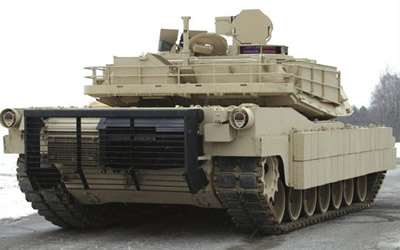
    Tank Urban Survivability Kit (TUSK)

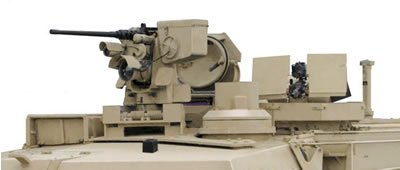
    The field-installed kit includes armor upgrades to the rear and bottom of the hull; an installation of slat armor to protect the engine compartment and use of appliqué reactive armor tiles to improve flank protection. A CROWS remote controlled weapon station (RWS) mounting a .50 caliber machine gun is replacing the commander’s 0.5″ cupola mounted heavy machine gun, enabling the commander to operate the weapon when “buttoned up” under closed hatches. RWS is provided only for M-1A2 TUSK sets. The M-1A1s will be fitted with a thermal sight coupled with remote- viewing and firing capability.

    The TUSK kit includes a bolt on armored gun shield attached to the M240 (7.62mm) external machine gun, which will help to protect the loader when he is in the open-hatch firing position. When “buttoned up” the loader will be able to use the weapon from inside, aiming it via a thermal sight which projects the target image into a pair of goggles. A tank-infantry phone linked to the tank’s intercom will also be added to improve connectivity with supporting forces.

    On August 29, 2006 General Dynamics Land Systems received a US Army order for 505 Tank Urban Survivability Kits (TUSK) for Abrams main battle tanks supporting operations in Iraq, under a US$45 million contract. The add-on kit will be provided for M1A1 and M1A2-series tanks to enhance crew survivability in urban environments. The kit ordered by the Army consists of a Loader’s Armor Gun Shield (LAGS), a Tank Infantry Phone (TIP), Abrams Reactive Armor Tiles (ARAT), a Remote Thermal Sight (RTS) and a Power Distribution Box (PDB). Deliveries are expected to be complete by April 2009.

    Under a separate order, the US Army awarded General Dynamics Armament and Technical Products (GDATP) US$30 million to produce reactive armor kits to equip M-1A2. The total contract value could reach $59 million if all contract options are exercised. The reactive tiles for the M-1 will be locally produced at GDATP’s Burlington Technology Center. Tiles will be produced at the company’s reactive armor facility in Stone County Operations, McHenry, Miss. On December 8th 2006 the U.S. Army added Counter Improvised Explosive Device enhancements to the M1A1 and M1A2 TUSK, awarding GDLS U.S. $11.3 million, part of the $59 million package mentioned above. In December GDLS also received an order amounting about 40% of a US$48 million order for loader’s thermal weapon sights being part of the TUSK system improvements for the M1A1 and M1A2 Abrams Tanks.

    Dutch Army Launches Air Defense Modernization Project

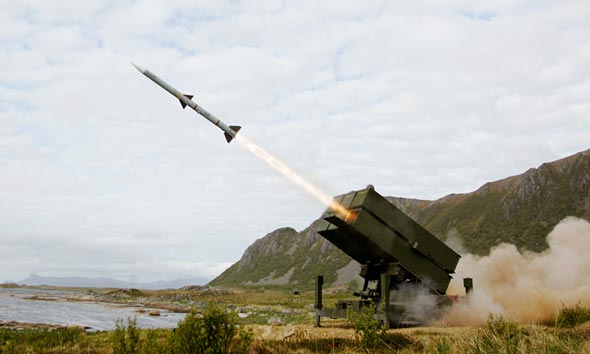
    The Netherlands issued procurement contracts for its long awaited Ground Based Air Defense system. The work will be shared by three companies, including EADS Defence and Communications Systems, Kongsberg Aerospace & Defence from Norway and Swiss company Orlikon.

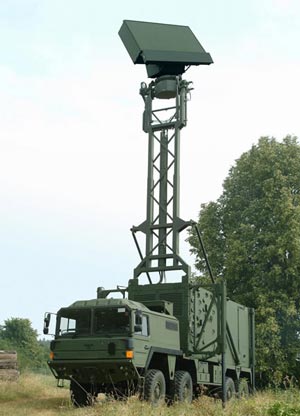
    The air defense system will consist of six Norwegian Advanced Surface to Air Missile System (NASAM), the missiles will be delivered in 2009 by Defence & Aerospace, under a contract valued at 345 million Norwegian Krones (US$54.6 million). EADS Defence and Communications Systems (DCS) will provide the battle management command, control, communication, computers & information (BMC4I) system, to be integrated as part of the Netherlands Future Ground Based Air Defense (FGBAD NL). The main sensors of the BMC4I are two TRML-3D mobile surveillance radars. Mobile command and control operation centers, a digital radio communication network from Oerlikon.

    All components of the FGBAD NL will be networked in a secure wireless local-area network (LAN), enabling the exchange of information between the radar units and the command vehicle and weapon systems in real-time, distributing an integrated air situation display through all elements. As part of the initial phase of the FGBAD NL, EADS supplied three additional TRML-3D mobile surveillance radars and mobile command and control operation shelters.

    Will Ahmadinejad’s term be cut short?

    The Iranian parliament voted last sunday to unite the presidential elections with the upcoming parliamentary ones, this according to the official Iranian news agency. The proposal, which passed with a surprising 80 percent majority, may cut the term of President Mahmoud Ahmadinejad by 18 months. The bill must still be ratified by the Iranian constitutional committee, which is headed by former president Akbar Hashemi Rafsanjani, Ahmadinejad’s arch-rival, a fact which many see as indicative that the bill will indeed be authorized. Parliament approved a draft bill upon which the parliamentary and presidential elections would be held simultaneously in the first quarter of 2008.

    Although Iran’s parliament is dominated by the ultraconservative Abadgaran (Development) Party of which the president is a senior member, there is already growing disconcerting evidence among the religious clerics to Ahmadinejad’s messianic rhetoric. In a sign of divisions at the top of the clerical establishment, even the supreme leader, Ayatollah Ali Khamenei, who has until now supported Mr Ahmadinejad, said “irregularities” in the government’s behaviour would not be tolerated. Older, traditionalist conservatives, are worried that Ahmadinejad is trying to instigate a new Iranian revolution this time within the existing structure of the state. They fear he wants to bring younger extremists from the Revolutionary Guard into top positions of power, ousting the older clerics who have previously held sway and embarking on a new cultural revolution that could unsettle their rule.

    Still, the hard-line president has a strong power base, backed by his own spiritual adviser, Ayatollah Taqi Mesbah-Yazdi, who recently suggested that future elections were superfluous because a true Islamic government had arisen. But the most remarkable aspect of Mr Ahmadinejad’s piety is his insinuation to the “Hidden Imam”, or Mahdi, the Messiah-like figure of Shia Islam. The 49-year-old Mr Ahmadinejad, who was surprisingly elected over his arch rival Akbar Hashemi Rafsanjani, sees his main mission, as he recounted in a speech in Tehran, as to “pave the path for the glorious reappearance of Imam Mahdi, may Allah hasten his reappearance.” According to Shiites, the 12th imam disappeared as a child in the year 941. When he returns, they believe, he will reign on earth for seven years, before bringing about a final judgment and the end of the world. According to his adversaries in the clerical establishment, Ahmadinejad’s messianic obsession crossed the line where the domestic audience is concerned is, when he said a “green aura was coming out of his head” during his speech to the United Nations. As result, the main rift is no longer between “reformists” and “hardliners”, but between the clerical establishment and Mr Ahmadinejad’s brand of revolutionary populism and superstition. Iranian President Mahmoud’s Ahmadinejad’s mystical pre-occupation with the coming of a Shiite Islamic messiah figure – the Mahdi.

    Hashemi Rafsanjani himself is still considered one of the most powerful politicians in Iran and is currently running for a position in the Assembly of Experts, an 86-strong body of ayatollahs who monitor the Iranian Supreme Leader (a position currently held by Ayatollah Ali Khamenei). The Assembly has the power to dismiss the Supreme Leader. Already existing tensions have heightened between Ahmadinejad and Rafsanjani as the latter is pitted directly against Ahmadinejad’s spiritual mentor Masbah Yazdi who is also vying for a spot on the Assembly of Experts.

    Even below surface all is not well in Mahmoud Ahmadinejad’s tenure. Major opposition is already being reported from the pragmatist camp in Iran, who despite their belief that Iran has a right to obtain nuclear energy for civilian use, feel that the Ahmadinejad camp is not being flexible enough in its dealings with the European Union. This camp, headed by Ayatollahs Rafsanjani and Karrubi, has also expressed major concern regarding Iran’s economic capability to effectively withstand economic sanctions. However, Iran’s economic wellbeing aside, Ayatollah Rafsanjani most notably stands to lose millions of dollars worth of business if the West imposes economic sanctions on Iran, as Rafsanjani-owned companies are heavily involved in international trade. It is also reported that Rafsanjani has numerous international investments, stretching from Thailand to Canada.

    A little known event, which happened last January, proved most concerting to the president, when Rafsanjani met secretly with Iran’s supreme leader and old revolutionary comrade Ayatollah Khamenei. It is a known fact that Khamenei has already tried to reduce his former protege’s influence by giving Rafsanjani senior political positions such as the presidency of the Expediency Council. Furthermore, during that same month, Rafsanjani went on a trip to the heart of Iran’s religious establishment in the city of Qom, where he met 11 of Iran’s 14 grand ayatollahs. This is a clear sign that Rafsanjani is looking for consensus for a major policy change.

    Not only his political status may be jeopardised by the upcoming elections. There is also much more violent unrest in store. On Dec. 15, 2005 gunmen ambushed Ahmadinejad’s motorcade, was attacked on the Zabol- Saravan highway in Baluchistan where Sunni Baluchis have been fighting for autonomy from Iran’s Shiite theocratic government. Similar incidents happened in other Arab Shiite provinces, such as oil rich Kuzestan, one of the most strategic regions of Iran, bordering with Arab Shiite southern Iraq.

    Skunk Works and XTEND Simplify Multi-Drone Command

    0
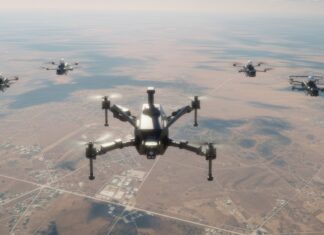
    Lockheed Martin Skunk Works® and XTEND have achieved a major milestone in JADC2 by integrating the XOS operating system with the MDCX™ autonomy platform. This technical breakthrough enables a single operator to simultaneously command multiple drone classes, eliminating the friction of mission handoffs. From "marsupial" drone deployments to operating in GPS-denied environments, explore how this collaboration is abbreviating the data-to-decision timeline and redefining autonomous mission execution.

    From Ukraine to Taiwan: The Global Race to Dominate the New Defense Tech Frontier

    0
    As traditional defense primes face mounting competition from agile “neoprimes” such as Anduril, Palantir and Helsing, the balance of innovation is shifting toward software-defined warfare and scalable, dual-use technologies, while global industry consolidation—marked by Boeing’s integration of Spirit AeroSystems and other strategic mergers—signals an intensified race to secure control over the defense technology value chain. Our Defense-Tech weekly report highlights these trends.

    Europe’s “Drone Wall”

    0
    In early October 2025, a coordinated wave of unmanned aerial system (UAS) incursions—widely attributed to Russia—targeted critical infrastructure across at least ten European nations. The unprecedented campaign exposed the fragility of Europe’s air defenses...

    Weekly Defense Update & Global Security Assessment

    0
    Executive Summary The past week (September 18-25, 2025) represents an inflection point where strategic defense concepts have transitioned from doctrine to tangible reality. An analysis of global events reveals four primary, interconnected trends shaping an...

    U.S. Air and Space Forces Push Next-Gen Programs at the AS&C 2025 Conference and...

    0
    At the 2025 Air, Space & Cyber Conference, U.S. Air Force and Space Force leaders unveiled major updates on next-generation fighters, bombers, unmanned systems, and space initiatives, highlighting both rapid innovation and critical readiness challenges as the services race to outpace global competitors. A short version is available here, with a more detailed version for subscribers.

    TADTE 2025: Reflecting Taiwan’s Strategic Themes

    0
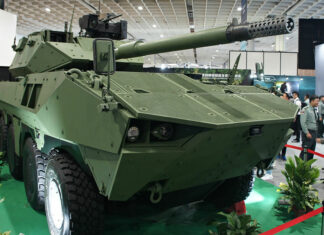
    The Taipei Aerospace & Defense Technology Exhibition (TADTE) 2025 crystallized around four dominant strategic themes that collectively illustrate Taiwan's comprehensive approach to defense modernization amid escalating regional tensions. Based on a detailed report by Pleronix (available upon request). Includes a Podcast discussion on TADTE 2025's highlighting Taiwan's four strategic themes beyond the post's coverage.

    Iron Beam 450 Completes Testing, Soon to Join With Operational Air Defense Units

    0
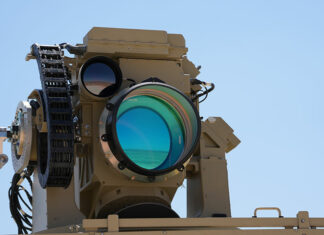
    Israel’s Iron Beam 450 high-power laser system has completed final testing, marking a major leap in air defense. Developed by Rafael, it offers precise, cost-effective interception of rockets, UAVs, and mortars, and is set for IDF deployment by 2025.