Monday, December 22, 2025
More
    Home Blog Page 387

    Israel’s Strategic Defense Programs – Missile Defense System’s Update

    Start < Page 1 of 4 >

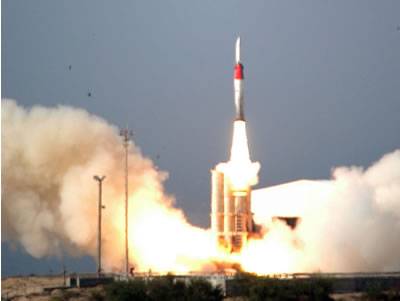
    Israel’s multi-layered anti-ballistic defense program known as “Choma” (Barrier wall in Hebrew), headed by Arieh Herzog, was developed to mitigate ballistic missile threats. “What made our “Arrow” system unique right from the start is its role, to protect Israel’s civilian population from missile attacks. Other Anti-Ballistic Missile (ABM) systems were developed to protect limited targets such as deployed forces. Arrow and “Choma” are designed to protect the entire country” says Herzog.

    Arrow II test flight

    Since 1989, some US$ 2.4 billion have been invested in the Arrow program, 50% of which donated by the US Government. The current production of missiles, in the US is also funded by both countries.

    “In the past we focused on the Scud missile and its derivatives” Herzog told Defense Update, “Today we face more diversified threats – a numerical threat by Syrian medium range (Scud based) missiles, the threat of short range rockets, primarily from Lebanon and long range missiles, with future nuclear potential, from Iran.”

    The current Mid-East Scud derivative arsenal comprises Scud B, C and D variants, which became more accurate and sophisticated, based on North Korean missile technology, capable of attacking targets at a range of up to 700 km. These New Medium Range Ballistic Missiles (MBRM) are employing solid state digital systems, for flight control, navigation, pre-launch sequencing etc. This capability enables faster response due to automated pre-launch preparations and also improving accuracy. Such missiles are more difficult to intercept and destroy, as they employ a wide range of countermeasures, among them decoys, trajectory shaping, to distract interceptors. According to Herzog, the Arrow system was designed with significant growth capability and flexibility. The baseline capabilities of the Arrow system were designed to defend against Scud type threats, including such missiles equipped with non conventional (chemical and biological) warheads.

    The Iranian government is investing major effort to develop indigenous missile technologies and expanding the missile production industrial base. The mainstay of Iran’s offensive potential threatening Israel, is based on the indigenously developed Shihab family of missiles, which was first flight tested in 1998. With a range of 1,300 km, Shihab 3 missiles are already capable of attacking all over Israel, including its strategic facilities. “This platform and other delivery platforms are maturing in parallel with the Iranian nuclear weapons program, with the potential to put a nuclear missile in Iranian hands in the foreseen future”, says Herzog. “This imminent threat is the new challenge for the Israel’s missile defense system”.

    Additional parts of this article:

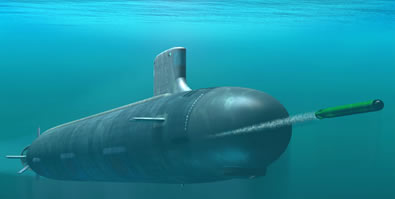
    Virginia Class Submarine

    General Dynamics Electric Boat delivered the latest Virginia class submarine to the U.S. Navy, ahead of schedule on December 22, 2006. Hawaii (SSN-776) is the third ship of the Virginia Class, the US Navy’s first major class of combatant ships designed for operation in both littorals and the open oceans.SSN-775 Texas

    In December 2006 General Dynamics’ Electric Boat corp. was awarded $1.274 Billion modification to a multi-year contract supporting for Fiscal Year 2007 construction of Virginia Class Submarine (SSN 782) and Advance Procurement funding for the forthcoming sub, submarine (SSN 783) scheduled for FY08.

    The Virginia class submarine has one of the most advanced torpedo delivery systems in the fleet. In addition to torpedoes, the Virginia-class will be armed with Tomahawk cruise missiles and has been designed to host the Advanced SEAL Delivery System (ASDS) and Dry-Deck Shelter to support various missions.

    The Virginia class submarines are equipped with one of the most advanced wepon control systems currently in service.

    SSN_777 North Carolina, under construction at Northrop Grumman Newport NewsElectric Boat and Northrop Grumman Newport News have received contracts to build the first 10 submarines of a planned 30-ship Virginia Class under a teaming agreement that splits the construction workload between the two shipyards. Three submarines completed construction and are undergoing sea trials – SSN-774 Virginia, SSN-775 Texas and most recently, SSN-776 Hawaii. SSN-777 North Carolina is currently under construction at Newport News.

    Lockheed Martin is developing a Low Profile Mast sensor system for the submarine. The new sensor mast is designed for open sea and littoral operations, decreasing counter detection probability. The mast has a sensor package including an electro-optical system which integrates a compact periscope mast, an electronic support measures system and an advanced imaging system. All packed in removable assembly which can be installed on a submarine when required to support operations and removed at the completion of the mission. The system will be delivered to the U.S. Navy in 2008. The total contract value with all options exercised could be $70 million dollars. Lockheed Martin facility in Syracuse, NY will develop the system with other industry teammates including Kollmorgen a specialist in periscope systems; ArgonST specializing in electronic warfare components; and Optics 1, which will provide advanced image sensor engineering.

    Kollmorgen Corporation, Electro-Optical Division has been awarded US$17.5 million to exercise an option for the production of nine Integrated Submarine Imaging Systems (ISIS). ISIS provides an all-weather, visual and electronic search capabilities for SSN 688, SSN 21, and SSGN Class submarines.

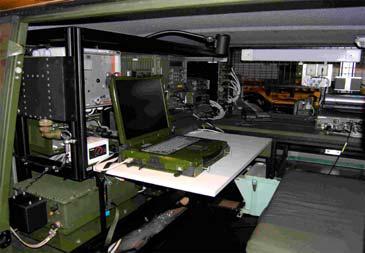
    Digital System Resources, Inc., a subcontractor of General Dynamics Advanced Information Systems was also awarded $6.6 million for the production of three Photonics Mast Workstations (PMW). These workstations will be installed on Virginia Class Submarines. This order follows the original ten PWM systems ordered in 2005. Photonics Mast Workstations are integrated into the Photonics Mast System, a non-hull-penetrating imaging system replacing conventional periscopes in modern submarines. (More on th Photonics Mast: Defenseindustrydaily and Howtuffworks.)

    Plotting a course at the control room of the new SSN-775 Texas attack submarine.

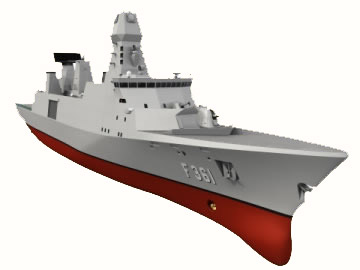
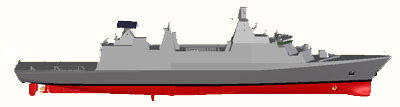
    Denmark Order Radar System for Anti-Air Frigates

    The Royal Danish Navy will receive three Anti Air Warfare (AAW) suites for the new frigates planned for the Danish Navy. Each system consists of the APAR Multifunction Radar, a SMART-L Volume Search Radar and a Fire Control Cluster. Similar systems are already operational with German and Dutch navy frigates. The new frigates, each displacing about 6,000 tons, will be built by the Odense Steel Shipyard Ltd. in Denmark. The vessel will be 138.7 meter in length, and beam of 19.8 meters. The three ships are scheduled to be handed over to the Royal Danish Navy and replace the Niels Juel class corvettes between 2011 and 2013.

    APAR 3D active phased array multifunction radar from ThalesAPAR multifunction radar is configured as an active phased array radar, operating in the I band, performing various tasks simultaneously, including automatic detection and tracking of low altitude targets (e.g. sea-skimmers), detection and tracking of air targets and the support and guidance of a wide range of missiles. The complete APAR multifunction radar consists of 4 faces covering 360 degrees of possible threat. 3,424 Transmit/Receive elements are installed in each of the four arrays, providing a powerful and redundant system architecture. Interrupted Continuous Wave (CW) illumination (ICWI) is a built-in feature of the APAR system, designed to cope with the terminal guidance requirements of SM-2 and ESSM missiles. APAR is the result of a tri-national development, led by Thales Netherlands, involving governments and industries from the Netherlands, Germany and Canada.

    SMART-L long range 3D volume search naval radar from ThalesSMART-L is a long range 3D volume search multibeam radar system operating in the D band, capable of automatic detection, track initiation and tracking of up to 1,000 air targets, up to a range of 400 km. Its performance has already been tested and proven to be capable of detecting stealth targets in land clutter environment. The AAW suite will have growth potential to offer Tactical Ballistic Missile Defense. Such capabilities, particularly those of the SMART-L radar have already been demonstrated with Royal Netherlands Navy frigate participating in recent US Navy TBMD tests near Hawaii in November and December 2006.

    The design of the new frigates began in 2004. Construction of the first ship will commence in 2008 at Odense Steel Shipyard. The construction of the three ships is expected to be completed in 2010-2012.

    B-1B Lancer

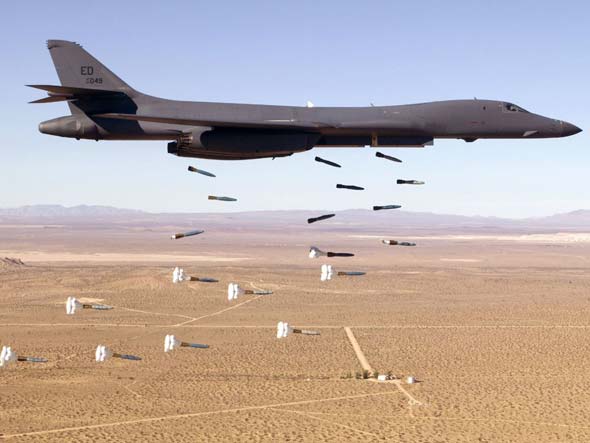
    The B-1B Lancer is emerging as a transformational weapon system, not because of its nuclear attack capability but due to its ability to strike time-sensitive targets anywhere in the world, and engage several targets simultaneously with conventional, highly accurate weapons. The Lancer can patrol over a target area for several hours, waiting to respond to targets of opportunity, as they are spotted by intelligence sensors. The employment of stand-off weapons, such as JASSM stealth cruise missiles enables these bombers to operate beyond the reach of conventional air defenses.

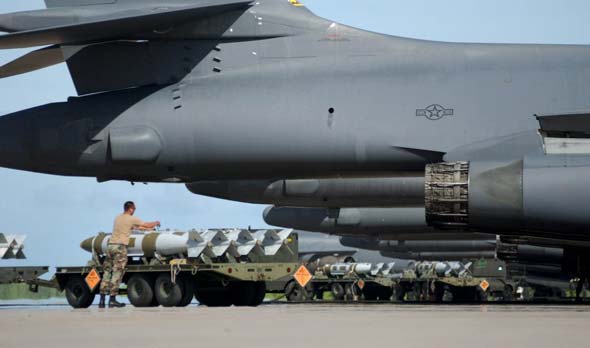
    By 2008 the USAF plans to equip the B-1B with up to 24 JASSM-Extended Range stealth cruise missiles, further extending its standoff strike range beyond 500mn. When tasked with time-sensitive target engagement missions, individual bombers can be “stacked” over a specific area, for rapid response to emerging opportunities. The Lancer can carry a total load of 24 GPS-guided Joint Direct Attack Munitions (JDAM) or JASSM missiles. The bomber’s new avionics upgrade suit provides tight integration between the GPS and the SAR radar and Ground Moving Target Indicator radar to improve the situation awareness inside the airplane.

    The development and procurement of JASSM-ER is a key element of the B-1B reinvestment strategy. The additional range provided by the JASSM-ER missile benefits the B-1B with responsive, precision-engagement capability while remaining clear of highly defended airspace and beyond the range of long-range, surface-to-air missiles. A primary JASSM-ER program objective is to provide the warfighter with a significant operational capability benefit of greater than 2.5 times the increase in missile range, while maintaining the same outer mold line, reliability, survivability and lethality of the baseline JASSM missile.


    As part of the Conventional Mission Upgrade Program (CMUP), the B-1B is undergoing avionics upgrades in several phases. The most recent phase, concluded in September 2006, was Block E modifications, which comprised the replacement of six computers with four, providing a 25-fold increase in throughput, memory and input/output margins required to add flexible targeting for the use of multiple conventional weapons in a single sortie. The new package supports the Wind-Corrected Munitions Dispenser (10 per bay or 30 per aircraft), the Joint Standoff Weapon (four per bay, 12 per aircraft) and the Joint Air-to-Surface Standoff Missiles (24 per aircraft). Other improvements included integration of advanced communications “Connecting the airplane into the Global Information Grid will provide combat commanders with a potent long-range strike capability for decades to come.” said Greg Burton, Boeing director for B-1 and B-2 programs.

    The installation concluded the third phase of the Conventional Mission Upgrade Program (CMUP) undertaken in 1993 to convert the B-1 from a nuclear to a conventional role. A small number of CMUP-equipped Lancers delivered more tonnage of ordnance while flying fewer sorties than any other aircraft during Operation Iraqi Freedom. CMUP also added 1760 smart weapons bus to the B-1B arsenal, improving the flexibility of loading and launching multiple types of weapons against a wider target set. In 2007 Boeing was awarded $45 million to continue avionics upgrades on the B-1B bomber fleet.

    Following is a brief introduction of recent and future upgrades planned for introduction in current B-1Bs, as part of the USAF plan to maintain its ‘Shooters’ effective for years to come.

    Other upgrades are sometime based on ‘non-traditional’ approaches. For example, air force units engaged in combat which are requested to wait for video datalinks for their targeting pods, opt for makeshift upgrades, strapping a datalink from a Raven mini UAV to the pod. The result may be less than optimal but nevertheless do the job. A similar, yet more ordinary approach was implemented with the B-1B Bomber, which also received a Sniper targeting pod. To accelerate the pod introduction, the pod bypassed the central avionics, and is controlled directly from a laptop. Other improvements to this bomber include avionics systems considered baseline in today’s fighters, such as a data transfer system (DTS), Fully Integrated Datalink (FDL).

    Since the early 2002s a growing share of the B-1B missions are conventional attack missions, following the CMUP undertaken by Boeing in 2002. As an active participant in all major US military operations since the Gulf War, B-1B bombers have delivered more tonnage of ordnance while flying fewer sorties than any other aircraft during Operation Iraqi Freedom.

    Holy War Inflames Strategic Horn of Africa

    The conflict between Somalia’s transitional government and Islamic militants has escalated dangerously, as Islamist leaders threaten Jihad “holy war” against advancing government troops spearheaded by allied Ethiopian forces approaching Mogadishu, held since last June by Somalia Islamic Courts Council (SICC), also named Islamic Courts Union (ICU) alliance. The ICU seized the capital from U.S.-backed warlords, also taking control of parts of southern Somalia. For months, foreign Islamic radicals have been trickling into Somalia to fight on behalf of the Islamic movement. According to a UN report last October, Eritrea–Ethiopia’s neighbour and longtime adversary–has alone dispatched some 2,000 troops to Somalia to fight the Ethiopian-backed central government.

    Initially led by Sheikh Sharif Ahmed Muhammad, the Islamic Courts Union (Midowga Maxkamadaha Islaamiga), a loosely-organized body of 11 autonomous courts in the capital, Mogadishu, wants to implement Sunni Shari’a in the entire country. Another key figure in the ICU is Sheikh Hassan Dahir Aweys, the leader of al-Ittihad al-Islamiya, an Islamist movement that has been around since the 1970s, pushing for the implementation of strict Shari’a across the entire Horn of Africa. Aweys has admitted meeting with al-Qaeda leaders and is wanted by the United States for involvement with al-Qaeda killing 18 US Army Rangers ( “Blackhawk Down”) during the failed United Nations intervention in Somalia in 1992. In fact, Middle East intelligence sources claim that the Islamist group has already firm ties affiliated to Al Qaeda. On June 30, Osama bin Laden released a tape calling on Muslims to support the Islamic courts and to open a third front in the war against the United States in Somalia. It is now feared, that the conflict in Somalia could engulf the entire Horn of Africa region, as Islamic Courts leaders have repeatedly claimed, that they want to incorporate ethnic Somalis living in eastern Ethiopia, northeastern Kenya and Djibouti into a Greater Somalia.

    The Horn of Africa – including Djibouti, Eritrea, Ethiopia, Kenya, Somalia, is a region of strategic importance. Due to its strategic location, it has been used to restrict access to the Red Sea in past conflicts. But in recent decades the Horn of Africa has also been a region continuously in crisis.

    Ethiopia, a nominally Christian country surrounded by Muslim states – Sudan, Somalia, Eritrea and Djibouti – has expressed grave reservations at the emergence of another Islamist state next door. They have kept a very close watch on events in Somalia- especially the recent appearance of al Qaeda elements backed by Iran.


    Somalia and Ethiopia share a long border – over 1,600 km. – and relations between the two countries have always been turbulent. Somalia lost a bloody war over Ethiopia’s Somali-populated Ogaden region in 1977-1978. The war was initiated by General Mohamed Siad Barre in an attempt to create a Greater Somalia. Ethiopia considers the Ogaden as the corridor to its sole outlet to the sea at the big port of Djibouti, a highly strategic location, astride the point where the Indian Ocean converges with the Gulf of Aden, the Persian Gulf and the Red Sea. Experts fear, that large-scale war escalating in Somalia involving Ethiopia would, in all likelihood, drag in further African nations into a regional conflict-backed by al Qaeda, which is seeking new venues for its global terrorist activities.

    Some major Middle East players and primarily Iran, are taking a new look at the strategic Horn of Africa and lawless Somalia seems to be the ideal place for Tehran’s regional ambitions. Iran’s interest in the Indian Ocean region have been confirmed already with the International Conference on the Indian Ocean community, held in Teheran in mid-November 1996. Recently these interest received new impetus, when Iran and Djibouti discussed avenues for bolstering bilateral relations and issues of mutual concern. Djibouti’s President Ismail Omar Guelleh, who arrived here last September for a three-day visit in Tehran at the head of a high-ranking politico-economic delegation, met with Iranian Foreign Minister Manouchehr Mottaki.

    Tehran is already busy in providing secret support for the Islamic Courts Union.Besides the possibility of gaining access to uranium deposits in Somalia, influence in Somalia gives Iran a foothold on the strategic Horn of Africa. This, combined with Iran’s dominant position on the Staits of Hormuz, gives Iran leverage over two crucial shipping channels. Somalia is already a haven for piracy, and with professional help, this piracy could become a major international problem.

    A United Nations monitoring group has stated that Iran has recently provided at least three consignments of arms. In a detailed report, Tehran has supplied a consignment including 1,000 machine guns, 45 surface-to-air missiles, M-79 rocket launchers and land mines. One particular shipment of arms arrived at the Baledogle airport and was met by no less than the ICU head of the security affairs,Yusuf Mohammed Siyyad and the chairman of the Dayniile court Sheikh Hussein Janaqow.

    But Iran seems much more interested in obtaining access to Somalia’s U238 Uranium ore. According to a confidential United Nations report Iran tries to obtain uranium from Somalia in return for supplying weapons to the ICU. Iran promised the Islamists further weapons – but only in return for uranium, presumably for use in Teheran’s nuclear programme.
    Two Iranian experts were recently sent to Mogadishu in order to negotiate this deal. While Somalia’s recoverable uranium deposits are modest, totalling about 6,600 tonnes, compared with 326,000 tonnes in Canada, they are nevertheless more accessible to the Ayathollah’s nuclear program.. Iran appears to be trying to win rights to exploit these deposits, which could then be shipped directly to Iran, through Mogadishu’s large port. An intelligence report mentioned Iranian experts negotiating with Sheikh Hassan Dahir Aweysin Dusa Mareb engaged in matters linked to uranium in exchange for arms.

    While the present fighting goes on between the ICU, backed by a massive influx of volunteers from Eritrea and other Muslim countries and Ethiopia, which is supporting the Somalia’s powerless transitional government, the origins of the conflict hark back to rivalries in the Horn of Africa, which are complicated by broader Muslim Arab resentment of Christian rule in the region. Strangely enough, both Ethiopia and Eritrea are two predominantly Christian nations. Ethiopia with a population of 73 million and tiny Eritrea with 4.5 million – who are half-and-half Christian and Muslim, but are at daggers drawn. Moreover, Ethiopian prime minister Meles Zenawi and Eritrean president Isaias Afworky are third cousins and sworn enemies. Their enmity has led them already into four major confrontations in four years.

    Fighting now on both sides of the Somalian war, the Eritrean government allegedly provided at least 28 separate consignments of arms, ammunition and military equipment. Last April a shipment of arms destined for ICU consisting of ex-Soviet assault rifles, PKM machine-guns, RPG-7s and ammunition arrived on a dhow at the seaport of El Ma’an. In May, an Eritrean Antonov military aircraft landed at Dhusamareeb in the Galgaduud region.

    Indeed, arms are not lacking in the Horn of Africa conflict. Yemen, on the other side of the “Horn” has served as a leading smuggling route for Al Qaeda from the Gulf to the Horn of Africa. Only recently eight foreigners including four with Australian passports have been arrested for trying to smuggle weapons from Yemen to Somalia. Two were identified by security agents as brothers, Mohammed Ayub and Abdullah Ayub – sons of the former leader of Jemaah Islamiah in Australia, Abdul Rahim Ayub, his radical Southeast Asian Islamic group is held responsible by the CIA and Asian intelligence services for a series of bombing attacks on the island of Bali and in Jakarta, and is thought to have close ties to al-Qaeda.
    Yemeni officials said in a statement posted on the state-run newsagency that investigations indicated they were members of Al Qaeda, all four have been studying at the Islamist Iman University, which is run by Sheik Abdul-Majid Al-Zindani. The United States lists Al-Zindani as an Al-Qaeda supporter.

    It is no secret that Al Qaeda affiliated members of the Yemeni military and security forces are aiding terrorists. A Yemeni government official stated that “subversive” (Al Qaeda) elements of Yemen’s secret service have established training camps for Iraqi Baathists who later fight in Iraq. Dhows sailing from Yemen to the north-east coast of Somalia carry much of the traffic. Most shipments go unnoticed and unreported, many to the main port of the region, Boosaaso. The bulk of the merchandise is destined for Mogadishu, the hub of the Somali arms trade.

    It remains to be seen where this new conflict is heading for- perhaps another choke point for the War on Glonal Terrorism?

    Assad’s Alawites: Iran’s Missing Link to Shiite Crescent?

    Two years of diplomatic and economic isolation don’t seem to have tarnished Syria President Bashar Assad’s shine. The Baker plan, with its request that the White House revise its politics in the Middle East , has brought him back to the center of the international stage. The emergence of a Shia-dominated government in Iraq has raised the possibility for a wider Shiite linkup with Iran and Syria where the Alawite Shia minority dominate the Sunni majority and Nasrallah’s political upsurge in Lebanon, following Hezbollah’s ostensible showing during last summer’s war with Israel.

    Experts on the Arab world disagree on Syria’s part in Iran’s regional ambitions. Some say the so-called “Shiite crescent,” which presumably includes Lebanon, Syria, Iraq, and Iran, is being overblown. First, the claim states, that Syria is not Shiite but Alawite, a secular sect of Islam that ascribes to Arab nationalism, rather on its religious heritage, which puts it at odds with Shiite regional Islamic interests. On the other hand, in their mountainous corner of Syria, the Alawis claim to represent the furthest extension of “Twelver Shi’ism”.

    Numbering perhaps only a million persons—about 12 percent of Syria’s population the Alawites derive from a schism in the 9th century around the 11th imam, al-Askari, who they consider the last legitimate descendant of the Prophet Mohammed.

    A view of the the Shiite shrine in DamascusThe origin of the Alawite sect still raises essential questions about religious authority and orthodoxy in contemporary Twelver Shi’ism. But this does not seem to prevent its fullest relationship with revolutionary Iran, including its Shiite clerigal regime.While the old controversy over the origins of the Alawis may be forgotten, the contemporary Alawi enigma is this: By whose authority, and in whose eyes, are the Alawis counted as Twelver Shi’ites? An important visible sign of Alawi esoterism was the absence of mosques from Alawi regions. But The Sayyida Zainab Shrine, in downtown Damascus, where granddaughter of the Prophet Mohammad is buried, has recently gained new reverence to Shiite pilgrims.

    Sunni heresiographers excoriated Alawi beliefs and viewed the Alawis as disbelievers (kuffar) and idolators (mushrikun). What was needed was some form of recognition from a Twelver Shi’ite authority, who could buttress the Alawis’ own problematic claim that they were indeed Twelver Shi’ites. The solution appeared in the person of the late Imam Musa al-Sadr, Iranian-born head of the Shiite Supreme Council in Lebanon, who became a “confidant, political ally, and friend” of then-Syrian President Hafez Assad in the early 1970s. In a covenant which was sealed in a Tripoli hotel in July 1973, Musa al-Sadr issued a fatwa declaring Alawites to be part of the Shiite Muslim community, helping Assad weather a political crisis over the Syrian constitution’s requirement that the president be a Muslim and boost his legitimacy among a Sunni majority population accustomed to thinking of Alawites as heretics. Arabist scholars consider that Sadr’s fatwa may well have encouraged Hafez Assad’s brutal crack down on his Sunni opponents in the notorious 1982 Hama riots. However, the shrewd Hafez, “Lion of Damascus” carefully balanced his sensitive relations with clerical Iran during his iron rule, keeping its within limits of mutual convenience.


    As result of latest developments in the region, in which fundamentalist extremist elements are on the rise to new power bases, an emerging “Shiite bloc” of Iran, southern Iraq, Alawite-ruled Syria, and Lebanese Hezbollah is being envisioned by Tehran’s Ayathollahs. Sofar Mid East experts assumed, that Assad’s Alawite minority, which faces decades of Sunni mistrust, would hesitate to throw in Syria’s lot with a Shiite Iran, but Bashar Assad, clearly lacking his father’s faculties of political wisdom, has changed some of Syria’s fundanemtal strategic policies, which, on the long run may have serious consequence to his country.

    There are already many mutterings within Syria that the current President’s father, the shrewd and forceful leader Hafez, would have never let matters get to this stage – with Syria condemned not only as a rogue state, because of its alleged killing of Rafik Hariri, but having been coerced to withdraw its troops from the Lebanon, its lucrative economic backyard, after a 30-year occupation. As its seems, Bashar Assad is fully committed to Iran’s Mahmoud Ahmadinejad’s growing patronage. Intelligence reports indicate that the Iranian Revolutionary Guard Corps (IRGC) or Pasdaran, is busy building its power base in the outskirts of Syria’s capital Damascus. Accordingly, an extensive communications center is being constructed within the compound of Syria’s Presidential Guard at Almaza, its commander being the president’s younger brother Maher. Unconfirmed reports mentioned, that from this very center, operations were conducted during the Hezbollah war in summer 2006.

    The questions asked these days are: Can the ” Sunni moderate axis” ( Saudi Arabia- Jordan and Egypt) still sever the Syrian “missing chain” to Ahmadinejad’s ambitious “Shiite Crescent”? Unfortunately, there seems to be little hope for that.

    There is no doubt that Sunni Arab governments are trying to pry Syria out of its alliance with Iran, before its is too late, but sofar very little has been done to implement this wish. Meanwhile the Bush Administration has been quietly nurturing individuals and parties opposed to the Syrian government in an effort to undermine the regime of President Bashar Assad anti-Assad groups in Washington, Europe and inside Syria mechanisms of democratic change in Syria National Salvation Front affiliated to the Muslim Brotherhood. Soberly considering Syria’s internal conditions, Middle East experts assess these efforts rather futile. The Syrian security forces are very effective in ferreting any opposition leaders out and hunt these down ruthlessly.

    The Sunni majority tolerates the Alawite minority regime for one simple reason: they don’t want another Lebanon in Syria because they know there will be blood in the streets and the Alawites will fight to the last man. They are willing to wait. A future palace coup is only likely if the Alawites can be convinced that Bashar is in fact endangering their survival as the rulers of Syria and even perhaps as a community. Sofar this seems far fetched wishful thinking- as Bashar has even weathered the forced ousting from Lebanon following the 2005 “Cedar Revolution”.

    As has been repeatedly demonstrated in this region, any American-orchestrated attempt to conduct in regime change proved a waste of effort only due to fail. Syria’s opposition is so fractured and weak that there is little to be gained by such a venture. Even young Assad, has managed to consolidate his power by moving allies into critical positions and demoting those considered threats—including the veteran Abdel Halim Khaddam, a former vice president and one of the few Sunnis in Syria’s top positions who was driven into foreign exile.

    However there are some indications that Sunni leaders are waking up to the ongoing emergency on their very doorstep. Saudi king Abdullah II recently met with Syrian opposition leaders – Sheikh Ali al-Bayanoni, the banished head of Syria’s Muslim Brotherhood currently residing in Belgium, and Bashar’s uncle, Rifat Assad and Abdel Halim Khaddam. Whether such meetings will become a new Sunni strategy remains highly questionable. Certainly, Syria, Lebanon and Iraq are crucial protagonists in the specter of a Shi’ite crescent, according to the Saudi royal family, King Abdullah of Jordan and conservative American think tanks, however the facts on the ground are much more complex than a simplistic formula to solve this dilemma.

    In sum, it seems that Bashar Assad has chosen to gamble. He hopes that defiance of Washington will strengthen his position at home and that, after George W. Bush leaves office, U.S. policy toward Syria will soften. Should his gamble succeed, he could emerge more influential. Should it fail, he may lose his regime. His latest move to align his strategy to Moscow’s new ventures in the region and even his sofar dubious signals toward Israel, may indicate that young Bashar has, after all, more on his pallet than a London Ophthalmologist’s certificate.

    Assad’s Ticket to Putins Mid East Comeback

    Last November Iran has invited the Iraqi and Syrian presidents to Tehran. The Iranian move was a clear display of president Mahmoud Ahmadinejad’s increasingly muscular role in the Middle East, where it already has established deep influence over Syria and Lebanon. Surprisingly however, Bashar Assad preferred not to accept the invitation and look for more lucrative solutions in breaking Syria’s, US sponsored isolation- a meeting with Vladimir Putin instead. The signal was: “all bets are open” and Ahmadinejad’s dictate is not Assad’s only option.
    Bashar Asasd’s unexpected move coincided perfectly, with an effort to boost Moscow’s clout in the Middle East, when Russian President Vladimir Putin held talks, last Tuesday, December 12, with his visiting Syrian counterpart, Bashar al-Assad, aimed at strengthening bilateral relations.

    Amid the ongoing debate, Russia continues to develop political and economic ties with both countries. Putin wishes to stamp Russian authority onto the international stage, especially the volatile Middle East, in which Bush’s bungling strategy and Israel’s poor showing in the Hezbollah war last summer, has already weakened US ‘Pax Americana’ vision substantially.

    In fact, as had been revealed recently, Russia, Iran and Syria have already entered a defence pact aiming at Moscow’s ambitions to the process of altering the balance of power in the entire Middle East. Russia’s own part in this pact has been kept relatively secret for a long time.

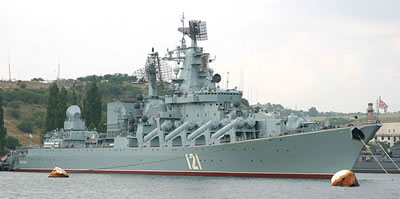
    Russian Moskva Class Cruiser - Syria's president Bashar Assad may yet present Vladimir Putin with a return ticket for Russia's longed strategic ambitions in the Middle East.

    Syria has clinched a deal with Moscow early last year, in which Russia agreed to write off more than 70 percent of a multi-billion dollar debt owed from the Cold War era, when Damascus was a stounch ally and arms customer of the Soviet Union. Bi-lateral relations between Moscow and Damascus have considerably warmed since early 2006. A Russian military delegation has been touring military bases and headquarters in Syria as part of an effort to increase cooperation with the regime of President Bashar Assad. The delegation, led by Chief of Staff Gen. Yuri Baluyevsky, has met his counterpart, Gen. Ali Habib, as well as senior Syrian commanders and defence officials. Western intelligence experts estimate that up to 2,000 Russian military advisors, under the command of Lieutenant General Vassily Jakushev, 60, the former commander-in-chief of the country’s Far East military district, are currently serving in the Syrian military. Russian officers hold teaching positions at Syria’s military officer training academy.


    Currently , Damascus’ new shopping list for weapons backed by half a billion dollars put up by Iran – in cash if needed – has been granted by President Ahmadinejad to purchase modern Russian arms. Among this, intelligence sources claim, Damascus was advised in advance that certain surface systems on request, which were formerly rejected, would now also become available. However, while the transaction could include sophisticated Tor-M1 systems, supplies of which began reaching Iran last month, Syria’s request will remain on hold until these were completed.
    Together with thousands of AT-14 anti-tank and SA 5 Gammon anti-air missiles, Damascus also wants to commission Russian military industry to upgrade all 4,500 of its outdated Soviet-era T-62, T-72 and T-80 tanks. Israel’s head of research in military intelligence, Brig-Gen Yossi Baidetz was referring to this huge Russian-Syrian arms deal bankrolled by Iran, in his presentation to the Knesset committee last week, which made headlines next day in the media.

    A highly interesting development was revealed a few months ago, when sources related to Israeli intelligence revealed, probably through satellite reconnaissance, having for some time observed the Russians dredging the port of TARTUS in northern Syria. Last June, the Russian newspaper Kommersant surprisingly unveiled Russian secret plans to upgrade the servicing station it has maintained since Soviet times at the Syrian port of Tartus. According to the paper, the short-term goal is to enable Russian warships to dock at Tartus, with a view to its future transformation into a fully-fledged Russian Mediterranean Fleet naval base. Kommersant’s unidentified source in the General Staff said the Navy plans eventually to relocate the bulk of the Black Sea Fleet, currently still stationed in Sevastopol, to Syria.

    Not surprisingly, Russian officials quickly denied these reports, but insistent facts nevertheless remain. According to these reports, at the Tartus naval base, covering an area of almost a hundred acres, about 300 men already serve under the command of sea captain Vladimir Gudkov, a former officer in Russia’s North Sea fleet. Satellite photos reveal that Russia has already undertaken to deepen the port to permit the docking of its largest fighting ships, and even build a stationary mooring place. Moscow has also begun work on a new mooring at the Syrian port of Latakia, which could also be used in the future to base fighting ships. In this respect it is worth noting that the Black Sea Fleet Project 1164 Moskva guide missile cruiser called on Latakia in February 2006.

    In fact, Kommersant got its information about the work at Tartus from no less an authority than Vladimir Zimin, the Russian Embassy’s senior counselor for economic issues in Syria. Tartus port is being prepared as the base for a fully fledged Russian naval squadron. Anti-air defence for these forces will be upgraded to the new S-300PMU2 Favorit (SA-20) SAM systems and no doubt, the Thor M-1 deal will become part of this endeavour.

    It is worth recalling that permanent access to the Mediterranean has been the dream of Russia’s rulers for several centuries. Already in the second half of the 18th century for operations against Turkey, squadrons of the Baltic Fleet were sent to the Mediterranean. The rebirth of Russia’s naval presence in the Mediterranean began in the 1950s with the aim of countering NATO forces and to support Moscow’s interests in the Middle East. In 1958, a permanent base for Soviet submarines was established at Vlyora in Albania, but in spite of the establishment of close relations with a range of middle eastern Arabic states, the Soviet Union never acquired a permanent naval base in this region, and the powerful Soviet naval forces in the Mediterranean (Fifth Operational Squadron) had to anchor at small plots in the neutral waters off the coast of Tunisia and Libya. Only in 1984 were servicing stations at Tartus and Latakia, established for occasional servicing calls by Soviet warships.

    But the recent constant presence of major Russian fleet units in the Mediterranean is nothing new. On 9 February, this year, the Russian Black Sea Fleet Project 1164 Moskva guide missile cruiser RFS Moskva, under command of Admiral Vladimir Vasilyevich Masorin, Commander in Chief Russian Naval Forces, docked alongside NATO vessels in Messina, Sicily as part of a bi-lateral visit with Italian authorities. Two weeks later, the Moskva and the Naval Commando carrier Azov docked shortly at Latakiye port in northern Syria, the first official visit of Russian warships to Syria in 10 years.

    The appearance of Russian ships in Tartus for any period of time would represent a dramatic reinforcement of Russia’s naval potential in the Mediterranean Sea, even when compared to the cold war period. Syria’s president Bashar Assad may yet present Vladimir Putin with a return ticket for Russia’s longed strategic ambitions in the Middle East.

    A Google-Earth view of of the Syrian Naval Base at Tartus showing landing crafts and fast missile boats.

    FüInfosys-H – Divisional Command and Control System

    The principal c4 system for the German Army is FüInfosys Heer, a comprehensive collection of C2 applications, communications and computing services linking all combat, combat support and service support elements of the land forces from division HQ down to the squad commander. FüInfosys H utilizes the system resources already proven by Faust C2 system at battalion and brigade level. These include monitoring and distribution of common operational picture, automated and secure messaging, management of personnel and material and office automation functions.

    The system is designed to support a wider, more diversified communication network and is designed with common modules which are utilized in branch specific applications including HERGIS army Aviation C2, DIFA armored cavalry C2 network, and SAFES medical services support network, all planned to be integrated with the FüInfosys Heer array. Other system integrated with FüInfosys Heer include the IFIS C2 system currently used by armor and armored infantry elements and the German Army infantry modernization program IdZ. The system is scheduled for initial deployment with the German Army by late 2006 – early 2007.

    FüInfoSys Heer is installed in truck mounted shelters, deployed with command-post and combat-support as well as combat vehicles, and linked up via tactical communications systems.

    FüInfoSys H is furthermore already conceptually integrated into FüInfoSys SK, which embraces all branches of the armed forces, and in the medium-term will migrate to FüInfoSys SK as an application specific to the terrestrial armed forces.

    December 21, 2006: The German Army signed the initial orders for a planned procurement of FüInfosys H to equip 1,500 vehicles. Delivery of the first batch is expected to complete by 2012, under the current € 380 Million contract. Deliveries will begin starting 2007 to German Army units as well as the joint German-French Brigade. The system will be produced by the FüInfoSys Heer joint-venture established between, Krauss-Maffei Wegmann and Rheinmetall Landsysteme.

    NH-90 Helicopter

    Designed from the outset as a multi-role weapons system NH90 helicopters are offered in the Tactical Transport Helicopter (TTH) and naval (NFH) variants. Both configurations share a common basic helicopter in a modular design, with specialized mission equipment packages allowing for maximum flexibility in operations. The distinctive diamond shape of the all-composite airframe combines optimal aerodynamics with low detectability. Optimized man-machine interface significantly reduces pilot and crew workload. The helicopter uses a fly-by-wire flight control system, making it the first production helicopter featuring this advanced technology.

    The German Army Air Corps is the first customer to have taken delivery of its first four NH90s TTH in late 2006 and early 2007. Three of them are being used for flight training at the Army Air Corps Flight Training Academy in Bückeburg, the fourth is being used as a maintenance trainer at the Army base in Fassberg. A total of eight TTH are scheduled to be in service with the German Armed Forces by the end of 2007. Sweden is the launch customer of the High Cabin Version (HCV) of the NH9O which features an increased usable cabin height by 24 centimeters, from 1.58 meters in the standard version to 1.82 meters. This variant allows operators and passengers to stand upright in the cabin. The increased cabin height is particularly important in SAR missions. Sweden had signed the contract for 25 NH9O in September 2001, covering 18 firm orders for 13 TTT I SAR helicopters and five ASW variants, plus seven options.

    The TTT (Tactical Troop Transport) / SAR (Search and Rescue) and ASW (anti-submarine warfare) variants are derived from the TTH (Tactical Transport Helicopter) version of the NH9O, and are equipped with a complete new Tactical Mission System (TMS) developed by SAAB in cooperation with NHlndustries. The NH90 program is managed by NAHEMO (NATO Helicopter Management Organisation) representing France, Germany, Italy, The Netherlands, Portugal and Belgium, and by the industrial consortium NHIndustries consisting of Eurocopter (62.5%), AgustaWestland (32%) and Stork Fokker (5.5%)

    Slovenia Orders AMV, SP Mortars from Patria

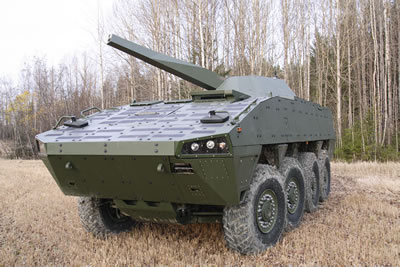
    Patria AMV 8×8 armed with a single barrel NEMO mortar

    This 8x8 AMV demonstrates the integration of an overhead remotely controlled 30mm weapon station from Elbit Systems.

    The Slovenian Ministry of Defence has today signed agreements with Rotis and Patria covering the procurement of 135 Patria AMV 8×8 armored vehicles as well as Patria Nemo 120 mm single-barrel mortars to the Slovenian Army. The total value of the program is about € 278 million. The vehicles are expected to be equipped with remotely controlled weapon station mounting a medium caliber gun (30.35mm) but no details have yet been released about the maker or type of system preferred. In other recent NATO programs which involved similar vehicles, Portugal and the Czech Republic selected an RCWS system for 8×8 Pandur II while while Poland preferred to go with a manned turret for the AMV.

    The vehicles will initially be manufactured in Finland. Production will gradually be transferred to Slovenia in 2007 and 2008. Slovenia already has an established production line of wheeled armored vehicles, supporting the production of Valuk (locally made Pandur 6×6 vehicles) for the Slovenian armed forces.

    Together with Patria and Rotis, Gorenje will also be involved in the production. According to Mr Jorma Wiitakorpi, CEO and President of Patria, the company offset agreements will bring great benefits to the Slovenian economy as a whole. The Slovenian industry will share of 30% of the program’s value. For the remaining 70%, an offset will be offered.

    Inner strife splits Gaza from West Bank

    Events in Gaza culminated last week when Hamas gunmen seized control of the Gaza Strip’s border crossing with Egypt on Thursday in a gun battle with Fatah-allied border guards Palestinian Prime Minister Ismail Haniyeh, who was prevented on Thursday from entering the Gaza Strip by an Israeli closure, was carrying $35m in suitcases, graciously donated to him by Iranian officials to fill the empty coffers of his Gaza administration. As his motorcade was leaving the border, he was attacked by Fatah loyalists firing on his cars, killing a body guard and wounding Haniyeh’s son.

    Only hours later, tensions skyrocketed in the Gaza Strip with Hamas accusing Abbas of launching a coup after he announced a plan for early elections in an attempt to break a political deadlock and have crippling international sanctions lifted. Whereas, Hamas violence in Gaza was directed mostly against Fatah, the opposite happened in the West Bank, where Fatah loyalists rioted against Hamas.

    Palestinian Prime Minister Ismail Haniyeh vowed Sunday that his Hamas party will not participate in fresh elections, and branded Palestinian Authority Chairman Mahmoud Abbas’ remarks on the matter “inflammatory.” The tensions between the two camps are immense, and the militants in each camp are anxious for combat and arming themselves with whatever is available. Analysts are determined that Hamas will not, under any circumstances, allow Fatah and Abbas to nullify their great achievement of legally taking control of the parliament and cabinet. As far as Hamas is concerned, this is not just a Palestinian development, but a pan-Arab one, a precedent for a political Islamic takeover of an Arab nation. The first skirmishes after Abbas’s speech in Ramallah erupted in the southern Gazan towns of Khan Younes and Rafah Saturday night. Hamas used heavy RPGs for the second time in two days. At least a dozen people were injured. Rumors that both factions had rigged bomb cars for detonating against each other emptied Palestinian streets. On the West Bank, where Hamas is at a disadvantage, the bulk of al Aqsa Brigades units stand ready opposite Hamas. Last week, they received a supply of automatic weapons from the US and Israel. Incidents sparked off religious tones when Hamas leaders refer to their war with Fatah as a “struggle between the “Movement of God and the Party of Satan.”


    Palestinian factional warfare in Gaza and the West Bank and its radical religious overtones are being watched with increasing anxiety in neighboring Egypt, Jordan and other Arab nations in the region. PM Ehud Olmert cautioned his ministers to keep a low profile on neighboring events until a clear outcome will be in sight. What worried most Arab leaders in the region, was Iranian president Mahmoud Ahmadinejad’s openly pledged financial and military support to the Gaza Hamas leader elected prime minster Ismail Haniyeh on his latest visit to Tehran. This could mean no less than the establishment of a strategic Shiite forward base in Gaza, right on the doorstep of Hosni Mubarak’s Egypt, already under growing pressure from alQaeda backed insurgents in Sinai.

    The Palestinian Authority (PA) has been disintegrating for months and virtually ceased functioning as a central control element. This has increased substantially following the election of Ismail Haniyeh’s Hamas government, last January.

    The glue that held the West Bank and Gaza strip together, as long as President Yassir Arafat’s iron rule, is long gone but aftershocks of his demise are still rocking the occupied territories, as local clans are battling for their power base. The Israeli-freed Gaza Strip failing to become an aspired Mid-Eastern ‘Singapore’ model, has turned instead into a lawless terror base on the verge of civil war.

    With no single charismatic leader or clear chain of command available, it proves very hard for anyone to take decisive action ending the vicious circle of violence, nor creating a situation for engaging in serious negotiations with the Israelis to solve the peoples hardship.

    The Palestinian movement is split along several political issues: between Palestinians inside ( local leadership, West Bank and Gaza ) and outside leaders in exile: like Khaled Mishal of Hamas in Damascus and Farouk Qadoumi of PLO in Tunis. Even during Arafat’s rule, the rift between the locals ( led by the emprisoned, Marwan Bargouti) and Arafat’s “old guardsmen” from Tunis providing the cause for last January’s landslide victory of the Islamist groups- a clear protest vote against the corrupt Tunis clan.

    A critical development in the post-Arafat era is the revival of traditional rivalries between factions in the West Bank and Gaza, which have created local power bases in different areas, especially in Gaza and some of the West Bank townships, in which the central rule has no virtual control.

    Into such chaotic circumstances, dangerous elements like Hezbollah, backed by Iran, or even Al Qaeda, have been expanding their influence, which could, if not curbed in time, reach strategic proportions for the entire region.

    As result of this central power disintegration, the breakup of the hard-won Palestinian Autonomy of 1993 could split Gaza and the West Bank into two geographically distinct entities. Palestinian analysts even fear, that the northern part ( Samaria) could split from the southern part ( Judea), if a viable solution not be found to achieve the long anticipated territorial land-link between the two, solving the crucial Jerusalem question. Under the present circumstances, in which Israel’s politics are shifting more and more to the right, such a solution seems unrealistic.

    But there is much more to be considered. Palestinian society has been traditionally characterized by local tribalism, influenced by strong regional differences which set hill dwellers apart from plainsmen, nomads from a ground-settled population, townfolk from villagers and peasants, not to mention Christians and other religious Arab minorities.

    While the southern area of the West Bank is less than fifty kilometers distant from Gaza, there is much more separating the two territories than an expanse of Israel’s Negev. A major element in Palestinian domestic problems are the refugees, the majority of which are living under inhuman conditions for decades and remain the breeding cradle for inner-strife unrest and Islamic fundamentalist extremism. While less than 25 percent of West bankers still live in refugee camps, in Gaza these become nearly two thirds of the total population!

    Moreover, in the West Bank, patriarchal families have traditionally dominated local politics. Under the British Mandate, which ruled Palestine for nearly thirty years after WW1, the local leadership in Jerusalem, the seat of the mandatory administration, was firmly in the hands of the Nashashibi, Husseini, Ja’abari and Masri clans. British administrators had encouraged strong Arab family ties and awarded these substantial grants, creating not only a political elite, but strong allies during turbulent times, in which Jews fought Arabs, Arabs fought British and finally, Jews fought British in the last phase of colonial rule.

    In contrast, the traditional Gaza population was, until 1948 lesser concerned with local politics. This was mainly due to the sheer distance from the West Bank power base during the Mandate. Later, with the influx of the 1948 refugees, the local clans, including the Shawwa, Shafei and Middein families remained, and still are, a clear minority among the Gazeans, which renders them little political influence and many members have already emigrated abroad.

    There is also a significant psychological barrier between West bankers and Gazeans, which must be considered. Khalil Shiqaqi, a prominent Palestinian sociologist, has noted in his study on Palestinian demographic affairs that a psychological barrier between the inhabitants of the two territories with mutual suspicion exists, which cannot be disregarded or ignored.

    Shiqaqi’s study, entitled The West Bank and Gaza Strip: Future Political and Administrative Relations, indicates the existence of a predominant West Bank conception, that the Gaza Strip is “nothing but a big refugee camp.” Regarding the Gaza Strip society as backward, plagued by crime, extremist fanatism and causing constant instability, the more moderate West Bankers, especially the city dwellers, distance themselves to a greater extent, from Gazean influence. Another notion of Palestinian demographics, little known, are the varied Arabic dialects spoken throughout the territories. West Bank dialects are related to the Jordanian, while influences of Egyptian dialect are traditionally recognized throughout Gaza.

    Palestinian Territories Might Become Two Separate States. Geopolitics have long aggravated Palestinian tribalism, abating the already limited ties between the West Bank and Gaza. After the first Arab-Israeli war in 1948, Egypt occupied Gaza and Jordan annexed the West Bank. A pro-Egypt, pan-Arabist movement developed in Gaza influenced by the Egyptian Muslim Brotherhood, which formed the ideological background of Hamas. The West Bank came under the control of the Hashemite Kingdom of Jordan, developing near full allegiance to the Kingdom, which not only ruled it by iron fist from its military, but also reinstated the traditional mandatory era family clans by restoring their political influence.

    During Israeli occupation of the territory, since 1967, the Jordanian administration maintained its ties with the West Bank until August 1988, when the late King Hussein officially declared breaking off all legal and administrative links with the Palestinian territories.

    Recent insider reports, related to Israel internal intelligence, have indicated that behind the scene, young King Abdullah II of Jordan has taken new interest in the West Bank and a possible revival of the shelved “Jordan Option” of the late eighties. According to Ehud Ya’ari, a leading Middle East expert, central figures from the Palestinian leadership have lately started talking in closed forums, about the need for Jordan to resume an active, substantive role in the West Bank. Eighteen years after the late King Hussein was forced to declare his kingdom’s disengagement from its former possessions across the river, amid the wrath of the first Intifada, there are again whispers over the need to find a new formula, re-establishing some kind of linkage between efforts to create an independent Palestinian state and its Arab neighbor to the east.

    However, even if the “Jordanian Option” should materialize, its efforts to re-establish some stability in the prevailing West Bank anarchy seems highly dubious. Factually, the Palestine National Authority (PNA) can exercise control only over the ‘greater Ramallah’ region and even there it is not complete, as the dramatic scenes of Arafat’s funeral and later total chaos between Fatah and Hamas activists in the city have demonstrated.

    In a latest move, media reports circulated in Jerusalem last Sunday mentioned that President Mahmoud Abbas has negotiated with Jordanian authorities to a possible deployment to the West Bank of part of his loyalist forces belonging to the Palestinian Badr Brigade, which is under control of the Royal Jordanian Army. Such action, to which Israel has objected in the past, could beef up the weakened PNA security forces to counter efforts by Hamas and other rival Palestinian factions currently bolstering their ranks with Iranian and Hezbollah aid.

    Experienced Mid-East analysts estimate that there is little chance that any liberal democracy will succeed in the Palestinian Authority. Not now. Not for a long time. In the best-case scenario, a temporary and future leadership will be mired-in, powerlessness against growing internal unrest. Even if Chairman Mahmoud Abbas ( aka “Abu Mazen”)will manage to achieve an agreement forming a so-called unity-government- this will only be of short-lived duration, until the bloody power struggles resume. Hamas, under the growing influence of Islamic fundamentalist ideologies, backed by Iranian strategic interests in Gaza, will refuse to give up its hard-won power grip on the Gaza Strip. Fatah is rapidly losing its last power base in the Gaza Strip, as the new Hamas army is gathering strength through massive arms smuggling activities over the uncontrolled Egyptian border at Rafah.

    Even throughout most of the West Bank, Mahmoud Abbas and his loyal followers, are lacking any power among the grassroots activists or “Tanzim” (organization). The leadership of the “interim generation” who led the 1987-1993 intifada and have served as the backbone of Fatah ever since are gaining political power. Under Arafat, these Tanzim activists were relegated to secondary positions in the PA institutions, while the front ranks were reserved for the “Tunisians.” This has little changed under Abu Mazen and most Palestinians are growing disgruntled by lack of a political horizon to improve their livelihood.

    But no matter who will take the reigns, the chance of a West Bank-Gaza Strip split seems very real. Despite a recent flood of books and articles indicating long-standing patriotism, the Palestinian Arab community has a longer tradition of factionalism and disunity and it is doubtful that the growing rift can be mended in time to form a single national entity.


    F-35 Lightning II JSF

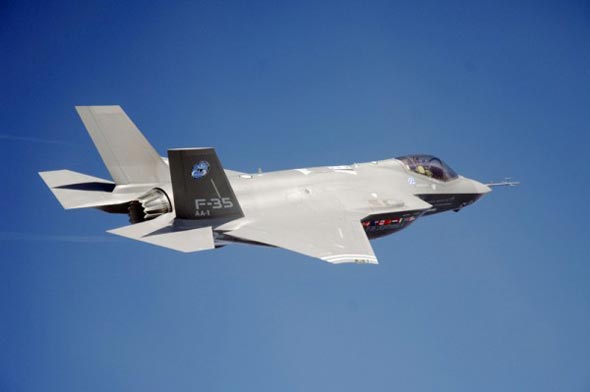
    The F-35 Lightning II aircraft brings new capability to the US Air Force, Navy and Marine Corps. It will also serve as a centerpiece for the leading international air forces. In addition to the United States, the F-35 program has eight other partners. Those partners include the United Kingdom, Italy, the Netherlands, Turkey, Australia, Norway, Denmark and Canada. Additionally, both Israel and Singapore have come aboard as security cooperative participants.


    The F-35 will be produced in three variants, including a standard-take-off-and-landing version (A), a short-take-off-and-landing version (B) and a carrier variant (C) for use by the Navy. The F-35 will fly both suppression of enemy air defenses and destruction of enemy air defenses missions. Additionally, it will be tasked with counter-air, strategic attack, close air support and defensive counter-air missions. The US Air Force is expected to start taking delivery of F-35A aircraft in 2009, with planned deliveries continuing beyond 2025.

    The F-35C will be the US Navy’s first stealth aircraft. It is designed to replace the F/A-18 Hornet and complement the newer F/A-18E/F Super Hornet. While it shares its fundamental design with the F-35A (conventional takeoff and landing) and F-35B (short takeoff/vertical landing), the F-35C is specialized for the catapult launches and arrested recoveries of large aircraft carriers. It features 30 percent more wing area than the other two variants, larger tails and control surfaces, and wingtip ailerons – all contributing to the precise slow-speed handling characteristics required for carrier approaches. The F-35C’s internal structure is strengthened to withstand the punishment of repeated catapult launches and arrested recoveries on the carrier deck.

    The F-35C – the Carrier Variant (CV) is also progressing, with Critical Design Review (CDR) completed in June 2007. According to Terry Harrell, Lockheed Martin director of F-35 carrier variant development, in the past seven months the aircraft removed more than 200 pounds of weight while meting its objectives for detailed design and performance.

    Gearing into Production

    Funding for the first two production-model Lightning IIs is approved, parts fabrication for these aircraft is under way and component assembly will begin later in 2007. The USAF will be the first service to receive the F-35A. The first of the service’s 1,763 aircraft will be delivered in 2010. The U.S. Marine Corps and Navy together are planning to operate 680 F-35Bs and F-35Cs, and the United Kingdom plans to place 138 F-35Bs into service with the Royal Air Force and Royal Navy. The remaining F-35 participant countries plan to acquire from 600 to 700 aircraft, and further international sales are expected to create a demand for hundreds more aircraft.

    By February 2007 all the multinational program members (except Denmark) have reinstated their support of the program by committing to the next phases of development. Canada, the United Kingdom and Australia have committed to the project’s Production, Sustainment and Follow-on Development (PSFD) phase, allocating additional funding for the program. On April 19, 2007 the US Under Secretary of Defense (Acquisition, Technology, and Logistics) released full funding for two Conventional Take-Off and Landing Variant (CTOL) F-35 aircraft in Low Rate Iinitial Production (LRIP) Lot 1, and long lead funding for the six CTOL and six Short Take-Off and Vertical Landing (STOVL) variants in Lot 2.

    As of July 2007 one aircraft in flight testing, and 11 in various phases of production. The first F-35A Conventional Takeoff and Landing (CTOL) aircraft continues flight testing (sofar 19 test flights were conducted) and the second F-35B, short takeoff/vertical landing (STOVL) version is nearing completion. It will begin flight testing in 2008. By the end of 2007, some 20 aircraft are expected to be in different phases of production.

    F-35 Basing

    The initial Joint Strike Fighter locations will include Nellis AFB, Nev., and Edwards AFB, Calif., will provide flight-testing. Eglin Air Force Base, Fla., will provide primary maintenance and flight training with 33rd Fighter Wing assigned with the training of new Navy, Marine Corps, Air Force and allied F-35 Lightning II Joint Strike Fighter pilots and maintainers. The first F-35 is scheduled to arrive at Eglin by 2010. Operational squadrons will be located at Hill AFB, Utah, Kadena Air Base, Japan, and Shaw AFB/McEntire Air National Guard Base, S.C. Both stateside operational bases will combine active duty and Reserve component members to maximize flexibility and combat capability.

    Flight Testing

    By the first week of February 2007 the first F-35 Lightning II (AA-1) performed seven test flights since its inaugural flight December 15 and has successfully tested a wide range of aircraft systems and demonstrated uncommon reliability. The aircraft so far has flown at 23,000 feet and achieved speeds of Mach 0.8 and a 16-degree angle of attack. The flights also served to calibrate the air-data system while evaluating basic maneuvering with the landing gear both retracted and extended. On the fifth flight, F-35 Chief Test Pilot Jon Beesley lit the afterburner for the first time and unleashed 40,000 pounds of thrust — more power than any fighter engine in history. The airborne tests also have evaluated the speed-brake function, the fuel-dump process, the approach power compensator (an auto-throttle mode for landing), and tests of the radio, communication and navigational systems. Revolutionary internal systems on the aircraft have performed exceptionally well, including unique actuators that drive control surfaces primarily using electricity instead of a hydraulic system. Another device that for the first time combines the engine starter, the generator, the emergency power supply and the environmental-control system into a single unit also has continued to operate successfully. According to Brig. Gen. C.R. Davis, F-35 program executive officer “early flight test results show we are on a path to largely validate the design and aircraft systems — we are not entering a period of discovery.” By April 23, the aircraft completed 14 test flights, gradually opening the flight envelope reaching an altitude of 30,000 feet, speed of 0.8 Mach, and 16 degrees Angle of Attack.

    F-35 avionics are being flight tested on the Cooperative Avionics Test Bed (CATBird), a highly modified 737 designed to validate that the complex, highly integrated avionics suite has satisfied all test objectives within its initial flight-clearance envelope. Sofar “CATBird,” completed eight test missions and logged 24.8 hours, and is now poised to receive additional flight clearance. CATBird will develop and verify the F-35’s capability to collect data from multiple sensors and fuse it into a coherent situational awareness display in a dynamic airborne environment. Testing of the helmet mounted sight and display (HMDS) is planned to begin soon, as soon as the new system is certified to fly on the F-35.

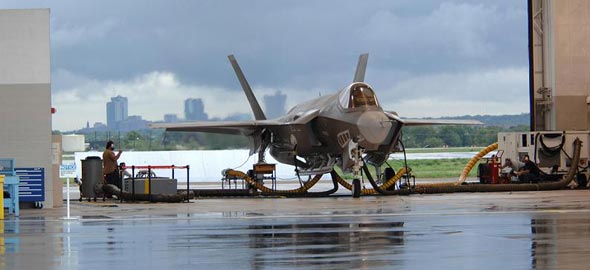
    Static tests of the different variants of the F-35 are already underway. The first static test aircraft for the STOVL variant was delivered earlier in 2008 and has successfully completed a third of its planned test program in Fort Worth. Construction of the second ground-test aircraft completed on December 08. Currently, the aircraft is being instrumented and will be shipped to the UK by March 09 for testing. The aircraft (called AG-1), is a full-scale static test article for the conventional takeoff and landing (CTOL) variant. Dan Crowley, Lockheed Martin executive vice president and F-35 program general manager explained that the AG-1 will be subjected to twisting, bending and pulling forces to validate that the CTOL variant’s structure can sustain all the forces and loads exerted during flight, progressing flight testing toward the CTOL’s full nine-G performance envelope.”

    Foreign sales:

    To address th epotential sale of JSF to air forces and countries which were not part of the original development agreement, the USAF and Lockheed Martin have launched the ‘JSF Delta System Development and Demonstration’ effort (Delta SDD). The purpose of the Delta SDD is to develop a version of the JSF Air System that meets U.S. National Disclosure Policy, but remains common to the U.S. Air System, where possible.

    In November 2007 Lockheed Martin was awarded additional $134 million modification to its JSF development contract, to perform design, development, verification, and testing of JSF versions designed to address ‘Partner Version Air System’ requirement. This program adresses the potential sales of the aircraft to nations that did not sign the partners agreement, but want to receive the aircraft and adapt it to their requirements.

    Development and testing of the JSF Delta SDD is expected to complete until October 2013, with first availability of export aircraft to non-pantner countries.

    First Flight:

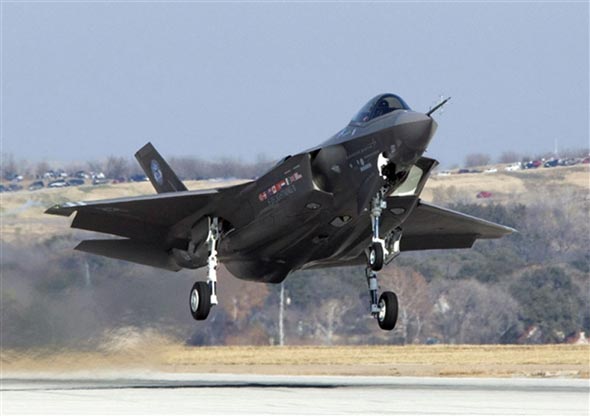
    The first F-35 Lightning II Joint Strike Fighter took off on its initial test flight from Lockheed Martin in Fort Worth, Texas on 12:44 December 15, 2006 piloted by the program’s Chief Pilot Jon Beesley. The aircraft was airborne 35 minutes on its maiden flight. the jet lifted off and began a climb-out to 15,000 feet. Beesley then performed a series of maneuvers to test aircraft handling and the operation of the Pratt & Whitney F135 turbofan and subsystems. Dan Crowley, Lockheed Martin executive vice president and general manager of the F-35 program, said the aircraft has continued to meet or exceed expectations during its assembly and pre-flight checkouts. It has now embarked on a 12,000-hour flight-test program designed to validate tens of thousands of hours of testing already completed in F-35 laboratories.

    U.S. Department of Defense Fears the Budget Axe

    The Department of Defense (DOD) budget is facing mounting pressure from both sides of the aisle as lawmakers struggle to rein in trillion-dollar deficits – a market analysis from Forecast International’s latest analysis determines.

    “The extent of the damage remains to be seen, however, as there is a fundamental disagreement over whether the Pentagon’s coffers should be subject to the same scrutiny and cuts as non-security budgets,” says Shaun McDougall, Forecast International’s North America Military Markets Analyst and author of the report.

    What is clear is that DoD spending will be constrained in the years ahead, especially when compared to the expansive budget growth over the past decade.  The White House projected about 1.8 percent real growth in FY11; growth is then expected to fall to 1.1 percent in FY12 and to below 1 percent after that.  Furthermore, war funding will taper off as the U.S. completes its mission in Iraq, though volatile conditions in Afghanistan leave some budgetary questions unanswered.

    This top-line growth will be unable to support current DoD requirements, as Defense Secretary Robert Gates has claimed the Pentagon will require around 2 to 3 percent budget growth above inflation to sustain the military force structure.  He has laid the groundwork for a budget savings initiative under which the DoD would make significant cuts to operations & maintenance, contract services, and overhead in order to transfer over $100 billion to force structure and modernization efforts.  The plan is not absent shortcomings, such as the fact that the majority of savings have been pushed to the outyears.  In addition, there is a growing concern that the services could lose some or all of their savings as the government attempts to pay down the deficit.

    “What is clear for now is that the Pentagon has lowered its expectations and is adopting a planning construct that assumes minimal budget growth,” says McDougall.  The DoD also considers maintaining and modernizing its force structure a top priority.  Although there is often little in terms of low hanging fruit when it comes to rising personnel costs, the DoD has shown that it at least intends to make sacrifices in order to prevent cuts to its acquisition budget, and indeed to provide substantial growth to support its wide-ranging weapons programs.

    These fiscal uncertainties are especially troubling for a defense acquisition system that has been plagued with severe cost growth.  Secretary Gates has said that affordability must be considered a key parameter throughout the acquisition cycle, which will inherently limit the DoD’s ability to modify program requirements or take risks with technologies or schedules.

    A number of major weapons programs are in the offing, including the SSBN(X) ballistic missile submarine, the Ground Combat Vehicle (GCV), long-range strike platforms, a presidential helicopter, and more.  SSBN(X) will strain the Navy’s shipbuilding accounts, the former presidential helicopter program was canceled because of high costs, and lawmakers have already expressed concerns about the affordability of the GCV.  With each of these efforts, “Designing to affordability, and not just desire or appetite, is critical,” says Secretary Gates.  What remains to be seen is whether the Pentagon can live by this philosophy, and whether it will be willing to walk away from programs that fail to meet these standards.

    I-View Tactical UAV System

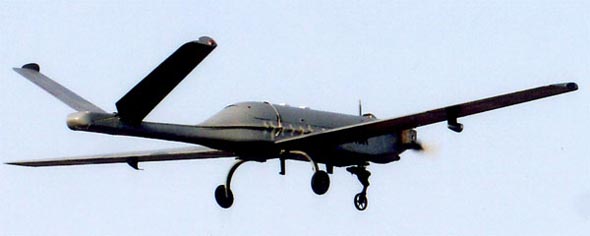
    The I-View family of small and mini-UAVs will be deployed with brigade, battalion level and special operations forces. This family has three members – K250, designed for brigades, K125 designed for battalions and K50, optimized for Special Forces. All I-View models are designed for mission endurance of several hours and operate at an altitude below 15,000 above ground level. I-View is designed specifically for the forward echelon. While larger UAVs, such as the Searcher and Heron, are operated at theater level, in support of strategic operations, the new mini-UAV family requires less support, has a smaller logistical and operational footprint and offers direct support to the commanders and users.

    With maximum takeoff weight of 240 kg, I-View can carry high performance sensors such as the MOSP optical payload and Synthetic Aperture Radar (Such as the EL/M-2055D). Due to the larger and improved optics and stabilization, MOSP offers 30 – 40% improved performance compared to smaller, lighter payloads such as the POP 300. To further improve the performance of the payload, I-View uses an automatic target tracker, implemented in software the ground station. Malat’s new miniaturized avionics are already installed in the I-View, contributing to weight and space saving. A total capacity of 86 liters is available for payloads and mission specific instrumentation systems.

    I-View can operate on 6 – 8 hour missions, at altitude of 15,000 feet. At such altitude, its line-of-sight communication datalink can operate at ranges of 150km from the ground station. When operation at lower altitude is required, the UAV can be supported by another vehicle carrying an aerial relay. I-View can utilize the common mission control systems used by other UAVs such as the Heron and Searcher. A miniaturized version is available for rapid deployments, packed in a Humvee mounted shelter.

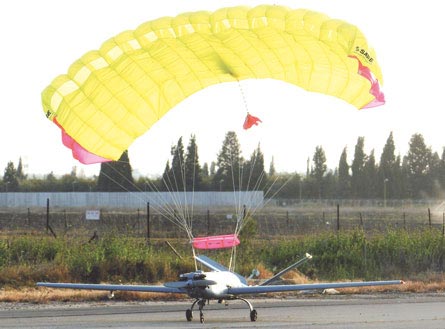
    I-View’s operational autonomy, with automatic launching and recovery, and efficient mission control facilities, offers self sufficiency for the tactical units. The system can be deployed almost anywhere, either from paved runways or by hydraulic rail launcher. Rapid tear-down ensures the unit does not slow down the troops, can move at the pace of the battalions, and may not become target for enemy attack. I-View uses a unique controlled parafoil flight termination system, which is automatically deployed at the end of the mission or on emergency, to bring air-vehicle to the ground through a soft landing. Since the parafoil decent is controlled by the flight controls of the UAV, I-View can be landed within 50 m radius from the predestinated point, regardless of the wind conditions. This controlled parafoil automatic landing system is considered to be the most suitable for tactical UAV operations. Since landing loads are minimal, the aircraft can be reused after minimal turnaround time of few minutes. I-View uses the operationally proven automatic takeoff and landing systems available in the Heron, Hunter and Searcher UAVs.

    The aerodynamic design is optimized for parafoil integration. The parafoil is stored in a tail boom which opens straight into the air stream. Unlike most UAVs using pusher propeller, I-View’s engine and propeller are mounted in front, to prevent the risk of parachute failure. Another distinctive design feature is the dove tail design is already well proven in UAV operation. The upper tail chosen for the I-View maintains all the benefits of this design, with improved payload visibility, and safety during takeoff and landing. While dove-tail is more efficient, it also lacks the redundancy of the twin-tail design. IAI’s tradeoff in the I-View was the availability of the parafoil, which can be used as emergency landing device.

    Australia Selects Israeli I-View Tactical UAV for JP129

    The launch customer of the I-View will probably be Australia. The Australian MOD selected this platform for its future tactical UAV system, a $145 million program announced by Defence Minister Robert Hill December 12, 2005. A formal contract was signed a year later, in December 2006. According to the Australian MOD, Boeing Australia, teamed with IAI / Malat was selected to supply UAVs for the Australian Army’s Joint Project 129 (JP129). The first I-View will be operational in 2008 by a new regiment based at the Gallipoli Barracks, Enoggera, in Queensland. They Australian Army is already operating short-range, miniature SKYLARK UAVs supplied by Elbit Systems. These mini UAVs  are being deployed to Iraq. Additional, High Altitude Long Endurance Maritime UAV (Most likely the Northrop Grumman Global Hawk) will also be purchased under Project Air 7000.

    I-View in also a contender in several other programs in Israel, India and other markets.

    Facing continuous delays, the Australian Government decided to terminate the contract and announced its desicion On September 4, 2008.

    Skunk Works and XTEND Simplify Multi-Drone Command

    0
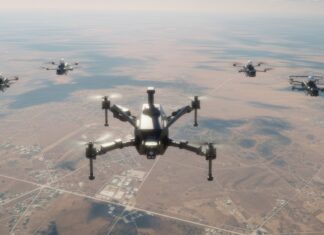
    Lockheed Martin Skunk Works® and XTEND have achieved a major milestone in JADC2 by integrating the XOS operating system with the MDCX™ autonomy platform. This technical breakthrough enables a single operator to simultaneously command multiple drone classes, eliminating the friction of mission handoffs. From "marsupial" drone deployments to operating in GPS-denied environments, explore how this collaboration is abbreviating the data-to-decision timeline and redefining autonomous mission execution.

    From Ukraine to Taiwan: The Global Race to Dominate the New Defense Tech Frontier

    0
    As traditional defense primes face mounting competition from agile “neoprimes” such as Anduril, Palantir and Helsing, the balance of innovation is shifting toward software-defined warfare and scalable, dual-use technologies, while global industry consolidation—marked by Boeing’s integration of Spirit AeroSystems and other strategic mergers—signals an intensified race to secure control over the defense technology value chain. Our Defense-Tech weekly report highlights these trends.

    Europe’s “Drone Wall”

    0
    In early October 2025, a coordinated wave of unmanned aerial system (UAS) incursions—widely attributed to Russia—targeted critical infrastructure across at least ten European nations. The unprecedented campaign exposed the fragility of Europe’s air defenses...

    Weekly Defense Update & Global Security Assessment

    0
    Executive Summary The past week (September 18-25, 2025) represents an inflection point where strategic defense concepts have transitioned from doctrine to tangible reality. An analysis of global events reveals four primary, interconnected trends shaping an...

    U.S. Air and Space Forces Push Next-Gen Programs at the AS&C 2025 Conference and...

    0
    At the 2025 Air, Space & Cyber Conference, U.S. Air Force and Space Force leaders unveiled major updates on next-generation fighters, bombers, unmanned systems, and space initiatives, highlighting both rapid innovation and critical readiness challenges as the services race to outpace global competitors. A short version is available here, with a more detailed version for subscribers.

    TADTE 2025: Reflecting Taiwan’s Strategic Themes

    0
    The Taipei Aerospace & Defense Technology Exhibition (TADTE) 2025 crystallized around four dominant strategic themes that collectively illustrate Taiwan's comprehensive approach to defense modernization amid escalating regional tensions. Based on a detailed report by Pleronix (available upon request). Includes a Podcast discussion on TADTE 2025's highlighting Taiwan's four strategic themes beyond the post's coverage.

    Iron Beam 450 Completes Testing, Soon to Join With Operational Air Defense Units

    0
    Israel’s Iron Beam 450 high-power laser system has completed final testing, marking a major leap in air defense. Developed by Rafael, it offers precise, cost-effective interception of rockets, UAVs, and mortars, and is set for IDF deployment by 2025.