
Monday, December 22, 2025
More
    Home Blog Page 389

    Western Iraq – becoming Al Qaeda’s Safe Haven?

    On his way to his summit meeting between Iraqi PM Nouri Maliki and King Abdallah II in Amman, last week, President Bush declined to classify the Iraq crisis as a civil war and blamed Al Qaeda for the deterioration. The following day, US media reported a virtual bombshell, aired by ABC News that Pentagon officials are considering a major strategic shift in Iraq, to move U.S. forces out of the dangerous Sunni-dominated al-Anbar province and join the fight to secure Baghdad.

    The Al Anbar province in western Iraq is a vast, sparsely populated area that stretches from the Euphrates River Valley to the Syrian border. Agriculture is the number one economy, and water is the most important resource. It’s 30,000 square miles of desert, dotted by farmland, with numerous small cities and towns, some of them 3000 years old.


    US analysts and Israeli military sources immediately interpreted this step as more than acceptance for the first time of an American military defeat in the embattled province; it also paves the way for the creation of an Al Qaeda terrorist -Sunni insurgent base in western Iraq, a direct menace to neighboring Jordan and Israel, as well as Lebanon, which is already in dangerous turmoil. Although the US president stressed Al Qaeda would not be allowed to maintain a territorial haven in Iraq- analysts consider his plan as totally irrelevant to what is actually going on in that region. If Bush’s plan appears to be to hand Anbar over to the indigenous Sunni tribal confederation which will fight Al Qaeda- intelligence experts regard this as dangerously “wishful thinking”.

    Recent developments in Western Iraq which engulfs over 1.25 million, mostly Sunni population, concentrated in Fallujah, Haditha, Hit, al Qaim and Ramadi area named Al Anbar province have indicated, that the U.S. military is no longer able to defeat the growing power of Al Qaeda led insurgency in this highly strategic area. A major operational transit area for ” outside” insurgents infiltrating from Syria along the Euphrates River valley, into the interior of Iraq, the small town of Hi’t has become a critical focal point for intensive fighting between insurgents and US forces.

    In recent months, Al Qaeda’s propularity has been rising dramatically among the Sunni majority of the region and has virtually become the organisation’s “safe haven” in Iraq. According to a classified US Marine Corps intelligence report, leaked surprisingly to a US newspaper the author of this document, Colonel Peter Devlin, who was attached to the Marine Expeditionary Force in Anbar, described Iraq’s Sunni minority as “embroiled in a daily fight for survival, fearful of pogroms by the Shiite majority” and becoming increasingly dependent on Al Qaeda as its only hope against growing Iranian Shiite dominance of Baghdad. Colonel Devlin claimed that Al Qaeda has already become the dominant organization of influence in Anbar Province, surpassing all other groups, including the central Baghdad government and US troops in the region.

    To emphasize the seriouseness of the situation, that the US Army is finding itself in Western Iraq these days it suffizes to pint out that between Al-Qaeda’s violence, Iran’s influence and an expected U.S. drawdown, “the social and political situation has deteriorated to a point” that U.S. and Iraqi troops “are no longer capable of militarily defeating the insurgency in al-Anbar,” the assessments stated. In Anbar province alone, at least 90 U.S. troops have died due to insurgency attacks since Sept. 1. Indeed, classified US intelligence estimates that between 600 and 700 Al Qaeda fighters are already permantly present in Iraq. This figure does not count the 600 to 800 Ansar al Islam fighters and smaller groups of locals and foreigners linked to Al Qaeda or identifying with its aims. All in all, Al Qaeda can field 1,800-2,000 fighters, which could swell into many thousands once Al Qaeda takes over the region entirely.

    But matters can become much worse, once US forces are withdrawn out of this volatile region. An American withdrawal from Anbar will lay one-third of Iraq’s area bare to Al Qaeda and Sunni insurgent control. Once US troops are gone, no one can guarantee who will end up on top.
    Strangely enough, the Pentagon only last year had authorized substantial funding to pull back their troops from Iraq’s towns and cities and redeploy them in four giant bases in Western Iraq, a strategy they said would be a planned prelude to eventual withdrawal. A dangerous move by Al Qaeda, following the planned withdrawal, could be to cripple the strategic airbases around the western city of Al Rutbah near the border with Jordan and put out of commission squadrons deployed at the H2 airbase and at the three airfields and landing pads at H3 along Iraq’s border with Syria and Jordan. This theater of operation also includes the problematic Al Qaim region, where weapons that include surface-to-air missiles are still being smuggled in from Syria more than three years after the US-led invasion. It also covers the meeting-point of the Iraqi, Jordanian and Saudi frontiers.
    Basrah First Stop in “Shiite Crescent”

    Middle East Intelligence analysts have noticed the latest trend of hostile activities in southern Iraq, showing a marked increase in attacks on British forces. These culminated last May with the high-profile downing of the RAF Lynx helicopter in downtown Basrah city and especially the incited riots following shortly after the crash. British officers have expressed serious concern about the increasing influence and control of the Mahdi Army on Basra’s streets.last September, when troops were set on fire as they escaped from burning Warrior armoured vehicles attacked by petrol bombs.

    The chief of the British Army General Sir Richard Dannatt has called for a pullout of British troops from Iraq “sometime soon”. Sir Richard might be issuing a “very public warning” to the next prime minister. In a sign that public opinion is hardening against Britain’s military presence in Iraq, 61% of voters say they want British troops to leave. In fact, there are already indications, that British “Operation Telic” contingent forces are re-deploying from down-town Basrah to more defensive positions around the perimeter, which may signal first preparations for a phased withdrawal early next year. The highly strategic Basrah region is not only the logistical vital supply gate for coalition forces in Iraq, but due to its strategic location, close to the Shat-al Arab waterway, could clear the way for an Iranian foray into the void.

    Iran’s first objective implementing its aim would be controlling the strategic Shat-al-Arab waterway and Al Basrah province, which not only dominates all access routes in that region, but would place the US led coalition forces in Iraq in dangerous jeopardy, by virtually threatening their vital logistical supply life-line into central Iraq. Sofar, the only military force still preventing such a threat depended on the relatively limited military British contingent in Basrah. Fortunately, probably with some foresight, the south-central weak links that were the Ukrainian and Bulgarian contingents have recently been replaced by elements of the US 4th Infantry Division, forming up on the overall border region, preventing outflanking of British army positions north of Basrah. But any reduction, or even early withdrawal of the British contingent, would place these forces under severe pressure to stem a growing threat from Iranian-backed insurgency forces in that highly critical region. In order to achieve a strategic land-link to the Iraqi Shi’ite south, Iran must not only destabilise the Al Basrah region, but, first dominate the entire province with loyal elements, which will secure this vital land bridge for Iran’s ultimate aims.

    In a recent restricted intelligence report, experts estimated that, while world attention is focusing on Iran’s nuclear ambitions and Iran President Mahmoud Ahmadinejad’s fierce rhetoric, the Islamic Revolutionary Guards Corps is quietly destablising southern Iraq, and unhinging British military control of Al-Basrah being its first objective. There are already indications, that Telic forces are re-deploying from down-town Basrah to more defensive positions around the perimeter, which may even signal first preparations for a phased withdrawal early next year.

    Iranian influence in Iraq has significantly increased over the last year, but has become most pervasive in the Shiite south, where local militia, backed by IRGC have virtually consolidated their control over Al Basrah province and now dominate police, governate council, security apparatuses and even humanitarian organisations. These militias in the city have virtually eliminated nearly all the local opposition. In fact, it is well known to western intelligence community that Iranian revolutionary guard units are sponsors of the Mahdi Army of Moqtada al Sadr and the Badr Brigades of the Supreme Council for the Revolution in Iraq (SCIRI). They are the principal militias of the Shia communities of the south, and are now among the top three or four most powerful private armies in Iraq.

    Although Shi’ite cleric Muqtada al-Sadr has repeatedly denied any relationship with the Iranian regime, he was reported visiting Iran in June 2003, where he met with high-level Iranian officials. More important, however is that Al-Sadr visited Iran again last January 2006, meeting with Supreme National Security Council Secretary Ali Larijani. Since that time, it appears relations have deepened, and some U.S. and Iraqi officials have alleged that Iran is now funding al-Sadr’s Imam Al-Mahdi Army.

    Iraq’s leading Shi’ite political party, the Supreme Council for the Islamic Revolution in Iraq (SCIRI), was based in Iran for some 20 years prior to the downfall of the Saddam Hussein regime. SCIRI’s armed wing, the Badr Corps (now known as the Badr Organization) was trained by Iran’s Al-Quds Force, a special-operations unit of the Islamic Revolution Guards Corps. The Cairo-based weekly “Al-Ahram” claimed in 2005 that Iranian President Mahmoud Ahmadinejad played a role in the formation of the Badr Corps and hence wields considerable influence over the organization in its present activities.

    Sources quoting from Israeli intelligence reports indicate that during the last months large shipments of advanced weapons have been smuggled into Iraq from Iran. Already last October London’s “Sunday Telegraph” reported that the notorious IRGC Al-Quds Force had established three main smuggling routes into Iraq through Al-Basrah and Al-Amarah from a base near Ahvaz, in Iranian Khuzestan. Officials estimate these latest deliveries including large numbers of Iran-modified SA-7 Strela ground-to-air missiles. One of such, could have been involved in shooting down the British helicopter over Basrah city.

    During a recent closed conference held in Israel, oriental scholars and intelligence experts contemplated the new Iranian strategy over Iraq and its regional repercussions. Among the topics raised was the escalation of violence in southern Iraq and especially in the Al Basrah province, being one of the most strategic environments in the US led coalition campaign.
    Last August, the newsweekly “Time” reported that the Iranian clerical regime began planning its infiltration to Iraq already late 2002, setting up strong military forces along the Iran-Iraq border. The newspaper said that thousands of people entered Iraq from Iran in the early days after the U.S-led invasion, including many agents of the Iranian security services.

    Now over four years on, Iran appears to have entrenched its intelligence and paramilitary forces in Iraq, especially in the Shiite south, where, experts estimate, Iranian strategic goals are now focusing on the regional aims, to forward the so-called ” Shiite Crescent” strategy, which Jordan’s King Abdallah II mentioned last January. Analysts warn that among the possible Iranian goals in Iraq that have been propagated recently are, apart from preventing the formation of a pro-Arab, pro-U.S secularist regime; and driving U.S. forces from Iraq, their most important aim is to establish a secure strategic Iranian-controlled land route linking Iran to Syria, increasing leverage in Iran’s support of the Palestinian Hamas regime as well as their Shiite proxy, Hezbollah in Lebanon. Although the latter has been severly battered in the Second Lebanon war, its political prestige has grown substantially, threatening Fouad Siniora’s, western oriented grovernment with aim to establish a pro-Iranian, Shi’ite dominated Lebanon. Such a move would give the Tehran Ayathollas new impetus to realise their sofar unaccomplished ambition to propagate the Islamic dominance over the secular Middle East.

    President Mahmoud Ahmadinejad’s strange letter to US president Bush, last Fall, should give analysts ample thought. The theological connotations, especially his closing phrase Vasalam Ala Man Ataba’al hoda ( “Peace only unto those who follow true path”), seems to signal, not only a sinister threat, but stern warning in writing, reminding orientalists of ancient historical idioms, not voiced by any Islamic leader since the capture of Constantinople in May 1453!
    But what could become even more intriguing developments, at present, are still unconfirmed reports over a clandestine military operation under which Iranian Revolutionary Guard forces were quietly airlifted, early May, into Sudan, following a secret meeting between Omar Al-Bashir and Ayatollah Ali Khamenei.

    It needs little imagination, glancing at the Middle East map, to indentify Iran’s latest strategic moves in this region: having creating ‘Hezbollahland’ in Lebanon South and the Beka’a Valley, increasing Iranian activity in the Palestinian West Bank and Gaza’s ‘Hamastan’ , active support to al Qaeda’s forward base in Sinai and now, if confirmed, establishing a military presence in east Africa within range of the strategic Red Sea shipping lanes.

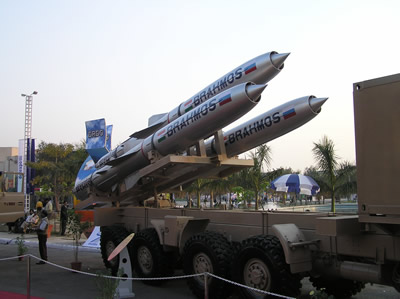
    BrahMos Anti Ship / Cruise Missile

    Brahmos Aerospace JV (India – Russia)

    The BrahMos (surface launched) and BrahMos A (air launched) cruise missiles are designed to be able to attack surface targets from a low altitude of 10 meters, at a speed of Mach 2.8, from a range of 290 km. The ship launched / land based missile has a 200kg warhead (300 kg for the BrahMos A aerial version). BrahMos can be launched either in vertical or inclined position and will cover 360 degrees. The missile will utilize a variety of flight trajectories, integrating high and low profile optimizing range and detectability. The high cruise and terminal speed of the BrahMos is posing a significant challenge for the attacked target, as it leaves significantly less time for deployment of countermeasures. However, modern countermeasures are already preparing for supersonic attack missiles such as the Russian Moskit. When and where such defensive measures are available – fast attack missiles could suffer from insufficient time for gathering data for effective target identification and lack of maneuverability at top speed.

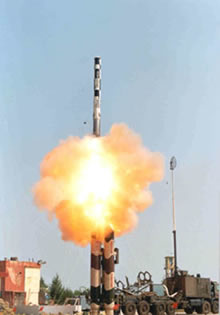
    From 2001 through November 2003, six missiles were fired during test trials, from shipborne, coastal and truck mounted inclined or vertical launchers. Following Indian Navy acceptance tests in 2004, with a total of two launches of the anti-ship missile and a first launch of the surface launched version tested on December 21, 2004, the Sea-to-Sea version of the Brahmos has already been installed on board leading Indian Naval warships. The surface / surface version is still undergoing testing. On May 31, 2006, the 12th firing test of a the missile, this time from a mobile launcher, operated by a trained Indian Army unit. The aerial launched variant, designed for India’s Su-30 fighters, is expected to complete development by 2007.
    November 29, 2006: The supersonic cruise missile BrahMos has been inducted into the Indian Defense forces. After a series of successful flight trials, the missile has proved its accurate performance against ship and land targets. According to Indian Defense Minister AK Antony.  The Indian Navy and Army have accepted the system. The Navy is already in process to install the missile on naval ships while the Army is scheduled to field initial systems in 2007.

    The missile was developed under a joint venture between the Defence Research & Development Organization (DRDO) from India and the Federal State Unitary Enterprise NPO Mashinostroyenia (NPOM) from Russia. The missile is believed to be the first supersonic anti-ship / land attack missile. The partners reportedly received interest from several countries for export version of the Brahmos. Industries from both countries will share the production.

    Spain Approves €324 million SPIKE LR Missile Acquisition

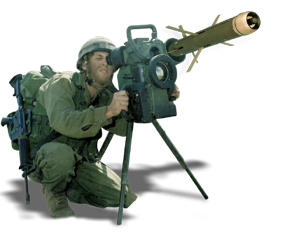
    Spain will acquire 260 SPIKE-LR anti-tank missiles systems under a €324 million program recently approved by the Spanish Government. The program will cover the delivery of 260 launchers, 2,600 missiles and integrated logistic support. The new fiber-optically guided missiles offering unique “fire and forget” or “fire and update” capabilities will replace outdated Milan and Dragon missiles currently in service. Deliveries are expected to start in 2008. The prime contractor for the program will be supplied the General Dynamics-Santa Barbara Sistemas, with the Israeli missile manufacturer RAFAEL acting as subcontractor. RAFAEL granted 60% national content for the Spanish delivered missiles. The Spanish firm Tecnobit will manufacture the launchers. RAFAEL also agreed to cooperate with its Spanish partners on future production of Spike, if such missiles are selected by Latin American armies or Portugal.

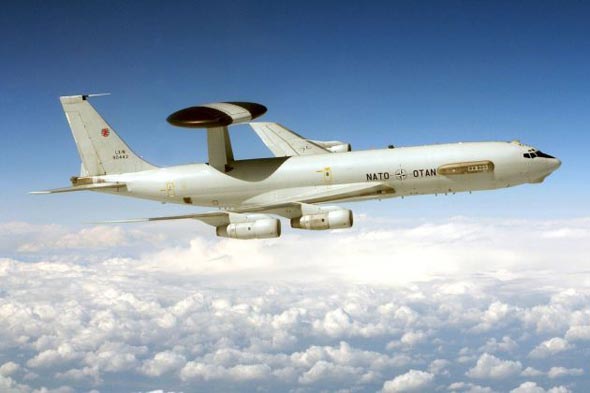
    AWACS – Airborne Early Warning & Control Aircraft

    A major upgrade for the mission systems of the first Airborne Warning and Control System (AWACS) aircraft operated by NATO was recently completed by EADS, Boeing. The upgrade is part of a $1.32 billion Mid-Term Modernization Program. The entire fleet of 17 AWACS aircraft, based in Geilenkirchen, Germany, are scheduled to complete the upgrade program in 2008.

    The enhancements provide the AWACS crew to receive and integrate data from various sensors on board, as well as from remote sources. Multi-sensor integration also improves the reliability and accuracy of target tracks and identification and eases operator workload. New situation display consoles with flat-panel displays offering a Windows-like environment, a new mission computing system based on open architecture, which offers more economical and frequent upgrades to the hardware and software. The enhanced system can handle more targets, and offers improved interoperability with other AWACS platforms as well as with fighter aircraft, ground stations, ships and satellites.

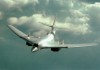
    The aircraft is equipped with new digital communications systems, improving operator’s access and utilization of radio links. The aircraft is fitted with an improved over-the-horizon communication via satellite links. To improve connectivity with Eastern European nations’ air and ground forces, broad-spectrum VHF radios and modified identification friend or foe (IFF) system compatible are used, to meet emerging international air traffic control systems requirements. The upgraded NATO AWACS aircraft will be able to receive mission orders from remote locations and updates via satellite data links and electronically integrate them via the mission computing system.

    NATO’s fleet of NE-3A AWACS aircraft will be equipped with Northrop Grumman’s AN/AAQ-24(V) Large Aircraft Infrared Countermeasures (LAIRCM) laser based missile protection system, under a US$104 million program recently awarded by the US Air Force.

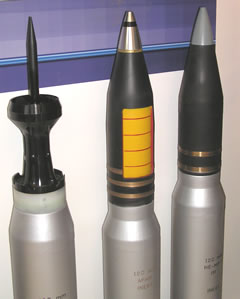
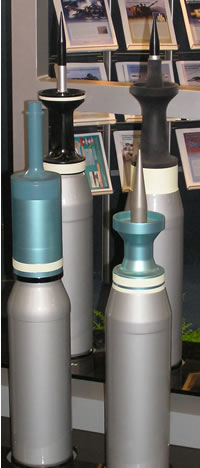
    120mm Tank Gun KE Ammunition

    KEW-A1 (General Dynamics / Rheinmetal)
    The 120mm KEW-A1 cartridge is a tungsten based Armor-Piercing, Fin-Stabilized Discarding Sabot-Tracer (APFSDS-T). This projectile provides a high performance alternative for depleted uranium based projectiles. The 19.6kg ammunition uses 8.4kg of propellant and a combustible case, packing the 4kg penetrator and aluminum sabbot, fired at a muzzle velocity of 1740 m/sec generating chamber pressre of 5,800 bar.

    KEW-A2 (General Dynamics)
    The 120mm KEW-A2 cartridge is uses a tungsten penetrator, and is proposed as an alternative for depleted uranium based KE projectiles. KEW-A2 uses 8.6kg of JA-2 propellant, accelerating the 7.6kg projectile to a muzzle velocity of 1,700 m/sec. The projectile uses the tungsten rod, steel fin and sabot fabricated from composite materials. ot, fired at a muzzle velocity of 1,740 m/sec generating chamber pressre of 5,800 bar.

    M829A1 (APFSDS-T “Silver Bullet”)
    This cartridge was the primary anti-tank weapon used by US Army tanks during Desert Storm. Weight: 20.9kg, Length: 984mm, Propellant: JA 19 Perf (7.9kg) creating a chamber pressure of 5,600 bar. The Projectile length: 780mm. Weight: 9kg. Penetrator is made of depleted uranium. length: 684mm. Diameter: 22mm. Weight: 4.6kg. Muzzle velocity: 1,575m/sec. Target range: 3,000 mw. The KE-T tungsten version weighs only 18.7kg, and uses 8.1 kg of propellant to create a chamber pressure of 5,100 bar. The projectile length is 658mm, weighs 7.2kg and has a muzzle velocity of 1,690 m/sec. The tungsten penetrator’s length is 543mm, weighs 4 kg. This type was designed for export, where sales of uranium based weapons would not be possible.

    M829A3 (ATK)

    The M829A3 is proposed for the next generation KE tank cartridge. It completed type classification standard in March 2003 and is currently in full rate production for the US Army. The M829A3 cartridge has a total weight of 22.3 kg and length of 892mm. It uses 8.1 kg of RPD-380 stick propellant, accelerating a 10kg projectile to a muzzle velocity of 1,555m/sec. The penetrator uses depleted uranium; the sabot is built of composite materials.

    DM53 120mm KE Projectile (Rheinmetall)
    The DM53 round was designed to maximize the performance of KE projectiles fired from 120mm smoothbore guns such as the L44 (15% improvement) or L55 (30% improvement in muzzle energy). The DM53 is in service with the German, Swiss and Netherlands Armies. The complete round weighs 21.4kg, the projectile (with sabot) weighs 8.35kg and propellant: 8.9kg. The projectile’s length is 745mm, and with chamner pressure of 5,450 generated during firing, the muzzle velocity is 1,750 m/sec (L55 barrel) and 1,670 m/sec. (L44 barrel). The DM53 has been optimized to lass than 0.2 mil accuracy.

    DM 53-A1 is an advanced version of the DM 53. Currently being supplied in series to the armed forces of Germany, Austria and Turkey as the DM 63. DM53-A1 was selected by the armed forces of Finland and Denmark.

    DM63 KE Cartridge (Rheinmetall)

    The DM63 round is based on the DM53, with modified propulsion-based Temperature Independent Propulsion System (TIPS) utilizing the SCDB technology. The new type uses 8.45 kg of pure bulk powder to achieve nearly the same muzzle velocity of the DM53 (1,650 m./sec on L44 barrel). The propellant modifications aimed at improving the accuracy through a wide operational temperatures (-46 +63C) ensuring safe operation extreme climate zones, and minimizing the erosion of the barrel.

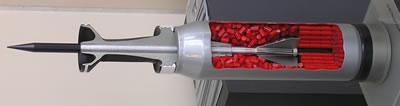
    IMI introduced a similar round designated M-338, which improves the KE performance of its 120mm KE rounds, and is suitable for all types of guns (including L44). M-338 uses a tungsten core designed for improved penetration and performance.Using new Low Vulnerability (LOVA) propellant enabled IMI to increase the M-338’s muzzle velocity with large safety margin while maintaining precision and operability over the entire temperature range defined by STANAG criteria. IMI used a uniquely designed tungsten alloy core, with unique mechanical properties and sabot design to improve accuracy at all combat ranges.

    MRM-KE

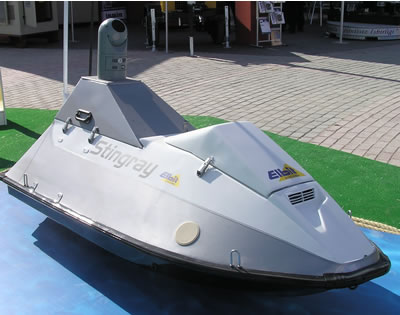
    Stingray – Unmanned Surface Vehicle (USV)

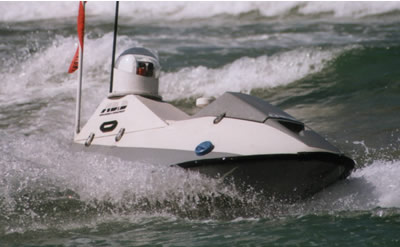
    Elbit Systems unveiled its new Unmanned Surface Vehicle (USV) “Stingray” at the IDEF-05 exhibition in Turkey. Stingray can perform autonomously or be remotely controlled by a single operator located at the shore station or onboard the ship. Top speed is up to 40 knots, with endurance over eight hours.

    The development is based on Elbit’s extensive experience in the development and operation of unmanned air vehicles (UAV) and mini UAVs. It is equipped with autonomous navigation and positioning capability, cruise sensors, and a stabilization system which prevents capsizing. Stingray can carry payload weight of up to 150 kg in two watertight sealed compartments. It is also equipped with day and night electro-optical stabilized payload. The USV is controlled from a portable control station, from which operators can monitor and operate the mission payloads and perform mission planning.

    The USV is designed for homeland security and coast guard applications including clearing shipping lanes and underwater search missions. Potential naval combat applications include target identification, Intelligence reconnaissance and surveillance (ISR) missions. Other applications include EW and ELINT.

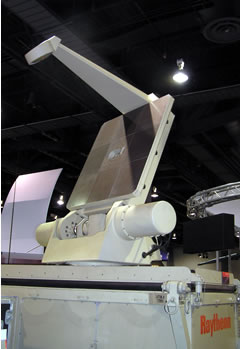
    Active Denial System (ADS)

    The Active Denial System (ADS) developed by Raytheon for the US Air Force Research Labs is a non lethal, counter-personnel directed energy non-lethal weapon which can be used against human targets at distances beyond the effective range of small arms. ADS projects a focused millimeter wave energy beam which induces intolerable heating sensation on an adversary’s skin and cause that individual to be repelled without injury. ADS could be used to stop, deter and repel hostile elements without applying of lethal force.

    ADS was developed by Raytheon company for the US Air Force Research Laboratory (ARL) and DOD Joint Non-Lethal Weapons Directorate. The program is currently in Advanced Concept Technology Demonstrator (ACTD) phase, which is scheduled to continue through the end of 2005. ADS will be operated from HMMWV, equipped with adequate power sources. Another application of ADS is considered for airborne applications, from platforms such as the AC-130 gunship. The development program will use more powerful and lightweight version of the land based system. This project is scheduled to continue through 2008.

    As of January 2007, the system has entered extended user evaluation phase, and is currently deployed with the Air Force’s 820th Security Forces Group (SFG) at Moody air force base in Georgia, USA. 820 is the first unit selected to conduct these tests. The system will be evaluated in assisting troops in securing base perimeters, checkpoints and entry control points during peacekeeping and humanitarian assistance, and crowd dispersal.

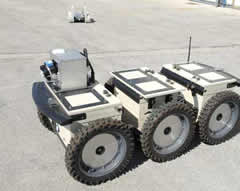
    Tactical Robotic Systems at the 2006 Eurosatory Exhibition

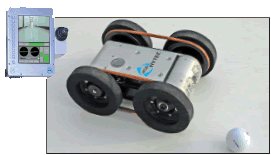
    Smaller robotic systems showcased by DGA included three Mini-robots called MiniROC (Mini Robot de Choc), a family of modular, semi-autonomous platforms designed for operations in urban environments. Another system, called TAROT, is being used to experiment with autonomous navigation and behavioral aspects of the interaction between humans and robots. Following three years of developments, the MiniROC family is scheduled for operational evaluation by October 2006. 

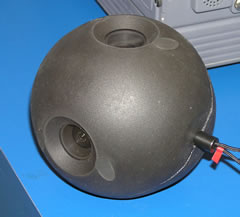
    According to French MOD plans unmanned systems will be developed incrementally throughout the next 20 years as part of the transformational Scorpion program, which aims at developing systems and tactics that will be effective in the future close-range “contact battles”. By the year 2012 MiniROC is expected to be integrated as part of the futuristic bulle opיrationnelle aיroterrestre (BOA) technology demonstration program, as part of the comprehensive manned-unmanned systems ensemble. On a parallel path, DGA is DGA is considering two new sensors for the FELIN infantry systems program – the “Spybowl” imaging sphere designed by Exavision and the quad-rotor CPX4 hovering surveillance system, from Novedem.

    Robosoft Advanced Robotics Solutions displayed several UGV systems, including the heavy RobuCAR TT, 4×4 platform, capable of carrying a 350 kg payload and a small networked robot designed for conceptual testing of swarm missions. Another robot being tested is the RobuROC, which is specifically designed to negotiate difficult terrain. In Germany, Rheinmetall Defense is engaged in a similar research project employing the small Foxbot and SMOVER vehicle robotization kit, which can effectively convert any manned vehicle to a robot. Higher levels of autonomy to be utilized for combat reconnaissance and support missions are currently on the drawing board. Such future applications are planned for every land forces modernization program, including FCS, FRES, Scorpion and BOA.

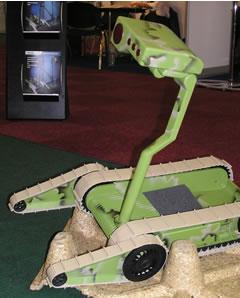
    Among the more mature programs is the type is the combat proven PackBot, developed and produced by iRobot. The company is currently developing the Small UGV (SUGV) to become the baseline UGV for the US Army Future Combat System’s (FCS) robotics. iROBOT also released details about the larger Warrior (also known as NEOMover), 125 kg platform, carrying a payload of 50kg (100 pounds) at a speed of up to 12 miles per hour. The new robot will follow the design principles of the smaller PackBot (including the characteristic tracks and flippers design). Warrior/NEOmover will be more durable and robust, and will be capable of climbing steps and obstacles, survive a drop from a one storey high rooftop and enduring harsh environmental conditions. Among the combat roles proposed for the Warrior are explosive ordnance disposal, battlefield casualty extraction and firefighting.

    Start < Page 3 of 5 >

    MCFS Mobile Counter Fire System

    Mobile Counter Fire System (MCFS) was developed by Techno Sciences Inc (TSi) for the US Marine Corps and Army. The vehicle is currently undergoing tests by the USMC Warfighting lab.

    The system is comprised of an acoustic sensing array to detect the direction of hostile fires. It includes a fire control system with embedded navigation system, to manage the detected threat coordinates and compensate for the effects of vehicle motion. An electric gun mount with integral day and night video cameras for automatic slew to cue operation completes the system. Target identification and gun firing are under full control of the system operator at all times.

    MFCS can be used for self protection, as well as convoy or fixed assets protection.

    Non Lethal Electrical Shock Weapons (Bio-Effect Weapons)

    Start < Page 4 of 6 >

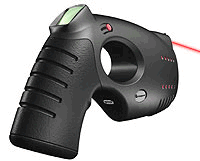
    Electrical shock weapons are designed to cause Electro Muscular Disruption (EMD) which, when affecting an unprotected human completely overrides the central nervous system and directly control the skeletal muscles. Unlike bullet impact or chemical agents, that are most effective when hitting specific body organs (respiratory system, heart or head) EMD weapon is effective wherever direct contact is made with the subject’s skin (even through few layers of clothing). Employed either as a direct contact of from stand-off distance, as a stun gun, the EMD effect causes an immediate uncontrollable contraction of the muscle tissue that result in physical debilitation regardless of pain tolerance or mental focus. Existing EMD weapons require physical contact with the target using hand held shockers or stun guns, such as the Taser, which uses compressed air cartridge to fire a pair of darts at the target. The darts are linked to wire conductors to deliver an electrical shock from the gun to the target.

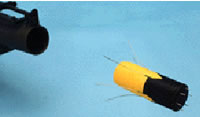
    Another stun weapon called Stinger uses a pyro charge to power four-dart system providing the Stinger with greater velocity, accuracy and greater effective range of close to 10 meters. The weapon uses four darts, rather than two, used on Taser to improve the probability of hit. Stinger is now offered with strap-on TruVu video gun camera accessory, which can record the entire engagement (audio and video) for evidence and debriefing. More advanced designs currently in development will have wireless capability and could engage a target at extended range.

    Comparison between different types of Electrical Shock Weapons

    Weapon type Effective range (m’) Effect / propulsion Status
    StunStrike 4 artificial lightning Development
    Air Taser 5 EMD / air In service
    Advanced Taser M26 5 – 7.5 EMD / air In service
    Advanced Taser X26 5 – 7.5 EMD / air In service
    Stinger 10 EMD / pyrotechnic Service Introduction
    Sticky Shocker 10 EMD / grenade In service
    XREP 30 EMD / grenade Development
    StunRounds 100 Piezoelectric pulse / bullet Development


    Further research is directed into wireless electro-muscular incapacitation technologies, including systems such as Extended Range Electronic Projectile (XREP) pursued by Taser and the US Navy. This wireless Taser is developed as a shoulder fired projectile is designed for effective range and characteristics comparable to blunt impact projectiles such as 40mm “bean bag” kinetic munitions. It is designed for use at distances of 30 meters and beyond.

    A different concept is the Sticky Shocker, developed by Titan, with DARPA’s support. This wireless shocker can be launched by M203 or M79 rifles, as well as 37mm non lethal launcher. Sticky Shocker clings to a human target inflicting an electrical stun. Effective at up to 10 meters, the projectile contains a battery which excites several short high voltage pulses (50KV) per second. Other developments of EMD munitions call for the miniaturization of stun cartridges, which enables them to fit into 40mm or 5.56mm ammunition. Different method of wireless stun weapon application is “laser induced plasma” weapon, which use artificial lightning effects to stun and incapacitate a target. Initial applications of such technology include the StunStrike and Portal Denial System which are currently maturing into operational systems.

    “Sentinel” Taser Area Denial System (TADS) is a different application of the Taser Anti-Personal Munition (TAPM) EMD weapon, designed for perimeter protection, covering entryways, building interiors, corridors or rooms. Effective at a range of 8 – 15 meters, Sentinel is controlled via camera installed on remotely controlled pan-tilt platform, to enable surveillance and effective engagement of targets in day, or night, indoor or outdoor. It is equipped with 7 Taser dart cartridges, which can be fired in different directions. Once fired each Taser dart pair remains activated until manually turned off. Seven subjects, per magazine, can be kept incapacitated at once by the independent Taser circuits. The Sentinel covers an arc of 160 degrees 30 feet deep. Sentinel can be used as part of a lethal/non lethal dual force system.

    Additional parts of this article:

    Less Than Lethal & Directed Energy Weapons

    Start < Page 1 of 6 >

    Military and security forces have been using less than lethal weapons for many years. Yet, except for specific chemical agents, most of these measures were based on “brute force”, and required physical close encounters with the target which can rapidly escalate to lethal means. Involvement of military forces in peacekeeping, law enforcement, humanitarian assistance, and homeland security missions supports the demand for non lethal or less than lethal capabilities that offer maximum flexibility in the use of force. Non lethal systems provide commanders with weapons explicitly designed and primarily employed to incapacitate personnel or materiel while minimizing fatalities, permanent injury to personnel, and collateral damage to property and the environment.

    When properly used, non lethal weapons should result in no injuries, fatalities or after effects. When used in military applications, non-lethal weapons are useful in crowd control and riot situations, where hostile forces take cover in crowds, in operations in urban terrain, or anti-terrorist actions where minimize collateral damage, or in counter-terror activities, in hostages situations.

    Non lethal technologies generally fall into four categories: chemicals, electrical devices, blunt impact munitions and directed energy. This article focuses on the military applications of anti-personnel non lethal weapons. Among such weapons are advanced incapacitating agents, electrical shock devices, laser, acoustic and high power microwave directed energy weapons.

    Additional parts of this article:

    M26/X26 Taser Gun – Electro-Muscular Disruption (EMD) Weapon

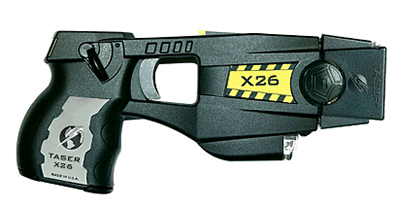
    The M-26 / X-26 advanced Taser gun fires two probes up to 21 feet from a replaceable air cartridge. These probes are connected to the weapon by high-voltage insulated wire. The M-26 uses a new ElectroMuscular Disruption (EMD) weapon technology that can completely override the central nervous system and directly control the skeletal muscles. When the probes make contact with the target, the Taser gun transmits a powerful electrical pulse along the wires and into the target’s body through up to 2 inches of clothing. The EMD effect causes an uncontrollable contraction of the muscle tissue that results in physical debilitation regardless of pain tolerance or mental focus.

    Taser guns utilize compressed nitrogen to project two small probes up to 15, 21 or 25 feet (21 and 25 foot cartridges sold to law enforcement, military and aviation security agencies only) at a speed of over 160 feet per second. These probes are connected to the Taser device by insulated wire. An electrical signal is transmitted through the wires to where the probes make contact with the body or clothing, resulting in an immediate loss of the person’s neuromuscular control and the ability to perform coordinated action for the duration of the impulse. The technology is effective regardless of pain tolerance, drug use, or body size – factors that cause other non-lethal options to have decreased effectiveness. Recent software upgrade of the X26 weapon has improved the effect of the weapon over the maximum five second discharge. Prior Tasers delivered 19 pulses per second for the first 2 seconds of each discharge, then decrease to 15 pulses per second thereafter. Current upgraded weapons deliver the optimal 19 pulses throughout the activation. Current Taser guns are available with digital firing signature, which records any activation of the weapon. An integrated camera can also be mounted on the weapon to assist post-action debriefing.

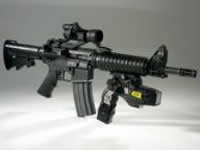
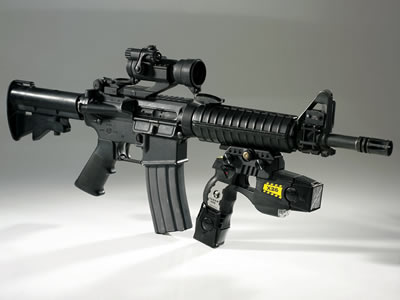
    Taser is operated primarily by law enforcement officers, but in recent years it is augmenting other sidearms as a non lethal weapon. For military applications of Taser is now enhanced with an X-Rail mount, which enables integration of Taser gun with M16, M4 and MP5 assault rifles, using the standard Picatinny Rail Interface. Using Taser guns with M16 enable troops to selectively use the firepower, and respond to various levels of threats with minimum risk casualties to innocent civilians.

    Buffalo Armored Vehicle

    Counter IED Vehicle – Technical Solution Group (TSG)

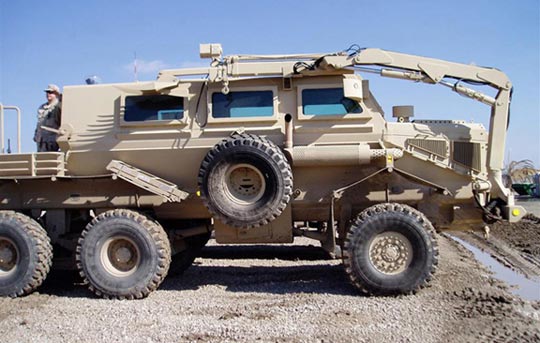
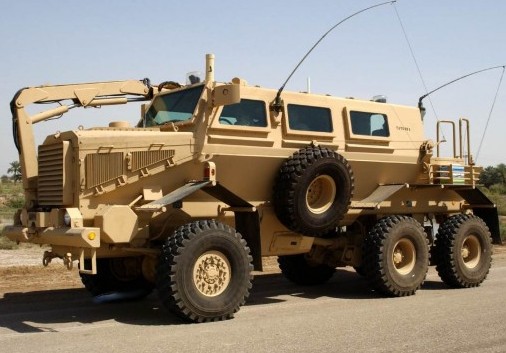
    The Buffalo heavily armored EOD vehicle follows the South African monocoque capsule protection concept with US manufactured automotive platform, offering protection from IEDs and up to 45 pound landmine explosion under any wheel and 30 pound mine explosion under the centerline protection. An upgrade package offers protection from Self Forged Fragmentation (SFF) mines. The vehicle is used with US forces in Iraq for route clearing and counter IED activities. Since their deployment to Iraq in 2003 the Cougar and Buffalo vehicles employed with explosive ordnance disposal teams and engineers units have taken about 1,000 IED hits without a loss of life, said Wayne Phillips, a company vice president in charge of Marine Corps programs.

    The Buffalo uses steel wheels and disc rollers which allow the vehicle to be driven over and detonate anti-personnel mines without sustaining damage. As a result, unusually large numbers of mines can be neutralized in a short period of time. The vehicle retains all round (including roof) ballistic protection from 7.62mm NATO ball cartridges. This armor is upgradeable to protect against Dragunov AP cartridges. In a recent incident that involved a Buffalo vehicle which ran over an anti-tank mine, the blast tore off a wheel and destroyed an axle on the vehicle. There were no casualties to the crew inside the Buffalo and the vehicle maintained its mobility and drove itself out of the minefield. It was repaired overnight and was back in operation the following day.

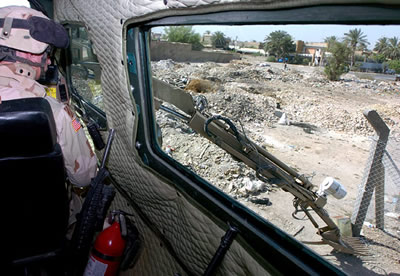
    14 Buffalos are currently in service with US Army in Iraq and Afghanistan. Additional 21 vehicles were  purchased by the Army in  May 2004, at a cost of $15.3 million with deliveries planned for completed by December 2004. The US Army ordered 15 additional Buffalos in November 2004, under a separate 11.8 million contract. On February 7, 2006 Force Protection announced a new order from the US Army Tank-automotive and Armaments Command, for 19 Buffalo mine clearance vehicles, with options for 27 more. Differing from other EOD vehicles, The heavily protected Buffalo is a central element in the US Army’s counter-IED ‘hunter-killer’ concept. that protects convoys against the threat of mines and IEDs. enables engineers to inspect suspected objects from safe distance, using the robotic arm and video cameras, operated from the relative safety of the protected cabin. large windows of armored glass provide good visibility to the sides of the vehicle, to enable effective operation on route patrols and dealing with suspected IEDs.

    On November 9th, 2006 the US Marine Corps will soon get 200 additional Cougar Joint EOD Rapid Response Vehicles (JERRV)and 80 Buffalo mine protected explosive devices clearance vehicles. The total contract worth is estimated at $214 million.

    Skunk Works and XTEND Simplify Multi-Drone Command

    0
    Lockheed Martin Skunk Works® and XTEND have achieved a major milestone in JADC2 by integrating the XOS operating system with the MDCX™ autonomy platform. This technical breakthrough enables a single operator to simultaneously command multiple drone classes, eliminating the friction of mission handoffs. From "marsupial" drone deployments to operating in GPS-denied environments, explore how this collaboration is abbreviating the data-to-decision timeline and redefining autonomous mission execution.

    From Ukraine to Taiwan: The Global Race to Dominate the New Defense Tech Frontier

    0
    As traditional defense primes face mounting competition from agile “neoprimes” such as Anduril, Palantir and Helsing, the balance of innovation is shifting toward software-defined warfare and scalable, dual-use technologies, while global industry consolidation—marked by Boeing’s integration of Spirit AeroSystems and other strategic mergers—signals an intensified race to secure control over the defense technology value chain. Our Defense-Tech weekly report highlights these trends.

    Europe’s “Drone Wall”

    0
    In early October 2025, a coordinated wave of unmanned aerial system (UAS) incursions—widely attributed to Russia—targeted critical infrastructure across at least ten European nations. The unprecedented campaign exposed the fragility of Europe’s air defenses...

    Weekly Defense Update & Global Security Assessment

    0
    Executive Summary The past week (September 18-25, 2025) represents an inflection point where strategic defense concepts have transitioned from doctrine to tangible reality. An analysis of global events reveals four primary, interconnected trends shaping an...

    U.S. Air and Space Forces Push Next-Gen Programs at the AS&C 2025 Conference and...

    0
    At the 2025 Air, Space & Cyber Conference, U.S. Air Force and Space Force leaders unveiled major updates on next-generation fighters, bombers, unmanned systems, and space initiatives, highlighting both rapid innovation and critical readiness challenges as the services race to outpace global competitors. A short version is available here, with a more detailed version for subscribers.

    TADTE 2025: Reflecting Taiwan’s Strategic Themes

    0
    The Taipei Aerospace & Defense Technology Exhibition (TADTE) 2025 crystallized around four dominant strategic themes that collectively illustrate Taiwan's comprehensive approach to defense modernization amid escalating regional tensions. Based on a detailed report by Pleronix (available upon request). Includes a Podcast discussion on TADTE 2025's highlighting Taiwan's four strategic themes beyond the post's coverage.

    Iron Beam 450 Completes Testing, Soon to Join With Operational Air Defense Units

    0
    Israel’s Iron Beam 450 high-power laser system has completed final testing, marking a major leap in air defense. Developed by Rafael, it offers precise, cost-effective interception of rockets, UAVs, and mortars, and is set for IDF deployment by 2025.