
Friday, December 19, 2025
More
    Home Blog Page 43

    IDF to Modernize its Infantry Brigades with Hundreds of Eitan 8×8 APCs

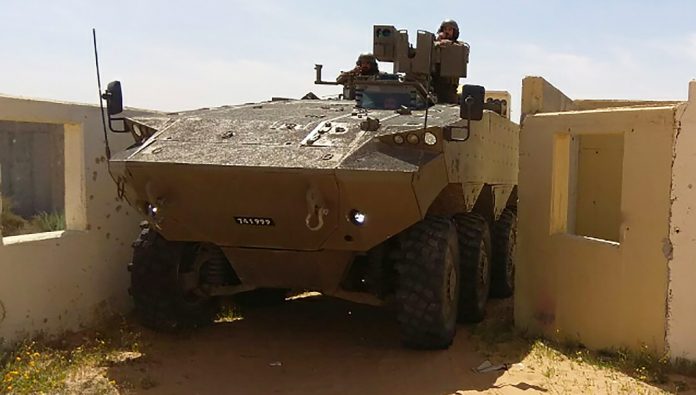
    Israeli Eitan APC undergoing urban mobility tests in the Negev desert. Photo: Israel MOD.

    The IDF has completed a test series of the new Eitan 8×8 wheeled APC being developed by the Israel Ministry of Defense tank authority for use by IDF infantry brigades.

    Eitan is the first wheeled APC to be deployed on a large scale by the IDF. Israel was late to enter the 8×8 era, that other armies around the world embraced for decades since the introduction of the Russian BTR-60 and many similar 8×8 wheeled Armored Fighting Vehilce (AFV) designs that originated in Italy, Austria, Switzerland, Finland, Turkey, and German Boxer. Hundreds of thousands of those vehicles are serving in throughout the world with a relatively good track record.

    Nevertheless, the IDF was never impressed with wheeled combat vehicles and always favored tracked ones, despite the additional weight tracks incurred. Tracked vehicles could provide better cross-country mobility, particularly in rough, mountainous terrain, where wheeled vehicles could not move as well. The Israelis waived the opportunity to adapt rubber tracks for this reason.

    But there was also a cultural aspect to the Israeli reluctance, rooted in the prominent place the armored corps had since 1967. Despite Israel’s claim to produce ‘the most protected armored vehicles’, this was most relevant to Main Battle Tanks (MBT), and not armored vehicles in general, and certainly not Armored Personnel Carriers (APC). Relying exclusively on the lightly armored M-3 Half Track and M-113 APCs received from US surplus, it took the Israelis three decades to mature a protected mobility solution for its troops, with the design their own Merkava Mk I (MBT), that included a rear door and seating space for troops or stretchers in the back of the tank.

    The IDF modernized the M-113s in several tranches, many of the vehicles received improved armor protection but left the original power plant, suspensions and tracks unchanged, leaving the vehicle underpowered. In the past, the IDF and Israeli Police also used few wheeled armored vehicles, including Russian built BTR-152 and Egyptian designed and produced Al-Waleed, supporting border security.

    For more protected transportation of infantry, the IDF used modified tanks that were taken booties, such as the Achzarit, hacked from used T-55 tank chassis recovered from tanks abandoned by Egyptian and Syrian forces during the Six Day and Yom Kippur Wars. Other vehicles used turretless Centurion tanks, modified into ultra-protected tracked patrol vehicles.

    A more thoroughly designed platform, the Namer heavy APC, based on the Merkava chassis took another 20 years to mature, due to the Israeli reluctance to invest in ‘platforms that do not have guns’. Dragged at the sidelines of the Merkava MBT program for years, the procurement of Namer was finally approved following the Second Lebanon War of 2006, as the need for protected troop mobility became clear, along with the importance of active protection systems.

    While 8×8 APCs are a familiar view with military forces worldwide, the IDF realized the need for such armored carrier after several clashes in Gaza that exposed the vulnerability and potential high casualty rate for infantry transported in some of the armored mobility platforms to relatively simple threats. The M-113 is known for the inadequacy of its protection, and armies throughout the world consider either phasing it out of service or carry out comprehensive modification of the basic vehicle with better protection, heftier belly protection and more powerful propulsion system and suspensions.

    The IDF examined some of the foreign vehicles but preferred a locally developed design that could better balance between mobility, firepower, and protection to address the unique Israeli requirements. Weighing less than 35-ton gross vehicle weight (GVW), Eitan uses a combined passive and active armor to achieve the high level of protection required for the mission. What made this possible was the mature level of the Trophy Active Protection System (APS) used with IDF Merkava MBT and Namer AIFV. The Eitan design could rely on this innovative capability retaining a level of base armor to provide ballistic protection from small arms and the residual effects of threats intercepted by the APS. Higher threat levels would be taken by the APS. With this approach a relatively large armored capsule provides large protected space, enough to carry the crew and an infantry squad, saving many tons of weight, making the use of a wheeled platform feasible.
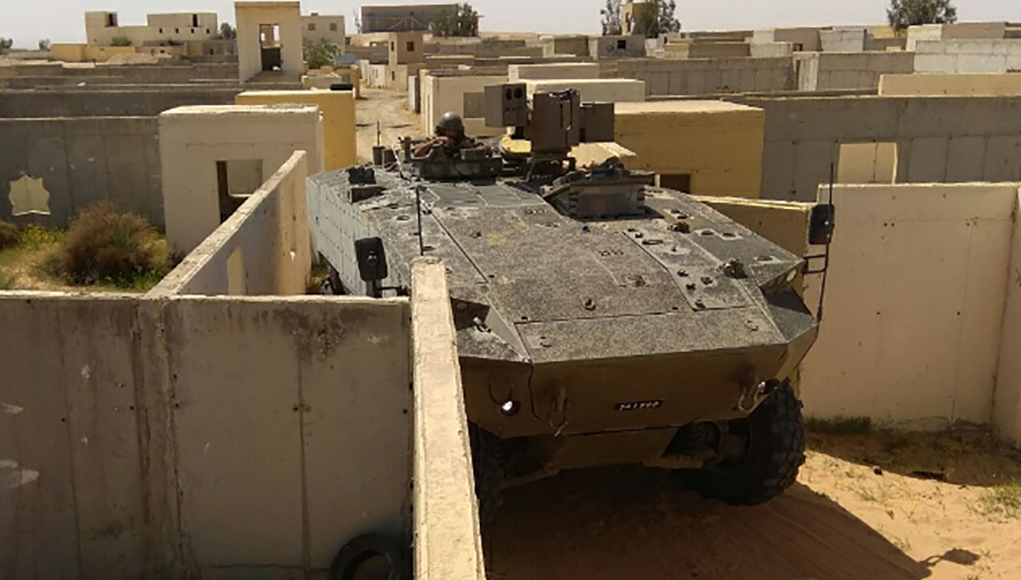
    Israeli Eitan APC undergoing urban mobility tests in the Negev desert. Photo: Israel MOD.

    For mobility, Eitan adopts a 750 hp engine, off-the-shelf drive train, independent suspension, four of the eight wheels are steerable, enabling the vehicle to take tight turns and move on the road at a speed of 90km/h, and maneuver in narrow roads of urban areas and offroad. Compared to Namer and the current M-113, Eitan will be able to move freely on roads, It will be more useful on roads for long distances, without requiring heavy transporters, thus enabling more agile movements across the country. They will also be more maneuverable in urban terrain, where heavy vehicles cannot easily maneuver.

    The prototypes used for testing carry one remotely operated weapon station but production models will integrate an unmanned overhead turret armed with 12.7mm heavy machine gun or 30mm automatic cannon (upgradable to 40mm), an integrated active protection system (APS), smoke dischargers and integral 60mm mortar, providing indirect fire capability, that includes high explosives, illumination, and smoke effects.

    Additional capabilities including guided Spike missiles are also considered. The vehicle is equipped with modern electronic architecture that supports crew stations and large screens for the crew and troops, enabling effective situational awareness depicted by multiple cameras mounted at different spots around the vehicle. The vehicle will be equipped with firepower, protection, power generation and distribution and command, control and communications to provide protected mobility, fire, power, and communications support to the infantry squad.

    The basic turreted Eitan platform is likely to be used for APC, command and scout roles, while the turretless variant used to support role specific configurations including weapon carriers (mortars etc.), combat engineering, recovery, casualty evacuation vehicles and more, similar to the roles the M-113 provided, although other protected wheeled platforms, such as the smaller and lighter Sandcat, that could assume some of the roles.

    Prototypes of Eitan APCs are already produced and deployed with the Nahal infantry brigade for tests. The brigade, one of the IDF regular infantry brigades, will be the first to equip with the new vehicle Eitan enters serial production of hundreds of vehicles, recently approved by the government under the IDF current multiyear program (2016-2020). Other regular infantry brigades are already equipped with Namer APCs and are expected to enable the brigade elements to move cross country, in formation with tanks.

    Compared to Namer, Eitan is expected to deliver increased firepower (utilizing the 30mm cannon) thus enabling the vehicle to support its dismounted squad and take a more substantial part in the land battle, performing as an Armored Infantry Fighting Vehicle (AIFV).

    While Israel depends on foreign nations for the supply of combat aircraft and surface vessels and submarines, the land force has relied on local development and manufacturing of its main platforms. Merkava MBT, Namer heavy APC, the future self-propelled artillery and future tracked combat vehicle (Carmel) are all based on local design. However, fielding of those platforms in large numbers will be a challenge, since the U.S. military support will not allow for local spending as it used to do in the past. This will require moving an increased volume of production to the USA, as was done with the Namer, Iron Dome, and many other locally developed systems. As Eitan enters production, it is likely that U.S. manufacturers will receive the lion’s share of this program, to enable the IDF to meet the tight schedules and lower costs the project requires.
    AeroVironment Enhances Puma UAV to Endure E-Combat

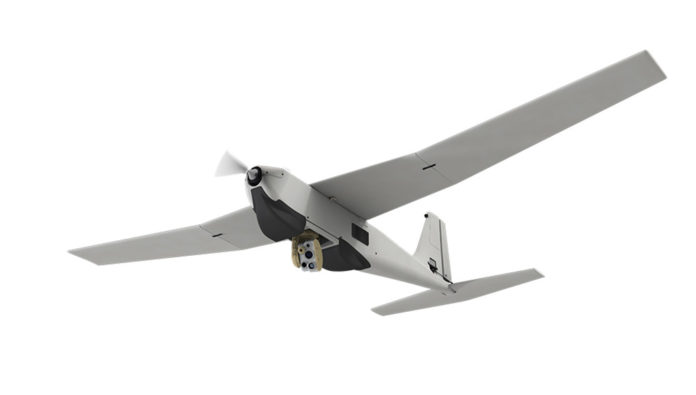
    Puma 3 small uav equipped with AV's retractable i45 multisensor payload. Photo: AeroVironment

    AeroVironment, Inc. is unveiled today the Puma 3 AE, a new version of its proven RQ-20B Puma AE small tactical UAV that includes upgrades that prepare the air-vehicle for operation in rugged environments and improve its ability to carry advanced, third-party payloads and software applications. AeroVironment also improved the reliability of the system, particularly in operations in challenging electronic warfare environment and against cyber threats where interference is prevalent. The new drone is displayed at the current AUSA Global Force exhibition in Huntsville, AL this week.

    AeroVironment upgraded the drone’s airframe to enable robust operation of its i45 EO/IR sensor suite with SIGINT payloads in harsh and demanding environments. In addition, the Puma 3 AE incorporates AeroVironment’s latest digital data link (DDL) with security upgrades to support operation in more challenging radio frequency (RF) environments, with M1/M2/M5 and M3/M4/M6 frequency bands and with AES-256 encryption. The company is releasing a new Puma smart battery that is more efficient and includes safety enhancements. The Puma AE delivers 3+ hours of flight endurance, with versatile smart battery options to support diverse mission requirements.

    AeroVironment also has optimized the portability of Puma from six transport cases to four, with a flyable configuration in a single transport case that features luggage-type handles. A complete system includes three air vehicles and two ground control stations.

    The company is also improving the Raven, its smaller drone with an upgrade to the RQ-11B Raven, called Raven 3. The upgraded Raven system will incorporate new camera technology into the i23 gimbaled sensor, similar to advancements made to Puma 3 and its i45 gimbal. These upgrades are still in progress and more information on Raven 3 will be available at the AUSA Symposium in October.

    Four Multinational Teams Bid for £1.5 billion UK-MOD Operational Readiness Training Services Contract

    The British Ministry of Defense has selected four groups to bid for its upcoming Air Support to Defense Operational Training (ASDOT) requirement. Each of the groups selected for the program has teamed with a training services specialists from the USA, Canada, and Israel to deliver adversary aircraft and weapons. The winning group will operate various high-performance jets simulating aggressor fighter and attack planes, cruise missiles and electronic combat to training British air, land and naval forces. A final selection is expected in September 2018 followed by the contract award in 2020 that could be worth up to £1.5 billion over 15 years.

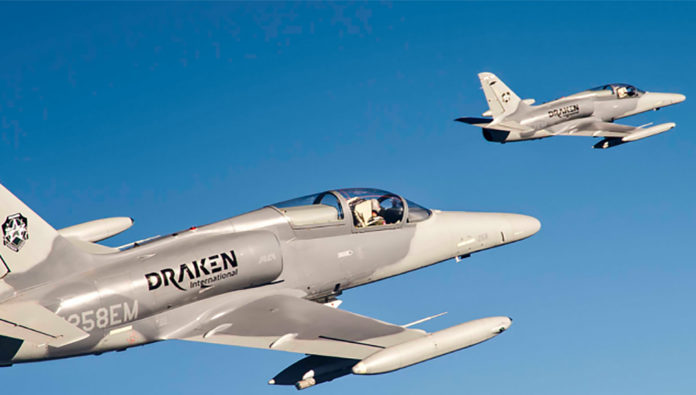
    The four groups include the Red Aces team lead by Leonardo, joined by Canadian Top Aces, – formerly known as ‘Discovery Air Defense Services’ and the UK based Inzpire. Top Aces provides similar services to the Canadian forces with operates Alpha Jet trainers and Skyhawk A-4N fighters. Cobham, formerly the FR Aviation is the second group that team with US-based Draken International for this bid. Draken owns the world’s largest fleet of tactical fighter aircraft, operating 150 aircraft in eight types, from target towing business jets to fully avionic-equipped MACH-2 fighter planes. Top Aces and Draken both operate fleets of civilian registered high-performance military aircraft retired from active service and operated by experienced military veterans.

    A third group, formed by Babcock has and Elbit Systems was also selected. Elbit operates outsourced training services for several air forces, including the RAF. The fourth group is Thales, that joined QinetiQ and Textron’s Airland to offer the latter’s Scorpion light combat aircraft for this role. Designed for affordable operation, the Scorpion will be equipped with specialized payloads and avionics to maximize training efficiency.

    Apart from the aircraft used for training services ASDOT will also require high-performance jets to provide red-team aggressors. Apart from supersonic maneuverability, these jets will also require radars, radar warning sensors, and some countermeasures to simulate realistic threats. ASDOT will replace several services currently operated with RAF aircraft including electronic warfare training provided by BAE Hawk trainers.

    Update: Some changes occurred since the selection announcement. QinetiQ has teamed with the Cobham led team to pursue the ASDOT program, and, in October 2018 announced the acquisition of Inzpire Group, a provider of operational training and mission systems that was a team played in the Leonardo ASDOT team.

    Australian SilverShield to Protect Afghan Security Vehicles from IEDs

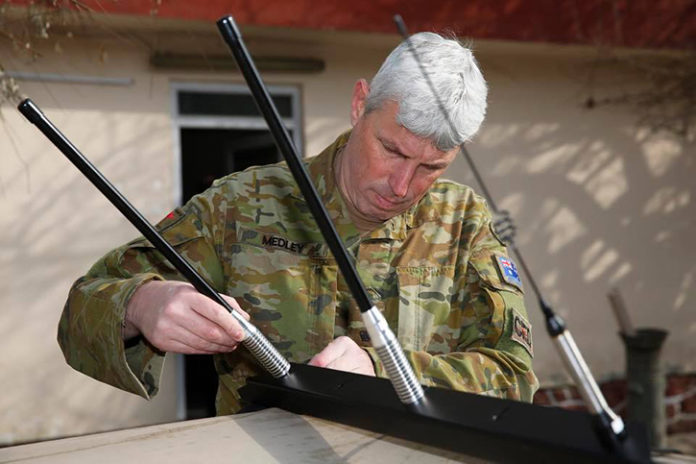
    Developed under partnership between Australian defence and industry, the next generation Silvershield will provide the Afghan National Defense and Security Forces with additional protection from mobile phone actuated IED threats. Photo: Australian Defence

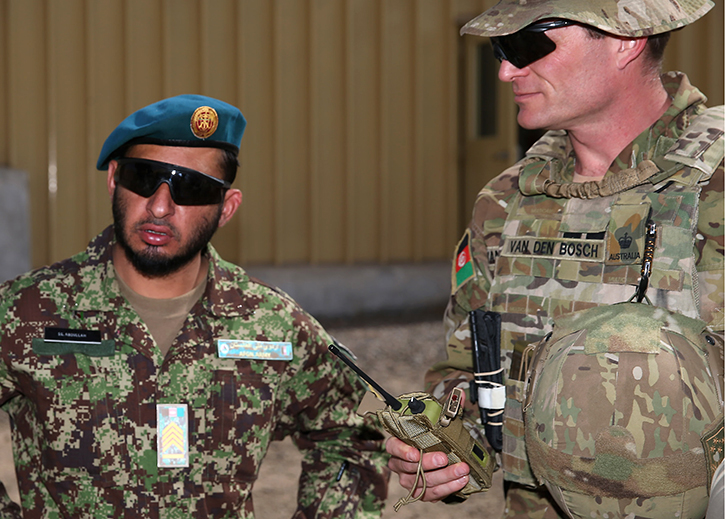
    The Afghan National Defense and Security Forces (ANDSF) will soon equip their vehicles with a new, Australian made counter-IED device dubbed ‘SilverShield’. According to a contract awarded by the Australian defense ministry to L-3 Micreo, the company will deliver 13,000 communications jammer units to the Afghan forces, bringing the total sales of Australian C-IED jammers to Afghanistan to A$85 million.

    Installed on vehicles, SilverShield acts as a jammer disrupting specific cellular-phone signals known to have been used by insurgents to remotely activate improvised explosive devices (IED). The new system had undergone testing in both Australia and Afghanistan. SilverShield enhances the capabilities of the GreenGum system designed for light vehicles deployed in Afghanistan since 2015.

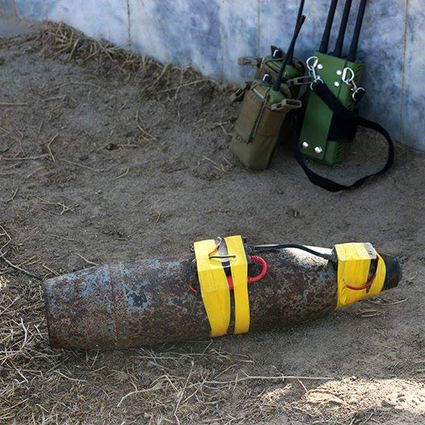
    GreenGum and other devices neutralize an IED found recently in Kunduz, Afghanistan. Operational with Afghan National Army, Afghan National Police, National Directorate of Security and Afghanistan Parliamentary Security Forces since 2015, Redwing devices have saved many Afghan lives. Photo: Via Twitter

    SilverShield is an evolution of Queensland based L3-Micreo’s Redwing program – a handheld IED jammer designed with Australia’s Defence Science and Technology Group (DST). Redwing was developed as a low-cost, robust and lightweight force protection systems for use in austere operating environments by military and police units. The systems function with minimal operator training and limited logistical support. To date over 180,000 Redwing systems worth A$84 million were delivered to Afghanistan. Operational with Afghan National Army, Afghan National Police, National Directorate of Security and Afghanistan Parliamentary Security Forces since 2015, Redwing devices have saved many Afghan lives.

    Redwing was developed as a low-cost, robust and lightweight force protection systems for use in austere operating environments by military and police units. Two variants were initially produced – the GreenGum personal unit and the GreyGum vehicle-mounted device. Photo: Australian Defence

    Two variants were initially produced – the GreenGum personal unit and the GreyGum vehicle-mounted device. The success of this program has resulted in another 4-year program for the further development of Redwing. In this program Redwing products with additional capabilities are being developed for future sale to Afghanistan and other potential coalition partners.

    “Redwing is a program of specialized force protection systems designed by the Defence Science and Technology Group (DST) to counter specific radio-controlled IEDs in support of ANDSF,” Minister for Defence, Senator the Hon Marise Payn said. “The program will continue to research and develop new product variants to meet this evolving threat.”

    US Drone Maker Cleared to Export Jet Powered Combat Drones

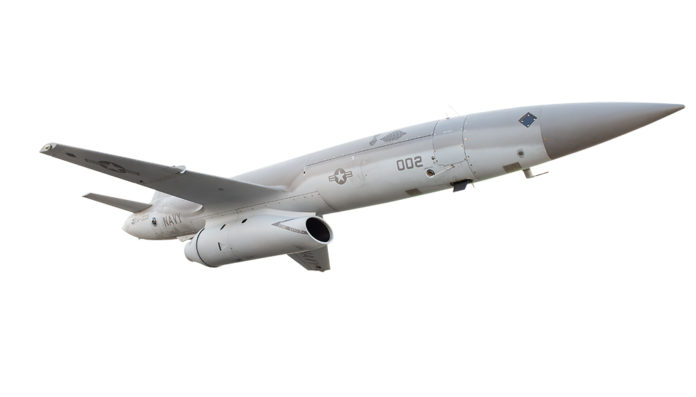
    Kratos Defense & Security Solutions, a manufacturer of jet-powered tactical unmanned aerial drone systems, will soon offer its Mako militarized, combat unmanned aerial vehicles systems for export, following approval of such export by the U.S. State Department to ‘certain European and Asia Pacific region countries’ (believed to be the UK and Australia). Kratos UTAP-22 Mako provides fighter-like performance and is designed to function as a wingman to manned aircraft, as a force multiplier in contested airspace, or be deployed independently or in groups of UAS.

    A derivative of Kratos’ BQM-167 aerial target drone, Mako is a highly maneuverable unmanned aircraft, capable of carrying and operating weapons and advanced sensor systems, which has flown in multiple large-scale military exercises and could soon be put into production for combat use. A follow-on model – LCASD is designed to carry those missions with fifth-generation manned combat aircraft, assuming the wingman role by matching the leader’s performance, low observable and other characteristics.

    According to Steve Fendley, Unmanned Systems Division President of Kratos, the recent approval represents an important step in the company’s roadmap of becoming the global leader in high-performance jet unmanned aerial drone systems. “These U.S. ally and partner nations represent a key part of our existing, new, and evolving customer base and are a critical element in enabling Kratos to maintain its economy of scale related cost advantage for the Tactical UAS that we routinely achieve with our unmanned aerial target systems.” Fendley said, “Kratos has experienced significant growth over the past few years, we are forecasting this growth to continue in 2018, and this approval for Kratos to market Kratos tactical UAS internationally positions us for continued and potentially even stronger growth in future years.”

    The judges said Kratos was selected for its “tenacious development of the UTAP-22 Mako, a militarized UAV derived from the U.S. Air Force’s BQM-167 aerial target drone.”

    “We believe that the Mako is a game changer for both our National Security customers and for Kratos.” said Eric DeMarco, President & CEO of Kratos, “With its low cost, runway independence, and extreme high performance, the Mako can be tasked in support of manned fighter jets, or conduct independent missions, and in either case can be deployed in small numbers or in large quantities; ultimately changing the nature of force multiplication, distributed lethality, and aerial combat.”

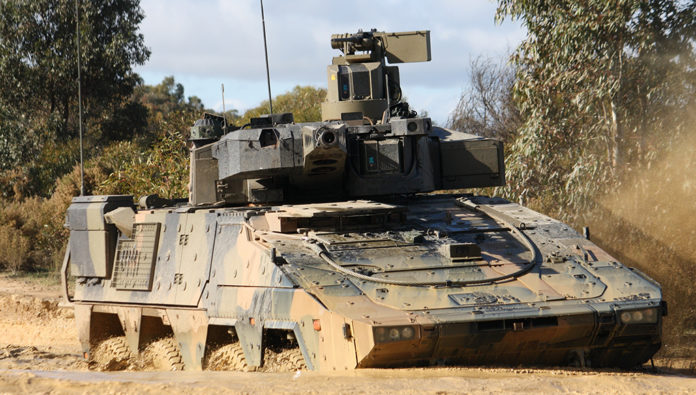
    Australia to Buy +200 Combat Reconnaissance Vehicles from Germany

    The Prime Minister of Australia, The Honourable Malcolm Turnbull MP, has announced today that Rheinmetall has been selected by the Australian Government to provide its next-generation 8×8 Combat Reconnaissance Vehicles (CRVs)The German-designed Boxer 8×8 wheeled armored reconnaissance vehicles will replace the Piranha-based Australian Light Armoured Vehicle (ASLAV) currently in service under the Land 400 Phase 2 Project. The contract worth €2.1 billion (AUD3.3 billion) was formally awarded August 17, 2018. Delivery will take place between 2019 and 2026.

    Rheinmetall proposal was selected as the best and final. The initial contract calls for the delivery of at least 211 Boxer in seven variants. The Australian plan calls for 225, of which 200 to be assembled in the country. This new acquisition will cost about A$5 billion – and is part of the A$20 billion Australian land vehicles modernization program – the biggest and most expensive acquisition project in Australian Army’s history. This new selection further strengthens Rheinmetall’s position in Australia, along with the ongoing supply of 2,500 military trucks under the Land 121 logistic vehicles modernization program.

    The primary role of the CRV will be to perform ground-based reconnaissance and counter-reconnaissance. The vehicle presents a highly lethal armored vehicle with the capability to neutralize enemy armor, pinning down enemy forces with suppressive fires, and preventing an enemy’s ability to manoeuver. This means our CRV requires the ability to operate across the entire area of operations with high mobility and endurance.
    LAND 400 Phase 2 will acquire 225 CRVs.

    The multi-billion dollar project will see Rheinmetall deliver at least 211 of the latest generation Boxer 8×8 vehicles, with Rheinmetall’s advanced Lance 30mm turret fitted to the reconnaissance variants. When deployed, the Boxer will improve the mobility, survivability, and combat effects of Australian reconnaissance units, introducing a modular and agile vehicle that can be configured to match evolving requirements. The vehicle will mount Rheinmetall’s Lance turret, offering the sensors, situational awareness, and firepower to automatically detect, characterize and track threats on the battlefield. The turret features a range of scalable effects, including non-lethal systems, the latest air-burst cannon technologies and a guided anti-tank missile system that allows the crew to engage the most aggressive threats on the battlefield.

    To deliver the project Rheinmetall will establish a state of the art Military Vehicle Centre of Excellence (MILVEHCOE) near Brisbane in partnership with the Queensland State Government. The MILVEHCOE will serve as the focal point for the execution of the program and a base for the establishment of an export-orientated military vehicle industrial complex in Australia. The MILVEHCOE will support the Australian Governments Defence Export Strategy that was recently announced by the Australian Minister of Defence Industry, The Honourable Christopher Pyne MP.

    The MILVEHCOE will allow Rheinmetall to transfer cutting-edge technologies to Australia in the areas of military vehicle design, production, turret systems, sensors, survivability, simulation and through life support. This transfer of technology, coupled with the scale of the Land 400 based Australian design and manufacturing, will underpin the establishment of an export-oriented military vehicle industry that will collaborate with academic institutions in companion technologies and see significant development in small to medium businesses around Australia that cooperate with Rheinmetall through the MILVEHCOE. As a center of excellence, the MILVEHCOE would be the focal point for the LAND 400 combat vehicles, LAND 121 logistics vehicles, and other complex defense projects.

    Gary Stewart, Managing Director of Rheinmetall Defence Australia, said “The Land 400 program will enable the Australian Army to receive the best CRV capability for their needs, and create a long-term, economic benefit for Australia. Rheinmetall’s investment in the MILVEHCOE will enrich the economy in the high technology advanced manufacturing sector and broaden employment in defense across the nation. In doing so, we will create a strong sovereign military vehicle industry that allows Australian companies to innovate, compete and win globally.”

    After two years of extensive industry engagement, Rheinmetall has identified over 40 companies from around Australia that will form part of a globally competitive military vehicle industry.

    Among the local partners participating in the Rheinmetall Boxer CRV program are MILSPEC and Bisalloy from New South Wales, Supashock from South Australia, Nioa and Penske from Queensland, Direct Edge from Tasmania, Supacat, Tectonica and Cablex from Victoria, and Hoffman Engineering from Western Australia.

    Ukrainian APS to Protect Turkish Tanks in Syria

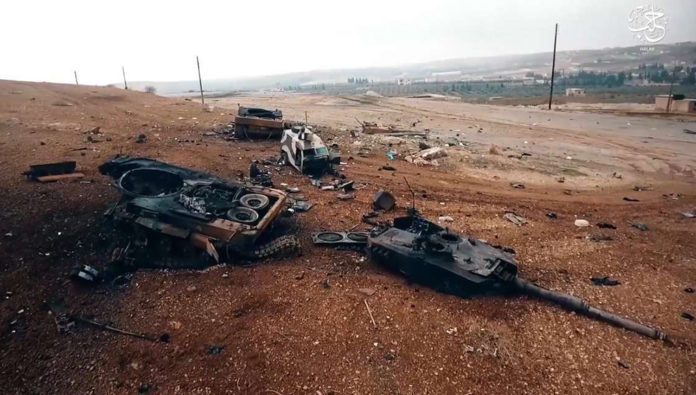
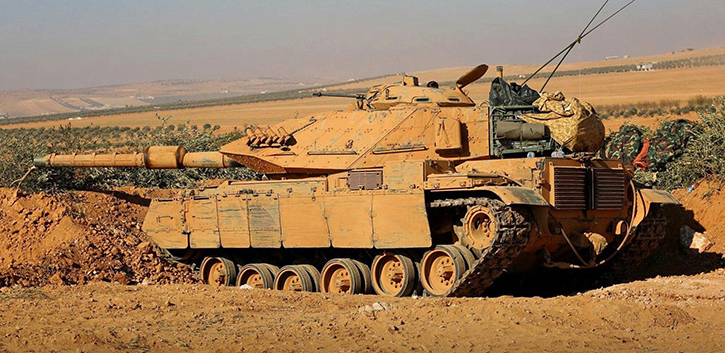
    Turkish Leopard 2A4 tanks destroyed in Syria by anti-tank missiles. The Army is rushing to equip its forward deployed tanks with active protection to defeat those threats.

    Following repeated losses in the fighting against Syrian and Iraqi Kurds, some suffered last month in Afrin, Syria, Turkey is rushing to equip its main battle tanks with the ‘Akkor Pulat’ Active Protection Systems (APS) developed in Ukraine. In late February 2018 Turkish Defense Minister Nurettin Canikli announced that following successful tests in Ukraine the APS will begin testing on M-60T and Leopard-2A4 tanks in Turkey, to follow with operational deployment of systems on those tanks soon after the tests completion.

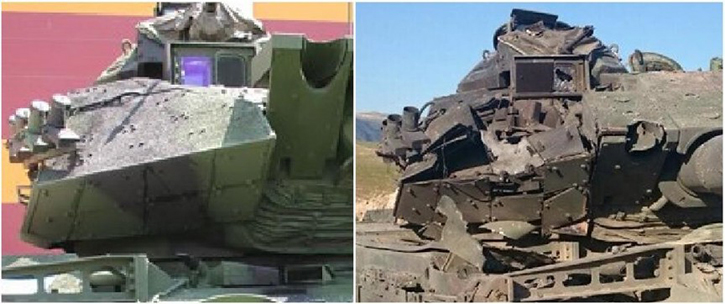
    The add-on armor of this M-60T defeated an anti-tank guided missile attack, although causing significant damage to the turret. Photo: Turkish MOD

    Turkey decided to adopt the Ukraine system as a stopgap measure to protect its armored vehicles after suffering significant losses to anti-tank missile attacks in Syria. The primary threat they encountered in Syria was the second generation Anti-Tank Guided Missiles (ATGM), such as the TOW, Konkurs, and Kornet fired from ranges of several hundred meters to few kilometers away. Videos released by the Kurds show tanks and self-propelled artillery being hit from medium distances, by guided anti-tank missiles fired at targets that were exposed over ridge line or out in the open.

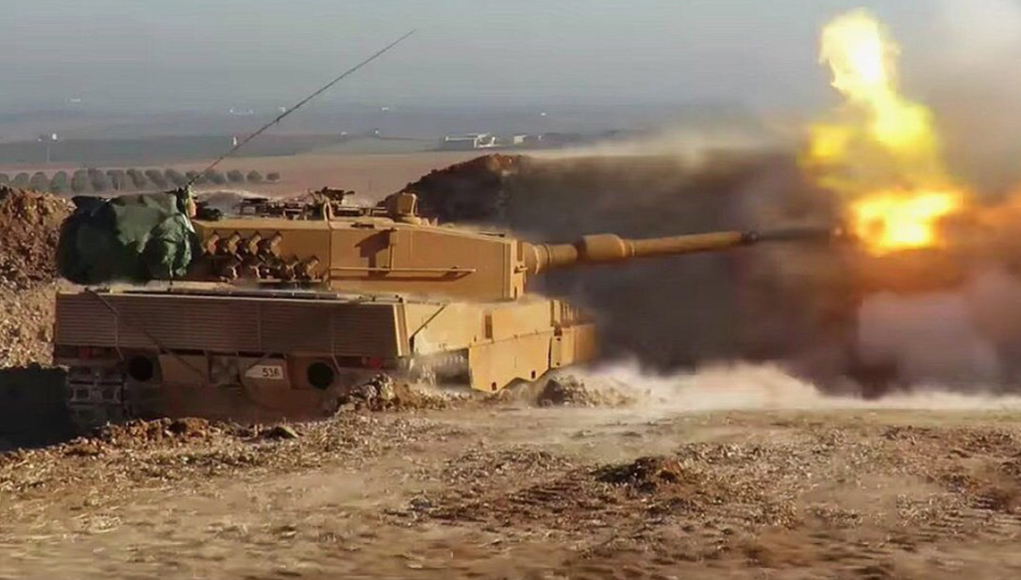
    Turkey uses the German Leopard 2A4 that did not receive the latest survivability upgrades the German Army is currently taking. In contrast, the Turkish M-60Ts offers superior protection, given the modular armor added to its turret under the upgrading program developed by Israel’s IMI. However, even this armor is not immune to large diameter tandem warheads used by the laser beam-riding Kornet.

    With limited access to original equipment providers (due to political friction between Turkey, Germany, and Israel), Ankara realized that to meet this urgent need, primarily with Leopard 2A4 and M-60A3 main battle tanks, that are the least protected, they will have to rely on the local industry. To further cut corners, they looked elsewhere for mature active protection systems solutions and found the Ukrainian Zaslon as a suitable solution, addressing both operational needs and political constraints.

    The Urgent Operational Requirement (UOR) calls for the procurement of 120 systems, each comprised of six sensor-effector units, command and control and cabling harness. The Turks implemented some changes in the Ukrainian system, reflected by the look and function of the system. Following the initial tests, the system is integrated with three different platforms – Leopard 2A4, M-60A3, and M-60T. In addition, the tanks will also receive laser warning systems and infrared jammers, providing additional protection from 2nd Generation missiles (TOW, Konkurs etc.)

    Turkish Leopard 2A4 in action in Syria. The frontal protection of this tank was good for armor battles but is totally unsuitable in asymmetric warfare, where the tank is vulnerable from all directions.
    The Turkish Army turned to Israel to upgrade some of the M-60A3 tanks in its inventory. These tanks have better protection in the sides and hull. The tanks were originally scheduled to receive the Iron Fist active protection system but due to the deterioration of Turkey-Israel relations, this was never implemented.

    Other survivability and protection systems proposed for the Turkish armor include add-on bar armor and reactive armor designed to defeat RPGs, and smoke dischargers linked to laser warning systems. Additional systems include panoramic cameras to improve the crew’s situational awareness and dozer blades enabling MBTs to dig into positions without relying on heavy engineering equipment.

    Aselsan is one of five companies requested to provide survivability enhancements for MBT. Although the company has been developing an APS project known as Akkor since 2008, the system is still in development stages and is not likely to mature before 2021. Unlike the Pulat, Aselsan’s Akkor is designed to intercept the threat at a longer range, and, therefore, its radar should cover longer range and enhanced situational awareness, providing the crew with the point of launch, in addition of threat warning.

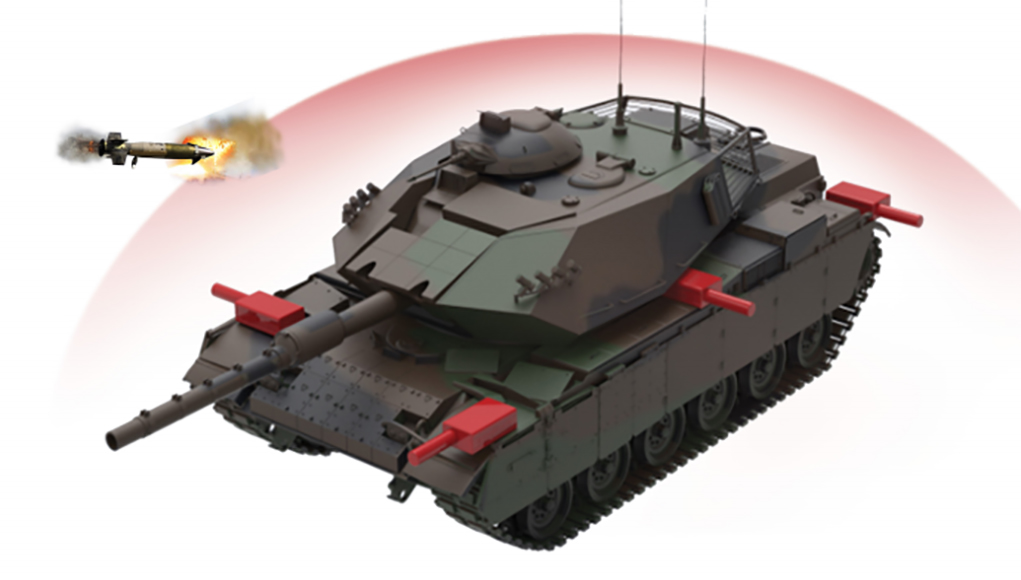
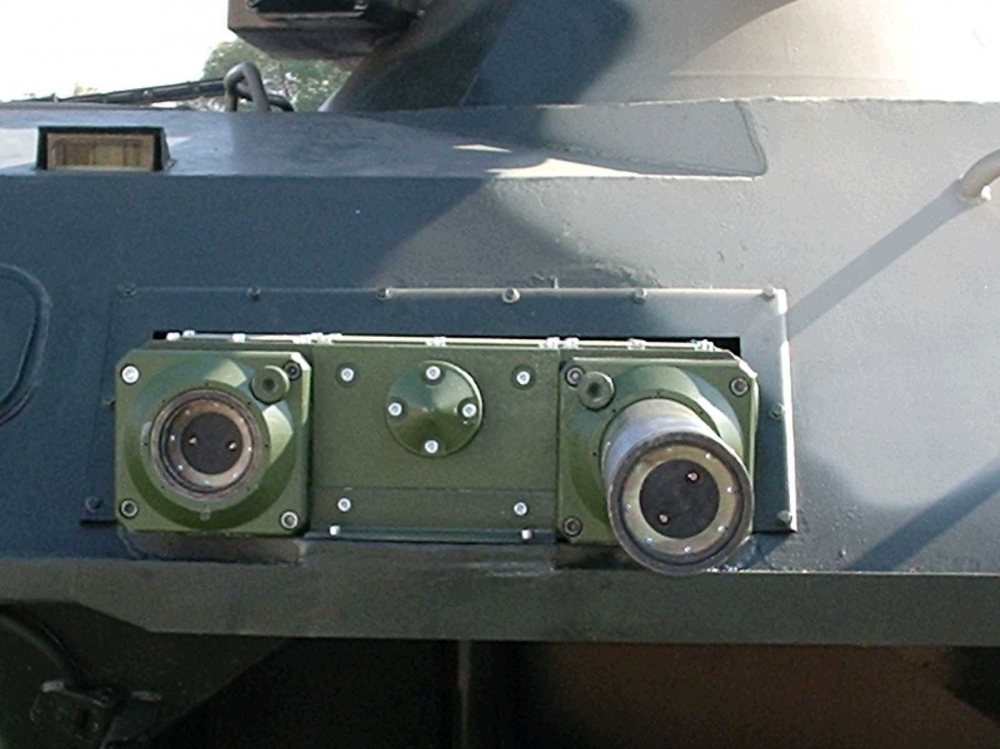
    The Akkor-Pulat active protection system unveiled recently by Aselsan is based on the Ukrainian Zaslon-L. Image: Aselsan
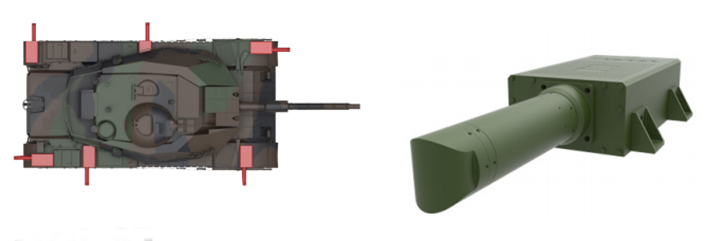
    Aselsan Akkor-Pulat APS configuration. The sensor-effector unit is shown on the right. Photo: Aselsan

    Akkor Pulat is the Turkish version of the new, light version (Zaslon-L), to be produced under license by Aselsan. The main difference from Zaslon is its design as a modular and disposable unit, thus being lighter, cheaper and less complex to integrate. In addition, Akkor-Pulat is likely employed in fixed installations, each unit contains a single effector in an extracted position. While this configuration is considerably more vulnerable to physical damage, its integration and testing are much simpler, thus enabling accelerated deployment. The configuration used by the Turks uses six units mounted in pairs on the front and the sides. This version is effective against RPGs, recoilless guns, and ATGM. The localization of the Ukrainian system was done by Aselsan in accordance with the technical and export liaison agencies of the two countries, the Scientific and Technological Research Council of Turkey (TÜBİTAK) and Ukrainian UkrOboronService.

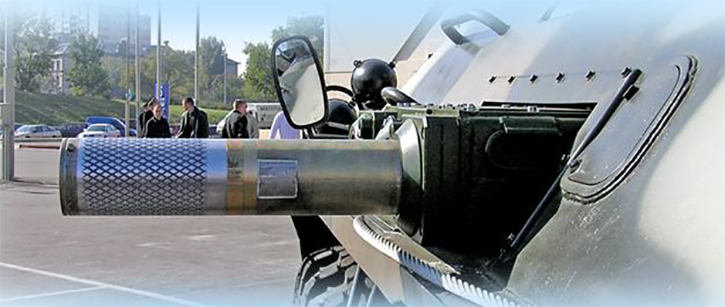
    The sensor-effector of the original Ukrainian Zaslon is seen here on a BTR-80 APC.
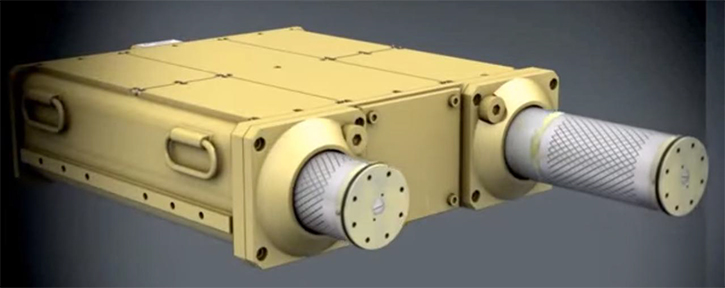
    Another view of the dual-efector unit of the Ukrainian Zaslon. Photo: Ukroboronservice

    The system developed by the Kiev-based Microtec development center in Ukraine acts as a ‘barrier’ – a close-in active countermeasure protecting the vehicle from short range anti-tank rockets, guided missiles, recoilless guns and tank rounds, and kinetic tank rounds (with limited effect). Originally developed in the early 2000s the system was evaluated by Ukraine, as well as the Polish Andres tank, as well as an Indian tender to equip the T-90A, Zaslon was not selected in any of those opportunities. The selection of this system by the Turks and its rapid integration is considered a major vote of confidence in this system, specifically, and in the Ukraine industry, as a supplier of weapon supplier.

    The system comprises a number of individual armored boxes containing two countermeasures, a control unit installed inside the vehicle and cabling systems. Individual boxes are installed at different points around the vehicle, offering linear coverage of the sides, front, rear and top side (turret).

    Zaslon dual-effector unit provides improved redundancy and response to simultaneous, multiple attacks.

    Create LinkThe countermeasure is a cylindrical element that comprises an X-band radar sensor, a signal processing and logic system and high-explosive fragmenting charge. As the vehicle enters a danger zone countermeasures are extracted from the boxes, and radars activated, detecting objects at ranges of 8-10 meters afar, and create a segmented perimeter at a distance of 2.5 meters around the vehicle, from the ground up 20 degrees above the horizon. This perimeter functions as a threshold, acting in quick response to trigger the effector mounting that radar.

    As an object crosses this perimeter at predefined speed (70-1,200 m/s), specific countermeasures related to that segment are activated, throwing a thick hail of fragments to destroy the incoming threat before it hits the armor. The response time claimed by the manufacturer is 1-5 millisecond. The number of units and the layout they are employed in are unique to each vehicle type. The system is applied above the base armor and can also be integrated with reactive armor to maximize protection of combat vehicles. Using relatively large of explosive fragmentation charges, Zaslon requires a safety range of 400 meters. To enable troops to operate closer to the tanks, the crew can deactivate certain effectors covering sectors that are not threatened by the enemy.

    The system’s distributed layout provides protection against multiple, simultaneous threats coming from different angles. While a single box may cover the entire side or front, two units are often used on each section to enhance redundancy and survivability. Boxes are available in single, or dual countermeasures configurations. It the dual mode, the second countermeasure is ready for action five seconds after the first one has detonated, offering protection against multiple attacks.

    According to the manufacturer, for reliable protection, one armored fighting vehicle typically needs from three to six modules, each containing two rounds of munitions and weighing from 50 to 130 kg. (depending on the type and protection level specified).


    Hypersonic Weapons Enter Service with Russian Aviation

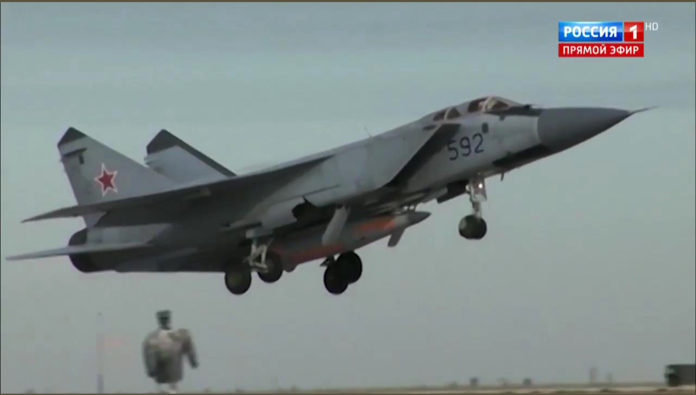
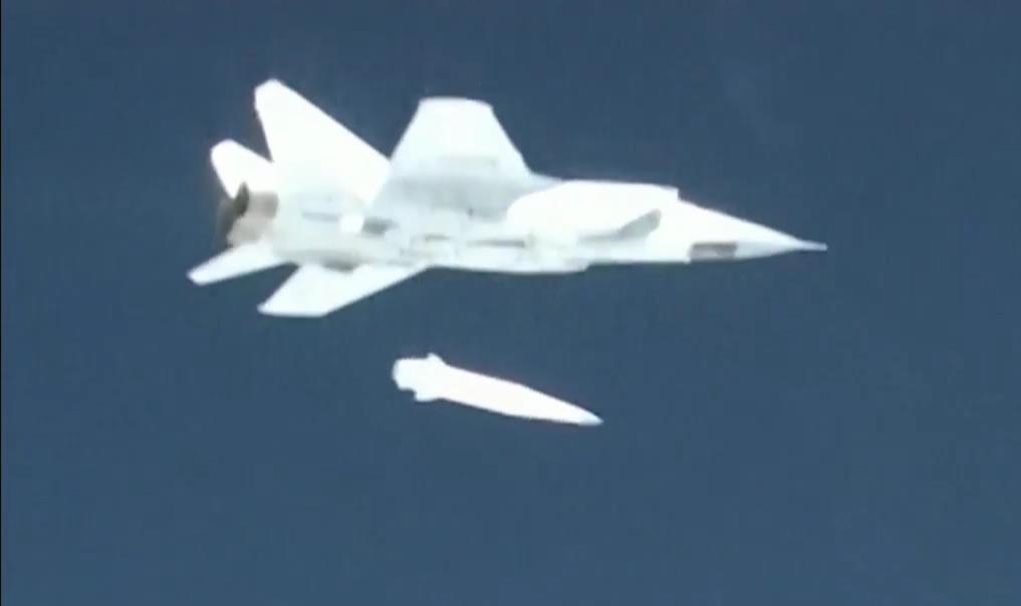
    Kinzhal (Dagger) high-precision hypersonic air-launched missile carried underneath a Russian MiG-31. The missile has entered service with the operational units of the Russian Southern District .

    Vladimir Putin, the President of the Russian Republic confirmed today that Russia began deploying new strategic weapons that are virtually immune to enemy missile defense capabilities. These weapons include a hypersonic air-launched surface attack missile and surface-launched weapon, that can be used with a nuclear or conventional warhead. Russian planners believe the new weapons follow innovative designs making them immune to current and future ballistic missile defenses. Representing new weapon categories, both systems are not likely to be covered by the new Strategic Arms Reduction Treaty (START).

    a seen here launched from MiG-31. Launched at high supersonic speed the missile is accelerated by the rocket to hypersonic speed (Mach 5+) where the sustainer accelerates it to Mach 10, enabling the weapon to reach an operational range of 2,000 km.

    Dagger – a Hypersonic Air-Launched Missile: According to Putin, the Russian Air Force has already inducted an air-launched hypersonic missile known as ‘Dagger’ (Kinzhal). The missile is available in nuclear or conventional armed configurations. It is launched at high-speed level flight (form MiG-31 that can reach a speed of Mach 2.8 at high altitude). In few minutes of the rocket, burn accelerates the Dagger to hypersonic speed and its hypersonic propulsion maintains its speed of up to Mach-10. The missile maintains a controlled flight and maneuverability through all flight phases and reaches an operational range of 2,000 km.

    Avantguard – Dodging the Interceptors at Mach 20: The Russians also develop surface launched hypersonic missiles that will be able to ‘glide’ on the upper atmosphere at Mach-20, twice the speed of the Dagger. The new Avantguard missile has already been tested and, according to President Putin, has entered production. The weapon uses a ballistic missile to ascend and reach the initial speed. Once it reaches this speed Avantguard separates from the launcher to begin its fast glide on the edge of the atmosphere. Built of advanced composites materials it is capable to withstand the high temperatures associated with moving in the atmosphere at such high speed. Designed as a hypersonic glide body, the arrow-like aerostructure is built to withstand temperatures of 1600-2000 degrees Celsius.

    Russia has begun testing of a new, 200-ton liquid rocket intercontinental ballistic missile known as Sarmat. This ICBM has sufficient range (11,000 km) to hit any target on earth, using polar trajectory. The reentry speed of the warhead is so high, making its Multiple Independently-targeted Reentry Vehicles (MIRVs) immune to interceptors. Moreover, some of these warheads will consist of the new hypersonic glide bodies developed in Russia, making them even more difficult to defeat.

    Nuclear Propulsion Helps Avoid Enemy Defenses: According to Putin, Russian scientists have succeeded to miniaturize a nuclear propulsion system that offers power to weight ration 100 times better than current propulsion systems. This reactor can be fitted into cruise missiles and autonomous underwater weapons, enabling such compact platforms to be used as strategic weapons, and attack anywhere on the face of the earth. Putin confirmed the nuclear propulsion was successfully tested last year and demonstrated the capability to generate the propulsion required for the launch and cruise phases of such weapons.

    Nuclear propulsion means that the PRO – a future cruise missile designed to use this system could operate at ranges 12 times larger than the range achieved by conventionally powered weapons. Maintaining a low-level flight profile, but not limited by range, such a moderately stealthy missile will be able to circumvent air defenses and use unexpected attack profiles unfeasible with conventional weapons.

    U.S. sources confirmed the Russians have tested a nuclear-powered cruise missile but indicated such a test failed over the Arctic, but no radioactive traces were reported by European pollution monitoring. Neither the nuclear-powered cruise missile nor the torpedo was mentioned in the recently released U.S. Nuclear Posture Review (NPR).

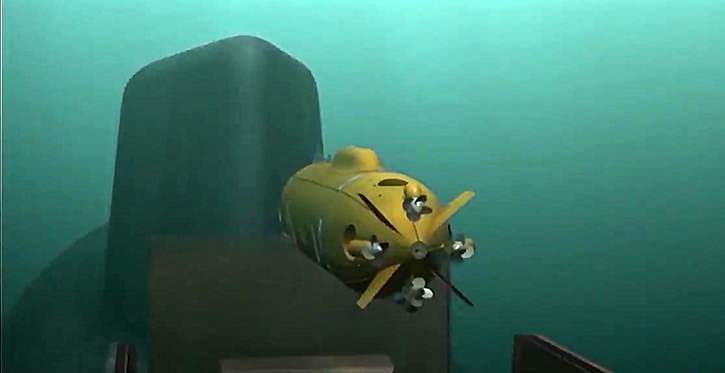
    Multi-purpose nuclear-powered underwater ‘cruise missile’.

    Attack from the depths: Another weapon being pursued by the Russians is a type of a ‘nuclear-powered torpedo’, designated by the Russians as a ‘Nuclear Powered, Multi-purpose Ocean-going Unmanned Underwater Vehicle’ – an autonomous underwater vehicle that deploys from submarines and designed weapon. This future ‘underwater cruise missile’ will be able to operate deeper than any manned submarine or conventional torpedo and sail over inter-continental distances. It will be able to travel underwater at high speeds and navigate and maneuver underwater better than conventional platforms. Armed with conventional or nuclear warheads, to eliminate strategic targets such as aircraft carriers at sea or naval vessels at their home ports.

    Enhancing Missile Defense: The diversification of Russia’s nuclear arsenal is a clear indication that Russian nuclear war planners are deeply concerned over advances in U.S. interceptor-based missile defense systems and fear for their second-strike capability.

    Russia is also enhancing its own missile defenses. The A-235 (PRS-1M) interceptor was recently tested, and the Prometheus S-500 air- and the missile-defense system is undergoing testing, scheduled as the successor of the current S-400 system.

    Moscow also pursues anti-ballistic missile systems using missile interceptors and directed energy weapons. In recent months, Russian missile scientists have tested the A-235 (PRS-1M) – a short-range missile interceptor designed to replace the A-135 (53T6) anti-ballistic missile (ABM) interceptor system that defends the Russian capital since 1995. These interceptors are no longer in production, but their propulsion system needs replacement. The A-235 (PRS-1M) has the same size of 53T6 as it is designed to deploy from the same silos. The new missile was tested twice in recent months and is scheduled for deployment by the end of 2018. The new solid propulsion is designed to accelerate the weapon to a speed four kilometers per second. It also uses a new guidance increase resistance to countermeasures.

    in his speech today Putin also addressed a high-energy laser weapon being developed for the military purpose. No details about the system were provided, but a video showing the unit in a two-truck mounted field formation was released, showing a large beam director installed at the tip of large truck hauled container.

    BAE Selects Plasan to Armor Britain’s Type 26 Frigates

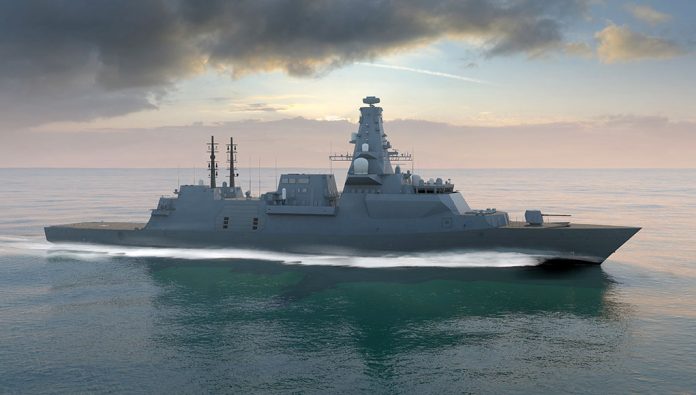
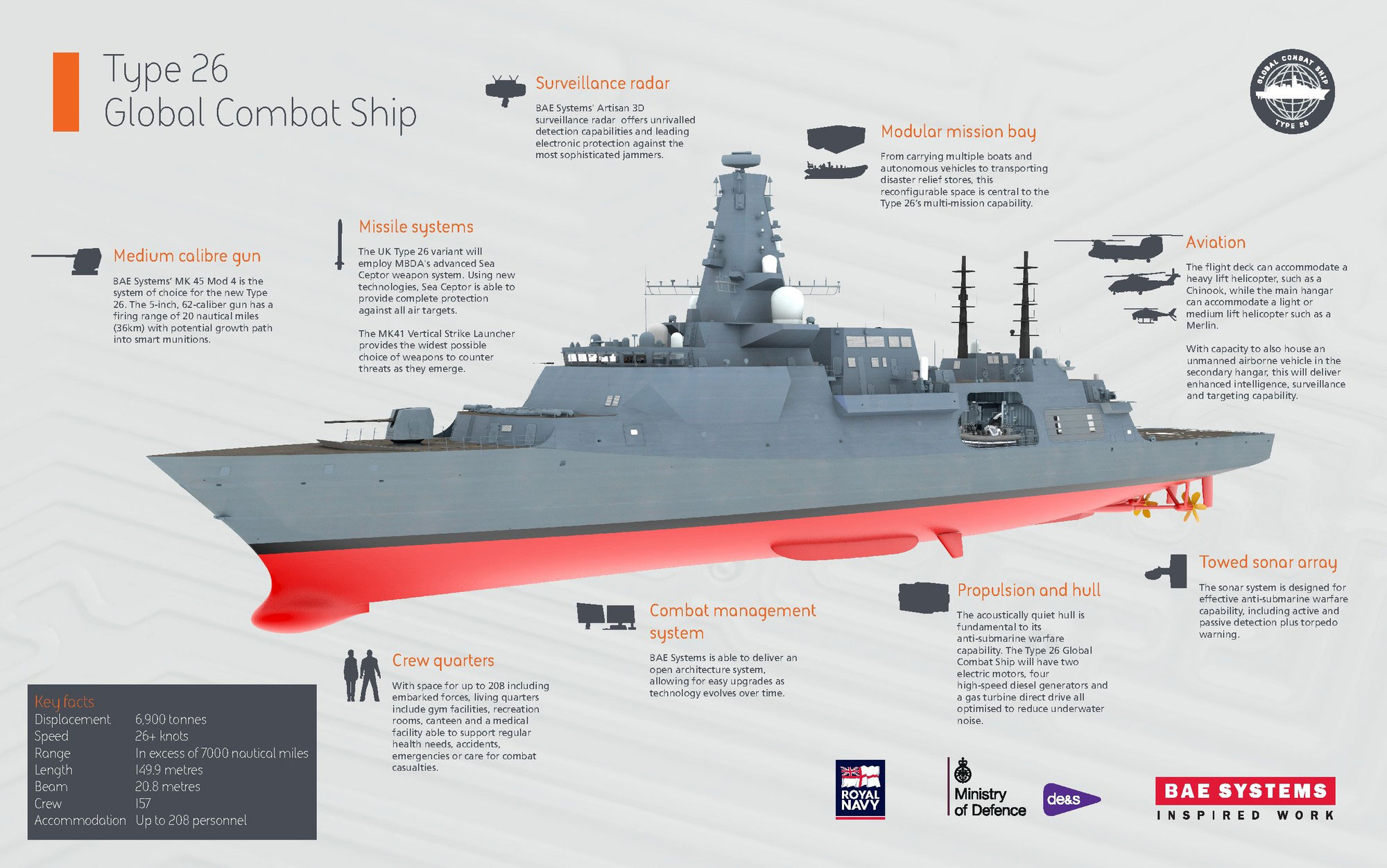
    An artist impression of the new Type 26 Global Combat Ship. Image: BAE Systems

    Israel’s armor specialist Plasan was selected to design and produce armor protection for Britain’s new Type 26 frigate. Plasan’s advanced armor technology has been implemented to protect armored vehicles and personnel, transport aircraft and helicopters as well as naval vessels. In the past, the company was involved in several urgent operational requirements (UOR) to increase the survivability and protection of combat platforms operated by the British Army and Royal Air Force. The company designed the complete protection systems for the US Army/Marine Corps JLTV made by Oshkosh (soon to be supplied to the UK) and the Australian Hawkeye light combat vehicle produced by Thales Australia.

    Modern combat ships are fitted with ballistic armor tailored to protect sensitive areas on the ship from typical threats such as projectiles and fragments. Such elements are often built of lightweight, hard ceramic with soft and hard composite materials to meet the required protection level at the lowest weight.

    These armor elements are often constructed during the shipbuilding process. The ships will be built by BAE Systems in Glasgow, Scotland and are considered among the world’s most advanced combat ships. According to the contract armor production for the first three vessels will begin this year. The Royal Navy plans to replace eight Type 23 Duke class anti-submarine frigates with six Type 26s, based on BAE Systems’ ‘Global Combat Ship’ design. The first Type 26 is due to enter service with the Royal Navy in the mid-2020s.

    BAE Systems also announced the selection of Mk41 Vertical Launch System (VLS) as the primary weapon launch system for the vessel. Lockheed Martin was selected to supply the system and integrate it into the ship. The VLS provides a common weapon storage and launch platform supporting anti-air, anti-submarine, surface-to-surface and strike-length missiles. Each Type 26 will be equipped with three 8-cell MK 41 VLS modules. BAE Systems’ initial order includes nine MK 41 VLS modules, enough for the first three ships of the class.


    Boeing Joins General Atomics MQ-25 Stingray Team

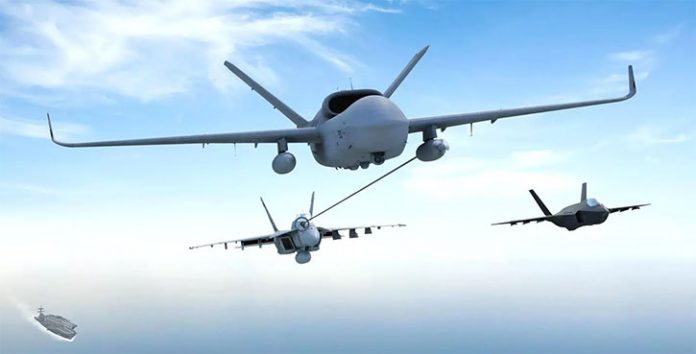
    General Atomics is proposing a derivative of the Predator C Avenger for the US Navy carrier based unmanned refueling aircraft - Stingray. Photo: GA-ASI/USNI

    General Atomics Aeronautical Systems, Inc. (GA‑ASI) has formed an industry team to pursue the US Navy MQ-25 Stingray, the future carrier-based aerial refueling drone program. In addition to General Atomics acting as the team leader and system integrator and platform manufacturer and two sister companies in the GA group, the team includes Boeing, Pratt & Whitney, UTC, BAE Systems, L3, Rockwell Collins and GKN.

    “GA-ASI has designed a purpose-built MQ-25A Stingray, optimized for the tanking mission and providing exceptional fuel give, that will more than double the range of the Carrier Air Wing. Our offering exceeds all of the Navy’s requirements, including carrier suitability.” David R. Alexander, president, GA-ASI said, adding “This collaboration of the best in the aerospace industry will provide the U.S. Navy with a fleet ready unmanned tanker with exceptional growth, well within the Navy’s preferred timeline.”

    The most surprising member is the Autonomous Systems division of the Boeing Company. Boeing is also pursuing the MQ-25 opportunity with its own MQ-25 platform, developed by its rapid prototyping center – the ‘Phantom Works’. The recent announcement seems to put Boeing’s Autonomous Systems activity in competition with the parent company. “Boeing Autonomous Systems is pleased to have the opportunity to collaborate with General Atomics on its MQ-25 proposal,” said Vice President and General Manager Chris Raymond. “We look forward to supporting GA with our aviation and autonomous experience.”

    The engine manufacturer will be Pratt & Whitney, that will provide the main propulsion system for the aircraft, to be based on its PW815 commercial turbofan engine; UTC Aerospace Systems, will design the drone’s landing gear, which will also include subsystems from GKN Aerospace’s Fokker business, specifically the tail hook for the MQ-25’s arresting gear system. L3 Technologies has also joined the team to provide communications systems for GA-ASI’s Stingray, along with Rockwell Collins that will provide a new generation of the TruNet ARC-210 networked communications airborne radio, advanced navigation technologies, and a comprehensive simulation framework to support General Atomics’ low-risk schedule. BAE Systems will be responsible for various software and cybersecurity capabilities.

    Two General Atomics group companies, General Atomics Electromagnetic Systems (GAES), and GA Systems Integration have also joined the team providing up-front carrier integration experience and risk reduction, adding U.S. Navy program experience and landing gear integration expertise. The Electromagnetic Launch System (EMALS) developed by GAES began testing on the USS Ford at sea last year.

    France Introduces Scorpion’s New Member – VBMR-Light

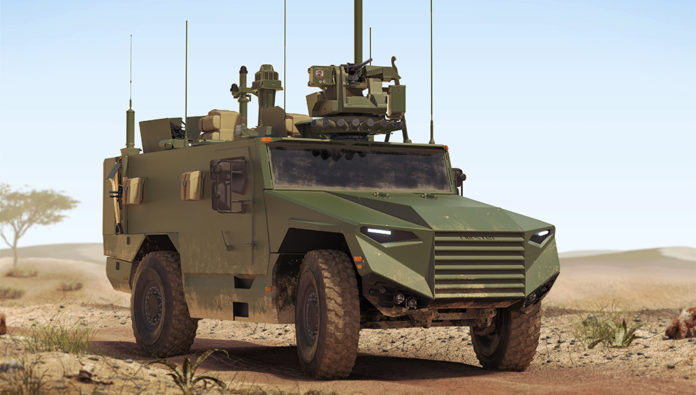
    the VBMR-Light will be used by the French Army's intelligence and reconnaissance units as part of the SCORPION programme. Photo: Nexter

    The French defense General Armament Directorate (DGA) Ministry of Defense awarded Nexter a contract for the development, procurement, and support of the Light, Multirole Armored Vehicle (VBMR-L). The new 4×4 vehicle is part of Project Scorpion, the French Army modernization program, slated to replace the VAB currently in service with the French Army by the early 2020s.

    The Nexter Group will be responsible for the design to cost and performance, integration, production, and support of the lightweight VBMR. The vehicle will be assembled in Roanne, alongside the other vehicles of the Scorpion program – the VBMR-GRIFFON and EBRC-JAGUAR, all manufactured under a French defense industry consortium consisting of Nexter, Thales, and Renault Trucks Defense). The contract also included an award for the development of a transmission axles systems by Texelis, a designer, and manufacturer of axles and transmissions for large heavy-duty vehicles.

    As the other vehicles produced under the Scorpion program – VBMR-Griffon and EBRC-Jaguar, VBMR-L will be produced by a consortium that includes Nexter, Thales, and Renault Trucks Defense. The first batch of VBMR-L vehicles funded by the current order covers the development, production, and induction of 689 vehicles by 2025, additional orders could bring the French VBMR-L to 2,000 by 2030. Initial deliveries of VBMR-L are expected by 2022.

    The 15-ton vehicle is designed to carry 10 troops. The lightweight VBMR-L will be deployed in several configurations will be fielded, including a Troop Carrier, Scout (ISR), Communications and Electronic Warfare (EW), Ambulance, Command, and artillery fire direction vehicles. The vehicle will be equipped with remotely operated weapon station as a standard, and employ the modern Scorpion Information & Communications System (SIC-S) networking system to fully integrate with the Scorpion combined arms formation.

    Sikorsky Teams with Rheinmetall to Offer CH-53K to Germany

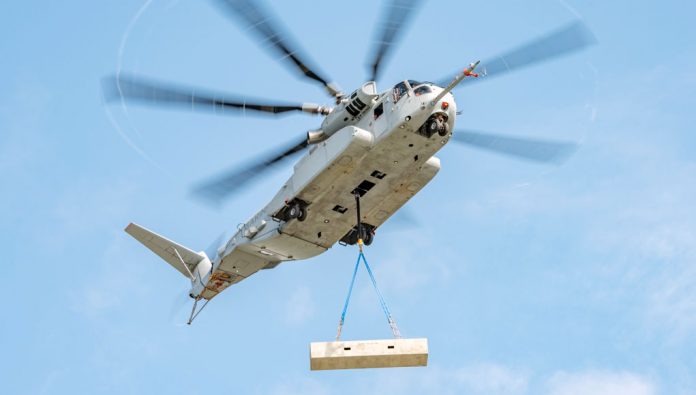
    The CH-53K King Stallion successfully completed an external lift of a 27,000 pound payload at Sikorsky’s Development Flight Test Center in West Palm Beach June 17, 2016. Photo: Lockheed Martin, Sikorsky

    Lockheed Martin Sikorsky has signed a strategic agreement with and German defense firm Rheinmetall teaming for competing in the German Air Force planned replacement of Sikorsky’s CH-53G transport helicopters under a €4 billion heavy-lift helicopter (Schwerer Transporthubschrauber – STH) program, with a procurement of 45-60 new helicopters.

    The Germans currently evaluate two options – the CH-47F Chinook from Boeing and CH-53K from Lockheed Martin Sikorsky. The CH-47F is in production since 2008 and is expected to be available in the Block II version by 2020. Boeing highlights the wide use within NATO as a major advantage of its new Chinook, along with a lower flyaway cost, compared to Sikorsky’s King Stallion. However, with the US Army’s planned introduction of the future heavy-lift platform in the 2030s, Chinook seems to be in a mature phase, while CH-53K its introduced as a new platform that features innovative new airframe-engine design and much-increased lift capability.

    The CH-53K King Stallion advances Sikorsky’s 50 years of manufacturing and operational success of its CH-53A, CH-53D/G, and CH-53E. Twice as powerful as the legacy CH-53s it is intended to replace, the CH-53K can carry almost 16 tons of payloads internally and externally while operating within the same footprint of current CH-53E.

    The U.S. Marine Corps will field the CH-53K as a fully-operational aircraft in 2019. By the time Germany plans to receives the first CH-53G replacement aircraft, the CH-53K will have been in service with the U.S. Marine Corps for five years. Other countries considering the CH-53K include Israel and Japan.

    “With Rheinmetall as the strategic partner for Sikorsky, we are convinced that together we provide the best possible state-of-the-art aircraft for the German Air Force as a successor for the legacy CH-53G fleet,” said Armin Papperger Rheinmetall CEO. “Furthermore, we stand strongly together in offering a cost-effective, reliable solution oriented to the needs of today’s operations, and able to evolve with the Armed Forces as its needs change over time.” The team plans to introduce more German teammates in the weeks to come. The new helicopters are expected to be delivered over a period of six years beginning in 2023.

    Britain Offered 60% Workshare, Local Assembly of BOXER

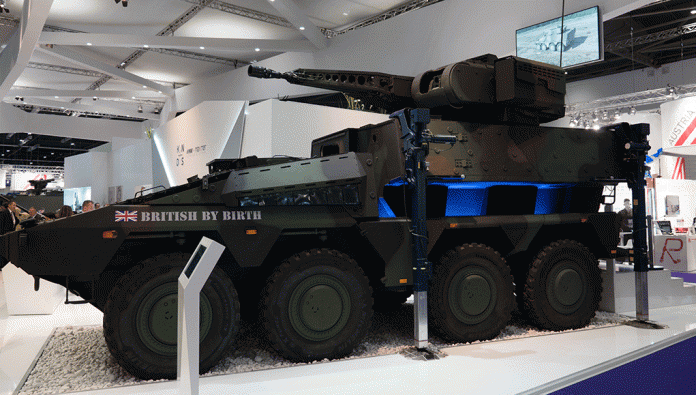
    A Boxer 8x8 vehicle displayed by KNDS shows the modular design of the vehicle, enabling field configuration of combat vehicles, using different mission modules. The module shown here comprises a fighting compartment and a Lance turret manned by a crew of two. Photo: Noam Eshel, Defense-Update

    The German-Dutch Boxer 8×8 armored fighting vehicle manufacturer has agreed to secure a significant local workshare and final assembly of hundreds of vehicles if Britain selects the Boxer for use with the British army. ARTEC has recently signed BAE Systems, Pearson Engineering and Thales UK, to become partners for the production of BOXER. Rolls Royce, Parker-Hannifin, WFEL and British subsidiaries of the ARTEC parent companies will also supply British content. ARTEC’s investment in the UK value chain is estimated to secure or create at least 1,000 jobs all across the country.

    The agreement paves the way for significant local manufacturing of the vehicle and its systems in the UK, should the BOXER be selected by the Ministry of Defense as the British Army’s next generation Mechanised Infantry Vehicle (MIV). MOD plans to invest about £2 billion to equip parts of the British Army’s new ‘Strike Brigades’ with up to 700 MIVs, to be fielded in a number of variants. All MIV candidates evaluated for the program are foreign – The Boxer, considered one of the leading candidates, is produced by Krauss Maffei (KMW) and Rheinmetall in Germany and the Netherlands. The French VBCI made by Nexter, KMW’s French partner in the joint KMW-Nexter Defense Systems (KNDS) corporation. The AMV-XP is designed and produced by Patria in Finland. The Piranha V, from GDLS-Europe, is based on a Swiss design. and Terrex, a Singaporean vehicle is produced by Singapore Technologies (ST) Kinetics.

    The recent agreement sets a minimum 60% of BOXER’s value creation to be provided by those British companies which will also be responsible for the final assembly in the UK.  “To ensure the best value to the British tax payer, ARTEC has defined a competitive process for the main partners and their supply chains to follow,” the company said in a statement published today. The UK partnership approach will ensure that British companies are fully embedded in the MIV supply chain.

    In addition to providing workshare to UK companies, one of ARTEC’s founders – Rheinmetall – intends to establish a modern production and integration centre for armoured vehicles in the UK as part of the programme.

    The UK played a major role in the design, development and testing of BOXER from 1999 to 2004. Since London wethdrew from the program, it also lost its position as a project partner. According to ARTEC, if Boxer is selected and procured, the UK would reassume the rights which it had as the original project partner. This would allow BOXER to be exported from the UK.

    New Configuration of MHTK Miniature Missile Validated In Flight Test

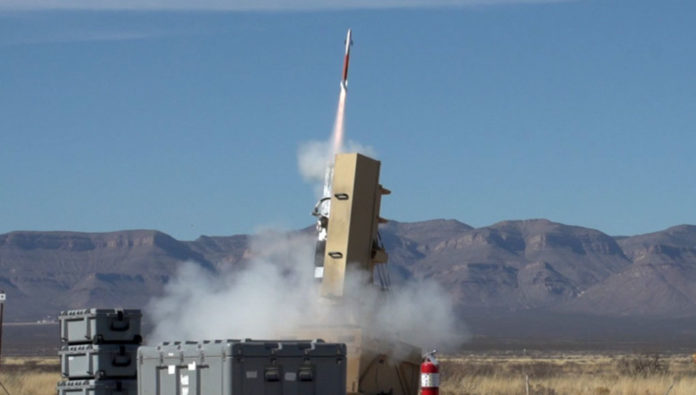
    A Lockheed Martin Miniature Hit-to-Kill missile streaks skyward during a test flight at White Sands Missile Range, New Mexico, on Jan. 26, 2018. Photo: Lockheed Martin

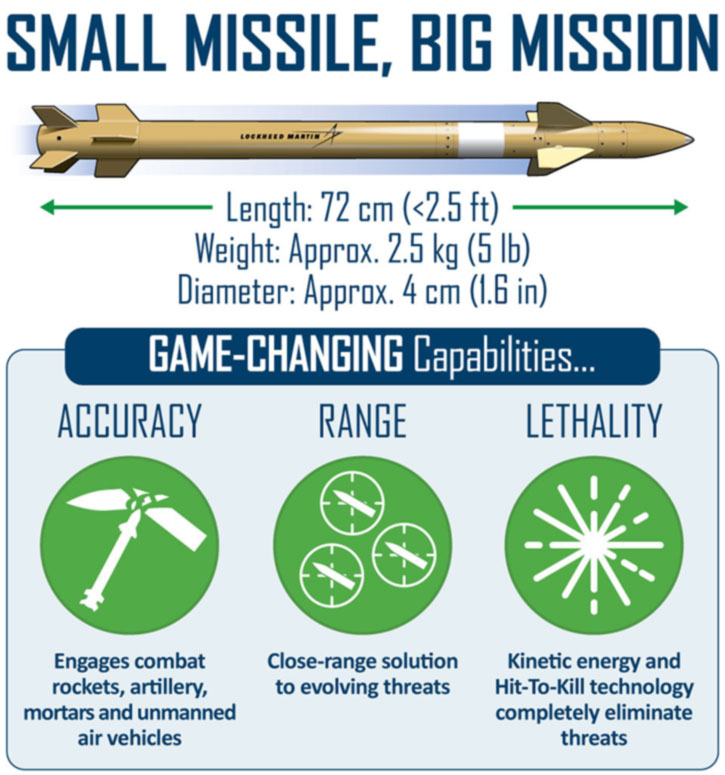
    Lockheed Martin has tested a new configuration of its Miniature Hit-to-Kill (MHTK) missile at the White Sands Missile Range, New Mexico, Friday, January 26th. The test comprised a controlled flight of the miniature missile to demonstrate the interceptor’s increased agility and to validate the performance of its airframe and electronics. The missile now uses a common configuration for both active and semi-active guided missiles.

    The increased agility was required to enable the weapon to defeat its primary targets – rockets, artillery and mortar (RAM) and Counter-UAV target with greater accuracy, reliability, and range compared to current systems. Unlike other C-RAM weapon systems that use high explosive warheads activated at close proximity to the target, MHTK uses hit-to-kill technology, which destroys threats through an extremely accurate application of kinetic energy in body-to-body contact. Hit-to-kill technology eliminates the incoming threat while reducing the risk of collateral damage seen in traditional blast-fragmentation interceptors. The MHTK interceptor length is about 72 cm (less than 2.5 feet) with a diameter of four centimeters (1.6 inches) and weighs only 2.2 kg (5 pounds) at launch.

    The technology behind Hit-to-Kill technology is an onboard radar seeker that searches for a threat, calculates the accurate location for an intercept, and measures critical target information. Once an intercept plan is devised the missile’s guidance system uses this data to bring the MHTK to impact with the target, aiming for the target’s most vulnerable part.

    Funded by Lockheed Martin, the successful test advances the program’s technical maturity level and builds confidence in the interceptor’s ability to defeat current and evolving threats. To achieve this goal with a miniature interceptor the company modeled knowhow from cutting-edge commercial technologies to design a small interceptor with the same strength as large missiles. “We applied the core principles of Hit-To-Kill capability, seeker accuracy, and missile agility, to a new class of problem,” said Tim Cahill, Vice President of Integrated Air and Missile Defense at Lockheed Martin. “We achieved miniaturization through the use of photonics, leveraging medical imaging technologies and mobile phone industry techniques combined with state-of-the-art electronics packaging.”

    Skunk Works and XTEND Simplify Multi-Drone Command

    0
    Lockheed Martin Skunk Works® and XTEND have achieved a major milestone in JADC2 by integrating the XOS operating system with the MDCX™ autonomy platform. This technical breakthrough enables a single operator to simultaneously command multiple drone classes, eliminating the friction of mission handoffs. From "marsupial" drone deployments to operating in GPS-denied environments, explore how this collaboration is abbreviating the data-to-decision timeline and redefining autonomous mission execution.

    From Ukraine to Taiwan: The Global Race to Dominate the New Defense Tech Frontier

    0
    As traditional defense primes face mounting competition from agile “neoprimes” such as Anduril, Palantir and Helsing, the balance of innovation is shifting toward software-defined warfare and scalable, dual-use technologies, while global industry consolidation—marked by Boeing’s integration of Spirit AeroSystems and other strategic mergers—signals an intensified race to secure control over the defense technology value chain. Our Defense-Tech weekly report highlights these trends.

    Europe’s “Drone Wall”

    0
    In early October 2025, a coordinated wave of unmanned aerial system (UAS) incursions—widely attributed to Russia—targeted critical infrastructure across at least ten European nations. The unprecedented campaign exposed the fragility of Europe’s air defenses...

    Weekly Defense Update & Global Security Assessment

    0
    Executive Summary The past week (September 18-25, 2025) represents an inflection point where strategic defense concepts have transitioned from doctrine to tangible reality. An analysis of global events reveals four primary, interconnected trends shaping an...

    U.S. Air and Space Forces Push Next-Gen Programs at the AS&C 2025 Conference and...

    0
    At the 2025 Air, Space & Cyber Conference, U.S. Air Force and Space Force leaders unveiled major updates on next-generation fighters, bombers, unmanned systems, and space initiatives, highlighting both rapid innovation and critical readiness challenges as the services race to outpace global competitors. A short version is available here, with a more detailed version for subscribers.

    TADTE 2025: Reflecting Taiwan’s Strategic Themes

    0
    The Taipei Aerospace & Defense Technology Exhibition (TADTE) 2025 crystallized around four dominant strategic themes that collectively illustrate Taiwan's comprehensive approach to defense modernization amid escalating regional tensions. Based on a detailed report by Pleronix (available upon request). Includes a Podcast discussion on TADTE 2025's highlighting Taiwan's four strategic themes beyond the post's coverage.

    Iron Beam 450 Completes Testing, Soon to Join With Operational Air Defense Units

    0
    Israel’s Iron Beam 450 high-power laser system has completed final testing, marking a major leap in air defense. Developed by Rafael, it offers precise, cost-effective interception of rockets, UAVs, and mortars, and is set for IDF deployment by 2025.