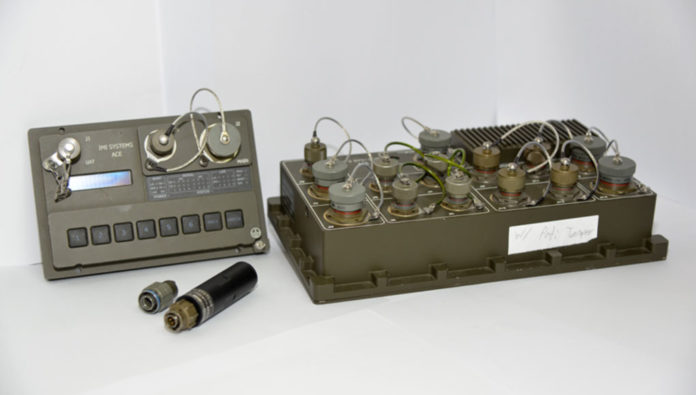
IMI Systems' Passive Buffer hardware based cyber security system is designed to protect computer controlled weapon systems against tampering and hacking. Photo: IMI Systems
IMI Systems introduces a hardware system protects computer-controlled military hardware from cyber attack The ‘Passive Buffer’ protects computer-based and computer-controlled systems and applications.
Ensuring full and continuous operation continuously monitors and controls in real-time the data flow between the protected system and peripheral elements and components, ensuring only legitimate messages, controls, and protocols are implemented. This Passive Buffer supervision ensures that all the system’s operations are in line with the parameters, logic and sequence order defined by the system’s engineers.
Typical systems that can be protected by the Passive Buffer system are weapons and ammunition, computerized components of critical systems’ infrastructure, manned or unmanned vehicles, aircraft, and vessels, and various critical computerized components in infrastructures, medical systems, and industrial shop floors.
The system’s setup is defined by a set of rules and filters that determine the configuration, content, context, and role for each protocol. Built-in hardwired identification for sub-system and users eliminates tampering by unauthorized operators. Apart from the level of protection to systems and functions, the Passive Buffer also prevents access to highly classified core level elements in the protected system.
Once activated, the Passive Buffer continuously monitors the system, analyze and characterize the integrity and status of protected resources’ and protocols (proprietary) in real time. In case of a suspicion that a protected system being compromised, precautionary measures are activated, thus limiting adverse behavior. The system can manage and control the relevancy of commands and content of such commands, to mitigate dysfunctions. For example, commands’ contents logic, processes controls, and identification.
While the system would prevent automatic operation that could endanger the user or the unit, it also has certain levels of manual override to enable users to continue and operate the systems in combat. In such conditions, the system allows certain roles-based hierarchies to proceed, regardless of the protected system’ identification settings.
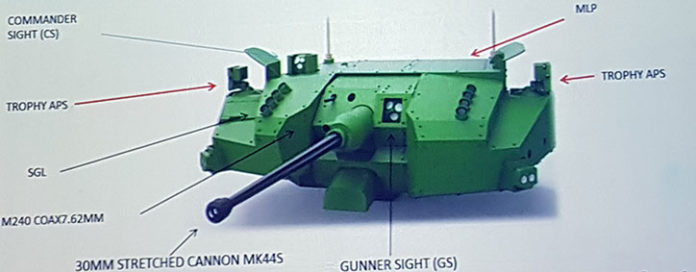
RAFAEL has designed a new version of the Samson 30 unmanned turret fitted with an integral Trophy active protection system (APS). In addition to a 30mm automatic cannon and coax machine gun, the new turret integrates two independent sights, and two multi-purpose guided missiles, recessed launchers for smoke grenades and complete Trophy APS system comprising four radars and two countermeasures units enabling complete hemispheric coverage of the protected vehicle. RAFAEL unveiled the new initiative at the International Armored Vehicles (IAV) conference in London this week.
To date, RAFAEL integrated the Trophy system on a number of vehicles, including Merkava Mk3, Merkava Mk4 and M-1A2 SPE2 main battle tanks, Namer, Stryker and Piranha 3 APCs. Adaptation of the system to other vehicles, including MBTs is underway. The introduction of Trophy in a standard turret configuration, compatible with evolving APS standards will be adaptable to new vehicles in the production process thus enable vehicle designers and users the ability to introduce active protection in a more affordable and streamlined process, saving significant excessive modification costs. The world’s first operational and only combat-proven APS, Trophy is designed to protect armored combat vehicles from all shaped charge type threats, including guided missiles and RPGs. For lighter vehicles requiring protection only from RPG RAFAEL also offers a near-field active protection system known as ‘Trophy LV’.
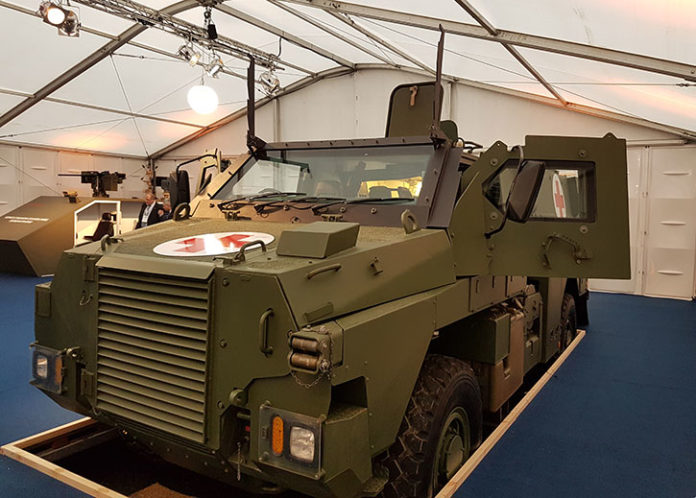
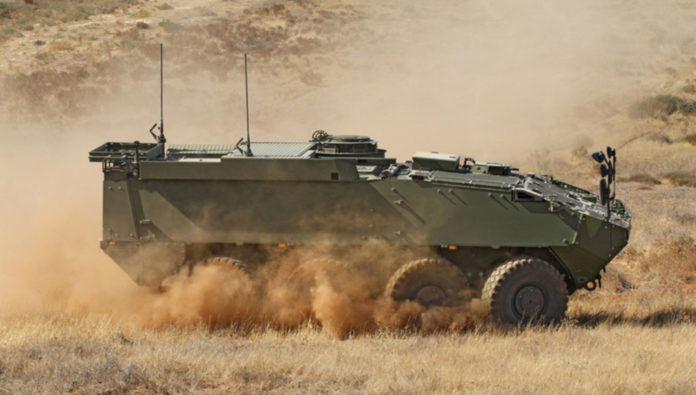
Bushmaster MR6 was displayed by Thales, as the new type is promoted as a candidate for Britain's MRV(P) for ambulance and armoured personnel carrier. Photo: Tamir Eshel, Defense-Update
Thales unveiled a new version of its Bushmaster protected vehicle the company proposes for the British Army future Multi-Role Vehicle (Protected) – MRV(P) mission. At the International Armoured vehicles in London, the company displayed the ambulance variant and is also offering a troop carrier configuration – two of seven configurations required by the British Army.
The Bushmaster MR6 is a new version based on the combat-proven, protected mobility Bushmaster vehicle. the new model offers an increased level of protection, with an improved blast and ballistic protection, optional new RPG and additional fire protection capability.
To support the additional weight the vehicle is powered by a new, 330hp EURO-3 compliant engine matched with a six-speed automatic transmission. Improved suspension, anti-lock braking system (ABS) which are mandatory safety features for the UK, are also featured. The central tire inflation system is improved with faster inflation. The vehicle also has a bi-directional winch for recovery operations. It has the maximum range of 800km. It is also capable of fording 1.50-meter deep water.
With extended rear compartment, the MR6 has an increased protected space and with increased suspension it has a capacity to carry additional loads of up to two tons, and has an increased troop capacity, accommodating 10 troops, in addition to the two crew members. The vehicle can carry an overhead gunner position, unmanned weapon station or gun turret mounting various weapons, up to 30mm guns.
The vehicle is designed to address British requirements with Ground Vehicle Architecture (GVA) compliant integral computing system (ICS). It is equipped with 360 AMP alternator and power management system that enables delivery of up to eight kilowatts external power with an optional auxiliary power unit (APU).
The Bushmaster is produced in Australia by Thales’ local subsidiary. Minister for Defence Industry, the Hon Christopher Pyne MP, encouraged the Australian company’s decision entry to the British competition. “Like the Bushmasters operated by the Australian Defence Force, its innovative design protects passengers from explosive devices and has proven itself time and again on operations in high-risk environments, saving countless lives.” Pyne said, adding that “Thales has invested significantly in the design of the new vehicle at its Vehicle Centre of Excellence facility in Bendigo, Victoria. This work enhances the vehicle’s operational capability and increases its competitiveness on the global stage,” he said.
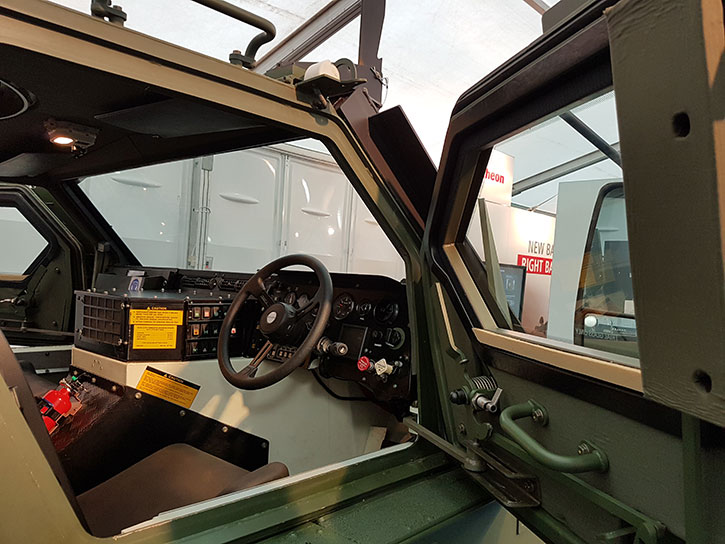
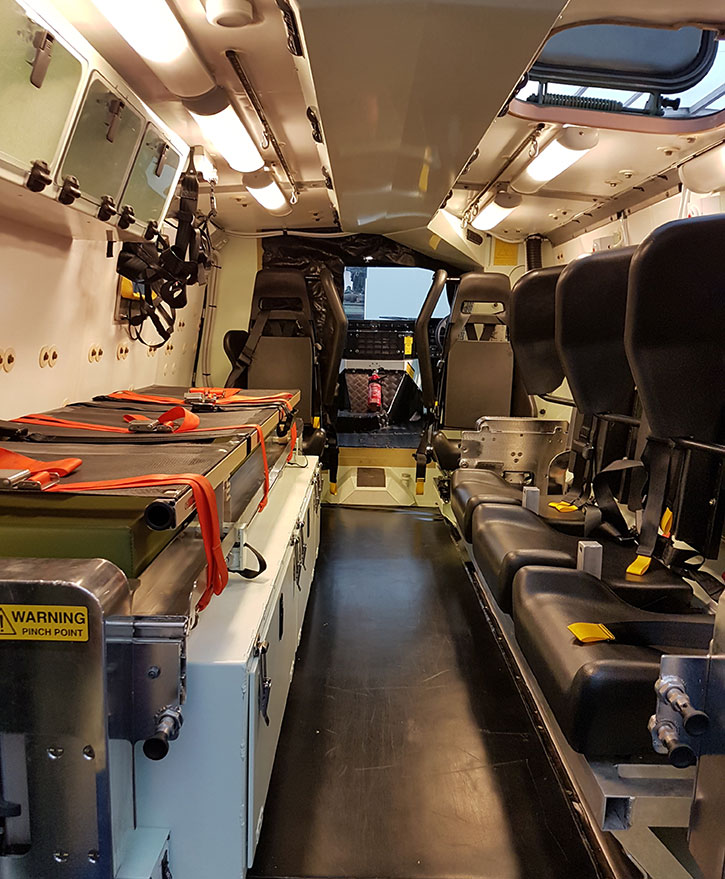
Thales displayed at IAV 2018 the Bushmaster MR6 in right-hand driving configuration. One of the benefits of the new version are the side doors the cabin and the digital dashboard seen in this photo. Photo: Tamir Eshel, Defense-UpdateAt the back, the Bushmaster MR6 offers increased protected space, enough to carry 10 troops. In the ambulance configuration, two stretchers can be carried with two medics or one stretcher with four seated passengers along with full medical gear inside and outside the vehicle. The vehicle also has a stretcher loading kit enabling medics an easier upload of patients. Photo: Tamir Eshel, Defense-Update
BAE Systems introduced today the fifth evolutionary variant of the CV90 infantry fighting vehicle that embeds many of the upgrades and modifications designed through the evolution of the vehicle family. With a more powerful powertrain, rubber tracks and active vehicle dynamics, modular turret and the latest electronic architecture that prepare it to assume future missions and systems. The company introduced the new vehicle at a presentation for delegates attending the annual International Armoured Vehicles (IAV) Conference in London.
Designated CV90 MkIV, the new vehicle represents the fifth generation of the company’s combat-proven IFV family. The new MkIV offers substantial capability upgrades, including increased drivetrain capabilities and active damping technology offered as a standard (this capability was optional in previous vehicles). Active Damping helps improve battlefield speeds and handling and reduces crew fatigue. The new vehicle also features the latest NATO-evolved Ground Vehicle Architecture (GVA) Electronic Architecture to meet customer demands for sensor integration and the implementation of autonomous systems.
The CV90 MkIV uses the new Scania engine rated at 1,000 horsepower and matched with an upgraded X300 heavy-duty transmission. The added power means the engine provides increased torque at lower RPM thus enabling better agility, and retaining high mobility even with the maximum gross vehicle weight increase from 35 tonnes to 37 tonnes. This growth will enable users to add at least two tonnes of useful payload, without a decrease in vehicle agility, and protection. According to Tommy Gustafsson-Rask, vice president and general manager for BAE Systems’ Hägglunds business, the new drivetrain active dumping can increase the vehicle’s effective speed on the severe terrain by up to 40 percent, compared to previous models. It also provides a more stable platform for the sensors and weapons.
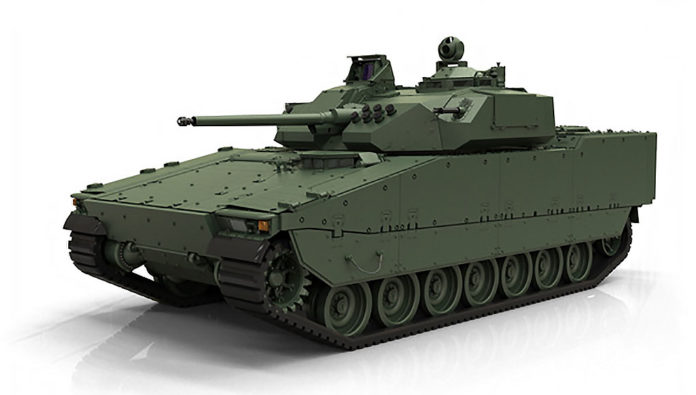
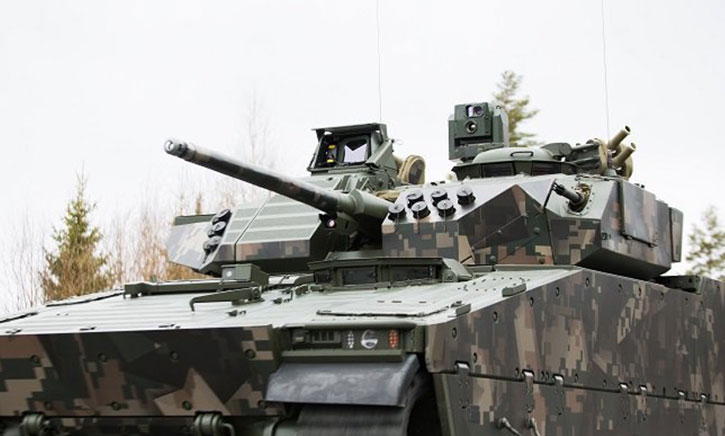
BAE offers the latest CV90 MKIV with a modular turret that can be configured with a wide array main guns, weapons pods, defensive aids and sensors. many of which are already integrated in some of the previous variants. Illustration: BAE Systems
The vehicle is equipped with the D-series modular turret that can carry a range of weapon systems, including main guns of 25, 30, 35, 40, 50 mm calibers, matching different customers lethality requirements. The vehicle can also accommodate the lightweight 120mm cannon, of which a prototype weapon system has been integrated and tested on the vehicle. A choice of Optronics, coaxial weapons, and guided missiles configured into modular pods that fit on the turret sides, along with remotely operated weapon stations, defensive aids, and active protection systems that are configured with the modular turret. A ADS being integrated for the Dutch Army is the Israeli ‘Iron Fist’ from IMI. BAE Systems intends to offer the CV90 MkIV to the Czech Republic in the ongoing armored vehicle competition to replace the Czech Army´s legacy fleet of BMP-II IFVs. User countries will also be able to upgrade their existing CV90s to the new standard.
Utilizing the vehicle’s integral optronic systems and electronic architecture, the new vehicle will be equipped with processor and data bus conforming to the new NATO (NGVA) standard and supporting ‘teraflop data capacity’, to enable the future artificial intelligence (AI) and machine learning capabilities expected to mature in the future. BAE Systems also offers its the futuristic intelligent fighting (iFighting) concept as an option. Providing the vehicle’s crew with significantly enhanced situational awareness, iFighting is the company’s vision for the future complex battlefield. As part of this concept, the system utilizes BAE Systems’ Q-Sight helmet-mounted display and Battleview360 to provide the crew situational pictures using augmented reality displayed on individual visors.
Gustafsson-Rask said the MkIV will be available to both current and future users of the CV90. he CV90 is currently in use in Denmark, Estonia, Finland, Norway, Sweden, Switzerland, and The Netherlands. The CV90 IFV is a modern, adaptable, and combat-proven vehicle with 1,280 vehicles in 15 variants sold to seven nations. The most recent generation of the vehicle, CV90 MKIIIb is under delivery for the Norwegian Army.
The Norwegian CV90 MKIIIb represents the second upgrade of the CV90 MkI originally selected by Norway in 1998. The first upgraded was completed for operations in Afghanistan in 2009. The recent upgrade implemented performed in 2015 introduced the Soucy rubber track system, also used in the MkIV. Remotely operated turret was also included, enabling the crew to handle two targets simultaneously (Kill-Kill). The Norwegians were also the first to implement the Ground Vehicle Electronic architecture (GVA), and qualification to operate NATO secret communications, enabling target sharing via the vehicle’s battle management systems (BMS) and integration of UAV operation, displaying images obtained by UAVs directly on the crewmember’s displays or their transfer to other members of the unit via BMS.
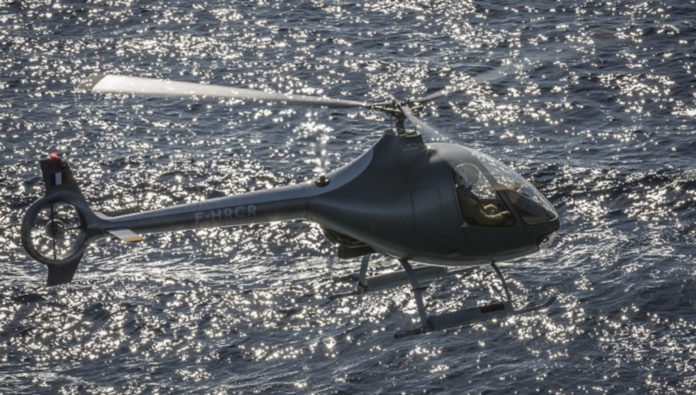
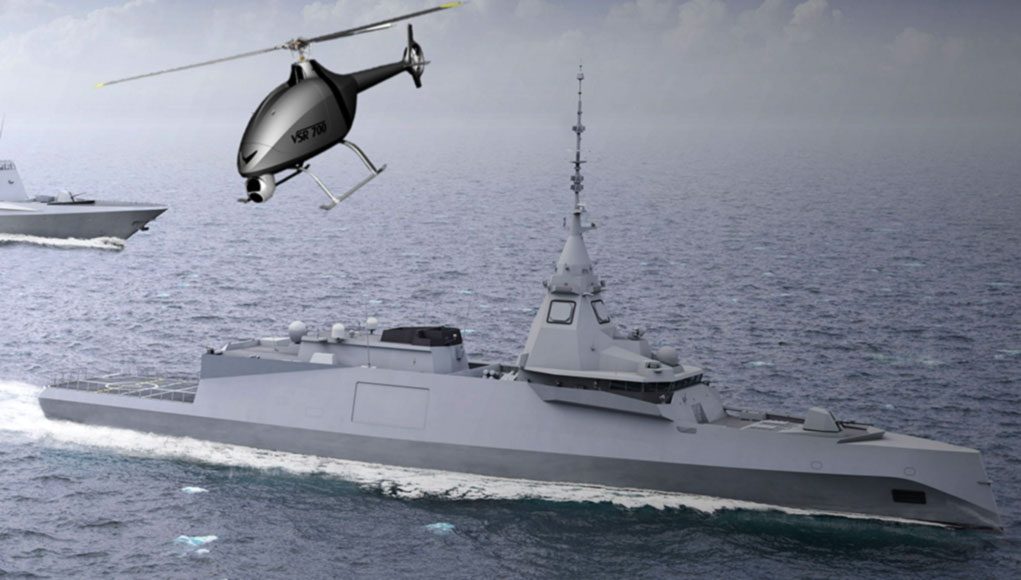
Airbus has equipped the Cabri-G2 helicopter with autonomous control to transform the light helicopter into the VSR700 maritime, autonomous aerial system. Photo: Airbus
Airbus is developing a rotary-wing unmanned aerial system for naval application, under a newly awarded contract signed with the French Armament Directorate (Direction Générale de l’Armement – DGA), the Naval Group and Airbus Helicopters consortium. The contract covers risk reduction studies ahead of construction of a future, tactical helicopter drone demonstrator to be tested aboard warships. The demonstration project will lead to trials of the drone launch system, mission system and airborne vehicle, conducted from a French Navy vessel.
The platform proposed for this demonstration Based is the VSR700 drone system being developed by Airbus Helicopters. This 700-kg drone, derived from the Cabri G2 light civilian helicopter, is a certifiable, autonomous flight systems designed for naval operations. In June 2017 Airbus began autonomous flights tests using an unmanned Cabri G2 prototype, validating the integration of the flight control systems and the vehicle’s new engine system, paving the way for the first flight of the VSR700 in 2018.
The project is part of the Navy Airborne Drone System (SDAM), to be employed aboard the future Intermediate-Size Frigates (FTIs) expected to enter service by the middle of the 2020s, as well as other naval ships operated by the French Navy ships. The new drone will be used as a technology demonstrator to assess the technical risks associated with the SDAM program and the vessel-drone integration and select the principal technologies for the program.
The VSR700 drone is proposed for the French future maritime autonomous aerial system known as SDAM. Illustration: Airbus
Naval Group and Airbus Helicopters will jointly be responsible for the industrial project management and shall coordinate wider input from French industry/sector. The two companies will jointly act as the programme design authority and shall have Hélicoptères GUIMBAL, Thales Systèmes Aéroportés, Safran E&S and ONERA as their principal subcontractors.
The VSR700 can exceed 10 flight hours of operational autonomy with a payload capacity of up to 150 kg, offering performance levels that have, until now, been the reserve of aircraft of a significantly higher category and size. The system will benefit from all the know-how of Airbus Helicopters in terms of automated flight control (the guarantee of a unique automatic deck-landing capacity in rough seas), autonomous navigation system, secure data link, the integration of sensors such as radar and optronic systems, the management of complex mission systems and the certification of military aircraft. This expertise, which builds on a heritage going back more than 70 years, allows Airbus Helicopters to design a drone system that precisely meets the needs of the French Navy. The aerial vehicle has low maintenance requirements and strong synergies with the ships existing logistical footprint, thus limiting support and operations costs, while its compact size is compatible with the simultaneous use of an on-board helicopter across different surface ships.
General Dynamics European Land Systems signed a contract with the Romanian government today, to deliver up to 227 Piranha 5 wheeled armored vehicles in six different configurations to the Romanian Armed Forces. The contract value exceeds US$1 billion.
The vehicles will be produced in Romania under a strategic cooperation and transfer of technology project between General Dynamics European Land Systems – Mowag and the Romanian company Uzina Mecanică București (UMB).
The procurement of new wheeled armored vehicles is part of the Romanian Army’s plan to modernize its legacy wheeled armored vehicle fleet.
The Standard Missile (SM)-3 Block 2A interceptor, developed under an agreement signed in 2006, is a bigger and more capable version of the Raytheon-built SM-3 Block 1A and 1B interceptors, part of the U.S. Missile Defense Agency’s sea-based Aegis Ballistic Missile Defense system. Photo: Raytheon
The State Department has approved a request from Japan for an initial buy of Standard Missile-3 (SM-3) Block IIA missiles, for an estimated cost of $133.3 million. The sale that includes only four missiles will likely provide missiles for test and evaluation of Japan’s current missile defense assets, likely the AEGIS equipped missile destroyers that currently carry SM-3 Block IB missiles.
Following a successful intercept test conducted in February 2017 Raytheon, the missile developer, received a first production order worth over $619 million, in June that year, for the production and engineering support of 17 missiles of this type. The Japanese purchase reflects slightly lower unit cost, for this weapon.
According to the US announcement, the proposed sale will provide Japan with an increased ballistic missile defense capability to assist in defending the Japanese homeland and U.S. personnel stationed there. The new Block IIA will extend intercept range from 700 km (380 miles) to 2,500 km (1,350 miles.) Japan also plans to use this type of missile with AEGIS Ashore missile defense units included in the country’s future defense plan, defending against the growing missile threat from North Korea.
Developed in cooperation with Japan, SM-3 Block IIA is designed for use on land and at sea. It has two distinct new features: larger rocket motors that will allow it to defend broader areas from ballistic missile threats and a larger kinetic warhead. The interceptor’s kinetic warhead has been enhanced, improving the search, discrimination, acquisition and tracking functions, to address advanced and emerging threats.
A surface-to-air missiles claimed to have been used by Yemeni ground forces against Saudi fighter jets. Image via Tasnim news agency
The Iranian news agency Tasnim published yesterday new details about the surface-to-air missile claimed to have downed a Royal Saudi Air Force Tornado IDS over Sa’ada and hit another F-15S over Sana’a earlier this week.
The missile shown in an image published by the agency shows a long cone-shaped guided weapon, likely one using Command to line-of-sight (CLOS) without an EO/IR seeker.
A video clip that recorded the F-15 intercept was taken by a thermal imaging camera, likely an off-the-shelf 9″ multi-sensor ball made by FLIR Systems that has an automatic tracker, could have been associated with the guidance system. If indeed such passive targeting systems were used, it explains the apparent lack of use of evasive maneuvers by the Saudi F-15 as was seen in the video.
As seen from the released image, the missile segment has aerodynamic fins and strakes, optimised for high velocity but not canards, required for sharp maneuvers. On launch, the missile is accelerated by a solid-rocket booster. The video shows that the missile either hit the aircraft tail or explode in proximity, using relatively small effect.
The missile shown in the photo does not look like any known Iranian surface-to-air missiles.
According to Yemeni news agency SABA, the Houthi said the new capability was fielded despite continuous Saudi efforts to suppress those air defense capabilities. Until now, Yemen’s air defense capabilities relied on obsolete S75 (SA-2) and short-range, low-altitude Man-portable Air Defense Systems (MANPADS). Nevertheless, Yemeni forces, likely supported by Iranian air defense systems, repeatedly caused losses to Saudi-led coalition air forces, downing at least eight fighter jets (three F-16s, an F-15S, Mirage 2000, Typhoon, Tornado, and AT-802U), 13 helicopters of various types, and two MQ-9 Reaper drones operated by the USA.
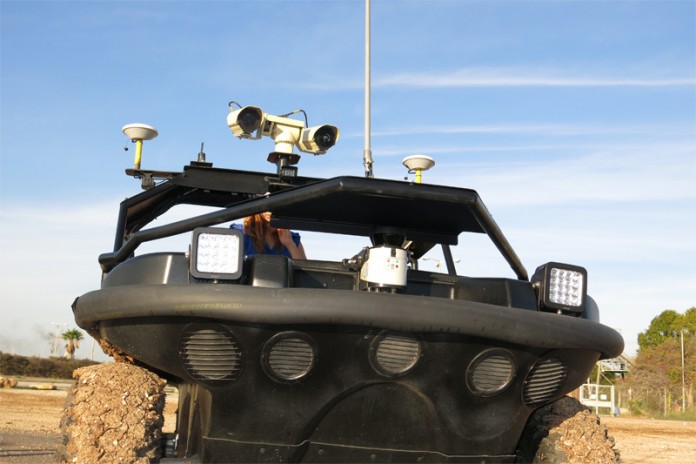
Amstaff 6 robot will perform several demonstration missions, including an amphibious ingress. Photo: Noam Eshel, Defense-Update
Elsight received an initial order for ten Communications on the Move (COTM) secure, two-way communications suits from Automotive Robotic Industry (ARI), for integration in ARI’s Amstaf Unmanned Ground Vehicles (UGV). Elsight’s communications systems provide military-grade, secure and continuous two-way audio, video, and data transmissions, enabling safe and remote operations of UGVs.
Elsight’s units simultaneously transmit 3G/4G LTE/5G, with failover to satellite, ensuring continuous connectivity at high bandwidths with complete redundancy. Multichannel encrypted transmission ensures complete security: data is split into multiple pieces, based on a number of channels, and each segment is encrypted up to 256 bits, locked into a VPN tunnel, and transmitted via aggregated GSM channels. Even if one or two pieces of data has been hacked, the hacked data is incomplete and useless as it’s still impossible to get the full picture.
“After many deployments in regular emergency vehicles, it’s a logical next step for our technology to be integrated into autonomous vehicles,” said Nir Gabay, Elsight CEO. “Elsight technology is a natural fit with our autonomous UGVs,” Ronen Fishman, CEO of Automotive Robotic Industry added. “Both companies have been proven to operate in mission-critical environments with no point of failure while ensuring complete safety and security. Our autonomous vehicle has zero tolerance for any break in communication or takeover by hackers. Elsight provides us with the capabilities to meet these challenges.”
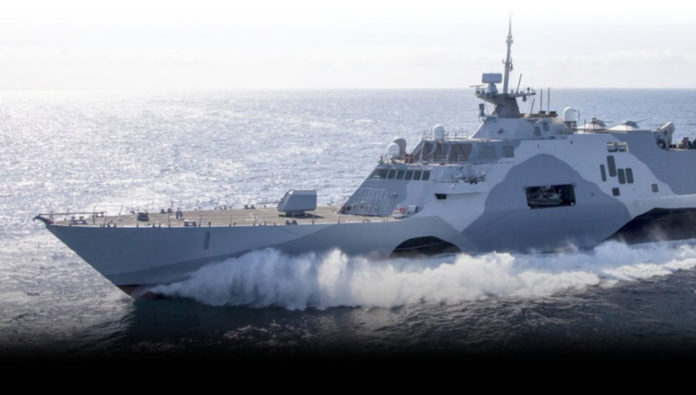
Gibbs & Cox naval architecture and marine engineering firm (G&C) will support the functional design of new, Multi-Mission Surface Combatant (MMSC), a new class of frigate based on the Freedom-variant Littoral Combat Ship ordered by the Royal Navy of Saudi Arabia. G&C will work as a subcontractor for Lockheed Martin, the prime contractor for the program. The company already provides design & engineering efforts for monitoring, maintenance, upgrades & improvements to the LCS class design for all hulls, under a separate contract from Lockheed Martin.
In May 2017, the United States Navy and Kingdom of Saudi Arabia signed a Letter of Offer and Acceptance (LOA) for four MMSCs. This agreement represents the first sale of a new, U.S.-built surface combatant to another nation in more than 40 years.
The MMSC is a lethal and highly maneuverable multi-mission surface combatant capable of littoral and open ocean operation. The Multi-Mission Surface Combatant has a range of 5,000 nautical miles and can reach speeds in excess of 30 knots.The vessel will have a 118 meter long hull and it will utilize the same combined diesel and gas propulsion system.
The vessels will be equipped with COMBATSS-21 Combat Management Systems and sensors including the TRS-4D Radar, and IFF systems, Low-Frequency Active Passive Variable Depth Sonar. Their weapon system will comprise of two eight-cell MK-41 Vertical Launch Systems (VLS) (16 launchers in total) carrying RGM-84 Harpoon Block II anti-ship missiles and RIM-162 Evolved Sea Sparrow Missiles (ESSM) air defense missiles. A single MK-75 76mm OTO Melara Gun System and RIM 116C Block II Rolling Airframe Missiles (RAM) short-range anti-missile defense system are also included.
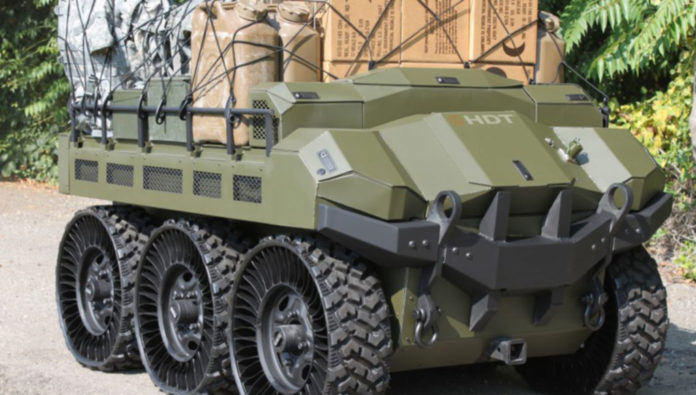
The Hunter WOLF robotic vehicle was displayed at AUSA exhibition 2017. Photo: HDT Global
The U.S. Army has selected four companies to move to the second phase of the Squad, Multipurpose Equipment Transport (SMET), to develop an unmanned ground vehicle assisting dismounted troops with equipment transport. One of the winners, HDT Global (HDT) said it will provide a new robotic platform known as ‘Hunter WOLF’, a 6×6 electric drive all-terrain robotic vehicle has 130 horsepower peak power, developing a top speed of 14 mph; Hunter WOLF can carry up to 450 kg (1000 lbs.) of cargo for more than 100 miles with internal fuel, and operate for more than 72 hours without resupply. The vehicle can climb a 70% grade and is highly maneuverable using a skid steer.
Under development since 2012 to meet the requirements for the Army SMET Program, the HDT Hunter WOLF has undergone extensive evaluations and trials, including the most recent SMET Phase I evaluation. The HDT Hunter WOLF system completed the required 60-mile endurance trial in 23 hours, faster than all competitors.
The Hunter WOLF features a JP-8/electric hybrid powertrain enabling the vehicle’s “silent drive” and “silent watch” capability. It has a 20 kW onboard generator for battery recharging and troop support, as well as 3 kW power offload powering external systems.
The U.S. Army has selected four companies to move to the second phase of the Squad, Multipurpose Equipment Transport (SMET), to develop an unmanned ground vehicle assisting dismounted troops with equipment transport. The teams selected for Phase II include General Dynamics Land Systems (GDLS), HDT Global (HDT) Expeditionary Systems, Howe & Howe and a team of Polaris Defense and Applied Research Associates. Each team will build 20 UGVs for Army evaluation. The selection followed a demonstration of robotic logistics technologies at Fort Benning, Georgia.
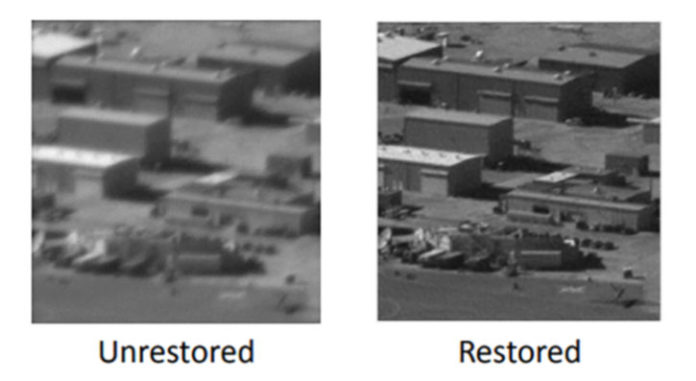
To peek at enemy targets beyond the reach of air defense systems, long range surveillance will require the use of large scale focal plane arrays in SWIR/MWIR, enhanced by turbulence compensation and image restoration to deliver crisp, detailed imaging from very long distances. Photo: USAF / AFRL
The U.S. Air Force Research Laboratory (AFRL) awarded Leidos a prime contract to provide a multi-sensor technology for Combined, Hyperspectral Imaging, Infrared Search and Track, and Long Range Imaging (EO-CHIL) Program. The program goal is to develop technologies to defeat adversary anti-access and area denial (A2/AD) threat environments through the use of extended-range high-resolution imaging, hyperspectral sensing, and close-in imaging with expendable sensors used with drones and autonomous, guided weapons.
The EO-CHIL program will demonstrate concepts, components, and systems technologies to improve imaging performance for standoff high-resolution imaging (SHRI), hyperspectral sensing, infrared search and track (IRST), and sense and avoid (SAA) technology.
SHRI: According to AFRL requirements specified at the industry day last year, effective range is defined by National Image Interpretability Rating Scales (NIIRS) 5 or better image quality can be achieved – Both day and night imaging are within the scope of this effort. To deal with optical disturbances encountered over very long range observations, observation technologies in daylight could rely on high-density SWIR focal plane arrays (FPAs), large aperture lightweight optics and turbulence compensation. For night observation, high-density MWIR FPAs and improved optics for thermal devices would be used.
The stand-off hyperspectral sensing will focus on longwave infrared (LWIR) hyperspectral imaging (HSI), target detection, material identification and environmental compensation algorithms for HSI and sensors that would lead to the design of producible and affordable visible-through-shortwave infrared (V-SWIR) HSI.
Starring IRST: The IRST required by AFRL should employ a staring sensor that enables detection of threats at long range, through clouds and background clutter. The sensor is likely to use large format focal plane array with thermal sensors operating in the Mid-Wave Infrared (MWIR) band.
Sense And Avoid: designed for unmanned aerial systems (UAS), autonomous SAA will enable UAS to meet the Federal Aviation Authority’s (FAA) requirements for access to the national airspace. Until now the Air Force explored collision threat avoidance using SWIR and Laser Radar (LADAR) sensors. Under the current program other passive and active ranging methods will be explored, along with IR sensors, high-altitude operations etc.
The single-award Indefinite Delivery/Indefinite Quantity (IDIQ) contract has an 87-month period of performance and a total contract ceiling of $47 million.
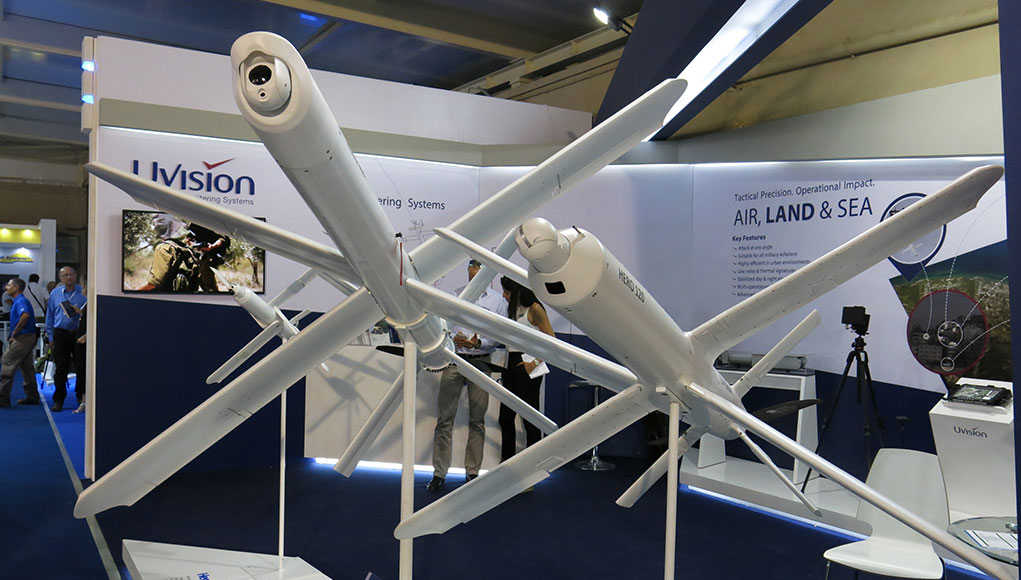
Hero-400EC extended-range loitering system completed a successful flight demonstration last month. “The demonstration we recently carried out for a strategic customer proved the remarkable capabilities of our Hero-400EC system,” Noam Levitt, CEO of UVision said. UVision specializes in the development and manufacturing of loitering weapons, a product line that merges the capabilities of guided weapons and unmanned systems, that have raised increased interest in recently.
The customer that witnessed the demonstration already operates other Hero models and is interested in the 400EC to expand those capabilities for extended intelligence gathering, surveillance and reconnaissance (ISR) as well precision attacks.
Levitt added that UVision is pursuing a number of opportunities for precise, long-range loitering munitions systems. “We are confident that our system, which is a leader in its category with proven high-level capabilities, will be a serious competitor,” Levitt said.
The main advantage of loitering weapon is its capability to carry out pinpoint strikes in complex terrains, such as in urban areas, with minimal collateral damage. In cases where an attack is aborted, the HERO can be recalled and continue loitering, or directed at another target. The use of electrical propulsion means extremely low noise and thermal signature, that, with the high-speed adds to the element of surprise.
The Hero-400EC, an electrically propelled loitering weapon is the latest member of the Hero family of loitering munitions that currently comprise eight systems. The system’s propulsion and aerodynamic configuration deliver high-speed transit and attack and low-speed loitering with much lower acoustic and thermal signatures, thus improving stealth. The unique aerodynamic cruciform design delivers high precision terminal engagement accuracy against static and moving targets or targets in confined urban environments, thus reducing collateral damage.
The Hero-400EC is optimized for the loitering munition role, where the deployable wings allow for any angle of attack and deliver missile-level pinpoint strike capabilities. The guidance and control system enables hit precision with a miss distance of one meter. The Hero-400EC uses a multi-purpose tandem, high explosive warhead that weighs 10kg and is activated by a three-mode fuse that adaptable to different target types, including moving targets, up to main battle tank size, as well as stationary targets including buildings.
The system is 2.1 meters in length, has a wing-span (tip-to-tip) of 2.4 meters, and has a maximum take-off weight of 40kg. The seeker of the 400EC uses a stabilized electro-optic/infrared (EO/uncooled IR) payload specially designed for the loitering munition’s role. The system has two-hour endurance, at a range of 40km-150km, Operational altitude is 18,000ft with loitering/transit speeds of 50-150kts. Automatically controlled with ‘man-in-the-loop’ capability over a two-way, line-of-sight data link, the weapon has a unique strike abort capability that enables automatic dive recovery and re-entry into the loitering mode, mission re-assignment or return to the recovery area using a parachute.
Controlled by a single operator, the Hero-400EC can be either rail-launched or deployed from a multi-tube canister that can be mounted on vehicles, aircraft or vessels, launching the loitering weapons at far away from the target.
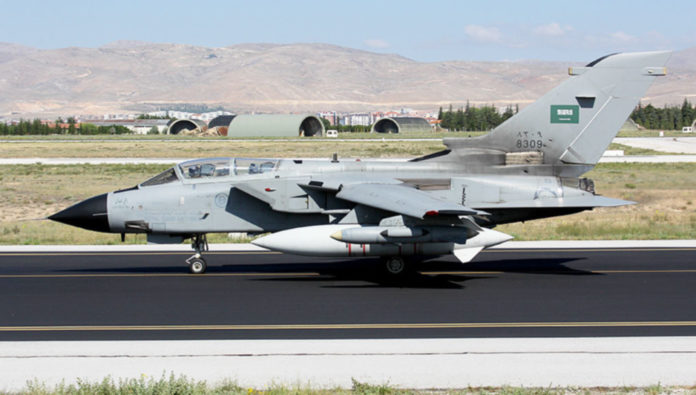
Saudi Tornado IDS at the Turkish Airbase in Konya, 2016. Photo: Brendon Attard
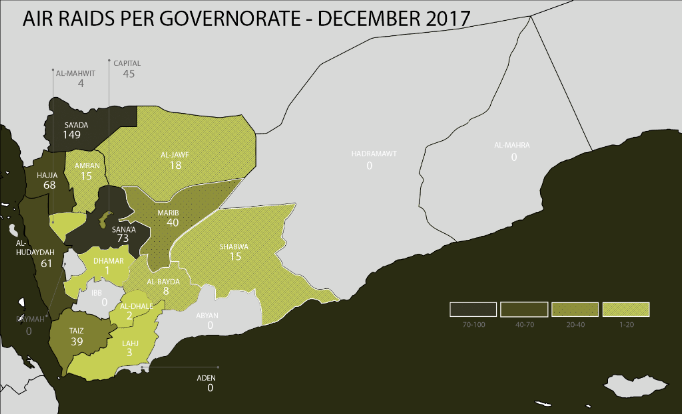
Air Raids in Yemen – By Governorate December 2017
Hostilities between Saudi Arabia and Yemen increased in December 2017, as Saudi-led coalition forces intensified the air campaign on the Iranian-backed Yemeni-Houthi forces. 541 strikes were recorded by the Yemen Data Project (YDP), up by 67% from November 2017 and the highest number of bombings in a single month since January 2017.
Sa’ada remained the most heavily targeted governorate in December 2017 with 149 air raids recorded. The increased activity in the region of Hudaydah coincided with a new ground offensive – launched after the death of former president, Ali Abdullah Saleh, on 4 December – and territorial gains made by coalition-backed, anti-Houthi forces in Hudaydah governorate.
The YDP indicates that as strikes intensified, they became less discriminate, with 195 of attacks (36 percent) targeted non-military sites; and just 14% targeting military sites. According to YDP, the change contrasts with the overall pattern of Coalition air raids in Yemen since the start of the air campaign. From March 2015 to December 2017 almost one-third of all targets (31%) were non-military and 38% military.
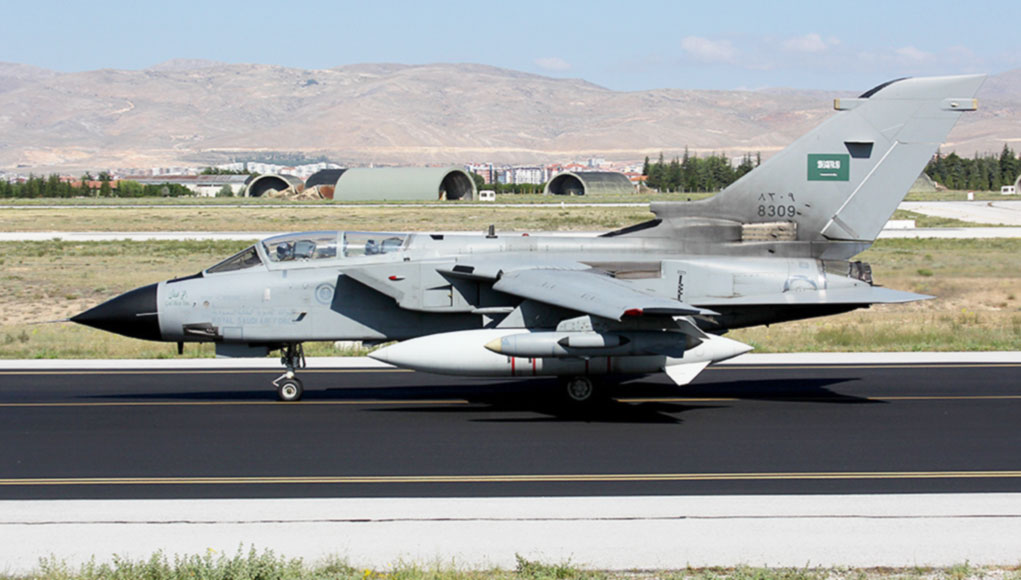
Yemen air defense on Monday morning fired a ground-to-air missile at a Saudi F-15 while it was flying over the capital Sanaa, the Yemeni army said in a statement, that provided no further details. This event came one day after a Saudi Tornado strike fighter crashed when operating in the Sa’ada province, north of Sanaa. A video of the engagement released by the Yemeni forces shows a view of an F-15S Eagle flying opening full afterburner, releasing flares and then intercepted by an unidentified object, likely a surface-to-air missile. Official Saudi sources attributed the loss of the Tornado to a technical failure. A Saudi combat rescue operation that supported the mission rescued the two crewmembers.
Saudi Tornado IDS at the Turkish Airbase in Konya, 2016. Photo: Brendon Attard
Lockheed Martin Skunk Works® and XTEND have achieved a major milestone in JADC2 by integrating the XOS operating system with the MDCX™ autonomy platform. This technical breakthrough enables a single operator to simultaneously command multiple drone classes, eliminating the friction of mission handoffs. From "marsupial" drone deployments to operating in GPS-denied environments, explore how this collaboration is abbreviating the data-to-decision timeline and redefining autonomous mission execution.
As traditional defense primes face mounting competition from agile “neoprimes” such as Anduril, Palantir and Helsing, the balance of innovation is shifting toward software-defined warfare and scalable, dual-use technologies, while global industry consolidation—marked by Boeing’s integration of Spirit AeroSystems and other strategic mergers—signals an intensified race to secure control over the defense technology value chain. Our Defense-Tech weekly report highlights these trends.
In early October 2025, a coordinated wave of unmanned aerial system (UAS) incursions—widely attributed to Russia—targeted critical infrastructure across at least ten European nations. The unprecedented campaign exposed the fragility of Europe’s air defenses...
Executive Summary
The past week (September 18-25, 2025) represents an inflection point where strategic defense concepts have transitioned from doctrine to tangible reality. An analysis of global events reveals four primary, interconnected trends shaping an...
At the 2025 Air, Space & Cyber Conference, U.S. Air Force and Space Force leaders unveiled major updates on next-generation fighters, bombers, unmanned systems, and space initiatives, highlighting both rapid innovation and critical readiness challenges as the services race to outpace global competitors. A short version is available here, with a more detailed version for subscribers.
The Taipei Aerospace & Defense Technology Exhibition (TADTE) 2025 crystallized around four dominant strategic themes that collectively illustrate Taiwan's comprehensive approach to defense modernization amid escalating regional tensions. Based on a detailed report by Pleronix (available upon request). Includes a Podcast discussion on TADTE 2025's highlighting Taiwan's four strategic themes beyond the post's coverage.
Israel’s Iron Beam 450 high-power laser system has completed final testing, marking a major leap in air defense. Developed by Rafael, it offers precise, cost-effective interception of rockets, UAVs, and mortars, and is set for IDF deployment by 2025.