
Saturday, December 20, 2025
More
    Home Blog Page 56

    Pyongyang Tested its Longest Arm Yet – Hwasong 12 Ballistic Missile

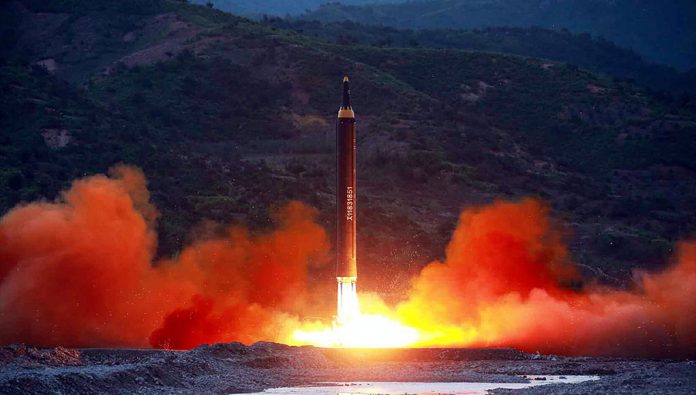
    Hwasong 12 IRBM launched by North Korea on May 14, 2017

    North Korea’s latest successful missile test represents a new level of performance never before seen from a North Korean missile. Launched at an angle of 85 degrees, the missile reached an altitude of 2,111 km before fuel burnout. Turned earthward, the reentry vehicle turned earthward, accelerating to very high velocity to hit a designated target area in the sea of Japan, about 787 km from the launch point. The flight crossed the Korean peninsula and spanned over 26 minutes from ignition to impact.

    Theoretically, if used in a Minimum Energy Trajectory (MET) such a missile would enable North Korean to strike targets as far as 4,500 km away – all the U.S. military base in Guam, Micronesia or the Russian Kuril islands near Alaska, but far from Hawaii or Alaska – the nearest US territories.

    Due to the long range demonstrated in this test, the Hwaosng 12 missile (also known as KN-17) does not put South Korea or Japan at risk, but appears to have demonstrated an extended strategic reach, with an intermediate-range ballistic missile (IRBM) that might enable them to reliably strike the US base at Guam (3,500 km away).

    North Korean leader Kim Jong Un inspects a miniaturized nuclear warhead designed for ballistic missiles. Un stands in front of a KN08 ballistic missile, that is likely to carry the new, thermo-nuclear warhead, The undated photo was released today by the North Korean Central News Agency (KCNA).

    As a single stage liquid propulsion system, Hwasong 12 may represent a substantial advance to developing an indigenous North Korean intercontinental ballistic missile (ICBM). This thrust is part of a comprehensive, strategic missile development effort that has spun over the past decade and included the development and testing of several platforms, propulsion systems, reentry vehicles and warheads, including nuclear ones.

    In dozens of flight tests performed in recent years North Korean missile scientists demonstrated high level of skills, proficiency and persistence, despite major challenges they faced in obtaining key materials, engineering solutions, initially through reverse engineering and them, through continuous improvement in step-by-step trial and error, conducted under the watching eye of supreme ruler Kim Jong Un.
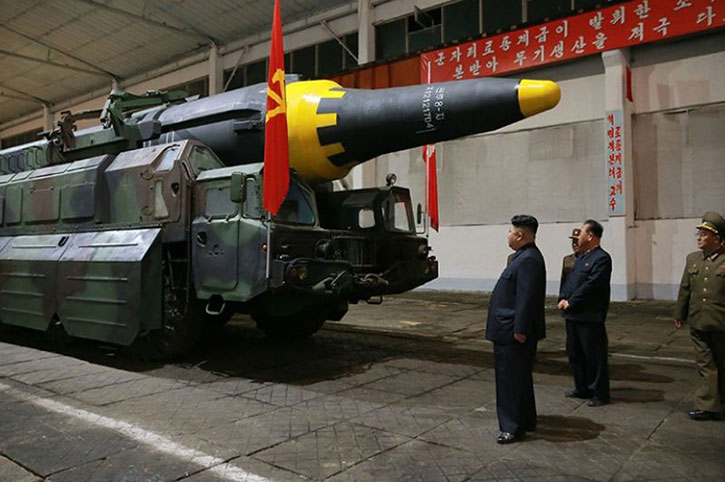
    North Korean leader Kim Jong Un inspects the Hwasong 12 missile before the missile was moved on the wheeled launcher to the launch site in Western North Korea.

    Pyongyang has successfully demonstrated the capability to launch different missiles, designed for deployment from fixed land based, relocatable and mobile wheeled and tracked launchers, as well as submarine-launched missiles. Different propulsion systems were also demonstrated successfully, including multi-stage liquid and solid propulsions.

    The new IRBM was unveiled during last month’s parade. It looks very much like a small, two-stage version of the three-stage KN-08 ICBM prototype displayed in public in 2012. The KN-17 was displayed on a mobile launcher previously used for the Hwasong 10 “Musudan” intermediate-range ballistic missile.

    While this new missile appears to share a common heritage with the KN-08 ICBM, it isn’t simply a KN-08 with the third stage removed. The first two stages also appear to be reduced in scale. Unfortunately, we have little detail about the missile’s design. We do not, for example, know if it uses the same twin-engine propulsion system as the first stage of the KN-08. But the more important question is, what is the new missile for?

    One possibility is that it is meant to replace the Musudan IRBM which. represents an attempt to stretch a Cold War vintage Russian missile to reach the US base at Guam, some 3,500 km from North Korean launch sites. But the Musudan has proven unreliable in testing, with only one success in at least six attempts, and its performance is marginal for reaching Guam. The Musudan may have been the best North Korea could manage ten years ago, but that level of performance really calls for a two-stage missile. Now, it appears that they have one. But existing North Korean missiles are already capable of reaching targets anywhere in South Korea or Japan, and extending that reach to perhaps 4,500 kilometers won’t greatly change the strategic balance – aside from Guam, there aren’t really any interesting targets in that range.
     

    Visit at Ground Zero – From the MOAB Attack Site in Afghanistan

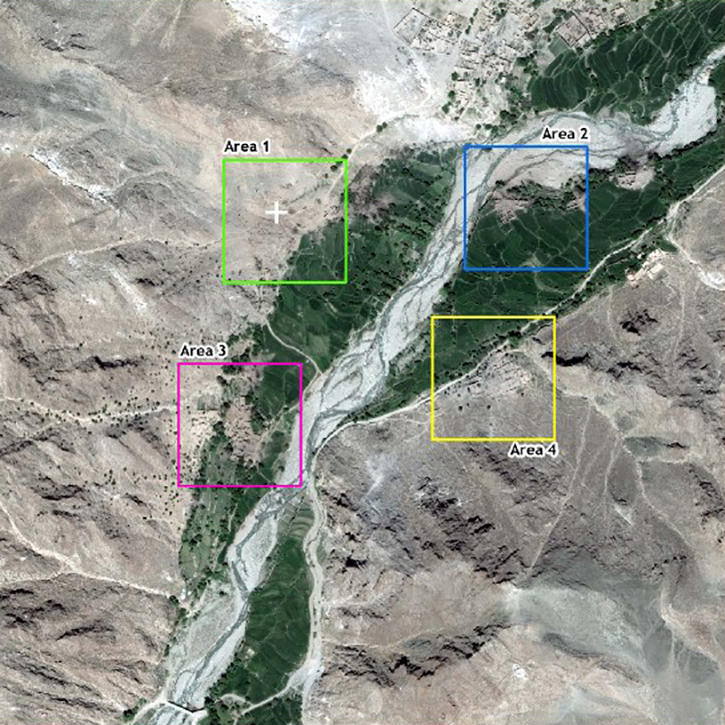
    Overview of the strike area, where the image is post-strike, dated 14th April 2017. Image copyright Digital Globe via Alcis

    There has been intense media coverage of the US Military’s Massive Ordnance Air Blast (MOAB) strike on April 13, 2017 in Nangarhar, Afghanistan. On the 15th April, Afghanistan’s defense ministry reported the death of 94 militants including 4 major commanders and that no civilians had been killed in the strike. Two civilian deaths were also reported. As ISIS was reluctant to report the actual damage on site, no evidence surfaced from Nangarhar for weeks, until recently, despite nearly 100 fatalities Daesh suffered in the attack.

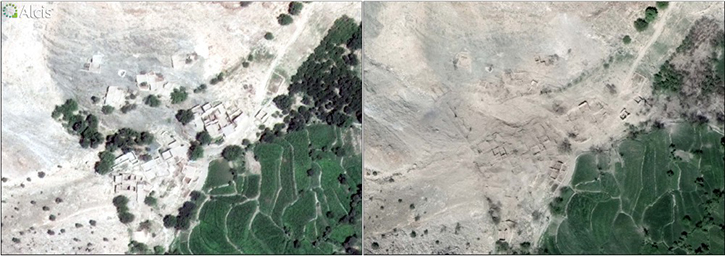
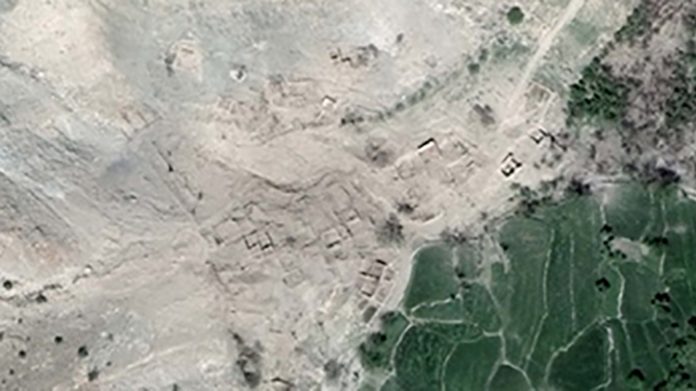
    Area 1. Pre and post-strike imagery showing the extensive destruction of buildings and trees. Images copyright Digital Globe via Alcis

    Satellite imagery obtained 15 hours after the attack provided some data for assessment of the damage, as Afghan authorities access to the site has been restricted by the US Military. The first video evidence from the site was recently released by theAfghan police sheds some light on the devastation that resulted from the GBU-43/B MOA) attack.

    The overall picture of destruction is varied. In the immediate area around the impact point, (marked as Area 1 in the satellite image), no buildings or structures remain standing and many of the trees and vegetation are destroyed. Analysis of the point of impact can determine little in the way of a crater, despite some media reports suggesting that the crater left by the blast would be more than 300 meters wide. Areas marked 2, 3 and 4 in the image exhibit signs of destruction to buildings, with some roofs destroyed, but large numbers of buildings remain apparently undamaged.

    Post-strike satellite imagery shows that although the blast did not create a significant crater on the ground, the destruction was absolute of approximately 20 compounds and trees, 650 meters to the southwest of the center of the village of Asadkhel and close to the villages of Tangai and Lansai Ahmad and 3 kilometers from Shadal Bazaar. There are signs of destruction to agriculture and trees in the immediate vicinity of the blast. Damage to compounds and buildings can be observed further from the blast site but it is not clear whether this damage was caused by this particular attack.

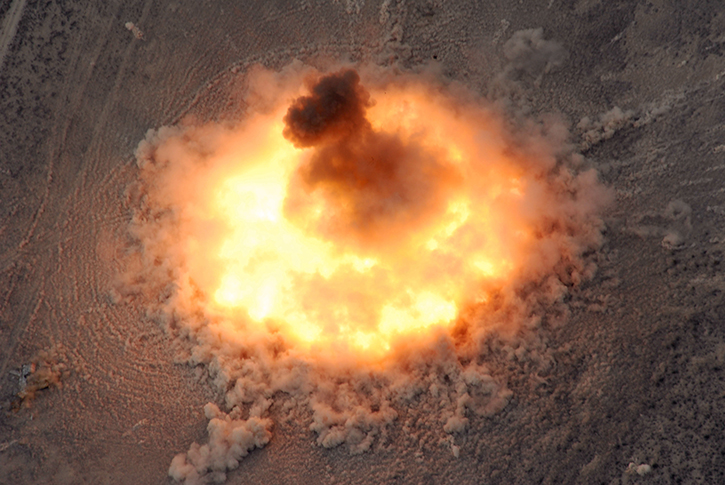
    It is understood that the MOAB weapon explodes approximately six feet above the ground and propels its flame and shock waves horizontally, rather than vertically. The effect is to knock over trees, buildings and other infrastructure, collapse cave entrances and underground facilities and kill, maim or demoralize enemy combatants. Reports indicate that the blast has an effective range of approximately one kilometer. The attack was aimed to destroy tunnels and caves used by Daesh Khorasan militants that operate in the area.

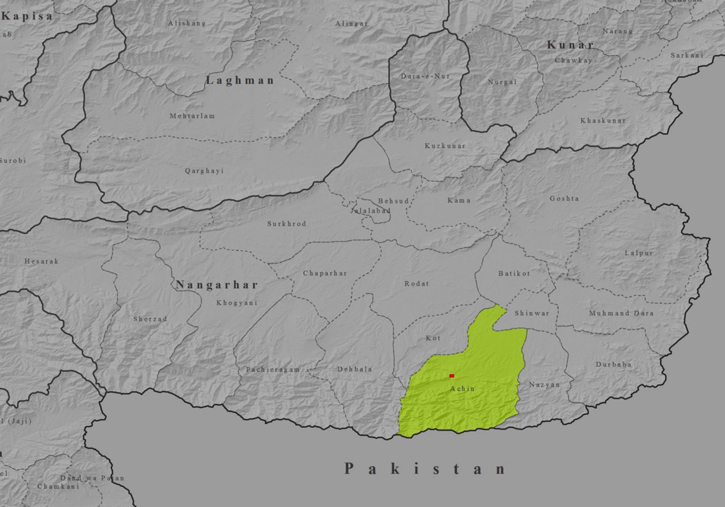
    Map showing location of MOAB strike within Achin district, Nangarhar province. Source: Alcis

    Aerial Surveillance to Boost Security, Fight Drug Lords in Mexico

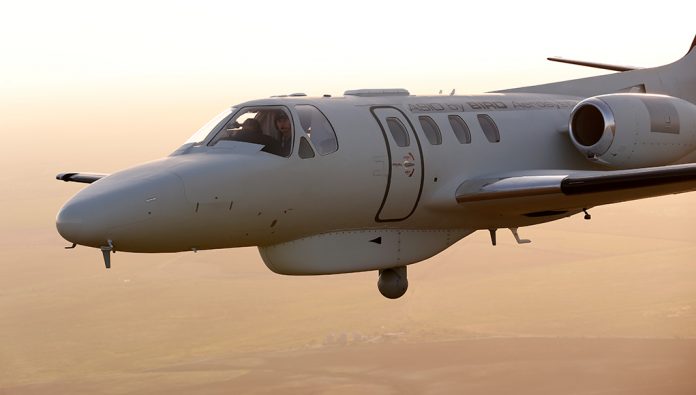
    Carrying radar, signals intelligence and electro-optics, the ISR patrols can cover large areas from standoff range, as they conduct their patrols at altitudes of 30,000 ft., virtually hidden from detection from hostiles the ground. Photo: Bird Aerosystems

    The Mexican military and security forces are fielding an integrated network of intelligence gathering, surveillance and response capabilities designed to bolster homeland security and combat narco-trafficking. The heart of the system – an Airborne Surveillance Intelligence and Observation (ASIO) system is unveiled and demonstrated today at Mexico’s Aerospace Exhibition FAMEX 2017 by the system developer, the Israeli company Bird Aerosystems.

    ASIO was selected by the Mexicans as a manned, airborne intelligence gathering and surveillance system for homeland security, favored over an unmanned platform solution. The system includes surveillance kits installed on various aircraft and land vehicles, including several specially modified Cessna Citation business jets, Bell 407ASIO helicopters and response teams operating on the ground.

    These special mission aircraft are part of a larger multi-layered security network designed to protect strategic assets, sites, and infrastructure across the country. Unlike slow and more complex unmanned aerial vehicles (UAV) systems, the Citation jets are more efficient in covering large areas in different regions. These patrols can cover large areas from standoff range, as they conduct their patrols at altitudes of 30,000 ft., virtually hidden from detection from hostiles the ground.

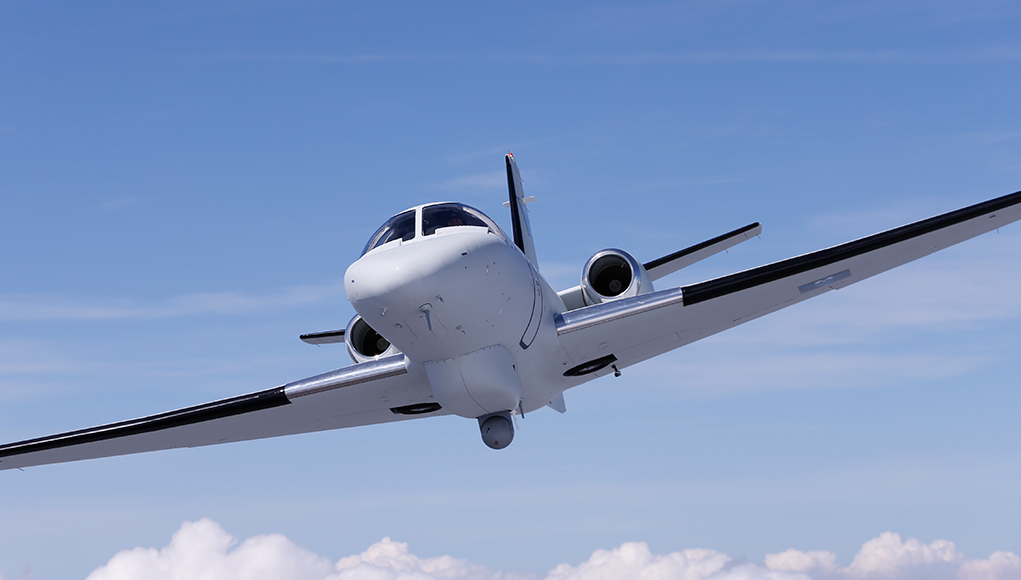
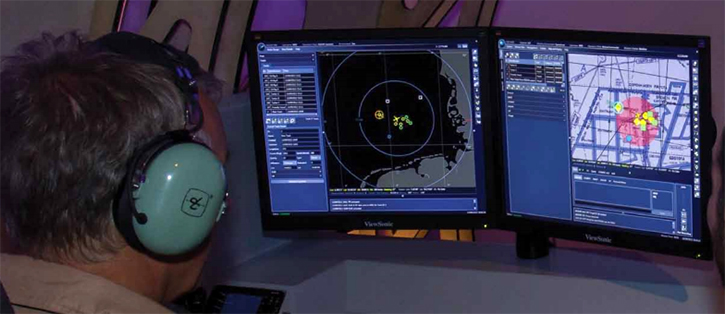
    The primary elements operated by the system are special-mission aircraft equipped with Bird’s ASIO customized sensor suite. The sensors are installed in a pod attached to the belly of specially modified Cessna Citation business jets that were converted by Bird into a special mission aircraft. The conversion also included installation of uprated engines, increasing fuel capacity for longer endurance and upgrading of some of the avionic instrumentation into a missionized glass cockpit, installation of antennae and the sensor pod. The cabin includes two workstations for the creation of an air- ground picture and mission control. The user interface system developed by Bird provides common control tools for radar (for the Mexican project, the customer selected Selex 5000 radar). A retractable electro-optical and communications and signals intelligence (COMINT/SIGINT) are also part of the suite. All are controlled from common workstations, enabling efficient and intuitive operation by a small team.

    The ASIO solution can be installed on a wide range of aircraft and is a complete yet highly customizable airborne operational system that addresses diverse operational requirements. The Mexican solution uses a specially modified Cessna Citation business jet. Photo: Bird Aerosystems
    The live demonstration at FAMEX will present a fully operational scenario in which all the operating teams share a unified overview and real-time situational awareness, significantly enhancing security of borders, strategic sites and infrastructure. Photo: Bird Aerosystems

    The ASIO solution can be installed on a wide range of aircraft and is a complete yet highly customizable airborne operational system that addresses diverse operational requirements. Integrated with BIRD’s unique Mission Management System and using the latest surveillance and monitoring sensors. “By providing all team members with a unified situational awareness, BIRD’s new ASIO solution ensures that the entire team, from field commanders to decision makers, has an accurate and comprehensive situational overview as well as all the real-time information they need in order to make decisions.” Ronen Factor, Co-Chief Executive Officer, and Founder said.

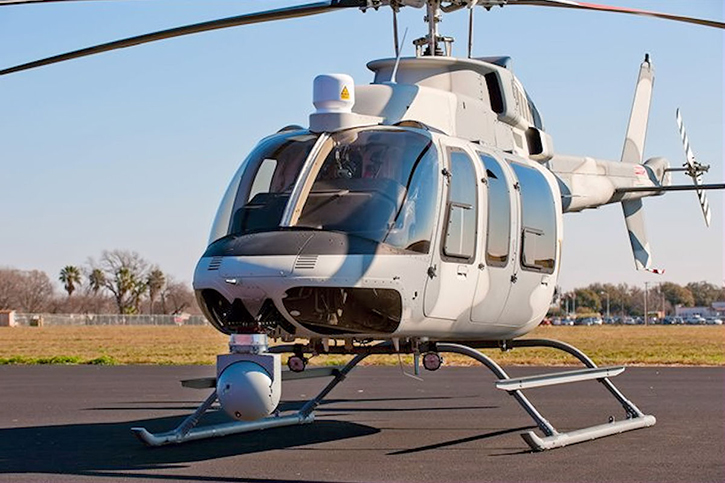
    The Bell 407ASIO helicopters are fitted with the special mission kits that includes EO payloads, C4I console and satellite communications terminal. Photo: Bird Aerosystems
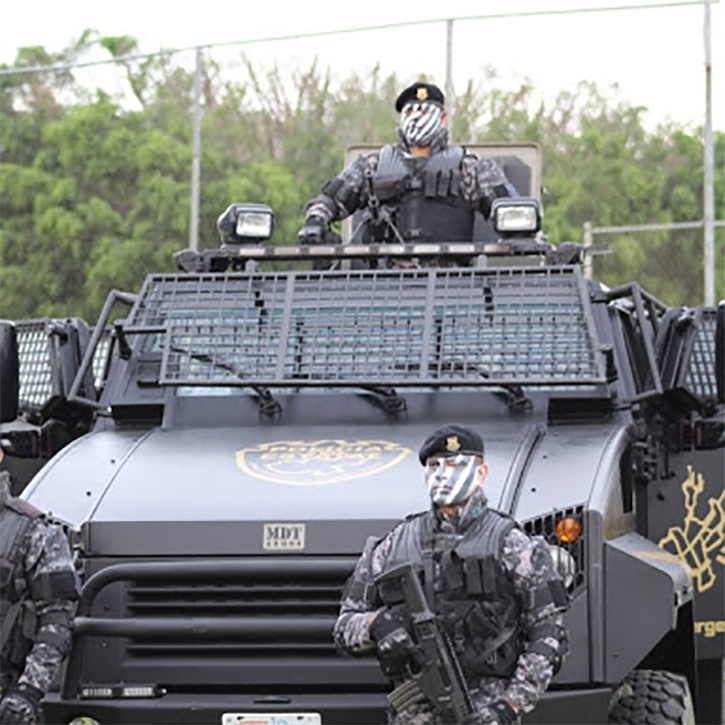
    Mexico has purchased the MDT Tiger protected vehicle to mobilize rapid reaction units as part of the nationwide homeland security force. Photo via MDT

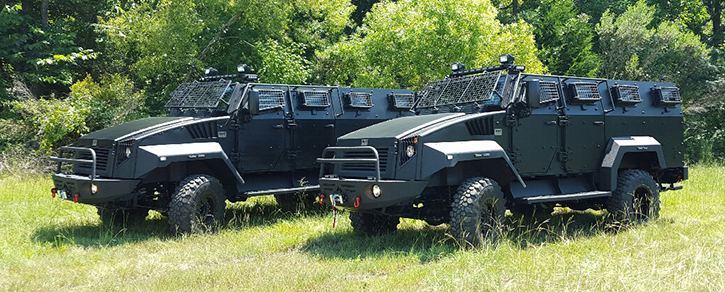
    The second element in the network is a fleet of ‘ASIO helicopters’ based on the Mexican Air Force’ Bell 407 GXP types, fitted with the special mission kits). These helicopters are fitted with EO payloads, C4I console and satellite communications terminal enabling the helicopter to seamlessly communicate throughout the mission using specially designed satellite communications (SATCOM) terminal (helicopters often support limited bandwidth due to interference caused by the rotor) limited with the network and ground intervention vehicles, all sharing a common network for coordinated operation. elements on the ground these aircraft are practically hidden from ground o remain hidden from borne sensor Suspected activities detected by these airborne sensor platforms are used to scramble air patrols of helicopters, carrying electro-optical payloads for evidence collection. They can also be weaponized to support ground operations. Finally, special intervention teams are also part of the system, dispatched to deal with specific events using MDT Tiger Armored Vehicles that are also fitted with a connected C4I console.

    The Tiger armor protected vehicle from MDT. Photo: MDT

    British F-35B to Carry Meteor Missiles from 2024

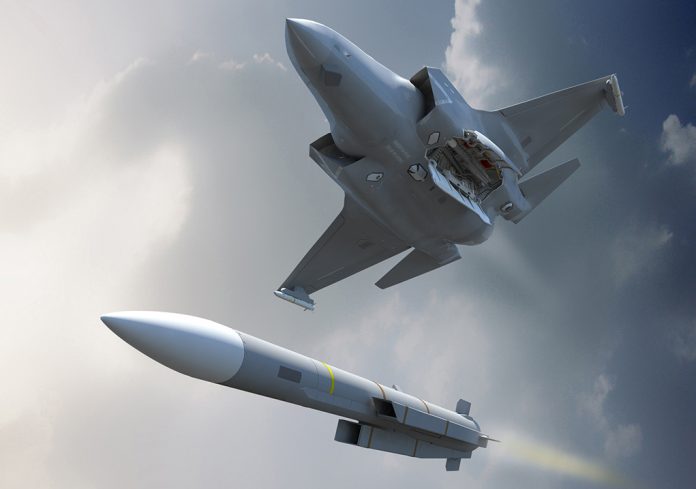
    Meteor to be carried by the F-35 from 2024. Note the clipped tail fins required for internal carriage. Illustration: MBDA

    The United Kingdom is preparing its F-35 Lightning II to carry and operate the Meteor Beyond Visual Range Air-to-Air Missile (BVRAAM) as its principal long-range air/air weapon.

    The UK MOD awarded today a £41 million contract to the missile developer MBDA for the integration of the missile on the new aircraft. The Meteor will provide the Royal Air Force and Royal Navy with one of the most advanced air/air missile of its class, that can engage with targets moving at very high speed and at a very long range. The Meteor will enter service on Typhoon with the RAF in 2018 and the F-35B from 2024 and will be used on a range of missions including protecting the Queen Elizabeth Class Carriers.
    Each F-35B will be able to carry two Meteor missiles and two air/ground weapons in the internal weapons bay for missions requiring stealth capabilities (first day of conflict scenario). In addition, in non-stealth modes, the aircraft will be able to carry two missiles under each of the main underwing hardpoint (the F-35 has four such hardpoints). The RAF F-35Bs will also be able to carry ASRAAM air/air missiles on the outer wing hardpoint.

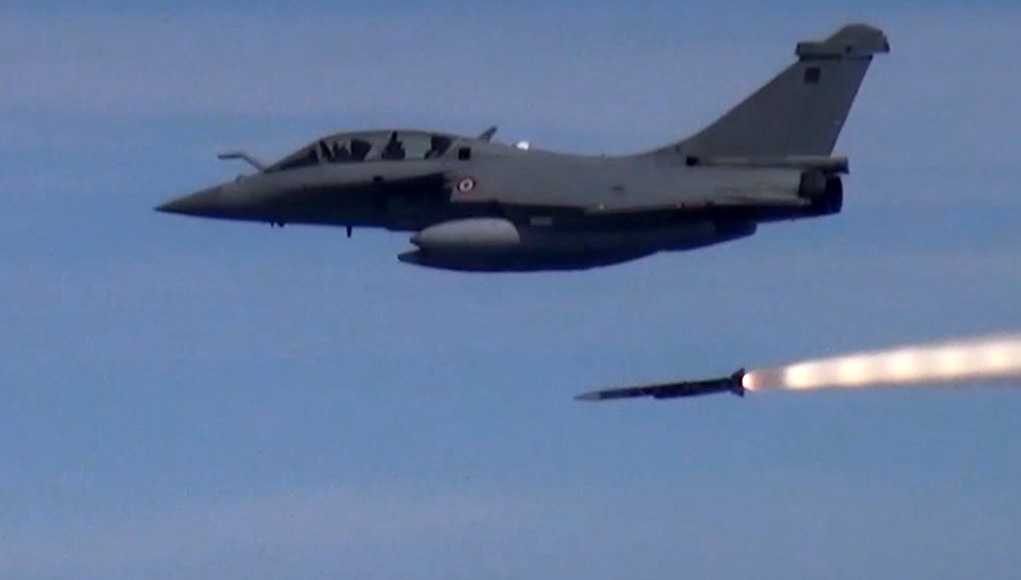
    France has performed the first launch and flight test of the ‘Meteor’ beyond visual range air-to-air missile from a Rafale combat jet. The missile is expected to be fielded in 2018 with the first batch of upgraded Rafale F3-R, which will also be fitted with RBE2 AESA radar and advanced Infrared Search Track system, enabling long-range engagement of hostile targets. Photo: DGA

    The Meteor missile does not fit the F-35B internal weapons bay since its tail fins are too large to fit and therefore requires some adjustments. To get the missile inside the weapon bay MBDA plans to equip the Meteor missiles destined for the F-35 with clipped tail fins that will be clipped in height and lengthened, to retain the wing area and thus maintain the weapon’s kinematic performance. The contract awarded today helps de-risk the integration effort and includes the mixture of test assets, engineering and manufacturing preparation work needed to support the missile’s compatibility and use from the F-35. The test assets included in the program the engineering of change kits to be required to prepare the UK’s common Meteor stockpile for both Typhoon and Lightning. It also covers the production of test missiles required for an aircraft integration program.

    Today’s contract follows on from the successful firing trials of MBDA’s Advanced Short-Range Air-to-Air Missile (ASRAAM) from the F-35 earlier this year. ASRAAM is being integrated onto the F-35 as part of the aircraft’s Block 3 System Development and Demonstration program.

    The Meteor will be fielded with the F-35 as part of the Block 4 upgrade expected in the 2020s. This block will also fit to operate MBDA’s Selective Precision Effects at Range (SPEAR) precision surface attack missile. SPEAR and Meteor are advanced weapons that complement the ‘5th gen’ F-35, bringing networked capability with stand-off – both weapons are key elements of the UK’s carrier strike capability in the future.

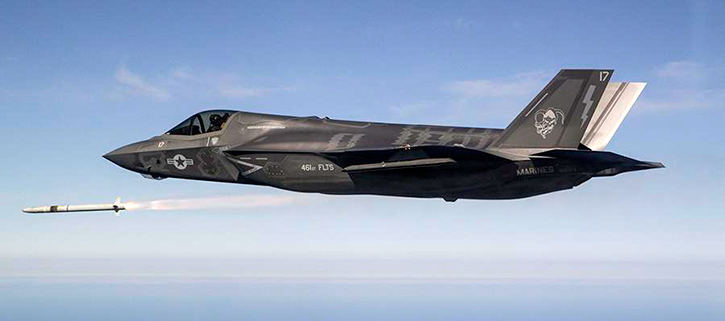
    The F-35B launching an ASRAAM missiles from the outboard pylon. ASRAAM, designated AIM-132 will be used by the British Royal Air Force and Royal Australian Air Force. The trials are the first time a British-designed missile has been fired from the F-35 Joint Strike Fighter, and the first time any non-US missile has been fired from the aircraft.

    Metro Skyways’ Autonomous Flying Car Could Fly in Five Years

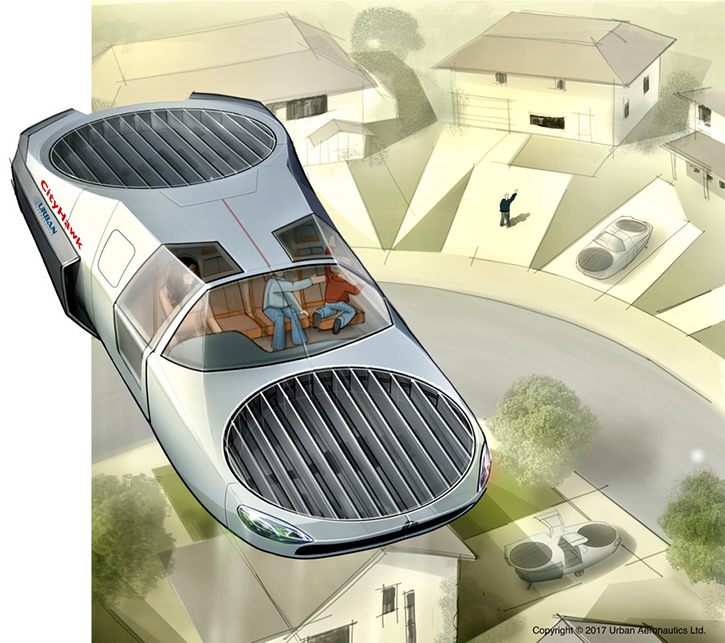
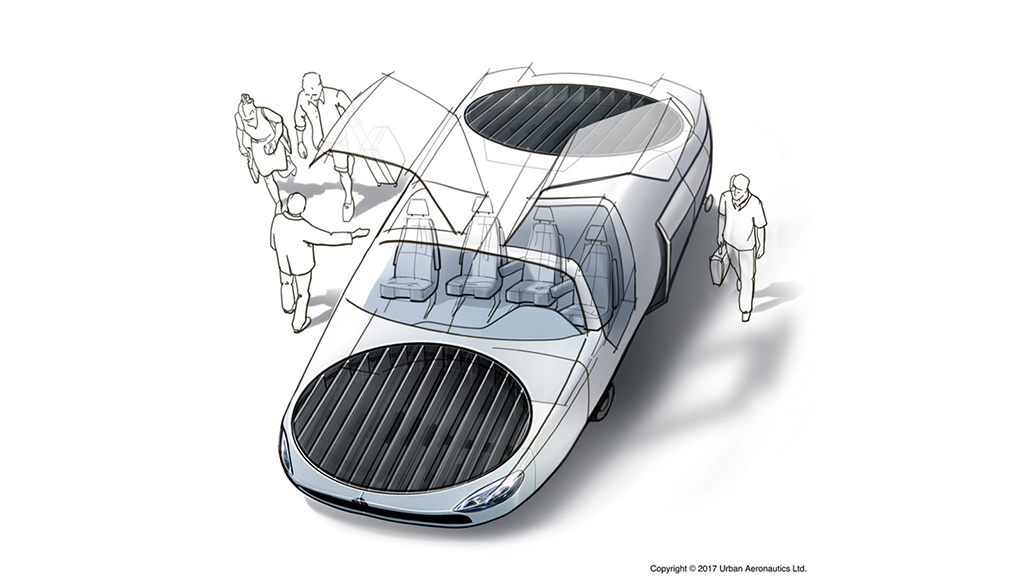
    CityHawk - by Metro Skyways Ltd. Illustration: Urban Aeronautics
    Artist rendering of the futuristic CityHawk VTOL car from Urban Aeronautics’ Metro Skyways.

    Metro Skyways Ltd. (MSL), a subsidiary of Israel’s Urban Aeronautics company is set to embark on a five-year development of the CityHawk – an optionally-autonomous flying car. Urban Aeronautics’ CEO Rafi Yoeli told Defense-Update his company is seeking to fund the current flight demonstrator phase, or the entire five-year program, that will result in the completion design, development, and testing of a VTOL aircraft built exclusively for civilian use in the personal aerial vehicle, Air-Taxi and Air-Rescue sectors.

    The CityHawk design will fully comply with civil aviation safety certification standards for land and air mobility. MSL plans to complete the development in five years. The vehicle will initially be piloted and powered by jet fuel, but for the long run, it is designed from the start for robotic operation and propulsion by liquid hydrogen. The vehicle will be able to carry 700 bars compressed hydrogen, once such options become commercially feasible. One of the safety features on board will be a rocket-deployed parachute, to bring the vehicle down safely should an in-flight critical event occurs.

    The four-passenger, Vertical-Takeoff, and Landing (VTOL), the flying vehicle will be based on Urban Aeronautics’ internal rotor, Fancraft technology that has been proven in the Cormorant unmanned aerial vehicle that has already logged more than 200 flight hours in testing.

    Subscribe to read the full report

    CityHawk – artist concept – by Metro Skyways – Urban Aeronautics

    MOAB Strike in Nangarhar Kills at Least 36 ISIS Operatives

    The U.S. forces in Afghanistan conducted yesterday a strike on a tunnel complex built by the Islamic State’s Khorasan (ISIS-K) terrorist organization using one of the most devastating conventional weapon in service – the Massive Ordnance Air-Blast (MOAB). The target located in Achin district, Nangarhar province, Afghanistan was part of a remotely located operational complex that supported the terrorist organization’s operations against government and US forces in the country.

    The GBU-43 MOAB is larger, smarter and more powerful than the unguided BLU-82 Daisy Cutter used during the Vietnam War, whose devastating blast effect can be seen above. Photo: US Air Force by Capt. Patrick Nichols
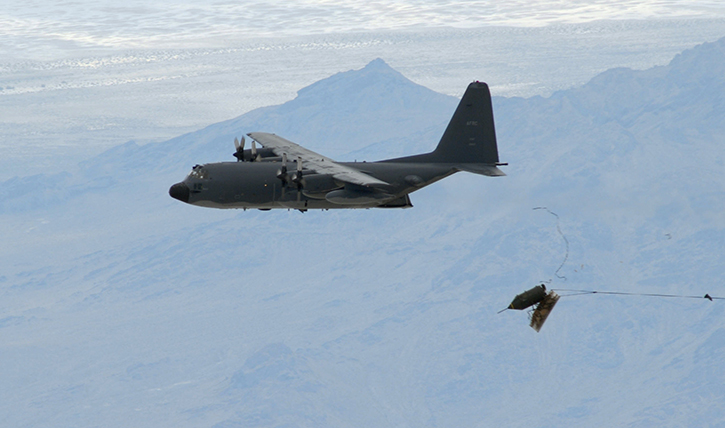
    MC-130E drops the last BLU-82 Daisy Cutter in 2008. Photo: US Air Force by Capt. Patrick Nichols

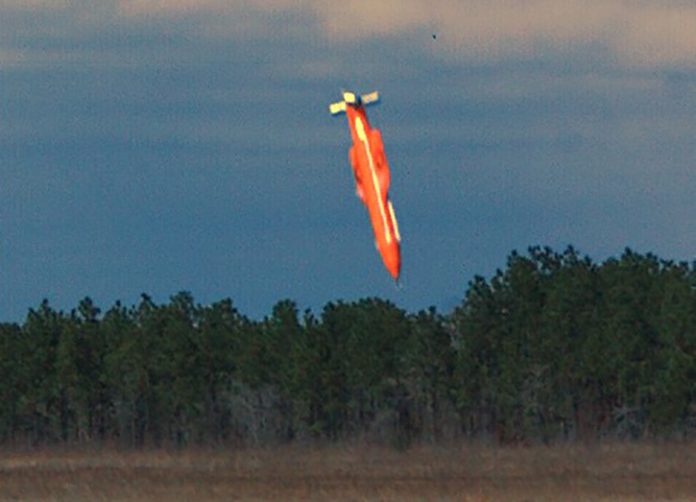
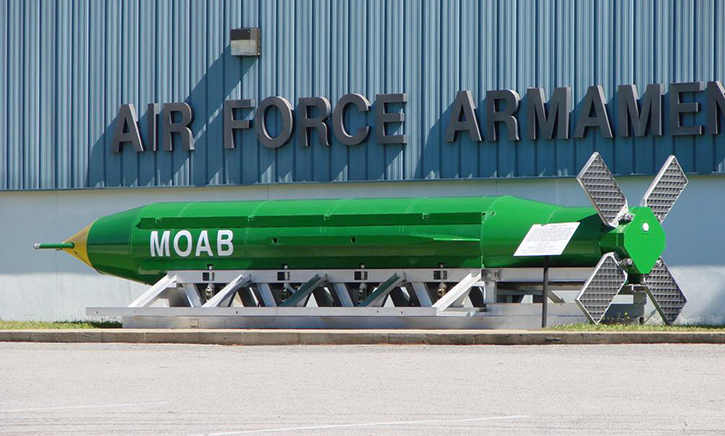
    The Khorasan group is based in the Afghanistan-Pakistan region and is composed primarily of former members of Tehrik-e Taliban Pakistan and the Afghan Taliban. The US estimates 600 to 800 IS fighters are currently present in Afghanistan, mostly in Nangarhar. The strike used a GBU-43 bomb dropped from an Air-Force Special-Operations Command (AFSOC) MC-130 aircraft. The GBU-43 is an unpowered 21,000 lb. (9.5 ton) GPS-guided weapon designed to explode above target and create a devastating shockwave by setting off a large fuel-air explosive warhead. MOAB was made to replace the unguided 15,000-pound (6.8 ton) BLU-82 Daisy Cutter weapon that was used by the Air Force in Vietnam and early on in Afghanistan. The MOAB was developed in only nine weeks in 2003 to be available for Operation Iraqi Freedom but it was never used during that war.

    The 30-foot (9.14 meter) long bomb has a diameter of 40.5 inches (102 cm). It has stabilizing fins and inertial gyro for pitch and roll control. The bomb is too large to be carried by fighter planes or bombers, and, therefore, is loaded into the cargo bay of C-130 Hercules, where the bomb is sat in a cradle on an airdrop platform. When the aircraft reaches its target the weapon and cradle are pulled off the plane at a high altitude by a drogue parachute.

    Once in the air, the weapon releases from the platform, the grid fins opened to stabilize it and guide it to its target. Unlike penetration bombs designed to destroy bunkers and fortifications, MOAB uses relatively thin aluminum casing designed to burst on a surface, not penetrate it. The BLU-120/B warhead weighs 18,700 pounds (8.482 ton) and contains TNT and aluminum.

    According to Central Command announcement, the strike was designed to minimize the risk to Afghan and U.S. Forces conducting clearing operations in the area while maximizing the destruction of ISIS-K fighters and facilities. Media reports said 36 ISIS operatives were killed in the attack.

    “As ISIS-K’s losses have mounted, they are using IEDs, bunkers, and tunnels to thicken their defense,” said General John W. Nicholson, Commander, U.S. Forces – Afghanistan. “This is the right munition to reduce these obstacles and maintain the momentum of our offensive against ISIS-K.”

    The U.S. Central Command said the forces took every precaution to avoid civilian casualties with this strike.

    US Air Force F-35A Deploy to Europe

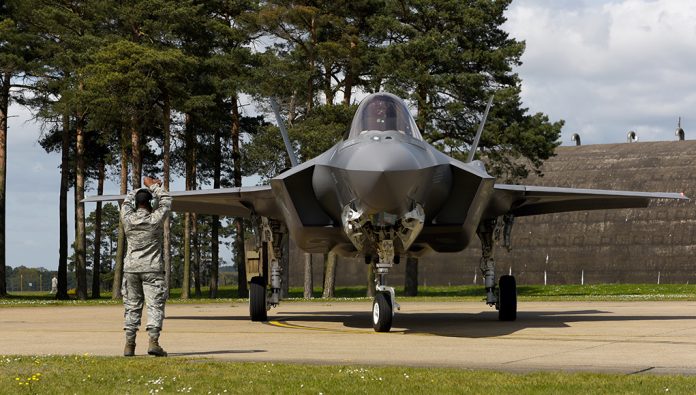
    An F-35 Lightning II from the 34th Fighter Squadron at Hill Air Force Base, Utah, taxis to a hangar at Royal Air Force Lakenheath, England, April 15, 2017. Photo: U.S. Air Force by Airman 1st Class John A. Crawford.

    The Air Force deployed a small number of F-35A Lightning II joint strike fighter aircraft this weekend on a long-planned training deployment to Europe, Pentagon officials announced today. The aircraft are part of the 34th Fighter Squadron, 388th Fighter Wing, and the Air Force Reserve’s 466th Fighter Squadron, 419th Fighter Wing, both stationed at Hill Air Force Base, Utah. The aircraft are scheduled to conduct training with other U.S. and NATO aircraft based in Europe for several weeks, as part of the European Reassurance Initiative (ERI). Though apparently scheduled months in advance, the deployment was announced as relations between Washington and Moscow have been described as “at an all-time low” by US President Donald Trump.

    ERI is a program initiated in 2014 by the President Barack Obama to increase U.S. presence in Europe, in face of the growing Russian threat that followed the invasion of Crimea. Originally the initiative was limited to one year but continued through 2016. Originally the initiative was funded by $1 billion in 2014 that was reduced to $789 million in 2016. The new administration dramatically increased ERI appropriations to $3.4 billion in 2017.

    The presence of the Fifth Generation stealth fighters will enable the US Air Force and NATO at large to better penetrate denied airspaces protected by advanced air defense systems and operate against advanced, Russian-operated fighters. Since the F-35A was announced ‘combat ready’ in August 2016 the 34th Fighter Squadron at the Hill Air Force Base in Utah carried out a number of aerial exercises, demonstrating impressive performance in air/air and air/ground missions.

    F-35 Lightning II aircraft from the 34th Fighter Squadron at Hill Air Force Base, Utah, land at Royal Air Force Lakenheath, England, April 15, 2017. Photo: USAF by Airman 1st Class John Crawford.

    The aircraft destined to Europe will dispatch from Hill Air Force Base, Utah, USA to Royal Air Force Lakenheath Airbase in England. The aircraft arrived today April 15, 2017, marked the aircraft’s first overseas training deployment of the aircraft in Europe. “RAF Lakenheath will be the first overseas beddown location for the F-35A, this deployment allows our pilots and maintainers to learn more about the European operating environment and will improve our interoperability with partners in the region,” said Gen. Tod D. Wolters, U.S. Air Forces in Europe, Air Forces Africa commander.

    The transatlantic flight for this training deployment was supported by Air Mobility Command and the 100th Air Refueling Wing, RAF Mildenhall, England. Multiple air refueling aircraft from four different bases offloaded more than 400,000 pounds of fuel during the “tanker bridge” from the United States to Europe. Additionally, C-17 and C-5 aircraft moved airlift support, moving maintenance equipment and personnel.

    In a statement announcing the deployment, officials said the F-35A provides unprecedented global precision attack capability against current and emerging threats while complementing the Air Force’s air superiority fleet. “The F-35A is a multi-role precision attack fighter with unmatched lethality, survivability, and interoperability,” the statement said.

    The Marine Corps have already deployed the F-35B fighter aircraft to Japan but the US Air Force has limited the deployment of the aircraft to the Continental USA. Among the foreign air forces currently operating the aircraft are Australia, Israel, and Italy. This first deployment of Lightning II aircraft to Europe will enable the Air Force to refine the requirements for eventually basing the F-35A in Europe, which is scheduled to receive the aircraft in the early 2020s.

    Long Live the Fighting Falcon!

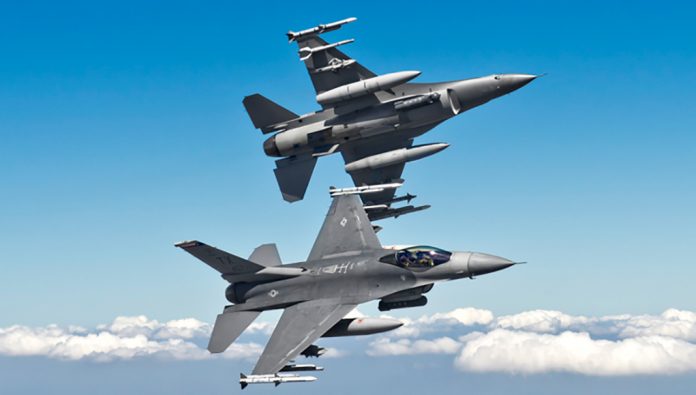
    A formation of F-16C Fighting Falcons from the U.S. Air Force's 457th Fighter Squadron. Photo: Lockheed Martin, by Liz Kaszynski.

    The U.S. Air Force authorized extending the service life of the Lockheed Martin F-16’s designed service life to 12,000 Equivalent Flight Hours — far beyond the aircraft’s original design service life of 8,000 hours. As a result, Air Forces operating the F-16 Blocks 42 through 50 could safely operate their aircraft to 2048 and beyond. The Air Force and Lockheed Martin also reduced projected service life costs for the Block 40-52 fleet.

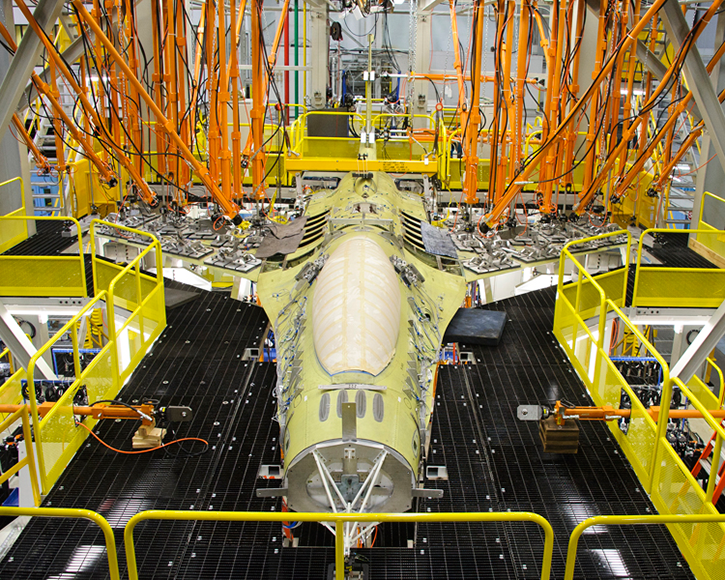
    “This accomplishment is the result of more than seven years of test, development, design, analysis and partnership between the U.S. Air Force and Lockheed Martin,” said Susan Ouzts, vice president of Lockheed Martin’s F-16 program. The announcement followed a thorough evaluation of the F-16 that went through structural testing of Service Life Extension Program (SLEP) structural modifications carried out at Lockheed Martin’s Full Scale Durability Test facility in Fort Worth, Texas.

    Through these tests an F-16C Block 50 was subjected to 32 rounds of comprehensive stress tests, representing the equivalent loads of 27,713 flight hours. The airframe was then subjected to several maximum-load conditions to demonstrate that the airframe still had sufficient strength to operate within its full operational flight envelope. Following this exhaustive test the engineers took the airframe apart and inspected each part for fractions. This test data helped determine the definitive, safe flight hour limit for the F-16, beyond its original design service life of 8,000 flight hours.

    An F-16 undergoes durability testing in Lockheed Martin’s Full Scale Durability Test facility in Fort Worth, Texas. Photo: Lockheed Martin .
    “Combined with F-16 avionics modernization programs like the F-16V, SLEP modifications demonstrate that the Fighting Falcon remains a highly capable and affordable 4th Generation option for the U.S. Air Force and international F-16 customers.” Ouzts added.

    Validation of the extended flight hour limit directly supports the SLEP goal of extending the service life of up to 300 F-16C/D Block 40-52 aircraft operated by the U.S. Air Combat Command. SLEP and related avionics upgrades to the Air Force’s F-16C/D fleet can safely and effectively augment the current fighter force structure as U.S. and allied combat air fleets recapitalize with F-35 Lightning IIs.

    A second phase, or Part II, of the F-16 SLEP airworthiness process continues with the request for Military Type Certificate (MTC), which will be submitted to the Air Force’s Technical Airworthiness Authority in the coming months. Part II seeks to validate further extending the F-16’s operational life based on final service life analysis from extended durability testing.

    Earlier this month, Air Force officials disclosed a budget planning option that would phase out over 200 F-15C/D in the 2020s, two decades before their planned retirement. Air Force planners consider replacing them with F-16s upgraded for better survivability in air-to-air combat. The younger fleet of F-15E Strike Eagles would remain intact. Regardless of the future decision, the Air Force plans to keep the F-15C in service at least until 2020.

    Global Hawk to Provide Target Fix, Track & Assessment Using a New Broad Area Sensor

    Northrop Grumman Begins Flight Tests of the MS-177 Multi-Spectral Sensor on RQ-4 Global Hawk Photo: Northrop Grumman

    Northrop Grumman and United Technologies Corp. have recently completed the first flight test of the MS-177 long-range, multi-spectral imaging (MSI) sensor on the RQ-4B Global Hawk Unmanned Aircraft System (UAS). The MS-177 sensor is designed to provide capabilities to not only “find” targets using broad area search and different sensing technologies, but to also fix, track, and assess targets through its agility and multiple sensing modalities.

    The test was held on February 8 at Northrop Grumman’s Palmdale, California, facility. The flight tests marked the first time the sensor has been flown on a high altitude long-range autonomous aircraft and extend the mission capabilities of the system. It was the first step forward in the MS-177 Family of Systems (FoS) roadmap that includes multi-spectral imaging, hyperspectral imaging and customer unique mission capable variants. Following that flight the MS-177 has entered a six-month integration, testing and qualification phase before official fielding in late 2017. Sensors of this type are already operational with other US Air Force platforms. The MS-177 testing is expected to continue through the first half of 2017.

    “The MS-177 is a game-changer in airborne surveillance,” said Kevin Raftery, vice president of ISR and Space Systems at UTC Aerospace Systems. “During its first flight on Global Hawk, MS-177 demonstrated its ability to take the aircraft’s imaging capabilities to a new level in terms of coverage area, quality and accuracy.”

    The MS-177 FoS sensor will provide better image resolution over a longer range and greater coverage area per hour than any other Intelligence, Surveillance and Reconnaissance (ISR) sensor in the U.S. military inventory. It will also be able to operate from multiple ISR platforms, satisfying military requirements for both land and maritime missions.

    UTC Aerospace Systems was contracted by the U.S. Air Force in 2016 to support the integration, testing and fielding of the baseline MS-177 sensor variant on Global Hawk to sustain and eventually replace mission capabilities currently supported by the Lockheed Martin U-2S. MS-177 has already completed successful flight demonstrations on the E-8C JSTARS aircraft in 2010 and from a High Altitude Long Endurance (HALE) UAS in 2016. The next variant, the MS-177A sensor system, will be fielded on Global Hawk in late 2019.

    The successful flight test at Northrop Grumman’s Palmdale, California facility follows the demonstrations of two sensors previously unavailable on the Global Hawk. Northrop Grumman successfully flew a SYERS-2 intelligence gathering sensor in February 2016 and has recently completed flight tests of the Optical Bar Camera.

    The MS-177 is the next evolution of UTC Aerospace Systems’ Senior Year Electro-optical Reconnaissance System (SYERS) sensor, currently flown on U-2S aircraft. The SYERS-2 sensor pivots from side to side, while the MS-177 also squints forward and backward, enabling new imaging capabilities. The MS-177 sensor will ultimately be converted into the MS-177A and will offer further expanded spectral performance, enhancing data identification capabilities and assisting in the collation of improved and actionable intelligence.

    US-Norwegian Air and Missile Defense to Protect Australian Forces Abroad

    AIM-120 missile launched from a Norwegian NASAMS-2 launcher on a test flight. Photo: Raytheon

    The Australian Government has approved the development of a new Short Range Ground Based Air Defense system to improve protection for deployed personnel. Raytheon Australia has been selected as the single supplier for the A$2 Billion program, delivering the NASAMS to the Australian Defense Force. The Government will invest up to A$2 billion (US$1.6 Billion) in the new ground-based air defense (GBAD) solution that will provide the inner-most layer of Australia’s future, enhanced integrated air and missile capability. The capability will be operated by the Army’s 16th Air Land Regiment.

    Minister for Defense Senator the Hon. Marise Payne said the project is the first step in the development of the Australian Army’s contribution to the Australian Defense Force’s Integrated Air and Missile Defense Program announced in the 2016 Defense White Paper. The acquisition, under the ‘LAND 19 Phase 7B’ project, “is designed to protect our deployed forces from increasingly sophisticated air threats, both globally and within our region,” said Minister Payne.The 16th Regiment currently operates the RBS-70 short-range air defense missile, due to be retired early in the next decade. The Australian Defence expects to get final government approval for the project by 2019.

    The 16th Regiment currently employs two battalions, equipped with RBS-70 short range missile system, and two types of threat location radars – the Giraffe Agile Multi Beam (GAMB) radar and Light-weight Counter Mortar Radar (LCMR).

    Based on a combined US-Norwegian air-defense system The NASAMS utilizes a Norwegian command and control system and Raytheon’s AIM-9X and AIM-120 AMRAAM missiles, both operational with the Royal Australian Air Force (RAAF) F-18E/F Super Hornet. NASAMS is currently operational with seven military forces, including Norway, Finland, Spain, Lithuania, Chile, Oman and the USA.

    A complete NASAMS 2 battery consists of 12 missile launchers, each carrying four or six missiles in sealed launchers or rails. The battery’s fire control centre (CTOC) is supported by target acquisition radar (most system use the AN/MPQ-64 F1 Improved Sentinel) and electro-optical system, both mounted on vehicles or trailers.

    This truck mounted variant of the radar developed for the ANZAC frigate is offered for the ground-based air defense system. Photo: CEA Technologies

    The system can also utilize different launchers and radar technologies. For the Australian solution Raytheon plans to explore the possibility to integrate the MEDUSA mobile AESA radar system, locally developed by CEA Technologies. Their phased array radar system has already been incorporated into Australia’s ANZAC class frigates and the GBAD project will trial the technology in a land-based role. Raytheon will also investigate the use the ‘Hawkei’ armor protected mobility vehicles produced by Thales Australia as the prime movers and platforms for the deployable system.

    “Our solution combines proven US and Norwegian technology and Australian innovation backed by local integration and sustainment capability.” said Michael Ward, Managing Director of Raytheon Australia. In addition to utilizing Australian protected vehicles and AESA sensor technology, the system provides opportunities for Australian Industry across systems integration, component manufacture, assembly, vehicle integration and in-country sustainment. Raytheon Australia intends to conduct a series of Industry Showcases across the country later in 2017 to engage with local small to medium enterprises and develop the industry partnerships needed to deliver the air and missile defense solution.

    “Following early industry engagement on this project, the process has been expedited to ensure that a timely procurement can occur. This will save both time and costs for industry and government whilst maximizing local industry involvement.” Ward concluded.

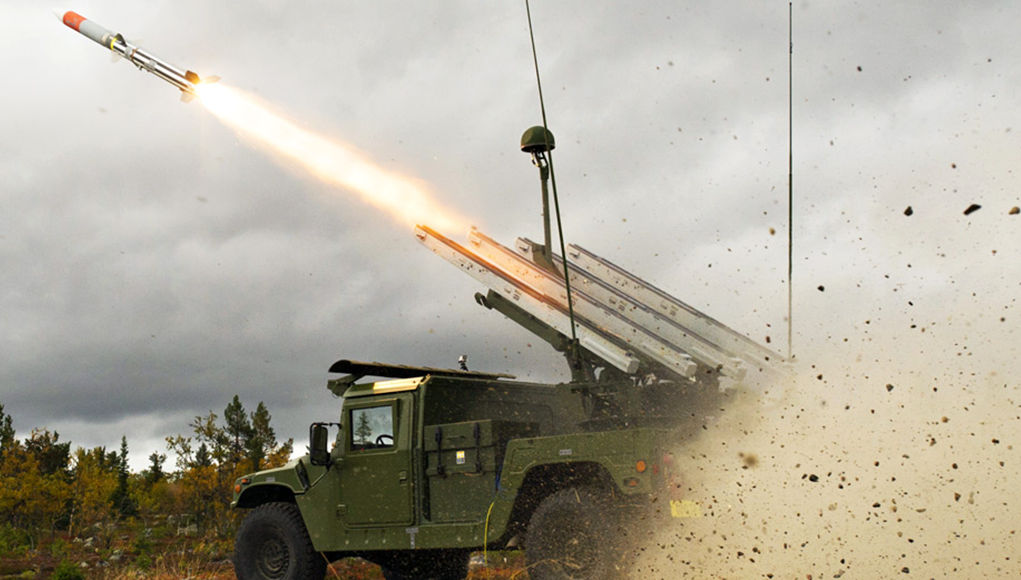
    NASAMS is designed as a modular system, adapted to carry different types of missiles, radars and support behicles. Here it shows a firing unit comprising a HMMWV carrying four AMRAAM missile launchers. Photo: Raytheon
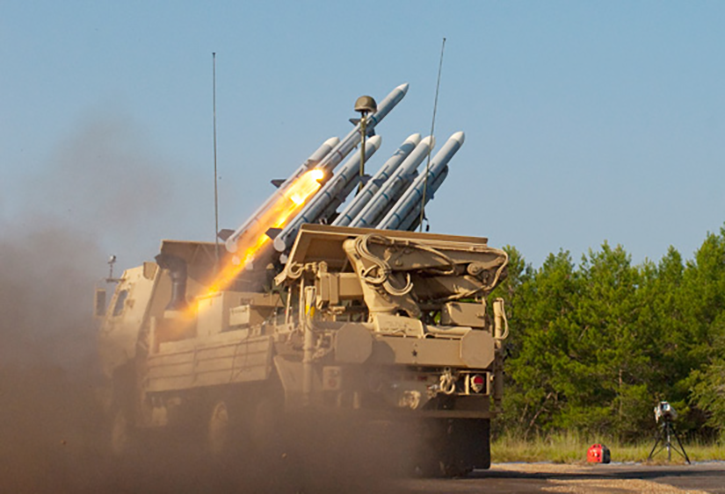
    This configuration is using an FMTV medium truck mounting a launch system comprised of six AMRAAM rails.  Raytheon is seeking to integrate significant local elements in the NASAMS system it offers Australia. One of the options is to mount the systems on Hawkei Armor Protected Vehicles. Photo: Raytheon.
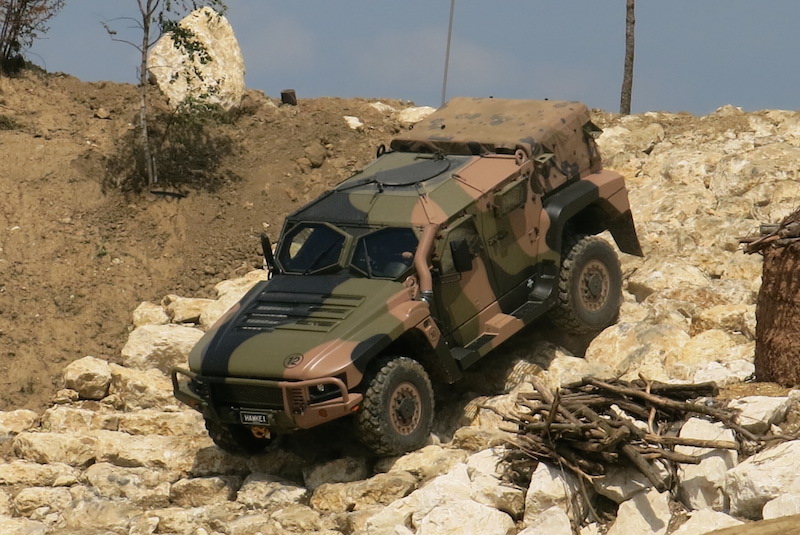
    The Thales Group offers the Hawkei Light Protected Mobility Vehicle weighing 10 tons for the Australian Short-Range Ground Based Air Defense (GBAD) program. Hawkei delivers unparalleled levels of blast and ballistic protection, for a helicopter transportable vehicle. Photo: Noam Eshel

    Implementing Combat Lessons with C-UAV Capabilities

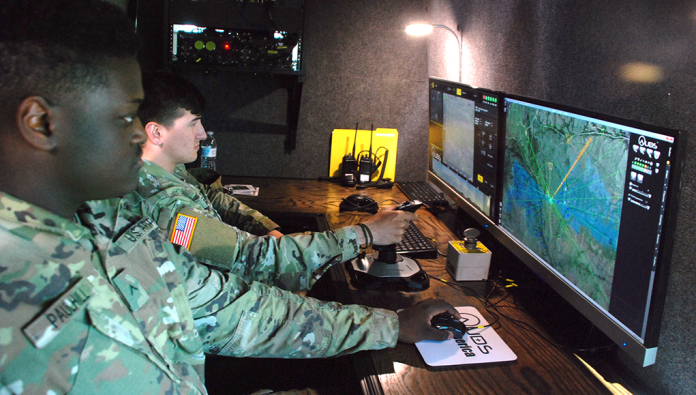
    Pvt. Shamar Paulhill (left) and Pfc. Sergio Torres, both air missile defense crewmembers from 108th Air Defense Artillery from Fort Bragg, use an anti-unmanned aerial vehicle defense system (AUDS) to search the skies of Fort Sill for UAVs, April 6, during the Maneuver Fires Integrated Experiment (MFIX). (US Army Photo by Monica K. Guthrie)
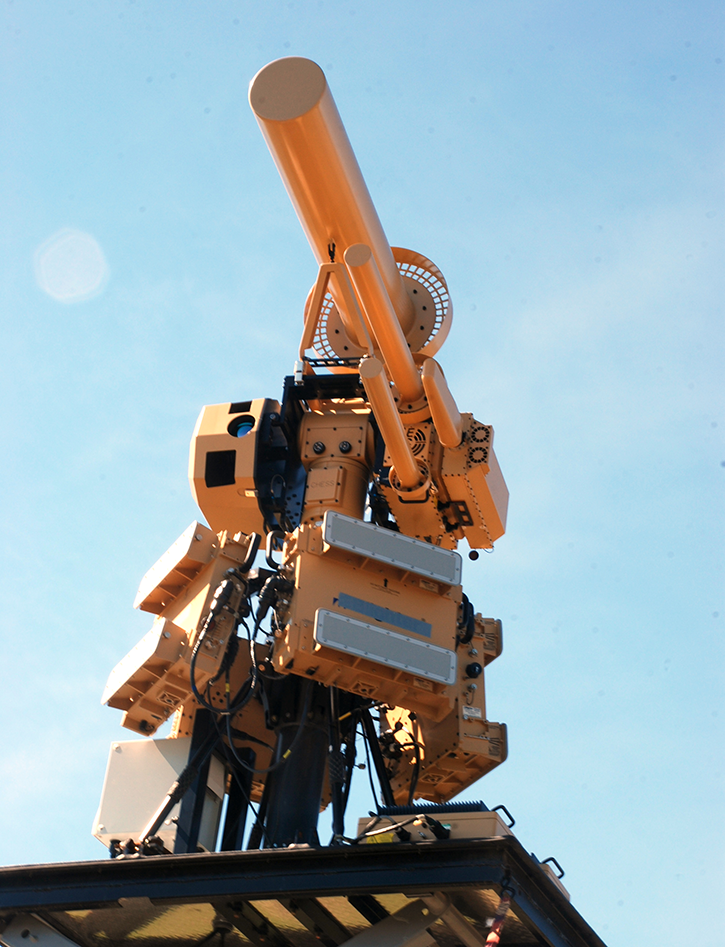
    An anti-unmanned aerial vehicle defense system (AUDS) searches the skies of Fort Sill for UAVs, April 6, during the Maneuver Fires Integrated Experiment (MFIX). The system is comprised of four radars covering 360-degrees and an EO and multi-band jammer mounted on a pan-tilt pedestal, engaging specific targets detected by the radar. (US Army Photo by Monica K. Guthrie)

    Determined to meet the challenge of hostile Unmanned Aerial Systems (UAS), the US Army acquired a number of countermeasures able to defeat such threats using electronic warfare.

    The Islamic State in Iraq and Syria pioneered the use of commercially available micro drones armed for attack or suicide missions. These weapons were used on a large scale in the first days of the Iraqi attack on Mosul, but these attacks quickly ceased after the Iraqi forces received US C-UAS support. While the drone attacks were short lived in the battlefield, against an equipped and prepared combat force, they proved very successful as a propaganda tool, as videos of the attacks were published on social media.

    The rapid containment of the micro-UAV attacks demonstrated the importance of integration of counter-UAS capabilities and techniques within a modern combat force. The US Army has already integrated some of the systems that have been used in Iraq, and others that are being tested in Europe, to familiarize operational planners and troops. Among the systems that recently proved its performance in Iraq is the AUDS, which deployed recently to Fort Sill, Oklahoma, to participate in the annual Maneuver Fires Integrated Experiment (MFIX).

    The Anti-UAS Defense System (AUDS) is part of the US Army’s evolving Counter-Unmanned Aerial Systems (C-UAS) capabilities. AUDS provides forward units the capability to detect, locate and track all the drones operating in the area, identify each drone and defeat those systems deem hostile.

    According to Tom Scott, president of LITEYE Systems, the company that markets the AUDS in North America, AUDS uses three different systems to carry out its mission. The Blighter radar and camera, provided by the British EO specialist Chess Dynamics, are used to detect drones and an electronic jammer provided by Enterprise Control Systems is used to defeat them.

    AUDS uses a combination of four radars to gain full 360 degree coverage. Cueing from the radar use to point the camera at the target. Once a drone has been identified on camera, operators can set the system to automatically track the drone. AUDS also has the capability to defeat drones, using high power electronic jamming, similar to the use of jamming against radio-controlled improvised explosive devices (IED). Tha AUDS uses an electronic effector operating in three distinctive bands associated with different functions of the drones – Global Navigation Satellite System (GNSS) and two radio-control channels often associated with drone controls. Lack of navigation signal often aborts a commercial drone mission for safety considerations. Jamming of the control channel would force the drone to enter emergency mode and return to its operator, hover or land on the spot.
    Similar to the EO payload the jamming module is also directional, employing antennae set generating a 20-degree ‘pencil beam’ that concentrates almost all radiated power on target. This method enables the system to operate in an environment where friendly drones are operating. In fact, some of the US operators have operated and tested the AUDS with an integral drone, to provide the users the capability to acquire and designate the drone operator for attack by friendly drones, or other means of precision attack.

    Soldiers from 108th Air Defense Artillery came from Fort Bragg, N.C. to allow developers to see firsthand how Soldiers interacted with the system. Scott said he was pleased with how easily the Soldiers learned the AUDS and could now operate the system.

    “It’s been pretty awesome,” said Pvt. Shamar Paulhill. “It’s a pretty easy concept to grasp. We’ve only been out here for three days and we already have it down. We are tracking, jamming stuff, and we brought down (many) drones.”

    Paulhill and his battle buddy Pfc. Sergio Torres, both air missile defense crewmembers, explained how once they have acquired the target, they wait for instructions. If they jam the communication between the drone and the drone’s operator, the drone could return to its home base, remain hovering or fall from the sky.

    While the AUDS is newer, Scott said their systems were rapidly deployed to units in October of 2016. Scott said feedback came almost immediately.

    “My guys operating the systems (…) once they got it with the Soldiers and turned it on, the Soldiers called it ‘the day the drones stopped'” said Scott.

    In January 2017 this mast-mounted AUDS system was spotted with Kurdish forces near Mosul, Iraq. Soon after the deployment of the system drone attacks by ISIS have ceased. Photo: US Army

    The Army ordered several AUDS systems to meet an urgent operational requirement to defeat drones operated by ISIS in Iraq and Syria. In January 2017 the US Army acquired several units. Based on the combat lessons gathered by users in Iraq, several modifications were made to the systems. According to Scott. One of the priorities is to make the system mobile, as the current configuration is a dismounted set using an electrical generator for power.

    “The deployment was done in a real hurry,” said Scott. “Now we, as owners of the company, can sit back with the military and start to integrate this into other command and control, and mobile systems.”

    The Reaper Kits-up for Operation in Contested Airspace

    The company-owned UAS from GA-ASI’s Gray Butte Flight Operations Facility near Palmdale, Calif., against various ground-based radars. Photo: GA-ASI.

    For more than two decade unmanned aerial systems (UAS) operated by the U.S. armed forces are used mainly in asymmetric warfare, against irregular forces that do not pose serious threats to U.S. airpower. But in recent years the situation has changed. Irregular forces in many theaters are equipped with air defense assets. In many theaters missions are already flown in airspaces dominated by potentially hostile radars and air defenses. In the South China Sea, the Korean Peninsula, Yemen, Iraq and Syria, such environments would limit the usability of conventional drones, unless suitable mission systems and countermeasures are deployed.

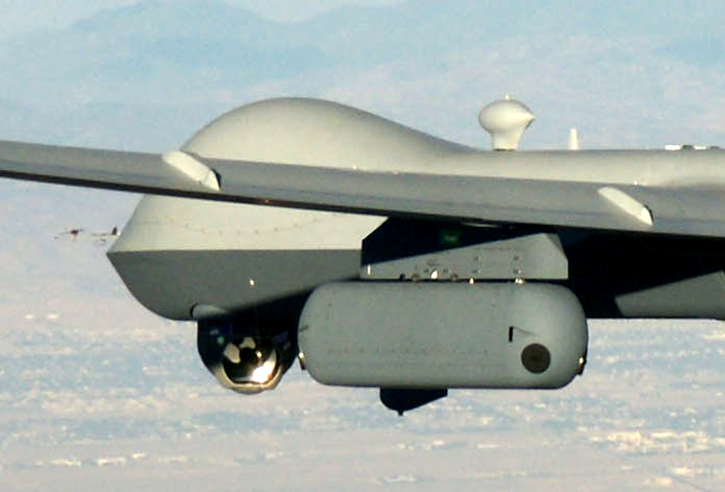
    General Atomics Aeronautical Systems, Inc. (GA‑ASI) has recently demonstrated such a system by equipping their B/MQ-9 Reaper Block 5 equipped with a Radar Warning Receiver (RWR). The test was part of an airborne demonstration of the drone’s capability to operate on the edge of ‘contested airspace’ – areas defended by surface to air missile systems (SAM). For the recent test, the company owned Reaper drone carried a standard pod equipped with Raytheon ALR-69A RWR. This sensor provides enhanced situational awareness to aircrew and air element command and control units by identifying potential radar threats in or near contested airspace environments.

    The ALR-69A is often used as a sensor for self-protection systems, that consist of chaff and flare dispensers, jammers and decoys, but the recent tests on the Reaper employed the RWR as a sensor that detects and alerts operators on hostile radar activity in its operating airspace. Once the RWR spots a hostile radar it cues other onboard sensors (such as an SAR radar or EO/IR payload) to identify and designate it for the attack. The system can also operate in self-protection but this mode has not been tested.

    During the recent tests, the system was operated in various flight profiles. According to GA-ASI, the pod was able to validate RWR performance which met or exceeded current thresholds for both air and ground radar threats. Additionally, the RWR information to the flight crew was deemed useful for triggering flight crew action, such as manually cross-cueing to other onboard sensors to validate threat information. GA-ASI plans further RWR demonstrations later in the year to include integrating with Link 16 communications datalink.

    For the RWR demonstration, this B/MQ-9 Reaper Block 5 carried the Raytheon ALR-69A Radar Warning Receiver in a standard payload pod. Once the RWR spots a hostile radar it cues other onboard sensors (such as an SAR radar or EO/IR payload) to identify and designate it for the attack. The system can also operate in self-protection but this mode has not been tested. The RWR Photo: GA-ASI

    The current development of this new capability is conducted by the company as a private investment, with the goal of partnering with potential customers in the near future. “The successful demonstration of a mature radar warning receiver on our company-owned Predator B clearly shows the utility of the aircraft in conducting missions in the proximity of threat radars and enemy air defenses,” said Claudio Pereida, executive vice president, Mission Systems, GA-ASI. “We are pleased to be the first company to demonstrate this capability on a remotely piloted aircraft and hope to make it available to interested customers on a quick-reaction basis.”

    “The ALR-69A provides improved detection range and accurate, unambiguous identification in dense signal environments,” Paul Overstreet, ALR-69A program manager, Raytheon added. “Its open architecture is what allows it to operate on manned or unmanned aircraft.”

    Autonomous Strike – a New Milestone in Manned-Unmanned Teaming

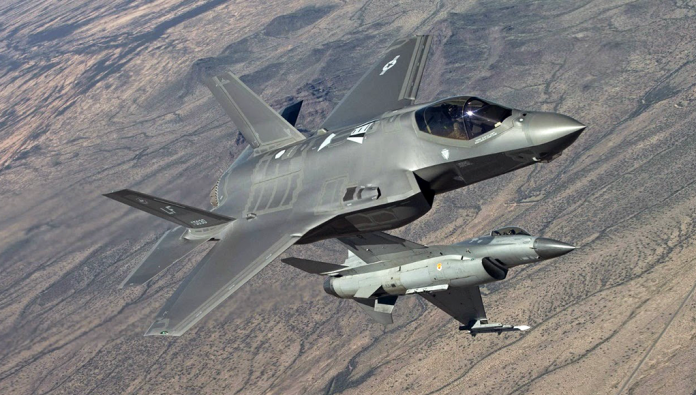
    F-35 and F-16 from Luke Air Force Base training together. In the future, F-35 pilots will be able to control unmanned QF-16s from the cockpit of their 5th GEN fighters. Photo: USAF

    The US Air Force and Lockheed Martin’s advanced projects unit – the ‘Skunk Works’, have completed a series of flight tests demonstrating the teaming of a manned and unmanned fighter jets, participating in mock combat operations. During the flight demonstration, an experimental F-16 aircraft acted as a surrogate Unmanned Combat Air Vehicle (UCAV) autonomously reacting to a dynamic threat environment during an air-to-ground strike mission. The demonstration success included three key objectives:

    • The ability to autonomously plan and execute air-to-ground strike missions based on mission priorities and available assets
    • The ability to dynamically react to a changing threat environment during an air-to-ground strike mission while automatically managing contingencies for capability failures, route deviations, and loss of communication
    • A fully compliant USAF Open Mission Systems (OMS) software integration environment allowing rapid integration of software components developed by multiple providers

    For the recent phase designated “Have Raider II” Skunk Works teamed with the US Air Force’s Research Laboratory (AFRL), the Pilot School and Calspan Corporation.

    “This demonstration is an important milestone in AFRL’s maturation of technologies needed to integrate manned and unmanned aircraft in a strike package,” said Capt. Andrew Petry, AFRL autonomous flight operations engineer. “We’ve not only shown how an Unmanned Combat Air Vehicle can perform its mission when things go as planned, but also how it will react and adapt to unforeseen obstacles along the way.”

    Acting as a surrogate UCAV, an experimental F-16 autonomously reacted to a dynamic threat environment, during a simulated strike mission

    The two-week demonstration at the Test Pilot School at Edwards Air Force Base, California, is the second in a series of manned/unmanned teaming exercises to prove enabling technologies.

    “The Have Raider II demonstration team pushed the boundaries of autonomous technology and put a fully combat-capable F-16 in increasingly complex situations to test the system’s ability to adapt to a rapidly changing operational environment,” said Shawn Whitcomb, Lockheed Martin Skunk Works Loyal Wingman program manager. “This is a critical step to enabling future Loyal Wingman technology development and operational transition programs.”

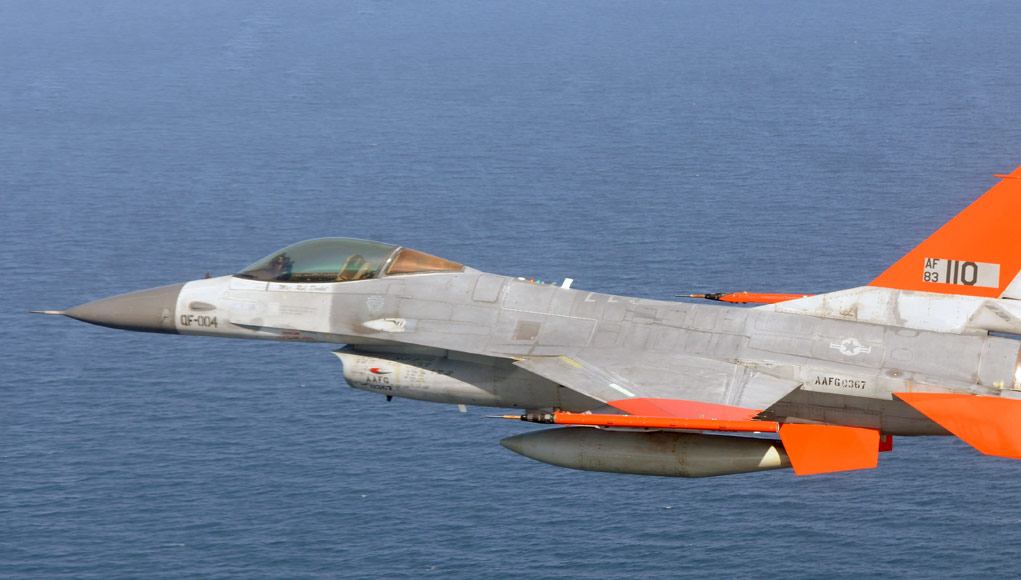
    The USAF is using unmanned QF-16s for target practice and training with live weapons. The QF-16 replaces the obsolete QF-4 Phantom drones. In the future, such platforms could also assume combat roles as ‘avatars’ or companions to manned aircraft. Photo: Boeing

    The Air Forces’ Loyal Wingman program foresee the techniques, tactics, and procedures of controlling semi-autonomous missions of UCAVs by pilots of manned fifth Generation fighters (F-22/F-35). Such platforms should be able to ‘play’ in both air/air and air/ground scenarios, carrying weapons and flying the more risky parts of the mission, thus increasing the survivability and effectiveness of the manned platforms. QF-16s (unmanned targets) are considered the most cost-effective platforms for this mission, although being a Fourth Generation fighter with no stealth capability would compromise a mixed manned-unmanned strike package. Apart from the tried and tested F-16 the Air Force is also testing other target aircraft, some designed specifically for attack missions – such as the UTAP-22 built by Kratos.

    The first demonstration, ‘Have Raider I’, focused on advanced vehicle control. The experimental F-16 autonomously flew in formation with a lead aircraft and conducted a ground-attack mission, then automatically rejoined the lead aircraft after the mission was completed. These capabilities were linked with Lockheed Martin automatic collision avoidance systems to ensure safe, coordinated teaming between the F-16 and surrogate UCAV.

    “The OMS architecture used in Have Raider II made it possible to rapidly insert new software components into the system,” said Michael Coy, AFRL computer engineer. “OMS will allow the Air Force maximum flexibility in the development and fielding of cutting edge autonomous capabilities.”

    An artist rendering showing a group of Kratos UTAP-22 drones launch an airstrike under the leadership of an F-35. Illustration: Kratos

    Effective manned/unmanned teaming reduces the high cognitive workload, allowing the warfighter to focus on creative and complex planning and management. Autonomous systems also have the ability to access hazardous mission environments, react more quickly, and provide persistent capabilities without fatigue. Each drone will have onboard autonomy sufficient to complete all basic flight operations untethered from a ground station and without full-time direction from the manned lead.

    For future applications of the Loyal Wingman concept, the Air Force is considering employing several drones with each manned fighter jet. The flight will use dedicated processors that will be able to assess the operational scenario based on each platforms’ sensors and decide the course of action for the group of drones. A prototype of such system is under development at the University of Cincinnati. It employs artificial intelligence and fuzzy logic techniques known as ‘Alpha’ has demonstrated in simulations capabilities superior to well-trained fighter pilots.

    The Air Force plans to begin flying aircraft equipped to control a full ‘Loyal Wingman’ drone formation in 2018. Testing is scheduled to continue for four years, through 2022. Eventually, the US Air Force plans to assign drone formations to all front line aircraft – the F-35 Lightning II, F-22 Raptor and possibly its newest bomber – B-21 Raider.

    South Korea Extends Hyunmoo-2 Ballistic Missile Range

    Hyunmoo 2 short range ballistic missile was developed by South Korea to comply with the MTCR restrictions. More advanced versions are likely to surpass those limits. The missile is likely to have an accuracy of about 30 meter (CEP) and is equipped with a cluster munition warhead. Photo released by ADD.

    South Korea has successfully test-launched a new version of Hyunmoo-2B ballistic missile with its flight range extended from 500 to 800 km. This range enables the missile to reach anywhere in North Korea, defense sources in South Korea said. The test comes one day after North Korea conducted the 7th ballistic missile flight this year. The North also continues its nuclear and missile development in violation of U.N. Security Council resolutions.

    The successful test was conducted from the Anheung test site operated by the Korean Agency for Defense Development (ADD). “The test performed well and the missile met the key requirements of the normal blast, flight and the accuracy of hitting a target although the missile’s range was limited due to the test range limitations” Yonhap news agency reported. The defense ministry acknowledged the development of a ballistic missile with a range of 800 km and a payload of 500 kg, in accordance with the missile (development) guideline revised in 2012 between South Korea and the U.S., but did not confirm the test results.

    In June last year, the Seoul successfully test-fired two Hyunmoo-2B missiles capable of carrying a one-tonne payload up to 500 Km. South Korea’s missile inventory also includes the Hyunmoo-2A ballistic missile, with a range of more than 300 km. South Korea also developed the Hyunmoo-3 cruise missile with a range of 1,000 km. The new missile is currently in a testing phase. The announcement did not provide details about its scheduled operability.

    Skunk Works and XTEND Simplify Multi-Drone Command

    0
    Lockheed Martin Skunk Works® and XTEND have achieved a major milestone in JADC2 by integrating the XOS operating system with the MDCX™ autonomy platform. This technical breakthrough enables a single operator to simultaneously command multiple drone classes, eliminating the friction of mission handoffs. From "marsupial" drone deployments to operating in GPS-denied environments, explore how this collaboration is abbreviating the data-to-decision timeline and redefining autonomous mission execution.

    From Ukraine to Taiwan: The Global Race to Dominate the New Defense Tech Frontier

    0
    As traditional defense primes face mounting competition from agile “neoprimes” such as Anduril, Palantir and Helsing, the balance of innovation is shifting toward software-defined warfare and scalable, dual-use technologies, while global industry consolidation—marked by Boeing’s integration of Spirit AeroSystems and other strategic mergers—signals an intensified race to secure control over the defense technology value chain. Our Defense-Tech weekly report highlights these trends.

    Europe’s “Drone Wall”

    0
    In early October 2025, a coordinated wave of unmanned aerial system (UAS) incursions—widely attributed to Russia—targeted critical infrastructure across at least ten European nations. The unprecedented campaign exposed the fragility of Europe’s air defenses...

    Weekly Defense Update & Global Security Assessment

    0
    Executive Summary The past week (September 18-25, 2025) represents an inflection point where strategic defense concepts have transitioned from doctrine to tangible reality. An analysis of global events reveals four primary, interconnected trends shaping an...

    U.S. Air and Space Forces Push Next-Gen Programs at the AS&C 2025 Conference and...

    0
    At the 2025 Air, Space & Cyber Conference, U.S. Air Force and Space Force leaders unveiled major updates on next-generation fighters, bombers, unmanned systems, and space initiatives, highlighting both rapid innovation and critical readiness challenges as the services race to outpace global competitors. A short version is available here, with a more detailed version for subscribers.

    TADTE 2025: Reflecting Taiwan’s Strategic Themes

    0
    The Taipei Aerospace & Defense Technology Exhibition (TADTE) 2025 crystallized around four dominant strategic themes that collectively illustrate Taiwan's comprehensive approach to defense modernization amid escalating regional tensions. Based on a detailed report by Pleronix (available upon request). Includes a Podcast discussion on TADTE 2025's highlighting Taiwan's four strategic themes beyond the post's coverage.

    Iron Beam 450 Completes Testing, Soon to Join With Operational Air Defense Units

    0
    Israel’s Iron Beam 450 high-power laser system has completed final testing, marking a major leap in air defense. Developed by Rafael, it offers precise, cost-effective interception of rockets, UAVs, and mortars, and is set for IDF deployment by 2025.