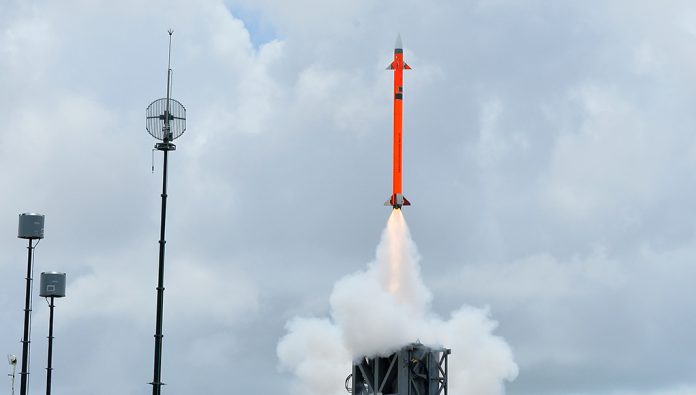
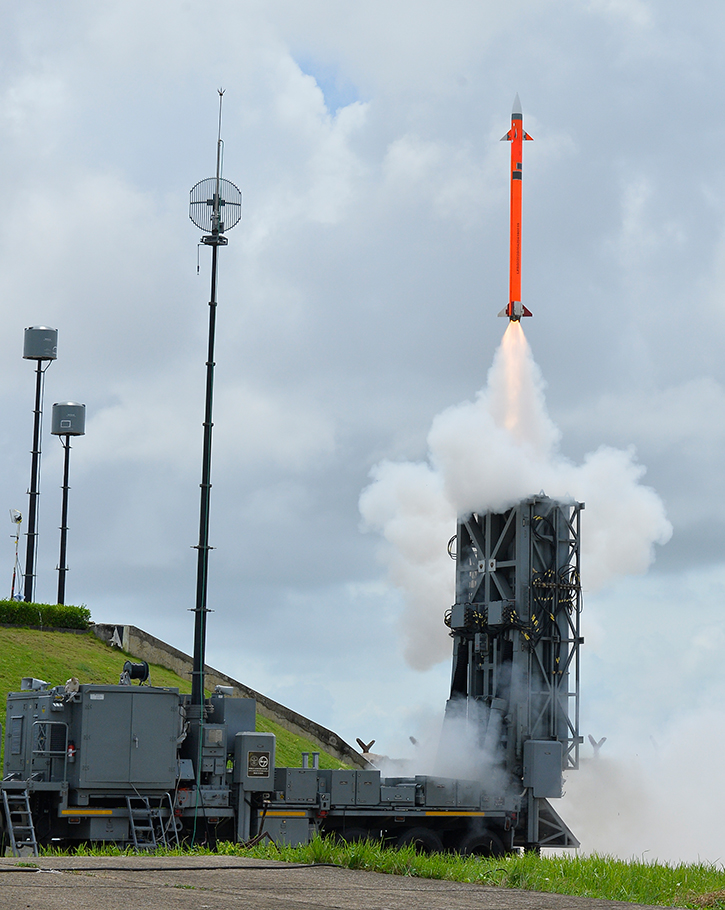
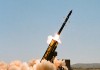
IAI Barak-8 MRSAM launched from a test range in India on a recent flight. Photo: IAI
IAI Barak-8 MRSAM launched from a test range in India on a recent flight. Photo: IAI
Israel Aerospace Industries (IAI) and the Indian Ministry of Defense signed a contract worth US$1.6 billion today, for the supply of an unspecified number of Medium Range Surface to Air Missiles (MRSAM) for the Indian Land Forces. Delivery of the first system will begin within 72 months and will be deployed for operations by 2022-2023.
The MRSAM will be based on the ‘Barak 8’ air-defense system, which has already been delivered to the Indian Navy and selected for the Long Range SAM system by the Indian Air Force. The contract reflects the Israeli part of the $2.5 billion MRSAM order cleared by the Indian government in February this year. A third of the program is allocated directly to the Indian partner – the government managed Defense Research & Development organization (DRDO).
Based on ‘Make in India’ regime, IAI is obligated to outsource a significant part of the work to Indian subcontractors, on top of the parts of the program already allocated by the MOD to Indian suppliers. Some of the Indian companies that partnered with IAI include Bharat Electronics (BEL), Bharat Dynamics (BDL) and companies from the private sectors.
IAI signed today a second contract for the delivery of Barak 8 Long Range SAM (LRSAM) for the first locally built aircraft carrier – Vikrant. The 40,000 ton carrier is one of two indigenously built carriers currently under construction at Cochin and is planned to begin sea trials later this year. The ship is expected to be fully operational by 2023.
In Israel Barak 8 is being fitted to seven more platforms – the new missiles are replacing the older Barak-I on three Israeli 1,275 ton Saar V corvettes and is being integrated into the four 2,000 ton Saar 6 corvettes ordered from Germany. These boats are scheduled to arrive in Israel in 2019-2020 to beef up Israel’s offshore gas rigs.
Earlier this week India’s Defence Acquisition Council (DAC) approved the procurement of 100 Barak I missiles for older vessels, among them the Navy’s only operational aircraft carrier – INS Vikramaditya. The first contract for 262 Barak I missiles for the Indian Navy was signed in 2015 and will continue until 2020. Last month Navy successfully conducted the maiden trial firing of Barak from the ex-Russian carrier. Barak 8 LRSAM is currently integrated on two Indian Navy Kolkata class destroyers – INS Kolkata, Kochi, and Chennai.
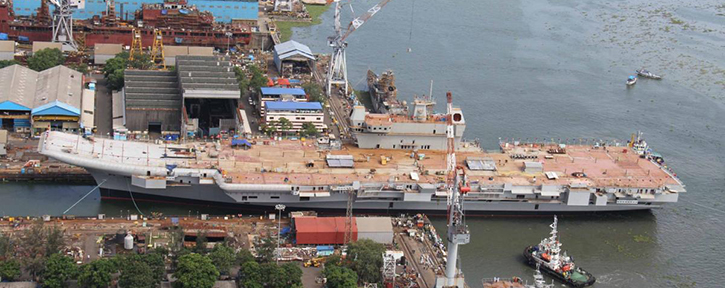
INS Vikrant docked at the Cochin Shipyard (2015). Note the placements for MF/STAR radar on the island superstructure.
With the current order Barak 8 MRSAM gains a strategic position with all of India’s military branches (Navy, Air Force and Army). At the recent Aero India airshow IAI unveiled a truck-mounted variant of Barak 8 family optimized for the Indian requirement for Quick Reaction SAM (QRSAM). This new version will employ many of the building blocks of the LRSAM-MRSAM system, in a manner that offers optimise logistical and operational benefits. IAI also pursue an extended range variant of the Barak-8 interceptor, intended to address the Indian Air Force’ Extended-Range SAM (ERSAM) requirement.
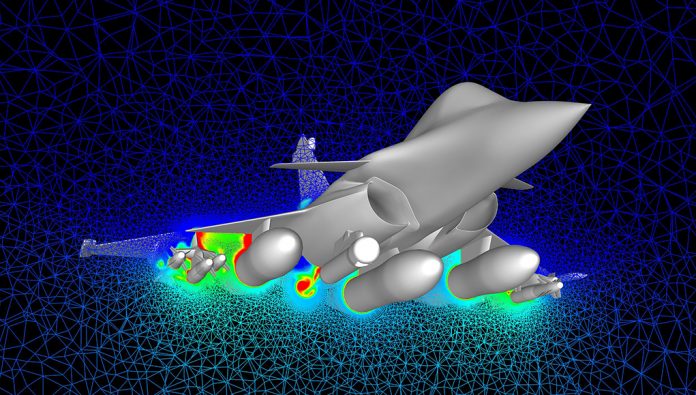
Addressing the growing domestic and international demand for the French fighter aircraft, Dassault and the French Defense Procurement Agency (DGA) will soon begin a six-year development phase of the next-generation Rafale F4. The French Minister of Defense, Mr. Jean-Yves Le Drian, authorized the start of development of the next generation variant of the Rafale. The aircraft will introduce new capacities empowered by the modern missile and engine technologies.
The new variant will follow the Rafale F3-R currently in development and scheduled to complete the qualification testing next year. Dassault now produces Rafales to fulfill French orders for 180 aircraft, along with sales of 78 more aircraft for Egypt and India. The French Air Force could order additional 45 as it phases out older Mirage 2000 aircraft. The first fully equipped F4 aircraft are expected to enter service in 2025, though certain functions will be available in 2023. It will be part of the fifth production tranche (2019-2025), delivering on French and export orders.
Since France plans to maintain the Rafale with its air and naval air forces at least through 2040, the French Ministry of Defense invests in the continuous modernization and upgrading of the aircraft. €1 billion were allocated for the development of the current variant – F3-R, which will integrate the Meteor, MBDA’s new extended-range air/air missile. Relying on a new AESA radar fitted to the aircraft the Meteor will be able to engage aerial targets from ranges exceeding 100 km. In the air/ground domain, the F3-R variant will be cleared to carry the new target designation pod PDL-NG from Thales. Other upgrades include the installation of an upgraded Link 16 terminal, improved – Mod 5 compatible IFF and buddy refueling pods for the French Navy’s Rafale N.
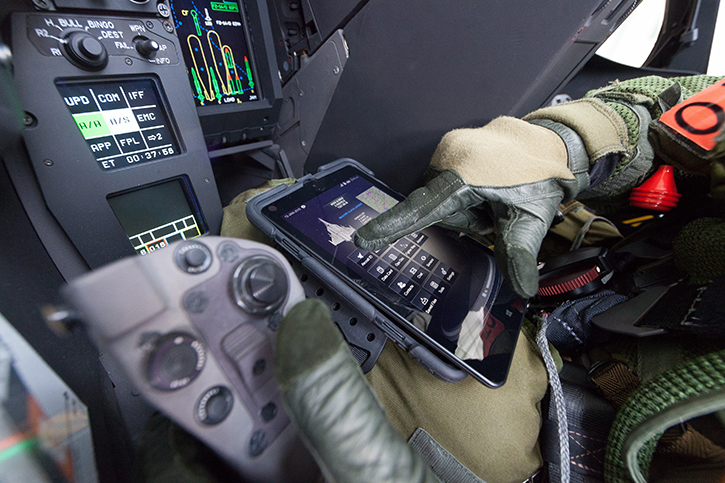
Rafale Pilot using the Fighter Sphere tablet. Sphere is an integrated Electronic Flight Bag (EFB) that greatly reduces pilot workload dealing with important but non-critical tasks during pre-flight and in flight. Photo: Dassault Aviation by P. Sagnes.
Given its role replacing Mirage 2000 variants currently in service, Rafale F4 will likely include weapon integration modifications to include new variants of air/air Mica, Scalp and the nuclear cruise missile ASMP-A (currently deployed exclusively on Mirage 2000N). However, due to the relatively short span of the program, it is likely to focus mainly on capabilities based on software and limited hardware upgrades.
Further, into the future, the program could introduce significant airframe changes, as part of the Rafale’s mid-life modifications. These upgrades could include cockpit redesign or introduction of low-observability modifications to better position this 4.5 generation fighter against modern and future fighters.
“The F4 standard will incorporate operational experience feedback and enable continuous improvement of the RAFALE to be maintained. It will reinforce the national skills and technological capabilities essential for preparing the development of the next generation of combat aircraft”, stated Eric Trappier, Chairman and CEO of Dassault Aviation. “I am also delighted that the Defense Ministry underlines the need to continue with the acquisition of the Rafale, beyond the 4th tranche currently in production, in order primarily to meet the needs of the French Air Force,” Trappier added.
The Rafale entered service with the French Navy in 2004 and with the French Air Force in 2006. With more than 30,000 flight hours in operations, it has proven its worth in combat in Afghanistan, Libya, Mali, Iraq, and Syria. Beyond France (180 aircraft ordered) the Rafale was ordered by Egypt (24), Qatar (24) and India (32).
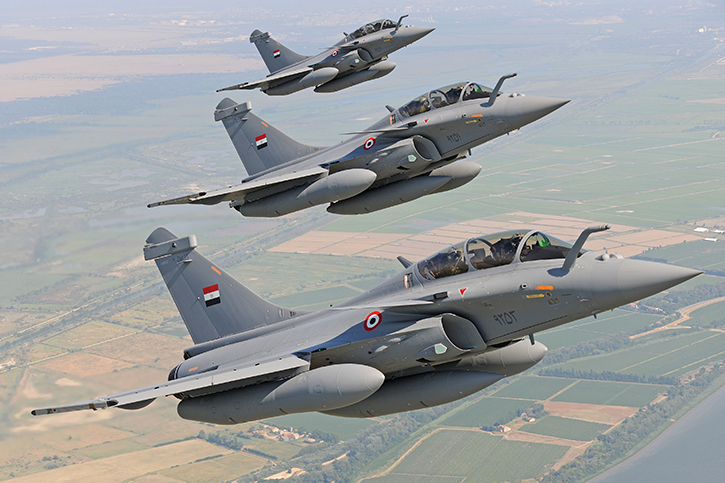
Rafale B delivered to Egypt seen here in flight. Photo: Dassault Aviation – A. Pecchi.
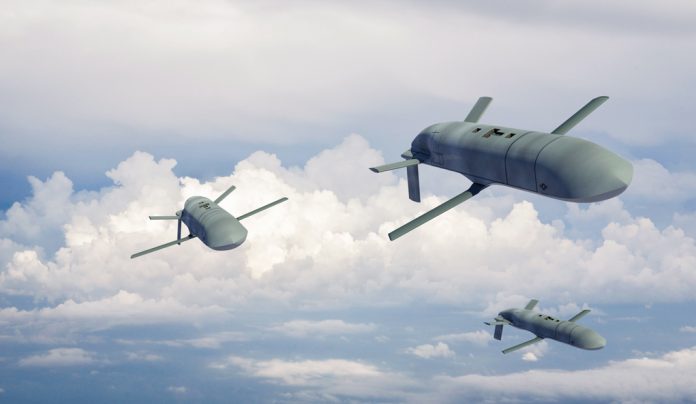
DARPA has recently moved to phase 2 of the Gremlins program which envisions volleys of low-cost, reusable unmanned aerial systems (UASs) that could be launched and later retrieved in mid-air.
DARPA selected two teams – each awarded $21 million, one led by Dynetics, the other by General Atomics Aeronautical Systems, Inc. (GA-ASI), to complete preliminary designs full-scale technology demonstration systems, as well as develop and perform risk-reduction tests of individual system components.
“The Phase 1 program showed the feasibility of airborne UAS launch and recovery systems that would require minimal modification to the host aircraft,” said Scott Wierzbanowski, DARPA program manager. “We’re aiming in Phase 2 to mature two system concepts to enable ‘aircraft carriers in the sky’ using air-recoverable UASs that could carry various payloads—advances that would greatly extend the range, flexibility, and affordability of UAS operations for the U.S. military.”
Dynetics has assembled a team of technology providers including Kratos Defense & Security Solutions, Inc., Sierra Nevada Corporation, Applied Systems Engineering, Inc., Williams International, Systima Technologies, Inc., Airborne Systems, Moog Inc. and International Air Response.
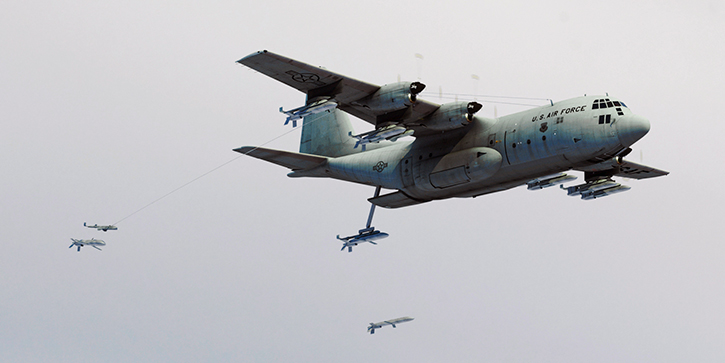
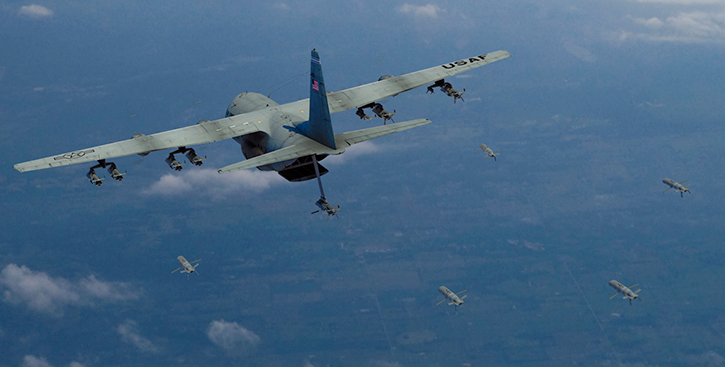
An artist concept drawing showing eight Gremlins carried under the wings of a C-130J. The drones are safely retrieved by a tethered cradle attached to the underwing pylon. General Atomics will also explore using a boom-like release and retrieval mechanism that will deploy Gremlins from and onto the cargo ramp. Image: Artist concept, GA-ASI“GA-ASI is committed to the development of an unmanned distributed sensing and targeting system to support tomorrow’s warfighter,” said David R. Alexander, president, Aircraft Systems, GA-ASI. “At the same time, we see the potential for using this technology on our own Predator B/MQ-9 Reaper RPA to offer our customers new mission capabilities.”
The Gremlin aircraft is one in a line of new Small UAS (SUAS) being developed by GA-ASI. The vehicle is capable of one-hour time-on-station at a range of 300 nm while carrying a modular 60-pound payload.
GA-ASI was awarded a contract for Phase 1 of the program in March 2016. While Phase 1 was conceptual in nature, Phase 2 aims to mature the design and perform in-flight risk reduction testing for the C-130-based recovery system. Activities will include Program Design Review (PDR) for the aircraft and recovery system, ground testing to validate key technologies, and flight test to demonstrate safety and recovery system performance of multiple Gremlin vehicles. The program is expected to culminate in an air launch and recovery demonstration in 2019.
The program envisions launching groups of UASs from multiple types of military aircraft—including bombers, transport, fighters, and small, unmanned fixed-wing platforms—while out of range of adversary defenses. When the gremlins complete their mission, a C-130 transport aircraft would retrieve them in the air and carry them home, where ground crews would prepare them for their next use within 24 hours. The gremlins’ expected lifetime of about 20 uses could provide significant cost advantages over expendable unmanned systems by reducing payload and airframe costs and by having lower mission and maintenance costs than conventional manned platforms.
The drones are safely retrieved by a tethered cradle attached to the underwing pylon. General Atomics will also explore using a boom-like release and retrieval mechanism that will deploy Gremlins from and onto the cargo ramp. Image: Artist concept, GA-ASI
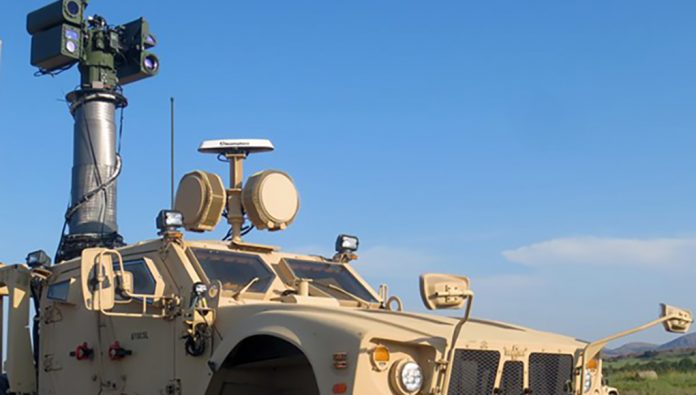
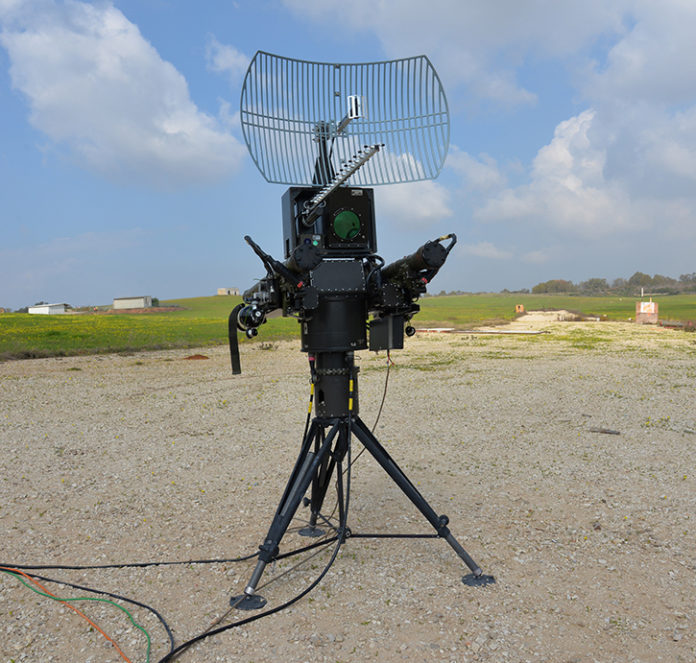
The Surveillance And Battlefield Reconnaissance Equipment (SABRE) is integrated with RADA's MHR radar to provide an integrated battlefield surveillance and counter-UAS solution. Photo: DRS
Aware of the growing threat of bomb-laden mini drones that recently emerged in Iraq and Syria, the US Army is rushing to field countermeasures and kinetic effects designed specifically to defeat drones. counter-drone capabilities seeking For the ‘Defeat’ part of the engagement, the Army considers “hard kill” and “soft kill” options. Hard kill capabilities employ kinetic munitions to defeat enemy UAS, and soft kill capabilities employ electronic warfare to defeat them. To integrate soft kill capabilities DRS is employing jammers provided by SRC on combat platforms which will soon deploy in support of an urgent operational need. A hard kill system based on remotely operated weapon station employs the Moog Reconfigurable Integrated-weapons Platform (RIwP). The two companies are on schedule to demonstrate this C-UAS kinetic defeat capability in October 2017.
In recent years the U.S. Army prioritized the development of three critical components in Counter-Unmanned Aerial Systems (C-UAS) capabilities to Detect, Identify and Defeat enemy drones. At the AUSA convention taking place at Huntsville AL this week, DRS showcases its latest C-UAS capabilities based on the integration of existing and new systems.
Partnered with RADA, DRS recognized the value of the Multi-Mission Hemispheric Radar (MHR) for the “detect” portion of the C-UAS mission. A small, lightweight, radar, MHR has proven itself as accomplished of detecting “low, slow, small UAS” at several different government tests, highlighted by the Maneuver and Fires Integration Exercise (MFIX) at Fort Sill, Oklahoma, and Black Dart at Eglin Air Force Base, Florida.
Recently at Yuma Proving Grounds in Arizona, the MHR excelled at detecting Group 1 and Group 2 UAS at ranges more than five kilometers. Because of its small size and weight, MHR is a perfect candidate solution for an on-board vehicle mounted C-UAS detect capability which can be optimized to address different threats and missions. The MHR’s ability to cue multiple sensors makes the transition to the “identify” task seamless.
Working from the radar cue, DRS developed the software to slew its stabilized, high-quality scout sensor, Surveillance And Battlefield Reconnaissance Equipment (SABRE), to quickly allow an operator to positively identify aerial targets at significant ranges. With the auto-tracker engaged, the operator can zoom in and identify critical characteristics of the UAS such as size, fixed or rotary wing, any large payloads, etc.
Using existing Army command and control systems, the operator can rapidly populate the common operational picture (COP), warning fellow soldiers of an existing aerial threat. With the proliferation of friendly UAS capabilities at much lower levels in a formation, the air space at brigade level has become increasingly more crowded. Being able to positively identify targets as friend or foe at significant ranges is important, and the DRS SABRE provides that capability. SABRE has also proven itself at MFIX, Black Dart and most recently at the Network Integration Evaluation (NIE) at Fort Bliss, TX. Because of its proven performance and potential operational value as a mobile C-UAS “identify” solution, SABRE was recently deployed to Europe on the C-UAS Mobile Integrated Capability (CMIC) vehicle as part of an operational experiment. Over the next several months, Soldiers will provide real-time feedback on this evolving capability.
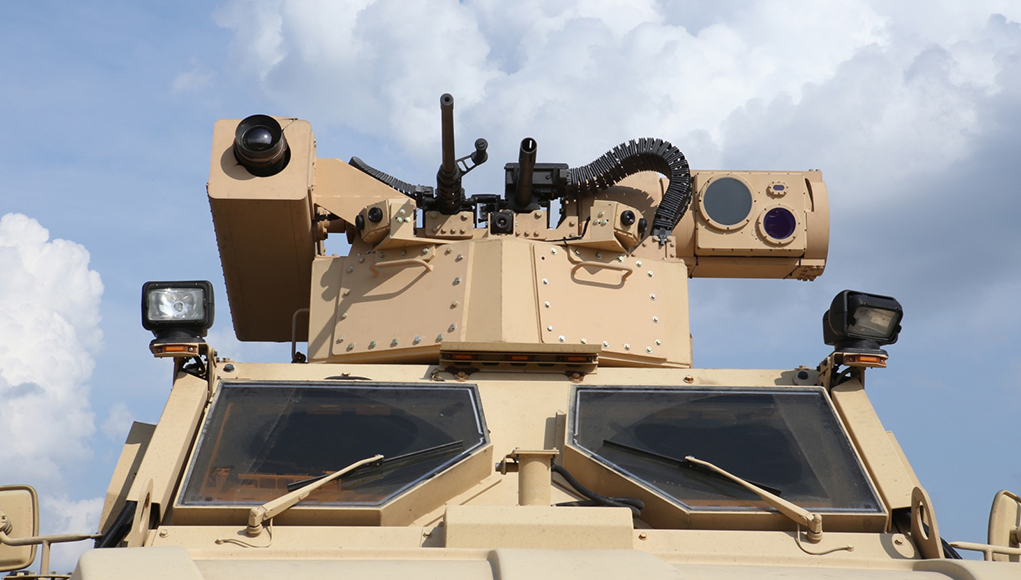
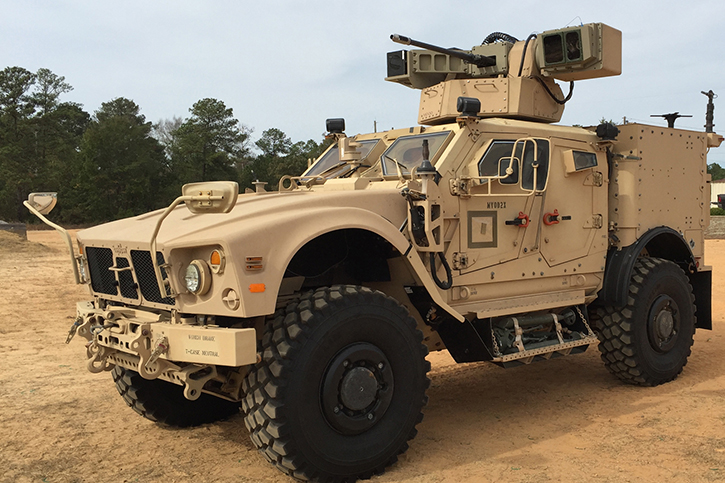
A versatile weapon station that can reconfigure to mount various combinations of weapons and sensors, RIwP will be integrated with the Saber EO payload and MHR radar to deliver an integrated, hard-kill C-UAS system. Photo: MoogFor the ‘Defeat’ part of the engagement, the Army considers “hard kill” and “soft kill” options. Hard kill capabilities employ kinetic munitions to defeat enemy UAS, and soft kill capabilities employ electronic warfare to defeat them. To integrate soft kill capabilities DRS is employing jammers provided by SRC on combat platforms which will soon deploy in support of an urgent operational need. A hard kill system based on remotely operated weapon station employs the Moog Reconfigurable Integrated-weapons Platform (RIwP). The team is on schedule to demonstrate this C-UAS kinetic defeat capability in October 2017.
In addition, slewing from cues from the MHR radar, identifying targets using the Improved Bradley Acquisition Subsystem (IBAS) Block 2 sight, will enable ground-based units to engage and defeat drone threats using precision direct fire.
The Reconfigurable Integrated-weapons Platform (RIwP) can mount various weapons, including this 30mm automatic cannon to be used in the C-UAS kinetic defeat solution. Photo: Moog
The NRL-developed transparent polymer armor consists of alternating layers of elastomeric polymer and a harder material substrate. Very small crystalline domains, which also provide rigidity, give the polymer its transparency. Photo: US Navy/NRL
Research chemists at U.S. Naval Research Laboratory (NRL) have developed and patented a transparent thermoplastic elastomer armor that will be lighter, and more resistant. It will also be repaired in the field, using tools similar to pressing irons.
Conventional transparent armor consists of multiple layers of glass and polyethylene, that results in thick, heavy panels to achieve desired levels of protection. The use of soft material also causes the bulletproof glass to degrade in transparency over time. Also, when bullets hit the window, they shatter the surface, causing significant damage that limits transparency and multi-hit resistance. The new material will be able to apply over a thinner armored glass, resulting in lighter, yet more durable transparent armor. The protective function of the coating is believed to arise from an impact-induced phase transition with consequent large energy absorption.
Thermoplastic elastomers are soft, rubbery polymers converted by physical means, rather than a chemical process, to a solid. Consequently, the solidification is reversible and enables damaged armor surfaces to be repaired in the field.
“Heating the material above the softening point, around 100 degrees Celsius, melts the small crystallites, enabling the fracture surfaces to meld together and reform via diffusion,” said Dr. Mike Roland, senior scientist, NRL Soft Matter Physics. “This can be accomplished with a hot plate, akin to iron, that molds the newly forming surface into a smooth, flat sheet with negligible effect on integrity.”
Up to now, NRL scientists have tested the use of polymeric materials as a coating to achieve improved impact resistance of hard substrates. Applying polyurea and polyisobutylene layers enhance the ballistic performance of armor and helmets and achieve greater ballistic effectiveness and mitigation of blast waves.
By using a variation of employing thermoplastic elastomers, NRL scientists can recreate superior ballistic properties of polyurea and polyisobutylene coatings, with the added benefit of the material being transparent, lighter than conventional bullet-resistant glass, and repairable.
“Because of the dissipative properties of the elastomer, the damage due to a projectile strike is limited to the impact locus. This means that the effect on visibility is almost inconsequential, and multi-hit protection is achieved,” Roland said.
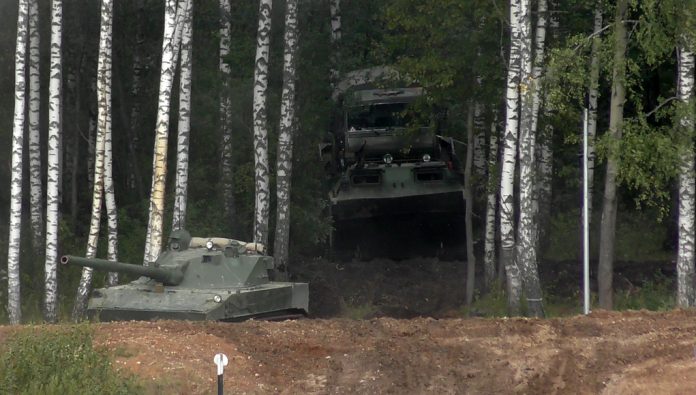
Russian amphibious unit approaches a crossing point through dense forest during Army 2016 military demonstrations at Alabino. Photo: Tamir Eshel, Defense-Update
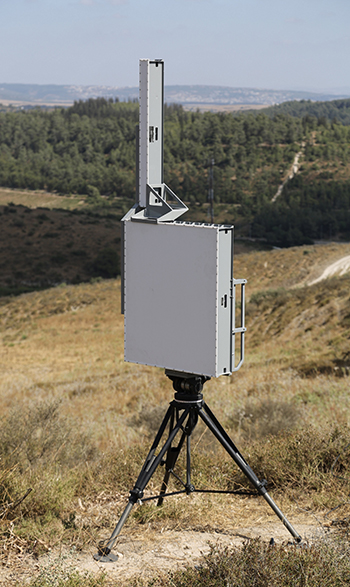
Elta ELM-2112FP Foliage-Penetrating Radar. Photo: IAIIsrael Aerospace Industries (IAI) has added a foliage penetrating (FOPEN) radar to its ELM-2112 family of persistent ground surveillance radars. Unlike other sensors in the ELM-2112 family, the ELM-2112FP operates in the L-band, to enable better penetration of dense foliage. With this capability the new radar can penetrate ‘few tens of meters’ into dense vegetation, to detect moving targets hidden in dense shrubs, forests, and jungles, from a distance of several kilometers away.
The ELM-2112FP assures surveillance continuity on targets and threats as these enter forested areas – usually invisible to conventional motion detection radars (operating in the C-X bands). The new radar adds FOPEN capability to existing surveillance settings, as it can be connected to the same command and control system controlling existing radars, opening densely vegetated areas that could not be covered by conventional sensors. The ELM-2112FP weighs 65 kg can be installed on masts or vehicles, or dismount on a tripod for temporary deployment.
Based on Frequency Modulated Continuous Wave (FMCW) technology the radar uses a single emitter and simultaneous, electronically scanned multi-beam array to cover a wide area. Each pair (emitter and receiver array) covers 90 degrees. Multiple sets can be stacked to achieve wider coverage. Targets are detected by the analysis of the echoes returned from moving targets (Doppler effect).
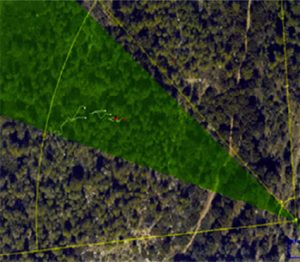
The FOPEN radar extends the coverage of IAI Elta’s ELM-2112 ground surveillance family of radars into densely vegetated, forested areas. Photo: IAIIt can detect moving personnel in forested areas, including slow moving targets, from 2.5 kilometers away. Vehicles moving inside the forest or jungle will be detected by the radar from a range of up to five kilometers. The depth of detection is determined by the type of growth and density of trees.
The radar operates under all weather conditions and simultaneously track hundreds of targets, with very low false alarm rate, providing continuous surveillance of the assigned area of interest.
Developed IAI subsidiary Elta Systems the radar has been operational with several customers for years but was released only now, before its unveiling at the LAAD 2017 expo in Brazil next month.
Since 2001 the CIA has gained political and budgetary preeminence over the U.S. National Security Agency (NSA). The CIA found itself building not just its now infamous drone fleet, but a very different type of covert, globe-spanning force — its strong fleet of hackers. The agency’s hacking division freed it from having to disclose its often controversial operations to the NSA (its primary bureaucratic rival) to draw on the NSA’s hacking capacities.
the CIA has secretly made most of its cyber spying war code unclassified
According to the documents released today by Wikileaks, by the end of 2016, the CIA’s hacking division, which formally falls under the agency’s Center for Cyber Intelligence (CCI), had over 5,000 registered users. They had produced more than a thousand hacking systems, trojans, viruses, and other “weaponized” malware, collectively known as “Vault 7”.
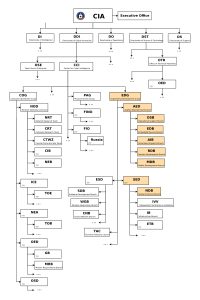
The CIA Organizational chart showing the the various operational groups involved in computer and network operations, physical access and engineering development (cyber),
Based on the documents released by Wikileaks the organization assesses the scale of the CIA’s hackers activities in 2016 utilized more code than that used to run Facebook. The CIA had created, in effect, its “own NSA” with even less accountability and without publicly answering the question as to whether such a massive budgetary spend on duplicating the capacities of a rival agency could be justified.
But the clandestine cyber operation has even more dangerous side effects – recently, the CIA lost control of the majority of its hacking arsenal, including malware, viruses, trojans, weaponized “zero-day” exploits, malware remote control systems and associated documentation. Once a single cyber ‘weapon’ is ‘loose’, it can spread around the world in seconds, to be used by rival states, cyber mafia and teenage hackers alike. This extraordinary collection, which amounts to more than several hundred million lines of code, gives its possessor the entire hacking capacity of the CIA. The archive appears to have been circulated among former U.S. government hackers and contractors in an unauthorized manner, one of whom has provided WikiLeaks with portions of the archive.
Big Brother Is In Your TV and Your Car
The CIA Engineering Development Group (EDG) is responsible for the development, testing and operational support of all backdoors, exploits, malicious payloads, trojans, viruses and any other kind of malware used by the CIA in its covert operations worldwide.
Among the activities described in the recently published documents is a malware which infects smart TVs, transforming them into covert microphones. For example, the “Weeping Angel” developed under a joint US-UK partnership was designed to attack Smart TVs made by Samsung. After infestation, Weeping Angel places the target TV in a ‘Fake-Off’ mode, that bypass the shutdown of the device. While the users think their TV is off, the device is remotely controlled, can record conversations in the room and send them over the Internet to a covert CIA server.
Other attacks were designed to infect control systems used in modern cars and trucks. The purpose of such control is not specified, but it would permit the CIA to engage in nearly undetectable assassinations.
Exploiting Mobile Phones
Mobile Devices are also very vulnerable to attacks developed by the CIA’s Mobile Development Branch (MDB), as they are targeted by many criminal and intelligence agencies worldwide. These devices can easily be turned into tracking and spying devices as well as covertly activating the phone’s camera and microphone.
The CIA invested considerable effort hacking into iPhones, considered more difficult to attack. In 2016 the CIA established a specialized unit to produces malware to infest, control and exfiltrate data from iPhones and other Apple products running iOS, such as iPads. The disproportionate focus on iOS may be explained by the popularity of the iPhone among social, political, diplomatic and business elites. The CIA’s iPhone hacks arsenal includes numerous local and remote “zero days” developed by CIA or obtained from GCHQ, NSA, FBI or purchased from cyber arms contractors such as Baitshop.
A similar unit targets Google’s Android which is used to run the majority of the world’s smartphones, including Samsung, HTC, and Sony. As of 2016, the CIA had 24 “weaponized” Android “zero days” which it has developed itself and obtained from GCHQ, NSA, and cyber arms contractors. These techniques permit the CIA to bypass the encryption of WhatsApp, Signal, Telegram, Weibo, Confide and Cloackman by hacking the “smart” phones that they run on and collecting audio and message traffic before encryption is applied.
Other departments run a very substantial effort to infect and control popular operating systems including Microsoft Windows, Apple OSX and Linux.
As expected, Microsoft Windows users are exposed to multiple local and remote weaponized “zero days,” and air gap jumping viruses such as “Hammer Drill” which infects software distributed on CD/DVDs. Other risks cooked by the CIA include infectors for removable media such as USBs, systems to hide data in images or covert disk areas (“Brutal Kangaroo”) and to keep its malware infestations going. Many of these infection efforts are pulled together by the CIA’s Automated Implant Branch (AIB), which has developed several attack systems for automated infestation and control of CIA malware, such as “Assassin” and “Medusa.”
The CIA also targets the Internet infrastructure and web servers through their Network Devices Branch (NDB). This branch uses automated multi-platform attack tools and malware control systems known as the “HIVE” and “Cutthroat” or “Swindle” – tools covering all common operating systems – Windows, Mac OS X, Solaris, and Linux.
‘Zero-Day’ Tsunami
In the wake of Edward Snowden’s leaks about the NSA, the U.S. technology industry secured a commitment from the Obama administration that the government would disclose to industry serious vulnerabilities, exploits, bugs and ‘zero days’ discovered in information systems and technologies developed by Microsoft, Apple, Google and other US manufacturers. The new documents show that the CIA breached these commitments. Many of the vulnerabilities used in the CIA’s cyber arsenal are pervasive, and some may already have been found by rival intelligence agencies or cyber criminals.
Unlike weapons of mass destruction or major defense systems, cyber ‘weapons’ are, in fact, just computer programs which can be pirated like any other. Since they are entirely comprised of information, they can be copied quickly with no marginal cost. Therefore, securing such ‘weapons’ is particularly challenging since the same people who develop and use them have the skills to exfiltrate copies without leaving traces — sometimes by using the very same ‘weapons’ against the organizations that contain them.
There are substantial price incentives for government hackers and consultants to obtain copies since there is a global “vulnerability market” that will pay hundreds of thousands to millions of dollars for copies of such ‘weapons.’ Similarly, contractors and companies who obtain such ‘weapons’ sometimes use them for their purposes, getting an advantage over their competitors in selling ‘hacking’ services.
Over the last three years the United States intelligence sector, which consists of government agencies such as the CIA and NSA and their contractors, such as Booze Allan Hamilton, has been subject to unprecedented series of data exfiltrations by its workers.
A number of intelligence community members not yet publicly named have been arrested or subject to federal criminal investigations in separate incidents.
Most visibly, on February 8, 2017, a U.S. federal grand jury indicted Harold T. Martin III with 20 counts of mishandling classified information. The Department of Justice alleged that it seized some 50,000 gigabytes of information from Harold T. Martin III that he had obtained from classified programs at NSA and CIA, including the source code for numerous hacking tools.
Once a single cyber ‘weapon’ is ‘loose’ as a massive tsunami, spreading around the world in seconds, and immediately be exploited by peer states, cyber mafia and teenage hackers alike.
One can assume that when developing such powerful cyber weapon, the CIA would keep them highly classified and limit the access to such capabilities on a need to know basis. However, to enable as wide distribution of such malware and exploits as possible, the CIA declassified these tools. The CIA structured its classification regime such that the most valuable part of “Vault 7” was… unclassified! Yes, the CIA’s weaponized malware (implants + zero days), Listening Posts (LP), and Command and Control (C2) systems were all unclassified. Having these weapons unclassified enabled these implants to communicate with their control programs over the internet. (If CIA implants, Command & Control and Listening Post software were classified, then CIA officers could be prosecuted or dismissed for violating rules that prohibit placing classified information onto the Internet.)
Moreover, the vast investment in hacking tools and exploits was contributed freely to the criminal community and foreign cyber agencies, since the U.S. government is not able to assert copyright either, due to restrictions in the U.S. Constitution. This means that cyber ‘arms’ manufacturers and computer hackers can freely “pirate” these ‘weapons’ if they are obtained. The CIA has primarily had to rely on obfuscation to protect its malware secrets.
Developers were instructed to write code that infiltrates target systems, encrypt and exfiltrate data to command and control servers, eliminate any forensic evidence of its activity, evade most well-known anti-virus programs and persist for extended periods in the target machines.
The Australian company DroneShield announced the first sale of its DroneGun tactical drone jammer to a government in the Middle East. Photo: Droneshield
The growing use of improvised, weaponized drones triggered a new interest in counter-UAV capabilities. Such countermeasures are required to warn the unit on the presence of drones in their area and have the ability to disrupt and defeat those drones when required. Until now, such unavailable were not available in the region. Although US forces have deployed some off-the-shelf C-UAV capabilities in the Middle-East since 2016, most of these technologies were not exportable to allied nations.
The US Army has already fielded various vehicle-borne UAV countermeasures. One such solution is the C-UAS Mobile Integrated Capability (CMIC) mounted on a reconnaissance Stryker vehicle. The system can identify, track and jam UAVs using the additional equipment added for the CMIC mission. Two CMIC vehicles deployed to Eastern Europe for operational evaluation in March 2017. More vehicles could also support US forces that have entered Syria recently.
A C-UAV radar offered by IAI Elta Systems is the Drone Guard, an integrated system comprising a low-level air defense radar and jammer. One of the first C-UAV system developed in Israel ‘Drone Guard’ went through an extensive test series proving its effectiveness against a variety of different drones in various scenarios, including simultaneous multiple drone penetrations or attacks. Other radars from Elta are integrating the C-UAV mission with Counter-Rocket, Artillery, and Mortar (C-RAM) capability, providing the most comprehensive protection for tactical units.
The Red Sky 2 ‘Drone Defender’ can be integrated into the defense array of sensitive facilities, easily relocate to protect point targets in urban areas or be installed on vehicles to cover maneuver forces against aircraft and drones. Photo: IMI Systems
Other capabilities are currently under development through Defense Advanced Research Projects Agency (DARPA), under a technology development program seeking solutions for the protection of dispersed, stationary ground or naval forces. Possible solutions would include sensors and effectors capable of defeating targets that cannot be engaged with current weapons (missiles, or gun). Such capabilities would involve customized radars, electro-optical or acoustic sensors, cyber and electronic warfare effectors, customized missiles and cannon fired projectiles and directed energy weapons.
Counter-UAV – Soft Kill Methods
This DroneDefender was spotted on an image twitted online by late 2016. Photo: unknown via Twitter
The appearance of weaponized drone dramatically raised the level interest in drone countermeasures. Many suppliers are already offering such systems, but only a few are operational and validated against those new threats.
Most of the systems were designed to operate in a peaceful environment, and secure domestic or industrial areas or run by law enforcement and the secret service in VIP protection. Others utilizing cyber hacks are designed to defeat specific threats.
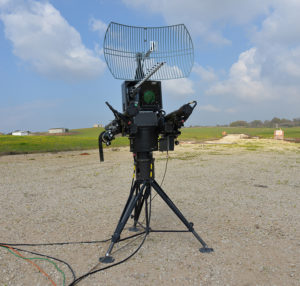
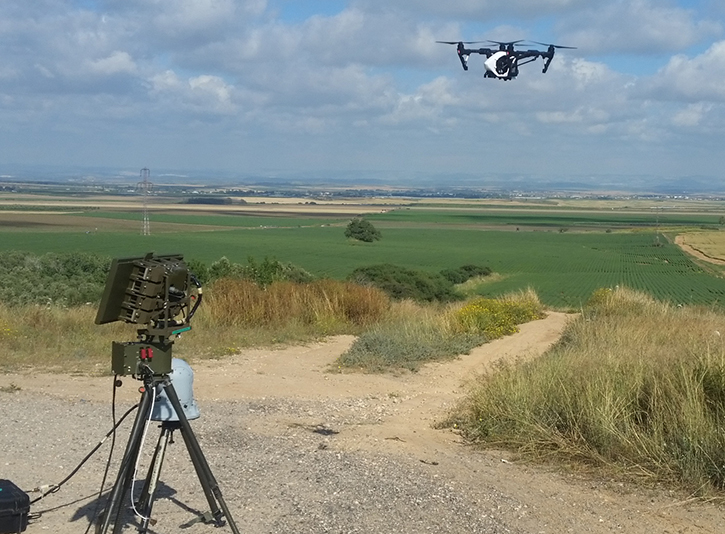
Typical systems include a radar and EO/IR sensor that detects drones and emitters and employ jammers over several spectral bands to target the drone’s datalink channels and GPS. Most of these systems will not be useful for anti-drone operations in a combat environment as they are designed to operate in the civil environment. ‘Drone Guns’ are being used to protect combat units against the terrorists attack drones. Gun-like countermeasures like these were developed in the USA by Battelle and Lockheed Martin, but are now available from many manufacturers outside the USA, including the UK, Australia, France, and China. The main advantage of such counter-drone weapons is the simplicity. Unlike the more sophisticated sensor-based countermeasures, ‘drone guns’ rely on visual identification for targeting of the drone (including straight up). Aiming the hand-held rifle-like electronic jammer at the target in a ‘point and shoot’ style is enough to direct the jammer to block the drone’s command link, ‘hijack’ and bring it to forced landing or cause it to crash.
IAI Drone Guard Counter – UAS system comprises the ELM 3026 radar and electro-optical target recognition system, and an electronic jammer designed to disable the drone in flight., Photo: IAI
Jammers are designed to disrupt the drone’s communications lines (control uplink or video downlink) by transmitting high-power noise at the same frequency of the signal connecting the drone and its pilot. Jammers can be effective against drones over several kilometers away. Jammers will be effective the further away the drone is from the pilot and closer to the jammer. Commercial drones often use the public frequency bands of 2.4Ghz or 5.8Ghz for this purpose. Public frequencies meaning that drone jammers will not interfere with manned aircraft, cell phones, public broadcasts, or other dedicated radio bands. Since these frequency bands are extremely busy, new commercial drones are using these frequencies but have added frequency hopping capabilities to overcome interference from other emitters (such as jamming). As a result, standard jamming will not be useful against such systems.
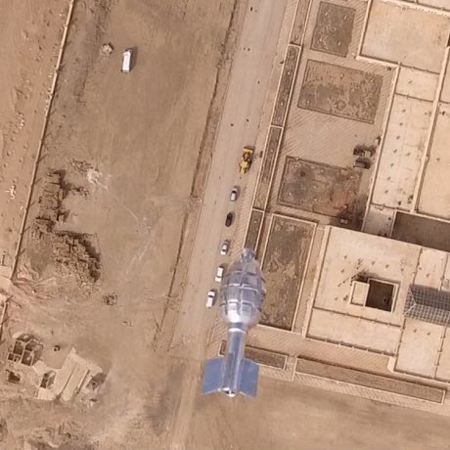
IS recorded this drone attack on Syrian targets in Raqqa. The weapon dropped looks like a grenade matched with a tail does not look like other weapons that had more complex fabrication (viewed on video below).
After four decades of the technological superiority of Western military forces, where the performance of drones have evolved and perfected military techniques, tactics and procedures (TTP), such capabilities are becoming common on both sides of the battlefield. For many years armed drones (also known as Unmanned Aerial Vehicles – UAV) were available only to a handful of western nations. Today, armed drones are offered by many – new suppliers include Turkey, China, Iran, and Poland. These UAVs are turned into target acquisition systems, aerial attack platforms, and loitering weapons, able to strike enemy forces with deadly precision.
The availability of drones is not limited to military forces, exploiting commercially available systems, terrorists and insurgents throughout the world are embracing drone technology, particularly those offered by Chinese companies that are not regulated by export laws.
Past uses of drones by terrorist focused primarily on situational awareness and documentation of offensive actions, the latest wave of drones are transformed into rudimentary though capable offensive platforms that can drop weapons on target with impressive accuracy and surprise.
Advanced, high-resolution HD or 4K cameras and infrared sensors are now available to support those missions. Fully integrated with drones, along with low-cost, high precision gimballed payloads can turn cheap camera-drones into target acquisition and attack systems. Datalinks gradually migrate to higher frequencies, exploiting frequency hopping techniques that make jamming harder than ever before. These platforms available online, are modular and scalable, enabling developers with average experience to produce relatively sophisticated and customized systems from parts and components available online as ‘do-it-yourself’ (DIY) drone.
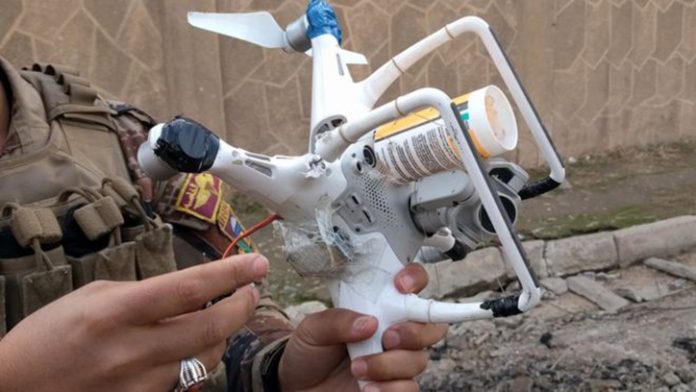
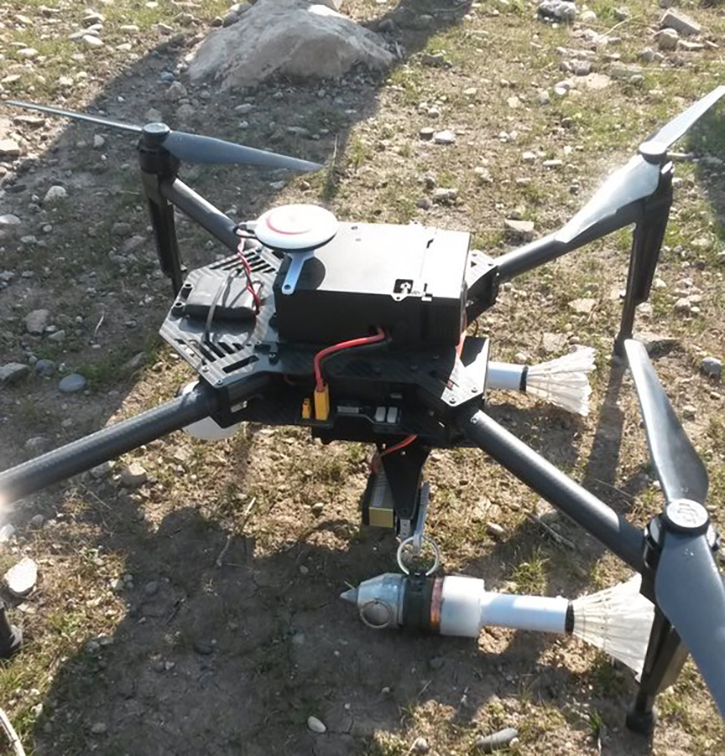
This drone was used by Iraqi government forces against ISIS in Mosul. It shows the the weapon carriage and arming method, using two attachments. The weapons are maintained safe and could be armed just before takeoff.
This trend has recently evolved and enabled insurgents in several war zones to hack small commercial drones into lethal weapons, turning what was a small and innocent toy into a smart and deadly Improvised Explosive Devices (IED). As traditional IEDs, these drones have a significant propaganda value, exacerbating their lethal effect. Due to their stunning visual products, drone-monitored and drone-carried attacks have generated huge interest, spreading havoc and fear among opposing forces – far beyond their lethal effect. This fact drove the Iraqi government forces to adapt the same techniques of drone attacks against the Islamic State. Within weeks they managed to master the production and control of such drones, turning them against ISIS in Mosul.
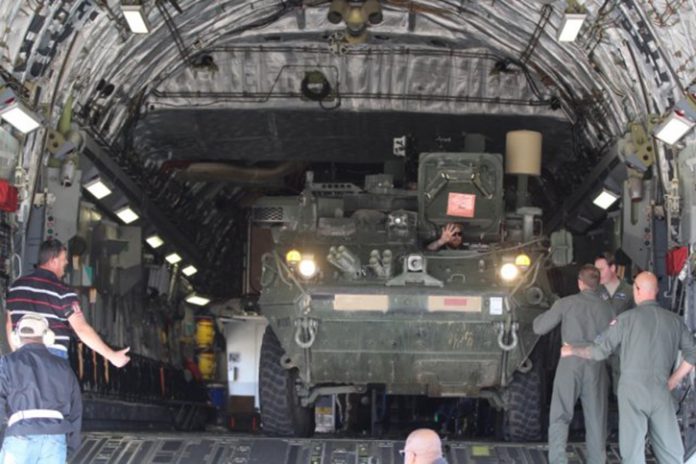
The U.S. Army is dispatching two specially modified Stryker vehicles designed to combat unmanned Aerial Systems (C-UAS). Developed as C-UAS Mobile Integrated Capability demonstrators the vehicles were evaluated during the recent Army Warfighting Assessment exercise at Fort Sill in October. The vehicles were flown to Germany last month to be tested with operational units in Europe. The deployment was requested by officials from US Army Europe. Photo: US Army
The U.S. Army is dispatching two specially modified Stryker vehicles designed to combat unmanned Aerial Systems (C-UAS). Developed as C-UAS Mobile Integrated Capability (CMIC) demonstrators the vehicles were evaluated during the recent Army Warfighting Assessment exercise at Fort Sill in October. The vehicles were flown to Germany last month to be tested with operational units in Europe. The deployment was requested by officials from US Army Europe.
“We know our enemy is using these capabilities,” said Maj. Russell Micho, who works for the Capabilities Development Integration Directorate at Fort Sill, OK. “This threat exists. ISIS is using drones. The enemy is attaching bombs to drones and dropping them on friendly forces and civilians. This threat didn’t exist five years ago.”
In response to the growing threat, developers worked to create a prototype to help detect, identify, and defeat these unmanned aircraft systems (UAS), said Scott McClellan, Fires Support Branch chief at Fort Sill. The result was the development of two counter UAS mobile integrated capabilities, better known as CMIC.
Taking two existing Stryker vehicles (a tactical armored vehicle) McClellan and the Aviation and Missile Research, Development and Engineering Center Science and Technology team took various systems that traditionally have little to do with one another, and created software to integrate them. “We made some changes such as adding a larger optic,” said McClellan. “The standard size of targets are changing. ‘Tank size’ was the normal size in the past, but now with new technology and with new threats we have to find small objects that are oftentimes impossible to see with the naked eye.”
McClellan called the CMICs a “rapid prototype,” but in truth, the two Europe-bound CMIC vehicles took two years to develop. The initial experimentation began in 2014 at Fort Sill’s Maneuver Fires Integrated Experiment (MFIX). During MFIX all the capabilities were spread across a hill and tested individually. Then, during the 2015 MFIX, they combined all the capabilities onto the two Strykers, creating the first CMIC prototypes. In the end, the two CMIC vehicles were used in two exercises at Fort Sill and two more at Fort Bliss, Texas.
Now, as they head to Europe, this will be the first time CMIC vehicles work with an operational unit, said Micho. The CMICs are joining a Stryker unit, making the transition smooth because the Soldiers are already familiar with the Stryker vehicle. However, the CMICs take with them new radios, computers, 3-D mapping, and full-motion video receivers, along with advanced electronic capabilities.
With all the new systems and equipment, Micho said the receiving unit will train for three weeks to understand how to use CMIC. Then two weeks will be spent incorporating them into the unit for them to use as their organic fire-support vehicles for the duration of the loan, which is about 180 days.
“A total of nine people will go with the vehicles,” said Micho. “They will help with equipment training and some will stay for the entire duration of the loan to help with issues as they arise. But the intent is for Soldiers to use the equipment and report back on how to improve on it.”
The team at Fort Bliss, TX developed another CMIC application using two HMMWVs carrying several sensors dedicated for the C-UAS role. The systems used with these prototypes are mostly in use by the Army, thus enabling rapid deployment and integration with the active force, if required. The systems on board include the Q-50 Counterfire Radar System, Lightweight Laser Designator Rangefinder (LLDR) and mast mounted Venom target acquisition payload, providing visual identification of targets. The radar that was originally designed to detect mortar bombs in flight uses modified software to improve detection of small or hovering UAVs. When the radar detects a drone it sends the bearing and elevation data to the LLDR which slews on the target. If further action is required, the system can direct soft or hard kill against it.
Read more on Counter-UAS in these features: (to be published soon)
Scrambler 300 UAS jammer from MC2 Technologies. Photo: 01net - via MC2 Technologies.
The Scrambler 300 developed by the French company MC2 Technologies is a UAS jammer that operates in the L, S and C bands. It is capable of jamming common telecommunication protocols between a drone and its remote operator. It detects targets at a distance of 500 meters and can jam such targets from 300 meters. Global Navigation Satellite System (GNSS) jamming is enabled at 150 meters.
The backpacked battery operated system weighs 14 kg and is operated by a single person, in a ‘point and shoot’ manner. The user has to aim at the microwave gun at the target and activate it to initiate the jamming. The battery sustains 2.5 hours of active operation and 60 hours in stand-by mode.
Another capability that could become critical for the military user is the ability to locate the controller’s position in a targeting level accuracy, enabling the defending forces to become the hunters. This can be done using several sensors that can triangulate emitter location utilizing direction finding.
The Australian company DroneShield announced the first sale of its DroneGun tactical drone jammer to a government in the Middle East. Photo: Droneshield
The DroneGun weighs approximately five kilograms and is provided as an integrated, self-contained system that can be deployed with dismounted units, protecting patrols, vehicles, checkpoints or rooftops. According to the manufacturer, the system is priced at the ‘tens of thousands of dollars range,’ thus is affordable for large-scale deployment.
As a point-and-shoot weapon, the DroneGun is designed to be effective against a wide variety of drones. By neutralizing drones from a safe distance, DroneGun offers advantages over alternative kinetic solutions such as nets or bullets, as it allows for safe handling of situations such as drones carrying explosives or biological payloads. Unlike kinetic solutions, it can be utilized against some drones at the same time and does not require consumables, reloading time or maintenance.
DroneGun is a portable rifle-style jammer, which can operate independently of any other sensors, to locate and neutralize potential aerial threats. The ‘rifle’ is connected to a backpack that stores the RF transmitter and batteries. The system requires no calibration and is instantly ready for operation when switched on. It can operate for two hours and requires 90 minutes of charging.
The Australian company DroneShield announced the first sale of its DroneGun tactical drone jammer to a government in the Middle East. According to the company, it was the first reported sale of a tactical counter-UAV jammer to a Middle Eastern government by any supplier. The acquisition was for test and evaluation purpose, with a potential follow-up order of a large scale to equip military forces with the C-UAV capability.
The Red Sky 2 'Drone Defender' can be integrated into the defense array of sensitive facilities, easily relocate to protect point targets in urban areas or be installed on vehicles to cover maneuver forces against aircraft and drones. Photo: IMI Systems
Integrating counter-UAV capability in it’s Very Short Range Air Defense (VSORAD) ‘Red Sky’ system IMI Israel now supports counter-UAV capability as part of the air defense mission. The new system called ‘Drone Defender’ had gone through extensive testing in January; tests included operations in day, night and adverse weather conditions. IMI Systems has received initial orders for the new capability and is expecting to deliver the first Red Sky Drone Defender systems in 2017. Last month the system was demonstrated to representatives of 14 countries, performing live operation against flying drones, that included detection, identification, automatic tracking and neutralization of drones.
Red Sky is a short-range air defense system that utilizes the customers’ existing shoulder-launched missiles and is designed to intercept aerial targets in an automated manner, using autonomic capabilities of scanning, tracking and lethal engagement by missiles. The lightweight, portable system provides an efficient defense solution against a variety of aerial threats. The Drone-Defender (C-UAV) capabilities currently being added into the system enable such system to better cope with the growing threat of drones that has not been addressed in previous air-defense systems.
The system provides a comprehensive solution against drones’ threats, including detecting and identifying hostile drone activity, automatic tracking of detected drones and disruption of their activity or neutralization of drones before they can carry out their missions. The Red Sky Drone Defender includes a volumetric search radar and thermal sensors for target acquisition at ranges up to six kilometers. Powerful directional radio-frequency (RF) datalink and GPS jammer provides a ‘soft kill’ neutralization capability at distances of 2-3 kilometers. For hard-kill of targets at shorter range the system will be able to use high-power fiber laser.
The system can be integrated into the defense array of sensitive facilities, easily relocate to protect point targets in urban areas or be installed on vehicles to cover maneuver forces against aircraft and drones.
ReDrone is a drone detection and neutralization system that detects, identifies, tracks and neutralizes different types of drones at a designated airspace. Photo: Elbit Systems
In 2016 Elbit Systems introduced ReDrone – a drone detection and neutralization system that detects, identifies, tracks and neutralizes different types of drones at a designated airspace. The system can separate the drone’s signals from the stream coming from the operator’s remote control unit, thus pinpoint both the drone and the operator’s directions and location. The advanced detection system provides 360-degree perimeter protection and constantly updated situational awareness simultaneously handling multiple drones. After detecting a target, the ReDrone can activate the jammer to disrupt the drone’s communication link, blocks its radio, video signals and GPS positioning data, to send it off track, preventing it from carrying out an attack.
Lockheed Martin Skunk Works® and XTEND have achieved a major milestone in JADC2 by integrating the XOS operating system with the MDCX™ autonomy platform. This technical breakthrough enables a single operator to simultaneously command multiple drone classes, eliminating the friction of mission handoffs. From "marsupial" drone deployments to operating in GPS-denied environments, explore how this collaboration is abbreviating the data-to-decision timeline and redefining autonomous mission execution.
As traditional defense primes face mounting competition from agile “neoprimes” such as Anduril, Palantir and Helsing, the balance of innovation is shifting toward software-defined warfare and scalable, dual-use technologies, while global industry consolidation—marked by Boeing’s integration of Spirit AeroSystems and other strategic mergers—signals an intensified race to secure control over the defense technology value chain. Our Defense-Tech weekly report highlights these trends.
In early October 2025, a coordinated wave of unmanned aerial system (UAS) incursions—widely attributed to Russia—targeted critical infrastructure across at least ten European nations. The unprecedented campaign exposed the fragility of Europe’s air defenses...
Executive Summary
The past week (September 18-25, 2025) represents an inflection point where strategic defense concepts have transitioned from doctrine to tangible reality. An analysis of global events reveals four primary, interconnected trends shaping an...
At the 2025 Air, Space & Cyber Conference, U.S. Air Force and Space Force leaders unveiled major updates on next-generation fighters, bombers, unmanned systems, and space initiatives, highlighting both rapid innovation and critical readiness challenges as the services race to outpace global competitors. A short version is available here, with a more detailed version for subscribers.
The Taipei Aerospace & Defense Technology Exhibition (TADTE) 2025 crystallized around four dominant strategic themes that collectively illustrate Taiwan's comprehensive approach to defense modernization amid escalating regional tensions. Based on a detailed report by Pleronix (available upon request). Includes a Podcast discussion on TADTE 2025's highlighting Taiwan's four strategic themes beyond the post's coverage.
Israel’s Iron Beam 450 high-power laser system has completed final testing, marking a major leap in air defense. Developed by Rafael, it offers precise, cost-effective interception of rockets, UAVs, and mortars, and is set for IDF deployment by 2025.